
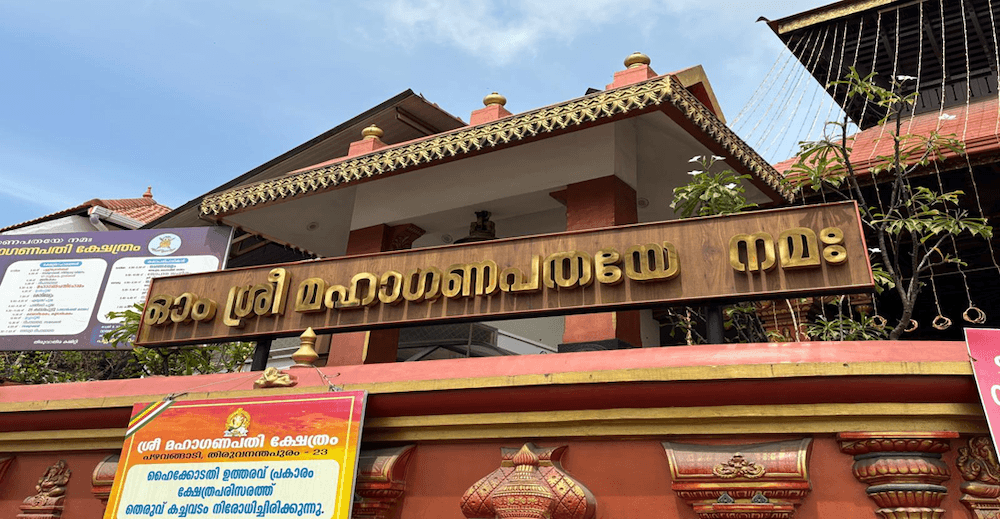
पळवंगडी श्री महागणपती मंदिर
पूर्व किल्ला, जि. तिरुवनंतपुरम
Pazhavangadi Sree Maha Ganapathy Temple
East Fort, Dist. Thiruvananthapuram
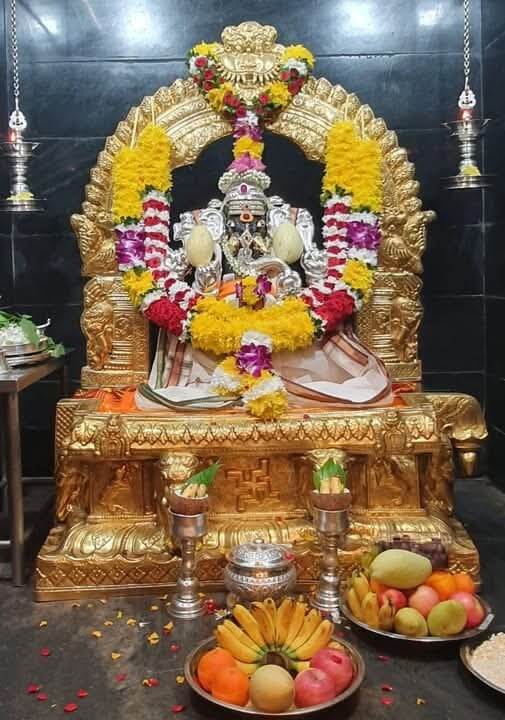 Pazhavangadi Ganapathy Temple is a well-known temple in Thiruvananthapuram, Kerala, located in East Fort. The main deity is Lord Ganapathy (Ganesha), shown sitting with his right leg folded — a pose that is not very common in other temples. This temple has a special connection to the old Travancore army. The temple is right in the middle of the city, close to shops and markets, so it’s easy to visit and always has people around — not a quiet, hidden place like other temples in Kerala. The Lord is traditionally associated with the removal of obstacles and is lovingly approached by devotees before beginning important journeys, new ventures, studies, marriages and other significant chapters of life. With every prayer offered before the deity, the temple becomes a meeting place between faith and hope, where devotees surrender their worries and seek divine guidance.
The temple’s real history is connected to an old army unit called the Nair Brigade, which started around 1809 and later took over an army camp in Thiruvananthapuram in 1836. In 1795, when the Travancore king moved his capital from Padmanabhapuram to Thiruvananthapuram, the soldiers moved too — and they brought their worship of Ganesha with them to the East Fort area. The temple we see today was built in 1860 by King Ayilyam Thirunal. Later, in 1951, this old Travancore army became part of the Indian Army. Because of this, the Indian Army still takes care of the temple even today. 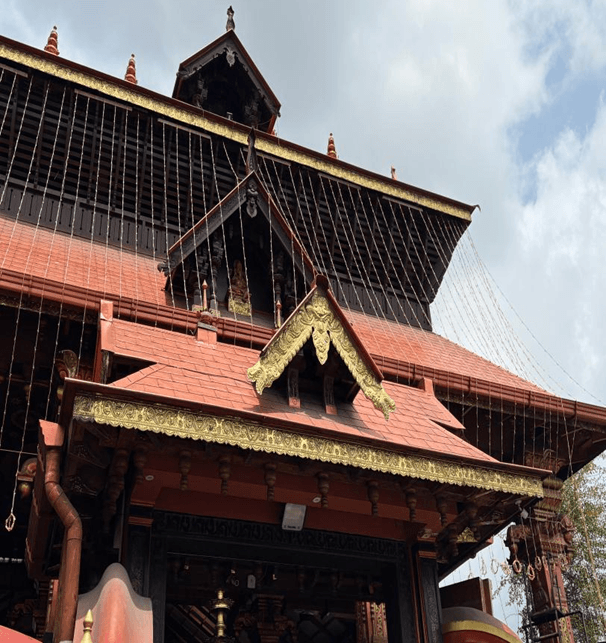 This makes Pazhavangadi different from almost every other temple in Kerala, which are usually managed by the Travancore Devaswom Board (a religious trust) — this one is looked after by the army instead, connecting it directly to Travancore’s old royal history.
Long ago, in the old Travancore capital of Padmanabhapuram, soldiers stood guard at the fort each night, unsettled by tales of a Yakshi, a restless spirit said to haunt the darkness around the walls. Among them was one soldier who carried no fear, only quiet faith — he was devoted to Lord Ganesha and trusted that no harm could touch him while the god watched over him. One evening, as he bathed in the river nearby, his hand brushed against something buried in the mud and he pulled out a small idol of Ganesha resting there, as if waiting to be found. He carried it back with him, kept it close through his nightly watch and from then on, the fear that once haunted the soldiers simply faded away. Word of this spread and the king, moved by the soldier’s faith, had a small shrine built right there so the idol could be worshipped — and that quiet act of devotion became the seed from which this temple eventually grew.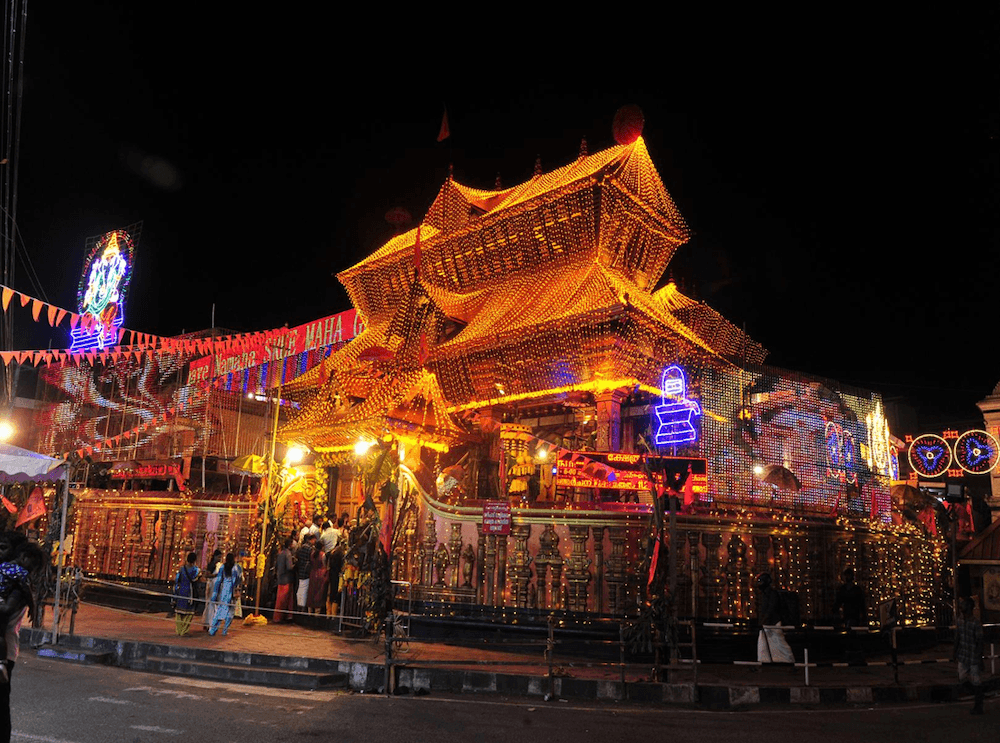
The Pazhavangadi Ganapathy Temple follows a traditional Kerala style blended with Dravidian and South Indian influences, marked by a gopuram at the entrance topped with three kalasams. Its base is built from sturdy granite, chosen to withstand Kerala’s humid climate, while the sloping tiled roof and ceiling panels are made of teak wood, often covered with copper sheeting for weather protection, all set against a warm maroon façade. As soon as we enter the temple, we come directly to the Nalambalam (inner temple enclosure). The flagstaff (Kodimaram) can also be seen inside the Nalambalam. After the Kodimaram (flagstaff), we can see the main deity’s shrine. 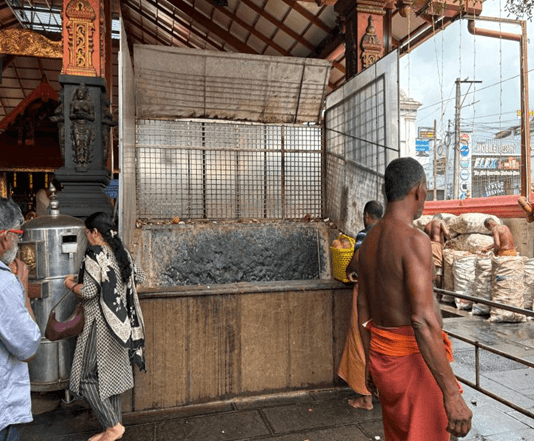 Here, Lord Ganesha is seated facing East in a way you won’t see in many other temples — his right leg folded beneath him, as if he’s resting yet ready to rise at any moment. There are actually two idols here, sitting side by side: an older granite one, worn gently by time and devotion, said to be the very form the soldier once found and carried with him and a newer golden one beside it, gleaming with precious stones, so richly adorned that it’s counted among the largest of its kind. The walls, pillars and wooden doors are richly carved and the temple complex features paintings depicting the 32 forms of Lord Ganesha.
Walk around the main sanctum at Pazhavangadi and you will find quieter corners holding their own devotion — a small shrine to Lord Dharmasastha facing East, watching over righteousness; another to Goddess Durga facing East, radiating protective, 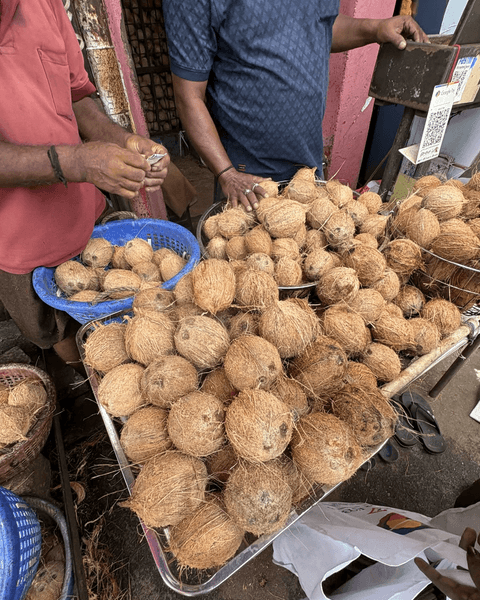 motherly strength; and a special spot set aside for Nagaraja and Naga Devathas, where devotees come especially on Ayilyam Nakshatram day to offer prayers to Nagaraja and Nagayakshi, believing it brings deep blessings.
Vinayaka Chaturthi, marking the sacred birthday of Lord Ganesha, is celebrated with profound devotion and grandeur at the historic Pazhavangadi Sree Maha Ganapathy Temple in Thiruvananthapuram. This auspicious occasion falls in the month of Chingam (August–September), when the temple comes alive with spiritual splendour. The day unfolds with meticulously performed Poojas and sacred Ganapathy Homams, invoking the blessings of Lord Ganesha, the revered remover of obstacles. Large numbers of devotees arrive at the temple, their collective devotion filling the ancient shrine with chants and fervent prayer. Adding further richness to the festivities, the temple hosts vibrant cultural and traditional art programmes, celebrating the region’s artistic heritage and lending the celebrations an atmosphere of joy and communal harmony.
The main offering at Pazhavangadi is breaking a coconut. People believe that it removes their problems and helps their wishes come true. About 2,500 coconuts are broken here every day, so the sound of coconuts cracking is heard all the time. 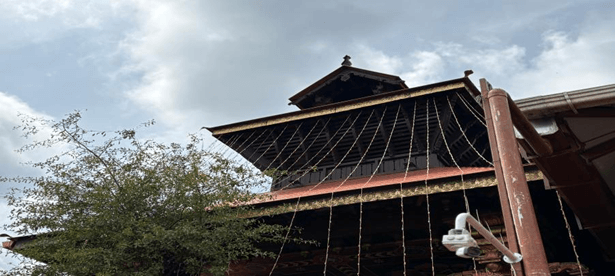 People also offer Modak (Ganesha’s favourite sweet to please the deity) and take part in Ganapathy Homam (to remove hindrances), a special fire prayer. Appam is another common offering and this temple is well known for it. These simple offerings — coconuts, sweets and prayers — are part of everyday worship here and they keep the temple full of life and devotion all year round.
The temple day begins early, even before sunrise, with the doors opening around 4:00 AM for the first quiet rituals, followed by the Ganapathy Homam at around 5:45 AM, when the smell of the sacred fire fills the air. Through the morning, a gentle rhythm of Poojas continues — Usha Pooja, Ethirth Pooja and Pantheeradi Pooja — leading up to the main Uchha Pooja around 11:00 AM, after which the temple closes for a short break till around 11:30 AM. In the evening, it opens its doors again around 5:00 PM, welcoming devotees back as the sun goes down, with the soft glow of Sandhya Deepaaradhana around 6:40 PM, before the final prayer of the day, Athazha Pooja, around 8:00 PM, which brings the temple to a peaceful close by 8:30 PM. It’s a simple, steady routine — one that’s followed almost like clockwork every single day, giving devotees a sense of comfort in knowing exactly when they can come and quietly sit with Ganesha.
Key Highlights
- Located 1.5 km from Thiruvananthapuram Bus Stand.
- Located 3.5 km from Thiruvananthapuram Railway Station.
- State transport and local transport buses are available.
- Private vehicles can be parked at the designated parking area.
- Accommodation and food facilities are available in nearby areas.
- Contact Information: 0471 2461929
पझावंगडी श्री महा गणपति मंदिर
पूर्वी किला, जिला. तिरुवनंतपुरम
मंदिरे
Temples
मंदिर
મંદિરો
கோவில்கள்
దేవాలయాలు
ക്ഷേത്രങ്ങൾ
ದೇವಾಲಯಗಳು
মন্দিরসমূহ
ਮੰਦਿਰ
-
श्री परशुराम स्वामी मंदिर तिरुवल्लम, जि. तिरुवनंतपुरम
अधिक माहितीSree Parasurama Swamy Temple Thiruvallam, Dist. Thiruvananthapuram
View Detailsश्रीपरशुराम स्वामी मंदिर तिरुवल्लम, जिला. तिरुवनंतपुरम
विवरण देखेंSree Parasurama Swamy Temple Thiruvallam, Dist. Thiruvananthapuram
વિગત જુઓSree Parasurama Swamy Temple Thiruvallam, Dist. Thiruvananthapuram
விவரங்களைக் காண்கSree Parasurama Swamy Temple Thiruvallam, Dist. Thiruvananthapuram
వివరాలను చూడండిSree Parasurama Swamy Temple Thiruvallam, Dist. Thiruvananthapuram
വിശദാംശങ്ങൾ കാണുകSree Parasurama Swamy Temple Thiruvallam, Dist. Thiruvananthapuram
ವಿವರಗಳನ್ನು ವೀಕ್ಷಿಸಿSree Parasurama Swamy Temple Thiruvallam, Dist. Thiruvananthapuram
বিস্তারিত দেখুনSree Parasurama Swamy Temple Thiruvallam, Dist. Thiruvananthapuram
ਵੇਰਵੇ ਦੇਖੋ -
वेल्लमकुलथला श्रीभागवती मंदिर वेंपाकल, नेयट्टिनकारा, जि. तिरुवनंतपुरम.
अधिक माहितीVellamkulathala Sree Bhagavathy Temple Venpakal, Neyyattinkara, Dist. Thiruvananthapuram.
View Detailsवेल्लमकुलथला श्री भगवती मंदिर वेनपाकल, नेय्याट्टिनकारा, जिला। तिरुवनंतपुरम.
विवरण देखेंVellamkulathala Sree Bhagavathy Temple Venpakal, Neyyattinkara, Dist. Thiruvananthapuram.
વિગત જુઓVellamkulathala Sree Bhagavathy Temple Venpakal, Neyyattinkara, Dist. Thiruvananthapuram.
விவரங்களைக் காண்கVellamkulathala Sree Bhagavathy Temple Venpakal, Neyyattinkara, Dist. Thiruvananthapuram.
వివరాలను చూడండిVellamkulathala Sree Bhagavathy Temple Venpakal, Neyyattinkara, Dist. Thiruvananthapuram.
വിശദാംശങ്ങൾ കാണുകVellamkulathala Sree Bhagavathy Temple Venpakal, Neyyattinkara, Dist. Thiruvananthapuram.
ವಿವರಗಳನ್ನು ವೀಕ್ಷಿಸಿVellamkulathala Sree Bhagavathy Temple Venpakal, Neyyattinkara, Dist. Thiruvananthapuram.
বিস্তারিত দেখুনVellamkulathala Sree Bhagavathy Temple Venpakal, Neyyattinkara, Dist. Thiruvananthapuram.
ਵੇਰਵੇ ਦੇਖੋ -
मलयिन्कीझु श्री कृष्ण स्वामी मंदिर मलयिन्कीझु, कट्टकडा, जिला। तिरुवनंतपुरम.
अधिक माहितीMalayinkeezhu Sree Krishna Swamy Temple Malayinkeezhu, Kattakada, Dist. Thiruvananthapuram.
View Detailsमलयिन्कीझु श्री कृष्ण स्वामी मंदिर मलयिन्कीझु, कट्टकडा, जिला। तिरुवनंतपुरम.
विवरण देखेंMalayinkeezhu Sree Krishna Swamy Temple Malayinkeezhu, Kattakada, Dist. Thiruvananthapuram.
વિગત જુઓMalayinkeezhu Sree Krishna Swamy Temple Malayinkeezhu, Kattakada, Dist. Thiruvananthapuram.
விவரங்களைக் காண்கMalayinkeezhu Sree Krishna Swamy Temple Malayinkeezhu, Kattakada, Dist. Thiruvananthapuram.
వివరాలను చూడండిMalayinkeezhu Sree Krishna Swamy Temple Malayinkeezhu, Kattakada, Dist. Thiruvananthapuram.
വിശദാംശങ്ങൾ കാണുകMalayinkeezhu Sree Krishna Swamy Temple Malayinkeezhu, Kattakada, Dist. Thiruvananthapuram.
ವಿವರಗಳನ್ನು ವೀಕ್ಷಿಸಿMalayinkeezhu Sree Krishna Swamy Temple Malayinkeezhu, Kattakada, Dist. Thiruvananthapuram.
বিস্তারিত দেখুনMalayinkeezhu Sree Krishna Swamy Temple Malayinkeezhu, Kattakada, Dist. Thiruvananthapuram.
ਵੇਰਵੇ ਦੇਖੋ