
पोलासरी देवी मंदिर
पोलासेरी, वायकोम, जि. कोट्टायम.
Polassery Devi Temple
Polassery, Vaikom, Dist. Kottayam.
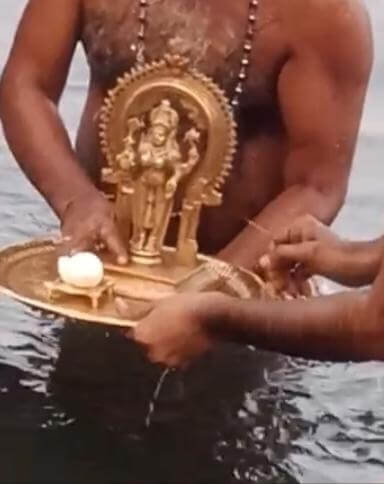 Polassery Devi Temple, located about 3 km from Vaikom Mahadeva Temple and close to the Vembanad Lake in Kottayam district, is one of the ancient and well-known places of worship in Kerala. The temple is dedicated to Goddess Durga and Goddess Bhadrakali, who are worshipped in the same sanctum sanctorum. Devotees believe that the Divine Mother, Adi Parashakti, resides here as Jagadamba. The temple is an important symbol of the region’s Hindu cultural heritage. Its sacred rituals, offerings, festivals and traditional legends continue to attract the attention and devotion of worshippers.
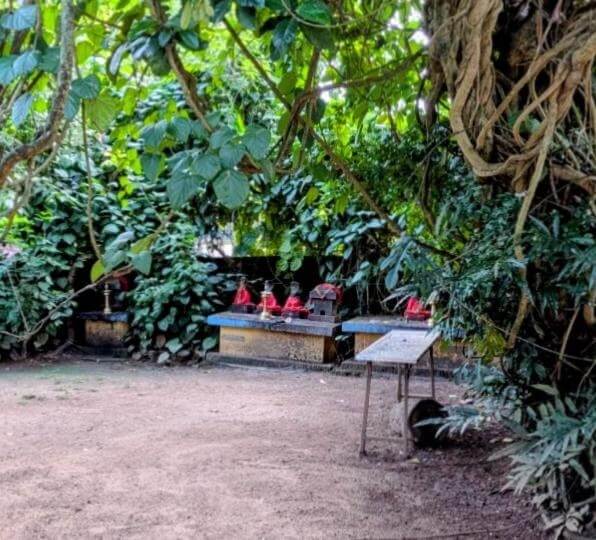
The history of Polassery Devi Temple dates back to the 1870s. It was originally a small family sacred grove (kavu) established for the worship of the family deity of a prominent local tharavad in Polassery. Over time, as the devotion and faith of the local people grew, the sacred grove became an important part of the spiritual life of the community. During the 1950s and 1960s, the administration of the temple was taken over by a local public committee and the thatched-roof grove was transformed into a small tiled temple structure. This marked the beginning of the temple’s organised development.
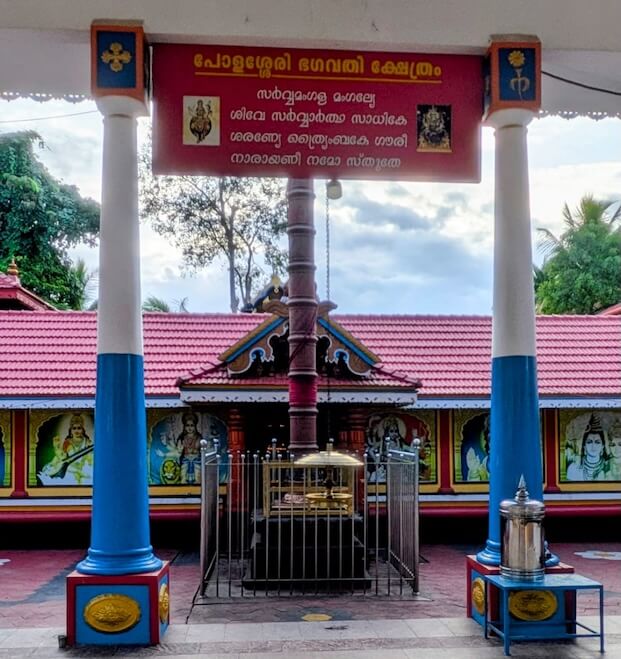 Between 2010 and 2015, the temple underwent a major reconstruction under the leadership of devotees and the renovation committee. Following traditional temple architectural principles, important structures such as the Sreekovil (sanctum sanctorum), Nalambalam and Thidappally were newly built using granite and wood. The extensive renovation work was completed with the Kumbhabhishekam ceremony, giving Polassery Devi Temple its present beautiful and majestic appearance. What began as a small family sacred grove has today grown into one of the important Bhagavathi temples in the Vaikom region.
One of the most important legends associated with Polassery Devi Temple is that the Goddess is believed to be the daughter of Vaikkathappan (Lord Shiva). According to local belief, the prayers of devotees are considered complete only after worshipping both Vaikkathappan at Vaikom Mahadeva Temple and Polassery Bhagavathi. Another legend says that centuries ago, when this place was only a sacred grove (kavu), a divine light was often seen here during the evening. Believing this to be a sign of the Goddess’s presence, local people began lighting lamps at the site and later developed it into a place of worship and eventually a temple. 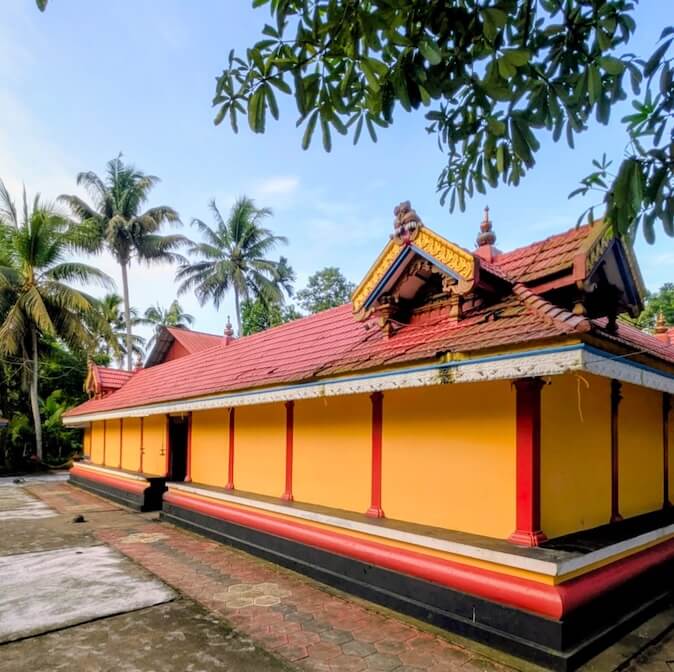 While Bhadrakali is usually worshipped in her fierce form in many temples, the Goddess at Polassery is believed to reside in a calm and benevolent form, blessing devotees with prosperity and well-being.
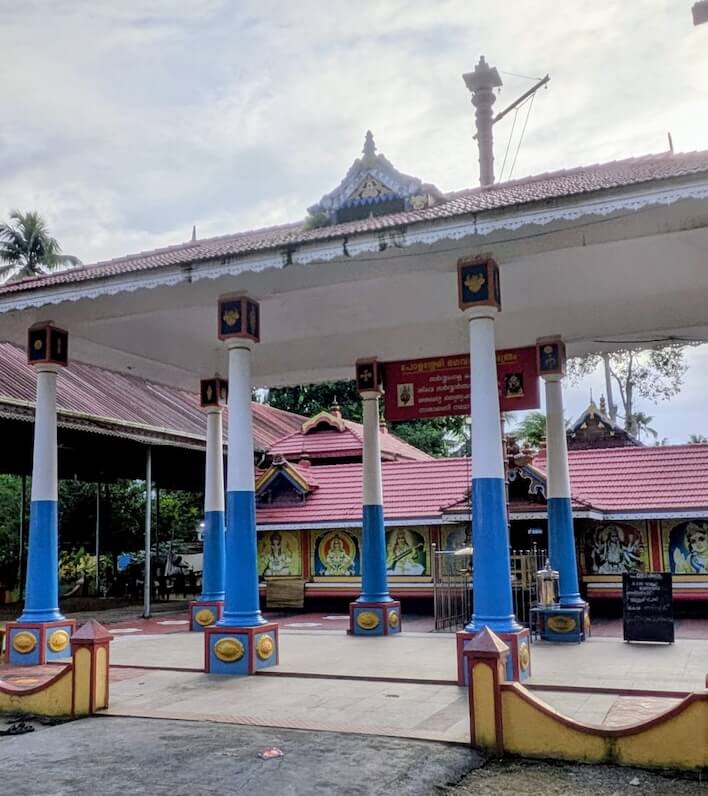
The Temple has been rebuilt in the traditional Kerala style of temple architecture. A beautifully designed entrance gateway can be seen from the temple road itself. On entering the temple, visitors can see a spacious elephant pavilion (Aanappanthal), the majestic flagstaff and the Balikkalppura located nearby. Various rituals and the traditional Parayeduppu ceremony are held here during the annual festival. The ceremonial flag hoisting takes place at the flagstaff, while offerings to the other deities are performed at the sacrificial stone within the Balikkalppura.
On entering the Nalambalam and Chuttambalam, visitors can experience the beauty of the temple architecture. At the centre of the Nalambalam stands the Sreekovil, built of granite and wood with a copper-covered roof. 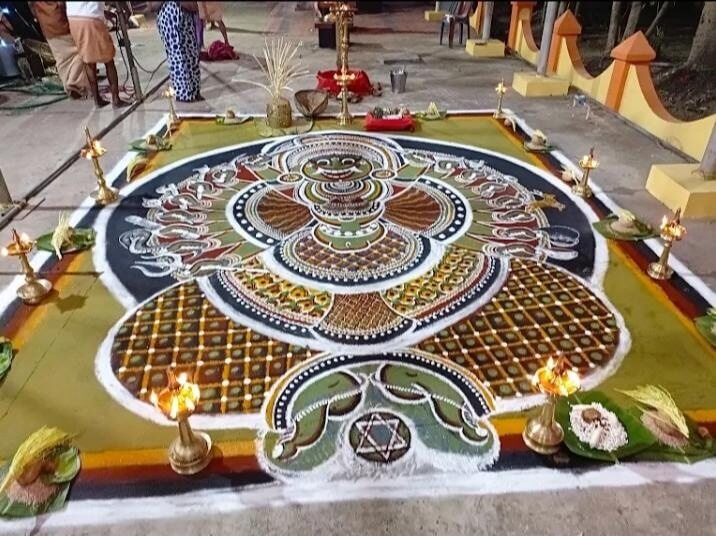 The sanctum houses the idol of Polassery Bhagavathi, carved from black stone according to traditional architectural principles. The granite steps leading to the Sreekovil and the carvings on either side are noteworthy features. Rows of lamp stands are arranged around the Nalambalam. The Thidappally (temple kitchen) is located within the Nalambalam, while shrines dedicated to Lord Ganesha, Lord Shiva, Lord Shasta (Ayyappa) and the Nagadevatha deities can be seen within the temple premises.
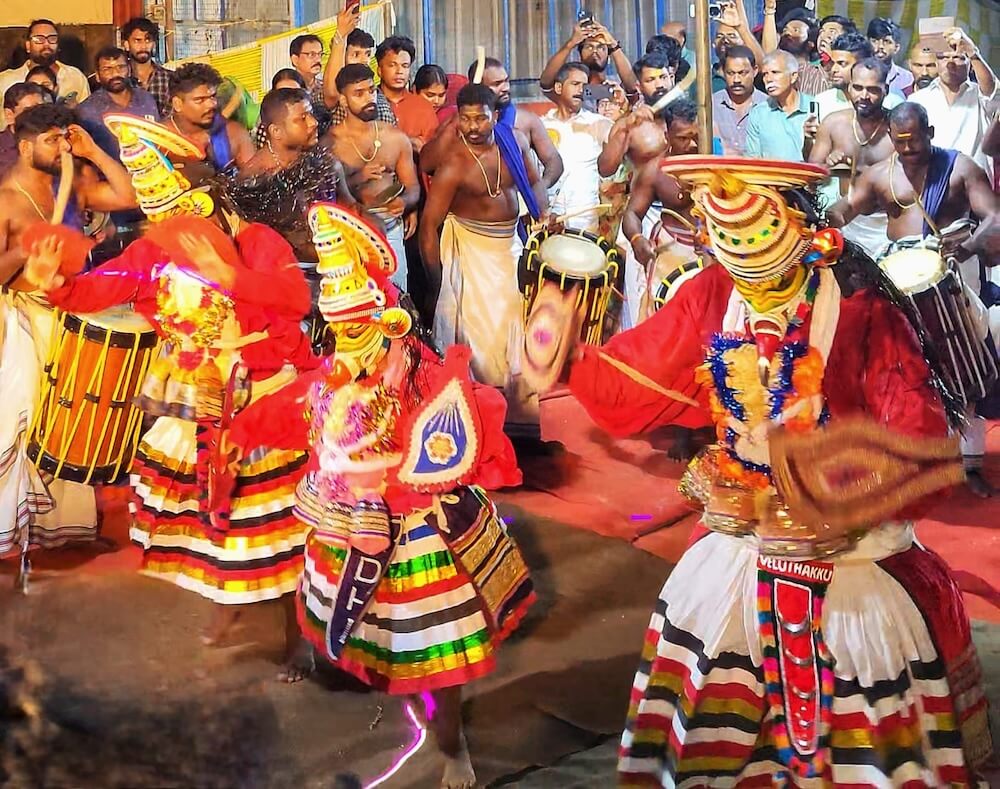
The Meena Bharani Festival, celebrated on the Bharani star in the Malayalam month of Meenam (March–April), is the main annual festival of Polassery Devi Temple. Usually observed over eight days, the festival begins with the ceremonial flag hoisting and concludes with the Aarattu ritual. Major highlights of the festival include Thantri-led rituals, special homams, 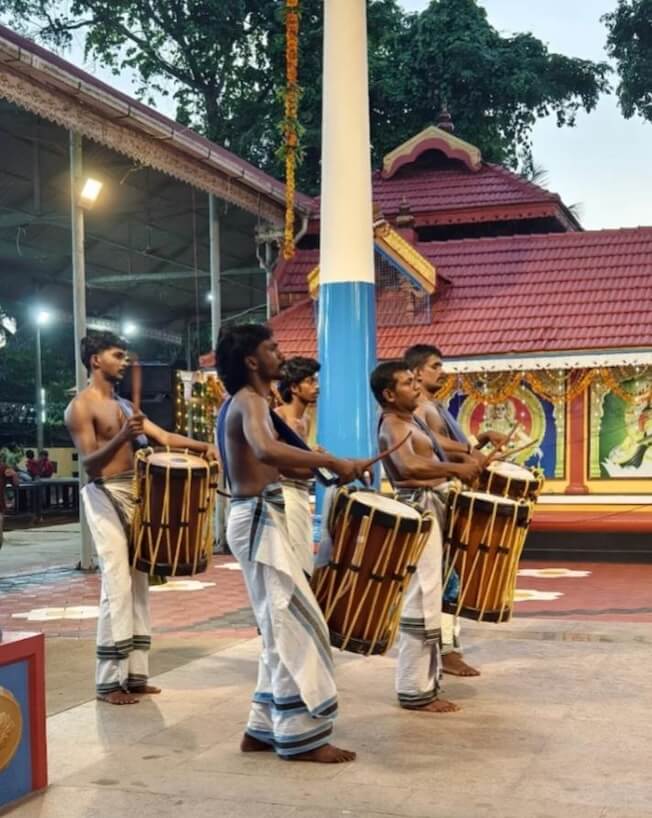 abhishekams, ceremonial processions accompanied by caparisoned elephants, Pallivetta, Thalappoli and various traditional temple and folk art performances.
Mandala Mahotsavam, Navaratri, Thrikarthika and the Temple Consecration Day are also important observances at the temple. During the Mandala season, special poojas and Chuttuvilakku (lamp-lighting ceremonies) are conducted. Navaratri is marked by special decorations for the Goddess and Vidyarambham ceremonies for children. On Thrikarthika, the temple and its lamp stands are beautifully illuminated with rows of lamps. In addition, Tuesdays, Fridays and the Bharani star day of every Malayalam month are observed with special poojas and offerings, attracting a large number of devotees.
Among the main offerings at Polassery Devi Temple, Kadumpayasam (jaggery pudding), Mutturukkal, Chandanam Charthal (offering of sandalwood paste) and Rakthapushpanjali hold special importance. Devotees offer Kadumpayasam for the fulfilment of wishes and family prosperity, while Mutturukkal is performed for protection from obstacles and negative influences. Chandanam Charthal is offered for peace of mind and good health and Rakthapushpanjali is performed for relief from difficulties and hardships. 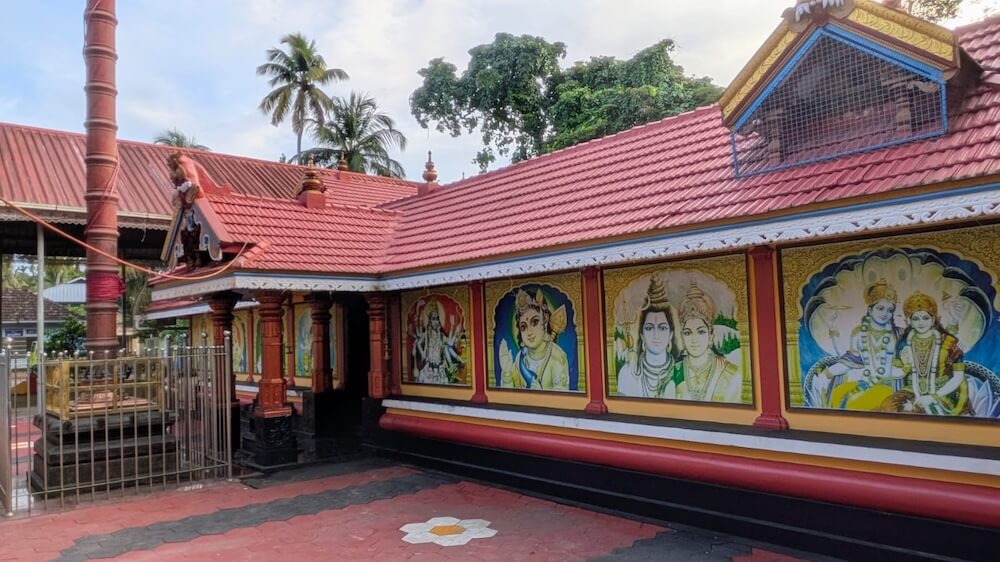 Women also offer silk cloth and thali to the Goddess, seeking marital happiness and a blessed family life. During the Meena Bharani festival, Parayeduppu and Thalappoli are important offerings. As part of the ceremonial procession of the Goddess, devotees offer paras filled with paddy, puffed rice and turmeric powder, while women and children welcome the Goddess by carrying lamps and ceremonial plates in the Thalappoli procession.
The temple is open daily from 05:30 AM to 10:00 AM and from 05:30 PM to 08:00 PM. The daily rituals begin at 05:30 AM with Nirmalya Darshanam, followed by Abhishekam, Malar Nivedyam and Usha Pooja. The morning rituals conclude with the Ucha Pooja, held between 09:30 AM and 10:00 AM. The temple reopens at 05:30 PM and the evening rituals include Deeparadhana at 06:30 PM and Athazha Pooja at 07:30 PM. The temple closes at 08:00 PM after the completion of the day’s rituals. On special occasions and festival days, the temple may remain open for longer hours.
Key highlight :-
- Located 33 km from Ernakulam and 35 km from Kottayam.
- The nearest railway station is Vaikom road railway station, about 15 km away.
- KSRTC and local buses are available to Vaikom from major cities across Kerala.
- Private vehicles can be parked in the temple parking area.
- Accommodation and dining facilities are available near the temple.
पोलासेरी देवी मंदिर
पोलासेरी, वैकोम, जिला। कोट्टायम.
मंदिरे
Temples
मंदिर
મંદિરો
கோவில்கள்
దేవాలయాలు
ക്ഷേത്രങ്ങൾ
ದೇವಾಲಯಗಳು
মন্দিরসমূহ
ਮੰਦਿਰ
-
तिरुनाक्कारा महादेवाचे मंदिर कोट्टायम टाउन, जि. कोट्टायम
अधिक माहितीThirunakkara Mahadeva Temple Kottayam Town, Dist. Kottayam
View Detailsतिरुनक्कारा महादेव मंदिर कोट्टायम टाउन, जिला। कोट्टायम
विवरण देखेंThirunakkara Mahadeva Temple Kottayam Town, Dist. Kottayam
વિગત જુઓThirunakkara Mahadeva Temple Kottayam Town, Dist. Kottayam
விவரங்களைக் காண்கThirunakkara Mahadeva Temple Kottayam Town, Dist. Kottayam
వివరాలను చూడండిThirunakkara Mahadeva Temple Kottayam Town, Dist. Kottayam
വിശദാംശങ്ങൾ കാണുകThirunakkara Mahadeva Temple Kottayam Town, Dist. Kottayam
ವಿವರಗಳನ್ನು ವೀಕ್ಷಿಸಿThirunakkara Mahadeva Temple Kottayam Town, Dist. Kottayam
বিস্তারিত দেখুনThirunakkara Mahadeva Temple Kottayam Town, Dist. Kottayam
ਵੇਰਵੇ ਦੇਖੋ -
मुलाकुलम श्री लक्ष्मण स्वामी मंदिर मुलाक्कुलम दक्षिण, जि. कोट्टायम.
अधिक माहितीMulakkulam Sree Lakshmana Swamy Temple Mulakkulam South, Dist. Kottayam.
View Detailsमुलक्क्कुलम श्री लक्ष्मण स्वामी मंदिर मुलक्क्कुलम दक्षिण, जिला। कोट्टायम.
विवरण देखेंMulakkulam Sree Lakshmana Swamy Temple Mulakkulam South, Dist. Kottayam.
વિગત જુઓMulakkulam Sree Lakshmana Swamy Temple Mulakkulam South, Dist. Kottayam.
விவரங்களைக் காண்கMulakkulam Sree Lakshmana Swamy Temple Mulakkulam South, Dist. Kottayam.
వివరాలను చూడండిMulakkulam Sree Lakshmana Swamy Temple Mulakkulam South, Dist. Kottayam.
വിശദാംശങ്ങൾ കാണുകMulakkulam Sree Lakshmana Swamy Temple Mulakkulam South, Dist. Kottayam.
ವಿವರಗಳನ್ನು ವೀಕ್ಷಿಸಿMulakkulam Sree Lakshmana Swamy Temple Mulakkulam South, Dist. Kottayam.
বিস্তারিত দেখুনMulakkulam Sree Lakshmana Swamy Temple Mulakkulam South, Dist. Kottayam.
ਵੇਰਵੇ ਦੇਖੋ -
कालिकावू देवी मंदिर पाकलोमत्तम, कुरविलंगड, जि. कोट्टायम.
अधिक माहितीKalikavu Devi Temple Pakalomattam, Kuravilangad, Dist. Kottayam.
View Detailsकालिकावु देवी मंदिर पाकलोमट्टम, कुराविलंगड, जिला। कोट्टायम.
विवरण देखेंKalikavu Devi Temple Pakalomattam, Kuravilangad, Dist. Kottayam.
વિગત જુઓKalikavu Devi Temple Pakalomattam, Kuravilangad, Dist. Kottayam.
விவரங்களைக் காண்கKalikavu Devi Temple Pakalomattam, Kuravilangad, Dist. Kottayam.
వివరాలను చూడండిKalikavu Devi Temple Pakalomattam, Kuravilangad, Dist. Kottayam.
വിശദാംശങ്ങൾ കാണുകKalikavu Devi Temple Pakalomattam, Kuravilangad, Dist. Kottayam.
ವಿವರಗಳನ್ನು ವೀಕ್ಷಿಸಿKalikavu Devi Temple Pakalomattam, Kuravilangad, Dist. Kottayam.
বিস্তারিত দেখুনKalikavu Devi Temple Pakalomattam, Kuravilangad, Dist. Kottayam.
ਵੇਰਵੇ ਦੇਖੋ