
कालिकावू देवी मंदिर
पाकलोमत्तम, कुरविलंगड, जि. कोट्टायम.
Kalikavu Devi Temple
Pakalomattam, Kuravilangad, Dist. Kottayam.
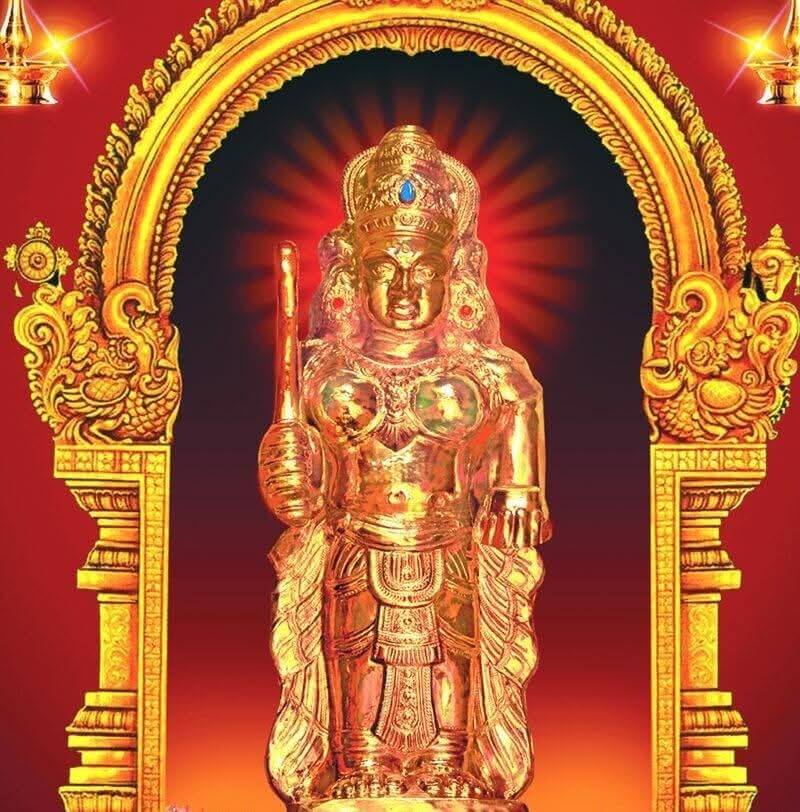 Pakalomattam Kalikavu Devi Temple is a historic temple located at Pakalomattam in Kuravilangad Panchayat, Meenachil Taluk, Kottayam district. The main deity is Goddess Bhadrakali, who is worshipped in her compassionate motherly form. Also known as the ‘Kalampattu Temple’, it is well known for its traditional rituals, especially Kalamezhuthu (ritual floor drawing) and Kalampattu. The temple is regarded as one of the important centres of Devi worship and traditional Tantric practices in Kerala.
According to traditional belief, the origins of Pakalomattam Kalikavu Devi Temple date back to the 4th century AD (around AD 335–345), when the prominent Pakalomattam, Sankarapuri, Kalli and Kalikavu families settled in this region. The presence of these families is also mentioned in Christian historical records. It is believed that the name ‘Kalikavu’ was derived either from the Kalikavu family of the area or from the ancient kavu (sacred grove dedicated to the Goddess) tradition. During the medieval period, the temple developed into an important centre of kavu culture and Shakta worship in Kerala. 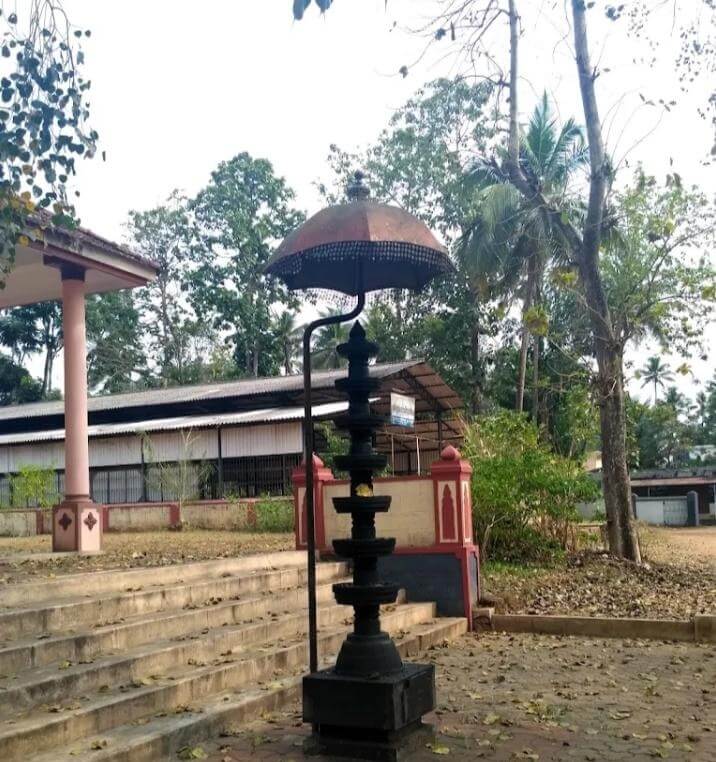 As Kalamezhuthu (ritual floor drawing) and Kalampattu became important temple rituals, the temple came to be known as the ‘Kalampattu Temple’. The present temple structure and the worship of Goddess Bhadrakali are believed to have taken shape during the 10th and 11th centuries AD. The temple was established and developed under the leadership of the local Oorazhma trustees and the local community. It later came under the administration of the Travancore Kingdom and is now managed by the Travancore Devaswom Board.
According to legend, an elder of the Pakalomattam family was a devoted worshipper of the Goddess of Kodungallur. As he grew old, he was no longer able to travel to the Kodungallur Temple for worship. Moved by his deep devotion, the Goddess is believed to have accompanied him in his palm-leaf umbrella to Pakalomattam. It is believed that her divine presence was revealed at the place where he placed the umbrella and a kavu (sacred grove shrine) was later established there for her worship. In memory of the legend that the gods drew a sacred kalam and sang hymns to calm Goddess Bhadrakali after she slew the demon Darikasura, 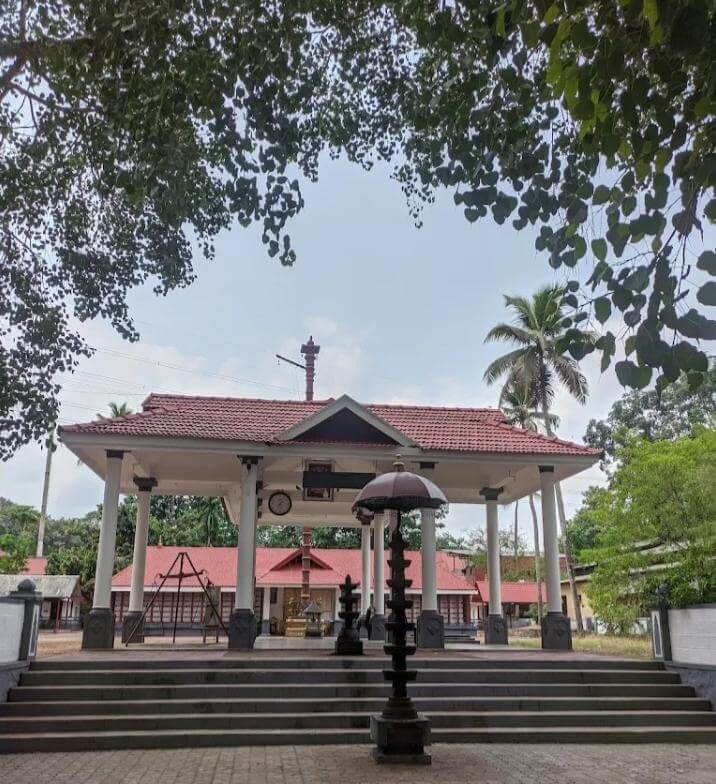 the ritual of Kalampattu is performed at the temple on all days of the year except for ten days during the annual festival. There is also a local belief that the Pakalomattam family has historical links with the Christian traditions of the Kuravilangad region.
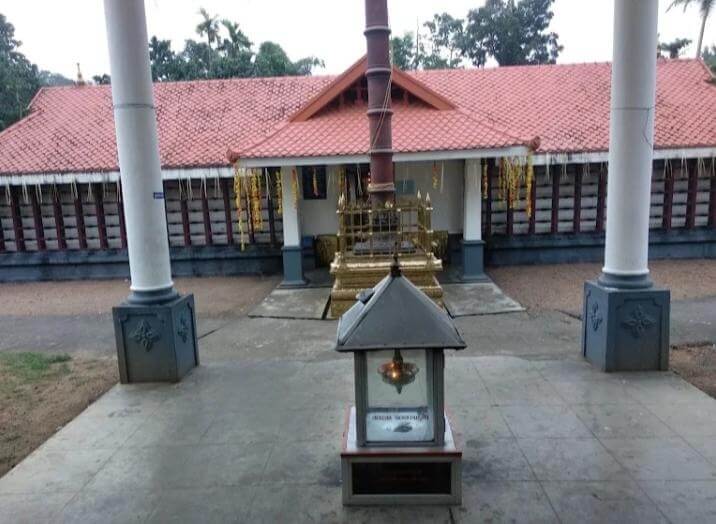
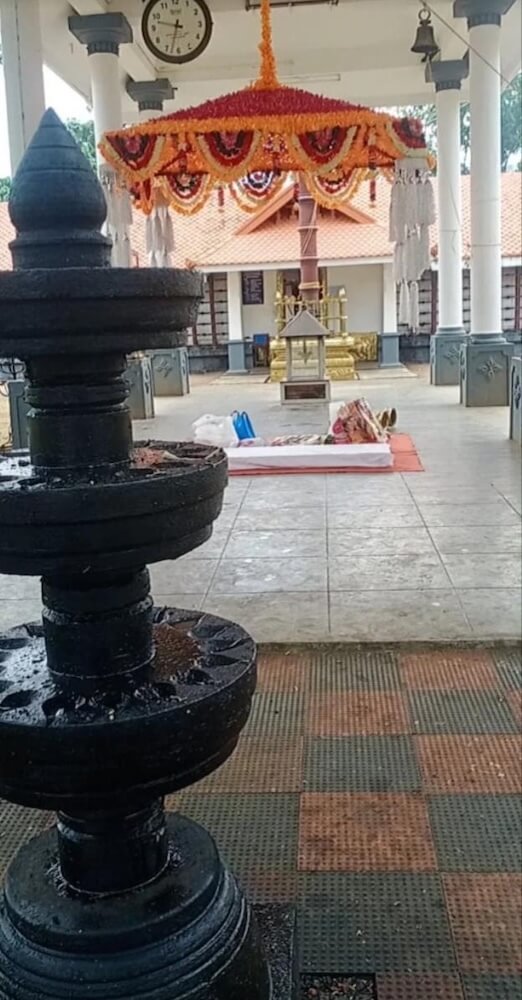
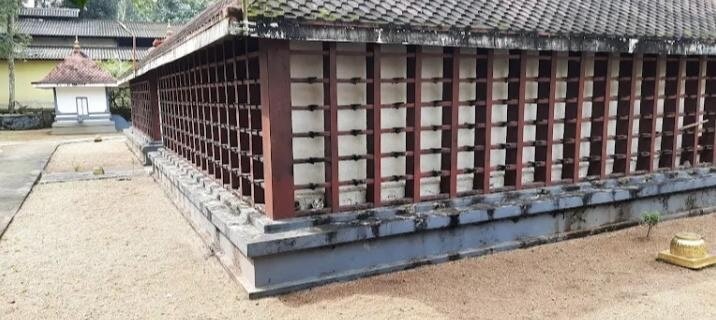
As you enter the temple, the first things you notice are the large banyan tree and the raised platform around it, reflecting the natural beauty of the ancient kavu tradition. In front of the temple are a simple entrance gateway and an Aanappanthal, where devotees gather during festivals and special occasions. The compound wall, painted in the traditional saffron and white colours and the sloping tiled roofs designed for Kerala’s climate reflect the temple’s traditional architecture. Beyond the entrance is the square Nalambalam, where important rituals, including the famous Kalampattu, are performed. The rows of Vilakkumadams (lamp galleries) along the outer walls of the Chuttambalam add to the temple’s traditional beauty.
The main sanctum (Sreekovil) is a square structure built in the traditional Kerala style and faces east. It is constructed with granite and laterite bricks and is topped with a sloping tiled roof crowned by a copper Thazhikakkudam (finial). 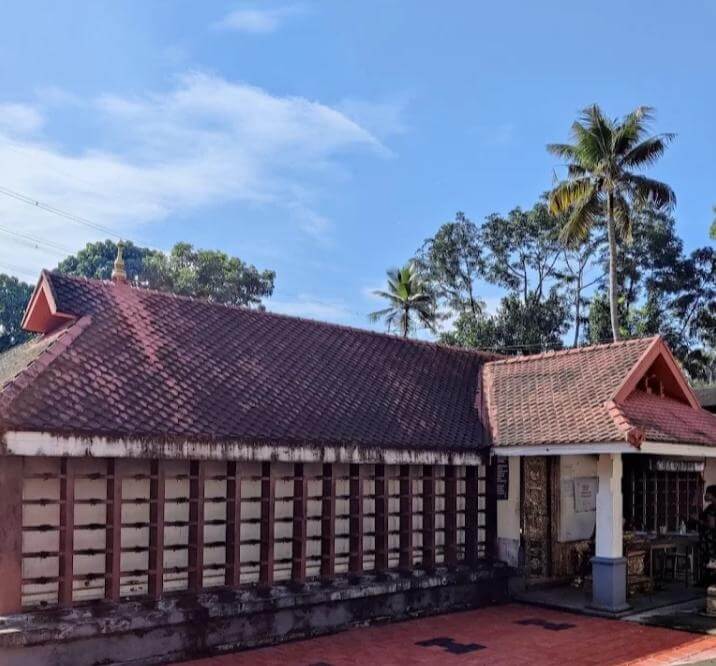 The sanctum is entered through a granite Sopanam (steps). The main deity is Goddess Bhadrakali, worshipped in her compassionate motherly form. An Archana Bimbam is also installed in front of the main idol for offering prayers. A shrine dedicated to Lord Ganesha, facing east, is located to the south-west of the main sanctum, while a shrine of Lord Shiva stands to the north-west. Outside the temple wall are the Naga Thara, dedicated to Nagaraja and Nagayakshi, preserving the ancient kavu tradition and a separate shrine for Yakshi Amma.
The annual festival of the temple is celebrated every year during the Malayalam month of Makaram (January–February). Special poojas, Sree Bhoothabali, Pallivetta and Arattu are among the main ceremonies held during the festival. The temple’s most important ritual, Kalampattu, is performed on 355 days of the year, except during the ten days from the flag hoisting to the Arattu of the annual festival. 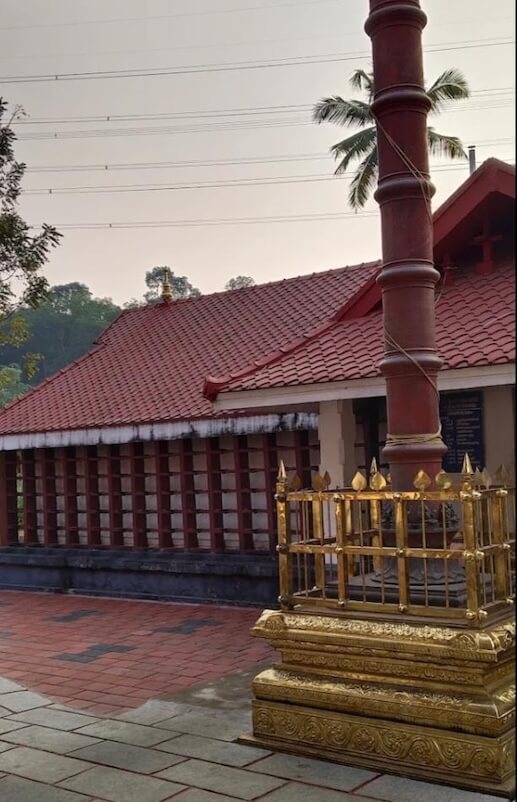 During the Mandala season in the Malayalam months of Vrischikam and Dhanu (November–January), Kalamezhuthu and Kalampattu are conducted with special importance. The Navaratri festival, celebrated in the month of Kanni (September–October), includes Poojavaypu on Durga Ashtami and Mahanavami and Vidyarambham on Vijayadashami. On Thrikkarthika in the month of Vrischikam (November–December), the temple and its Vilakkumadam are beautifully illuminated with thousands of oil lamps. Special poojas during the Mandala season, special worship on every Tuesday and Friday and the monthly Ayilyam Pooja, Sarppampattu and Ayilyam Oottu for the naga deities are also among the temple’s important observances.
Kalampattu is the most important offering at the temple. In this ritual, the image of the Goddess is drawn on the floor using five coloured powders and devotional songs are sung in her praise. Mudiyettu, the traditional ritual performance depicting the slaying of the Asura Darikasura by Goddess Bhadrakali, is also performed during the annual festival and on special occasions. Other important offerings include Guruthi Tharpanam to appease the Goddess, Rakta Pushpanjali for protection from enemies and the fulfilment of wishes, Kadumadhura Payasam for family well-being and prosperity and Nanayappara and Nelppara for blessings related to marriage, employment and other aspirations. Special offerings such as Naga Pooja and Ayilyam Oottu are also performed for the naga deities.
The temple opens every day at 05:00 AM. This is followed by Usha Pooja at 06:00 AM and Ucha Pooja at 10:00 AM. The temple closes at 10:30 AM, although it may remain open a little longer on special days after the Ucha Pooja. The temple reopens at 05:00 PM. Deeparadhana is performed at sunset, followed by Athazha Pooja at 07:30 PM. The temple closes for the day at 08:00 PM. On days when Kalampattu is performed, the drawing of the sacred kalam begins in the Chuttambalam after the Deeparadhana, followed by the Kalampattu ceremony later in the evening. On such days, the closing time of the temple may vary depending on the duration of the rituals.
Key highlight :-
- Located about 10 km from Kaduthuruthy, 13 km from Pala, and 24 km from Vaikom.
- The nearest railway stations are Ettumanoor Railway Station, about 11 km away and Kottayam
- Railway Station, about 23 km away.
- KSRTC and local bus facilities are available to the temple from Kottayam and Vaikom.
- Private vehicles can be parked in the temple’s parking area.
- Accommodation and food facilities are available in the nearby towns.
कालिकावु देवी मंदिर
पाकलोमट्टम, कुराविलंगड, जिला। कोट्टायम.
मंदिरे
Temples
मंदिर
મંદિરો
கோவில்கள்
దేవాలయాలు
ക്ഷേത്രങ്ങൾ
ದೇವಾಲಯಗಳು
মন্দিরসমূহ
ਮੰਦਿਰ
-
श्री कुमारमंगलम सुब्रमण्य स्वामी मंदिर कट्टाकायम, कुमारकोम, जि. कोट्टायम.
अधिक माहितीSree Kumaramangalam Subramanya Swamy Temple Kattakayam, Kumarakom, Dist. Kottayam.
View Detailsश्री कुमारमंगलम सुब्रमण्यम स्वामी मंदिर कट्टाकायम, कुमारकोम, जिला। कोट्टायम.
विवरण देखेंSree Kumaramangalam Subramanya Swamy Temple Kattakayam, Kumarakom, Dist. Kottayam.
વિગત જુઓSree Kumaramangalam Subramanya Swamy Temple Kattakayam, Kumarakom, Dist. Kottayam.
விவரங்களைக் காண்கSree Kumaramangalam Subramanya Swamy Temple Kattakayam, Kumarakom, Dist. Kottayam.
వివరాలను చూడండిSree Kumaramangalam Subramanya Swamy Temple Kattakayam, Kumarakom, Dist. Kottayam.
വിശദാംശങ്ങൾ കാണുകSree Kumaramangalam Subramanya Swamy Temple Kattakayam, Kumarakom, Dist. Kottayam.
ವಿವರಗಳನ್ನು ವೀಕ್ಷಿಸಿSree Kumaramangalam Subramanya Swamy Temple Kattakayam, Kumarakom, Dist. Kottayam.
বিস্তারিত দেখুনSree Kumaramangalam Subramanya Swamy Temple Kattakayam, Kumarakom, Dist. Kottayam.
ਵੇਰਵੇ ਦੇਖੋ -
सस्थकुलम देवी मंदिर वेचूर, कुमारकोम, जि. कोट्टायम.
अधिक माहितीSasthakulam Devi Temple Vechoor, Kumarakom, Dist. Kottayam.
View Detailsसस्थाकुलम देवी मंदिर वेचूर, कुमारकोम, जिला। कोट्टायम.
विवरण देखेंSasthakulam Devi Temple Vechoor, Kumarakom, Dist. Kottayam.
વિગત જુઓSasthakulam Devi Temple Vechoor, Kumarakom, Dist. Kottayam.
விவரங்களைக் காண்கSasthakulam Devi Temple Vechoor, Kumarakom, Dist. Kottayam.
వివరాలను చూడండిSasthakulam Devi Temple Vechoor, Kumarakom, Dist. Kottayam.
വിശദാംശങ്ങൾ കാണുകSasthakulam Devi Temple Vechoor, Kumarakom, Dist. Kottayam.
ವಿವರಗಳನ್ನು ವೀಕ್ಷಿಸಿSasthakulam Devi Temple Vechoor, Kumarakom, Dist. Kottayam.
বিস্তারিত দেখুনSasthakulam Devi Temple Vechoor, Kumarakom, Dist. Kottayam.
ਵੇਰਵੇ ਦੇਖੋ -
वैकयिल श्री धर्मस्थ मंदिर वडयार, थलयोलापरंबु, जि. कोट्टायम.
अधिक माहितीVackayil Sree Dharmasastha Temple Vadayar, Thalayolaparambu, Dist. Kottayam.
View Detailsवैकायिल श्री धर्मशास्त्र मंदिर वडयार, थालायोलापाराम्बु, जिला। कोट्टायम.
विवरण देखेंVackayil Sree Dharmasastha Temple Vadayar, Thalayolaparambu, Dist. Kottayam.
વિગત જુઓVackayil Sree Dharmasastha Temple Vadayar, Thalayolaparambu, Dist. Kottayam.
விவரங்களைக் காண்கVackayil Sree Dharmasastha Temple Vadayar, Thalayolaparambu, Dist. Kottayam.
వివరాలను చూడండిVackayil Sree Dharmasastha Temple Vadayar, Thalayolaparambu, Dist. Kottayam.
വിശദാംശങ്ങൾ കാണുകVackayil Sree Dharmasastha Temple Vadayar, Thalayolaparambu, Dist. Kottayam.
ವಿವರಗಳನ್ನು ವೀಕ್ಷಿಸಿVackayil Sree Dharmasastha Temple Vadayar, Thalayolaparambu, Dist. Kottayam.
বিস্তারিত দেখুনVackayil Sree Dharmasastha Temple Vadayar, Thalayolaparambu, Dist. Kottayam.
ਵੇਰਵੇ ਦੇਖੋ