
मुलाकुलम श्री लक्ष्मण स्वामी मंदिर
मुलाक्कुलम दक्षिण, जि. कोट्टायम.
Mulakkulam Sree Lakshmana Swamy Temple
Mulakkulam South, Dist. Kottayam.
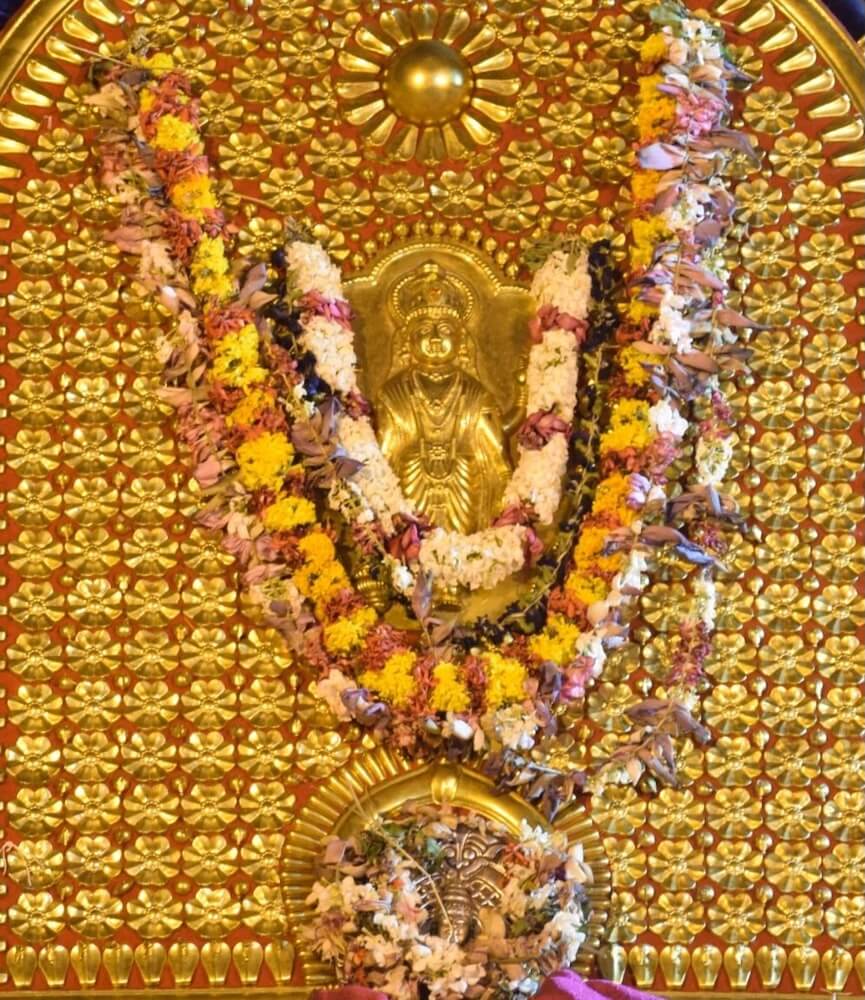 Mulakkulam Sree Lakshmana Swamy Temple is an ancient Hindu temple located at Mulakkulam in Kottayam district, near Piravom on the border of Kottayam and Ernakulam districts. The main deity is Sree Lakshmana Swamy, the younger brother of Lord Rama. The temple is the third shrine to be visited in the well-known Ernakulam–Kottayam Nalambalam pilgrimage circuit, making it an important place of worship for devotees. With its ancient heritage, strong devotional tradition and beautiful Kerala temple architecture, the temple attracts many devotees throughout the year.
The history of Mulakkulam Sree Lakshmana Swamy Temple is mainly connected with medieval Kerala between the 11th and 18th centuries CE. According to tradition, the Thirumoozhikulam Temple, from which the sacred thidambu is believed to have been brought to Mulakkulam, existed before the 8th century CE and is mentioned in the hymns of the Tamil Alvars. Stone inscriptions indicate that the Moozhikulam Kacham, a set of rules that formed the basis of Kerala’s temple administration, was established during the reign of the Chera king Bhaskara Ravi Varma in the 11th century CE.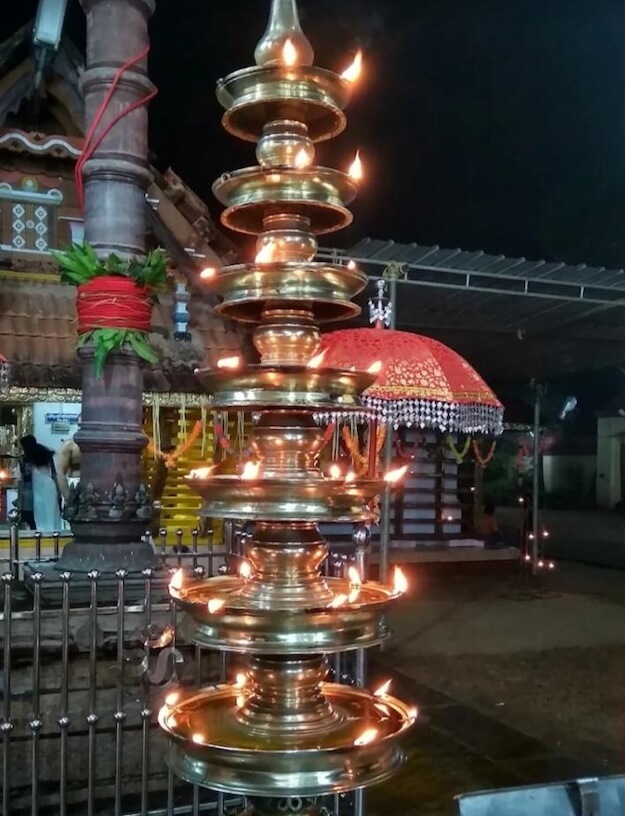 Traditional accounts also state that, following disputes between local ruling families during the 14th to 16th centuries CE, the Sreebali thidambu from Thirumoozhikulam was moved south. It is believed that the thidambu was first kept at the house of Karimalakkottu Moosath before a new temple was established at Mulakkulam with the support of the Edappally rulers. By the late 18th century CE, the region had become part of the Kingdom of Travancore and the temple came under state administration. In 1949, it was brought under the management of the Travancore Devaswom Board.
According to the main legend associated with the temple, a dispute arose between the rulers of Edappally and Paravur during a temple festival at Thirumoozhikulam over a Dasiyattam dance performance. It is believed that, following the dispute, the Edappally ruler secretly took the Sreebali thidambu of Sree Lakshmana Swamy from the temple. The legend says that he later installed the thidambu at Mulakkulam, declaring it to be the original “Moolakkulam” of Lakshmana Swamy. It is also believed that the name “Moolakkulam” gradually became “Mulakkulam” over time. 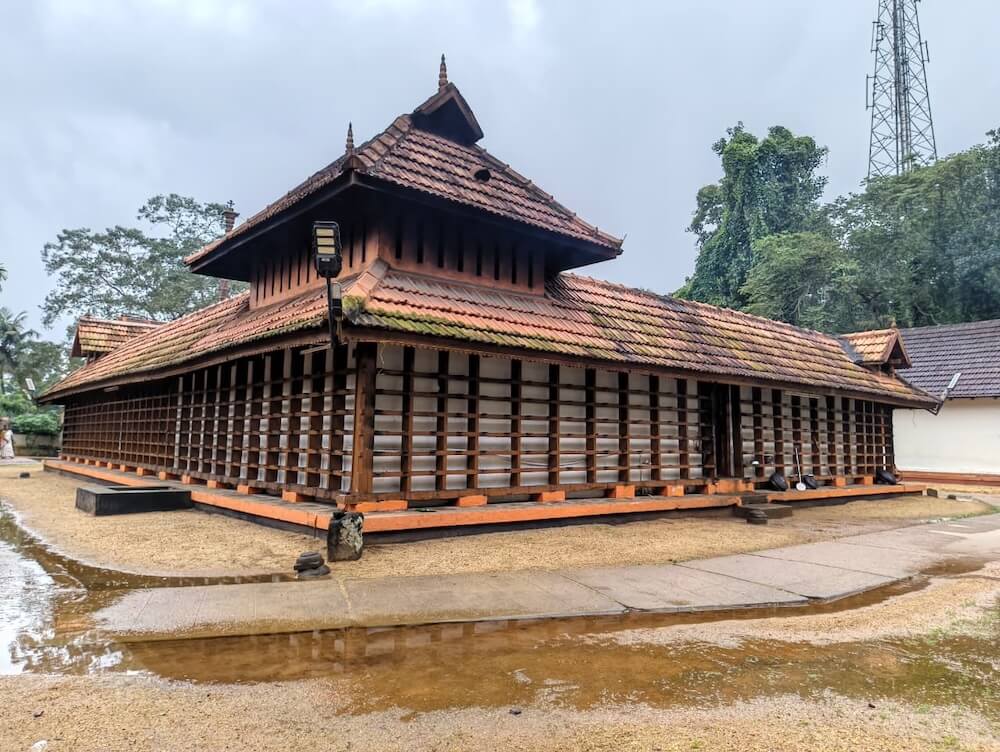 Another local tradition states that the thidambu was first worshipped at the house of the Namboothiri family of Karimalakkottu Moosath before being ceremonially brought to the temple on an elephant. In memory of this event, special rituals, including the Irakki Ezhunnallippu procession, are still held during the annual temple festival.
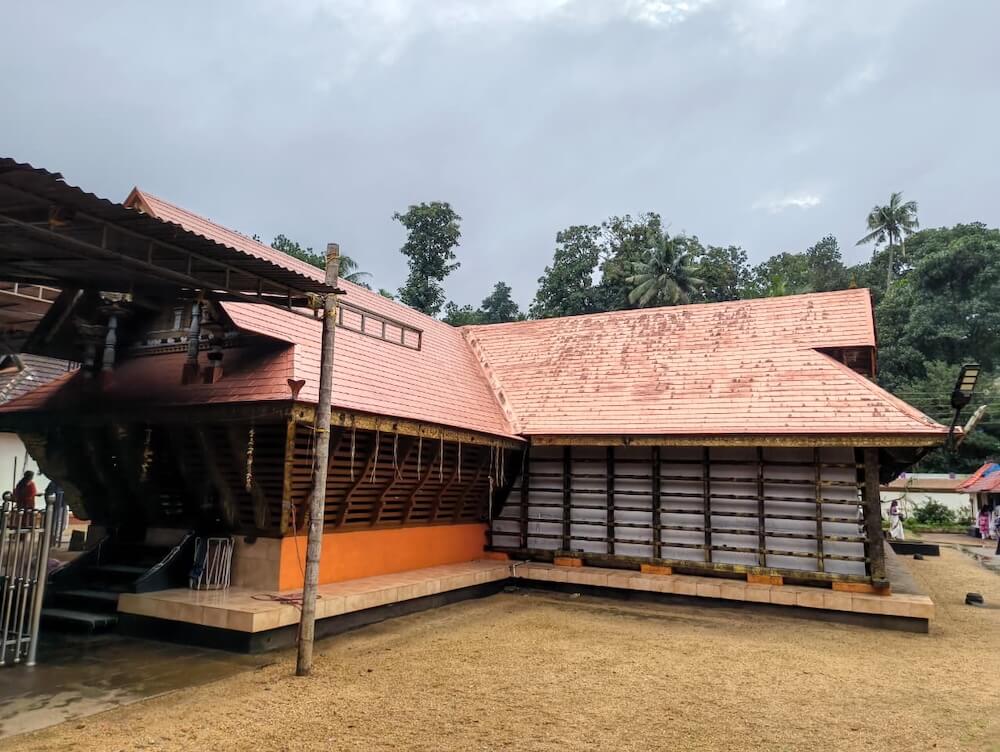
The temple’s main entrance features a beautiful traditional gateway. As the temple stands slightly above road level, visitors enter the temple grounds by climbing a broad flight of steps. Beyond the gateway, which has a traditional tiled roof, is a large elephant shelter used to house elephants and for ceremonial processions during festivals. Further ahead is the outer enclosure, with its white walls and wooden window frames designed for oil lamps.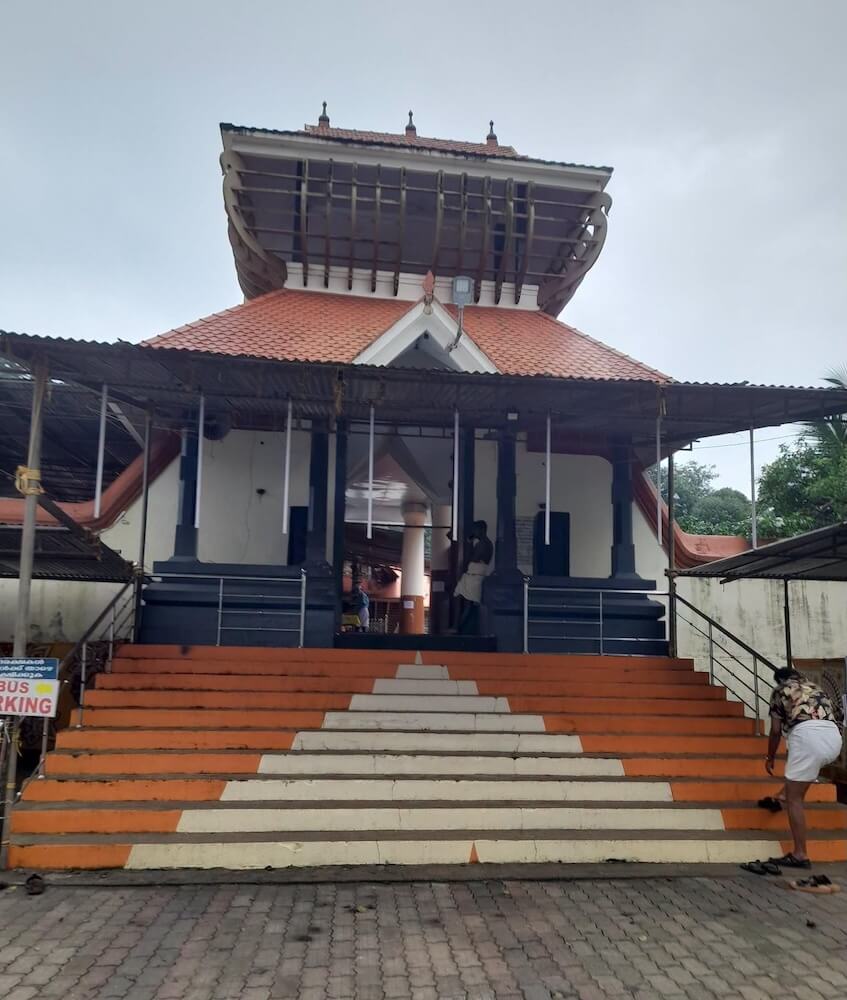 Entering through the main gateway of the enclosure, devotees first see the large Balikkal (sacrificial stone). Beyond it lies the spacious Nalambalam and the stone-paved Prakaram (circumambulatory path), reflecting the beauty of traditional Kerala temple architecture.
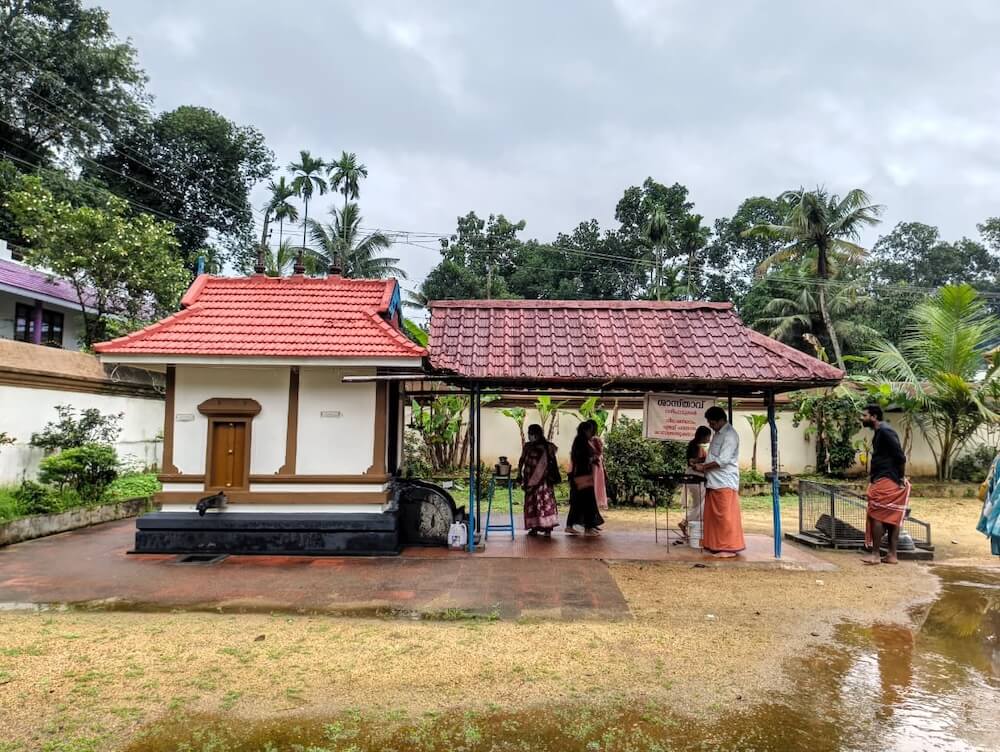
The sanctum is built in the traditional Kerala style as a single-tiered square structure. It stands on a finely carved granite base, with white lime-plastered walls, a wooden roof and a covering of clay tiles. The granite Sopanam (steps), together with the carved stonework and the figures of the Dwarapalakas (guardian deities) on either side of the entrance, are notable features. In front of the sanctum is a Namaskara Mandapam with wooden pillars and a tiled roof. Unlike most Kerala temples, where the main deity is a permanent stone or wooden idol, the principal object of worship here is a metal Sreebali Thidambu, facing west. Beautifully decorated with flower garlands and ornaments, it is worshipped in the light of traditional oil lamps. Within the Nalambalam, on the south-west side, is a shrine dedicated to Lord Ganesha. Outside the Nalambalam, within the temple grounds, are shrines dedicated to Kirathamurthy (Lord Shiva) on the north-west side and Lord Ayyappa on the south-west side. A small shrine dedicated to Bhagavathy, established in memory of a devotee associated with the temple, is located near the northern entrance.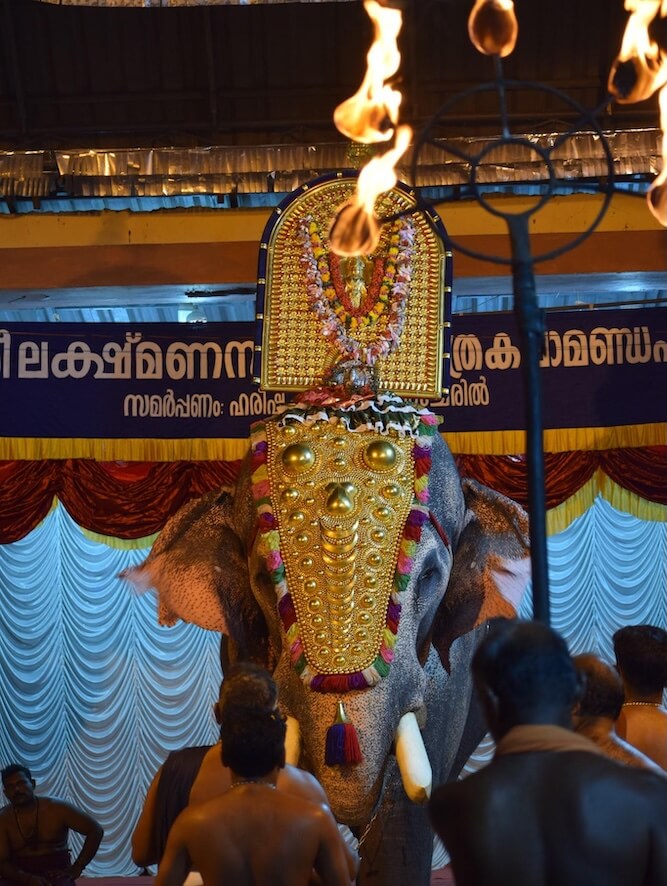
The temple’s main festival is the nine-day annual flag-hoisting festival held during the Malayalam month of Medam (April–May). The celebrations conclude with the Arattu ceremony on the Thiruvonam star in Medam. During the festival, special poojas, Pallivetta, Kazhcha Seeveli and traditional art performances such as Kathakali, Chakyar Koothu and Thayambaka are held. The temple receives its largest number of devotees during the Nalambalam Darshanam pilgrimage in the Malayalam month of Karkidakam (July–August). As visiting the four Nalambalam temples dedicated to the four brothers of the Ramayana on the same day is considered highly auspicious, special poojas and extended darshan hours are arranged during this period. Other important observances include Ramayana recitation throughout Karkidakam, the consecration anniversary on the Pooram star in the month of Mithunam, special poojas for Lord Ayyappa during the Mandala–Makaravilakku season and special poojas and Dhara for Kirathamurthy on Maha Shivaratri.
The temple’s main offerings include Palpayasam (sweet milk pudding), banana offering, Koottu Payasam, Panchasara Payasam and the lighting of ghee lamps. Devotees offer these for the blessings of children, family prosperity, wealth, good health, peace of mind, relief from difficulties and the fulfilment of special prayers. 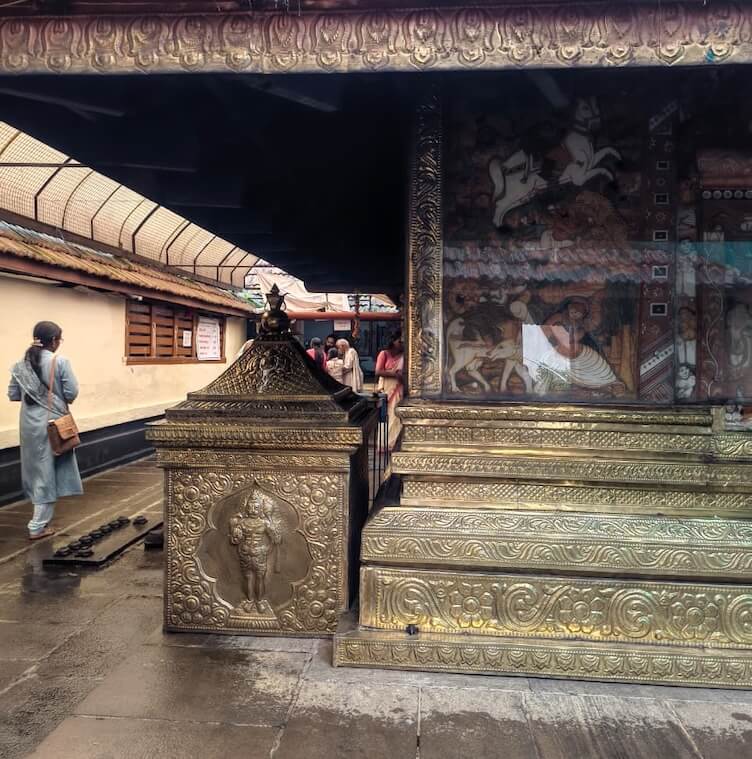 Offerings to the other deities include Appam, Modakam and Ganapathi Homam to Lord Ganesha for the removal of obstacles; Shankhabhishekam and Dhara to Kirathamurthy for good health, prosperity and the fulfilment of wishes; and Neerajanam and the offering of sesame oil lamps on Saturdays to Lord Ayyappa for protection from the effects of Shani, relief from hardships and the well-being of the family. These offerings are usually made during the Nirmalya Darshanam and before the Uchappooja on ordinary days.
The temple opens daily at 4:00 am. Nirmalya Darshanam is at 5:00 am, followed by Usha Pooja at 6:30 am and Uchappooja at 10:30 am. The temple closes at 11:00 am and reopens at 5:15 pm. Deeparadhana is performed at 6:30 pm, followed by Athazha Pooja at 7:30 pm and the temple closes for the day at 8:00 pm. During the Nalambalam pilgrimage season in the Malayalam month of Karkidakam and the annual festival in Medam, the temple timings and pooja schedule may be changed to accommodate the large number of devotees and the temple may remain open for longer hours for darshan.
Key highlight :-
- Located about 5 km from Piravom, 14 km from Koothattukulam and 15 km from Thalayolaparambu.
- The nearest railway station is Piravom Road Railway Station, about 6 km away.
- 57 km away from Cochin International Airport.
- KSRTC and local bus facilities are available to the temple.
- Accommodation and food facilities are available in the nearby towns.
- Contact number +91 9847117216.
मुलक्क्कुलम श्री लक्ष्मण स्वामी मंदिर
मुलक्क्कुलम दक्षिण, जिला। कोट्टायम.
मंदिरे
Temples
मंदिर
મંદિરો
கோவில்கள்
దేవాలయాలు
ക്ഷേത്രങ്ങൾ
ದೇವಾಲಯಗಳು
মন্দিরসমূহ
ਮੰਦਿਰ
-
कालिकावू देवी मंदिर पाकलोमत्तम, कुरविलंगड, जि. कोट्टायम.
अधिक माहितीKalikavu Devi Temple Pakalomattam, Kuravilangad, Dist. Kottayam.
View Detailsकालिकावु देवी मंदिर पाकलोमट्टम, कुराविलंगड, जिला। कोट्टायम.
विवरण देखेंKalikavu Devi Temple Pakalomattam, Kuravilangad, Dist. Kottayam.
વિગત જુઓKalikavu Devi Temple Pakalomattam, Kuravilangad, Dist. Kottayam.
விவரங்களைக் காண்கKalikavu Devi Temple Pakalomattam, Kuravilangad, Dist. Kottayam.
వివరాలను చూడండిKalikavu Devi Temple Pakalomattam, Kuravilangad, Dist. Kottayam.
വിശദാംശങ്ങൾ കാണുകKalikavu Devi Temple Pakalomattam, Kuravilangad, Dist. Kottayam.
ವಿವರಗಳನ್ನು ವೀಕ್ಷಿಸಿKalikavu Devi Temple Pakalomattam, Kuravilangad, Dist. Kottayam.
বিস্তারিত দেখুনKalikavu Devi Temple Pakalomattam, Kuravilangad, Dist. Kottayam.
ਵੇਰਵੇ ਦੇਖੋ -
श्री कुमारमंगलम सुब्रमण्य स्वामी मंदिर कट्टाकायम, कुमारकोम, जि. कोट्टायम.
अधिक माहितीSree Kumaramangalam Subramanya Swamy Temple Kattakayam, Kumarakom, Dist. Kottayam.
View Detailsश्री कुमारमंगलम सुब्रमण्यम स्वामी मंदिर कट्टाकायम, कुमारकोम, जिला। कोट्टायम.
विवरण देखेंSree Kumaramangalam Subramanya Swamy Temple Kattakayam, Kumarakom, Dist. Kottayam.
વિગત જુઓSree Kumaramangalam Subramanya Swamy Temple Kattakayam, Kumarakom, Dist. Kottayam.
விவரங்களைக் காண்கSree Kumaramangalam Subramanya Swamy Temple Kattakayam, Kumarakom, Dist. Kottayam.
వివరాలను చూడండిSree Kumaramangalam Subramanya Swamy Temple Kattakayam, Kumarakom, Dist. Kottayam.
വിശദാംശങ്ങൾ കാണുകSree Kumaramangalam Subramanya Swamy Temple Kattakayam, Kumarakom, Dist. Kottayam.
ವಿವರಗಳನ್ನು ವೀಕ್ಷಿಸಿSree Kumaramangalam Subramanya Swamy Temple Kattakayam, Kumarakom, Dist. Kottayam.
বিস্তারিত দেখুনSree Kumaramangalam Subramanya Swamy Temple Kattakayam, Kumarakom, Dist. Kottayam.
ਵੇਰਵੇ ਦੇਖੋ -
सस्थकुलम देवी मंदिर वेचूर, कुमारकोम, जि. कोट्टायम.
अधिक माहितीSasthakulam Devi Temple Vechoor, Kumarakom, Dist. Kottayam.
View Detailsसस्थाकुलम देवी मंदिर वेचूर, कुमारकोम, जिला। कोट्टायम.
विवरण देखेंSasthakulam Devi Temple Vechoor, Kumarakom, Dist. Kottayam.
વિગત જુઓSasthakulam Devi Temple Vechoor, Kumarakom, Dist. Kottayam.
விவரங்களைக் காண்கSasthakulam Devi Temple Vechoor, Kumarakom, Dist. Kottayam.
వివరాలను చూడండిSasthakulam Devi Temple Vechoor, Kumarakom, Dist. Kottayam.
വിശദാംശങ്ങൾ കാണുകSasthakulam Devi Temple Vechoor, Kumarakom, Dist. Kottayam.
ವಿವರಗಳನ್ನು ವೀಕ್ಷಿಸಿSasthakulam Devi Temple Vechoor, Kumarakom, Dist. Kottayam.
বিস্তারিত দেখুনSasthakulam Devi Temple Vechoor, Kumarakom, Dist. Kottayam.
ਵੇਰਵੇ ਦੇਖੋ