 Counted among the seven Chiranjeevis, Hanuman is revered as the very embodiment of strength and devotion. Worshiped under many names like Maruti, Bajrang, Balbheem, Ramdoot, Kesarinandan, Anjaneya, Vayuputra, Pavansut, Vajraang, Sankatmochan, Mahavir, Maharudra, Hanumant, he is the chosen deity for countless devotees. In Indore stands a temple that enshrines one of the tallest statues of Hanuman in the country, drawing not only the faithful from all over Madhya Pradesh but from other states as well. Because this temple is situated on the hill known as Pitru Parvat, it is fondly referred to as Pitreshwar Hanuman.
Tulsidas’s Hanuman Chalisa proclaims that Hanuman can assume both the subtlest and the most formidable of forms. Across India, 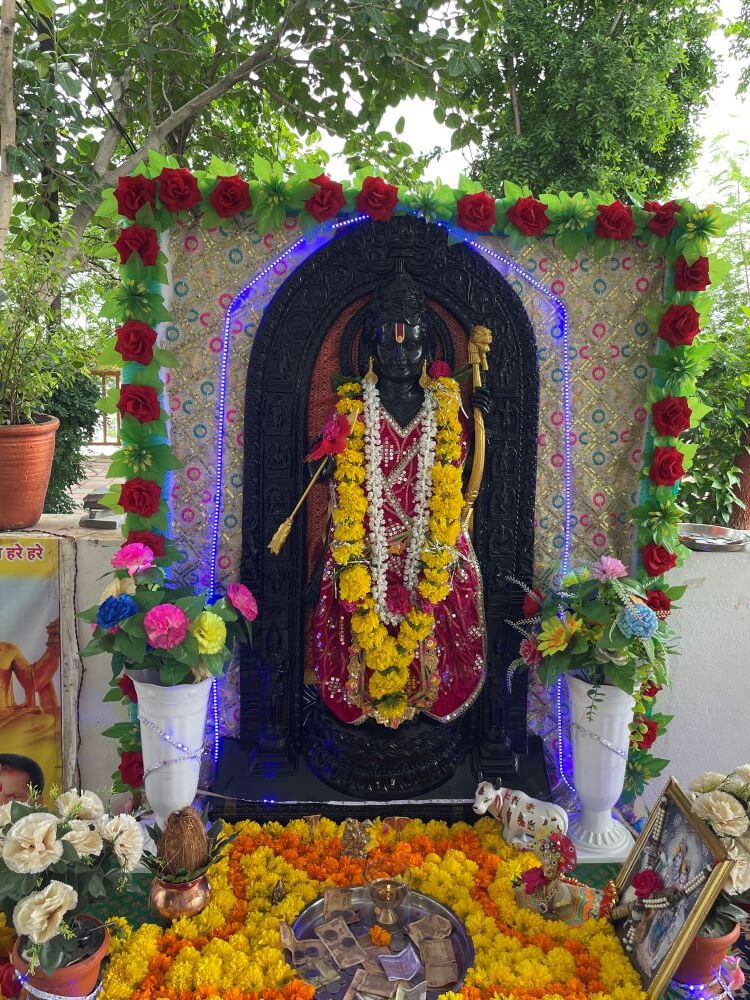 many towering statues depict this colossal aspect of the Lord – the 80-foot figure at the Ramtirth Temple in Amritsar, Punjab; the 101-foot statue at Simariakala in Chhindwara district, Madhya Pradesh; the 105-foot idol at Nandura, about 50 km from Shegaon in Maharashtra; the 108-foot figure in Karol Bagh, Delhi; the 108-foot idol at Jakhu Hanuman Temple in Shimla, Himachal Pradesh; the 151-foot statue at Manav Bharati University in Lado village near Sultanpur, Solan district, Himachal Pradesh; the 135-foot idol at Veera Abhaya Anjaneya Hanuman Swami Temple in Paritala near Vijayawada, Andhra Pradesh; and the 175-foot statue at Narasannapeta in Srikakulam district, Andhra Pradesh, are especially notable. It is among such monumental presences that the grand statue upon Pitru Parvat finds its place.
The hill itself has a story. Once known as Devdharam Tekdi, it became the site of a plantation initiative in 2002, when Indore’s then mayor, Kailash Vijayvargiya, launched a program inviting people to plant saplings in the names of their ancestors, with the municipal corporation undertaking their care. Over roughly eighteen years, a lush woodland rose upon the slope. The hill began to be called Pitru Parvat and the Hanuman here came to be known as Pitreshwar. As for the consecration, the tale is told thus – a devout worshiper of Hanuman, Kailash Vijayvargiya vowed, after his tenure as mayor when he had become a minister in the state, to install a majestic idol of Hanuman on Pitru Parvat and to forgo regular meals until the idol was enthroned. 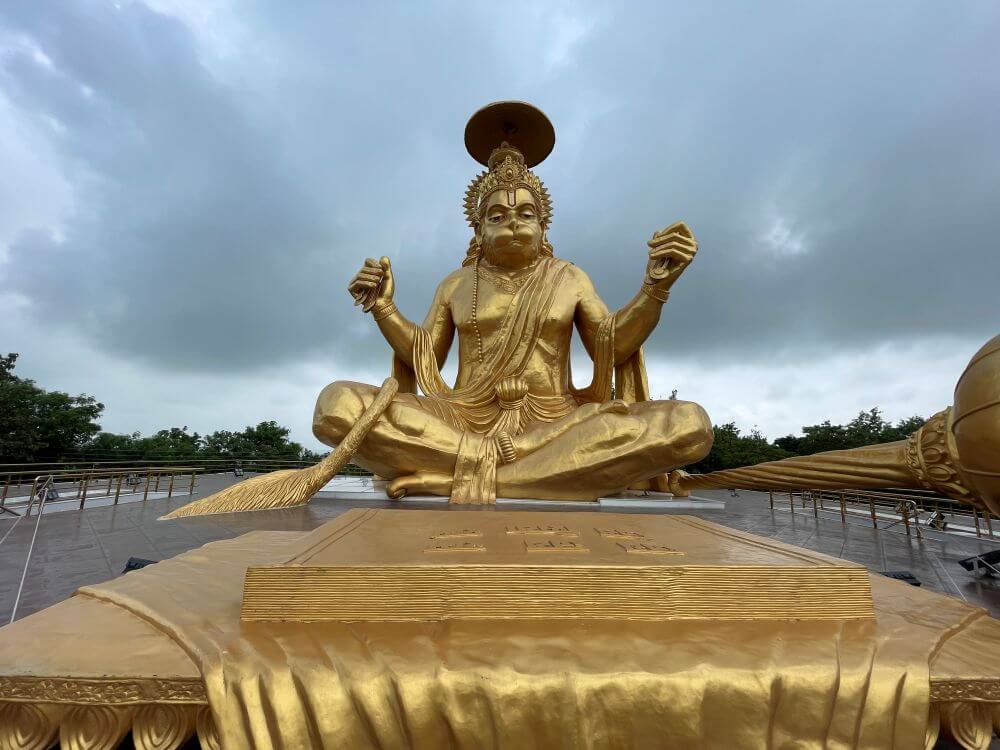 It is said that he partook of a full meal only after the pran-pratishtha (ritual installation) of the idol on 28 February 2020. For about eighteen years, his regimen is described as a morning breakfast of cashews, almonds and walnuts; during the day, cucumbers, carrots, tomatoes and apples; and at night, salad and fruit accompanied by sabudana khichdi or mordhan.
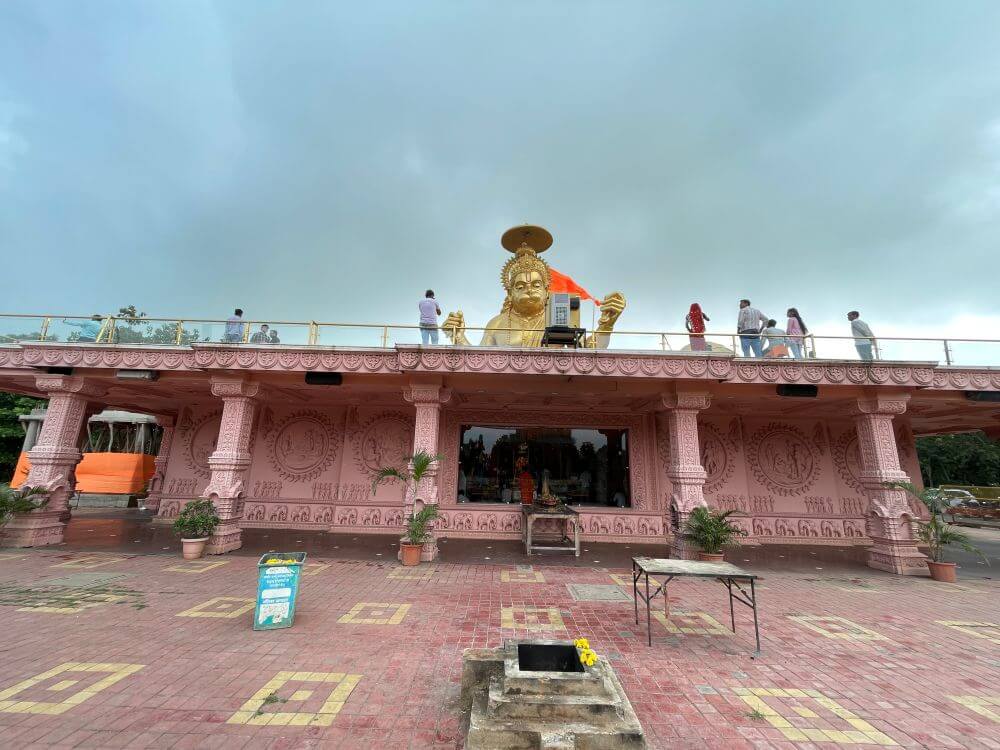
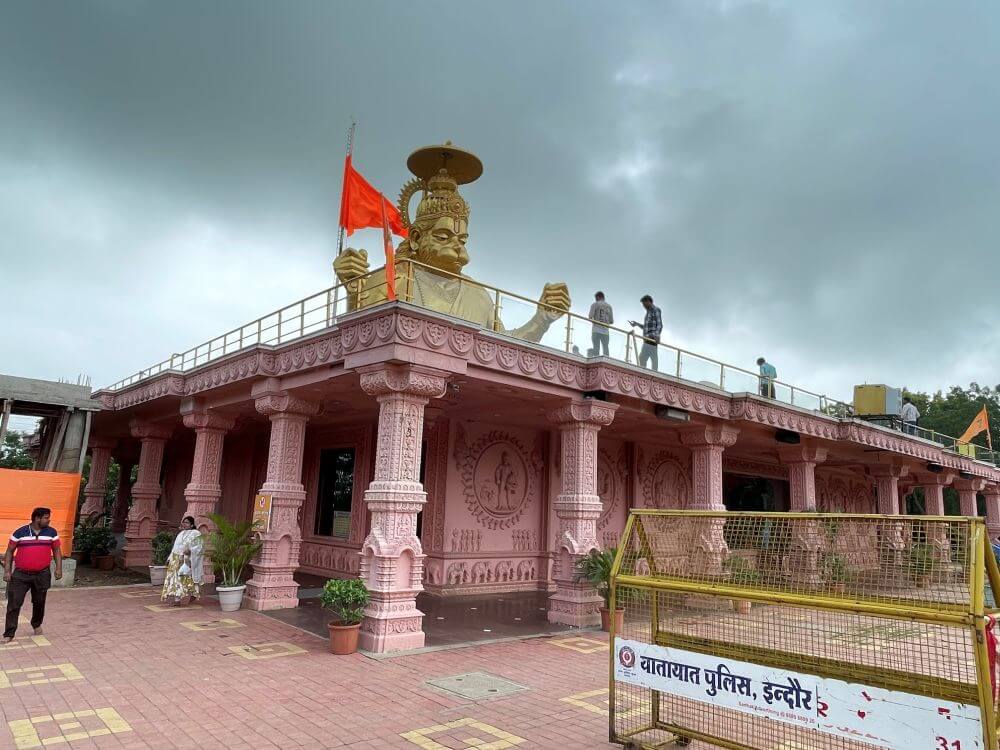
The statue of Hanuman that rose from his efforts stands 71 feet high and weighs 108 tons. Crafted by artisans from Gwalior, it is made of ashtadhatu—the eight sacred metals, that is gold, silver, platinum, mercury, antimony, zinc, lead and tin. Hanuman’s mace is 45 feet long and weighs 21 tons. In front of the idol lies a 9X19 foot representation of the Ramayana fashioned in panchadhatu. The statue is set upon a platform measuring 121X121 feet and 14 feet high. 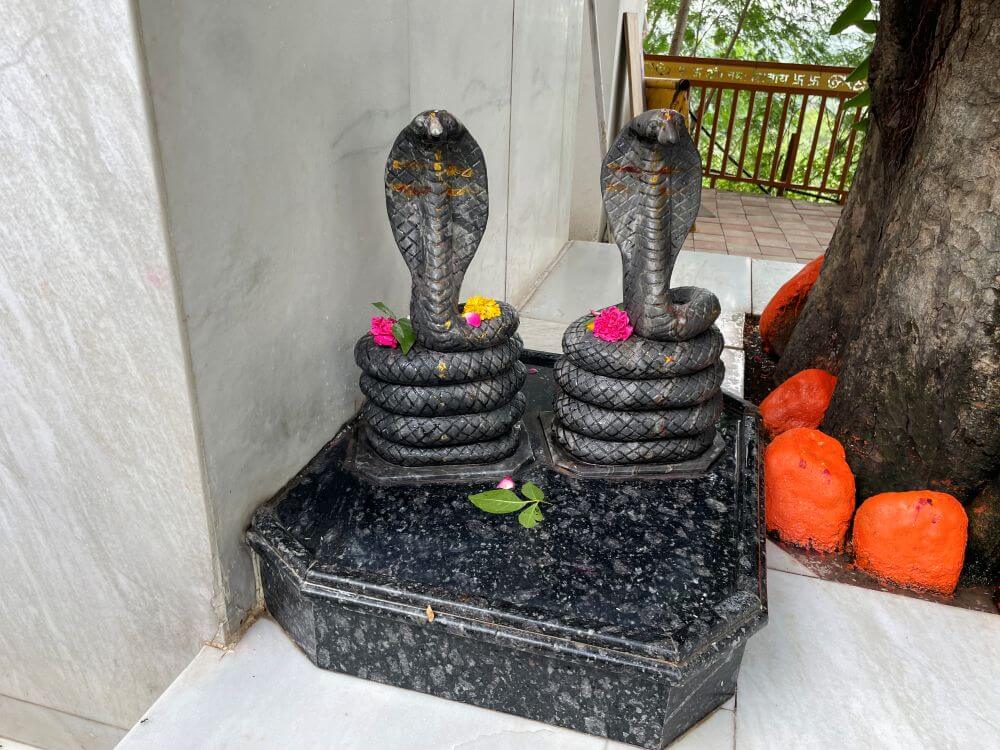 It is said to be the largest ashtadhatu idol in the world. Approximately ten crore rupees were spent in its making.
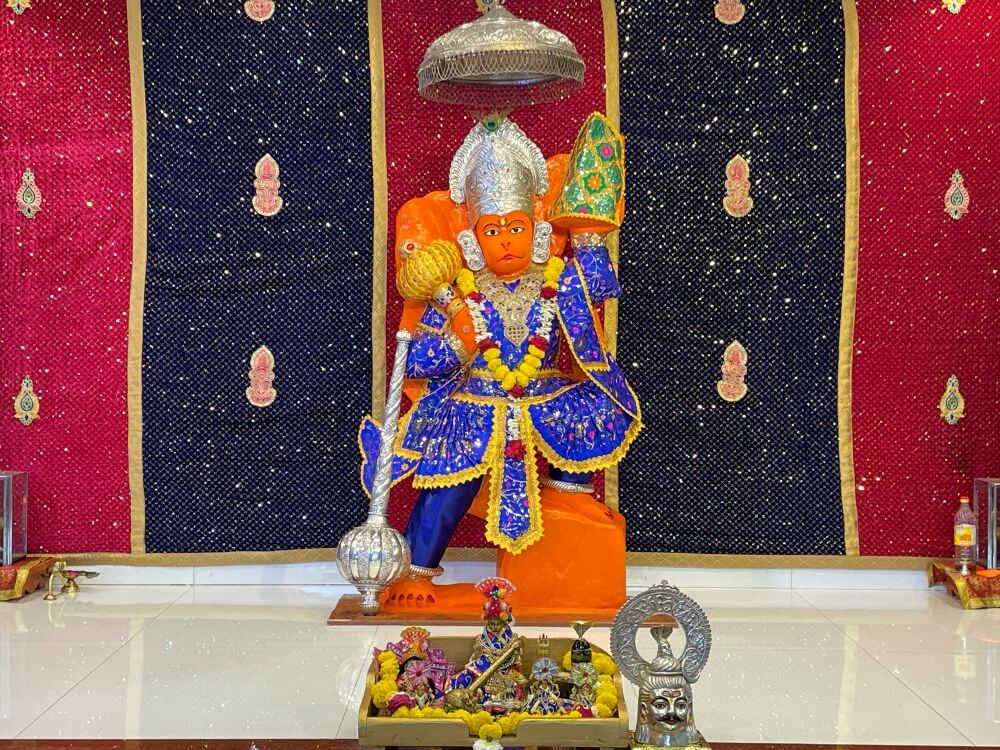
From the iron gate at the foot of Pitru Parvat there are two approaches to the temple – one is a flight of steps; the other allows vehicles to drive directly to the temple courtyard. As one reaches the summit of the hill, now richly green with a dense canopy of trees, the immense figure of Hanuman seated, absorbed in the Lord’s devotion, comes into view. Beneath the expansive platform erected for the statue lies the temple of Hanuman. Built using pink stone from Rajasthan, the platform rests on square pillars on all four sides. Along the lower course of that wall is an elephant frieze and above it are bas-reliefs depicting various episodes from the Ramayana associated with Hanuman. At the center of the shrine, upon a marble pedestal, stands a sindoor-anointed idol of Hanuman in an upright form.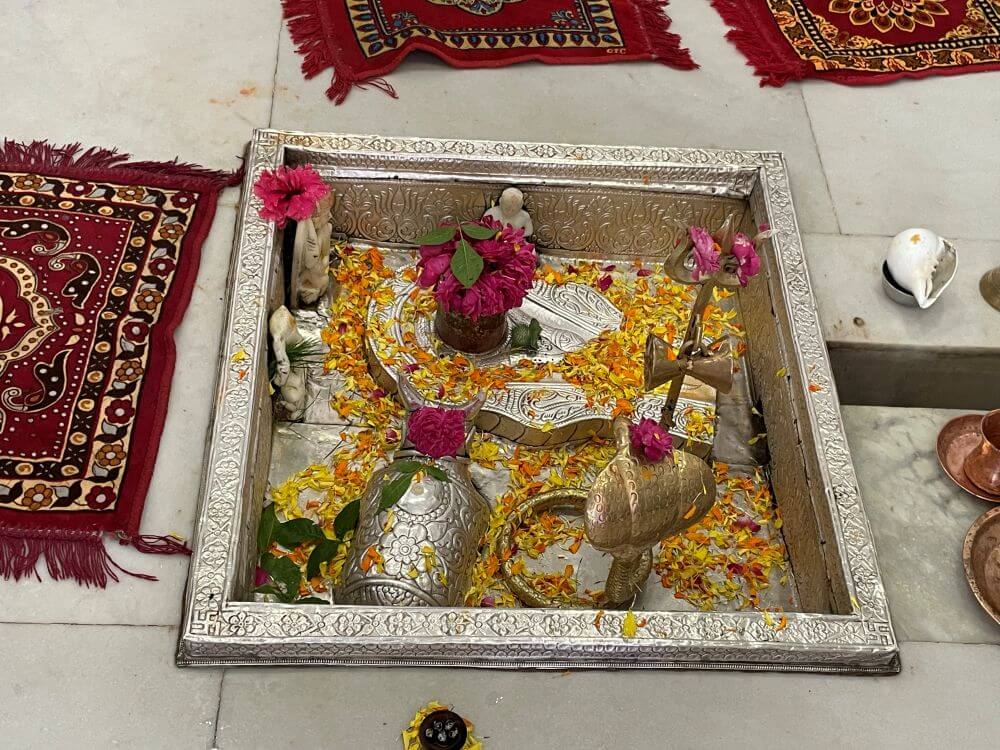 With Mount Dronagiri in one hand and the mace in the other, Hanuman is poised in mid-flight. Adorned with garments and ornaments, the idol bears a silver crown. Beside it stands a large silver mace and directly opposite is the mask of Lord Shankar. In two corners of the pedestal, perpetual lamps burn without ceasing. On one side of the temple, an image of Vidyadham Swami is placed upon a high seat.
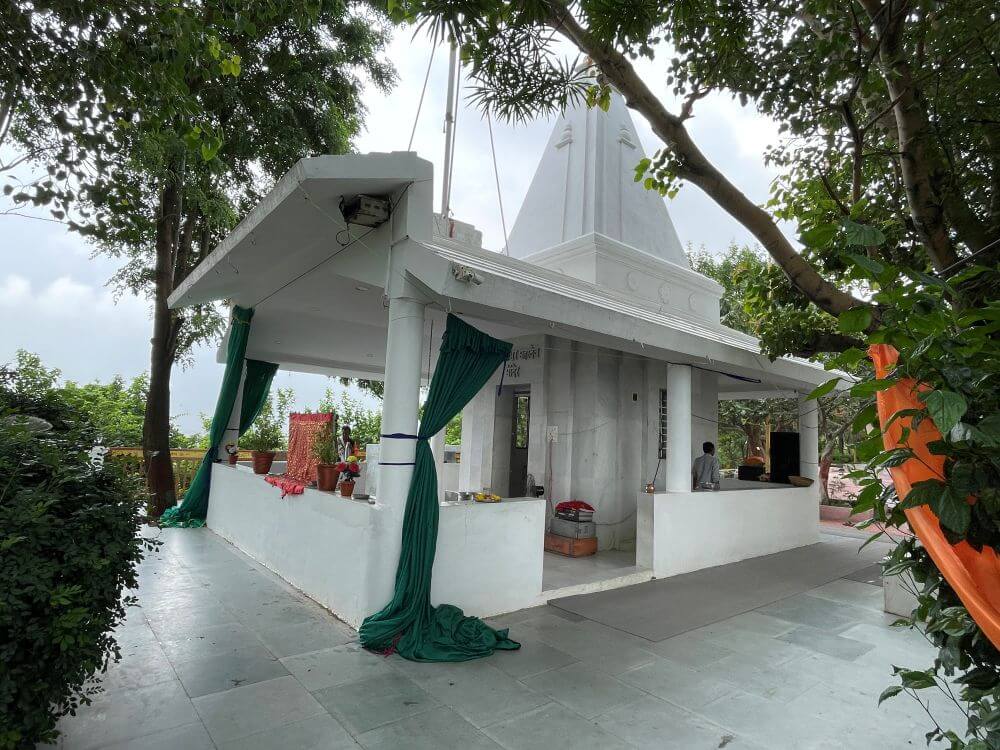
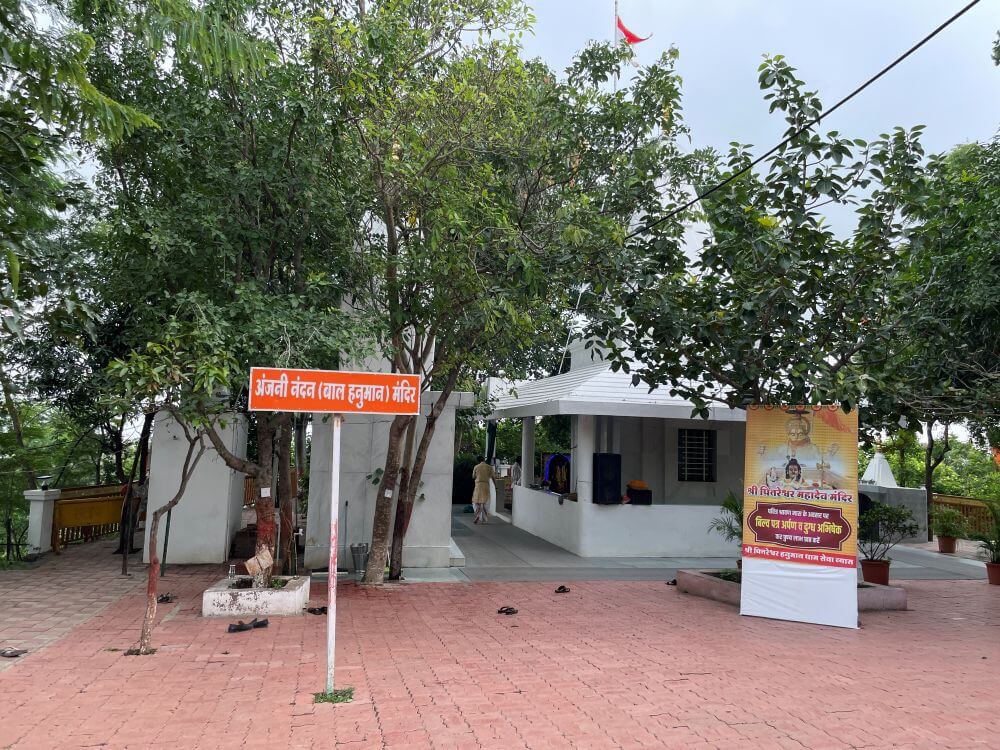
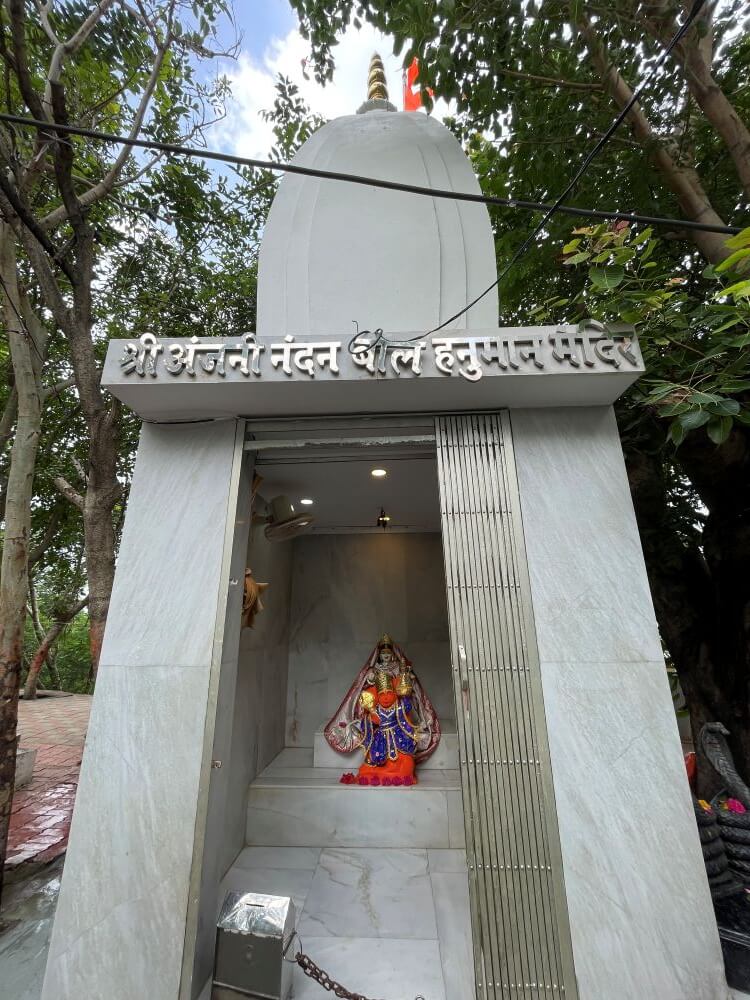
To behold the massive statue of Hanuman enthroned above the temple roof, one ascends a stairway. Outside, a replica of the Ram Temple of Ayodhya has been installed. A broad, grassy ground adjoins the temple and there rises a tall flagstaff. A short distance away are shrines of Anjaninandana Bal Hanuman and of Pitreshwar Mahadev. Though these structures are of recent construction, it is said that the seat of Pitreshwar Mahadev here is ancient.
Darshan for devotees is available from 6 in the morning until 10 at night. The aarti is performed daily at 9:30 a.m. and again at 8 p.m. Hanuman Jayanti is celebrated with great fervor in the presence of thousands of devotees. Likewise, the festivals of Ram Navami, Mahashivaratri and others are observed here. Alongside the grand idol, the greatest attraction for devotees and religious travelers is the Pitru Parvat Light Show, held every evening from 6:30 to 9:00. Through this show, visitors are introduced to the Pitreshwar Hanuman Temple and are told the mythological stories of Hanuman.