
पिपलेश्वर महादेव मंदिर
सालडी, ता./जि. मेहसाणा
Pipleshwar Mahadev Temple
Saladi, Tal./Dist. Mehsana
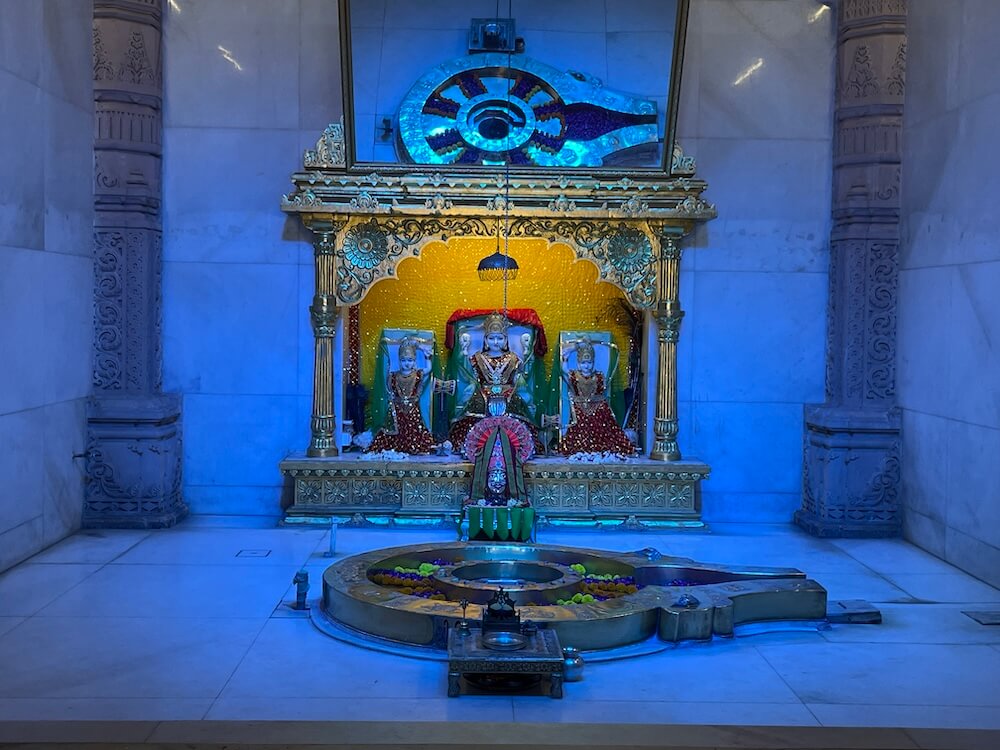 The Pipleshwar Mahadev Temple is situated in the village of Saladi within the Mehsana district of Gujarat state. This ‘Shivalaya’ (abode of Lord Shiva) serves as a profound sanctum of faith for the 40 surrounding villages and is regarded as a significant centre for attaining ‘Moksha’ (salvation), prosperity, liberation from disease and the pursuit of ‘Jnana’ (knowledge). The defining characteristic of this sanctuary is that, in lieu of a traditional ‘Shivalinga’ (symbolic icon of Shiva), a living stream of water flows naturally from the earth. This perennial water source, emerging from an underground natural reservoir, is revered as a symbol of eternal consciousness. Devotees, perceiving this stream as the manifest form of Lord Shiva, commenced its worship as ‘Jaladhari’ (the holder of water). As this divine manifestation occurred beneath a ‘Pippala’ (sacred fig) tree,
  the shrine was named Pipleshwar Mahadev.
During the medieval period, Gujarat was governed by various principalities. In the 15th century, Champaner-Pavagadh was ruled by King Patai Raval, who was a devoted worshipper of Mahakali. In his court, an individual named Sursinh Patel held a high-ranking position. Following a ‘Drishtant’ (divine vision) granted by Mother Kali, Sursinh Patel migrated from the region and settled in Saladi, located near present-day Langhnaj. According to local chronicles, the village of Saladi was established two centuries ago by Salvabhai Patel. Pethabhai Patel, a descendant of the seventh generation of Sursinh’s family, practised agriculture in Saladi. 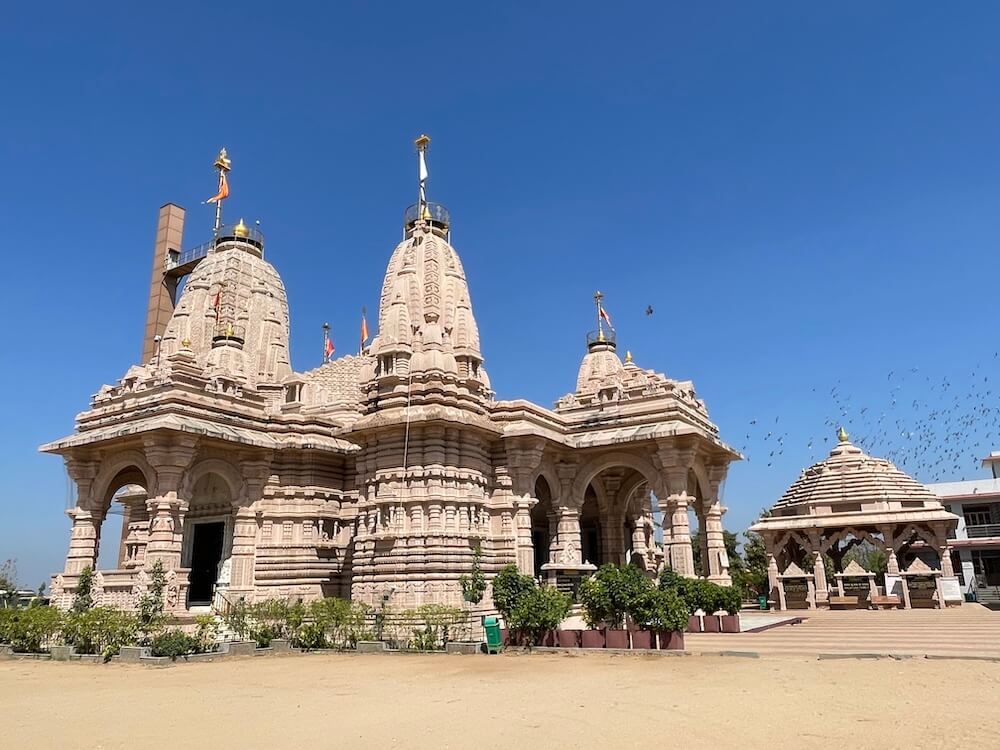 He possessed many cows, one of which would daily venture beneath a specific ‘Pippala’ tree to spontaneously release her milk. One day, Lord Shiva appeared in a vision to Pethabhai, proclaiming, ‘The place where your cow regularly offers her milk is my sacred abode.’ The following day, Pethabhai cleared the soil beneath the tree. Upon excavation, instead of a stone ‘Pinda’ (conical icon), he discovered the holy water stream, considered the living form of Shiva. Recognising the sanctity of this divinely revealed ‘Jaladhari’, Pethabhai began performing ‘Puja’ (ritual worship) with deep devotion. As the fame of this ‘Jagrut’ (spiritually awakened) site spread, devotees from the neighbouring regions began to arrive for ‘Darshan’ (holy viewing). Eventually, a modest temple was erected by the faithful at this sacred spot.
 Historical records indicate that Shamjibhai, a descendant of Pethabhai, renovated the structure in 1920. Prior to this, Maharaja Sayajirao Gaekwad, the then-ruler of the Baroda State, had renovated the main building in 1895. Following India’s independence, the temple’s administration was managed by the government. In time, Shiva devotees from the surrounding areas established a board of trustees known as the ‘Pipleshwar Mahadev Seva Mandal’, to whom the government subsequently entrusted the temple’s responsibility. Having undergone no major structural alterations for over a century, the edifice attained an ancient heritage status. In recent years, the board of trustees and the devotee community undertook an extensive renovation project. Funded by generous philanthropists, a grand restoration was completed.
  On 5 February 2023, the ‘Punah-Pranpratishtha’ (re-consecration) ceremony was celebrated with great opulence. This festival featured a ‘Shatkundi Mahayagya’ (a grand fire ritual with a hundred sacrificial pits).
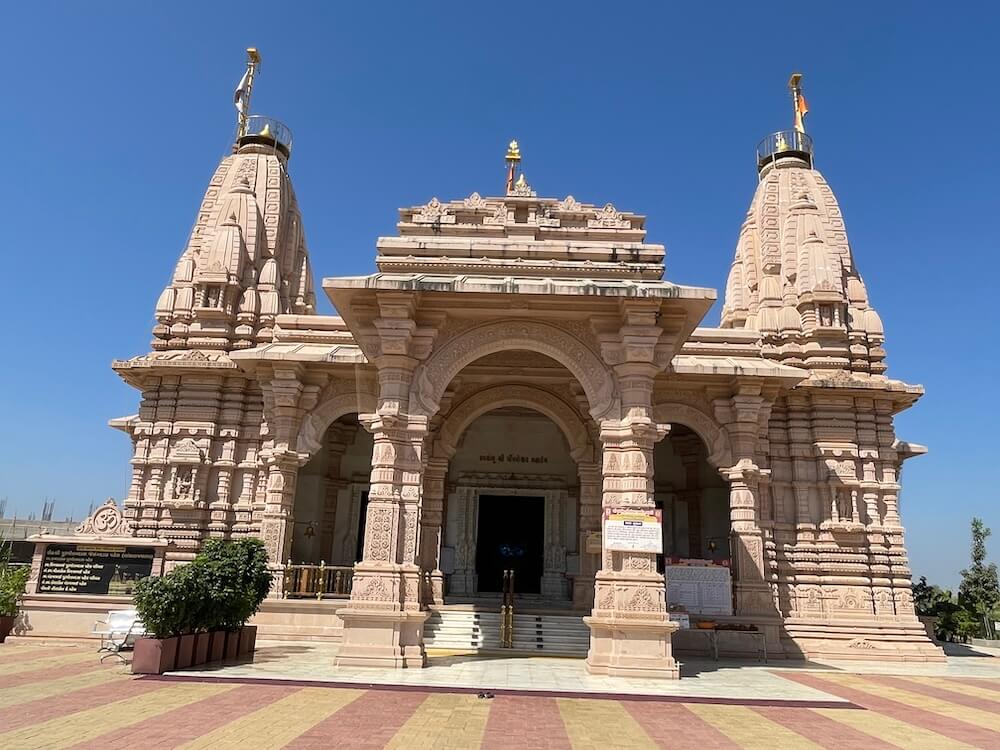
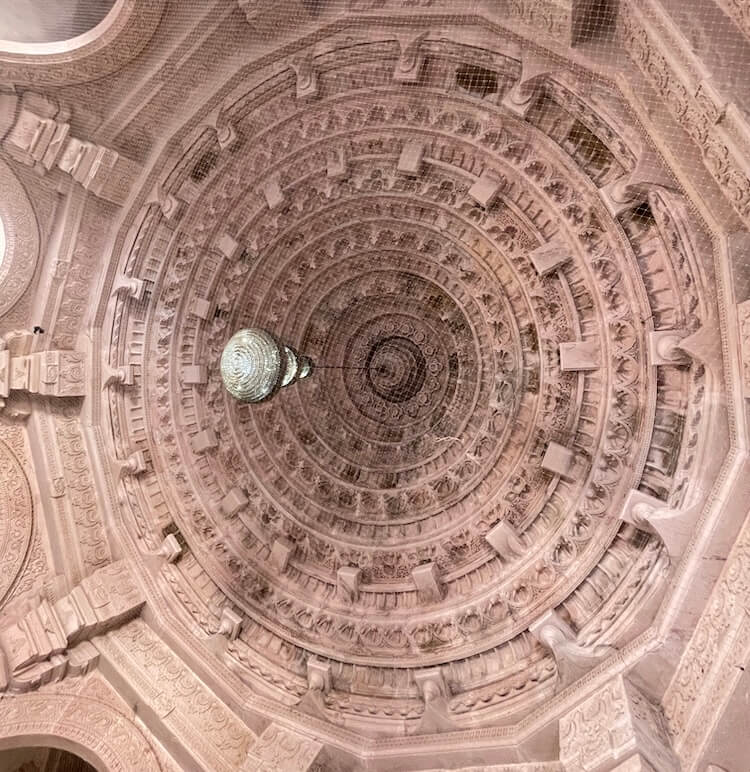
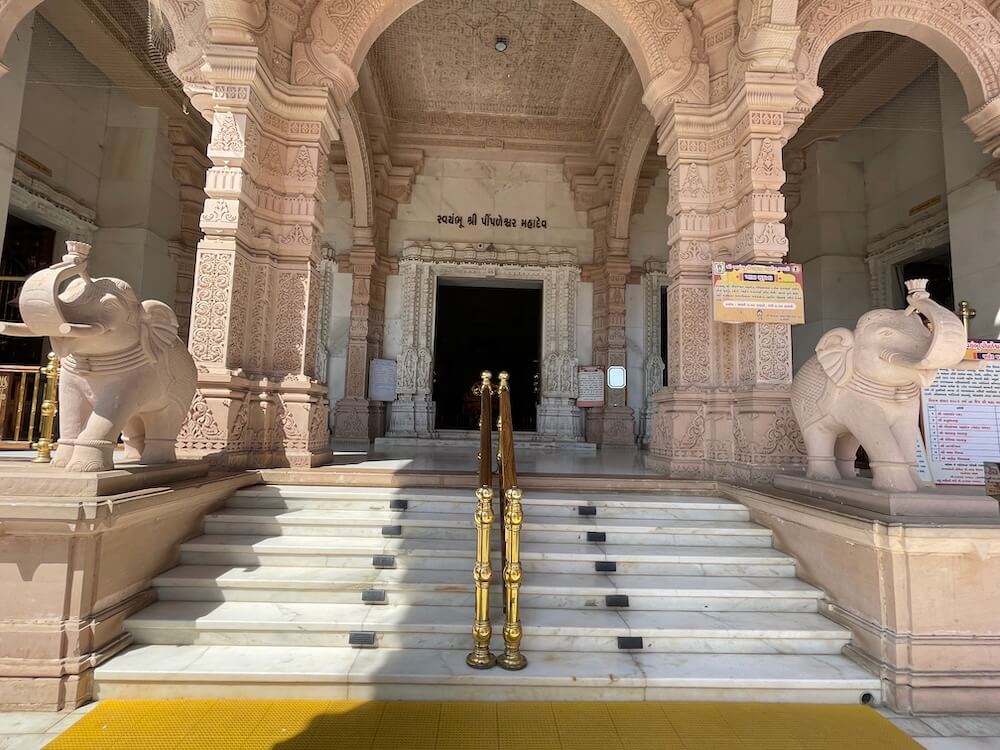
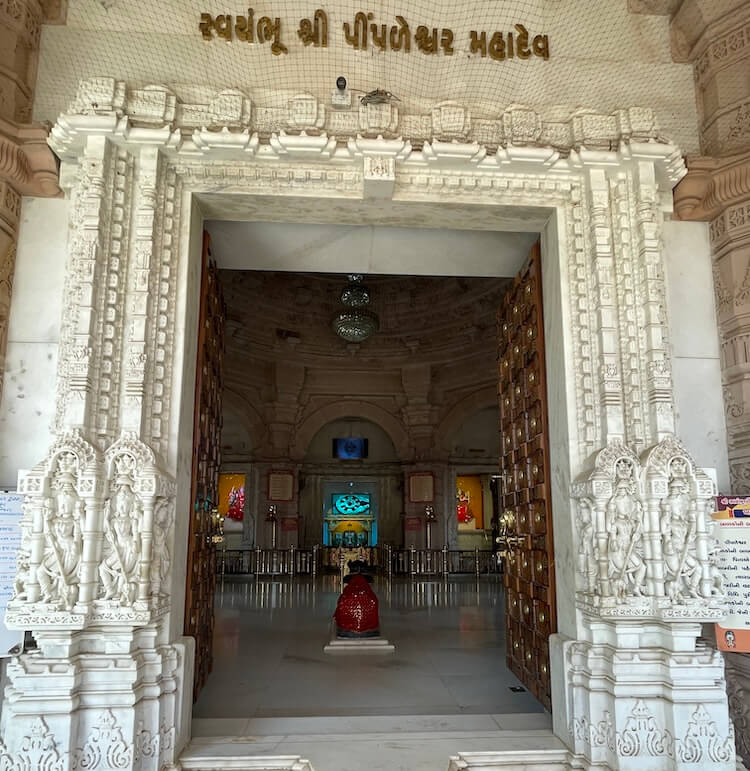
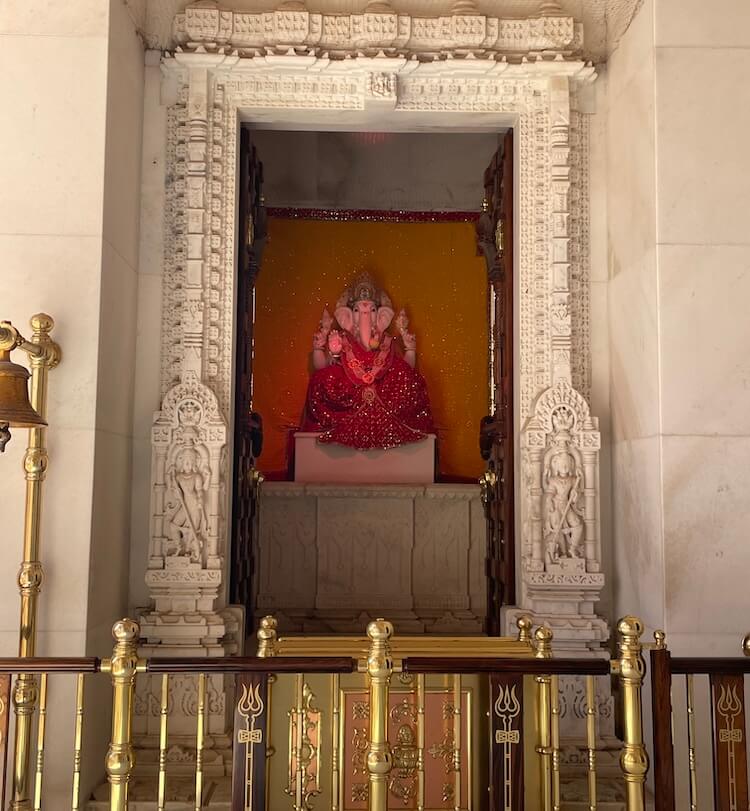
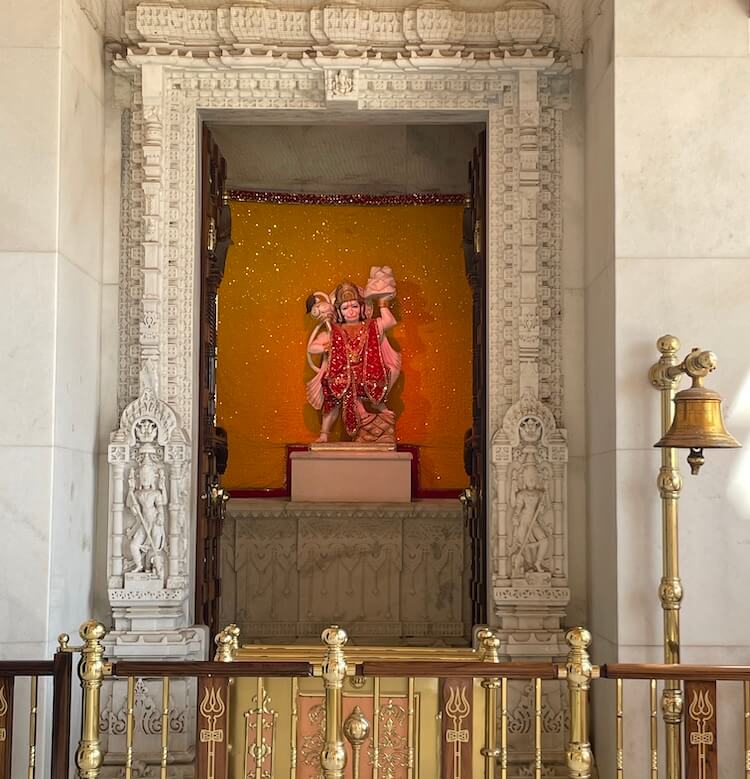
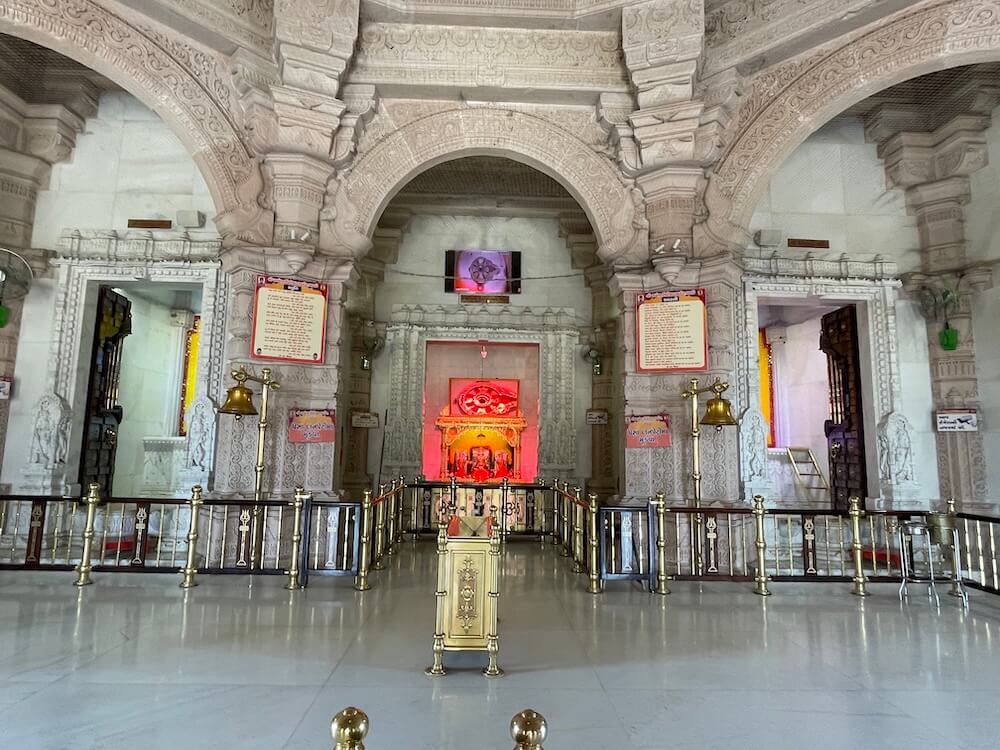
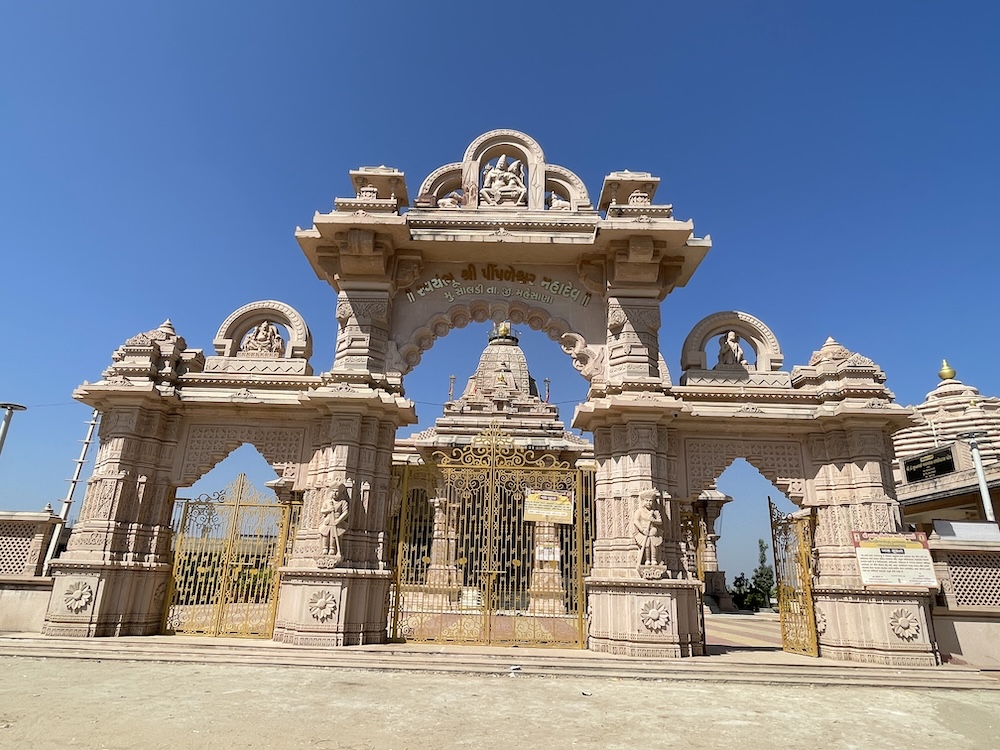
The temple complex spans approximately 50 acres. The open grounds provide ample parking facilities for vehicles. The precinct is home to a large number of ancient trees, including the ‘Pippala’, ‘Bili’ (Bael) and ‘Vakhada’. Upon entering through the magnificent and ornately crafted gateway, one encounters a sprawling courtyard. The complex houses the office of the board of trustees as well as a ‘Yagyashala’ (hall for fire rituals). Flanking the entrance, two ‘Gajaraj’ (elephant statues) welcome the pilgrims.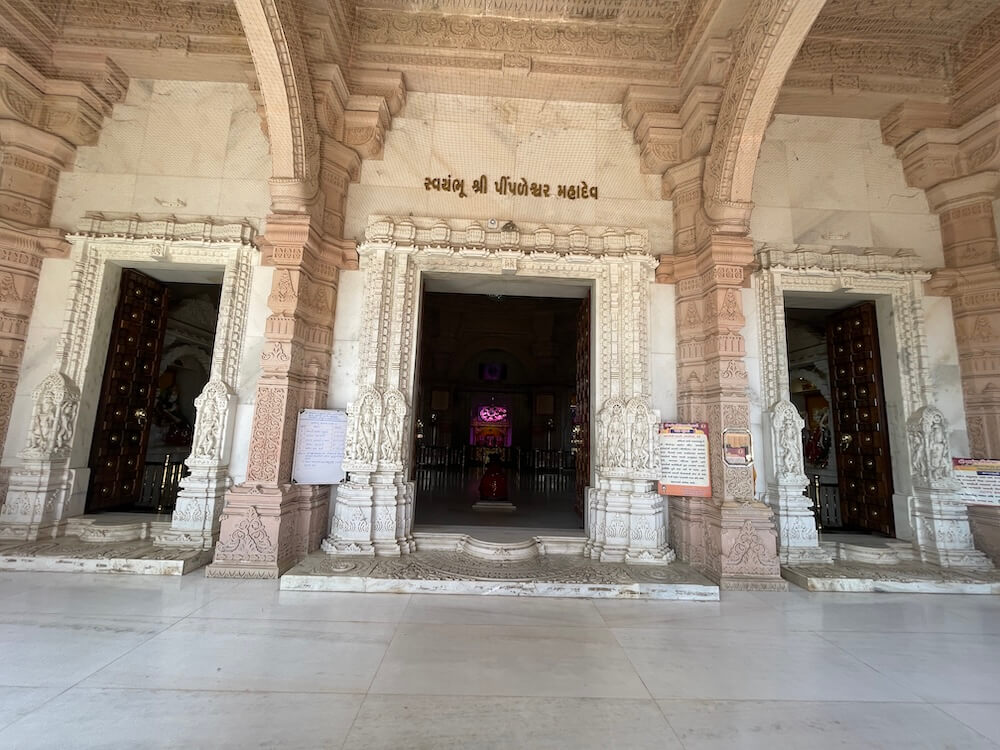 Near the main portal, there are two independent shrines dedicated to Hanuman and Ganesha. The architectural style of the Pipleshwar Mahadev Temple is primarily based on the North Indian ‘Nagara’ style. Its exterior design bears a striking resemblance to the Somnath Temple at Prabhas Patan, leading the shrine to be affectionately called the ‘Mini Somnath of North Gujarat’. The stones used for construction were sourced from Jaipur, Rajasthan. Master craftsmen from Jaipur executed exquisite carvings on both the exterior and interior. The structure comprises a ‘Mukhamandapa’ (entrance porch), ‘Sabhamandapa’ (assembly hall), ‘Ardhamandapa’ (half-hall) and the ‘Garbhagriha’ (sanctum sanctorum). Upon entering the ‘Mukhamandapa’, one finds Ganesha to the left and Hanuman to the right.
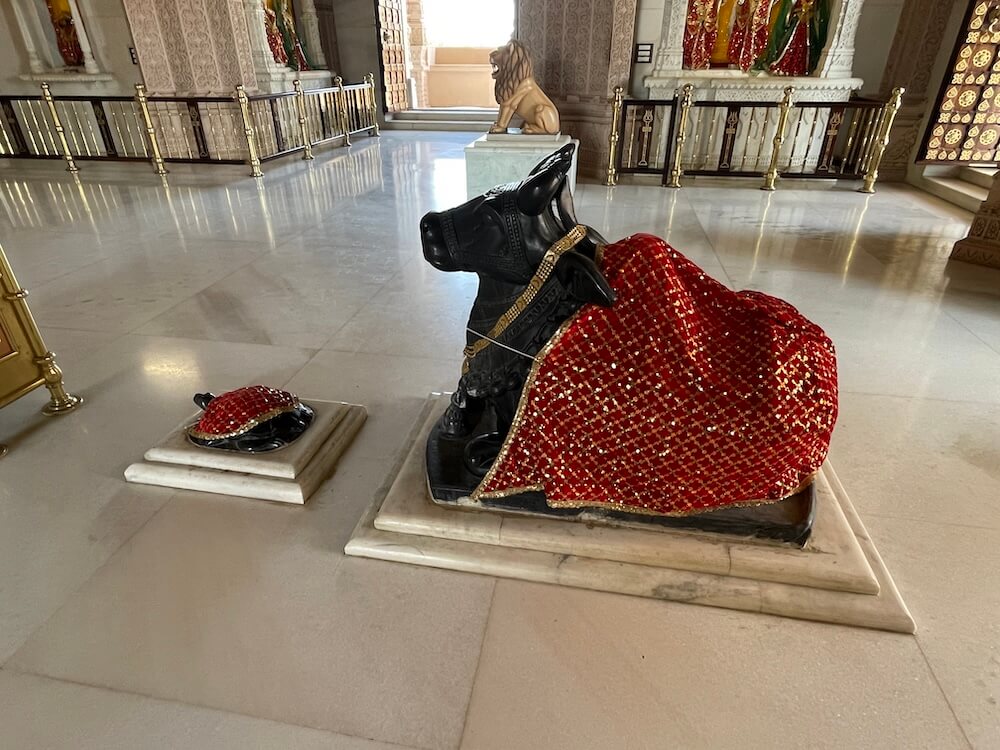
  The pillars of the grand ‘Sabhamandapa’ are adorned with sculptures of dancers and women playing musical instruments. A statue of Nandi, the sacred bull, sits regally in the centre of the assembly hall.
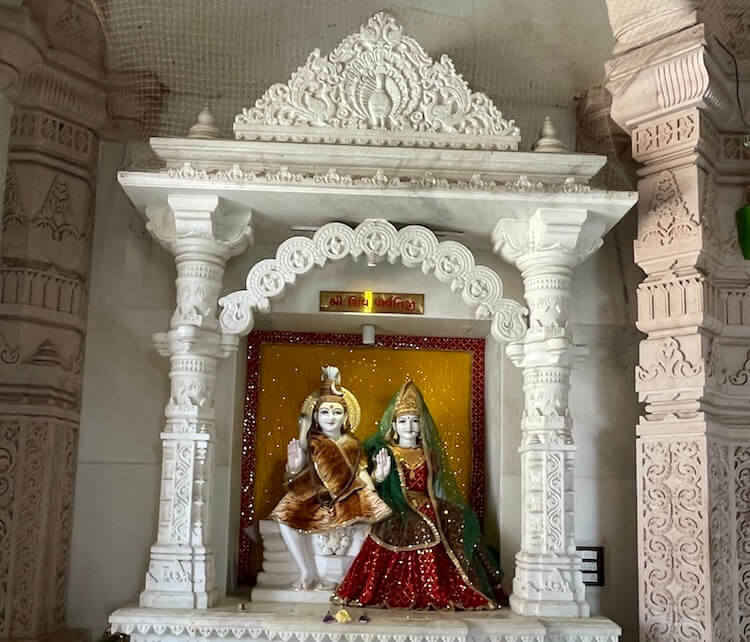
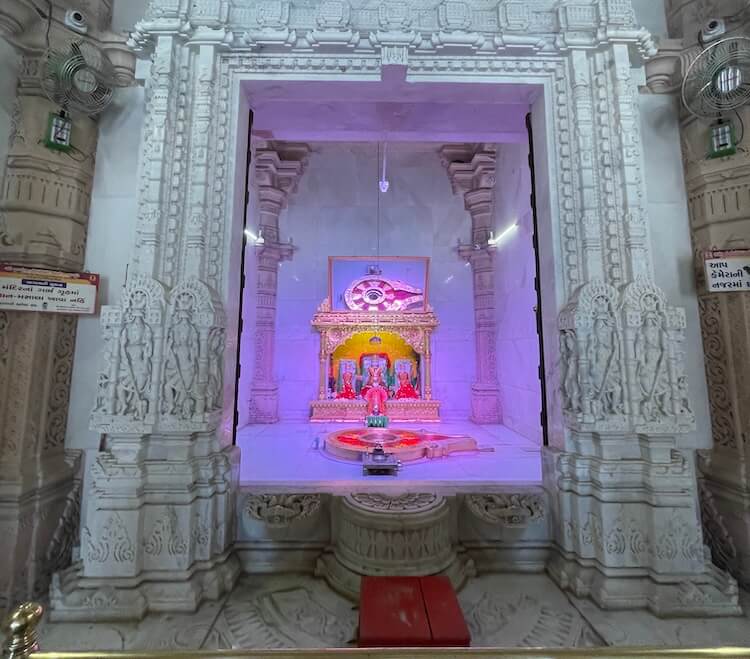
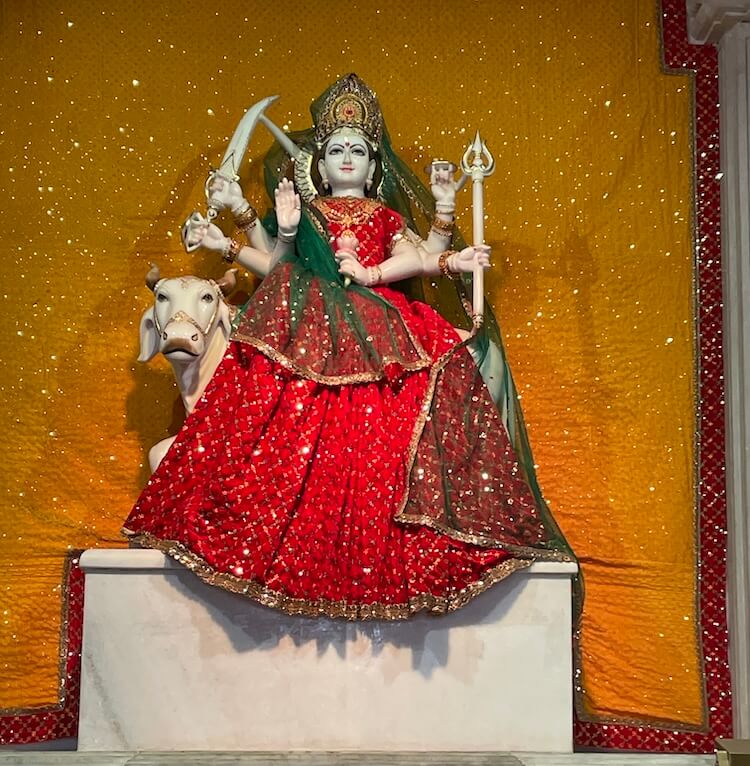
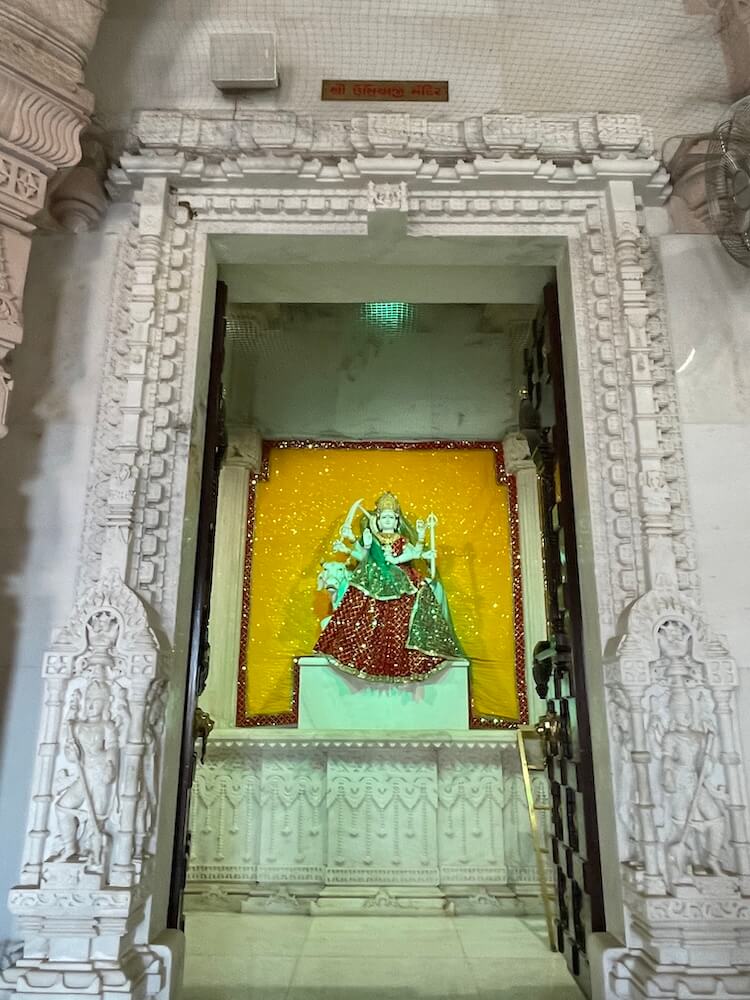
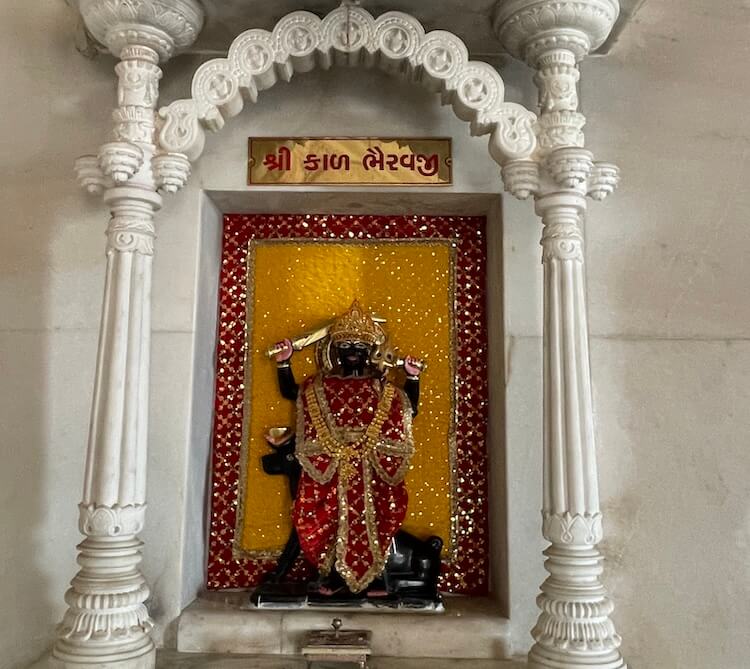
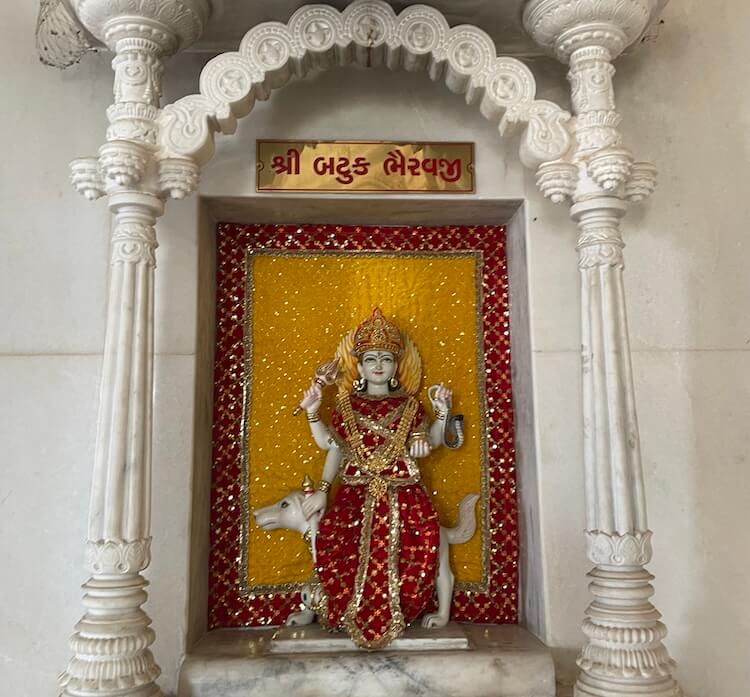
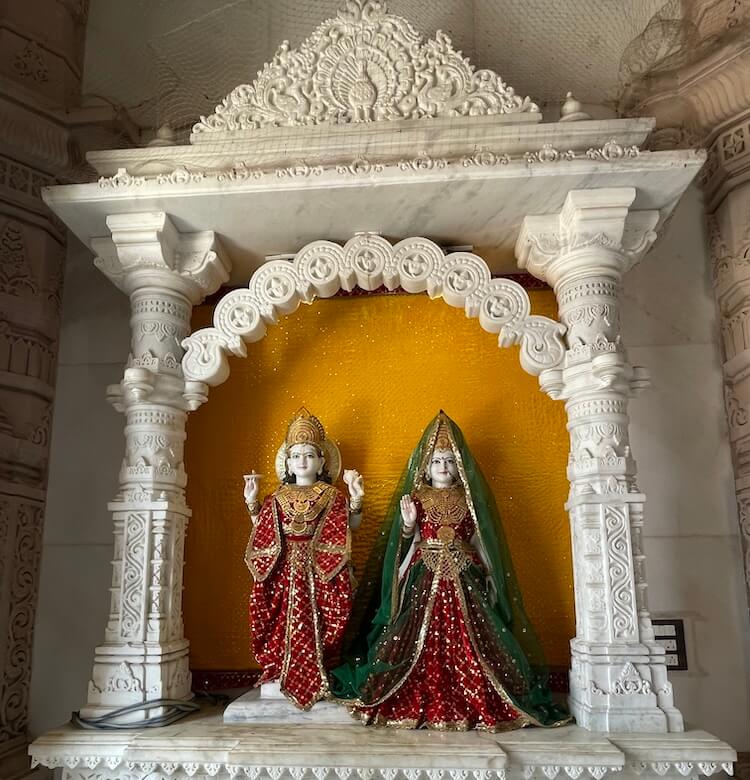
The entrance to the ‘Garbhagriha’ features beautiful artistry, with ‘Kirtimukhas’ (glorious lion-like faces) at the base. A statue of Ganesha is enshrined on the ‘Lalatabimba’ (central lintel) of the doorway. In the heart of the sanctum, within a large ‘Shalunka’ (pedestal), the natural stream flows incessantly. Remarkably, no matter how much water is offered to the stream, the water level never rises. This ‘Jaladhari’ is the primary object of worship for the devotees. The inner walls of the sanctum house the icons of Mother Parvati, Ganesha and Hanuman. In a ‘Devakoshta’ (niche) on the rear wall of the sanctum, a beautiful idol of Mother Parvati is enshrined. Additionally, other niches house idols of Lakshmi-Narayan, Amba Mata, Umiya Mata, the Ram Parivar, Radha-Krishna, Kalbhairav, Batukbhairav and the Naga (serpent) deities, alongside Shiva-Parvati.
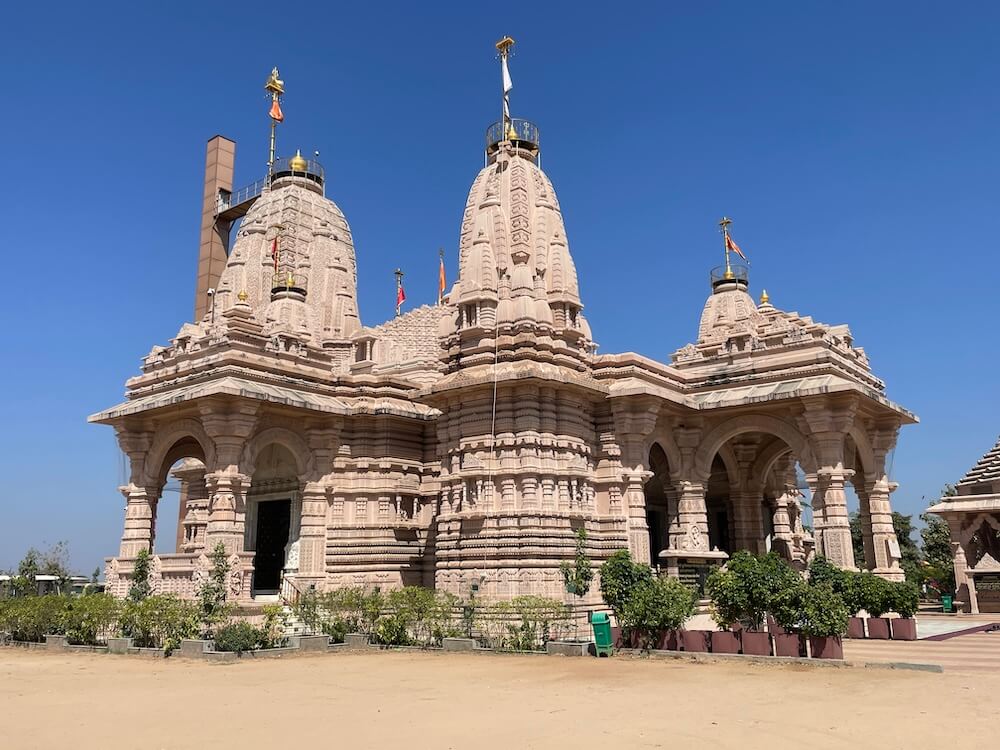 The spire of the temple, or ‘Shikhara’, is built in the ‘Urushringa’ style, tapering upwards and surrounded by smaller miniature spires. The ‘Kalasha’ (pinnacle) atop this spire is plated with four and a half kilograms of pure gold. Furthermore, a golden ‘Dhvajadanda’ (flagstaff) graces the summit. Beautiful spires also crown the ‘Mukhamandapa’, ‘Ardhamandapa’ and ‘Sabhamandapa’. The exterior walls, or ‘Jangha’, are embellished with images of various deities and intricate patterns. Within the precinct, there are separate temples for Amba Mata, Lakshmi Mata, Umiya Mata and the Naga deities. For the pilgrims, dining facilities are provided at a nominal cost. Moreover, a ‘Dharamshala’ and ‘Bhaktaniwas’ (guest houses) have been constructed to accommodate devotees travelling from afar.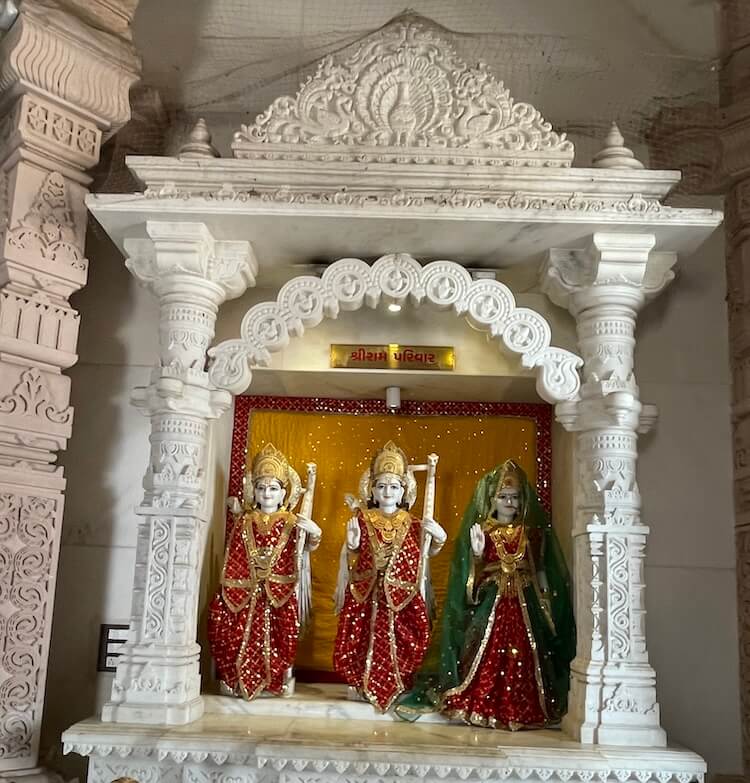
The temple observes daily ‘Aarti’ (ritual of lights) and ‘Bili Puja’ (offering of Bael leaves) in the morning and evening. Hundreds of devotees visit daily for the ‘Mundan Sanskar’, the ritual tonsuring of children’s hair.
Various religious events are organised throughout the year. During the month of ‘Shravan’, the temple witnesses a massive influx of devotees every Monday, with many pilgrims arriving barefoot. On the final Monday of ‘Shravan’, a fair known as ‘Saladi no Melo’ is held. On this day, a grand ‘Palki Yatra’ (palanquin procession) is taken out from the temple.
Decorated elephants, horse-drawn carriages and tractors participate in this procession, which travels to the village of Langhnaj near Saladi. After visiting various religious sites and completing the ‘Nagarpradakshina’ (circumambulation of the town), the procession concludes at the temple. ‘Mahashivratra’ is considered the second major festival here.
On the night of ‘Magha Vadya Chaturdashi’, special worship is performed during all four ‘Praharas’ (watches of the night). During ‘Mahashivratra’, Brahmin priests chant Sanskrit verses and rituals such as ‘Laghurudra Yagya’, ‘Rudrabhishek’ and ‘Mahapuja’ are performed. A fair is also held on the day of ‘Kartiki Purnima’ in November. The temple remains open for ‘Darshan’ daily from six in the morning until nine at night.
Useful Information
- Located at 30 km from Mehsana.
- GSRTC (State Transport) bus services run from various cities in the district to Mehsana.
- GSRTC and private vehicle services are available from Mehsana.
- Private vehicles can reach the temple’s parking area.
- Accommodation and breakfast facilities are available within the premises.
- Contact – Temple Office, Mob. 9712510588.
पिपलेश्वर महादेव मंदिर
सलादी, ताल./जिला. मेहसाणा
मंदिरे
Temples
मंदिर
-
वैजनाथ महादेव मंदिर महादेवपुरा (गावडा), ता. विजापूर, जि. मेहसाणा
अधिक माहितीVaijnath Mahadev Temple Mahadevpura (Gavada), Tal. Vijapur, Dist. Mehsana
View Detailsवैजनाथ महादेव मंदिर महादेवपुरा (गावड़ा), ताल. विजापुर, जिला. मेहसाणा
विवरण देखें -
वैजनाथ महादेव मंदिर सोखडा, तालुका विजापूर, जिल्हा मेहसाणा
अधिक माहितीVaijanath Mahadev Temple Sokhada, Taluka Vijapur, District Mehsana
View Detailsवैजनाथ महादेव मंदिर सोखाडा, तालुका विजापुर, जिला मेहसाणा
विवरण देखें -
काशी विश्वनाथ महादेव मंदिर मेहसाणा, जि. मेहसाणा
अधिक माहितीKashi Vishwanath Mahadev Temple Mehsana, Dist. Mehsana
View Detailsकाशी विश्वनाथ महादेव मंदिर मेहसाणा, जिला. मेहसाणा
विवरण देखें