
पंचदेवी मंदिर
तवरा, ता./जि. भरुच
Panchadevi Temple
Tavra, Tal./Dist. Bharuch
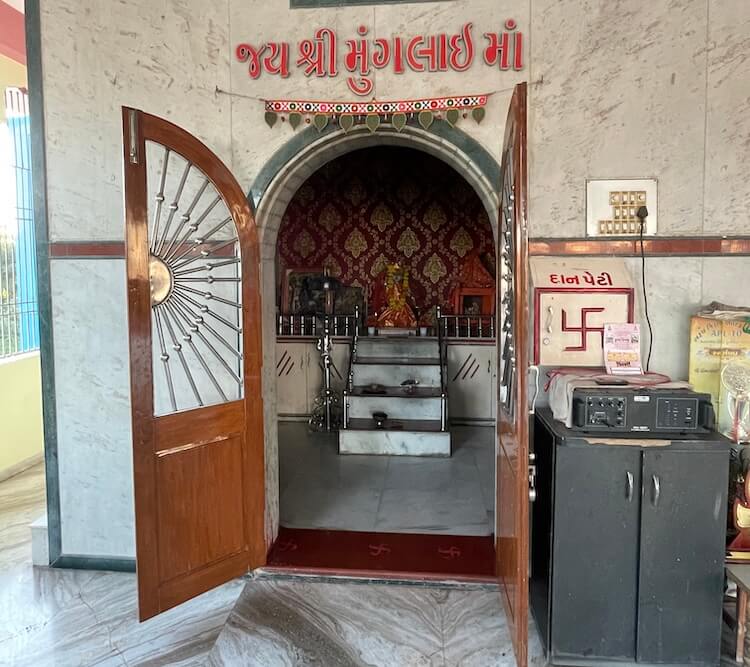
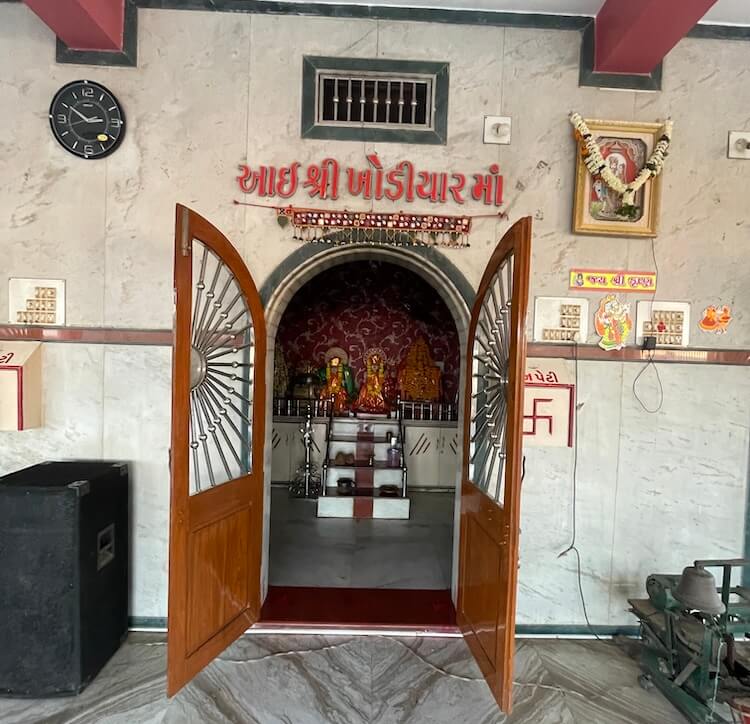
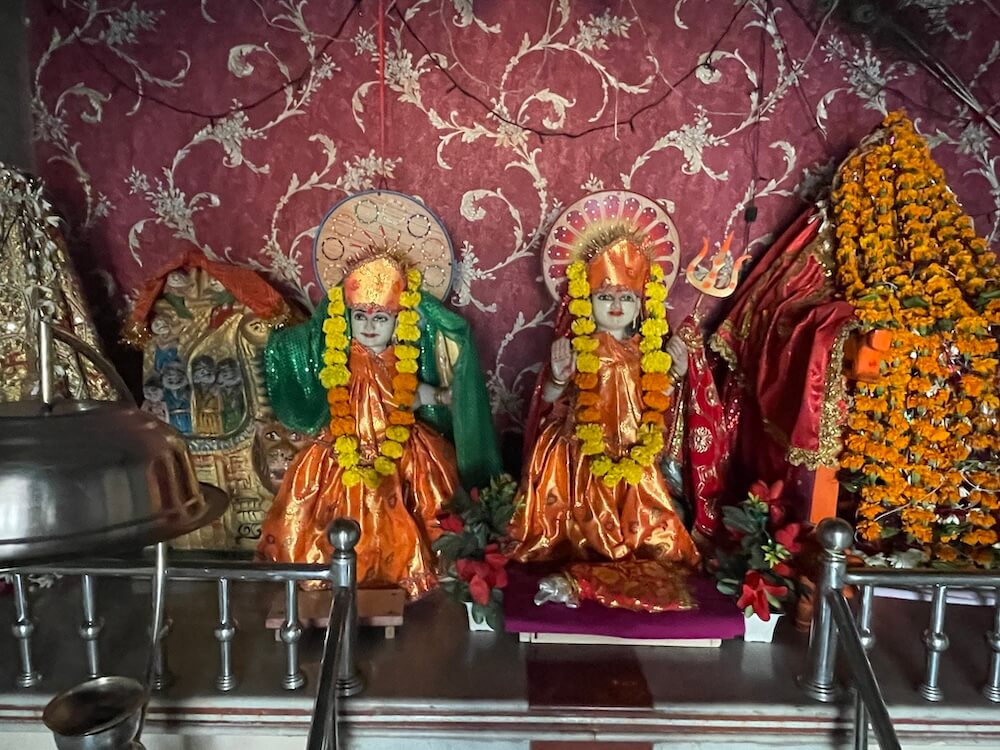
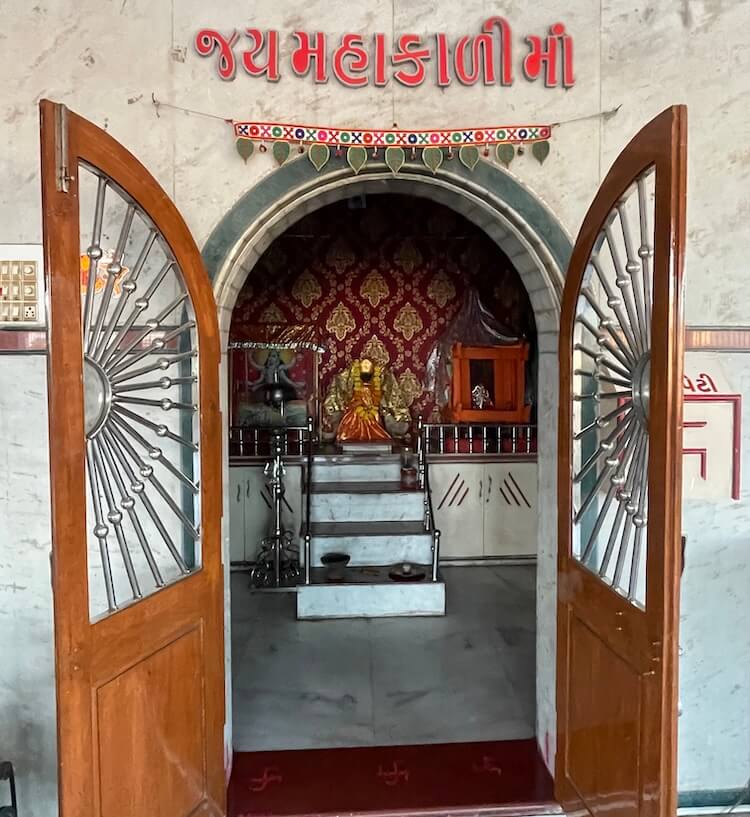
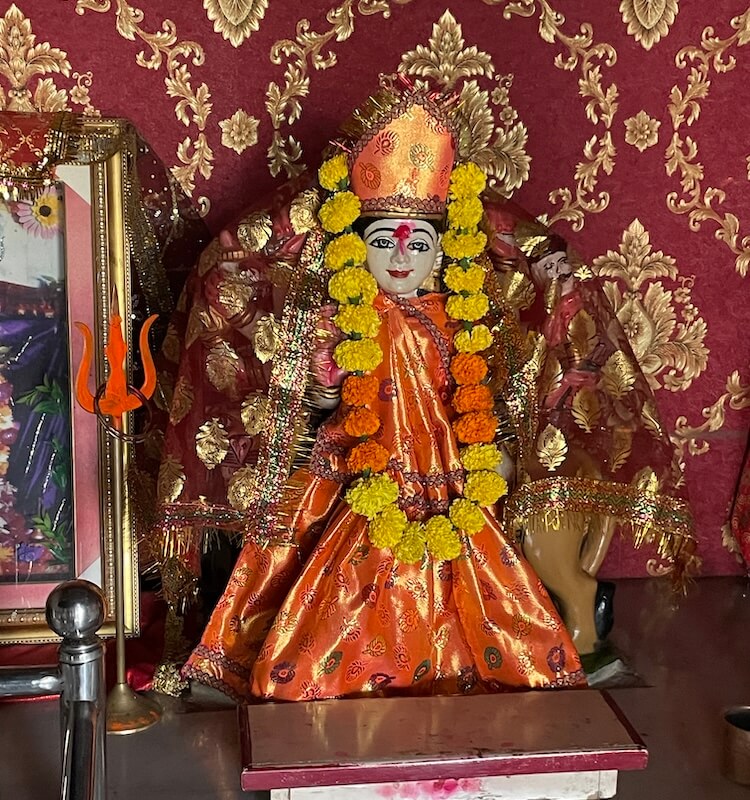
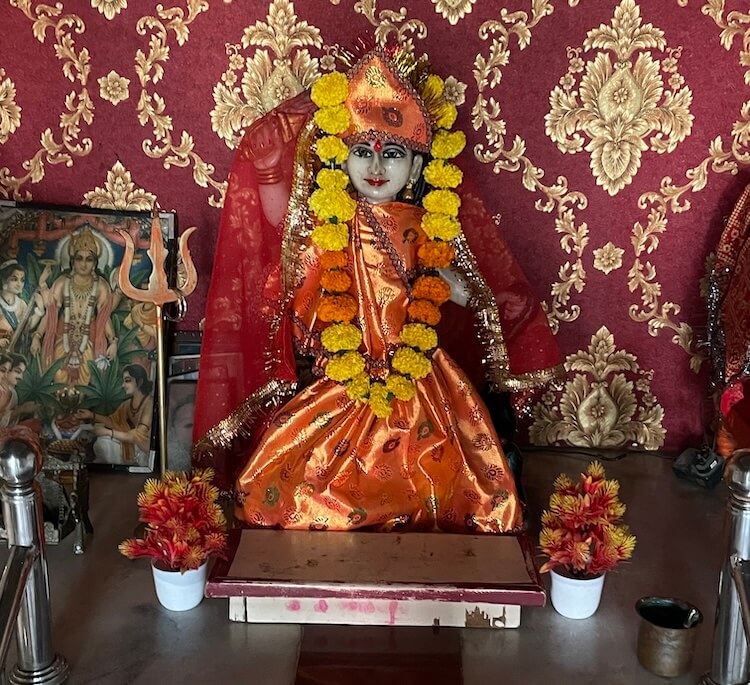 Situated in Tavra is the Panchadevi Temple, a unique sanctuary where the Kuladevatas (clan deities) of five distinct Gotras (clans) belonging to the Ahir community – a significant social group in Gujarat – are enshrined together. Members of the five Ahir Gotras residing in this village united to construct this temple in 2011. The temple serves as the residence for five goddesses : Sindwai Mata, Mahakali Mata, Khodiyar Mata, Meldi Mata and Munglai Mata. It is said to be the only temple in Gujarat where five ancestral deities of different clans are seated beneath a single roof. During the Sharadiya Navratri festival, hundreds of devotees from the Ahir community and various other segments of society congregate here to bow before the Divine Mothers.
The Ahir community is renowned as a warrior-pastoralist society. 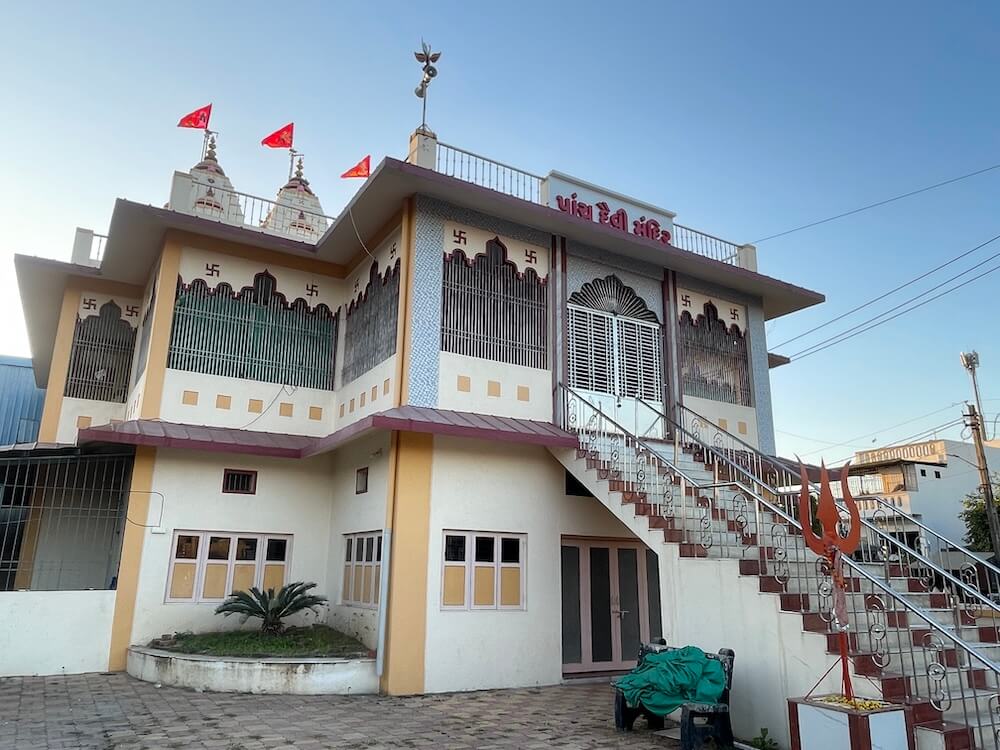 Claiming descent as Yaduvanshi Kshatriyas, they possess an ancient and storied history. Historians surmise that the modern-day Ahirs are descendants of the Abhira tribe, an early Dravidian group. It is believed that the Abhiras first entered India through the northwest, arriving in Punjab from the regions of Herat and Kandahar. Subsequently, they established settlements and political power across present-day Sindh, Gujarat, Rajasthan and Maharashtra. Traditional history gleaned from the Mahabharata and the Puranas suggests that the Abhiras were a formidable political force from antiquity. This community was actively involved in India’s political transitions from the first or second century AD through to the fourth century. Abhira kings ruled various parts of India and within this community – which primarily engages in agriculture and animal husbandry – the worship of Lord Krishna and Lord Shiv holds paramount importance.
 The Ahir community comprises a total of 133 Gotras. In the village of Tavra, nestled on the banks of the Narmada river eight kilometres from Bharuch, the settlement is divided into Old Tavra and New Tavra. In Old Tavra, there are thirty families belonging to five different Gotras. From time immemorial, these families had been consecrating and worshipping their respective Kuladevatas within their individual homes. In 2002, the youth of the village conceived the idea of building a collective temple for the ancestral deities of all five clans. After the village elders enthusiastically supported the proposal, the foundation stone-laying ceremony was performed that same year. Committed to building the structure through their own resources, the community declined donations from other groups. Consequently,
  it took nine years for the temple edifice to be completed. In 2011, the construction reached its fruition and the five goddesses were formally and ritualistically installed.
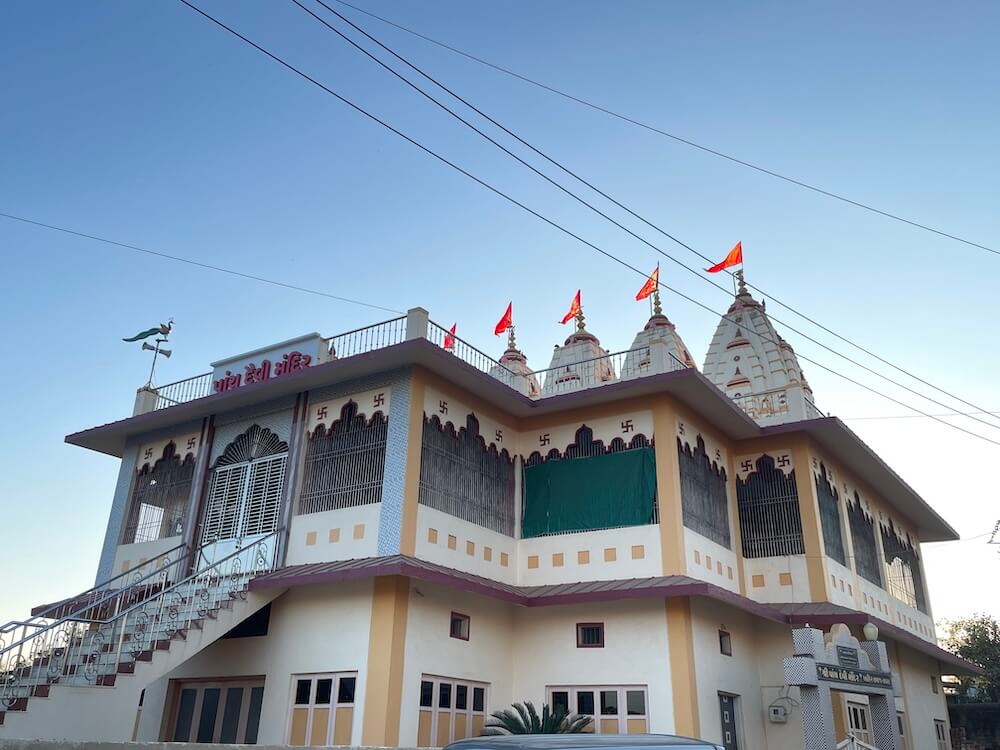
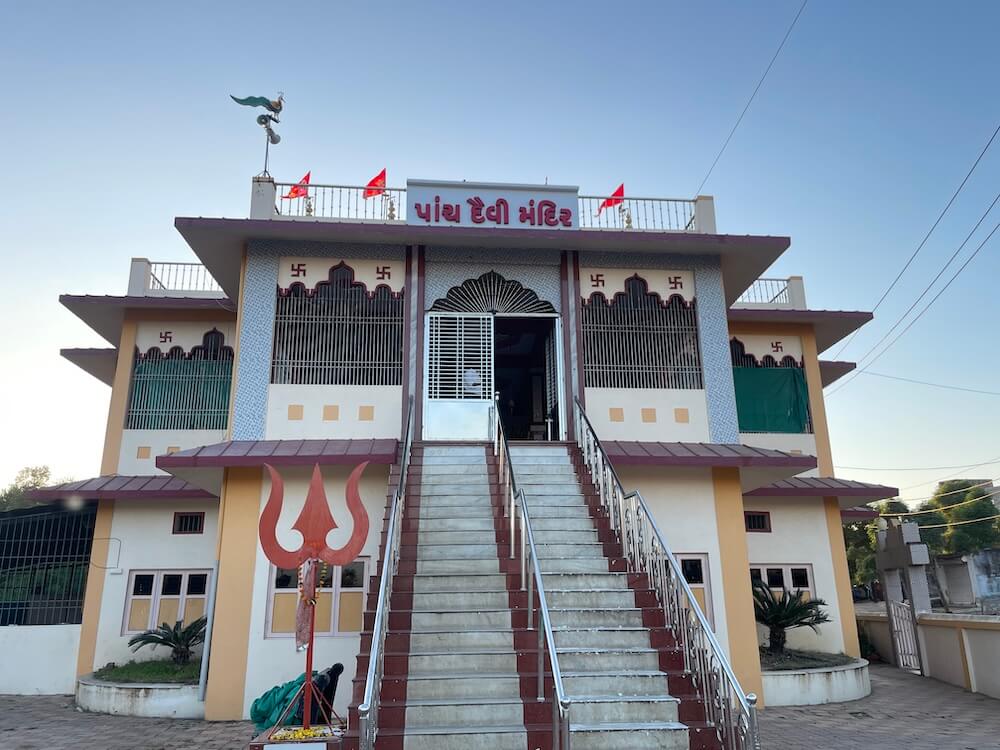
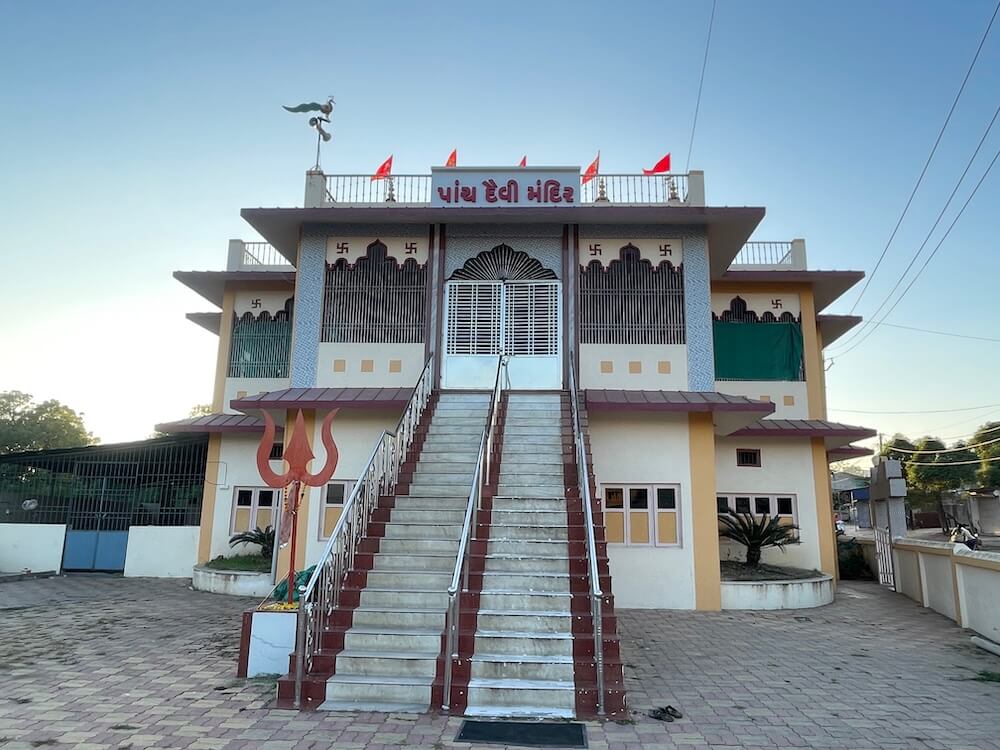
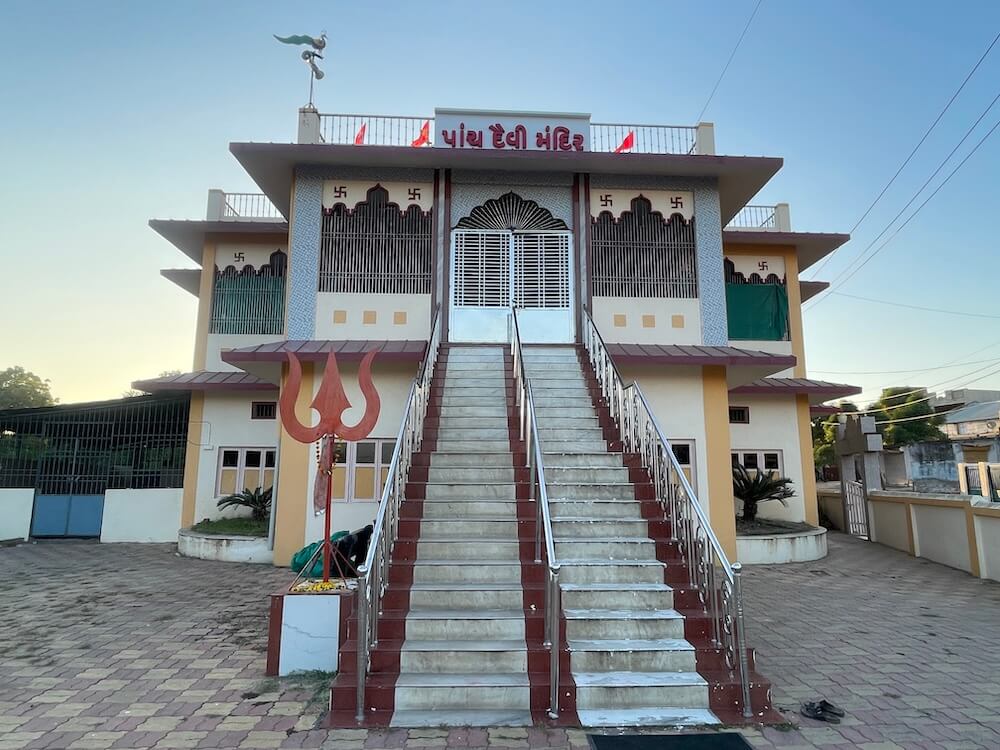
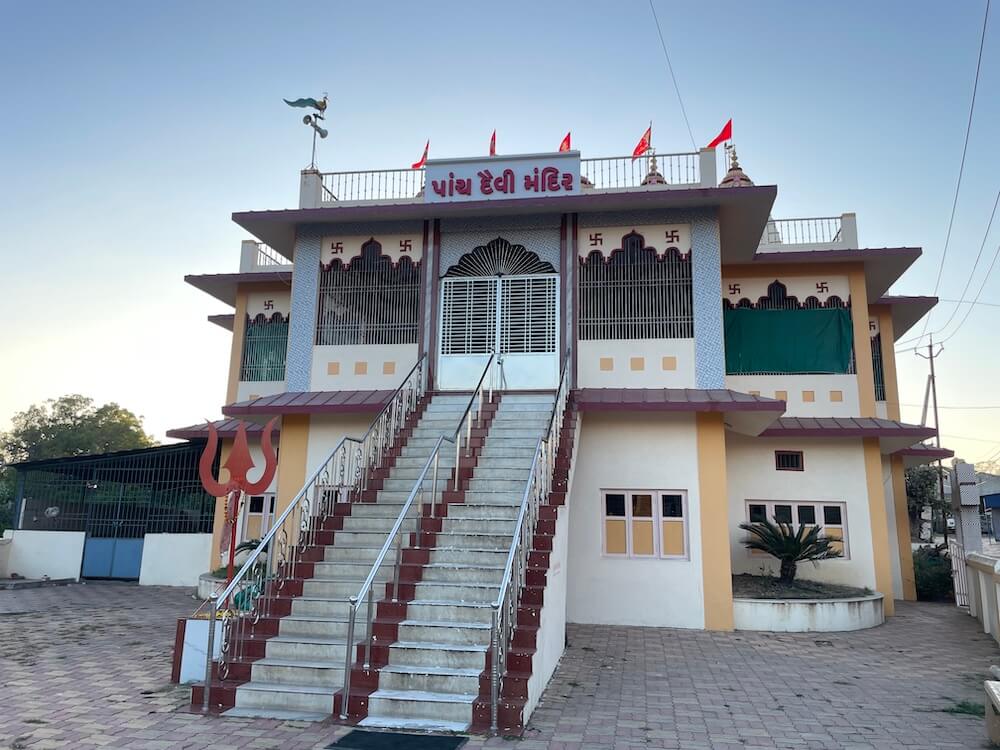
The temple is situated within a spacious enclosure, surrounded by a compound wall on all four sides with a magnificent entrance arch. The courtyard is paved throughout with stone blocks. The temple structure itself is two-storeyed, with the sanctum of the goddesses located on the upper floor. The architectural design features an assembly hall housing five Garbhagrihas (sanctum sanctorums). One enters the expansive Sabhamandap (assembly hall) after ascending twenty-three steps. To the left of this staircase, a large Trishul (trident) is mounted upon a small platform. On the left corner of the Sabhamandap roof, a peacock figure – resembling a weathercock – is positioned.
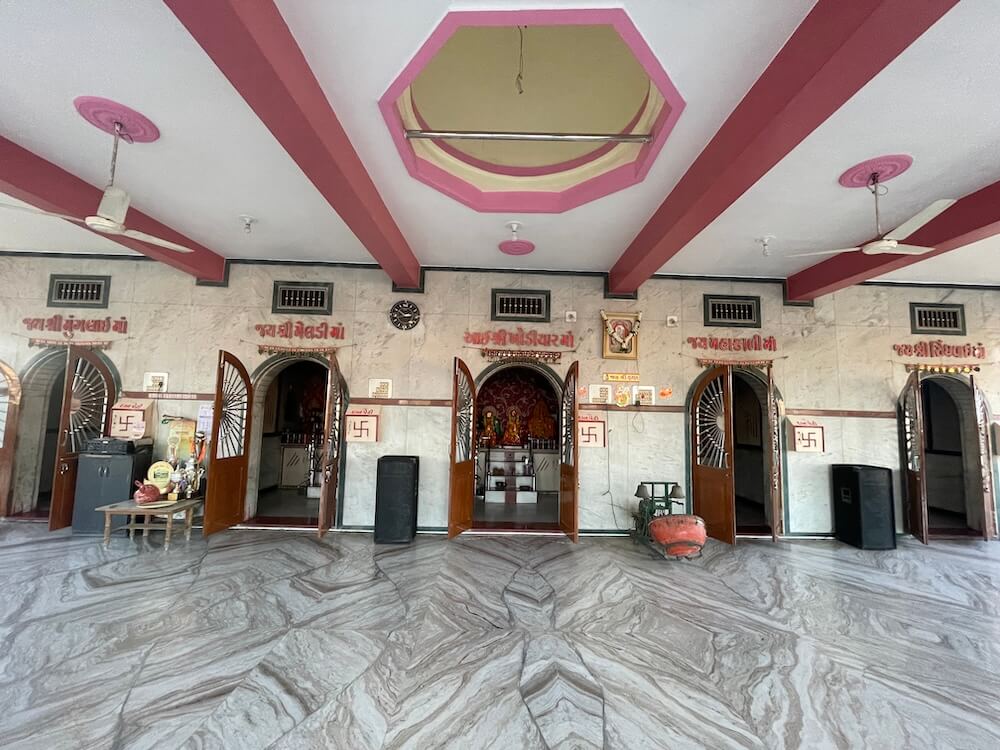 The Sabhamandap, which features large windows, is floored entirely with marble. A statue of a lion, the Vahana (divine vehicle) of the Goddess, sits upon a pedestal. Directly ahead, the five deities reside within their respective Garbhagrihas. In the sanctum on the far right is Sindwai Mata, also known as Siddheshwari Mata, the Kuladevata of the Bachatar Gotra. Beside her is Mahakali Mata, the ancestral deity of the Godar Gotra. Adjacent to this is the sanctum of Khodiyar Mata, the deity of the Daharka Gotra. This sanctum also contains an idol of Sikotar Mata. In the next chamber resides Meldi Mata, the guest Kuladevata of the Pichatar Gotra. The leftmost sanctum is home to Munglai Devi (Mogal Mata). Munglai Devi is the original ancestral deity of the Pichatar Gotra. She is also referred to as Brahmini Devi in certain places.
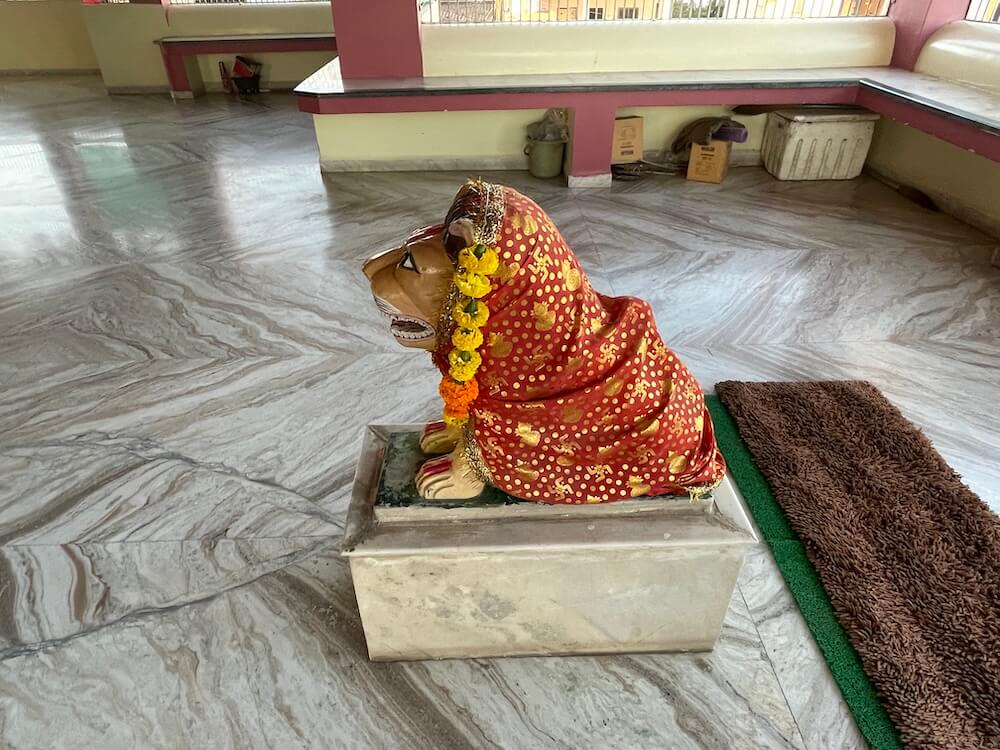 Devotees hold a firm belief that the Goddess is provoked to wrath if one seeks her Darshan after consuming meat, fish or intoxicants. Each of these sanctums is topped with an Urushringa style spire featuring a two-tiered Amalaka and a Kalash (pinnacle), while five domed spires crown the Sabhamandap.
In addition to Ahir devotees, people from various other communities visit the temple for worship. Members of the Ahir diaspora settled abroad make it a point to seek blessings here upon returning to their village. Daily prayers and Aarti are conducted with regularity and numerous festivals are celebrated throughout the year. The Ahir community celebrates Janmashtami in a traditional manner, marked by processions, Bhajans (devotional songs), Kirtan and Maha Aarti. On the first day of Sharadiya Navratri, the Ghatasthapana (ritual installation of the sacred jar) is performed. For all nine days, the five goddesses are worshipped in various forms every morning and evening, accompanied by religious and cultural programmes. On the day of Ashtami, the courtyard hosts a Havan (sacred fire ritual), Maha Aarti, Mahaprasad (consecrated feast) and Raas-Garba dances. Finally, on the day of Dussehra, the sacred jars are immersed in the waters of the Narmada.
Main Features :
- 8 km away from Bharuch
- ST (State Transport) bus facility available from Bharuch
- Private vehicles can reach up to the parking
- Accommodation and breakfast facilities are available in the vicinity
पंचदेवी मंदिर
तवरा, ताल./जिला. भरूच
मंदिरे
Temples
मंदिर
-
कोटेश्वर महादेव मंदिर कदोद, ता. भरुच, जि. भरुच
अधिक माहितीKoteshwar Mahadev Temple Kadod, Tal. Bharuch, Dist. Bharuch
View Detailsकोटेश्वर महादेव मंदिर कडोद, ताल. भरूच, जिला. भरूच
विवरण देखें -
धर्मेश्वर महादेव मंदिर धर्मशाळा-झानोर, ता. भरुच, जि. भरुच
अधिक माहितीDharmeshwar Mahadev Temple Dharmashala-Jhanor, Tal. Bharuch, Dist. Bharuch
View Detailsधर्मेश्वर महादेव मंदिर धर्मशाला-झानोर, ताल. भरूच, जिला. भरूच
विवरण देखें -
साईबाबा मंदिर रामवाटिका सोसायटी, झाडेश्वर, ता./जि. भरुच
अधिक माहितीSai Baba Temple Ramvatika Society, Zadeshwar, Tal./Dist. Bharuch
View Detailsसाईं बाबा मंदिर रामवाटिका सोसायटी, जादेश्वर, ताल./जिला. भरूच
विवरण देखें