
ओंकारनाथ (विष्णू) मंदिर
शुक्लतीर्थ, ता./जि. भरुच
Omkarnath (Vishnu) Temple
Shuklatirth, Tal./ Dist. Bharuch
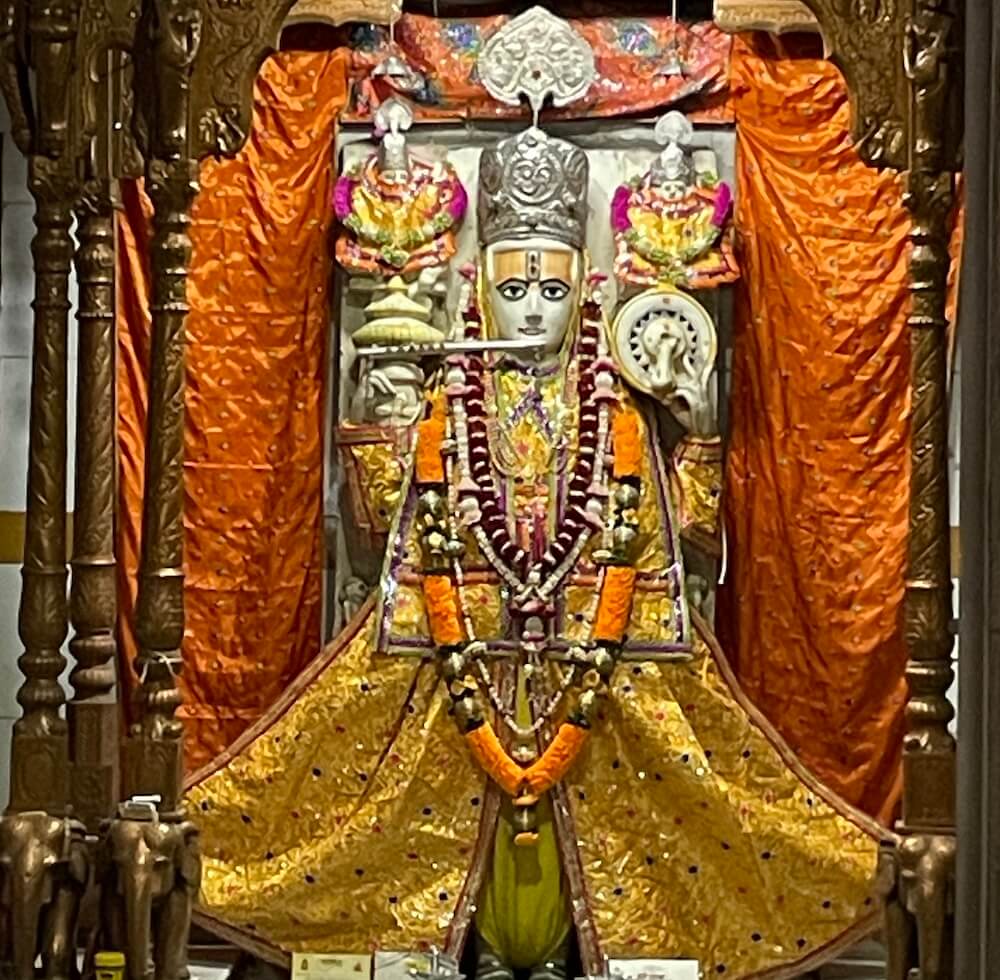 Shuklatirtha is a sacred site whose majesty is extolled in the Skanda Purana in terms that describe it as the embodiment of all holy waters and the residence of all divinities. The presiding deity, Lord Vishnu, is also revered here as Shuklanarayana. The idol of Vishnu within this temple is considered Swayambhu (self-manifested) and it is said to have been formed from the pristine white sands of the Narmada riverbed. It is a matter of profound wonder that this idol is observed to change its appearance three times a day. At Shuklatirtha, a land regarded as the sacred Karmabhumi (place of spiritual action) of learned Agnihotri and Samavedi Brahmins, the river Narmada flows in a graceful crescent shape. Devotees hold the unwavering belief that by bathing in these waters and seeking the Darshan (sacred viewing) of Omkarnath, one attains the merit equivalent to worshipping every deity in existence.
Because of the seat of Shukleshwar Mahadev, this village came to be known as ‘Shuklatirth’. 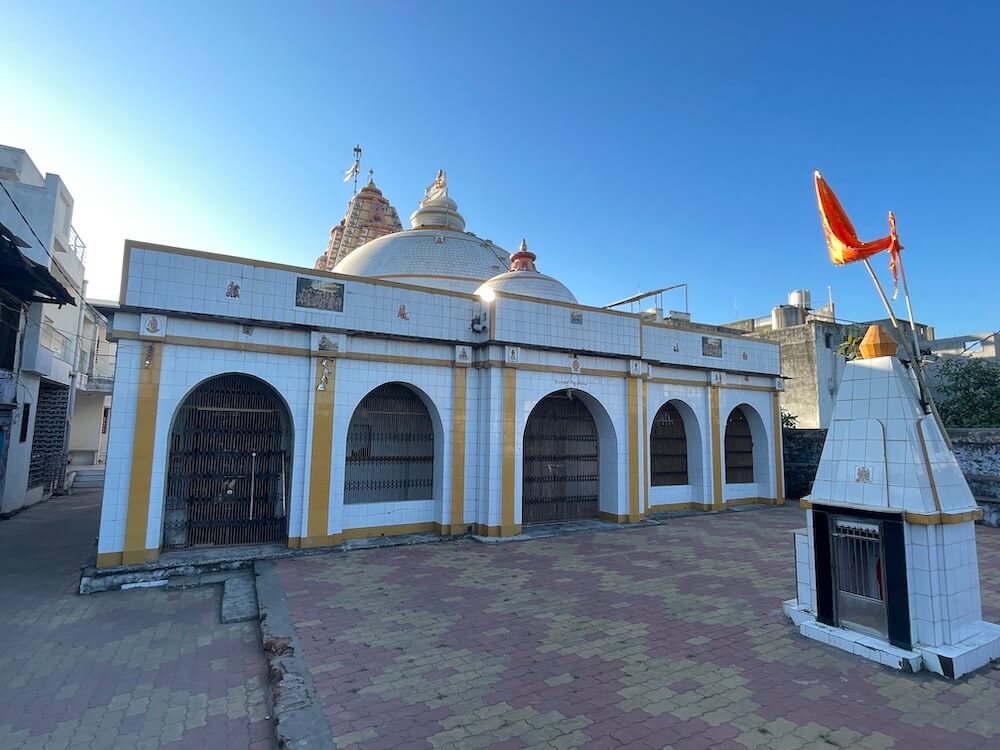 From the two Sanskrit words ‘Shukla’ (white) and ‘Tirth’ (sacred place), the name ‘Shuklatirth’ became established in usage. In this kshetra—known in the Mahabharat period as ‘Naimisharanya’ – devotees hold the faith that Shivshankar and Vishnu are present here in subtle form for the five-day period from Kartiki Ekadashi to Purnima. Shuklatirth, mentioned in many religious scriptures such as the ‘Narmada Purana’, the ‘Shiv Purana’ and the ‘Markandeya Purana’, is regarded as the foremost among the 333 Shivatirths and 28 Vishnutirths along the banks of the Narmada. Regarding this tirth, the ‘Revakhanda’ of the ‘Skanda Purana’ states that this is the seat of Kalagnirudra and Kanthadev. It is also mentioned there that Indra and Kubera worshipped Shankar here.
 In the Revakhanda, the story of the Satyanarayan vrat is narrated. According to that story, a merchant named Sadhu had a daughter named Kalavati. While she was performing Satyanarayan puja, she learned that her husband had arrived by boat. Overwhelmed by joy, she rushed to the riverbank to welcome him without taking the prasad of the puja. Angered by this perceived slight, Lord Satyanarayana caused the boat to vanish. Local residents maintain that this legendary event from the Satyanarayana Katha occurred right here at Shuklatirtha.
A Pauranik story is famous regarding the murti of Omkarnath (Vishnu) Bhagwan here. In ancient times, many rishis performed dhyan and yajna and other religious rites on the banks of the Narmada here. They utilised vast quantities of Darbha (sacred grass), Akshata (consecrated rice), flowers and Samidha (sacrificial wood) for their offerings. Consequently, the riverbed became obstructed,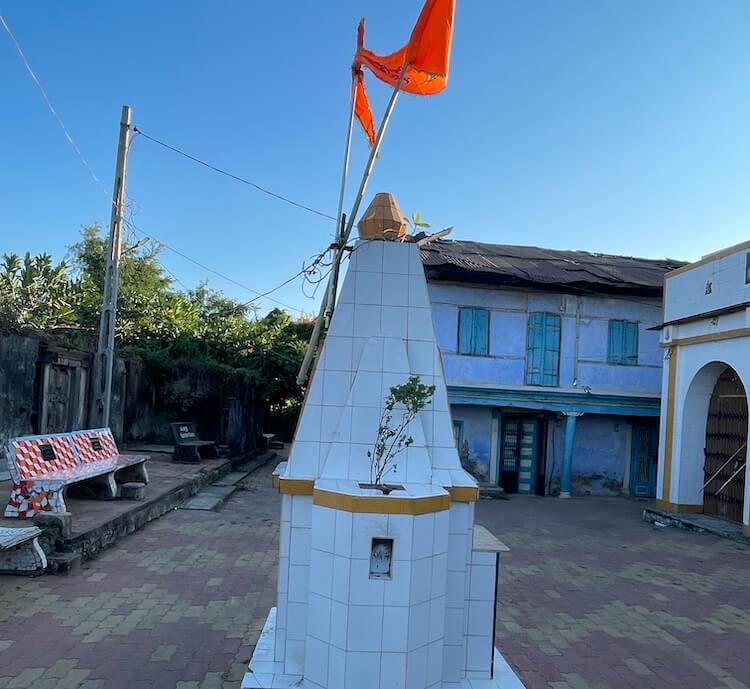 causing the Narmada to assume a fierce form as its waters flooded the surroundings. The distressed sages beseeched Lord Vishnu for intervention. Lord Vishnu commanded the river to recede by two Kos (an ancient measure of distance). As the waters ebbed, a radiant, white-hued idol of Lord Vishnu began to emerge from the riverbed. The sages consecrated this idol, fashioned from white sand, at that very spot. It was from this moment that the river began to flow through the village in a crescent formation. The idol that emerged from the waters was originally worshipped as ‘Hunkarnath’, which over time evolved through linguistic corruption into the name Omkarnath. Devotees claim that this Vishnu murti changes its form three times each day: in the morning it is seen in infant form, at midday in youthful form and after evening in aged form.
This ancient temple of Omkarnath (Vishnu) Bhagwan stands to the east of Shukleshwar village. The precise history of the temple’s establishment is not available. 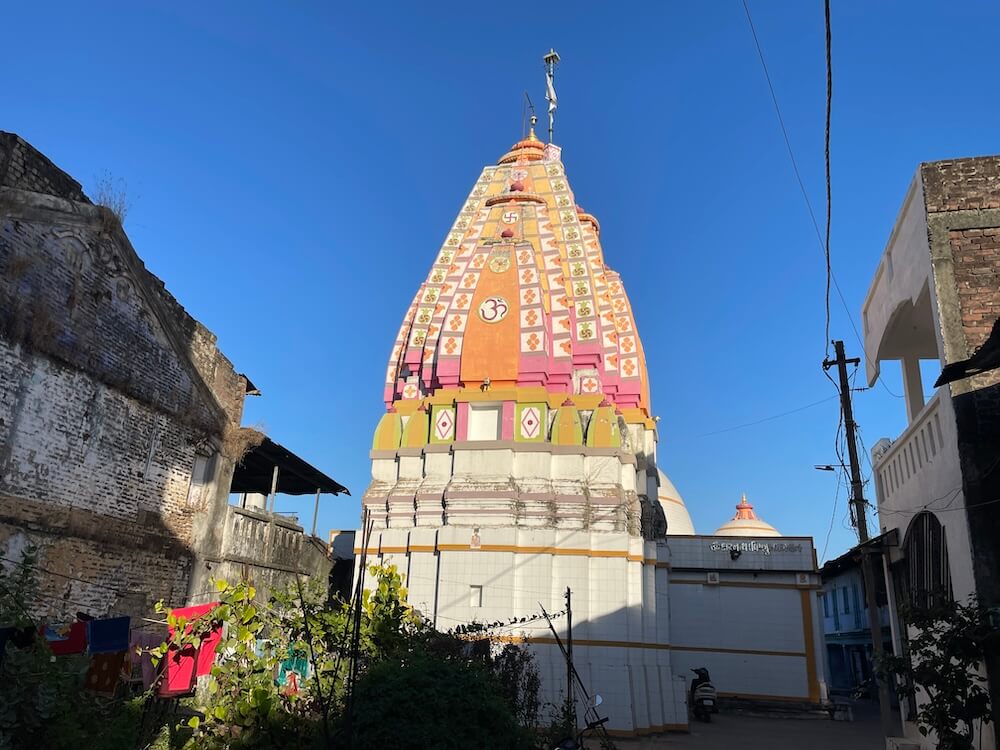 However it is said that in AD 1011, Mainal Devi (Mayanalladevi) – wife of the Solanki king Karnraj and daughter of King Jaykeshi of Chandrapur in Maharashtra – took darshan of Omkarnath Vishnu here. From this, scholars infer that the temple must be at least a thousand years old. Over time the temple underwent renovation on many occasions and after the restoration carried out in 2004, it acquired its present form.
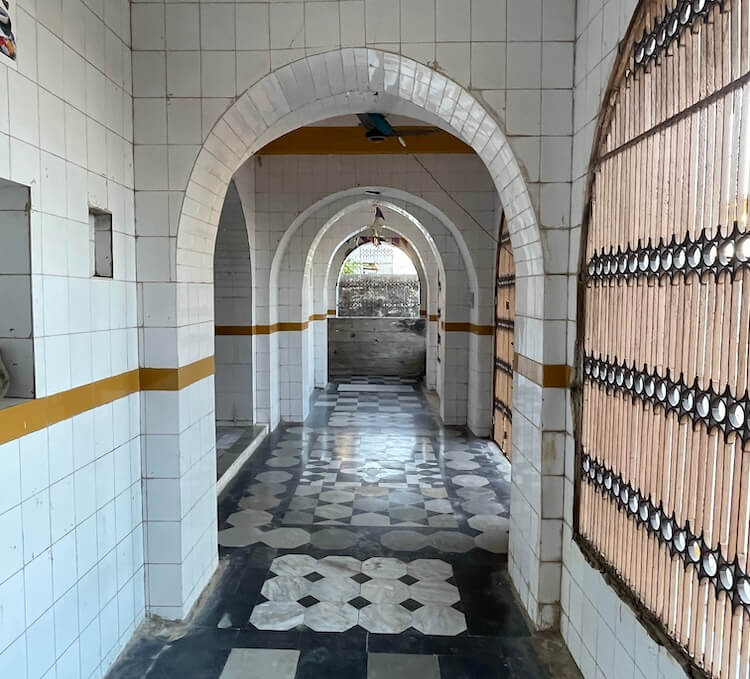
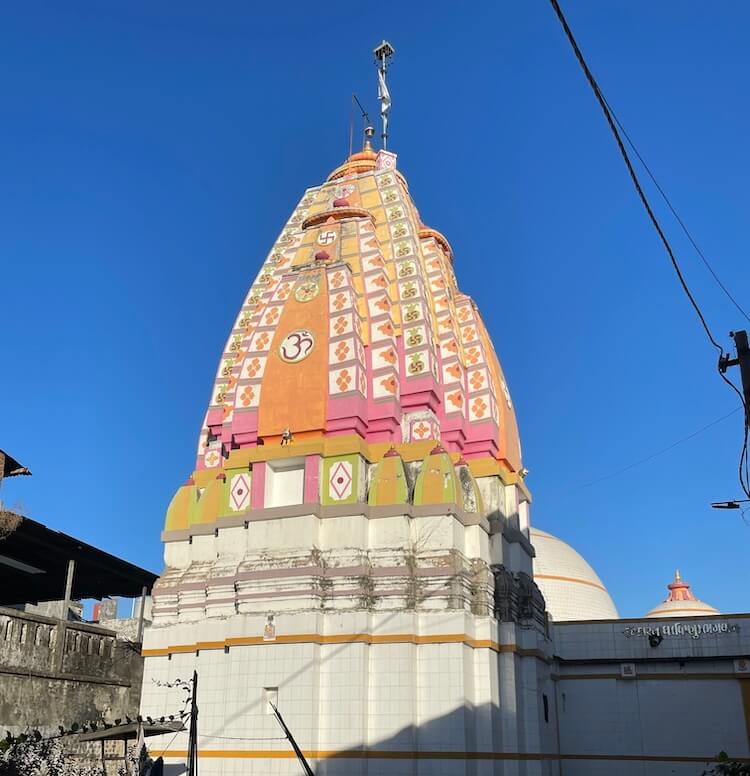
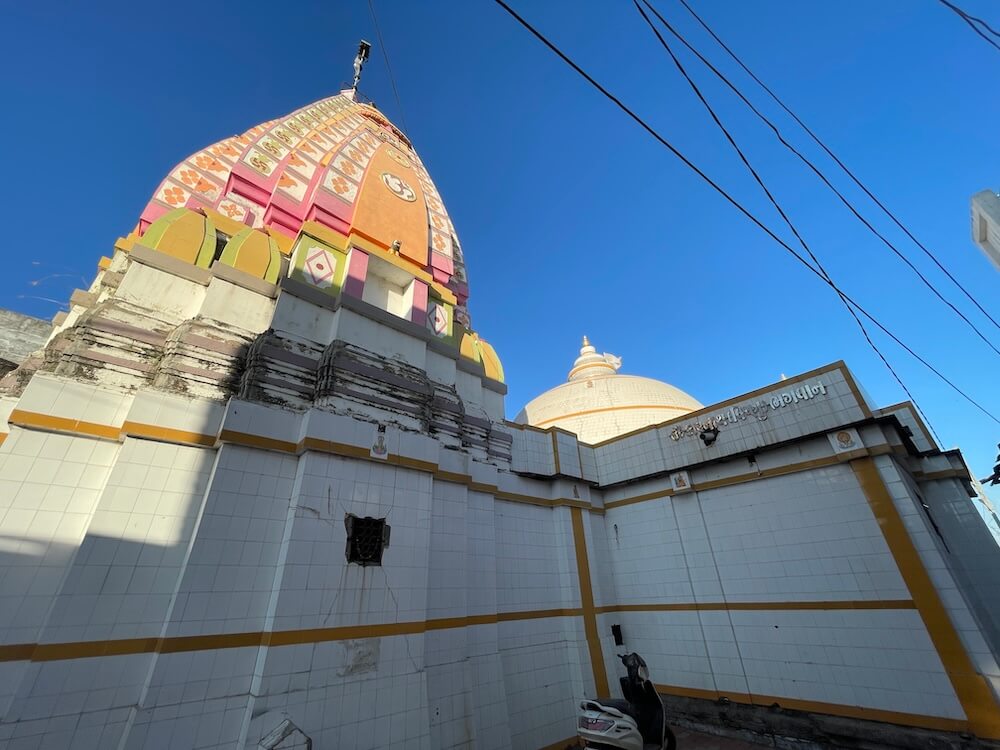
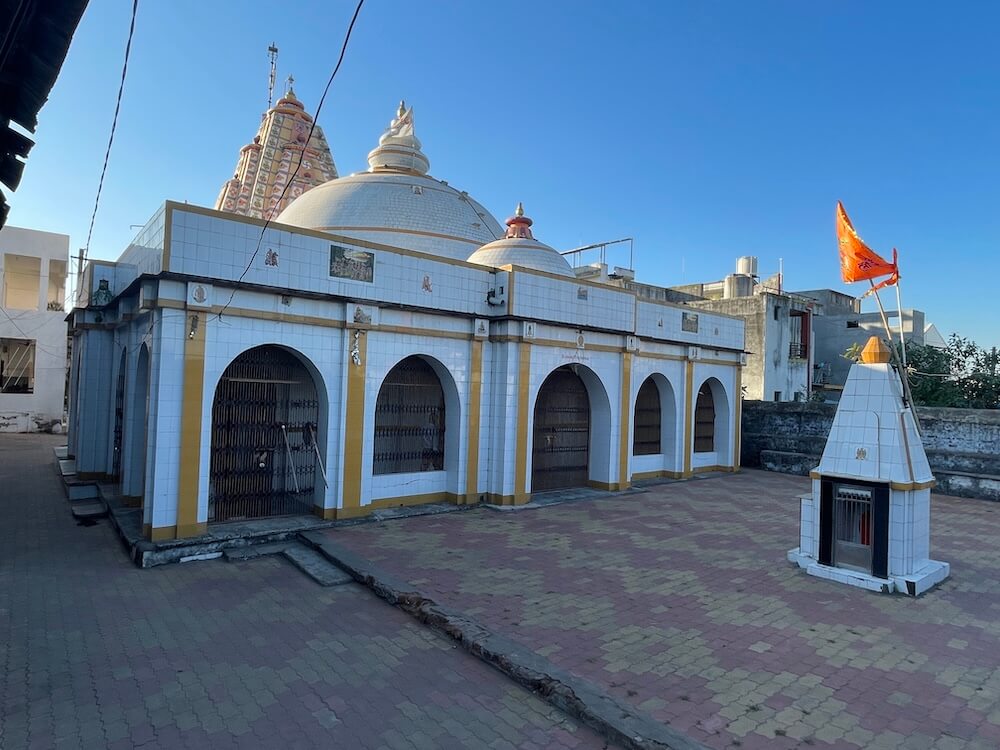
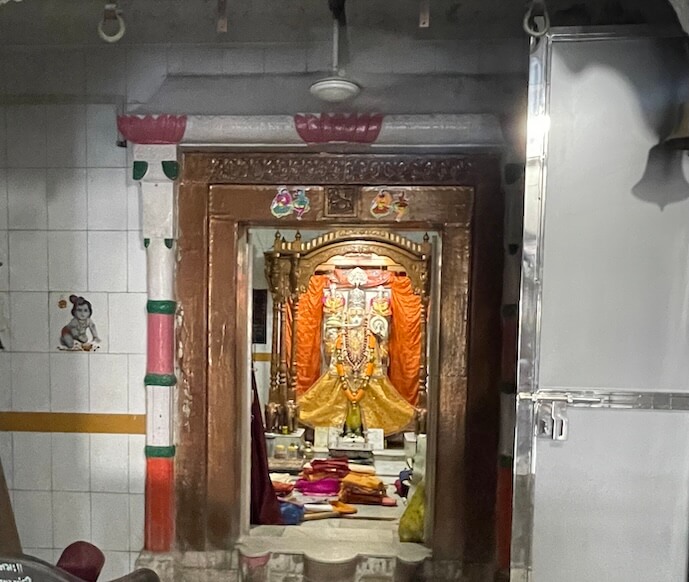
The temple is nestled in the heart of the village settlement. Facing the main temple is a smaller shrine housing Garuda and Hanuman. The primary temple architecture comprises an Ovari (veranda), Sabhamandap (assembly hall), Antaral(vestibule) and Garbhagriha (sanctum sanctorum). The walls of the Ovari and Sabhamandap are adorned with marble tiles both internally and externally. 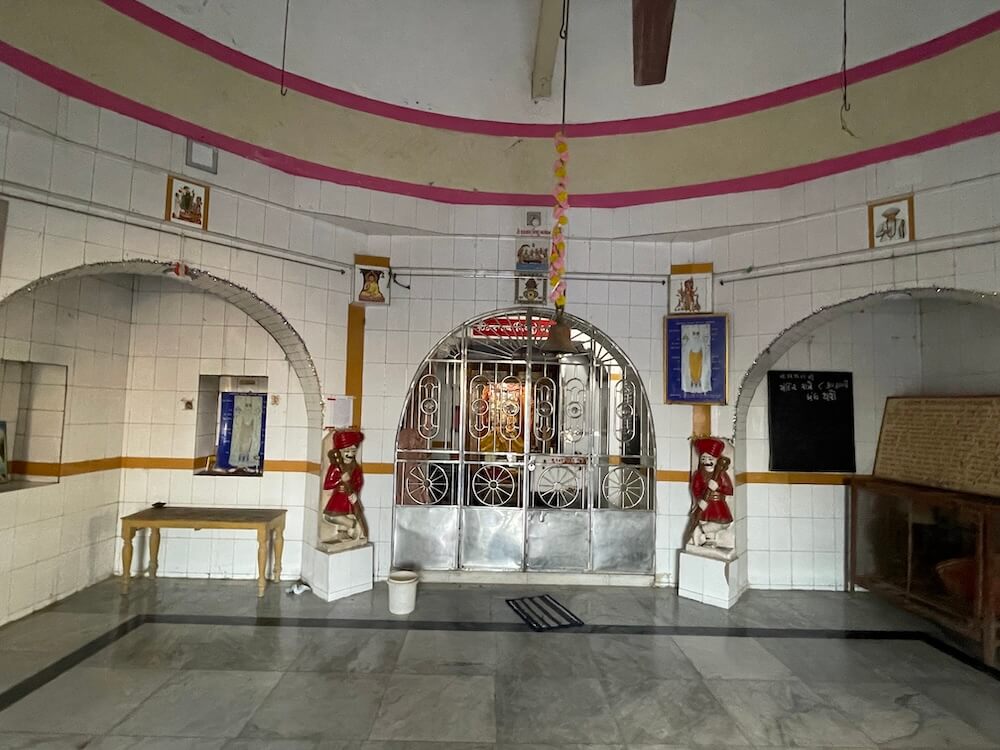 The front wall of the Ovari features large arched windows and a main entrance, topped by a domed spire. Above the Sabhamandap sits another large domed spire. This hall is spacious and circular from within, featuring portraits of various deities upon its walls. One niche even enshrines an image of Bharat Mata (Mother India). The Antaral is accessed through an arched gateway flanked by Dwarpals (celestial gatekeepers). Inside the vast Garbhagriha, upon a raised platform, sits a full-sized four-armed idol of Omkarnath Bhagwan within a wooden Makhar (ornate canopy). This beautifully carved canopy is supported by pillars featuring Gajraj (elephants) at their base. In the Makhar, the idol of Lord Vishnu is flanked by Prajapita Brahma to the left of his head and Mahadev to the right. His left hands hold the Gada (mace) and Padma (lotus),
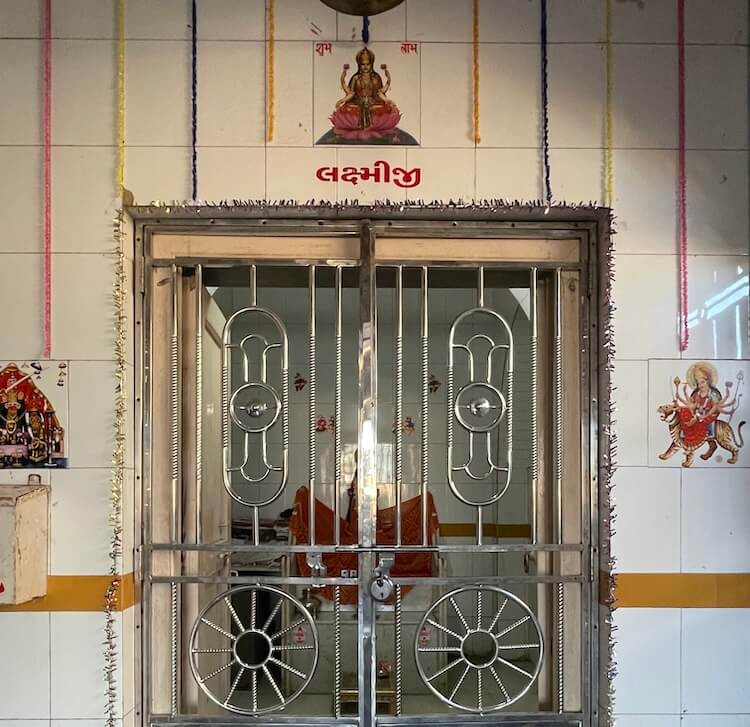
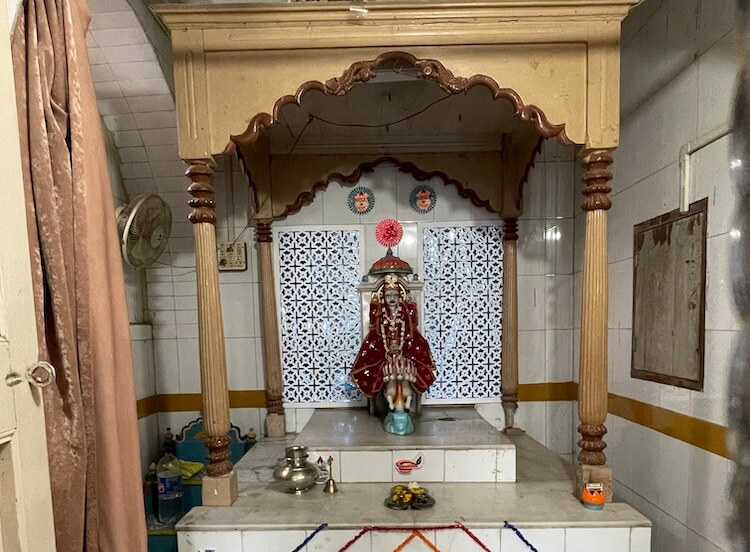
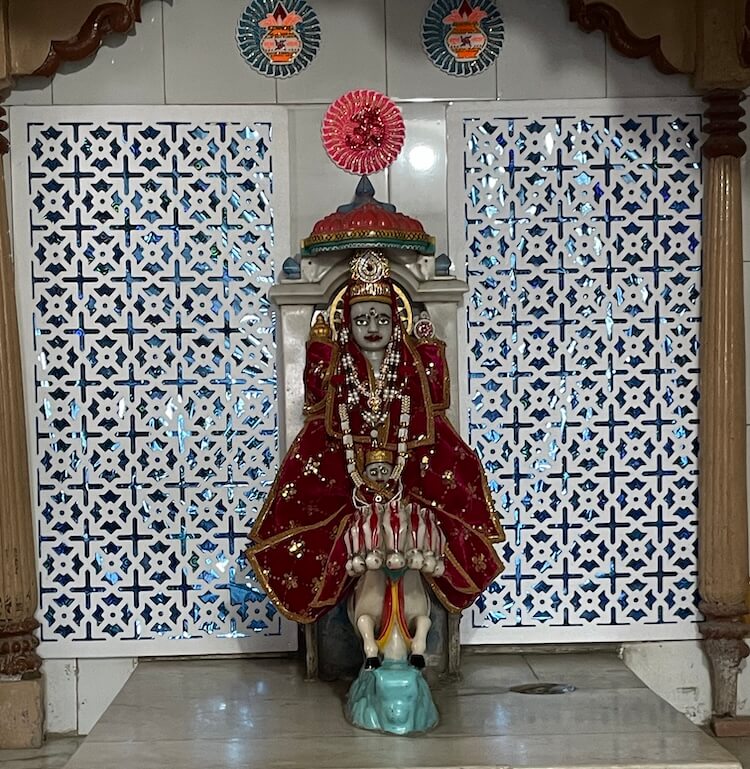
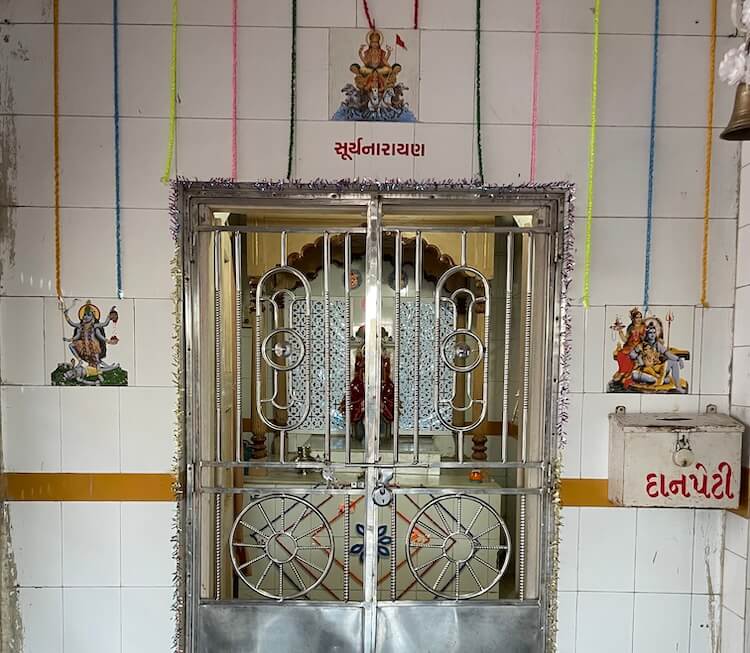
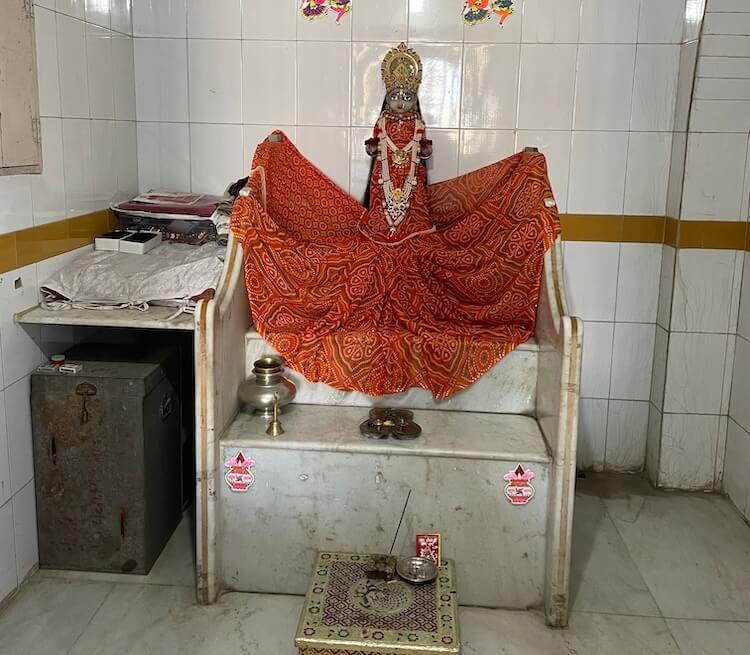
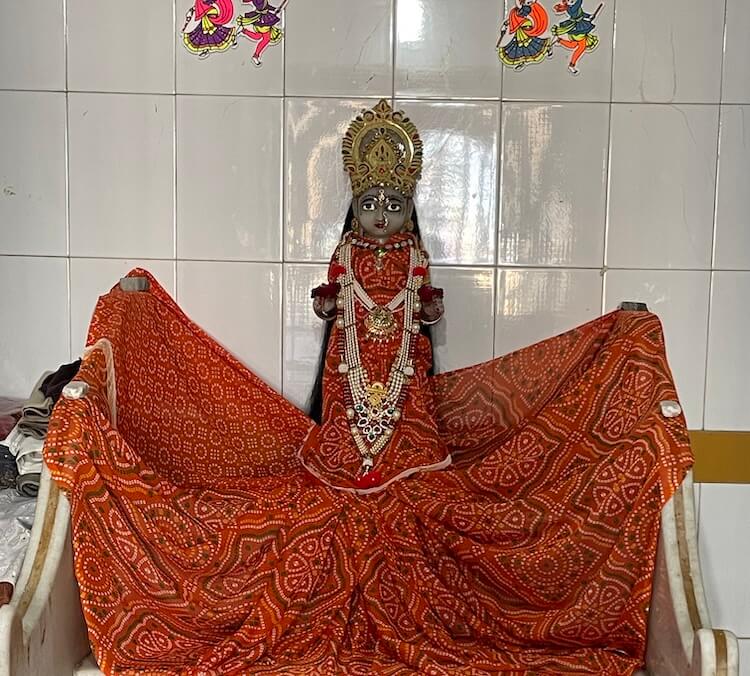
 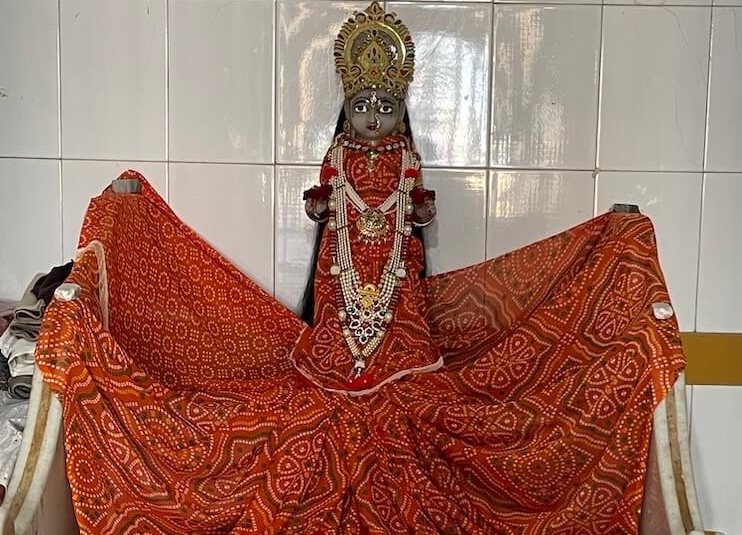 while his right hands hold the Sudarshan Chakra (discus) and a Dakshinavarti Shankh (right-handed conch). Above the chest is the ‘Shri Lanchana’ mark and at the centre is the ‘Bhrigu Lanchana’. Radhika resides in the right palm of the idol, while Vedavyas resides in the left. Below, Shukdev stands to the right and Lakshmi to the left. The body of the idol is entwined by Sheshnag (the celestial serpent), with the serpent’s tail visible at the back of the head. At the base of the idol are Jai and Vijay. To the left of this main sanctum is a chamber for Goddess Lakshmi and to the right is a marble idol of Suryanarayana (the Sun God) mounted upon a chariot drawn by seven horses. The sanctum follows the Nagara architectural style, topped with an Urushringaspire featuring a two-tiered Amalaka and a Kalash (pinnacle).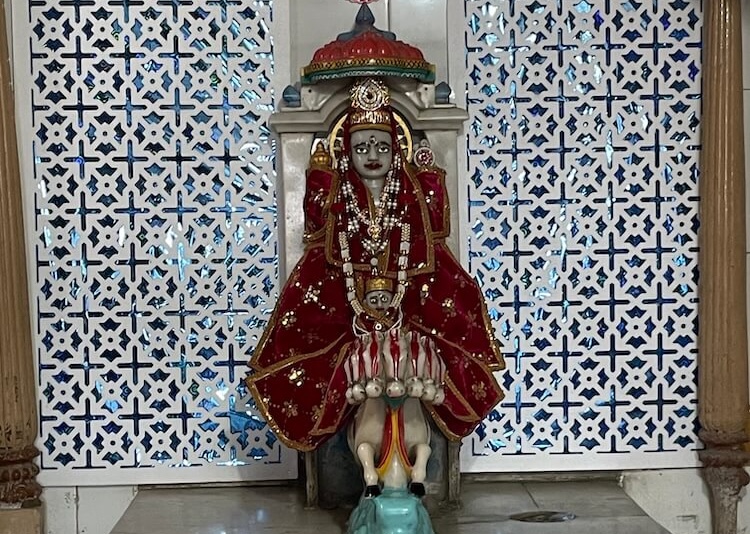
The temple observes regular ritual worship. Aarti (ritual of light) is performed daily at 8:30 am and 7:15 pm. Devotees may seek Darshan throughout the day, except between 1:00 pm and 3:00 pm. It is a firm belief that those who worship Lord Vishnu with sincere devotion, offering Tulsi leaves and flowers, find a place in Vishnuloka (the abode of Vishnu). Furthermore, believers hold that a glimpse of the deity can absolve one of the sin of Brahmahatya (the killing of a Brahmin).
Consequently, the temple draws a multitude of pilgrims. During the annual fair held from Kartiki Ekadashi to the full moon, thousands of devotees descend upon the village to seek the blessings of Omkarnath (Vishnu) Bhagwan.
Main Features :
- 16 km away from Bharuch
- ST (State Transport) bus facility available from Bharuch
- Private vehicles can reach up to the parking
- Accommodation and breakfast facilities are available in the vicinity
- Contact : Pravinbhai Purohit, Mo. : 9429428422
ओंकारनाथ (विष्णु) मंदिर
शुक्लतीर्थ, ताल./जिला. भरूच
मंदिरे
Temples
मंदिर
-
कोटेश्वर महादेव मंदिर कदोद, ता. भरुच, जि. भरुच
अधिक माहितीKoteshwar Mahadev Temple Kadod, Tal. Bharuch, Dist. Bharuch
View Detailsकोटेश्वर महादेव मंदिर कडोद, ताल. भरूच, जिला. भरूच
विवरण देखें -
धर्मेश्वर महादेव मंदिर धर्मशाळा-झानोर, ता. भरुच, जि. भरुच
अधिक माहितीDharmeshwar Mahadev Temple Dharmashala-Jhanor, Tal. Bharuch, Dist. Bharuch
View Detailsधर्मेश्वर महादेव मंदिर धर्मशाला-झानोर, ताल. भरूच, जिला. भरूच
विवरण देखें -
साईबाबा मंदिर रामवाटिका सोसायटी, झाडेश्वर, ता./जि. भरुच
अधिक माहितीSai Baba Temple Ramvatika Society, Zadeshwar, Tal./Dist. Bharuch
View Detailsसाईं बाबा मंदिर रामवाटिका सोसायटी, जादेश्वर, ताल./जिला. भरूच
विवरण देखें