
मातंगी मोढेश्वरी माता मंदिर
मोढेरा, ता. बेचराजी, जि. मेहसाणा
Matangi Modheshwari Mata Temple
Modhera, Tal. Becharaji, Dist. Mehsana
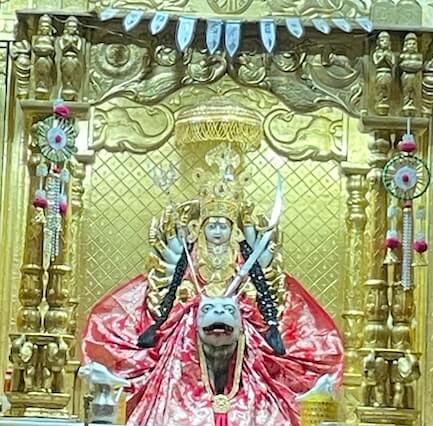 The sacred site of the manifestation of Mother Matangi, the ninth of the ‘Dashamahavidyas’ (ten aspects of the Divine Mother), is situated at Modhera in the Becharaji Taluka of North Gujarat. This sanctum is widely renowned as the Matangi Modheshwari Mata Temple. According to ancient lore, in the region once celebrated as ‘Dharmaranya’, Goddess Durga assumed a ‘Raudra’ (fierce) form to protect the Brahmin and Vaishya communities from the predations of a demon named Karnat. It is said that the Mother vanquished this demon using various weapons held in her eighteen arms. Furthermore, chronicles from the ‘Dvapara Yuga’ recount that Lord Ramachandra himself offered prayers to the Goddess here. Known as ‘Matangi Modheshwari’, the Goddess is the ‘Kuldevata’ (ancestral family deity) of the Modh Brahmins, the Vaishyas and numerous families within the Kshatriya community.
Modhera is endowed with a profound ancient and mythological history.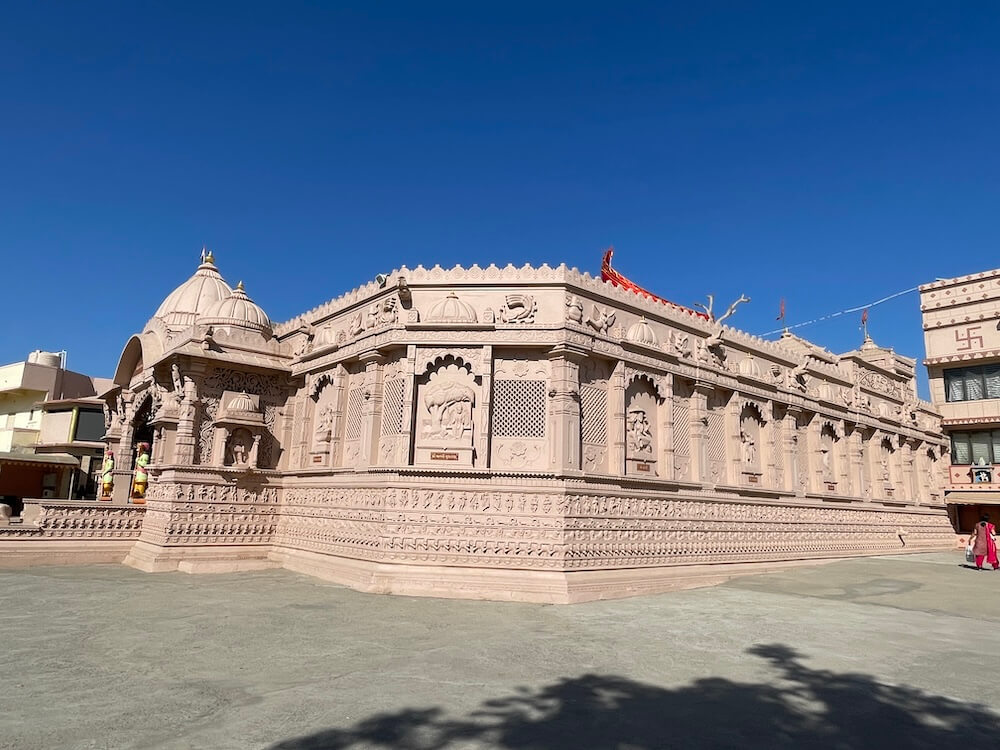 During the ‘Treta Yuga’, this region was known as ‘Satyamandir’. In the ‘Dvapara Yuga’, it was called ‘Vedbhuvan’ and at the dawn of the ‘Kali Yuga’, it was identified as ‘Moherakpur’. This land was the site where Lord Brahma and Dharmaraja performed ‘Tapa’ (penance) for many years. It was due to the penance of Dharmaraja that the area received the name ‘Dharmaranya’. Maharishi Ved Vyas had instructed the sages that in the entire universe, there are only two places destined for the attainment of ‘Moksha’ (salvation) – Naimisharanya and Dharmaranya – and therefore they ought to perform their austerities there. It was upon this holy soil, during the tumultuous battle against the demon Karnat, that the Goddess’s wrath became uncontrollable. Billows of fire issued from the incensed Mother’s mouth and her eyes turned crimson.
 In this formidable conflict, she brought about the demon’s end and granted ‘Abhaya’ (fearlessness) to her devotees.
Following the slaying of Ravana, Lord Ram was afflicted by the sin of ‘Brahmahatya’ (the killing of a Brahmin). Acting upon the counsel of Maharishi Vashistha, Lord Ram arrived in Dharmaranya with Sita and his brothers to undergo purification. However, upon entering Dharmaranya, his chariot abruptly halted. The horses and elephants accompanying them also came to a dead stop. A surprised Lord Ram enquired of his preceptor, Vashistha Rishi, who explained that this was the land of the Goddess. So one must proceed on foot, without being seated in a vehicle or mounted upon an animal. 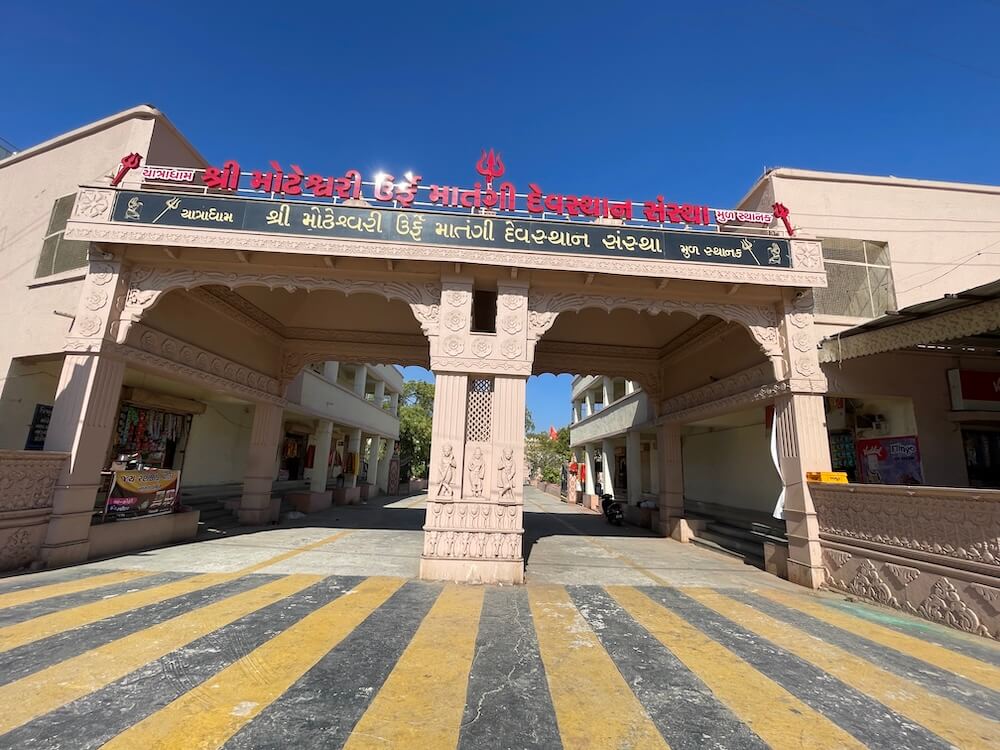 Consequently, Lord Ramachandra dismounted and walked. After worshipping the Goddess with deep devotion, he resided for a time on the banks of the Suvarna River. During his stay, he observed that the citizens and Brahmins of Dharmaranya had migrated elsewhere. One day, he heard a woman weeping and sent his soldiers to investigate. However, the woman refused to speak to the soldiers. To console her, Lord Ramachandra approached her himself, at which point she pleaded for the city to be resettled. Thereafter, Lord Ramachandra brought back the Brahmins who had abandoned Dharmaranya. He commanded his soldiers to erect houses and temples. Though he wished to grant the Brahmins gifts, they stated they could not accept donations without the permission of the ‘Tridevas’—Brahma, Vishnu and Mahesh.
  Lord Ramachandra then worshipped the Trinity, who appeared and granted the Brahmins permission to accept the offerings. Lord Ramachandra donated several villages to them. At his behest, Hanuman travelled in all four directions to bring merchants to Dharmaranya and with the Lord’s blessings, approximately 125,000 merchants settled in the city. Entrusting the protection of the city to Hanuman, Lord Ramachandra departed.
In the thirteenth or fourteenth century, the armies of Alauddin Khilji, the Sultan of Delhi, invaded the city. After causing extensive damage to the famous Sun Temple, the troops advanced towards the Matangi Modheshwari Mata Temple. To protect the idol, the villagers cast it into a ‘Vav’ (stepwell), now famously known as the ‘Dharmavav’. Following this act, the Modh Brahmins and others migrated from the village. In later years, during the reign of the Gaekwad state in Vadodara, many families returned. 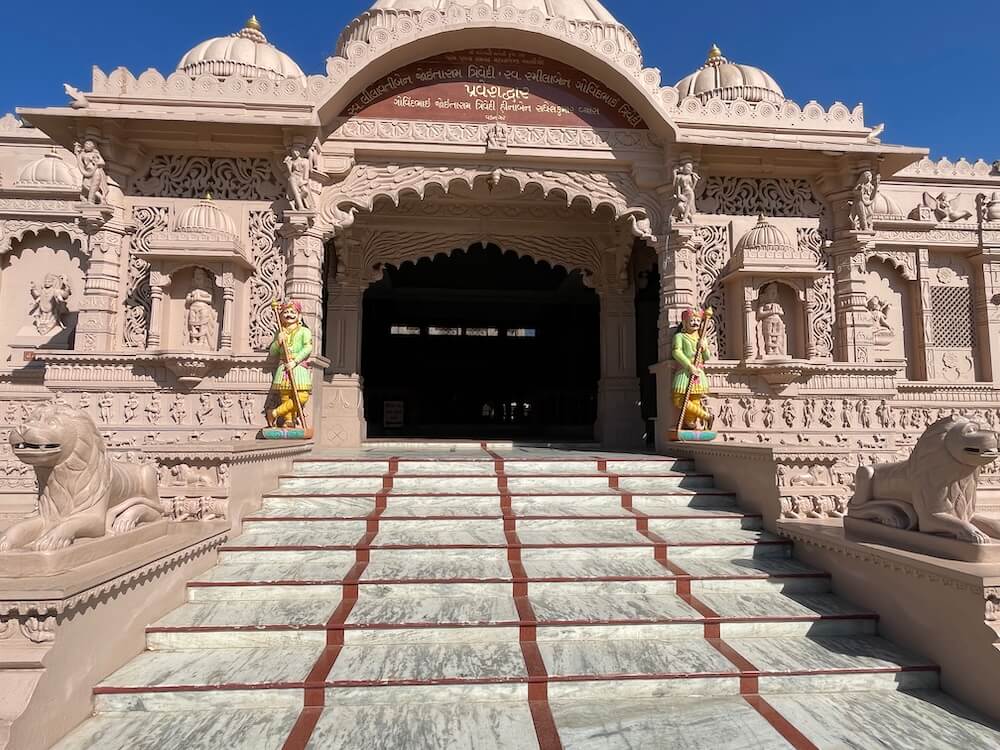 They began worshipping the stepwell where the idol had been submerged. Eventually, the Modh Brahmins resolved to reconstruct the destroyed temple, a cause championed by a lawyer named Nathubhai Girdharilal. A committee was established and construction commenced in 1962. Upon its completion in 1966, a new idol of the Goddess was formally consecrated on the day of ‘Magha Shuddha Trayodashi’.
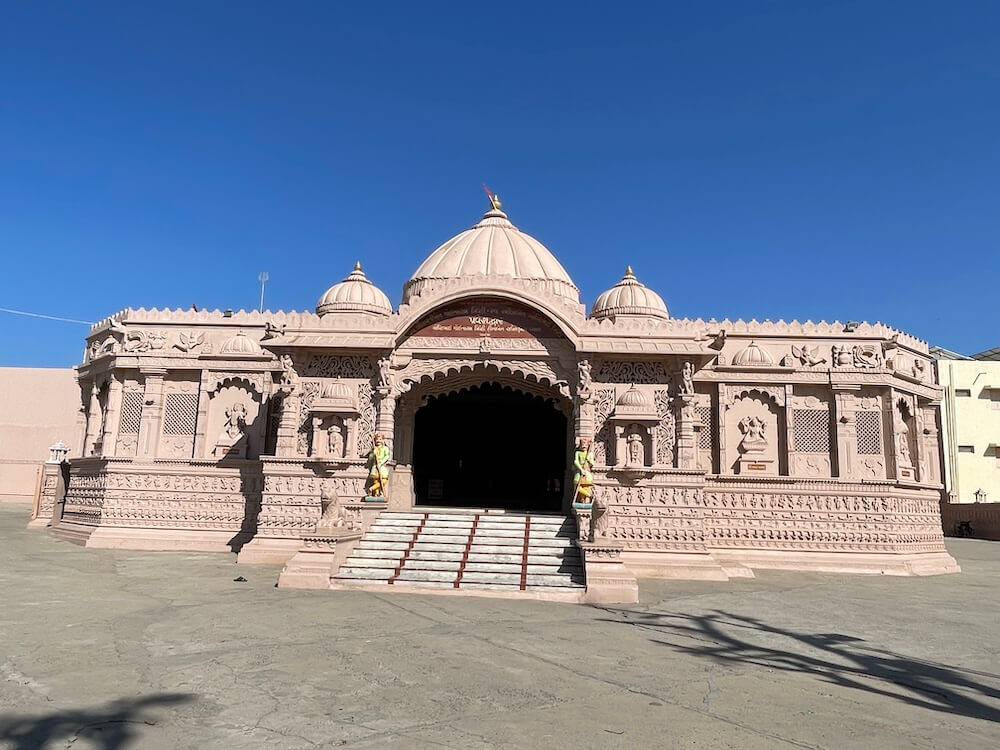
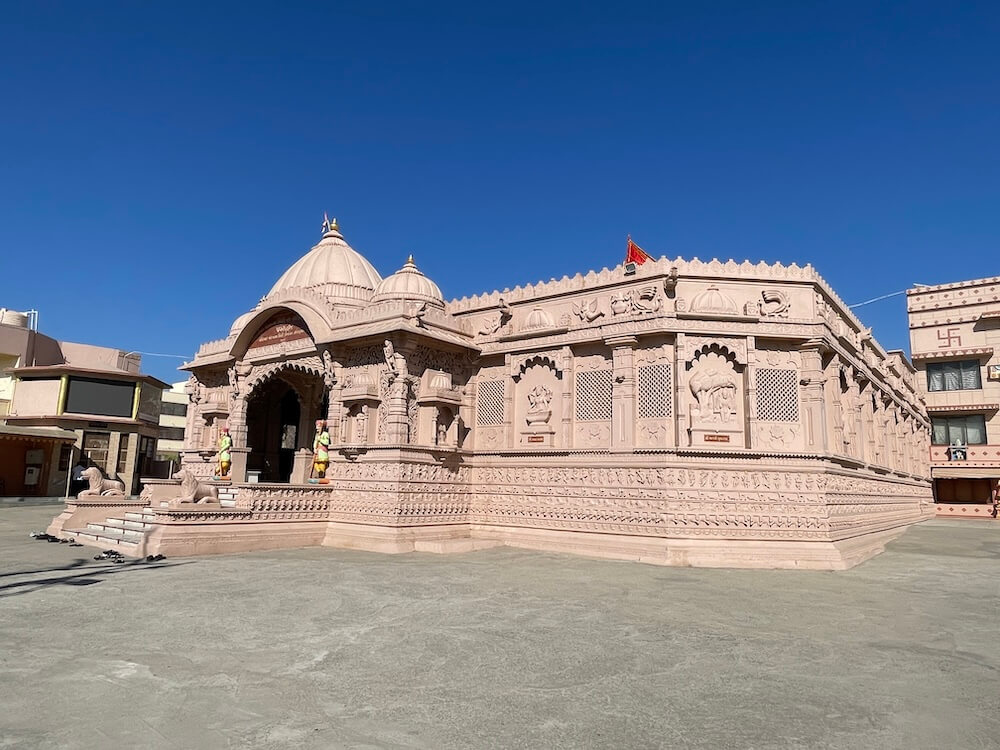
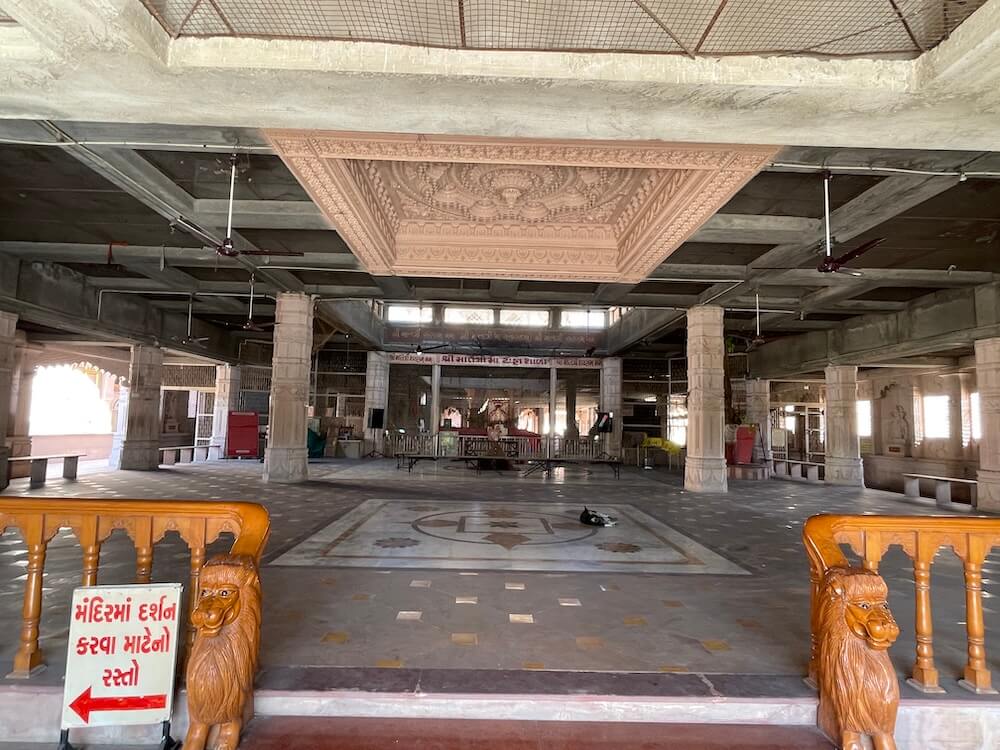
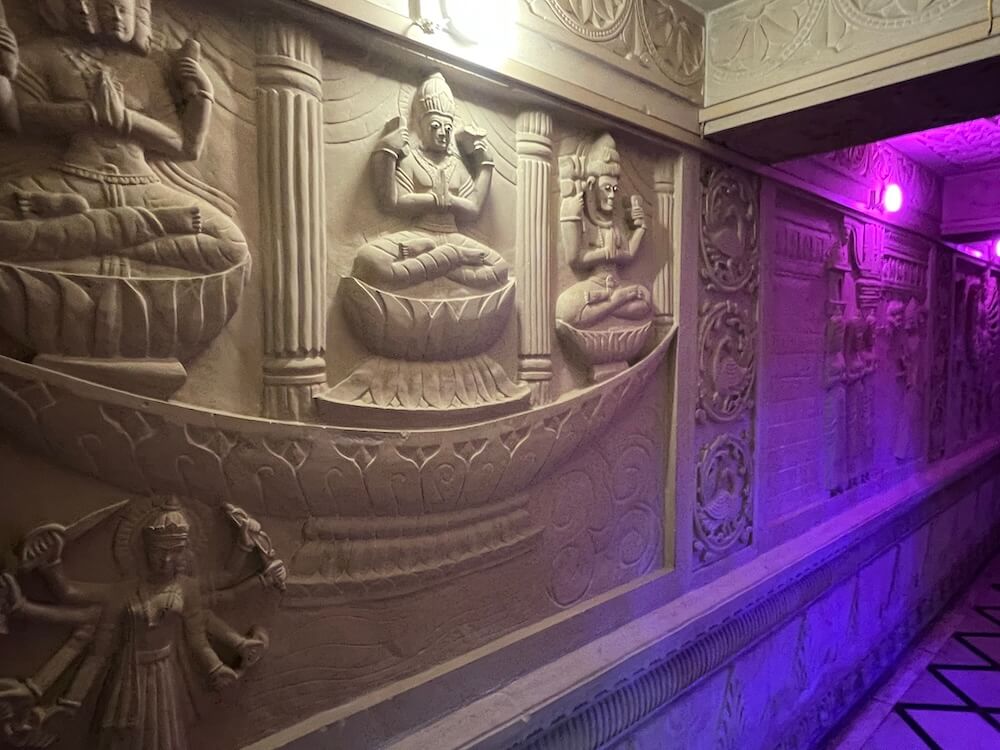
The Matangi Modheshwari Temple possesses an expansive precinct. Near the entrance, there are shops selling ritual offerings and ‘Prasad’. Upon entering, one is met with a vast area featuring numerous trees and a garden. A short distance away stands a fountain, beyond which lies the temple courtyard. One enters the temple by ascending a few steps, flanked on either side by sculptures of lions, the vehicle of the Goddess. At the top of the stairs is a large pavilion housing a ‘Yagyashala’ (hall for fire rituals). 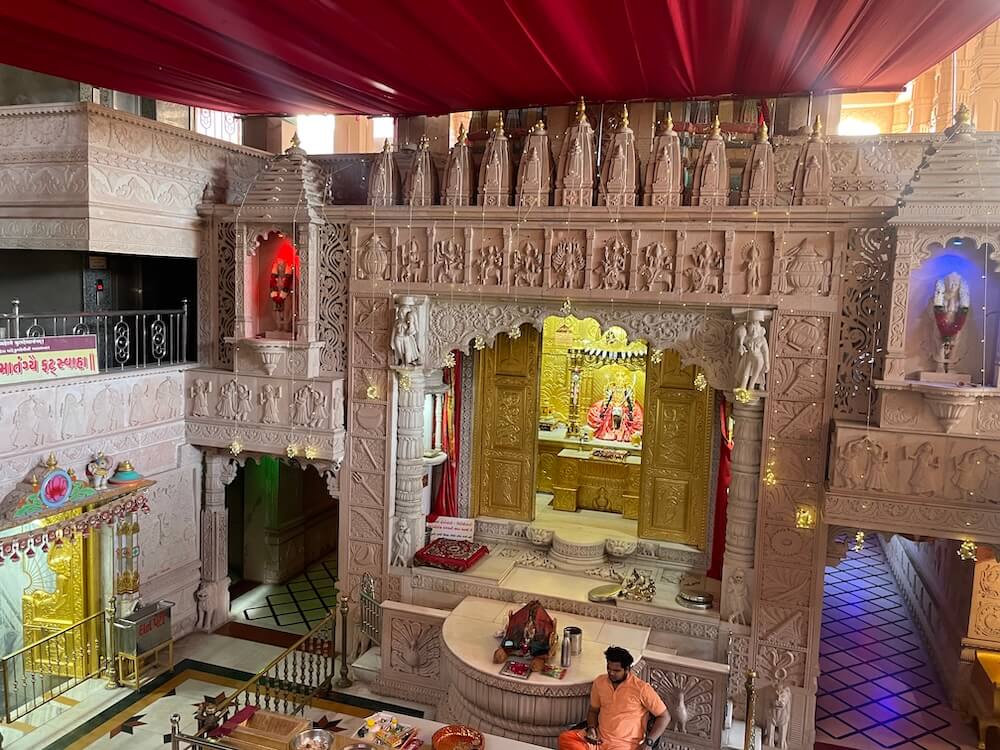 The walls of this pavilion are adorned with carved images of various deities and the ‘Navagrahas’ (nine planets).
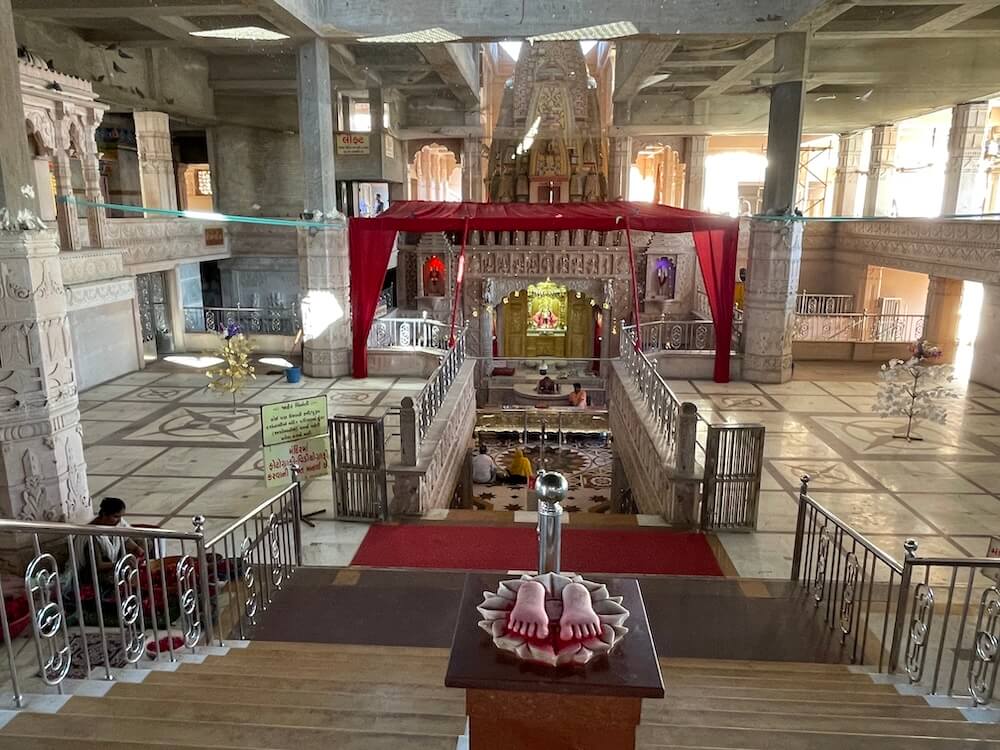
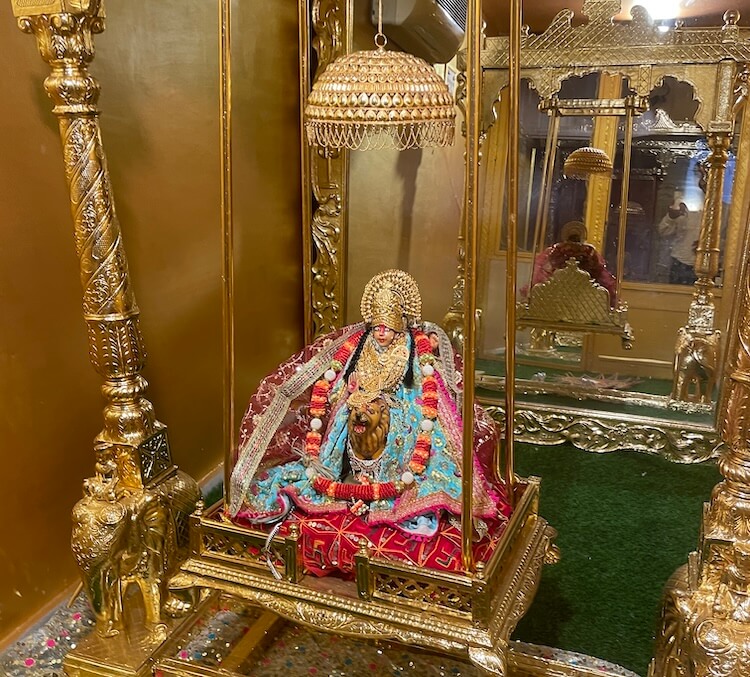
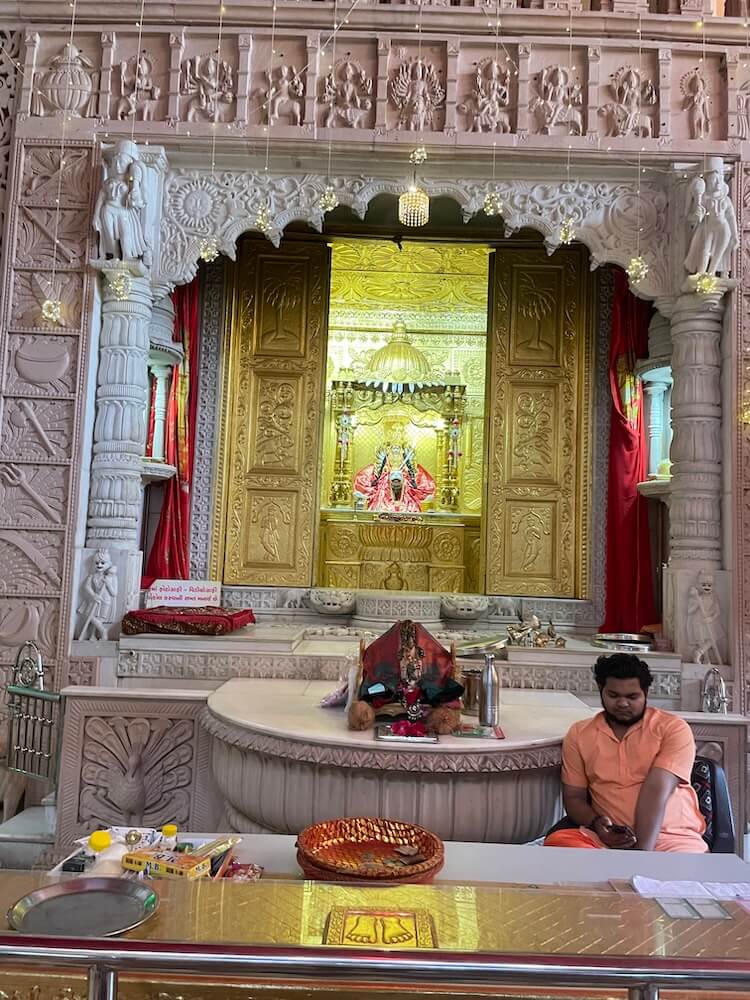
To reach the main ‘Garbhagriha’ (sanctum sanctorum) situated at the rear, one must descend a few steps. The entrance to the sanctum features exquisite craftsmanship, with miniature replicas of spires on the lintel. Inside, the idol of Matangi Modheshwari resides upon a grand pedestal within a gold-plated ‘Makhar’ (ornate frame). Mounted upon a lion and adorned with fine vestments and jewellery, the Goddess holds various weapons in her hands. The sanctum is topped by a towering, tapering ‘Shikhara’ (spire) embellished with subsidiary spires.
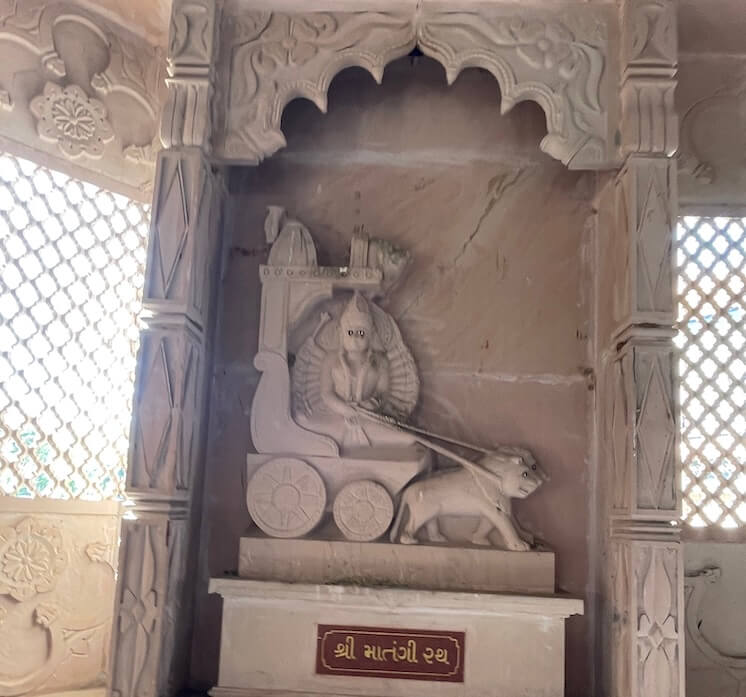
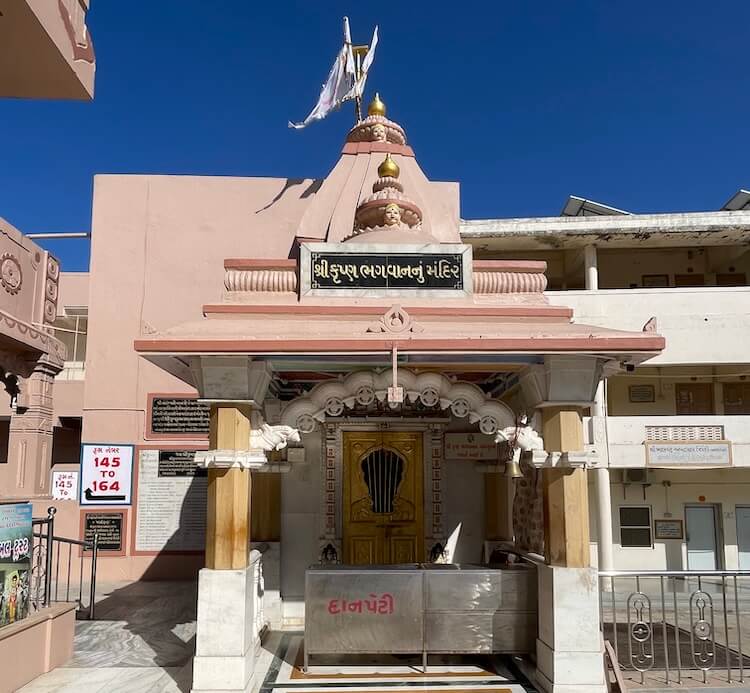
The exterior of the main temple is finely crafted with various sculptures and niches housing diverse deities. 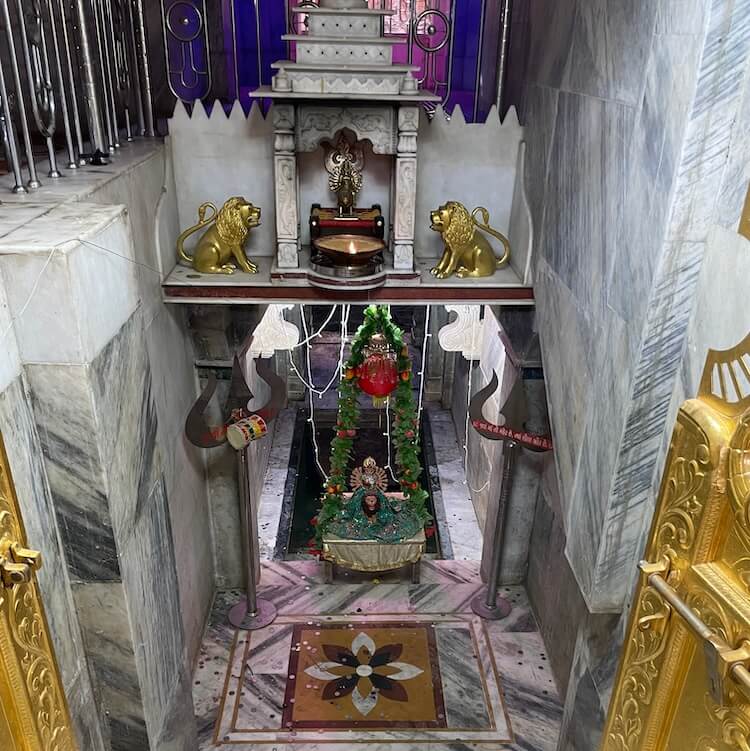 Within the precinct, there are also shrines dedicated to Dharmeshwar Mahadev, Bhattarika Devi, Shri Krishna, Sai Baba, Ram-Lakshman-Sita and Hanuman. In the ‘Dharmavav’ located within the complex, an eternal flame (‘Akhand Jyot’) is kept burning.
The temple’s dining hall provides meals at a modest cost and ‘Dharamshalas’ (rest houses) are available for devotees travelling from afar. There is also a ‘Sari Centre’ selling vestments to be offered to the Goddess and a ‘Goshala’ (cow sanctuary) is maintained within the complex. The temple remains vibrant with the constant arrival of devotees. ‘Aarti’ (ritual of lights) is performed daily at 6.30 am and 7.00 pm, alongside various religious rites. Every year, a grand celebration marks the anniversary of ‘Magha Shuddha Chaturdashi’. On this day, the Goddess is given a ‘Keshar-snan’ (saffron bath), followed by formal worship and a ceremonial procession is held through the city in the evening. During the ‘Sharadiya Navratri’, religious programmes are organised for nine days, including a ‘Navchandi Yagya’ and nightly ‘Garba’ in the courtyard. The temple sees a vast influx of pilgrims during Diwali, with a ‘Maha Aarti’ being performed on the day of ‘Dev Diwali’. The temple is open for devotees daily from 6 am to 8.30 pm.
Useful Information
- Located at 15 km from the town of Becharaji and 29 km from Mehsana.
- GSRTC (State Transport) bus services are available from both Becharaji and Mehsana.
- Private vehicles can reach the temple’s parking area.
- Accommodation and breakfast facilities are available within the precinct.
- Contact – Temple Office, Telephone: 02734-284327, 284214.
मातंगी मोढेश्वरी माता मंदिर
मोढेरा, ताल. बेचराजी, जिला. मेहसाणा
मंदिरे
Temples
मंदिर
-
वैजनाथ महादेव मंदिर महादेवपुरा (गावडा), ता. विजापूर, जि. मेहसाणा
अधिक माहितीVaijnath Mahadev Temple Mahadevpura (Gavada), Tal. Vijapur, Dist. Mehsana
View Detailsवैजनाथ महादेव मंदिर महादेवपुरा (गावड़ा), ताल. विजापुर, जिला. मेहसाणा
विवरण देखें -
वैजनाथ महादेव मंदिर सोखडा, तालुका विजापूर, जिल्हा मेहसाणा
अधिक माहितीVaijanath Mahadev Temple Sokhada, Taluka Vijapur, District Mehsana
View Detailsवैजनाथ महादेव मंदिर सोखाडा, तालुका विजापुर, जिला मेहसाणा
विवरण देखें -
काशी विश्वनाथ महादेव मंदिर मेहसाणा, जि. मेहसाणा
अधिक माहितीKashi Vishwanath Mahadev Temple Mehsana, Dist. Mehsana
View Detailsकाशी विश्वनाथ महादेव मंदिर मेहसाणा, जिला. मेहसाणा
विवरण देखें