 A Jyotirlinga is the sacred place where Lord Shiva manifested himself in the form of light and the linga. According to the ‘Shiva Purana’, there are sixty-four such Jyotirlingas that form the cultural and spiritual fabric of India, out of which twelve are considered especially important. Among these twelve lies one in the Omkareshwar region of Madhya Pradesh. What makes this site unique is that a single Jyotirlinga exists in two distinct locations : one is known as Omkareshwar and the other as Mamleshwar. A pilgrimage to Omkareshwar is considered incomplete until the devotee has also visited Mamleshwar.
On the island formed by the confluence of the rivers Kaveri and Narmada stands the Omkareshwar Jyotirlinga, while directly opposite, in the Brahmpuri area, is the Mamleshwar or Amareshwar temple. 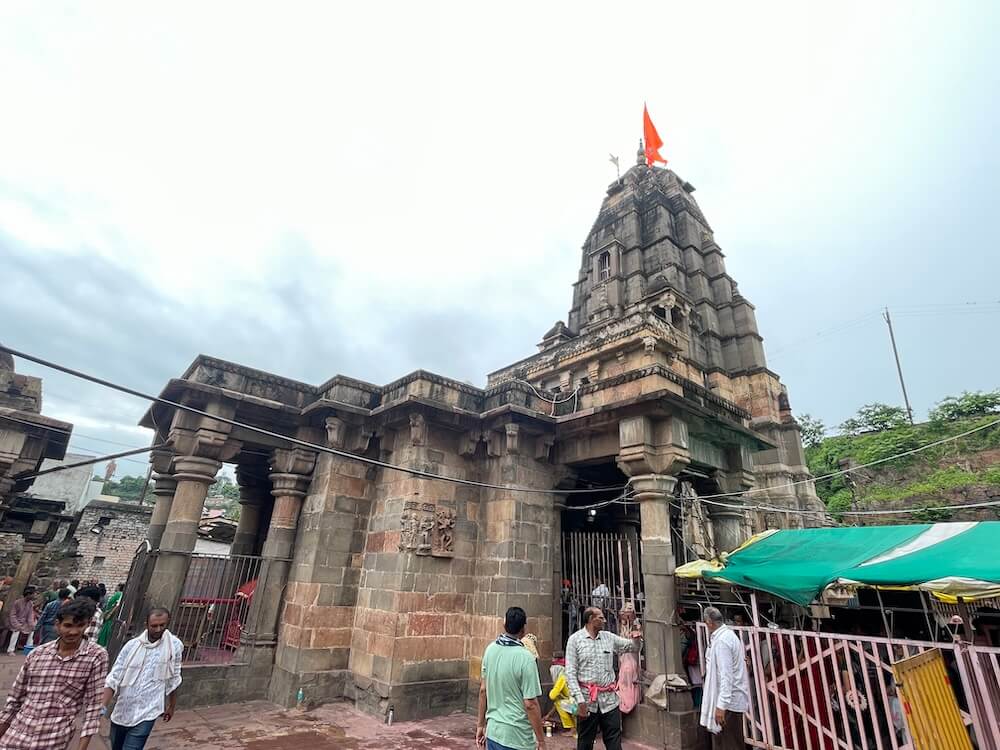 One is believed to be the ‘Atmalinga’ (self-manifested linga) while the other is considered the ‘Murti linga’ (enshrined form). The eighteenth chapter of the ‘Shiva Purana’ recounts the Omkareshwar Mahatmya. The story goes that once Narada Muni visited the Vindhya mountain. The mountain welcomed and honored him with utmost devotion. At that time Narada told the mountain that although it was mighty and vast and possessed many virtues, it still could not compare with the great Mount Meru. Hearing this, the Vindhya mountain was saddened and resolved to undertake penance for self-improvement.
Vindhya then came to the Mandhata island in Malwa and installed a Shiva linga made of earth, worshipping it day and night. His austerities pleased Lord Shiva, who appeared before him and granted him a boon. Vindhya requested that 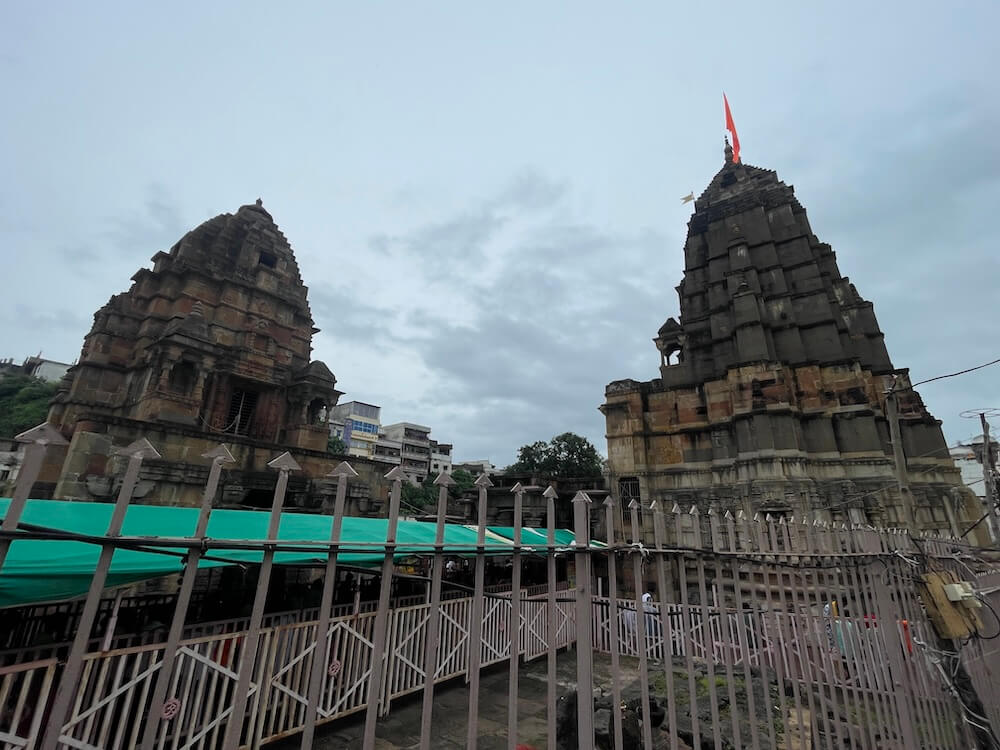 Shiva reside there eternally for the welfare of the world. Thus, Shiva manifested in the linga established at Vindhyachal in a radiant form. Over time, this linga is believed to have divided into two parts, Omkareshwar as the radiant form and Mamleshwar as the earthly form. The ‘Shiva Purana’ refers to Mamleshwar Jyotirlinga as Parmeshwar. It is also known by the names Amareshwar and Amaleshwar. Another legend states that King Mandhata of the Ikshvaku dynasty, an ancestor of Lord Ram, performed intense penance here and moved by his devotion, Lord Shiva appeared as a Jyotirlinga.
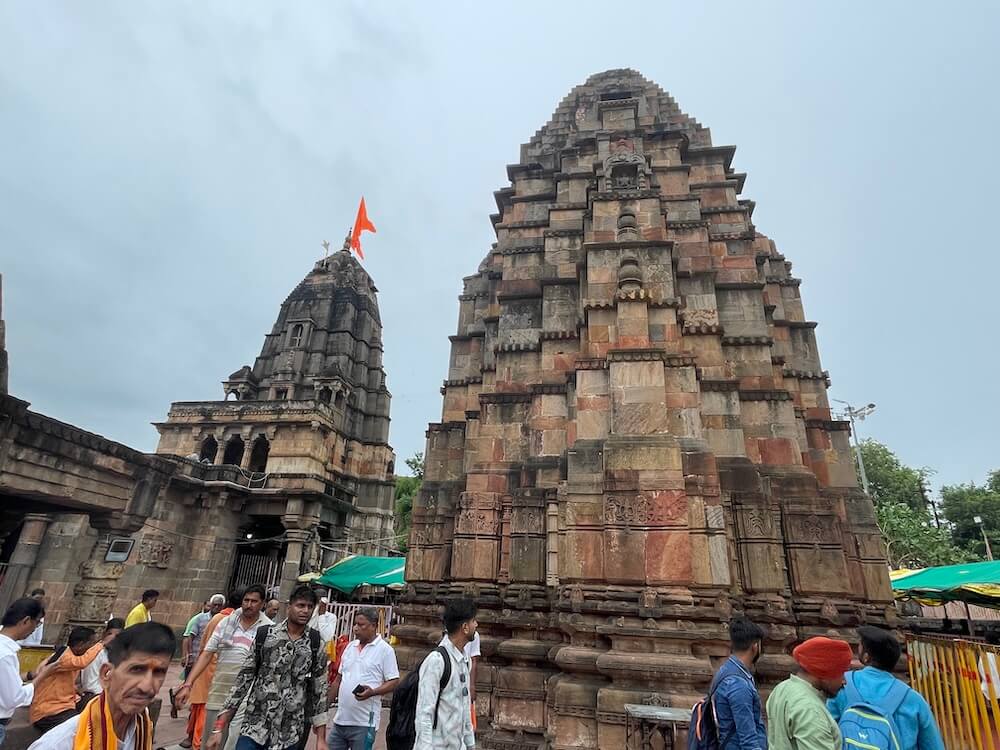
According to mythology, both Omkareshwar and Mamleshwar Jyotirlingas are over 5,500 years old. Historical evidence suggests that the Mamleshwar temple was built in the eleventh century, 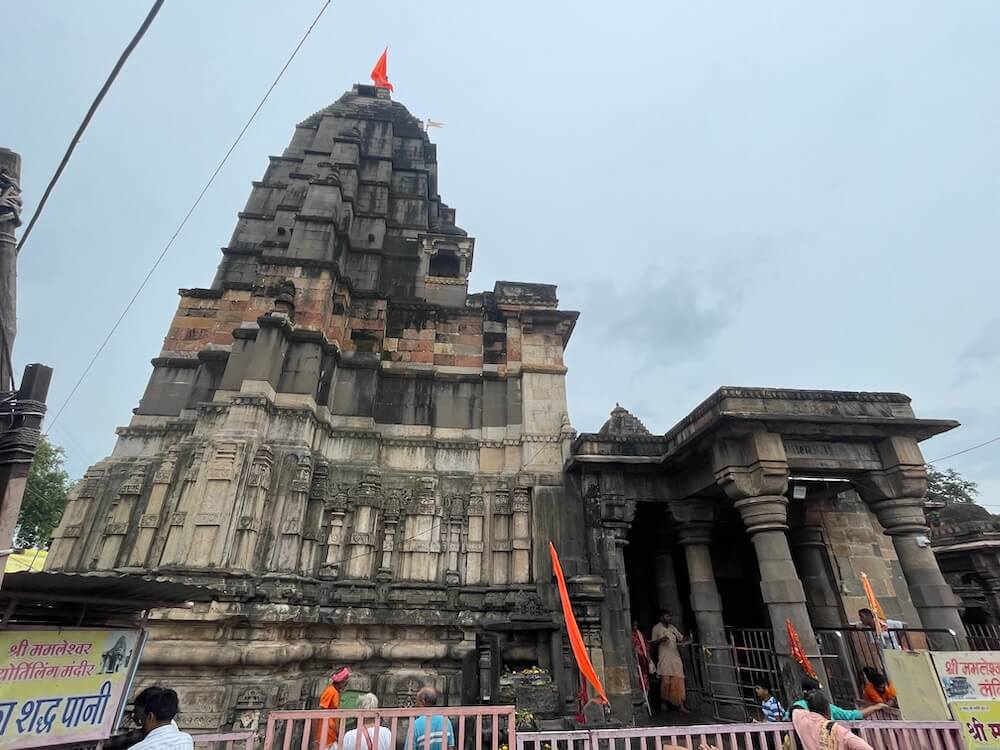 during the rule of the Paramara dynasty in Malwa. An inscription from 1055 AD mentions King Jayasimha I, brother of the famous King Bhoja, granting a village to the Brahmins of the Amareshwar temple. On the walls of the Mamleshwar temple, the ‘Shiv Mahimna Stotra’ has been inscribed. This inscription dates back to 1063 AD, during the reign of Udayaditya (1060–1090 AD), the brother of King Bhoja. These findings confirm that the Mamleshwar temple was constructed in the early eleventh century. In 1305 AD, Alauddin Khilji’s invasion brought an end to the Paramara rule and the Brahmpuri area, where Mamleshwar stands, is said to have suffered damage. Later, the great Ahilyabai Holkar (1767–1795) restored the temple. Records show that she also donated 135 rupees to keep the eternal lamp burning. Today, the Archaeological Survey of India has declared the temple a national heritage site.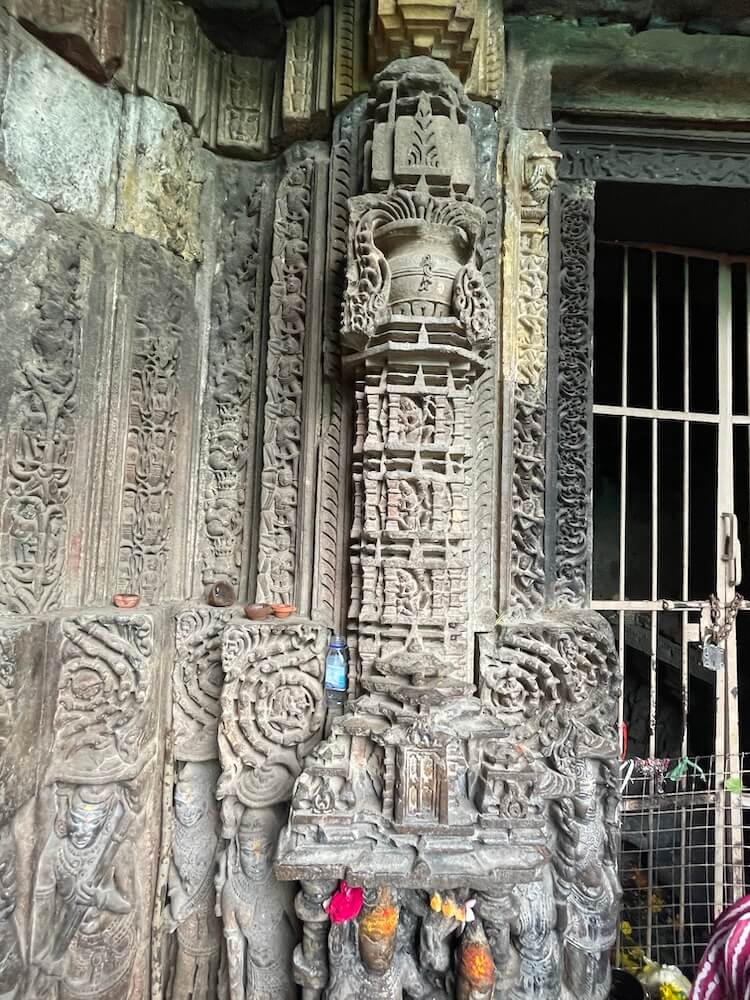
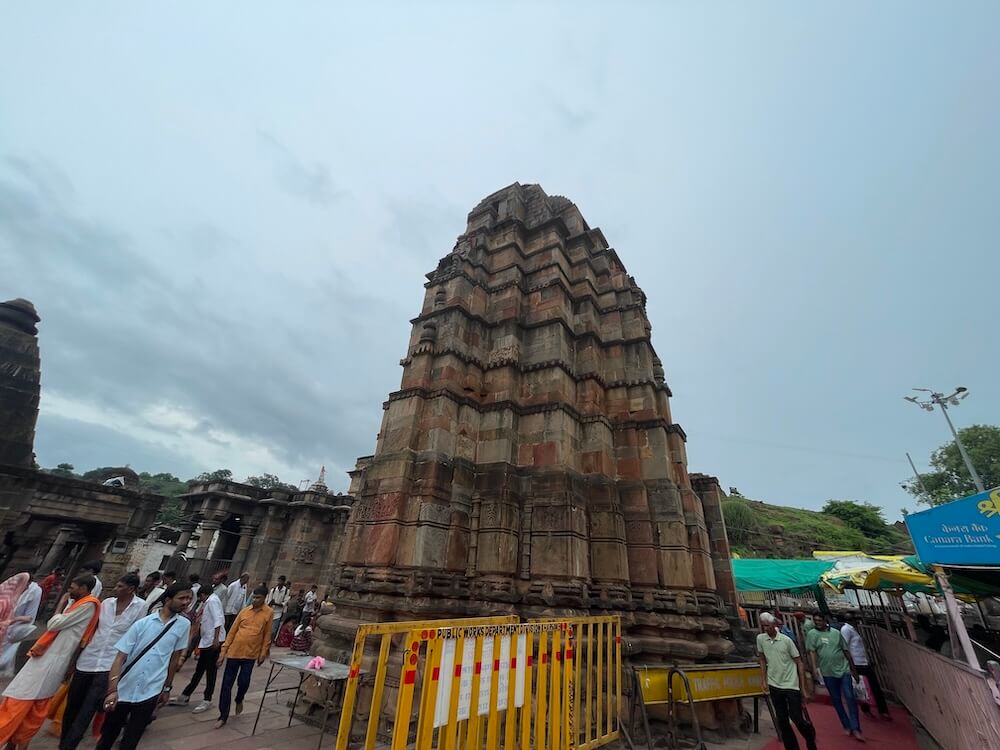
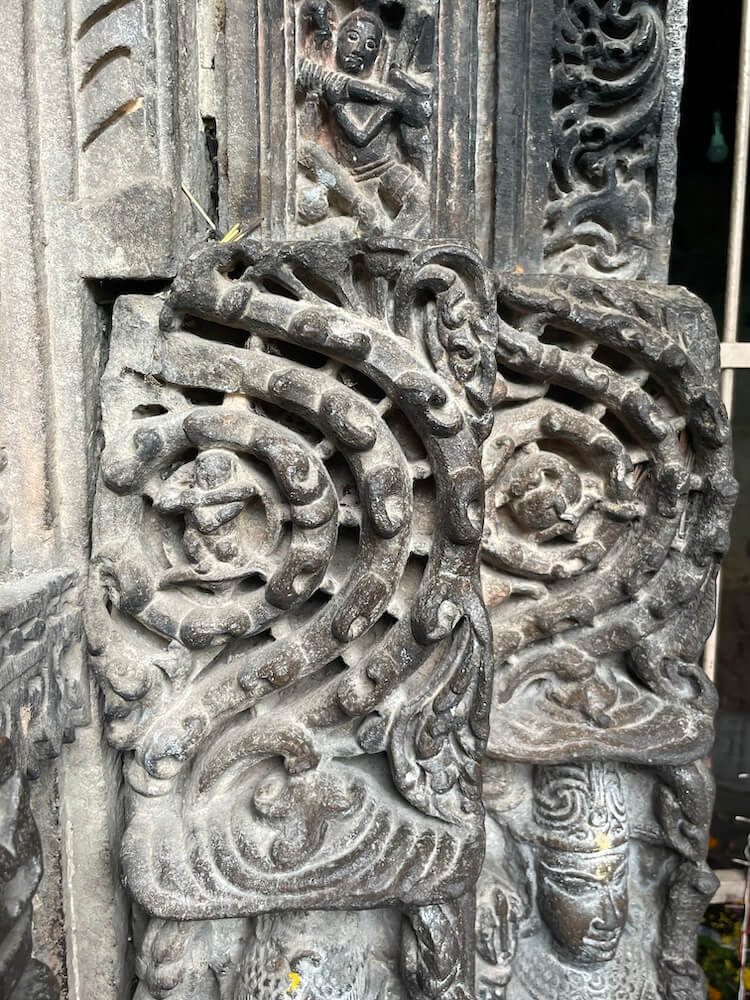
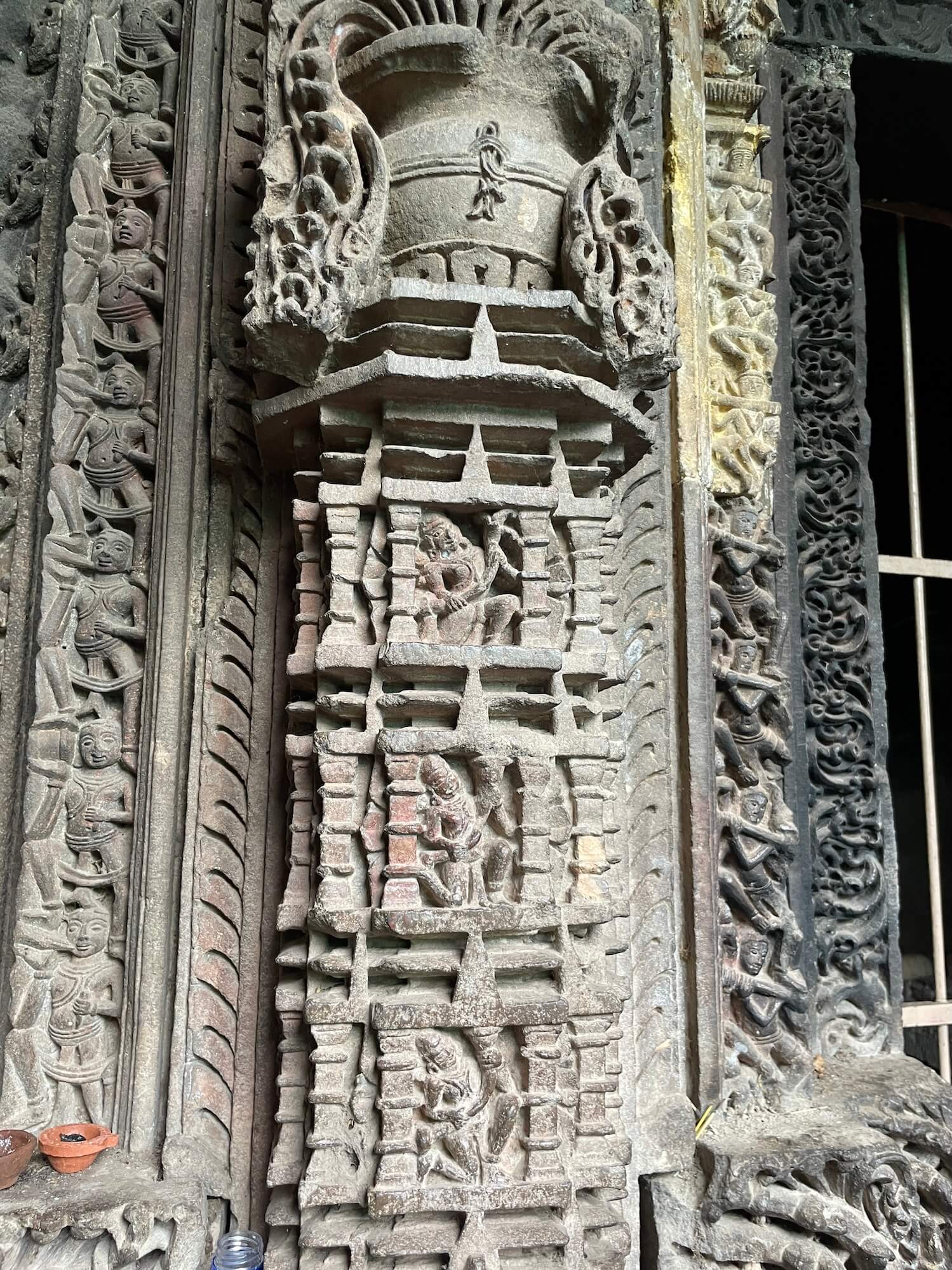
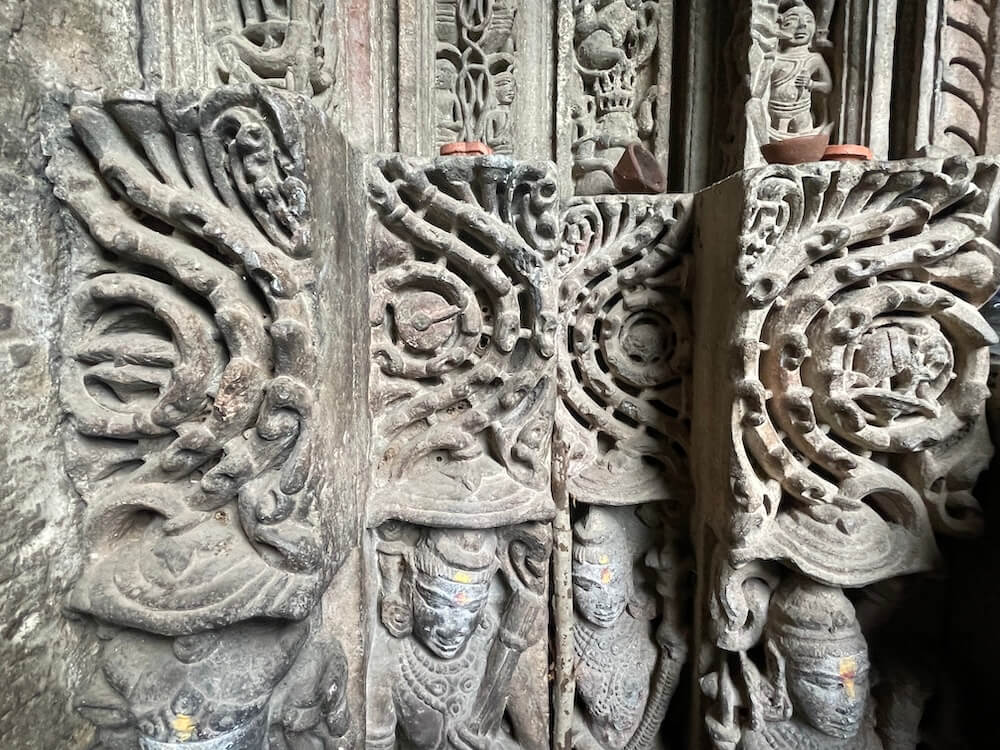
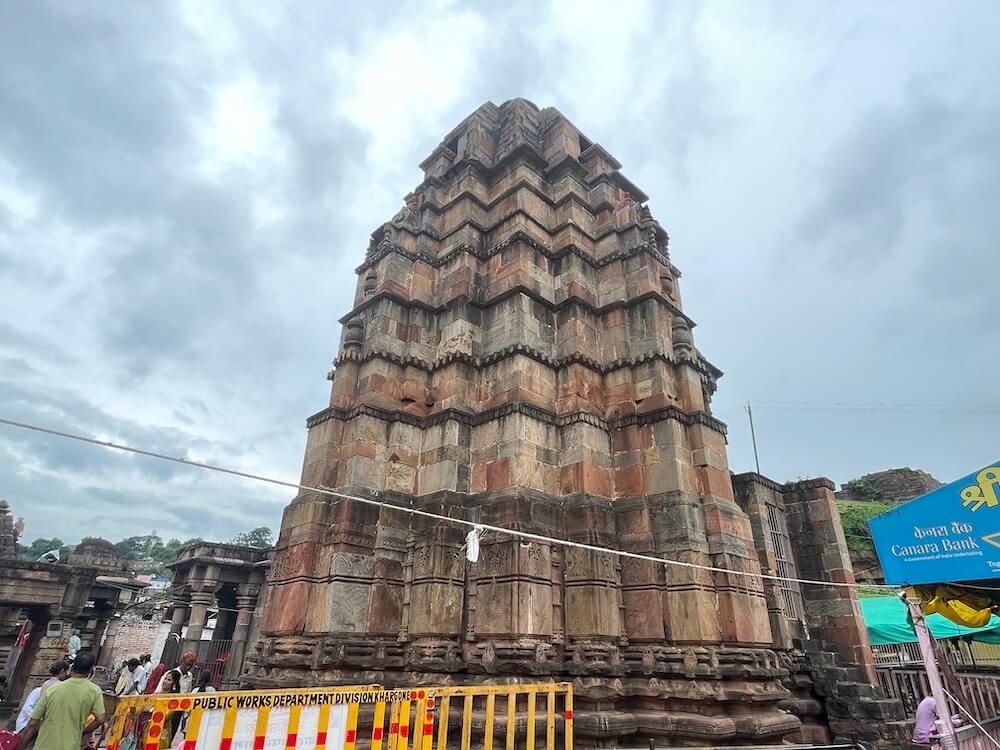
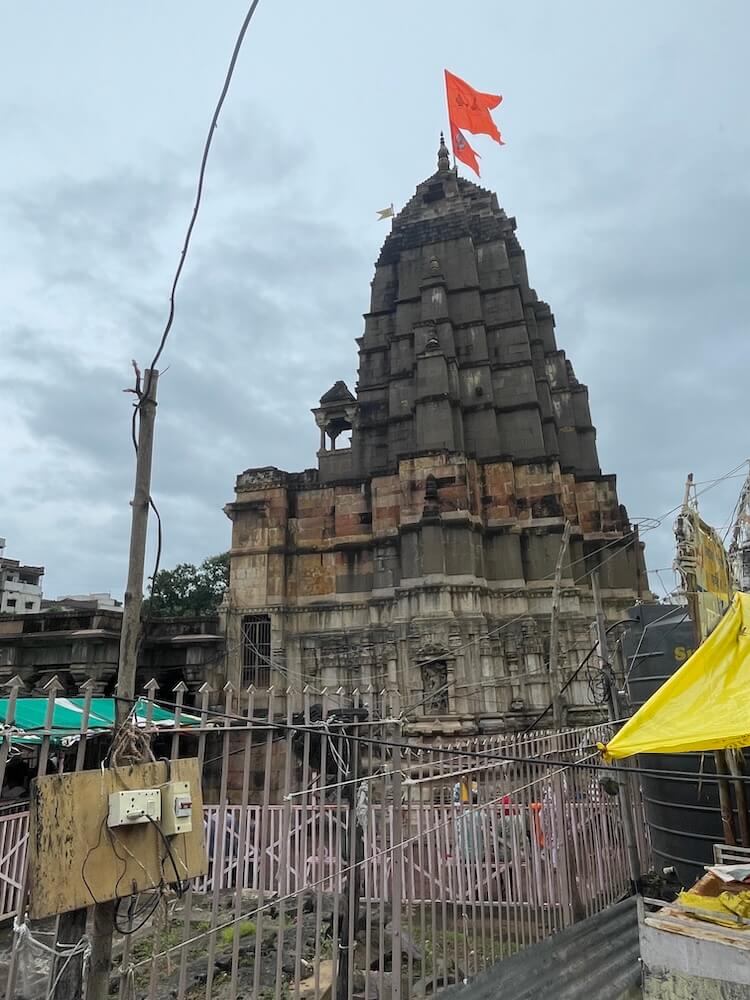
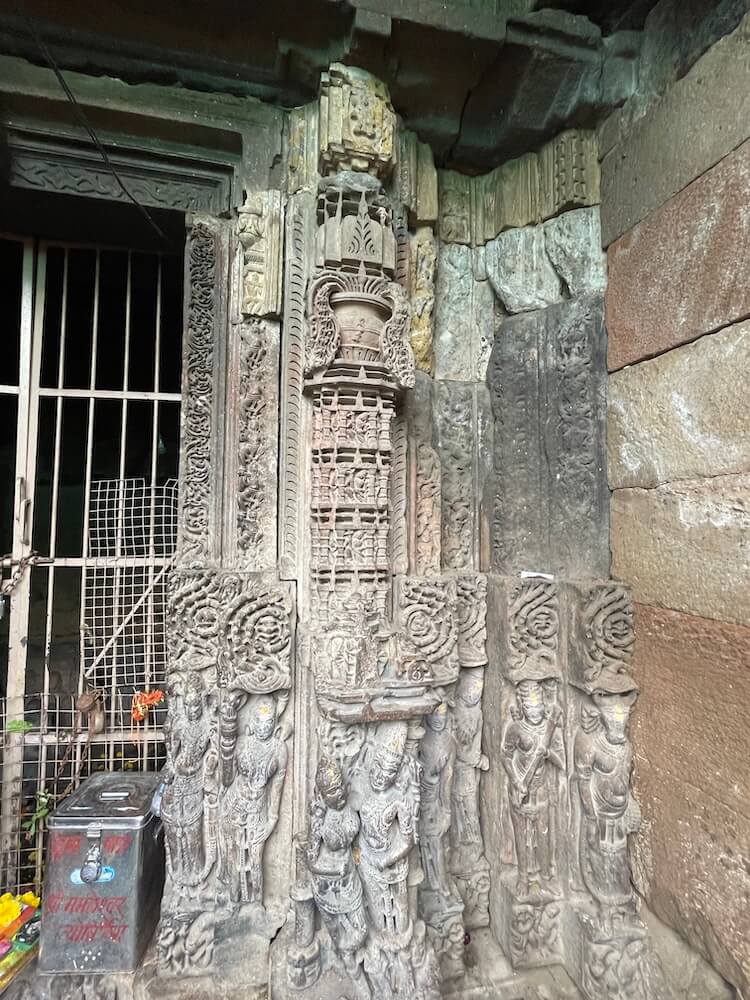
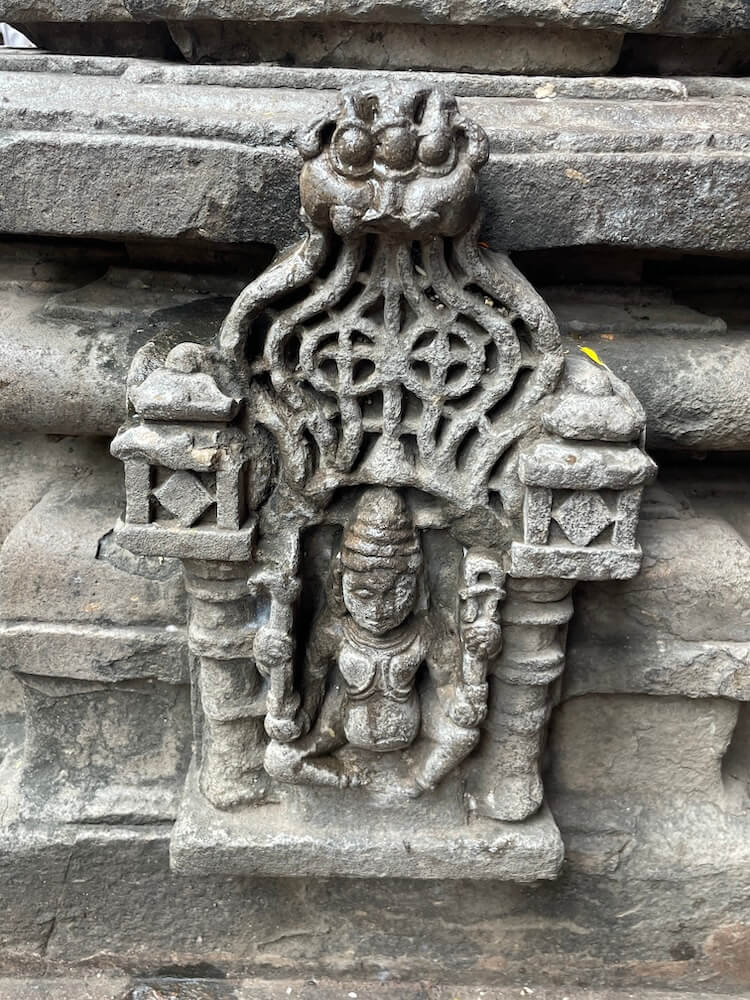
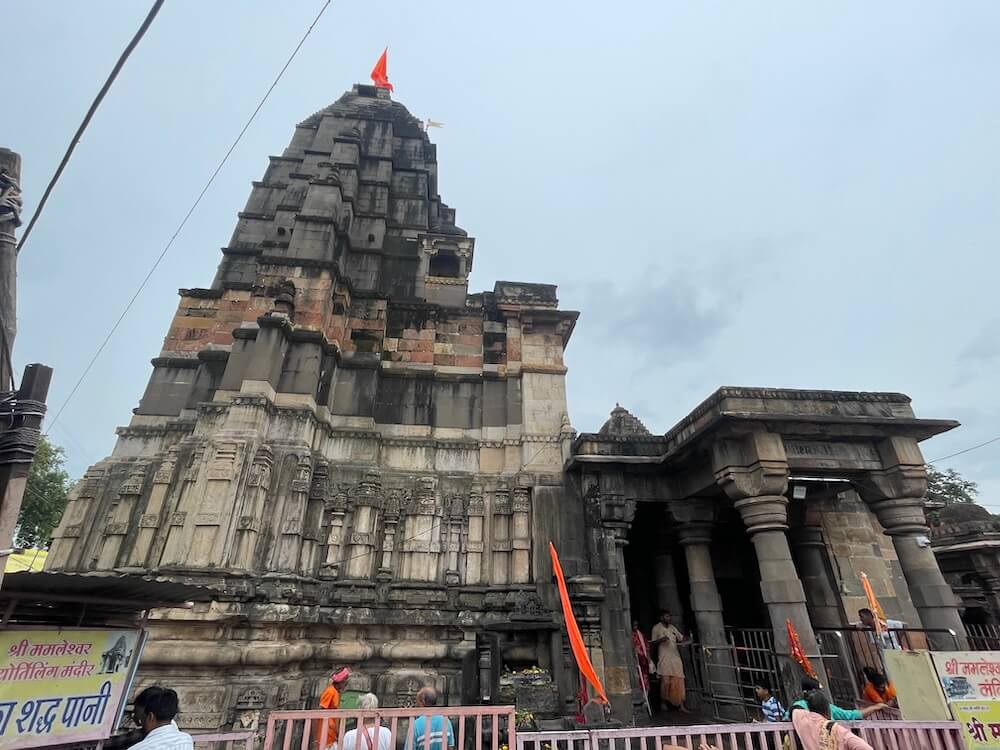
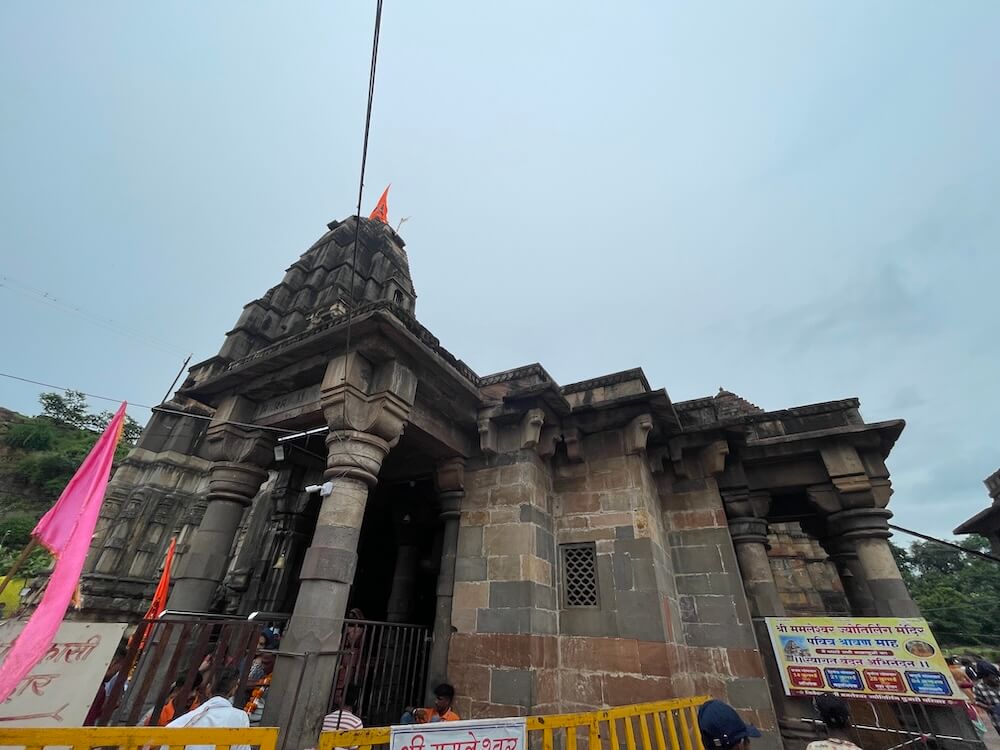
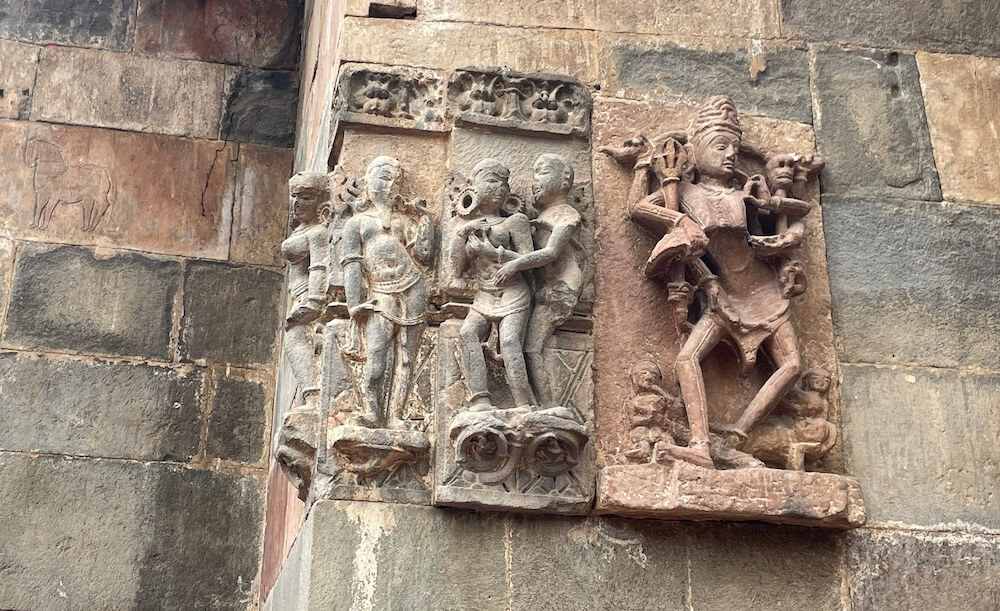
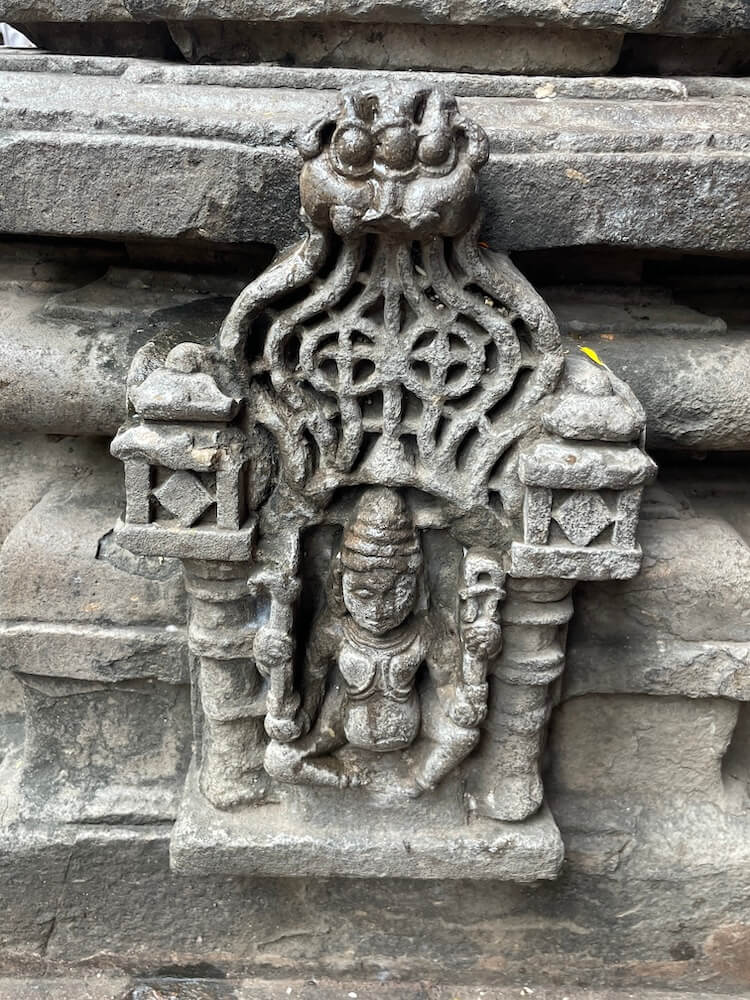
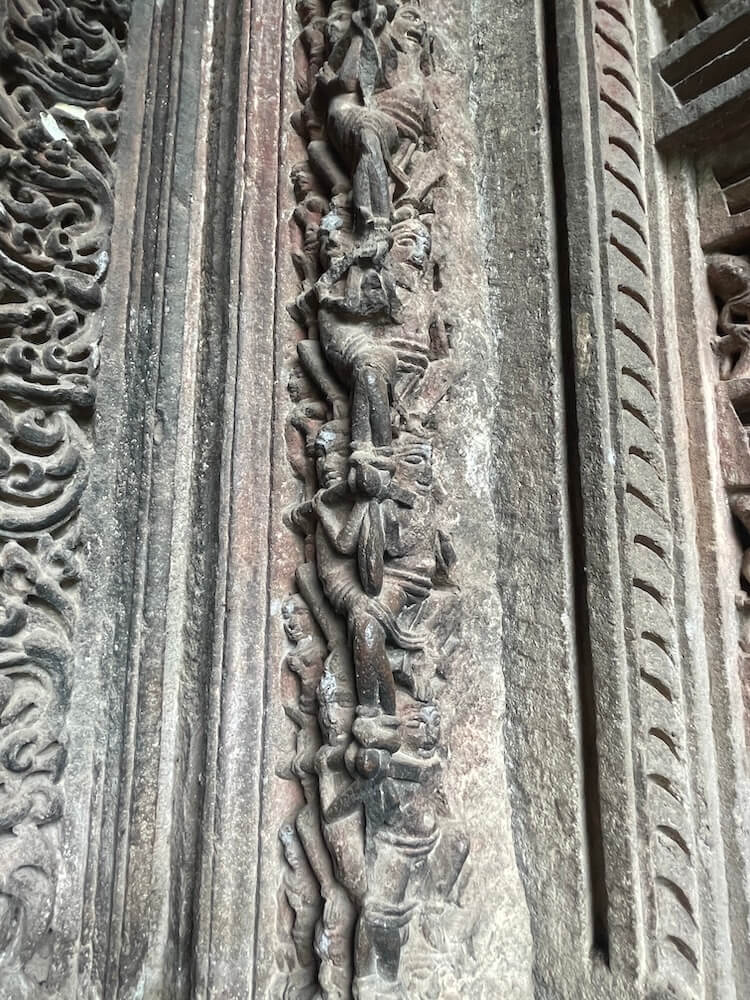
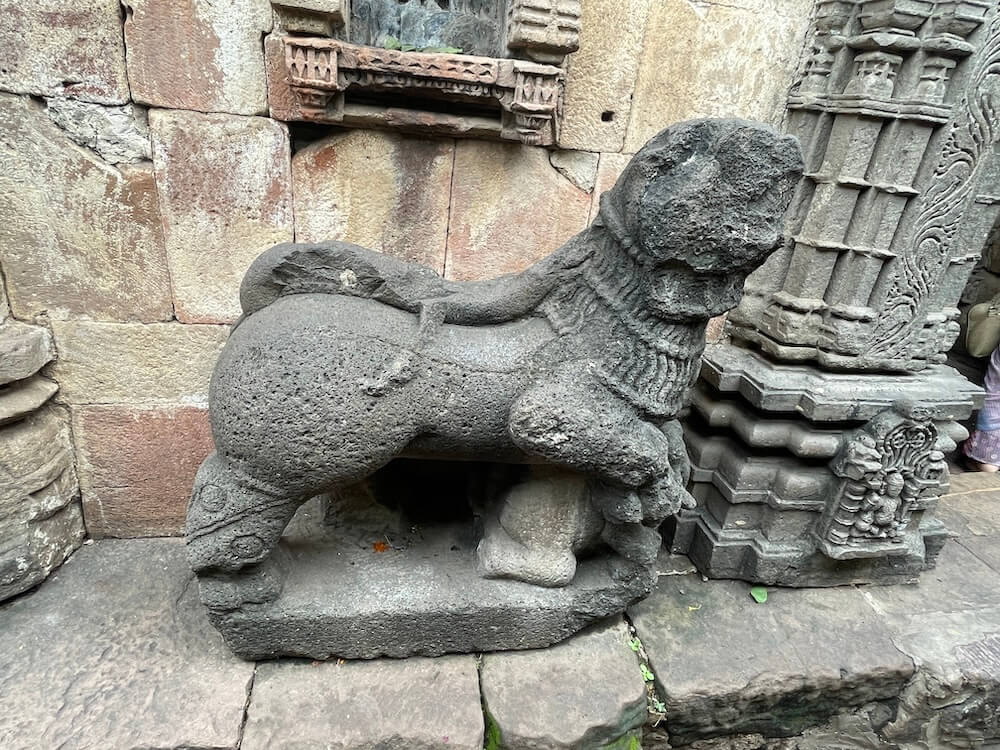
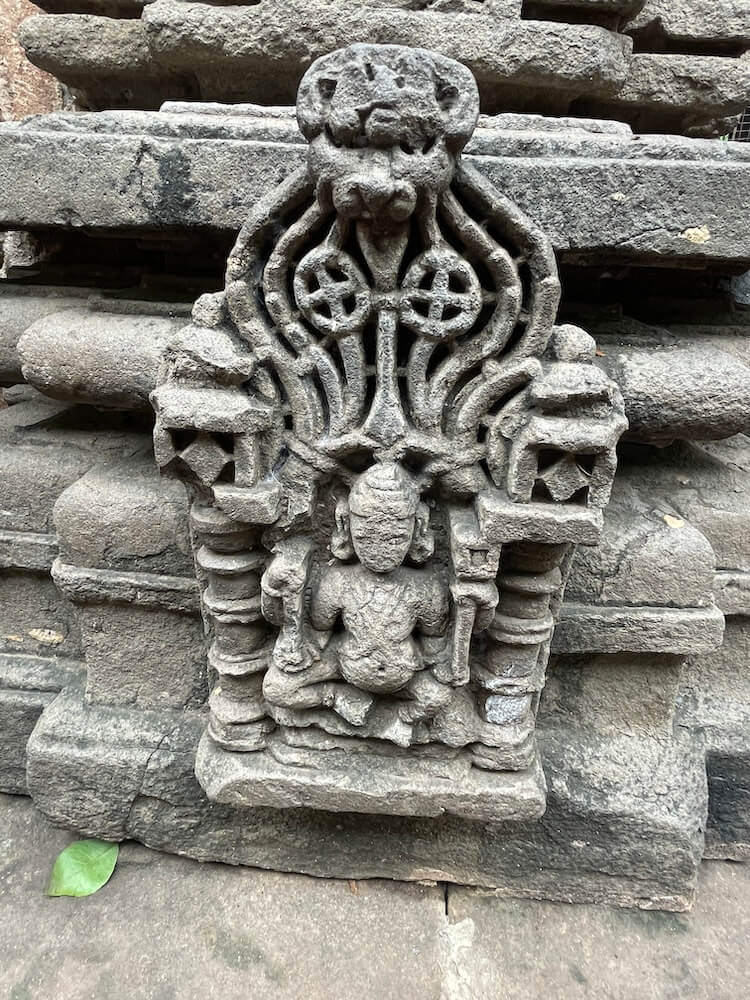
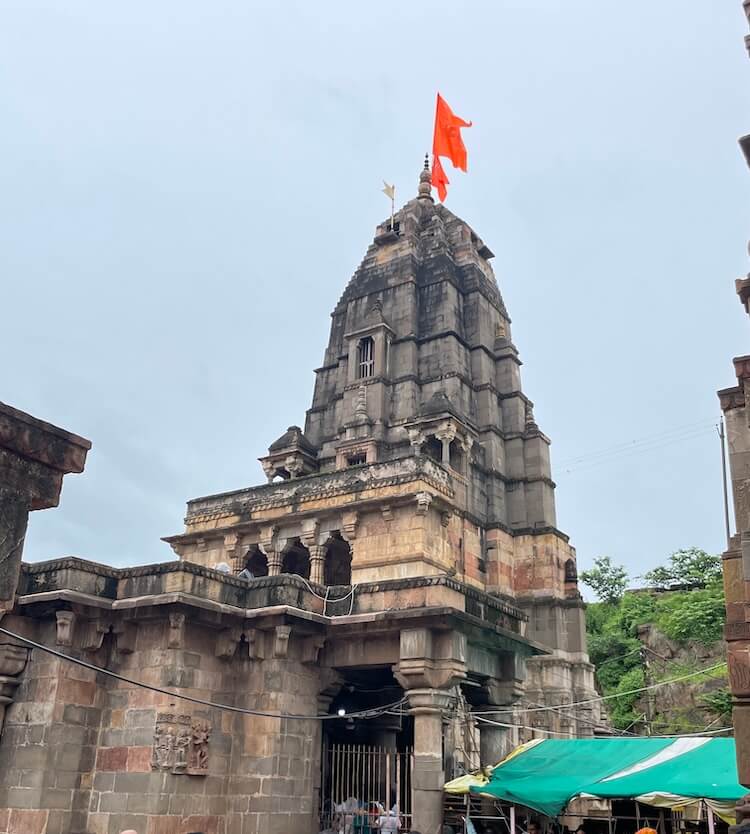
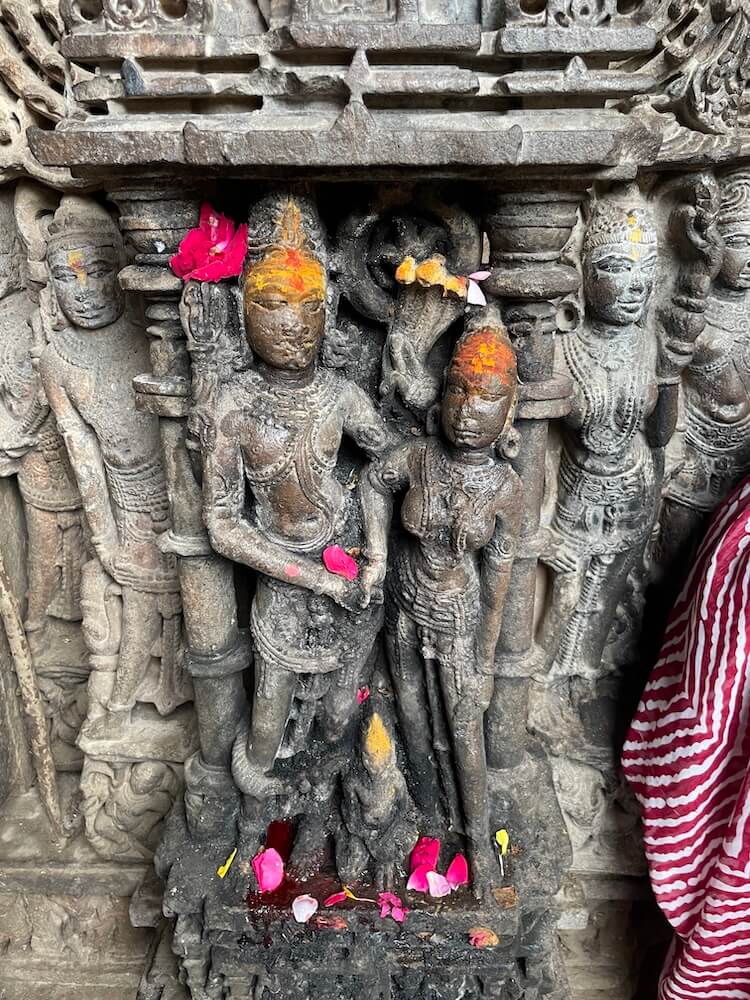
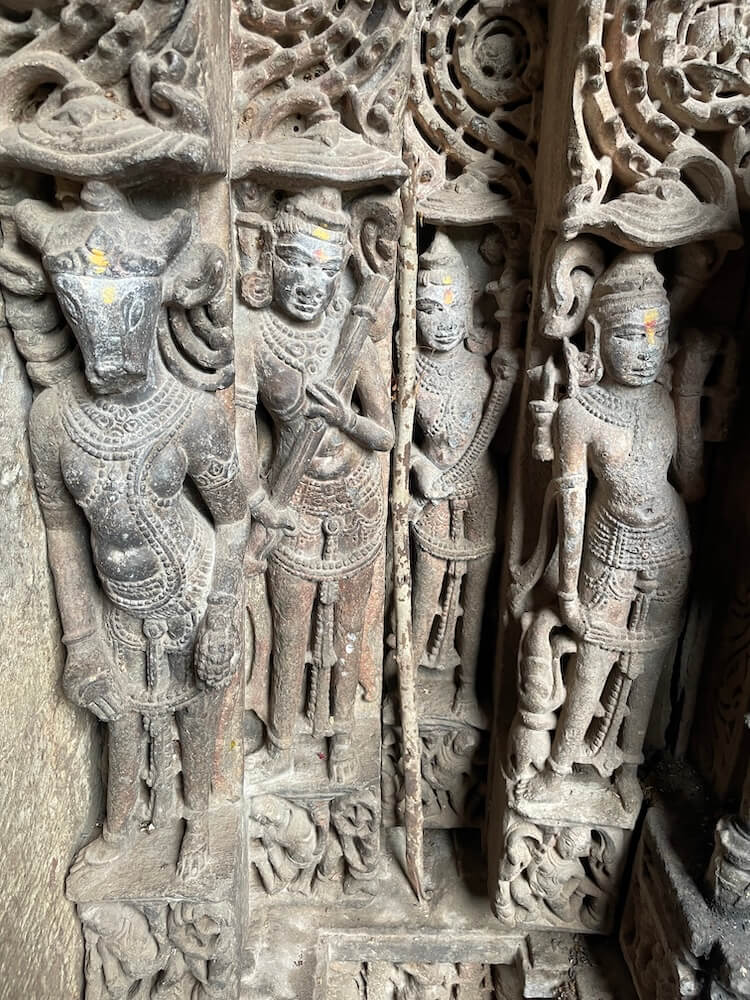
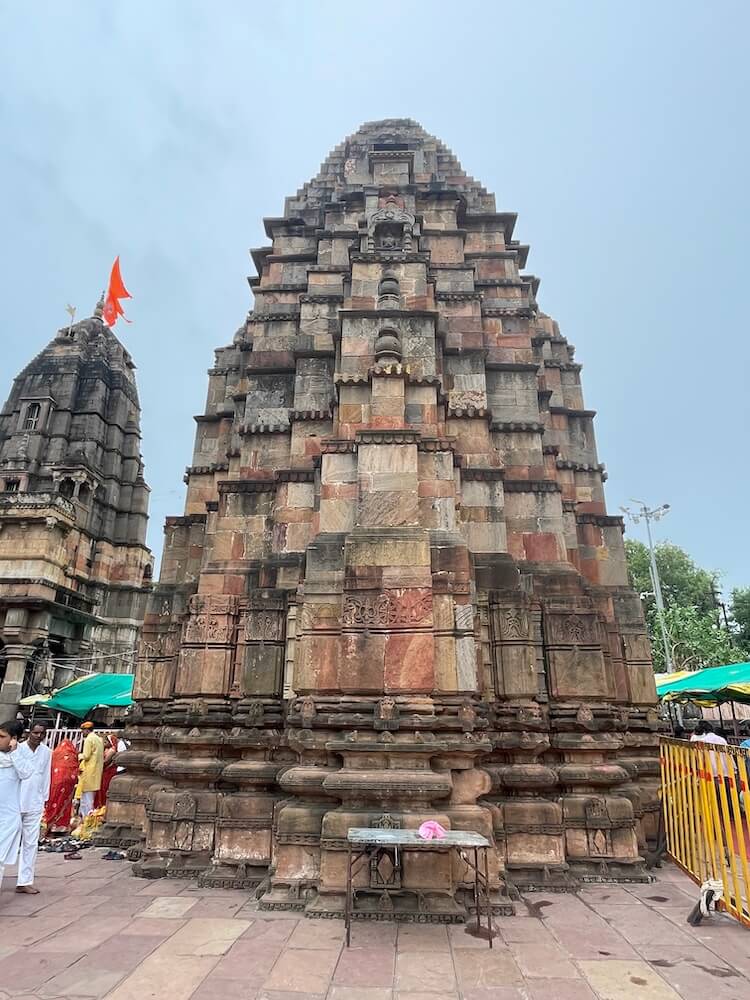
There are two main ways to reach the Mamleshwar temple after visiting Omkareshwar. One is the ‘Mamleshwar Setu’, a 235-meter-long suspension bridge built in 2004, which offers beautiful views of the Narmada, the dam and the Omkareshwar island. The other way is to cross the river by boat and climb up the temple steps. The Mamleshwar temple is built entirely of stone in the North Indian Nagara style. Each floor houses a shrine to Shiva. Its structure consists of the entrance hall, assembly hall, antechamber and sanctum. The assembly hall is open on three sides, supported by nearly forty pillars – six of them ancient and the rest added during restoration. The pillars and walls are adorned with intricately carved figures of deities, vines, flowers, celestial beings and elephants. The entrance is particularly notable for its elephant friezes and delicate floral patterns. The temple’s shikhara (spire) is of the ‘Latin’ type, with the main spire being the tallest and surrounded by smaller towers on each side. Above it stands a circular amalaka and a high kalasha.
The sanctum is small, with an entrance framed by finely chiseled stone slabs and a sturdy wooden door. Inside, a large circular yoni base lined with brass holds the linga of Mamleshwar Mahadev. A brass serpent canopy rests over the linga.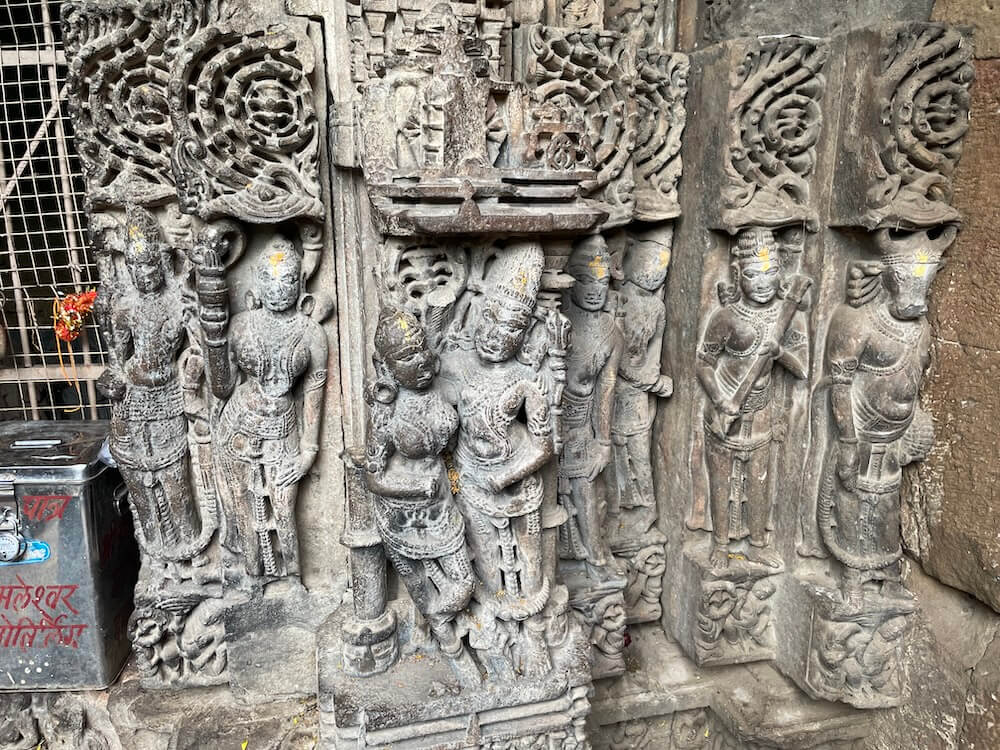 On the rear wall of the sanctum a large idol of Goddess Parvati is enshrined, with a small marble idol of Ganesha on one side and a black stone idol of Kartikeya on the other.
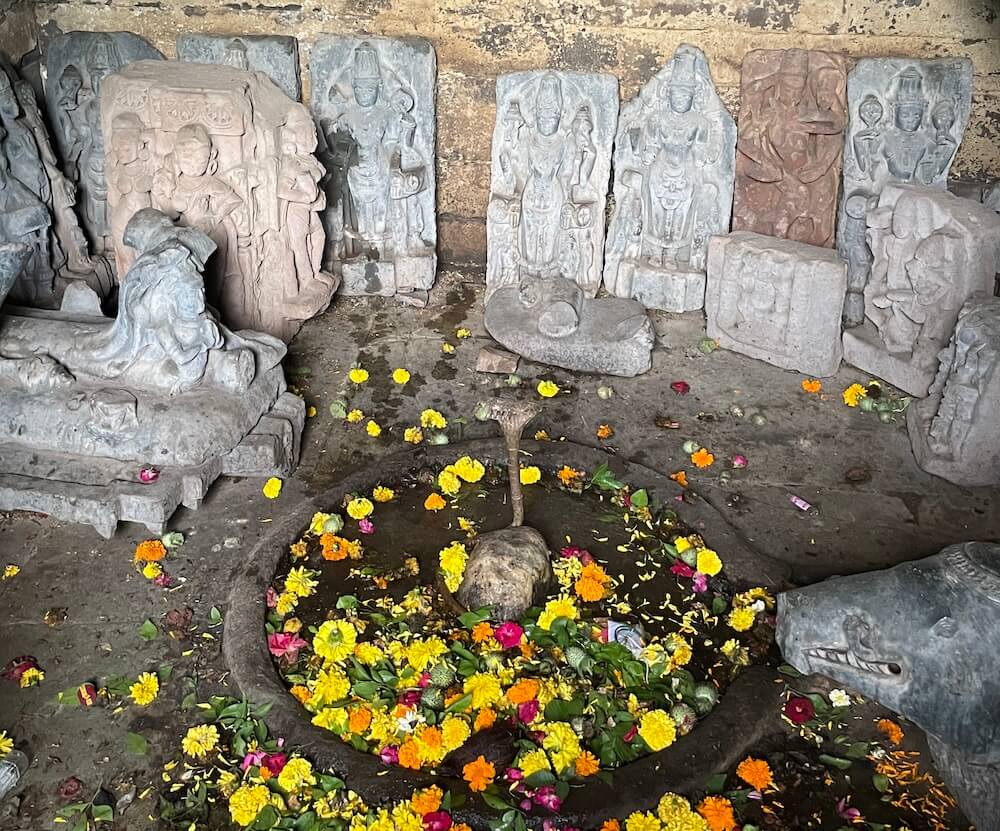
Adjacent to Mamleshwar is the ancient Vrudheshwar Mahadev temple, built in the Bhumija architectural style. Its highlight is the grand seven-arched entrance, each adorned at the base with exquisite carvings of yakshas, gandharvas and celestial maidens. Sculptures of Shiva and Parvati are also carved here and the upper parts of the doorway contain beautiful friezes. Within the sanctum, a linga is seated on a round stone base, crowned with a brass serpent hood. Many broken sculptures rest against the inner walls of the sanctum and several smaller shrines surround both temples.
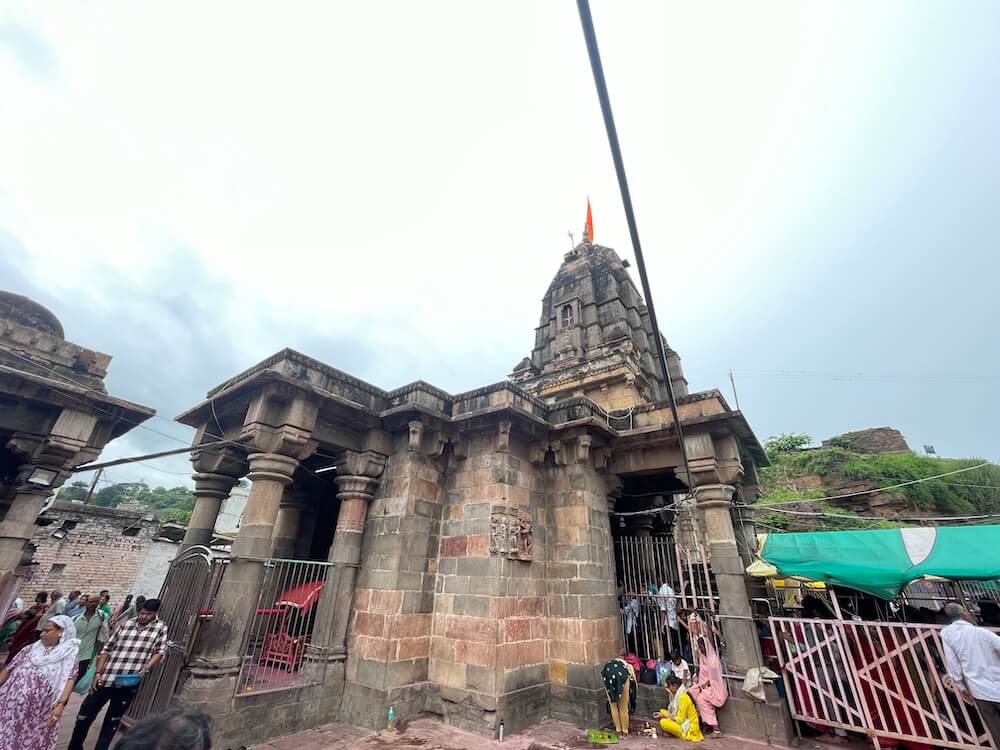 The Mamleshwar Jyotirlinga temple is open daily from 5:30 a.m. until 9:30 p.m. Devotees can participate in five daily aartis – Mangala Aarti at 5:30 a.m., Shringar Aarti at 8:00 a.m., Midday Aarti at 12:00 noon, Sandhya Aarti at 7:00 p.m. and Shayan Aarti at 9:00 p.m. Festivals such as Mahashivratri, Nag Panchami and the Diwali new moon in Kartik are celebrated here with great fervor. The month of Shravan draws huge crowds, with long queues forming from dawn. On Mahashivratri, continuous abhishek rituals and night-long vigils take place. Special rituals such as Rudrabhishek, Mahamrityunjaya recitations and Shravan pujas are also performed.
The Omkareshwar region is home not only to Mamleshwar but also to many other ancient temples and monuments. The Siddhanath temple on the island is a marvelous example of medieval architecture, its elephant frieze famed worldwide. The massive Shiva linga at Gauri Somnath temple is a striking sight for pilgrims. The Twenty four Avatara temple complex, with sculptures of Vishnu’s twenty-four incarnations, is an exquisite display of artistry. Temples such as Kedareshwar, the Kajal Rani caves and the cave of Guru Govind Bhagwatpad further enrich the spiritual journey of Omkareshwar.