
महाकालेश्वर मंदिर
बोरसद, तालुका बोरसद, जिल्हा आनंद
Mahakaleshwar Temple
Borsad, Taluka Borsad, District Anand
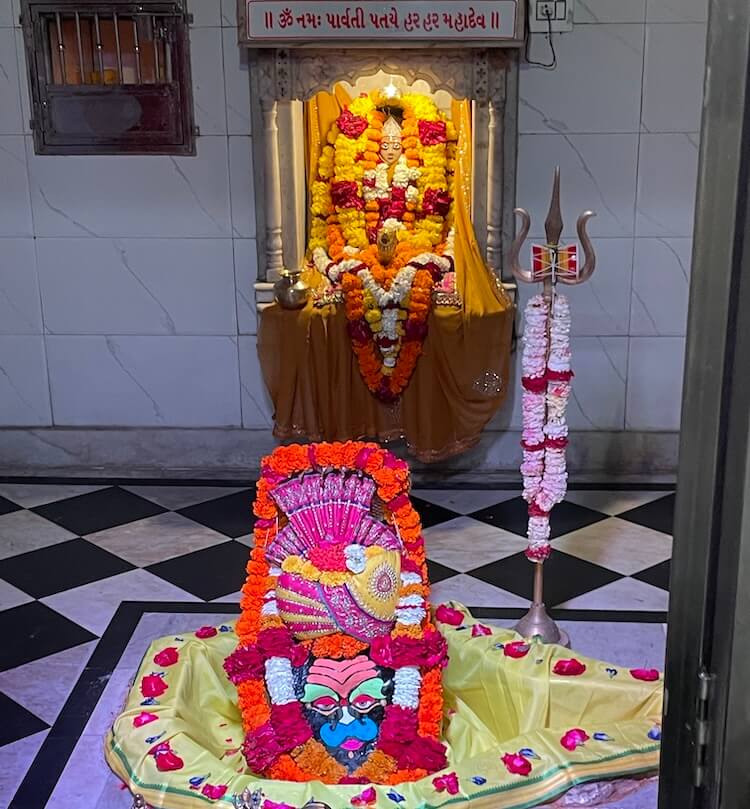 The Mahakaleshwar Temple, situated at Borsad in Anand district, is widely known as ‘Mota Mahadev’ or the Great Mahadev. One of the most distinctive features of this shrine is that the sacred bhasma (holy ash) used in the worship here is brought directly from the revered Mahakaleshwar Jyotirlinga at Ujjain in Madhya Pradesh. Devotees believe that offering darshan at this temple bestows merit equal to that obtained by visiting the Jyotirlinga at Ujjain itself. Each Monday during the sacred month of Shravan, the early morning ‘Bhasma Arati’ becomes a grand spiritual occasion. Devotees from every corner of the state begin gathering at the temple from the previous night in order to be present for this solemn ritual.
Situated in the southern part of Borsad town, the temple possesses a clearly documented written history of nearly three centuries. References to an even earlier past survive in oral traditions. During the Gaekwad period, when Maharaja Khanderao Gaekwad ruled the region, he heard of the spiritual power of this Shivlinga and resolved to construct a grand shrine dedicated to Lord Shiva. 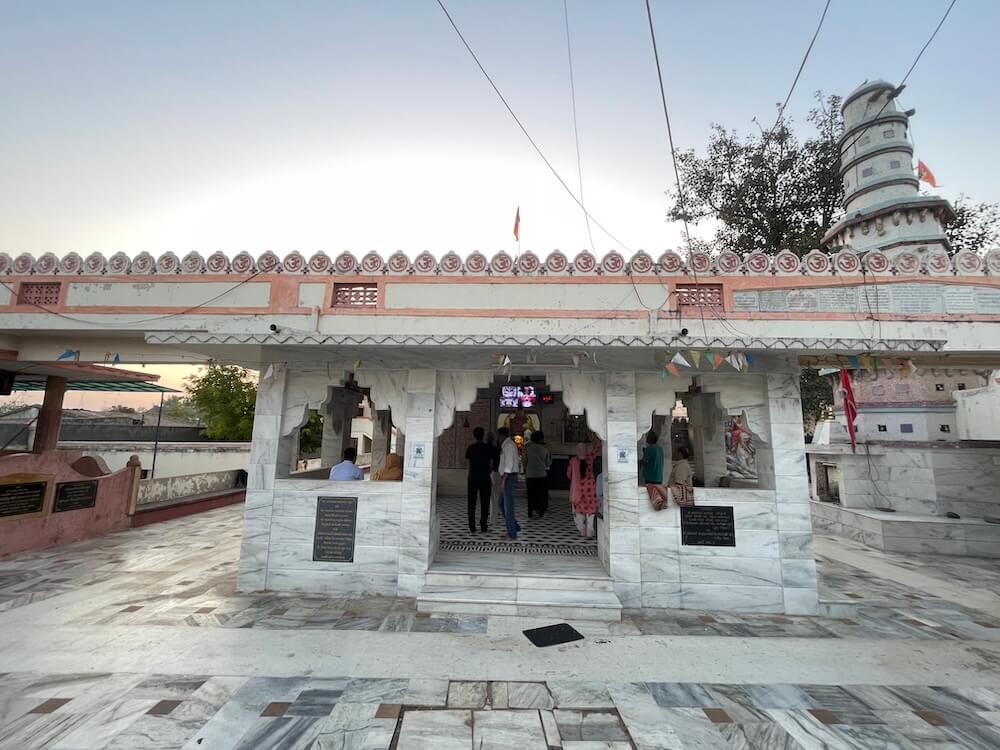 He attempted to relocate the original swayambhu (self-manifested) Shivlinga and install it elsewhere. However, the Shivlinga extended deep into the earth and it proved impossible to move it. Realising this, the Maharaja abandoned his insistence and instead installed another Shivlinga beside the original one and built a temple there. This shrine later became known as the Bhavnath Mahadev Temple.
The ‘Kumarika Khand’ of the ‘Skanda Purana’ contains detailed descriptions of the sacred tirthas associated with the Mahisagar Sangam of this region. It mentions that Kalabhiti Maharaj of Kashi once performed severe penance near a well located here. Pleased by his austerities, Lord Mahadev granted him divine darshan and as a blessing for his devotion,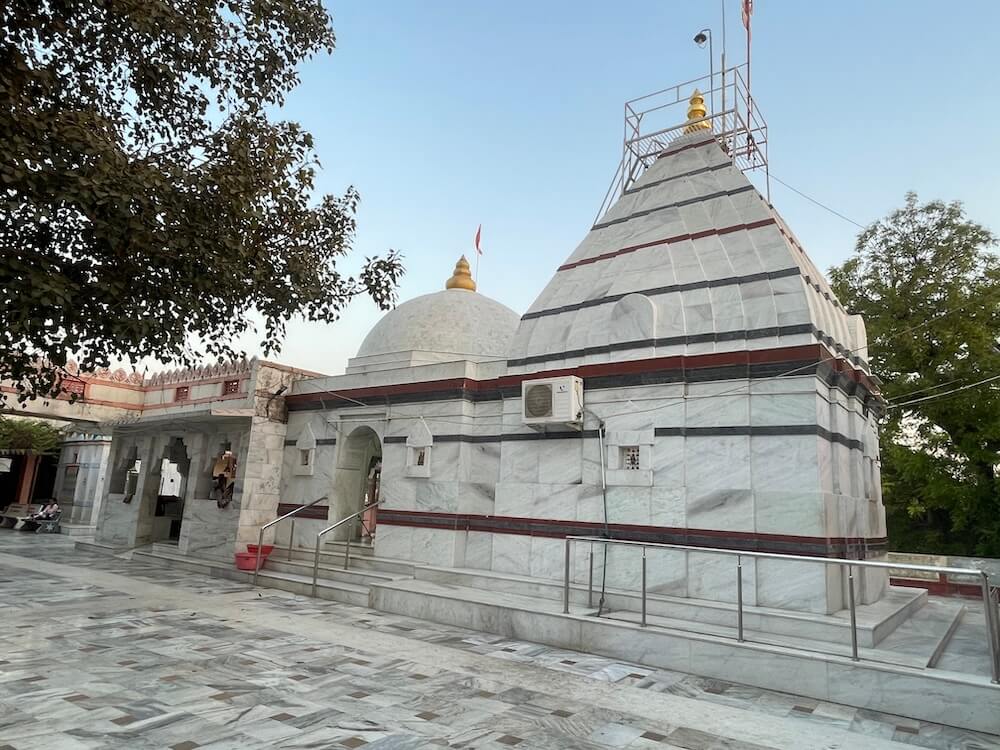 the Shivlinga of Mahakaleshwar manifested itself at this place. Another ancient local legend narrates that thousands of years ago, the Mahi River flowed close to Borsad town and dense forests covered the surrounding region. Herdsmen used to take their cattle there for grazing. Among the herd was one particular cow that each day would stand at a specific spot on a mound and spontaneously release a stream of milk upon the ground. When the herdsman noticed this unusual occurrence, he informed the villagers. With the consent of all the villagers, the spot was excavated and beneath the earth, a large Shivlinga was discovered. Because of this self-manifested appearance, the shrine came to be known as ‘Mota Mahad
 Among the twelve Jyotirlingas, the Shivpinda of Mahakaleshwar occupies a uniquely revered position. Located at Ujjain in Madhya Pradesh, this swayambhu Shivpinda is believed to have emerged naturally from the earth. Among all Jyotirlingas, Mahakaleshwar alone faces south and from a Tantric perspective, this direction holds special significance. Since Lord Shiva is regarded as the master of time, he is worshipped as Mahakal. One of the most important traditions associated with the Mahakaleshwar Shivpinda is the daily dawn ritual known as the ‘Bhasma Arati’. During this ceremony, the Shivpinda is anointed with sacred ash from the funeral pyre or with purified ash. In the Mahakaleshwar Temple at Borsad, a similar south-facing pinda has been established and the Bhasma Arati is performed here in the same manner as at Ujjain. This Shivpinda is regarded as a symbol of Shivshakti. During the month of Shravan, the pinda is adorned with a variety of flowers and leaves.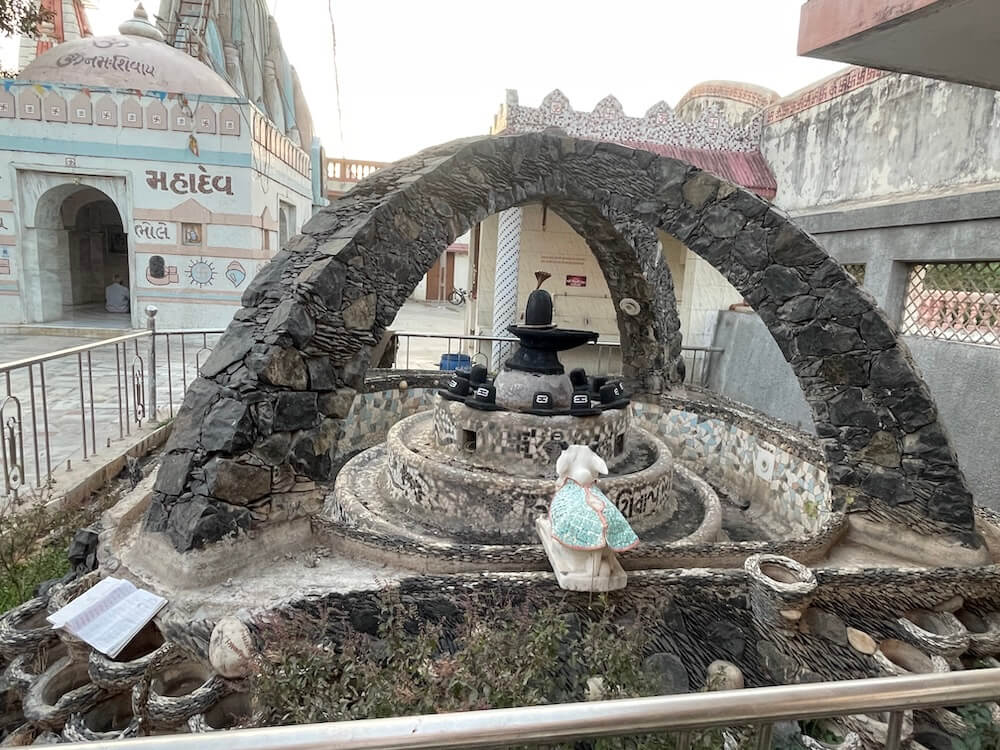
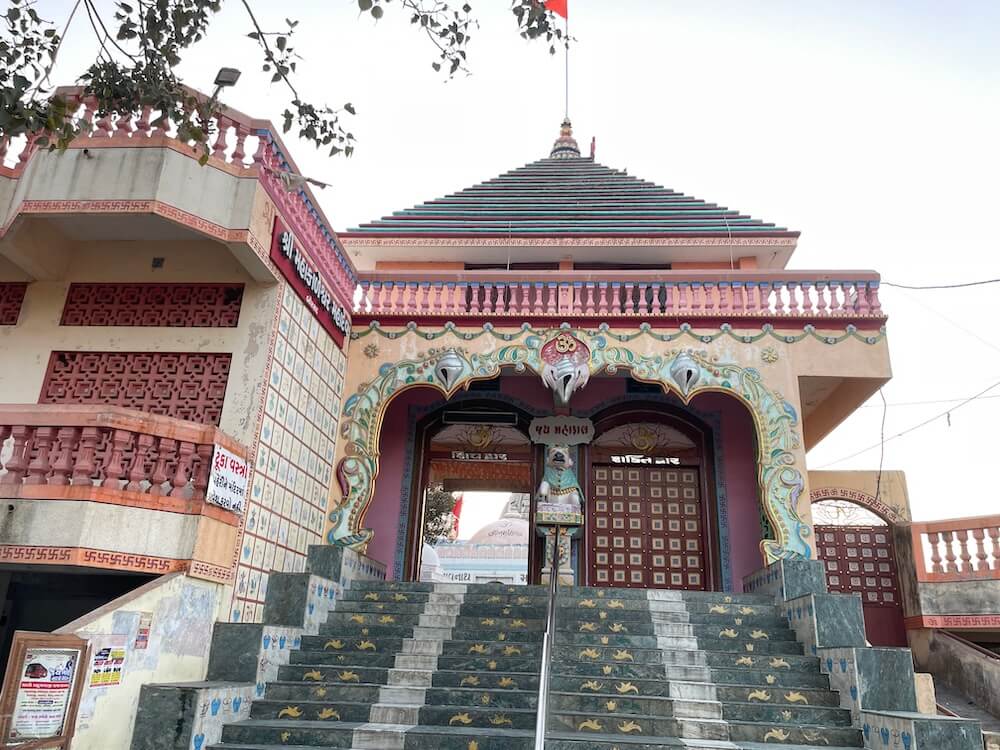
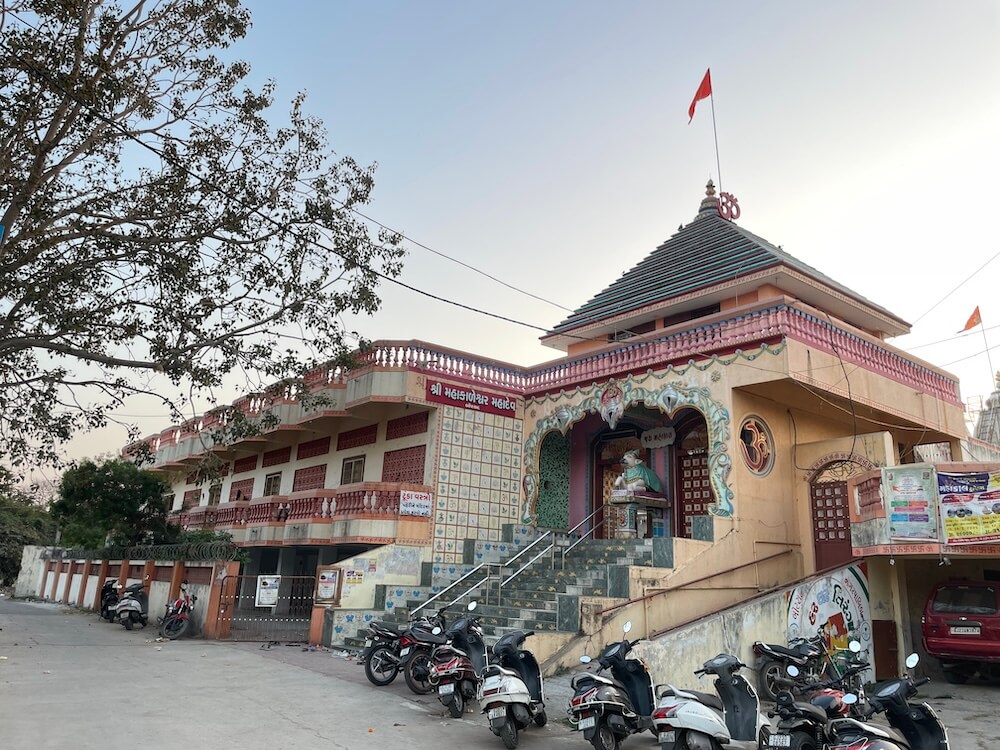
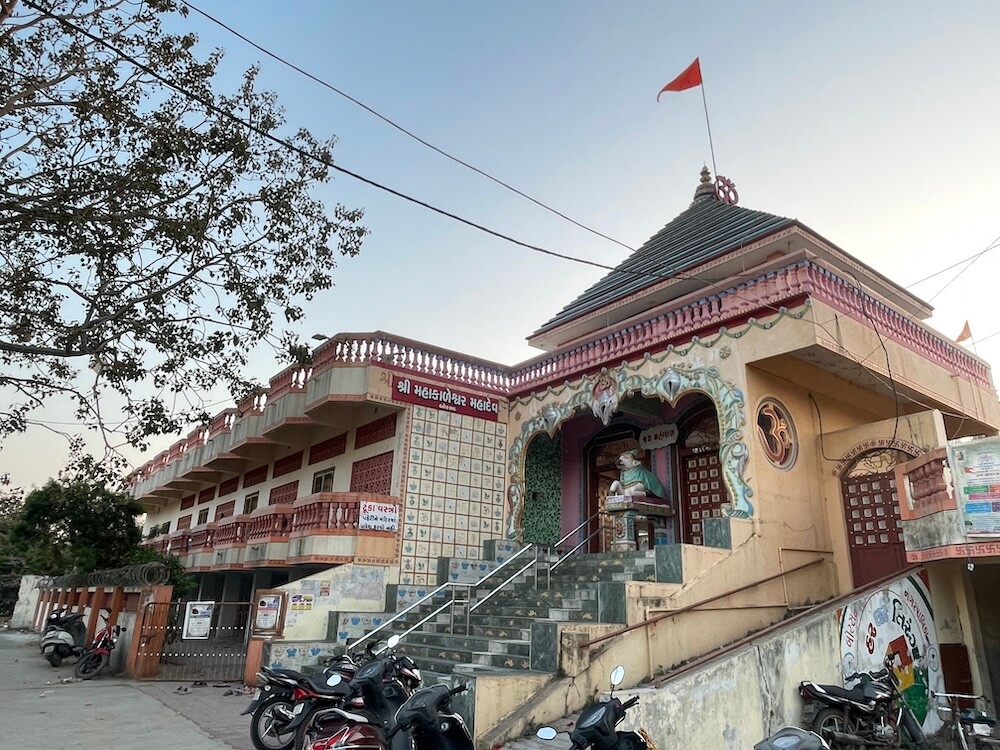
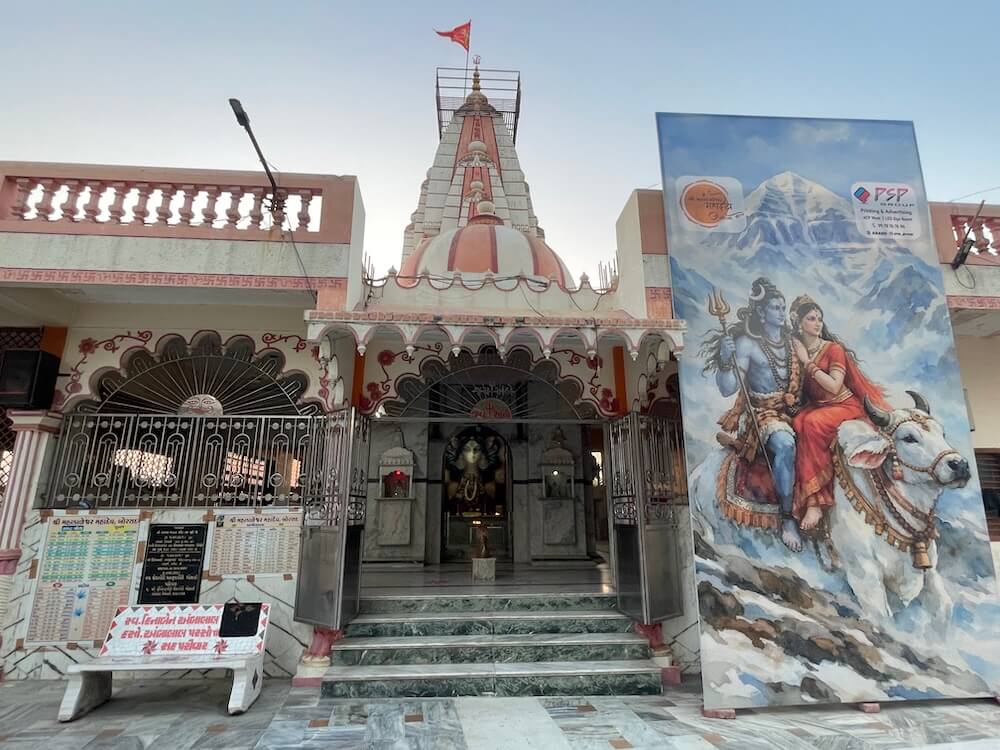
The temple stands in the Kashipura area at the southern edge of Borsad town in Anand district. From the road, devotees ascend about eighteen steps to reach the elevated entrance gateway of the temple, which leads into the courtyard. At the end of this stairway stand two adjacent entrances. Between these two gateways, upon a large platform, is installed a massive idol of Nandi. Conch motifs are carved upon the arch of the main gateway. The two-storeyed gateway has a nagarkhana (drum chamber) on the upper level and above it, on the roof, stand an amalaka and a kalasha finial. Near the entrance within the courtyard, a Shivpinda and an image of Nandi have been placed and beside them, 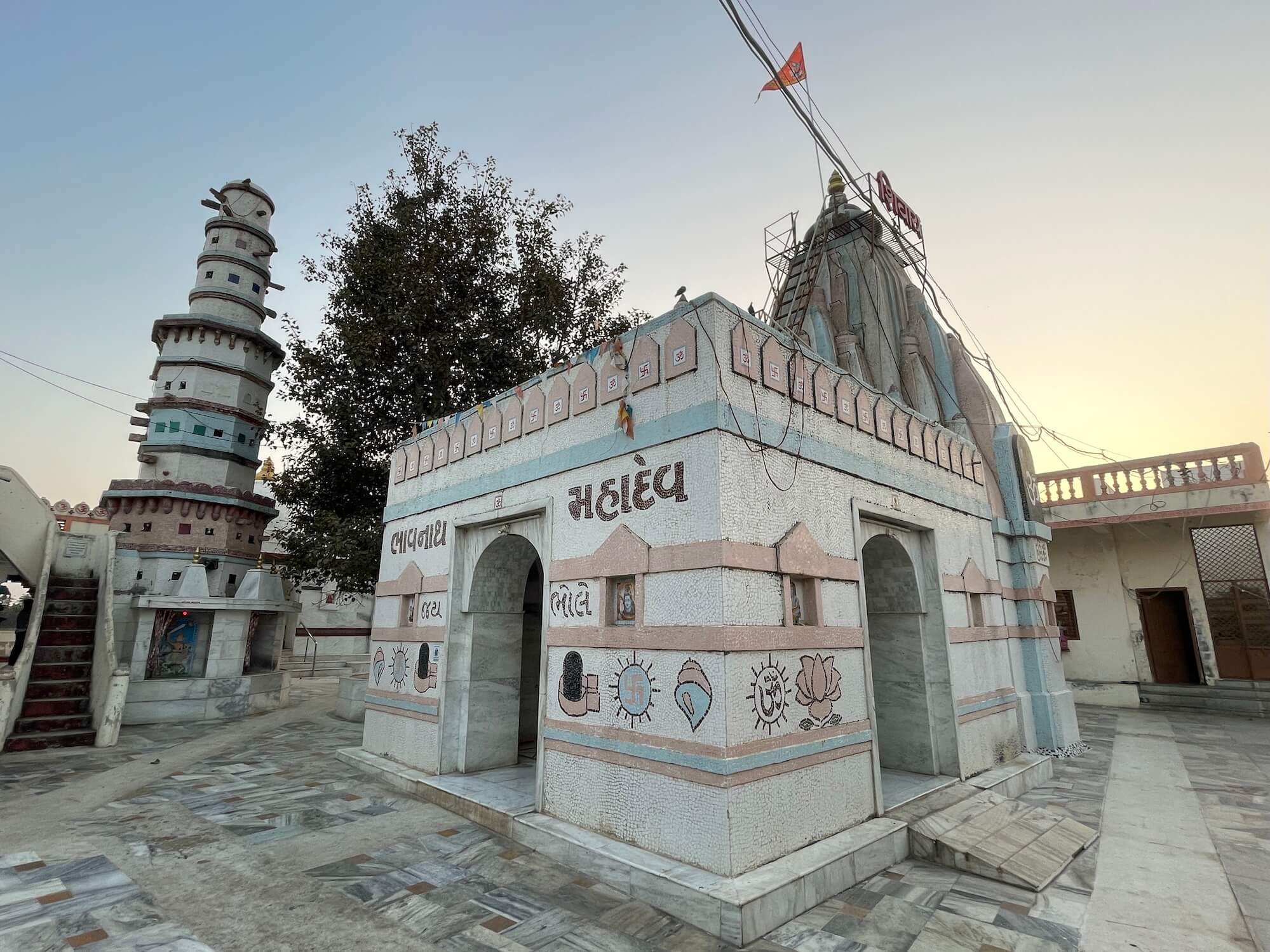 a decorative arrangement of an artificial waterfall and fountains has been created. Adjacent to this stands a small shrine dedicated to Ashapura Mata.
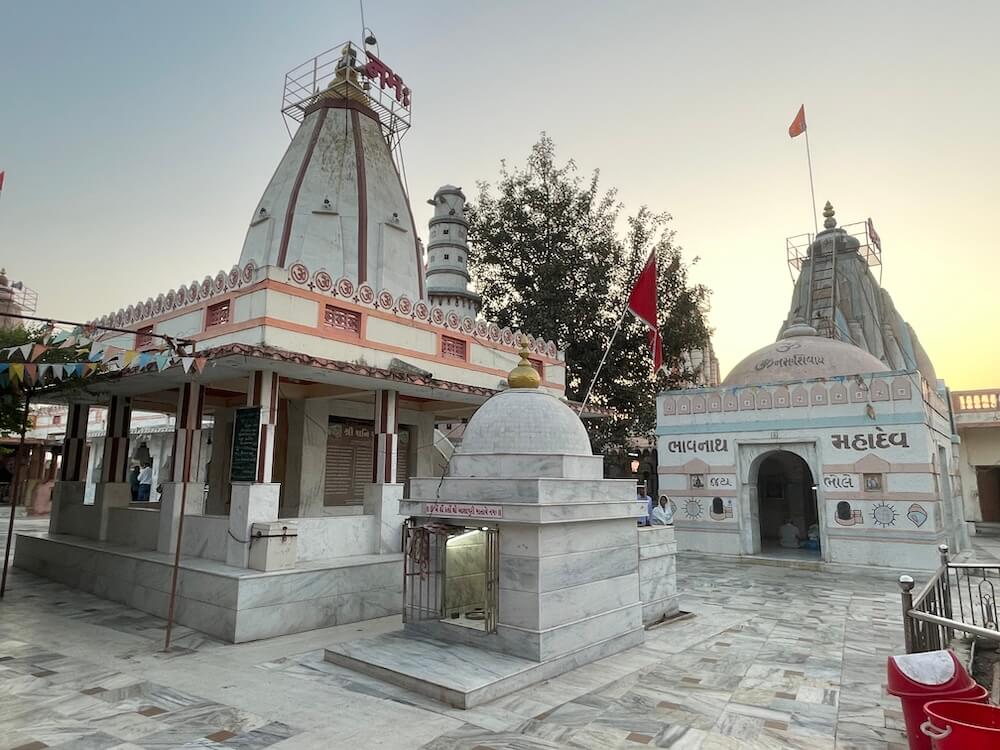
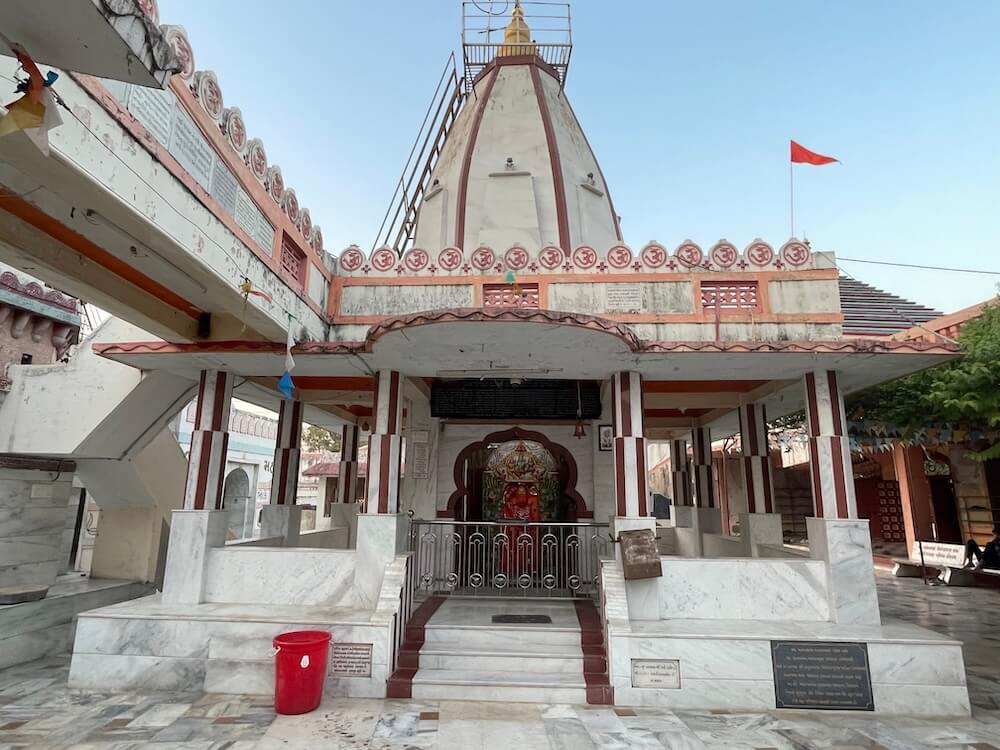
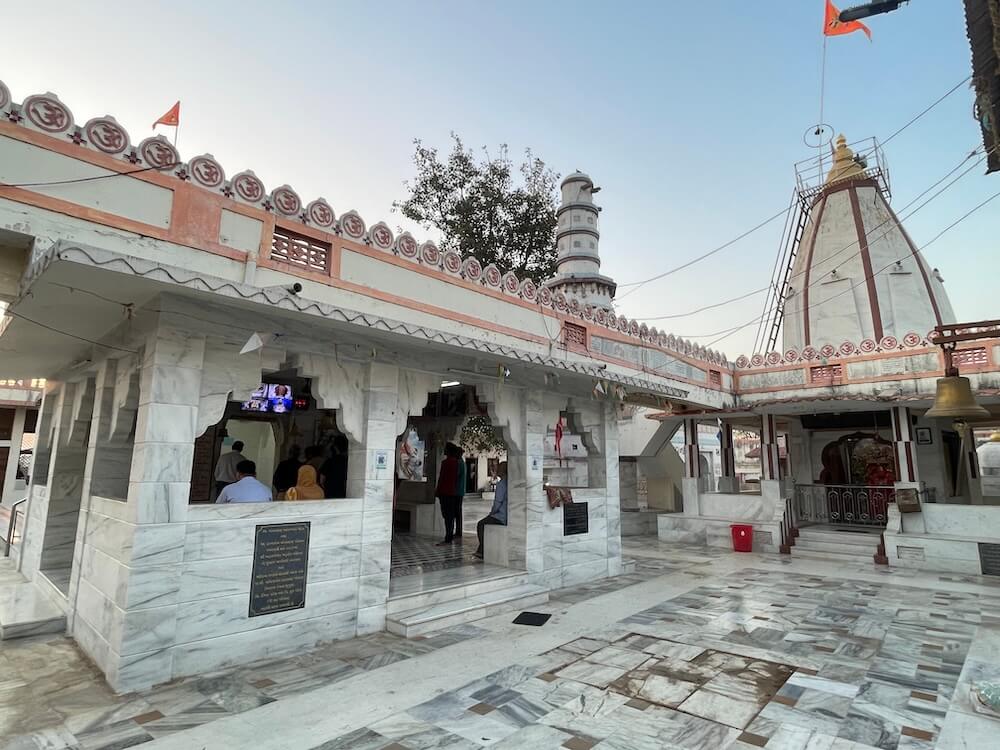
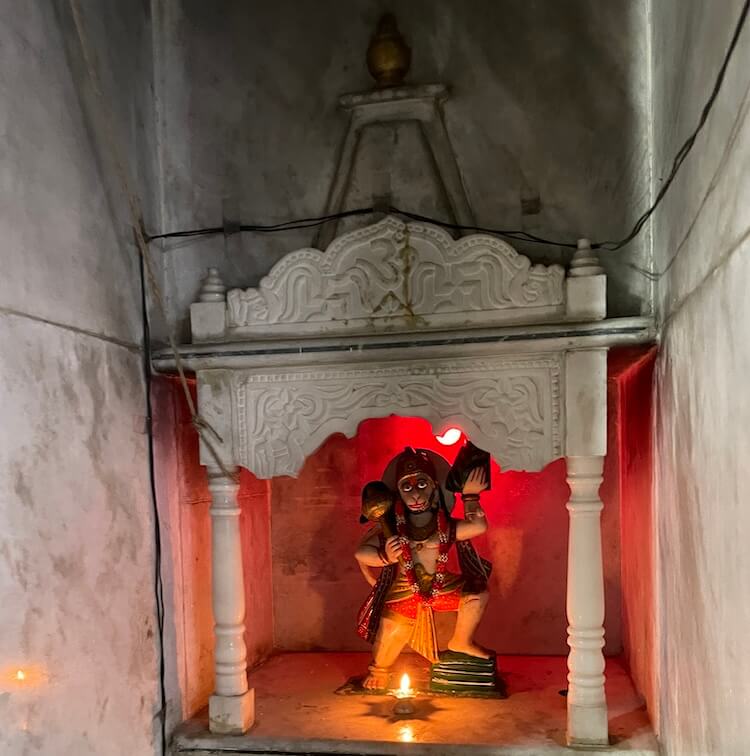
Behind this temple is the Bhavnath Mahadev Temple. Its architectural plan consists of a sabhamandap (assembly hall), an antaral (vestibule) and the garbhagriha (sanctum). Within the sanctum is installed a Shivpinda. Above the sabhamandap rises a domed shikhara, while above the sanctum stands a tall tapering shikhara. On either side of the entrance to the main temple are separate shrines dedicated to Ganesha and Hanuman. The idol of Ganesha is carved in marble, while the image of Hanuman is coated with vermilion. To the left of the temple, beside the Hanuman shrine, stands a tall deepstambha (lamp tower) erected upon a platform.
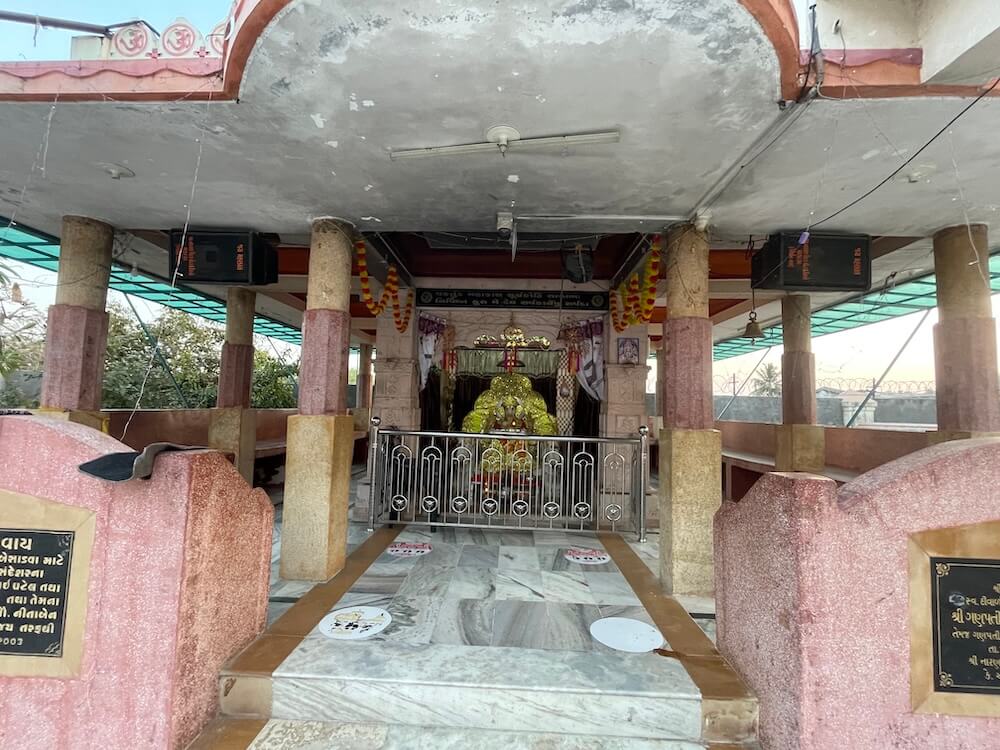
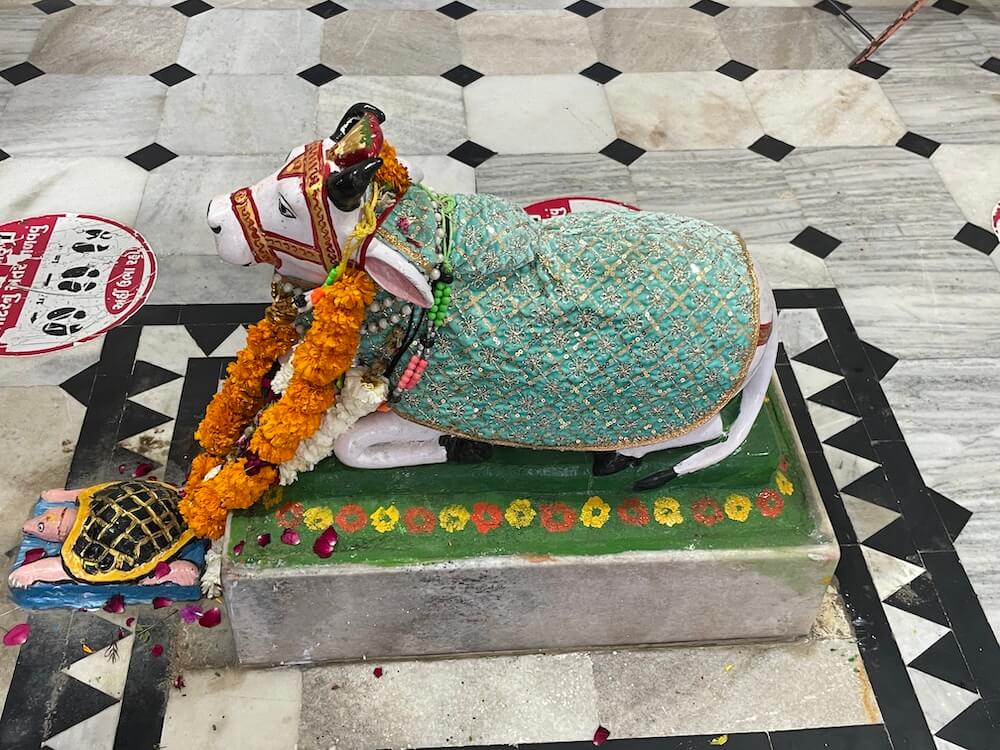 The Mahakaleshwar Temple itself is arranged in a sequence of mandap, sabhamandap, antaral and garbhagriha. From the courtyard, devotees enter a semi-open mandap where seating arrangements have been made for visitors. Beyond it, in the sabhamandap, stands upon a pedestal a beautiful white marble idol of Nandi and before it is placed an image of a tortoise. Within the vestibule, niches set in the walls on the left and right contain idols of Ganapati and Maruti. In the sanctum stands the south-facing pinda of Mahakaleshwar. Upon this pinda, an image of Mahakaleshwar is drawn and a ceremonial turban is placed above it. In a niche on the rear wall behind the pinda stands the idol of Mata Parvati. Like the Bhavnath Mahadev Temple, the sabhamandap and sanctum of this temple are also crowned with shikharas.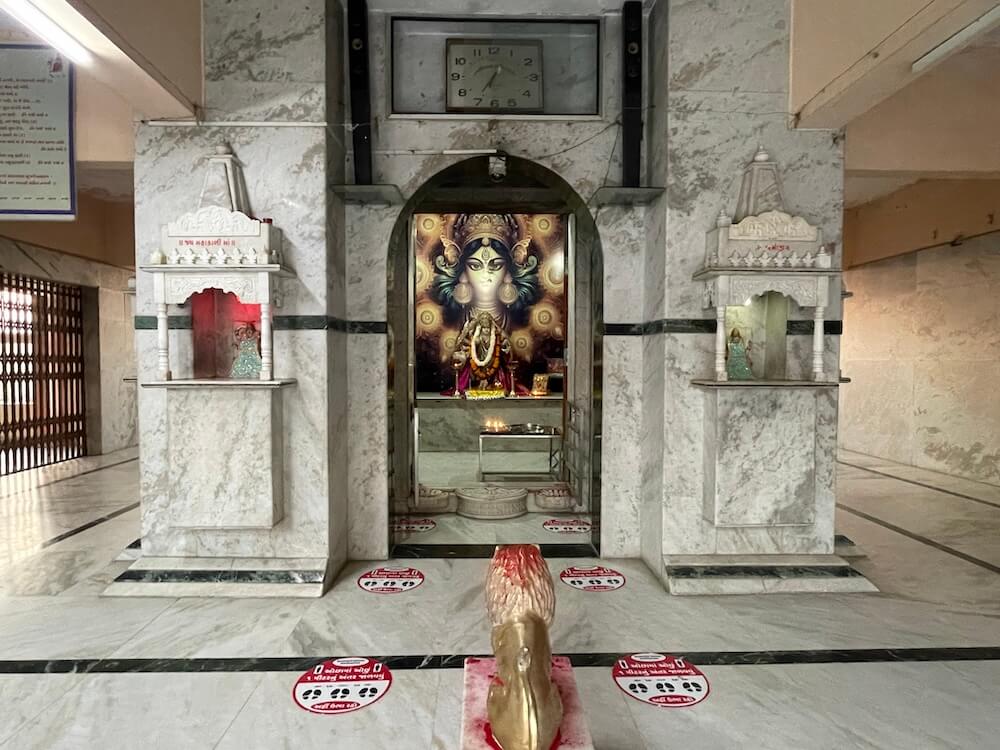
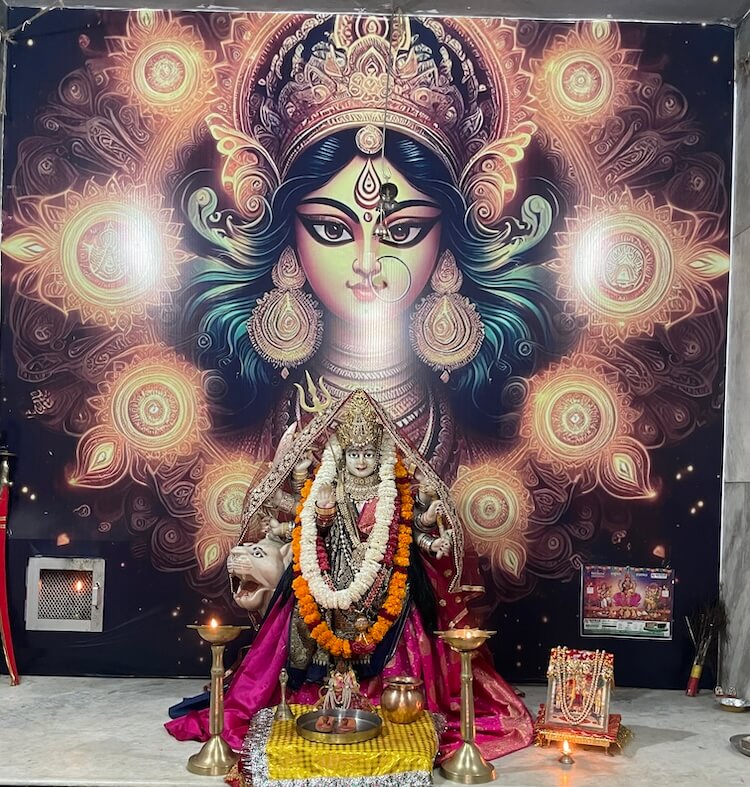
Within the courtyard behind the main temple stands a separate shrine dedicated to Durga Mata. Devotees ascend four steps from the courtyard to reach this temple, which stands upon a raised jagati (platform). The temple consists of a sabhamandap, a pradakshina path (circumambulatory passage) and the garbhagriha. Within the sabhamandap is a brass sculpture of the lion, which is the vehicle of the goddess. In niches upon the front wall of the vestibule are the idols of Mahakali Mata and Amba Mata. In the sanctum, upon a vajrapith, stands a graceful idol of Durga Mata.
Many religious festivals and sacred observances are celebrated here throughout the year. During the month of Shravan, 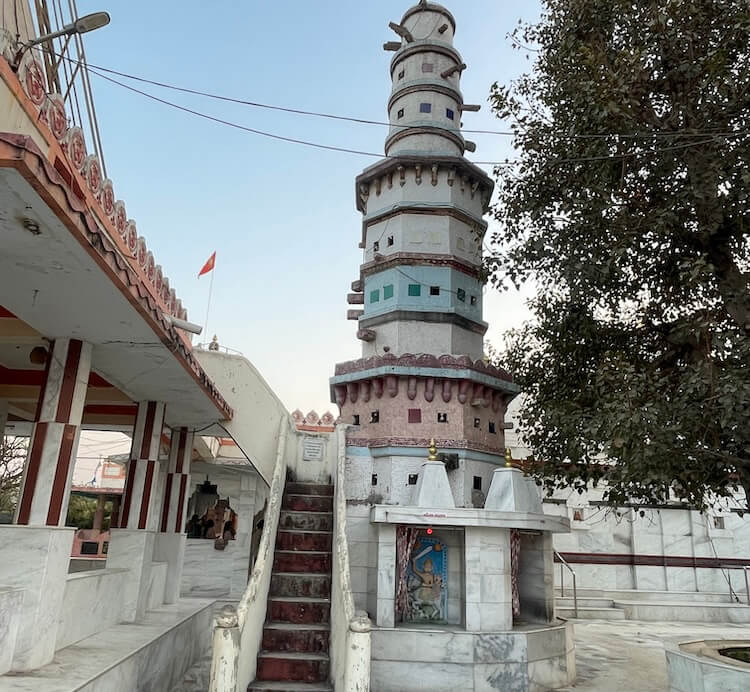 large numbers of devotees gather for darshan. On every Monday of Shravan, a special Bhasma Arati is performed at 4 o’clock in the morning. The sacred ash required for this ceremony is brought directly from Ujjain in Madhya Pradesh. Devotees from various parts of the state form queues from the night itself in order to participate in this ritual. At such times, the entire temple complex resounds with the chant ‘Har Har Mahadev’. On the occasion of Mahashivaratri, a grand procession of Lord Mahadev is taken out through the town. On that day, four special rounds of worship are conducted in the temple. During the same month of Shravan, a large fair is held here on the auspicious occasion of Janmashtami. Bhajan, singing, kirtan and various religious observances are organised during this festival. During Diwali, one hundred and eight lamps are lit upon the deepstambha in the temple courtyard and their radiance illuminates all the shrines within the complex. Devotees may have darshan of Mahakaleshwar here daily from six o’clock in the morning until nine o’clock at night.
Useful Information –
- Located at 2 km from Borsad bus stand and 25 km from Anand city.
- State transport bus services operate to Borsad from many towns in the district.
- Private vehicles can reach up to the temple parking area.
- Several facilities for accommodation and breakfast are available in the surrounding area.
- Contact: Temple Office – Mobile 9825061730
महाकालेश्वर मंदिर
बोरसद, तालुका बोरसद, जिला आनंद
मंदिरे
Temples
मंदिर
-
भीमनाथ महादेव मंदिर लिंबळी, ता. सोजित्रा, जि. आनंद
अधिक माहितीBhimnath Mahadev Temple Limbali, Tal. Sojitra, Dist. Anand
View Detailsभीमनाथ महादेव मंदिर लिम्बाली, ताल. सोजित्रा, जिला. आनंद
विवरण देखें -
मेलडी माता मंदिर मालताज, ता. सोजित्रा, जि. आनंद
अधिक माहितीMeldi Mata Temple Malataj, Tal. Sojitra, Dist. Anand
View Detailsमेलडी माता मंदिर मालताज, ताल. सोजित्रा, जिला. आनंद
विवरण देखें -
चंद्रमौलेश्वर महादेव मंदिर उमरेठ, ता. उमरेठ, जि. आनंद
अधिक माहितीChandramouleshwar Mahadev Temple Umreth, Tal. Umreth, Dist. Anand
View Detailsचंद्रमौलेश्वर महादेव मंदिर उमरेठ, तहसील उमरेठ, जिला आनंद
विवरण देखें