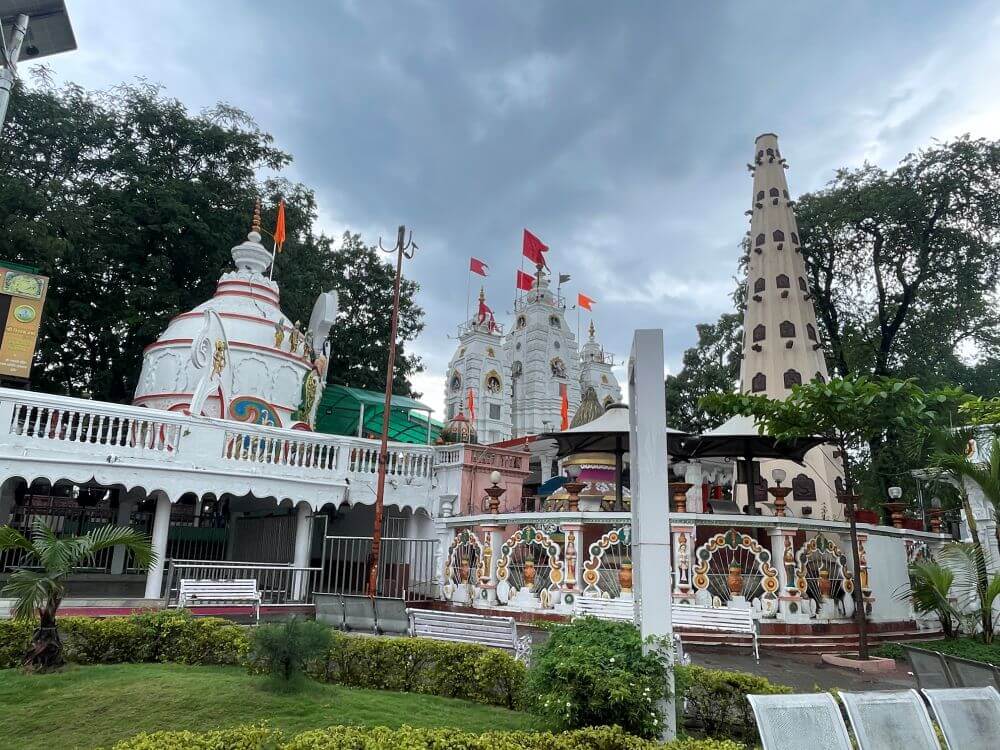
 Across many countries of Asia, Lord Ganesha is revered as the God of wisdom. He is the leader of the ganas and the remover of obstacles. That is why, in the scriptures, Ganesha is given the honour of being worshipped first. In the historic city of Indore, this privilege of being the first to be worshipped belongs to Khajrana Ganesh. In the Khajrana area of the city stands this ancient, magnificent and wealthy temple of Ganesha. Devotees believe that the idol here is self-manifested and that the deity grants their vows. Because of this deep faith, thousands of devotees throng daily for darshan.
The history of this temple and indeed of Indore itself, is intertwined with the Holkar royal family. In ancient times, Indore was a small village known as Indrapur. During the Mughal period, it was part of the Kampel Mahal region. In the early 18th century, when the Maratha army launched expeditions to the north, 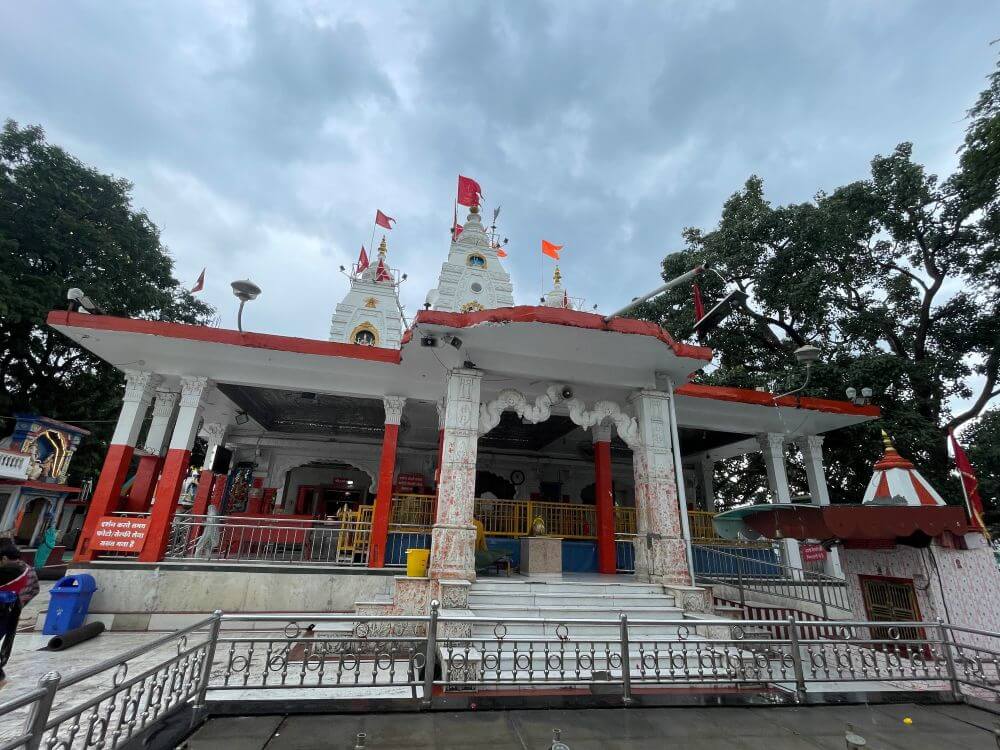 their encampments were set up in this village. This brought prosperity to the area. Malhar Rao Holkar, a general of the Peshwas, realized the village’s strategic importance and established his base here. The settlement came to be called Malharnagari. Later, his daughter-in-law, Ahilyabai Holkar, elevated Indore to the status of a district headquarters.
 Ahilyabai Holkar, remembered as Punyashlok, constructed numerous temples, ghats and wells during her reign and also renovated many old temples. It is said that she also restored the Khajrana Ganesh Temple. Originally, there was only a small shrine here. According to the official website of the Khajrana Ganesh Institution, when Emperor Aurangzeb invaded the Deccan, priests hid the idol of Ganesha in a well to protect it from desecration. In 1735, the idol was retrieved from the well and that very year Ahilyabai established a proper temple here. At that time, she was only ten years old and had been married two years earlier to Khanderao, the son of Malhar Rao Holkar. The temple underwent further renovation in 1875.
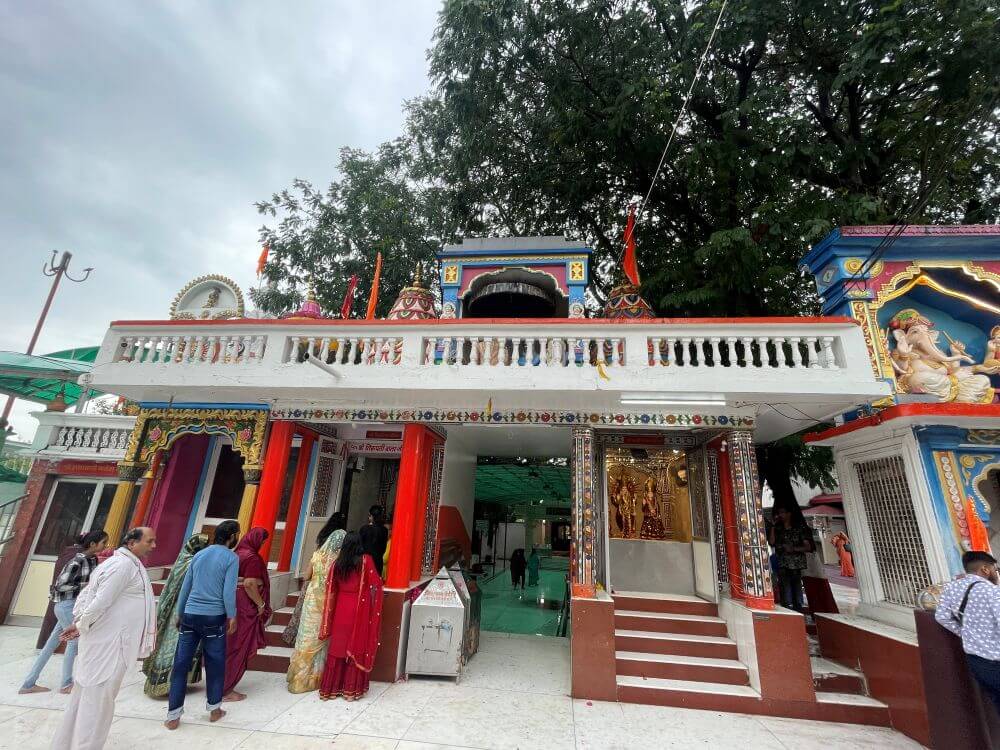
Since the temple is located in the Khajrana area of Indore, it became known as Khajrana Ganesh. The origin of the name ‘Khajrana’ is not certain. Some believe that a treasure belonging to the Holkars was hidden in a well here, giving rise to the name. However, records show that Khajrana was mentioned as early as the 9th century CE during the Paramara dynasty. This proves that the place existed even before Indore city itself. Scholars suggest that the name comes from the local dialect of that era. Today, the temple stands in a spacious area between Indore’s Eastern Ring Road and the Bypass. The approach to the temple is lined with shops selling offerings and worship materials. Beyond them, the grand entrance of the temple comes into view. Above the gate’s roof, set in a decorated glass canopy, is a beautiful image of Ganesha. To the left of it is Goddess Durga and to the right, Lord Shiva with Parvati, Ganesha and Kartikeya.
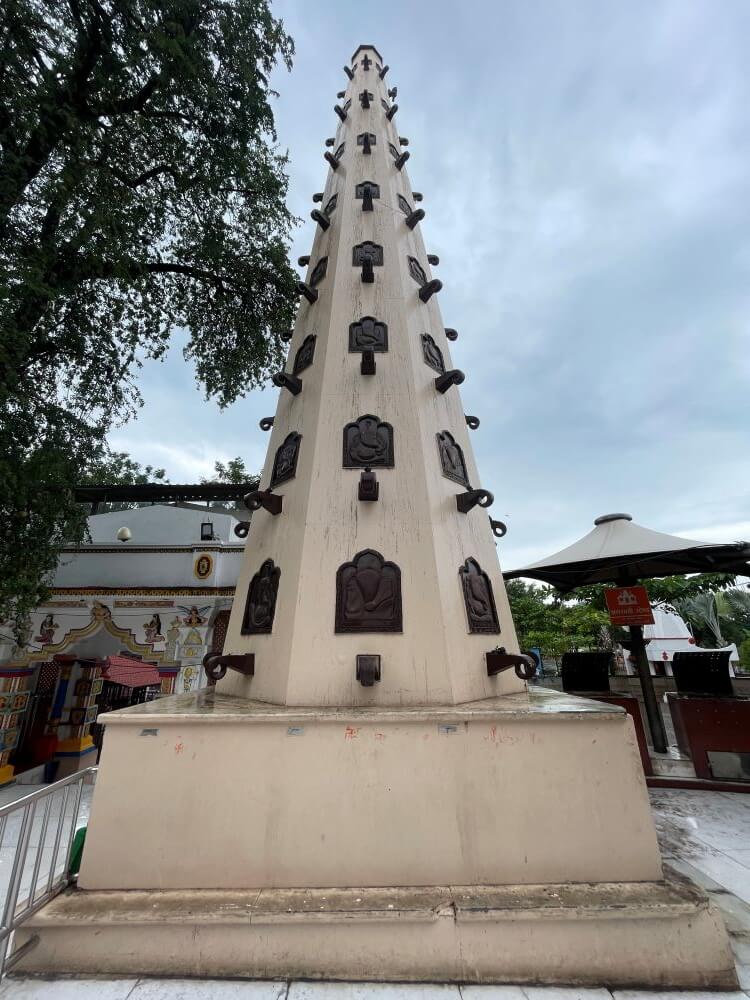
The pillars and walls of the entrance are adorned with sculptures and intricate carvings. Once inside, one enters the temple courtyard. 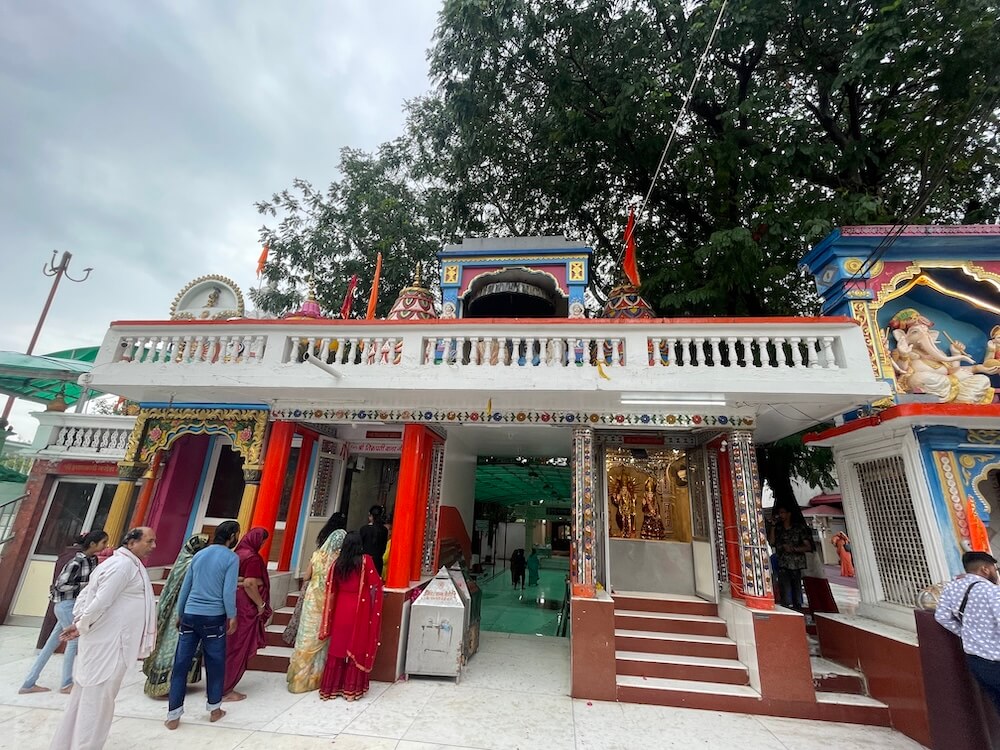 On the right side is a small shrine shaped like a sacred pot (kalash). A tall lamp tower (deepmala) rises nearby.
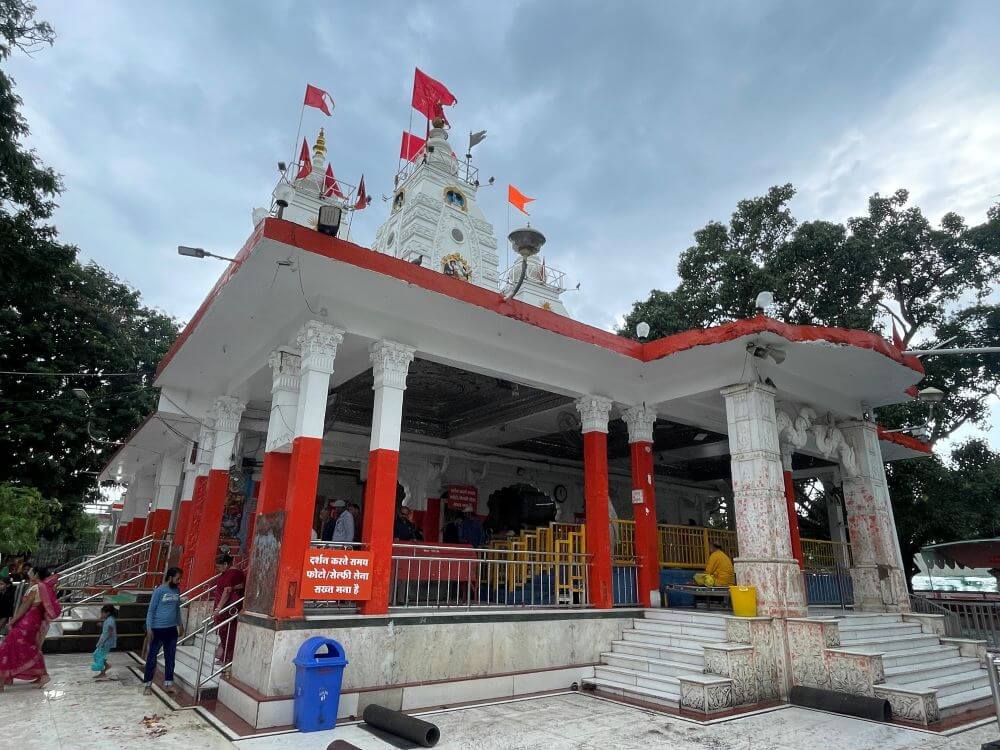
The main temple stands ahead on a raised platform. Its structure comprises a small vestibule, a large hall, an antechamber and the sanctum. Built in modern style, the temple has three spires, the central one being the tallest. All three spires are crowned with golden amalakas and kalashas. On the front of the central spire is a grand sculpture of Ganesha. The hall has stairways on both sides for entry. The open hall is supported by marble pillars, carved with intricate designs. The ceiling inside is decorated with large glass panels depicting geometric patterns, leaves and flowers. One panel even shows Radha and Krishna in a dancing pose. From the hall’s viewing queue, devotees can catch the first glimpse of Khajrana Ganesh’s idol.
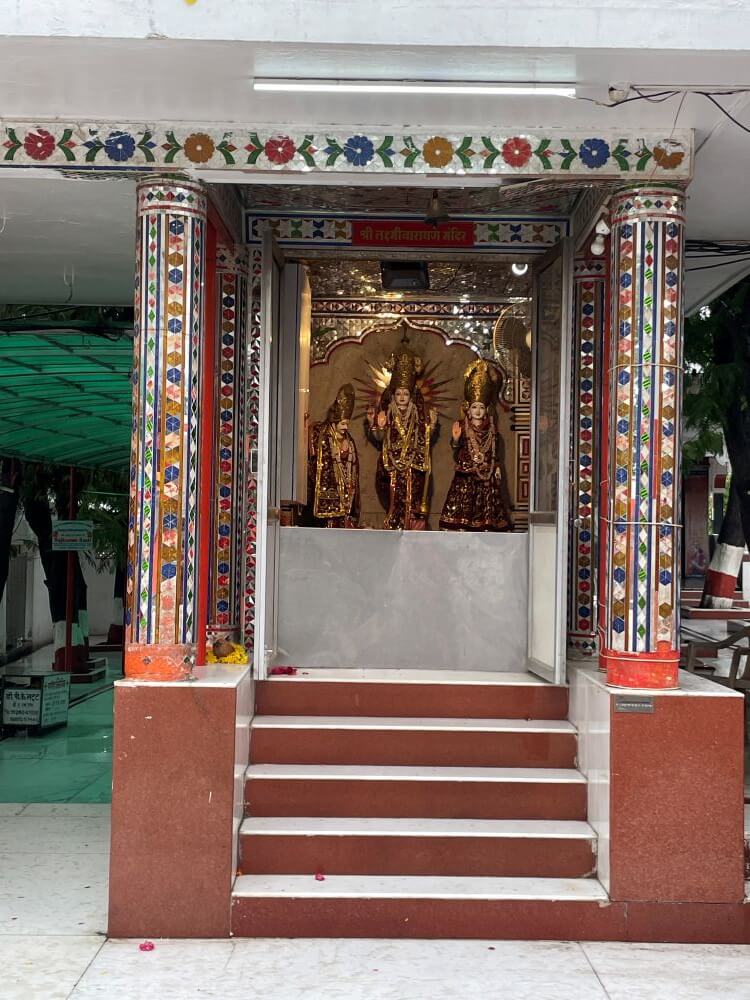
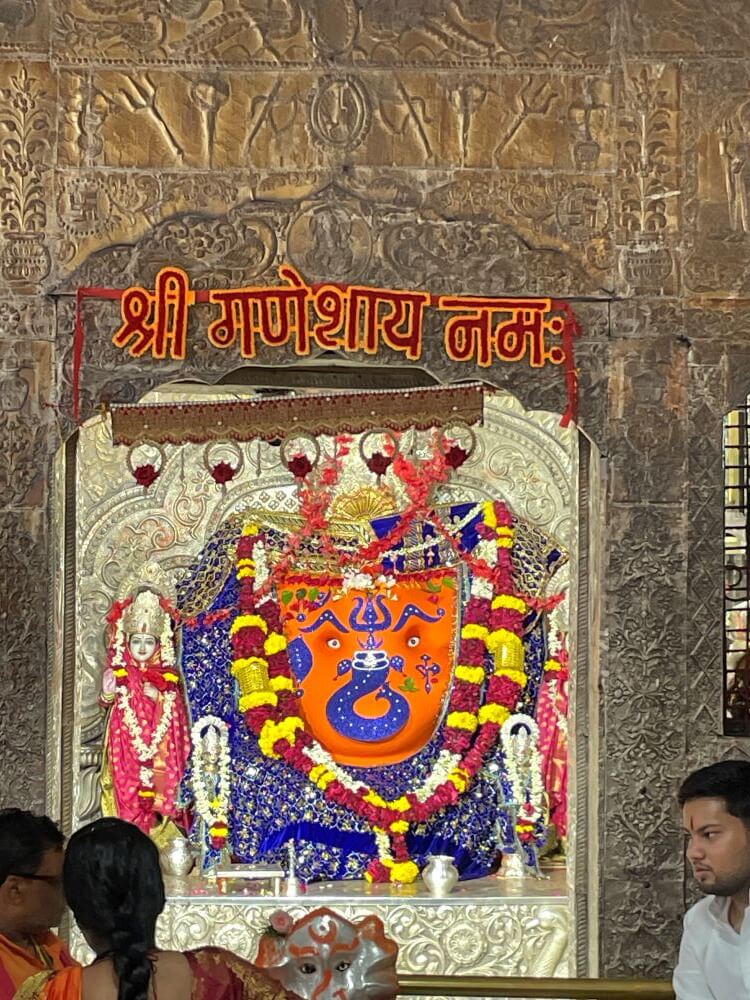
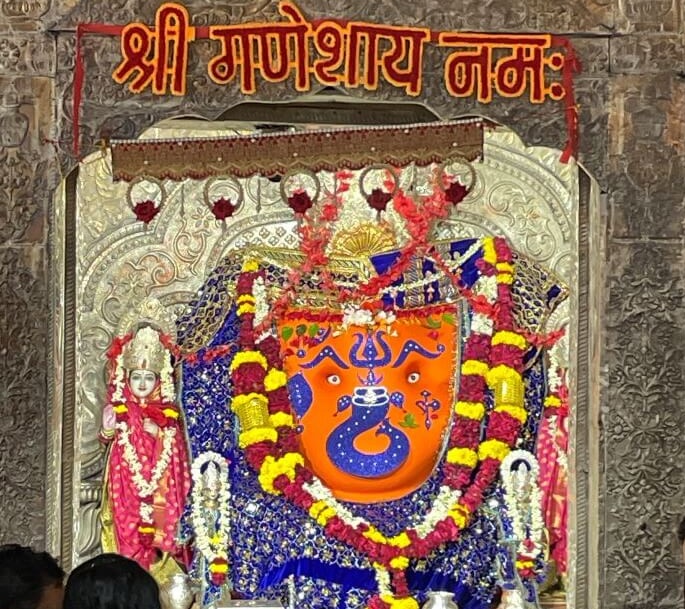
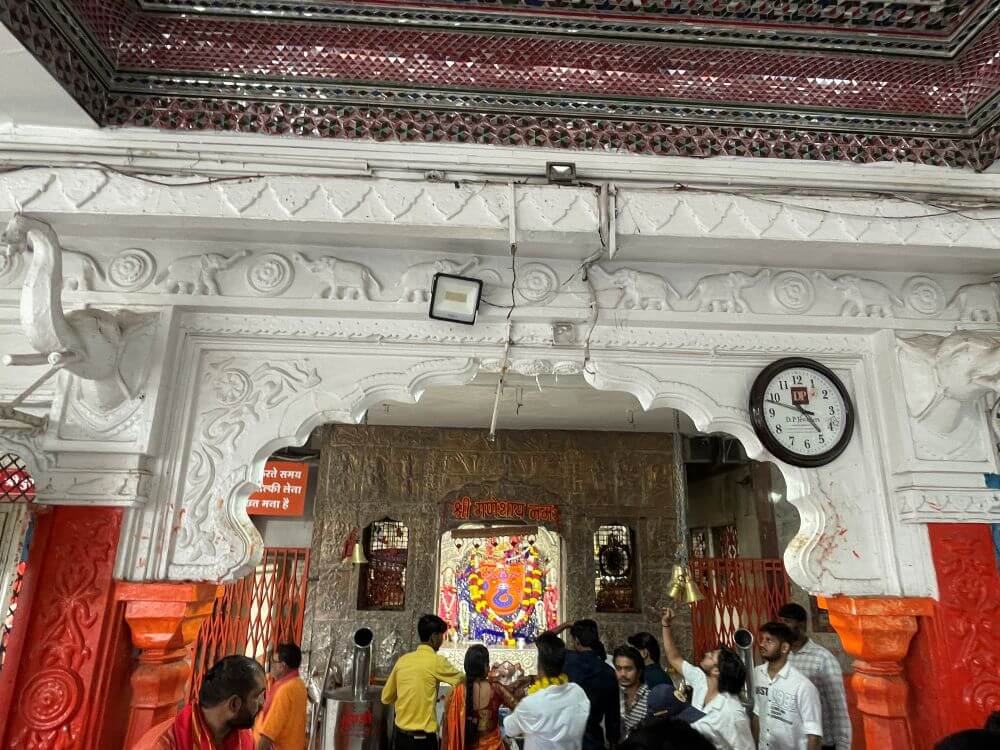 The antechamber is also open in design, with multiple arches along its walls. The pillars here feature elephant heads, with rows of elephant motifs carved into the bands above. In niches along the front walls are two large idols of Ganesha. In one, the deity is depicted slaying a demon. The temple has three sanctums – one main and two subsidiary. In the main sanctum, upon a tall pedestal, the self-manifested idol of Ganesha is enshrined in a silver-embellished shrine. Covered in vermilion, the idol has painted eyes and trunk. A small golden crown rests on its head. On either side stand the idols of Riddhi and Siddhi. Directly opposite is the silver idol of Ganesha, placed on a silver platform. In the complex, there are 33 smaller temples dedicated to Shri Ram, Shiva, Durga, Sai Baba, Hanuman and other deities.
In 2025, the temple was awarded a ‘Five-Star Rating’ by The ‘Patrons World’, a company operating in India and Dubai. This recognition made Khajrana Ganesh Temple the first five-star temple in Madhya Pradesh and one of the richest Ganesha temples in India. The temple is managed by a committee under the leadership of the Collector of Indore and the Commissioner of the Indore Municipal Corporation. Devotees can have darshan from 5 a.m. until midnight, with the abhishek ritual performed between 5:30 and 6:30 a.m. Aarti is held at 8 a.m. and again at 8 p.m. every day. Wednesdays and Saturdays see the heaviest crowds. For the people of Indore, Khajrana Ganesh is their presiding deity. He is invited first to every auspicious event at home. When purchasing a new house or land, devotees first visit this temple. Similarly, new vehicles are brought here for blessings. Ganesh Chaturthi is the grandest celebration of all, when the temple complex takes on the form of a great fair and lakhs of devotees gather for darshan.
The temple receives immense donations from devotees, including gold jewelry and foreign currency, placed into the donation boxes. The funds are used to provide many facilities for devotees. Every day, thousands of people are fed free meals. The temple trust also operates a modern pilgrims’ lodging with fully air-conditioned rooms.