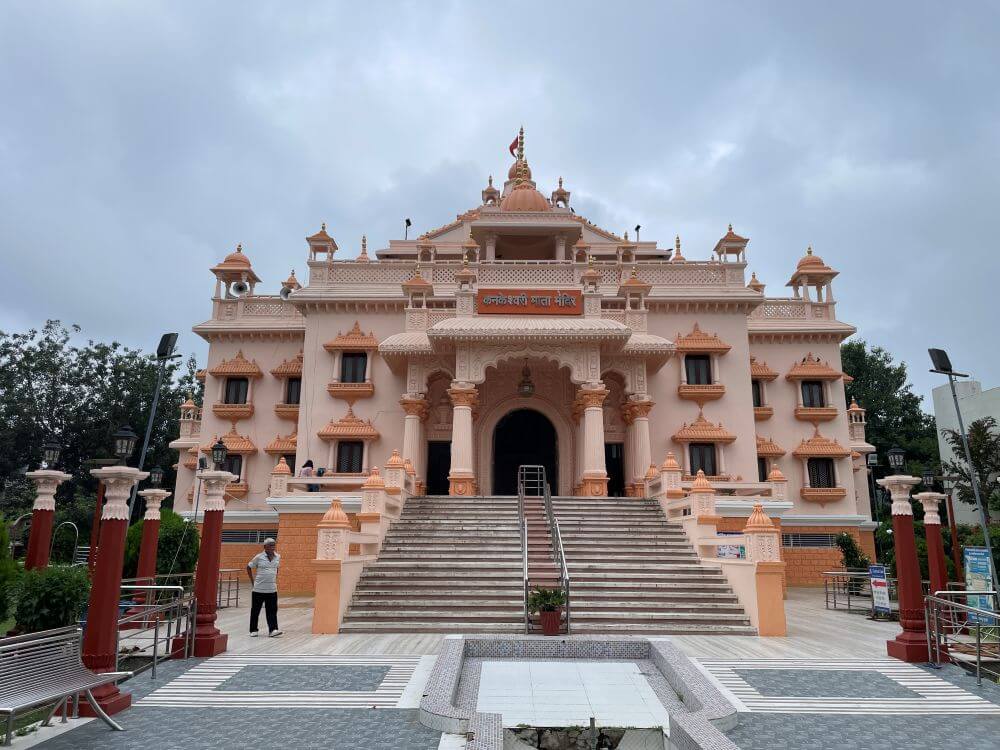
 Kanakai Mata, an incarnation of the Primordial Power – the Adishakti, Adimaya – is also venerated by the name Kanakeshwari. The goddess is the clan deity of many families across Rajasthan, Gujarat and Madhya Pradesh, with her original seat located in Gujarat. One of the most important temples to this deity in Madhya Pradesh stands in Indore. Built on the lines of Delhi’s Akshardham Temple, it is a sacred center for countless devotees and its grandeur and beauty have made it a destination of interest for visitors as well. It is the firm faith of worshippers that when one offers wholehearted devotion to the goddess, she fulfills every cherished wish.
In the Gir National Park of Junagadh district in Saurashtra, a large temple of Goddess Kanakai stands at the very heart of the forest. She is revered as the clan goddess by numerous communities—Vaishya Suthar (Vadhiya and Padhiyar), Gurjar Suthar (Panchasar), Bhavsar (Bahekar), Unavel Brahmin, Bhadreshwar-Vanja and Borkhetaria-Vanja Vaishya, among others. 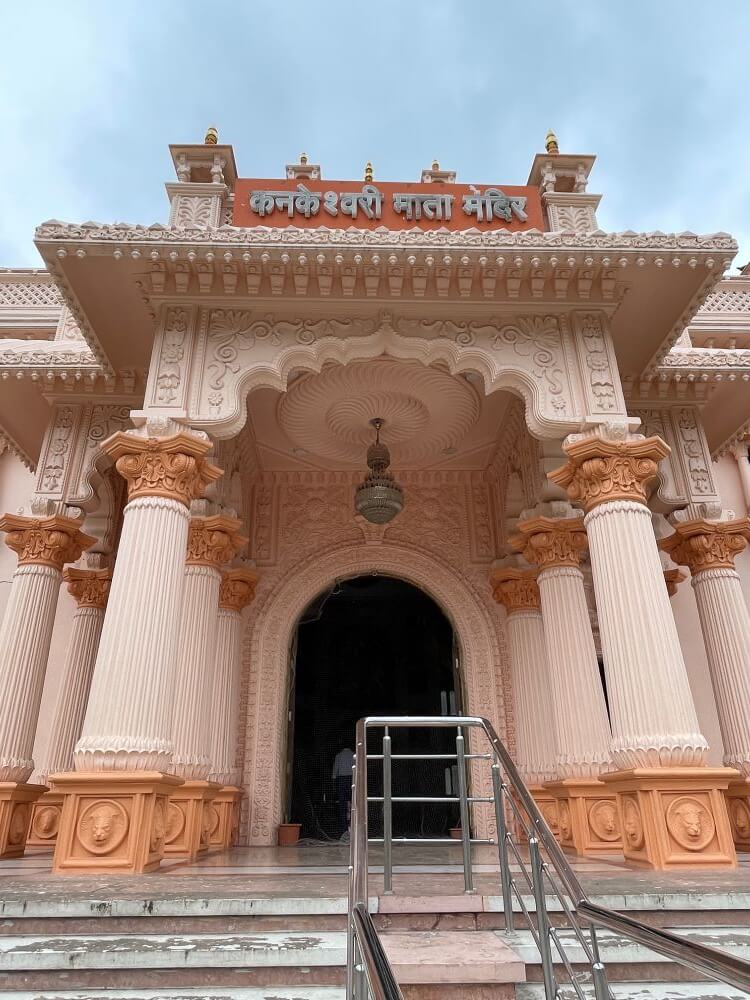 According to a traditional legend, the Pandavas once came into the dense forests of Gir during their exile and had a vision of the goddess. As they were departing, they felt parched; Arjuna shot an arrow into the ground to draw water and established a linga of Mahadev at that spot. The shrine is known as Banej Mahadev. It is said that the Kanakeshwari Mata consecrated in Indore is a radiant portion of that very Kanakai of Gir.
The history of the Indore temple is told thus – devotees of Kanakai living in the city cherished the desire to build here a grand temple to the goddess. Uniting in purpose, they founded the ‘Kanakeshwari Devi Bhakt Mandal’ and began collecting donations from worshippers. Work on the temple commenced in 2002. Special Makrana marble from Rajasthan was brought for the construction and to ensure a beauty comparable to Delhi’s Akshardham. Master craftsmen skilled in temple architecture were invited from Rajasthan. The work of construction continued for nearly fifteen years and in 2017 the consecration of the goddess’s idol was performed.
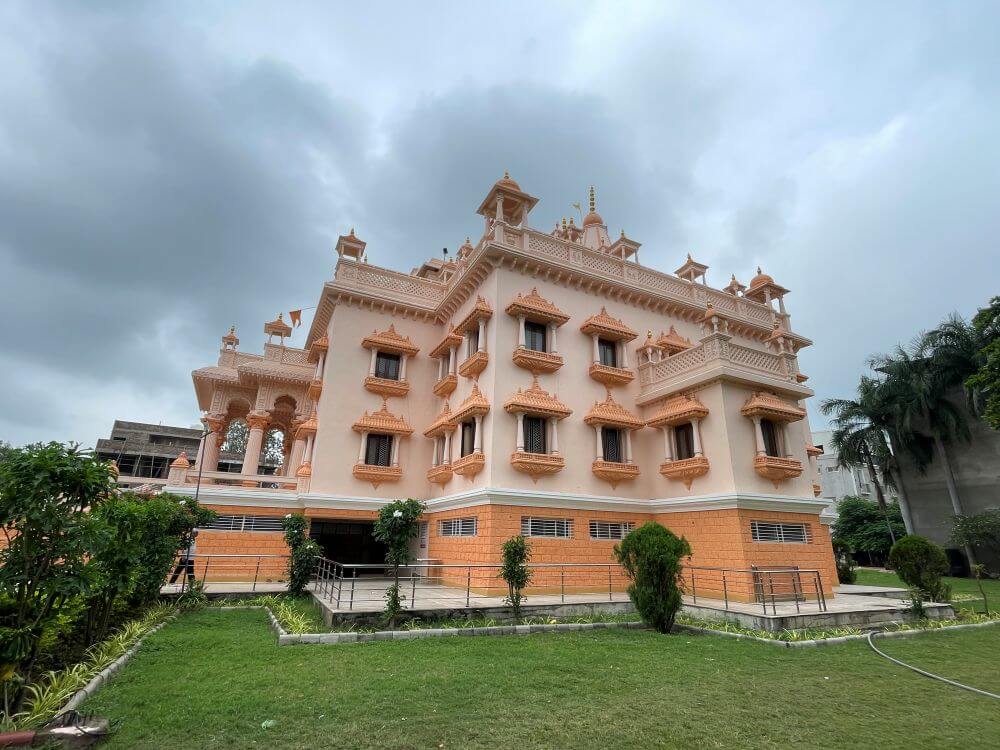
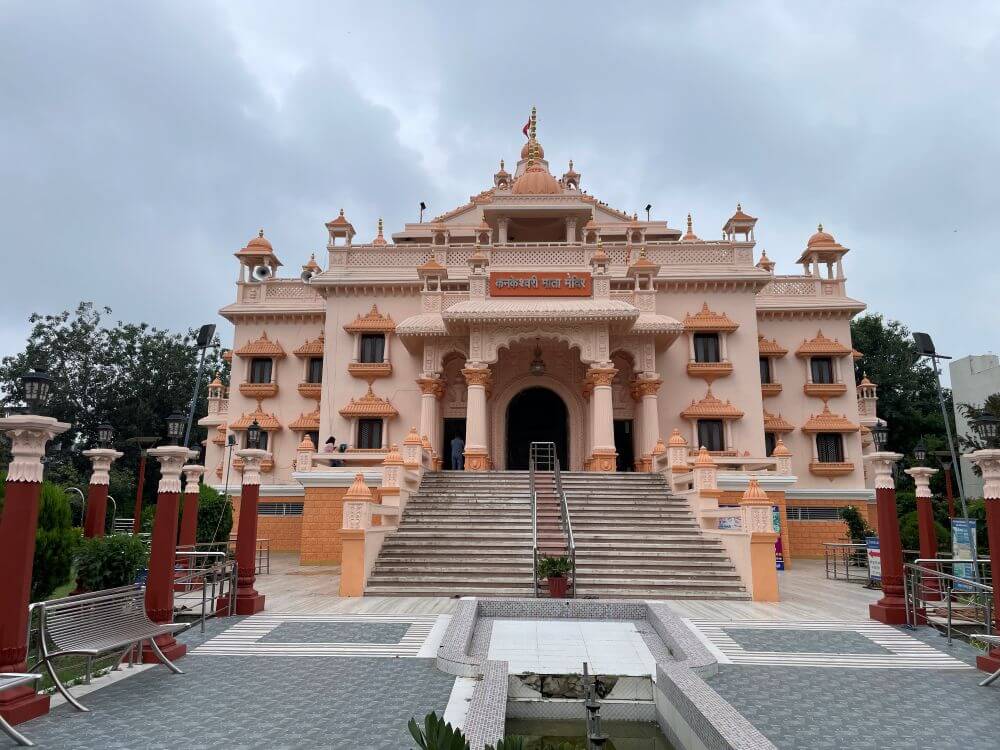
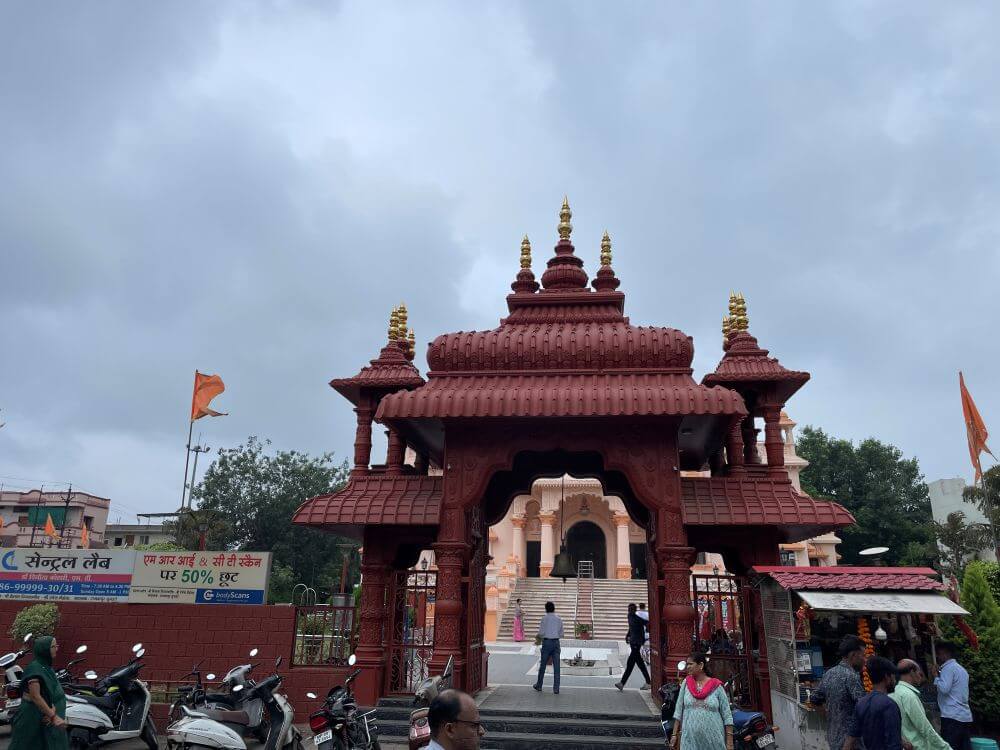 Occupying roughly sixty thousand square feet, the temple, which looks like a splendid palace, is set within a landscaped precinct. A magnificent southern-style gateway forms the ceremonial entrance; its pillars and arches are adorned with fine carving. The gateway carries one main shikhara and six subsidiary spires and within it are benches for devotees to sit. Directly ahead lies a large water tank with a fountain. Throughout the forecourt, lamp posts and flowering shrubs add grace and the entire area is neatly paved in stone.
The temple of the goddess rises on a lofty plinth. From the ground to the sanctum, the height is about ninety feet, while the total height of the shrine – including flag and finial – is one hundred and one feet. Eighteen broad steps lead up to the temple platform. The structure is two-storied, consisting of a mukha-mandapa, a sabha-mandapa and the sanctum (garbhagriha). To keep light and air circulating, approximately seventy windowed openings (gavakshas) have been incorporated into the outer walls. 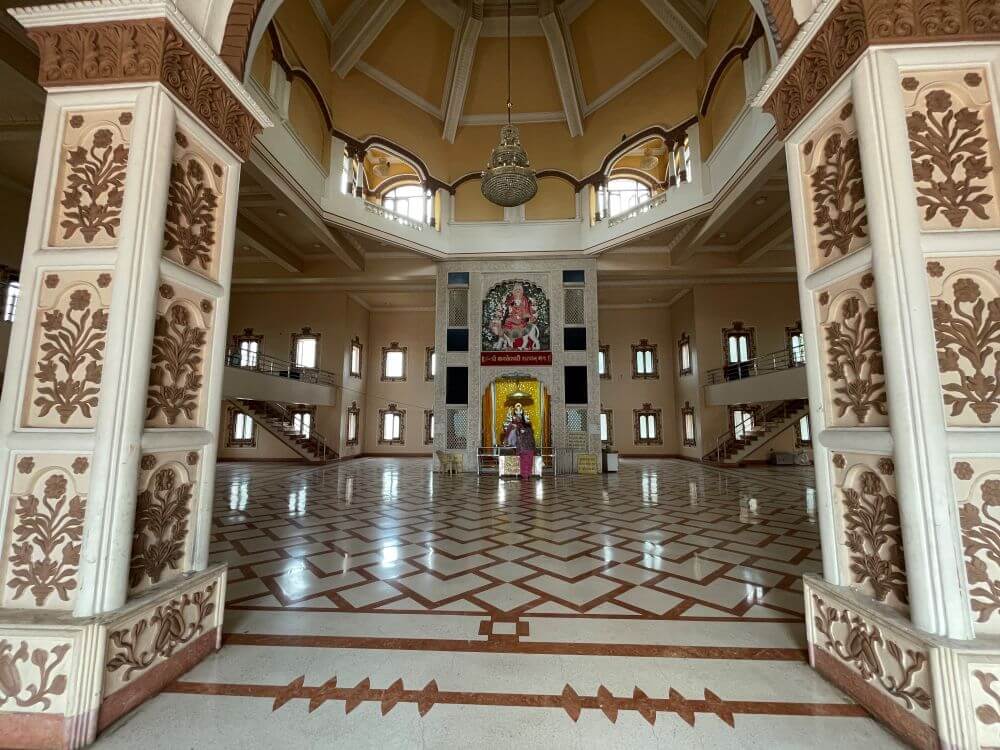 At the corners of the ceilings of the front and assembly halls, small cupolas have been crowned and at the center of the sabha-mandapa’s ceiling hangs a large cupola. The sanctum itself is roofed with descending slopes on either side, above which rises the shikhara.
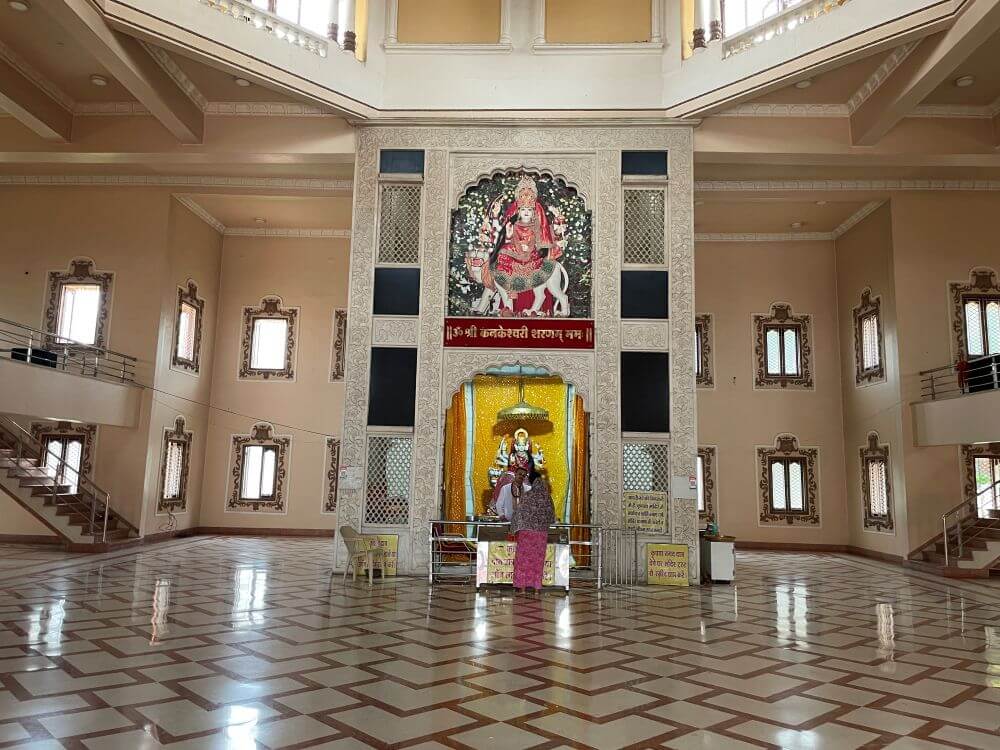
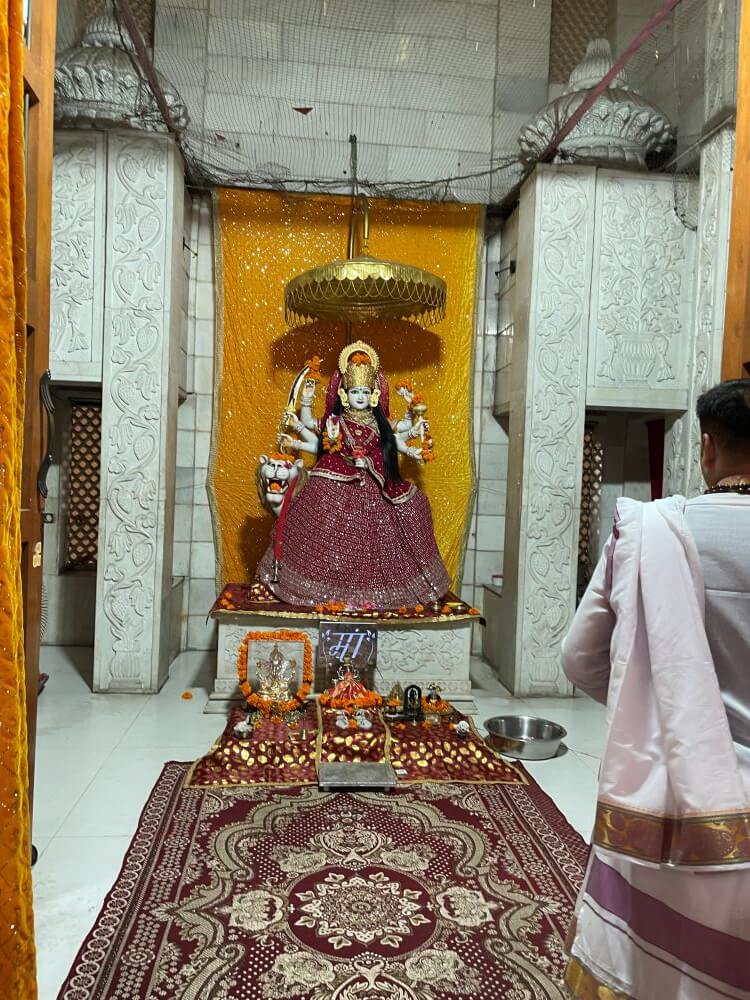
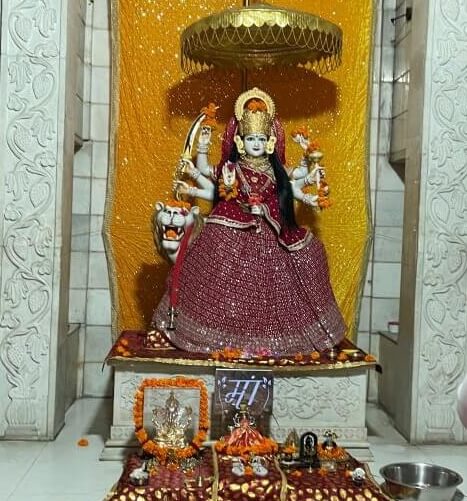
Entry into the sabha-mandapa is through a round, arched portal. This two-storied hall is spacious and airy. The upper floor runs as a balcony on all four sides, leaving the middle open to the height, from which a grand chandelier is suspended. Directly ahead stands the tall sanctum of the temple. Fashioned from carved Makrana marble, its doorway is a graceful cusped arch and above it is a large image of Jaganmata (the world-mother) Kanakeshwari riding a lion. Within, upon a high pedestal, is enshrined the idol of Kanakeshwari Mata. Carved from a single block of marble and brought from Jaipur, the goddess is shown lion-borne, six-armed and bearing weapons. 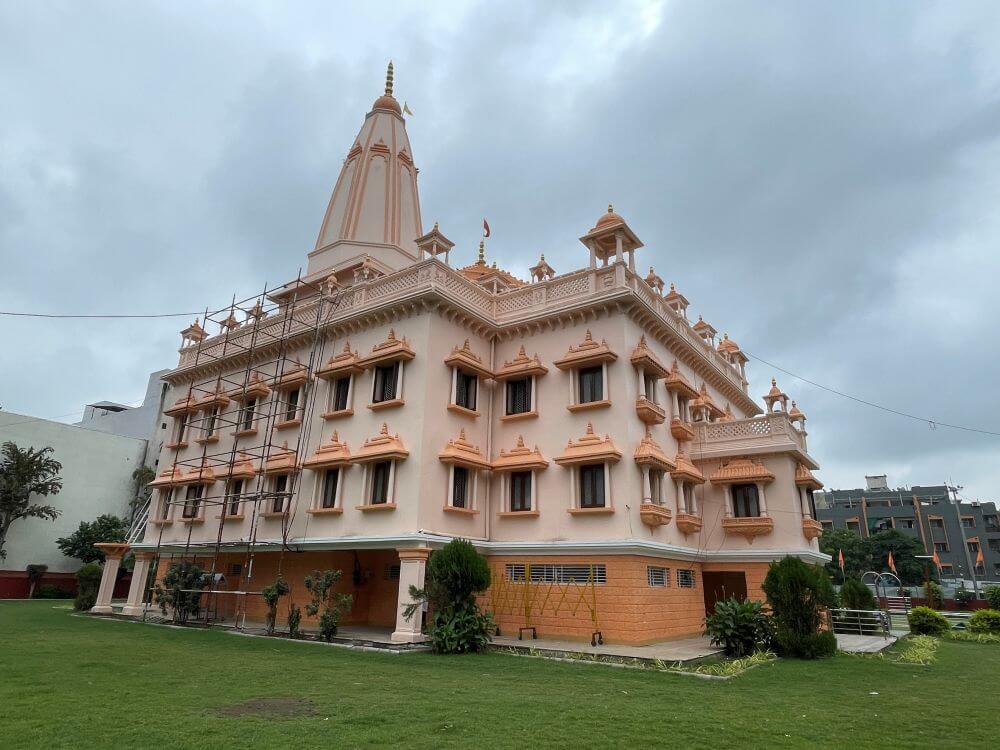 A golden crown rests upon her head and she is adorned with rich vestments and ornaments. Above her spreads a great brass parasol. The circumambulatory path around the sanctum begins from the assembly hall itself.
Kanakeshwari Mata is believed to respond to vows and fulfill heartfelt petitions. There is a custom here of writing one’s wishes on the rear wall of the sanctum. Many prayers written by devotees for the happiness and well-being of their parents and sisters can be seen there.
Navratri is celebrated here on a grand scale. Thousands of devotees participate in the Garba festival organized by the temple. Through the Maa Kanakeshwari Religious and Charitable Trust, various health facilities are provided to worshippers – daily ophthalmology, dentistry, blood testing and physiotherapy are conducted and the homeopathic clinic treats devotees at nominal charges.