
कमलेश्वर महादेव मंदिर
कावी, ता. जंबुसर, जि. भरुच
Kamleshwar Mahadev Temple
Kavi, Tal. Jambusar, Dist. Bharuch
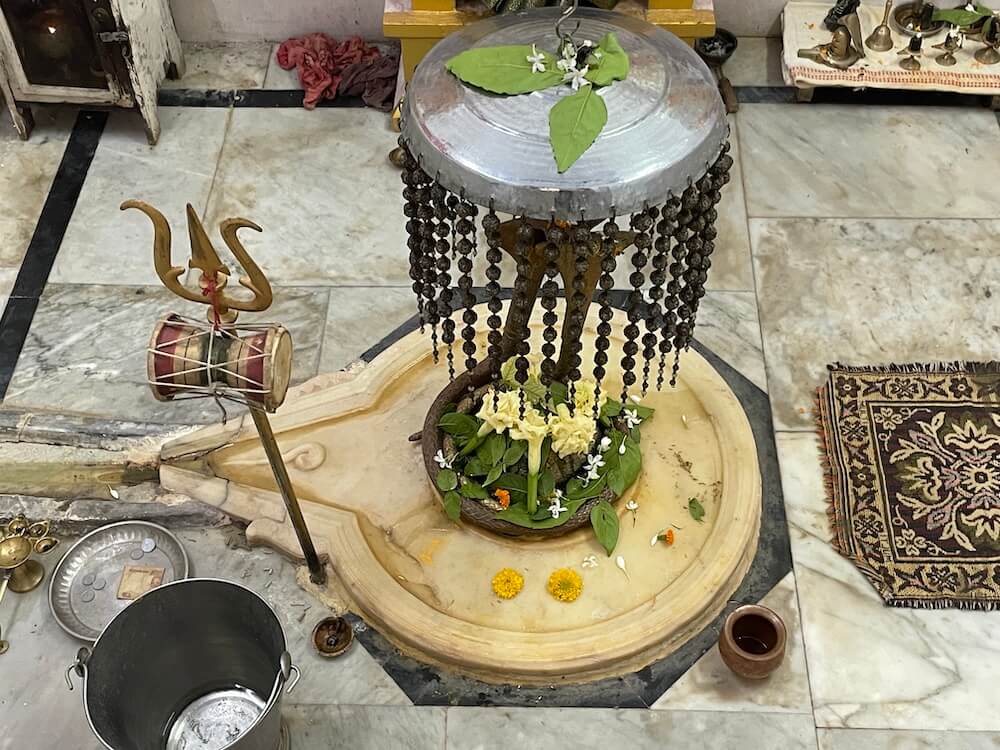 In the ancient village of Kavi, known in mythological eras as ‘Kankavati Nagari’ and also as ‘Kapilkshetra’, stands the venerable temple of Kamleshwar Mahadev. It is said that the ‘shivalingas’ (sacred icons of Lord Shiva) within this sanctuary were consecrated by the celestial sage Narada Muni. The central shrine is encircled by the abodes of eleven Rudra Mahadevs. This sacred precinct holds a significance comparable to Kashi and devotees firmly believe that a visit to the Mahadev here bestows the same spiritual merit as the ‘darshan’ (holy viewing) of Kashi Vishveshwar. During the auspicious month of Shravan and on the night of Mahashivratri, hundreds of devotees congregate here to perform ‘jalabhishek’ (ritual water offering).
 A popular legend suggests that a subterranean tunnel, originating from the depths of this temple once led all the way to Khambhat.
The village of Kavi was renowned in antiquity as ‘Kankavati Nagari’. Surrounding this city were other townships such as ‘Mansavati’, ‘Khambavati’ and ‘Rupavati’. It is chronicled that due to the residence of the sage Kapila Muni, Kankavati also came to be known as ‘Kapilkshetra’ or ‘Kapaleshwar’. The ‘Kumarika Khanda’ of the ‘Skanda Purana’ narrates a dialogue between Narada Muni and King Dharmavarma. As Narada Muni journeyed across the earth visiting every sacred ‘tirtha’ (pilgrimage site), he arrived at the hermitage of Sage Bhrigu on the banks of the Narmada. He revealed to Bhrigu that the purpose of his pilgrimage was to seek land suitable for donation to Brahmins. Sage Bhrigu informed him of a ‘tirtha’ named Stambha, 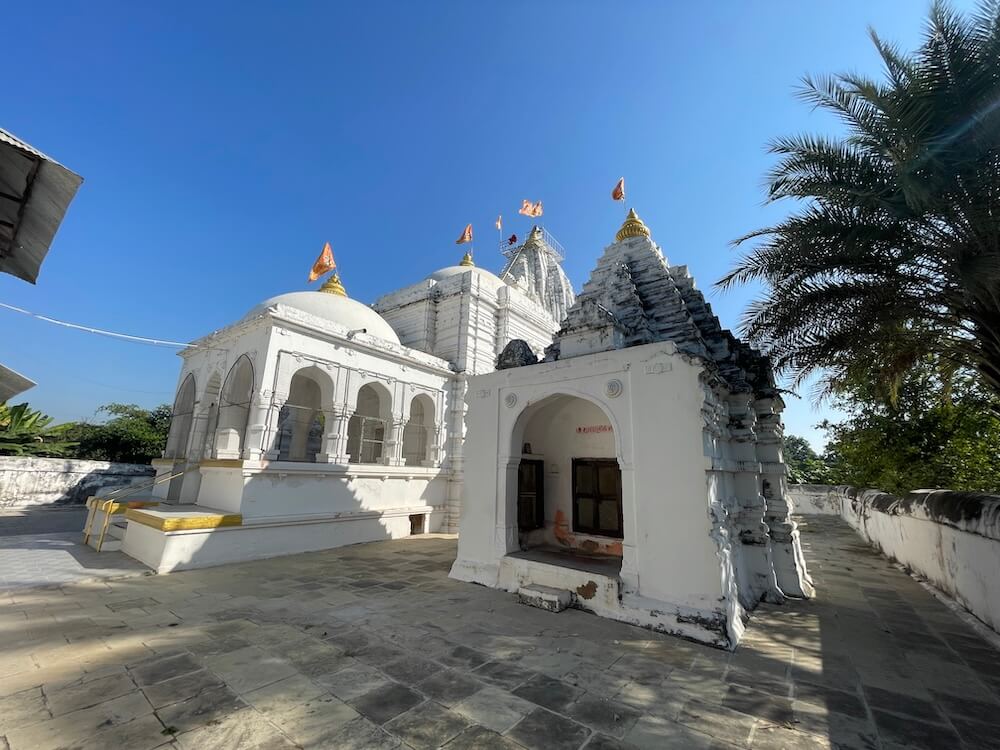 located near the confluence of the Mahi River and the sea, close to the present-day village of Kavi.
This sacred land was under the authority of a king named Dharmavarma. Narad Muni reflected that if he requested land from the king, the king would certainly offer it in donation. Yet there exist types of donation known as ‘Shukla’, ‘Shabal’ and ‘Krishna’. Among these, that which is obtained from a daughter or through interest, trade, farming and begging is considered Shabal—that is, of the rajas category. Wealth earned through wrongful acts such as gambling or theft is regarded as Krishna (tamas). Meanwhile, the wealth received as ‘dakshina’ (ritual offering) from disciples through the teaching of the Vedas is known as Shukla, a sattvik donation.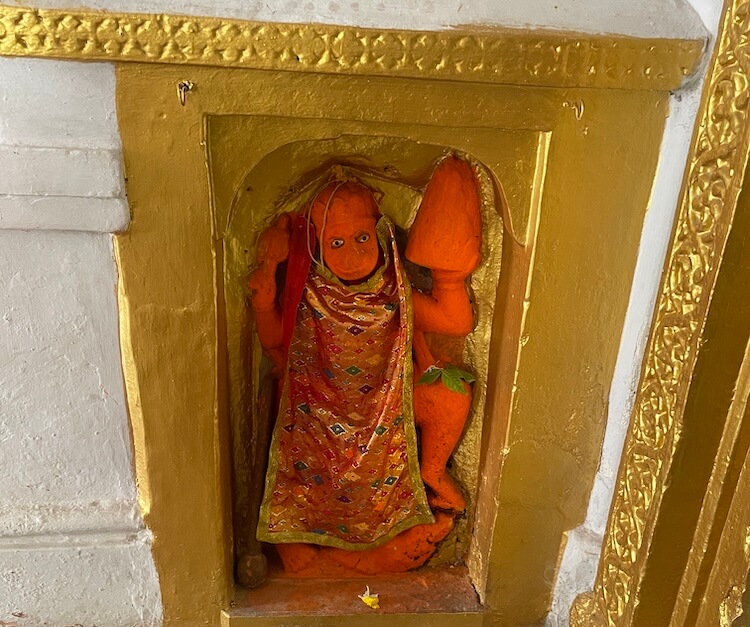 If one were to acquire wealth through begging, it would become Shabal donation. Therefore, donation should be obtained in a sattvik manner from the king. Narad Muni pondered how this might be accomplished. At that very time, some rishis and munis arrived there from Saurashtra. They said that King Dharmavarma had performed tapasya to understand the principle of donation. At that time there was an ‘akashvani’ (celestial proclamation) which imparted to him a shloka. However, no one could fully understand the precise meaning of that shloka. Dharmavarma had made a proclamation that whoever would explain the meaning of the shloka he had obtained through tapasya would be granted seven lakh cows, the same number of gold coins and seven villages. Thus Narad explained the meaning of the shloka and in exchange for that knowledge he received land.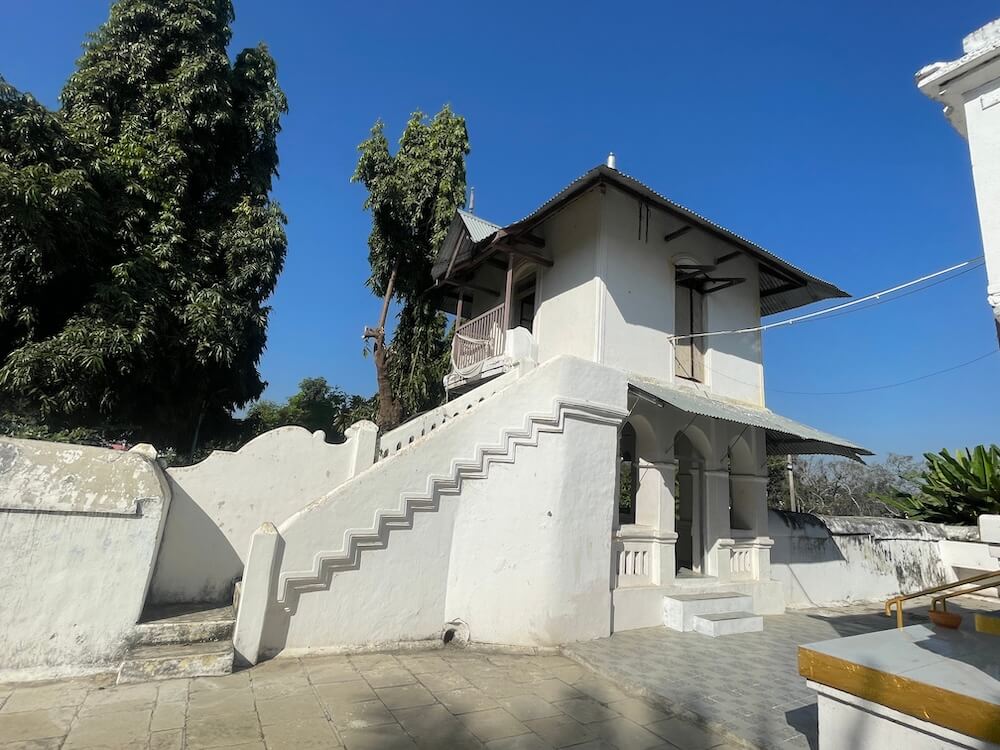
Thereafter Narad began searching for Brahmins worthy of receiving land in donation. For this purpose he would examine Brahmins by asking them certain questions. Yet those Brahmins who could pass this test were not found, despite his wandering far and wide. Suddenly it occurred to him that he had not yet visited the village of Kalapgram. There, eighty-four thousand learned Brahmins resided. Upon arriving in this village, Narad convened an assembly of Brahmins and placed his questions before them. These questions were answered by a child named Sutanu from that very village. Thereupon Narad Muni told them that he desired to donate excellent land to Brahmins at the Mahatirth of Mahisagarsangam.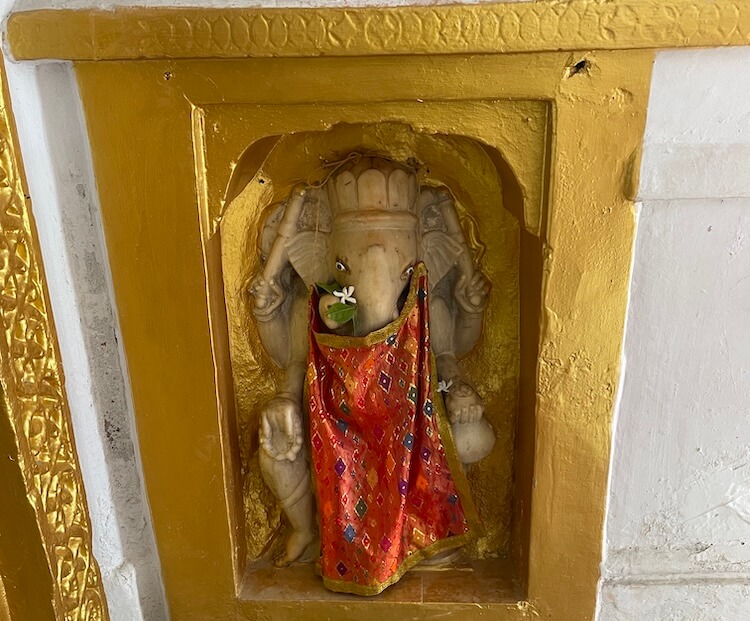 At this, Harit Muni of Kalapgram said to him, ‘In my family there are twenty-six thousand Brahmins. Along with them I shall come to the Mahisagarsangam tirth.’ When all of them went to Mahisagarsangam tirth, Kapila Muni appeared and requested Narada to provide eight thousand Brahmins for him to settle on land he wished to donate. Narada agreed, suggesting that Kapila Muni establish a ‘Kapilkshetra’ there. Thus, as recorded in the ‘Kumarika Khanda’ (‘Skanda Purana’, Gita Press, Gorakhpur, pp. 91–112), Kapila Muni established the site known today as Kavi. The ‘Shivalinga’ here was originally named ‘Kapileshwar Mahadev’ but was later renamed ‘Kamleshwar Mahadev’ after the presiding deity of the city, Goddess Kamleshwari.
Earlier, abhishek of Kamaleshwar Mahadev was performed using the water from the pond near the temple. However, 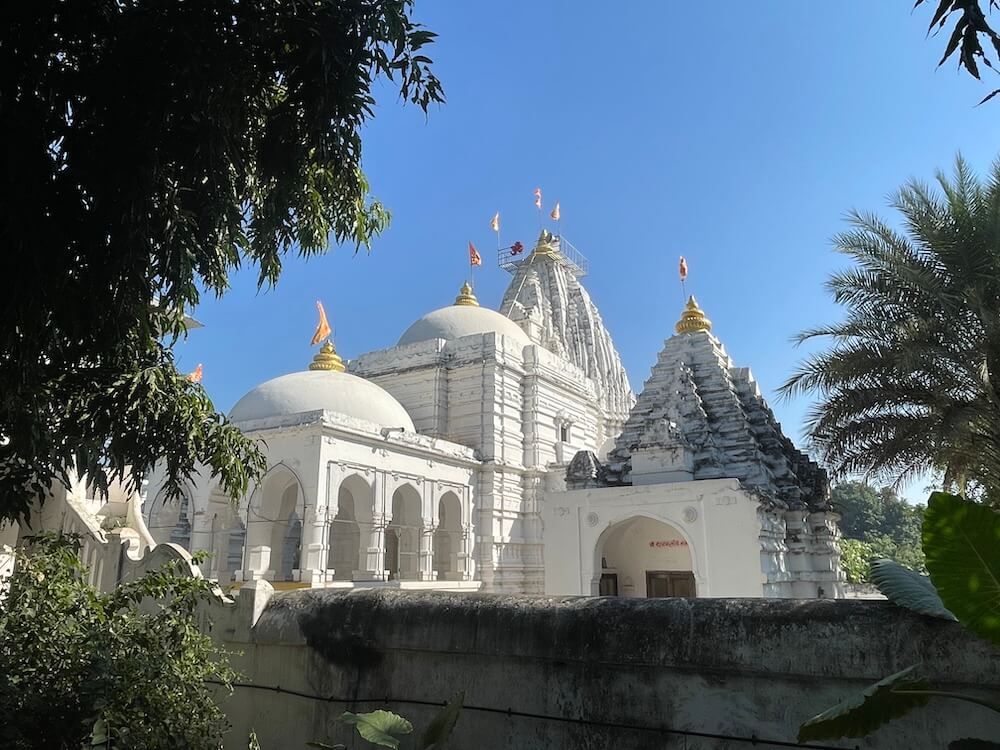 during the reign of Gujarat’s Sultan Muhammad Begda, it is said that, a fakir drank the water of this pond. Considering the pond water to have become impure, certain persons cut off the fakir’s fingers. When the fakir reported the incident to Muhammad Begda, the Sultan attacked the village and the temple. In that assault, it is said, many Brahmins lost their lives.
On one side of the village, beside a large reservoir, this ancient temple stands. The precise history of its construction remains unknown. Over the passage of time, the temple has undergone many restorations. After the most recent jirnoddhar, the temple has assumed its present form.
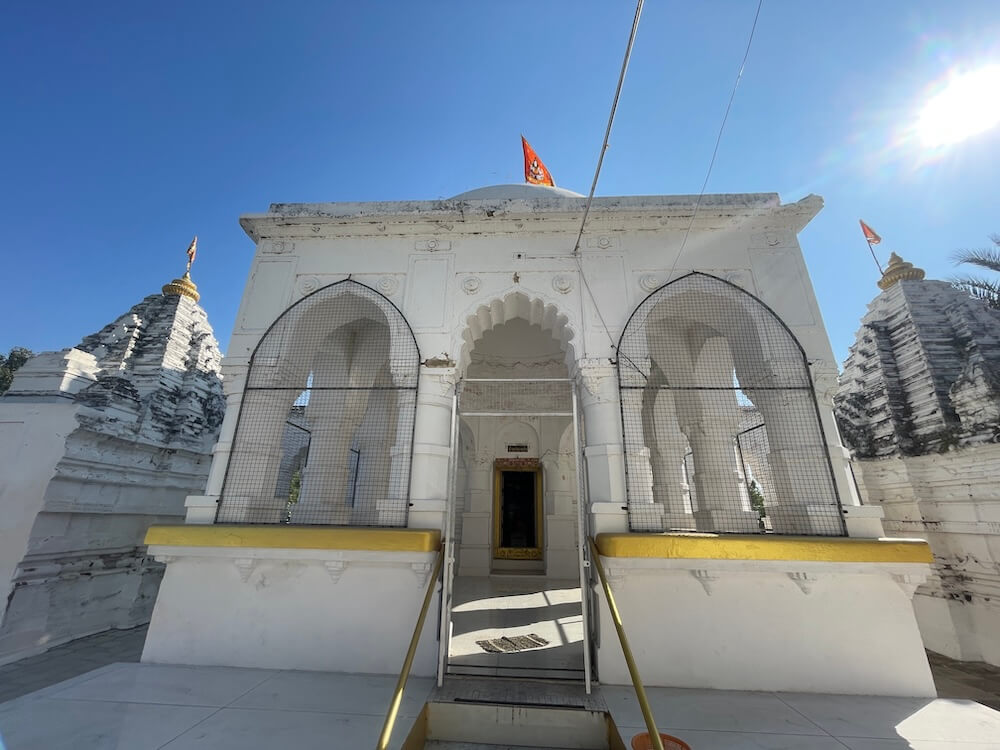
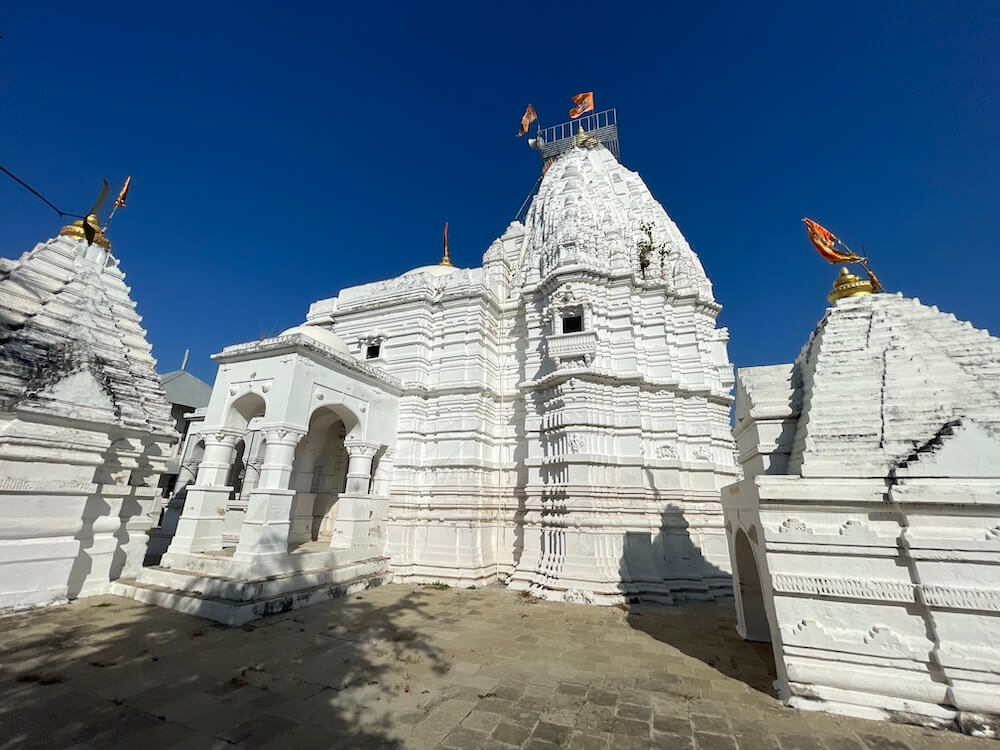
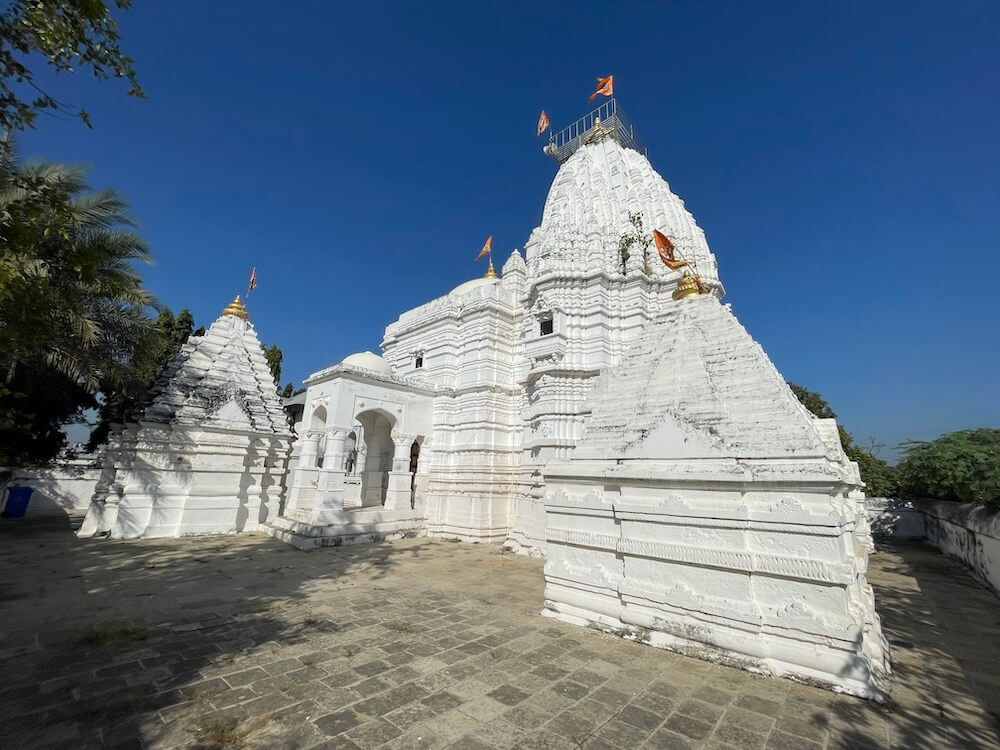
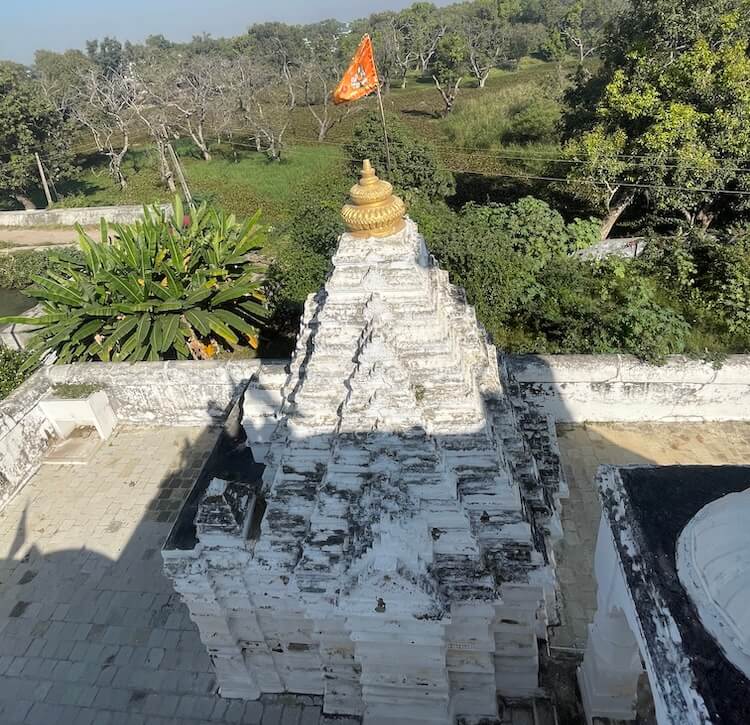
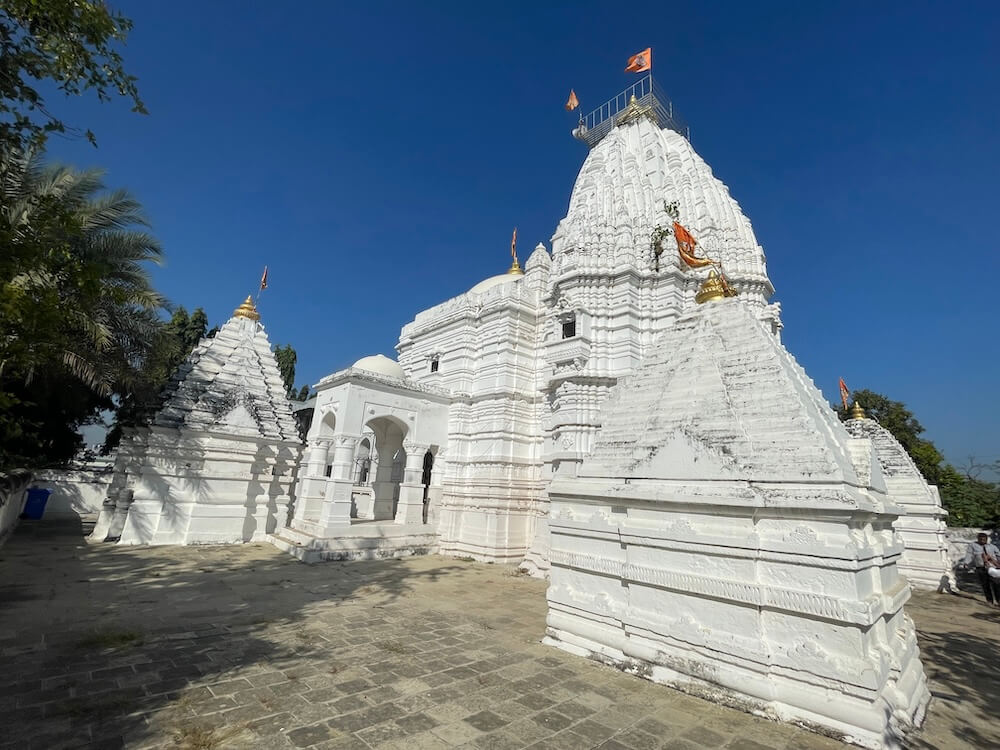
 The temple is enclosed by a boundary wall on all four sides. After ascending seven steps, one enters the temple compound through a small door. The compound is adorned with small and large temples and with a garden. In front of the main temple stands a ‘nagarkhana’ (drum-house). From there, descending a few steps, one enters the temple courtyard. Directly ahead rises the temple upon a high platform, a splendid example of ancient architecture. The temple is structured as a ‘sabhamandap’ (assembly hall), ‘mahamandap’ (great hall), ‘antaral’ (vestibule) and ‘garbhagriha’ (sanctum sanctorum). The sabhamandap here is built in a semi-open style. Its design consists of large round pillars set into the outer wall with arches between them and above rises a domed shikhar. From here one enters the mahamandap. The mahamandap is enclosed,
 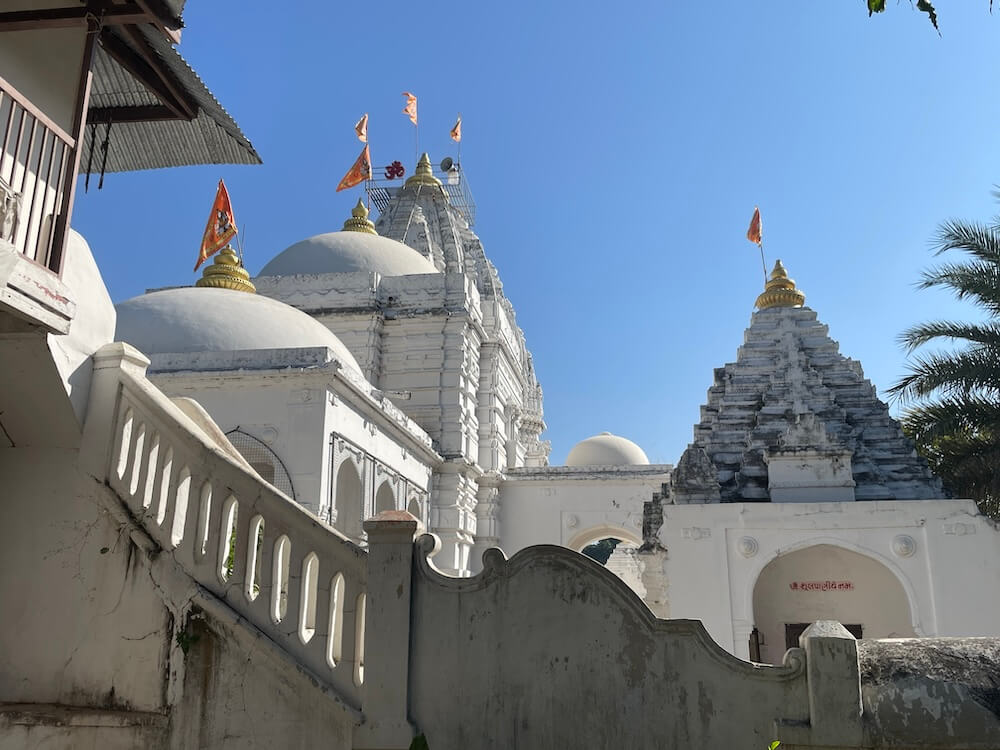 two-storeyed and it too bears a domed shikhar. There are also two doors on the left and right sides with entrance pavilions before them. In the right-side wall of the mahamandap there is a secret passage, concealed behind the door of the main entrance. Within this narrow corridor in the wall there are steep steps. Only one person at a time can ascend from there. Above is a large enclosed chamber with windows on three sides. From this chamber there are further steps leading still higher, giving access to the roof of the mahamandap. Here stands the domed shikhar with space all around it for circumambulation. From this height, the wide expanse of Kavi village comes within one’s gaze.
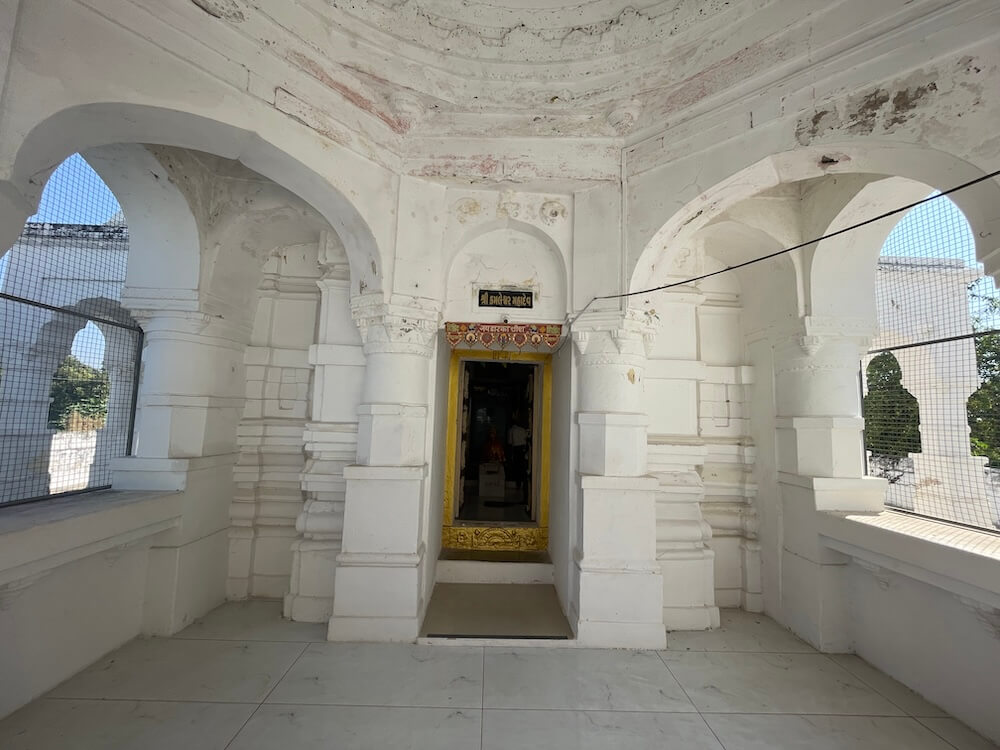
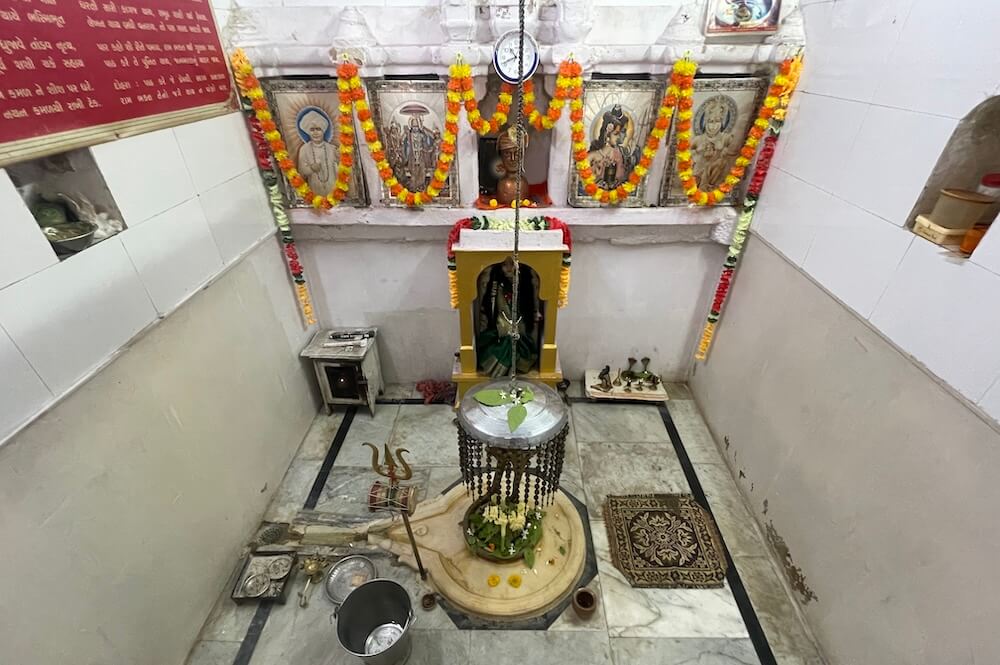
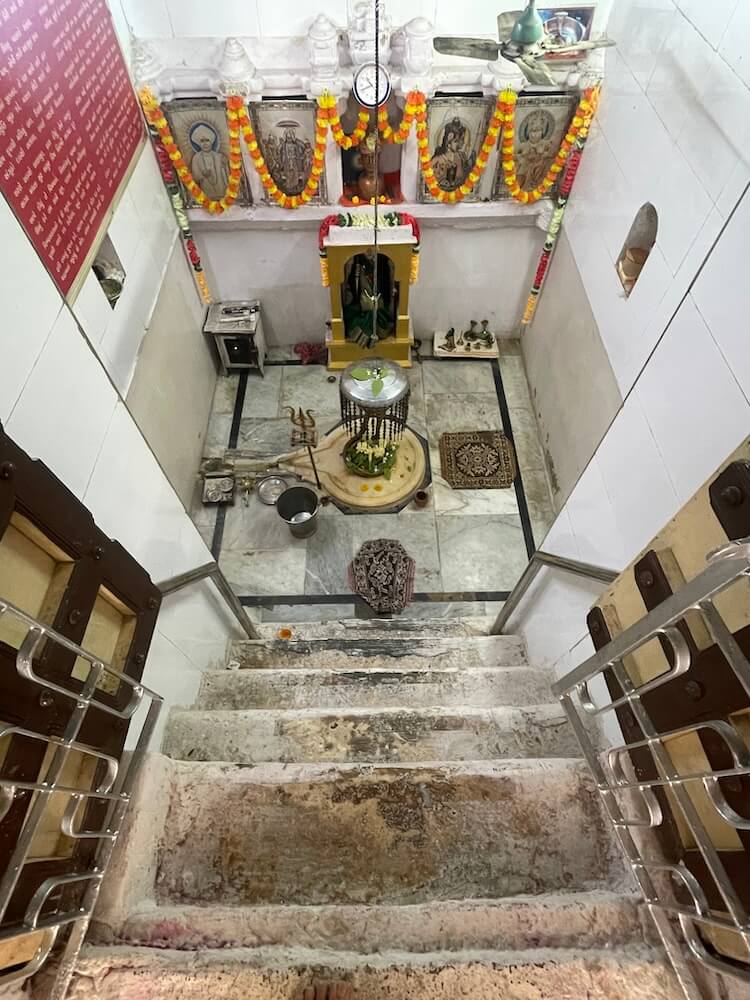
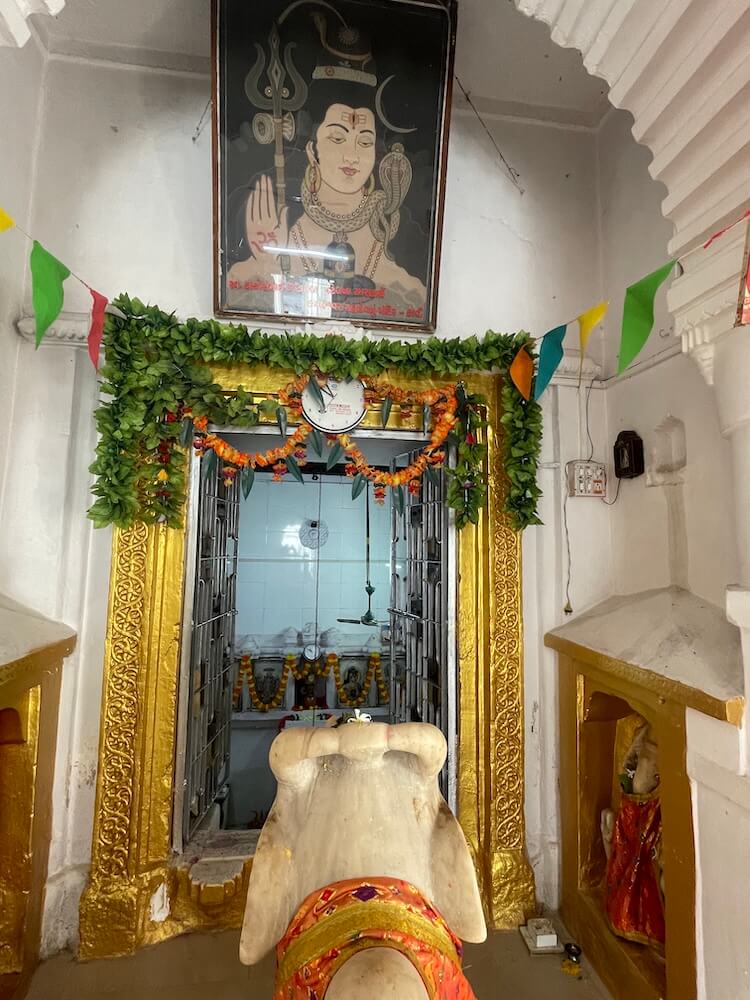
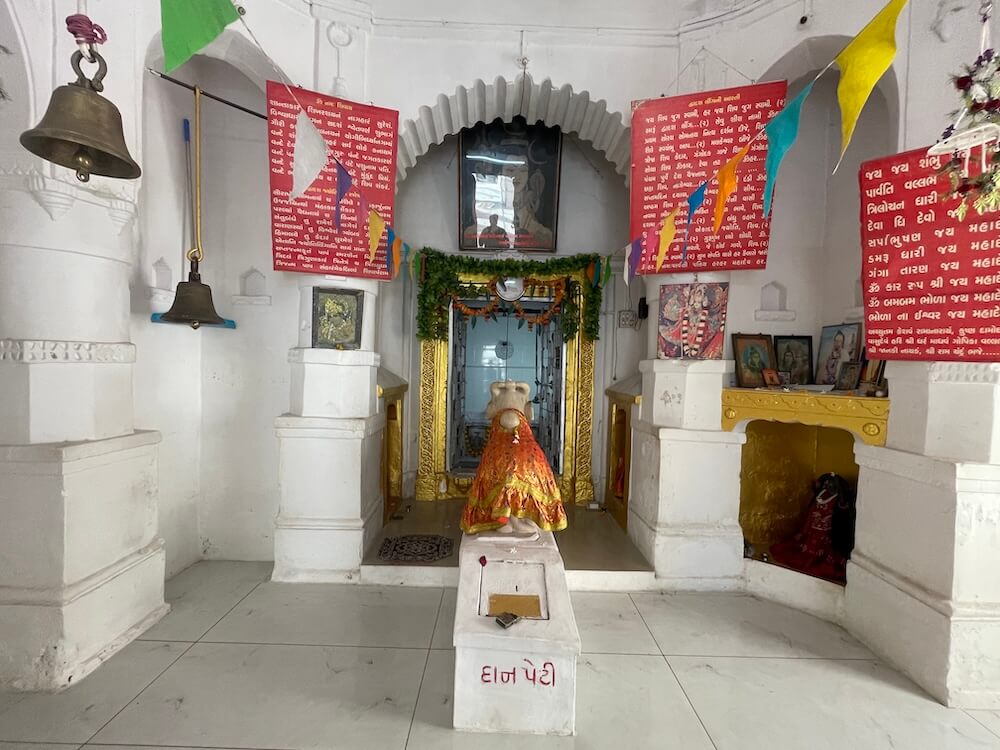 Within the mahamandap, on a high pedestal, stands a marble idol of Nandi. In the antaral, the right-side niche holds an idol of Ganapati while the left-side niche holds an idol of Hanuman. The garbhagriha has a finely carved entrance doorway. The door-pillars bear intricate carving. Upon the lintel there is an ‘ardhachandra-shila’ (crescent stone motif). From here, descending seven steep steps, one enters the garbhagriha. Inside, at ground level, within a marble shalunka, stands a stone Shivalinga. Upon it two panchadhatu (five-metal) serpents raise their hoods and above them is a metal canopy. Near the shivpindi is a metal trishul. At the rear of the garbhagriha, at ground level, within a stone shrine, is an idol of Parvati. Above it, in wall-niches, are images of Jalaram Bapa, Shriram-Lakshman-Sita, Shankar-Parvati and also of Hanuman. In the central niche there is a brass ‘mukhwata’ (mask) of Kamaleshwar Mahadev.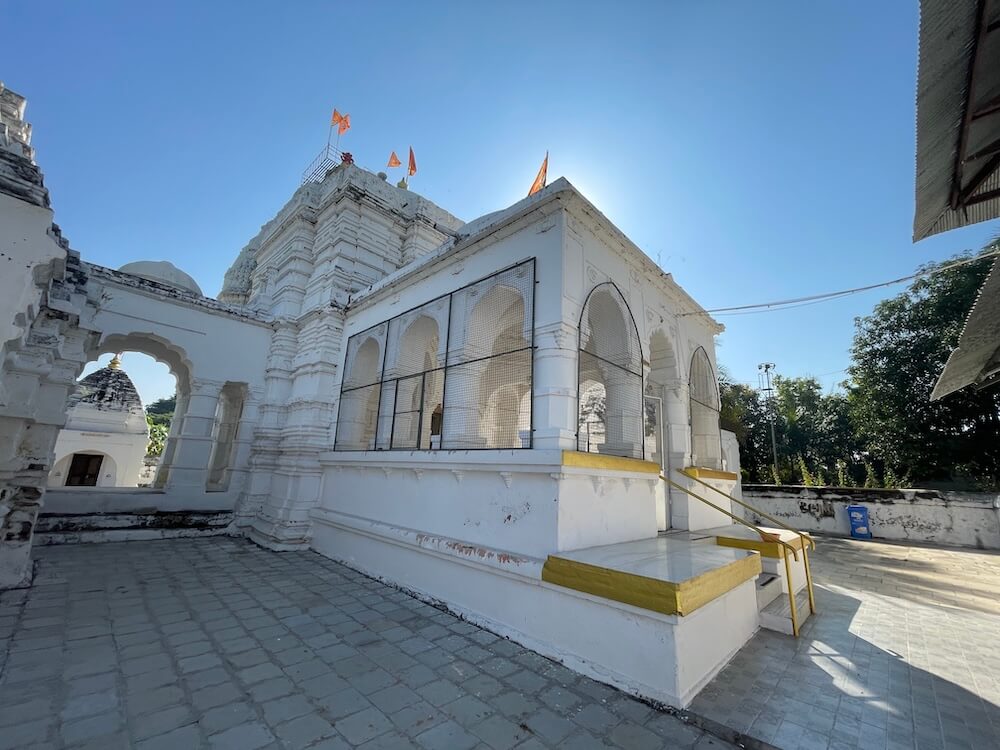
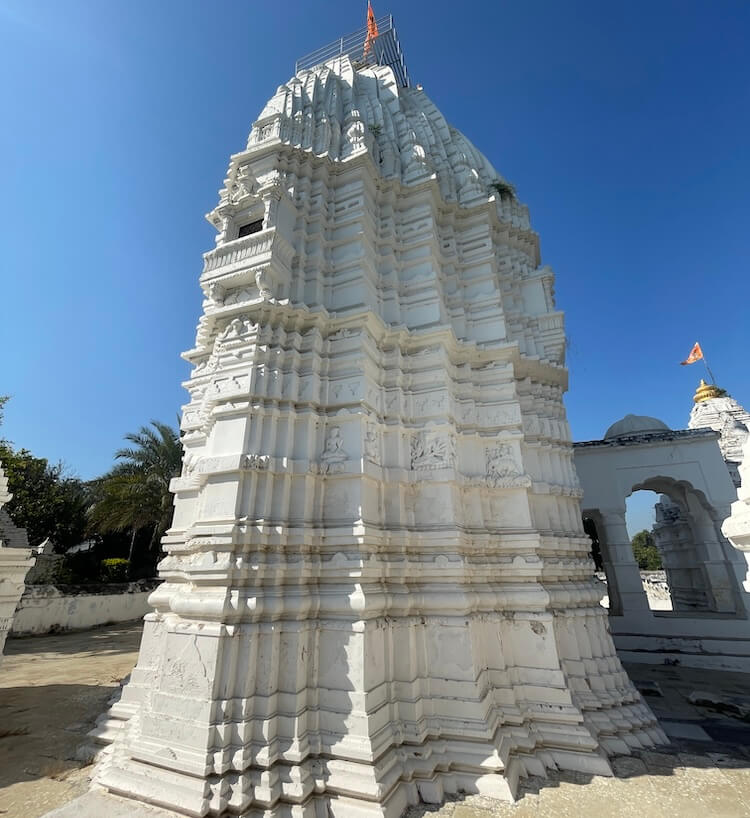
In this ‘Bhumij’ style temple, the outer portion of the garbhagriha is arranged in a star-shaped design. Its walls are in three tiers. Upon the middle tier are carved sculptures of various gods and goddesses. In the upper tier, on three sides, are devkoshthaks. Above rises the lofty shikhar in the ‘urushrung’ style. Upon it are the amalak and kalash and here the ‘dharmadhwaj’ (sacred flag) flutters.
Near the entrance pavilion on the right side of the temple, a spot indicating the location of a subterranean passage is shown. It is said that this underground passage, running beneath the temple, is extremely long. Such tunnels were made in times of danger as places of concealment. As there is no arrangement for ventilation within it, remaining there for long can become perilous to life. 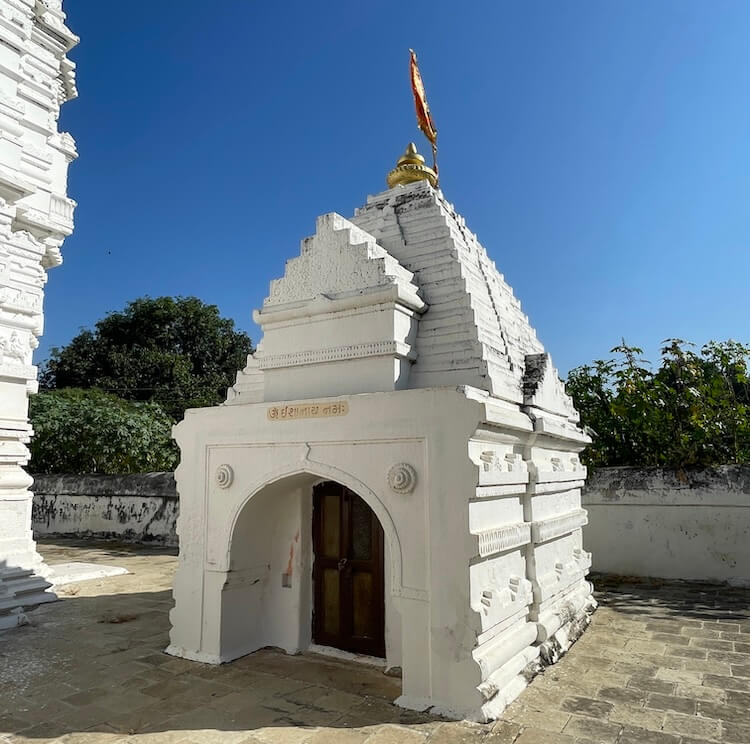 Hence this passage has been closed. A legend is told in this regard that from this passage, two routes once extended forward: one route went towards the village and the second went beneath the sea towards the temple of Stambheshwar Mahadev. People would travel through it with torches. However, scholars of architecture observe that owing to the lack of ventilation, the smoke of torches and the poisonous gases produced by decaying leaves and debris within the passage, it would not be possible for a person travelling through it to remain alive for long.
At the four corners around the temple are shrines of Bhairav, Maheshwar, Ishan Mahadev and Shulpani Mahadev. Within the temple compound there are in total eleven shrines of the Maharudras. Likewise, there is also here a small temple of Kapil Muni.
Regular daily puja-archa is performed in the temple. With the faith that devoted darshan of these Shivalingas fulfils all heartfelt wishes, devotees come here from various parts of Gujarat. Devotees travelling for darshan of Stambheshwar Mahadev also make it a point to come to this temple and take darshan of Kamaleshwar Mahadev. On the occasion of Mahashivratri, various religious programmes are organised here. During the month of Shravan as well, various religious rites are performed including ‘Rudrabhishek’.
Main Features :
- 27 km away from Jambusar
- 77 km away from Bharuch
- ST (State Transport) bus facility available from Jambusar
- Private vehicles can reach up to the temple
- Accommodation and breakfast facilities are available in the vicinity
- Contact : Temple Office, Mo.81538 91047
कमलेश्वर महादेव मंदिर
कवि, ताल. जंबुसर, जिला. भरूच
मंदिरे
Temples
मंदिर
-
कोटेश्वर महादेव मंदिर कदोद, ता. भरुच, जि. भरुच
अधिक माहितीKoteshwar Mahadev Temple Kadod, Tal. Bharuch, Dist. Bharuch
View Detailsकोटेश्वर महादेव मंदिर कडोद, ताल. भरूच, जिला. भरूच
विवरण देखें -
धर्मेश्वर महादेव मंदिर धर्मशाळा-झानोर, ता. भरुच, जि. भरुच
अधिक माहितीDharmeshwar Mahadev Temple Dharmashala-Jhanor, Tal. Bharuch, Dist. Bharuch
View Detailsधर्मेश्वर महादेव मंदिर धर्मशाला-झानोर, ताल. भरूच, जिला. भरूच
विवरण देखें -
साईबाबा मंदिर रामवाटिका सोसायटी, झाडेश्वर, ता./जि. भरुच
अधिक माहितीSai Baba Temple Ramvatika Society, Zadeshwar, Tal./Dist. Bharuch
View Detailsसाईं बाबा मंदिर रामवाटिका सोसायटी, जादेश्वर, ताल./जिला. भरूच
विवरण देखें