
हथिला हनुमान मंदिर
नहीयेर, ता. आमोद, जि. भरुच
Hathila Hanuman Temple
Nahiyer, Ta. Amod, Dist. Bharuch
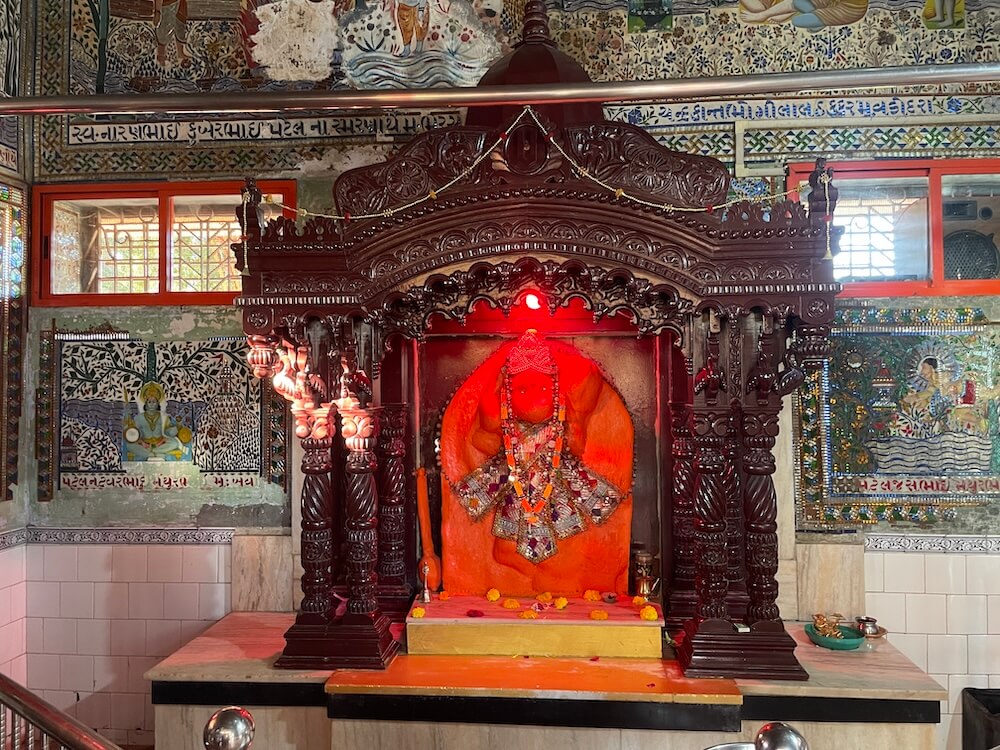 Hanuman, worshipped by names such as Maruti, Bajrang, Balbhim, Ramdoot, Kesharinandan, Anjaneya, Vayuputra, Pavansut, Vajrang, Sankatmochan, Mahavir, Maharudra and Hanumant, is the chosen deity of countless devotees. The affectionate names bestowed upon him by worshippers are innumerable and Hathila Hanuman is one among them. In many places he is enthroned under the name Hathila Hanuman and among these, a well-known temple in Bharuch is situated in the village of Nahiyer. It is said that the idol of Hanuman in this temple, which is about one hundred and fifty years old, is swayambhu (self-manifest).
Hanuman is regarded as the quintessential ideal of strength, devotion and sagacity. According to religious belief, he is one of the ‘Saptachiranjivas’ (seven immortals). 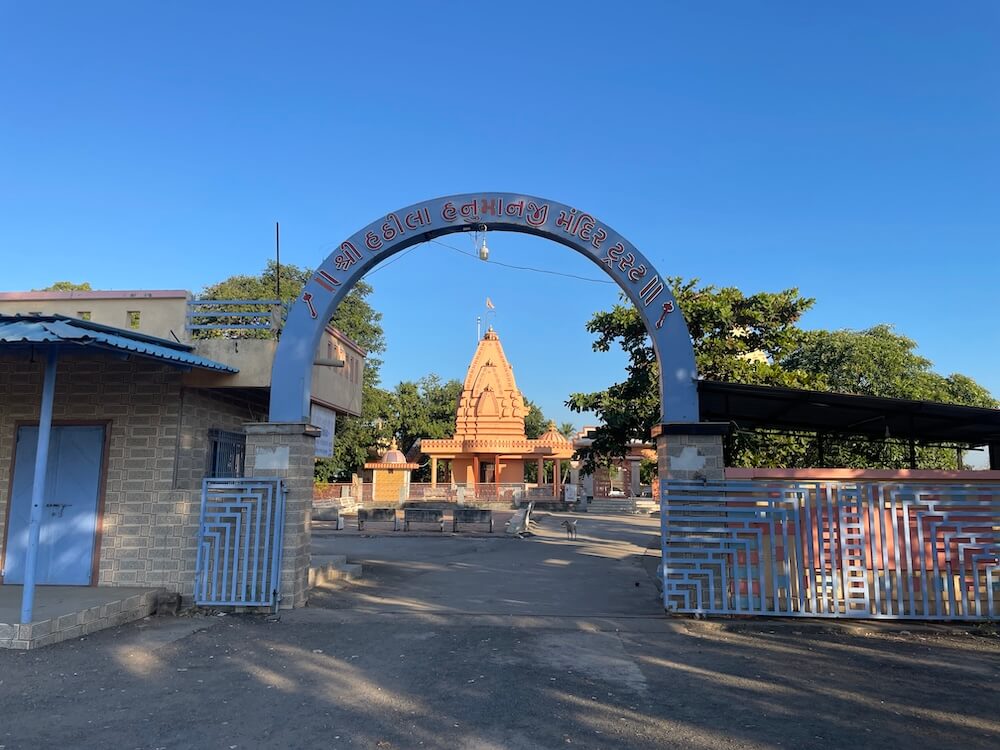 In the epics of the ‘Ramayana’ and ‘Mahabharata’, Hanuman is depicted as being replete with supernatural virtues, including mastery of the scriptures, political statesmanship, valour, intelligence, celibacy, unwavering devotion to Rama and eloquence. In the sixteenth century, Saint Tulsidas composed the ‘Hanuman Chalisa’ hymn, describing Hanuman as a ‘Gyan Gun Sagar’ (ocean of wisdom and virtue), ‘Mahavir’ (great hero) and ‘Tej Pratap’ (radiant and powerful). He further noted that Hanuman is the deity who grants deliverance from all calamities and that the mere remembrance of his name causes ghosts and evil spirits to flee. Scholars suggest that Hanuman was originally a deity of the non-Aryan tribes who was later embraced by the Vedic Aryans. He is considered an Avatar (incarnation) of Rudra and is often called ‘Bhimrupi Maharudra’ (the great Rudra in a formidable form).
  Notably, the text ‘Anjaneya Samhita’ (or Hanumatsamhita) is attributed to his name and he is also regarded as a pioneer of the science of music.
The ‘Valmiki Ramayana’ recounts a legend regarding the origin of his name ‘Hanuman’. It is said that as a child, he saw the newly risen sun and mistaking the bright red solar disc for a fruit, he leapt to seize it. Witnessing this, Indra struck him with the Vajra (thunderbolt), which broke his left Hanu (jaw). From that moment onwards he became known as ‘Hanuman’. According to the renowned Orientalist Frederick Eden Pargiter (1852–1927), the word Hanuman is derived from ‘Hanumant’, which is a Sanskritised version of an original Tamil word. It is a common practice when Sanskritising Dravidian words to prefix them with the sound ‘Ha’. Therefore, Pargiter and scholars like Suniti Kumar Chatterji believe that the Tamil ‘Aanmandi’ (Aan = monkey, Mandi = male) likely became Hanumant in Sanskrit.
In the Gujarati language, the word ‘Hathila’ signifies someone who is stubborn or resolute. It is said that Hanuman earned this adjective because of his firm determination to ward off the calamities befalling his devotees. He is believed to resolve the most difficult problems of the faithful with great alacrity. A legend associated with the Hathila Hanuman temple at Nahiyer is as follows : a mentally unstable individual from the village would repeatedly take a stone lying near a pond in the fields and throw it into a nearby well. He would cast the stone into the well in the evening and by the morning, the stone would miraculously return to its original spot. 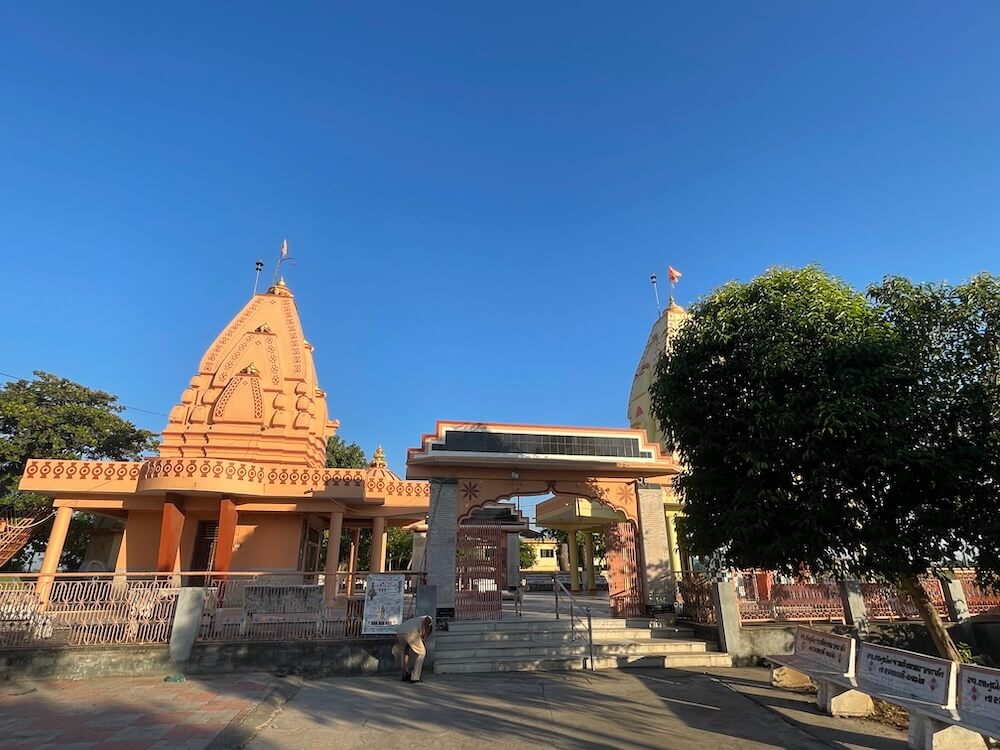 He reported this occurrence to the villagers, but as he was considered unstable, no one paid him any heed. However, a few people eventually grew suspicious and threw the stone – which lay near a Calotropis (Rui) tree – into the well themselves. Upon checking the next morning, they found the stone back in its original place. When they turned the stone over, they discovered the sacred image of Hanumanji. Subsequently, the people consecrated the idol at that very spot. The temple is said to be approximately a century and a half old and its current form is the result of a recent restoration.
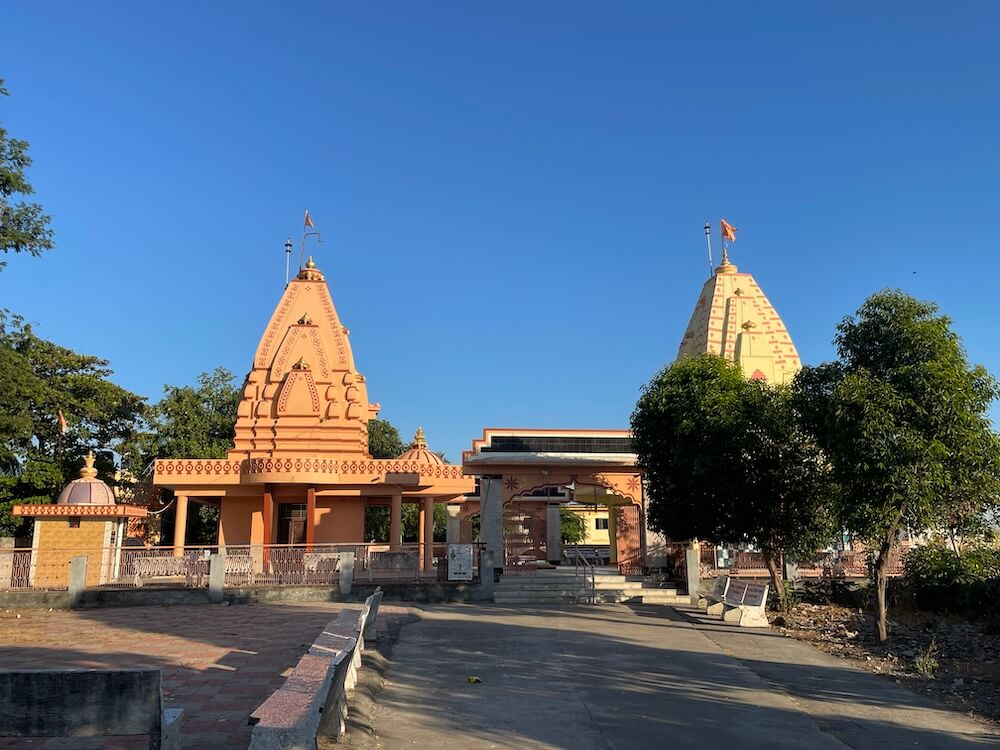
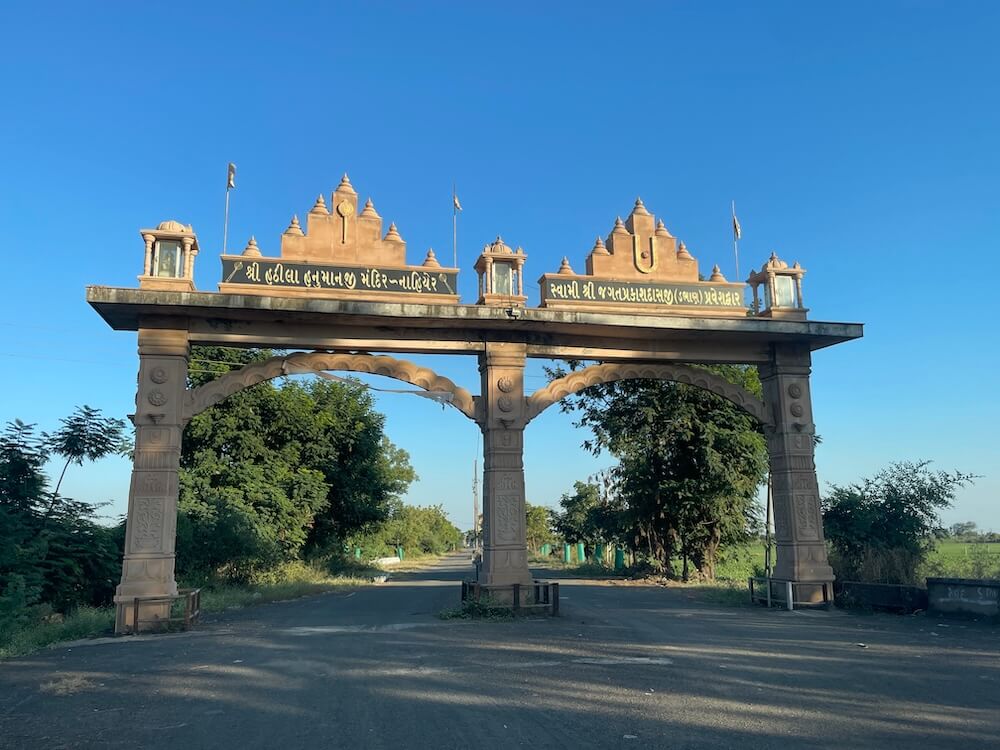
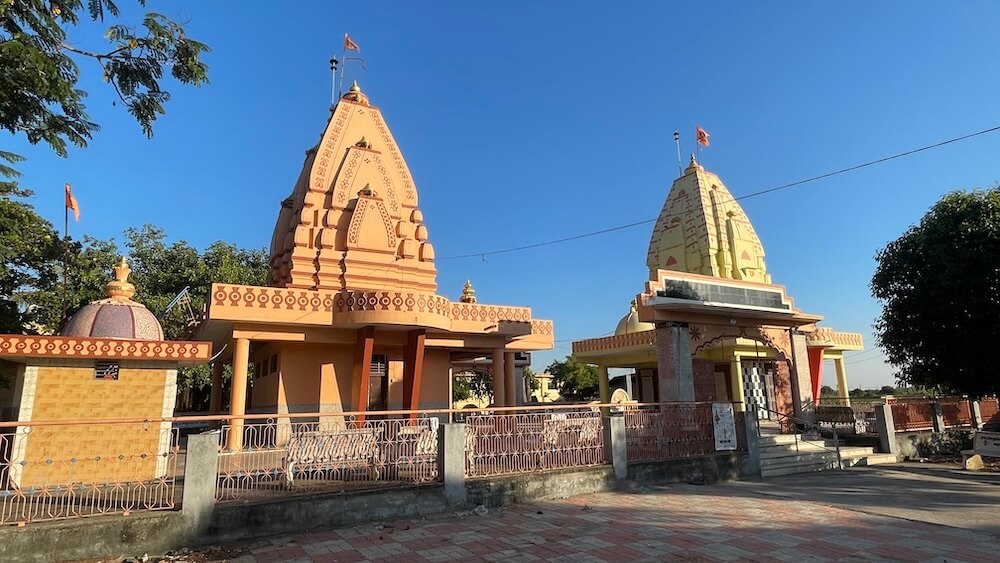
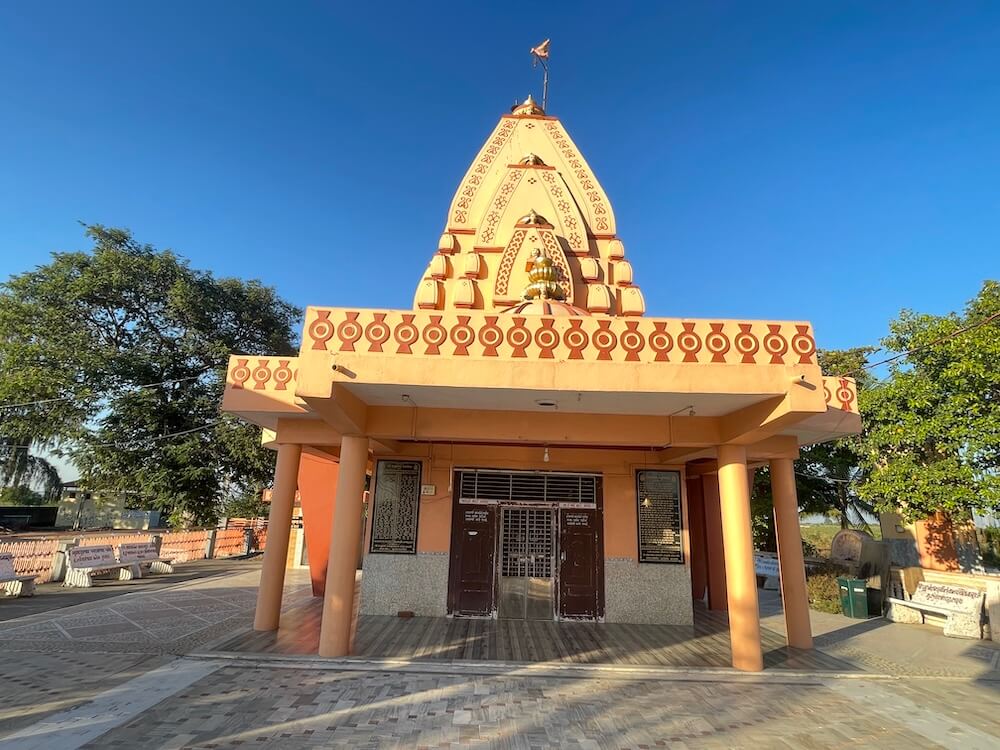
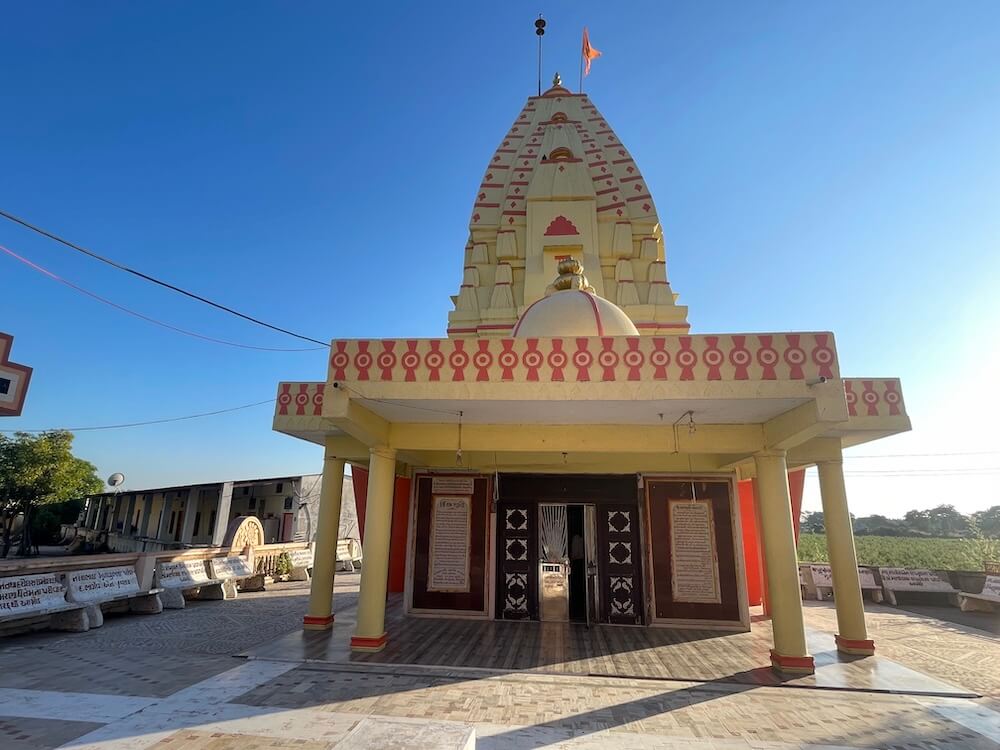
A grand entrance arch stands on the main road leading to the village temple. A few metres beyond this lies the vast courtyard of the temple complex. In the centre of this courtyard stand the shrines of Hathila Hanuman and Shri Rama. 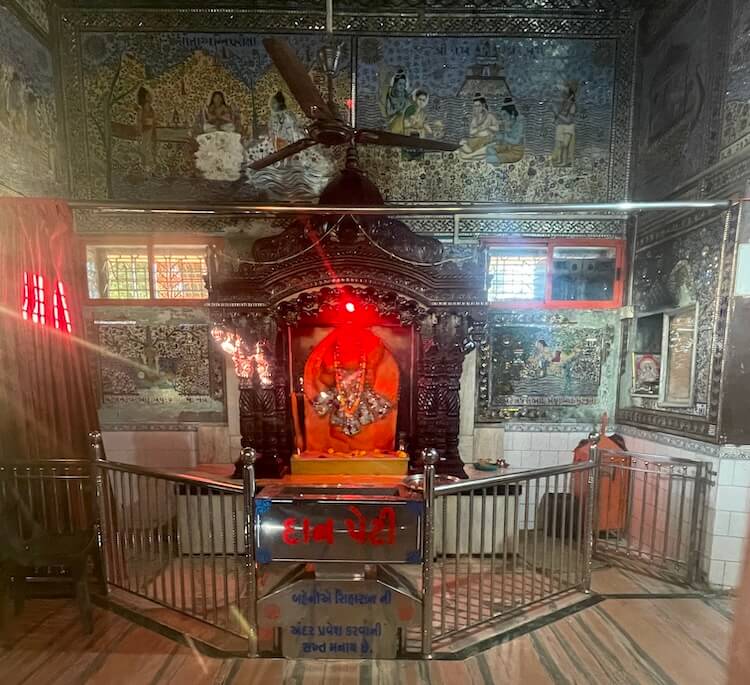 The temple, built upon a high Jagati (plinth), features a large entrance arch. The Hathila Hanuman shrine is on the left and the Shri Rama shrine is on the right. A Homakunda (sacrificial fire pit) is situated between these two facing structures. Both temples have been constructed using modern materials and consist of a Mukhamandap (entrance porch) and a Garbhagriha (sanctum sanctorum). The porches are crowned with domed roofs, whilst the sanctums feature Urushringastyle spires adorned with Amalaka (stone discs) and Kalash (pinnacles).
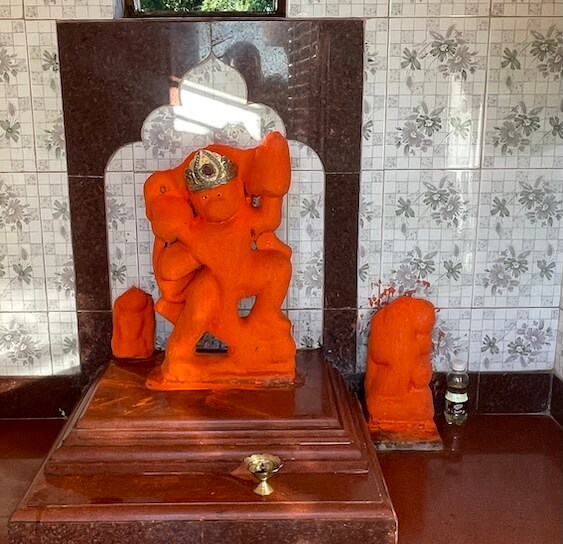
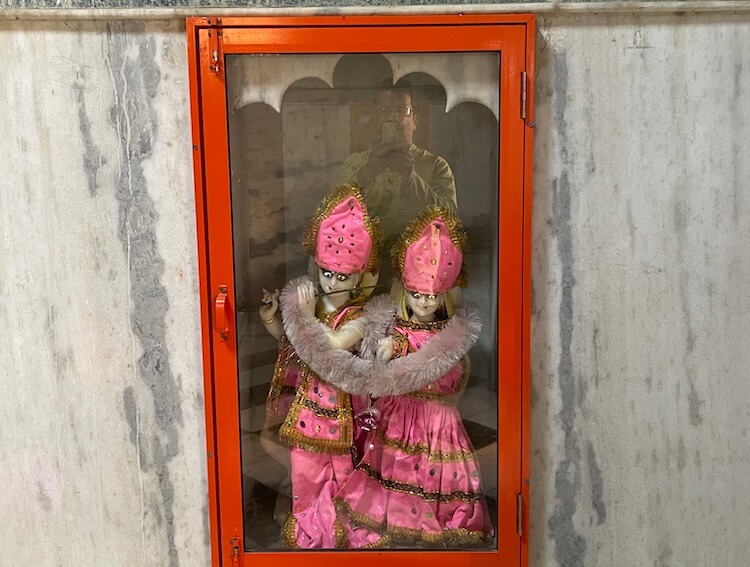
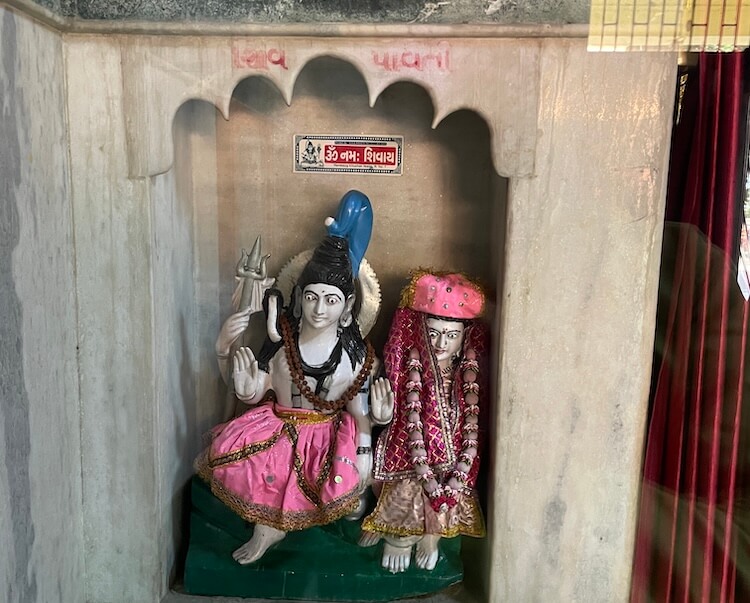
Within the Garbhagriha of the Hathila Hanuman temple, a stone-carved idol of Hanuman resides in a beautiful canopy atop a high marble platform. This idol, smeared with Shendur (vermilion), is adorned with silken garments and ornaments. The walls of the sanctum are decorated with exquisite coloured glass work, depicting scenes from the Ramayana such as Sita’s Agnipariksha (ordeal by fire), the worship at Rameshwar, the meeting of Sita and Hanuman in the Ashoka Vatika and Hanuman’s flight towards Lanka. 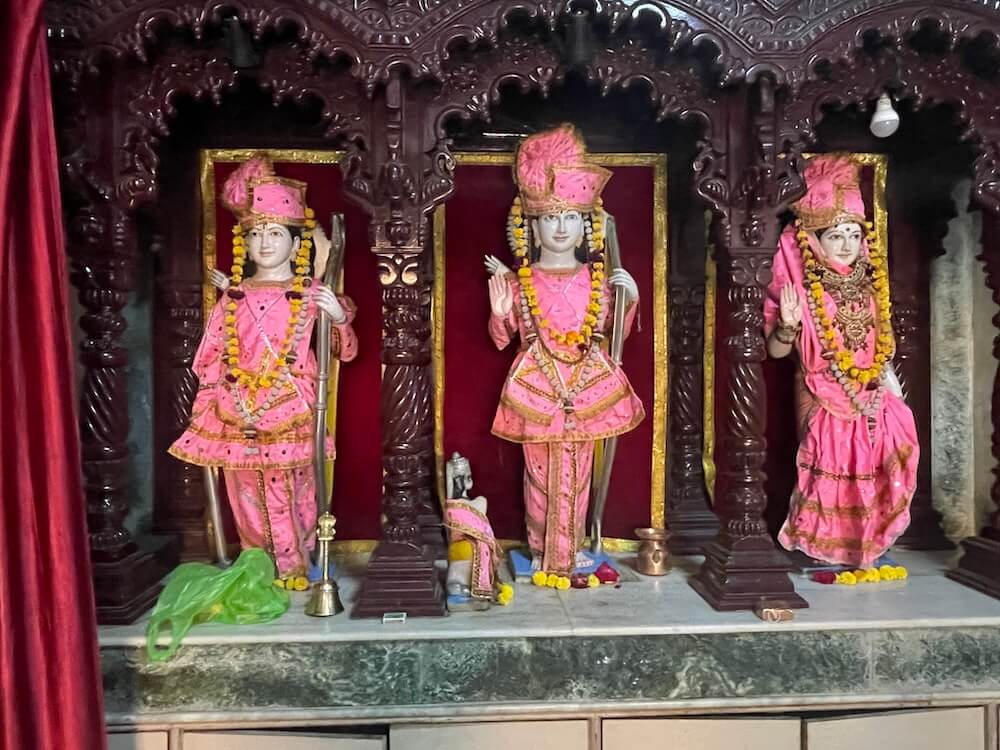 Directly opposite is the temple of Shri Rama. Its sanctum houses a beautifully carved canopy on a high marble pedestal, enshrining the idols of Shri Rama, Sita and Lakshman along with Hanuman. These marble idols are dressed in Gujarati-style attire with traditional turbans and flower garlands. The niches along the walls of this temple also house marble idols of Jalaram Bapa, Radha-Krishna, Mother Saraswati, Shiva-Parvati, Ganesha and Mother Gayatri.
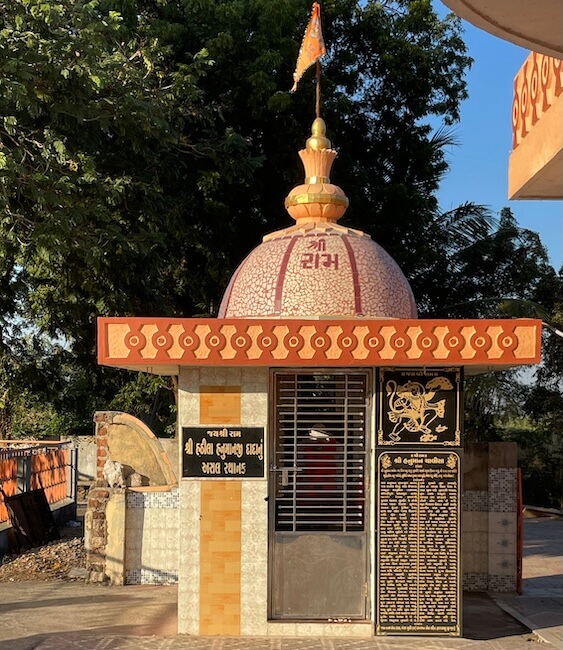
To the rear right of the main Hathila Hanuman temple is a small shrine topped with a domed spire and a unique pinnacle. This shrine is known as the ‘Asal Sthan’ (original seat) of Hathila Hanuman. Here, an idol of Hanuman in the pose of lifting the Dronagiri mountain is enshrined on a marble platform. This is said to be the original idol discovered by the villagers.
Driven by the faith that Hathila Hanuman fulfils all heartfelt desires, devotees travel here from places such as Vadodara, Surat and Navsari. It is said that the temple is particularly crowded on Saturdays. Hanuman Jayanti and Ram Navami are the major festivals celebrated here. On the day of Hanuman Jayanti, several religious events such as the Maruti Yajna and Mahaprasad (Bhandara or communal feast) are organised.
Useful Information –
- 5 km away from Amod
- 35 km away from Bharuch
- ST (State Transport) bus facility available from Amod
- Private vehicles can reach up to the temple
- Accommodation and breakfast facilities are available in the vicinity
हठिला हनुमान मंदिर
नाहियेर, ता. आमोद, जिला. भरूच
मंदिरे
Temples
मंदिर
-
कोटेश्वर महादेव मंदिर कदोद, ता. भरुच, जि. भरुच
अधिक माहितीKoteshwar Mahadev Temple Kadod, Tal. Bharuch, Dist. Bharuch
View Detailsकोटेश्वर महादेव मंदिर कडोद, ताल. भरूच, जिला. भरूच
विवरण देखें -
धर्मेश्वर महादेव मंदिर धर्मशाळा-झानोर, ता. भरुच, जि. भरुच
अधिक माहितीDharmeshwar Mahadev Temple Dharmashala-Jhanor, Tal. Bharuch, Dist. Bharuch
View Detailsधर्मेश्वर महादेव मंदिर धर्मशाला-झानोर, ताल. भरूच, जिला. भरूच
विवरण देखें -
साईबाबा मंदिर रामवाटिका सोसायटी, झाडेश्वर, ता./जि. भरुच
अधिक माहितीSai Baba Temple Ramvatika Society, Zadeshwar, Tal./Dist. Bharuch
View Detailsसाईं बाबा मंदिर रामवाटिका सोसायटी, जादेश्वर, ताल./जिला. भरूच
विवरण देखें