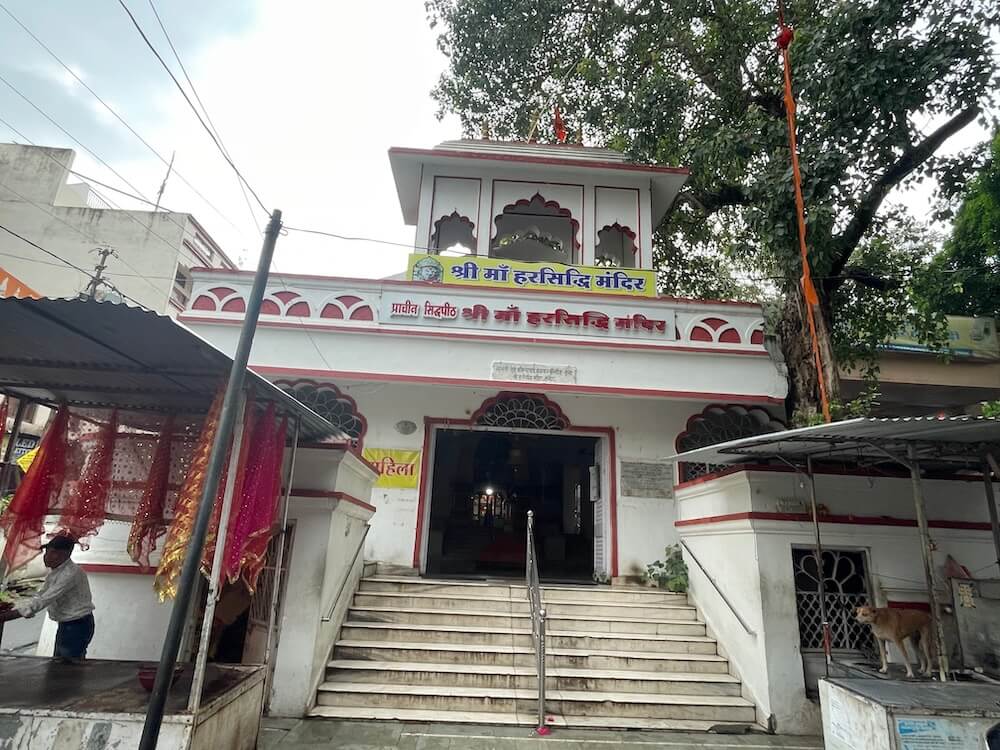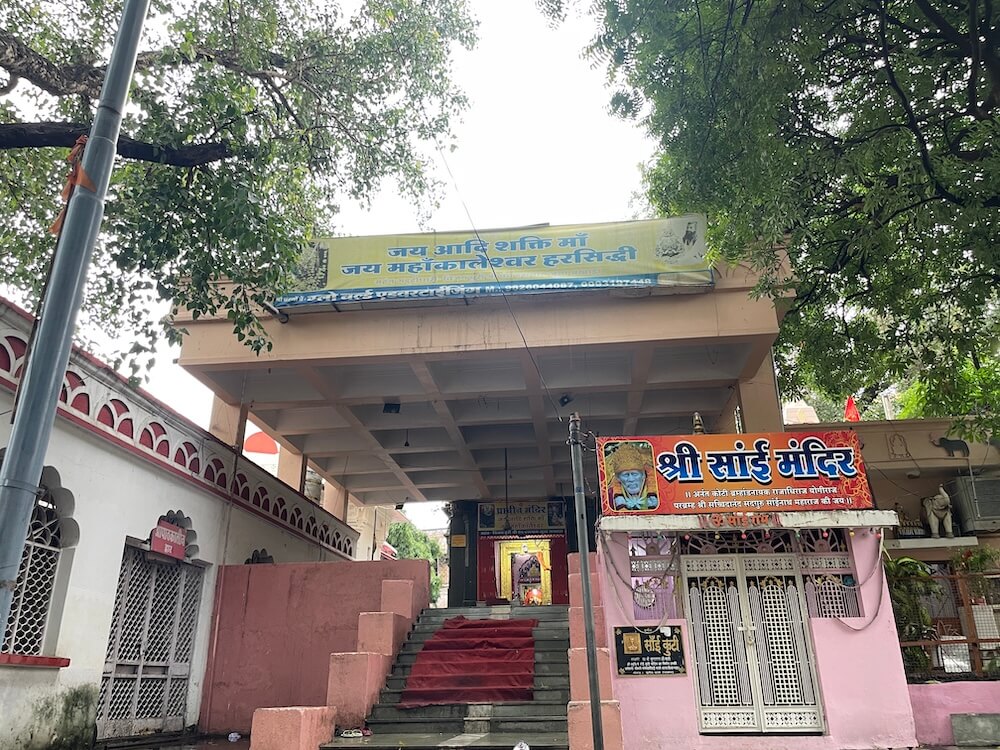
 Harsiddhi Devi is the chosen deity of Lord Shri Krishna and of the Yadava lineage. A form of Goddess Durga, she is worshipped as the family goddess across countless households in Madhya Pradesh, Maharashtra and Gujarat and in Gujarat she is revered as the protectress of fishermen’s ships. While her principal seat is at Ujjain, there stands in Indore an ancient temple of the goddess that draws thousands of devotees from the city and the surrounding region. It is a living belief among worshippers that heartfelt prayers here move the goddess to fulfill every worthy wish.
Many traditional legends praise the power of Harsiddhi. In the Sabha Parva of the Mahabharata, within the tale of Jarasandha’s slaying, Bhima – at Krishna’s behest – tore Jarasandha in two. A Puranic narration says that with the grace of this auspicious goddess, understood as an auspicious form of Devi, Krishna succeeded in bringing about Jarasandha’s end and the Yadavas thereafter called her Harsiddhi (she who grants assured success). In ancient times she was known as Mangalchandi and was the family goddess of Emperor Vikramaditya of Ujjain. It is said that Vikramaditya, in devotion to this Durga form, offered his head at her feet eleven times; each time, by her grace, it was restored to his body – save the twelfth, when it was not and thus he met his end.
 As for this Indore shrine, different legends are told. One says that where the deepmala (lamp tower) now rises, there was once a stepwell. One night the priest, Pandit Janardan Bhatt, dreamt of the goddess, who told him that her idol lay within that very well and that a temple should be raised for her. He conveyed this to the royal family. At the time, Malerao Holkar, son of Ahilyabai Holkar, sat upon the Holkar throne in Indore. He ordered the well to be drained and there, as foretold, the idol of the goddess was found. A temple was then built according to her wish. Another legend says that Subedar Malharrao Holkar, founder of the Holkar state, once glimpsed the goddess’s image at this very spot while returning from a campaign and later Punyashlok Ahilyabai Holkar built the temple. On March 21, 1766, the consecration of the idol was performed. It is said Ahilyabai Holkar granted Pandit Janardan Bhatt the formal charter to serve as the first temple priest.
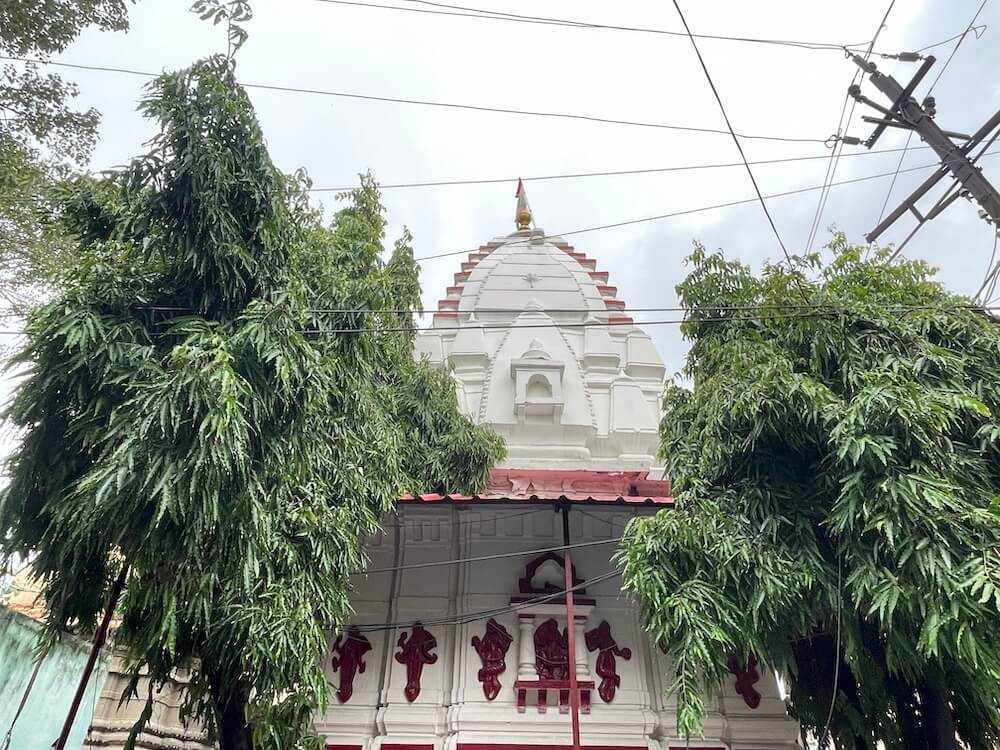
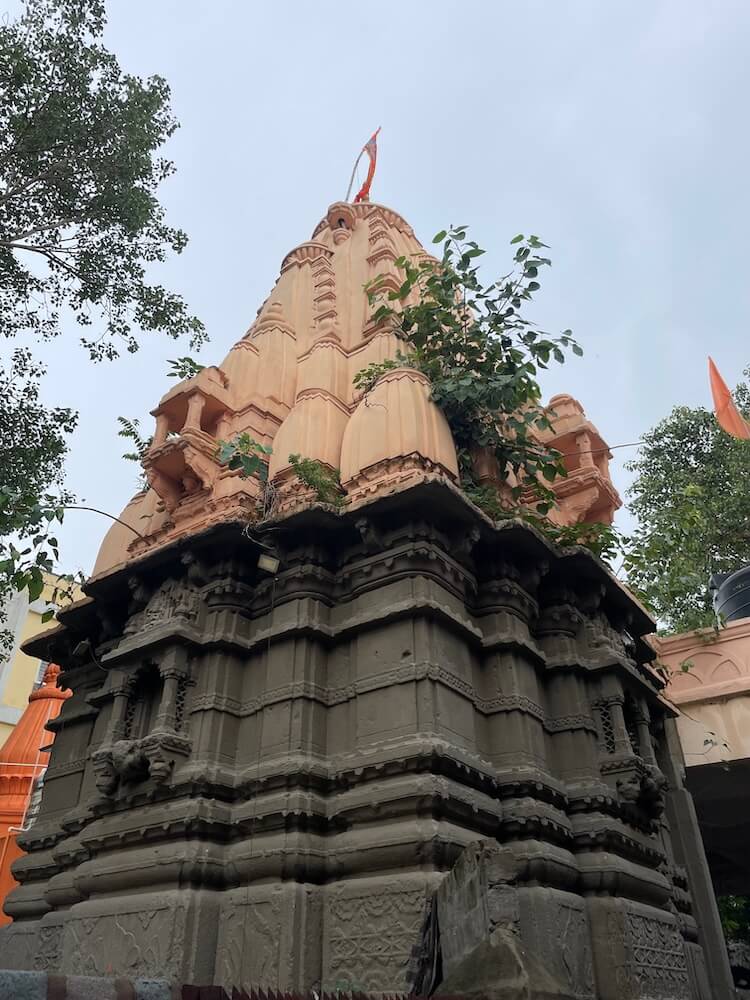 This is counted as the second-oldest temple in Indore after the Indreshwar temple. Set upon a rising ground, the shrine stands on a tall plinth and bears the mark of the Nagara architectural style. Its plan comprises a sabhamandap (hall), a front sub-hall and the sanctum. A small fore-platform precedes the sabhamandap, approached by a few steps. On the facade of the hall, a large shrine-like superstructure rises from the roof; its tiered, stair-like spire carries three finials. The sub-hall bears a domed spire, while the sanctum is crowned by a tapering urushringa-style tower whose amalaka supports a sharp, high finial.
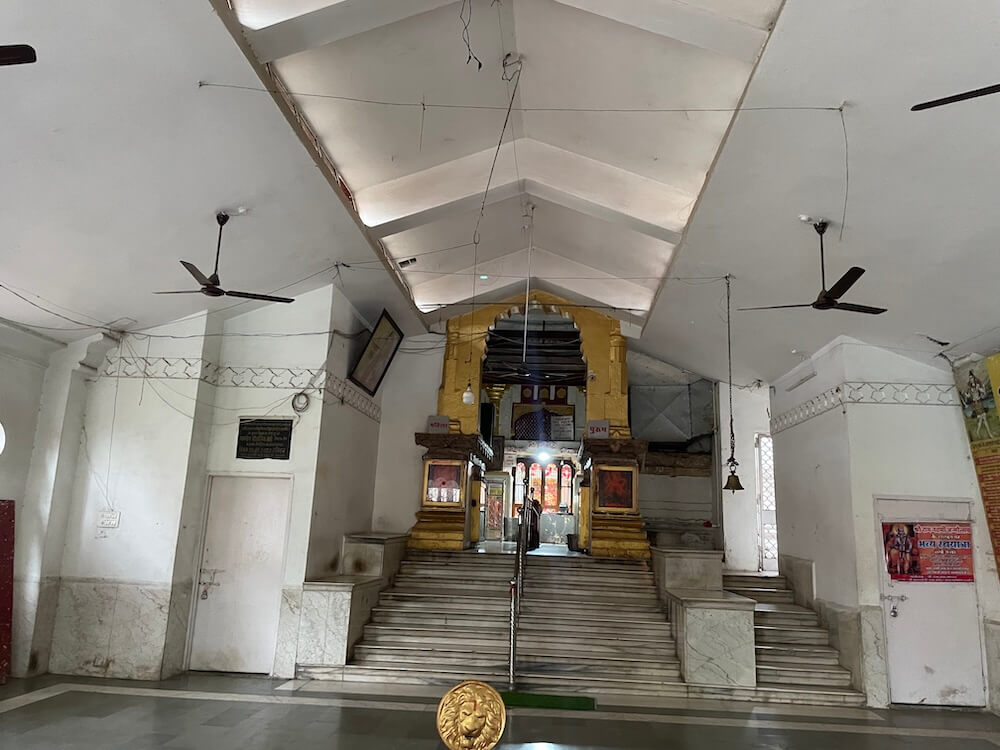
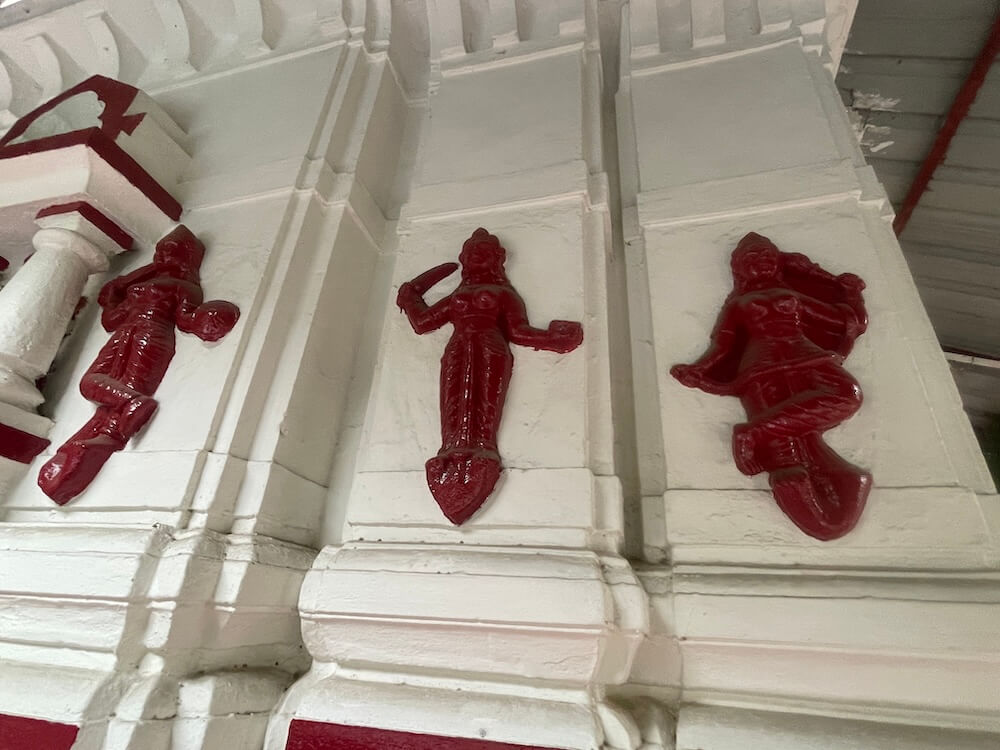
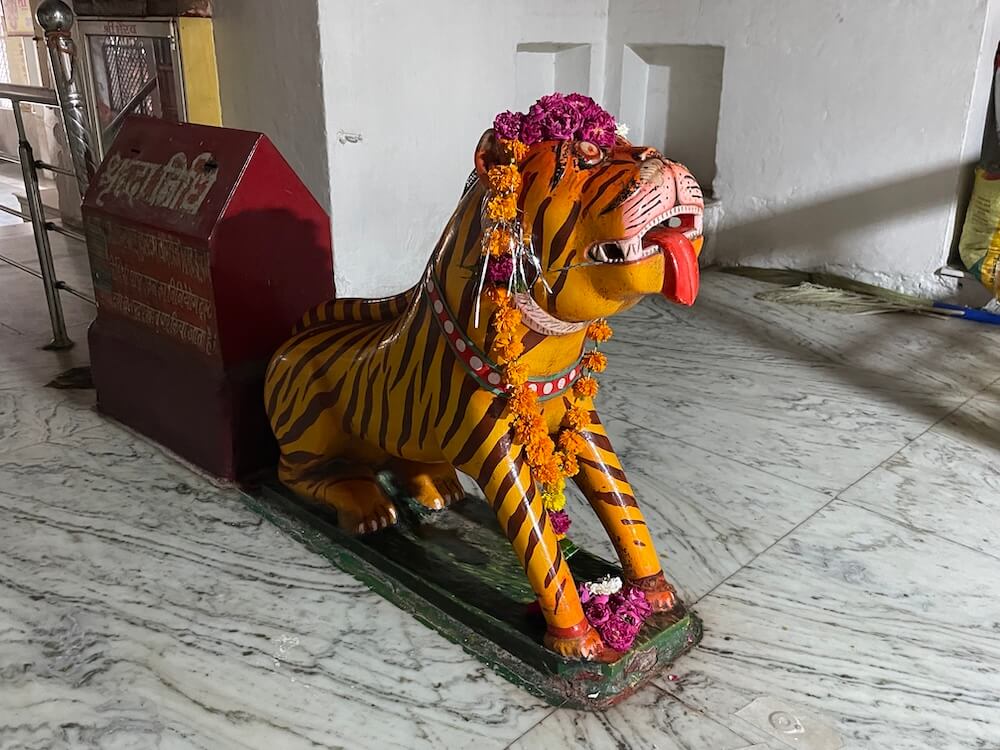
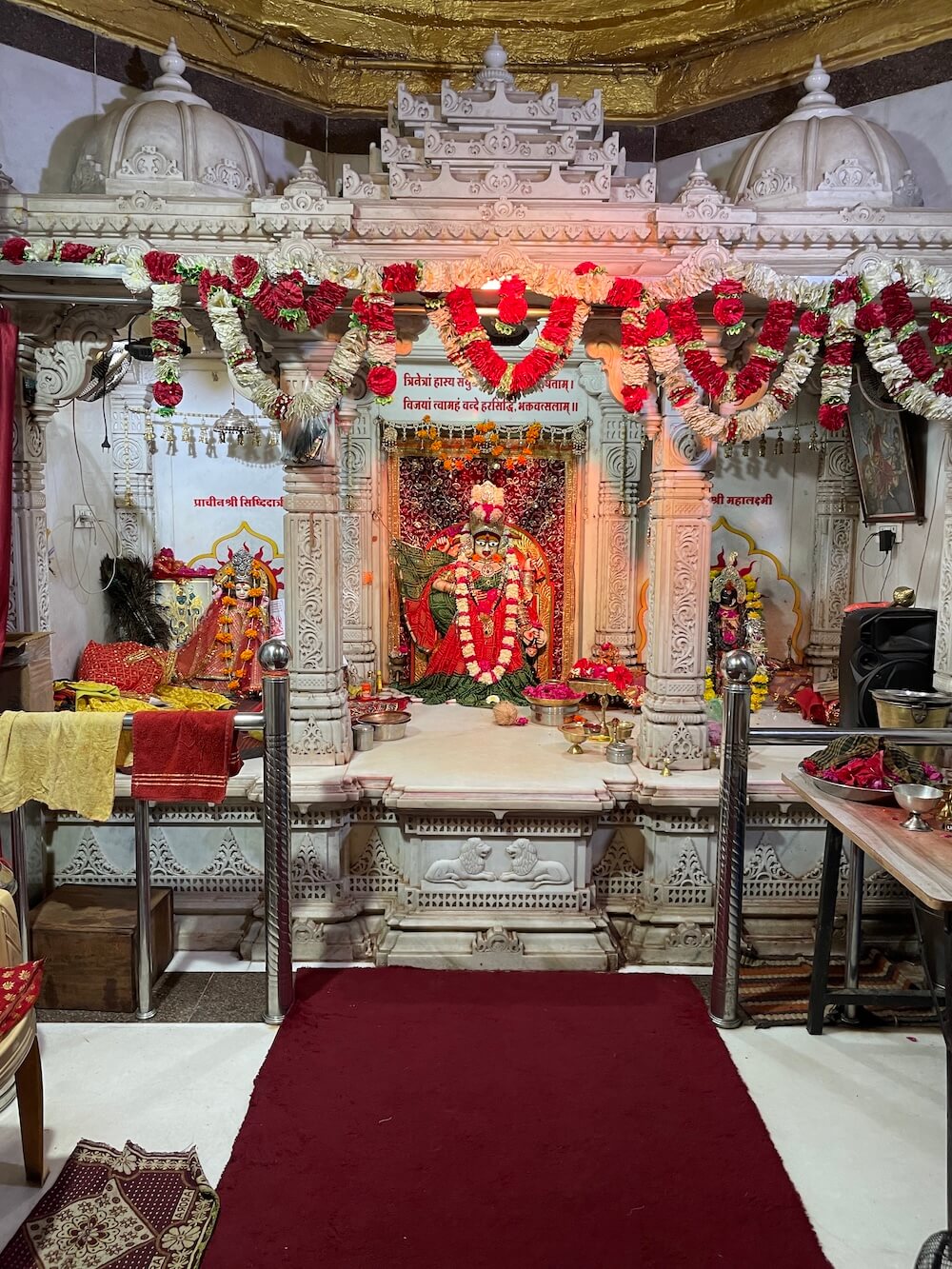
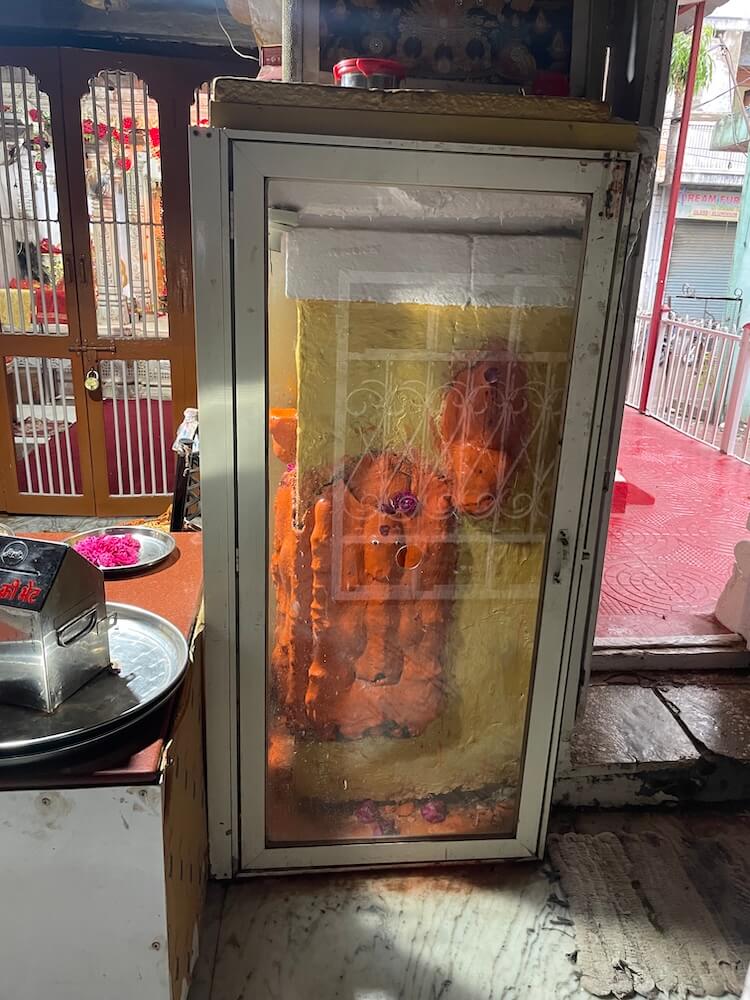
The sabhamandap is airy and spacious, with a homa-kunda at its center. Eight steps lead upward into the sub-hall, whose style and proportions suggest that it was the principal hall of the older temple. Its entrance is masonry with arched brackets; within the broad doorjambs are small shrines. On the left is a vermilion-smeared stone image of Siddha Maruti and on the right Harsiddhi Vinayak. At the center of this sub-hall sits the lion, the goddess’s vahana. In the antechamber, Bhairava is enshrined on the left and Ganesha on the right. The sanctum has a wooden doorway guarded by steel grilles. Within, upon a high marble platform set inside a grand ornamental frame, is installed the image of the goddess in her Mahishasuramardini form. Flanking her are ancient images – on the left Harisiddhadatri and on the right Mahalakshmi. The goddess forms are adorned with garments and ornaments and along the upper outer wall of the sanctum are carved panels showing her in varied postures.
 Darshan is open from 7 a.m. to 12 noon and from 5 p.m. to 9 p.m. Daily at brahma-muhurta the goddess is bathed in the abhisheka. Aarti is performed at 7:30 a.m., 10 a.m. and 9 p.m. At set times the recitations of Shri Suktam, Lalita Sahasranama and Durga Saptashati are conducted. The temple celebrates the Chaitra and Ashwin Navratras with great fervor. On Dashami the goddess receives special adornment, on Ashtami a sacred homa is performed and on Vijayadashami the kanya bhojan offering is held.
Devotees regard Harsiddhi as one who unfailingly answers vows. Drawn by her renown, not only ordinary worshippers but many notable figures have come here for darshan. Among them are former Prime Minister Indira Gandhi, former President Giani Zail Singh, former Union Minister and former Chief Minister of Madhya Pradesh Arjun Singh and film actor Vijeyendra Ghatge. Members of the Holkar royal family also visit this shrine.
Another distinctive feature of the temple is its priestly tradition. Built by Maharani Ahilyabai Holkar, herself a symbol of women’s equality and empowerment, the temple follows a lineage in which the priest’s successor is appointed from among his daughters. The girls are trained from childhood in Vedic rites and liturgy; their husbands assist in the temple ritual and management. This matrilineal tradition has continued unbroken for ten generations.
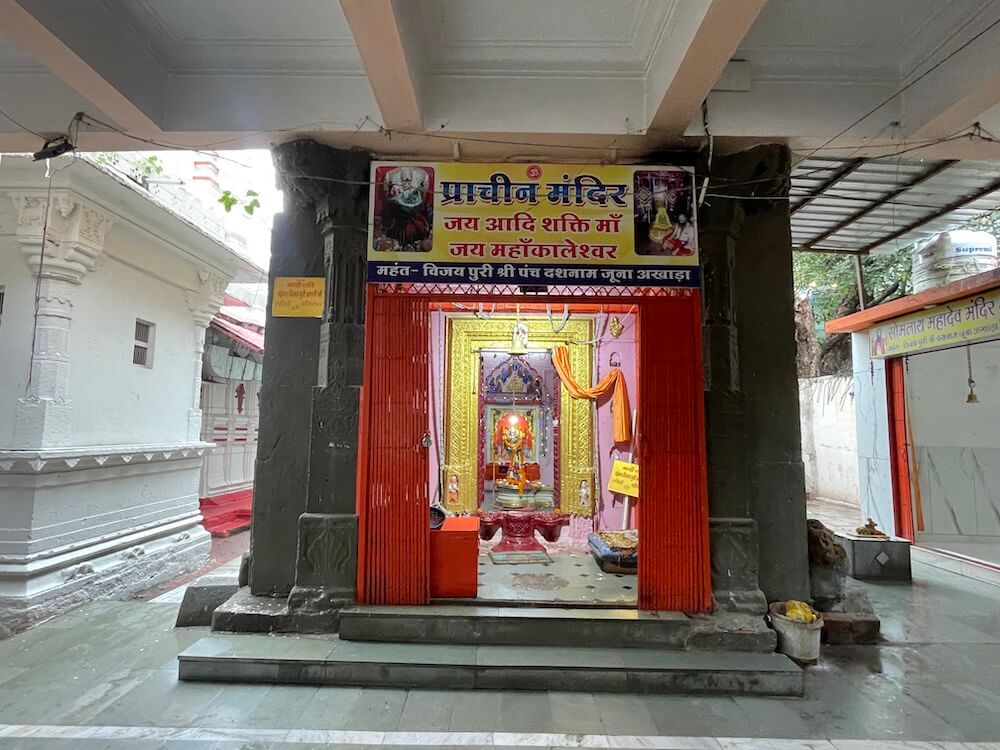
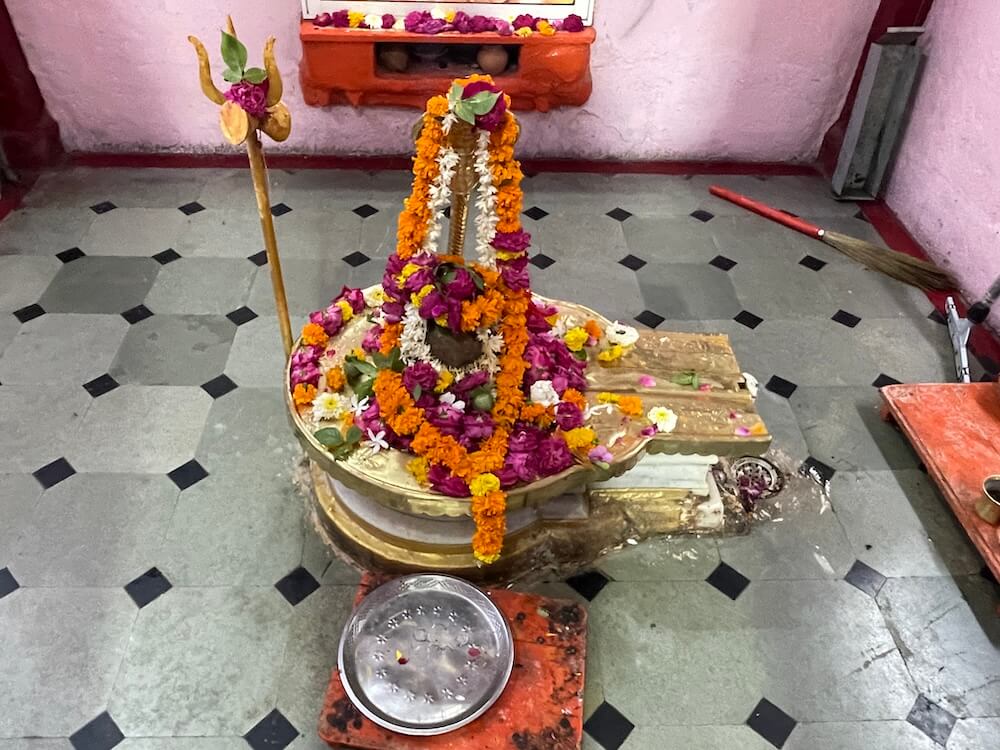
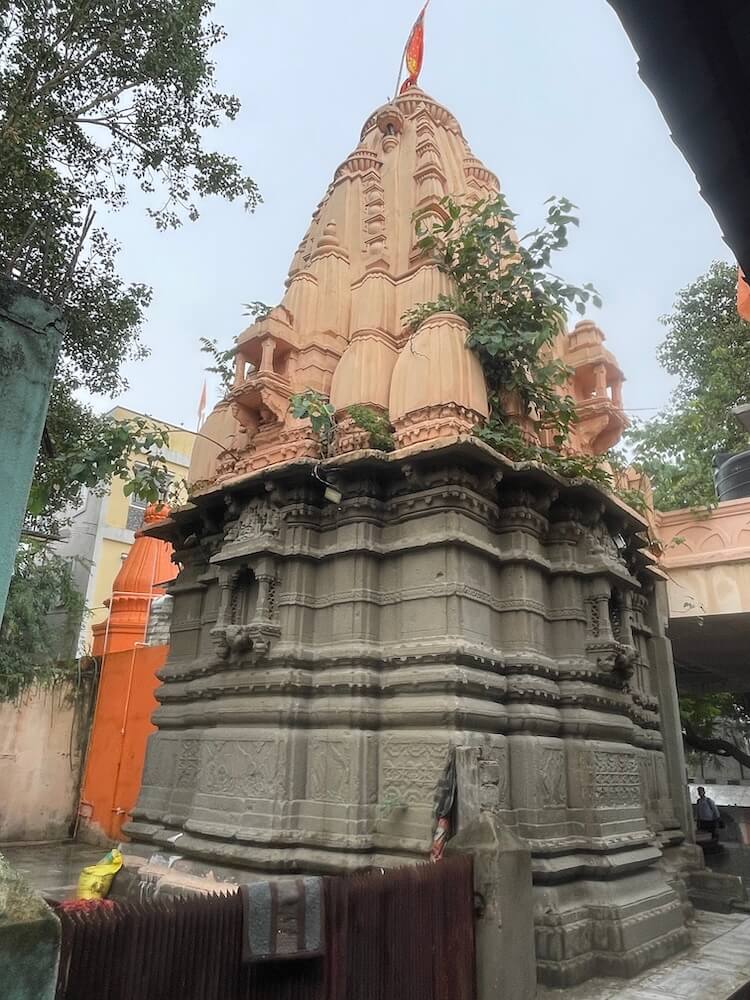
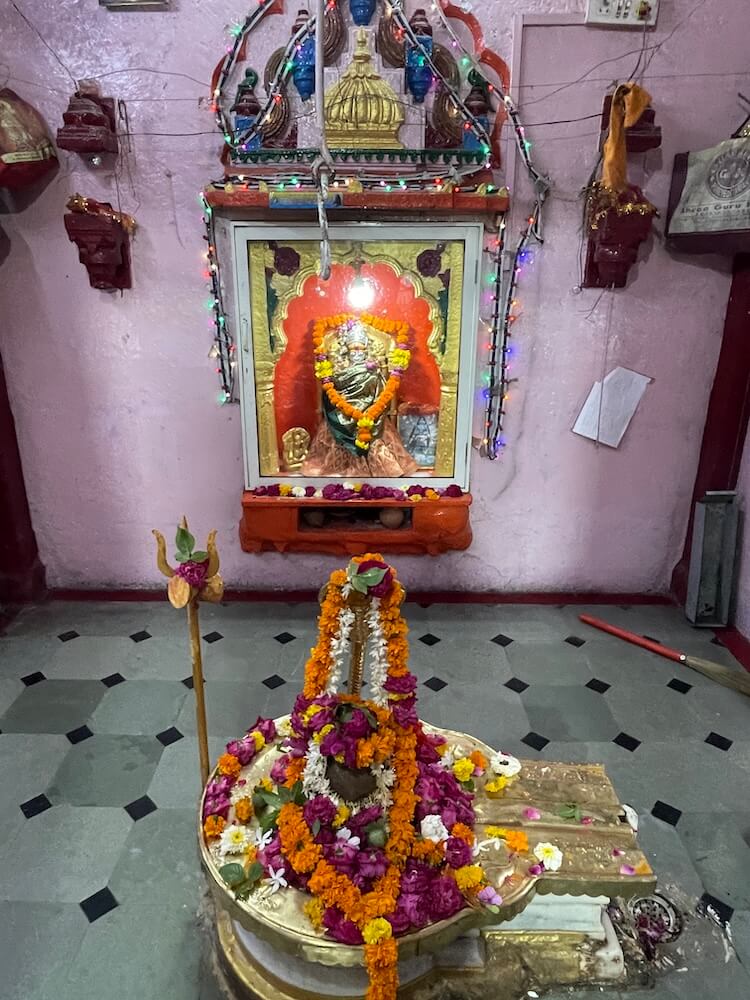
Near the temple of Harsiddhi Mata stands the Mahakaleshwar temple. It is fronted by a modern assembly hall with a central fire altar and an ancient stone Nandi facing the sanctum. The sanctum itself is entirely of stonework and has a four-branched doorway with guardian deities carved at the base of the jambs. A Ganesh image occupies the lalatabimba above and many sculptures adorn the upper register. The entry canopy rises high with kirtimukhas and an ardhachandrashila. Within stands a tall Shivalinga. Its shalunka is of marble and clad with an intricately worked metal sheath. The linga is shaded by a brass serpent hood. In the niche on the rear wall is an image of Parvati. Around this precinct are also shrines to Mahalakshmi, Somnath Mahadev, Hanuman and Dattatreya.