 Among the ancient Shiva shrines around Indore, the Gutkeshwar Mahadev temple stands in the village of Devguradia. In earlier times, Devguradia was known as Garud Tirth. According to the old legend, Garuda, the vehicle of Lord Vishnu, performed severe penance at this very site. In response, Lord Shankar manifested here in the form of a Shiva-linga. Because the linga is small in size, it came to be called ‘Gutkeshwar’. Devotees believe that sincere worship of Gutkeshwar Mahadev fulfills every heartfelt wish and so there is a constant stream of visitors to this temple.
It is said that the name Devguradia is formed from the two words ‘Dev’ (deity) and Garuda. On the hillock here, Garuda meditated upon Mahadev and thus the place received its name. The local legend holds that Shiva’s presence at this spot dates back to the seventh century. Historical and archaeological research suggests that this region has at least five centuries of documented history. A gigantic yet unfinished image of the Sun dating to the thirteenth century was found in Indore. An inscription on a pillar discovered in the village of Dakacha near Indore offers evidence of incursions by Muslim forces. From this it appears that during the thirteenth and fourteenth centuries the area lay desolate. In 1401 CE, with the establishment of the independent Malwa Sultanate at Mandu, Indrapur (present day Indore) began to be resettled. 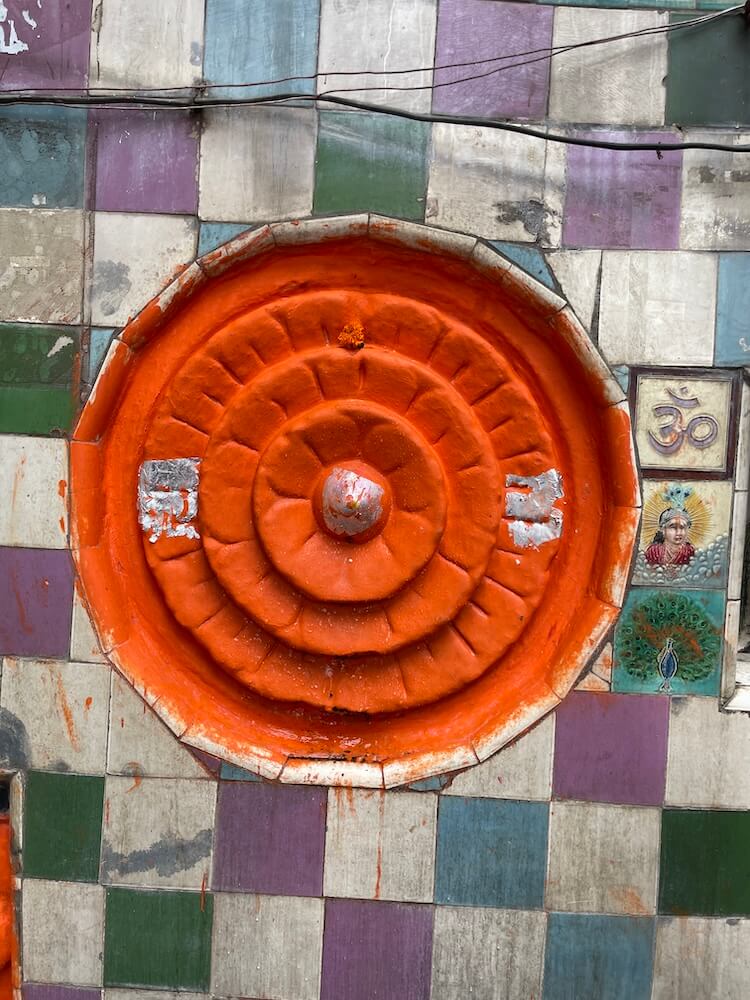 Scholars surmise that the temple of Gutkeshwar Mahadev at Devguradia may have been established sometime between the eleventh and fifteenth centuries.
Until 1766, during the era of Malharrao Holkar, founder of the Holkar state, Indore was primarily a military cantonment. The Holkar encampment extended as far as the Devguradia tract. It is said that before proceeding to battle or to military drills, the Holkar troops would present arms in salute to Gutkeshwar Mahadev. This clearly shows that the temple enjoyed great renown in the eighteenth century. After the death of Malharrao Holkar, in 1767 Punyashlok Ahilyabai Holkar made Maheshwar her capital. On May 26, 1784, she returned to Indore and stayed at Chhatri Bagh. According to an article in the volume ‘Ahilya Smarika’ (1970), she then came to Garud Tirth to take darshan of Gutkeshwar Mahadev.It is said that this temple originally faced east. However, when one would approach the military camp in the fort grounds, Yashwantrao Holkar (the first) had the temple’s front turned toward the military camp so that the temple’s facade would be the first thing seen. Yashwantrao ruled from 1799 to 1811 and this change is attributed to that period. Thereafter, in 1851, the temple is said to have undergone renovation.
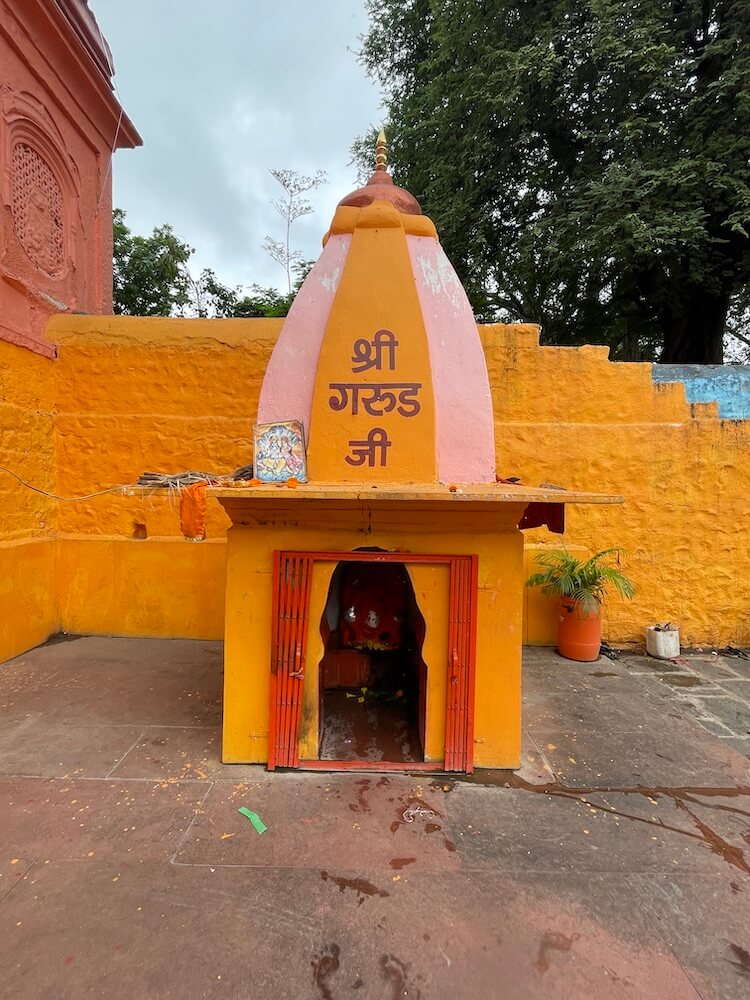
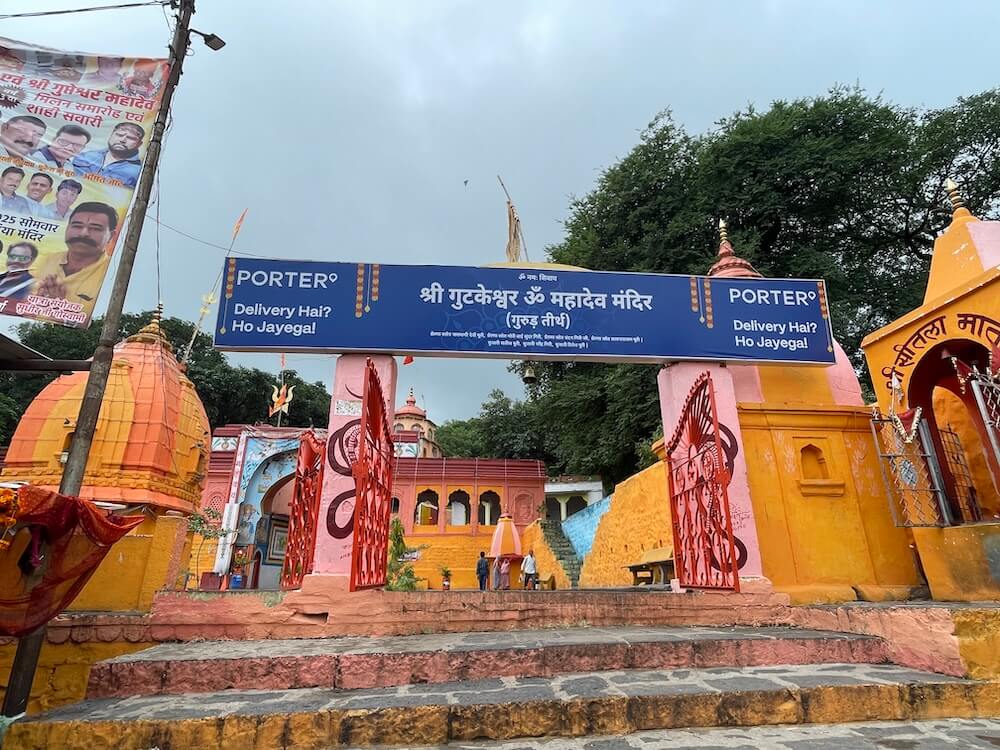
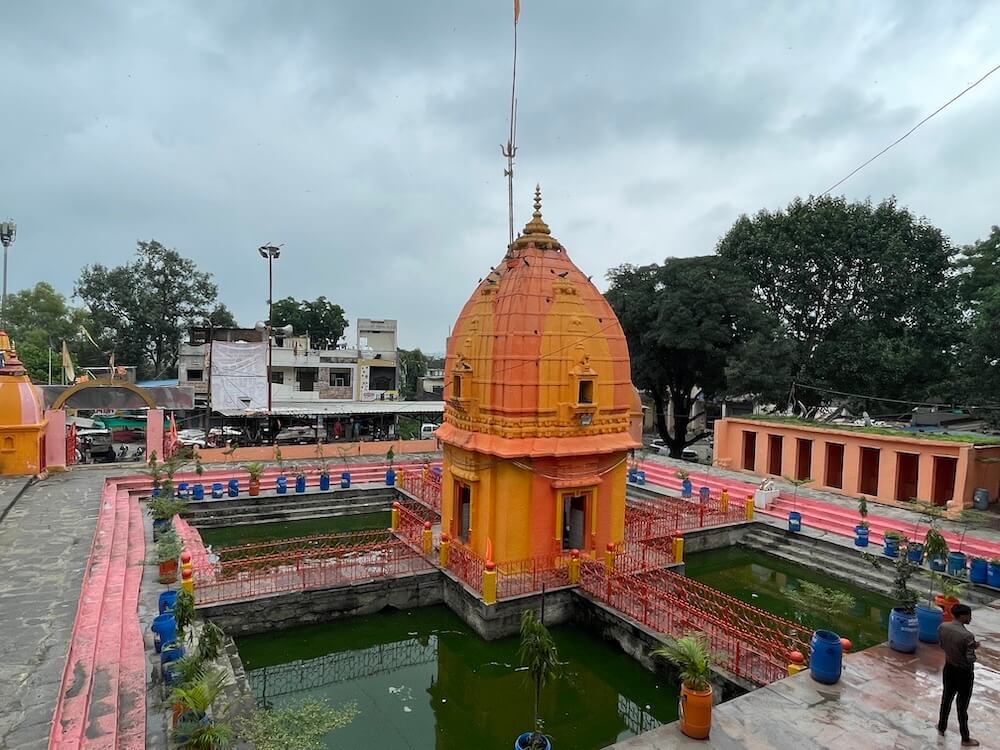
The shrine stands upon a small hill. A short flight of steps leads into the temple precinct. At the center of the courtyard lies a large stepped tank (kund) and in the middle of this tank rises the temple of Shankar. 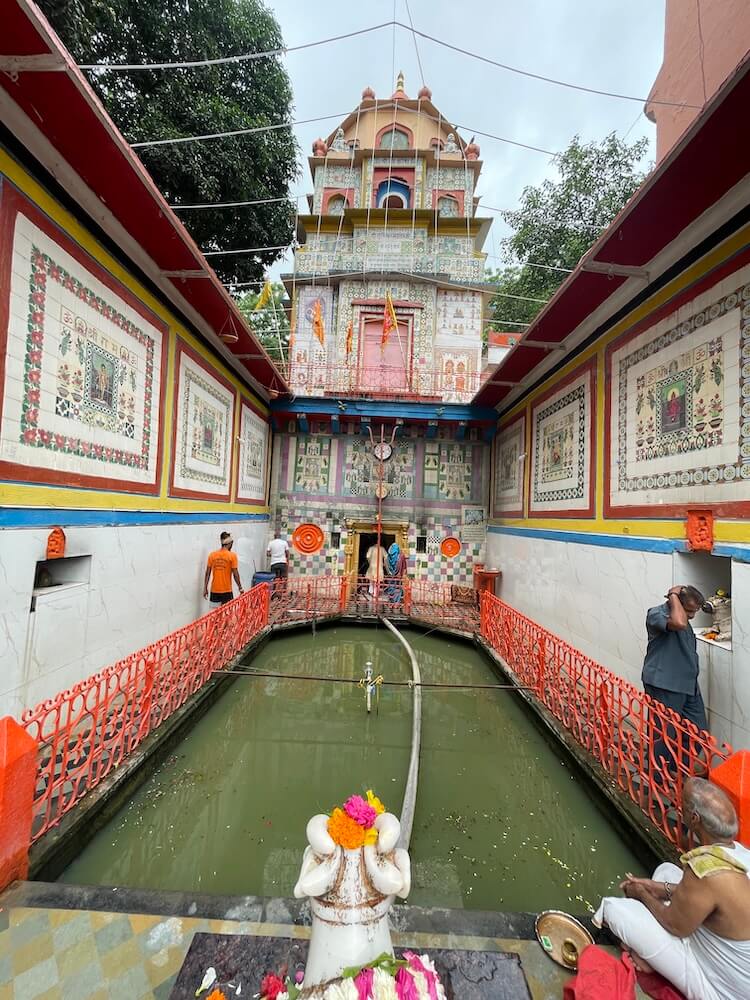 This ancient structure has entrances on all four sides and above it stands a tower in the tapering urushringa style. Pathways approach it from each direction. Around the rim of the tank are small shrines holding images of Vishnu, Amba Mata, Garuda and Surya Narayan.
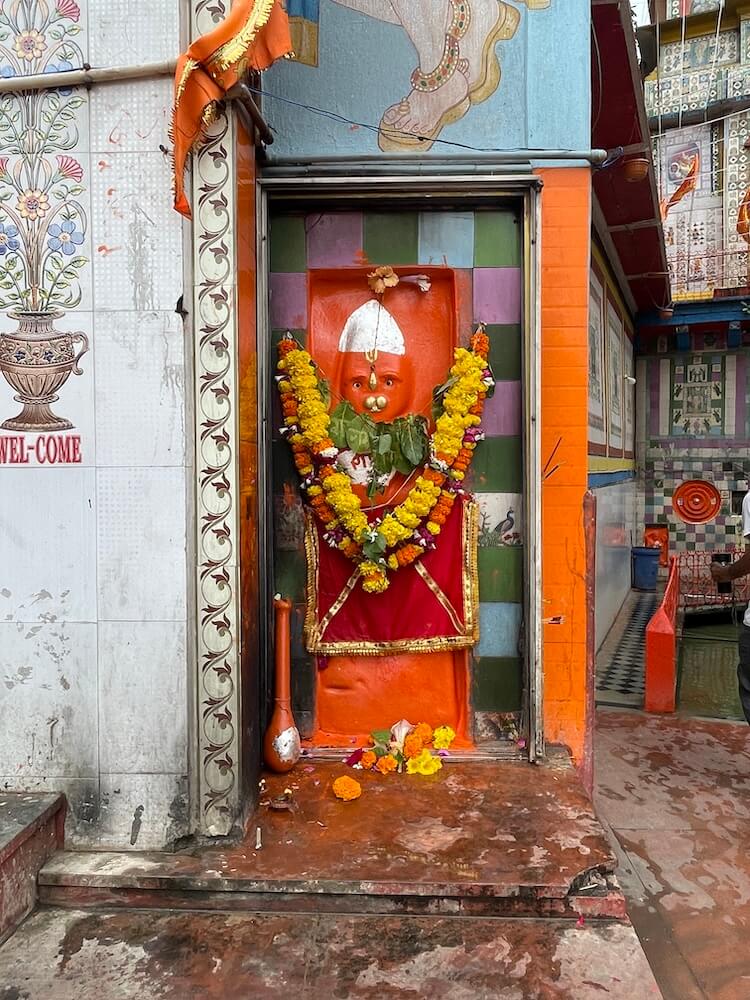
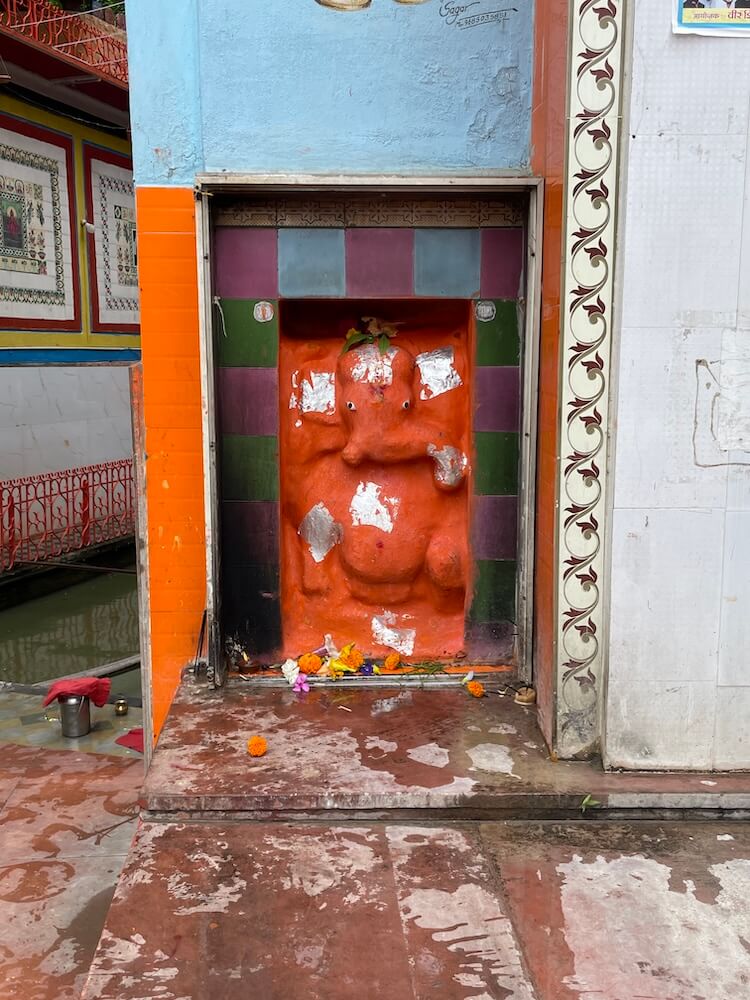
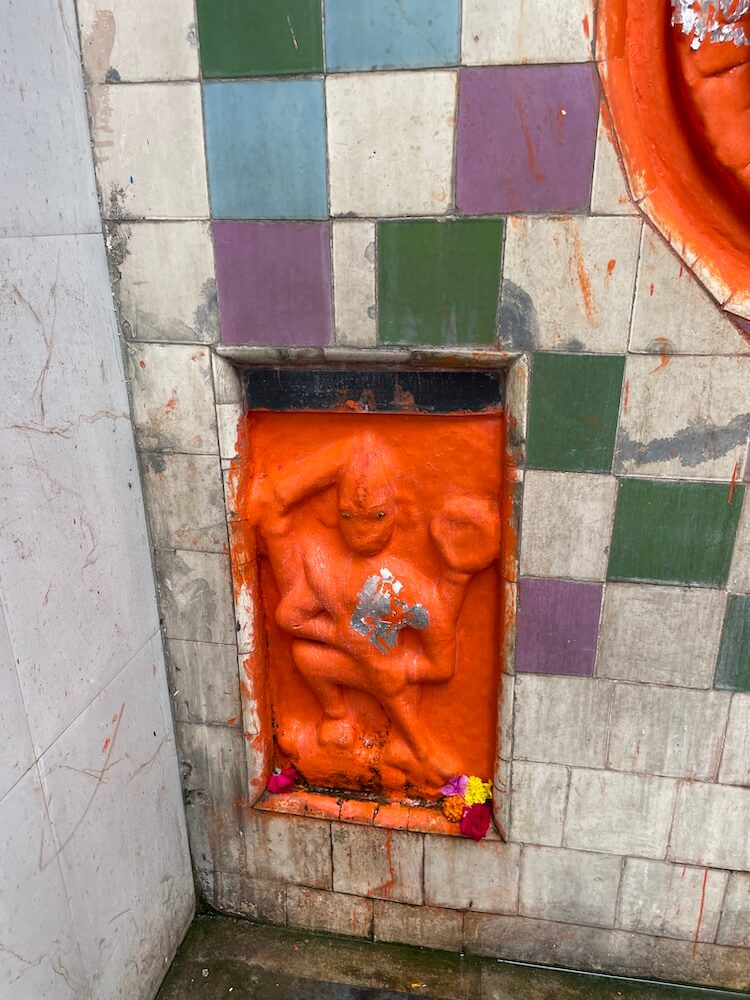
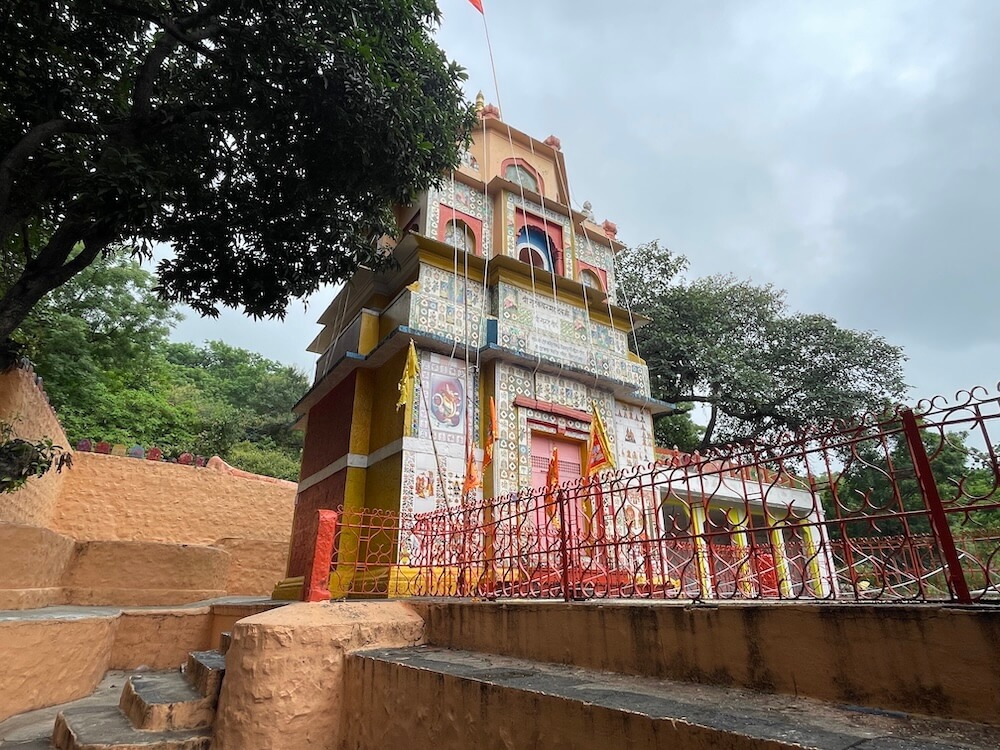
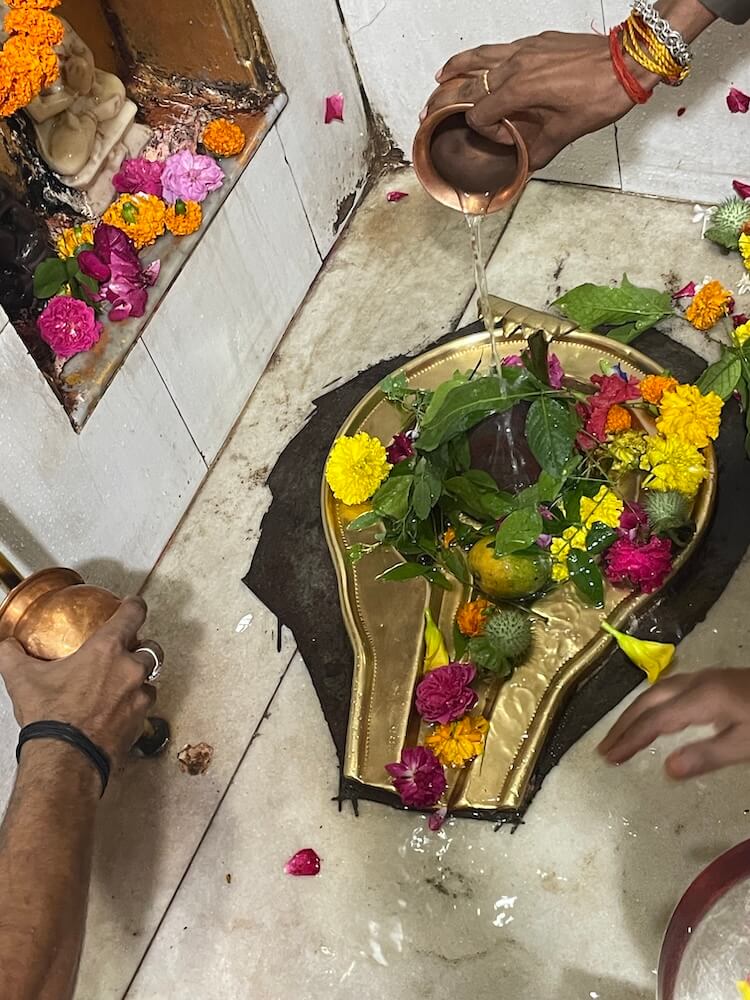
Facing the tank is a great wall like a fortification, pierced by a lofty main gateway. Painted upon this gate are large images of Ganapati, Hanuman, a lingam of Shankar and the guardian doorkeepers. At the base of the jambs are stone idols – Hanuman to the left and Ganesh to the right. Entering within, one meets upon a platform a large white-marble Nandi. In front of Nandi lies a small tank. From the side corridor one passes into the temple of Gutkeshwar Mahadev. The structure rises to the height of a five-storied building. The exterior walls are patterned with inlaid multicolored marble tiles. On the upper level of the temple building, there is an entrance approached by the side passage; above it is a ‘Ram Jharokha’ with a painted image of Punyashlok Ahilyabai Holkar, flanked by sculptures of ascetics. The temple bears two small finials and one tall spire. Its stone doorway has three branches, with the lalatabimba above carved with the figure of Ganesh. Inside, to one side, is the sacred lingam of Mahadev. The shalunka (yoni base) is clad in brass sheathing and within its center rests a small Shiva-linga. High upon the wall a gomukh spout channels a constant stream of water for jalabhishek over the linga. In the niche of the rear wall stands an image of Parvati. It is said that the original lingam here was twelve feet tall and now lies submerged; the present shrine has been built over it.
Priests here recount that a pair of serpents, a male and a female, is sometimes seen moving about, within the tank or in the temple itself. Devotees who behold them are believed to have their wishes fulfilled. The temple is open for darshan from Sunday to Friday, 6 a.m. to 9 p.m. and on Saturdays from 6 a.m. to 10 p.m. Large crowds gather every Monday and on the observance of Shiva Pradosh. On the Mondays of Shravan, a Rudrabhishek is performed upon the lingam and the deity is richly adorned; long lines form for the jalabhishek. On Mahashivaratri a great fair is held. Beginning on Phalgun Krishna Chaturdashi, the festivities continue for three days and it is said that at least two lakh devotees come to the temple during this time. Within the precinct there are also shrines of Ram Darbar and of Shani.