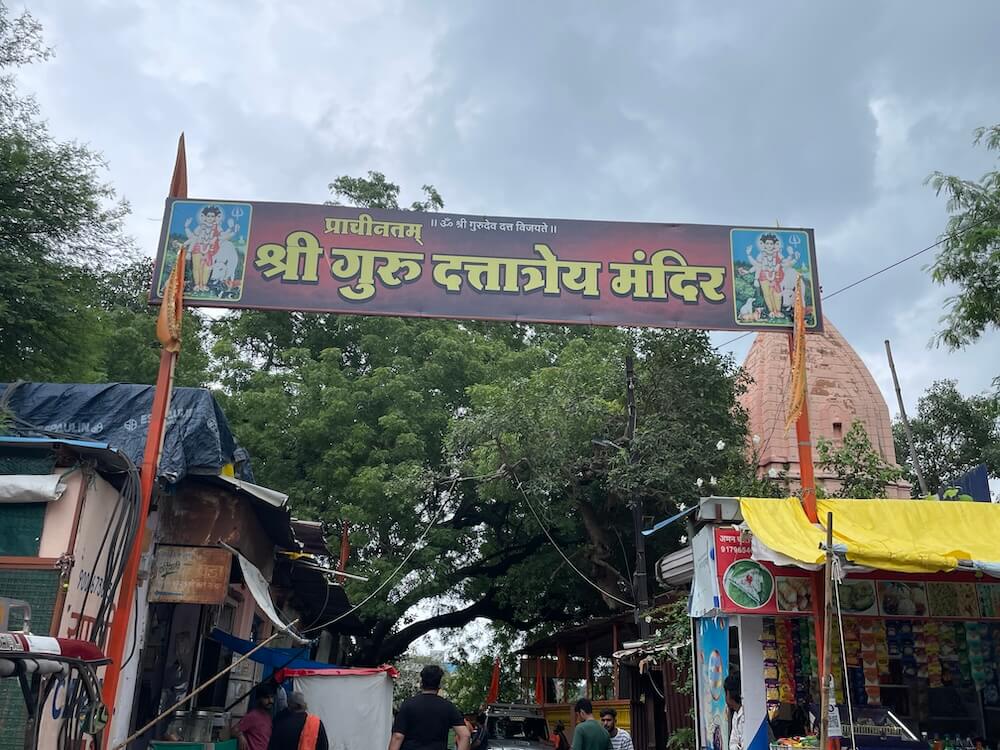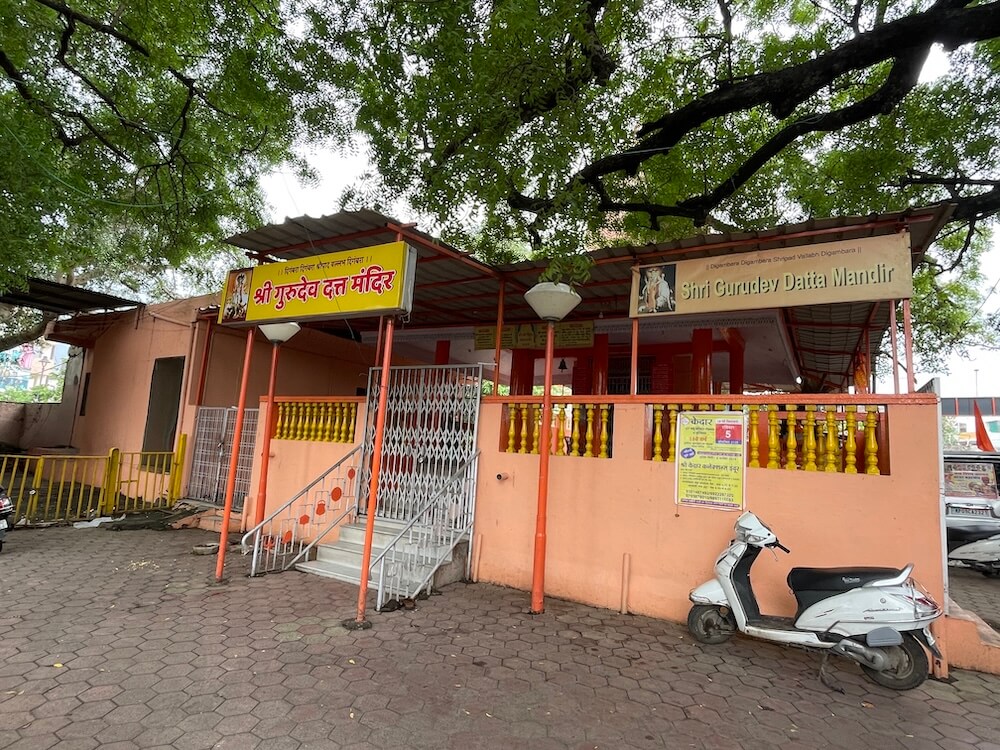
 Long before the city of Indore came into existence, there already stood a sacred site dedicated to Lord Dattatreya near the Krishnapura Chhatris, known today as Guru Datt Mandir. This holy place is believed to be at least seven to eight centuries old, while the present temple structure itself is around 125 years old. The history of this temple is linked to great spiritual figures such as Adi Shankaracharya, Chhatrapati Shivaji Maharaj and Guru Nanak. Like the Holkar royal family, countless devotees of Dattatreya revere this temple. Within the same temple complex is also the shrine of Chhatreshwar Mahadev, established by Ahilyabai Holkar.
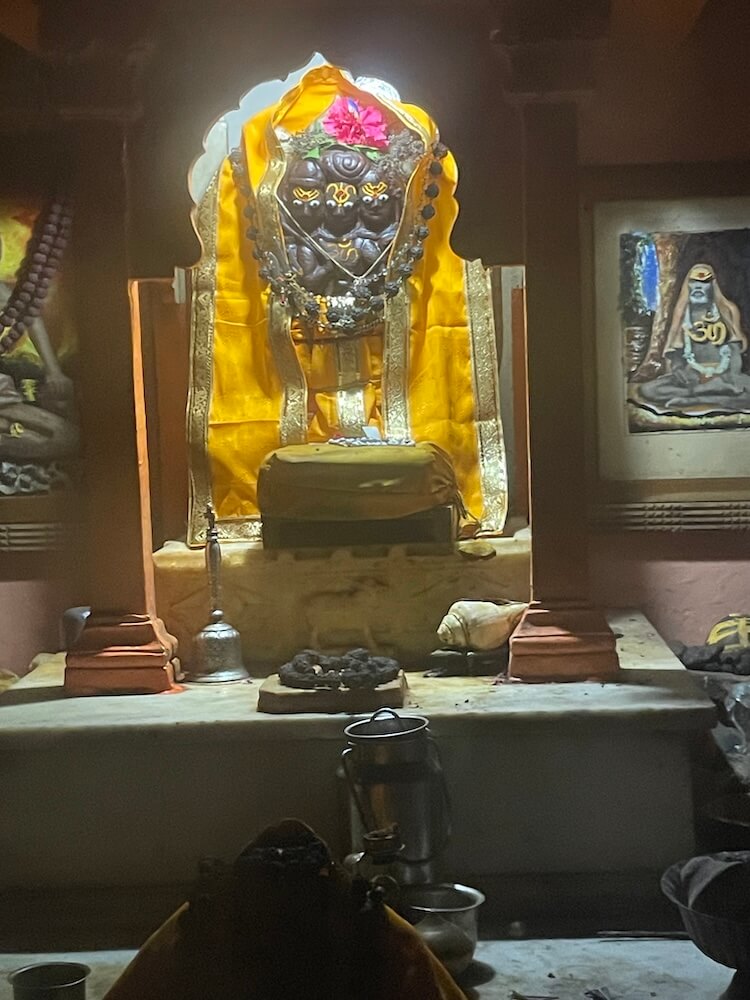
Since ancient times, the worship of Lord Dattatreya has been widespread in India. The Puranas and five later Upanishads describe Dattatreya as the upholder of social order, the embodiment of the Guru principle and the great teacher of yoga. Dattatreya worship transcends sects and even religions, as many Muslim devotees too revere him. Stories of his birth are told in the Puranas and later Upanishads. The most popular story recounts how Narada praised Anasuya’s chastity, arousing jealousy in the wives of Brahma, Vishnu and Shiva. To test her virtue, they sent their husbands in disguise as guests to Anasuya’s hermitage while her husband, Sage Atri, was away. When she welcomed them with devotion, they asked to be served food but with the condition that she do so unclothed. 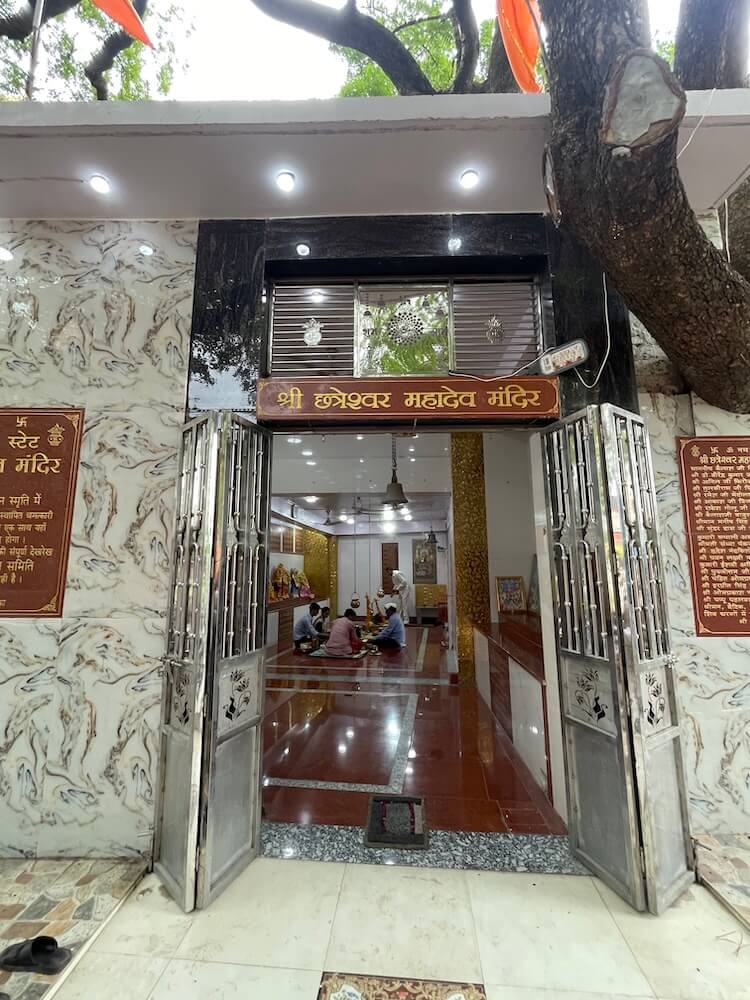 Anasuya remembered her husband and sprinkled holy water on the guests, who instantly transformed into infants. The goddesses, distraught upon seeing their husbands in child form, pleaded with Anasuya for forgiveness. Out of compassion, she restored their original forms. The gods, moved by her purity, promised to be born from her womb. Thus, from the radiance of Brahma was born Chandra, from Vishnu came Dattatreya and from Shiva came Durvasa. The Brahma Purana also mentions Dattatreya as an incarnation of Vishnu. Interestingly, in the Mahabharata and the great epic ‘Shishupalavadha’ by poet Magha, he is not called the son of Atri but ‘born of the lineage of Atri’. According to religious scholars, until around 1200 CE, Dattatreya was depicted as a single-faced deity, but thereafter he began to be portrayed as a three-headed form. The idol in this Guru Datt Mandir is indeed of the three-headed form, suggesting that the temple belongs to the post-1200 CE period.
Historical references say that Indore was once just a small village. According to The Indore Gazetteer first mentions of it is found in 1661 under the name Indrapur. However, archaeological remains such as a 12th-century Jain idol’s canopy, a Hanuman idol and a doorway found in this area suggest habitation during that era. It is believed that within the following century, this shrine of Dattatreya may have come into being. Many legends are associated with the temple. One tradition says that Adi Shankaracharya himself visited here and had darshan of Dattatreya. 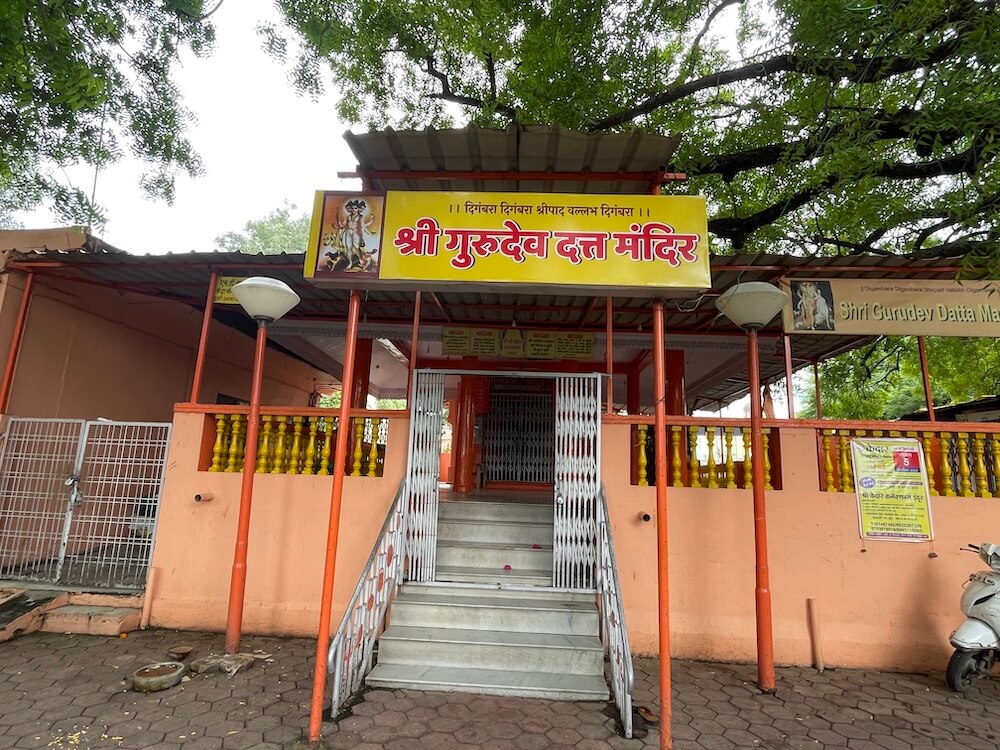 It is also said that Guru Nanak, during his second spiritual journey in 1517, stayed for three months in Indore at the site where the Imli Sahib Gurudwara now stands. During his stay, he would bathe daily at the confluence of the Kanh river and converse with the sages at this Datt Mandir.
Another legend connects the temple with Chhatrapati Shivaji Maharaj. After being imprisoned by Aurangzeb in Agra in May 1666, Shivaji Maharaj escaped on August 17. While his exact return route to Rajgad is uncertain, some historians believe he traveled not via Malwa and Khandesh, but through Mathura, Allahabad, Banaras, Puri, Gondwana and Golconda before reaching Rajgad. According to tradition, he stayed at this temple during that journey. Similarly, it is said that Samarth Ramdas Swami also spent a few days here. 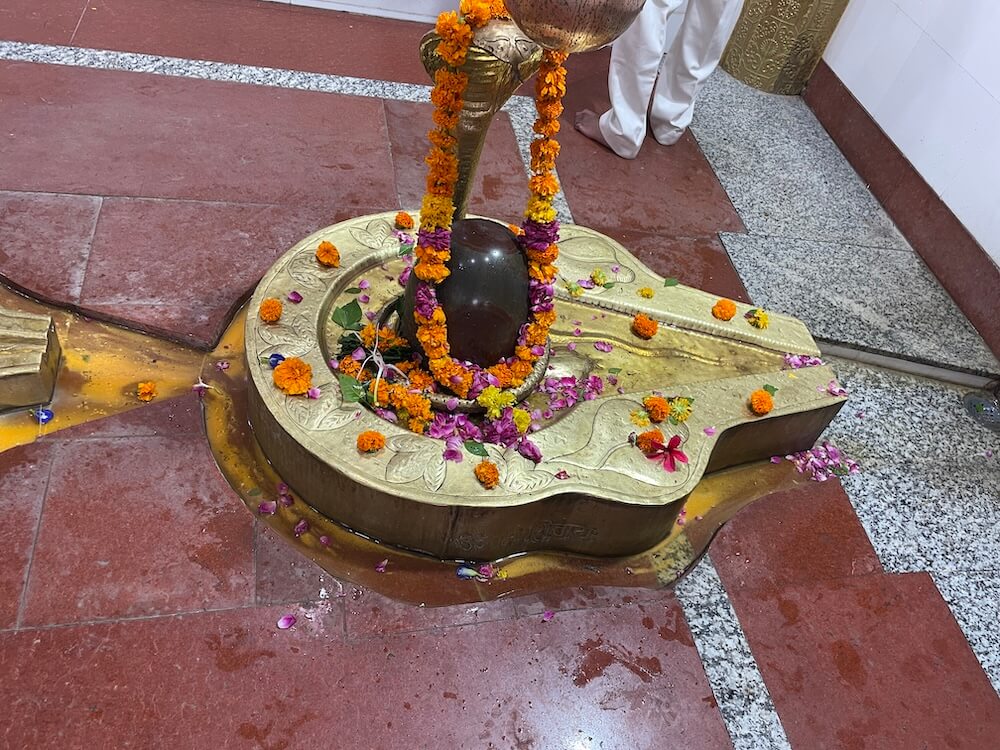 Priests at the temple claim that Ahilyabai Holkar herself used to come here for darshan.
Situated on the banks of the Kanh river near Krishnapura Chhatris, the temple was originally built of wood. In 1896, during the reign of Shivajirao Holkar, it was renovated. Since then, the temple has undergone five or six further renovations. Today, the temple, built in a simple and modern style, stands upon a high plinth, with a structure that includes an assembly hall, an antechamber, a sanctum and above it a shikhara about 27 feet high.
The assembly hall has a corrugated sheet roof with a concrete ceiling. A few steps lead inside, where the sanctum is located in the center, surrounded by a circumambulatory path. Within the sanctum, on a raised marble platform, rests a stone shrine housing the three-headed idol of Lord Dattatreya, sculpted from black stone. On the steps of this platform sits an idol of Lord Ganesha. 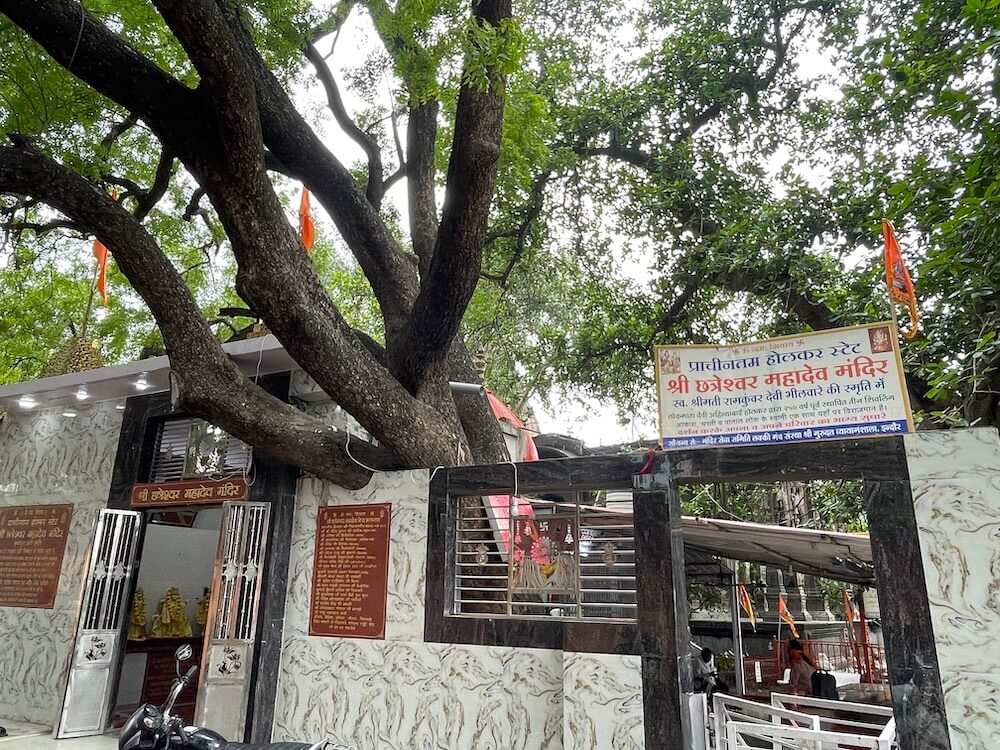 The temple also contains images of Sant Dnyaneshwar Maharaj and other divine figures associated with the Dattatreya tradition. The wooden sandals (padukas) of Vasudevananda Saraswati (Tembe Swami), a saint who wrote extensively on Dattatreya in Sanskrit and Marathi, are also preserved here. In fact, it is said that in 1923, Tembe Swami performed the consecration of the temple’s shikhara. He is also believed to have initiated five disciples here.
Within the temple complex stands a large Audumbar tree, beneath which some vermilion-smeared stones are placed. Adjacent to the Guru Datt Mandir is the Chhatreshwar Mahadev Mandir. This shrine too is of modern construction. In its assembly hall, on a raised platform to the left, are marble idols of Ram, Lakshman, Sita and Hanuman, along with Saraswati and Radha-Krishna, all adorned with garments and ornaments. In the sanctum are three Shivalingas established by Ahilyabai Holkar herself. Nearby are also idols of Kali Mata and Durga Mata.
Daily rituals are performed at the Guru Datt Mandir, but the most significant celebration here is the festival of Datta Jayanti, held every year on the full moon of the month of Margashirsha. On this day, thousands of devotees gather to participate in the vibrant and devotional festivities.