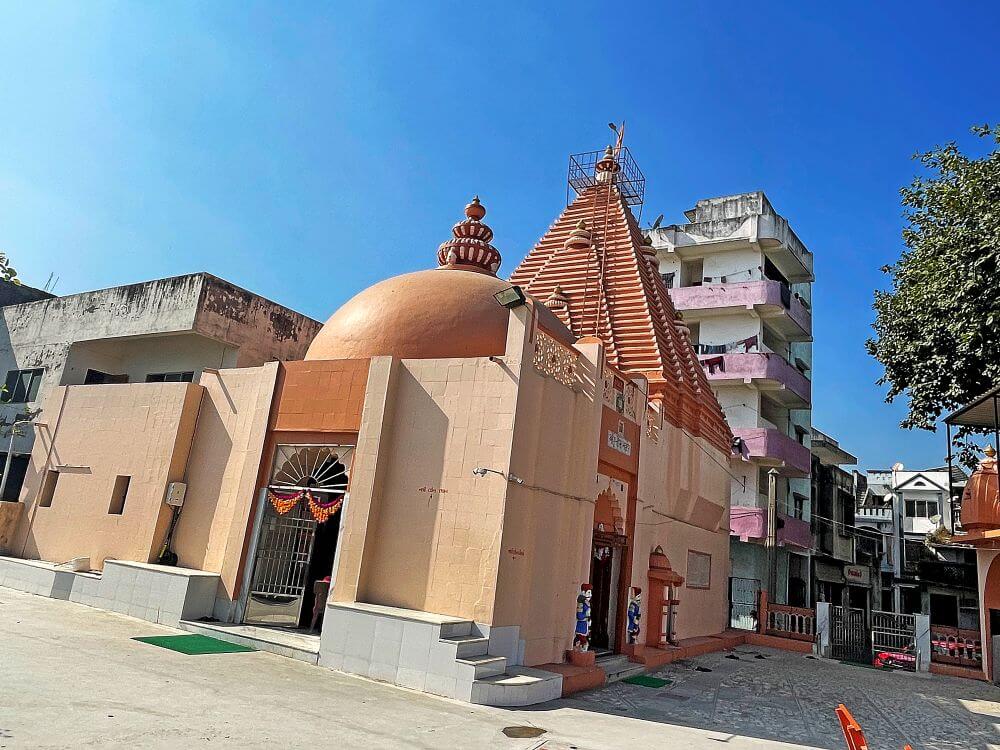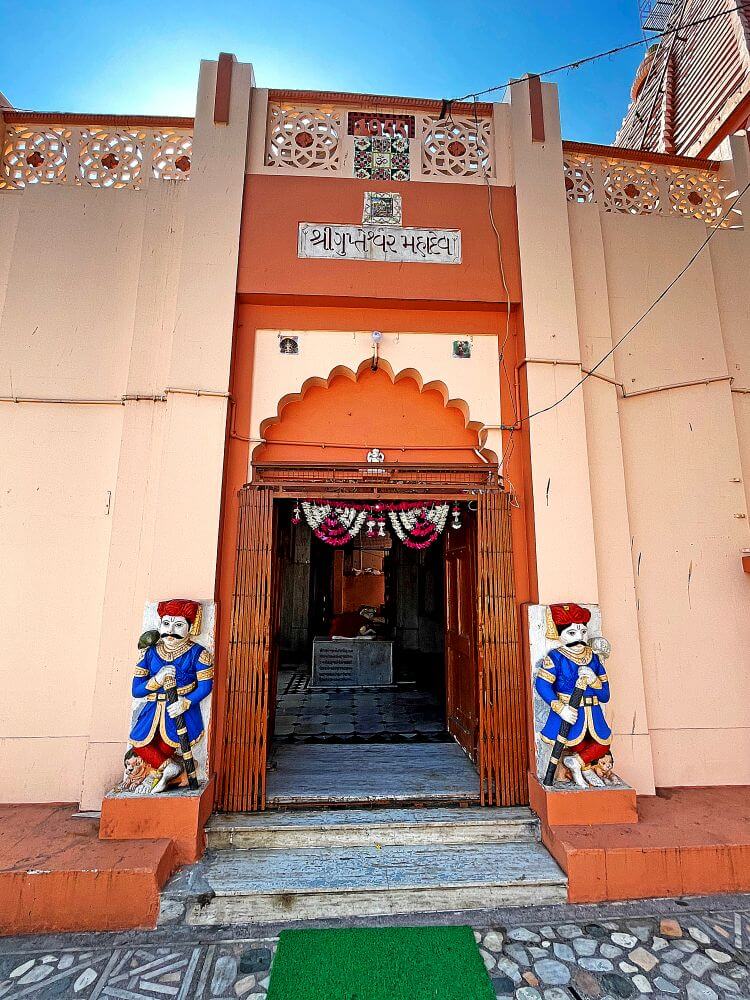
 The Gupteshwar Mahadev Temple, located in Phulpada village near Surat, holds immense mythological and spiritual significance. Mentioned in the Skanda Purana, this temple is believed to be the secret abode of Lord Shiva, while the Ganga River is said to flow covertly in the area. For this reason, the location is also known as the Shiv-Ganga Gupt Kshetra (Hidden Realm of Shiva and Ganga). Legend claims that Bharata, the son of King Dasharatha, consecrated the Shiva Ling here. Close to the temple lies the Pach Pandav Ovaro (the Steps of the Five Pandavas), a site where hundreds of devotees come to perform tarpan (ritual offerings to ancestors).
According to legend, Lord Brahma originally had five heads. One day, while reciting the Vedas, the sound emanating from his fifth head caused distress among the gods.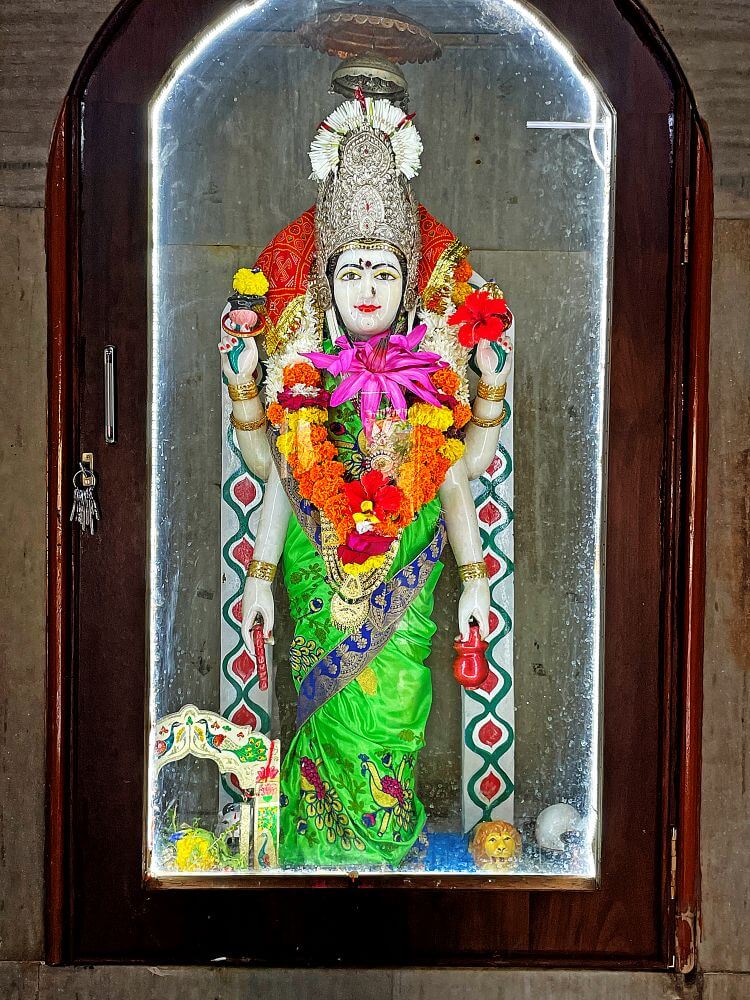 In anger, Lord Shiva severed Brahma’s fifth head with his trident. Another version of the story states that Brahma’s fifth head insulted Shiva, leading to the creation of Kalabhairava, who then removed the offending head. This act left Shiva burdened with the sin of Brahmahatya (the killing of Brahma).
According to the Tapi Mahatmya, Lord Shiva performed penance for six months to absolve himself of this sin. During his meditation, he discovered that the Ganga River was flowing secretly to bathe in the sacred waters of the Tapi River. Shiva questioned Ganga about her presence, to which she replied, “I purify those who bathe in my waters, but doing so leaves me restless. To regain my peace, I bathe in the holy waters of the Surya Putri Tapi River.” After revealing this, Ganga disappeared underground, continuing her journey in a hidden form. Shiva then bathed in the Tapi River, achieving absolution. From that point, Shiva also began residing here in a concealed form, giving the temple its name, Gupteshwar Mahadev (Hidden Lord Shiva).
The Tapi Mahatmya narrates another tale of redemption about this sacred site. Once, King Gajadhwaj of Varanasi accidentally killed a cow, resulting in a severe affliction where his body was infested with worms. Despite visiting numerous sacred sites like Gaya and Yamuna banks, he found no relief. Despondent, he decided to end his life. A sage then advised him to visit Gupteshwar Mahadev.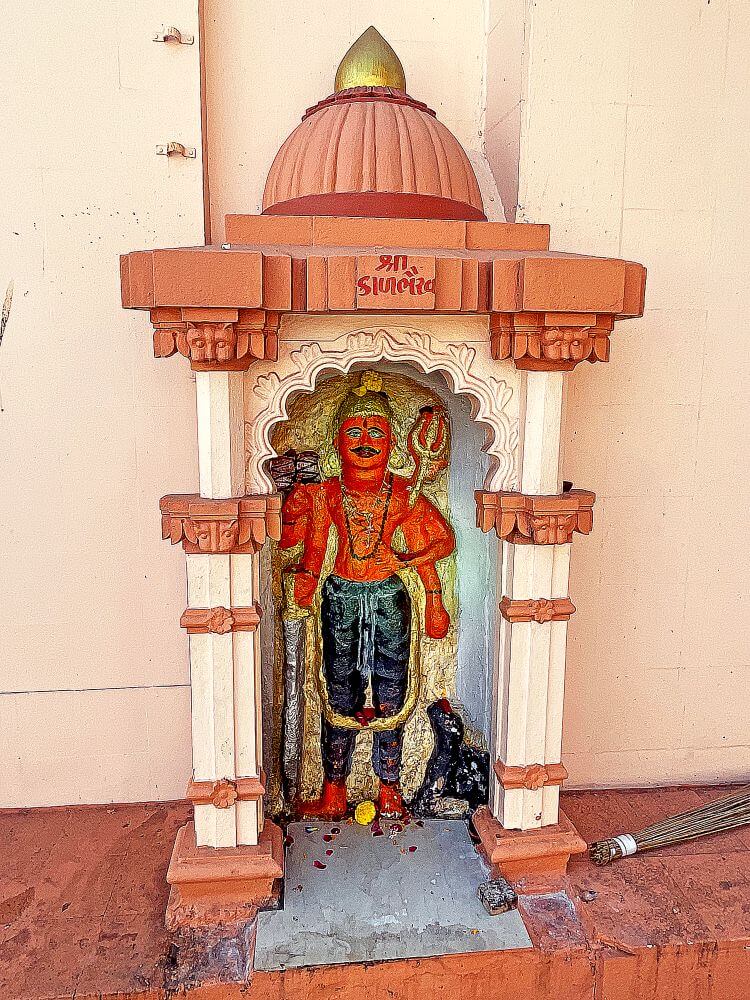 Upon arriving at the temple with his queen, the king bathed in the waters, which miraculously cured him. Transformed and healed, the king and queen chose to reside near the temple permanently.
During the period when the Peshwas held power in Gujarat, it is said that their commanders undertook the restoration of the Gupteshwar Mahadev Temple. Over the years, the temple has undergone several renovations to preserve its structure and significance.
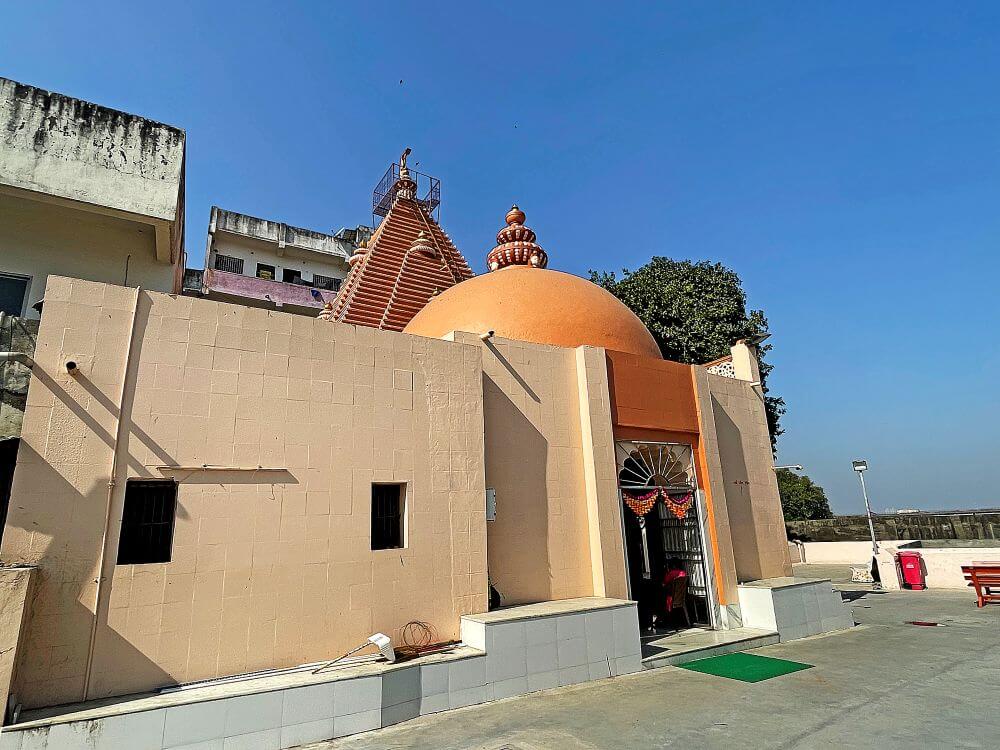
The temple, situated 10 kilometres from Surat, features a large courtyard. Its shikhara (temple tower) is pyramid-shaped, while the sabhamandapa (assembly hall) has a dome-like roof. The entrance is flanked by two statues of gatekeepers dressed in traditional attire with turbans and swords. Lion statues are placed at their feet. Adjacent to the entrance, a shrine contains an idol of Kalabhairava, depicted with four arms holding a trident and sword, accompanied by a dog.
The temple has three entrances, with one facing east. Near this eastern entrance lies a marble platform known as the Tapi Darshan Sthan (Viewpoint of the Tapi). A raised platform inside the temple holds an idol of Nandi, Shiva’s sacred bull, while a tortoise figure is embedded in the floor.
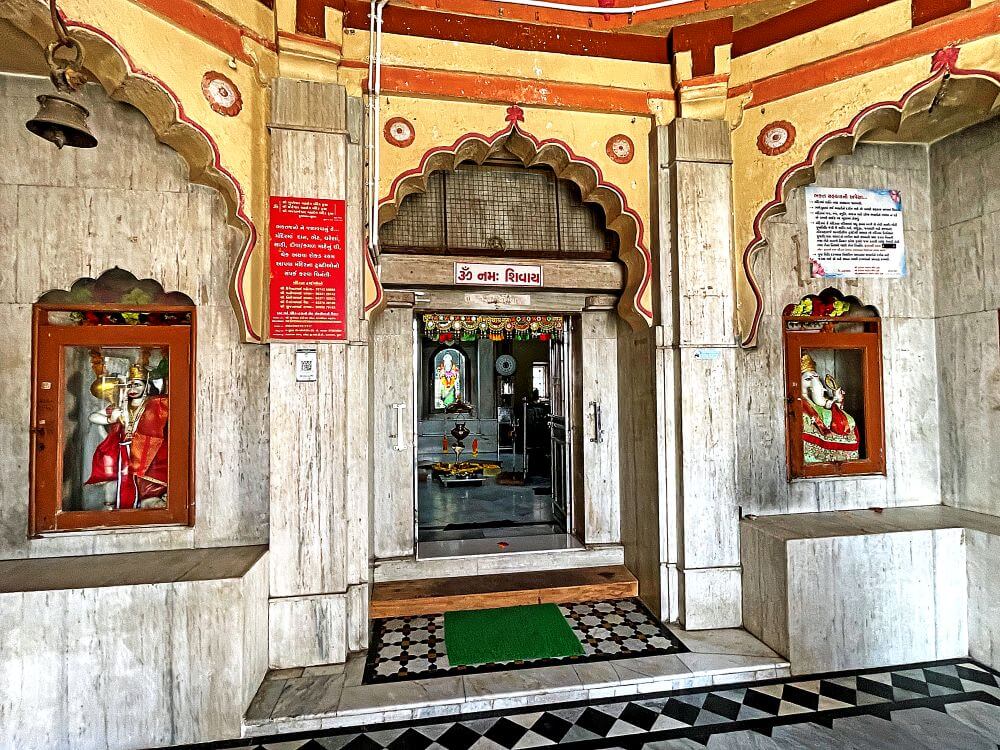
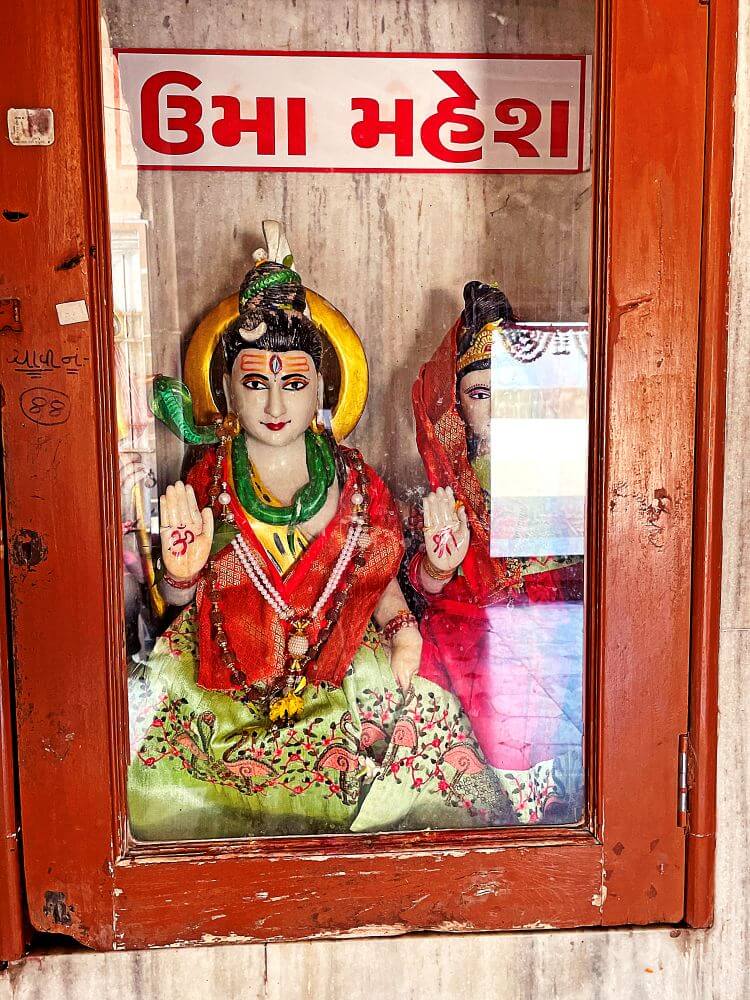
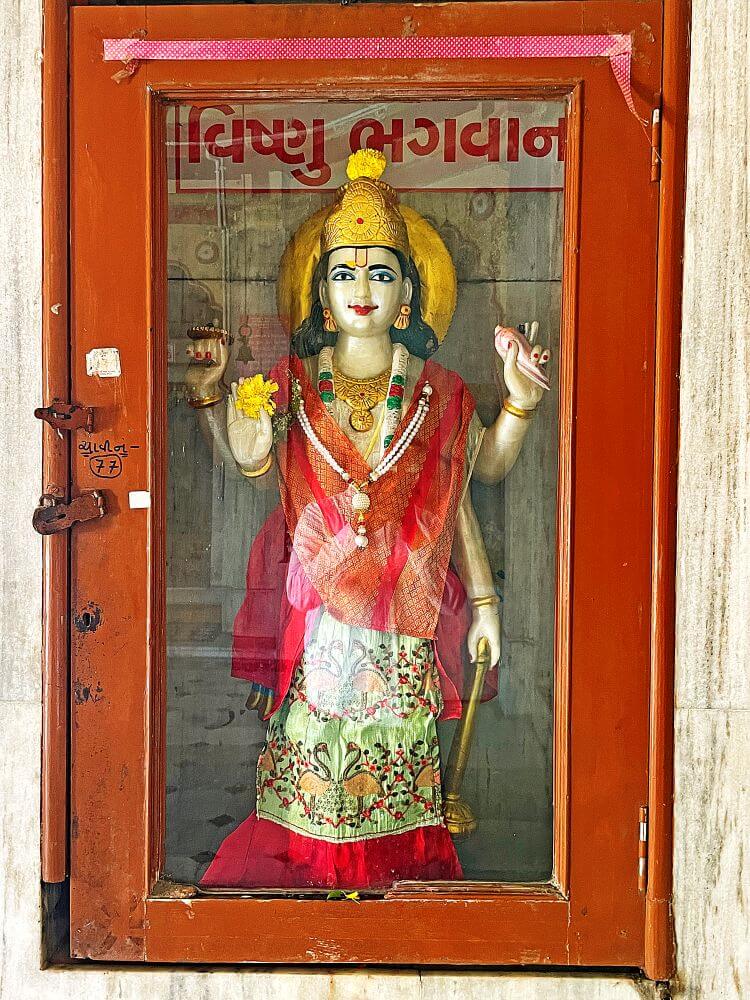
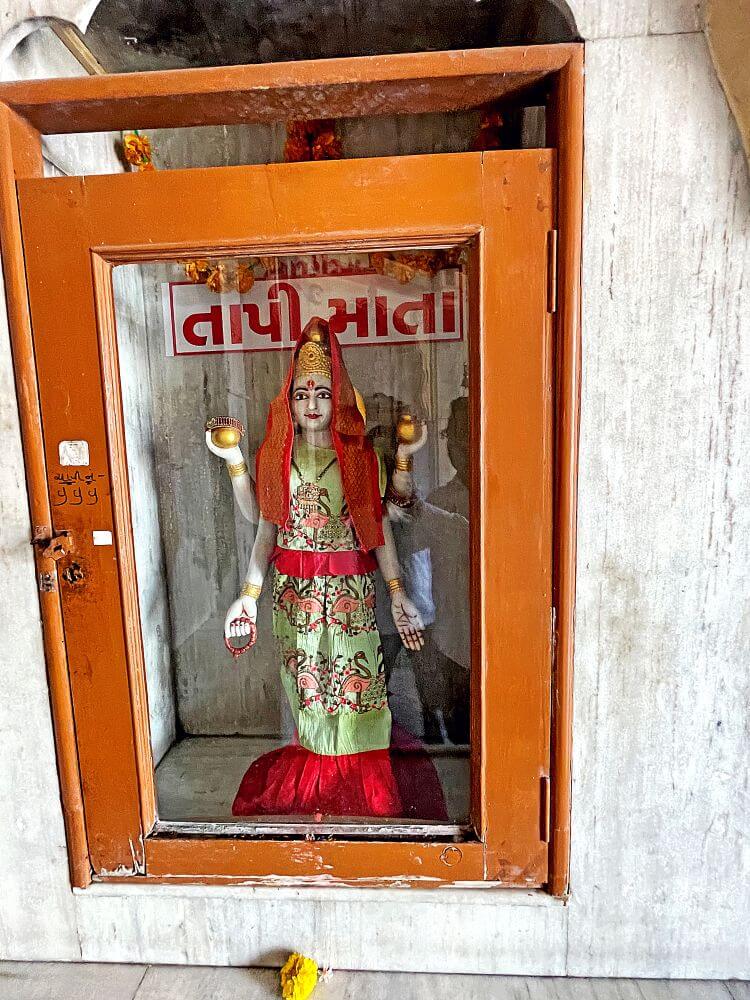
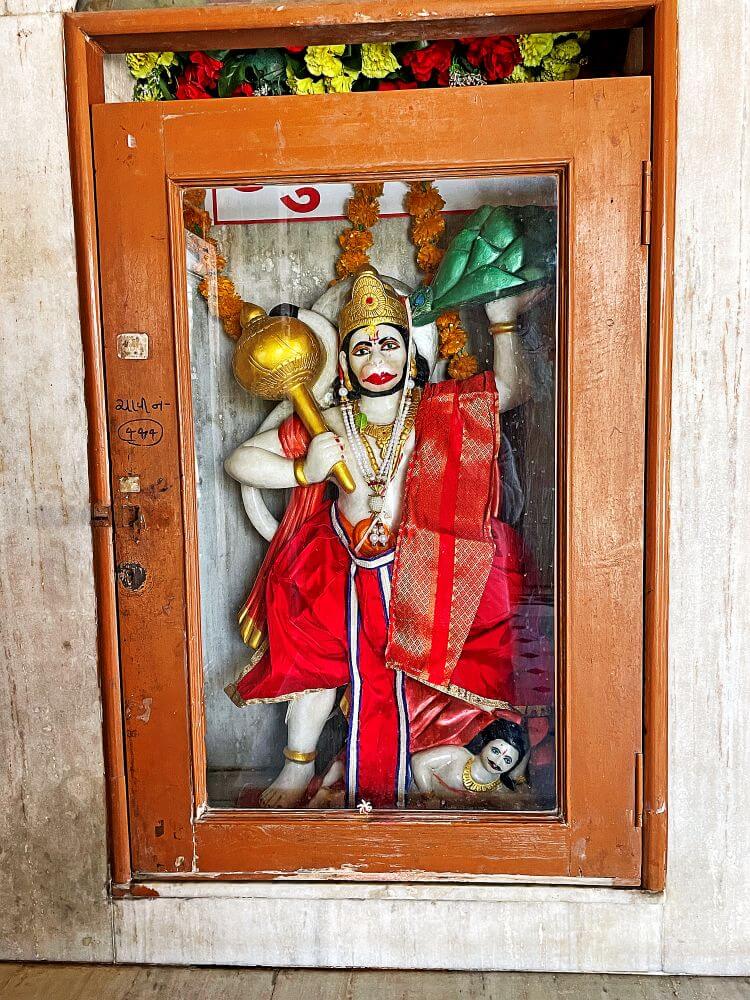 The sabhamandapa features shrines of various deities, including Ganesh, Uma-Mahesh, Baliadev, Vishnu, Surya Narayan riding a seven-horse chariot, Hanuman, Tapi Mata and Gayatri Mata. The ceiling of the sabhamandapa is adorned with paintings of the Dashavatara (ten incarnations of Vishnu).
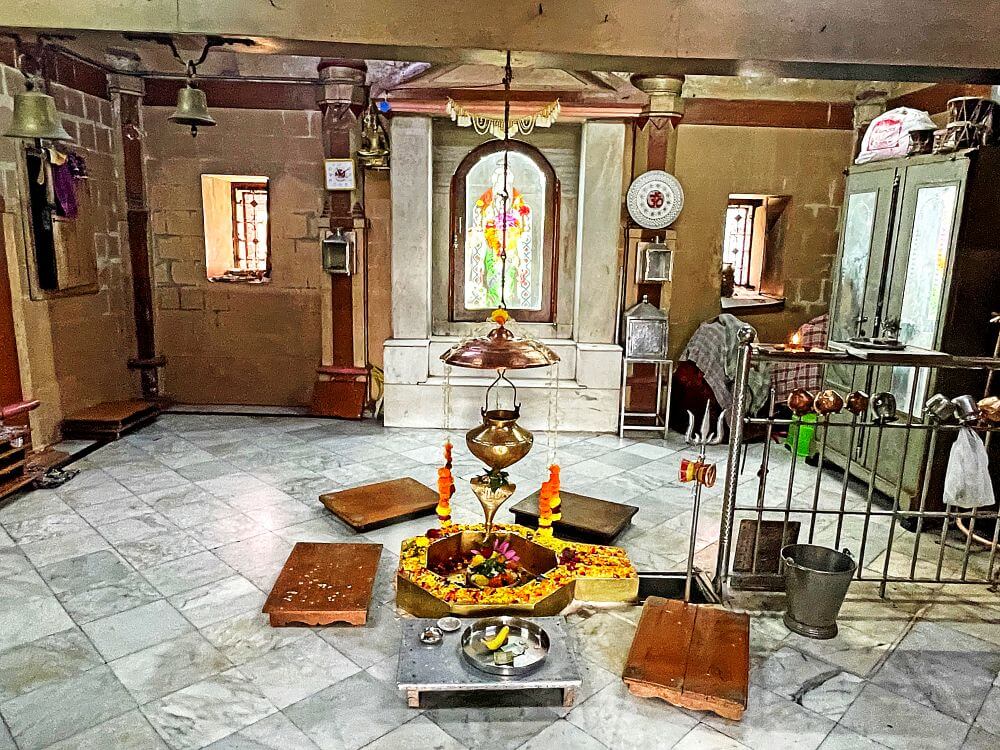
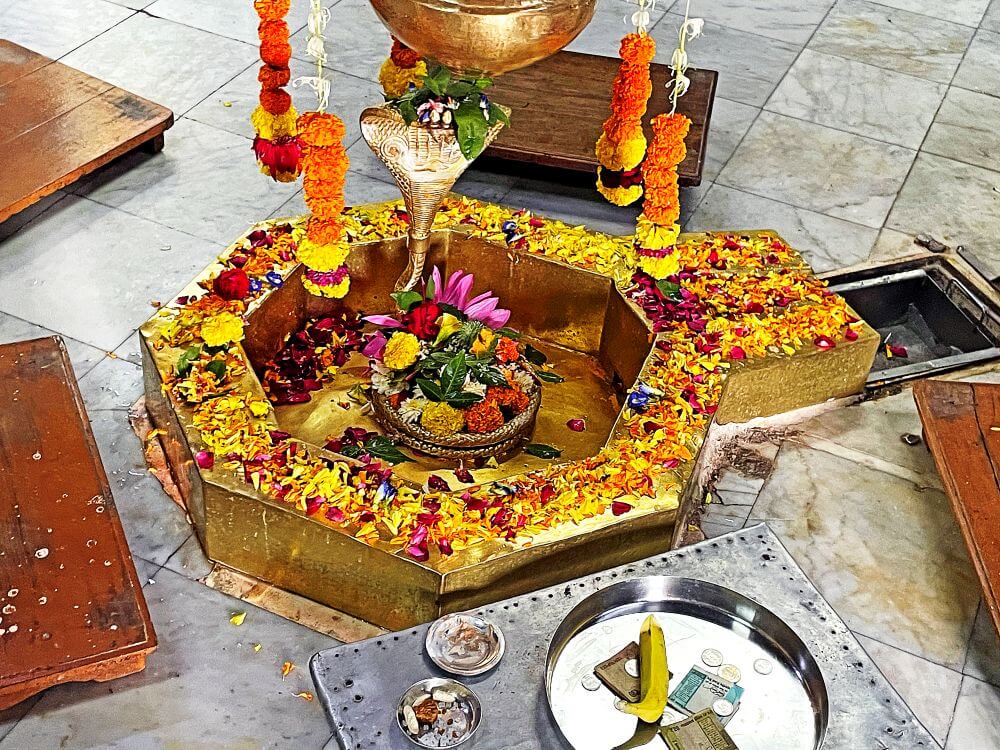
The garbhagriha (sanctum sanctorum) is spacious, housing a Shiva Ling with a serpent hood overhead. A copper vessel suspended above continuously pours water onto the Ling in an abhisheka (ritual pouring). Behind the Ling, a large marble shrine contains an idol of Parvati.
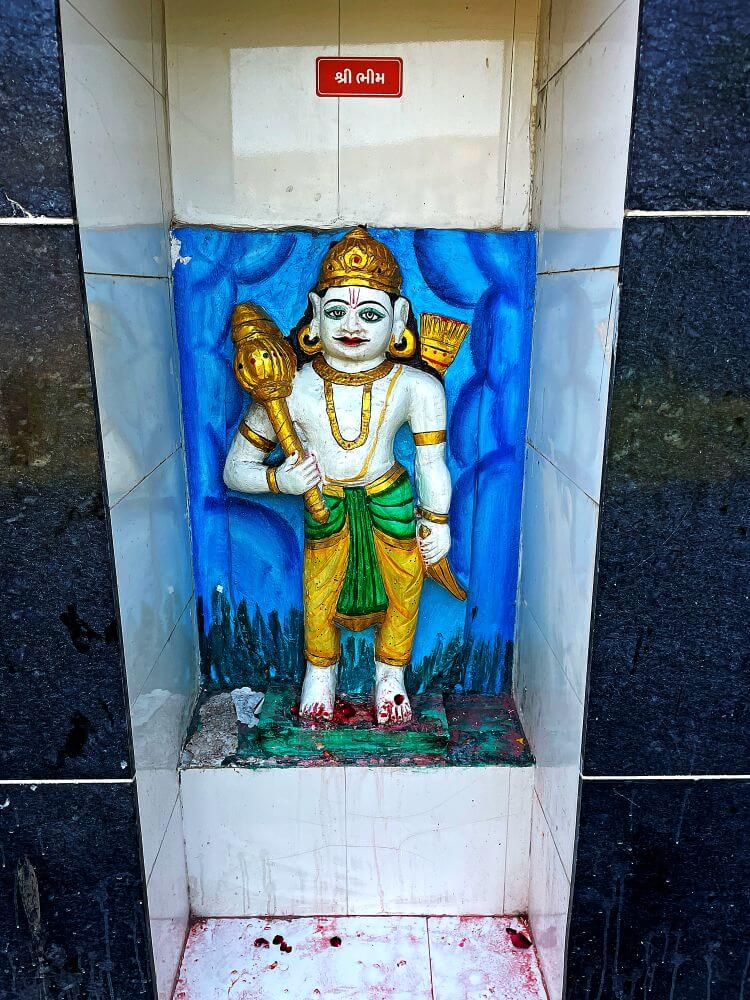
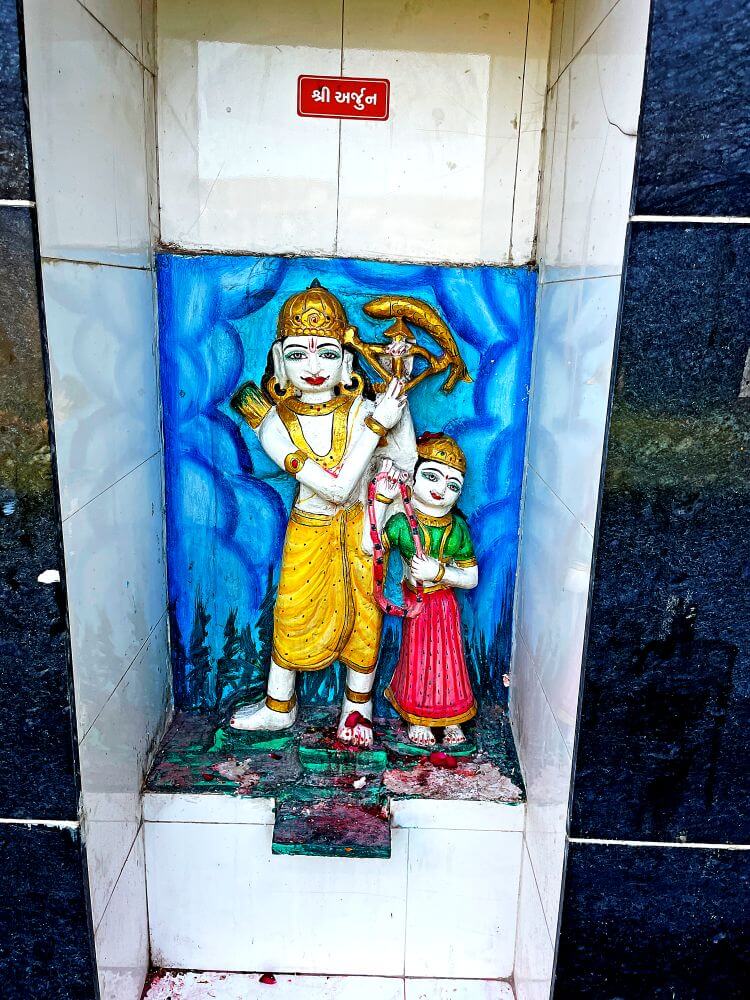
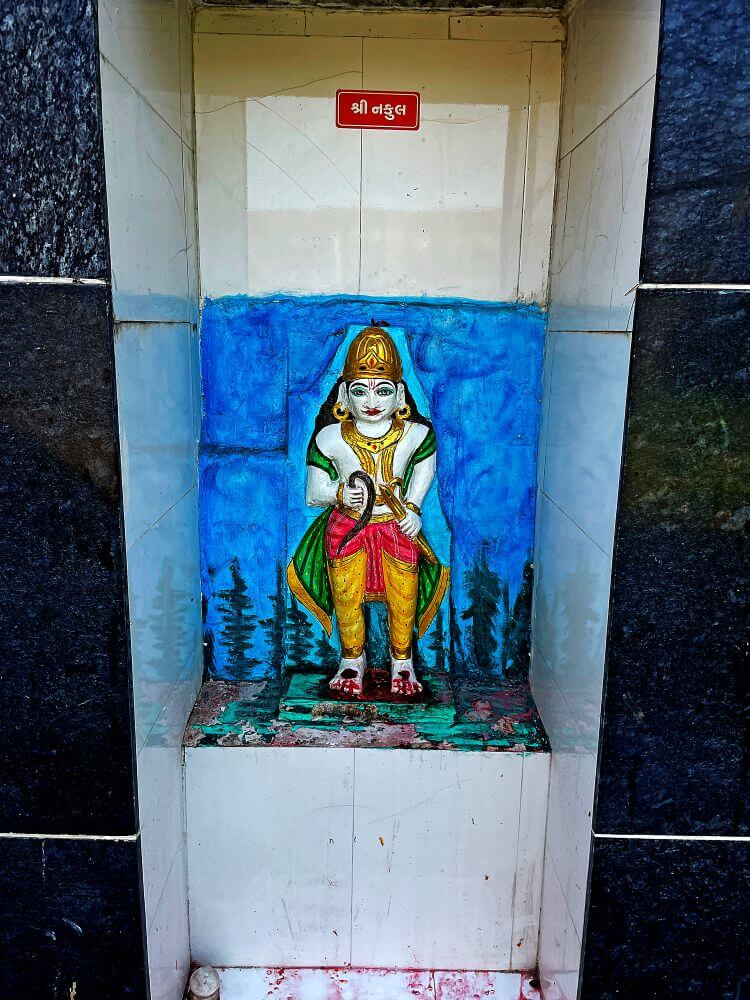
Located near the temple, the Pach Pandav Ovaro on the banks of the Tapi River is associated with the Pandavas. During their 12-year exile, it is said that they spent their final year at this location. The site is also believed to be where they performed shraddha (ancestral offerings) for Karna. Statues of Lord Krishna and the five Pandavas are enshrined here, alongside depictions of Vishnu seated on Garuda.
The Pandava statues are intricately sculpted in 16th-17th century style. Yudhishthira holds a lotus, Arjuna is depicted aiming an arrow at a fish, reminiscent of the Draupadi Swayamvara, with Draupadi standing beside him holding a garland. Bhima wields a mace, while Nakul and Sahadev are armed with swords and whips. To protect these relics from the Tapi River’s floods, a protective wall has been constructed.
The temple is a revered site for performing tarpan rituals, believed to grant salvation to departed ancestors. Devotees from diverse backgrounds visit the temple to honour their ancestors. Additionally, rituals like Kalsarpa Dosha remedies are conducted in the temple’s vicinity, near an adjoining dharmashala (pilgrims’ rest house).
The temple hosts various religious events throughout the year, with Mahashivaratri drawing hundreds of devotees. Rituals, offerings and prayers are performed with great devotion during the festival.