 Dedicated to Lord Shri Krishna and to the great scripture he revealed, the Shrimad Bhagavad Gita, Geeta Bhavan is a focal center for religious and cultural programs in Indore. While there are temples across the country devoted to the Bhagavad Gita, this shrine is regarded as a distinctive one. Within its campus stand shrines to many deities alongside that of Shri Krishna. A continuous stream of religious events is held here and in the various temples within the complex, there are daily programs – discourses, satsangs and similar gatherings – for at least five hours. The temple’s managing trust also carries out extensive healthcare service for the public.
The Gita is a universally revered scripture of Hinduism. In Sanskrit literature, there exist around two hundred ‘Gitas’ that use the word as a suffix – Shiva Gita, Hamsa Gita, Rama Gita and so on – and the Mahabharata itself contains the Anu-Gita. Yet, when the word Gita is spoken, it evokes first and foremost the Bhagavad Gita. The Gita holds the stature of an Upanishad. It is believed to have been delivered by Lord Shri Krishna to Arjuna on the battlefield of Kurukshetra. Comprising eighteen chapters and seven hundred verses, its most ancient extant commentary is Adi Shankaracharya’s Gita-Bhashya. Over the centuries, scholars composed commentaries on it in many languages; among the most celebrated is the ‘Bhavarthadeepika’ authored by Saint Dnyaneshwar in the thirteenth century, popularly known as the ‘Dnyaneshwari’.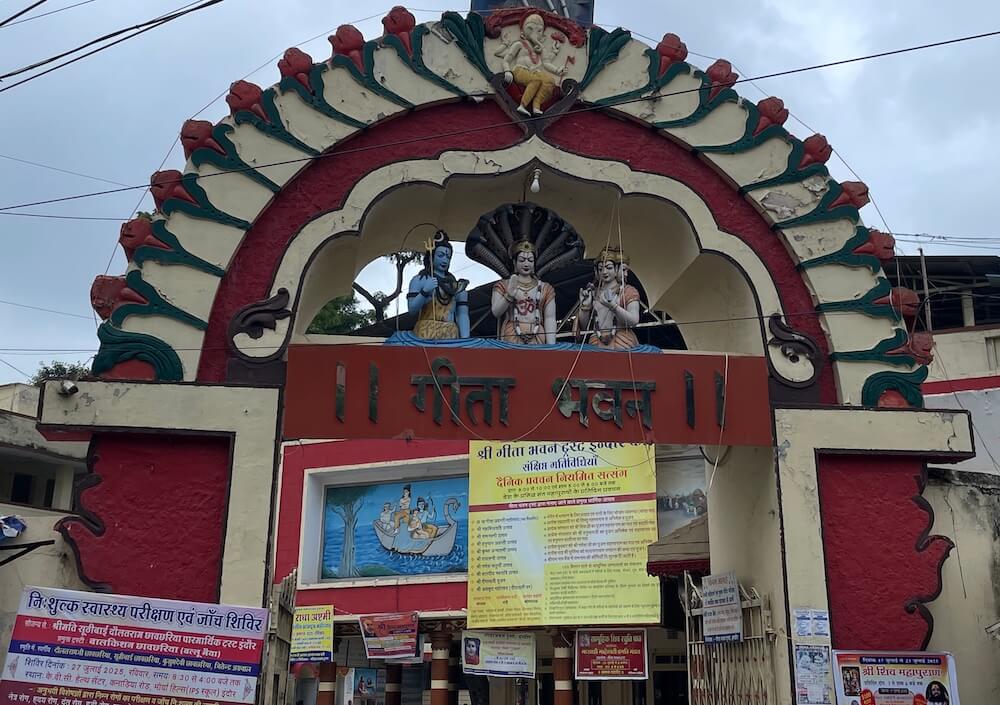 Teaching the paths of knowledge (Dnyan-yoga), action (Karma-yoga) and devotion (Bhakti-yoga); the Gita continues to guide countless seekers even today.
With the aim of rooting the Gita’s message in society, the Geeta Bhavan temple was established in Indore. The temple has a history spanning roughly five decades. In 1967, Baba Balamukund Maharaj arrived here for a saints’ congregation in Indore. On the very land where Geeta Bhavan now stands, he conducted religious programs in a small hut. Balamukund Maharaj decided to reside here itself. From 1968 onward, he began the annual celexbration of Gita Jayanti at this spot. In those days the festival would run continuously for eleven days. 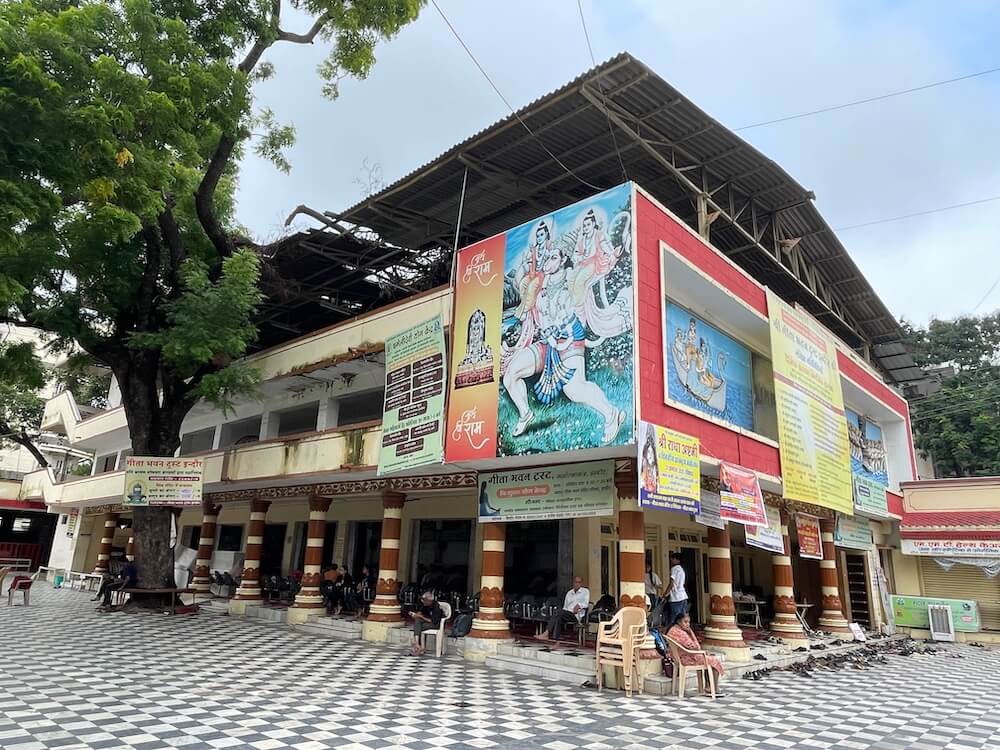 A visionary, he recognized the need for a large temple to host religious events and therefore purchased extensive tracts of land in this area. Upon this land, Geeta Bhavan took shape and nearby a grand hospital and nursing home were erected to serve the people.
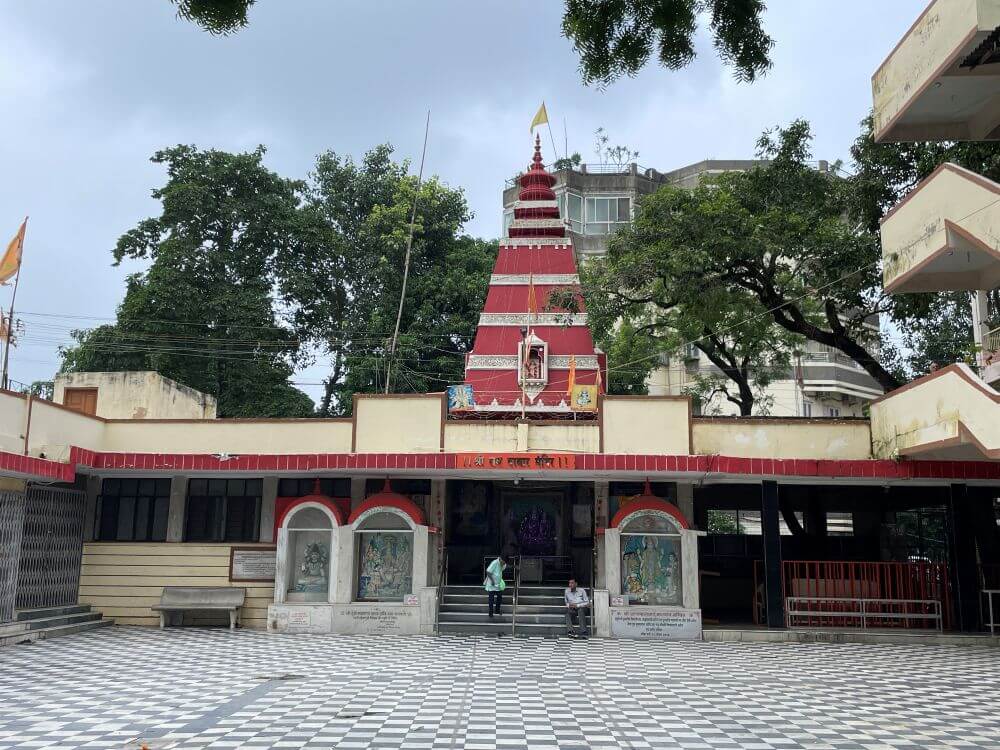
Set within a spacious tract in the Manorama Ganj area of the city, the Geeta Bhavan temple greets visitors with a large gateway. On the gateway’s roof are installed the images of Brahma, Vishnu and Mahesh, while at the center of the arch above is the image of Ganesha. Entering from here, one finds to the left a building that houses a sales center for images of deities and for religious texts. Directly ahead stands the modern structure of the Geeta Bhavan temple. Along the upper facade of this two-storied building are bas-reliefs depicting episodes from Krishna’s life. 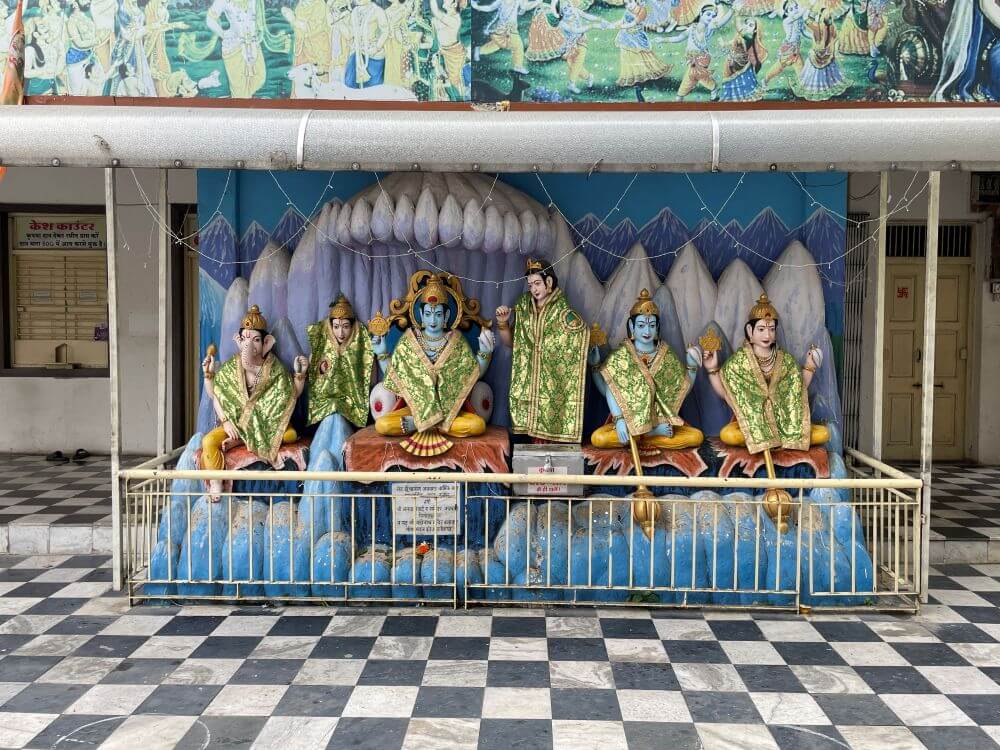 The temple contains a capacious assembly hall. High along the interior walls are large paintings of various deities as well as scenes from the Ramayana, the Mahabharata and the Puranas. At the front is a high marble platform and behind it sit small images of the goddesses Saraswati and Lakshmi. On the wall at the center is a grand painting of Lord Shri Krishna imparting the Gita to Arjuna. Seated upon this platform, saints and scripture-speakers deliver discourses.
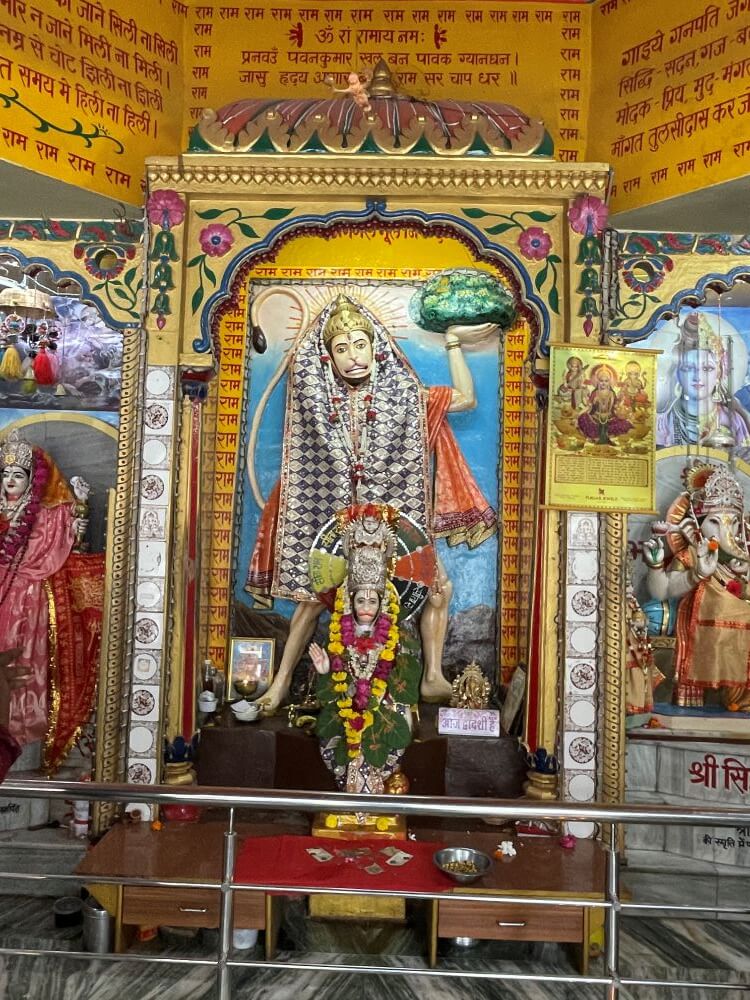
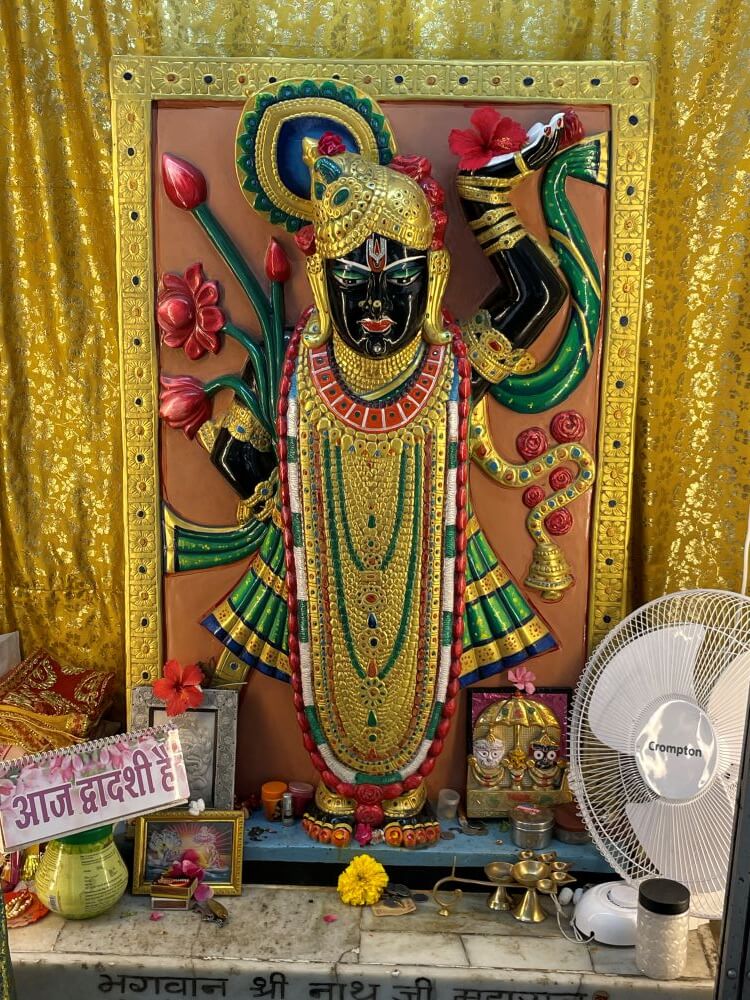
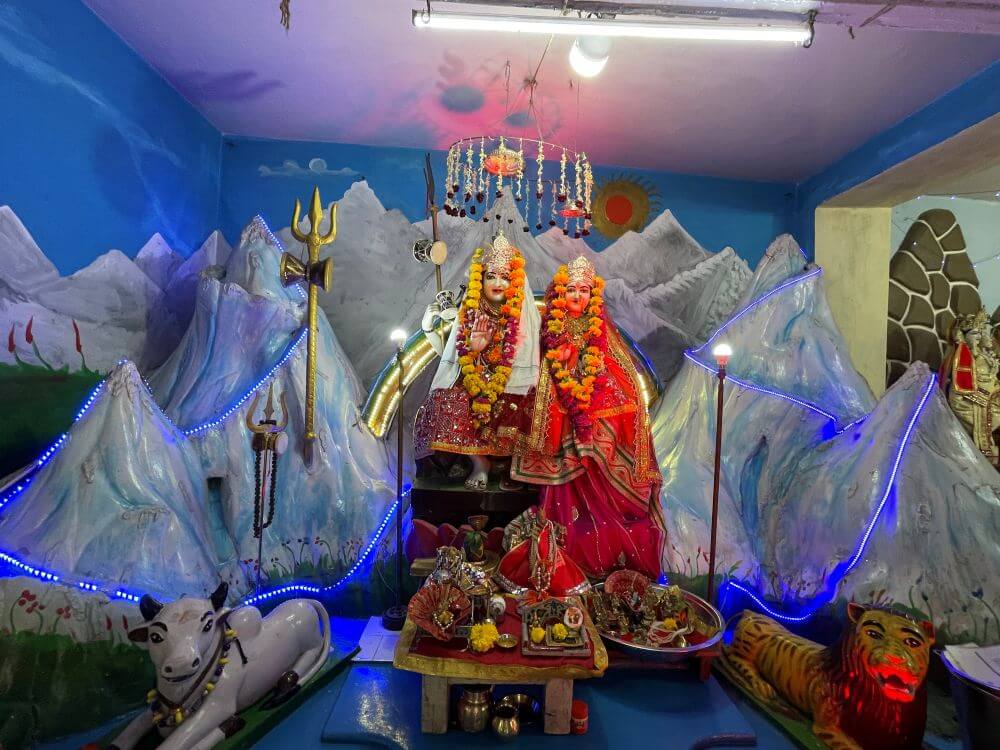
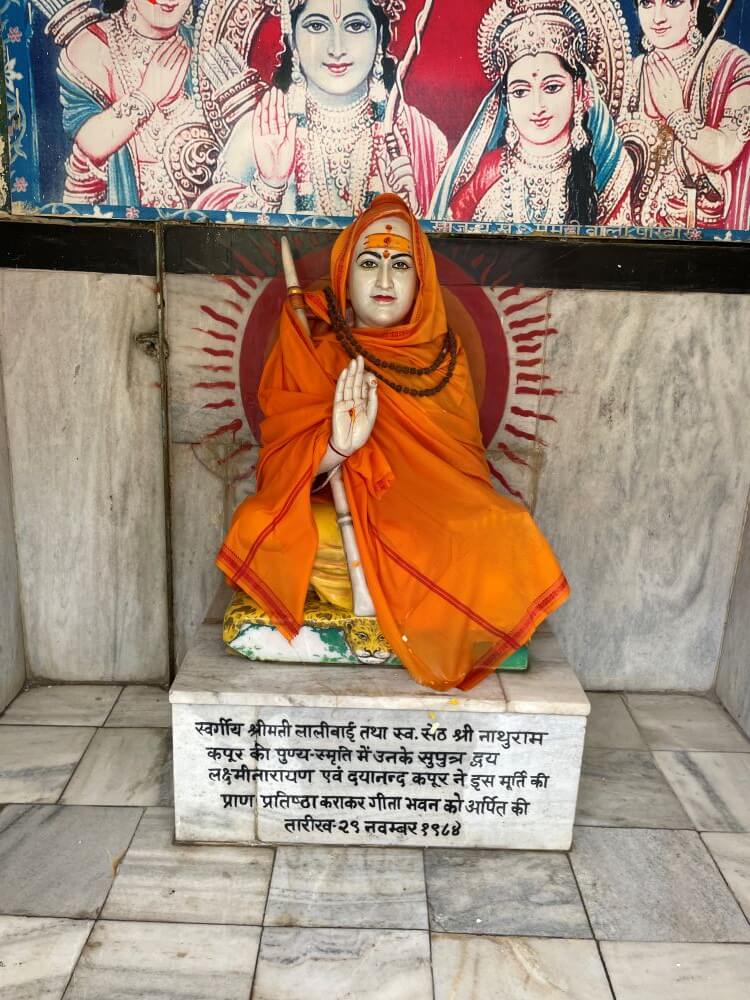
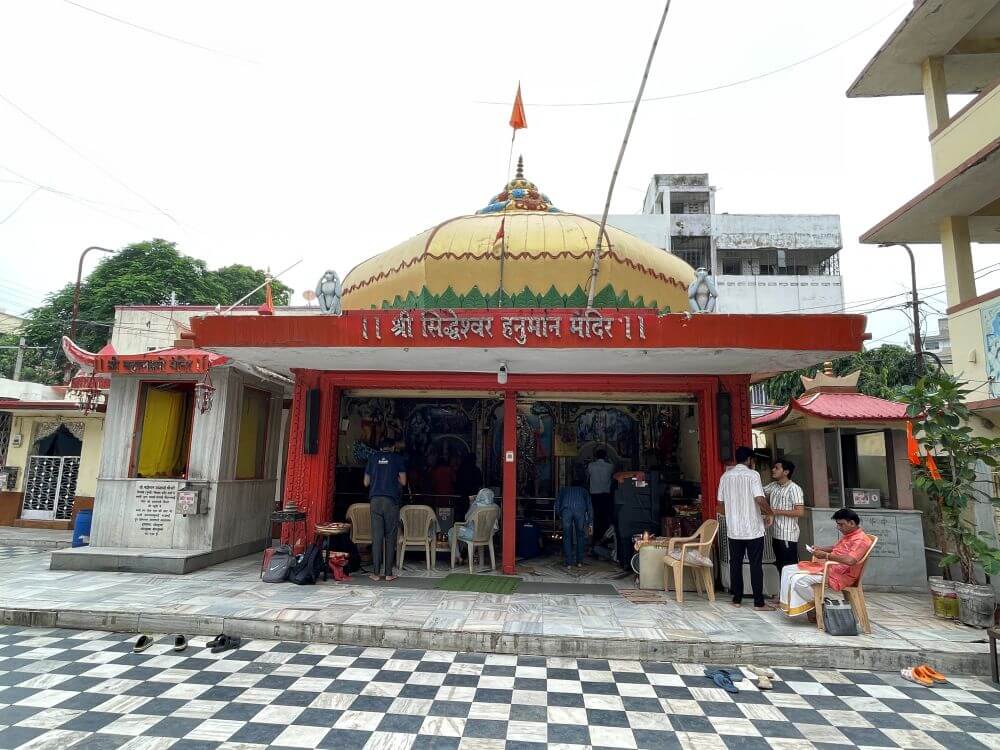
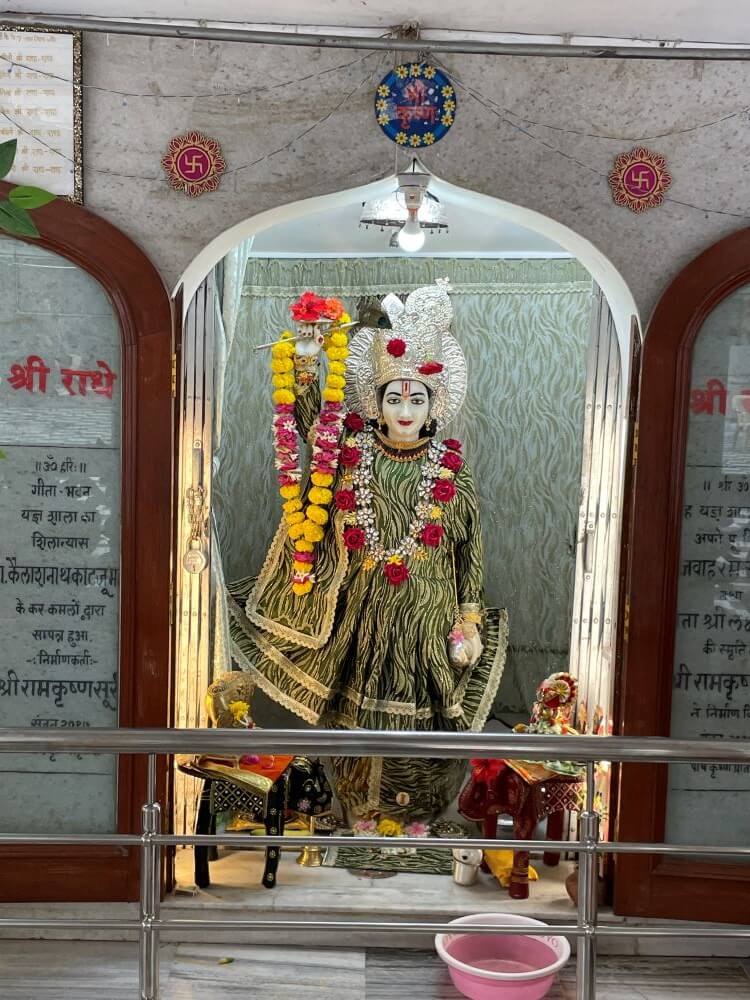
Across the Geeta Bhavan grounds are installed images of various sages, such as Kapila Muni with Devahuti Mata, Maharshi Dadhichi and Adi Shankaracharya. Likewise, the complex contains numerous shrines of varying size. 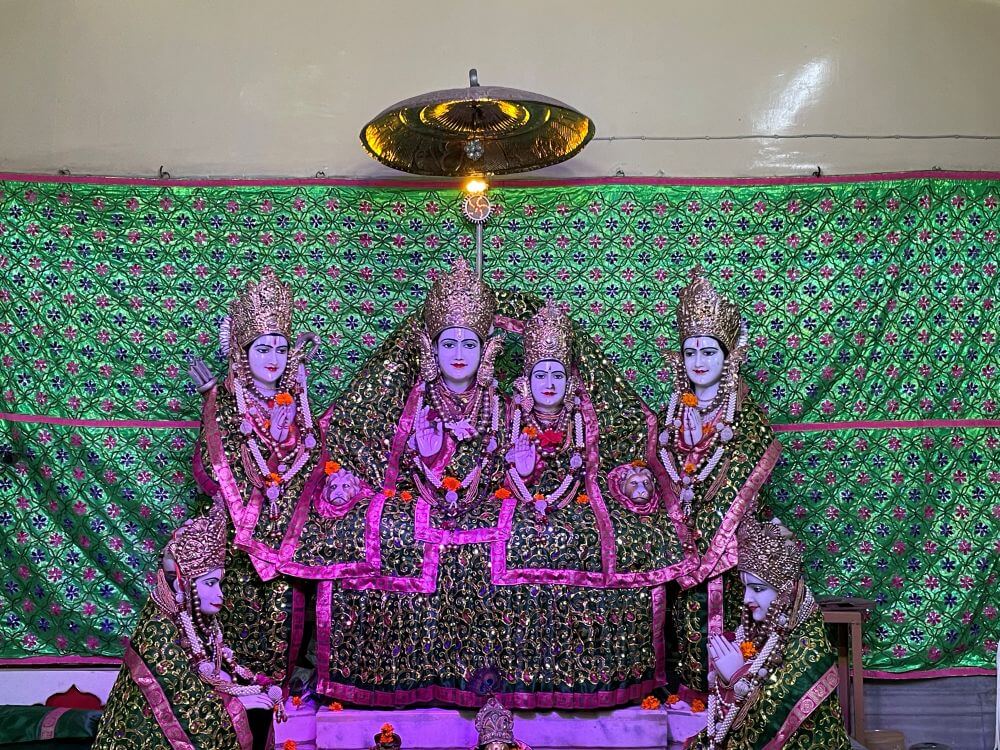 Enshrined here are marble images of Sai Baba, Varun-avatar Lord Jhulelal, Ganesha, the triad of Brahma-Vishnu-Mahesh, Siddheshwar Hanuman, the eight-armed Goddess Durga, Mahalakshmi, Shri Krishna, Annapurna Mata, Kalika Mata, Bhairav, Amba Mata, Gayatri Mata, Saraswati Mata, Santoshi Mata, Lord Shiva-Parvati, Satyanarayan and Shri Ram-Lakshman-Sita.
Formerly, daily programs of discourses and narrative recitations were held from 8 a.m. to 12 noon and again from 2 p.m. to 6 p.m. Nowadays, discourses and satsang are conducted every day from 9 to 10 in the morning and from 5 to 6 in the evening, with saints and storytellers from across the country participating. Each year, beginning on Margashirsha Shukla Ekadashi – known as Mokshada Ekadashi – a grand, week-long Gita Jayanti celebration is organized. 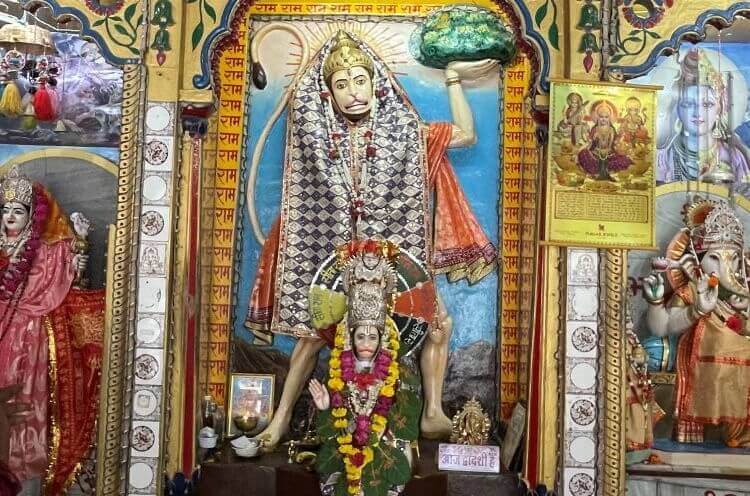 In addition, the temple celebrates the festivals of Mahashivratri, Ram Navami, Hanuman Jayanti, Krishna Janmashtami, Radhashtami, Sharadiya Navratri, Diwali Pujan and the Annakut in Diwali, in the presence of thousands of devotees. On every Ekadashi, the Vishnu Sahasranama abhishek and worship are performed. Each Monday sees Shiva-pujan and Rudrabhishek; on Tuesdays, the Hanuman abhishek and recitation of the Hanuman Chalisa and on Wednesdays, worship of Ganesha. Every full-moon day (Purnima), a grand Satyanarayan puja is conducted.
Within the Geeta Bhavan courtyard is an Ayurvedic dispensary. Likewise, a yoga center operates here, which is open to all from 6:30 to 7:30 in the morning and exclusively for women from 4:00 to 5:00 in the evening. Nearby stands a state-of-the-art hospital run by the temple trust, equipped with one hundred beds. Here, the poor and needy receive treatment at very nominal charges and patients are served free breakfast and meals twice daily. For the families of patients, a dharmashala has been built, providing low-cost accommodation.