 The Gaypagla Temple (also known as Gay Nū Paglu or Gaypagla Tirthdham) is a site of immense historical and spiritual significance located in Dhoran Pardi, Taluka Kamrej, Surat. According to popular belief, Lord Krishna and Balram performed penance here on the banks of the Tapi River to atone for the sin of cow slaughter (gohatya). After their penance, the cows were revived, and their footprints (Gay Nū Paglu) are said to be imprinted on a sacred stone. This stone is still preserved and displayed in the Radha-Krishna Temple here. Adjacent to this temple are two other notable shrines: the Datt Temple and the Himaleshwar Mahadev Temple.
As per the legend, during the Dvapara Yuga, Lord Krishna and Balram, along with other cowherds, used to take cows for grazing on the banks of the Yamuna River. To pass the time, they played a ball game. One day, their ball fell into the river. When Krishna entered the river to retrieve it, he encountered Kaliya, a venomous serpent, and subdued him. Afterward, Krishna felt exhausted and decided to rest. He instructed Balram, ‘Evening is approaching; it is time to call the cows back. Take my conch and blow it to summon them.’
Balram began blowing the conch, but on the second attempt, the sound did not resonate properly.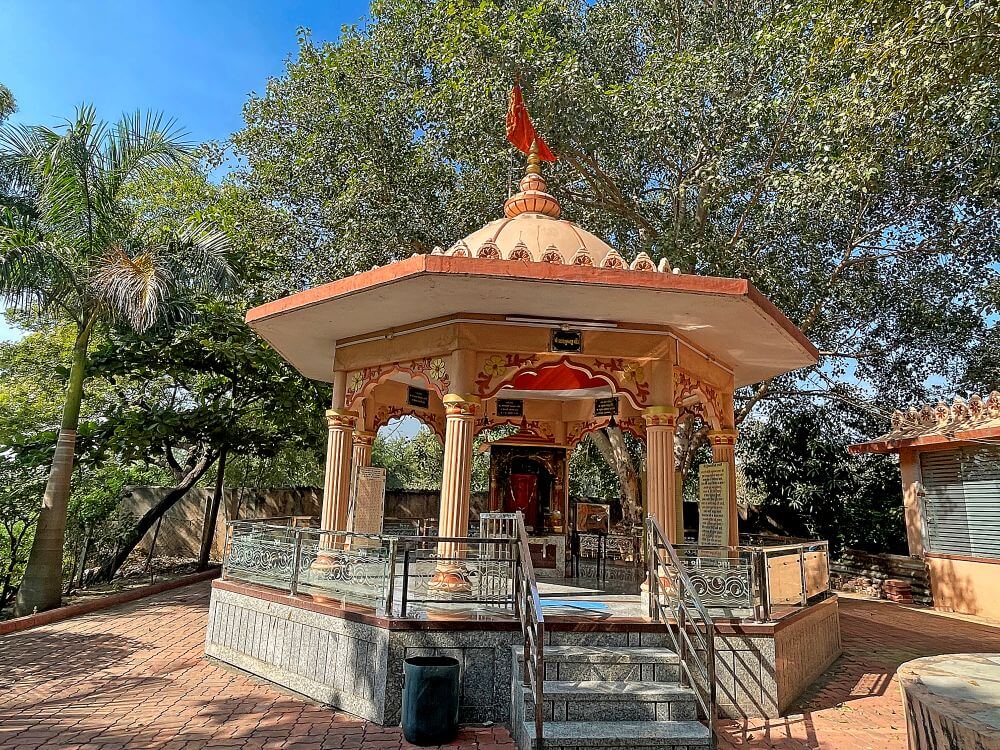 Confused, the cows panicked and ran into the river, where they drowned. About 10,000 cows perished, and the sin of cow slaughter fell upon Krishna and Balram. Krishna’s conch and Balram’s plough turned black as a result.
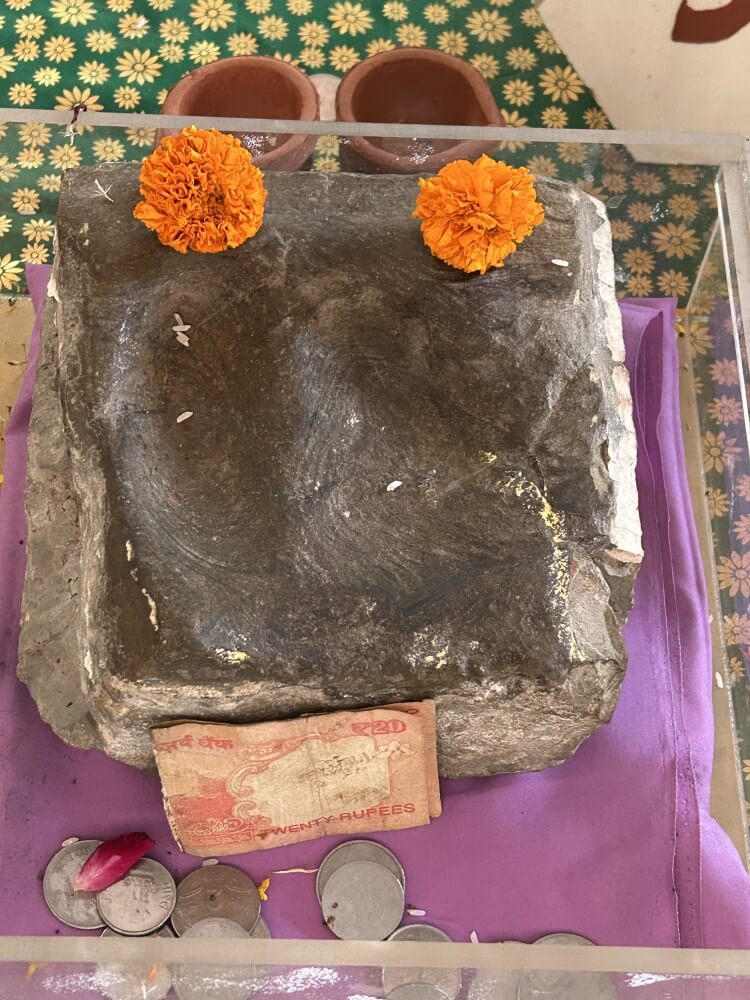
Stricken with grief, the brothers returned home. Upon hearing this, Sage Garg visited Krishna and advised him to perform penance by the banks of the Tapi River. ‘You will see a Shivalinga there,’ said Garg, ‘If you worship and perform penance, the sin will be absolved.’ Following this advice, Krishna and Balram undertook five days of penance on Vaishakha Shuddha Ekadashi. Their sin was absolved, and the cows were miraculously revived. The revived cows’ footprints were imprinted on a stone, which remains a sacred relic at the Radha-Krishna Temple.
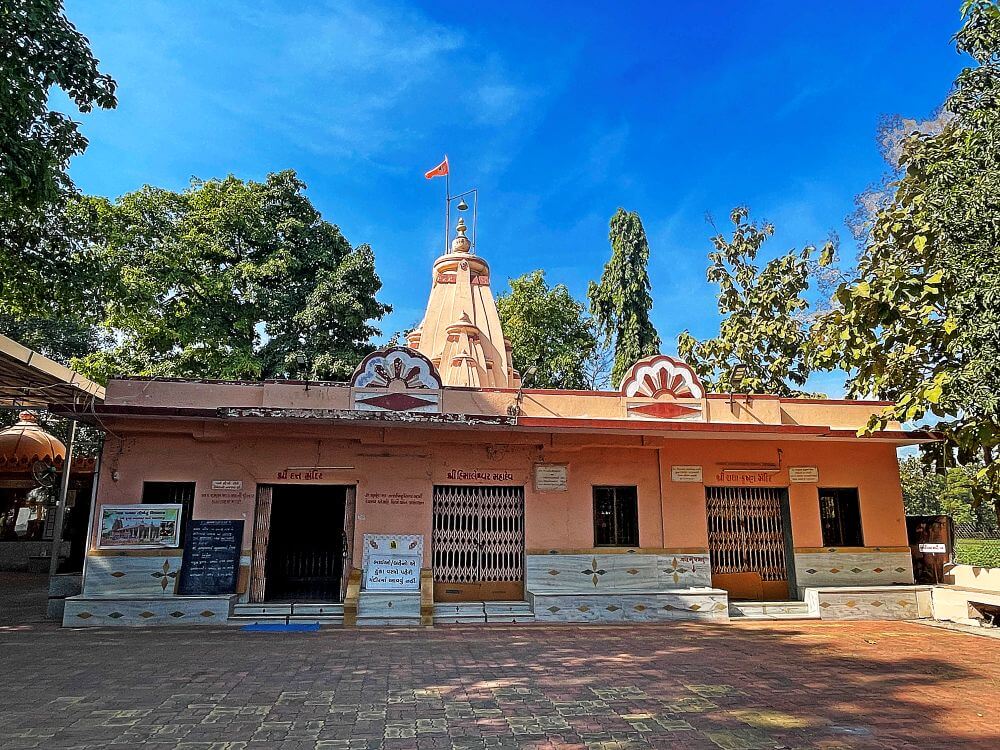
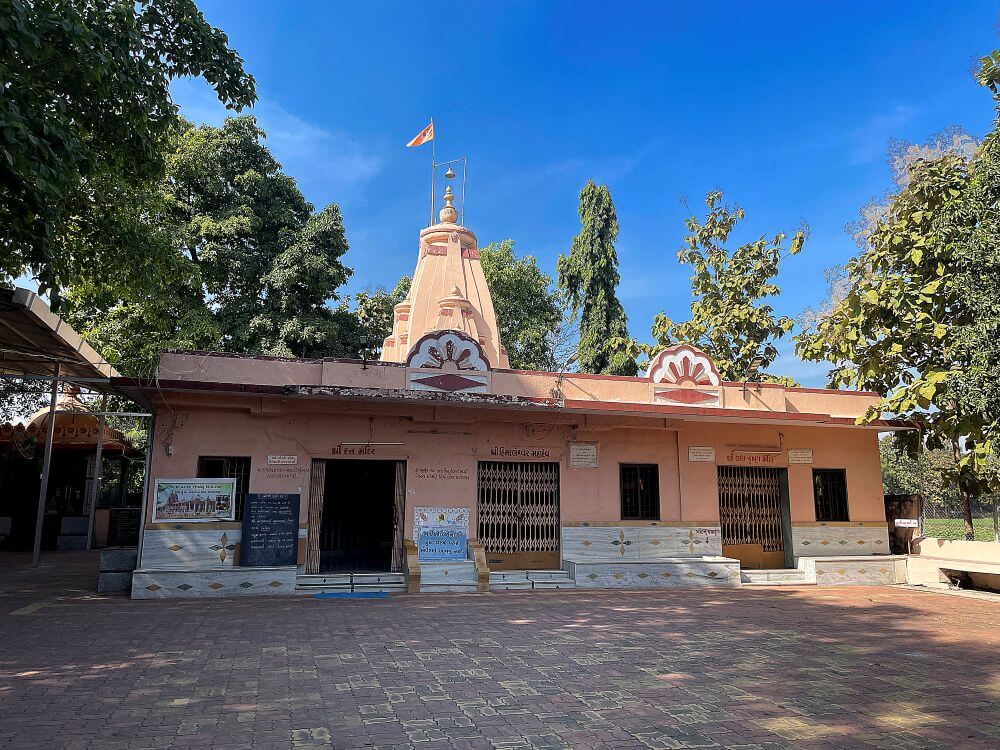
 The temple is situated in a sprawling courtyard with an old architectural structure. The temple layout comprises a wide sabhamandap (assembly hall), three sanctums (garbhagrihas) arranged in a row, and small vestibules (antaral) before each sanctum. The temple has a tall shikhara (spire) adorning its top.
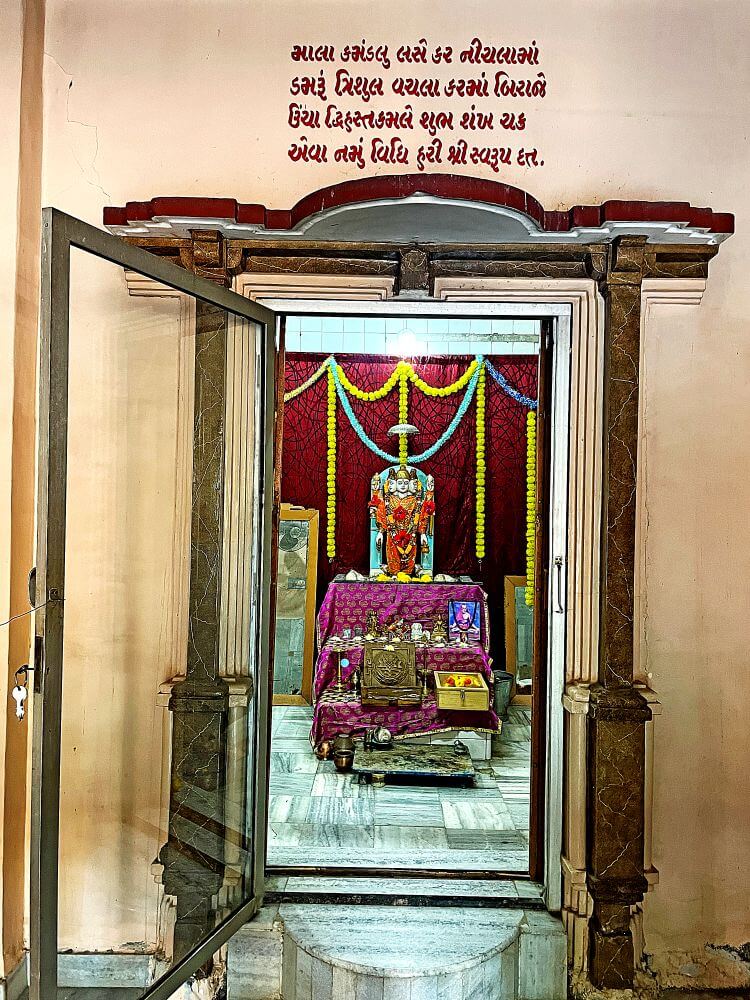
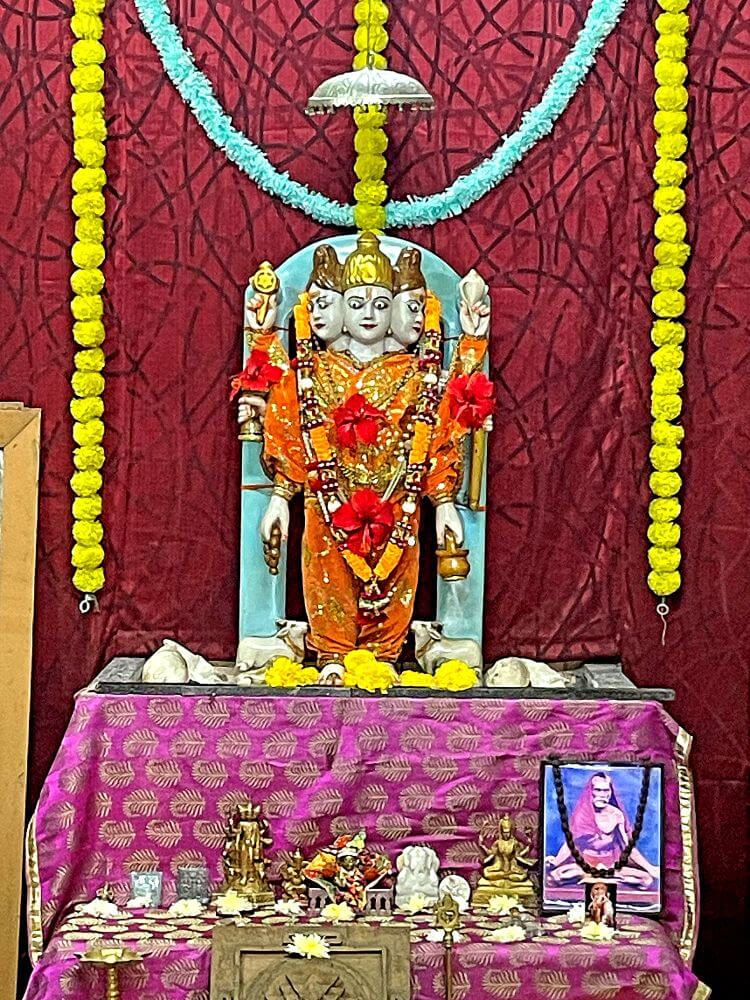
On the left sanctum stands the marble idol of the Trimukhi Datta (three-faced Lord Dattatreya) atop a high pedestal. Nearby is a large metallic Shri Yantra alongside brass idols of the Goddess and Lord Datta. Outside the sanctum, portraits of revered saints from the Datta Sampradaya (Dattatreya tradition) are displayed.
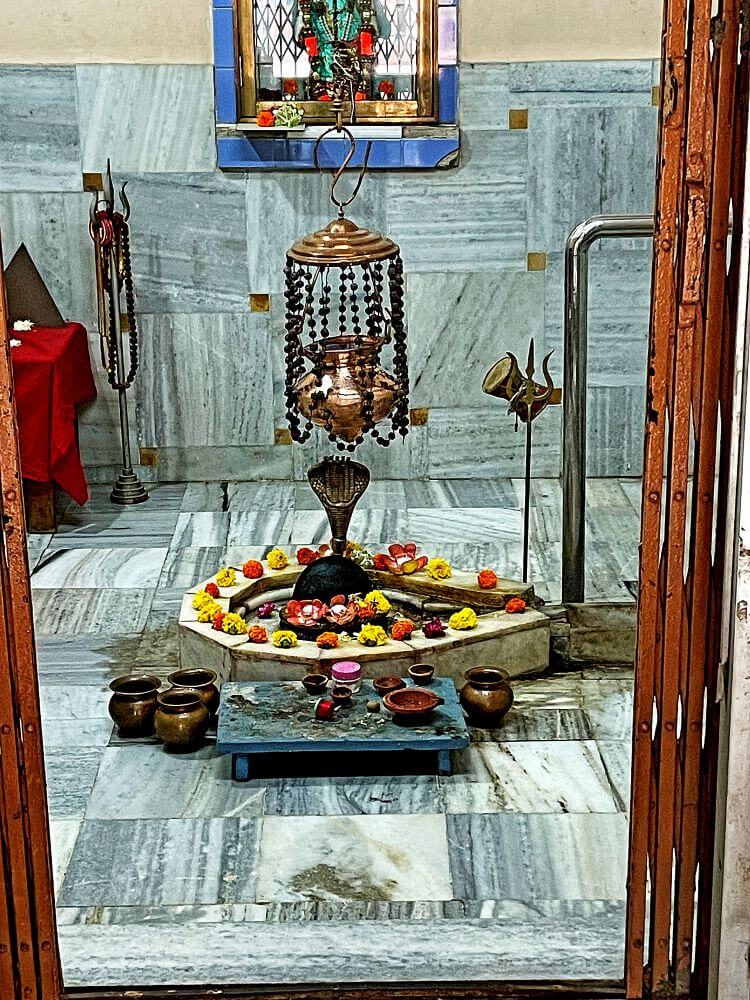
The central sanctum houses the Shivalinga of Lord Ghushneshwar. The Shivalinga is adorned with a brass naga (snake) canopy, and an abhishek (ritual bathing) vessel hangs above it. Behind the sanctum wall lies an idol of Goddess Parvati. In front of the sanctum stands a small Nandi idol.
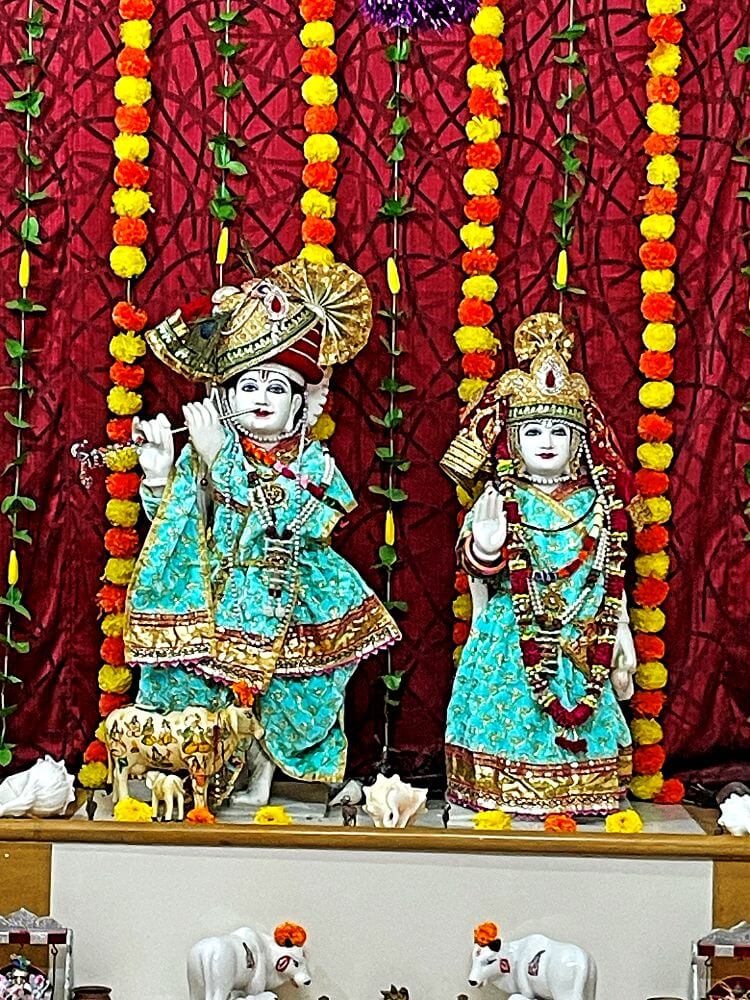
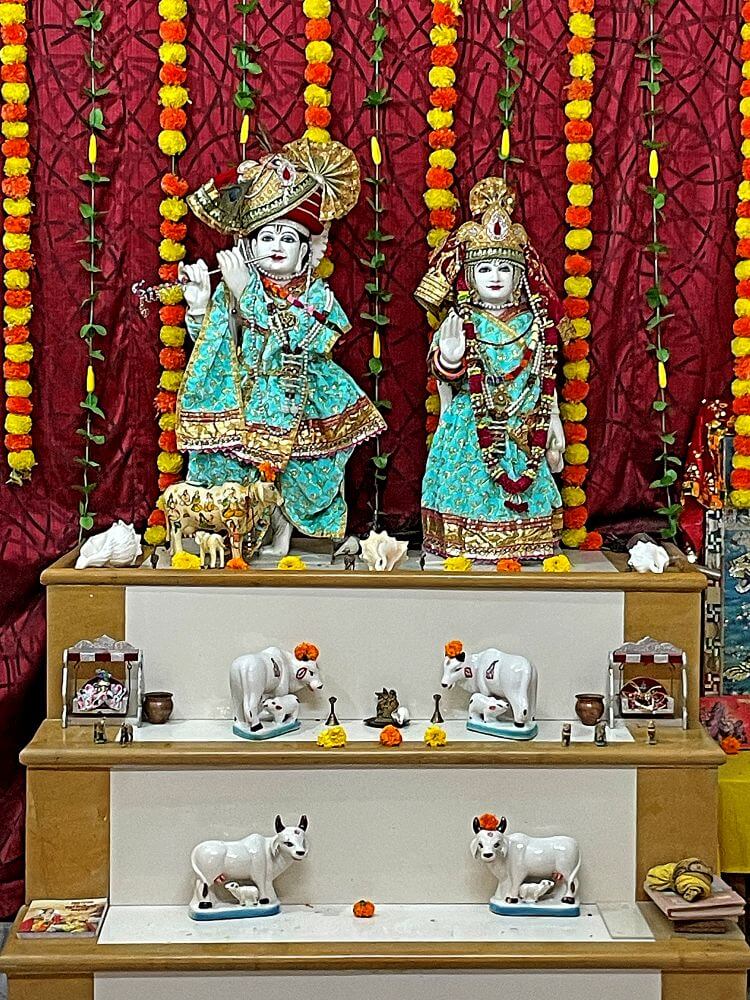
The right sanctum features elegant marble idols of Radha and Krishna atop a pedestal, surrounded by small Gomata (cow) idols. Within the vestibule, a glass case displays the large, square stone with the revered cow footprints (Gay Nū Paglu).
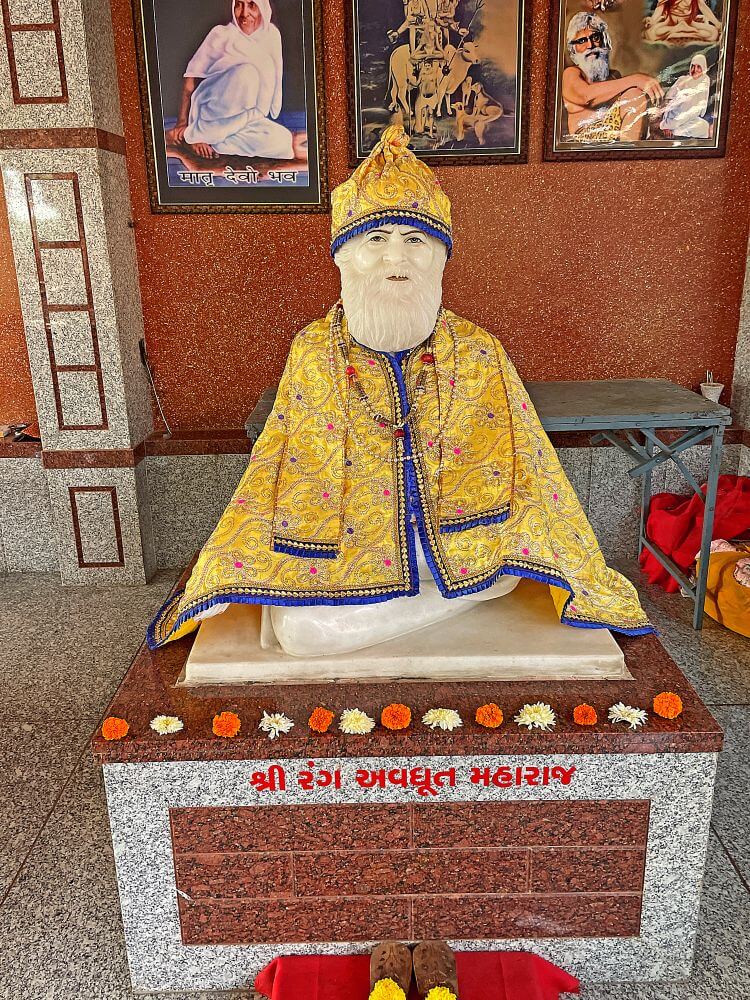
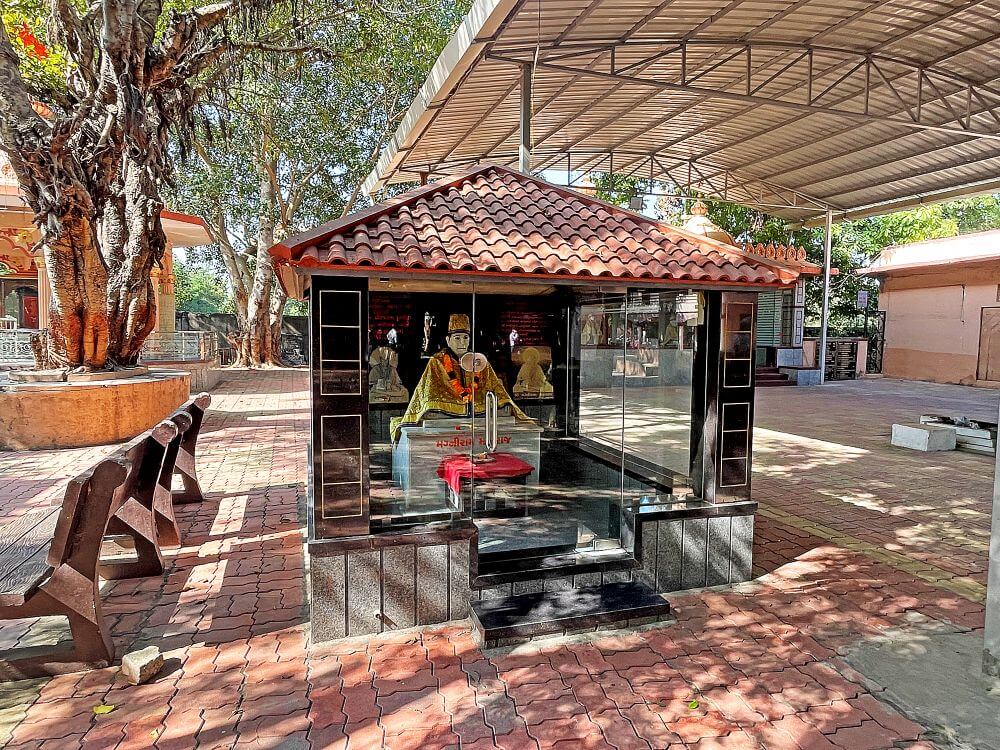
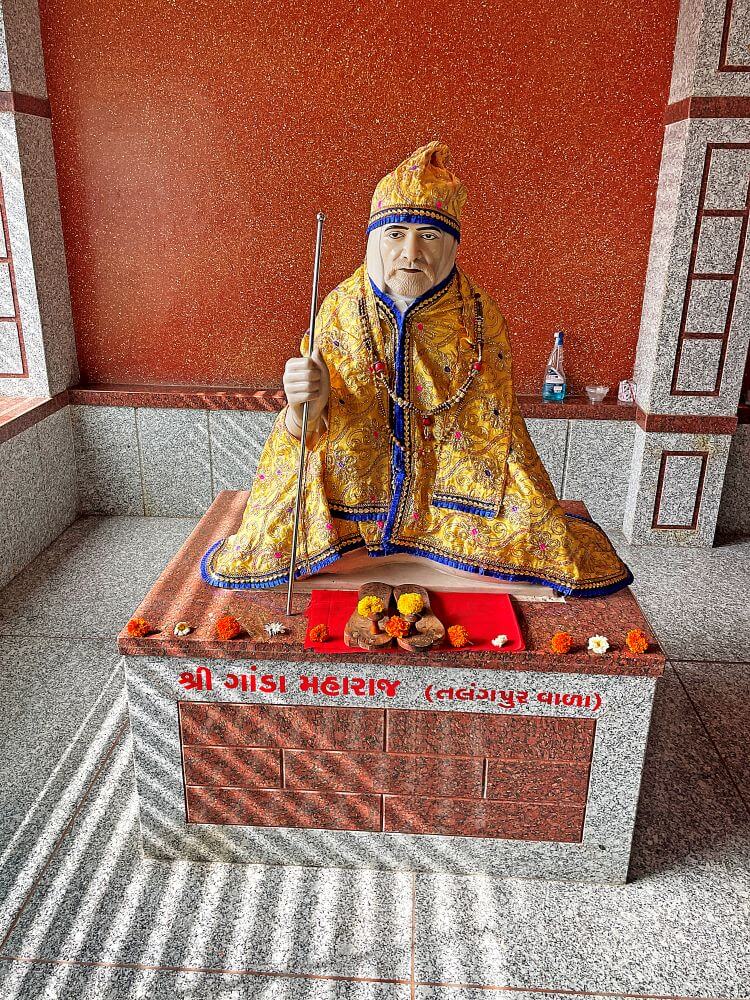
Behind the main temple, there are additional shrines dedicated to Saint Rang Avadhoot Maharaj, Jalaram Bapa, Sai Baba, and Talangpurwale Ganda Maharaj.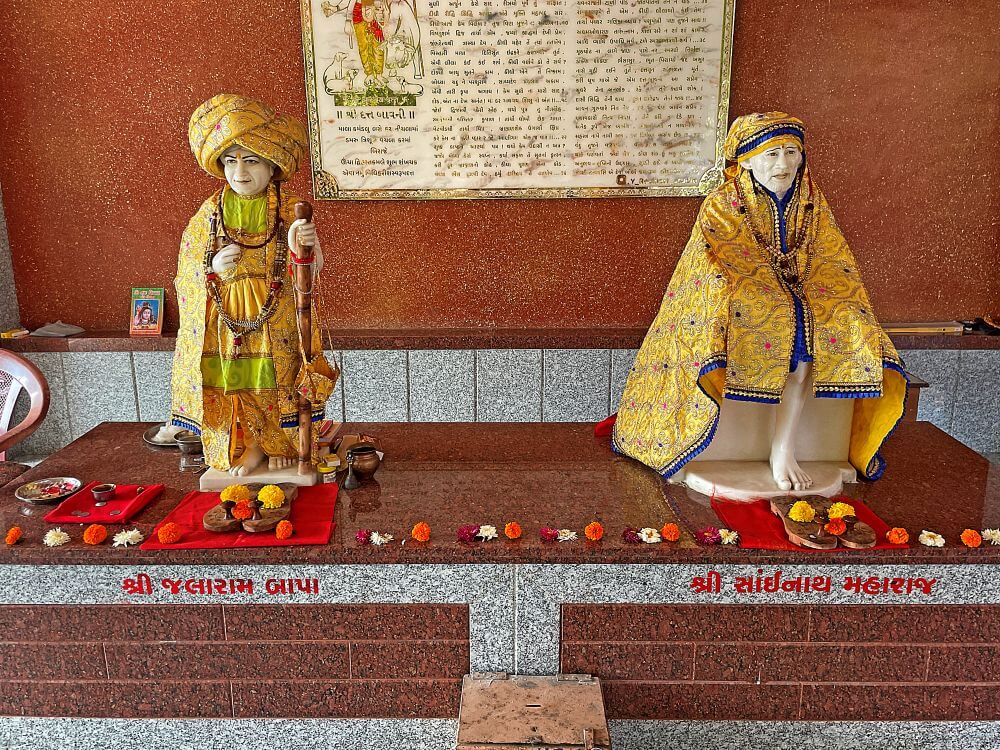 These shrines are built on high platforms with beautifully crafted idols. Nearby, there is an octagonal platform housing a Hanuman temple with a domed roof.
Close to the main temple, the Shankheshwar Mahadev Temple is another sacred site. Inside, idols of Krishna, Balram and cows are displayed alongside a shrine of Goddess Saraswati. The sanctum of this temple contains two Shivalingas adorned with naga canopies, as well as idols of Goddess Parvati and other deities.
To the right of the temple lies the Tapi River. Although the river’s banks are nearby, access to its deep waters is restricted for safety reasons. The temple premises include a bhojanalaya (dining facility) for visitors.
The temple hosts numerous religious programmes throughout the year. Key festivals celebrated here include: Krishna Janmashtami, Datta Jayanti, and Maha Shivratri. During Shravan (a sacred month for Lord Shiva), hundreds of devotees visit the temple, many carrying kavad (sacred pitchers) to perform rituals at Shankheshwar Mahadev Temple.