
गणेश मंदिर
ऐथोर, ता. उंझा, जि. मेहसाणा
Ganesh Temple
Aithor, Tal. Unjha, Dist. Mehsana
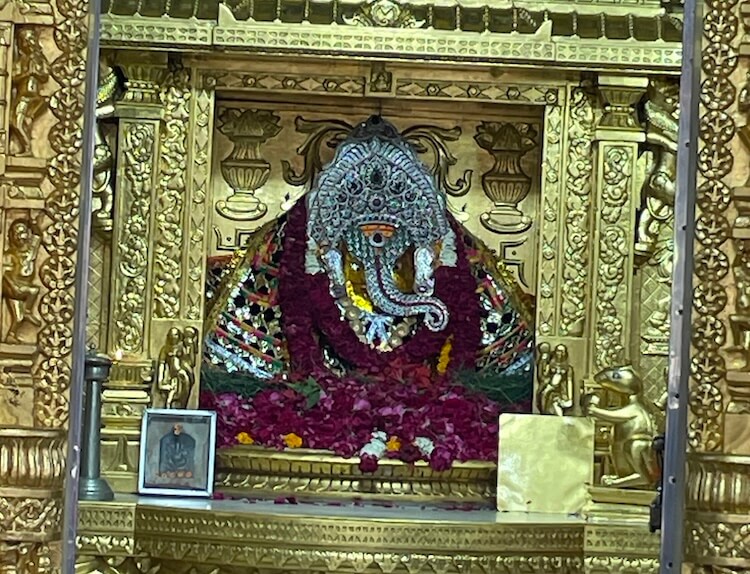 The Ganesh Temple, situated upon the verdant banks of the Pushpavati River in Aithor, within the Unjha Taluka of Mehsana district, is revered as an exceptionally ancient and spiritually vibrant sanctuary. This hallowed site is steeped in a historical and mythological heritage tracing back to the Dwapara Yuga. The pre-eminent feature of the enshrined idol is that it is ‘Dabi Sundwala’ (left-trunked) and, acoording to local belief, was crafted from ‘Renu’ (sacred earth) by the gods themselves during the Dwapara Yuga. The deity is traditionally anointed with a layer of vermilion mixed with oil or clarified butter. A remarkable tradition persists during the Ganesh festival in the month of Bhadrapada, wherein Ganapati Dada is accorded a ‘Guard of Honour’ by the Gujarat State Police. This custom, which commenced during the reign of Maharaja Sayajirao Gaekwad of Baroda,
  continues to be observed today with profound reverence and devotion.
A celestial legend recounts the origins of this temple. In antiquity, this township was known as ‘Aravati Nagari’ or ‘Airavati Nagari’, subsequently evolving into ‘Ayadhi’ and presently ‘Aithor’. During the Dwapara Yuga, when the wedding procession of Lord Indra set forth, all deities were invited to partake in the festivities. Lord Ganesh joined the procession. However, Indra, observing the elephantine form, the curved trunk and the prominent belly of Ganesh, mocked Him and cast Him out of the retinue. Deeply incensed by this affront, Ganesh invoked His divine power, causing the wheels of Indra’s chariot to sink into the earth near the Somnath Mahadev Temple,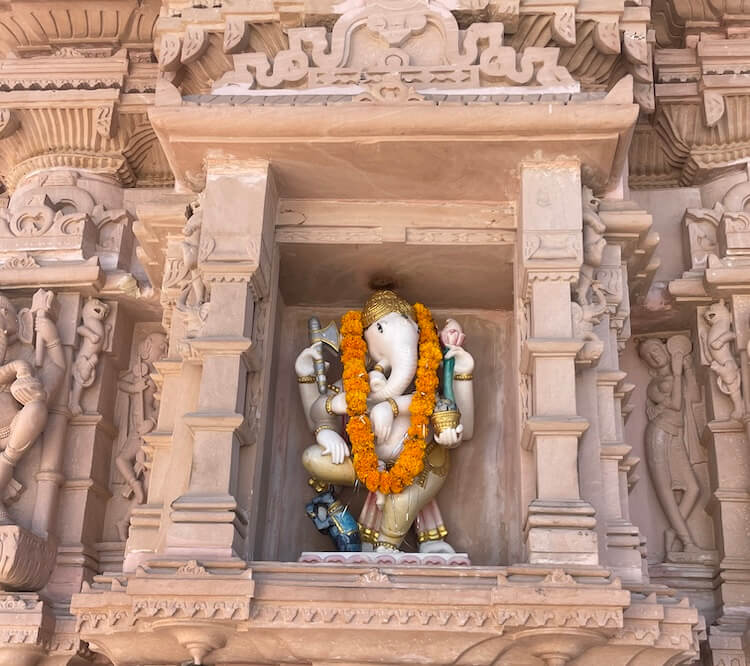 located between Aithor and Unjha. Realising that this misfortune was the consequence of insulting Lord Ganesh, the assembled deities sought His forgiveness and consecrated His idol upon the banks of the Pushpavati River.
According to sacred lore, on the fourth day of the bright fortnight of Bhadrapada (Bhadrapada Shuddha Chaturthi), Mother Parvati performed the ‘Shodashopachara’ worship of Ganesh at this very spot. This act of devotion led to His manifestation in His awakened form. Consequently, this day attained renown as ‘Varad Chaturthi’. Lord Shiva, while extolling the virtues of this ‘Chaturthi Vrata’, proclaimed that devotion offered to Ganesh on this day with absolute faith ensures the annihilation of all obstacles and bestows success in all endeavors. Following the rites, the family of Lord Shiva prepared to rejoin the procession, but Ganesh found further travel arduous due to exhaustion. At that moment, 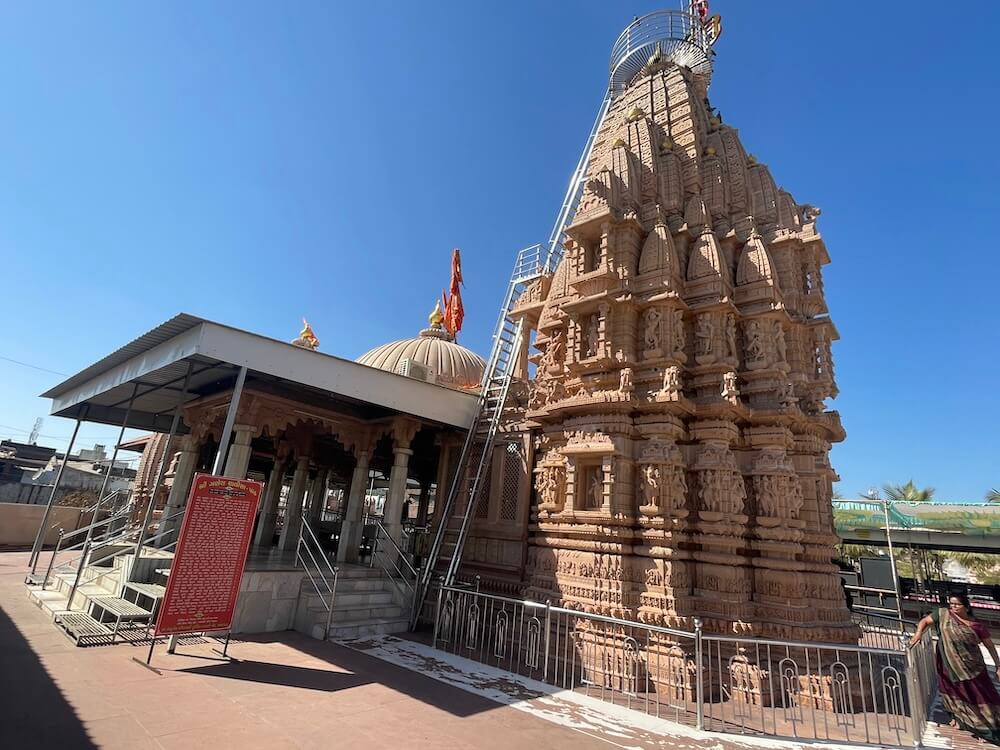 Lord Shiva commanded Him in Gujarati, ‘Ahi Thaur’ (stay here). Thus, the location came to be known as ‘Ahi Thaur’, which later corrupted into the present name, Aithor. Following Shiva’s instructions, Ganesh remained, while Mother Parvati and Kartikeya proceeded. However, Mother Parvati, reluctant to leave her son, halted at Unjha, which is celebrated today as the Umiya Mataji shrine. Kartikeya Swami rested at Sidhpur, a short distance away, where His temple stands to this day.
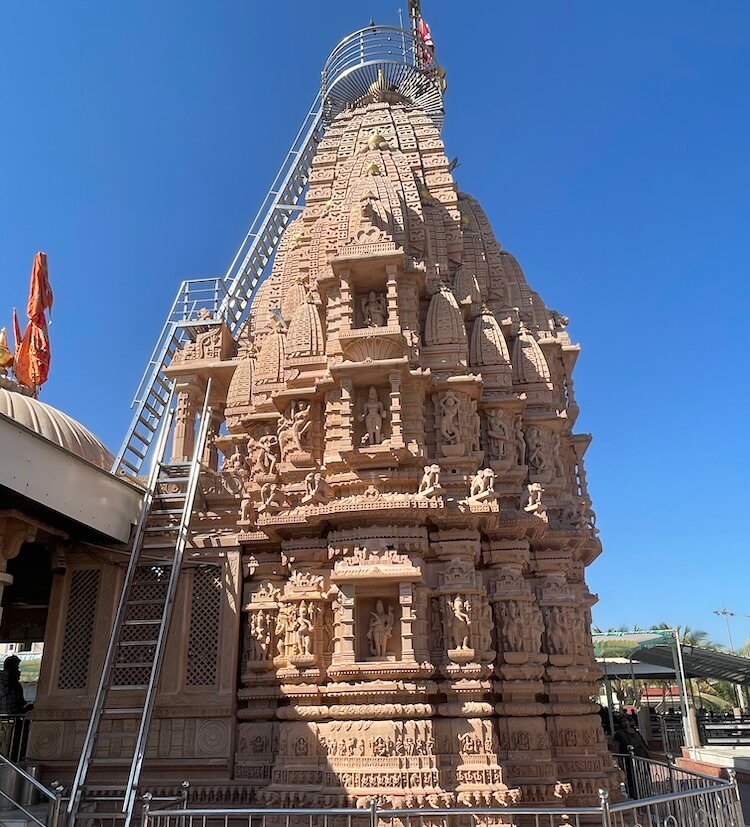
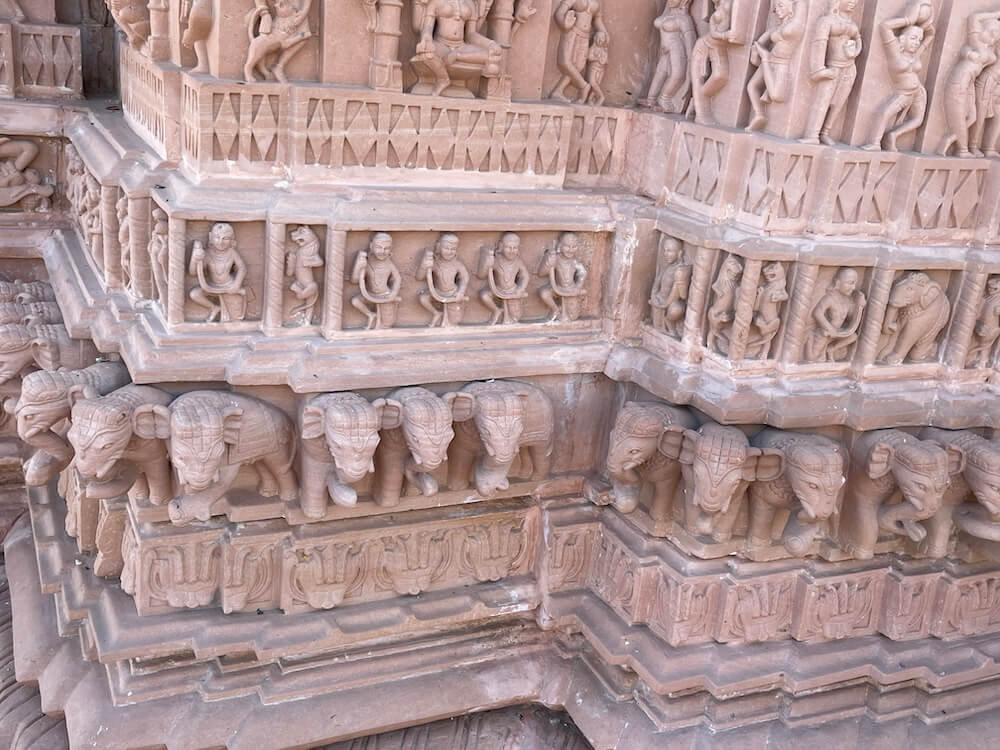
While the precise period of the temple’s construction remains elusive, one school of architectural thought suggests it dates back to the Solanki era. It is said that members of the Solanki dynasty visited this shrine to seek blessings on auspicious occasions. In the thirteenth century, 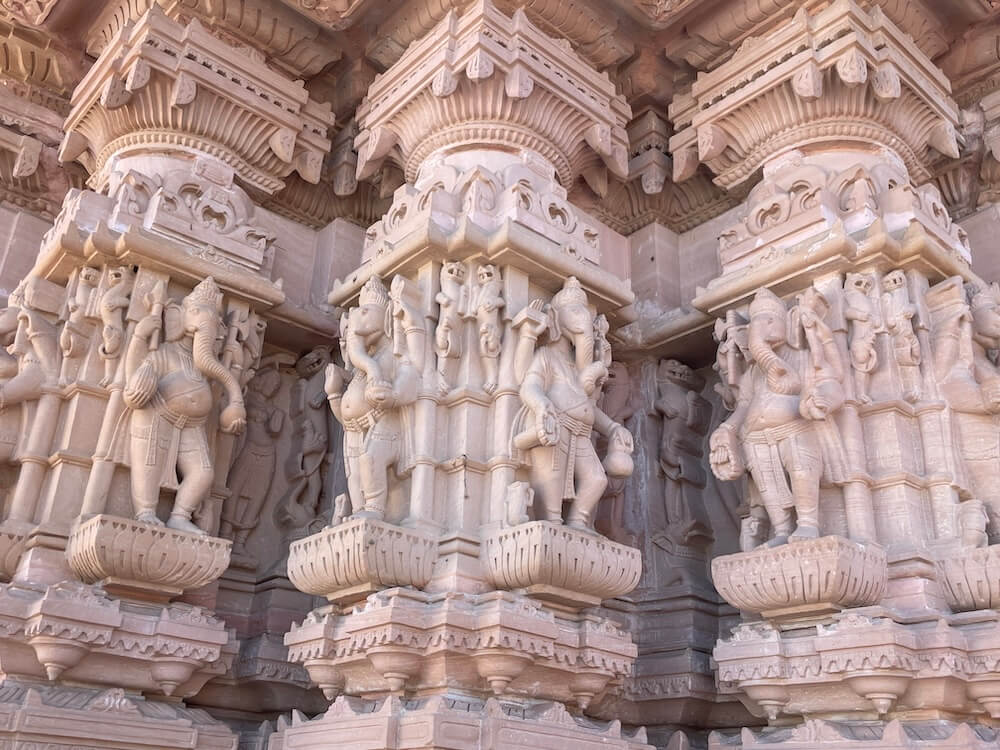 the Delhi Sultan Alauddin Khilji (c. 1266 – 4 January 1316) sent an army in 1299 to ransack Gujarat, which was ruled by the Vaghela king Karna. The Delhi forces plundered several major cities of Gujarat, including Anahilvada (Patan), Khambhar, Surat and Somnath. Sultan’s army also attacked the temple at Aithor and desecrated the external carved walls and sculptures. The ruins of this destruction are visible in the precincts even today. Nevertheless, his army remained unable to cause any harm to the primary idol of Ganapati Dada.
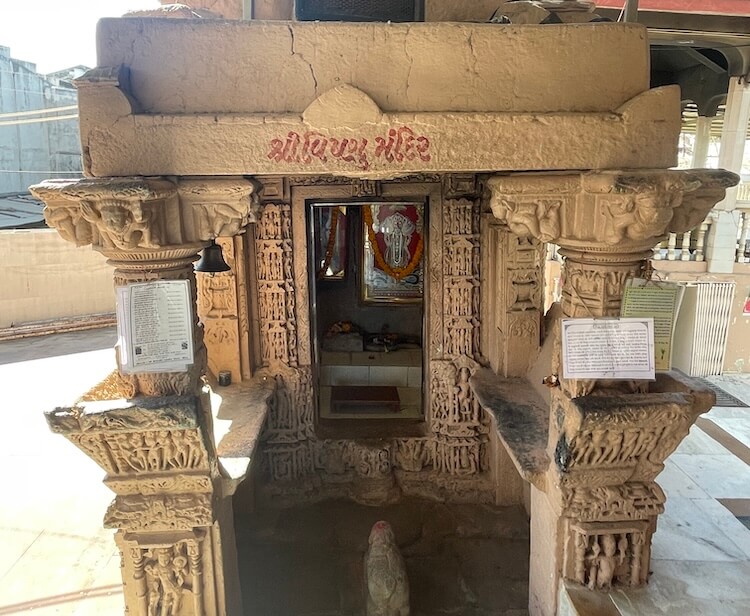
Directly facing the temple stands an ancient shrine dedicated to Lord Vishnu. According to Mehsana District Gazetteer, the Vishnu temple is approximately 800 to 900 years old, featuring various manifestations of the deity. 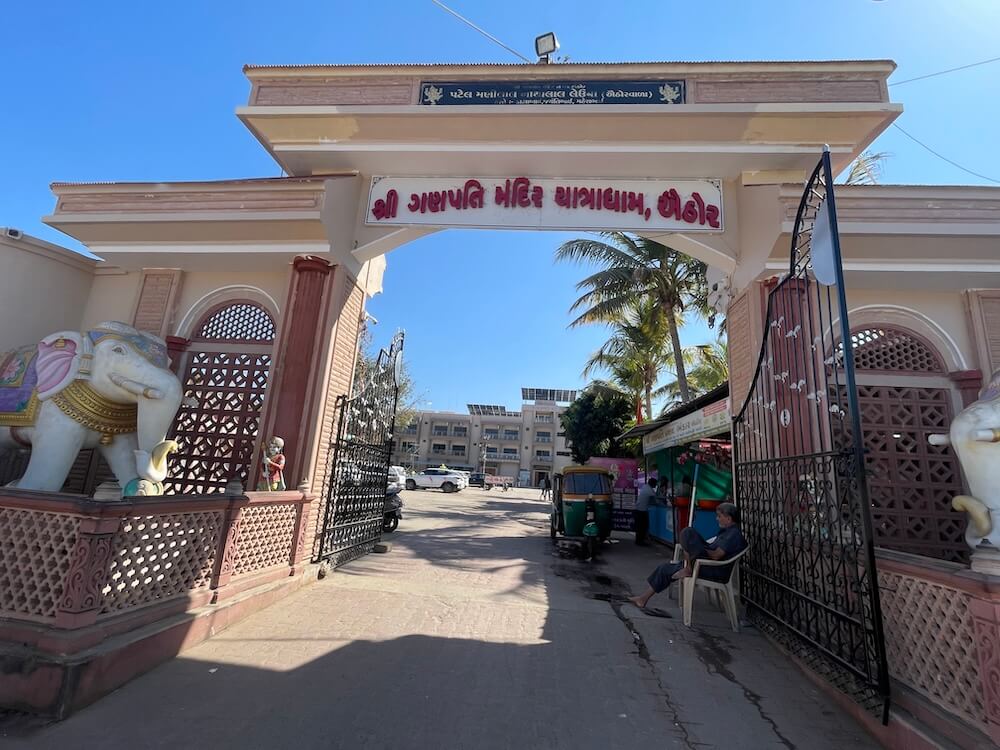 The southern corner of this Vishnu temple houses the Varaha avatar, while the northern corner features a standing idol of Lord Vishnu.
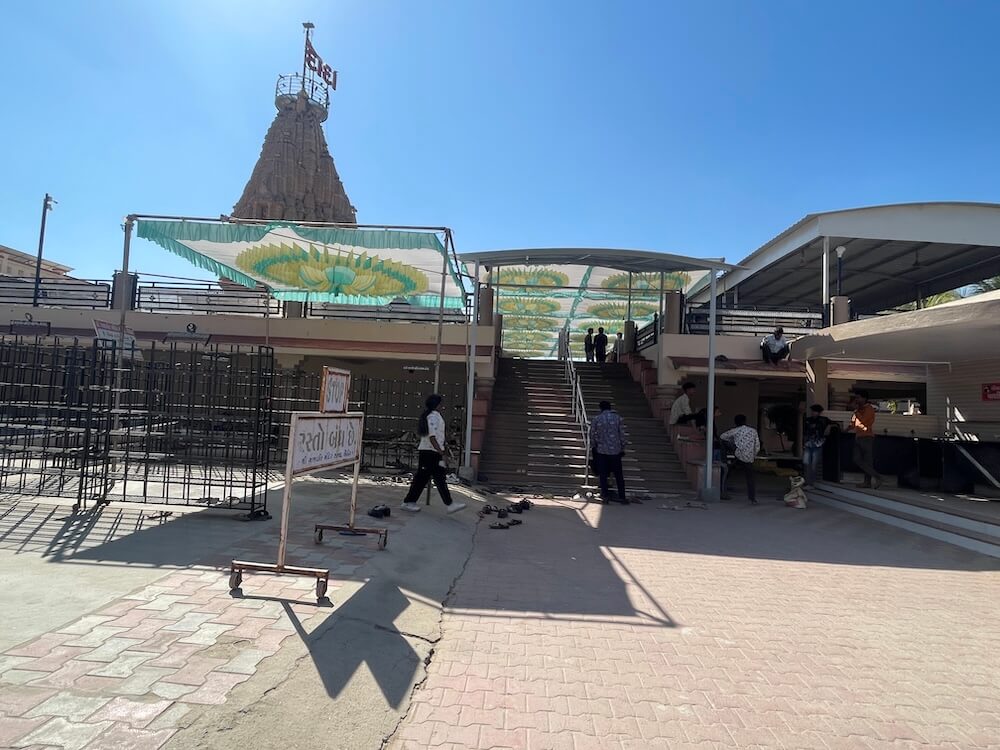
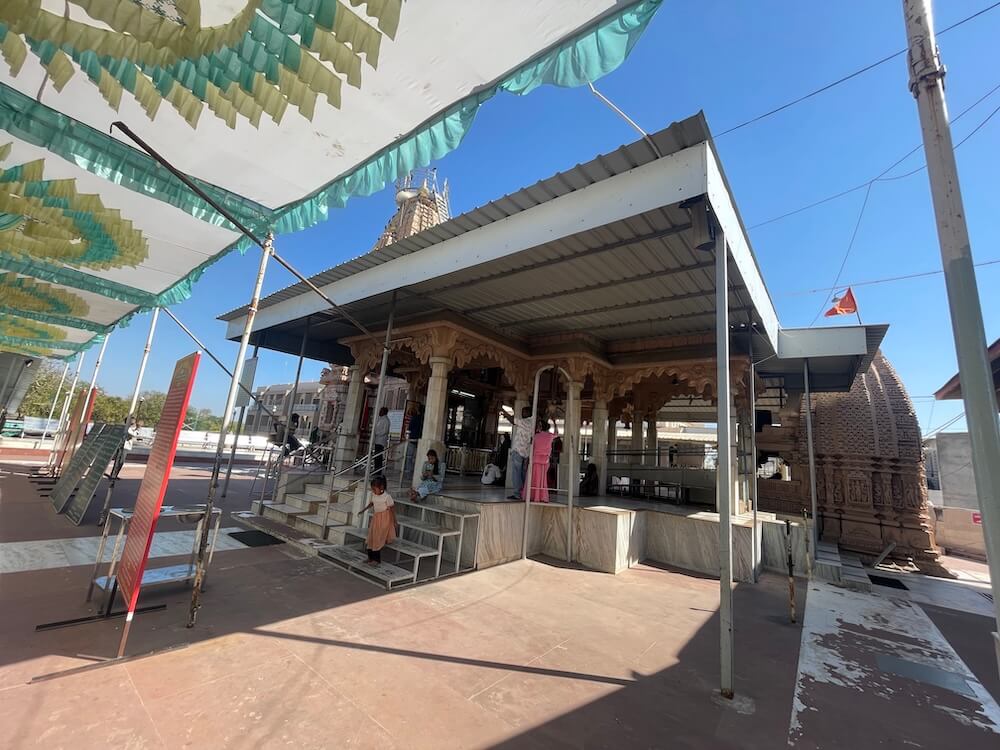
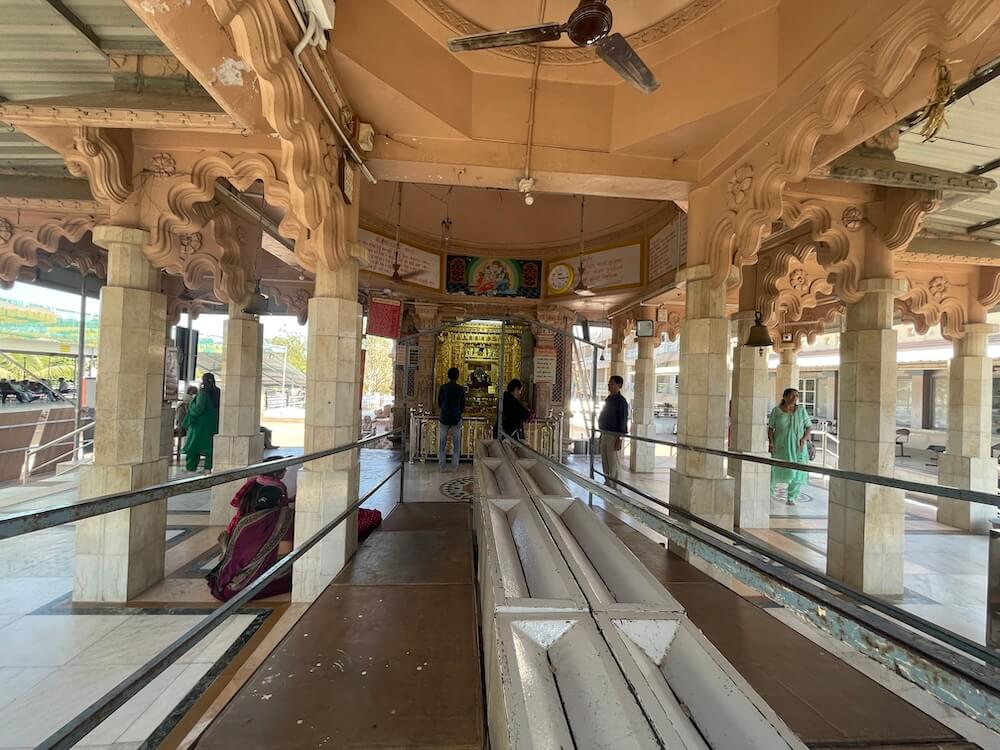
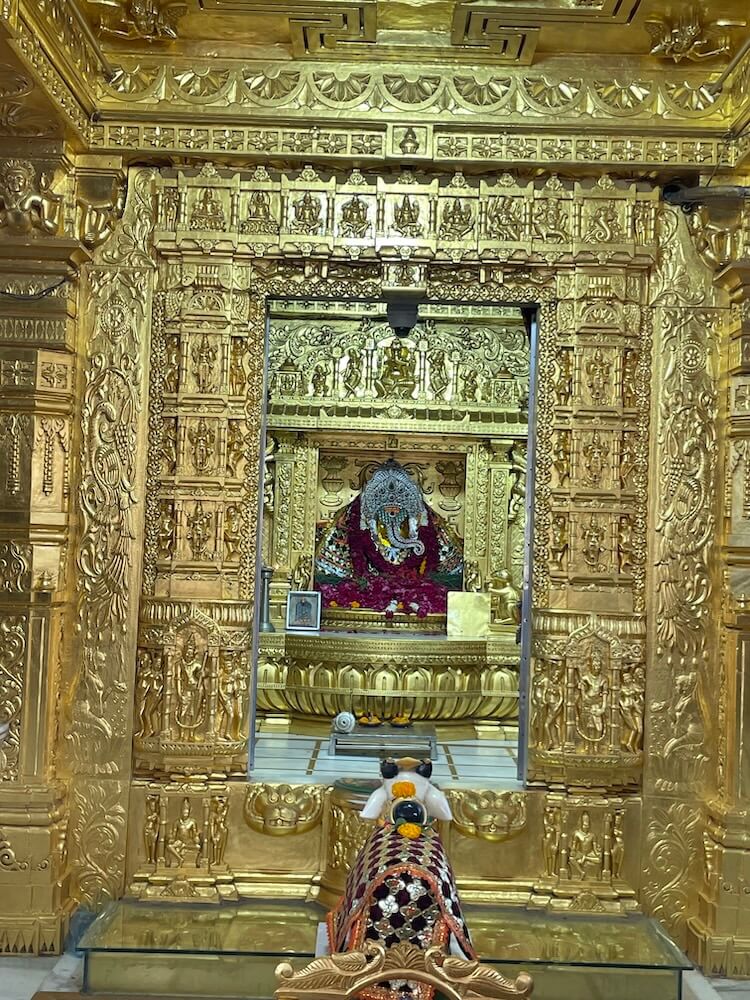
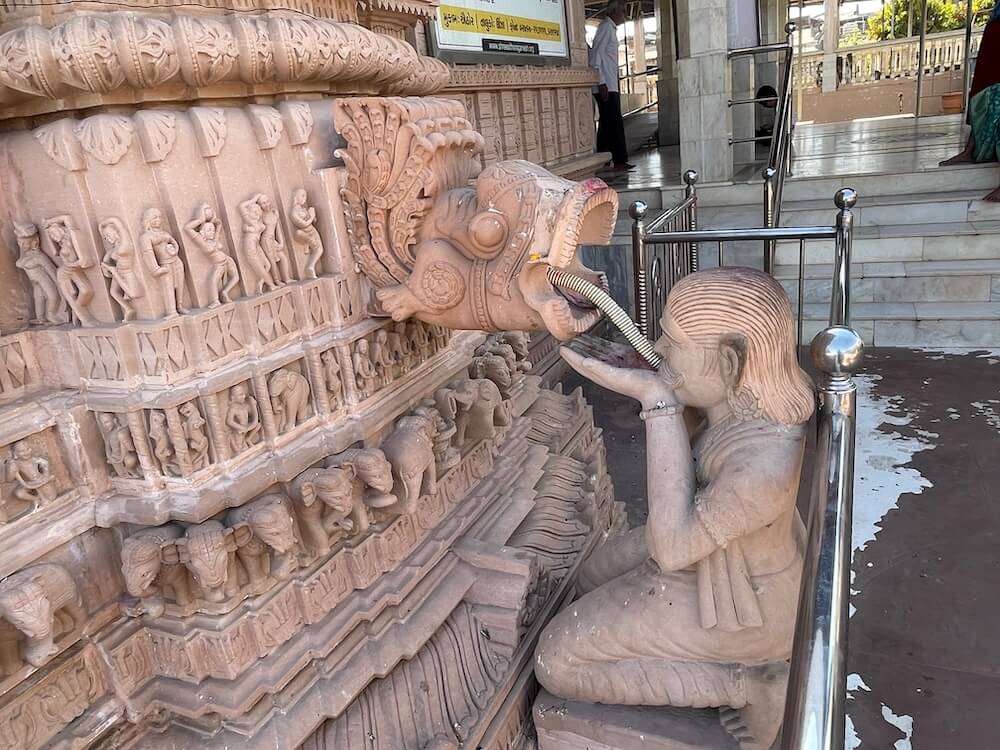
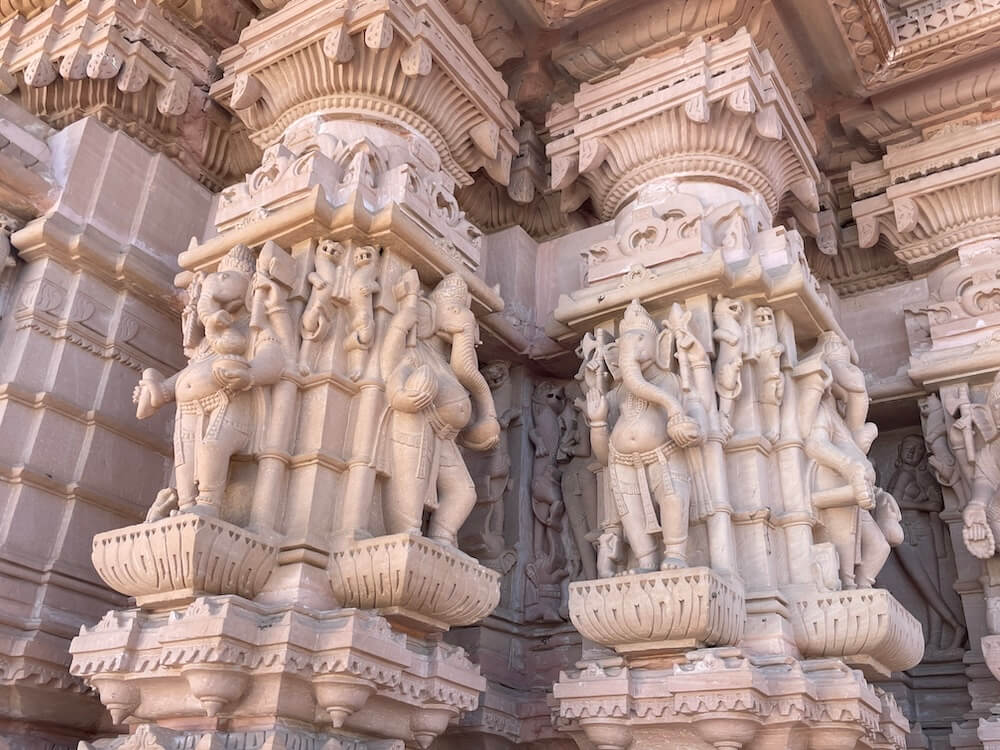
The main portal of the Ganesh temple is adorned with intricate elephant sculptures. Passing through this gateway, one enters a spacious courtyard. To the right lies a garden shaded by coconut palms, while the left houses a parking area and the ‘Ganapati Prasad Bhandar’ near the entrance. The primary structure is fashioned from the pink stone of Bansi Paharpur in Rajasthan. The architectural composition consists of a ‘Mukhmandap’ (entrance porch), a ‘Sabhamandap’ (assembly hall), an ‘Antarala’ (vestibule) and the ‘Garbhagriha’ (sanctum sanctorum). The pillars throughout the temple are exquisitely carved and connected by arched lintels.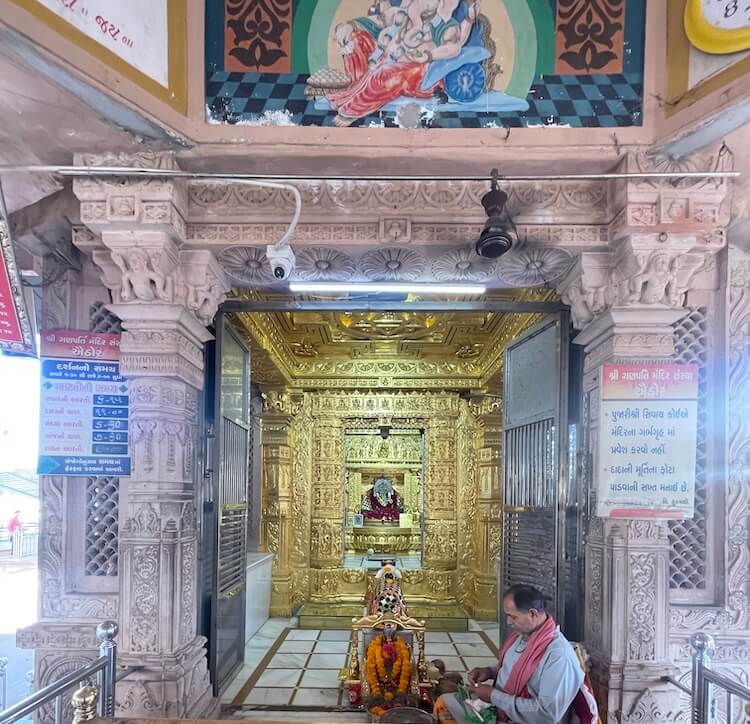 Within the vestibule, a statue of Nandi sits before the sanctum and a ‘Siddhi Yantra’ is etched upon the ceiling. The entrance to the sanctum sanctorum is gilded with gold and features delicate craftsmanship. The left-trunked idol, coated in vermilion and ghee, resides within the sanctum, graced by a silver crown. A metallic mouse, the Lord’s mount, sits before the idol. Shrines for the Shivalinga and Mother Parvati flank the sanctum. The exterior walls are embellished with carvings of various celestial beings. The temple is crowned with a two-tiered ‘Amalaka’ and a golden finial (‘Kalasha’), while the assembly hall features a domed roof.
For the convenience of pilgrims, a three-storeyed ‘Dharamshala’ (rest house) is available. Devotees arriving from afar are provided with lodging and vegetarian meals at modest rates within the dining hall. Thousands of faithful congregate here on ‘Sankashti Chaturthi’, the fourth day of the dark fortnight of every month, to seek ‘Darshan’ and break their fast after the moonrise. 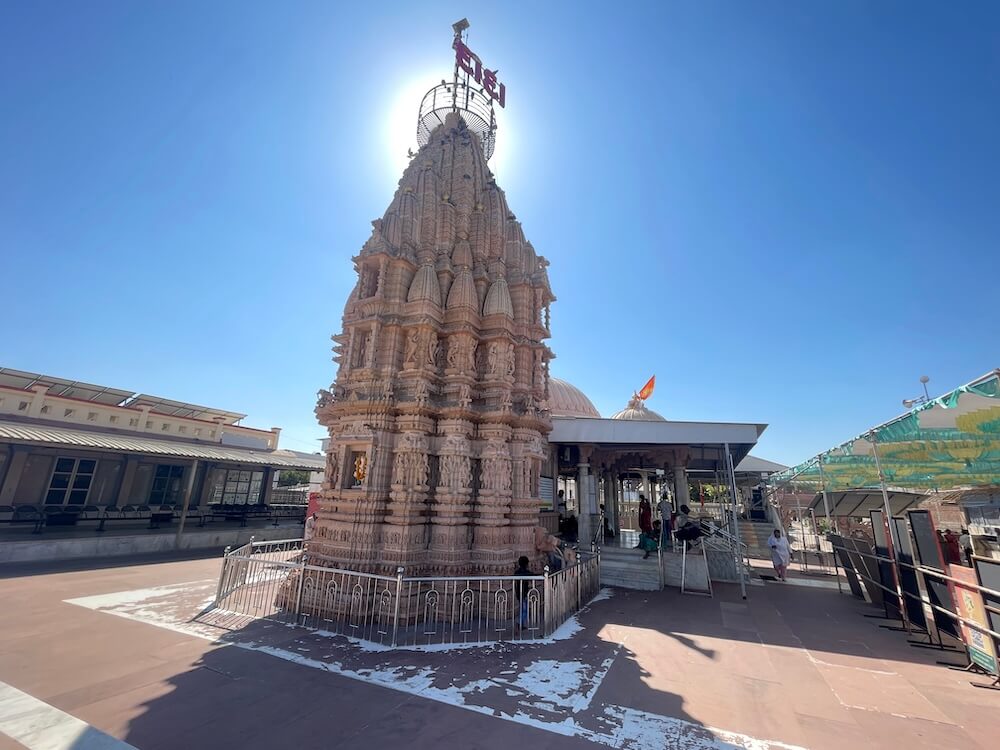 On Tuesdays and Sankashti days, the temple administration provides light refreshments (Faral) to the devotees.
During the period from the third to the fifth day of the bright fortnight of Chaitra, the temple’s annual festival and the ‘Shukan Mela’ are held. During this fair, local farmers and traders assemble to predict (Shukan/Shakun) the rainfall and crop yields for the coming year. This tradition of forecasting based on natural signs has been preserved for generations. During the fair, the Ganesh Chalisa is recited and special hymns and ‘Aarti’ are performed. At night, the traditional folk theatre known as ‘Bhavai’ is presented. Farmers offer their grains to Lord Ganesh and carry five grains back home as an auspicious ‘Shukan’ to be kept in their granaries. Daily ‘Aarti’ is performed at 6:15 am, 6:00 pm and 8:30 pm. Devotees may visit for ‘Darshan’ from 5:30 am until 9:00 pm daily.
Useful Information
- Situated at 5 km from Unjha city and 26 km from Mehsana.
- GSRTC bus services are available from both Unjha and Mehsana.
- Private vehicles can reach the temple’s parking facility.
- Accommodation and breakfast facilities are available in the vicinity.
- Contact – Temple Office, Mob.- 9510253555
गणेश मंदिर
ऐथोर, ताल. उंझा, जिला. मेहसाणा
मंदिरे
Temples
मंदिर
-
वैजनाथ महादेव मंदिर महादेवपुरा (गावडा), ता. विजापूर, जि. मेहसाणा
अधिक माहितीVaijnath Mahadev Temple Mahadevpura (Gavada), Tal. Vijapur, Dist. Mehsana
View Detailsवैजनाथ महादेव मंदिर महादेवपुरा (गावड़ा), ताल. विजापुर, जिला. मेहसाणा
विवरण देखें -
वैजनाथ महादेव मंदिर सोखडा, तालुका विजापूर, जिल्हा मेहसाणा
अधिक माहितीVaijanath Mahadev Temple Sokhada, Taluka Vijapur, District Mehsana
View Detailsवैजनाथ महादेव मंदिर सोखाडा, तालुका विजापुर, जिला मेहसाणा
विवरण देखें -
काशी विश्वनाथ महादेव मंदिर मेहसाणा, जि. मेहसाणा
अधिक माहितीKashi Vishwanath Mahadev Temple Mehsana, Dist. Mehsana
View Detailsकाशी विश्वनाथ महादेव मंदिर मेहसाणा, जिला. मेहसाणा
विवरण देखें