
Brahmani Mata Temple
Kamli, Tal. Unjha, Dist. Mehsana
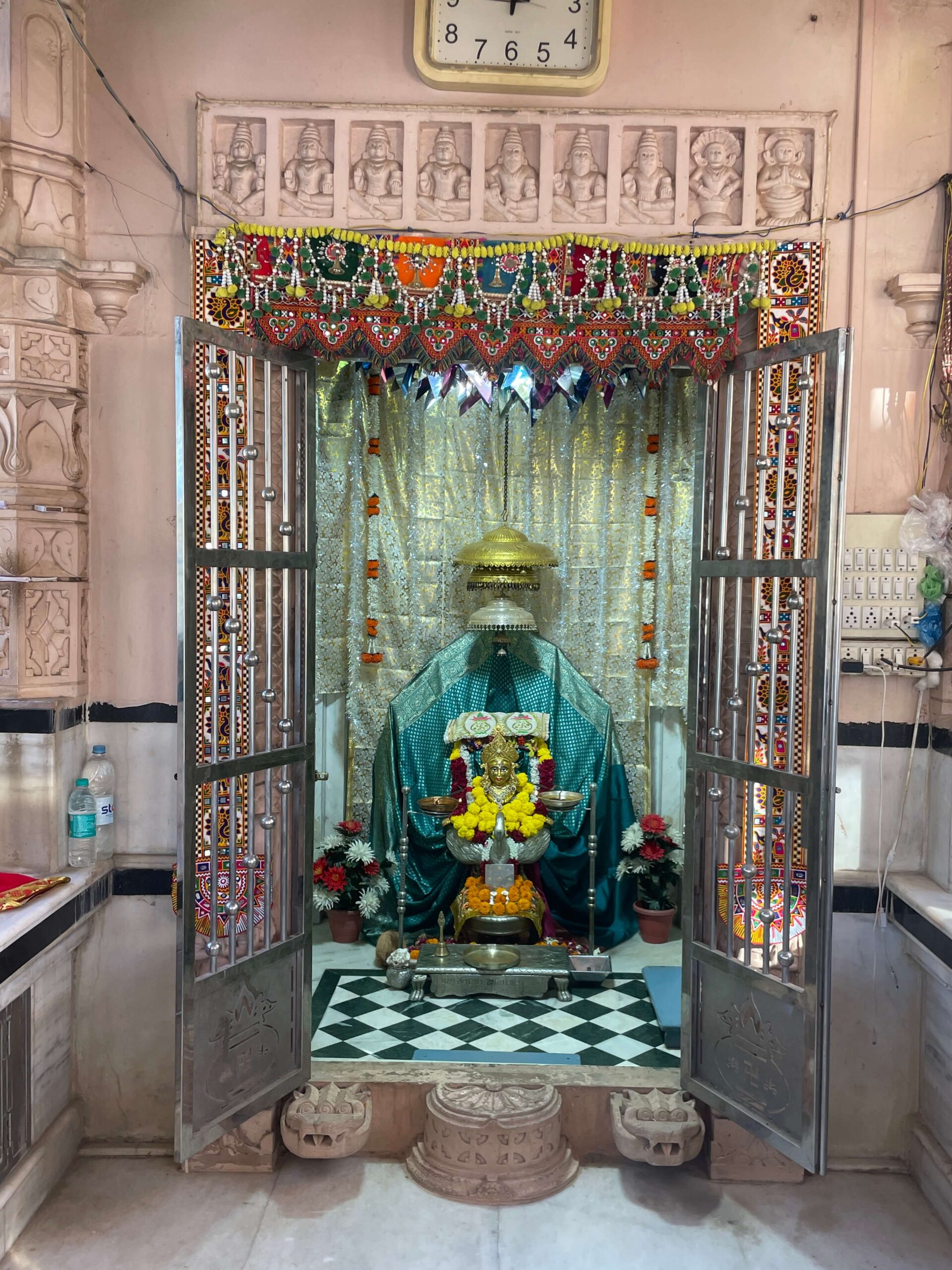
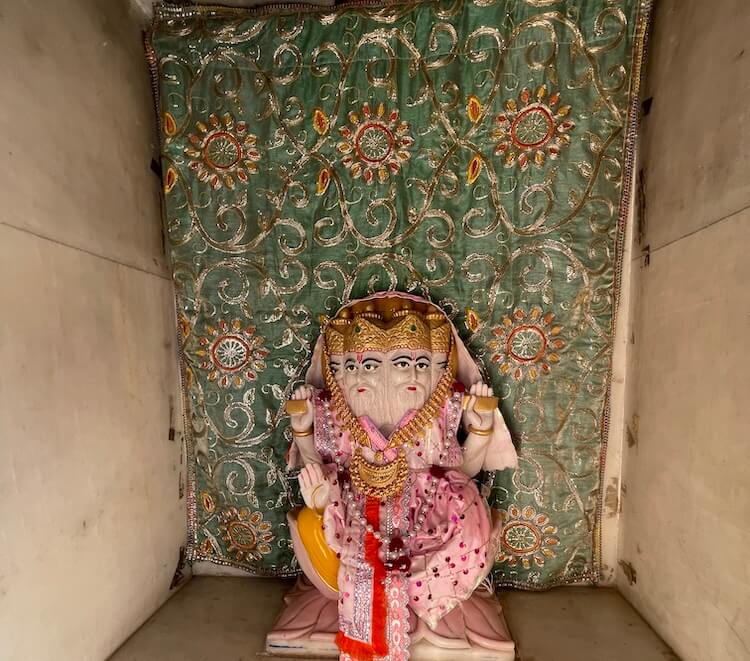
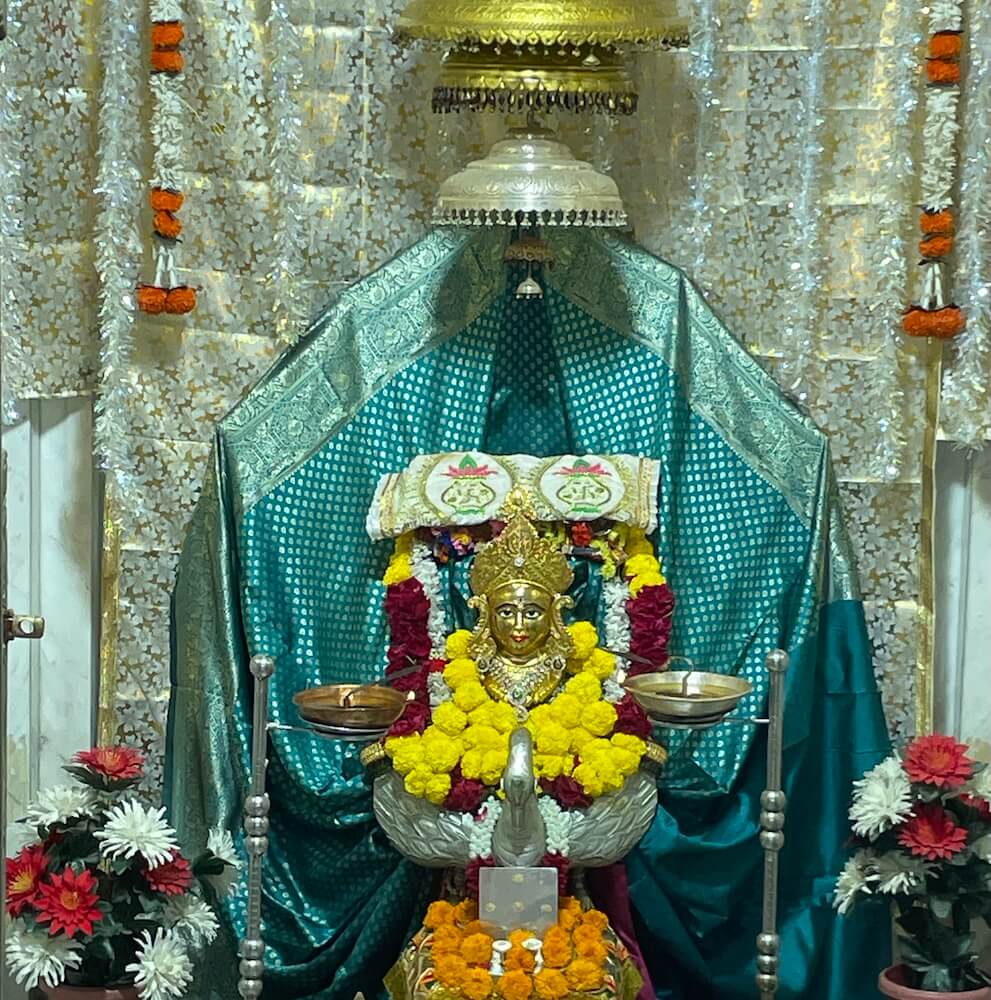 The ancient temple of Brahmani Mata, revered as the divine energy (Shakti) of Lord Brahma, the creator of the universe, is situated in the village of Kamli within the Unjha Taluka of Mehsana district. It is said that this sacred site stands upon the hallowed grounds of Sage Jamadagni’s hermitage, where the Goddess has been enshrined for centuries. As one of the ‘Saptamatrukas’ (seven mother goddesses) in Hinduism and the presiding deity of arts, education and wisdom, her form is profoundly serene. She is worshipped as the clan deity (‘Kuldevi’) by various communities, including the Brahmins of the Bharadwaj Gotra, the Prajapatis, the Nagar Brahmins, as well as the Sisodia, Dodia, Chauhan Rajputs and Leva Patidars. Amongst the faithful, this shrine is celebrated as a spiritually ‘awakened’ seat of divinity.
In antiquity, this region was known as ‘Hidimba Van’. This area, nestled in the valley of the Saraswati River, housed the hermitages of numerous sages, with nearby Sidhpur being the ‘Karmabhoomi’ of Sage Kapila. The ancient name of Kamli village was ‘Kayavali’, which evolved into ‘Kamli’ over time and was formalised during the British era. 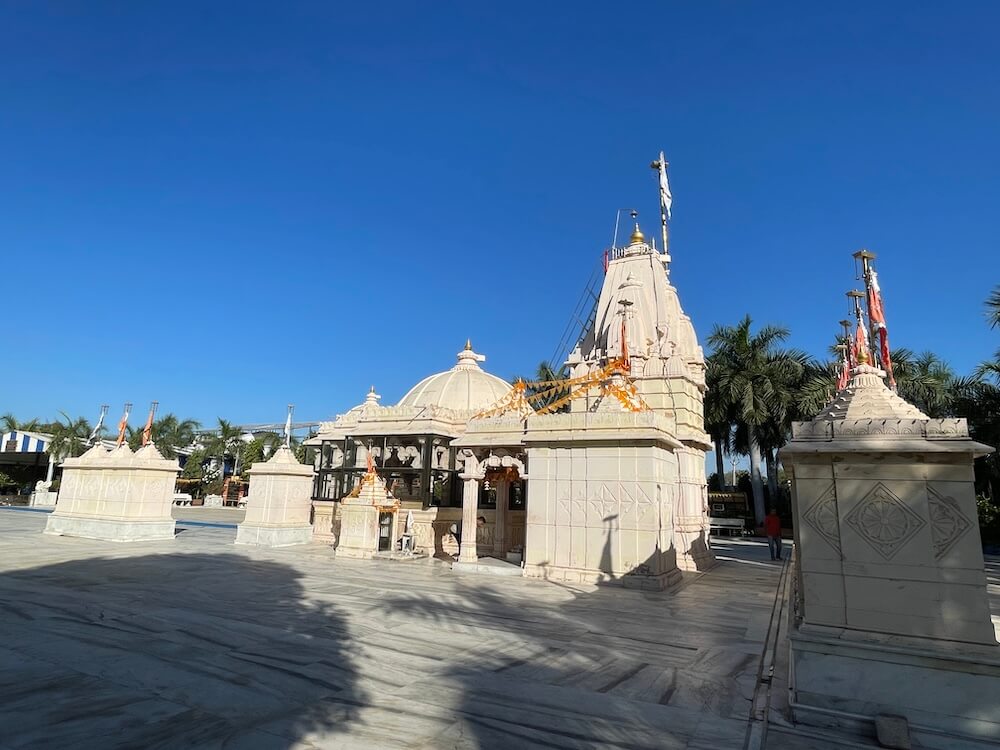 Approximately two thousand years ago, families of the Kanbi caste from Punjab settled here.
According to Hindu belief, Lord Brahma, during his penance for the creation of the universe, divided his body into two parts. The female half is known as Shatarupa, Savitri, Saraswati, Gayatri and Brahmani. A local legend describes the Goddess’s manifestation at this site. Many years ago, a cow belonging to Harisang Patel would wander into the forest and spontaneously offer her milk beneath a specific ‘Varkhadi’ tree. This occurrence was witnessed by a shepherd. When the cow failed to provide milk at home, Harisang investigated and discovered the truth. Upon excavating the spot, the villagers were terrified to see streams of blood gushing from the earth and retreated. 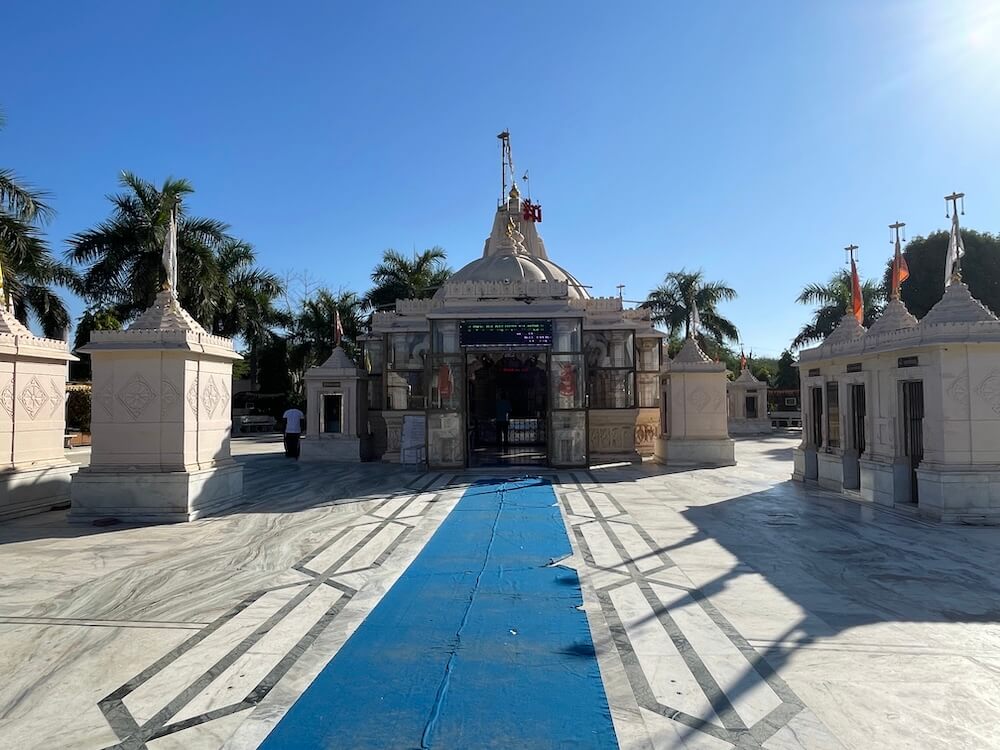 That night, the Goddess appeared in Harisang’s dream, revealing herself as Renuka, the wife of Sage Jamadagni, manifested as Brahmani. She commanded that worship be initiated there. Following the divine decree, Harisang and the villagers unearthed the idol. Initially, they intended to move the deity’s seat into the village. Despite yoking 128 oxen to a cart, it refused to budge and the ropes snapped near the temple of the 64 Jogani Mata on the village outskirts. Simultaneously, a cow uttered a sound interpreted as ‘Ha… Ma… Ha’. Taking this as a sign that the Goddess wished to remain there, the villagers constructed a small shrine of bricks and earth to ceremoniously install the idol.
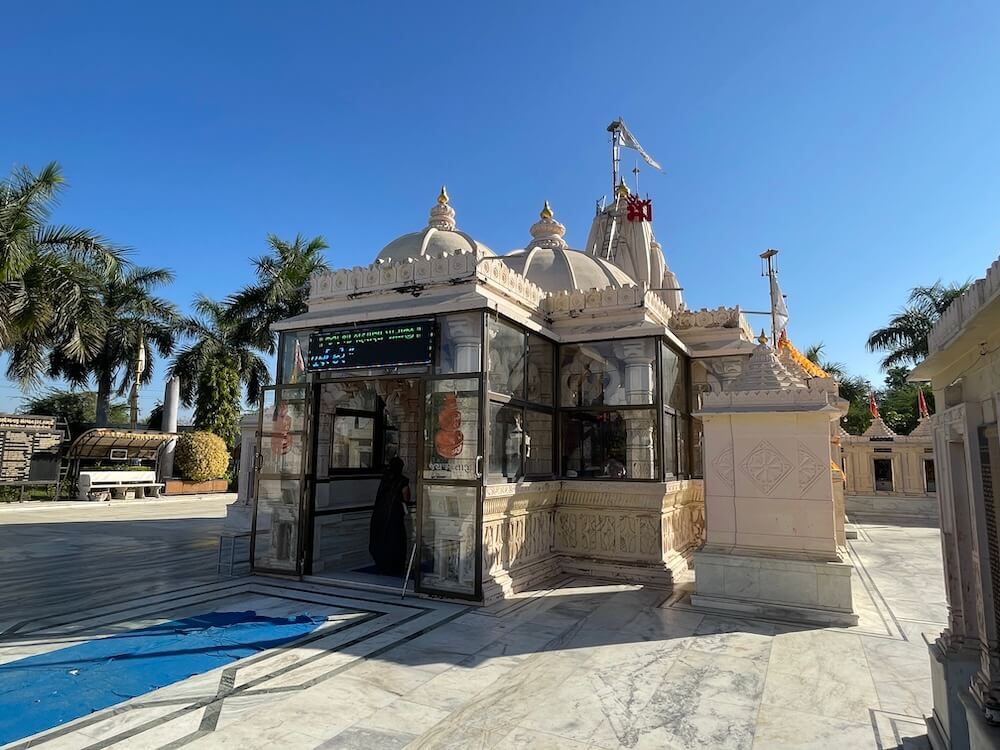
 It is believed that the original temple was constructed between 843 AD and 1143 AD. Subsequently, a sovereign of the Solanki dynasty erected a magnificent stone edifice in place of the mud structure. According to the Mehsana District Gazetteer of 1981, the architectural remains bear witness to the temple craftsmanship of the twelfth century. Historical records suggest the area was once a stronghold of the Pashupata sect. An ancient idol of Lakulisha – considered as an avatar of Lord Shiva – found at the site serves as a testament to the synthesis of Shaiva and Shakta traditions. As the structure weathered over time, the villagers restored the temple in 2008, preserving its ancient heritage. The idol was re-consecrated in the new temple on 18th October 2008 (Ashwin Vadya Chaturthi).
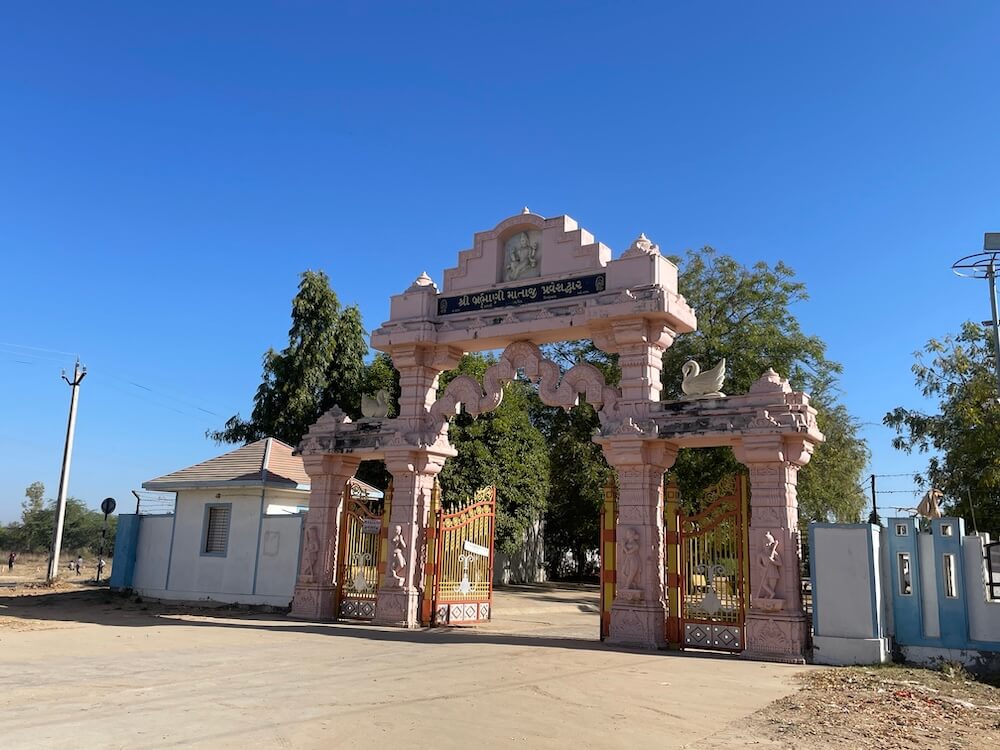
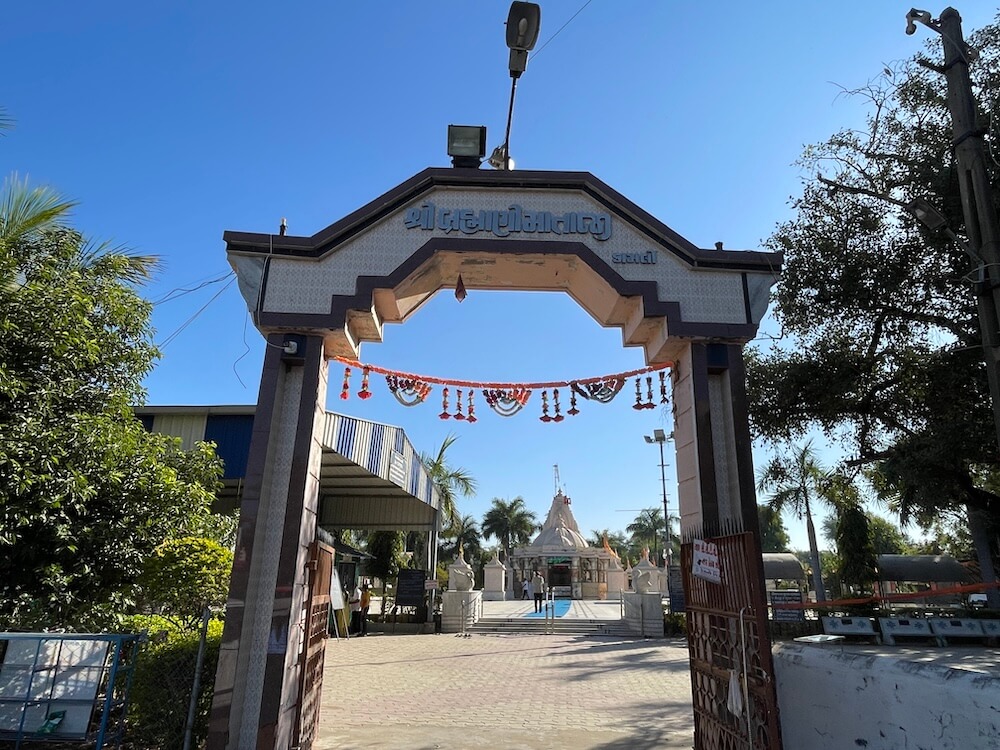
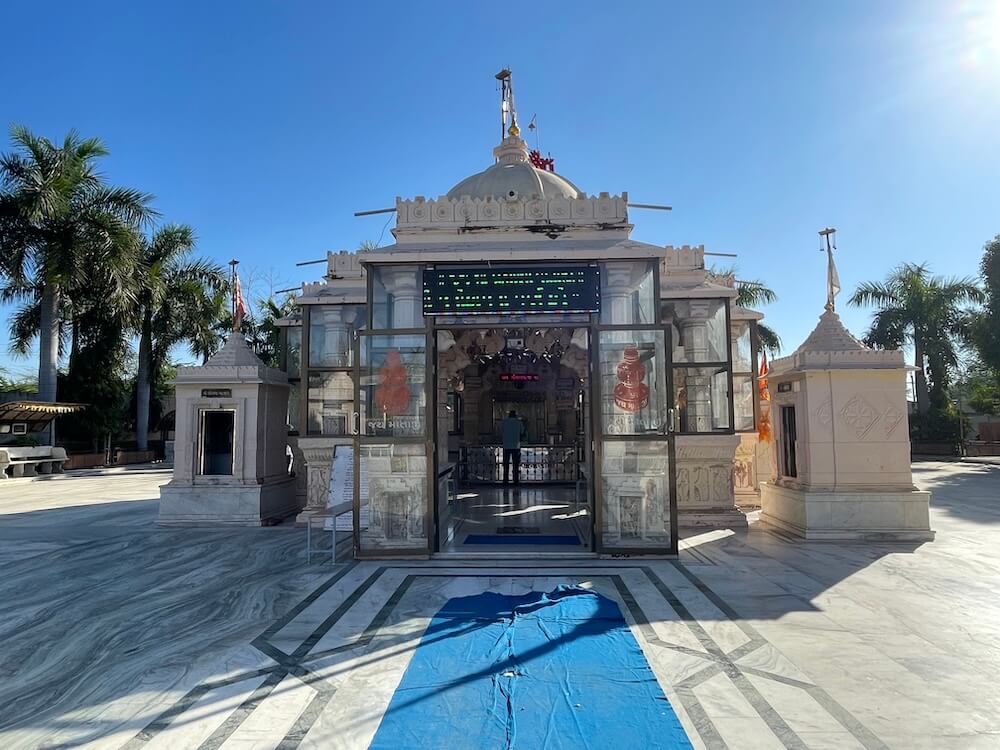
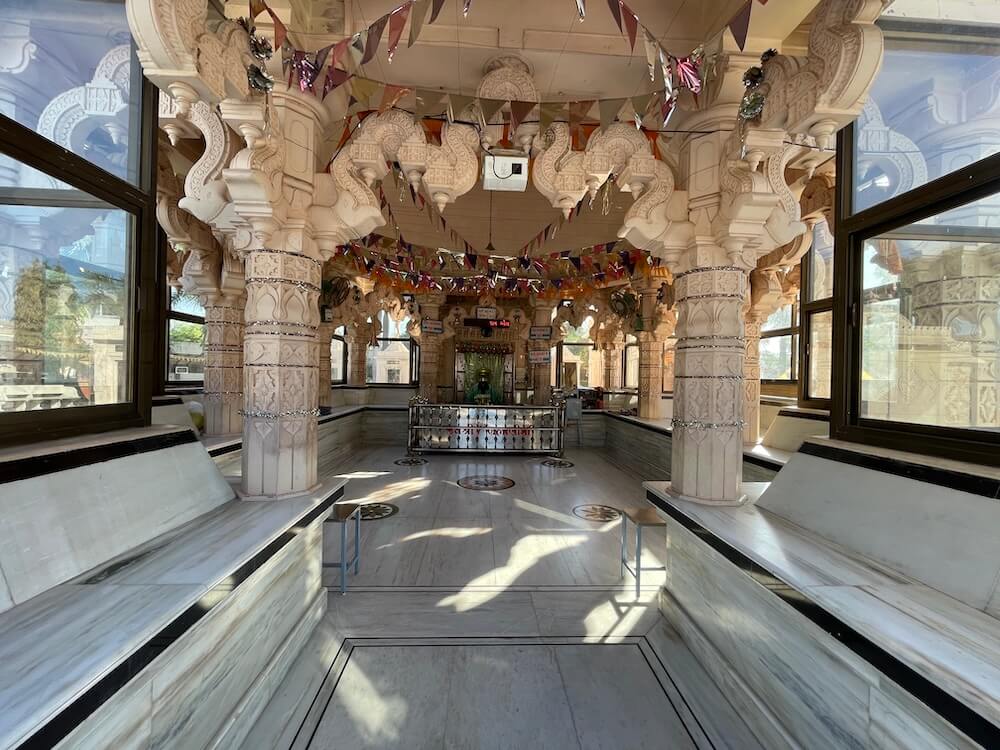
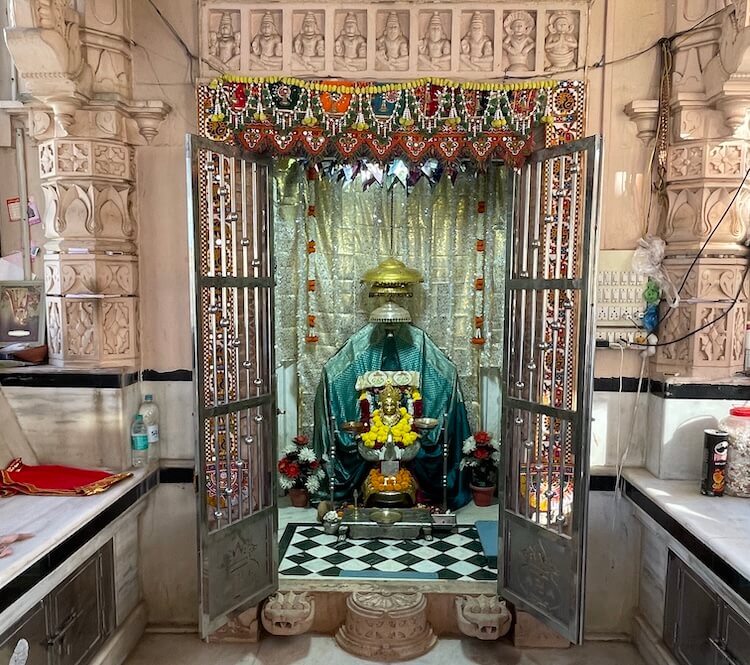
The temple precincts are expansive. An attractive gateway leads into a courtyard paved with blocks. 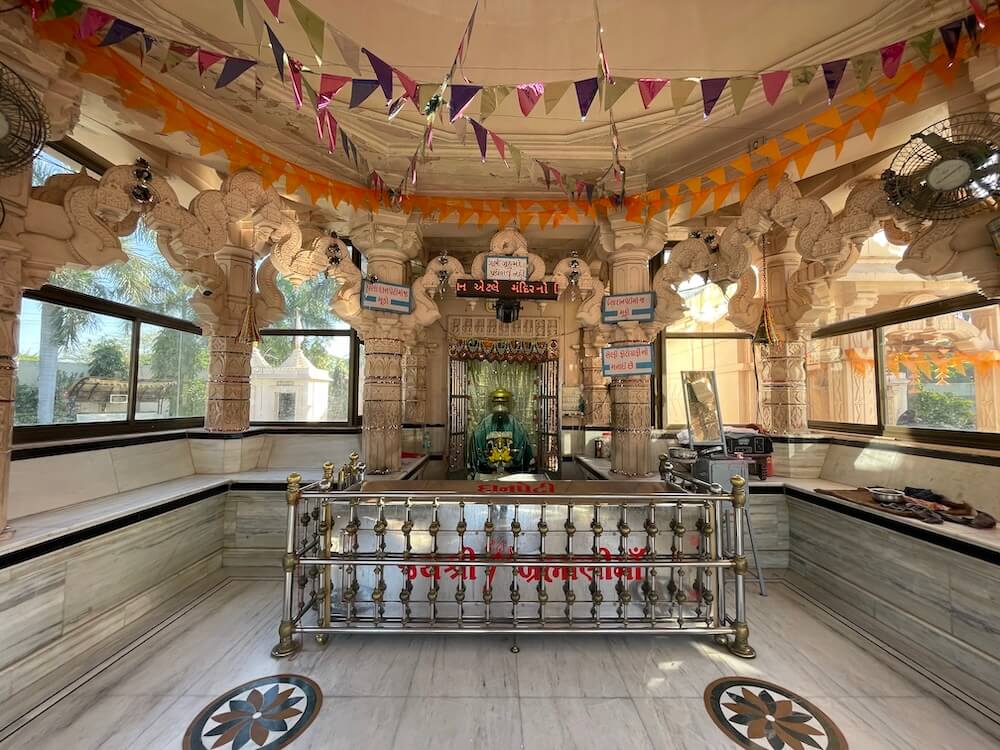 Flanking the entrance are statues of swans, the celestial vehicle of the Goddess. To the left of the courtyard lies a sheltered open hall for community events. The main structure, fashioned from Rajasthani sandstone, follows a traditional layout comprising a ‘Mukhmandap’ (entrance porch), a ‘Sabhamandap’ (assembly hall), an ‘Antarala’ (vestibule) and the ‘Garbhagriha’ (sanctum sanctorum). The assembly hall features marble seating (‘Kakshasanas’) for devotees. The pillars are adorned with elegant arches and intricate carvings, as is the doorway to the sanctum. Within the inner sanctum, the primary idol is seated upon a swan, graced with a metallic mask and a ceremonial canopy. The sanctum is crowned by a soaring spire (‘Shikhara’), while the porches feature domed roofs.
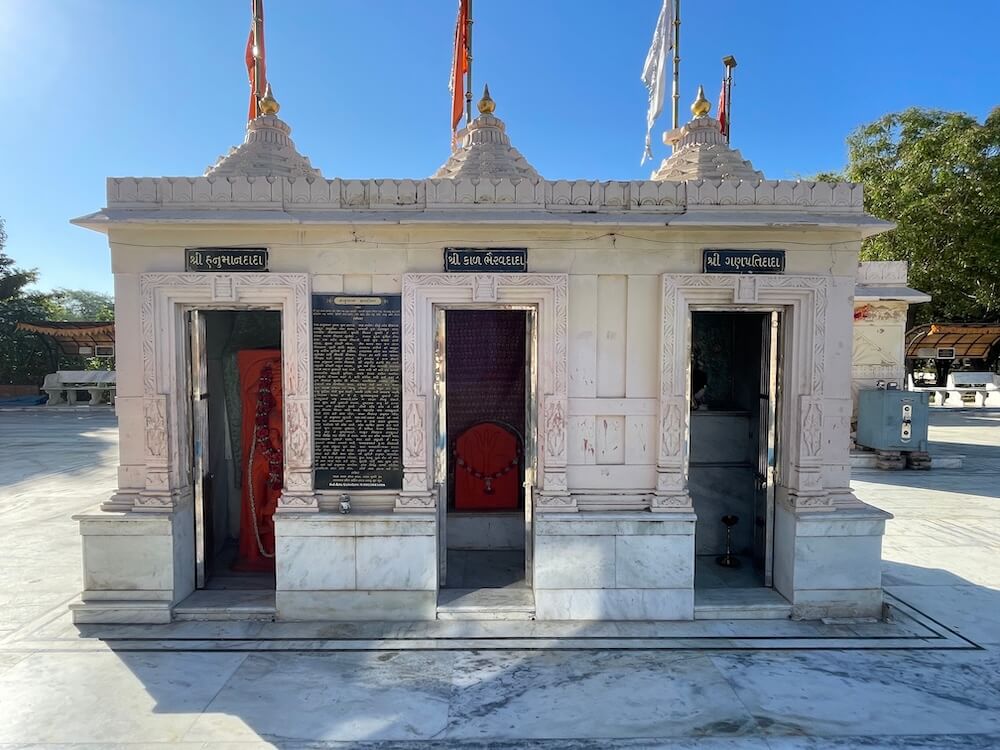
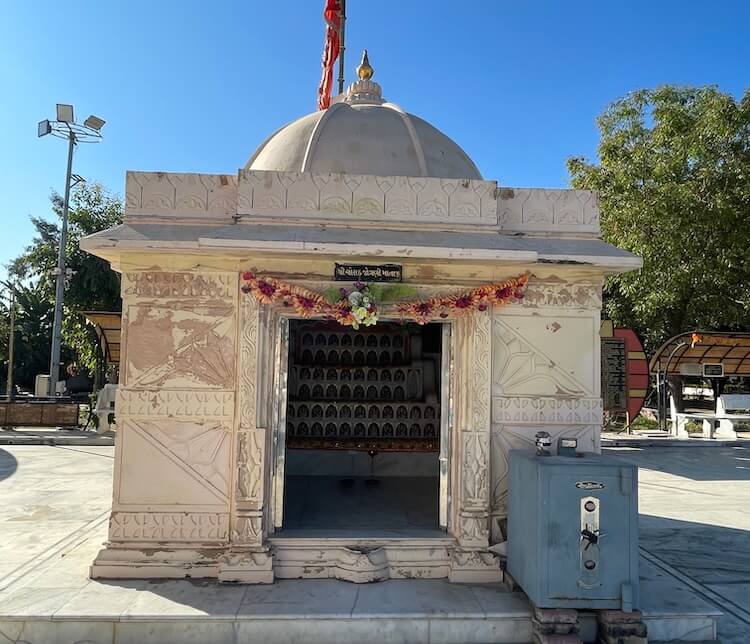
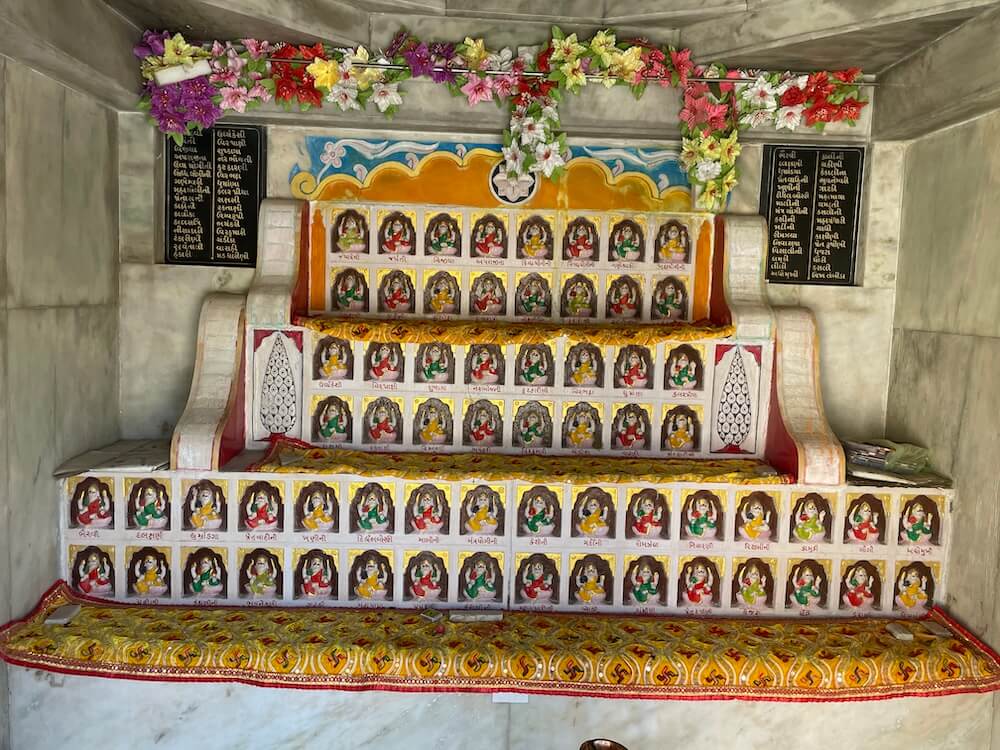
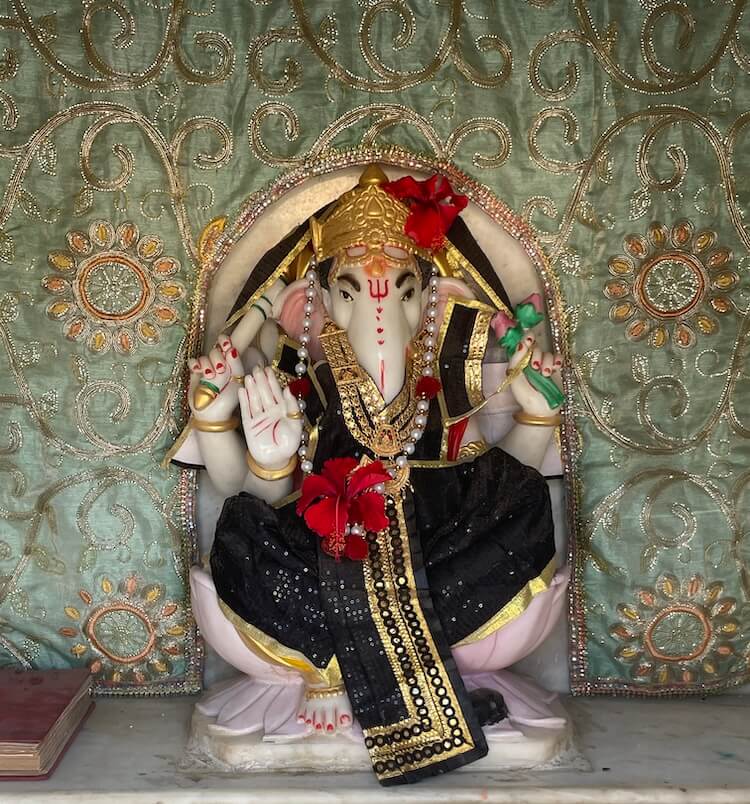
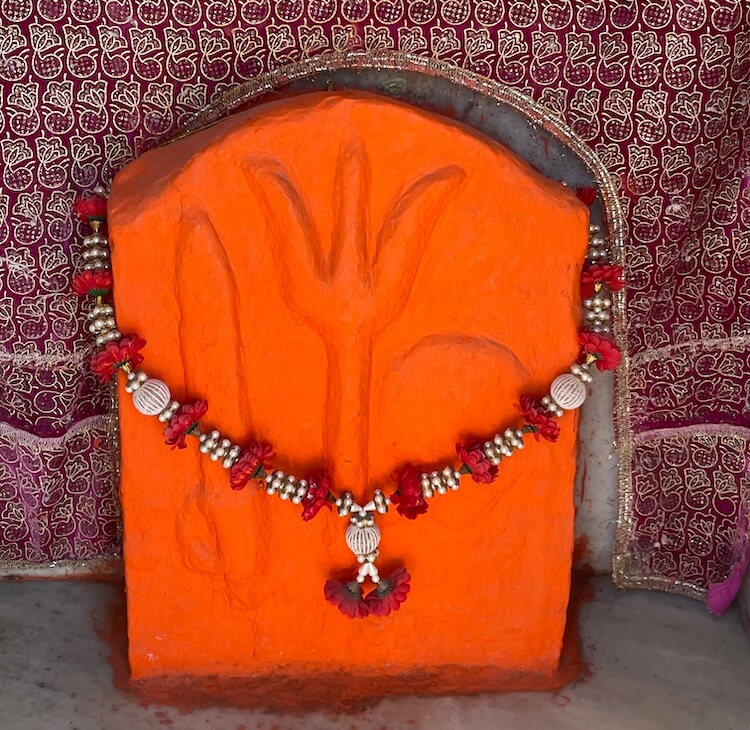
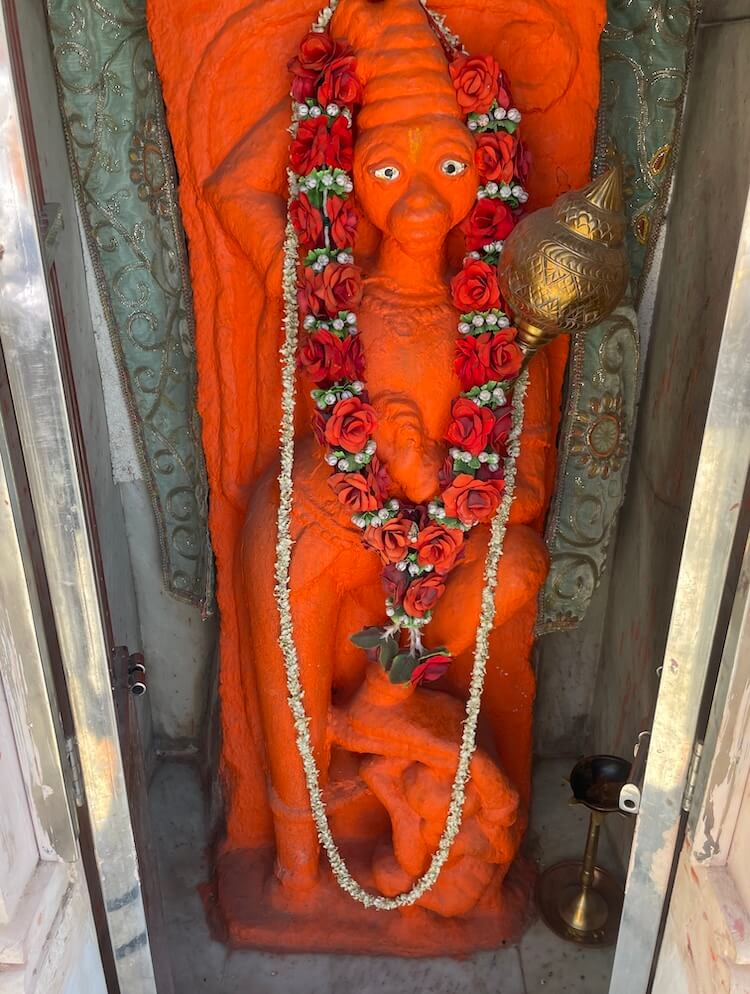
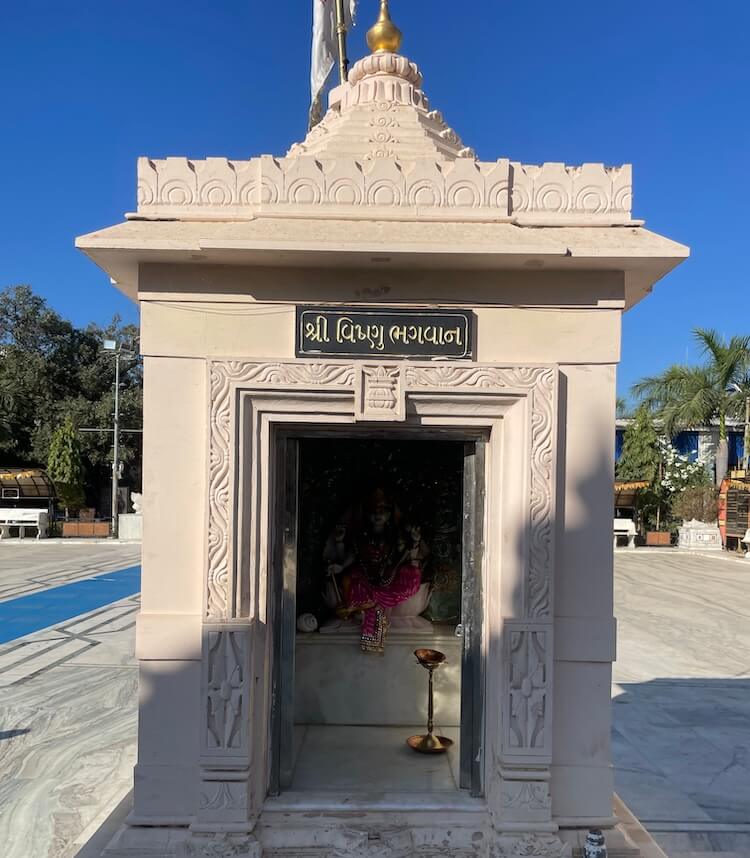
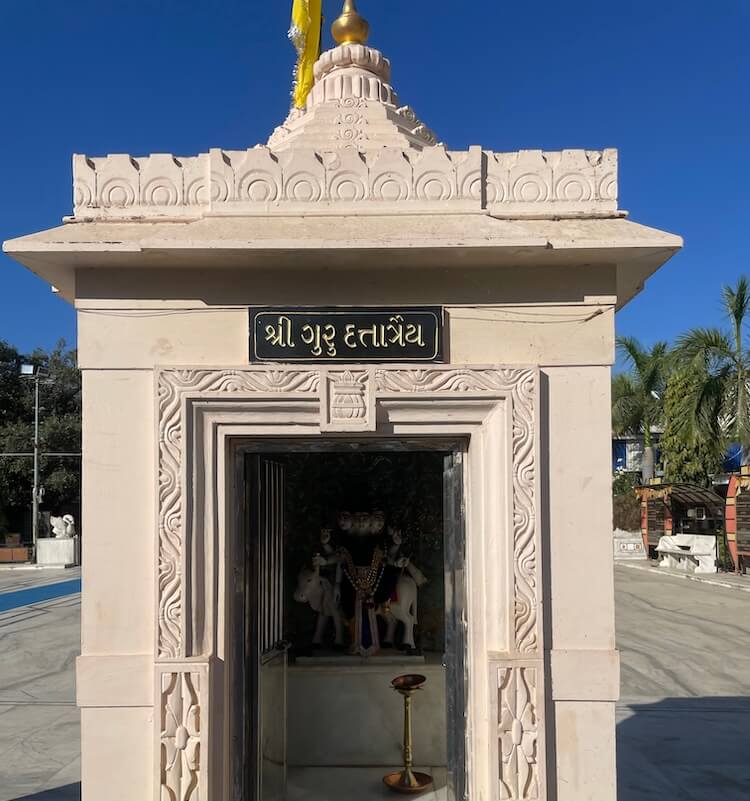
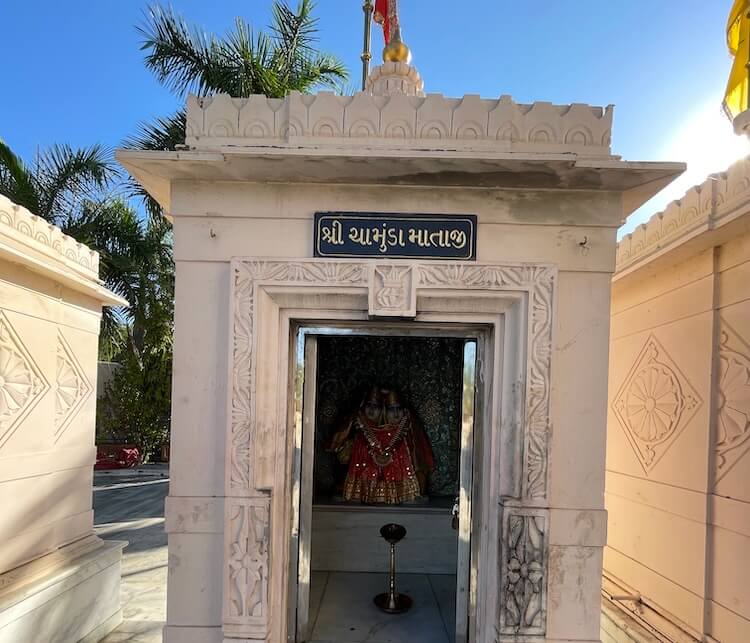
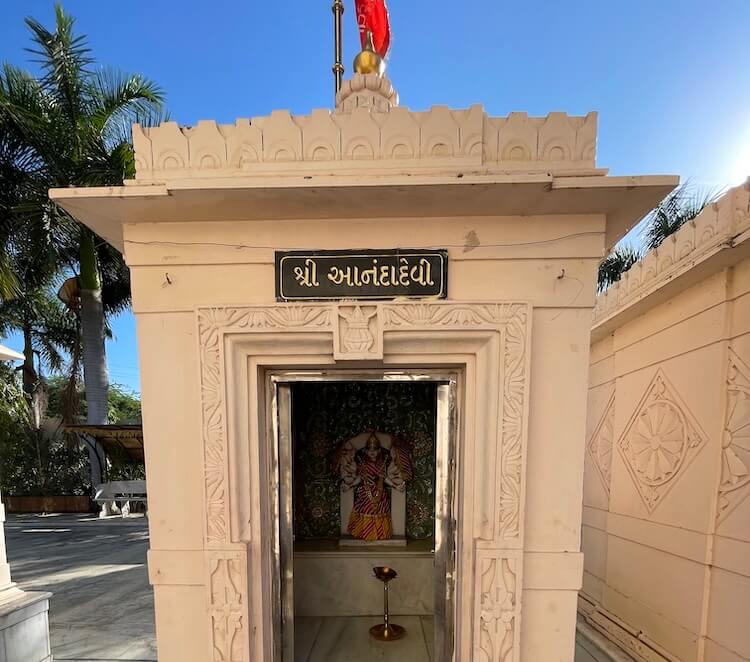
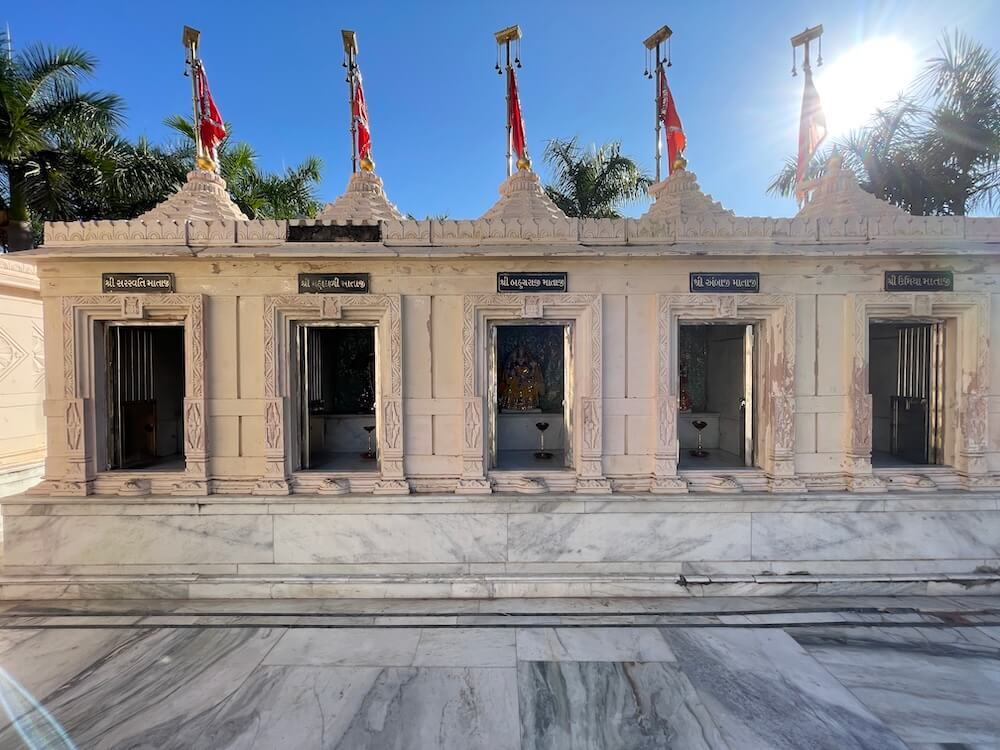
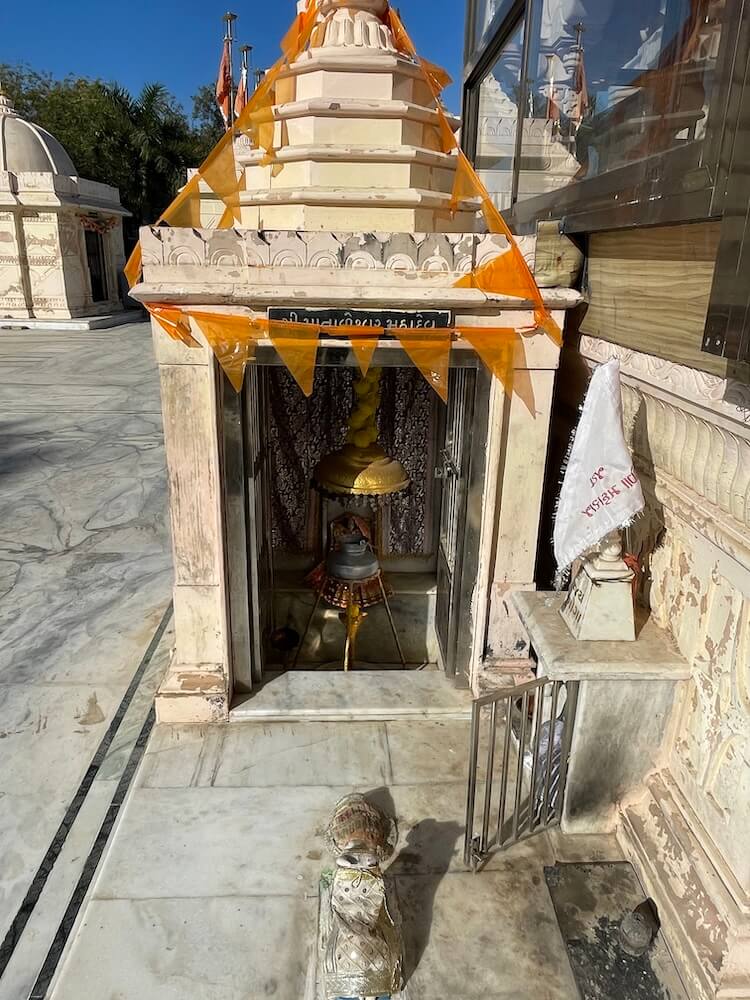
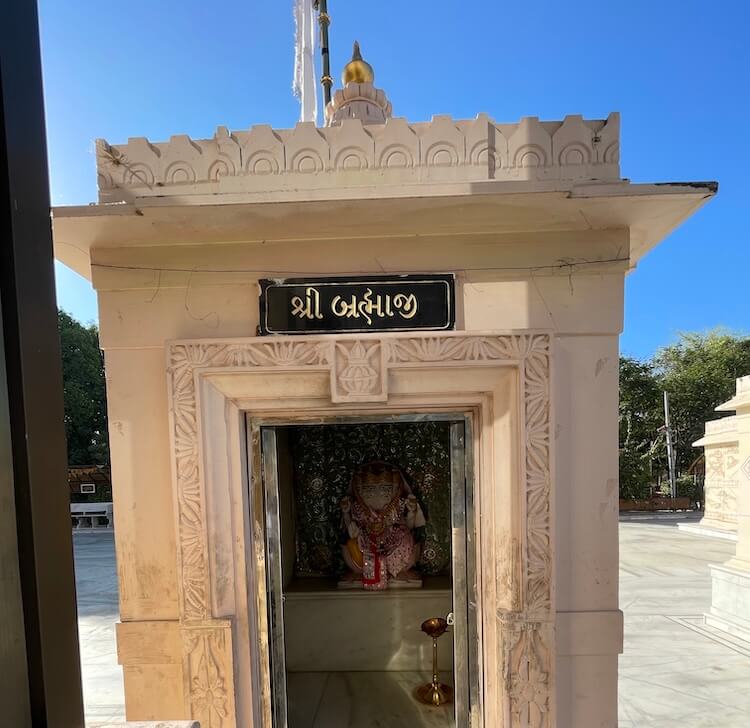
 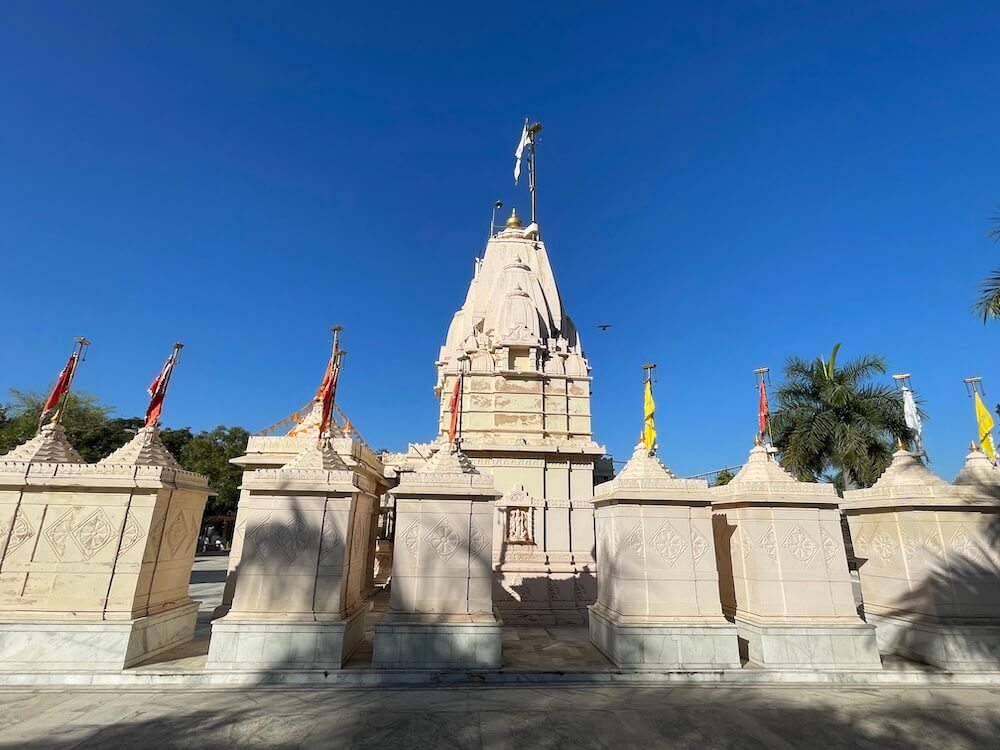 The complex also houses subsidiary shrines for Ganesha, Hanuman, Kaal Bhairav, the 64 Joganis, Sage Jamadagni, Ranchhodraiji, Chamunda Mata, Suryanarayan, Anandadevi, Vijayadevi, Saraswati, Mahakali, Bahucharaji, Ambaji, Umiya Mata, Shitala Mata and Pataleshwar Mahadev.
The temple sees a surge of devotees on full-moon days and on Sundays. Annually, on Chaitra Shuddha Saptami, the ‘Shukan Mela’ (Festival of Omens) is held, drawing thousands from across the state. Following special nocturnal rituals, changes in nature are observed to predict (Shukan/Shakun) the rainfall and agricultural prospects for the coming year. During the Navratri festivals of Chaitra and Ashwin, nine days of special adoration are observed, beginning with ‘Ghatasthapana’ and concluding with a grand ‘Havan’ on Ashtami. Furthermore, religious programmes are held on Ashwin Vadya Chaturthi to mark the temple’s anniversary. Devotees may seek ‘Darshan’ daily from 5:00 am until 8:30 pm.
Useful Information
- Located at 7 km from Unjha city and 35 km from Mehsana.
- GSRTC bus services are available from Unjha.
- Private vehicles can access the temple premises directly.
- Accommodation and breakfast facilities are available in the vicinity.
- Contact – Temple Office, Mob.- 9724645311, 9428023467
ब्रह्माणी माता मंदिर
कमली, ताल. उंझा, जिला. मेहसाणा
मंदिरे
Temples
मंदिर
-
वैजनाथ महादेव मंदिर महादेवपुरा (गावडा), ता. विजापूर, जि. मेहसाणा
अधिक माहितीVaijnath Mahadev Temple Mahadevpura (Gavada), Tal. Vijapur, Dist. Mehsana
View Detailsवैजनाथ महादेव मंदिर महादेवपुरा (गावड़ा), ताल. विजापुर, जिला. मेहसाणा
विवरण देखें -
वैजनाथ महादेव मंदिर सोखडा, तालुका विजापूर, जिल्हा मेहसाणा
अधिक माहितीVaijanath Mahadev Temple Sokhada, Taluka Vijapur, District Mehsana
View Detailsवैजनाथ महादेव मंदिर सोखाडा, तालुका विजापुर, जिला मेहसाणा
विवरण देखें -
काशी विश्वनाथ महादेव मंदिर मेहसाणा, जि. मेहसाणा
अधिक माहितीKashi Vishwanath Mahadev Temple Mehsana, Dist. Mehsana
View Detailsकाशी विश्वनाथ महादेव मंदिर मेहसाणा, जिला. मेहसाणा
विवरण देखें