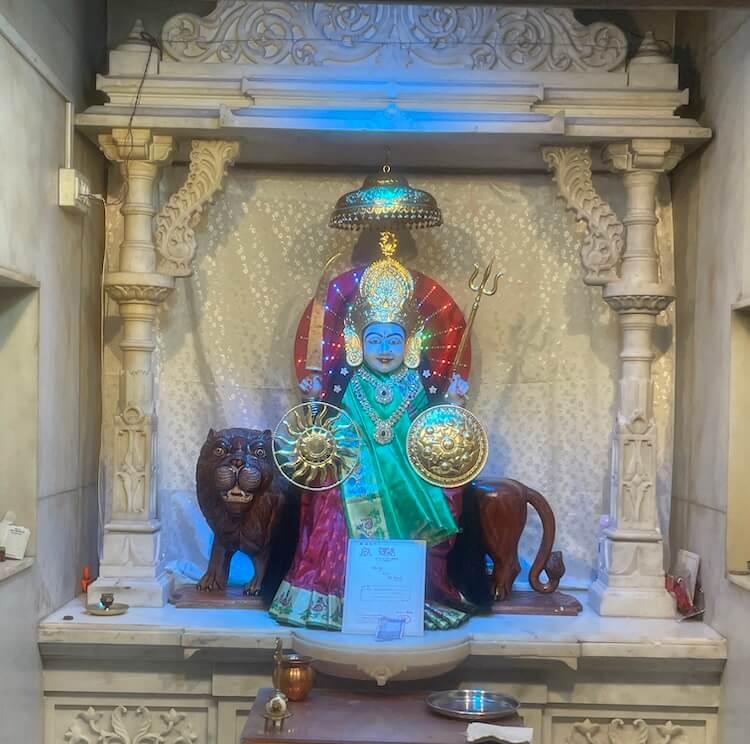
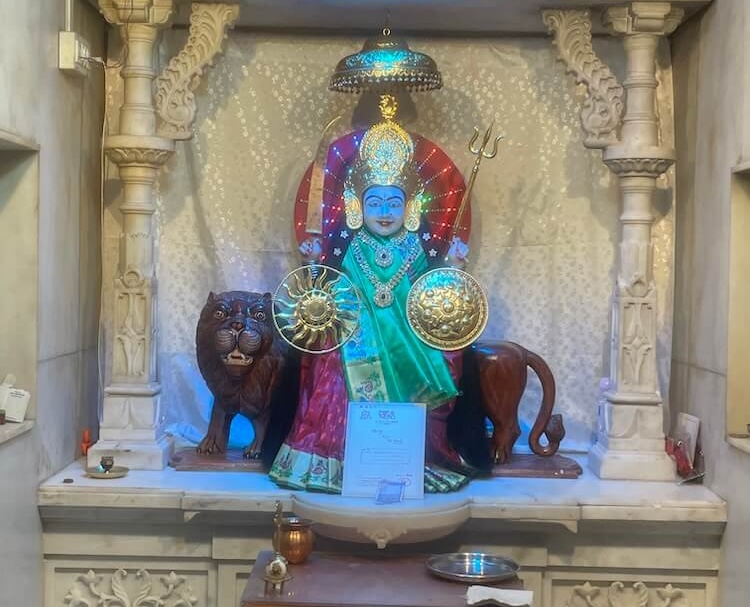
The village of Umta, located in Visnagar taluka, has a dual legacy of medieval Gujarati history and mythological heritage. It hosts the temple of Mother Balvanti. According to local lore, Balvanti Mata was the daughter of the Rajput warrior Umta Rana. During an invasion by the Sultan of Gujarat, the goddess Khambhlai Mata is said to have manifested to protect the princess. Inside this temple, Balvanti Mata is worshipped as a powerful, weapon-bearing deity who rides a lion. As the patroness of Umta, the villagers believe her divine grace always protects their settlement.
The mythological legend of the goddess dates back about six hundred years. At that time, Umta Rana, nephew of the Maharaja of Danta State, ruled this area. His palace stood on Rajgadhi Timbo, a mound in the centre of the village. During this era, the Sultan of Gujarat attacked Idar State and captured its hill fortress. According to ‘History of the Gujarat Country’ (Second Edition, 1894) by Rao Bahadur Gopal Hari Deshmukh, this assault on Idar occurred in 1426 AD, during Sultan Ahmed Shah’s reign. After conquering Idar, the Sultan’s forces marched on Umta. Umta Rana and his Rajput army resisted bravely. A fierce battle took place on the banks of the Rupen River, where Umta Rana’s minister, Alusingh Kathi, died. During his funeral rites, the Sultan’s soldiers ambushed Umta Rana and his eldest son, Virsingh. Both died in the skirmish. The palace on Rajgadhi Timbo was seized by the Sultan’s army. Amid the chaos, Umta Rana’s younger son, Mokamsingh, fell from the fortress walls and perished.
Umta Rana had a daughter named Balvanti. She managed to escape the fortress and fled towards Kheralu-Danta, avoiding enemy forces. When she sensed she was being pursued, she sought shelter in a dense grove. There, she met an elderly shepherd who was watching his flock. Princess Balvanti pleaded with him for refuge. As the enemy drew close, the shepherd hid her under his heavy woollen blanket. When the soldiers arrived and questioned the shepherd about the princess, they noticed a suspicious form under the blanket. However, when one kicked the blanket away, a pile of fresh flowers was revealed where the princess had been. The soldiers tried to tamper with the flowers, but the shepherd intervened and collected them. He then placed the flowers in a nearby well. Local folklore claims that the shepherd was, in truth, the Goddess Khambhlai in disguise. She is also known as Kshemankari Mata, the family deity of Umta Rana’s lineage.
Years later, Balvanti Mata appeared in the dream of a local potter from Umta. He often dug for clay near the well. The Goddess told him, ‘I want to appear. Tomorrow, when you spin your potter’s wheel, it will turn on its own all day. This will prove My presence.’ The potter saw the miracle. He built a small shrine for the Goddess on the Rangpur-Kheralu road. The spot inside his house where the wheel spun alone is also considered holy. Because Balvanti Mata was found in the well, she is lovingly called ‘Badeli’. On the fourteenth day of the bright half of Ashvin month, her manifestation is celebrated. Beside the original shrine, a rest-house was built for pilgrims on Chaitra Sud 15, Samvat 1986 (1930 AD).
Brahmachari Brahmanand Maharaj was a devoted ascetic and worshipper of Balvanti Mata. Guided by his spiritual leadership, the foundation for the current temple was laid on Ashwin Sud 1, Samvat 2006 (1949 AD). Construction finished on Aso Sud 10, Samvat 2008 (1951 AD). Later, the temple was restored and became the beautiful structure that now stands in a large courtyard.
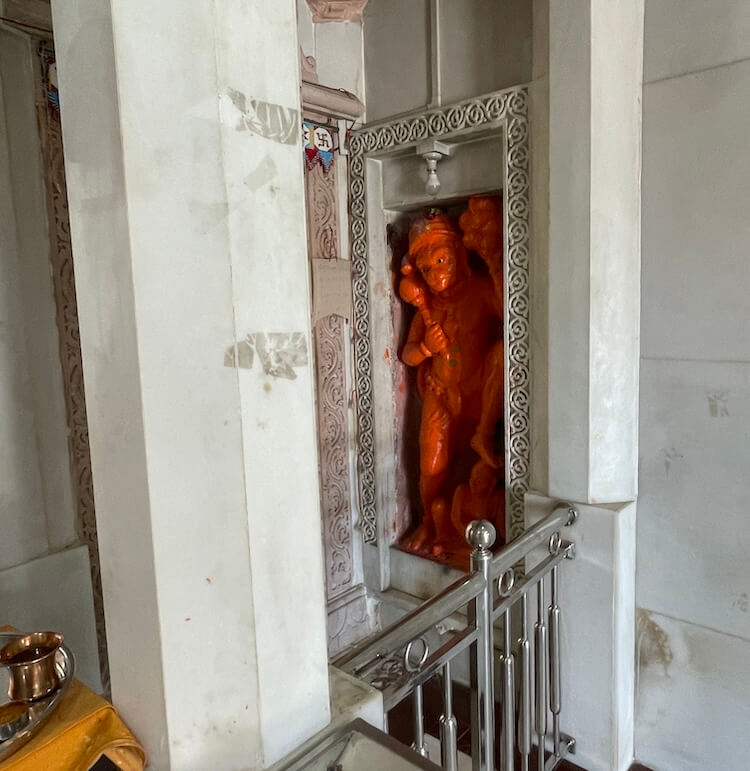
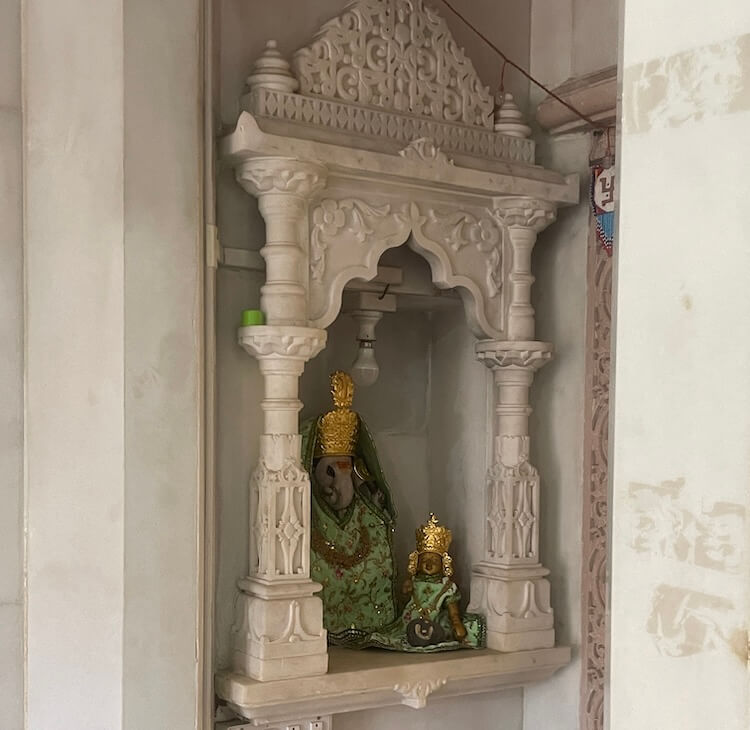
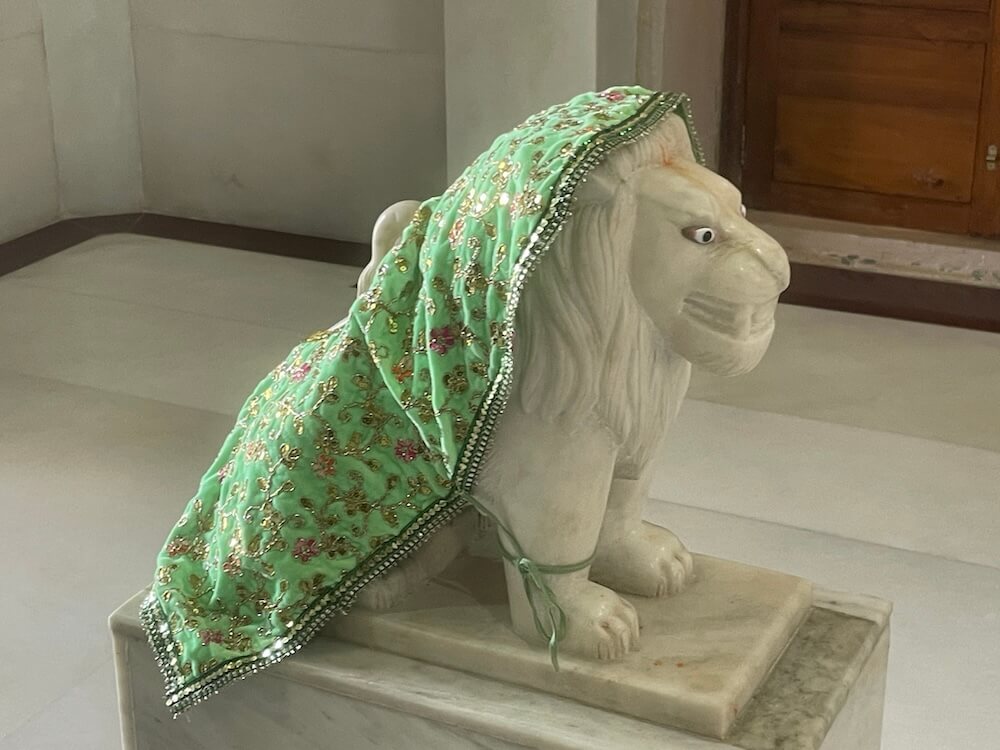
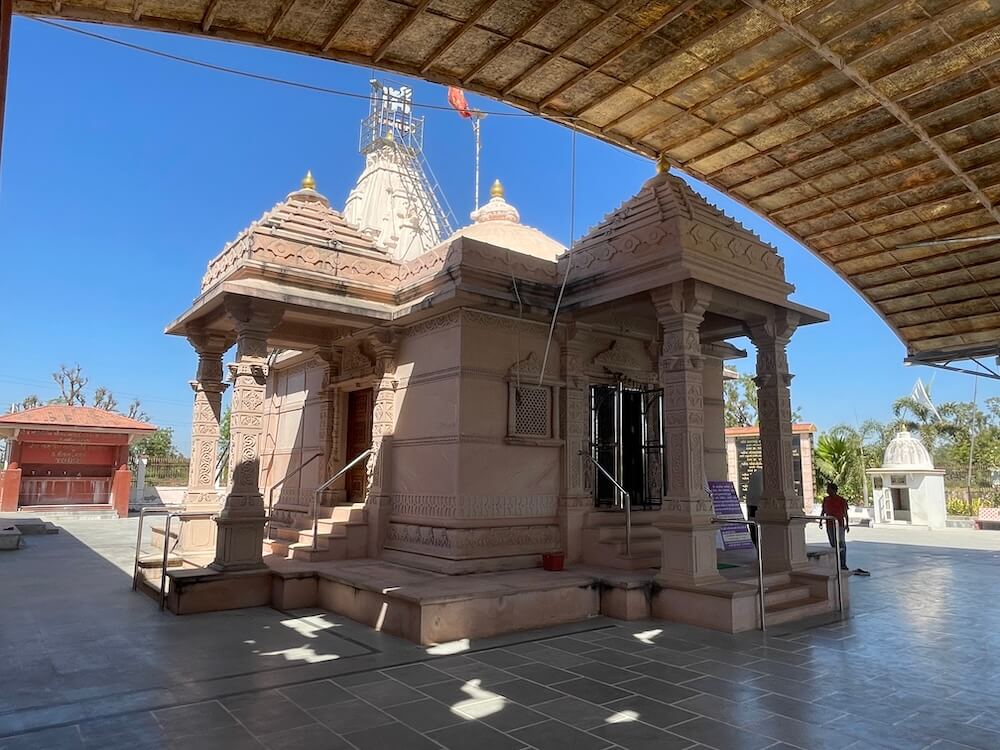
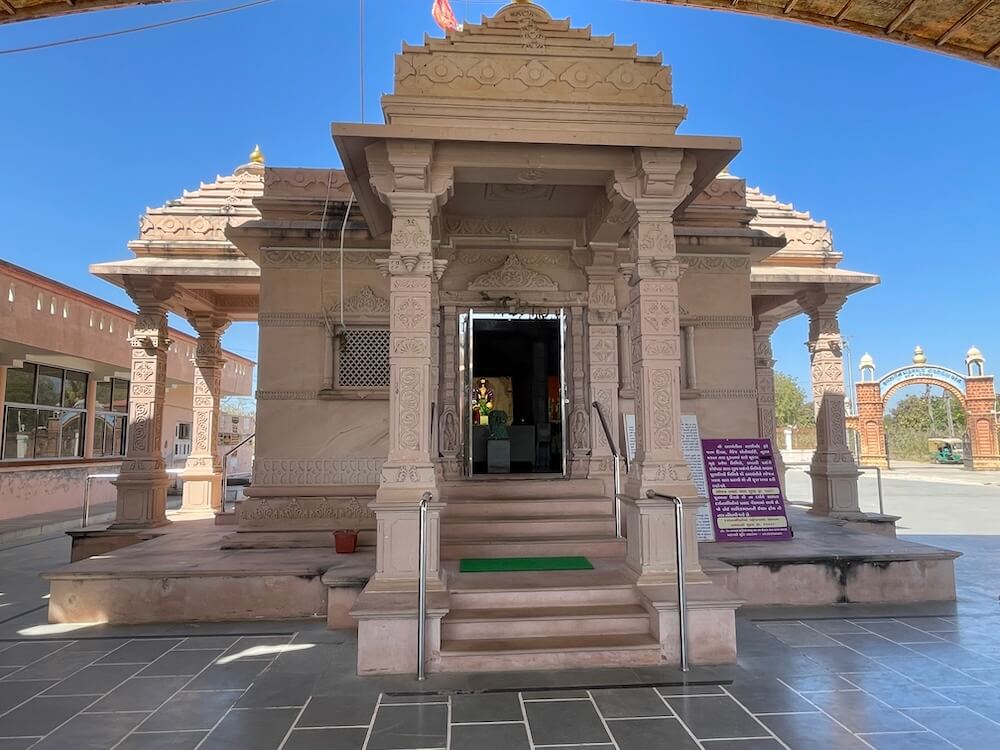
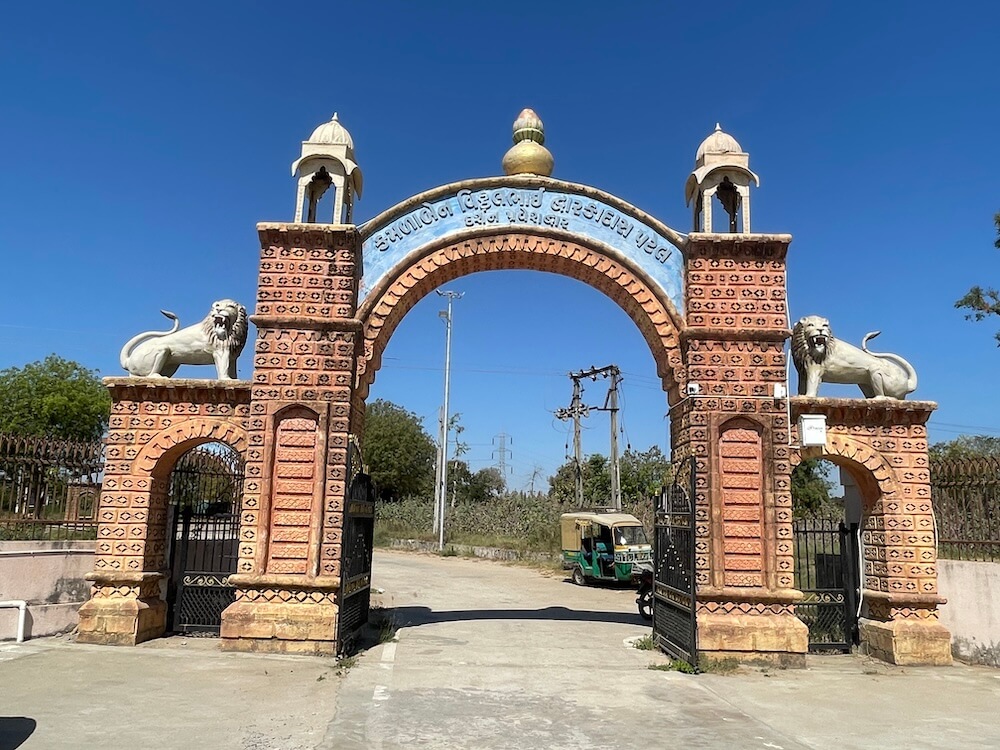
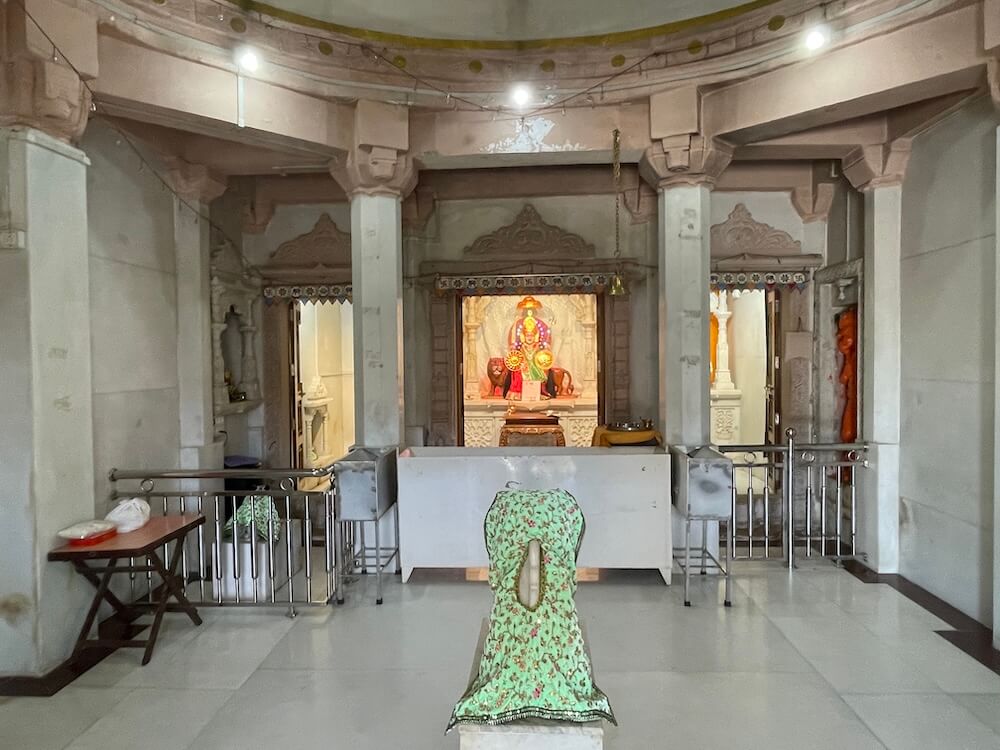
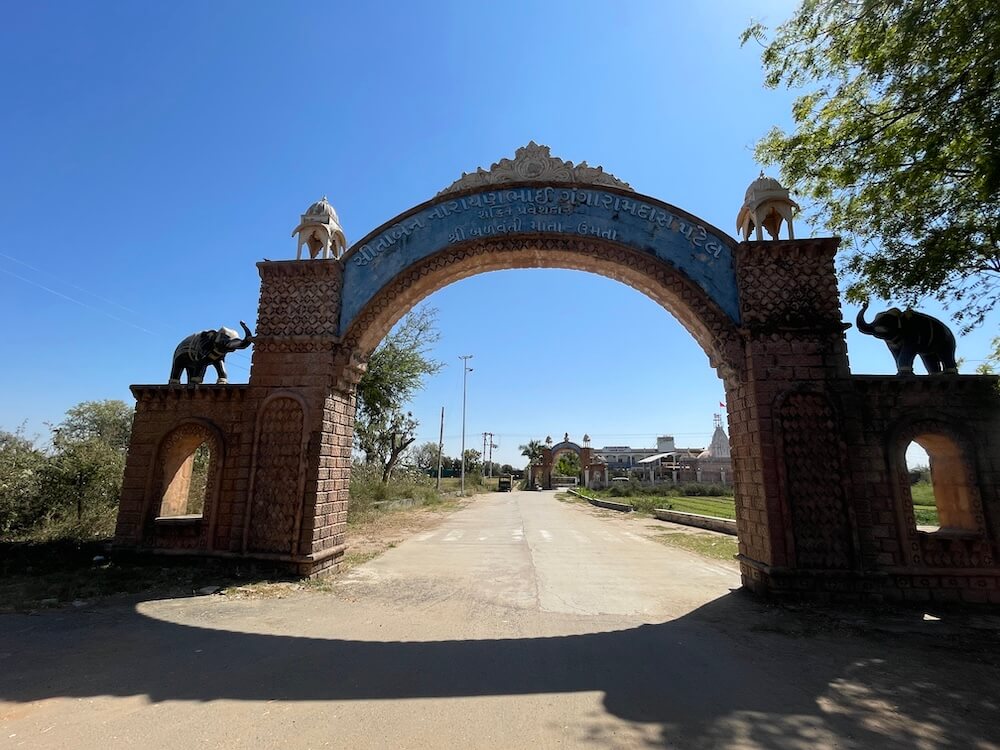
Access to the temple complex is gained through a primary arch situated along the highway. A short distance beyond lies a second, more formidable gateway featuring three portals, adorned with lion sculptures, ‘Meghadambari’ (ornate canopies) and sacred finials. This leads into an expansive, paved courtyard at the centre of which the Balvanti Mata temple is situated. Facing the shrine is a ‘Yagnashala’ (sacrificial hall). The architectural plan comprises three viewing porches, an assembly hall, a vestibule and three sanctums. After ascending three steps to the plinth and a further four steps to the assembly hall, one encounters a doorway embellished with ‘Dvarapalas’ (gatekeepers) and an ornate lintel. Within the hall stands a white marble sculpture of a lion, the Goddess’s celestial vehicle. Niches within the vestibule house idols of Ganesha and Hanuman. In the central sanctum resides the exquisite idol of the Goddess, mounted upon a lion. Adorned in fine silks and jewellery, she wears a crown and holds weapons, such as a sword and a trident.
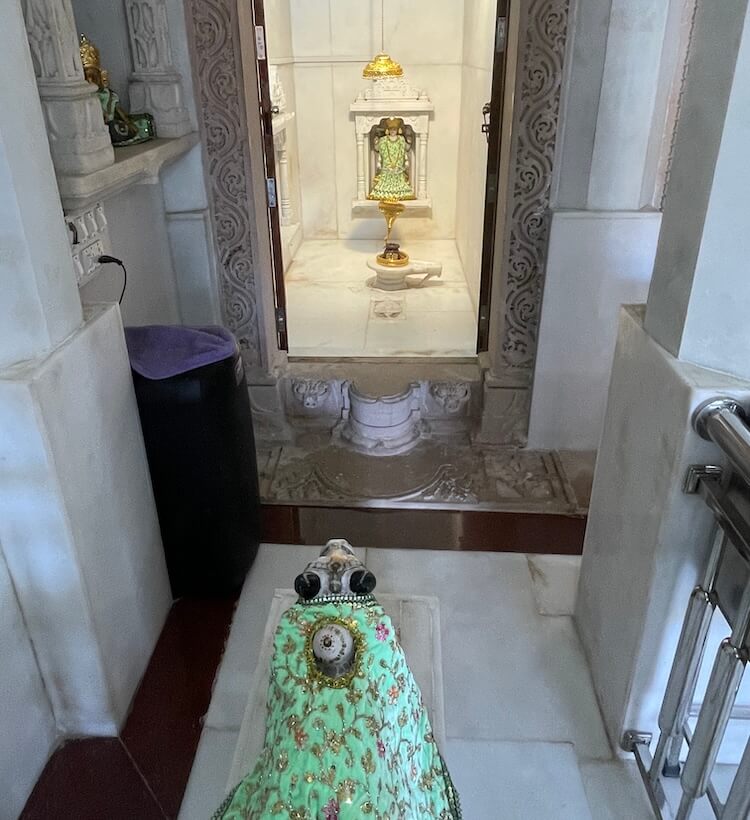
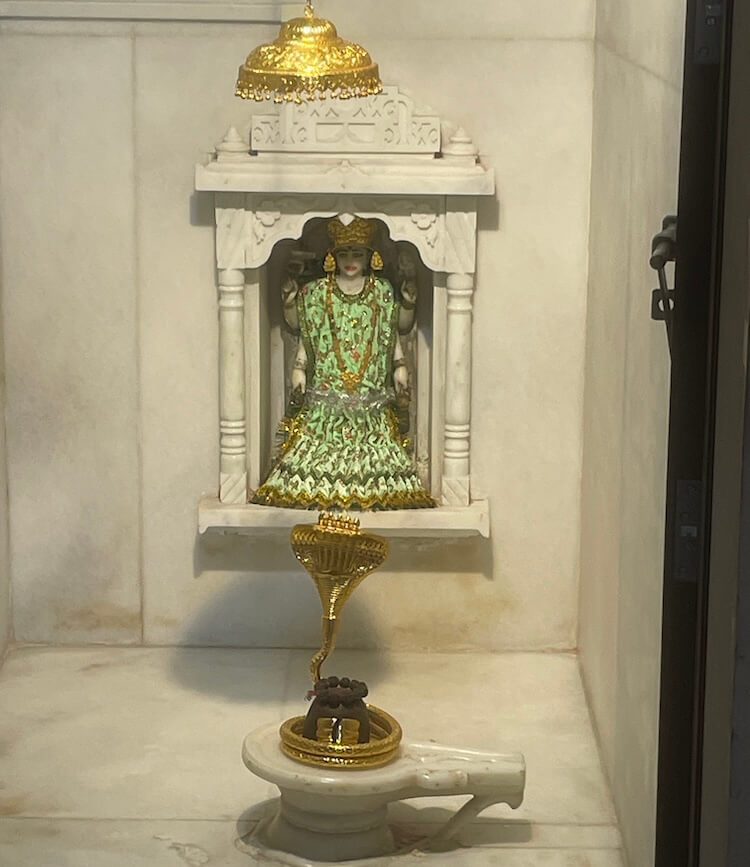
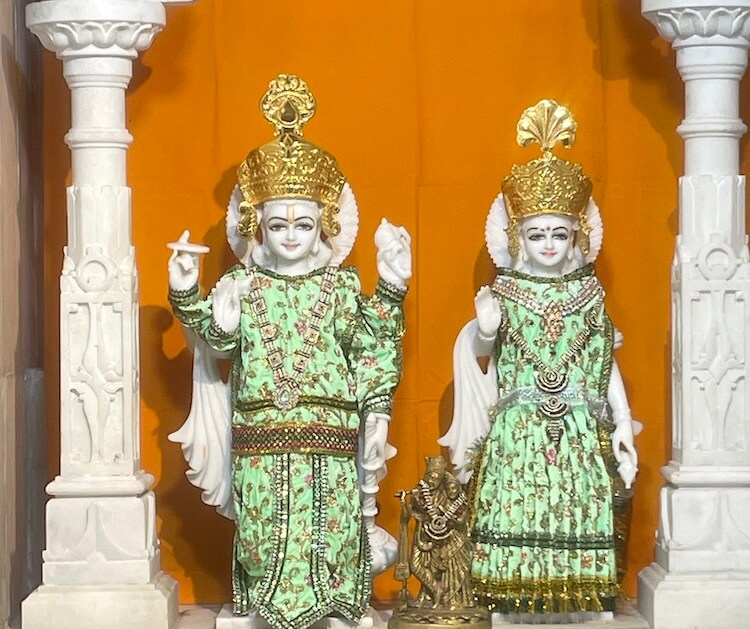
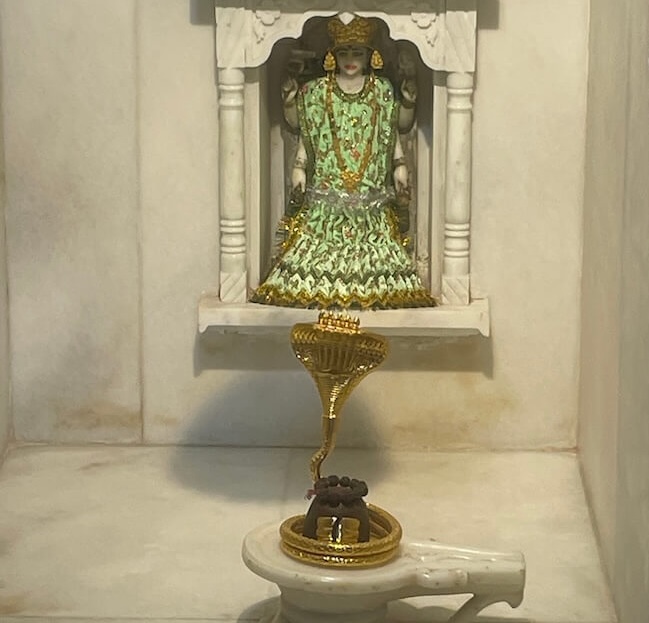
To the right of the main sanctum is a shrine dedicated to Lord Mahadev, with a Nandi statue placed in the vestibule before it. This sub-sanctum contains a marble Shiva Lingam and an idol of Mother Parvati in a wall niche. The sub-sanctum to the left enshrines Lakshmi-Narayan. The exterior walls are decorated with niches containing various deities. The temple is topped with square, tapering spires over the porches, a domed spire over the hall and a majestic ‘Urushringa’ style spire over the main sanctum, replete with miniature replicas and crowned with an ‘Amalaka’ and a ‘Kalash’.
A small shrine for Bhairavdada is also located within the premises.
A large number of devotees visit the temple on every full moon day. During these occasions, the temple distributes sacred meals called ‘Annaprasad’.
The manifestation day of the Goddess, Aso Sud 14, is celebrated with devotion. In southern Umta, where Alusingh Kathi fell, people still offer ‘Vada’, curd and jaggery.
At the site where Mokamsingh died, he is worshipped as ‘Mankadiya Veer’. The women of Umta honour Virsingh Ghodla and Umta Rana as ‘Garnala Veer’. They take pride in offering handfuls of soil at their memorial.
Useful Information
Located at 12 km from Visnagar and 38 km from Mehsana
GSRTC bus facilities available from Visnagar
Private vehicles can reach the temple directly
Accommodation and breakfast facilities available in the vicinity
The village of Umta, located in Visnagar taluka, has a dual legacy of medieval Gujarati history and mythological heritage. It hosts the temple of Mother Balvanti. According to local lore, Balvanti Mata was the daughter of the Rajput warrior Umta Rana. During an invasion by the Sultan of Gujarat, the goddess Khambhlai Mata is said to have manifested to protect the princess. Inside this temple, Balvanti Mata is worshipped as a powerful, weapon-bearing deity who rides a lion. As the patroness of Umta, the villagers believe her divine grace always protects their settlement.
The mythological legend of the goddess dates back about six hundred years. At that time, Umta Rana, nephew of the Maharaja of Danta State, ruled this area. His palace stood on Rajgadhi Timbo, a mound in the centre of the village. During this era, the Sultan of Gujarat attacked Idar State and captured its hill fortress. According to ‘History of the Gujarat Country’ (Second Edition, 1894) by Rao Bahadur Gopal Hari Deshmukh, this assault on Idar occurred in 1426 AD, during Sultan Ahmed Shah’s reign. After conquering Idar, the Sultan’s forces marched on Umta. Umta Rana and his Rajput army resisted bravely. A fierce battle took place on the banks of the Rupen River, where Umta Rana’s minister, Alusingh Kathi, died. During his funeral rites, the Sultan’s soldiers ambushed Umta Rana and his eldest son, Virsingh. Both died in the skirmish. The palace on Rajgadhi Timbo was seized by the Sultan’s army. Amid the chaos, Umta Rana’s younger son, Mokamsingh, fell from the fortress walls and perished.
Umta Rana had a daughter named Balvanti. She managed to escape the fortress and fled towards Kheralu-Danta, avoiding enemy forces. When she sensed she was being pursued, she sought shelter in a dense grove. There, she met an elderly shepherd who was watching his flock. Princess Balvanti pleaded with him for refuge. As the enemy drew close, the shepherd hid her under his heavy woollen blanket. When the soldiers arrived and questioned the shepherd about the princess, they noticed a suspicious form under the blanket. However, when one kicked the blanket away, a pile of fresh flowers was revealed where the princess had been. The soldiers tried to tamper with the flowers, but the shepherd intervened and collected them. He then placed the flowers in a nearby well. Local folklore claims that the shepherd was, in truth, the Goddess Khambhlai in disguise. She is also known as Kshemankari Mata, the family deity of Umta Rana’s lineage.
Years later, Balvanti Mata appeared in the dream of a local potter from Umta. He often dug for clay near the well. The Goddess told him, ‘I want to appear. Tomorrow, when you spin your potter’s wheel, it will turn on its own all day. This will prove My presence.’ The potter saw the miracle. He built a small shrine for the Goddess on the Rangpur-Kheralu road. The spot inside his house where the wheel spun alone is also considered holy. Because Balvanti Mata was found in the well, she is lovingly called ‘Badeli’. On the fourteenth day of the bright half of Ashvin month, her manifestation is celebrated. Beside the original shrine, a rest-house was built for pilgrims on Chaitra Sud 15, Samvat 1986 (1930 AD).
Brahmachari Brahmanand Maharaj was a devoted ascetic and worshipper of Balvanti Mata. Guided by his spiritual leadership, the foundation for the current temple was laid on Aso Sud 1, Samvat 2006 (1949 AD). Construction finished on Aso Sud 10, Samvat 2008 (1951 AD). Later, the temple was restored and became the beautiful structure that now stands in a large courtyard.
Access to the temple complex is gained through a primary arch situated along the highway. A short distance beyond lies a second, more formidable gateway featuring three portals, adorned with lion sculptures, ‘Meghadambari’ (ornate canopies) and sacred finials. This leads into an expansive, paved courtyard at the centre of which the Balvanti Mata temple is situated. Facing the shrine is a ‘Yagnashala’ (sacrificial hall). The architectural plan comprises three viewing porches, an assembly hall, a vestibule and three sanctums. After ascending three steps to the plinth and a further four steps to the assembly hall, one encounters a doorway embellished with ‘Dvarapalas’ (gatekeepers) and an ornate lintel. Within the hall stands a white marble sculpture of a lion, the Goddess’s celestial vehicle. Niches within the vestibule house idols of Ganesha and Hanuman. In the central sanctum resides the exquisite idol of the Goddess, mounted upon a lion. Adorned in fine silks and jewellery, she wears a crown and holds weapons, such as a sword and a trident. To the right of the main sanctum is a shrine dedicated to Lord Mahadev, with a Nandi statue placed in the vestibule before it. This sub-sanctum contains a marble Shiva Lingam and an idol of Mother Parvati in a wall niche. The sub-sanctum to the left enshrines Lakshmi-Narayan. The exterior walls are decorated with niches containing various deities. The temple is topped with square, tapering spires over the porches, a domed spire over the hall and a majestic ‘Urushringa’ style spire over the main sanctum, replete with miniature replicas and crowned with an ‘Amalaka’ and a ‘Kalash’. A small shrine for Bhairavdada is also located within the premises.
A large number of devotees visit the temple on every full moon day. During these occasions, the temple distributes sacred meals called ‘Annaprasad’. The manifestation day of the Goddess, Aso Sud 14, is celebrated with devotion. In southern Umta, where Alusingh Kathi fell, people still offer ‘Vada’, curd and jaggery. At the site where Mokamsingh died, he is worshipped as ‘Mankadiya Veer’. The women of Umta honour Virsingh Ghodla and Umta Rana as ‘Garnala Veer’. They take pride in offering handfuls of soil at their memorial.
Useful Information
Located at 12 km from Visnagar and 38 km from Mehsana
GSRTC bus facilities available from Visnagar
Private vehicles can reach the temple directly
Accommodation and breakfast facilities available in the vicinity

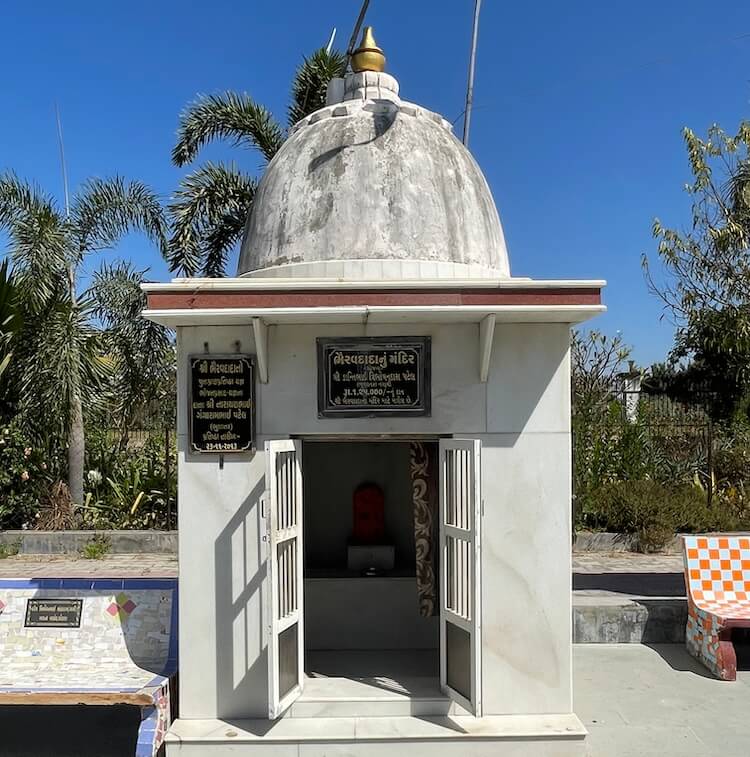
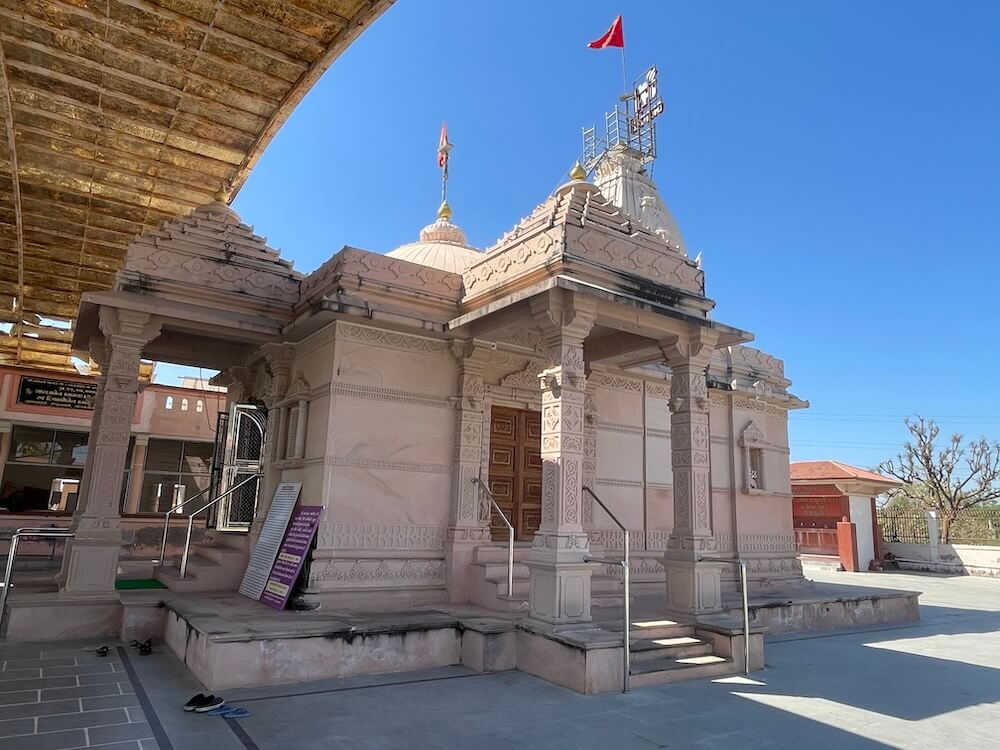
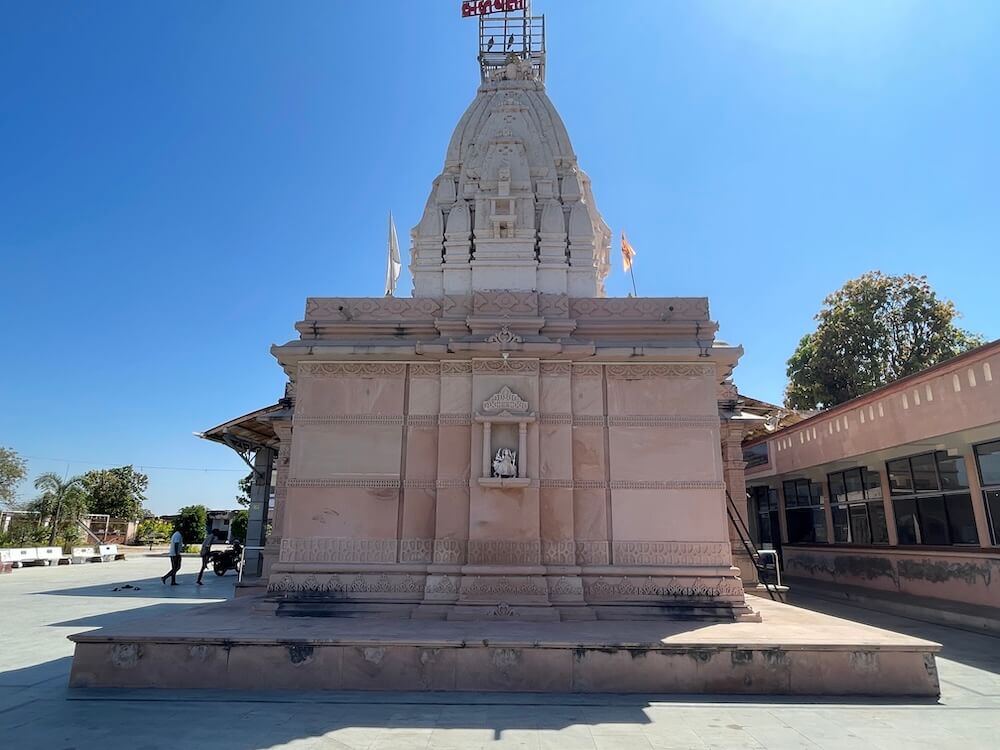 The temple is topped with square, tapering spires over the porches, a domed spire over the hall and a majestic ‘Urushringa’ style spire over the main sanctum, replete with miniature replicas and crowned with an ‘Amalaka’ and a ‘Kalash’. A small shrine for Bhairavdada is also located within the premises.