
एत्तुमनूर महादेवाचे मंदिर
एत्तुमनूर, जि. कोट्टायम
Ettumanoor Mahadeva Temple
Ettumanoor, Dist. Kottayam
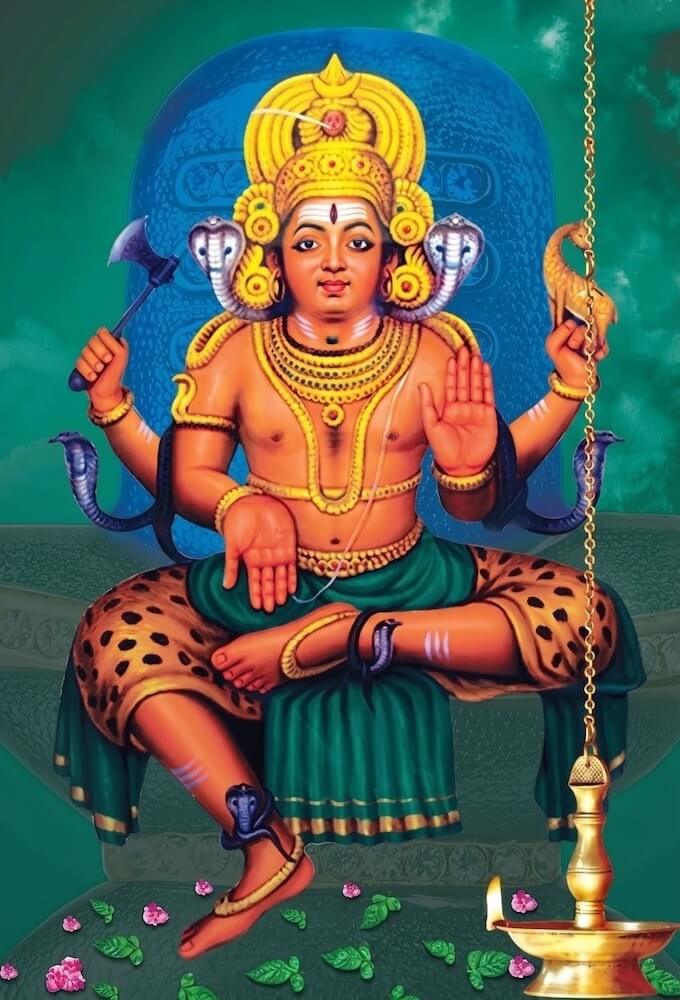 The Ettumanoor Mahadeva Temple, located at Ettumanoor in the Kottayam district of Kerala, is an ancient and highly revered temple dedicated to Lord Shiva, who is worshipped here as Ettumanoorappan. Associated with the legends of Khara Maharshi and Sage Vyasa, the temple is renowned for its historical, architectural and artistic significance. It is especially famous for the Ezhara Ponnana (the Seven-and-a-Half Golden Elephants), presented by the Travancore royal family and for its magnificent centuries-old Kerala mural paintings, including the celebrated Pradosha Nritham mural depicting Lord Shiva’s cosmic dance.
The Ettumanoor Mahadeva Temple is believed to have been an important centre of worship for more than a thousand years. According to local tradition, the philosopher-saint Adi Shankaracharya visited the temple and is believed to have composed the Soundarya Lahari during his stay there. Although the shrine is of great antiquity, the present temple complex, including the gopuram (entrance tower) and the surrounding stone fortification, was reconstructed in 1542 CE (717 Malayalam Era). During the mid-seventeenth century, King Devanarayanan of Chempakassery donated a 500-pound bronze statue of Nandi, the sacred bull of Lord Shiva, in gratitude for his recovery from a severe stomach ailment. In 1753, King Anizham Thirunal Marthanda Varma, the founder of the Travancore Kingdom, offered the temple the Ezhara Ponnana (Seven-and-a-Half Golden Elephants), consisting of seven solid gold elephant statuettes, each measuring about two feet in height and an eighth elephant of half that size.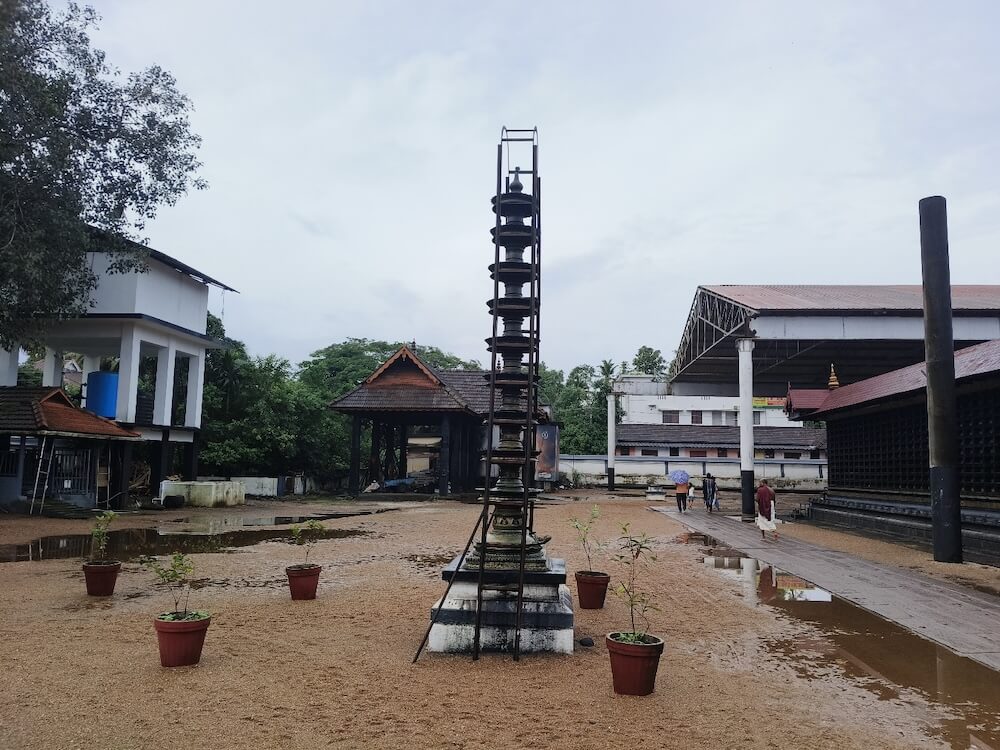 The offering was made in atonement for damage caused to temple property during his military campaigns. These historic artefacts are preserved in the temple treasury and are displayed only during the annual Arattu festival.
Temple tradition associates the origin of the Ettumanoor Mahadeva Temple with King Rajasekhara Varman, to whom Lord Shiva is believed to have appeared in a dream. The Lord directed the king to His self-manifested (Swayambhu) form at Ettumanoor, leading to the establishment of the temple at the sacred site. The name Ettumanoor and is traditionally interpreted as “the Land of Eight”, referring to the belief that Lord Shiva manifested Himself in eight different forms in this region. Another important legend concerns Khara Maharshi, also known as Khara Prasada Muni or Khara Brahma Rishi. 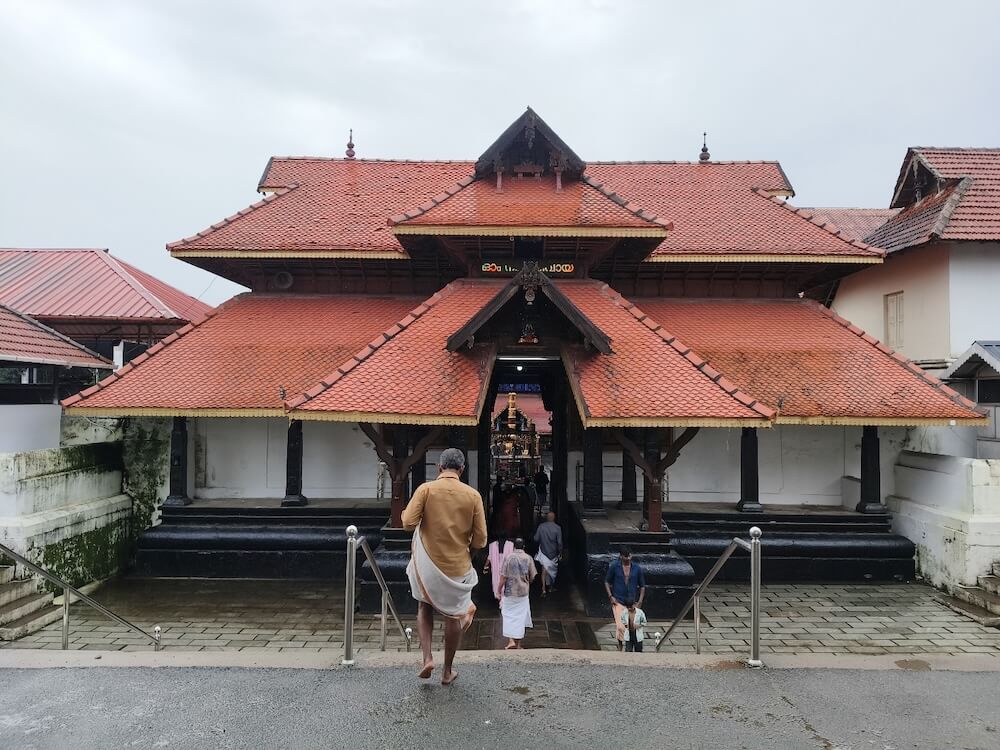 Tradition relates that the sage was cursed and transformed into an Asura, bringing destruction wherever he went. Seeking redemption, he undertook intense penance and prayed to Lord Shiva, who appeared before him, removed the curse and restored him to his original form. As an act of gratitude and atonement, Khara Maharshi wished to consecrate a temple in honour of Lord Shiva. It is believed that the Lord guided him to the present site of Ettumanoor, where the temple was subsequently established.
The Ettumanoor Mahadeva Temple occupies a relatively compact Mathilakam (outer enclosure) covering approximately five acres. The main entrance, situated on the eastern side of the M.C. Road, is adorned with an intricately carved image of Lord Nataraja and leads into a spacious forecourt.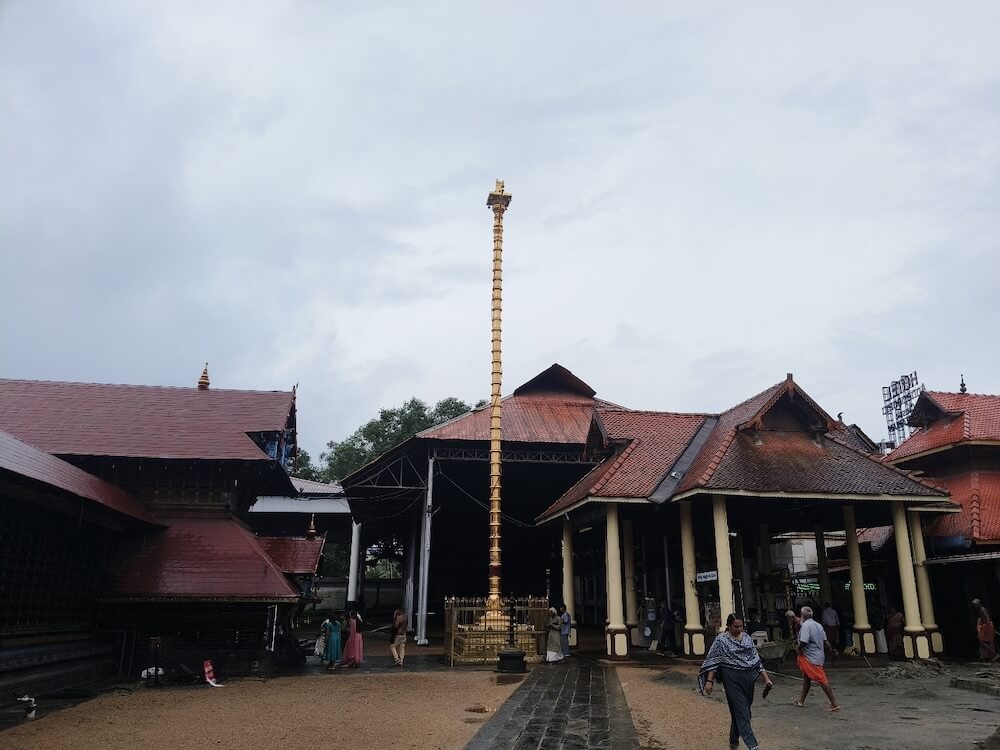 Further inside stands the Padinjare Gopuram (western gateway), the principal entrance to the inner temple complex, with the Travancore Devaswom administrative offices located nearby. Passing through the gateway, devotees first encounter the Anakkottil (elephant pavilion), built to accommodate three elephants during temple festivals. Adjacent to it stands the golden Kodimaram (flagstaff), installed in 2010 to replace the earlier flagstaff and decorated at its base with carvings of the Ashtadikpalakas (Guardians of the Eight Directions). Beyond the Kodimaram is the Balikkalppura, which houses a massive Balikkallu measuring over ten feet in height, with the historic Valiya Vilakku (Great Lamp) standing immediately in front of it.
To the north-west is the Asthana Mandapam, where the deity and the Ezhara Ponnana are ceremonially displayed during the annual festival. 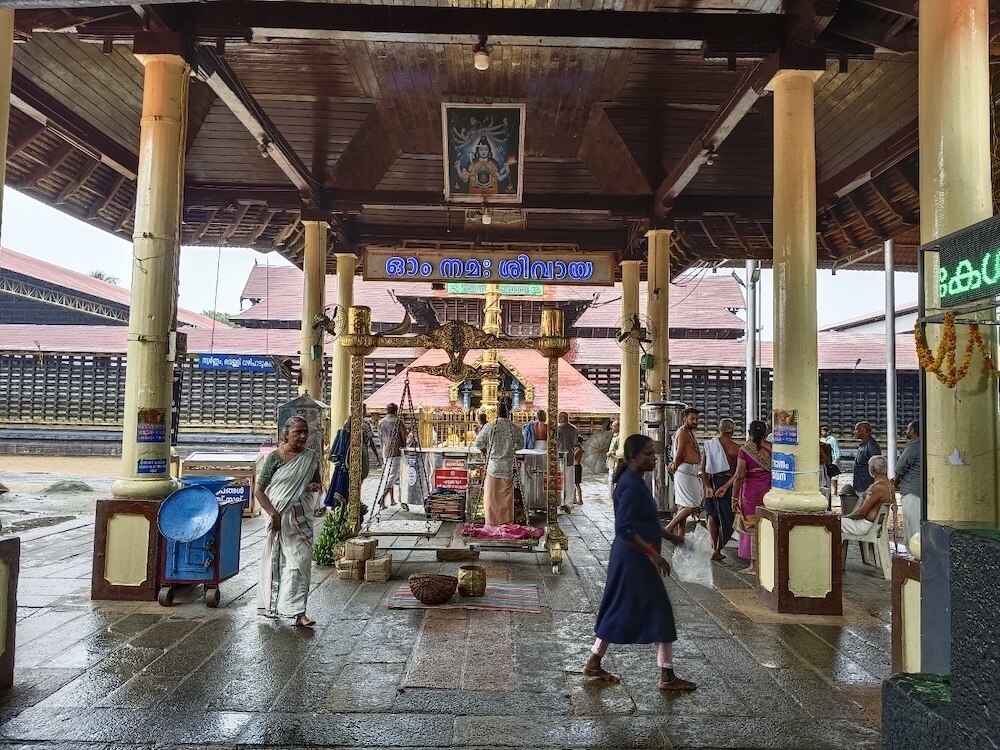 North of the temple lies the distinctive bow-shaped Villukulam (Bow Pond), used for ritual purification, while the north-eastern corner contains the Nagathara and the Annadanamandapam (dining hall). Near the eastern entrance stands the Sanatana Dharma Pathasala (religious school), while the south-western section of the complex includes an open-air auditorium for cultural programmes. The inner shrine is enclosed by the Nalambalam, within which stands the Namaskara Mandapam, a square pavilion supported by sixteen wooden pillars and positioned directly in front of the Sreekovil. The pavilion has a copper-clad roof crowned with a golden Thazhikakudam (finial), while its finely carved wooden beams depict scenes from the Ramayana and the Bhagavata Purana.
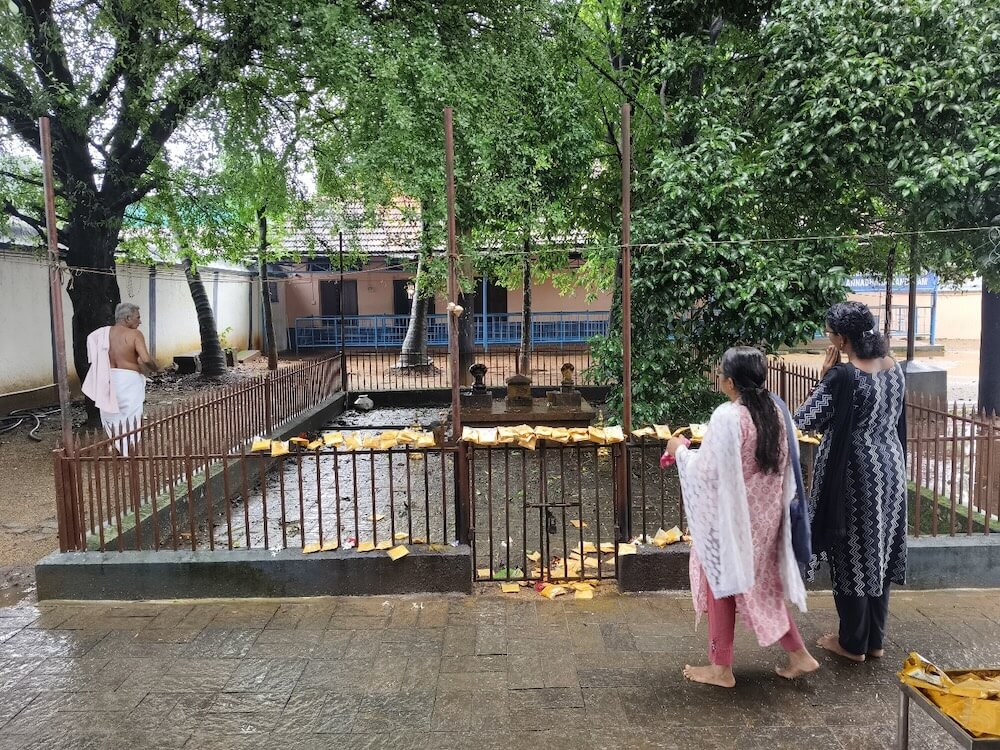 The north-western and north-eastern pillars are traditionally associated with Goddess Durga and a Yakshi respectively, while two statues of Nandi—one in stone and the other in bronze—are placed at its eastern end. Beyond the Namaskara Mandapam stands the circular Vatta Sreekovil (sanctum sanctorum), the spiritual and architectural focal point of the temple. Built on a moulded granite plinth with thick granite walls, the single-storeyed Sreekovil is surmounted by a copper-plated conical roof crowned with a golden Thazhikakudam. The interior is divided into three chambers, the easternmost serving as the Garbhagriha (inner sanctum), which enshrines a three-and-a-half-foot Shiva Lingam mounted on a two-and-a-half-foot pedestal and facing west. As in many traditional circular Kerala sanctums, the deity is positioned well above floor level and is fully visible only when viewed directly from the entrance.
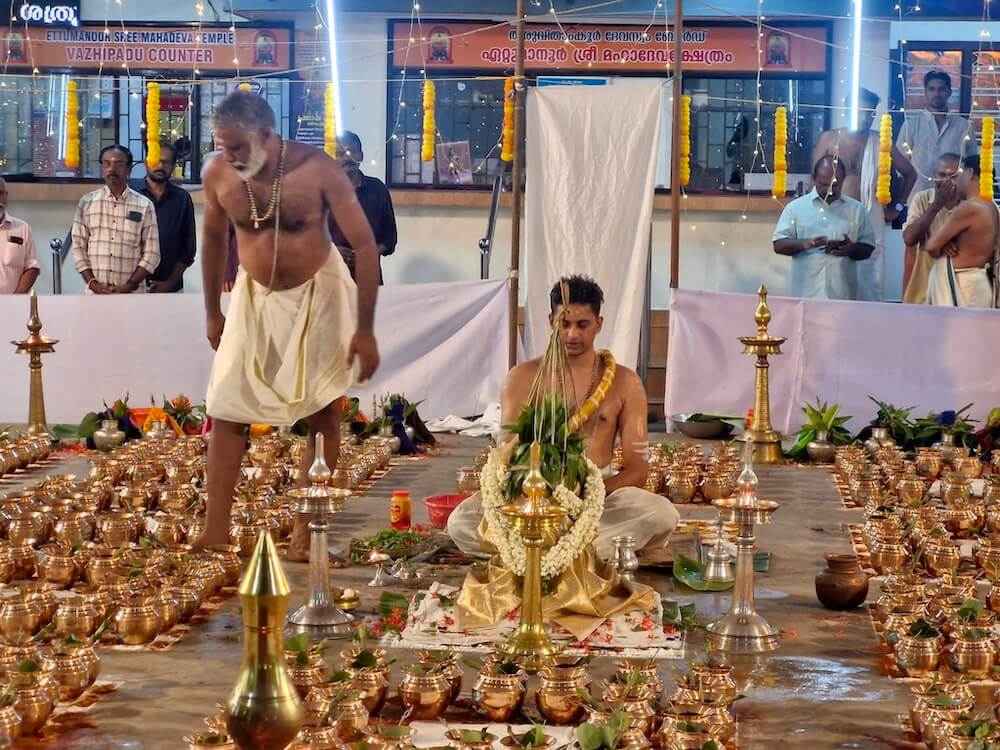 The exterior walls are richly decorated with intricate wood carvings and mural paintings depicting Puranic themes, including Vamana, Sage Ashtavakra and the Rasaleela. The southern wall incorporates shrines dedicated to Dakshinamoorthy and Lord Ganesha, while the permanently closed eastern doorway is traditionally revered as the abode of Goddess Parvati.
The presiding deity is Lord Shiva, worshipped in the fierce yet benevolent form of Aghoramoorthy. The term Aghora signifies one who is terrifying to the wicked while remaining compassionate towards the righteous. Temple tradition holds that the deity manifests in three forms during the course of the day: as Ardhanarishvara (the united Shiva–Shakti form) in the morning, Kirathamurthy (the divine hunter who blessed Arjuna) in the afternoon and Samhararudra in the evening. 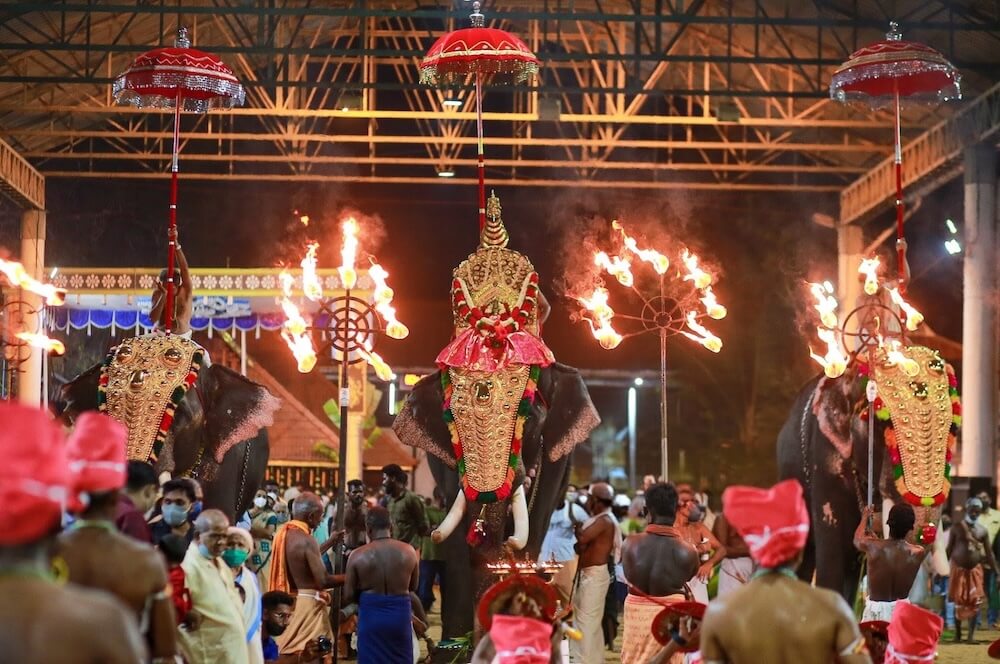 Another tradition associates these manifestations with Nataraja, Sharabha and Ardhanarishvara, respectively.
The principal festival of the Ettumanoor Mahadeva Temple is the ten-day annual Thiru Utsavam, celebrated during the Malayalam month of Kumbham (February–March) and culminating in the Arattu ceremony on the Thiruvathira asterism. The most significant event of the festival takes place on the eighth night during the Asthana Mandapa Darshanam, when the deity is ceremonially displayed alongside the Ezhara Ponnana (Seven-and-a-Half Golden Elephants) and devotees participate in the traditional Valiya Kanikka offering. On the ninth night, the symbolic Pallivetta (royal hunt) is performed, followed on the final day by the Arattu procession to the Meenachil River for the ceremonial ritual bath.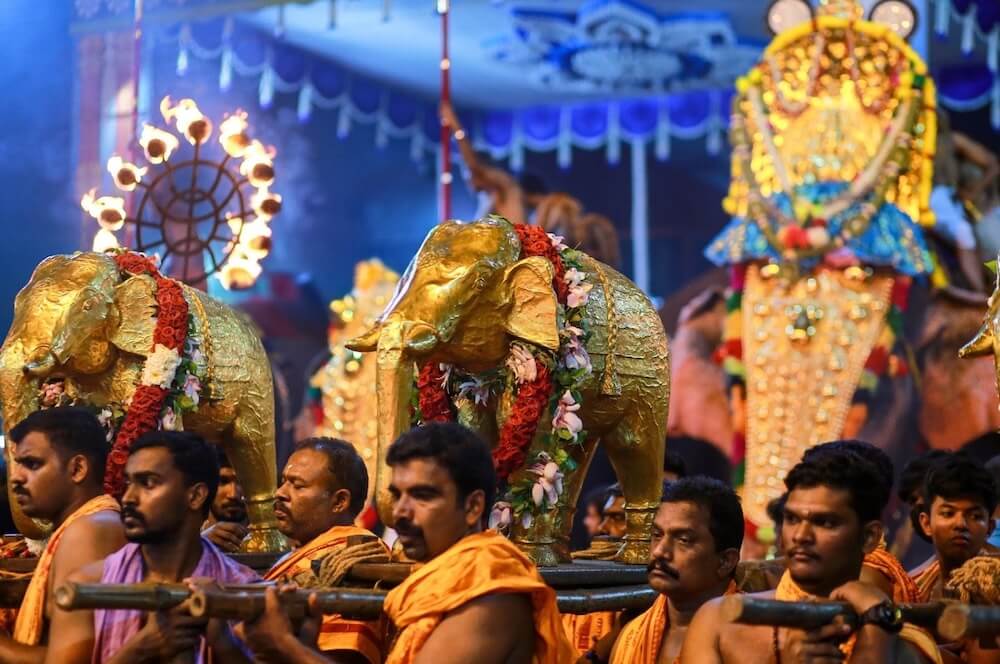 Maha Shivaratri is another important annual observance, featuring special Yama Pujas, cultural programmes, a fireworks display and the Shayana Pradakshinam, during which hundreds of devotees perform prostration around the temple. Thiruvathira, observed in the Malayalam month of Dhanu, is marked by the Akhanda Bhasmabhishekam (continuous sacred ash offering).
The offerings at the Ettumanoor Mahadeva Temple are centred on worship of Lord Shiva in his Aghoramoorthi form. One of the temple’s most distinctive offerings is the pouring of sesame or mustard oil into the historic Valiya Vilakku (Great Oil Lamp) at the entrance. 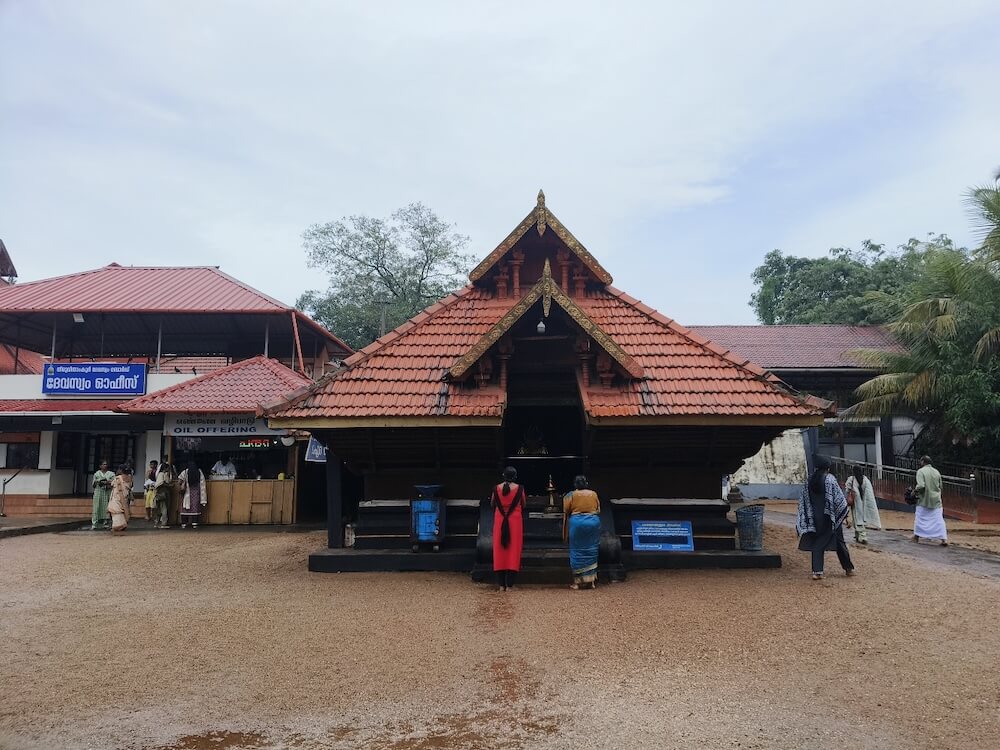 Devotees also offer Dhara, the continuous pouring of water or milk over the Shiva Lingam and Muzhukkappu, the complete anointment of the deity with sandalwood paste, symbolising peace and devotion. Other important offerings include Anpoli (Aiyimpara), in which five large wooden measuring vessels are filled with paddy, beaten rice, puffed rice, jaggery and plantains and Thulabharam, where devotees offer commodities such as bananas or jaggery equivalent to their body weight in fulfilment of vows. Regular homams conducted at the temple include Mruthyunjaya Homam, Ganapathy Homam and Karuka Homam. Neeranjanam is also offered at the Sastha sub-shrine. The temple additionally maintains the long-standing tradition of Annadanam, serving a free midday meal (Prasadam Ootu) to thousands of pilgrims each afternoon following the Ucha Puja.
The Ettumanoor Mahadeva Temple follows a traditional schedule of five daily pujas and three Seevelis (ritual processions). The day begins with Palliyunarthal (ceremonial awakening) at 3:00 AM, followed by Nirmalya Darshanam at 4:00 AM. Morning rituals include the Usha Puja—traditionally known as Madhavippally Puja in memory of a Zamorin princess who is believed to have been cured of an illness at the temple—followed by the Ethirettu Puja at sunrise, the morning Seeveli, Pantheeradi Puja at 8:00 AM and the Ucha Puja, after which the temple closes at 12:00 PM. The temple reopens at 5:00 PM for Deeparadhana, followed by the Athazha Puja, the final Seeveli and Thrippuka (purifying incense ritual), before closing for the night at 8:00 PM.
Key Highlights
- Located 12 km from Kottayam.
- About 12 km from Kottayam Railway Station.
- KSRTC and local bus services are available.
- Dedicated parking is available for private vehicles.
- Accommodation and dining facilities are available nearby.
- Phone: +91 8078133375
एट्टुमानूर महादेव मंदिर
एट्टुमानूर, जिला। कोट्टायम
मंदिरे
Temples
मंदिर
મંદિરો
கோவில்கள்
దేవాలయాలు
ക്ഷേത്രങ്ങൾ
ದೇವಾಲಯಗಳು
মন্দিরসমূহ
ਮੰਦਿਰ
-
वेल्लूर श्री सुब्रह्मण्य स्वामी मंदिर पामपाडी, जि. कोट्टायम
अधिक माहितीVelloor Sree Subrahmanya Swamy Temple Pampady, Dist. Kottayam
View Detailsवेल्लोर श्री सुब्रह्मण्य स्वामी मंदिर पंपडी, जिला. कोट्टायम
विवरण देखेंVelloor Sree Subrahmanya Swamy Temple Pampady, Dist. Kottayam
વિગત જુઓVelloor Sree Subrahmanya Swamy Temple Pampady, Dist. Kottayam
விவரங்களைக் காண்கVelloor Sree Subrahmanya Swamy Temple Pampady, Dist. Kottayam
వివరాలను చూడండిVelloor Sree Subrahmanya Swamy Temple Pampady, Dist. Kottayam
വിശദാംശങ്ങൾ കാണുകVelloor Sree Subrahmanya Swamy Temple Pampady, Dist. Kottayam
ವಿವರಗಳನ್ನು ವೀಕ್ಷಿಸಿVelloor Sree Subrahmanya Swamy Temple Pampady, Dist. Kottayam
বিস্তারিত দেখুনVelloor Sree Subrahmanya Swamy Temple Pampady, Dist. Kottayam
ਵੇਰਵੇ ਦੇਖੋ -
पुलियान्नूर शिव मंदिर पाला, जि. कोट्टायम
अधिक माहितीPuliyannur Siva Temple Pala, Dist. Kottayam
View Detailsपुलियान्नुर शिव मंदिर पाला, जिला. कोट्टायम
विवरण देखेंPuliyannur Siva Temple Pala, Dist. Kottayam
વિગત જુઓPuliyannur Siva Temple Pala, Dist. Kottayam
விவரங்களைக் காண்கPuliyannur Siva Temple Pala, Dist. Kottayam
వివరాలను చూడండిPuliyannur Siva Temple Pala, Dist. Kottayam
വിശദാംശങ്ങൾ കാണുകPuliyannur Siva Temple Pala, Dist. Kottayam
ವಿವರಗಳನ್ನು ವೀಕ್ಷಿಸಿPuliyannur Siva Temple Pala, Dist. Kottayam
বিস্তারিত দেখুনPuliyannur Siva Temple Pala, Dist. Kottayam
ਵੇਰਵੇ ਦੇਖੋ -
परिपू महादेवाचे मंदिर आयमनम, जि. कोट्टायम
अधिक माहितीParippu Mahadeva Temple Aymanam, Dist. Kottayam
View Detailsपरिप्पु महादेव मंदिर अयमानम, जिला. कोट्टायम
विवरण देखेंParippu Mahadeva Temple Aymanam, Dist. Kottayam
વિગત જુઓParippu Mahadeva Temple Aymanam, Dist. Kottayam
விவரங்களைக் காண்கParippu Mahadeva Temple Aymanam, Dist. Kottayam
వివరాలను చూడండిParippu Mahadeva Temple Aymanam, Dist. Kottayam
വിശദാംശങ്ങൾ കാണുകParippu Mahadeva Temple Aymanam, Dist. Kottayam
ವಿವರಗಳನ್ನು ವೀಕ್ಷಿಸಿParippu Mahadeva Temple Aymanam, Dist. Kottayam
বিস্তারিত দেখুনParippu Mahadeva Temple Aymanam, Dist. Kottayam
ਵੇਰਵੇ ਦੇਖੋ