
द्वारकाधीश बैठक मंदिर
आनंद शहर, ता. आणि जि. आनंद
Dwarkadhish Baithak Temple
Anand City, Tal. and Dist. Anand
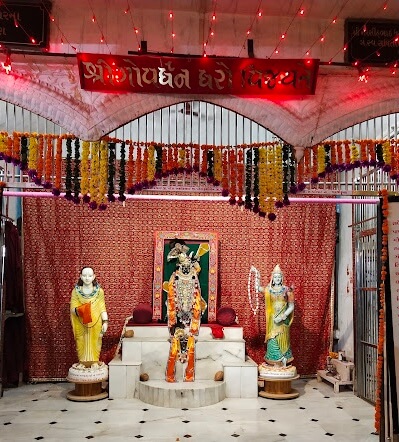 Having renounced Mathura, Bhagwan Shri Krishna founded the magnificent city of Dwarka on the shores of the sea and along the banks of the Gomti River. Due to this extraordinary and divine mission, he earned the fitting title ‘Dwarkadhish’ – the Lord of Dwarka. In this sacred city, one of Hinduism’s four revered Char Dham pilgrimage sites, Shri Krishna married Devi Rukmini. The principal temple in Dwarka is widely known as the ‘Jagad Mandir’. Across Gujarat, several sacred places blessed by Shri Krishna’s footsteps, including Bet Dwarka, Madhavpur, Junagadh, and Dakor, have long attracted large numbers of devotees. Within this spiritual lineage, the renowned Dwarkadhish Baithak Temple in Anand holds particular significance.
The temple is believed to be at least 200 to 250 years old. Situated in Anand district, which is often regarded as the heart of Gujarat’s Charotar region, the temple is associated with the founder of the Pushtimarg tradition, Jagadguru Shri Vallabhacharya Mahaprabhu (1479–1531). During his three extensive journeys across India, he travelled barefoot for a period spanning 52 years and 2 months. 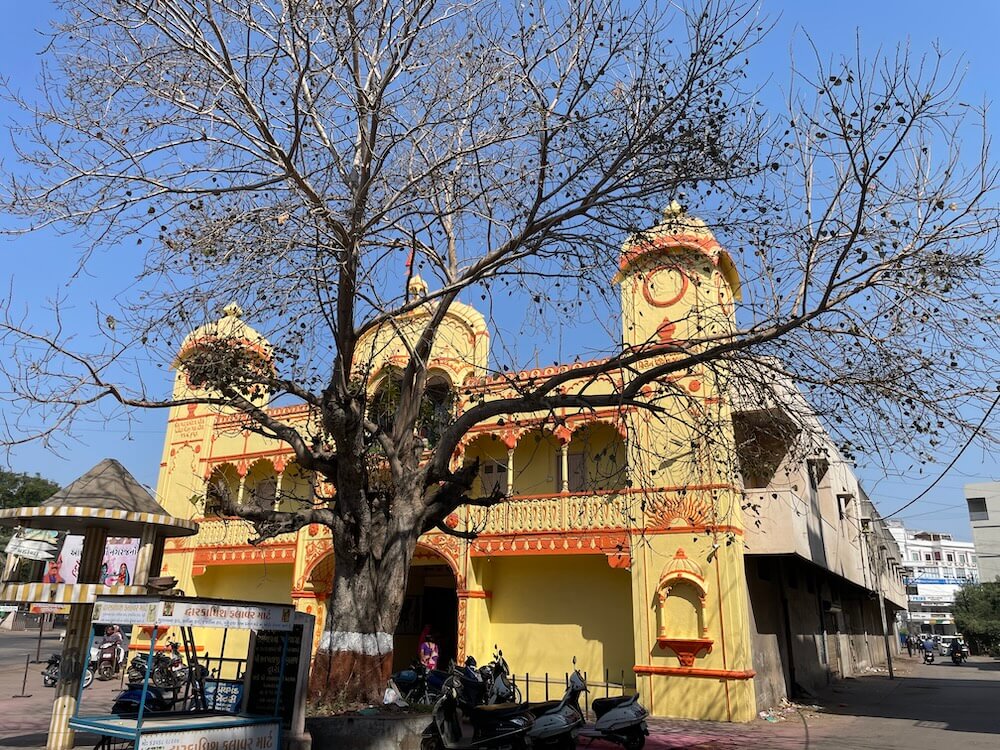 At 84 principal locations where he performed recitations of the ‘Shrimad Bhagavata’, sacred seats were established, which came to be known as the ‘Chauryashi Baithaks’ (the eighty-four sacred seats). Although the site of this temple in Anand is not independently counted among those principal 84 Baithaks, the residence of Acharyas belonging to the Vallabhakul lineage has bestowed upon this place a distinguished position within the Vaishnava tradition.
Several legends and devotional narratives about the temple’s establishment are in circulation. According to one such account, Bhagwan Shri Krishna, while travelling from Dwarka towards Pandharpur (Maharashtra), paused at this very location to rest. Because he is believed to have sat here, the shrine came to be known as the ‘Baithak Temple’. Another story recounts that a deeply distressed Vaishnava devotee once received a divine vision of Shri Krishna at this spot. In that vision,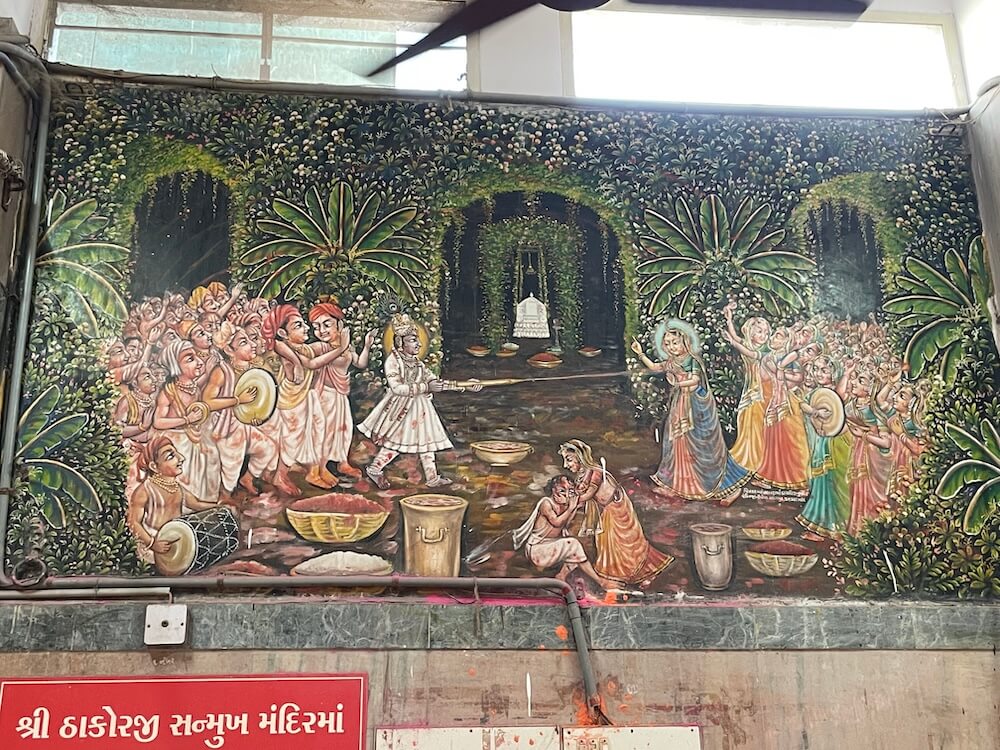 the Lord instructed him to construct a temple here, and in obedience to that command, the devotee established the shrine upon this sacred ground. A third legend narrates that, upon an ancient platform at this very site, a radiant, self-manifested idol of Shri Krishna appeared, after which the villagers erected a temple at that sacred seat.
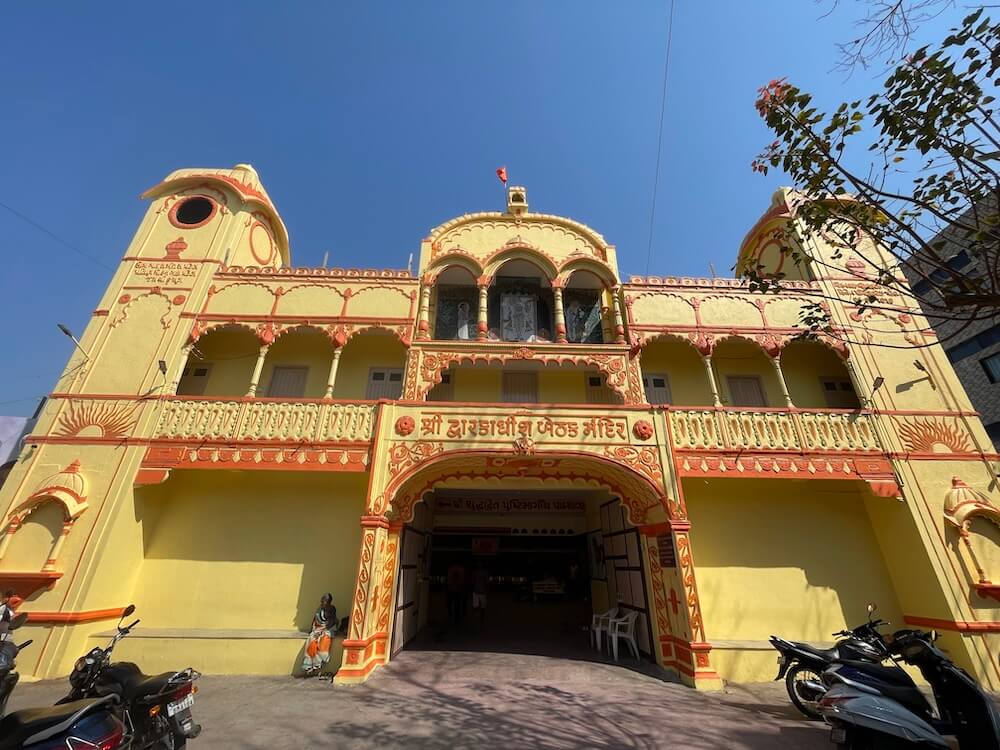
As the city expanded over time, what was once a temple located outside the village now stands within a busy urban neighbourhood. A parking facility has been provided in front of the temple. The two-storeyed entrance gateway of the temple is flanked on both sides by tall towers fitted with clocks. Beneath this gateway, decorated with painted peacock toranas, are guard chambers on either side. 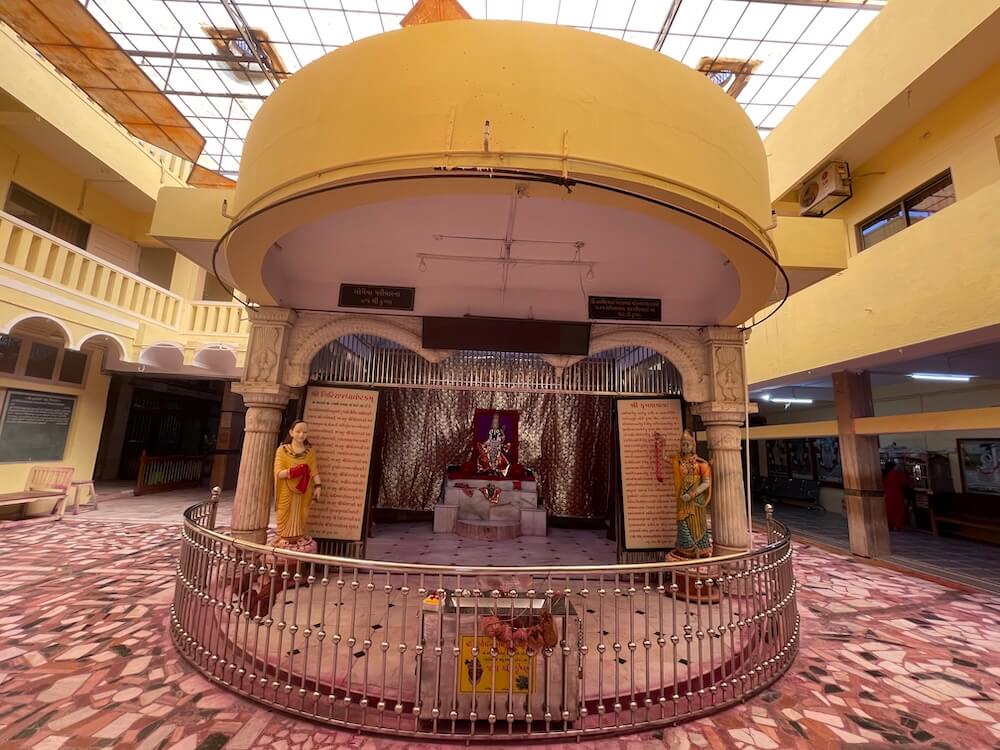 The upper storey houses a Nagarakhana (drum gallery) and displays several portraits of Shri Krishna in various forms.
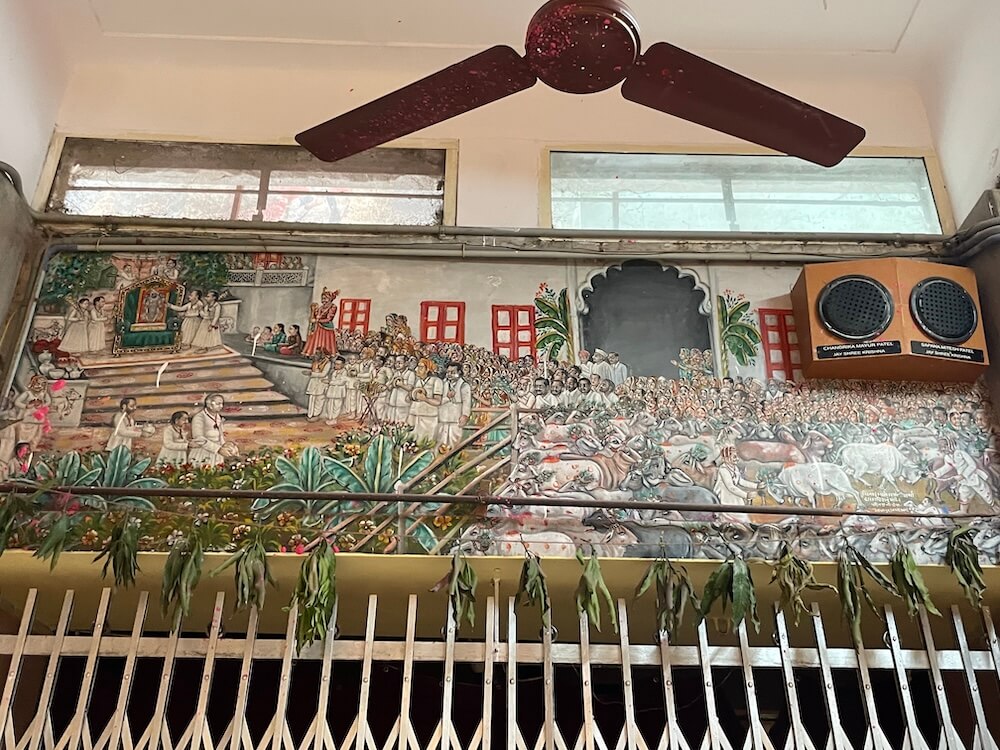
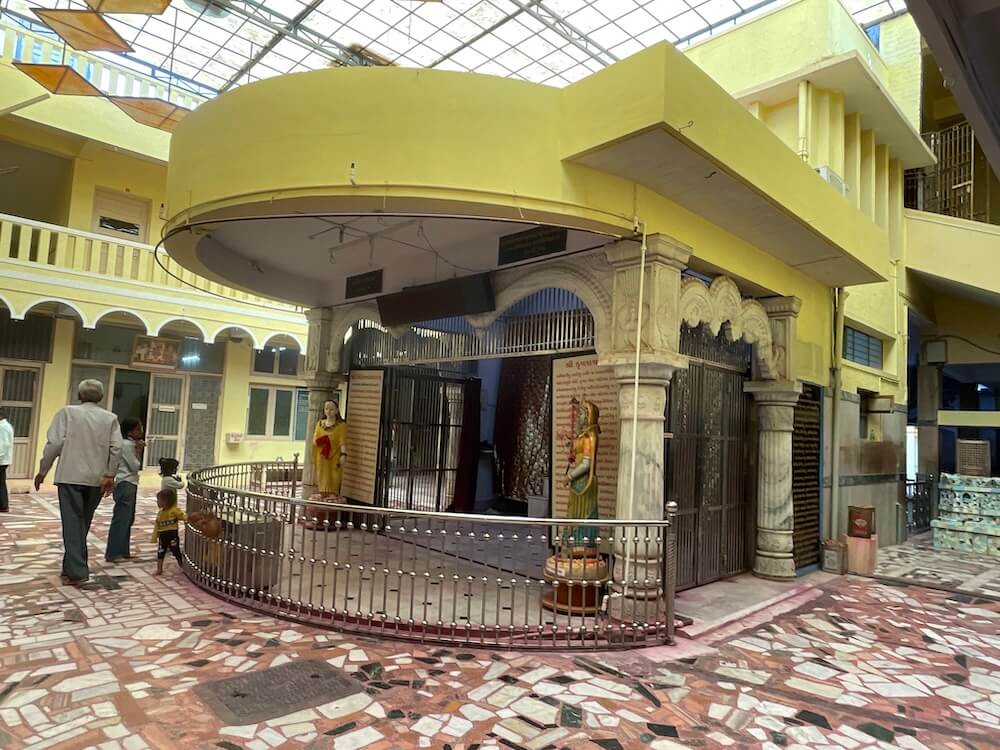
Passing through the gateway leads to an enclosed courtyard. Within this compound stands a well-equipped two-storeyed building designed in the style of a traditional ‘haveli’. Accommodation for devotees arriving from distant places is provided here, and the building’s ground floor displays paintings depicting various religious scenes. The courtyard provides seating arrangements for devotees. At the centre of this courtyard stands the main Shri Krishna Temple, with a Tulsi Vrindavan directly in front of it.
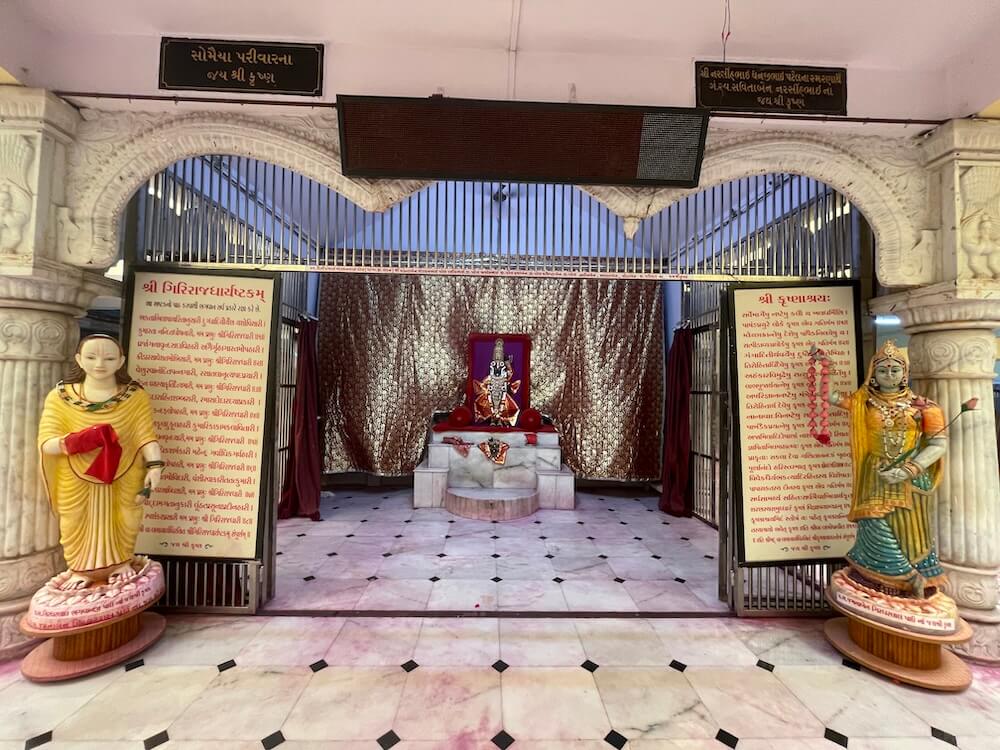
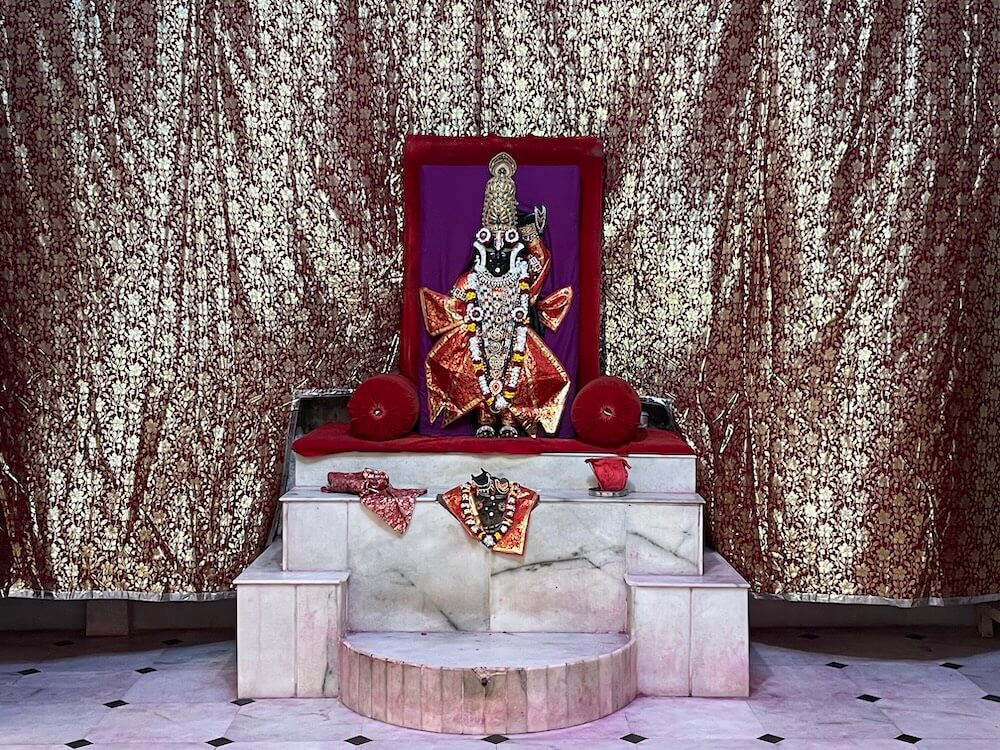
The temple itself consists of an enclosed Sabhamandap (assembly hall) and a Garbhagriha (sanctum). Before the iron lattice doors that guard the sanctum are installed,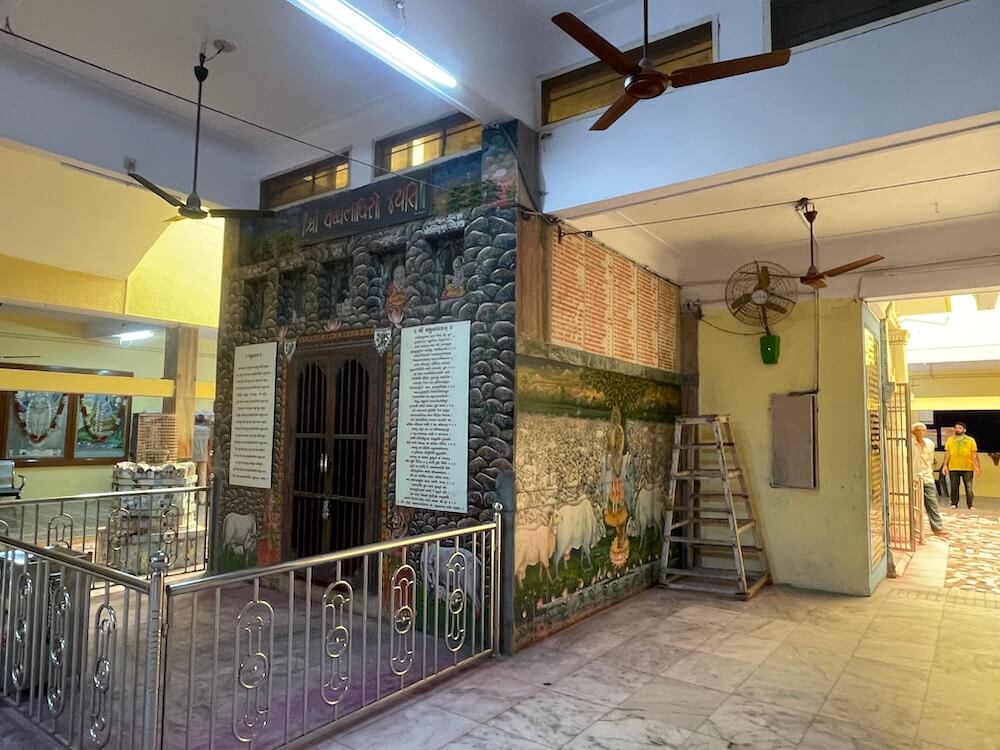 the idols of Vallabhacharya and Radhadevi are placed. Inside the sanctum, which features a roof supported by circular pillars and beams, a black stone idol of Shri Krishna is enshrined upon a marble Vajrapitha (stone pedestal). The idol, adorned with rich garments and ornaments, wears a silver crown and is believed to represent Krishna in the form of Balaji.
Behind the Shri Krishna Temple is the shrine of Shri Vallabhadhish. At the entrance to this temple are painted images of Dwarapalas (guardian figures) and a cow with her calf (Savatsa Dhenu), while the lintel above bears sculpted representations of ‘Panchakrishna’. Within the sanctum of this shrine stands the idol of Shri Vallabhadhish. The roofs of both temples are crowned with simple shikharas, topped by Kalasha finials and fluttering flags.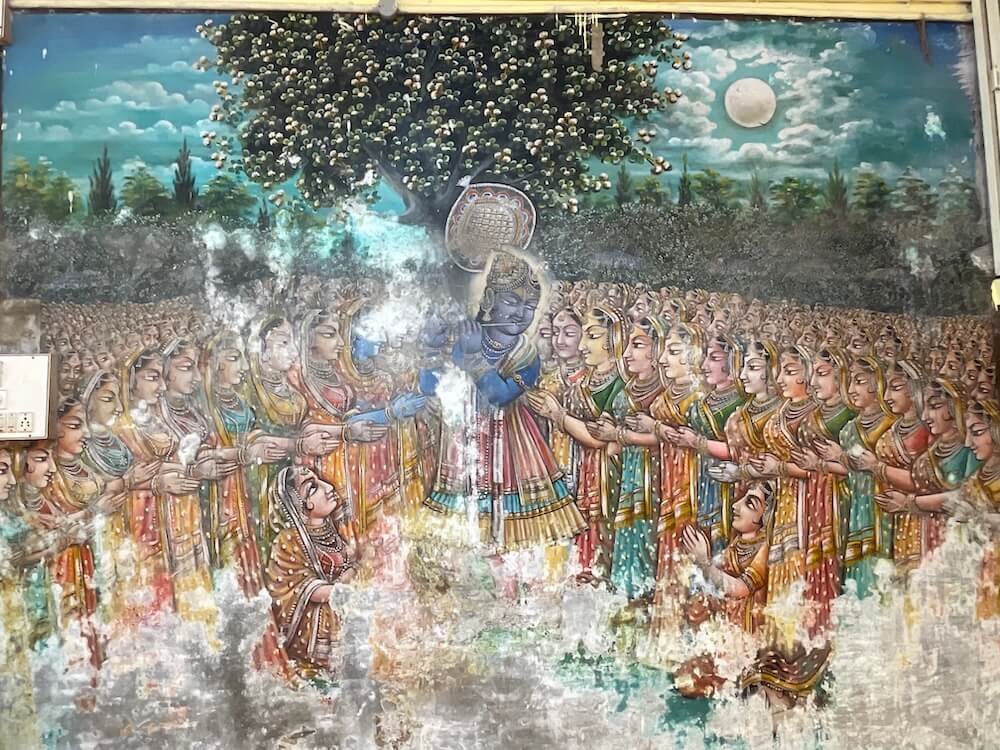
The grand annual festival of this temple is the celebration of Shri Krishna Janmotsav during the month of Shravan. On this occasion, the idol of the deity is placed in a cradle, and special rituals are performed, along with the festive ‘Dahi Handi’ celebration. During the month of Shravan, as well as on Ashadhi Ekadashi, Kartik Ekadashi, and throughout the Purushottam month, devotional music and recitations of sacred texts are organised here. During the festival of Holi, the celebration known as ‘Phuldol’ or the Spring Festival is observed. After Diwali, on Kartik Shuddha Pratipada, the ‘Annakut’ ceremony is performed, in which 56 sacred food offerings (‘Chhappan Bhog’) are presented to the Lord.
The temple follows the traditions of ‘Ashtayam Seva’ and ‘Haveli Sangeet’. Within the Pushtimarg tradition, the disciplined worship of Shri Krishna according to the eight divisions of the day is known as Ashtayam Seva. This devotional service, performed in the spirit of affectionate love and childlike devotion, begins in the morning with the Mangala Darshan (7 to 8 a.m.) and concludes with the ‘Shayan’ Aarti (6.15 to 7 p.m.). During the course of the day, specific rituals are performed at designated stages such as Shringar, Gwal, Rajbhog, Utthapan, Bhog, and Aarti, expressing the sentiments of maternal affection (Vatsalya) and companionship (Sakhya).
An integral element of Ashtayam Seva is ‘Haveli Sangeet’, a classical musical tradition rooted in the Dhrupad and Dhamar styles. 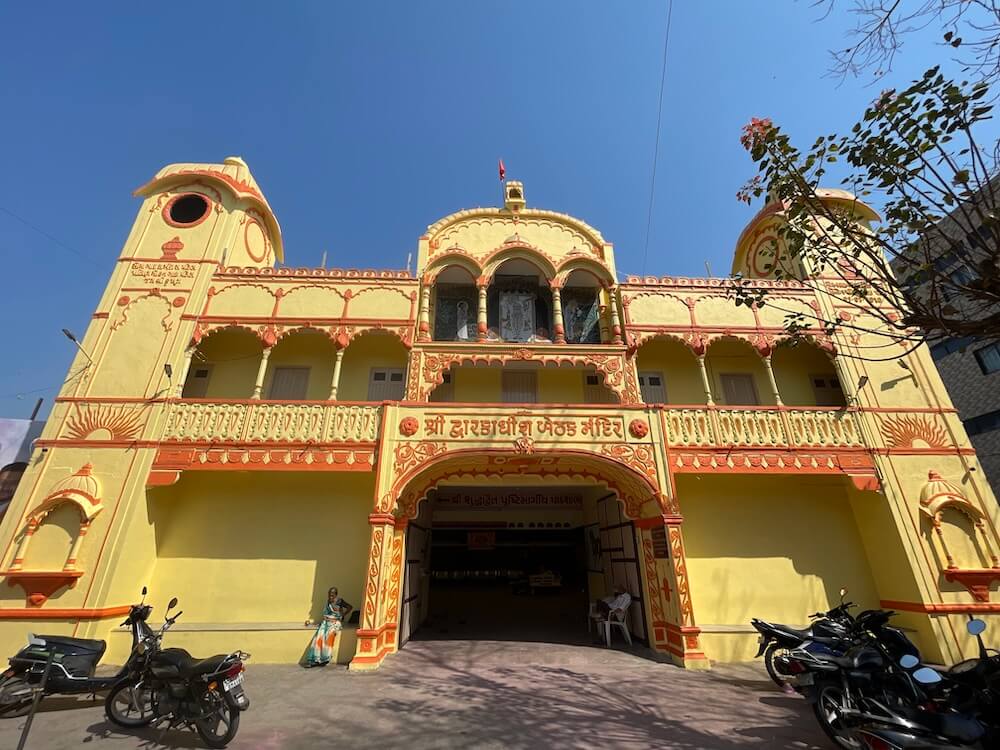 This form of devotional music employs poetic compositions in the Braj language written by the Ashtachhap (eight seals). This term is used to refer to a group of eight devout poets who were disciples of Vallabhacharya and his son Vitthalnath. They sang Haveli Sangeet prayers, praises, kirtans, and musical storytelling of different leelas of Lord Krishna. It was established in 1565 CE with the foundation of Pushtimarg. The term ‘Haveli Sangeet’ derives from the fortified temple structures resembling Mughal-era havelis, where such music was traditionally performed. The principal technical feature of this tradition lies in the use of specific ragas and rhythmic patterns suited to different times of the day. For example, Bibhas in the morning, Sarang in the afternoon, and Yaman in the evening.
 The music is rendered with the accompaniment of traditional instruments such as the Pakhawaj, Jhanjh, and Sarangi.
Within the temple premises, the ‘Shri Shuddhadvaita Pushtimargiya Pathshala’ is conducted under the auspices of the ‘Shri Vakpati Foundation’ of Vadodara.
The principal aim of this institution is to cultivate Pushtimarg knowledge and noble cultural values among the younger generation. Upholding both social and religious responsibility, the Anand branch of this Pathshala has been carrying forward this work of imparting sacred knowledge continuously for the past twenty-three years. The temple is generally open for devotees daily from 7 am to 12 pm and from 4 pm to 8 pm.
Useful Information
- Located at 500 metres from Anand Bus Station.
- GSRTC bus services to Anand are available from many cities across the state.
- Private vehicles can reach the temple parking area.
- Numerous accommodation and breakfast facilities are available in the surrounding area.
- Contact – Temple Office – Mob.- 8866833123
द्वारकाधीश बैठक मंदिर
आनंद सिटी, ताल. और जिला. आनंद
मंदिरे
Temples
मंदिर
-
भीमनाथ महादेव मंदिर लिंबळी, ता. सोजित्रा, जि. आनंद
अधिक माहितीBhimnath Mahadev Temple Limbali, Tal. Sojitra, Dist. Anand
View Detailsभीमनाथ महादेव मंदिर लिम्बाली, ताल. सोजित्रा, जिला. आनंद
विवरण देखें -
मेलडी माता मंदिर मालताज, ता. सोजित्रा, जि. आनंद
अधिक माहितीMeldi Mata Temple Malataj, Tal. Sojitra, Dist. Anand
View Detailsमेलडी माता मंदिर मालताज, ताल. सोजित्रा, जिला. आनंद
विवरण देखें -
चंद्रमौलेश्वर महादेव मंदिर उमरेठ, ता. उमरेठ, जि. आनंद
अधिक माहितीChandramouleshwar Mahadev Temple Umreth, Tal. Umreth, Dist. Anand
View Detailsचंद्रमौलेश्वर महादेव मंदिर उमरेठ, तहसील उमरेठ, जिला आनंद
विवरण देखें