
दशामाता मंदिर
मिनावडा, ता. महुधा, जि. खेडा
Dashamata Temple
Minawada, Tal. Mahudha, Dist. Kheda
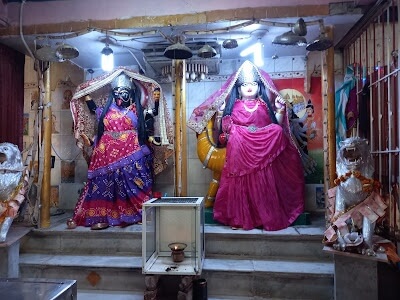 Situated upon the serene banks of the Mohor River, the village of Minawada has garnered widespread renown due to the sacred shrine of Shri Dashamata. Located equidistantly between Dakor and Mehmadabad, this pilgrimage site draws thousands of devotees, not only from across Gujarat, but also from the neighbouring states of Madhya Pradesh and Rajasthan. It is a profound belief amongst the faithful that the grace of Dashamata ushers prosperity into the household, dispels adversities transforms the very ‘dasha’ (circumstances) of one’s life for the better. This spiritually vibrant deity is affectionately addressed in the local parlance as ‘Dashama’ or ‘Mamai (Momai) Mata’. The temple witnesses a magnificent congregation of pilgrims, particularly during the auspicious months of Ashadh and Chaitra.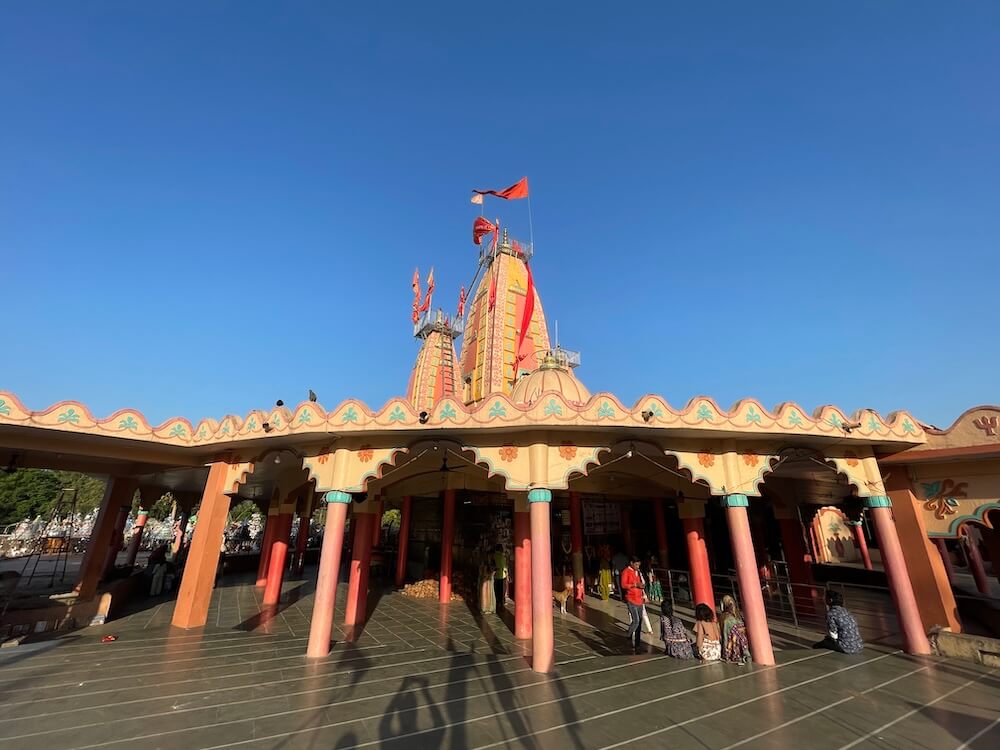
Minawada carries a legacy intertwined with the history of ‘Minal’ or ‘Minal Nagar’, a city that flourished some seven hundred years ago. This riverside settlement was once a pre-eminent centre of commerce. According to ancient lore, a catastrophic deluge caused by torrential rains swept away the entire village, submerging its existence into the riverbed. Following this calamity, the inhabitants established a new settlement nearby, naming it Minawada. For many years, a stone idol of Dashamata was worshipped within the riverbed itself, until a formal temple was eventually consecrated in the village.
The temple achieved great prominence in 1995, following a miraculous event involving a devoted maiden named Shardaba. 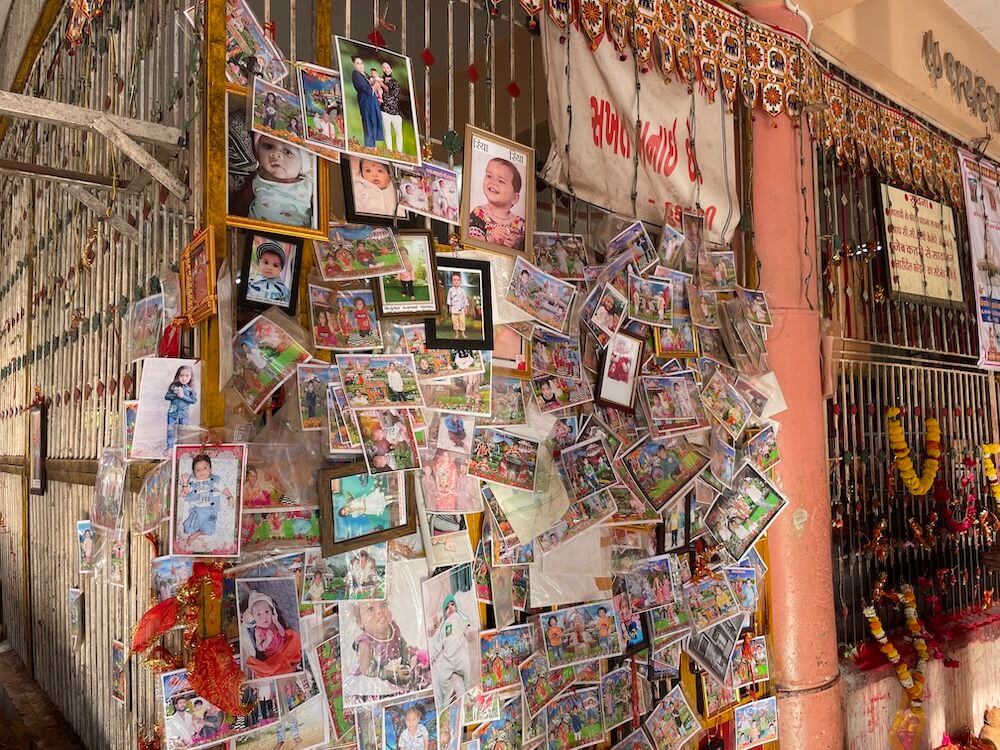 Born to Manibhai and Jashodaba, Shardaba had resolved to observe the Dashamata Vrata (vow) from a tender age. On one occasion, whilst tending to cattle by the riverside, her ailing buffalo became ensnared in the treacherous silt. When all efforts to rescue the animal proved futile, Shardaba cried out to Dashamata in deep anguish. In response, the Goddess Herself manifested in the guise of a ‘Doshima’ (an elderly woman). With a mere raise of Her hand, the buffalo emerged safely from the mire. The Goddess then revealed Her divine form to Shardaba, bestowing Her blessings along with a trident and a ‘Chunari’ (sacred scarf). The deity commanded that Shardaba serve Her at the location where these sacred items would manifest. Upon hearing this miracle, the villagers, perceiving a divine element within Shardaba, began to revere her. Even today, she is held in the highest esteem as a mother figure.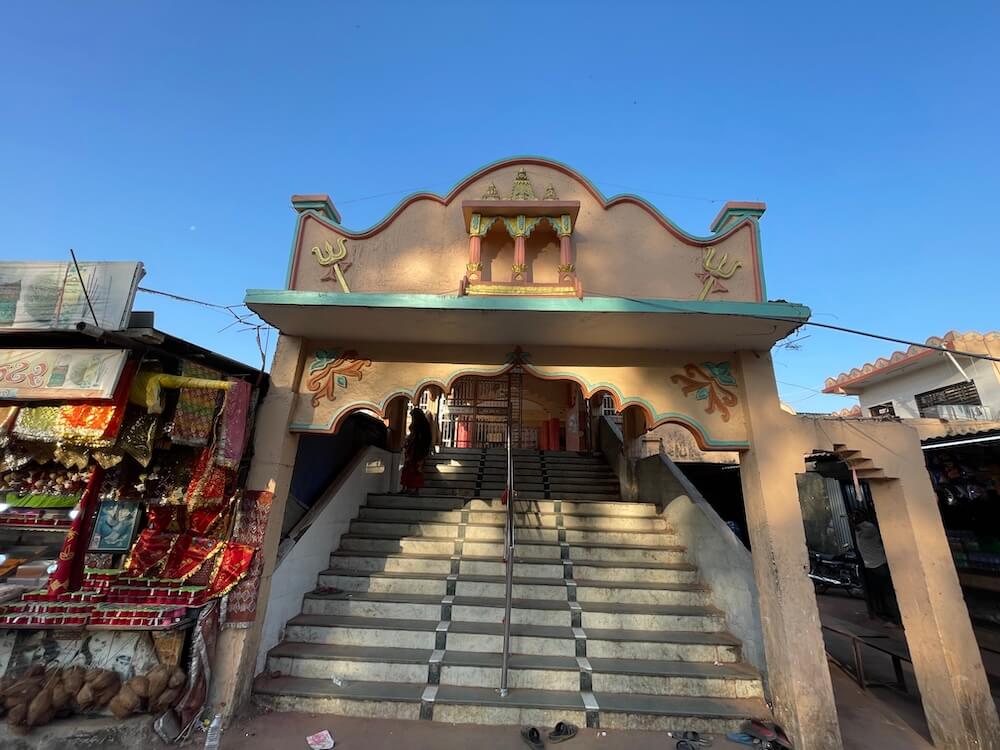
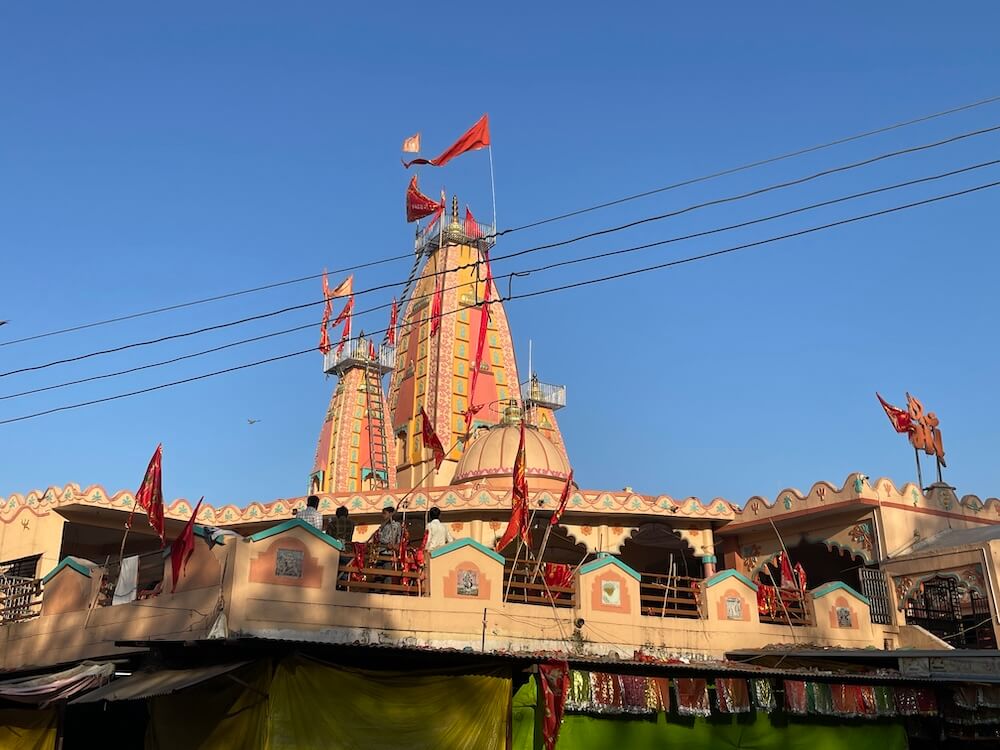
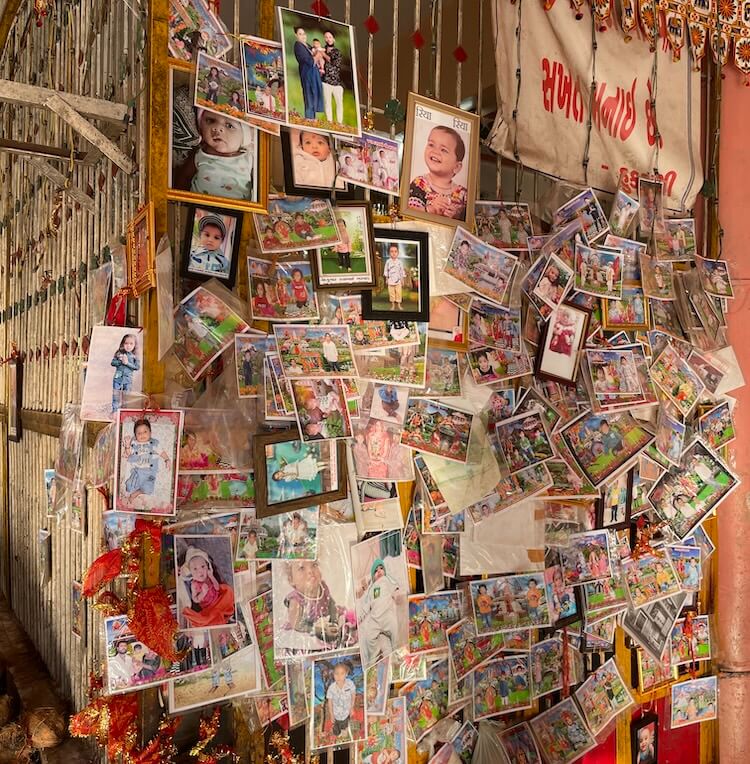
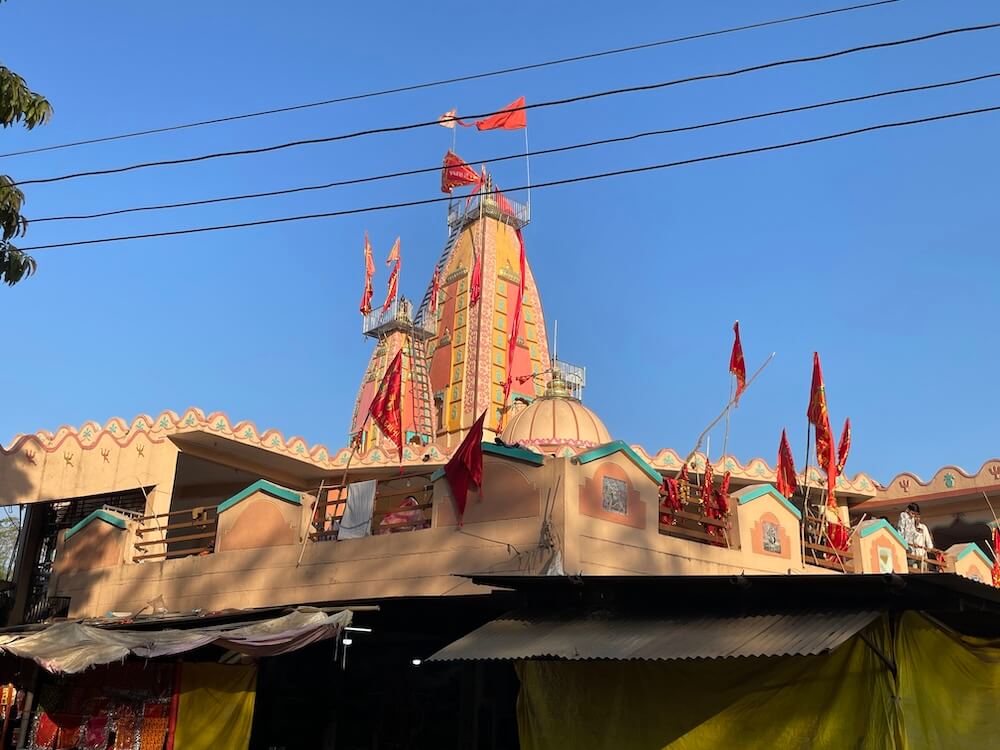
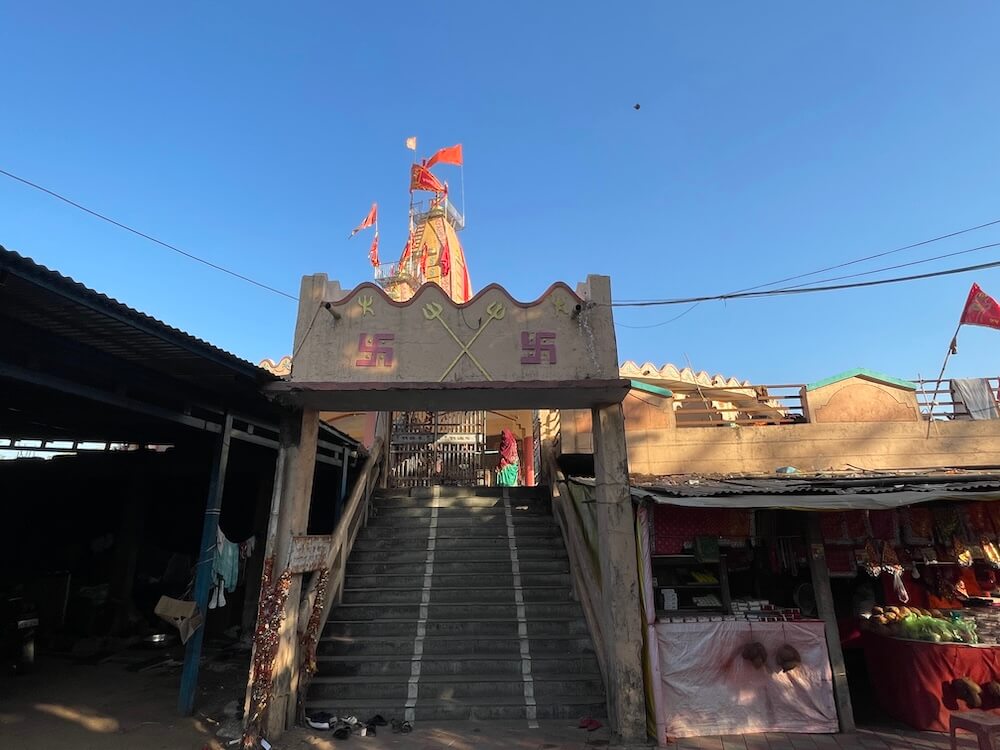
The Dashamata Temple is centrally located within Minawada village, approximately 9 km from Kathlal. The temple precincts are bustling with hundreds of stalls selling ritual offerings and ‘Prasad’. Many devotees make solemn vows to the Goddess for the well-being of their children upon the fulfilment of these vows, photographs of the children are placed within the temple. Consequently, numerous photography studios have emerged in the vicinity. The temple is a two-storeyed structure, accessed by ascending eighteen steps through a ceremonial archway into a paved courtyard. The architectural layout comprises the ‘Darshanmandap’ (viewing hall), ‘Sabhamandap’ (assembly hall) the ‘Garbhagriha’ (sanctum sanctorum). 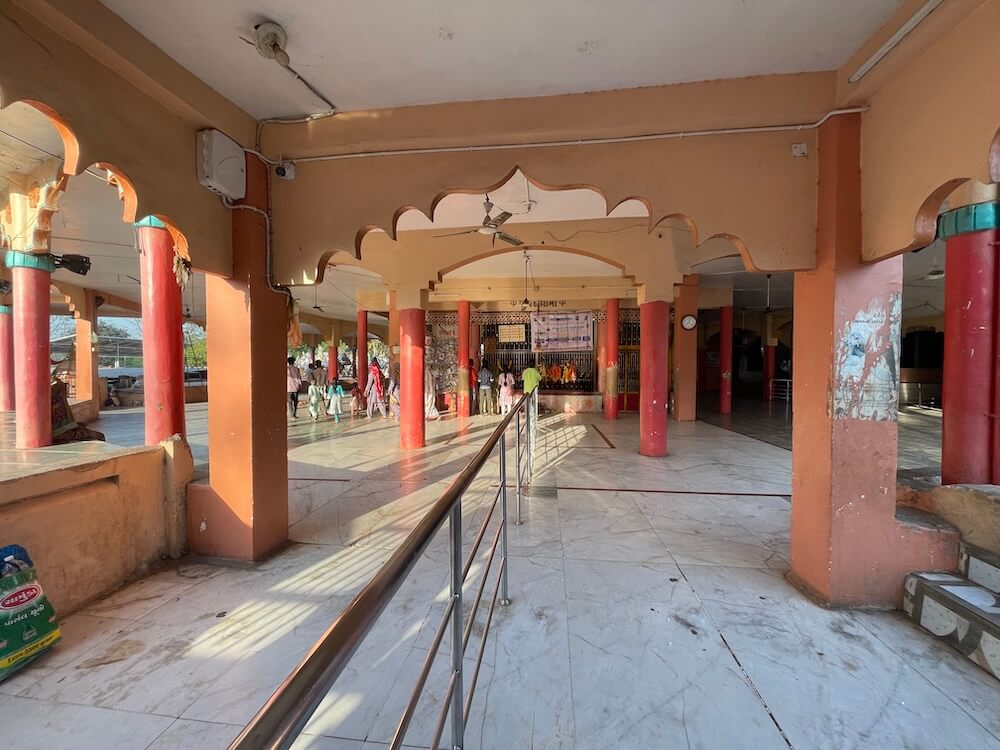 Both the Darshanmandap and Sabhamandap are designed with a semi-open aesthetic, featuring pillars interconnected by elegant scalloped arches. A regulated queue system extends from the frontal portico to the sanctum. At the heart of the spacious assembly hall lies the sanctum sanctorum. It enshrines a beautiful idol of Dashamata mounted upon a ‘Sandhni’ (camel). Beside her sits Kalika Mata. Both deities are adorned with ornate crowns, exquisite silken vestments jewellery. The sanctum is crowned by a large spire in the ‘Nagara’ style, flanked by two smaller sub-spires.
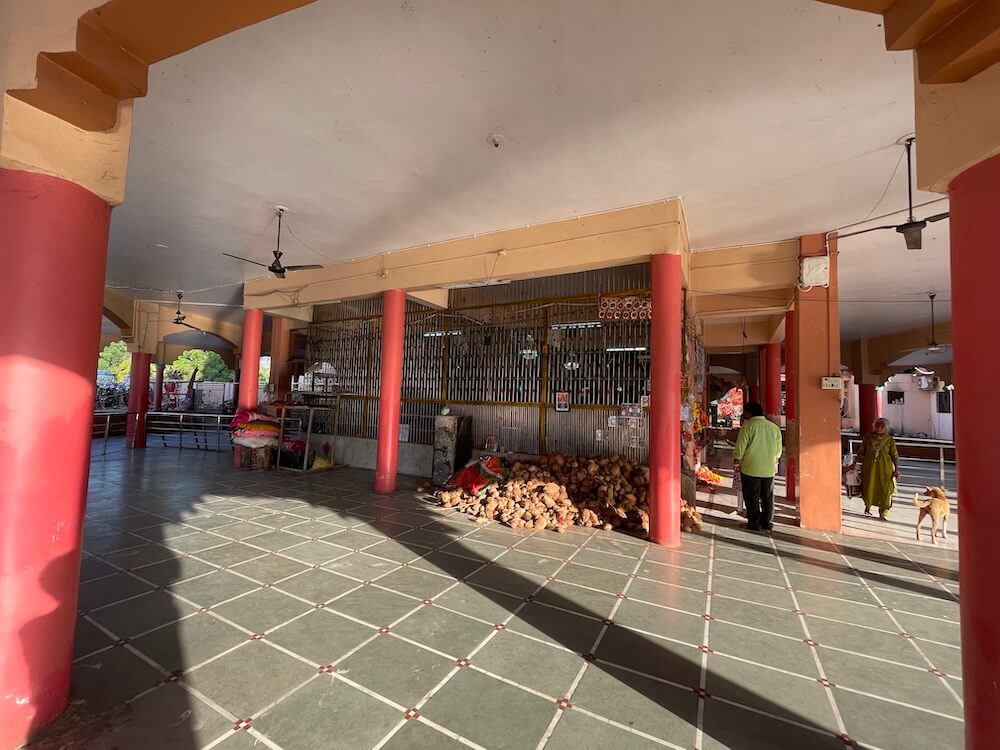
Dashamata is revered as the deity who alleviates the sorrows of her devotees and alters the course of misfortune. The new moon day of the month of Ashadh is known as ‘Divaso’, marking the commencement of the ten-day Dashamata Vrata. During this period, devotees install and worship clay models of a ‘Sandhni’ (camel). 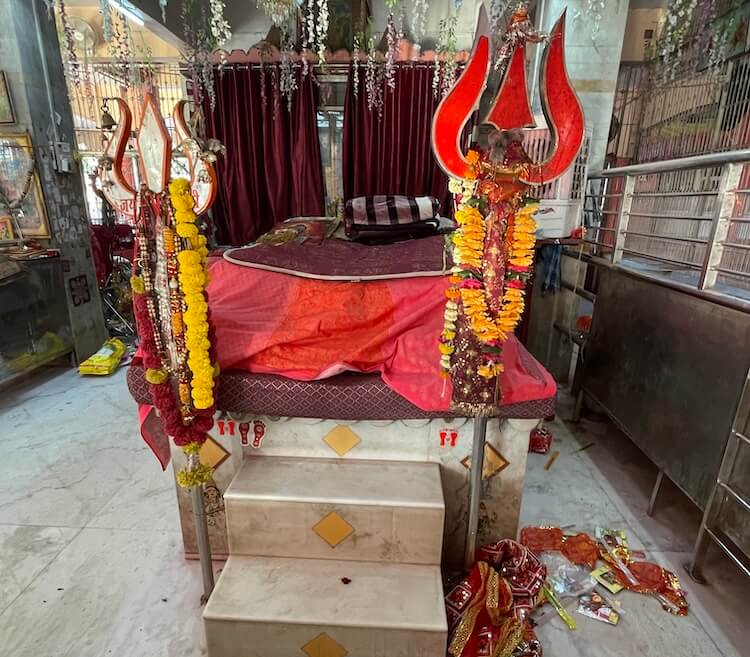 They tie a sacred red thread with ten knots around their wrists and observe the fast by consuming only one meal a day (‘Ekatana’) for ten days. Similarly, married women observe a ten-day fast during the month of Chaitra. Those whose vows are granted offer garlands of coconuts for the prosperity of their children and display their photographs in the temple. On the final day of the fast, devotees keep a night vigil at dawn, the idols are immersed in the Mohor River. A grand fair is organised here annually in Ashadh, drawing thousands of pilgrims who often undertake the journey barefoot.
For the convenience of the faithful, the temple remains open from 7:00 am to 7:00 pm, providing facilities such as parking and wheelchairs. The temple trust operates an ‘Annakshetra’ (community kitchen) where meals are served at a nominal cost. Every year, on the day of Chaitra Sud-7, the ‘Patotsav’ (anniversary of the idol’s consecration) is celebrated. On this occasion, a free communal ‘Balawal’ (ceremonial first haircut for children) is organised, followed by ‘Mahaprasad’ for all attendees.
Useful Information
- Located at 9 km from Kathlal and 42 km from Kheda.
- GSRTC buses and private vehicle services are available from Kathlal.
- Private vehicles can access the temple’s dedicated parking area.
- Accommodation and breakfast facilities are available in the surrounding area.
दशामाता मंदिर
मीनावाड़ा, ताल. महुधा, जिला. खेड़ा
मंदिरे
Temples
मंदिर
-
भूमपुरा हनुमान मंदिर भूमापुरा, मोडज, ता. महेमदावाद, जि. खेडा
अधिक माहितीBhumapura Hanuman Temple Bhumapura, Modaj, Tal. Mahemdavad, Dist. Kheda
View Detailsभूमापुरा हनुमान मंदिर भूमापुरा, मोडाज, ताल. महेमदावाद, जिला. खेड़ा
विवरण देखें -
भाथीजी महाराज मंदिर फागवेल, ता. कापडवंज, जि. खेडा
अधिक माहितीBhathiji Maharaj Temple Phagvel, Tal. Kapadvanj, Dist. Kheda
View Detailsभथीजी महाराज मंदिर फागवेल, ताल. कपडवंज, जिला. खेड़ा
विवरण देखें -
केदारेश्वर महादेव मंदिर महादेवपुरा, ता. कठालाल, जि. खेडा
अधिक माहितीKedareswar Mahadev Temple Mahadevpura, Tal. Kathlal, Dist. Kheda
View Detailsकेदारेश्वर महादेव मंदिर महादेवपुरा, ताल. कठलाल, जिला. खेड़ा
विवरण देखें