
भूमपुरा हनुमान मंदिर
भूमापुरा, मोडज, ता. महेमदावाद, जि. खेडा
Bhumapura Hanuman Temple
Bhumapura, Modaj, Tal. Mahemdavad, Dist. Kheda
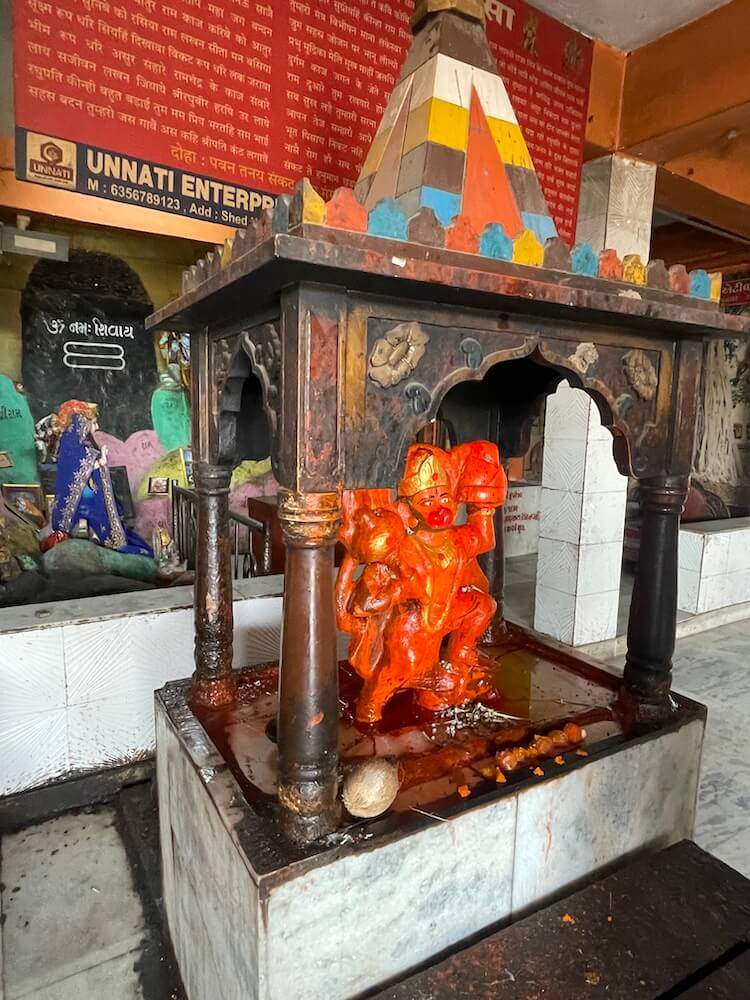
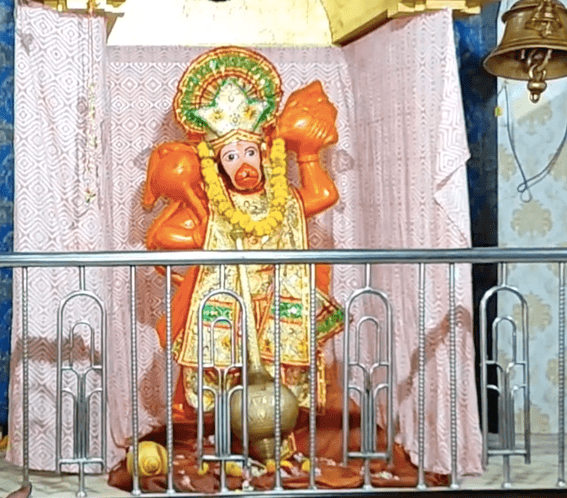 Lord Hanuman, the foremost devotee of Lord Ram, is worshipped as the ultimate embodiment of Shakti (power) and Bhakti (devotion). In the epics of the Ramayana and Mahabharata, Hanuman is depicted as being replete with supernatural virtues, including mastery of the scriptures, political statesmanship, valour, intelligence, celibacy, unwavering devotion to Rama and eloquence. Revered as the protector from calamities, the one who averts the ill effects of ‘Sadesati’ (the seven-and-a-half-year Saturn cycle) and the dispeller of all afflictions and suffering, Hanuman finds a sanctuary in almost every town and village across the nation. At Bhumapura, near Modaj in the Kheda district, resides a renowned temple of Hanuman, where the deity is believed to be Jagrut (spiritually awake) and responsive to the Manata (vows) of his followers.
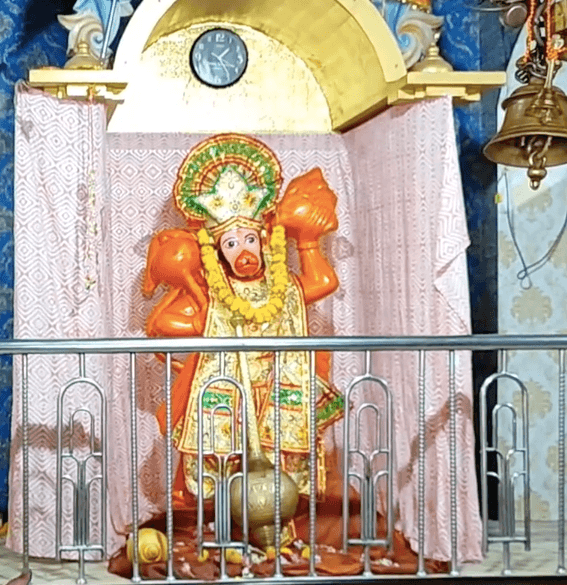
 The legend regarding the origin of his name recounts that as a child, Hanuman mistook the rising sun for a fruit and leapt towards it. Witnessing this, Indra struck him with the Vajra (thunderbolt), which broke his left Hanu (jaw). From that moment onwards he became known as ‘Hanuman’. According to mythological texts, Hanuman is an Avatar (incarnation) of Rudra the ‘Skanda Purana’ identifies him as an incarnation of Shiva. The text ‘Anjaneya Samhita’ (or Hanumatsamhita) is attributed to his name. He is also regarded as a pioneer of the science of music. The Hanuman of Bhumapura is affectionately and reverently addressed by devotees as ‘Hajra-Hajur Hanuman’, signifying a living deity who rushes instantly to the aid of those who call upon him.
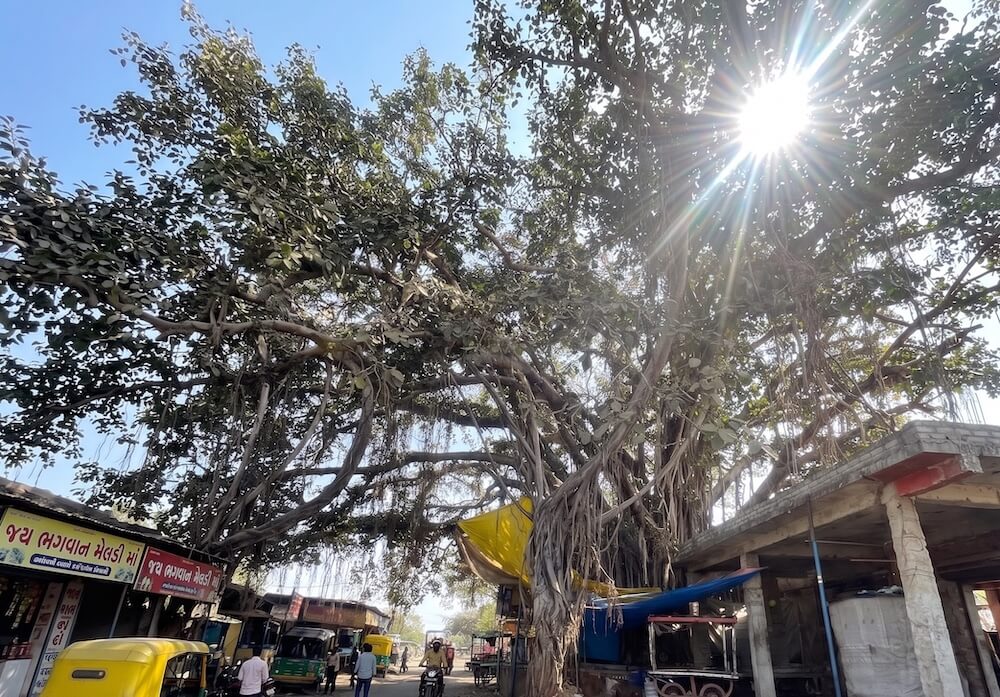 The legend of the temple recounts the life of Jaswantsinh Maharaj, born on 1 March 1948. He was a staunch devotee of Hanuman. He would spend hours beneath a local Peepal tree, immersed in the chanting of Hanuman’s name. Pleased by his unwavering devotion, Lord Hanuman appeared in his dream and informed that he resided beneath that very tree in the form of an idol. Upon inspecting the site the following day, Maharaj discovered a Swayambhu (self-manifested) idol of Hanuman. Recognizing this as a divine miracle, Maharaj established a temple at the spot. He dedicated his entire life to the worship of Hanuman here until his departure from the mortal world on 21 April 2021. As pilgrims began to experience the divine presence and the powers of the deity, the fame of the temple spread, leading to a steady increase in the number of visitors.
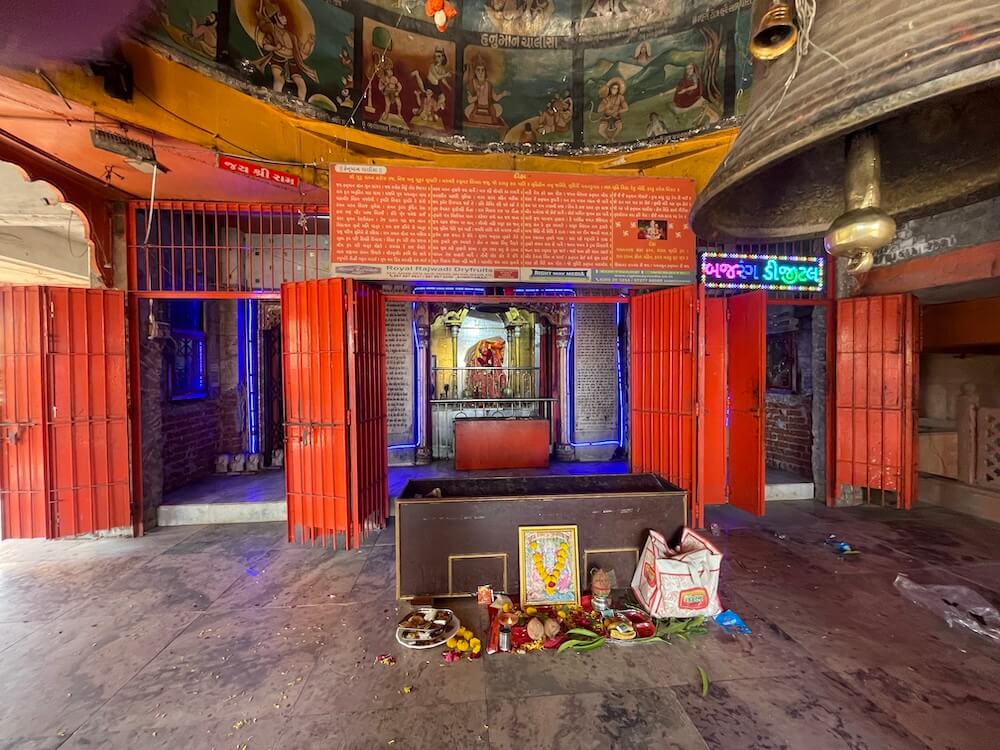 Every Saturday, the influx of devotees is so vast that the temple remains open for Darshan (holy viewing) from five in the morning until two past midnight.
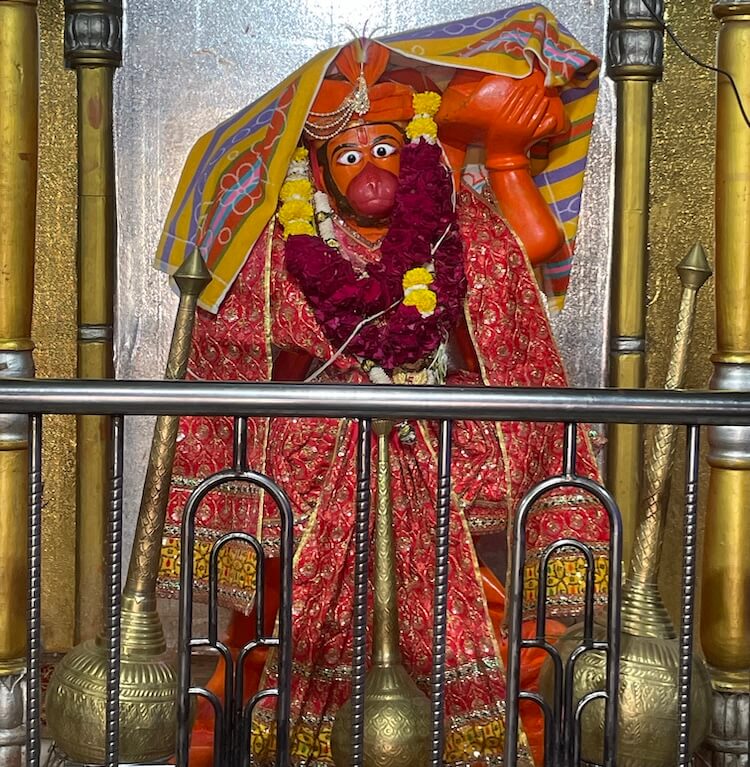
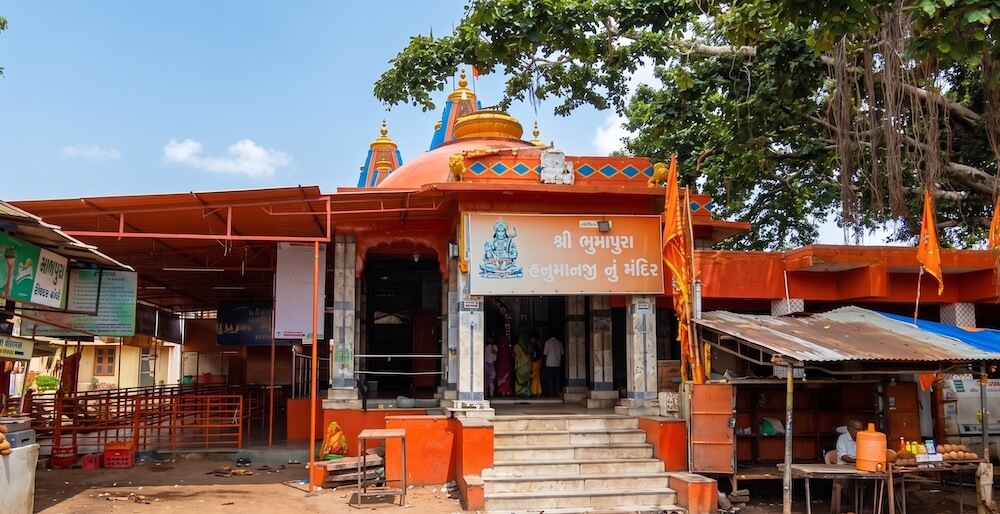
The temple is situated in a tranquil setting some distance from the main village. The approach road is lined on both sides with shops offering traditional snacks and Puja (ritual) materials. Standing prominently before the temple is the majestic Peepal tree where Maharaj is said to have performed his arduous penance. The architectural layout of the temple comprises a Mukhamandap (entrance porch), Sabhamandap (assembly hall), Antaral (vestibule) and Garbhagriha (sanctum sanctorum). The entire structure is elevated upon a ‘Jagati’ (plinth) approximately four feet high. 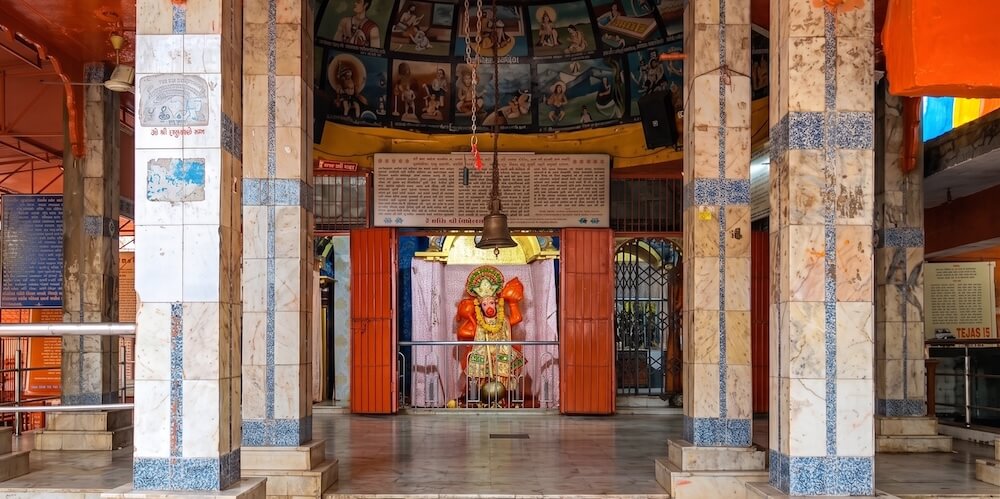 The domed ceiling of the Sabhamandap is adorned with colourful depictions of various deities and a Yagnakunda (sacrificial fire pit) sits at its centre. Beyond the assembly hall lies the entrance to the Antaral, which features niches in the left and right walls housing idols of Ganesha and Bhairavnath. The sanctum sanctorum, which follows the vestibule, features three entrances. At the heart of the Garbhagriha, upon a stone pedestal stands the idol of Hanuman, wielding a Gada (mace) in one hand while lifting a mountain with the other. To the left of the Hanuman idol,
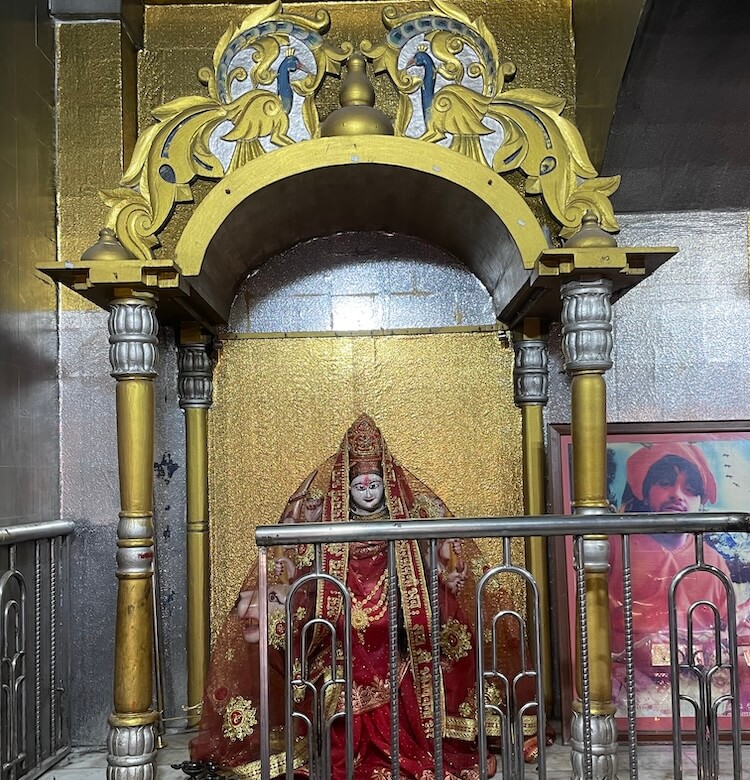
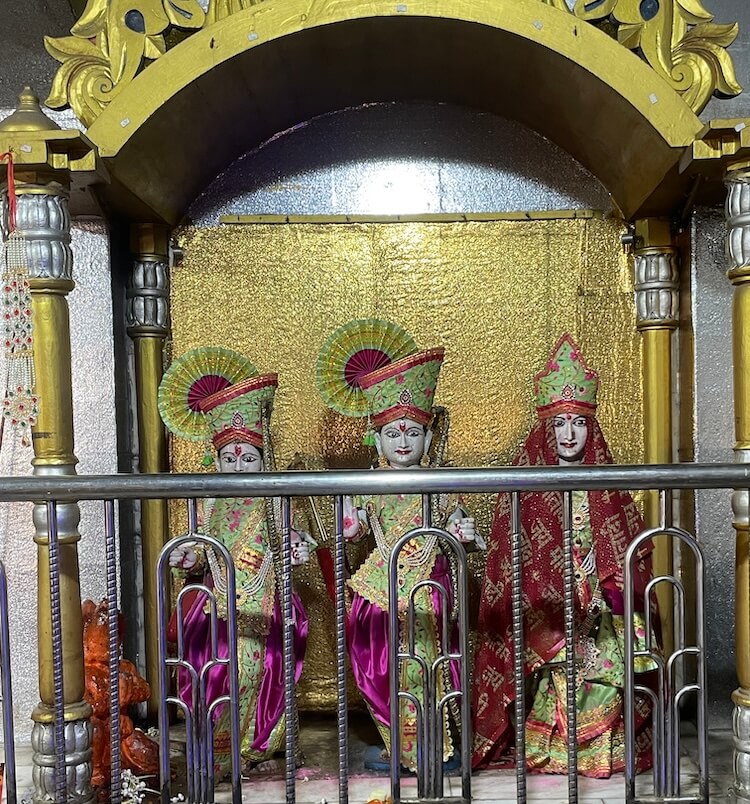 within a decorative frame, are the figures of Lord Ram, Sita and Lakshman, while the right side features Goddess Durga mounted upon a lion, holding various Ayudhas (sacred weapons). A Pradakshinamarga (circumambulation path) surrounds the exterior of the sanctum. The roof of the assembly hall is crowned with a domed Shikhara (spire), while the sanctum roof features three spires arranged in a horizontal row. These square spires are designed with subsidiary towers, with the central one rising higher than the others, all topped with a Stupika (pinnacle) and a Kalasha (finial).
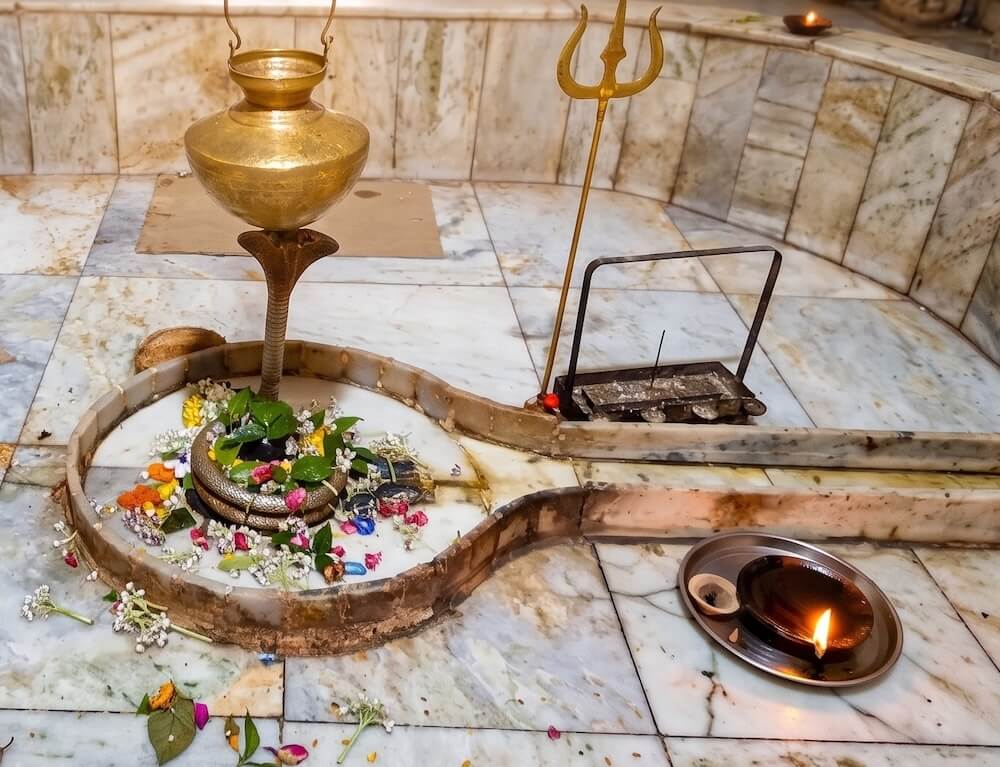
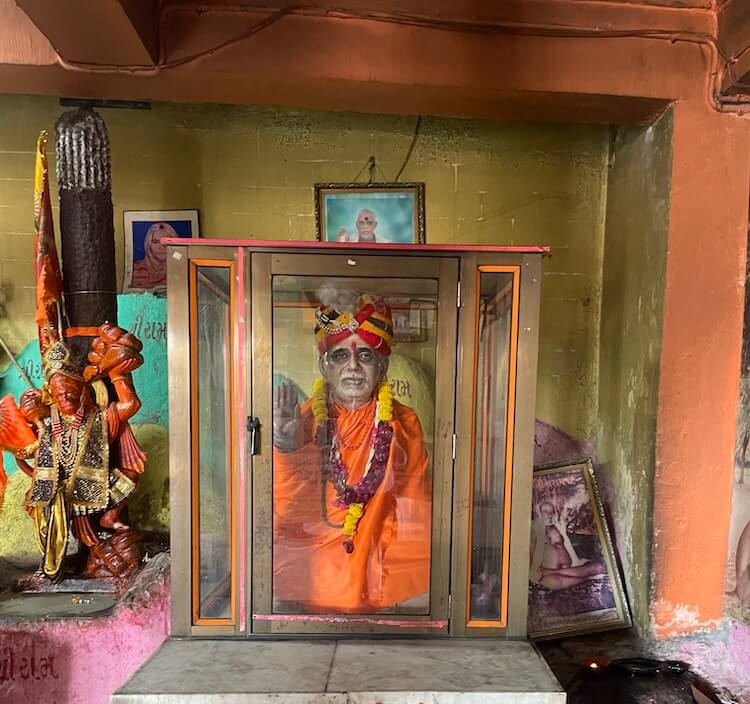
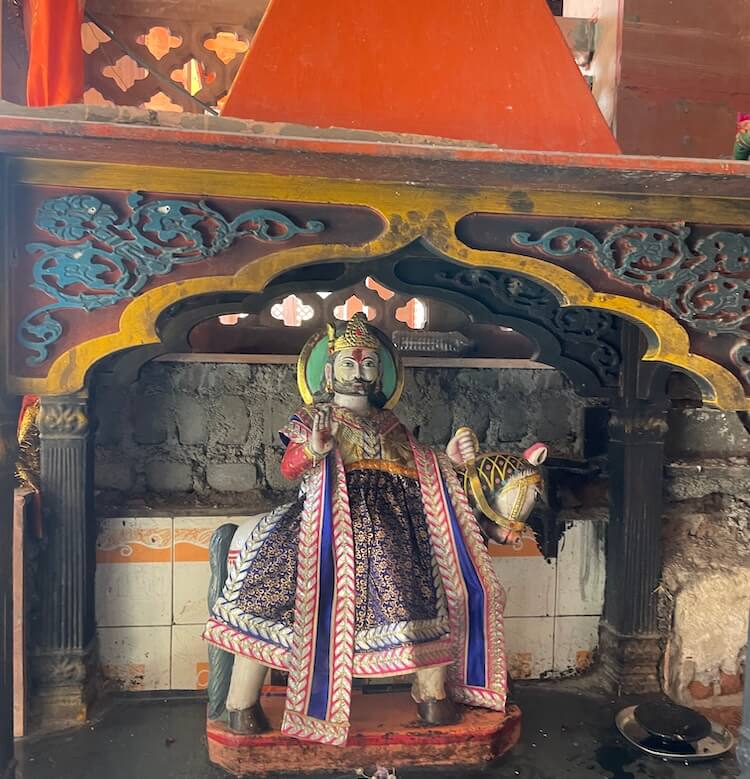
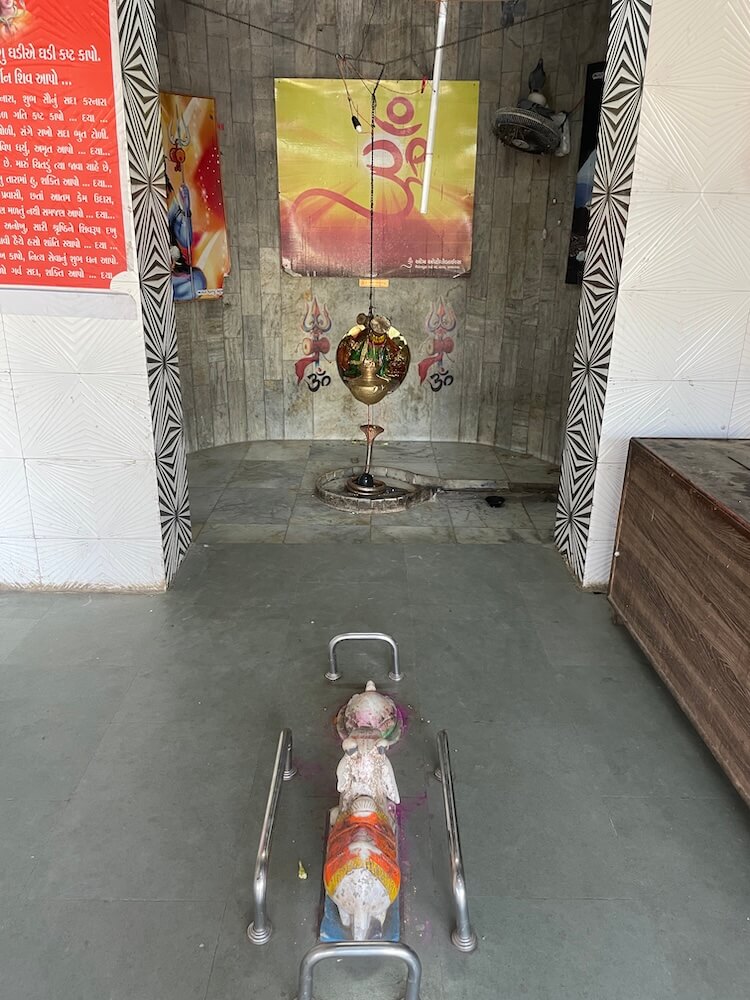
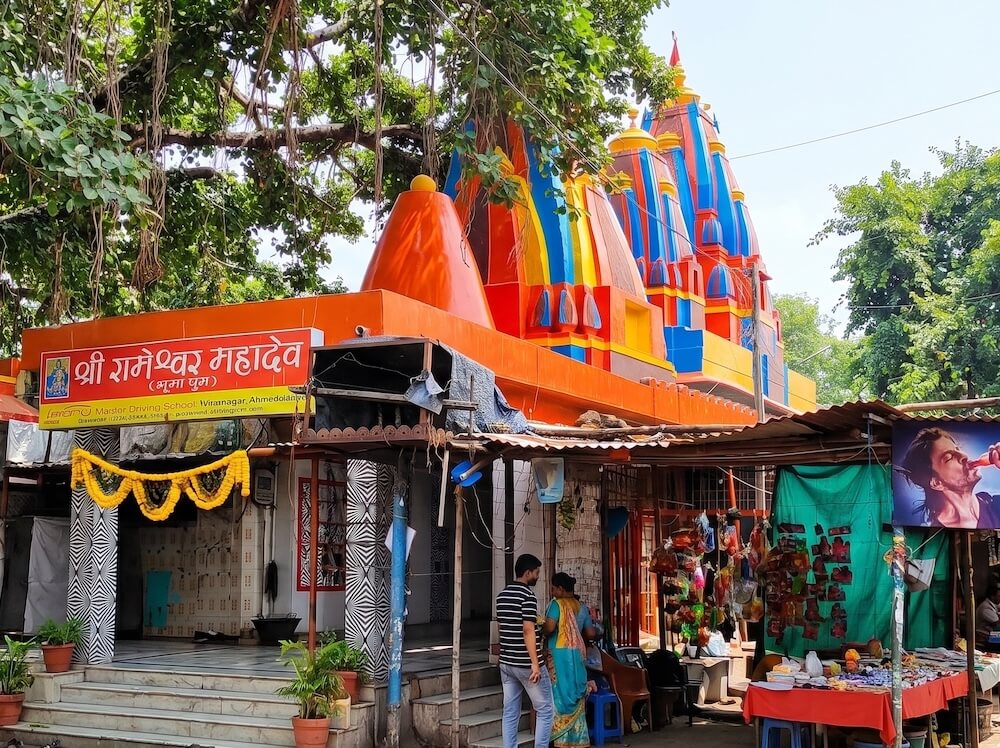
Adjacent to the Hanuman temple is the Shri Rameshwar Mahadev Temple. Local legend suggests that the ‘Shivpinda’ (auspicious stone of Shiva) here was originally established by Lord Ram himself. Nearby, within a Math (monastery), lies the ‘Gurugadi’ (seat of the preceptor) and the Samadhi (memorial shrine) of Jaswantsinh Maharaj. A marble statue of Maharaj is placed upon the Samadhi pedestal. The monastery also houses idols of Mahadev and Hanuman. A unique tradition at this temple involves sacred threads or ‘Sutras’ consecrated by Maharaj. Devotees take these threads to tie across the thresholds of their homes, believing it protects the household from evil forces. The monastery also contains idols of Baba Ramdev Pir, Shanidev and Hanuman.
The temple hosts a grand four-day annual fair on the occasion of ‘Kali Chaudas’ (the fourteenth day of the dark fortnight of the month of Ashwin). This is regarded as one of the largest festivals in the region. On Kali Chaudas, special prayers are offered to Hanuman to seek the annihilation of evil forces and to find relief from the hardships of ‘Sadesati’ and other afflictions. It is a long-standing custom here to offer large quantities of oil to Hanuman on this day. As the Hanuman here is considered highly responsive to prayers, lakhs of devotees from across the district and neighbouring regions throng the temple during these four days. The festivities include various Havans (sacrificial fires) and special religious rites. Additionally, a one-day fair is held on Hanuman Jayanti. Saturdays, Tuesdays and both full moon (Purnima) and new moon (Amavasya) days witness a significant gathering of the faithful. On regular days, the temple is open for Darshan from 6 am to 8 pm.
Useful Information
- Located at 8 km from Mahemdavad and 21 km from Kheda
- State Transport (GSRTC) bus services available from Mahemdavad
- Private vehicles can reach the temple directly
- Accommodation and breakfast facilities available in the vicinity
- Contact – Temple Office, Mob. 834784 4531
भूमापुरा हनुमान मंदिर
भूमापुरा, मोडाज, ताल. महेमदावाद, जिला. खेड़ा
मंदिरे
Temples
मंदिर
-
भाथीजी महाराज मंदिर फागवेल, ता. कापडवंज, जि. खेडा
अधिक माहितीBhathiji Maharaj Temple Phagvel, Tal. Kapadvanj, Dist. Kheda
View Detailsभथीजी महाराज मंदिर फागवेल, ताल. कपडवंज, जिला. खेड़ा
विवरण देखें -
केदारेश्वर महादेव मंदिर महादेवपुरा, ता. कठालाल, जि. खेडा
अधिक माहितीKedareswar Mahadev Temple Mahadevpura, Tal. Kathlal, Dist. Kheda
View Detailsकेदारेश्वर महादेव मंदिर महादेवपुरा, ताल. कठलाल, जिला. खेड़ा
विवरण देखें -
संन्यास (सिद्धनाथ) महादेव मंदिर कठालाल, ता. कठालाल, जि. खेडा
अधिक माहितीSannyas (Siddhanath) Mahadev Temple Kathlal, Tal. Kathlal, Dist. Kheda
View Detailsसंन्यास (सिद्धनाथ) महादेव मंदिर कठलाल, ताल. कठलाल, जिला. खेड़ा
विवरण देखें