
भाथीजी महाराज मंदिर
फागवेल, ता. कापडवंज, जि. खेडा
Bhathiji Maharaj Temple
Phagvel, Tal. Kapadvanj, Dist. Kheda
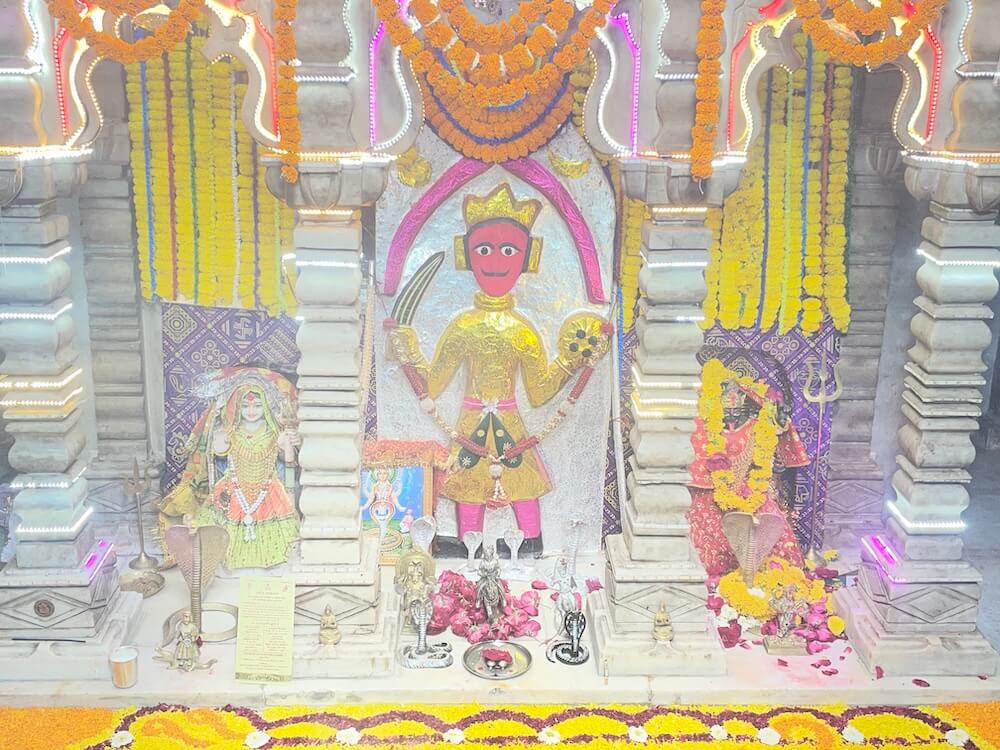 In ancient Hindu mythology, the serpent holds a position of profound significance. The two pre-eminent deities of the Puranas, Shiva and Vishnu, share an eternal bond with these serpentine beings and even the lesser deities of the Shiva lineage have embraced them. Phagvel is the hallowed birthplace of Bhathiji Maharaj, revered as the protector of serpents and the very embodiment of the Nag Devta. Situated here is a two-storeyed temple dedicated to him, a sacred shrine that commands the unwavering faith of millions of devotees from Gujarat, Maharashtra and Madhya Pradesh. Every year, during the auspicious period of Kartak (Kartik) Poonam, a magnificent fair is held, drawing a vast concourse of pilgrims.
  It is a deeply held belief among the faithful that offering prayers to Bhathiji Maharaj serves as a divine shield against the venomous bites of snakes and scorpions.
Bhathiji Maharaj is a celebrated folk deity in Gujarat, worshipped as a heroic warrior who laid down his life to protect cows. During the second decade of the sixteenth century, the stability of the Gujarat Sultanate began to waver, prompting the Mughal Emperor Humayun to invade the region in 1535. Subsequent Mughal incursions followed until 1573, when Emperor Akbar finally conquered Gujarat by defeating Muzaffar Shah III. It was amidst this era of historical upheaval, in the year 1544, that Bhathiji Maharaj is said to have been born in Phagvel.
According to the local chronicles, nearly five centuries ago, 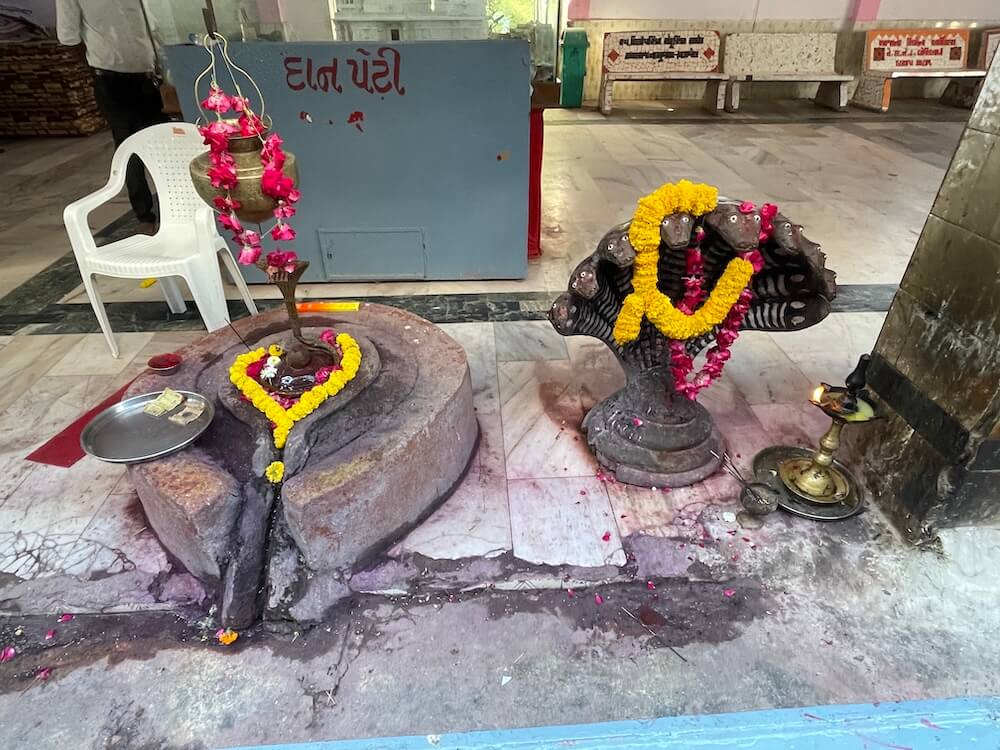 Phagvel was ruled by King Takhatsinhji, a Kshatriya of the Rathore clan. He was wed to Akkalba, a noblewoman from the royal family of Chikhlod village. The couple was blessed with four children : two daughters, Sonba and Binjiba and two sons, Hathiji and Bhathiji. Bhathiji was born on Kartak Sud Ekam (the first day of the bright fortnight of Kartik) in the Vikram Samvat year 1600. When he was but five weeks old, a mark resembling a cobra’s hood appeared upon his forehead. Possessing a fearless spirit and remarkable brilliance from childhood, Bhathiji shared deeply in the joys and sorrows of his people. He was regarded as the mortal manifestation of the Serpent God. Legends recount how he saved the lives of countless snakes and healed those afflicted by serpent strikes. His marriage was arranged to Kankuba of Dutal.
  However, while the wedding circumambulations were underway, word reached him that a Muslim invader from Kapadvanj was plundering the village’s cattle. Without a moment’s hesitation, he abandoned the nuptial rites, seized his sword and mounted his steed to confront the foe. In the heat of the battle, an enemy soldier struck him from behind, severing his head from his body. Yet, in a display of miraculous fortitude, his torso continued to fight. He remained in this headless state, wielding his blade until the last enemy was vanquished and the cows were set free. This battle occurred in the ‘Khakhariya Forest’, situated approximately six to seven kilometres from Phagvel. On this battlefield, an ancient well remains, from which Bhathiji Maharaj is said to have drunk water during the conflict. Following his martyrdom, Sati Kankuba committed herself to the funeral pyre. Since that day, Bhathiji has been venerated as a folk deity for his supreme sacrifice in the cause of ‘Gau-Raksha’ (cow protection). The Rathore Rajputs of Saurashtra worship him as their ancestral deity.
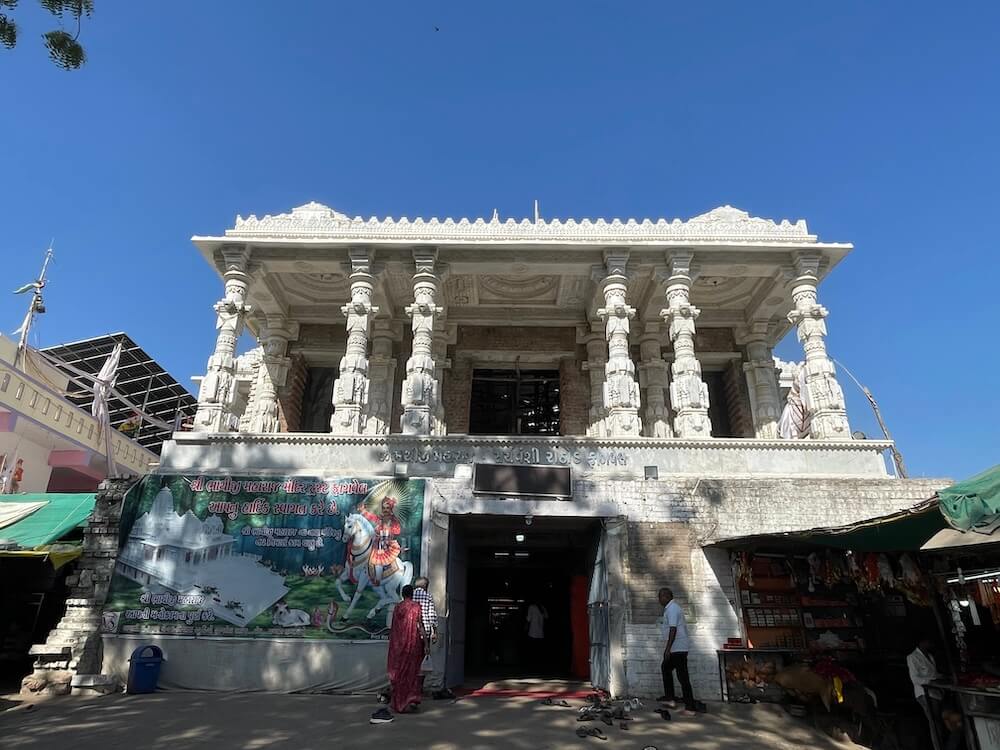
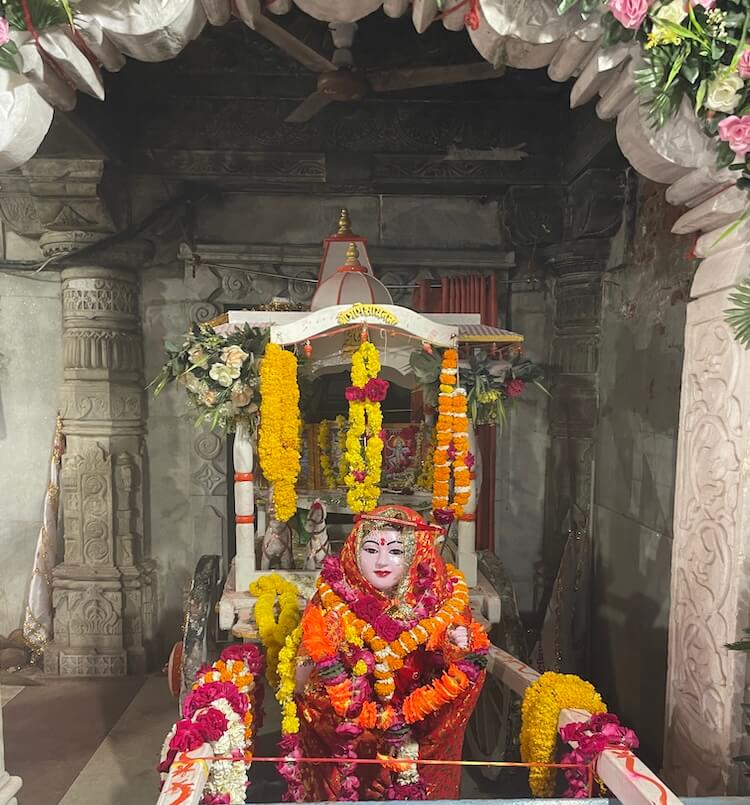
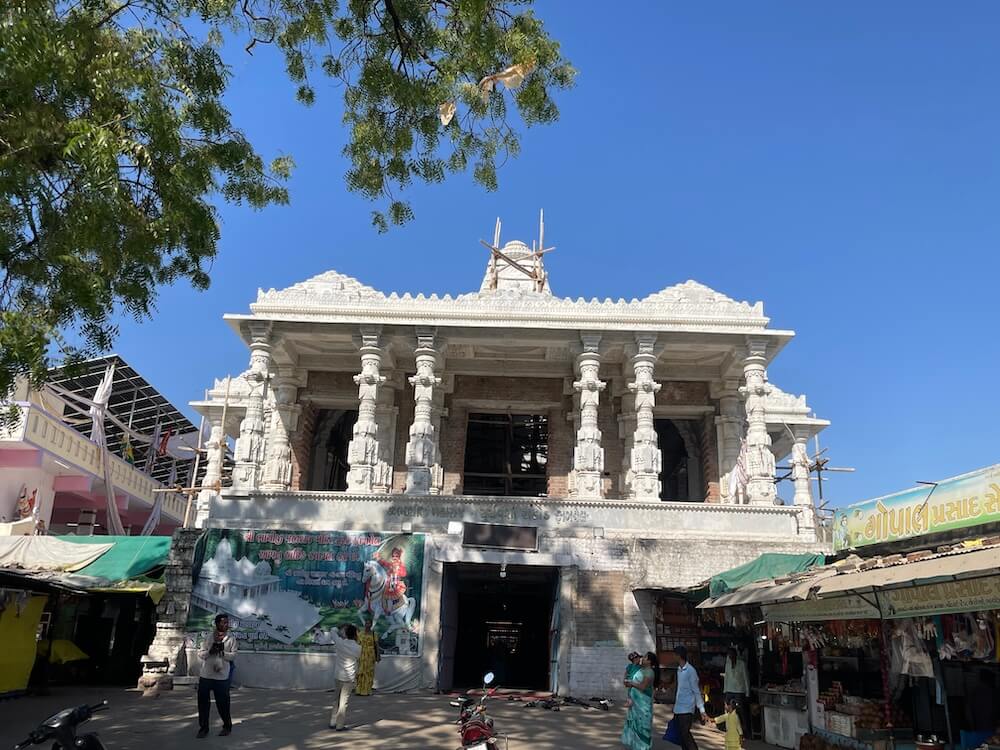
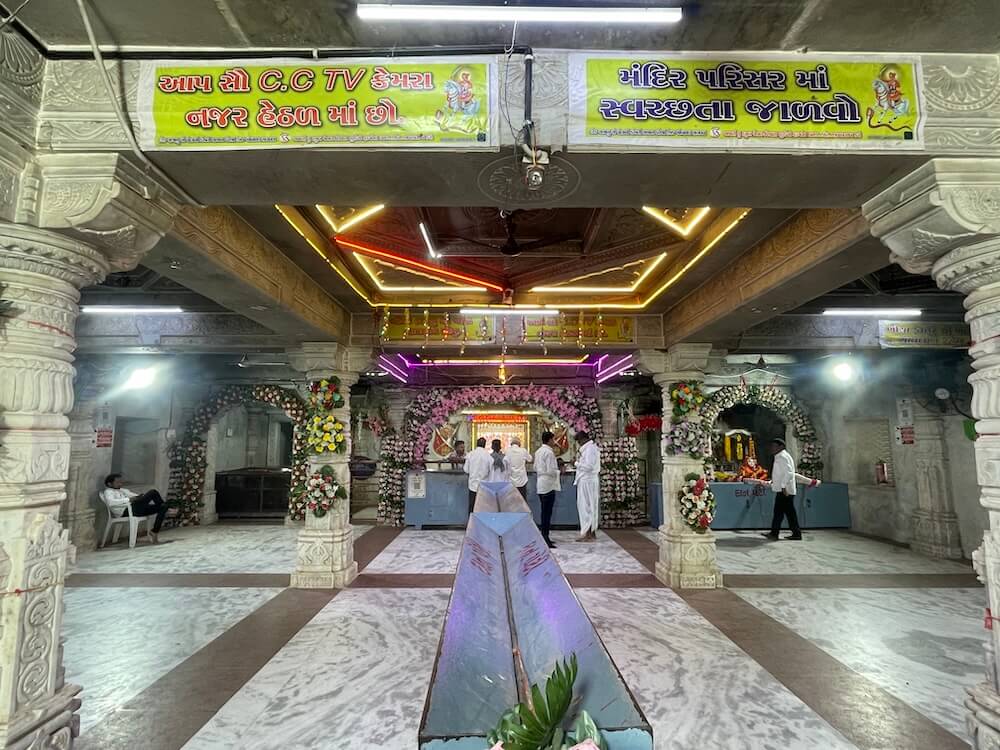
The renowned temple of Bhathiji Maharaj is located in the central heart of Phagvel village. 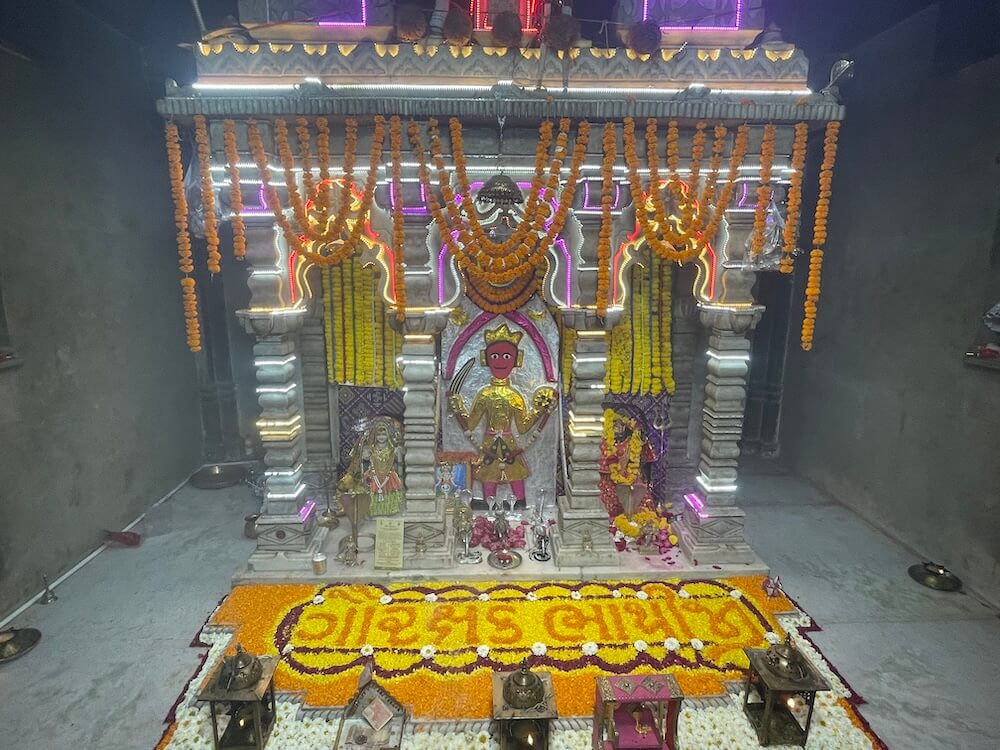 The surrounding precincts are lined with numerous shops offering ceremonial prayer items. The architectural design of this two-storeyed temple comprises a main assembly hall (Sabhamandap) and the inner sanctum (Garbhagriha). The enclosed assembly hall features pillars adorned with intricate carvings and the ceiling is similarly embellished with exquisite craftsmanship. Within the inner sanctum, an image of Bhathiji Maharaj stands, holding a sword and a shield. Alongside his idol are the figures of Sati Kankuba, Mother Kalka Mata, Lord Krishna, Hanumanji and several serpent icons. Furthermore, the temple houses an ancient Shivalinga and a stone serpent idol.
Devotees can seek blessings at the temple from 5 am to 9 pm. The ritual ‘Aarti’ takes place daily at 5 am and 6 pm.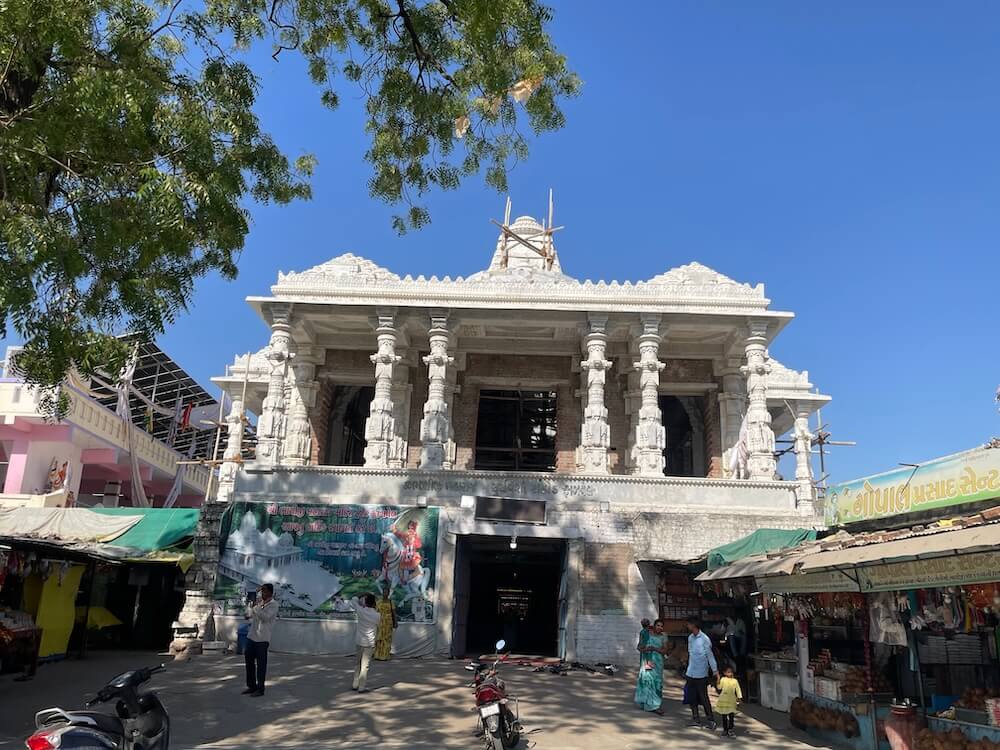 Many religious festivals are celebrated with great enthusiasm here. The highlight is Bhathiji Maharaj’s birthday on Kartak Sud Ekam, marked by a grand festival and fair. Public fairs also occur on Kartak Sud Poonam, Kartak Vad Ekam, Kartak Vad Pancham and Magshar Sud Poonam. The temple’s ‘Pran-Pratishtha’ (consecration) anniversary is celebrated on Maha Sud Dasham. Many devotees from Gujarat and Rajasthan join these events. Kartak Purnima is also called ‘Dev Diwali.’ On this day, a large two-day fair is held in Phagvel, featuring special prayers and hymns. Pilgrims from Gujarat, Rajasthan and Madhya Pradesh attend the celebration. It is believed that Lord Vishnu’s Matsya (fish) avatar appeared on Kartak Poonam. On the second day of Kartak Sud, fairs dedicated to Bhathiji are also held at Mahamadpura in Nadiad Taluka and Kanij in Mahemdabad Taluka. During this time, the Tulsi Vivah ceremony is also conducted with immense enthusiasm. Upon the fulfilment of their vows, devotees offer coconuts at the shrine. The grand fireworks display during the fair is a major attraction for visitors.
Useful Information
- Located at 25 km from Kapadvanj and 66 km from Kheda.
- GSRTC bus facilities are available from Kathlal.
- Private vehicles can reach the temple parking area.
- Lodging and breakfast facilities are available nearby.
- Contact – Temple Office, Mob: 9723627193; Abhaysinh Nanabhai Rathore, Trustee, Mob: 9824430504
भथीजी महाराज मंदिर
फागवेल, ताल. कपडवंज, जिला. खेड़ा
मंदिरे
Temples
मंदिर
-
भूमपुरा हनुमान मंदिर भूमापुरा, मोडज, ता. महेमदावाद, जि. खेडा
अधिक माहितीBhumapura Hanuman Temple Bhumapura, Modaj, Tal. Mahemdavad, Dist. Kheda
View Detailsभूमापुरा हनुमान मंदिर भूमापुरा, मोडाज, ताल. महेमदावाद, जिला. खेड़ा
विवरण देखें -
केदारेश्वर महादेव मंदिर महादेवपुरा, ता. कठालाल, जि. खेडा
अधिक माहितीKedareswar Mahadev Temple Mahadevpura, Tal. Kathlal, Dist. Kheda
View Detailsकेदारेश्वर महादेव मंदिर महादेवपुरा, ताल. कठलाल, जिला. खेड़ा
विवरण देखें -
संन्यास (सिद्धनाथ) महादेव मंदिर कठालाल, ता. कठालाल, जि. खेडा
अधिक माहितीSannyas (Siddhanath) Mahadev Temple Kathlal, Tal. Kathlal, Dist. Kheda
View Detailsसंन्यास (सिद्धनाथ) महादेव मंदिर कठलाल, ताल. कठलाल, जिला. खेड़ा
विवरण देखें