
चिंतानाथ महादेव मंदिर
तवरा, ता./जि. भरुच
Chintanath Mahadev Temple
Tavra, Tal./Dist. Bharuch
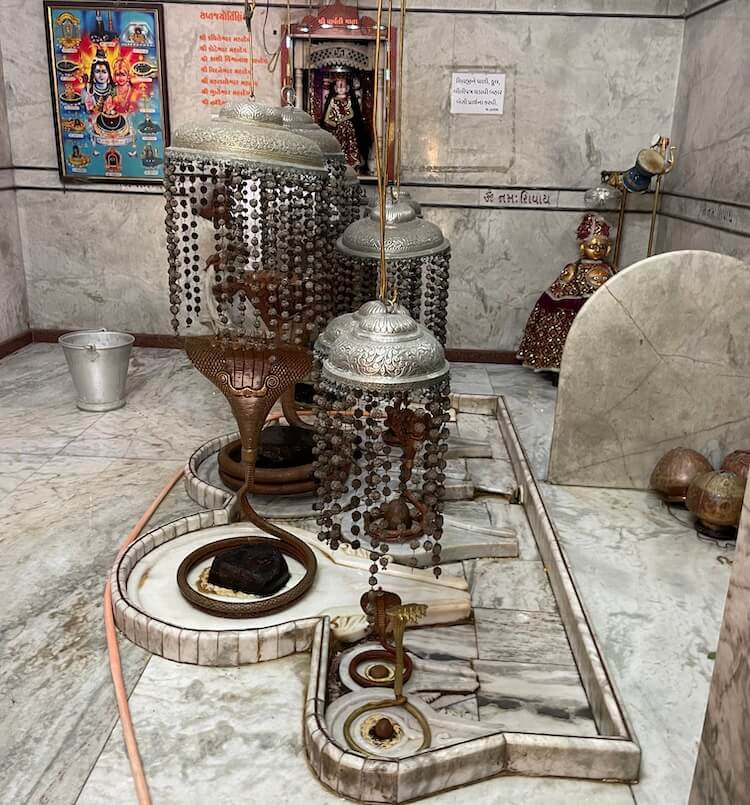 The Chintanath Mahadev Temple is situated in Tavra, a location known in ancient times as ‘Taraneshwar’. This sacred edifice enshrines seven Shivlingas, which, according to a local legend, were established by the sage Kapil Muni. Consequently the temple was originally known as ‘Kapileshwar Mahadev’. However it was later renamed ‘Chintanath Mahadev’ owing to the profound belief that a Darshan (sacred viewing) of these Shivlingas liberates a devotee from all anxieties. The faithful maintain that by bathing in the Narmada and performing Deepdan (the ritual offering of lamps) on the day of Chaitra Shuddha Chaturdashi followed by the adoration of these seven Shivlingas one is blessed with eternal vision (akhanda chakshu) and attains Moksha (spiritual liberation).
According to the Puranic lore about the Chintanath Mahadev Temple, Kapil Muni arrived at the Dashashwamedh Ghat in ‘Bhrigukachchha’ (modern-day Bharuch) on the banks of the Narmada. He is revered as the original proponent of the ‘Sankhya’ school of Hindu philosophy. Sankhya philosophy is considered distinct from or even opposed to certain Vedic interpretations. The earliest mention of Kapil Muni, the architect of this philosophy, 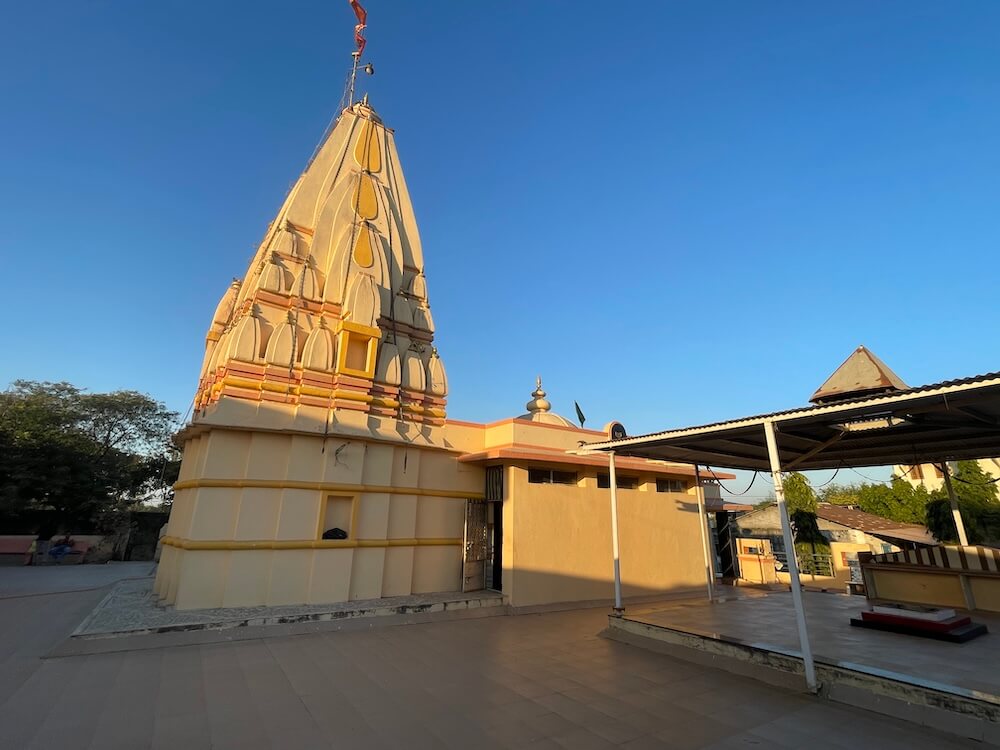 appears in the ‘Shvetashvatara Upanishad’ (5.2) where it is stated that the Almighty nourishes the sage with diverse forms of knowledge. The ‘Bhagavata Purana’ lists twenty-four incarnations of Lord Vishnu and identifies Kapil Muni as one such Avatar (divine incarnation). In the tenth chapter of the ‘Bhagavad Gita’ Lord Krishna declares ‘Amongst the Siddhas, I am the sage Kapila’. It is said that this venerable sage resided in Bhrigukachchha for a period of time.
During that era, the region was ruled by King Bali. It is recounted that after accepting the King’s hospitality the sage travelled to Tavra. On the banks of the Narmada in Tavra, Kapil Muni performed rigorous Tapasya (penance) for many years. Legend has it that he subsequently consecrated seven Shivlingas at this site. Historical accounts suggest that the temple was once targeted by invading forces. 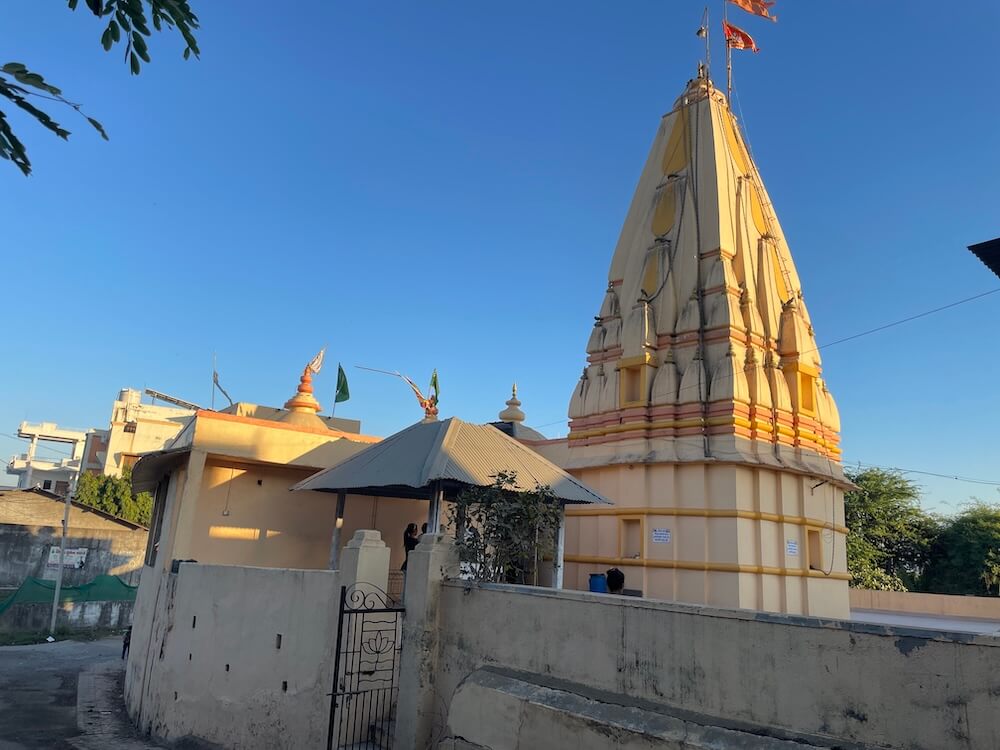 The Bharuch region was under the dominion of various Muslim rulers for 475 years between 1297 and 1772 including a 164-year period of Mughal rule from Delhi. Whilst the temple generally remained undisturbed during much of this era, it is said that during the reign of the Mughal Emperor Aurangzeb, his army launched an attack on Tavra village. As per local myth, when the soldiers attempted to desecrate and destroy the Shivlingas in the Chintanath Mahadev Temple a miracle occurred. Streams of milk began to flow from the seven Lingas and overwhelmed by this divine manifestation Aurangzeb’s soldiers were unable to cause any further damage to the sacred icons.
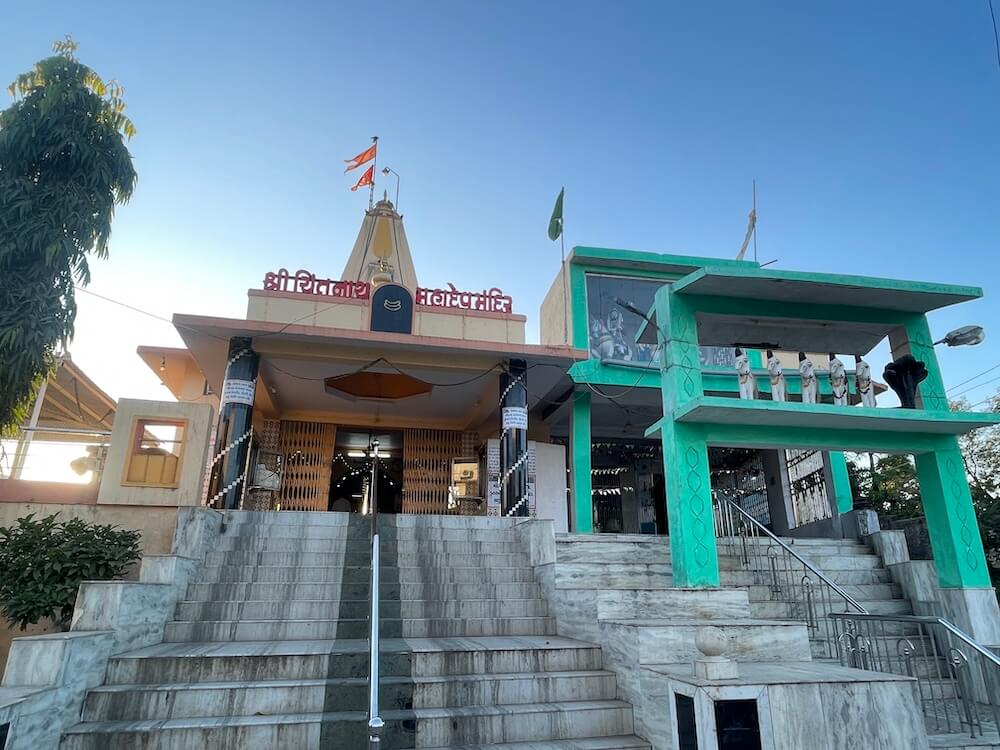
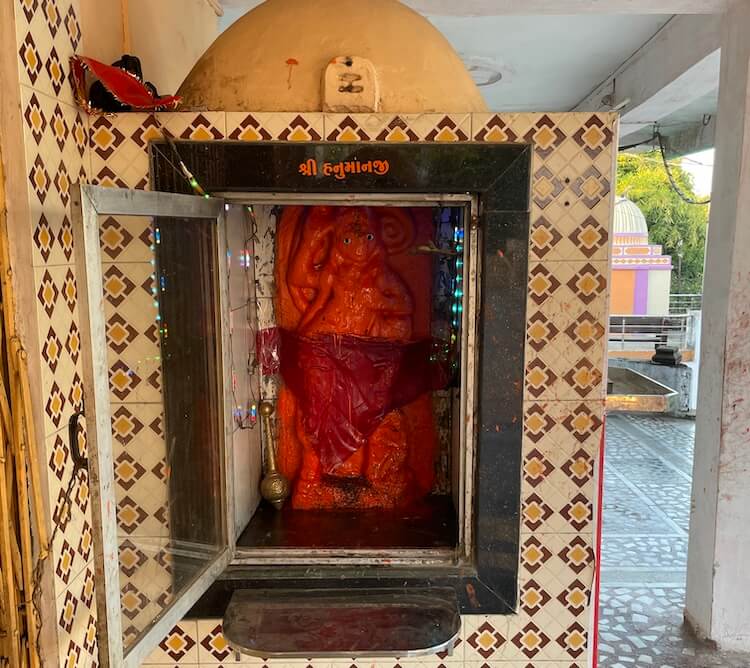
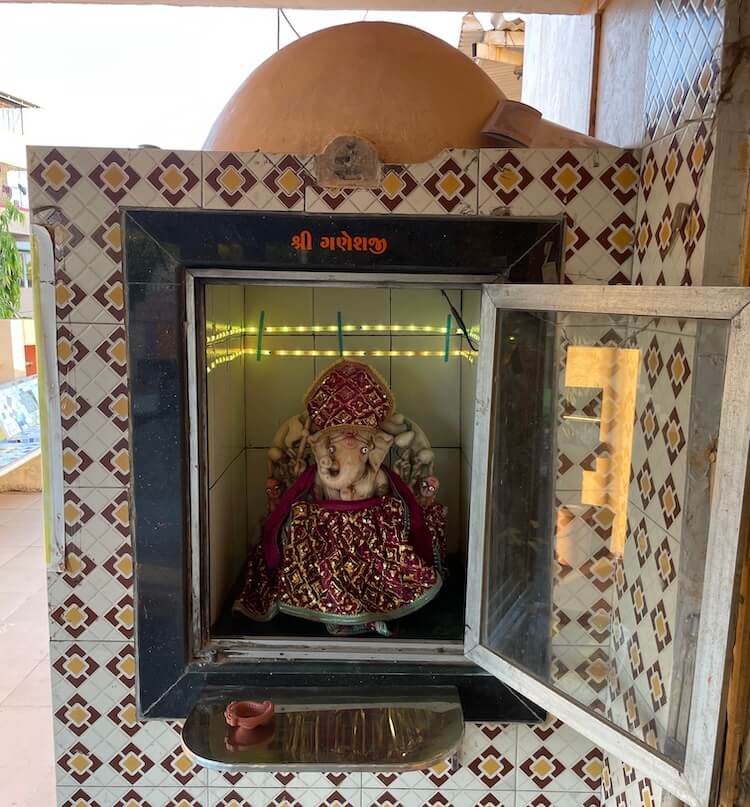
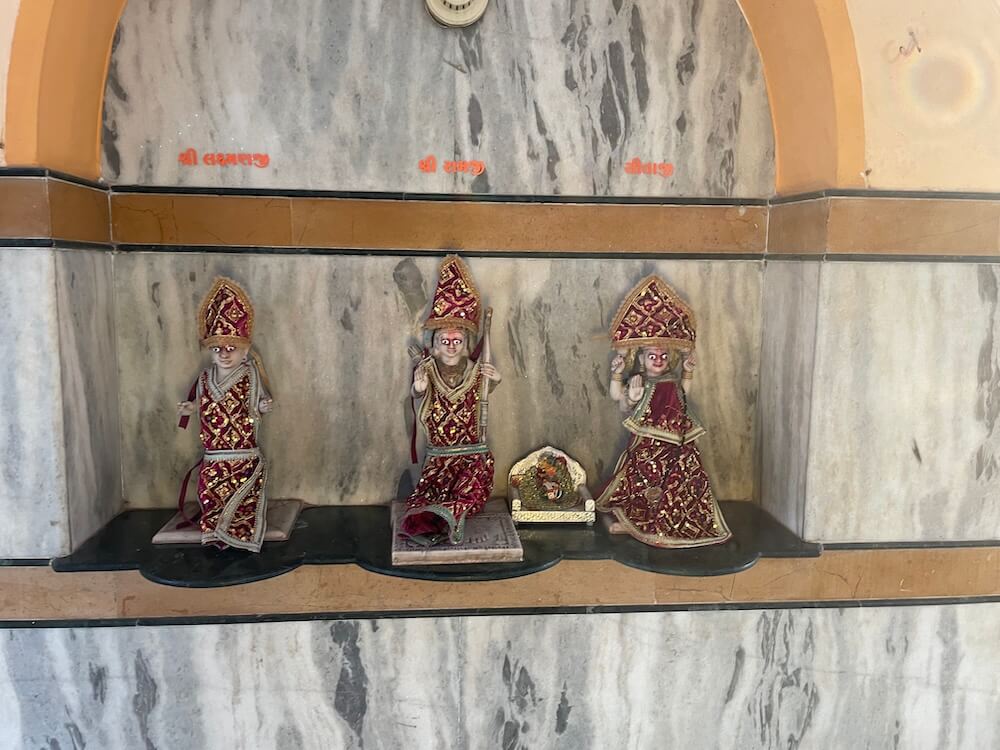
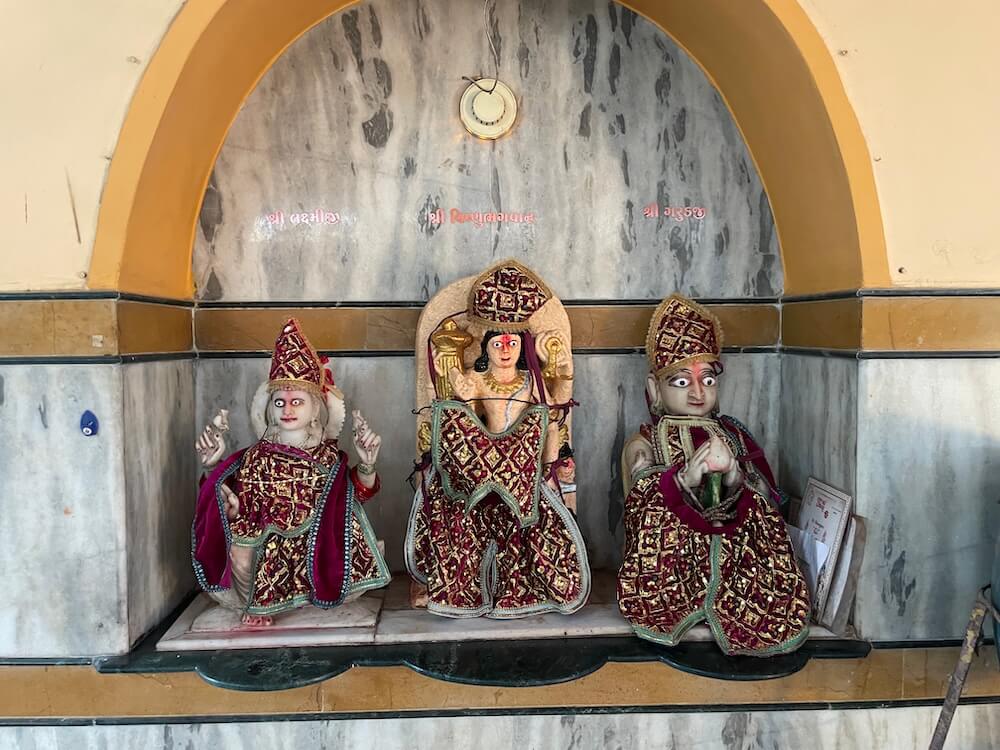
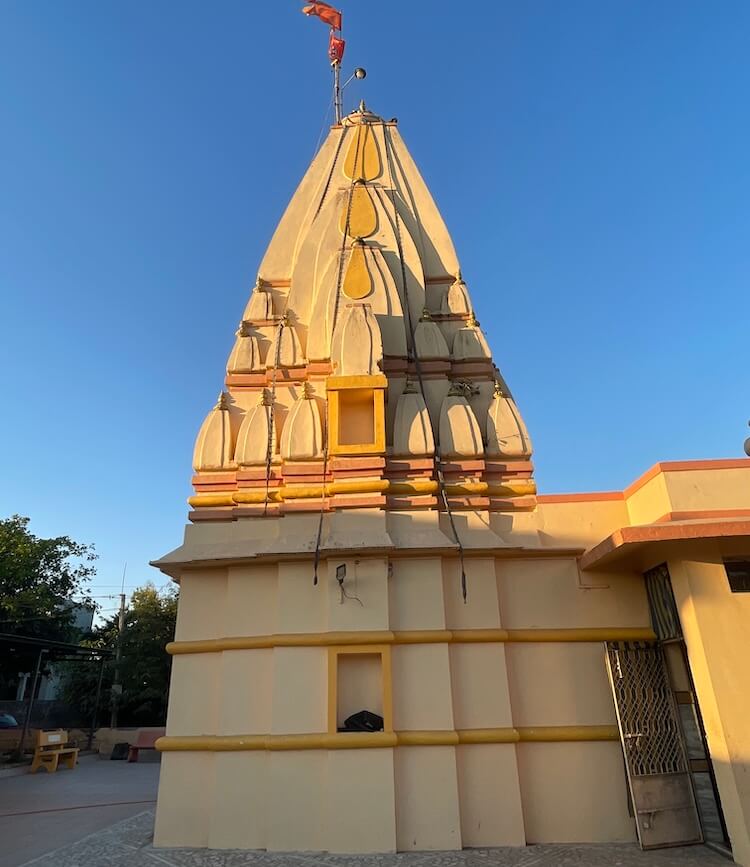
The precise history of the temple’s founding remains unknown and the structure has undergone several restorations over the passage of time. 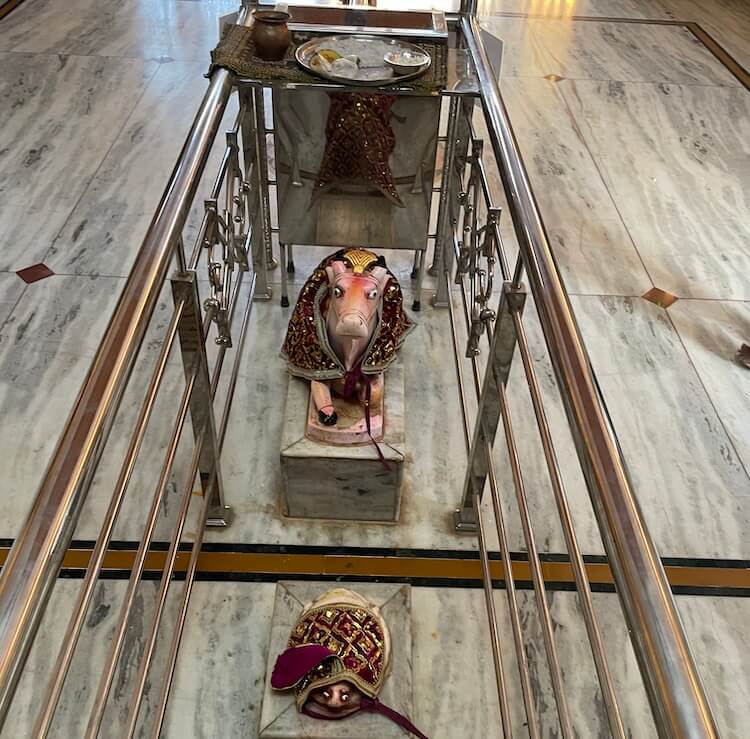 The temple attained its current form following a major renovation eighteen years ago. Located on an elevated spot within the village the temple is reached by ascending fifteen steps. This spacious marble staircase features a grand entrance arch on one side. The upper portion of this arch is adorned with sculptures of five cows and a Sheshnag (the celestial serpent). Built in the Nagara style of architecture the temple structure consists of a Mukhamandap (entrance porch), a Sabhamandap (assembly hall) and a Garbhagriha (sanctum sanctorum). The Garbhagriha is topped with an Urushringa style spire featuring a two-tiered Amalaka and a Kalash (pinnacle). The Mukhamandap and Sabhamandap are crowned with domed spires. Within the Mukhamandap the niche to the left houses Lord Ganesha and the niche to the right is dedicated to Lord Hanuman. The Sabhamandap is expansive and its walls contain niches enshrining idols of various deities including Goddess Narmada, Shri Ram-Lakshman-Sita, Lord Brahma, Goddess Lakshmi, Lord Vishnu, Garuda and Anasuya. Facing the sanctum, Nandi sits upon a raised platform with a tortoise figure placed before him.
 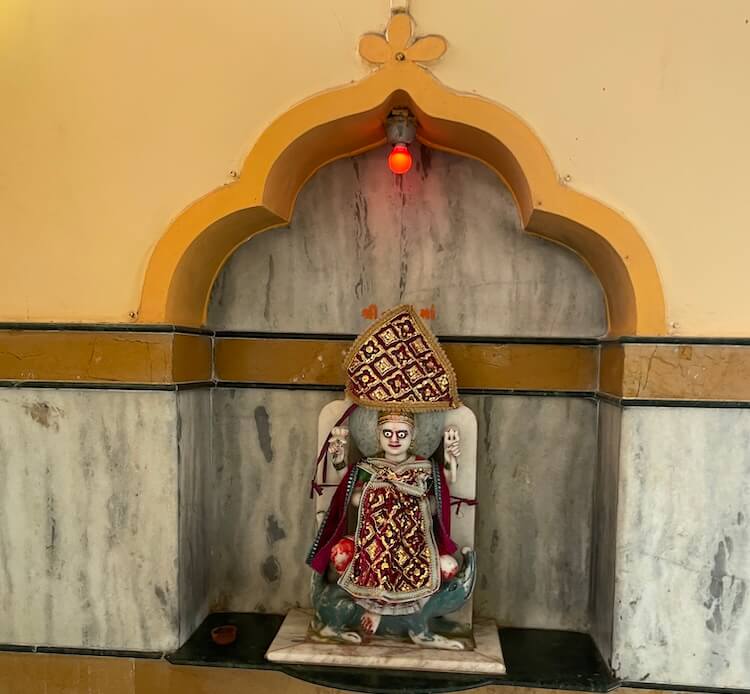 Below the entrance of the Garbhagriha is the Kirtimukha. The sanctum enshrines the seven Pindis of Kapileshwar Mahadev, Koteshwar Mahadev, Kashi Vishwanath Mahadev, Vighneshwar Mahadev, Mahakaleshwar Mahadev, Gupteshwar Mahadev and Narmadeshwar Mahadev. Each Shivlinga is set within a marble Shalunka and is sheltered by a serpent canopy. A niche within this area also houses an idol of Mother Parvati.
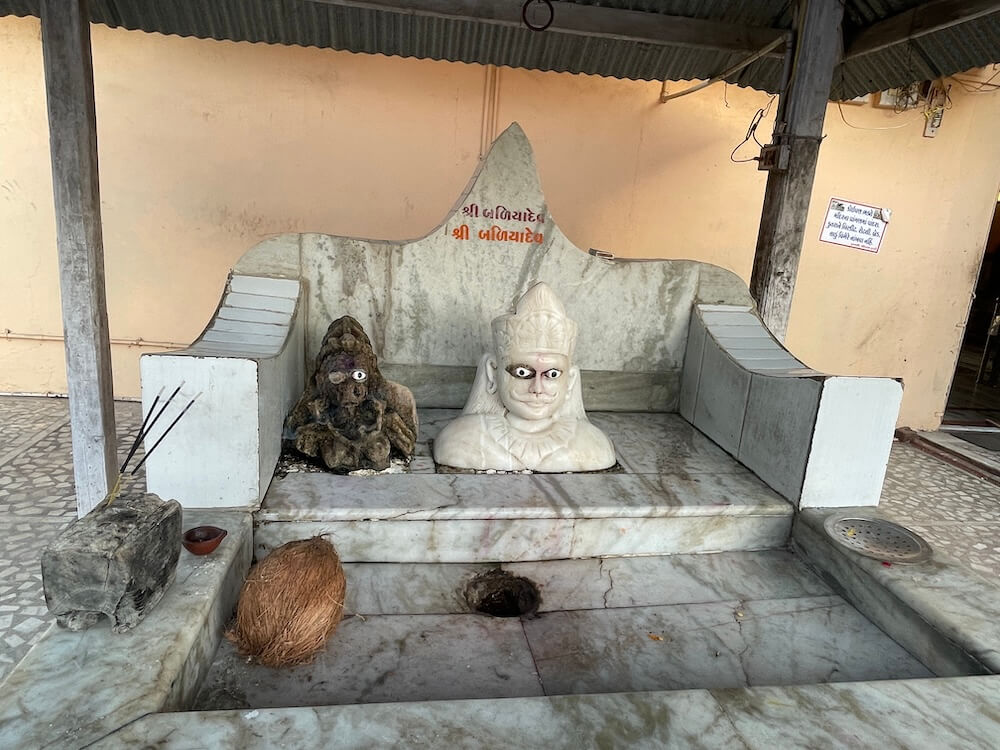
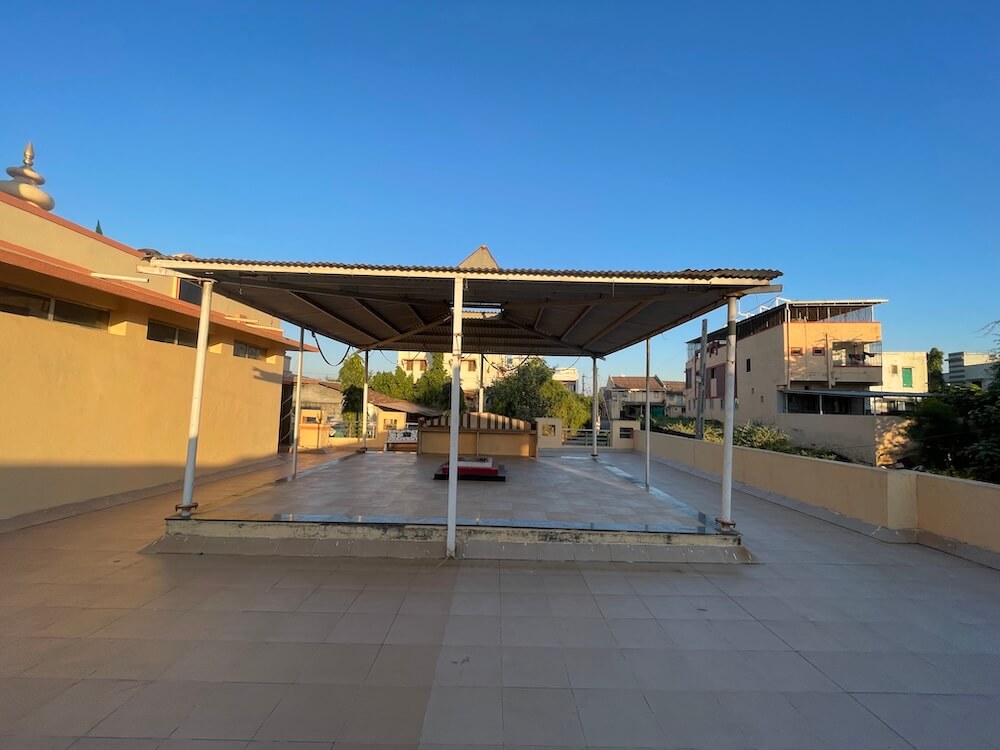
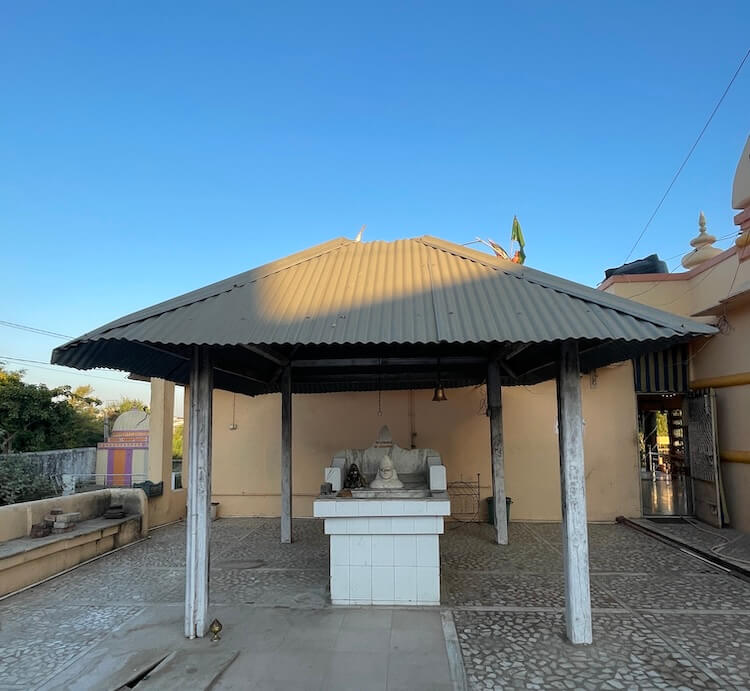
The temple precincts also contain shrines dedicated to Baliyadev, Rampir Baba and Bhathiji Maharaj. A Yajnakunda (sacrificial fire pit) is located in the courtyard, where various Yajnas (fire rituals) are performed on special occasions. Ritual worship and Aarti are conducted daily in the morning and evening. Devotees firmly believe that serving these seven Shivlingas with a pure heart ensures the fulfilment of all wishes. Many religious programmes are organised here throughout the year. 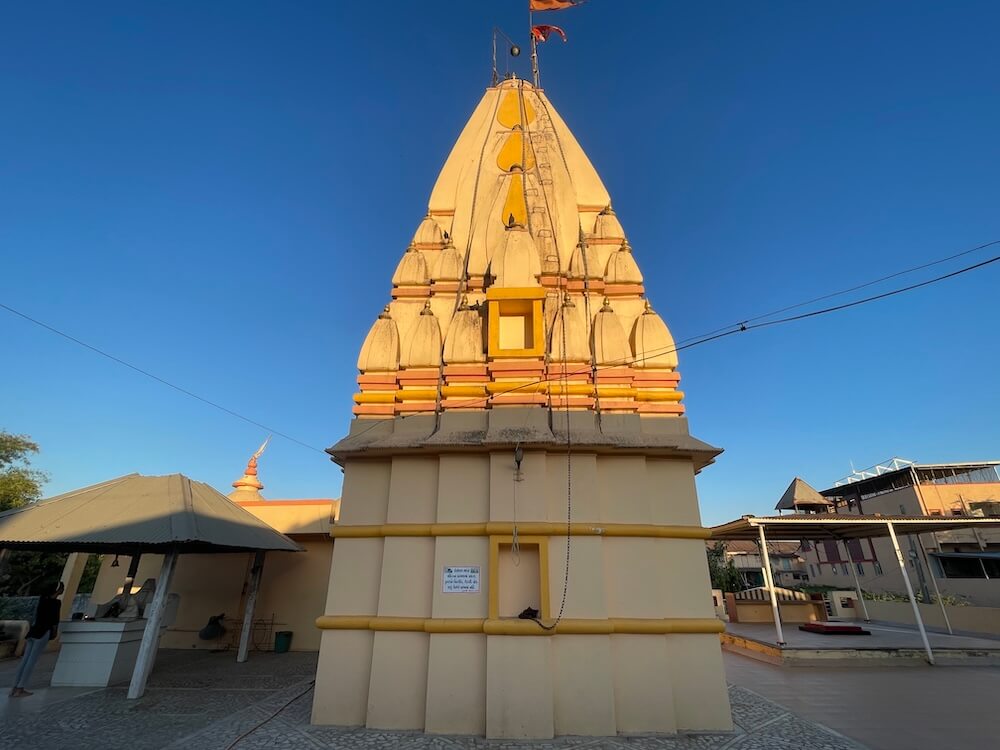 The temple witnesses a massive gathering of the faithful on every Monday of the month of Shravan. During this holy month the ritual of ‘Partheshwar Puja’ is observed for which earth is brought daily from the riverbed of the Narmada to fashion a Parthiv Shivlinga (a temporal linga made of clay). Hundreds of devotees also visit for Darshan on the day of Somvati Amavasya. The temple’s anniversary is celebrated on the day of Margashirsha Shuddha Ekadashi. This celebration includes rituals such as the ‘Homatmak Laghurudra’, ‘Purnahuti’ and ‘Mahaprasad’ (consecrated communal meal). On this auspicious day the entire temple is exquisitely decorated with flowers and hundreds of devotees from both the old and new Tavra villages attend the festivities. The celebrations conclude at night with a vibrant display of fireworks within the temple premises.
Main Features :
- 9 km away from Bharuch
- ST (State Transport) bus facility available from Bharuch
- Private vehicles can reach up to the parking
- Accommodation and breakfast facilities are available in the vicinity
चिंतानाथ महादेव मंदिर
तवरा, ताल./जिला. भरूच
मंदिरे
Temples
मंदिर
-
कोटेश्वर महादेव मंदिर कदोद, ता. भरुच, जि. भरुच
अधिक माहितीKoteshwar Mahadev Temple Kadod, Tal. Bharuch, Dist. Bharuch
View Detailsकोटेश्वर महादेव मंदिर कडोद, ताल. भरूच, जिला. भरूच
विवरण देखें -
धर्मेश्वर महादेव मंदिर धर्मशाळा-झानोर, ता. भरुच, जि. भरुच
अधिक माहितीDharmeshwar Mahadev Temple Dharmashala-Jhanor, Tal. Bharuch, Dist. Bharuch
View Detailsधर्मेश्वर महादेव मंदिर धर्मशाला-झानोर, ताल. भरूच, जिला. भरूच
विवरण देखें -
साईबाबा मंदिर रामवाटिका सोसायटी, झाडेश्वर, ता./जि. भरुच
अधिक माहितीSai Baba Temple Ramvatika Society, Zadeshwar, Tal./Dist. Bharuch
View Detailsसाईं बाबा मंदिर रामवाटिका सोसायटी, जादेश्वर, ताल./जिला. भरूच
विवरण देखें