 In the Hindu tradition, the Bhumi (earth) is accorded the status of a mother and in the same spirit the nation itself is revered as a deity. The Valmiki Ramayana exalts one’s motherland above even heaven. In ‘Vande Mataram’, the stirring anthem of India’s freedom movement, the land is praised in the form of a goddess. Veer Savarkar, too, extolled the nation as ‘Mahanmangala, Shivaspada, Bhagavati’. Out of this devotion to Bharat Mata and the fervour of patriotism, temples dedicated to the Mother India have been established at a few places in the country. One such temple stands in Indore.
The history of the Bharat Mata concept is traced to the late nineteenth century, when the whole of the Indian subcontinent began to be addressed as Bharatvarsha or Bharat Mata. The idea gained currency through the 1866 text ‘Unbimsa Purana’, K. C. Bandopadhyay’s 1873 play ‘Bharat Mata’ and Bankimchandra Chattopadhyay’s 1880 novel ‘Anandamath’. 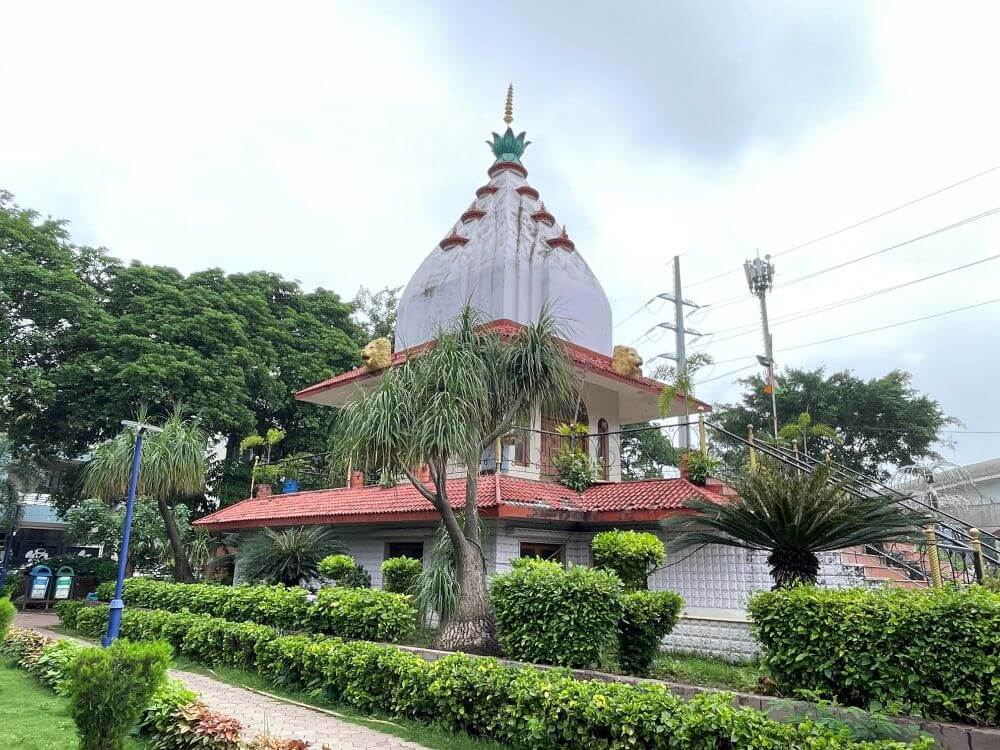 Abanindranath Tagore, brother of Gurudev Rabindranath Tagore, first bestowed a visual image upon Bharat Mata. In his 1905 painting, she appears four-armed, clothed in the saffron garb of an ascetic, holding in her hands food grains, a white cloth, a sacred book and a rosary. In 1906, the Ahmedabad teacher Magnalal Sharma also painted an image of Bharat Mata.
The first temple to Bharat Mata was established at Kashi, held to be Hinduism’s holiest pilgrimage center. The eminent nationalist Babu Shivprasad Gupta, associate of Mahatma Gandhi and founder of the Banaras Hindu University, founded this shrine in 1936, during the pre-independence era. Mahatma Gandhi himself offered the concluding oblation at the temple’s inaugural yajna amid the chanting of Vedic mantras and performed the first ceremonial anointment of the idol. 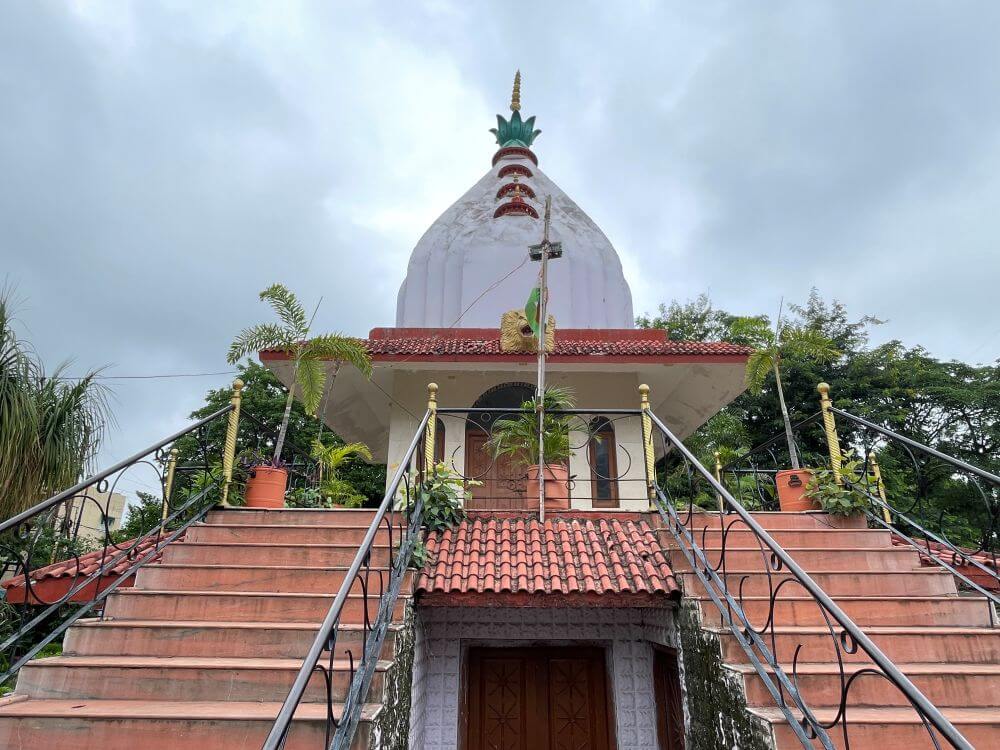 Other notable Bharat Mata temples stand at the Devgiri Fort in Maharashtra, at Kanyakumari, at Haridwar and at Ujjain. Among these, one temple to Bharat Mata is located in Indore’s Sukhlia locality.
Around twenty-five years ago, Saint Bhayyu Maharaj founded this temple. Originally from Madhya Pradesh’s Shajapur district, his given name was Uday Singh Deshmukh. In his youth, he worked in advertising industry as a model for some time and afterward under the influence of Anna Maharaj of Maharashtra, he turned toward spiritual life and came to be known as a householder-saint. For religion and social service in Indore, he established the ‘Sadguru Datt Religious and Charitable Trust’ as well as the ‘Parmarth Trust’. Through these trusts he built the temple of Bharat Mata and it was inaugurated by Vilasrao Deshmukh, 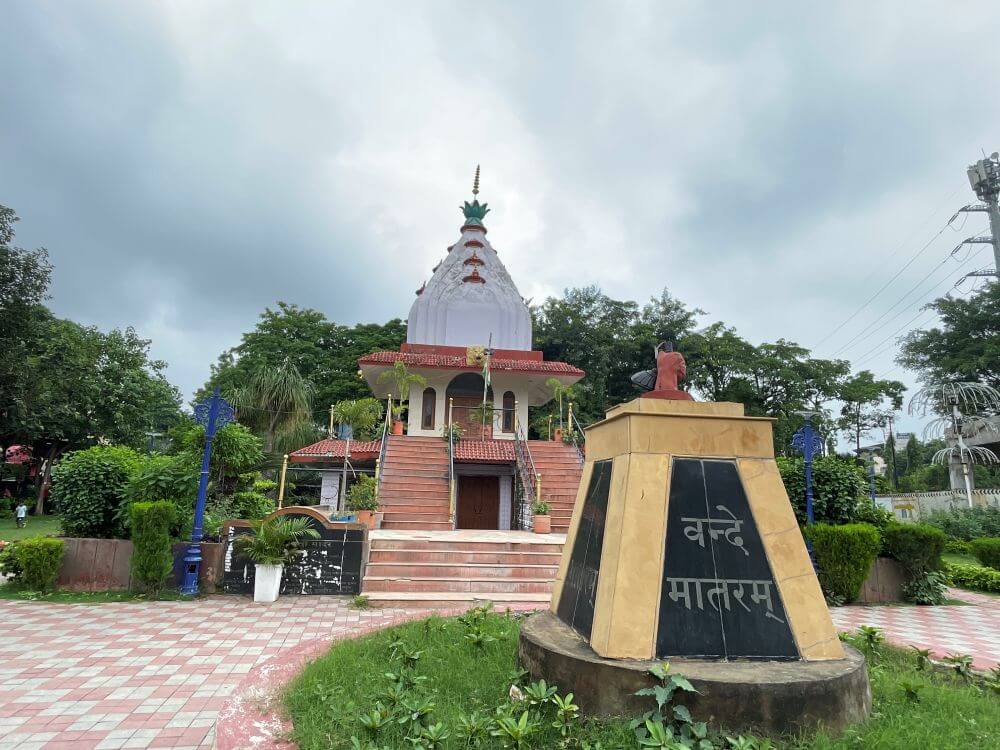 then Chief Minister of Maharashtra.
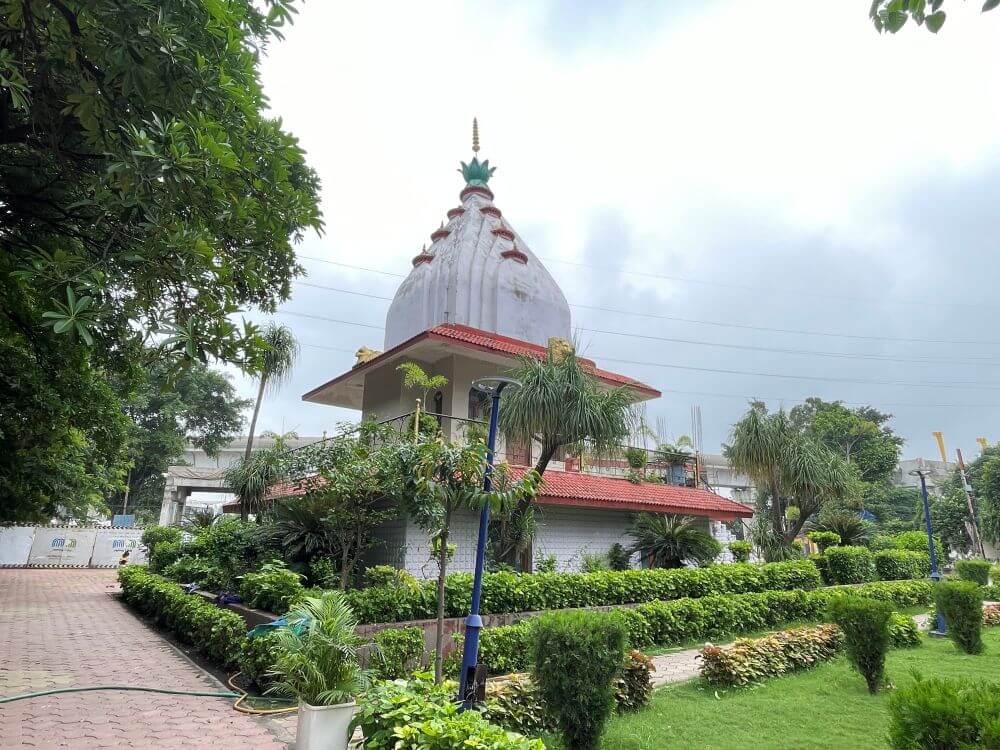
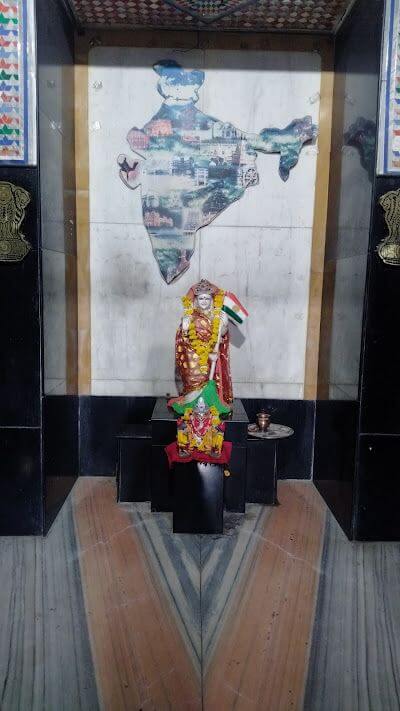
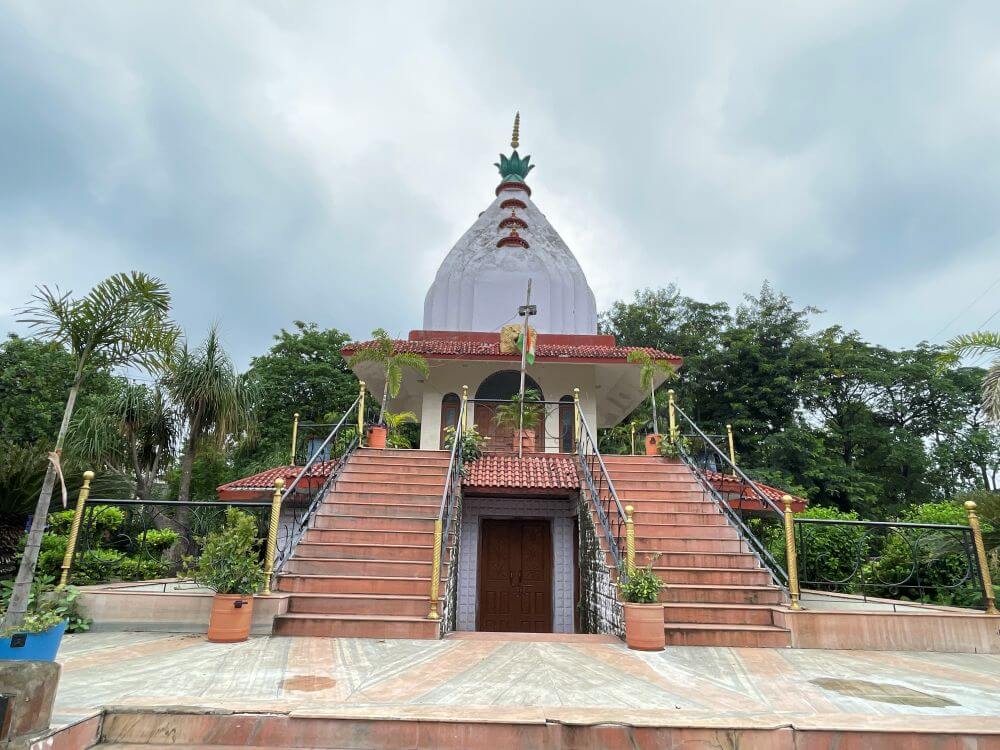
Set upon a high plinth within a large municipal garden in the Sukhlia area, the two-storied temple faces a memorial dedicated to martyred soldiers. On the lower floor of the temple is a Kargil Memorial Gallery. From there, eleven steps rise to the temple’s forecourt. The shrine has a lofty arched gateway and at the center of the ceiling above the entrance is a lion’s head motif. The temple’s shikhara is of the urushringa type, crowned with an amalaka fashioned in the shape of lotus buds. The assembly hall has large windows on three sides and the upper sections of the ceiling are adorned with colored stained-glass inlay. Inside, on a marble pedestal at the front, stands a marble idol of Bharat Mata. The goddess, clad in white garments and crowned, holds the tricolor flag in one hand while the other is raised in blessing. Behind the idol, the marble-tiled wall bears a grand painted map of India, with high-relief carvings of the national emblem on both sides.
Founded to foster a sense of national duty among citizens, the temple receives at least two hundred visitors daily. Independence Day and Republic Day are celebrated here with great enthusiasm. On these occasions, residents from the surrounding areas gather to pay homage to the image of Bharat Mata and to the national flag. The precincts are peaceful and students from nearby neighborhoods often come to study in the garden. A walking track has been laid out for citizens and every morning and evening many senior citizens visit in large numbers.