
भद्रकाली माता मंदिर
भादरण, ता. आनंद, जि. आनंद
Bhadrakali Mata Temple
Bhadran, Tal. Anand, Dist. Anand
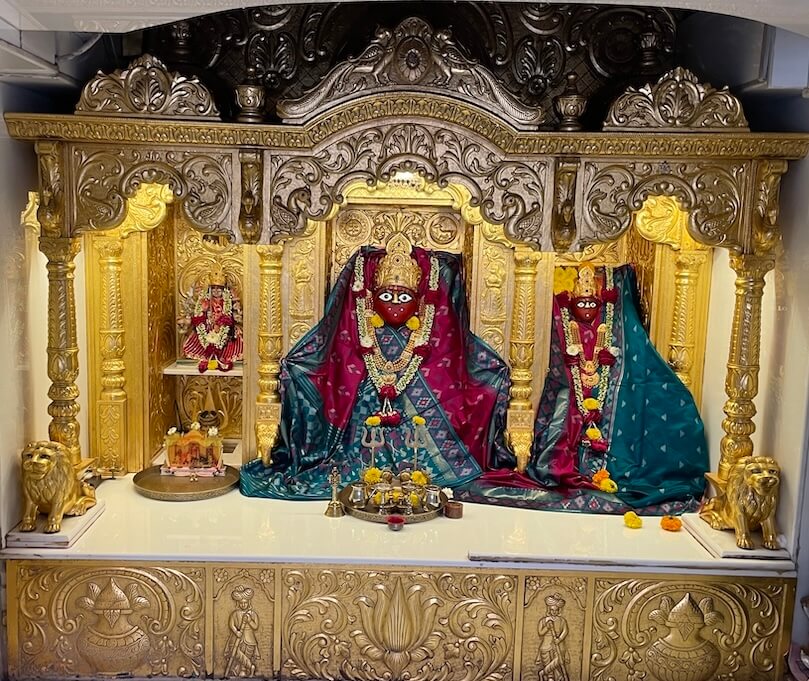 The ancient Bhadrakali Mata Temple situated at Bhadran in Anand district stands as a profound centre of faith for countless devotees. The term ‘Bhadra’ signifies auspiciousness, while ‘Kali’ is directly associated with the dark complexion of the Goddess. Revered as the Kuldevta (family deity) of many lineages, this ‘Jagrut’ (living or awakened) Mother is renowned for fulfilling the vows of her seekers. It is considered an exceptionally significant centre for practitioners of the Shakta and Tantra paths. Numerous Yogis and Sanyasis (ascetics) offer heartfelt worship to the Mother to attain Siddhi (spiritual accomplishments). The Goddess is celebrated as ‘Mahamaya’, who creates the illusions within the human mind and simultaneously as the protector of all that is auspicious.
In 1357 AD, two brothers named Kalidas and Ananda Patel migrated from Akkalav and established a new settlement in this region,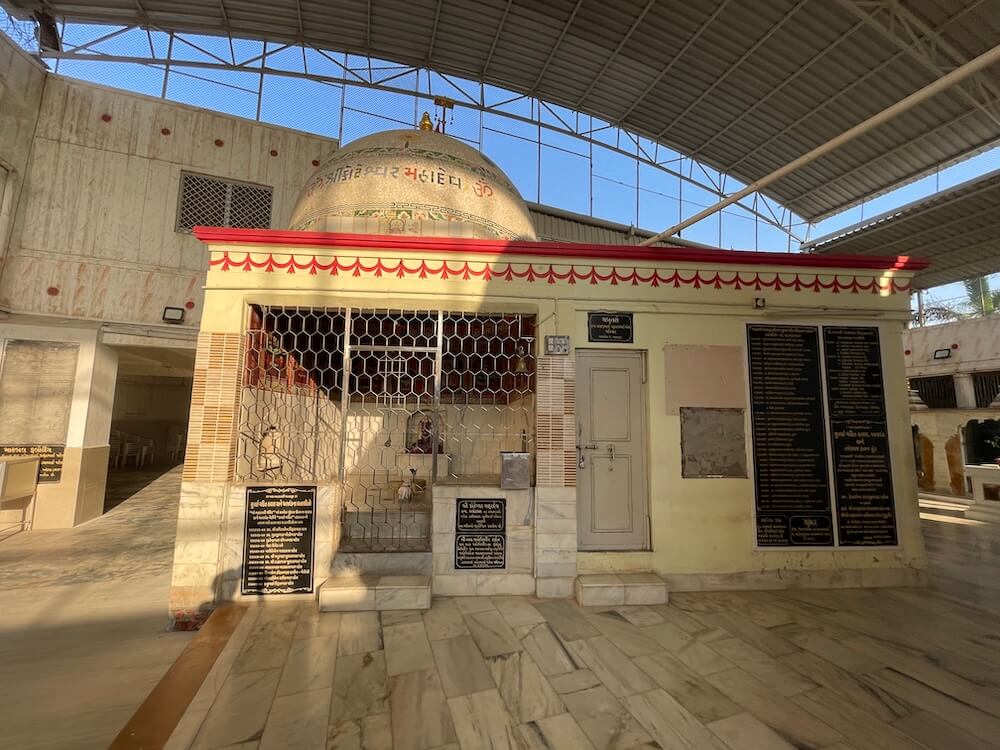 laying the foundation for the historical heritage of Bhadran village. Initially, these migrant families accepted Bhadrakali Mata as their protective family deity. Consequently, the village came to be known as Bhadrapur. Established nearly 700 years ago, this ancient temple has undergone several restorations over the passage of time. Later, during the progressive reign of Maharaja Sayajirao Gaekwad of Baroda, Bhadran village received modern amenities and the temple management achieved a high degree of discipline. The development of old settlements like ‘Moti Khadki’ and ‘Nani Khadki’ occurred under the very blessings of this temple. Since the Goddess holds the supreme position in the ‘Saha Gaum’ (Six Villages) culture of the Patels, this holy site continues to enjoy immense historical and social prestige.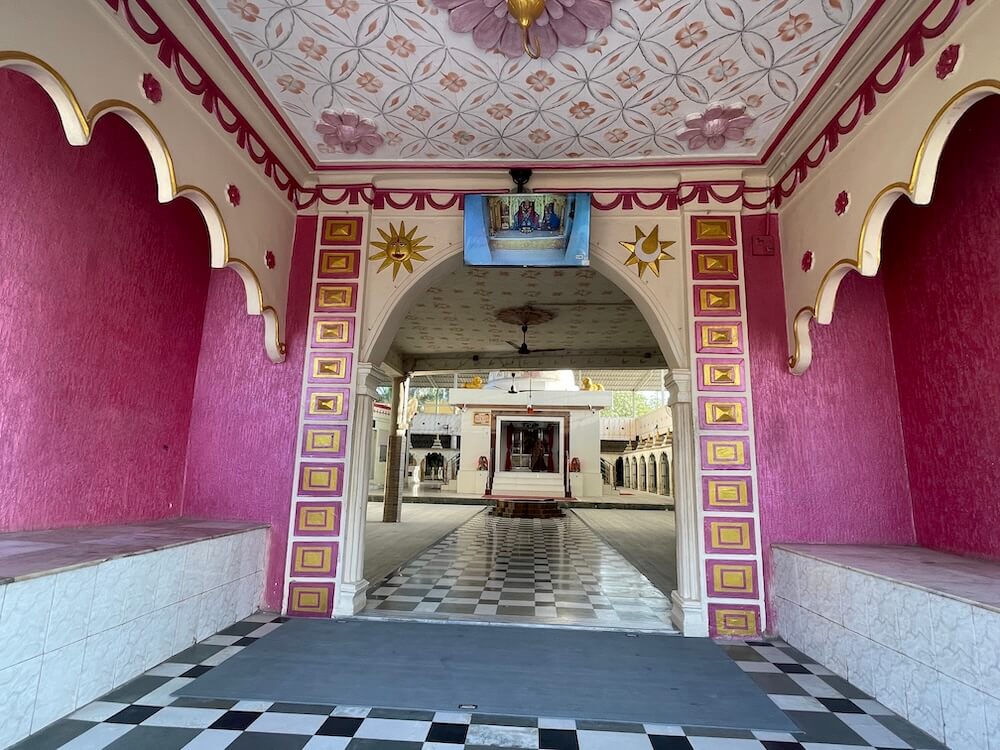
Bhadrakali Mata is regarded as an exceptionally powerful manifestation of Goddess Parvati. According to the descriptions in the ‘Sati Khanda’ (Chapters 32 to 34) of the Rudra Samhita within the Shiva Purana, after Sati sacrificed herself in the Yagna (sacrificial fire) organised by Prajapati Daksha, enraged Lord Shiva struck his matted hair upon the earth. From this act, the incarnations of Bhadrakali and Virabhadra emerged. These powers destroyed Daksha’s Yagna and eliminated the unjust and impure elements of the world to protect only the auspicious and sacred principles. For this reason, the Goddess earned the name ‘Bhadrakali’ or the protector of the auspicious.
 According to a reference in the 106th chapter of the first part of the Linga Purana, when the atrocities of demons increased on earth and the gods faced defeat, Adimaya Uma Devi assumed a Raudra (fierce) form for the destruction of the wicked. In this tumultuous battle, the intense heat emitted from the body of the Goddess caused her original complexion to turn completely black. In this terrifying conflict that lasted for nine consecutive days, the Goddess completely annihilated all the demons. Even then, her uncontrollable wrath did not subside. Finally, to calm the Goddess, Lord Shiva assumed the form of a child and lay on the ground at her feet, bringing her back to her original gentle state. This Adimaya became tranquil and assumed the benevolent Bhadrakali form for the welfare of the world. According to local belief, the Goddess took this incarnation to slay a demon named Bhadrasur from the city of Padmapur near Bhadran.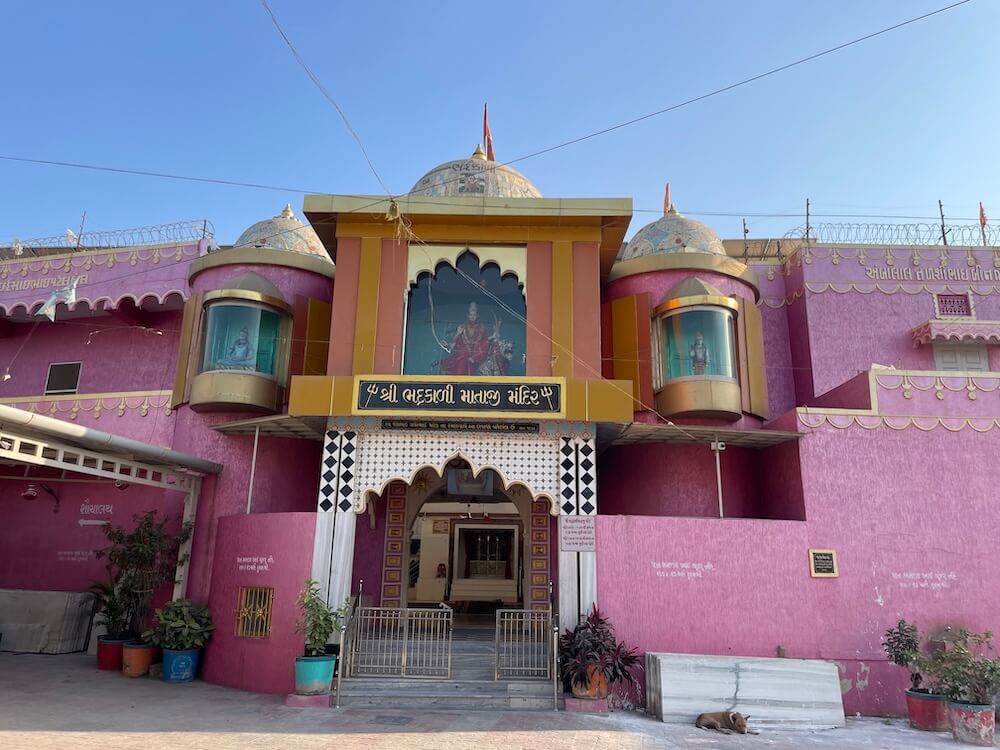
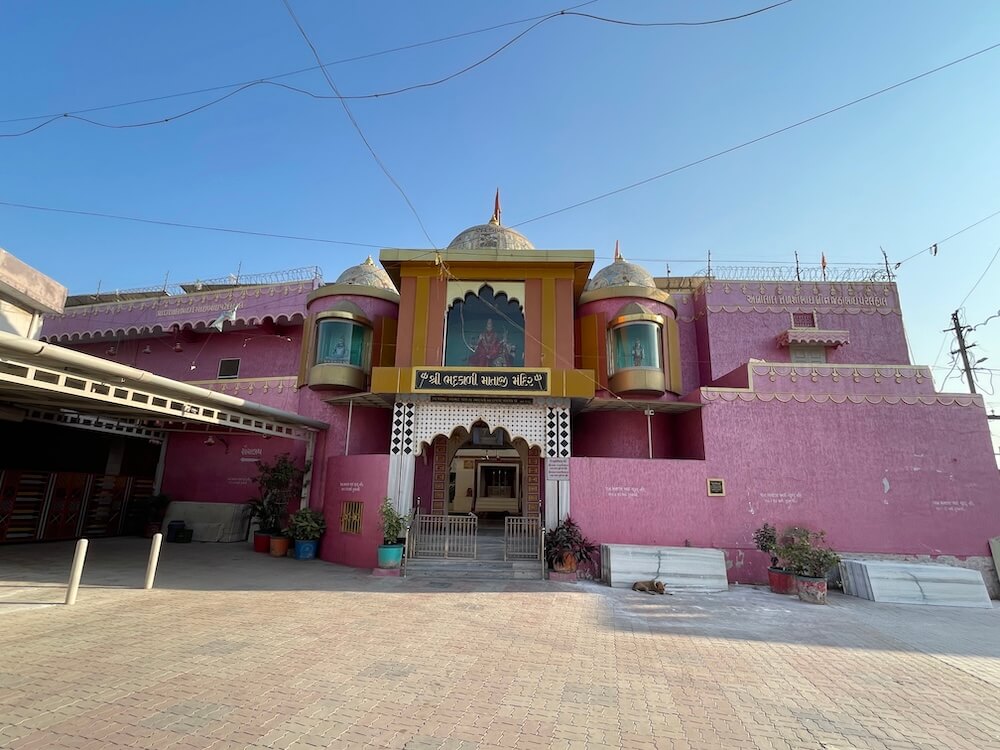
The temple is located in the heart of Bhadran village, within the main marketplace. A parking facility is situated directly in front of the temple. The entire temple complex is enclosed by a fortified wall. Entry into the temple courtyard is through a two-storey gateway within these walls. Guard’s rooms are located on either side of the entrance, with a ‘Nagarkhana’ (drum house) on the upper floor. There, an idol of Goddess Durga mounted on a tiger is installed. Within glass-enclosed chambers on both sides of the Nagarkhana, sculptures of ‘Dwarpals’ (gatekeepers) are placed.
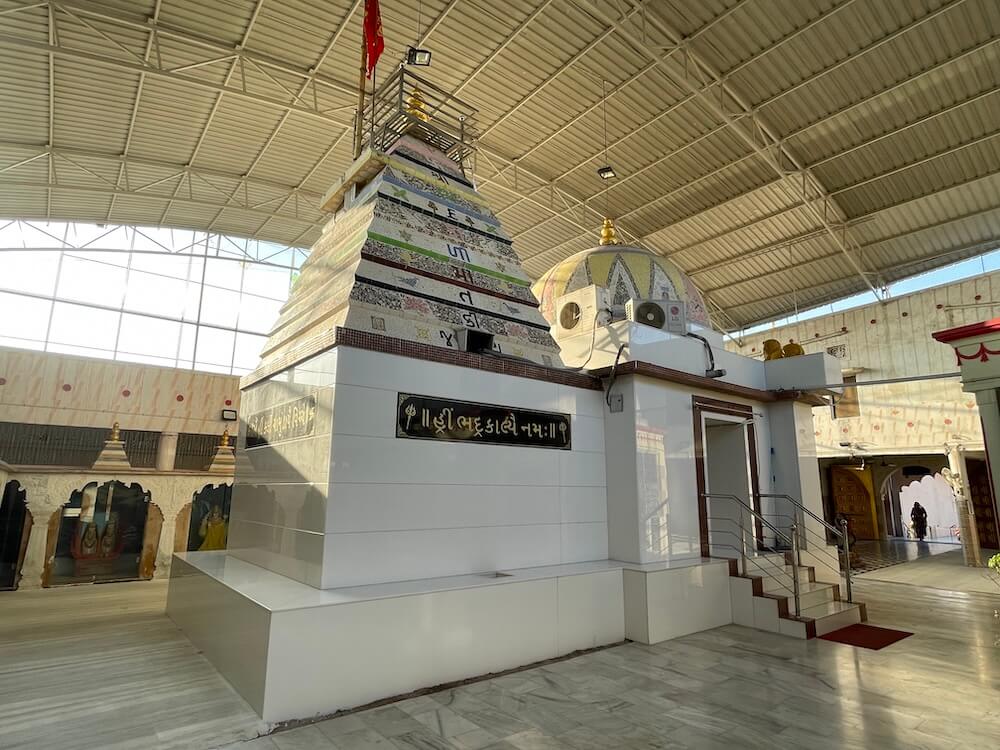
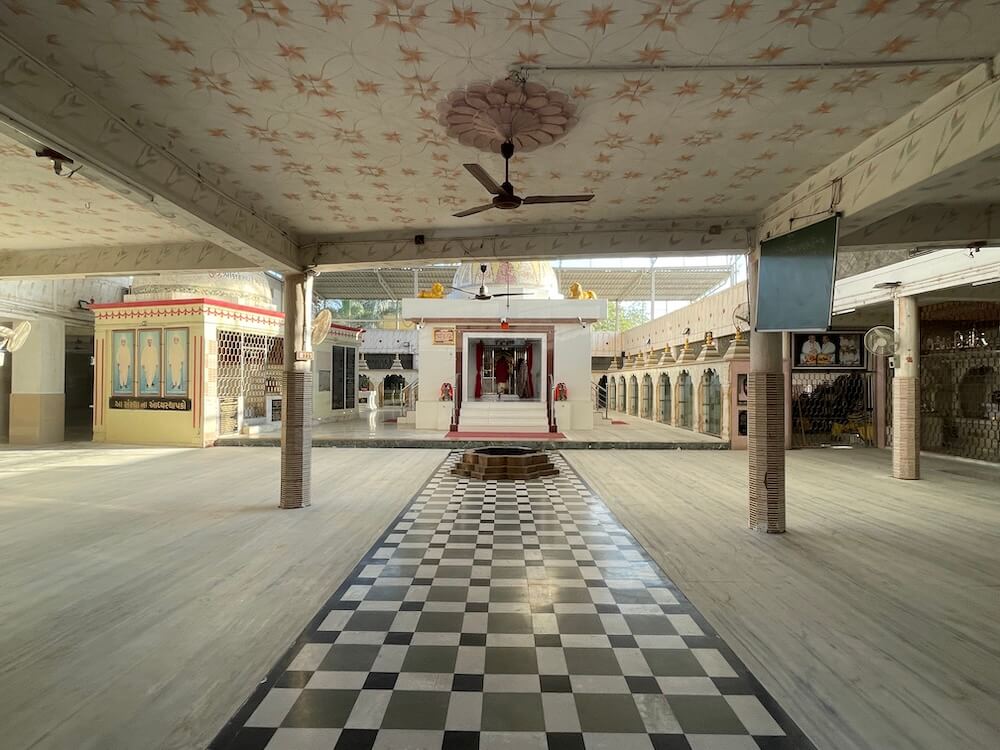
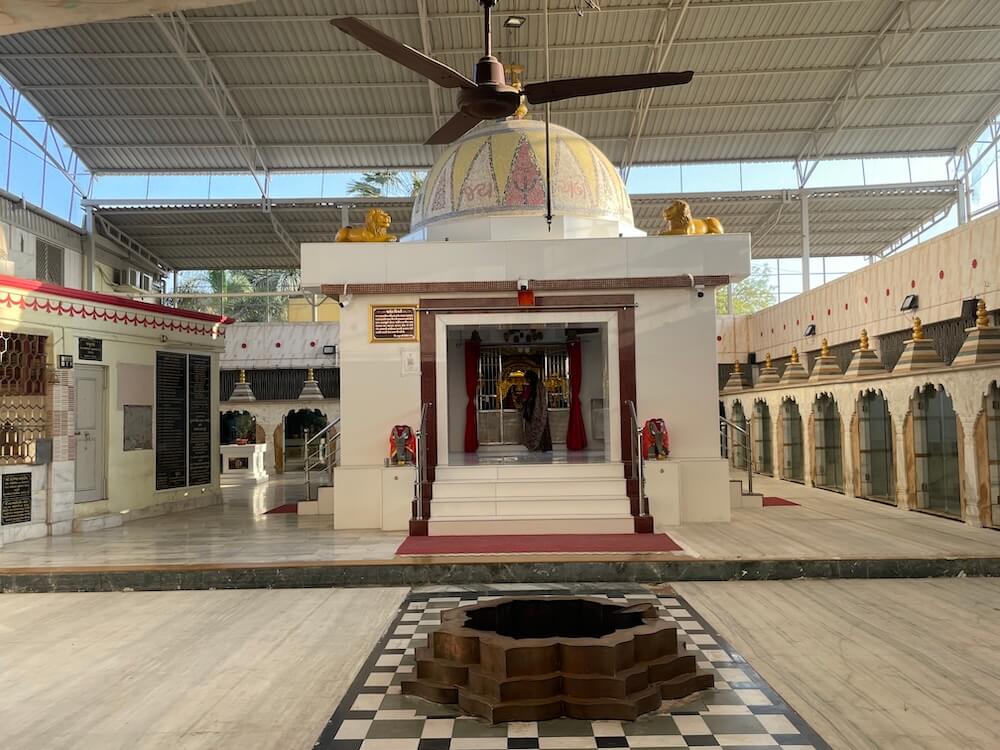 The construction of the main temple stands on a high plinth. One enters the ‘Sabhamandap’ (assembly hall) of the temple by ascending four steps. Sculptures of elephants grace both sides of this stairway. A sculpture of Lord Ganesha is featured on the ‘Lalat-bimba’ (the central point above the doorway) of the assembly hall entrance. There are two additional doors on the left and right sides of the assembly hall. Within the ‘Garbhagriha’ (sanctum sanctorum), the radiant and black stone idol of Bhadrakali Mata is seated upon a ‘Vajrapitha’. Beside her, her sister Baglamukhi, also known as Pitambaridevi, is enshrined. Above the sanctum sanctorum is a square-shaped, tapering ‘Shikhar’ (spire). Two lion sculptures are placed on the front side of the assembly hall roof. At the centre of the assembly hall roof is a large dome-shaped spire topped with a ‘Kalasha’ (pinnacle).
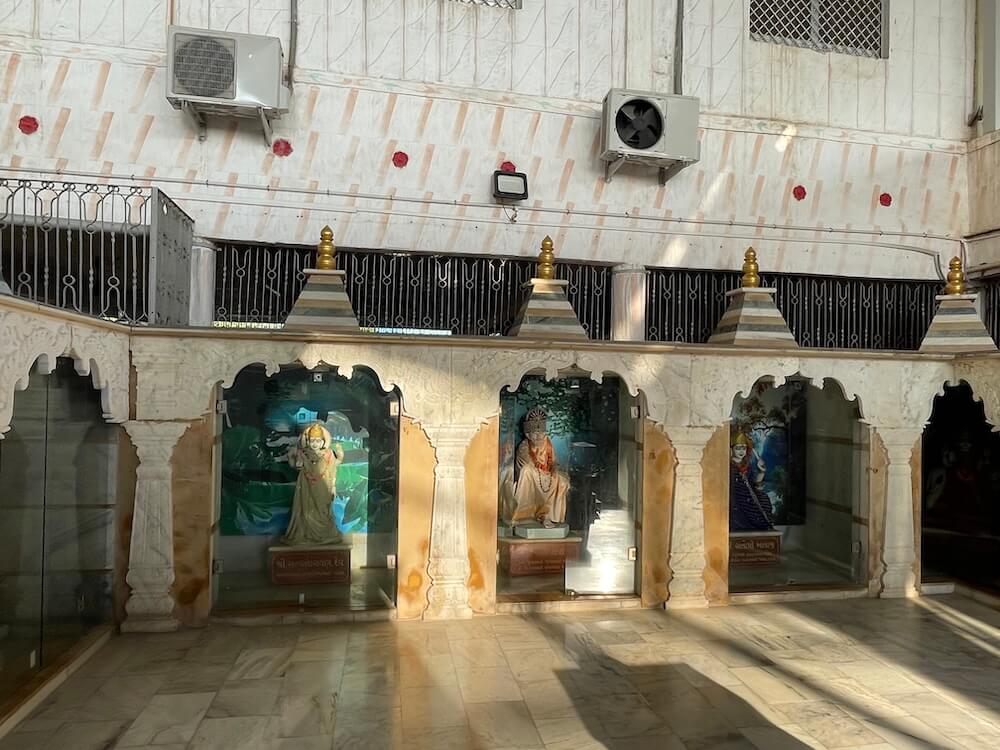
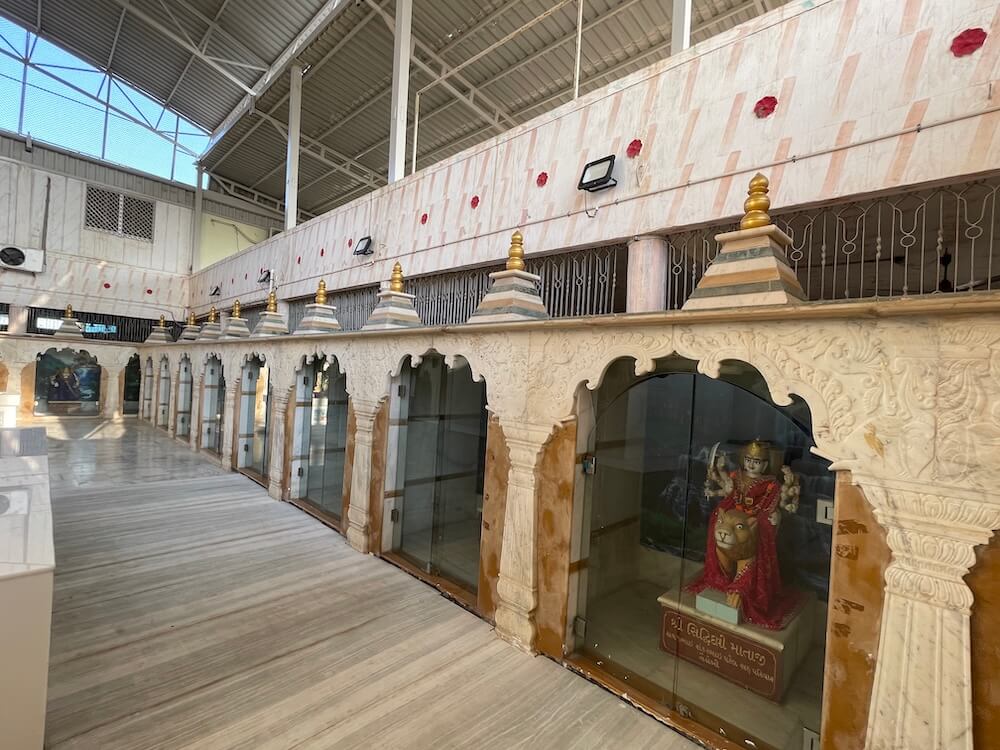
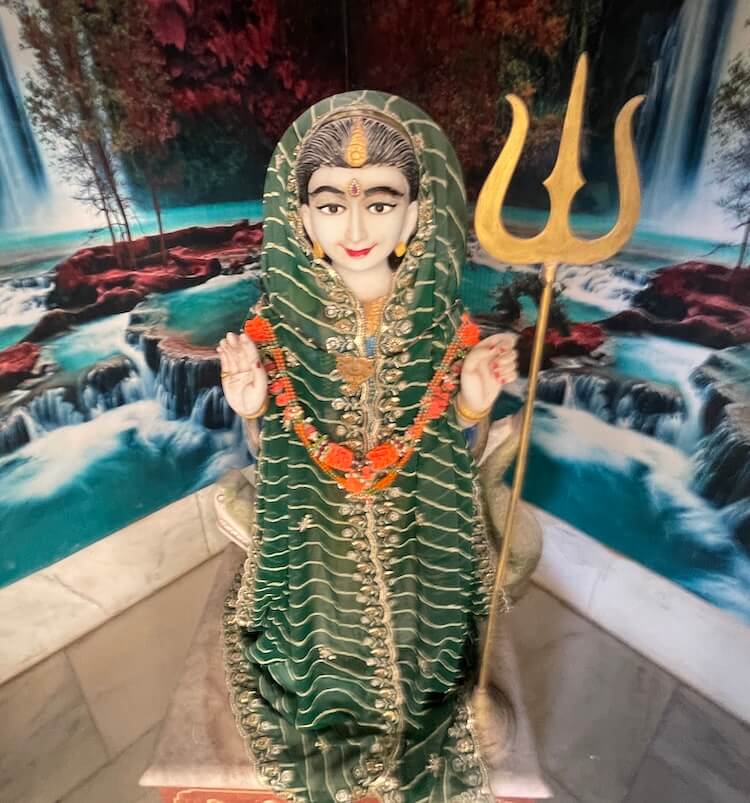
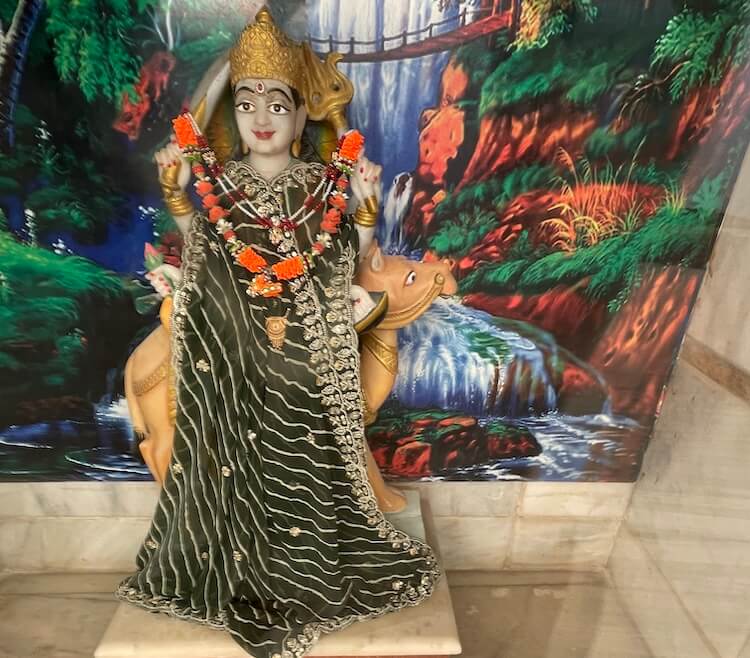
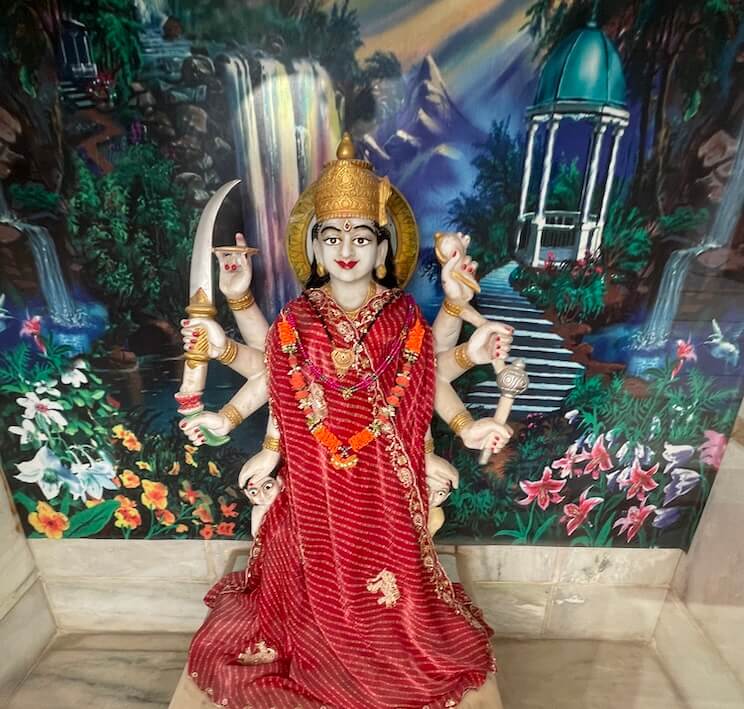
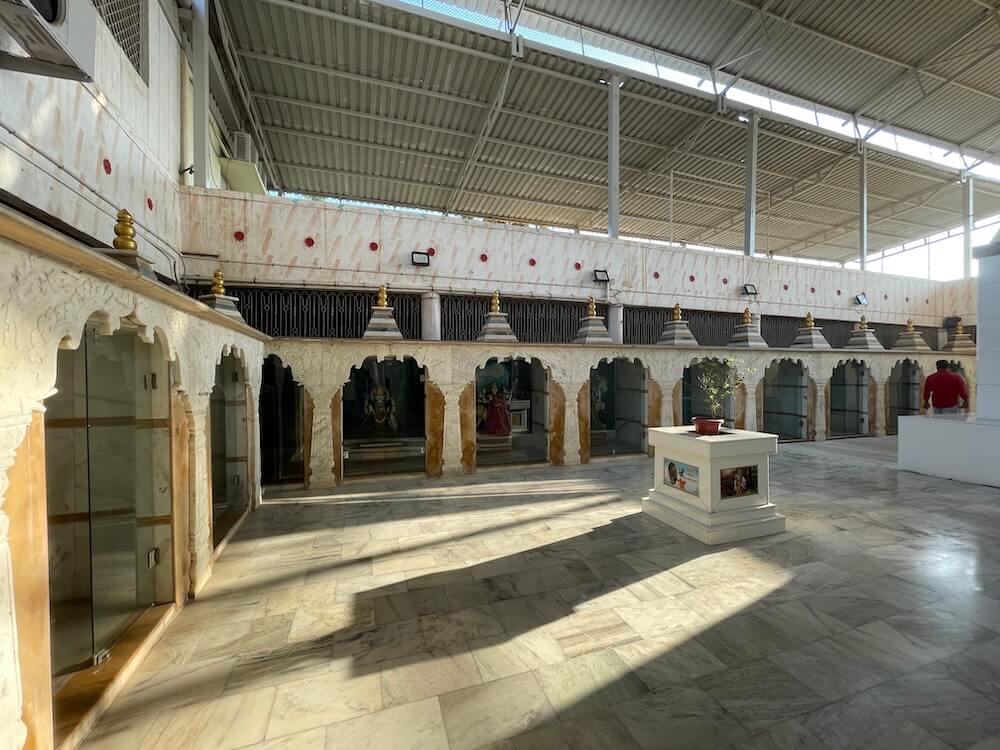 The layout of various small shrines adjacent to the fortified walls in the vast temple courtyard is executed in an extremely disciplined manner. This includes sacred idols of Ganesh, Gayatri Mata and Dattatreya, along with independent temples of Satyanarayan, Sai Baba and Santoshi Mata arranged in a single row. Within the row of smaller shrines, the idols of the ‘Navadurga’ (Shailputri, Brahmacharini, Chandraghanta, Kushmanda, Skandamata, Katyayani, Kaalratri, Mahagauri and Siddhidatri) capture the attention of devotees. Along with these small shrines, one can have Darshan (sacred viewing) of idols from various ‘Shaktipithas’ such as Khodiyar Mata, Ashapura Mata, Kukadavari Devi, Dashamata, Jivantika Devi, Punia Devi and Vaishno Devi.
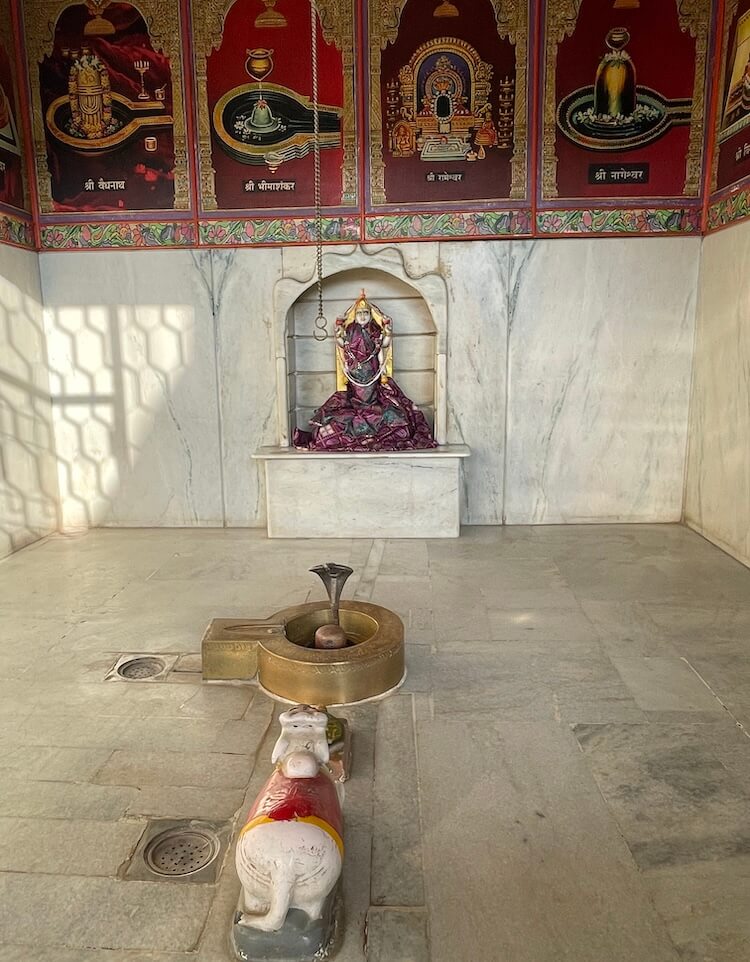
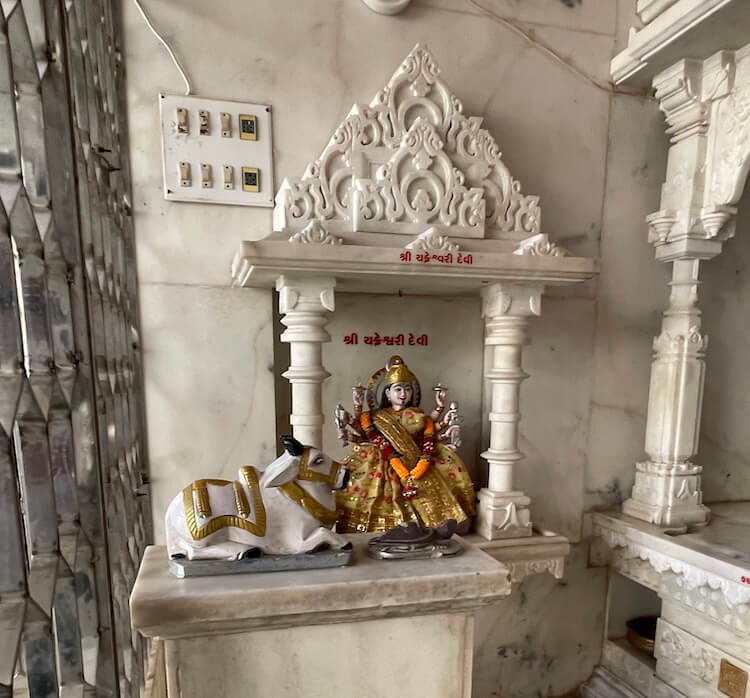
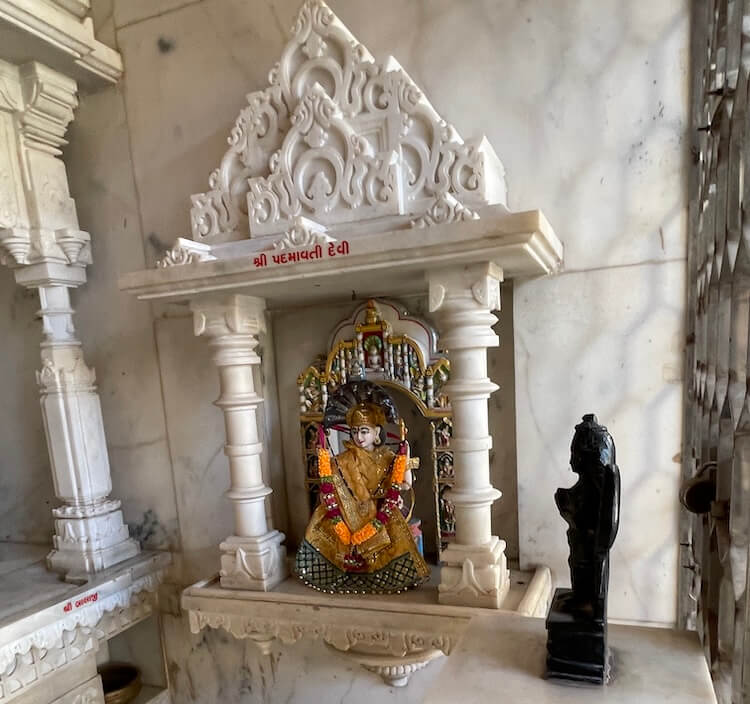
 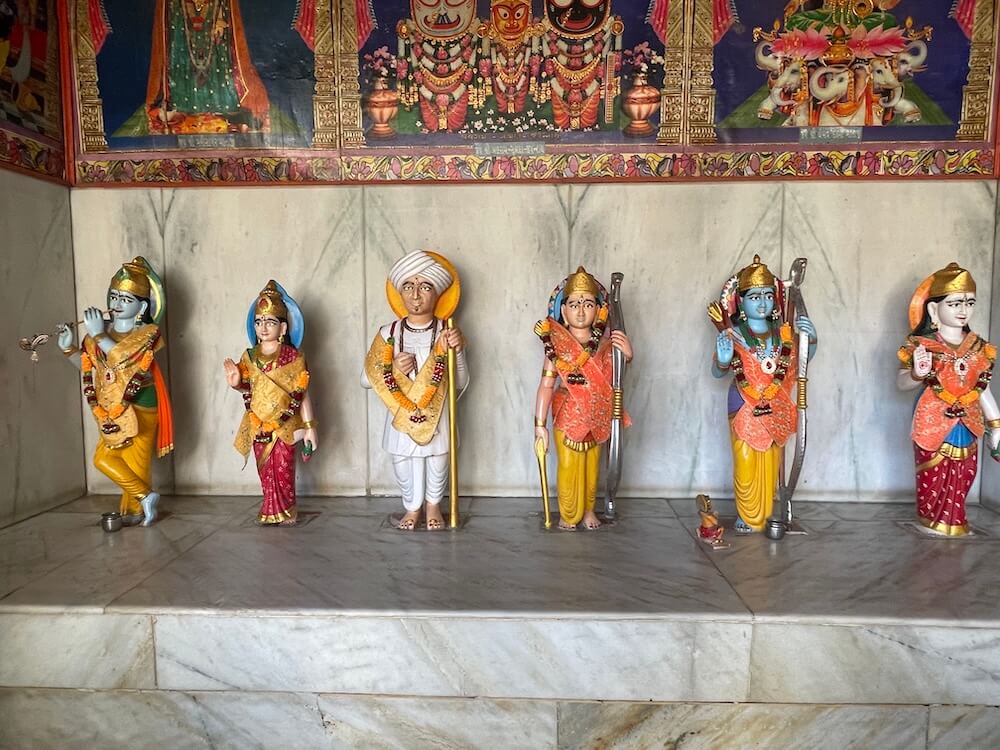 A shrine for Batuk Bhairav is also included in this area. In the second row of the courtyard, the idols of Chakreshwari Devi and a Shivpind (representation of Lord Shiva) are arranged in a specific sequence alongside Vardhman Bhagwan (the Tirthankar of Jainism), Shrinathji, Shri Krishna, Venkatesh Swami and Padmavati Devi. In the adjacent second temple, there are beautiful idols of Radha-Krishna, Jalaram Bappa and Shri Ram, Lakshman and Janaki. On the left side of the courtyard is a separate temple dedicated to Koteshwar Mahadev. At the centre of this temple is a Shivpind with an idol of Nandi nearby. An idol of Mother Parvati resides in a niche on the wall behind the ‘Pind’. A well-equipped and semi-open hall has been constructed in this courtyard for various cultural and religious programmes.
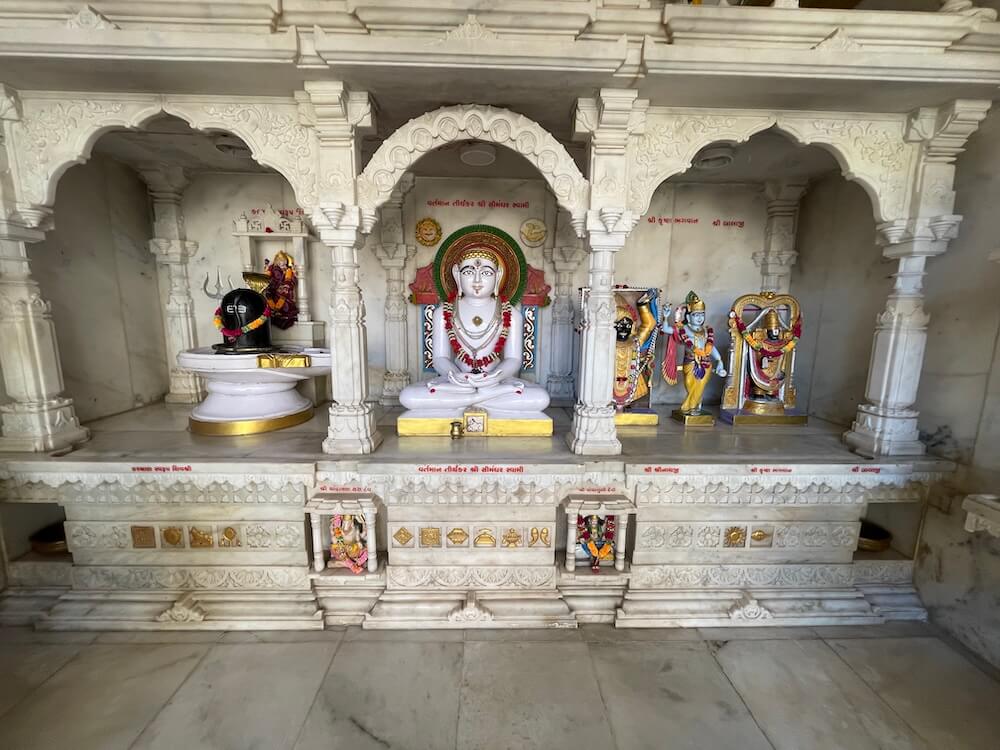 Various festivals are celebrated throughout the year at the Bhadrakali Mata Temple. The fourteenth day of the bright half of the month of Margashirsha is celebrated here with great enthusiasm as the ‘Prakat Din’ (Manifestation Day) of the Mother and this special day is locally referred to as ‘Moti Ujani’. Grand Havans (fire rituals) are organised in the temple three times a year : on Margashirsha Shuddha Chaturdashi, Shravan Shuddha Ashtami and Ashvin Shuddha Ashtami. The main Havan held on the Chaturdashi is particularly unique. During the final offering (Purnahuti), a continuous stream of ghee is poured into the sacrificial pit. A long-standing ancient tradition is preserved here, where the breaking of an earthen pot into the pit due to the intense heat of the blazing flames is used to predict the happiness and prosperity of the village for the coming period.
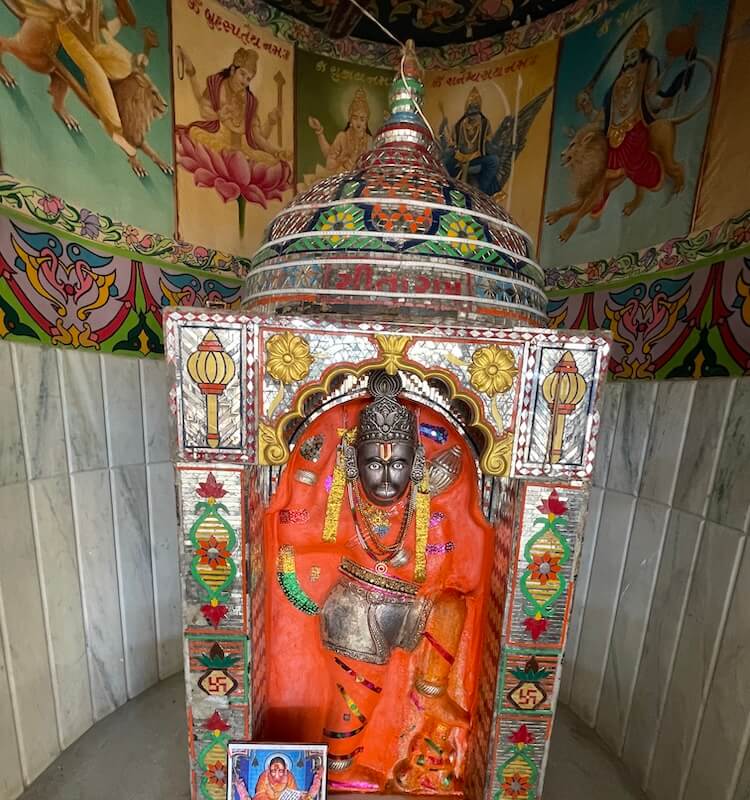 During the periods of Chaitra and Sharadiya Navratri, the entire temple complex is illuminated with lights. Thousands of devotees from the surrounding areas throng for the Darshan of the Mother during these nine days. The ‘Kanya Pujan’ (worshipping of young girls) held on the eighth day of Navratri is the main attraction of this festival. In this ritual, young girls are worshipped with great devotion as manifestations of the Goddess. Devotees fulfil their vows by offering sarees, ‘Chunaris’ and ‘Saubhagya Alankars’ (symbols of marital auspiciousness) to the Goddess. Thirteen Garba songs based on the ‘Chandi Charitra’, composed by the selfless devotee Revashankarbhai Tolakia of Khambhat, are still sung here with great devotion during the Navratri period.
The position of this temple is of utmost importance in the social life of Bhadran village. It is a local tradition for newlywed couples to seek the blessings of the Mother before beginning their married life. The ‘Pagalgadi’ ritual, where a child’s step is placed at the feet of the Goddess for their bright future, is performed here with great faith. Citizens going abroad for education or employment and residents returning safely from there first bow at the feet of Bhadrakali Mata to express their gratitude.
Useful Information
- Located at 27 km from Anand city
- ST bus facility available from Anand
- Private vehicles can reach the parking lot in front of the temple
- No accommodation or breakfast facilities available within the premises
- Contact: Temple Office, Mob. 98255 94917, 99250 90122
भद्रकाली माता मंदिर
भद्रन, ताल. आनंद, जिला. आनंद
मंदिरे
Temples
मंदिर
-
भीमनाथ महादेव मंदिर लिंबळी, ता. सोजित्रा, जि. आनंद
अधिक माहितीBhimnath Mahadev Temple Limbali, Tal. Sojitra, Dist. Anand
View Detailsभीमनाथ महादेव मंदिर लिम्बाली, ताल. सोजित्रा, जिला. आनंद
विवरण देखें -
मेलडी माता मंदिर मालताज, ता. सोजित्रा, जि. आनंद
अधिक माहितीMeldi Mata Temple Malataj, Tal. Sojitra, Dist. Anand
View Detailsमेलडी माता मंदिर मालताज, ताल. सोजित्रा, जिला. आनंद
विवरण देखें -
चंद्रमौलेश्वर महादेव मंदिर उमरेठ, ता. उमरेठ, जि. आनंद
अधिक माहितीChandramouleshwar Mahadev Temple Umreth, Tal. Umreth, Dist. Anand
View Detailsचंद्रमौलेश्वर महादेव मंदिर उमरेठ, तहसील उमरेठ, जिला आनंद
विवरण देखें