
बंगंगेश्वर महादेव मंदिर
वाघवडी, ता. खेरालू, जिल्हा मेहसाणा
Bangangeshwar Mahadev Temple
Vaghavadi, Tal. Kheralu, Dist. Mehsana
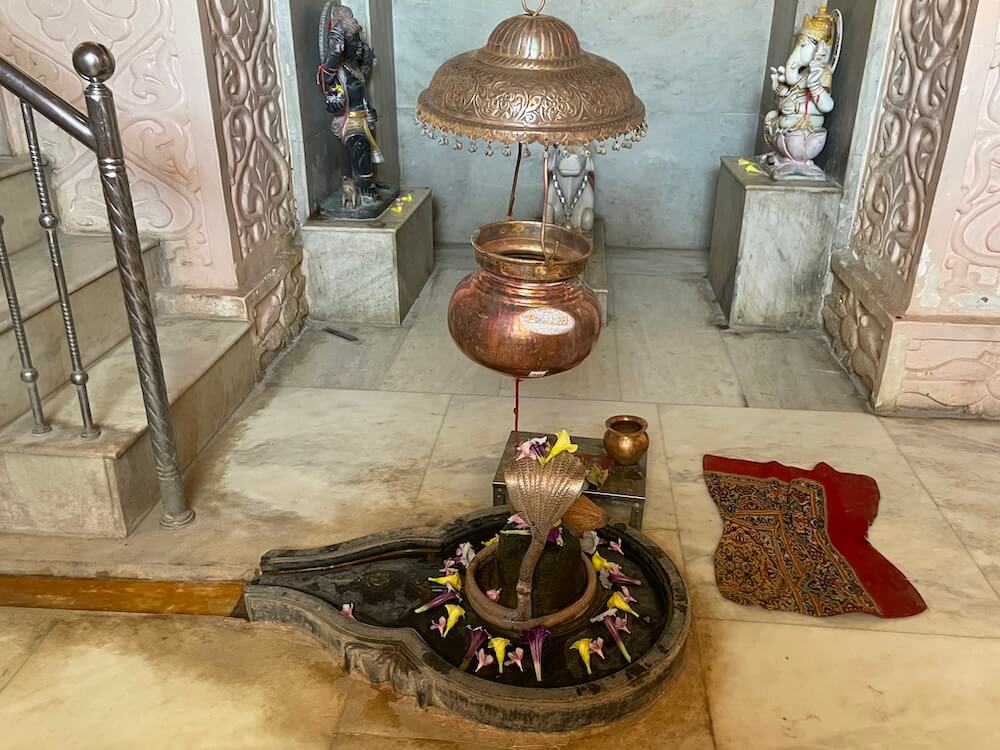 Situated within the boundaries of Vaghavadi village, the ancient temple of Bangangeshwar Mahadev stands as a pre-eminent centre of faith for local devotees. The defining characteristic of this sacred site is the rare ‘Chaturmukhi’ (four-faced) Shivalinga, a marvel seldom encountered amongst the shrines of this country. It is the firm conviction of the faithful that this Shivalinga was established by the Pandavas during their period of exile in incognito. Nestled in the embrace of nature, this temple has remained a sanctuary for ascetic sages since antiquity. Numerous mendicants have resided within these precincts, engaging in prolonged penance. Stone ‘Samadhis’ (memorial shrines) preserved within the temple courtyard serve as enduring testaments to their spiritual legacy.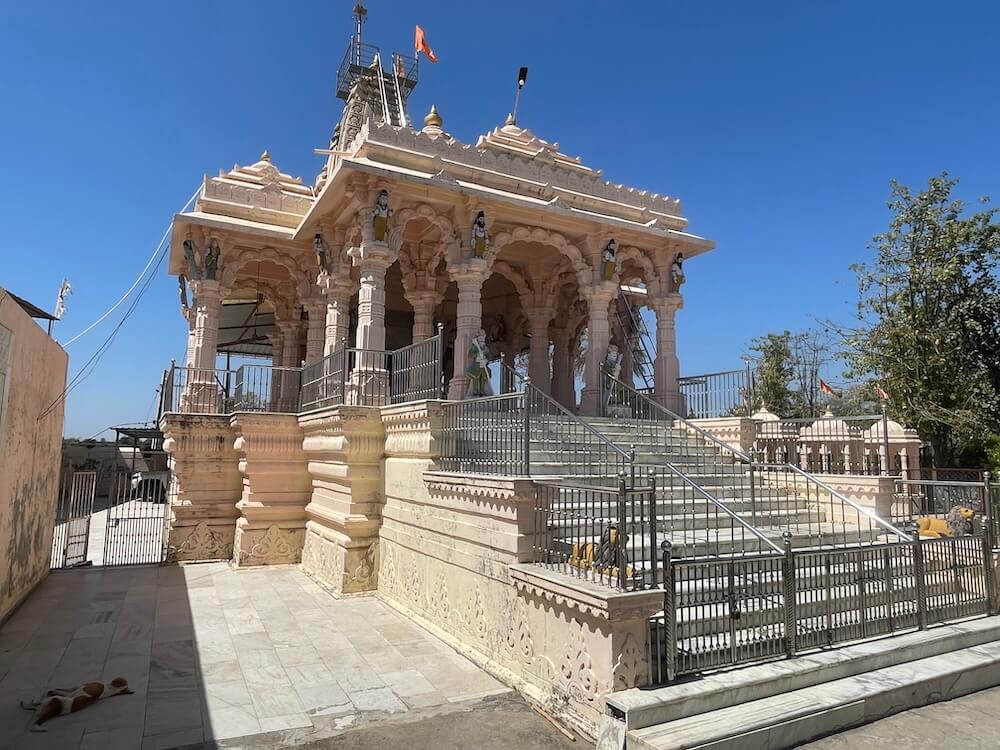
The history of Bangangeshwar Mahadev is inextricably linked to the Mahabharata era. During their ‘Agyatvas’ (exile in disguise), the Pandavas resided in this region for a time, during which the surrounding areas suffered a severe scarcity of potable water. The Pandavas had brought several cows with them and it became imperative to quench their thirst. At that moment, Arjuna withdrew an arrow from his quiver and struck the earth with formidable strength. At the very spot where the arrow pierced the ground, a stream of water burst forth, marking the source of a river (considered a tributary of the Rupen River). Simultaneously, a self-manifested ‘Swayambhu’ Shivalinga appeared near this flow. As both the river and Mahadev manifested together due to Arjuna’s arrow, the Shivalinga acquired the name ‘Bangangeshwar Mahadev’. 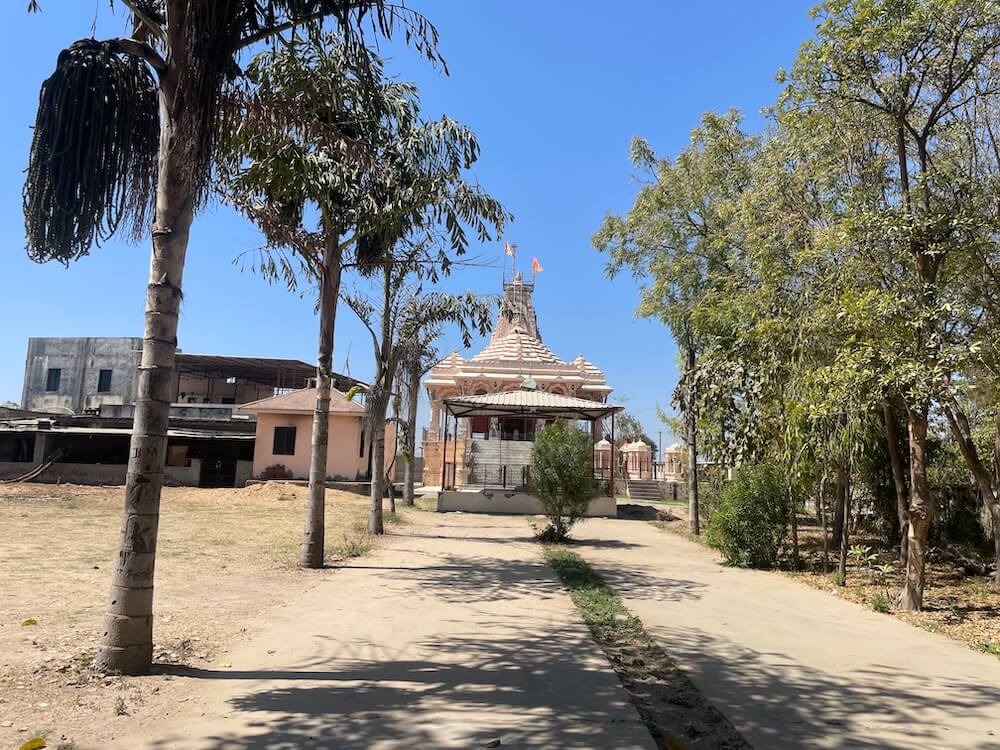 The Pandavas were the first to perform ritual worship of this Shivalinga, a tradition diligently upheld by local villagers to this day.
The ‘Chaturmukhi’ Shivalinga is regarded as a unique symbol of Lord Shiva’s cosmic and all-pervading form. It holds an exalted position within Indian architecture and Shaivite philosophy. According to the Shiva Purana and Shaiva Agamas, this Shivalinga represents the ‘Panchabrahma’ principle. Although four faces are visible to the naked eye, the uppermost portion of the Shivalinga is considered the fifth ‘Ishan’ face, representing the unmanifested sky or ether. Each of the four faces directed towards the cardinal points possesses distinct spiritual significance. The eastern face is known as ‘Tatpurush’, representing the element of air and mystical knowledge. 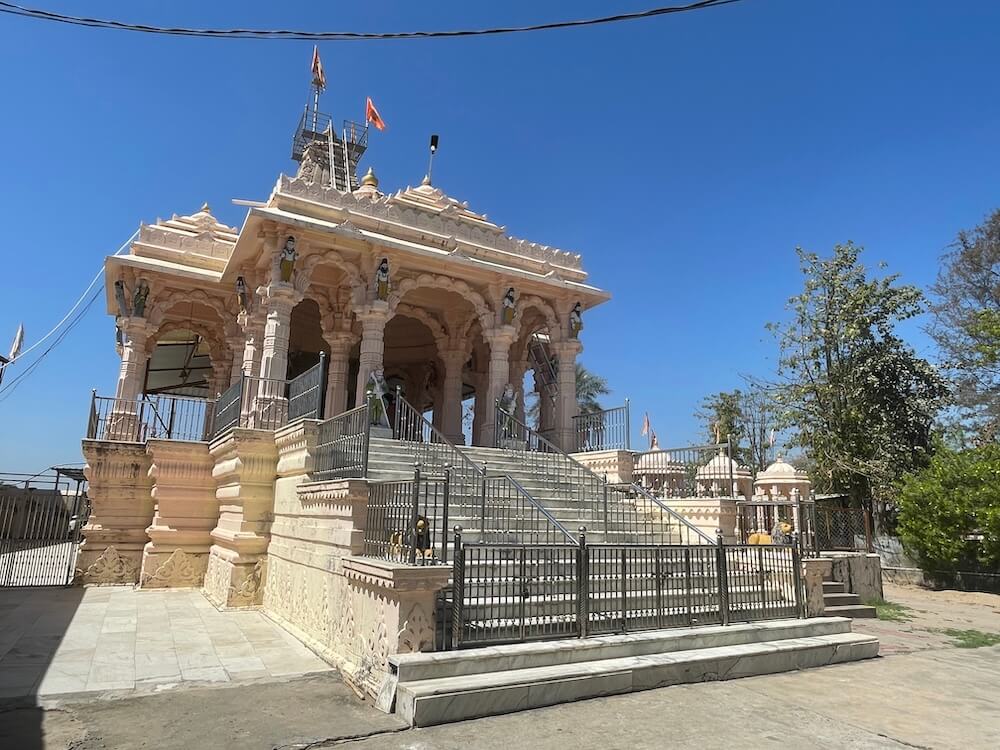 The western ‘Sadyojat’ face symbolises creation and the earth element, heralding new beginnings. The northern ‘Vamadev’ face represents the preservative aspect of Shiva and is associated with the water element, whilst the southern ‘Aghor’ face represents dissolution and the fire element, clearing obstacles to facilitate the path of rebirth.
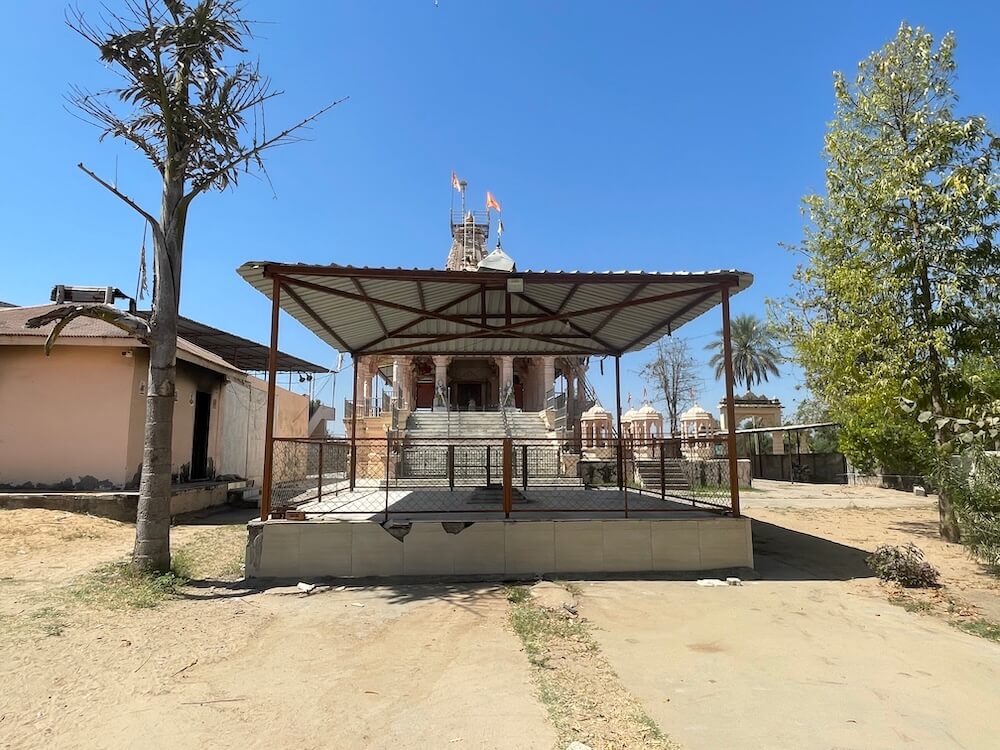
The Rupen River, which flows near the temple, eventually joins the main stream of the Sabarmati. During the monsoon, rising water levels previously caused floodwaters to reach the sanctum sanctorum of the old temple, leading to the gradual erosion of the structure. Recognising this, the villagers constructed a new temple a few years ago on ground slightly more elevated than the original site. Consequently, the shrine is now entirely secure from flooding.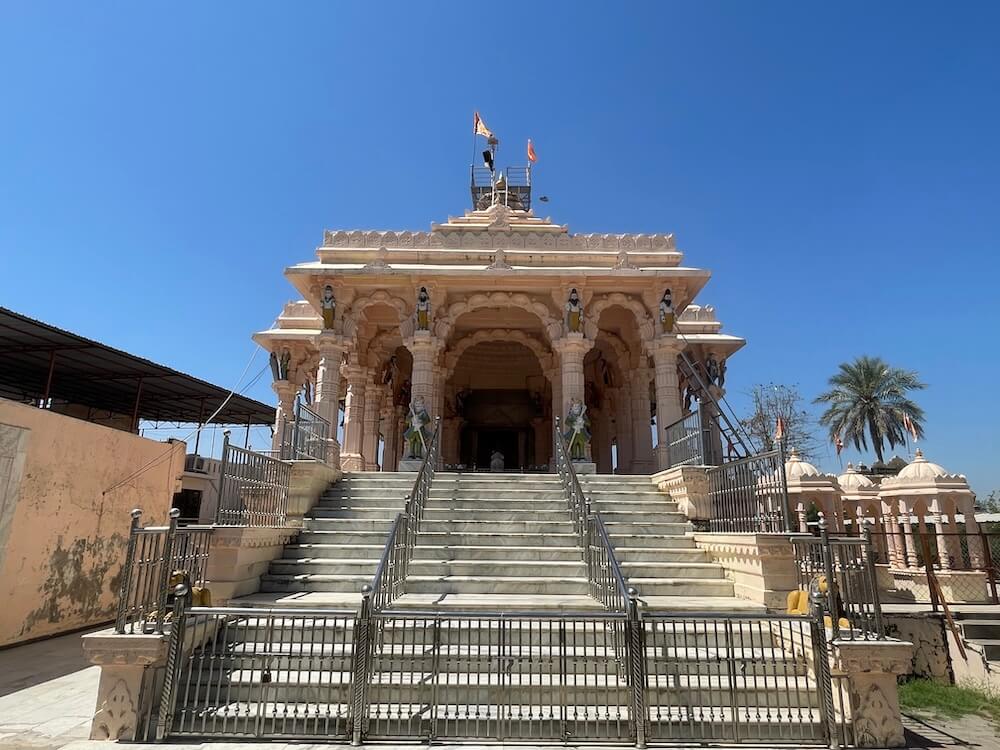
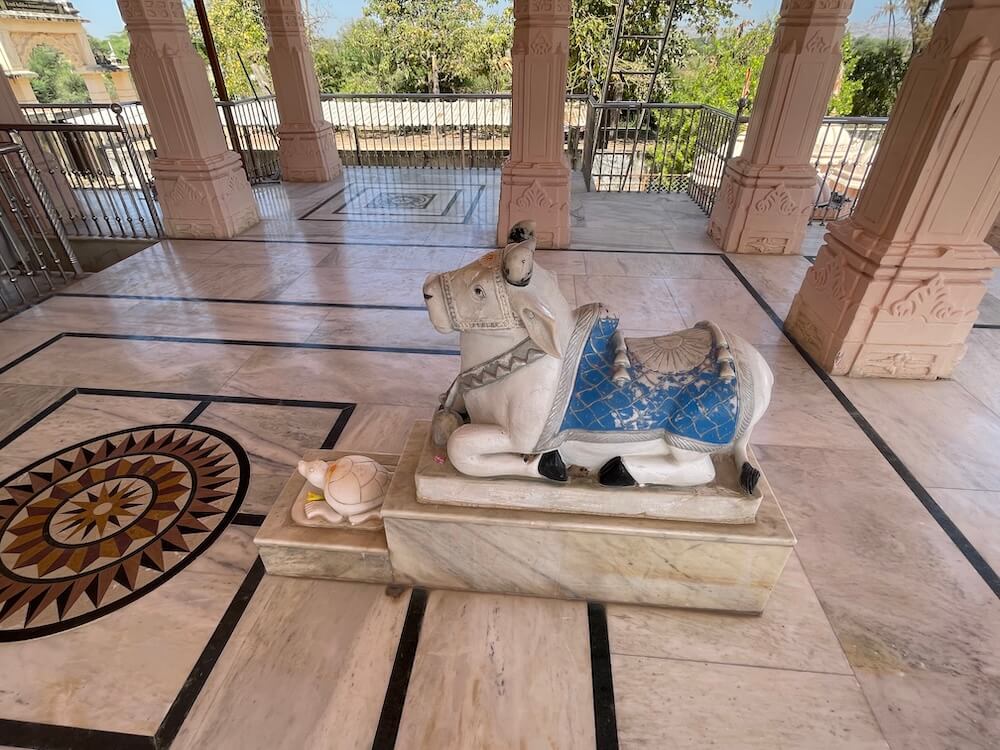
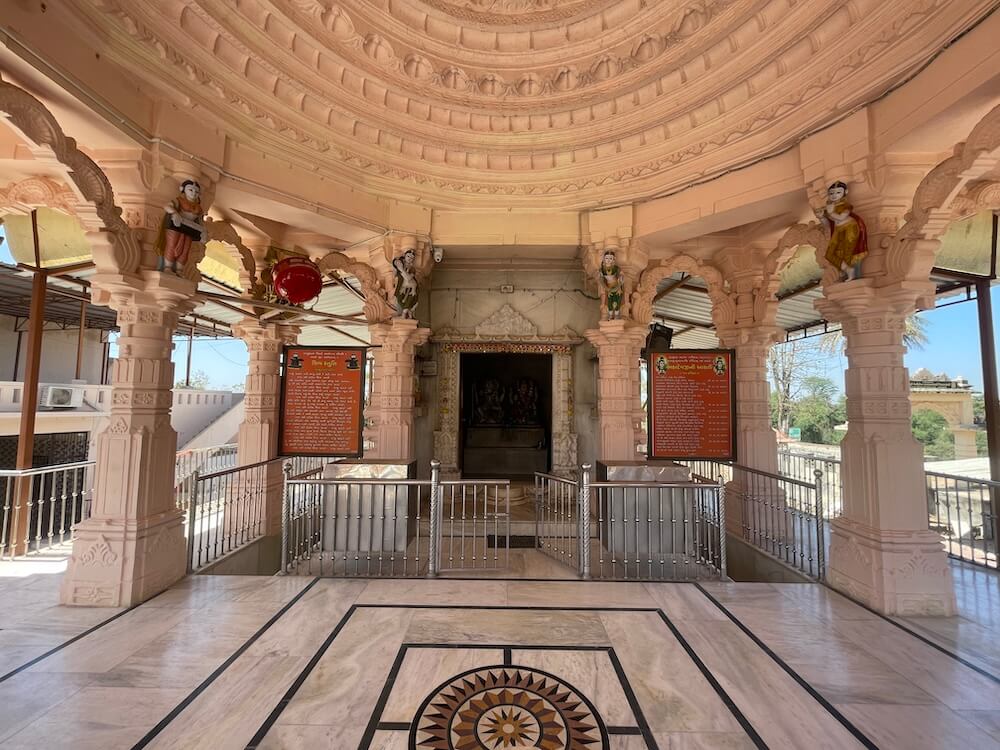
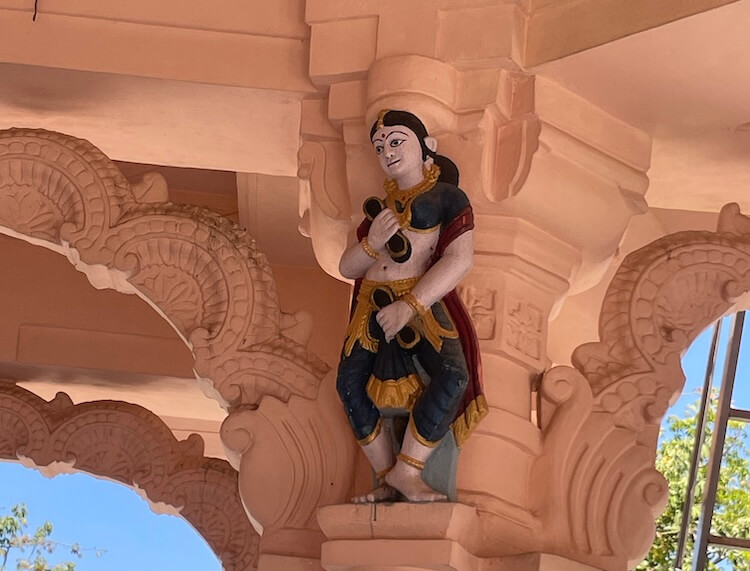
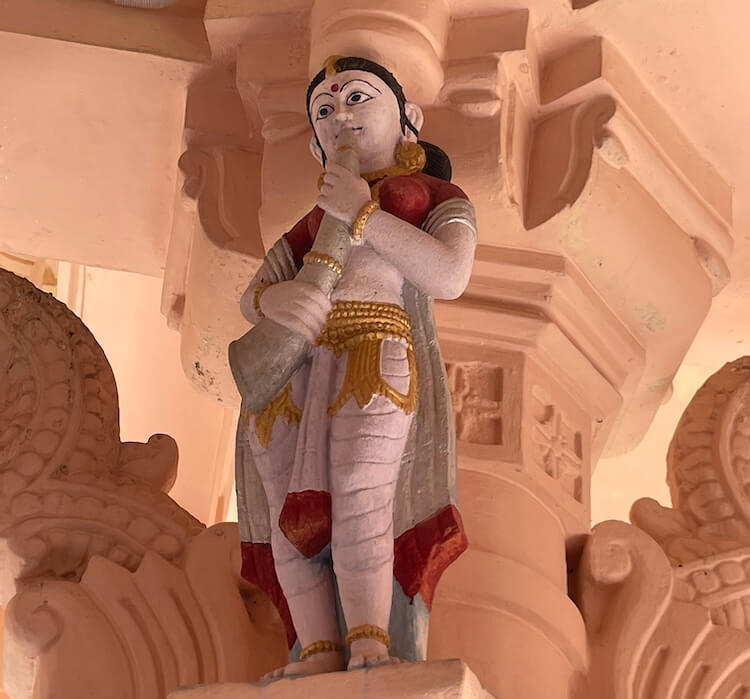
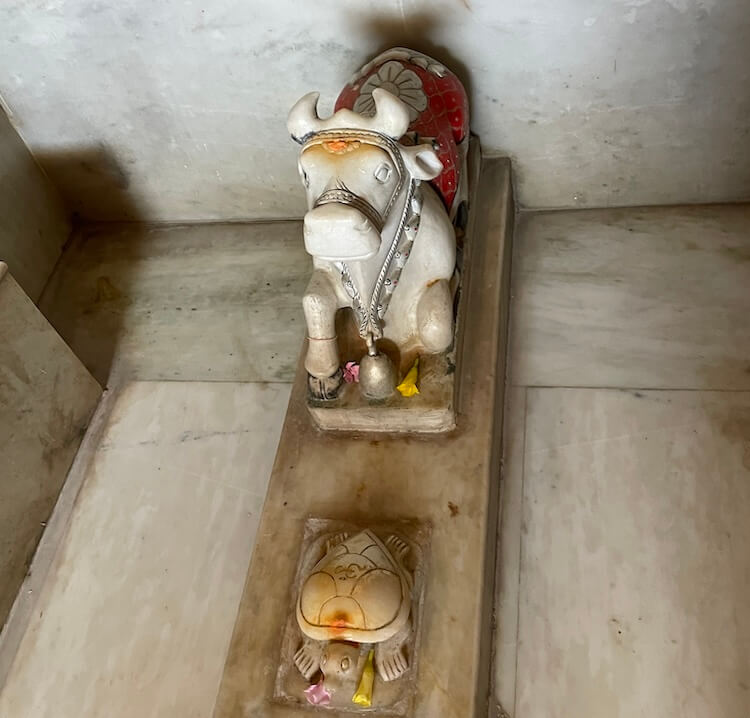
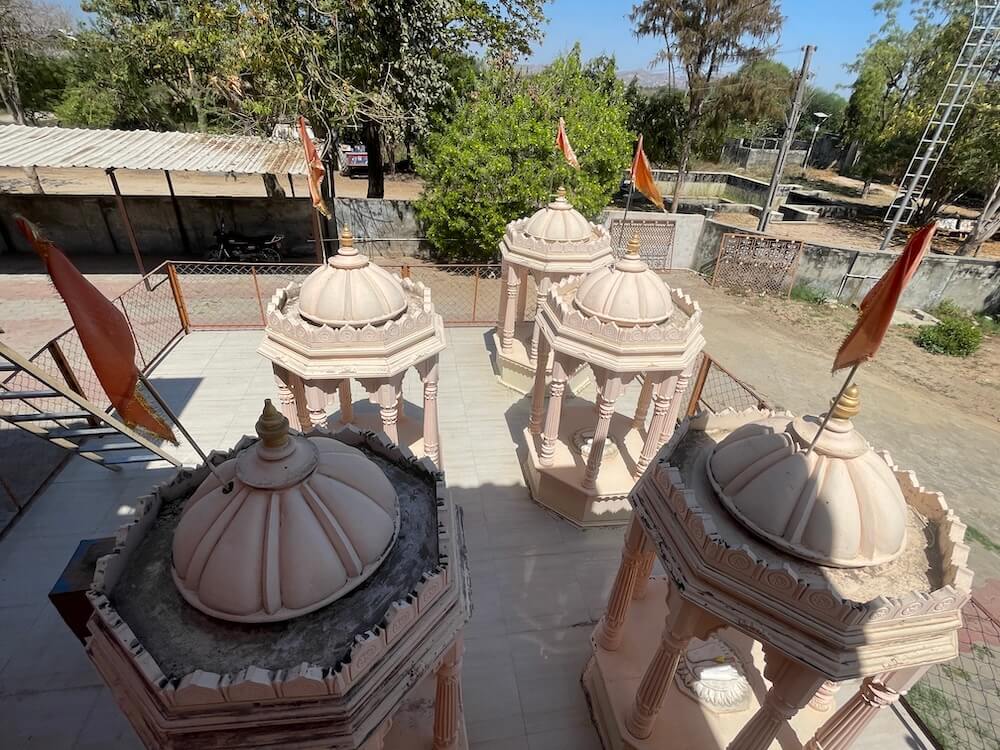
The temple is nestled within a picturesque environment on the outskirts of Kheralu. One enters the spacious courtyard through arches set within the surrounding fortifications. At the centre of the courtyard, atop a high ‘Jagati’ (plinth), stands the Bangangeshwar Mahadev temple, constructed in the Nagara architectural style. Seventeen steps lead from the courtyard to the ‘Mukhamandapa’ (entrance porch). At the base of these steps, lion sculptures stand on either side as symbols of protection. The architectural structure comprises the ‘Mukhamandapa’, ‘Sabhamandapa’ (assembly hall), ‘Ardhamandapa’, ‘Antarala’ (vestibule) and the ‘Garbhagriha’ (sanctum sanctorum). The entrance porch and assembly hall are semi-open in design. 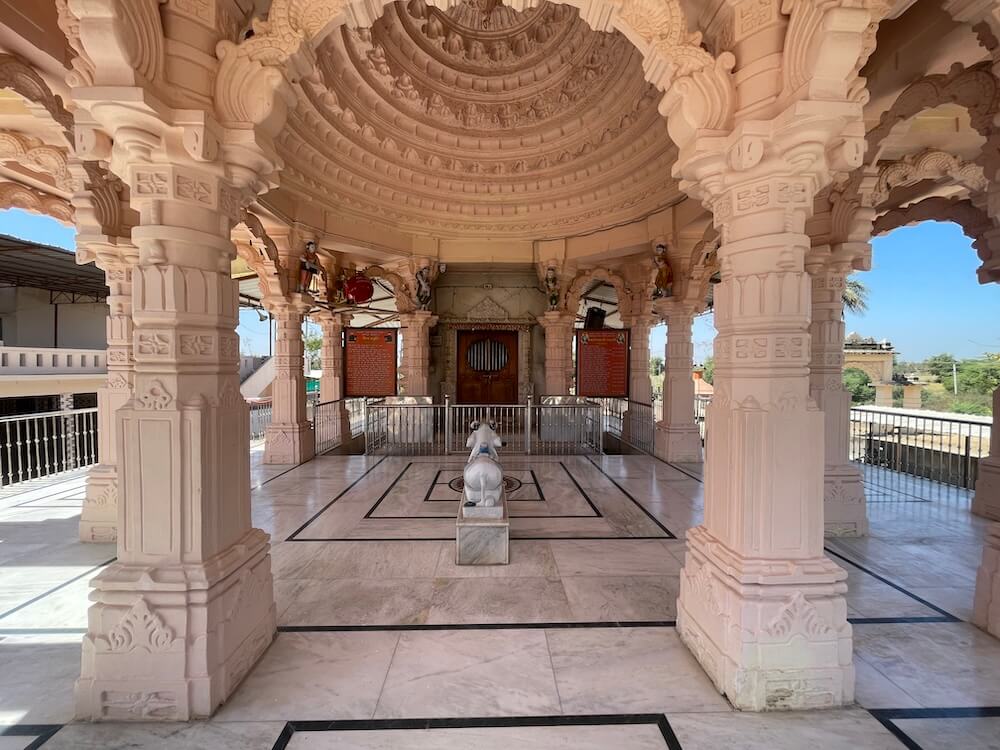 The temple columns are connected by scalloped arches and adorned with exquisite carvings. The upper sections of the pillars feature sculpted figures of sages and ‘Sursundaris’ (celestial beauties). The ceiling of the assembly hall is likewise decorated with attractive craftsmanship. In the centre of the hall, a marble statue of Nandi sits upon a pedestal, with a sculpture of a tortoise positioned before it.
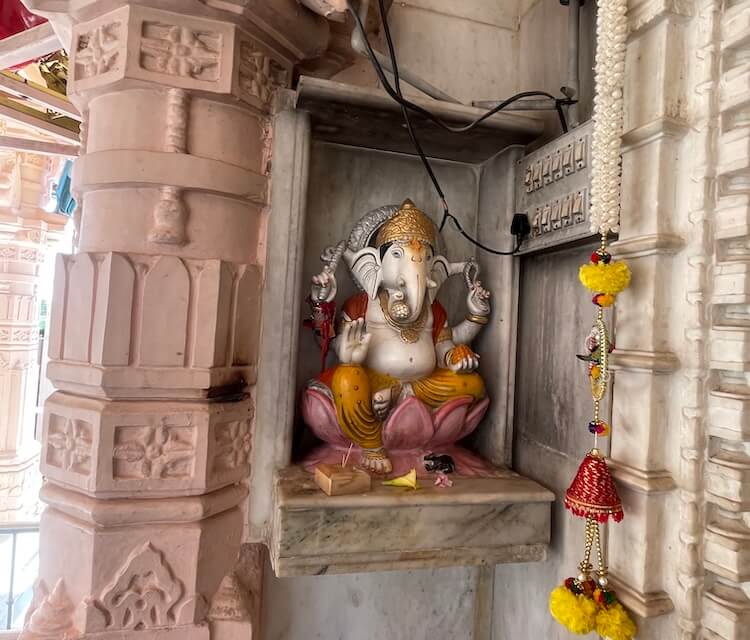
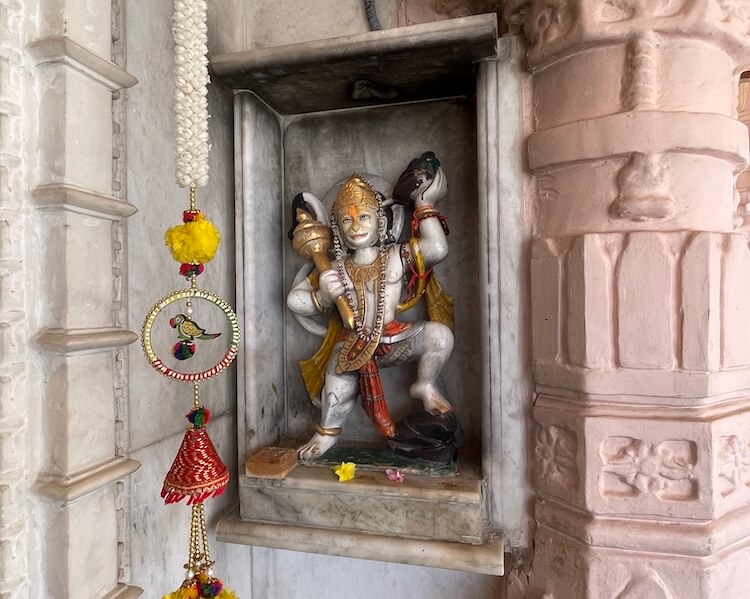
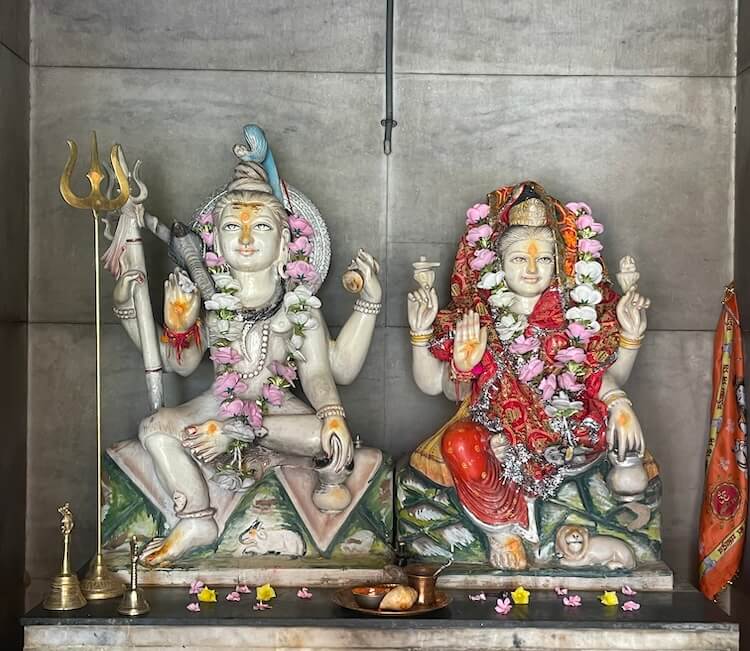
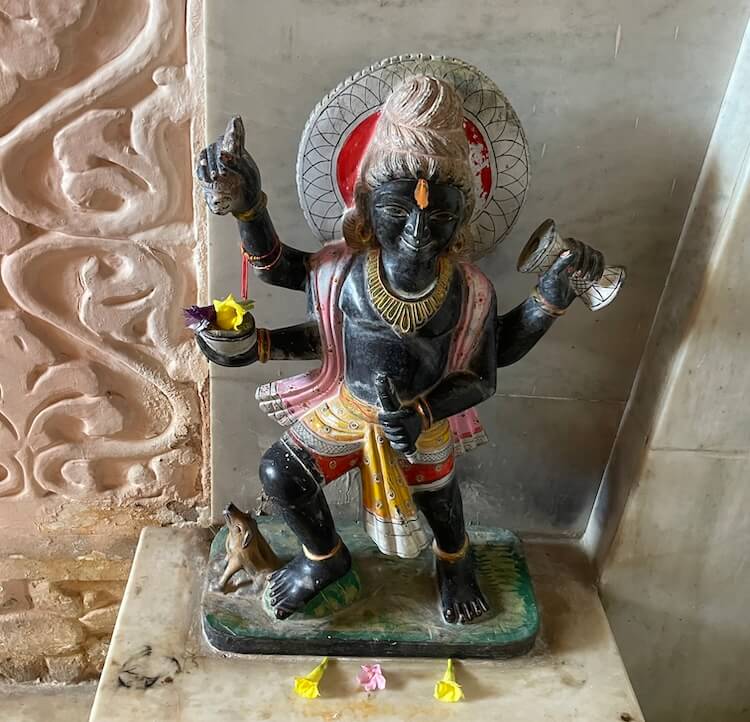
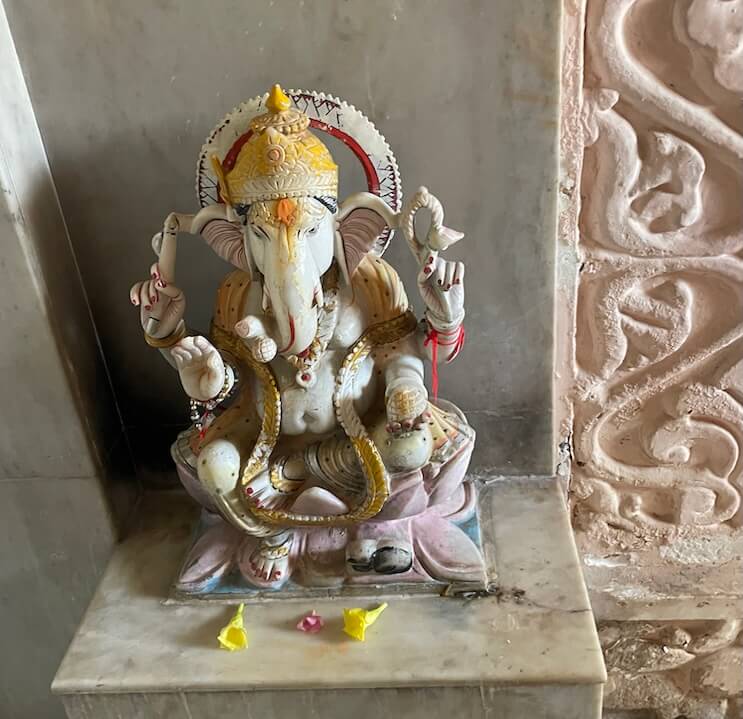
Sculptures of Ganesha and Hanuman reside within the ‘Devakoshtas’ (niches) in the walls of the ‘Antarala’. The doorframes of the sanctum sanctorum feature alluring patterns, further adorned with sculptures of doorkeepers and ‘Kirtimukhas’ at the base of the entrance. Within the upper sanctum, beautiful marble idols of Shiva and Parvati are enshrined upon a pedestal. To witness the principal Shivalinga, 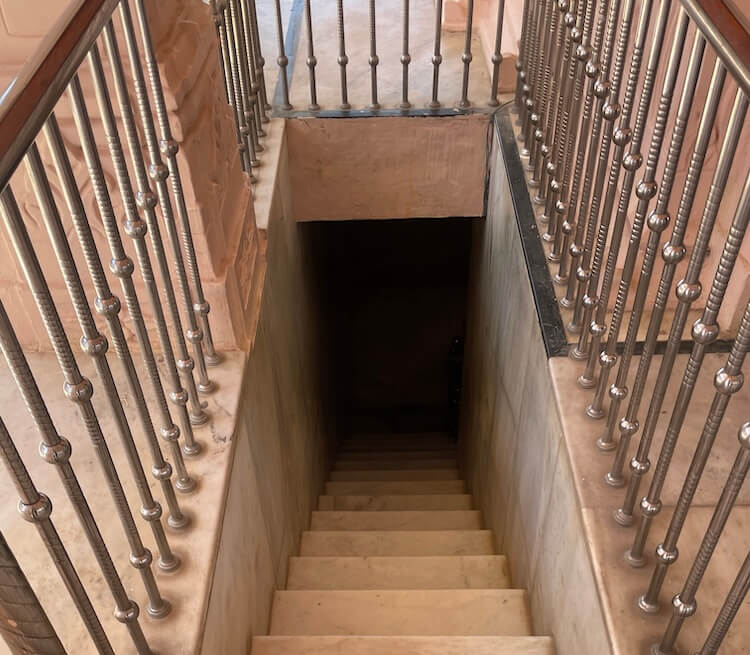 one must descend into the temple’s lower chamber. After descending a few steps, one enters the subterranean sanctum. This ancient Shivalinga is situated at the centre of this chamber within a large ‘Shalunka’ (base). An idol of Nandi faces the Shivalinga, flanked by pedestals bearing images of Ganesha and Kaal Bhairav. Near the rear wall of the shrine stands an idol of Mother Parvati. The tapering ‘Shikhara’ (spire) over the sanctum is carved with numerous miniature spires or ‘Urushringas’. The summit of the spire is crowned with a circular ‘Amalaka’ and a ‘Kalasha’ (finial). The entrance and assembly halls are topped with smaller, pyramid-like stepped roofs. Adjacent to the temple lies the ‘Banganga Kund’, the holy tank created by Arjuna’s arrow. Steps are provided for devotees to descend into the tank to perform religious rites. Furthermore, a ‘Yagnashala’ (sacrificial hall) is located near the temple steps. It is said that the ‘Dhuni’ (sacred fire) here was ignited many decades ago and has been kept burning perpetually ever since.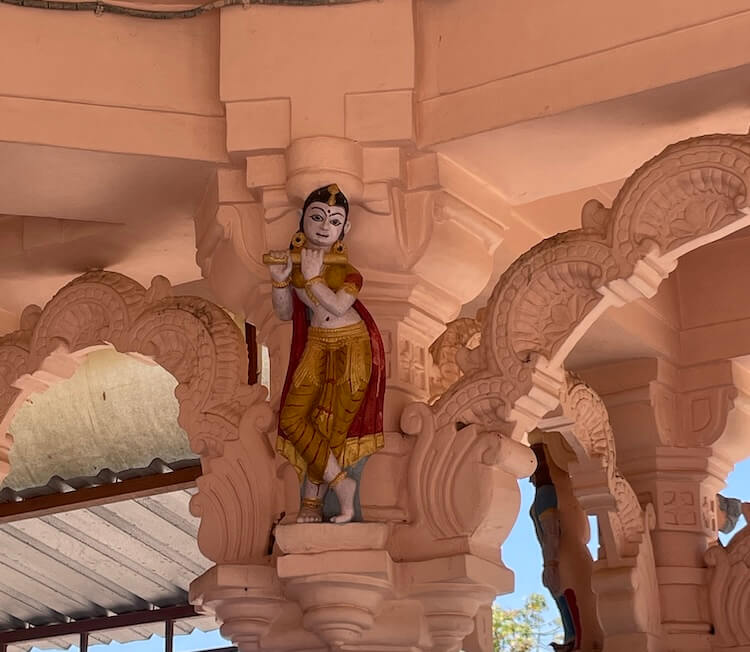
The daily administration and preservation of spiritual traditions are overseen by the saint-preceptors of the Valinath Akhada. The headquarter of the Valinath Akhada, a vital institution within the Shaivite sect, is located in Tarbh village, Mehsana district. In accordance with the Akhada’s tradition, a Chief Mahant is appointed to the Vaghavadi temple. These Mahants observe lifelong celibacy, residing in a separate room within the temple and being assisted by young initiates. The Akhada also operates an ‘Annakshetra’ (charitable kitchen) every year.
The temple follows a daily ritual of Aarti at dawn, ‘Mahanivedya’ (grand offering) to Mahadev at noon and ‘Sayam Aarti’ in the evening. Various festivals are celebrated with great fervour throughout the year. ‘Phalguna Shud Ekadashi’ is considered the most significant day for this temple, as it is believed to be the day the ‘Chaturmukhi’ Shivalinga first manifested. A large fair is organised in the temple precincts to mark this occasion. On the day of Mahashivratra, long queues of devotees form from five o’clock in the morning. Special ‘Hom-Havan’ (fire rituals) and religious ceremonies are organised on this day. The temple also sees a large influx of devotees every Monday in the month of Shravan. A special ‘Rudrabhishek’ is performed on the monthly Shivratra, using pure cow’s ghee, honey, curd, milk and sugar.
Useful Information
- Located at 14 km from Kheralu and 71 km from Mehsana.
- GSRTC buses and private vehicle services are available from Kheralu town.
- Private vehicles can reach the temple directly.
- Residential and breakfast facilities are available nearby.
बंगंगेश्वर महादेव मंदिर
वाघावाड़ी, ताल. खेरालू, जिला. मेहसाणा
मंदिरे
Temples
मंदिर
-
वैजनाथ महादेव मंदिर महादेवपुरा (गावडा), ता. विजापूर, जि. मेहसाणा
अधिक माहितीVaijnath Mahadev Temple Mahadevpura (Gavada), Tal. Vijapur, Dist. Mehsana
View Detailsवैजनाथ महादेव मंदिर महादेवपुरा (गावड़ा), ताल. विजापुर, जिला. मेहसाणा
विवरण देखें -
वैजनाथ महादेव मंदिर सोखडा, तालुका विजापूर, जिल्हा मेहसाणा
अधिक माहितीVaijanath Mahadev Temple Sokhada, Taluka Vijapur, District Mehsana
View Detailsवैजनाथ महादेव मंदिर सोखाडा, तालुका विजापुर, जिला मेहसाणा
विवरण देखें -
काशी विश्वनाथ महादेव मंदिर मेहसाणा, जि. मेहसाणा
अधिक माहितीKashi Vishwanath Mahadev Temple Mehsana, Dist. Mehsana
View Detailsकाशी विश्वनाथ महादेव मंदिर मेहसाणा, जिला. मेहसाणा
विवरण देखें