
बहुचरा माता मंदिर
राधनपूर रोड, पाचोट, ता. मेहसाणा, जि. मेहसाणा
Bahuchara Mata Temple
Radhanpur Road, Panchot, Tal. Mehsana, Dist. Mehsana
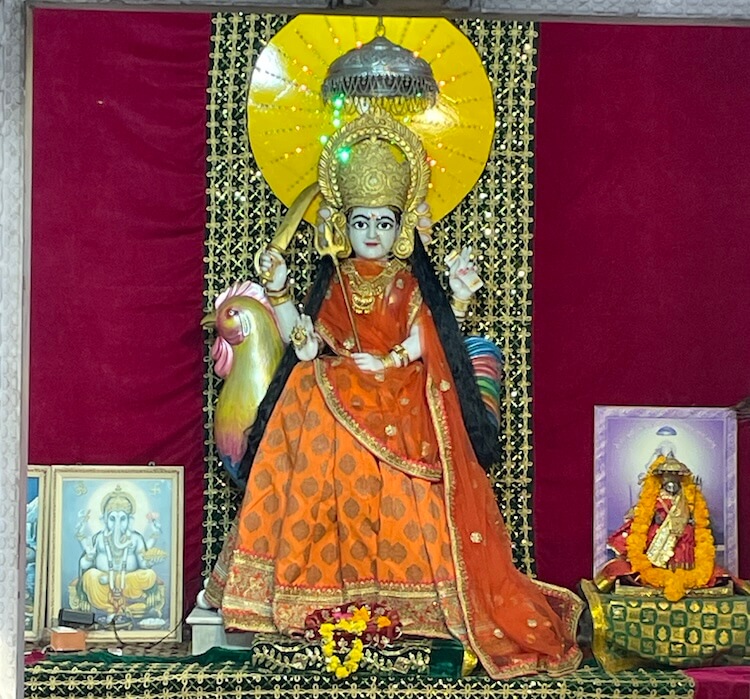 Situated in the village of Panchot, on Radhanpur Road in Mehsana district, the Bahuchara Mata Temple stands as an awakened and sacred centre of worship for Adyashakti. Revered as a symbol of strength, courage and auspiciousness, the goddess Bahuchara commands unwavering devotion among her followers. In particular, the transgender community, known locally as ‘Pavaiya’, regards her as their principal guardian and presiding deity. Within the court of this compassionate mother, who is believed to respond swiftly to the calls of her devotees, an ancient custom prevails: upon the fulfilment of a vow, devotees offer small metallic replicas of various body parts, known as ‘angi’, as a gesture of gratitude.
The history of Mehsana city and its surrounding region stretches back to the fourteenth century. There are two legends connected with Mehsana. According to one, 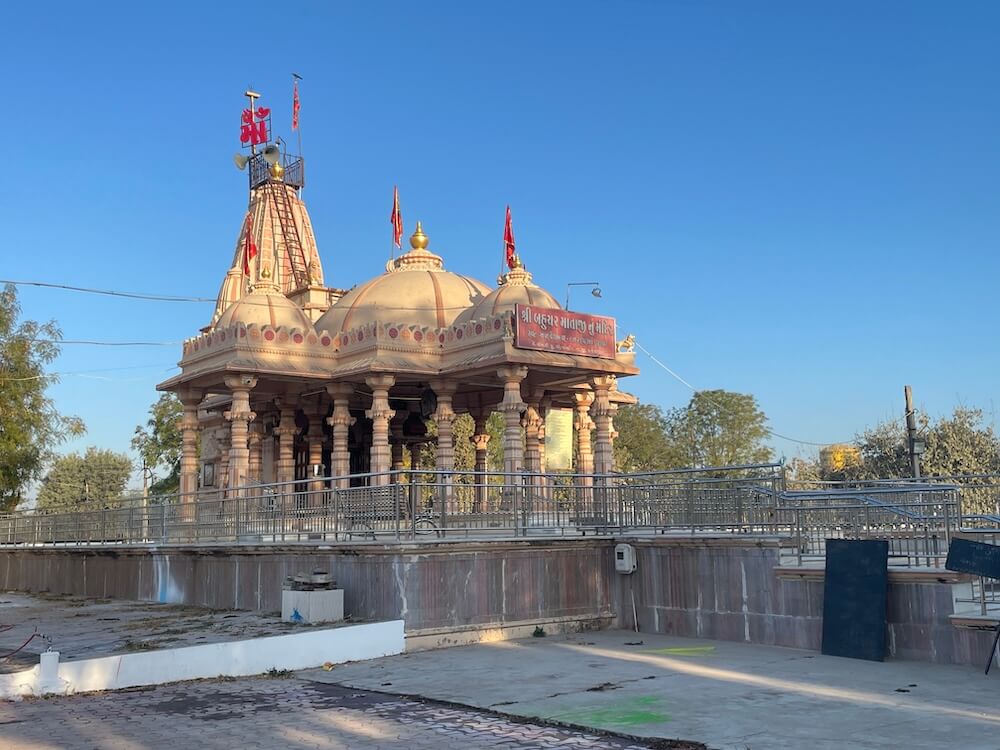 the town is believed to have been founded in the Vikram Samvat 1375 (1319 AD) by one Mesaji Chavda. According to the other, it was founded on Bhadrava Sud 10 of the Vikram Samvat 1414 (1358 AD). In any case, the town seems to have been named after its founder, Mesaji, a ruler in the Chavda dynasty. From the eighteenth century until India’s independence in 1947, the entire region remained under the administrative control of the Gaekwad royal family of Baroda. As noted in the ‘Gazetteer of India’, the region bears the strong imprint of Rajput, Solanki and Gaekwad rule. It was during this historical period that the worship of Bahuchara Devi received considerable impetus. The Solanki Rajputs, Charans, Bhils and the transgender community all venerate the goddess as their Kuldevi. The emblem of a rooster, the sacred vehicle of the goddess, was inscribed upon the banner of the Solanki rulers.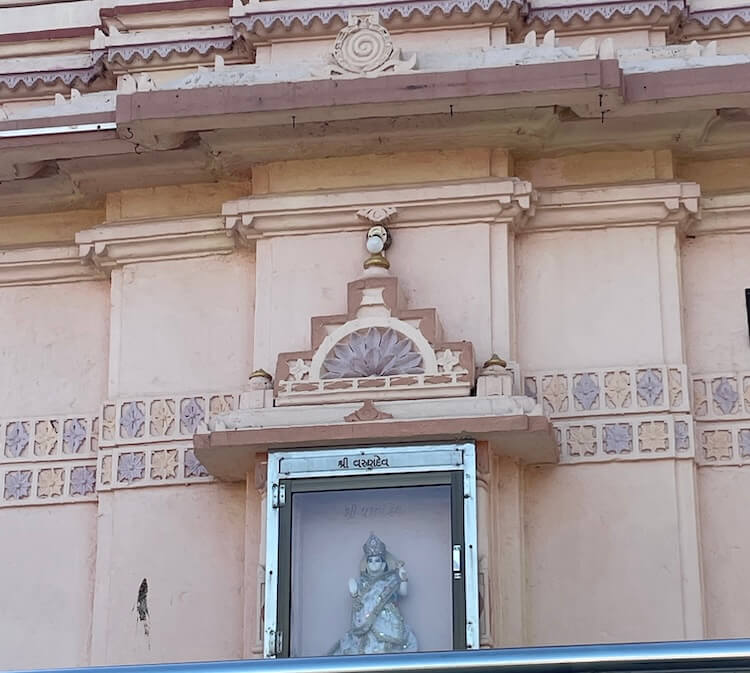
Religious and spiritual traditions further identify Bahuchara Devi as a manifestation of Hinglaj Mata of Balochistan, Pakistan and as an incarnation of Bala Tripura Sundari. The origin of Bahuchara Mata is closely associated with the village of Ujala (or Ujlan) in Jaisalmer district, Rajasthan. Born into the Detha clan of the Maru-Charan community, she was the daughter of Bapaldan Detha and Deval. Throughout her life, she set an enduring example of courage before society. Bapaldan Detha himself was a renowned poet who had migrated to Saurashtra and founded the village of Bapalka. The Charan community of that era was widely respected for its integrity and unwavering commitment to truth; the shedding of a Charan’s blood was considered an act of grave sin.
According to history and folklore, Bahuchara Devi once set out on a journey with her sisters – Buta, Balal, Viru, Hiru, Rameshwari, Khetu and Patu. 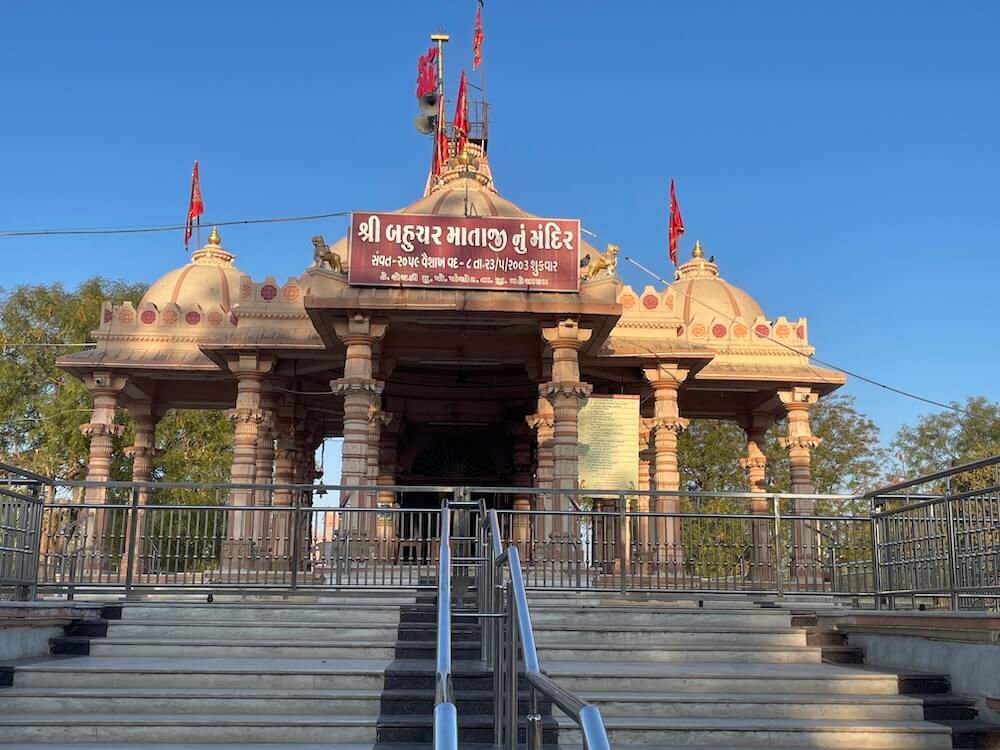 During this journey, their caravan was attacked by a bandit named Bapiya. Within the Charan tradition, it was deemed more honourable to sacrifice one’s life than to fall alive into the hands of an enemy. This act of sacrifice was known as ‘tragun’. To safeguard their dignity, Bahuchara and her sisters chose this path, severing their own breasts in a supreme act of sacrifice. Before relinquishing her life, the goddess pronounced a curse upon the bandit Bapiya, condemning him to impotence. As a consequence of the goddess’s curse, the bandit Bapiya was compelled to renounce his masculinity and assume female attire. It is believed that only after devoutly worshipping the goddess in this feminine form did he attain release from the curse.
 This mythological episode gave rise to the enduring tradition within the transgender community of seeking refuge in and worshipping the goddess. In Gujarati, members of this community are referred to as ‘Pavaiya’. At this temple, a distinct initiation process is observed for new entrants into the community. Only after thorough discussions with senior members are candidates formally accepted. Although they are not officially priests, members of this community play a vital role in conveying the blessings of the goddess to devotees.
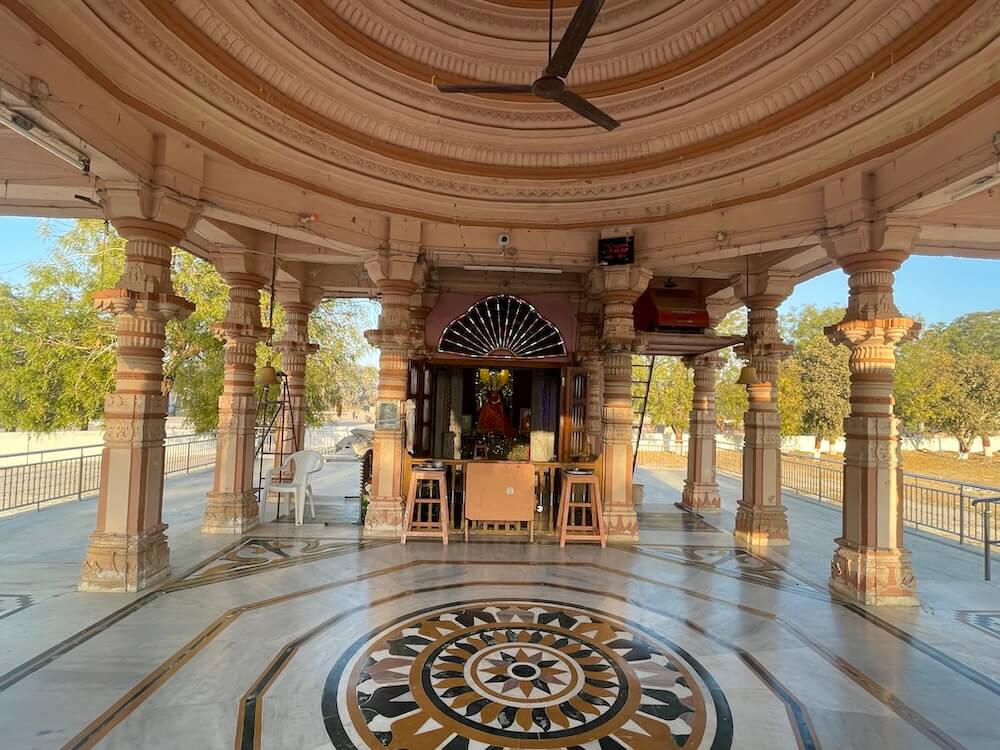
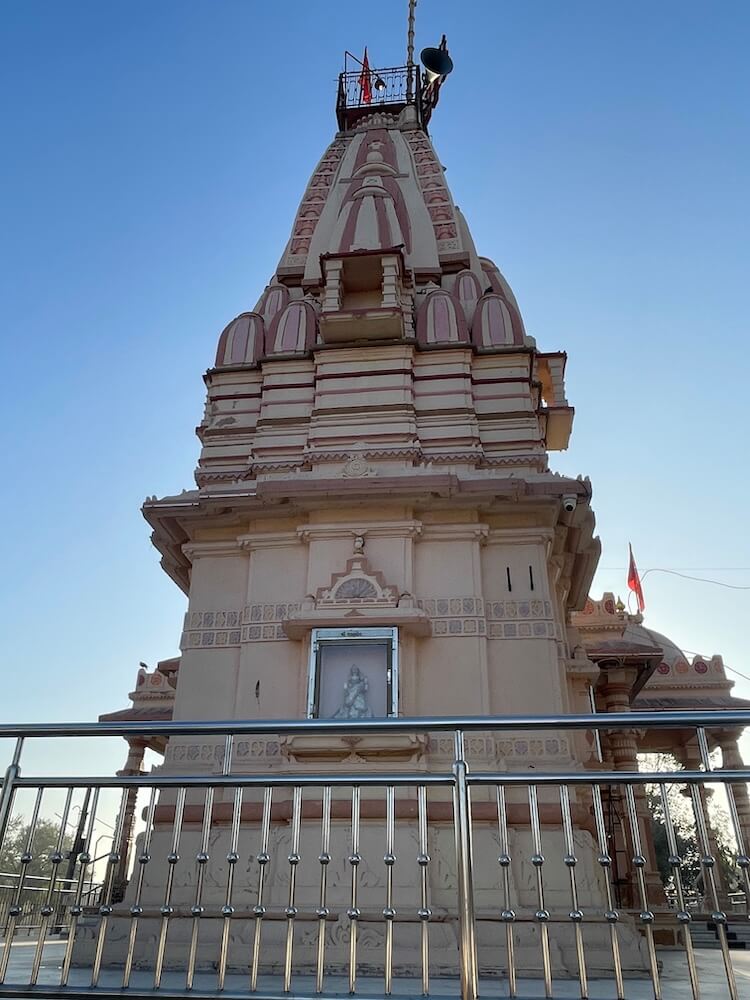
Located at the heart of Panchot village, the architectural form of the Bahuchara Mata Temple reflects the traditional Hindu temple style, harmoniously blending modern and Gujarati architectural elements. The main entrance is adorned with intricate carvings, 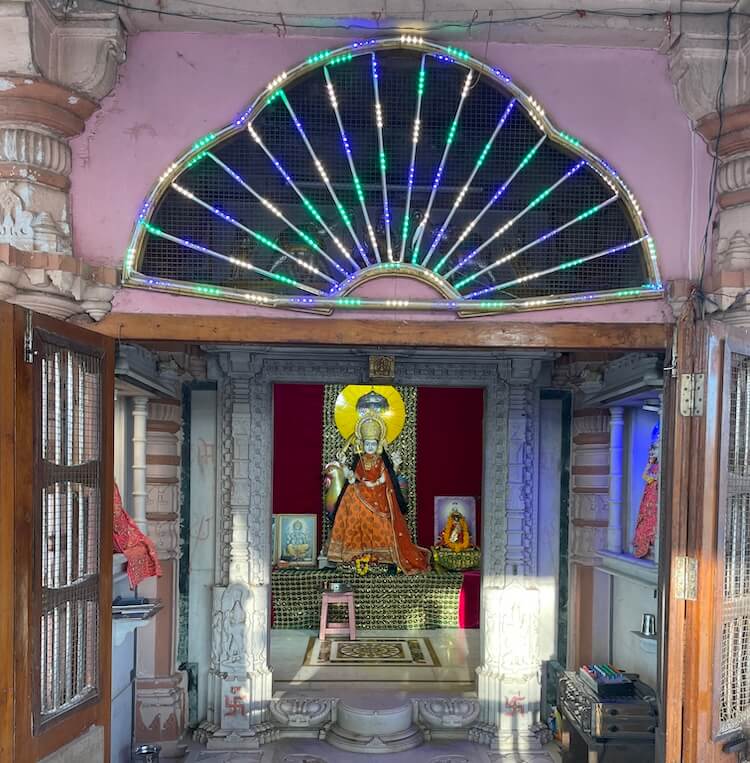 leading into a spacious courtyard that contains a large well and seating arrangements for devotees. At the centre of this courtyard rises the temple structure itself, constructed using pink ‘Araspahan’ stone. A short flight of steps leads to the elevated platform (jagati), upon which the temple stands. The Jagati incorporates a circumambulatory path, with the temple situated centrally.
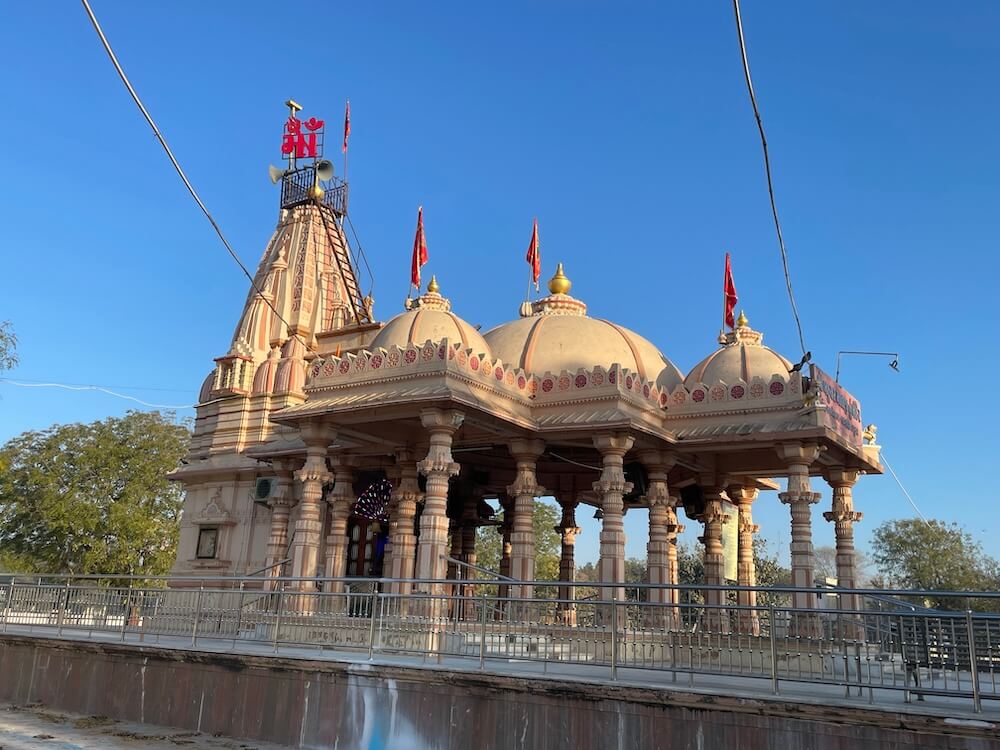
The temple layout comprises three Darshanmandaps (Viewing/entrance porches), a ‘Sabhamandap’ (assembly hall), the ‘Antarala’ (vestibule) and the ‘Garbhagriha’ (sanctum sanctorum). The darshanmandaps and sabhamandaps are semi-open in design, with every pillar adorned with detailed carvings that extend from floor to ceiling. Beyond the circumambulatory path lies the antaral leading into the sanctum. The doorway of the garbhagriha features exquisite ornamentation: an image of Ganapati adorns the lintel, with doorkeepers depicted below and a Kirtimukh carved near the base.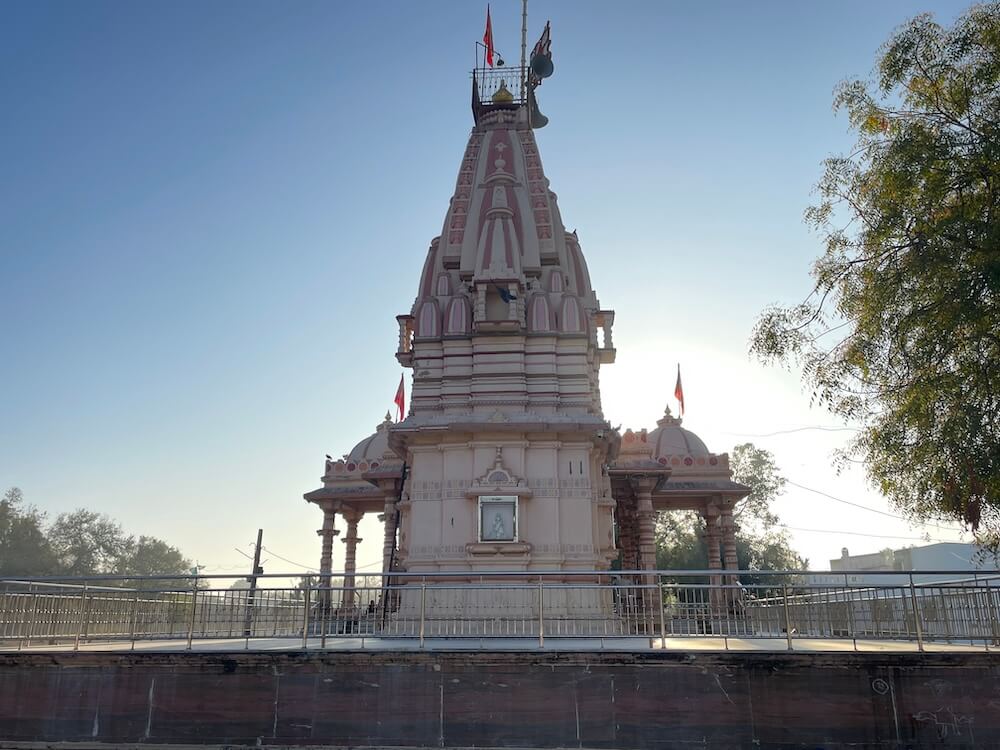
Within the sanctum, upon a stone pedestal, is installed a marble idol of the goddess seated upon a rooster. The four-armed deity holds a sacred scripture in her upper left hand and a trident in her lower left hand. In her upper right hand, she bears a sword, while her lower right hand is raised in the ‘abhaya mudra’, bestowing blessings and protection upon devotees. The rooster, her vehicle, symbolises innocence. The sword signifies her sacrifice, the trident represents the balance of creation and the scripture reflects her wisdom as a member of the Charan lineage. Above the sanctum rises the main shikhara, surrounded by smaller replicas on all sides. Additionally, the three darshanmandaps and the sabhamandap are crowned with comparatively smaller domed shikharas.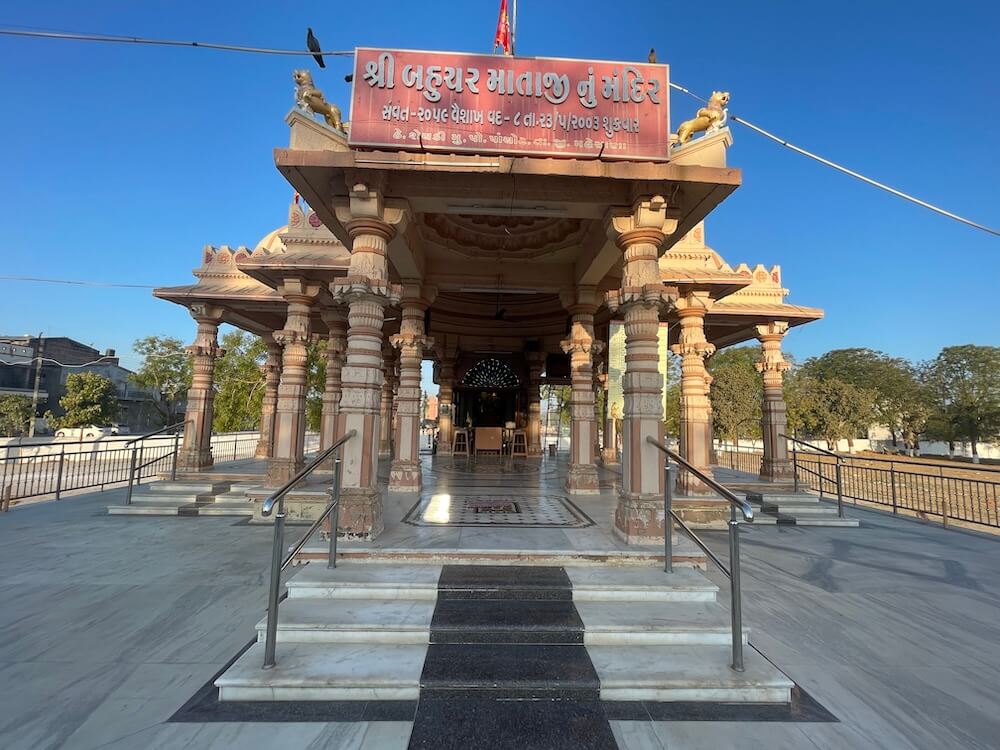
Throughout the year, the Bahuchara Mata Temple hosts a variety of festivals and religious celebrations. As a manifestation of Adyashakti, the goddess is particularly worshipped by women seeking relief from domestic discord, worldly hardships and health-related issues. Special prayers are offered for the blessings of progeny and the resolution of fertility-related concerns. The transgender community continues to revere her as their principal protector. Upon fulfilment of vows, devotees offer ‘angi’ crafted from silver or other metals.
The most significant festivals observed here are the Vasant Navratra in the month of Chaitra and the Sharadiya Navratra in the month of Ashwin. During these nine-night celebrations, the nine forms of the goddess are worshipped with great devotion. 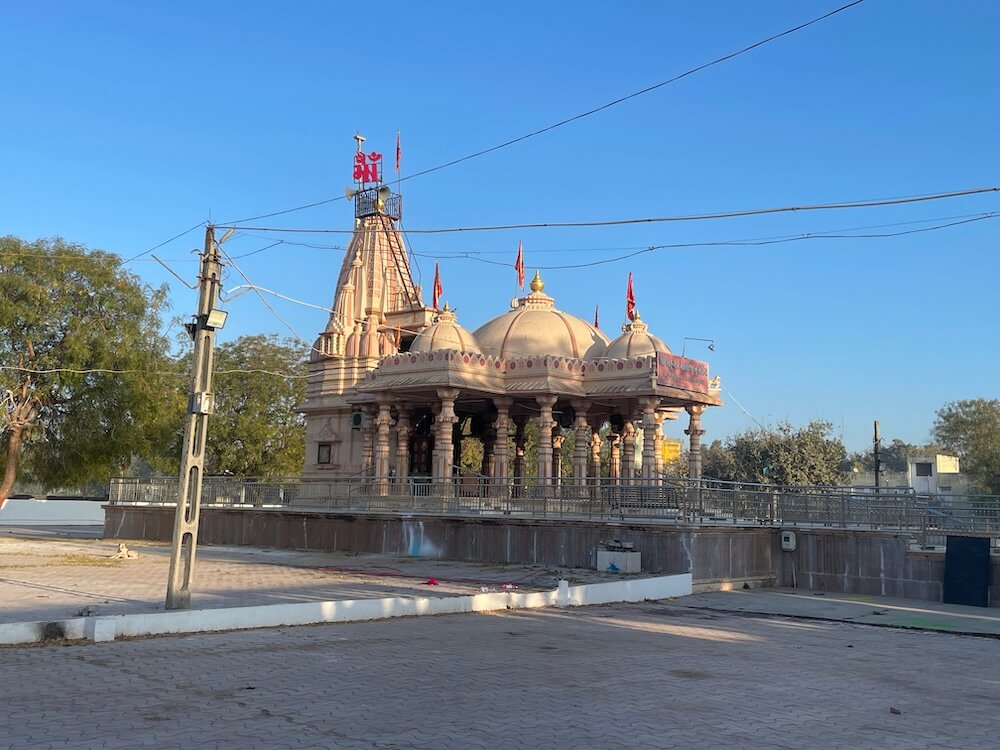 Thousands of devotees undertake barefoot pilgrimages to seek her darshan. The temple is illuminated with elaborate decorations and the atmosphere resonates with collective devotion as local residents and pilgrims participate in Garba and Dandiya dances in her honour.
Rituals such as the Maha Aarti, special darshan and Prakatya Utsav are conducted with great fervour. Devotees offer red chunari, coconuts, flowers and crystallised sugar as prasad.
Many families also choose these auspicious occasions to perform the ‘babari’ ritual, marking the first hair-cutting ceremony of newborn children.
Members of the transgender community, dressed in their traditional attire, actively participate in all these celebrations.
Useful Information
- Located at 9 km from Mehsana.
- State transport (GSRTC) bus services are available to Mehsana from several cities across the state.
- From Mehsana, both GSRTC buses and private vehicles are available.
- Private vehicles can reach up to the temple premises.
बहुचरा माता मंदिर
राधनपुर रोड, पंचोट, ताल। मेहसाणा, जिला. मेहसाणा
मंदिरे
Temples
मंदिर
-
वैजनाथ महादेव मंदिर महादेवपुरा (गावडा), ता. विजापूर, जि. मेहसाणा
अधिक माहितीVaijnath Mahadev Temple Mahadevpura (Gavada), Tal. Vijapur, Dist. Mehsana
View Detailsवैजनाथ महादेव मंदिर महादेवपुरा (गावड़ा), ताल. विजापुर, जिला. मेहसाणा
विवरण देखें -
वैजनाथ महादेव मंदिर सोखडा, तालुका विजापूर, जिल्हा मेहसाणा
अधिक माहितीVaijanath Mahadev Temple Sokhada, Taluka Vijapur, District Mehsana
View Detailsवैजनाथ महादेव मंदिर सोखाडा, तालुका विजापुर, जिला मेहसाणा
विवरण देखें -
काशी विश्वनाथ महादेव मंदिर मेहसाणा, जि. मेहसाणा
अधिक माहितीKashi Vishwanath Mahadev Temple Mehsana, Dist. Mehsana
View Detailsकाशी विश्वनाथ महादेव मंदिर मेहसाणा, जिला. मेहसाणा
विवरण देखें