
बहुचरा माता मंदिर
शंखालपूर, ता. बेचराजी, जि. मेहसाणा
Bahuchara Mata Temple
Shankhalpur, Tal. Becharaji, Dist. Mehsana
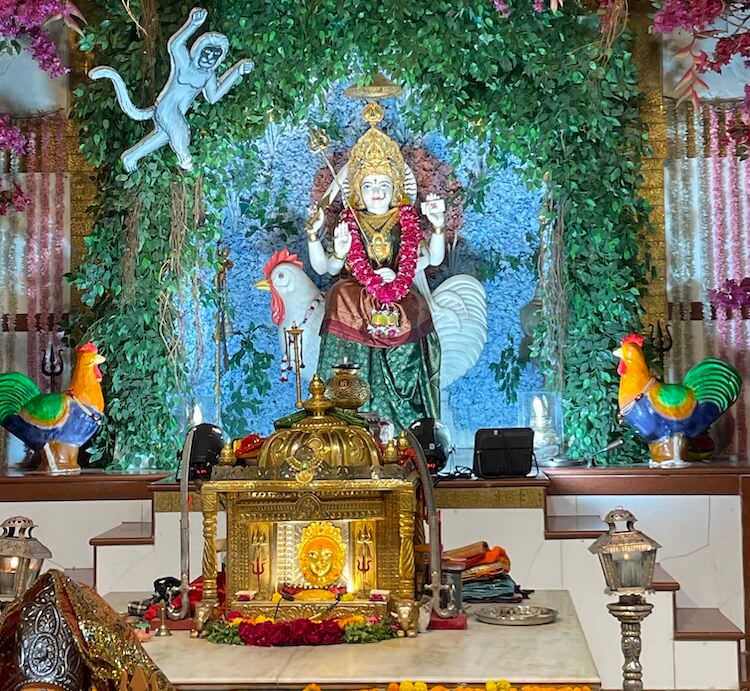 The Bahuchara Mata Temple is situated in Shankhalpur village, within Becharaji Taluka of Mehsana district in North Gujarat. Shankhalpur is revered as the ‘Pragatsthan’ (place of manifestation) of Bahuchara Mata, an incarnation of the Adishakti. According to popular legend, after manifesting here in the form of a young maiden, the Goddess disappeared beneath a ‘Varkhadi’ (Salvadora persica) tree in Becharaji, located three kilometres away. Shankhalpur is the Goddess’s ‘Janmabhoomi’ (birthplace), while Becharaji is her ‘Karmabhoomi’ (land of divine action). Bahuchara Mata, the ‘Kuldevi’ (ancestral family deity) of the transgender community nationwide, is also the tutelary deity for many Gujarat families.In Shankhalpur’s ancient sanctuary, the ‘Bala Yantra’ (mystical diagram of the child-goddess), inscribed on white crystal, is worshipped. Recently, a magnificent idol of the Goddess was also consecrated within the temple.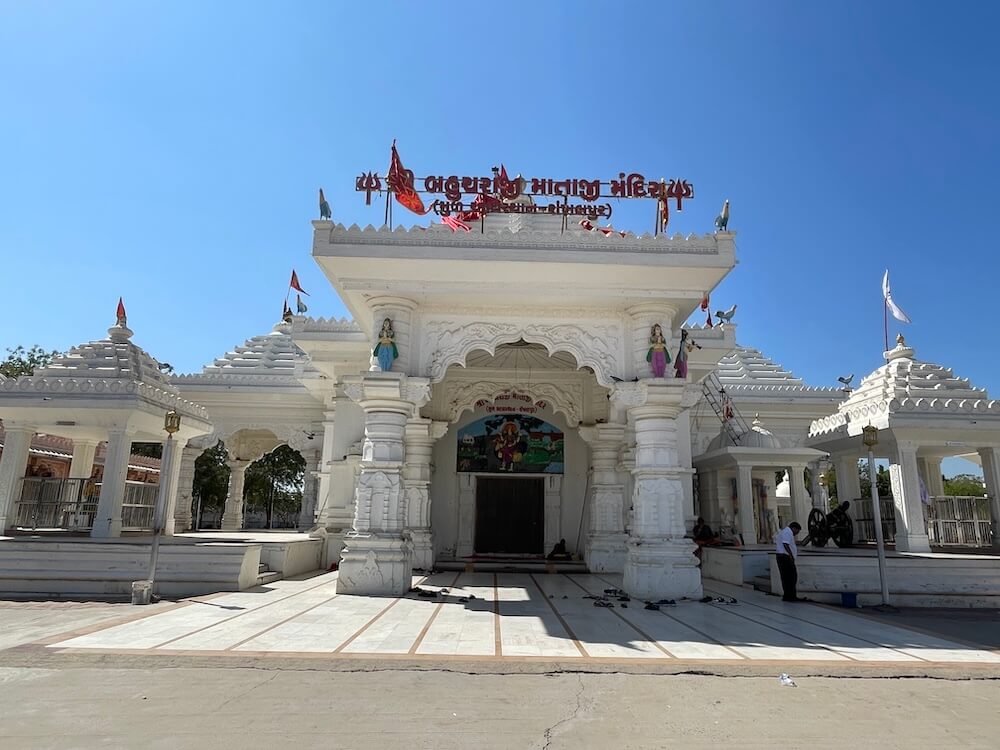
Numerous legends surround the divinity of Bahuchara Mata. In antiquity, a demon named Dandasur, having secured a boon from Lord Shivshankar, resided in the nearby Daityarajpur. He unleashed a reign of terror across the three worlds, prompting the distressed deities and sages to beseech the Mother for protection. The Goddess assumed the form of an eight-year-old girl and, engaging Dandasur in combat, vanquished him with her ‘Trishula’ (trident). Following the demon’s destruction, the Goddess arrived at the ‘Varkhadi’ forest of Shankhalpur to alleviate the exhaustion of battle and pacify her fierce form. After annihilating several demons who tormented the inhabitants of the earth, Jagdamba arrived in the ‘Chunwal’ region via the ‘Dharmaranya’. Having slain many demons (Bahucha), 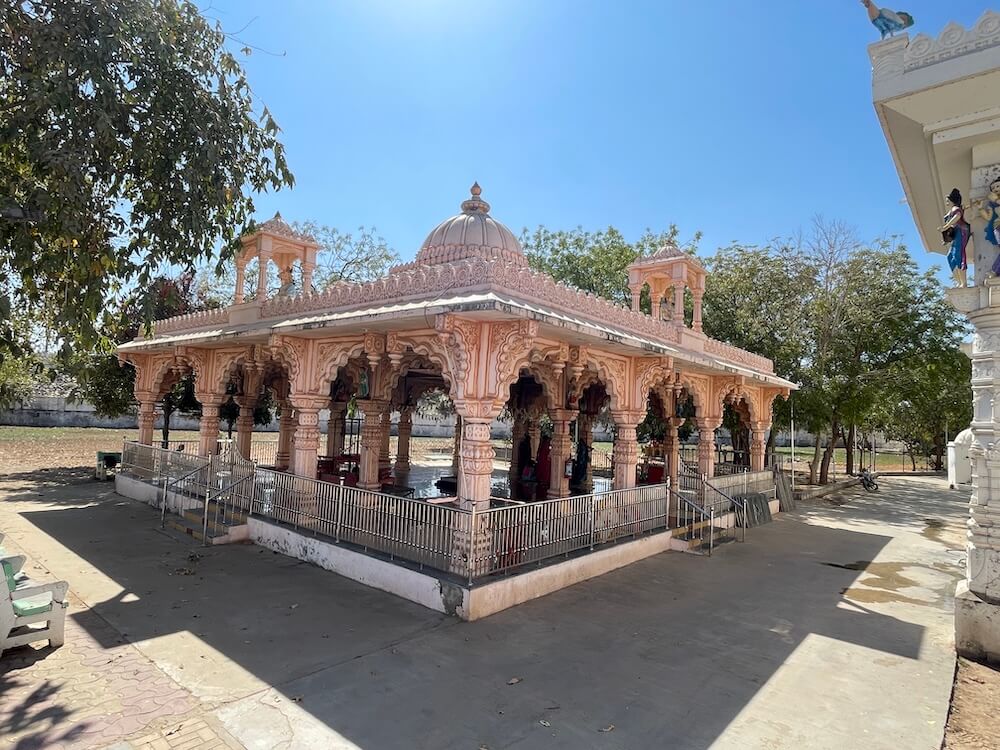 she earned the appellation ‘Bahuchara Devi’. Following her manifestation at Shankhalpur, Bahuchara Mata vanished beneath the ‘Varkhadi’ tree at Becharaji.
Devotees often recount tales of miracles from the Mother’s grace.It is believed that many sages performed ‘Yagyas’ (sacrificial fire rituals) at Shankhalpur in ancient times.Another chronicle says Rajput King Karan Ghela (Karan Vaghela, 1296-1305 CE) donated two thousand villages to his cousin Harpalsinh. A devoted follower of the Goddess, Harpalsinh built grand ornamental gateways known as ‘Torans’ in these villages, which included Shankhalpur. Consequently, the Bahuchara Devi in Shankhalpur is also known as ‘Toda Mata’.
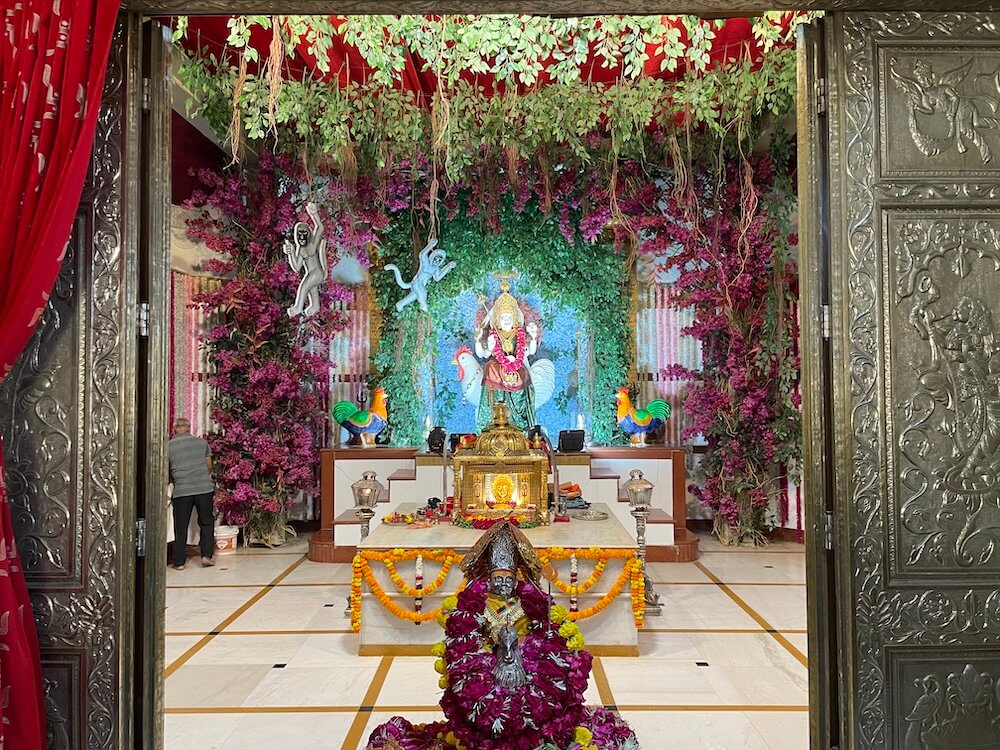
T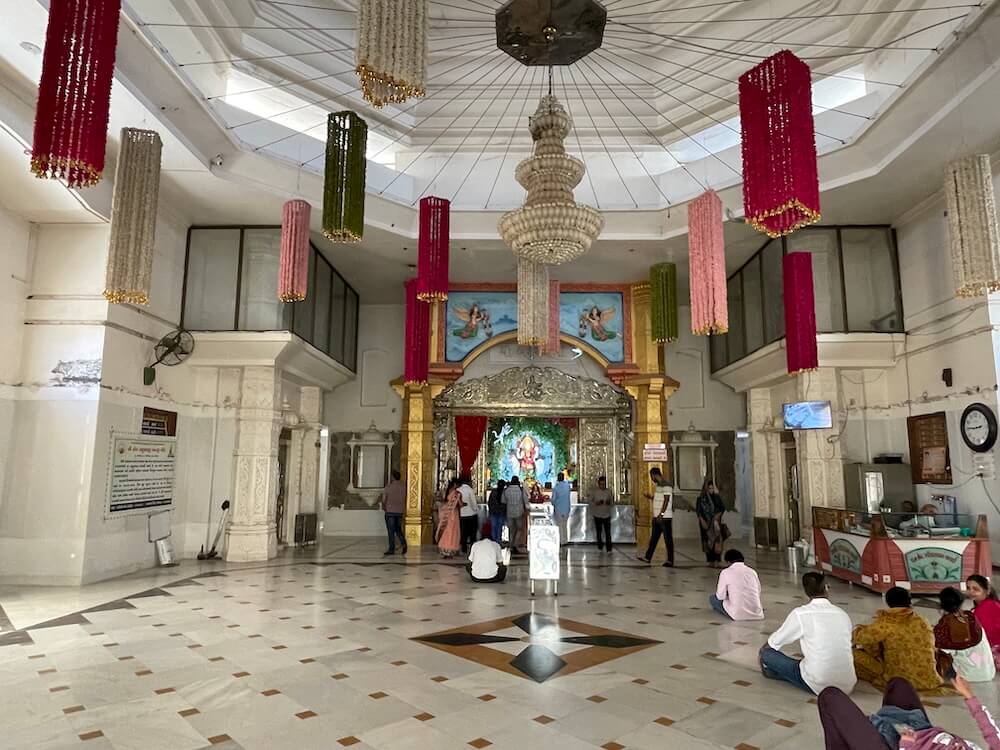 he original shrine in Shankhalpur is believed to be more than a thousand years old. It was extensively restored in 2013 and now stands in its majestic form. Devotees have always worshipped the ‘Bala Yantra’ on white crystal. However, after the dawn rituals, general devotees cannot view the Yantra. During the renovation, a new six-and-a-half-foot idol of the Goddess, weighing about six tonnes, was consecrated in the ‘Garbhagriha’ (sanctum sanctorum). Millions attended the five-day ‘Pranpratishtha’ (consecration) ceremony.
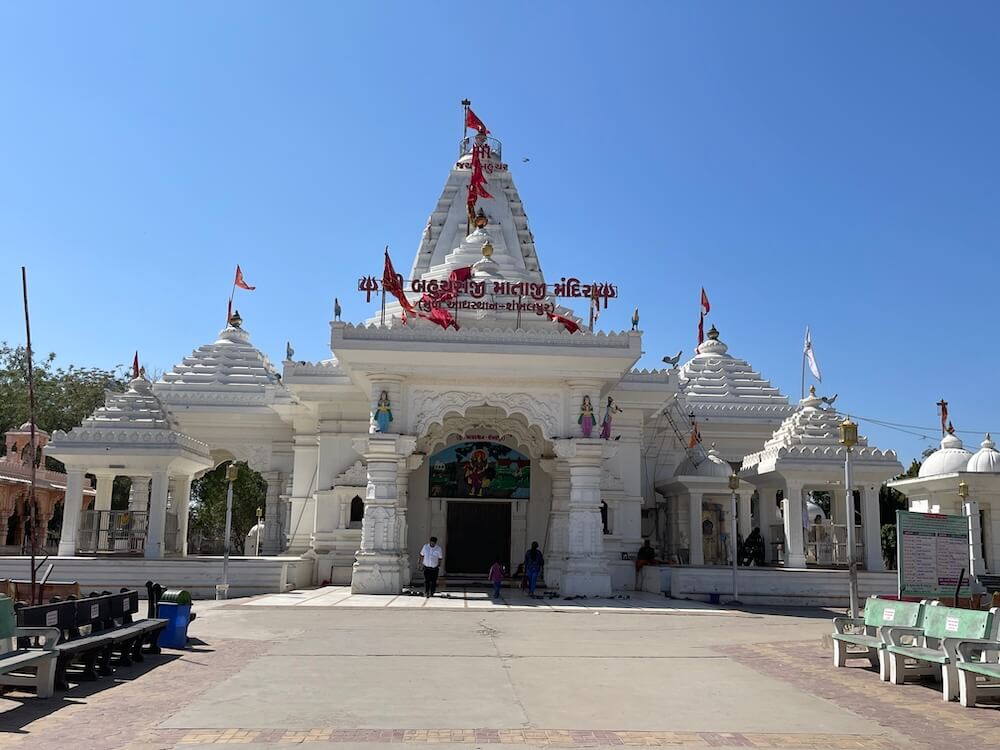
The temple complex is located just beyond an elegant ceremonial arch beside the road. Nearby, vendors sell ‘Puja’ materials and ‘Prasad’ (sanctified offerings). Upon entering the courtyard through the main portal, the grand temple immediately draws attention. Cement benches line both sides of the walkway for pilgrims’ comfort.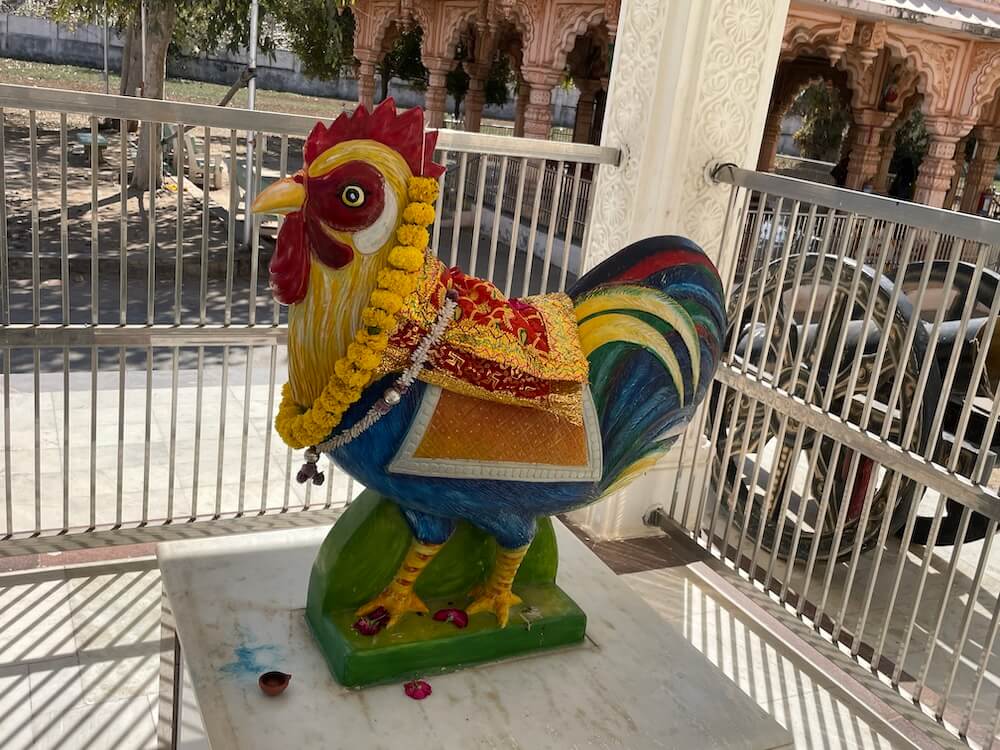
The temple’s architecture includes a ‘Mukhamandapa’ (entrance porch), ‘Ardhamandapa’ (half-hall), ‘Sabhamandapa’ (assembly hall), ‘Antarala’ (antechamber) and the ‘Garbhagriha’. The ‘Vitan’ (ceiling) of the ‘Sabhamandapa’ displays intricate craftsmanship. Paintings depicting legends of the Goddess decorate the upper walls. The entrance to the sanctum is gold-plated and finely carved. An image of the Goddess is carved on the ‘Lalatabimba’ (central lintel) of the doorway. The idol of Bahuchara Mata sits in a beautiful ‘Makhar’ (ornate frame) within the sanctum. The Goddess, with four arms, is mounted upon a cock. She holds a sword, a sacred text and a trident; her fourth hand shows the gesture of fearlessness, or ‘Abhaya Mudra’. 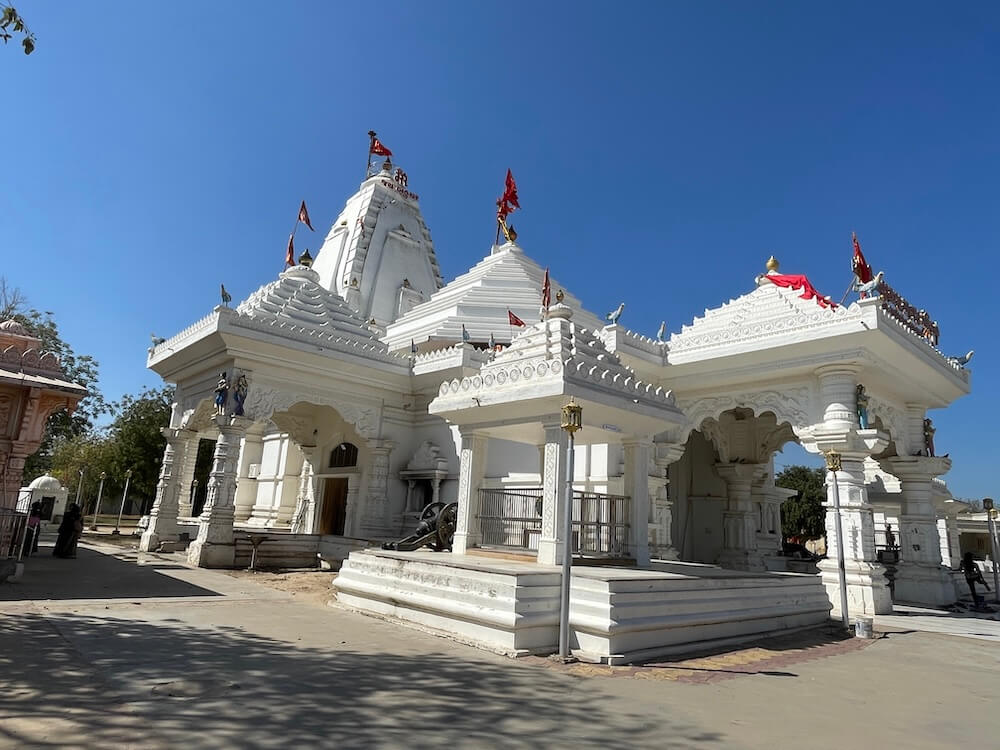 The crystal ‘Bala Yantra’ sits in a small alcove before the idol. The sanctum is crowned by a towering ‘Shikhara’ (spire) decorated with many small spires. At the top there is a two-tiered ‘Amalaka’ and a ‘Kalash’ (pinnacle). Porches and halls are also adorned with decorative spires. Sculptures of cocks, the Goddess’s vehicle, are placed near the spires.
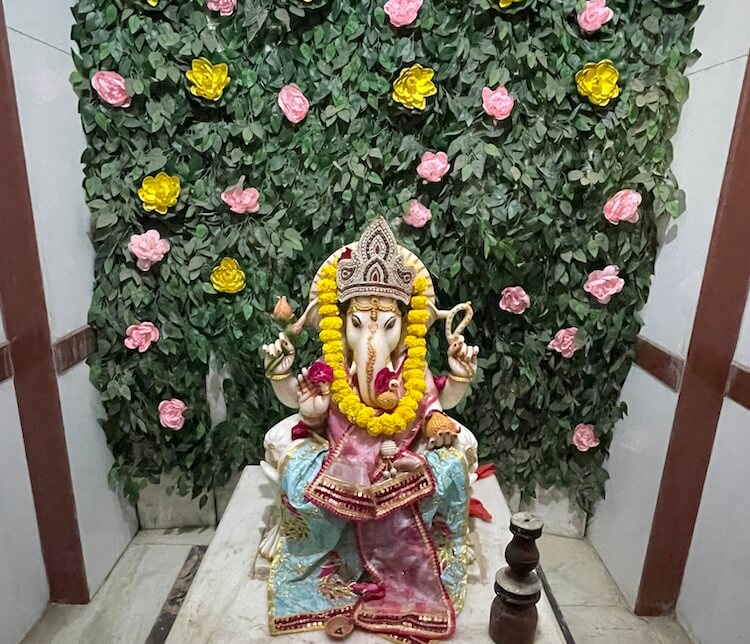
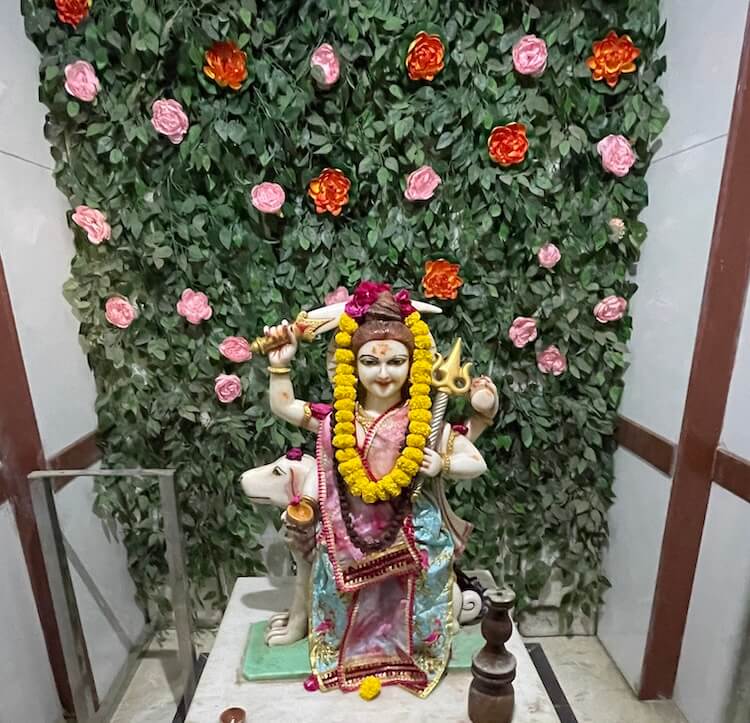
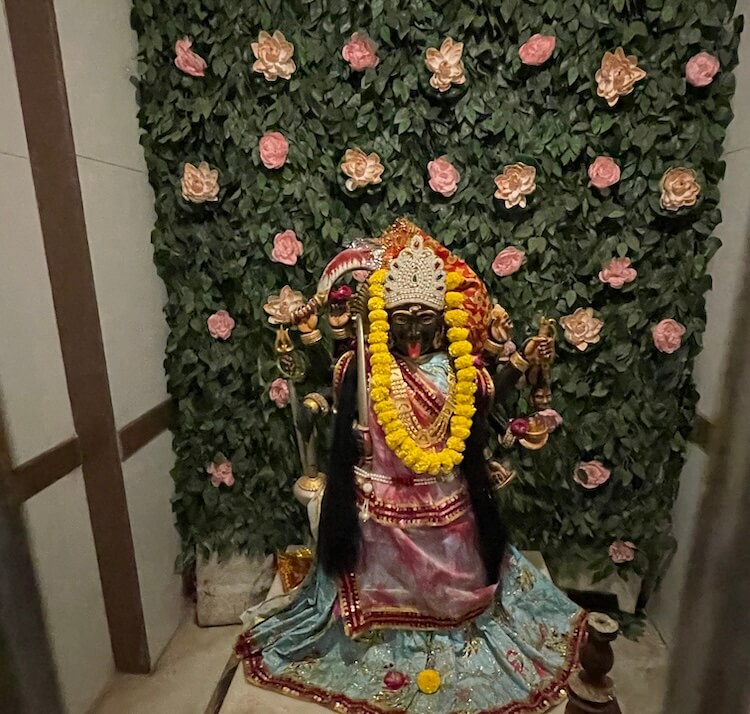
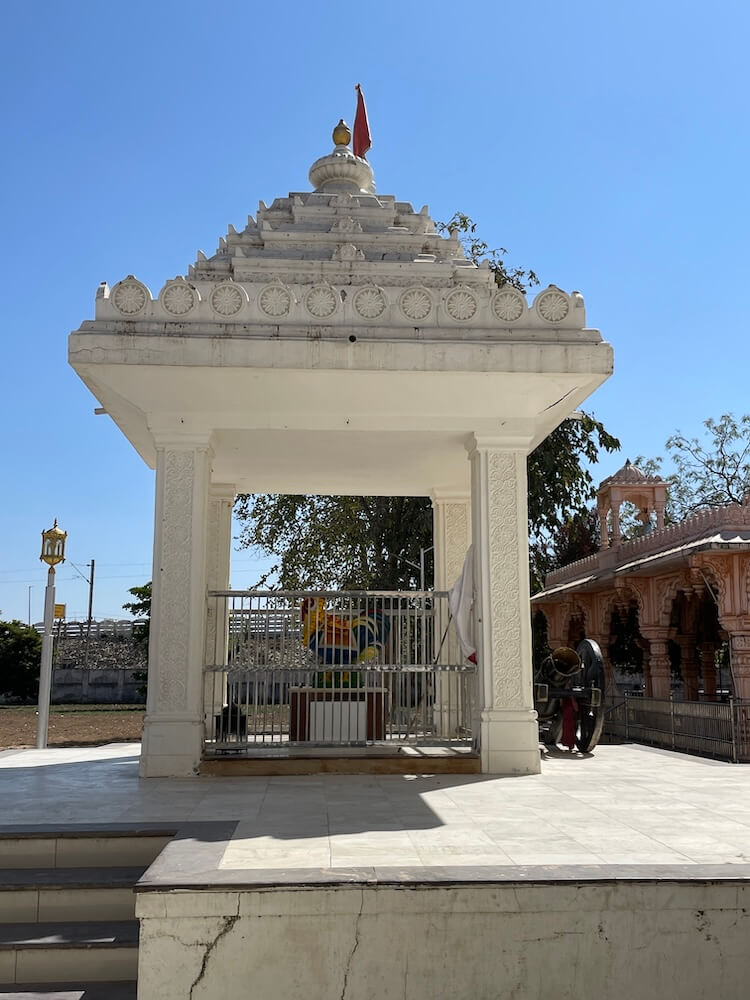
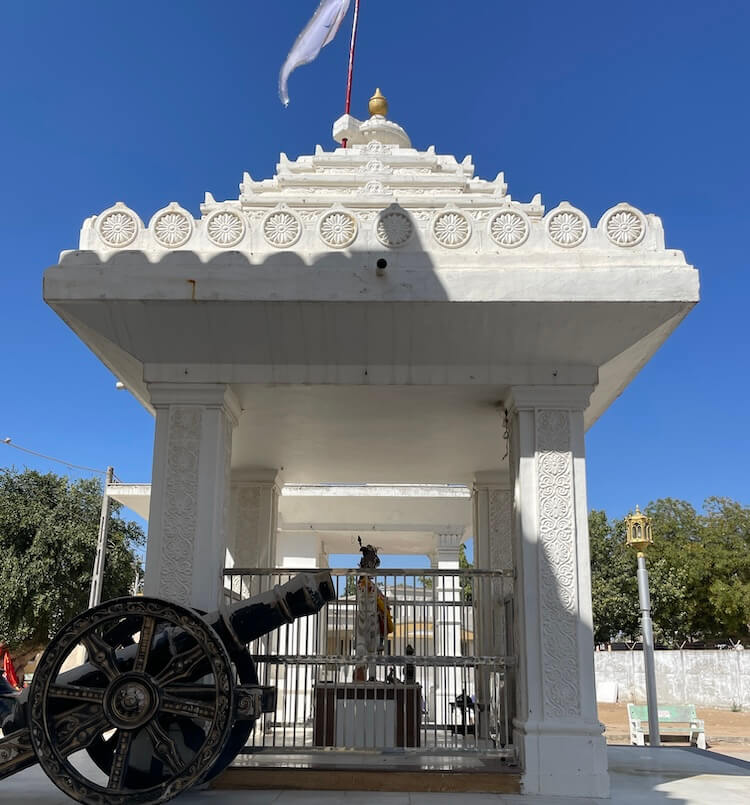
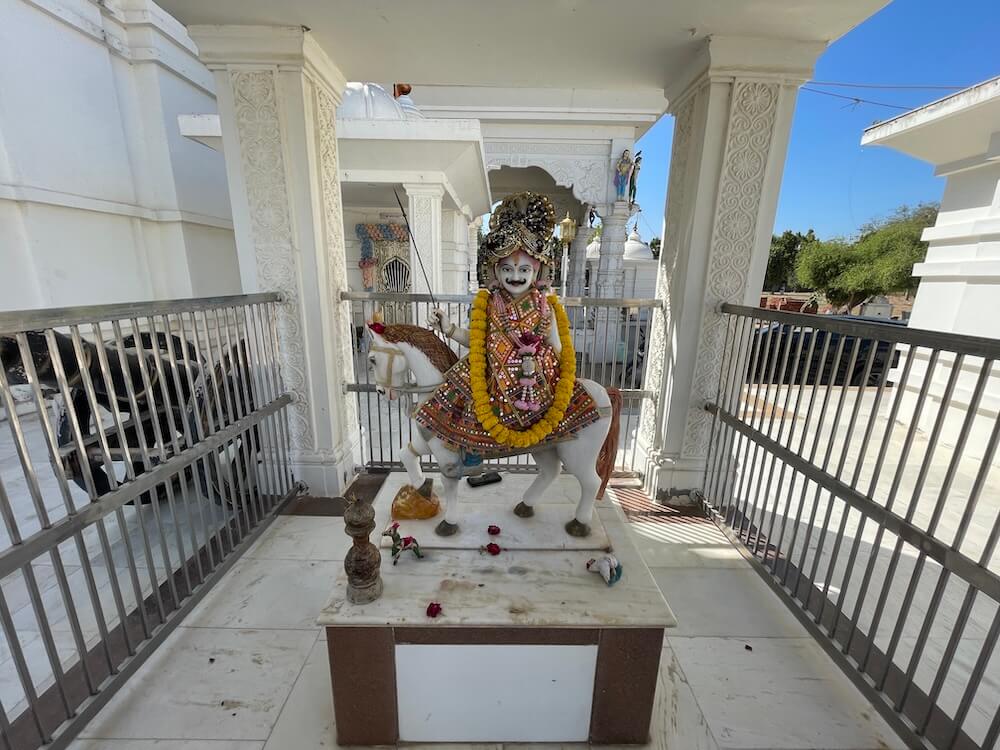
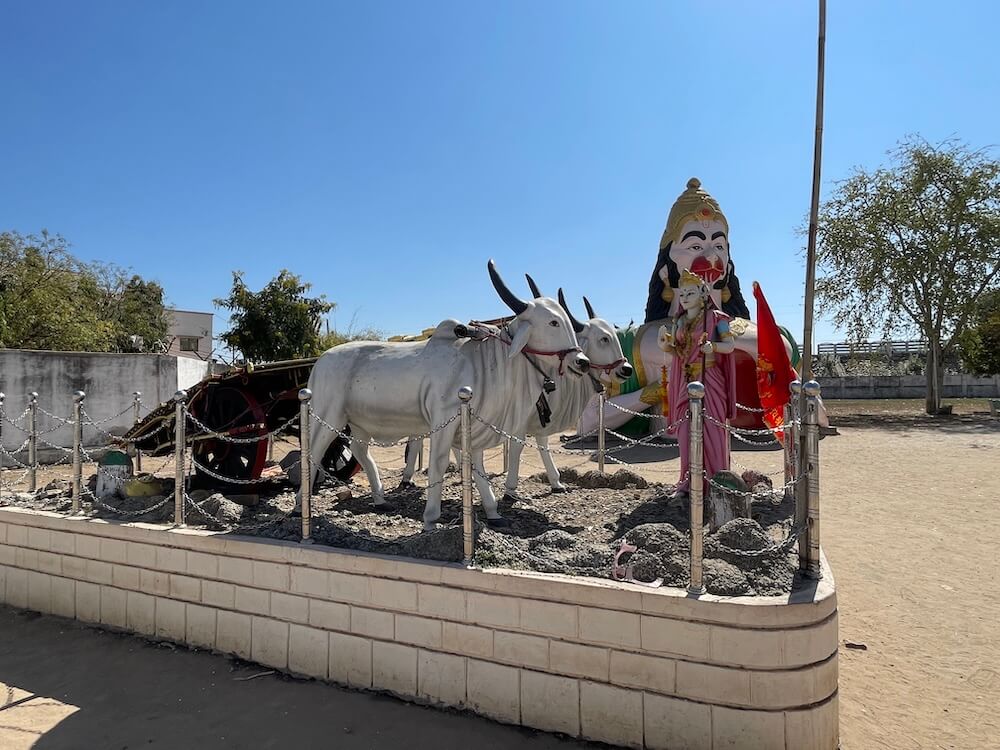
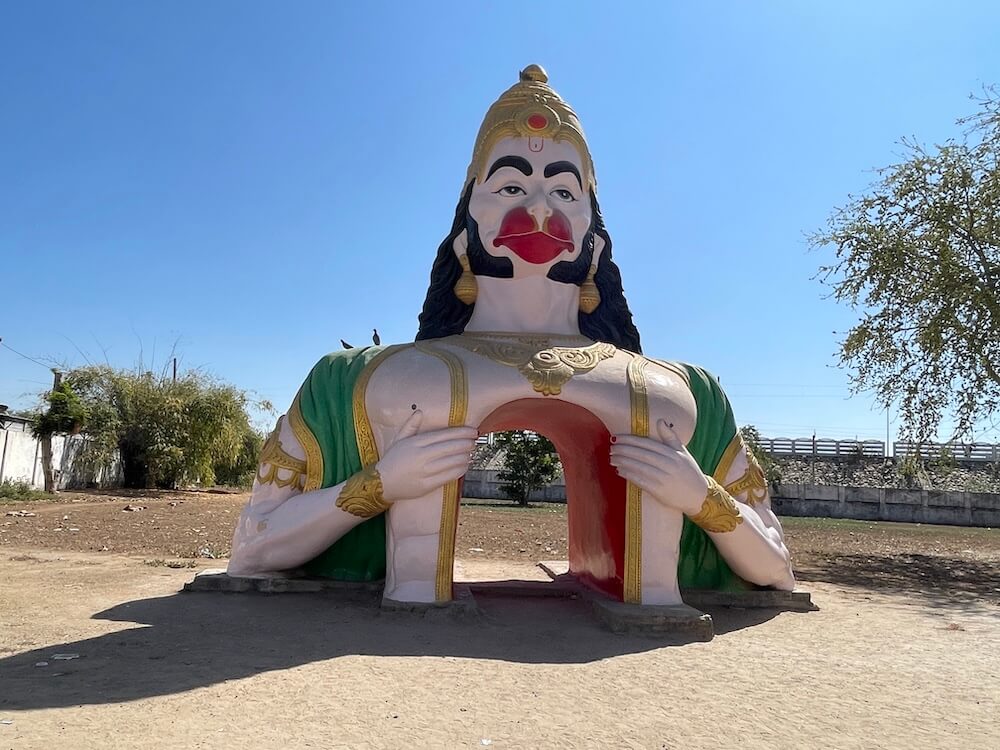
A 21-foot-tall copper ‘Trishula’, weighing 325 kilograms, was recently installed in the temple precinct. The courtyard also has shrines for the Naga Devta, Hanuman, Shiva, Narsangveer and Gurumaharaj. A ‘Yagyashala’ (hall for fire rituals) is used for ‘Homa-Havan’ on many occasions. A replica of the Goddess’s chariot is displayed in the courtyard. There is also a unique ‘Selfie Point’ with a Hanuman mask, which is popular among visitors. 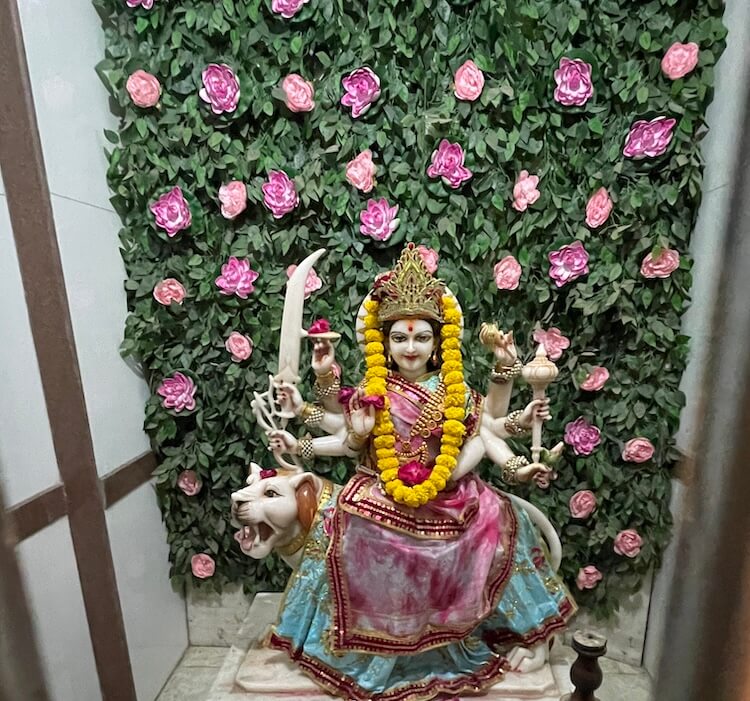 Pilgrims from far away can use the ‘Dharamshala’ (rest house) and a large ‘Bhojanshala’ (dining hall). The temple’s board of trustees runs various social initiatives in the region.
The Shankhalpur temple remains perpetually vibrant with the presence of devotees. The gates open daily at half past three in the morning, followed by the ‘Mahapuja’ of the ‘Bala Yantra’ at 5.30 am. Subsequently, the Goddess is adorned and worshipped. The first ‘Naivedya’ (food offering) is presented after the 8.00 am ‘Aarti’ (ritual of lights) and the second is offered following the 11.00 am ‘Aarti’. Rituals are also performed in the evening. Devotees often sit in the ‘Sabhamandapa’ to recite the ‘Anand no Garbo’, composed by the supreme devotee Vallabh Bhatt. Many childless devotees offer vows to the Mother for progeny and others seek her intervention for the healing of ailments. Members of the transgender community make it a point to visit their patron deity. Every full moon day, the precinct is crowded with pilgrims and a palanquin procession of the Goddess is taken out at night. On the full moon days of ‘Chaitra’ and ‘Ashwin’, the palanquin travels from the Becharaji temple to Shankhalpur, circumambulating the entire village before returning to Becharaji late at night. During the ‘Sharadiya Navratri’, various religious programmes are organised with great fervour. The temple is open for devotees daily from 3.30 am to 9 pm.
Useful Information –
- Located at 4 km from Becharaji and 46 km from Mehsana.
- GSRTC (State Transport) bus services are available from both Becharaji and Mehsana.
- Private vehicles can reach the temple’s parking area.
- Accommodation and breakfast facilities are available within the precinct.
बहुचरा माता मंदिर
शंखलपुर, ताल. बेचराजी, जिला. मेहसाणा
मंदिरे
Temples
मंदिर
-
वैजनाथ महादेव मंदिर महादेवपुरा (गावडा), ता. विजापूर, जि. मेहसाणा
अधिक माहितीVaijnath Mahadev Temple Mahadevpura (Gavada), Tal. Vijapur, Dist. Mehsana
View Detailsवैजनाथ महादेव मंदिर महादेवपुरा (गावड़ा), ताल. विजापुर, जिला. मेहसाणा
विवरण देखें -
वैजनाथ महादेव मंदिर सोखडा, तालुका विजापूर, जिल्हा मेहसाणा
अधिक माहितीVaijanath Mahadev Temple Sokhada, Taluka Vijapur, District Mehsana
View Detailsवैजनाथ महादेव मंदिर सोखाडा, तालुका विजापुर, जिला मेहसाणा
विवरण देखें -
काशी विश्वनाथ महादेव मंदिर मेहसाणा, जि. मेहसाणा
अधिक माहितीKashi Vishwanath Mahadev Temple Mehsana, Dist. Mehsana
View Detailsकाशी विश्वनाथ महादेव मंदिर मेहसाणा, जिला. मेहसाणा
विवरण देखें