
आशापुरा माता मंदिर
पिपलाव, ता. सोजित्रा, जि. आनंद
Ashapura Mata Temple
Piplav, Tal. Sojitra, Dist. Anand
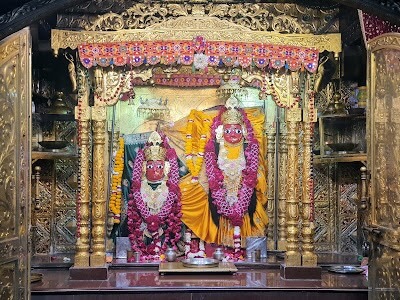 The Shri Ashapura Mata Temple situated in the village of Piplav is regarded as a significant symbol of the cultural and spiritual prosperity of the Charotar region. Revered as the Kuldevi (ancestral family deity) of numerous families across Gujarat and several other states, the Goddess is believed to be a ‘jagrut devata’ (an awakened and living divine presence) who fulfils the heartfelt wishes of her devotees. Spiritually, this sacred place is connected with the principal Shakti Peeth (seat of divine feminine power) at Saharanpur in Uttar Pradesh, as well as with celebrated temples dedicated to the Goddess at Nadol in Rajasthan and in the Kutch region of Gujarat, particularly at Bhuj. The Goddess is also venerated in the forms of Shakambhari and Mahishasuramardini.
 The history of this temple at Piplav is intertwined with ancient traditions as well as with the era of the Maratha Empire. According to a local myth, in ancient times this region was covered with dense forests. A local boy named Pipa Rabari would often bring his cattle to graze upon a particular hill in the vicinity. One day the boy observed a remarkable occurrence that whenever one of his cows stood at a certain spot, streams of milk would spontaneously flow from her udder onto the ground. When news of this extraordinary event reached the rulers of the time, they ordered that the sacred spot be excavated thoroughly. According to traditional belief, during this excavation, on the auspicious lunar days of Bhadrapada Shuddha Ashtami and Navami in Vikram Samvat 1042, two idols of the Goddess emerged from the earth.
 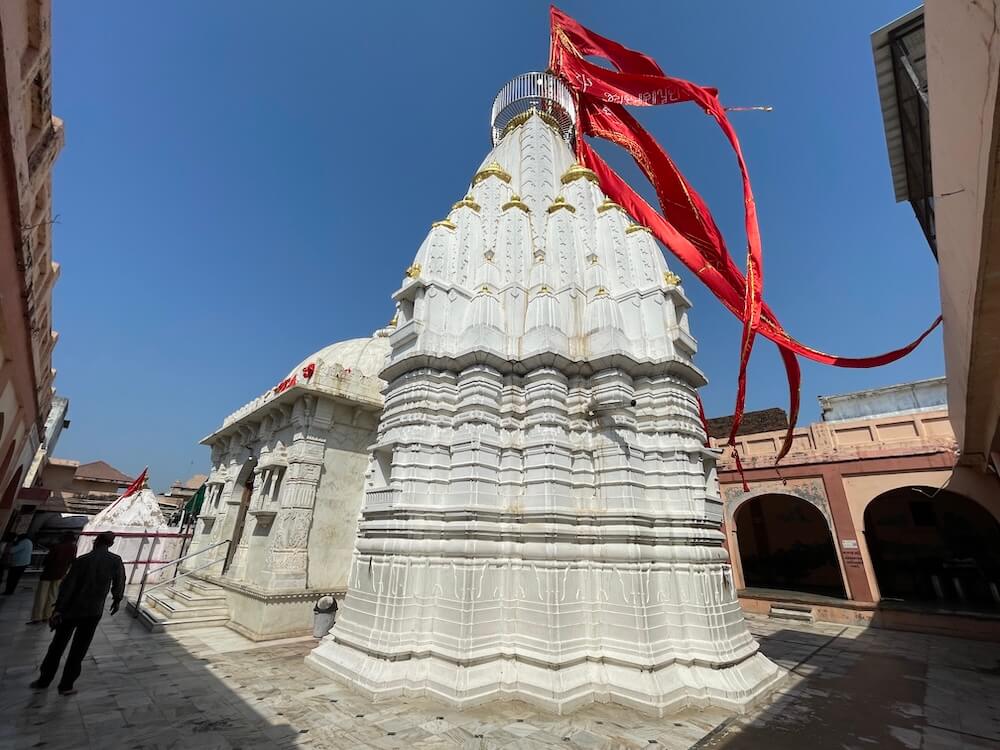 Upon beholding the divine form of these images, the rulers erected a temple at that very site and installed the idols there in accordance with scriptural rites. It was Maratha commander and the founder of the Gaekwad dynasty Pilajirao Gaekwad who undertook the reconstruction of the temple.
According to Puranic accounts, the temple’s origins are also linked with the period of exile endured by the Pandavas during the Mahabharata era. When the Pandavas were residing in this geographical region of Gujarat, the Divine Mother Adishakti is said to have granted them a direct vision in a dream at this very place. Acting upon this divine command, the Pandavas established the first idol here while nurturing in their hearts the ‘asha’ (hope) of victory. 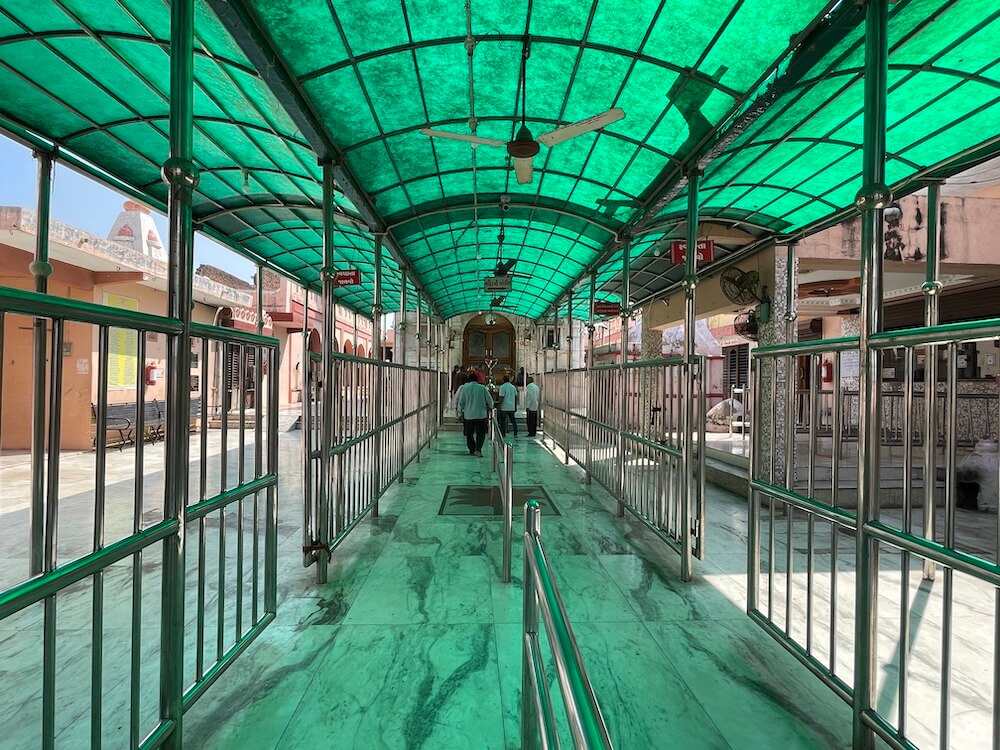 Thereafter they spent a difficult phase of their lives in this region.
After the completion of twelve years of forest exile, the Pandavas were required, according to the terms of their agreement, to live one additional year in concealment. When this period of Agyatvas concluded successfully, they returned once again to this sacred site. To express their gratitude for their wishes having been ‘purna’ (fulfilled), they installed another idol of the Goddess at the same spot. Thus the two divine forms, representing ‘Asha’ (hope) and ‘Puri’ (fulfilment), came to be worshipped together and the Goddess thereafter became known as ‘Ashapuri Mata’.
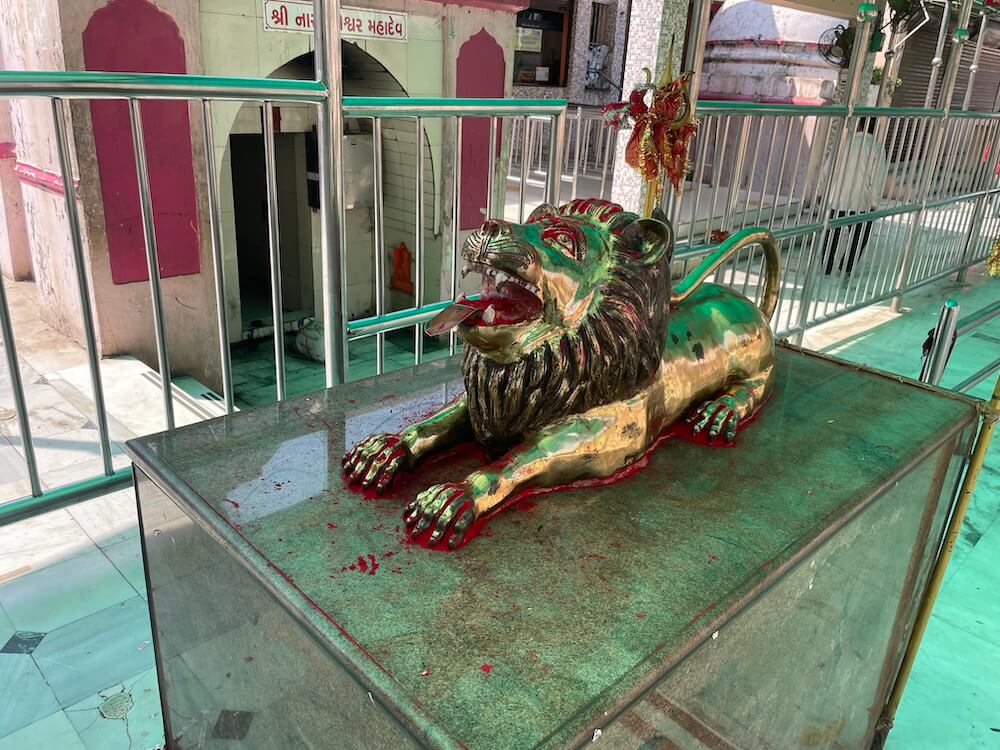
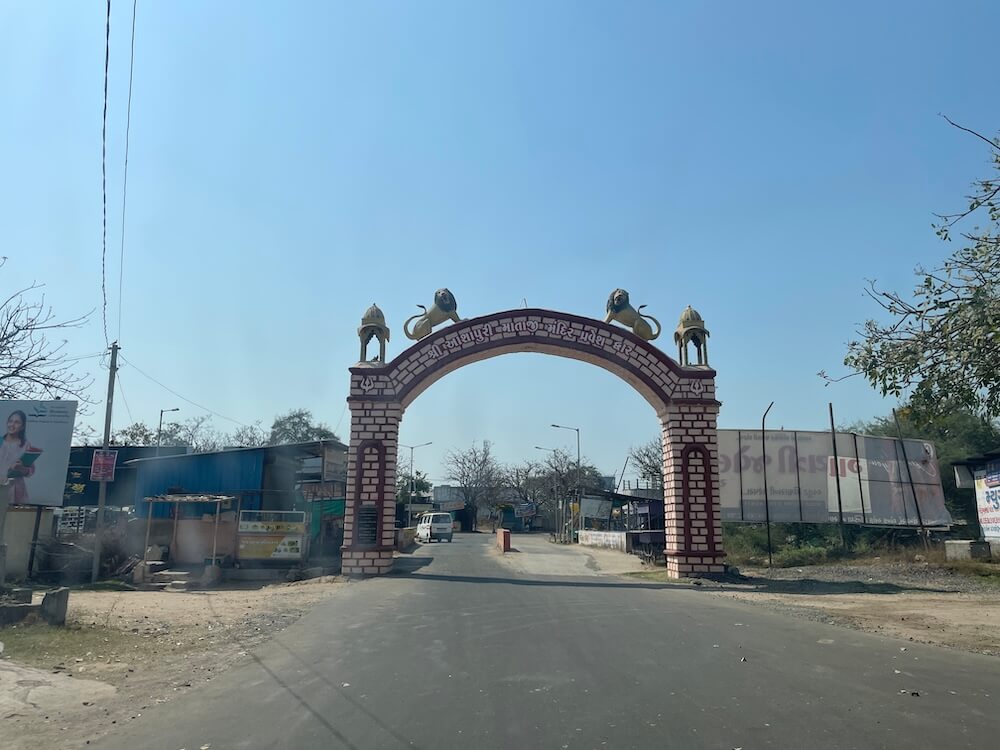
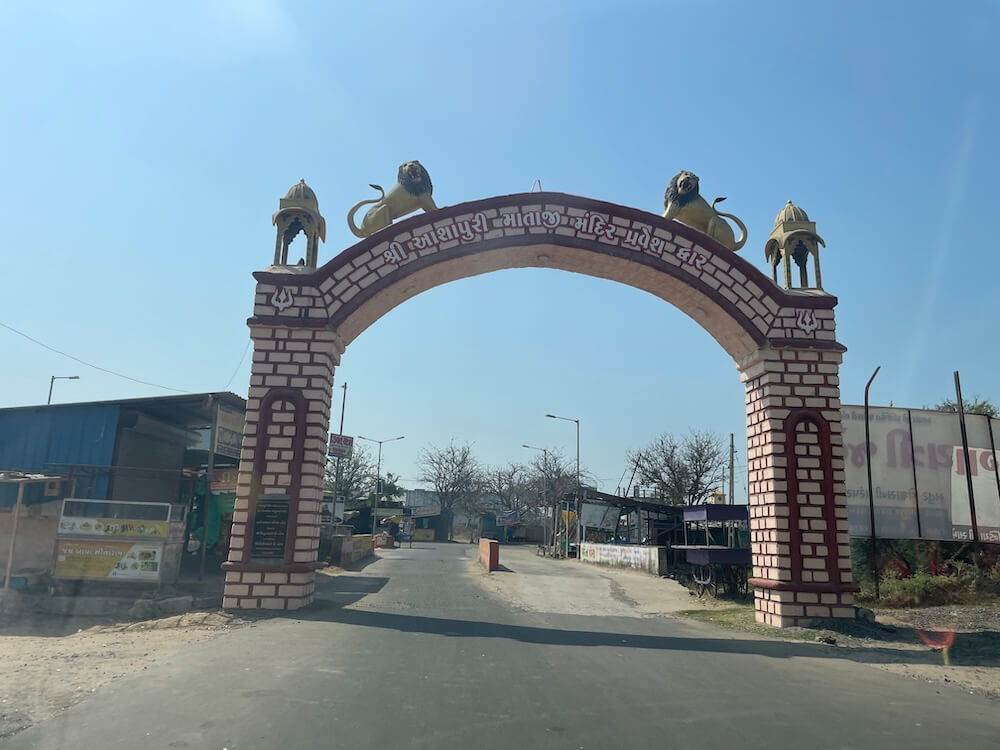
In the immediate vicinity of the temple lies the sacred water body known as ‘Naranarayan Sarovar’.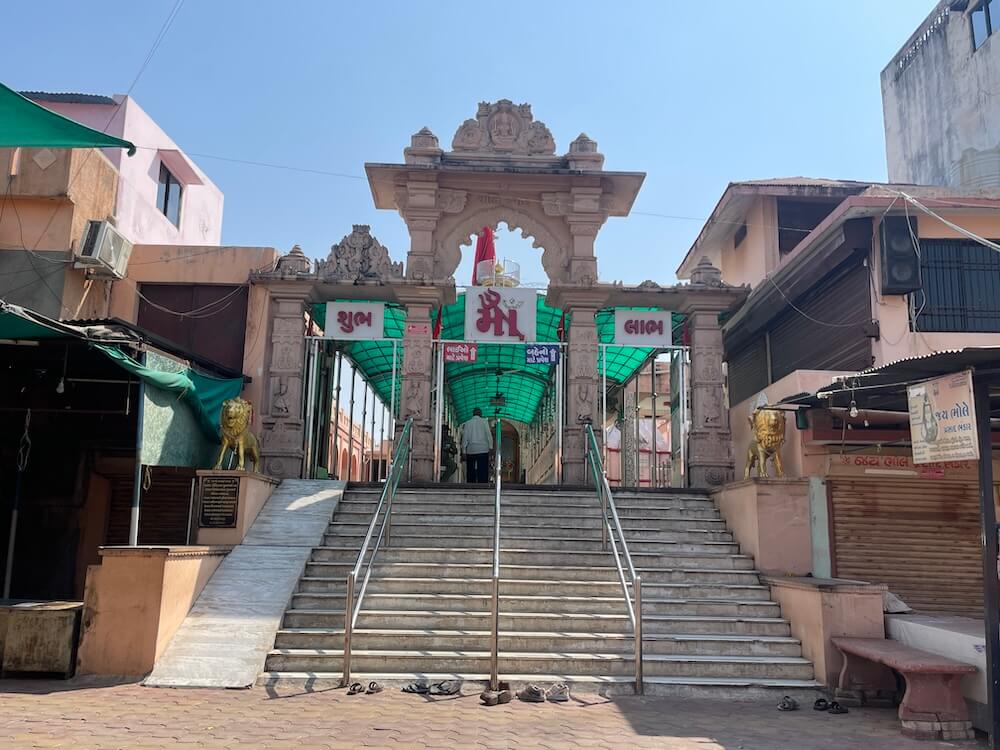 It is believed that this lake acquired its name because Lord Shri Krishna and Arjuna once bathed in its waters. The temple stands beside this large lake at a central location within Piplav village. Numerous shops selling ritual offerings and devotional articles are located in the temple precincts. From this area, devotees ascend approximately fifteen steps to reach the courtyard before the elevated temple. On the platforms flanking these steps are sculpted figures of lions. Passing through the beautifully carved entrance gateway, one proceeds along a sheltered pathway leading towards the temple. At the centre of this pathway stands a large pedestal upon which is placed the statue of a lion, the vahana (sacred vehicle) of the Goddess.
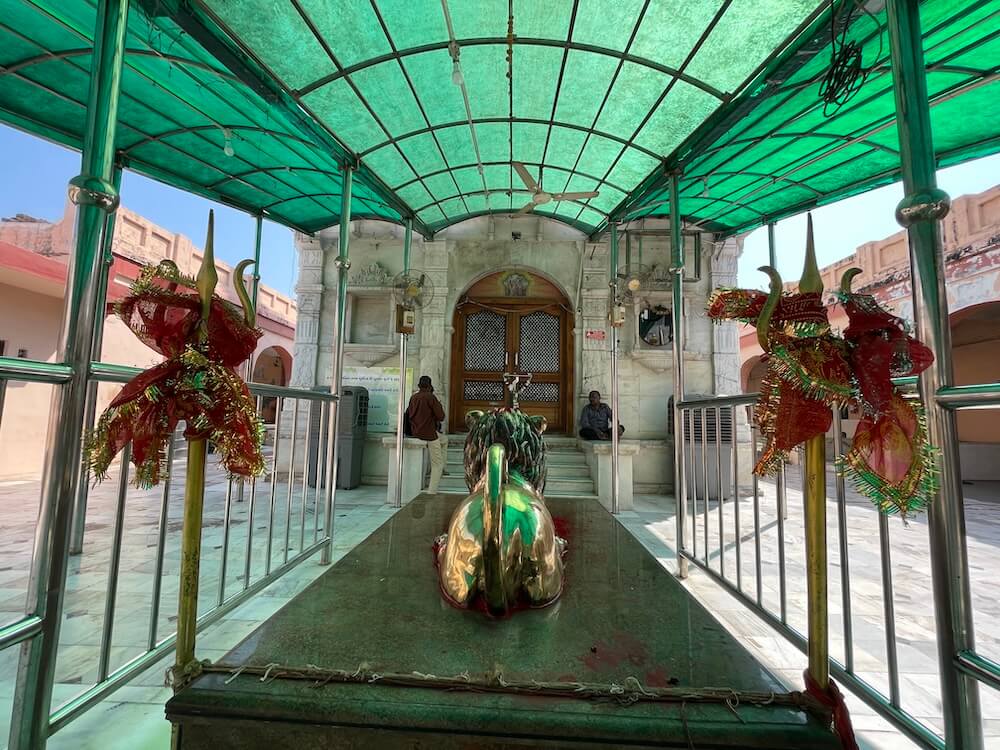 The courtyard is surrounded on three sides by pillared verandas. Within these verandas, the temple office is situated on the right-hand side. From here one enters the Sabhamandap (assembly hall). The hall is encircled by finely carved pillars. As entry into the Garbhagriha (sanctum) is not permitted, devotees take darshan (sacred viewing of the deity) from this assembly hall itself.
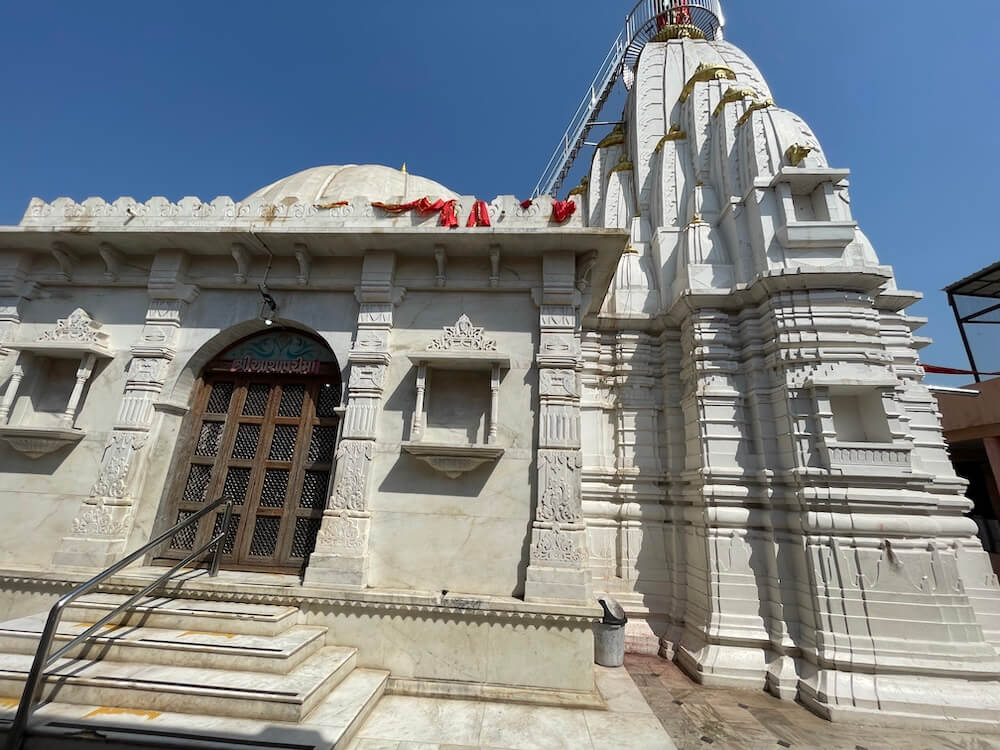
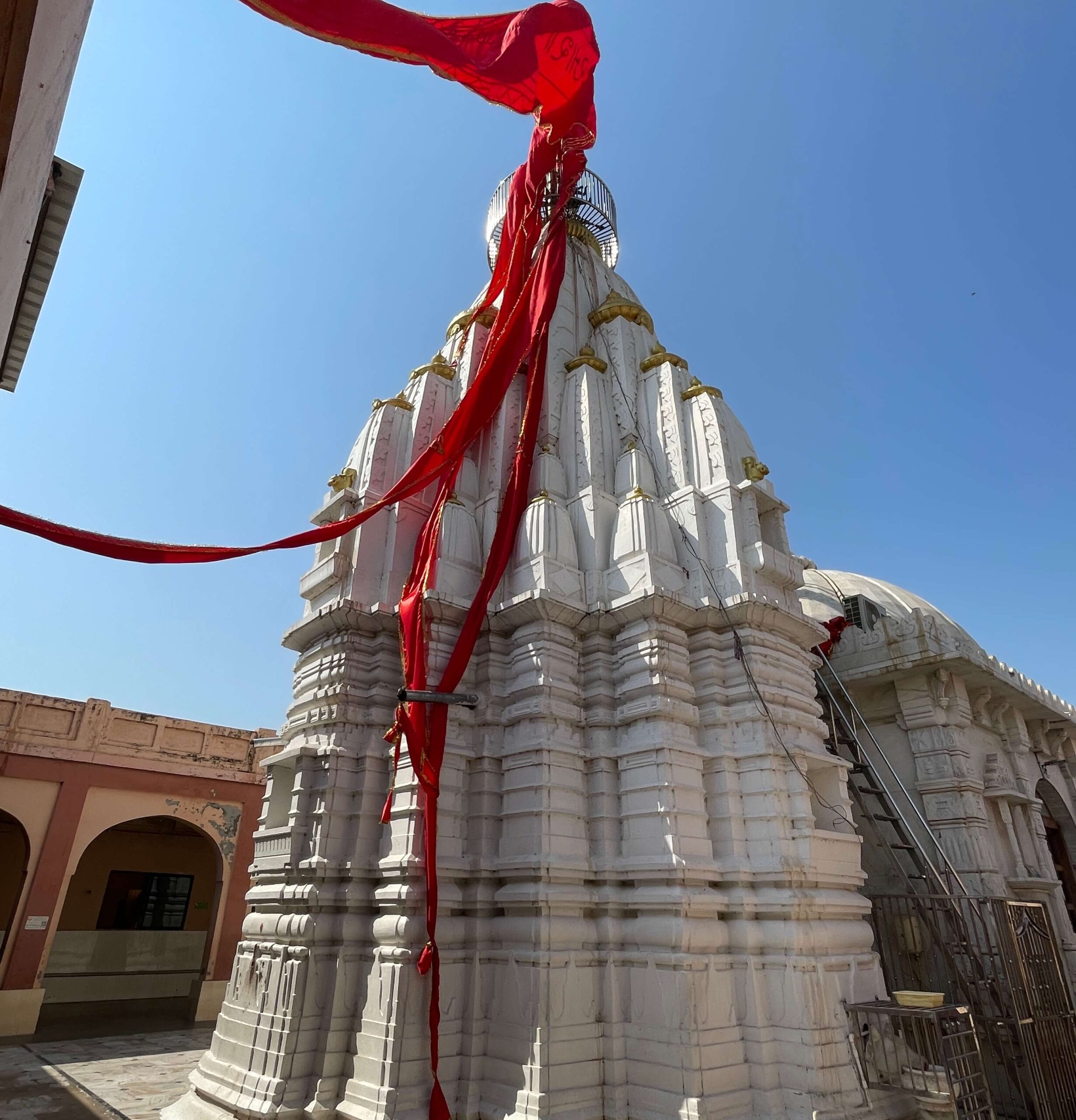
Within the sanctum, upon a Vajrapitha (sacred pedestal), stand two idols carved from red stone. The idol of Asha Mata on the left is slightly smaller in height, while the idol of Puri Mata on the right is larger. Adorned with various garments and ornaments, both images wear resplendent golden crowns. The garbhagriha, when viewed externally, possesses a distinctive star-shaped plan. From the base at ground level to the summit, the structure gradually tapers upward while retaining this star-like formation. 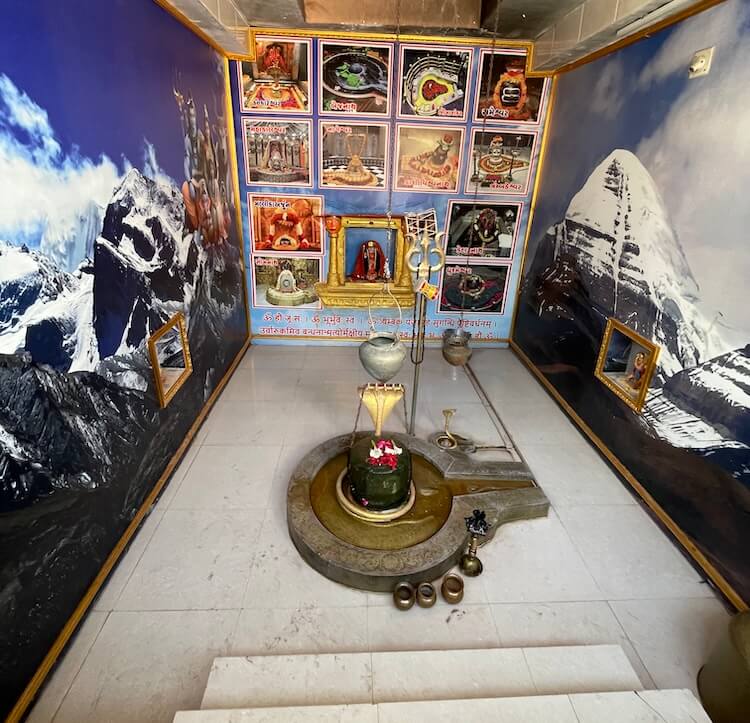 At the pinnacle of the temple spire a large ceremonial flag is seen fluttering proudly. Within the temple precincts are also the idols of Ganesha, Taraleshwar Mahadev, Khodiyar Mata and Hanuman.
Throughout the year, numerous festivals and religious celebrations are observed here with great enthusiasm. On the auspicious days of Bhadrapada Shuddha Ashtami and Navami, the manifestation of the Goddess is commemorated with a grand celebration. On this occasion a large pilgrimage fair is held and thousands of devotees from across the district arrive for the darshan of the Goddess, many of them walking barefoot as part of devotional padayatras (pilgrimage marches on foot).
During the Navratri festival in the month of Ashwin, the temple resonates with vibrant devotional fervour for nine days. During this period, the Goddess is offered a grand ‘Mahabhog’ consisting of fifty-six varieties of sacred food preparations. 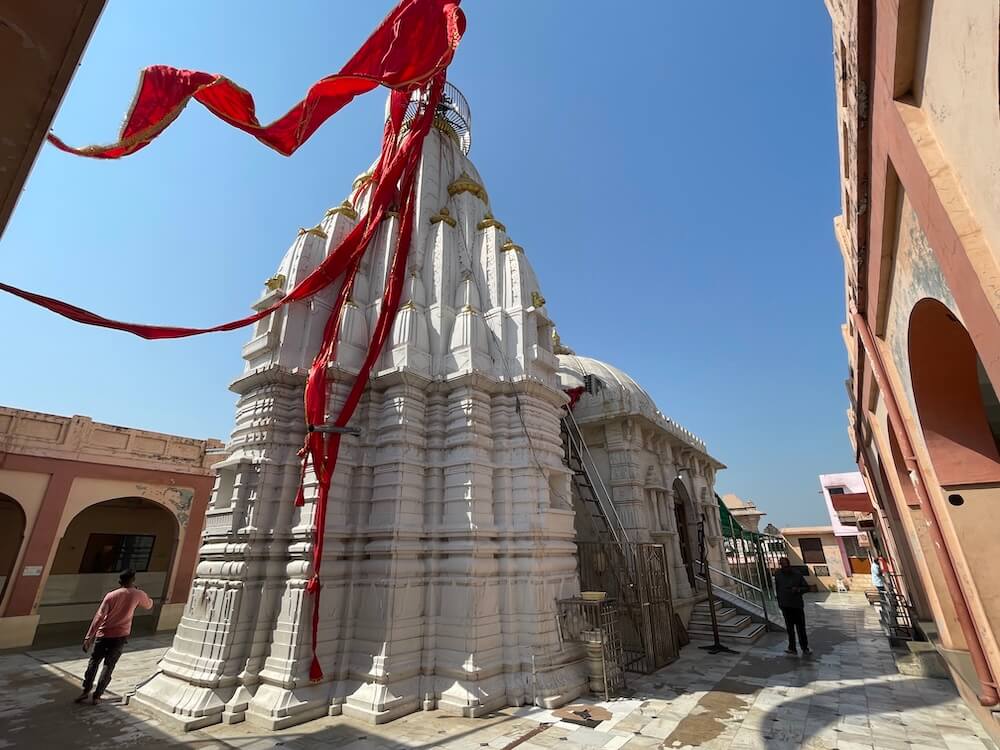 Among several communities of the district, including Brahmins, Kshatriyas, Chauhans and Jadejas, there exists an ancient custom of offering the first ceremonial haircut (mundan) of young children to the Goddess. According to the belief of the community, when the hair of children between the ages of one and five years is offered at this temple, the blessings of the Mother Goddess remain upon them throughout their lives.
Within the temple premises there is also a sacred site of an ‘Akhanda Jyot Yajna’ (an eternal sacred flame maintained through ritual worship). From this sacred flame, it is a continuing religious tradition to carry a consecrated light when establishing new temples dedicated to Asha Mata in other places. The temple is open for devotees daily from 6 am to 1 pm and from 3.30 pm to 9 pm.
Useful Information
- Located at 7 km from Sojitra and 19 km from Anand
- State Transport bus services are available from Sojitra.
- Private vehicles can reach the temple directly.
- Accommodation and breakfast facilities are available in the surrounding area.
- Contact: Temple Office – Mobile: 9978882318
आशापुरा माता मंदिर
पीपलाव, ताल. सोजित्रा, जिला. आनंद
मंदिरे
Temples
मंदिर
-
भीमनाथ महादेव मंदिर लिंबळी, ता. सोजित्रा, जि. आनंद
अधिक माहितीBhimnath Mahadev Temple Limbali, Tal. Sojitra, Dist. Anand
View Detailsभीमनाथ महादेव मंदिर लिम्बाली, ताल. सोजित्रा, जिला. आनंद
विवरण देखें -
मेलडी माता मंदिर मालताज, ता. सोजित्रा, जि. आनंद
अधिक माहितीMeldi Mata Temple Malataj, Tal. Sojitra, Dist. Anand
View Detailsमेलडी माता मंदिर मालताज, ताल. सोजित्रा, जिला. आनंद
विवरण देखें -
चंद्रमौलेश्वर महादेव मंदिर उमरेठ, ता. उमरेठ, जि. आनंद
अधिक माहितीChandramouleshwar Mahadev Temple Umreth, Tal. Umreth, Dist. Anand
View Detailsचंद्रमौलेश्वर महादेव मंदिर उमरेठ, तहसील उमरेठ, जिला आनंद
विवरण देखें