
अन्नपूर्णा शक्तीपीठ (काशी तीर्थ)
मोदीपूर (अंबासन), ता. मेहसाणा, जि. मेहसाणा
Annapurna Shaktipeeth (Kashi Tirtha)
Modipur (Ambasan), Tal. Mehsana, Dist. Mehsana
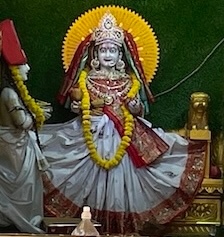 Situated within the village of Modipur (Ambasan) in the Mehsana district lies the Annapurna Shaktipeeth (Kashi Tirtha). This ancient ‘Shaktipeeth’ (seat of divine power) dedicated to Annapurna Devi, the sustainer who provides nourishment to all living beings in creation, is regarded as a paramount centre of devotion. The Goddess is the ‘Kuldevi’ (ancestral family deity) of the Lewa Patidar community and numerous Brahmin families. As the temple precinct houses a separate sanctuary for Kashi Vishwanath, the site is colloquially known as ‘Kashi Tirtha’. A unique tradition observed here involves presenting female devotees with rice as the Goddess’s ‘Prasad’ (sanctified offering). It is the firm belief of the faithful that if this sacred rice is preserved within the household’s granary or treasury, one shall never face a deficiency of wealth or food.
The greatness of Goddess Annapurna, who nourishes the world and fulfils the heartfelt desires of her devotees, is described in exquisite detail in the ‘Markandeya Purana’ composed by Sage Markandeya. Within this Purana, Mother Parvati is addressed as Annapurna. In the ‘Shakta’ tradition, Goddess Annapurna is revered as the consort of Lord Shiva. 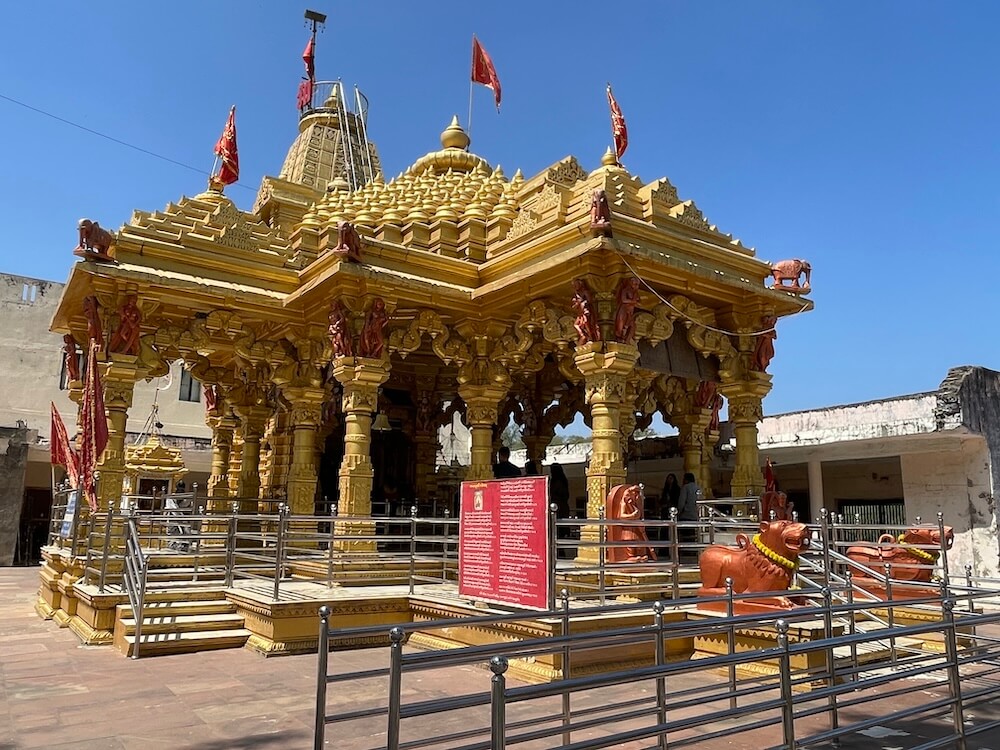 According to mythological lore, a dialogue once ensued between Lord Shiva and Mother Parvati regarding the significance of nature and sustenance. Mahadev characterised nature as an illusion and food as mere ‘Maya’ (unreality). Infuriated by this, Mother Parvati abandoned Kailash to demonstrate the true value of food. With the Goddess’s disappearance, chaos descended upon the universe. The seasonal cycles faltered and a gruesome famine gripped the land. As all living beings across the three worlds languished in hunger, Lord Vishnu informed Mahadev that a woman in the holy city of Kashi was distributing food to the famished. Upon arriving in Kashi, Mahadev found Mother Parvati seated on a jewelled throne, lovingly serving meals to the devotees. Shiva himself sought ‘Bhiksha’ (alms) from the Goddess.
 Mother Annapurna then fed Shiva and all the other deities, thereby alleviating the earthly famine. Since that divine intervention, Mother Parvati has been known as ‘Annapurna’. In the city of Kashi, the primary temple of Mother Annapurna remains situated adjacent to Kashi Vishwanath Mahadev to this day.
Regarding the temple at Modipur (Ambasan), legend dictates that thirteen hundred years ago, during the construction of the magnificent Maharudralaya temple in Gujarat’s Patan district, the influential King Mulraj (r. 941–996 CE) of the Chaulukya dynasty summoned a thousand learned Brahmins from Kashi to perform religious rites. The King granted these Brahmins the fertile lands of Modipur (Ambasan), where they subsequently settled. 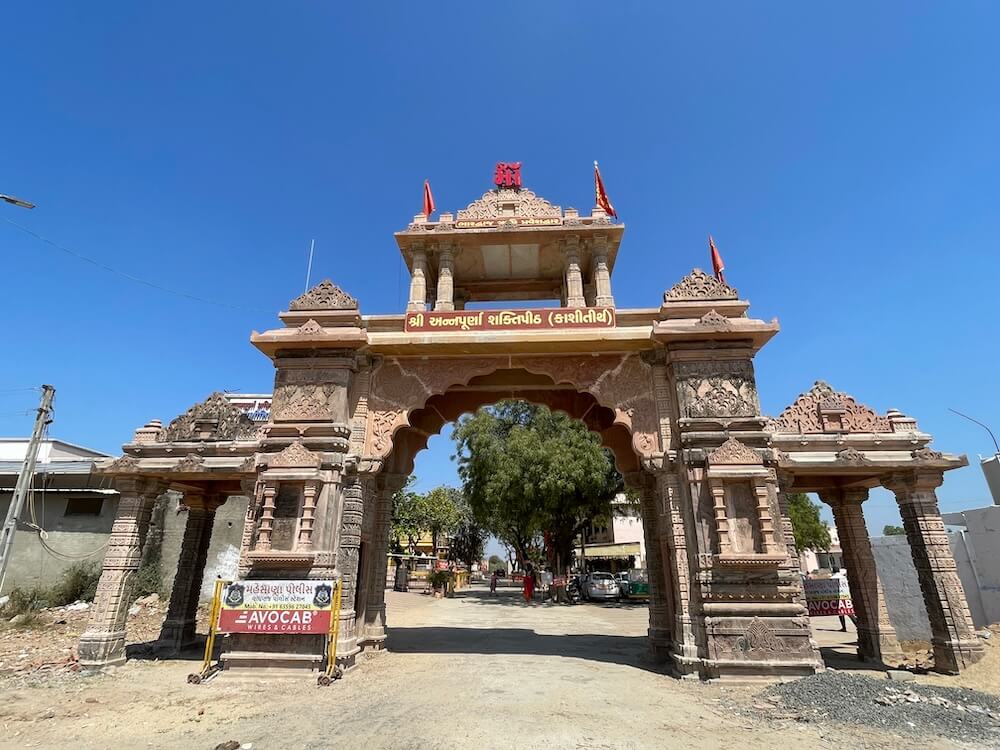 These Brahmins are known even today as the ‘Ambasan (Yagnik) Jani Brahmins’. ==,mkm. /Desiring a grand abode for their ancestral deity, they earnestly petitioned the monarch of the time, leading to the temple’s erection. In the Shalivahan Shaka year 924 (1002 CE), on the auspicious occasion of ‘Kartik Sud Poonam’ (the full moon of the bright half of Kartik), the idol of Mother Annapurna was ceremoniously consecrated by Brahmins of the Bharadwaj ‘Gotra’ (lineage). This historic temple underwent a major restoration on 15 March 1977, on ‘Vaishakh Sud Teras’ (the thirteenth day of the bright half of Vaishakh), at which time a new marble idol of the Goddess was enshrined in the sanctum sanctorum. The Goddess is worshipped as the ‘Kuldevi’ by various Brahmin families, including the Jani, Trivedi, Vyas, Upadhyay, Thakkar and Doshi, as well as the Dariya Kisan community.
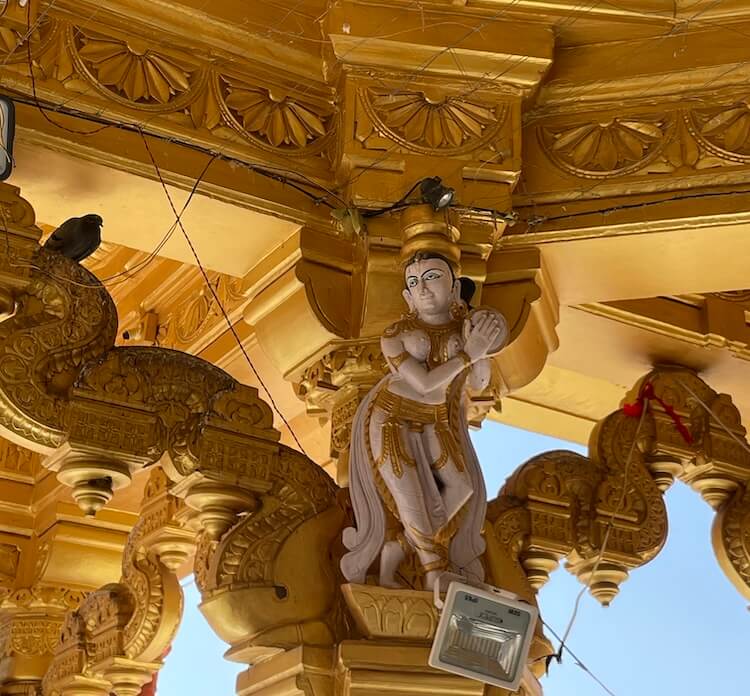
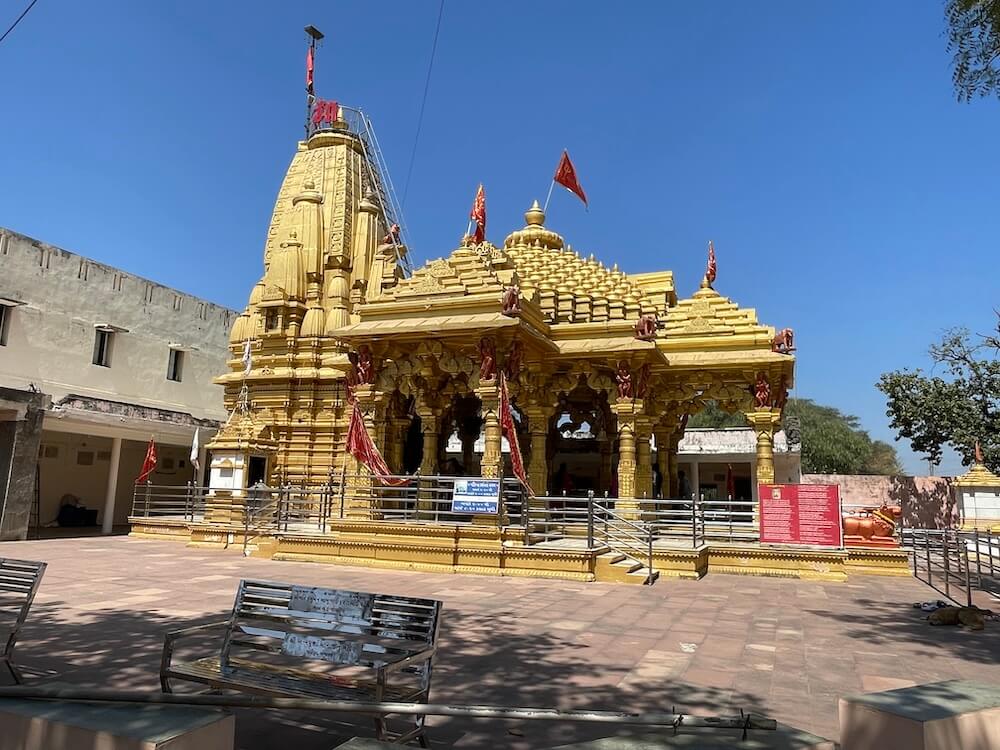
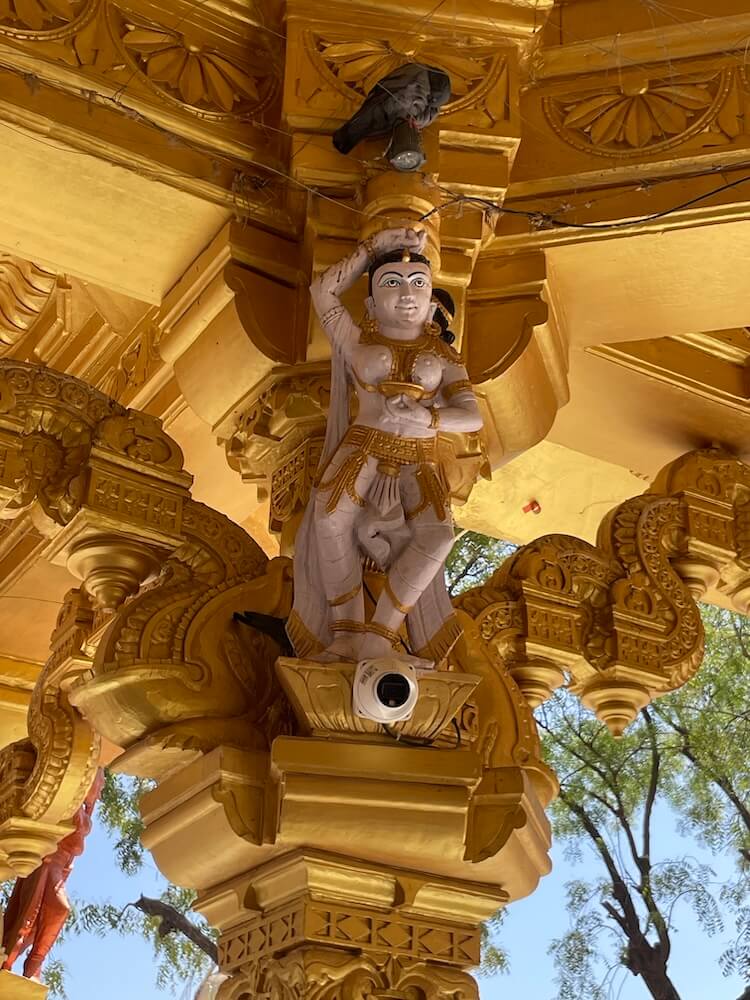
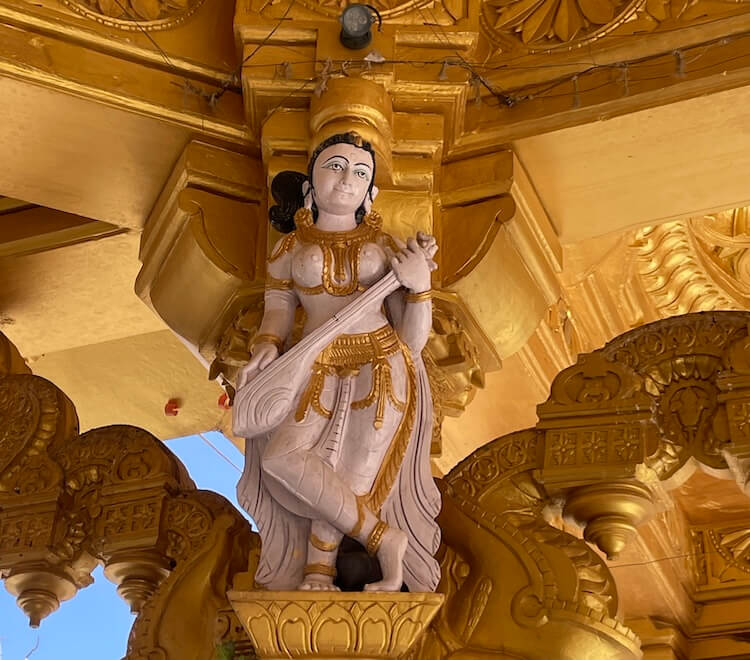
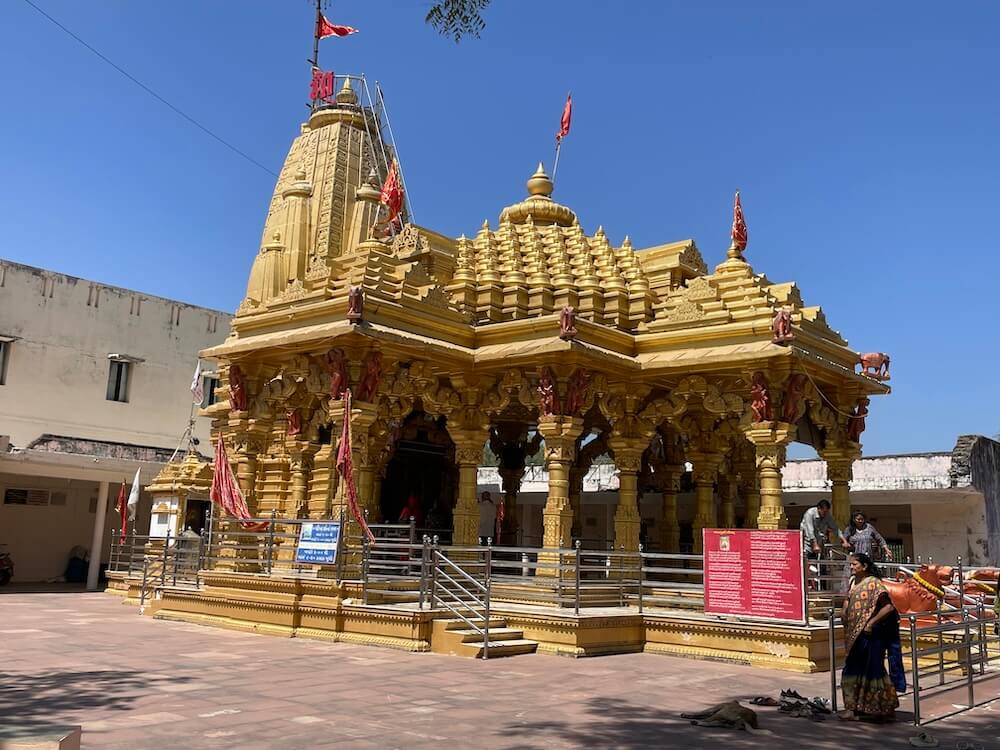
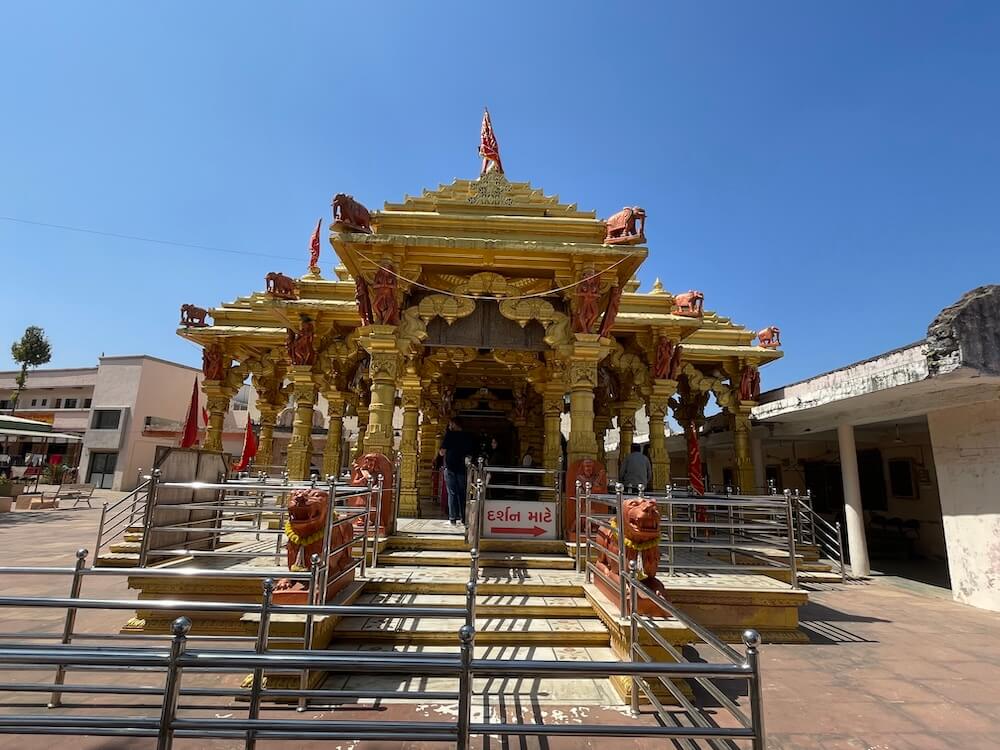 This grand temple is nestled on the border of the two villages, Modipur and Ambasan. Sculptures of lions, the Goddess’s ‘Vahana’ (vehicle), flank the steps leading to the main entrance. At the summit of these stairs, ‘Dwarpalas’ (gatekeepers) stationed on either side welcome the pilgrims. Constructed in the ‘Nagara’ architectural style, the temple features a meticulously planned layout comprising a ‘Mukhamandapa’ (entrance porch), ‘Ardhamandapa’ (half-hall), ‘Sabhamandapa’ (assembly hall), ‘Antarala’ (antechamber) and the ‘Garbhagriha’ (sanctum sanctorum). The pillars are elegantly shaped and adorned with intricate carvings, including beautiful sculptures of ‘Surasundaris’ (celestial beauties) on their upper sections.
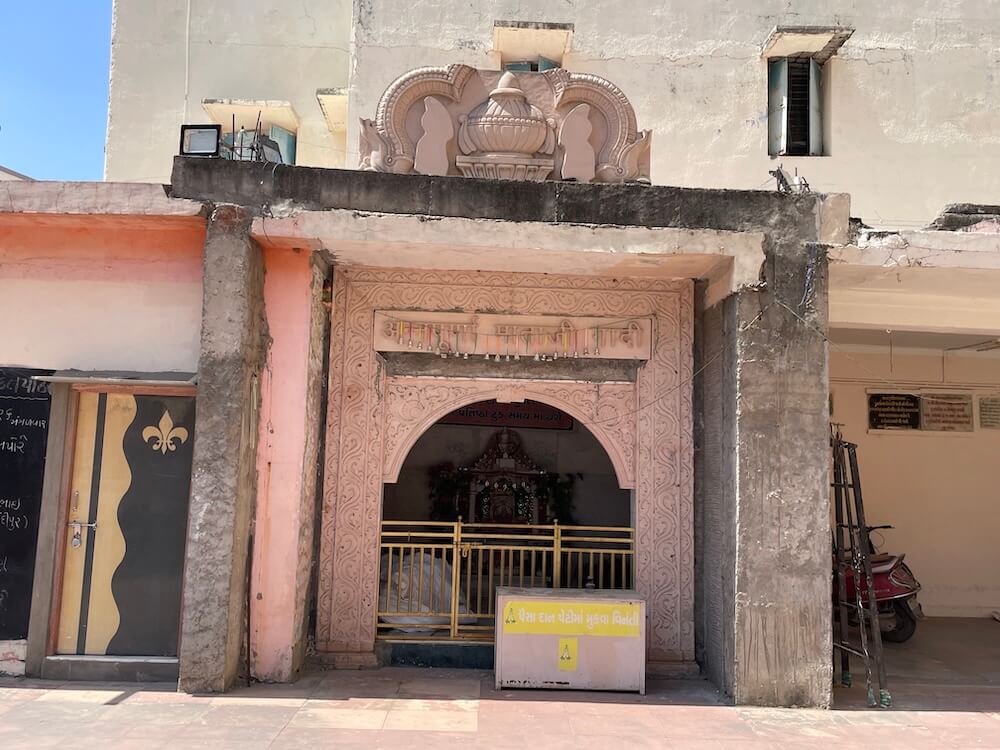
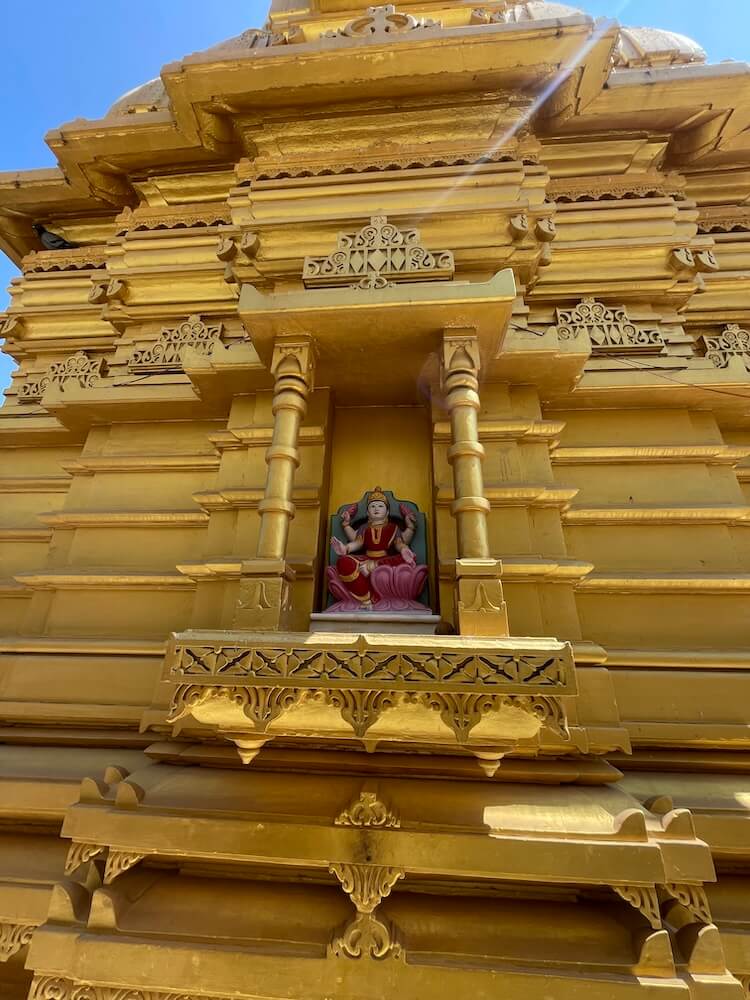
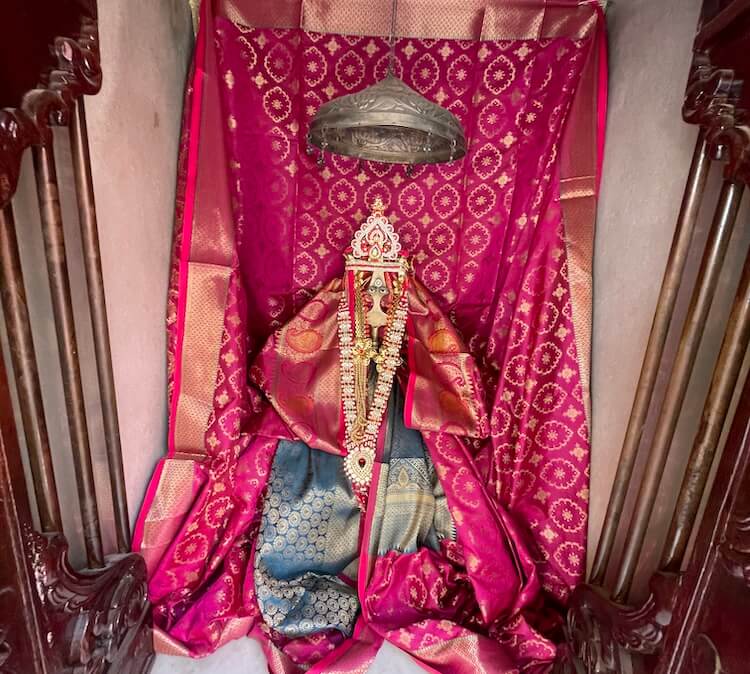
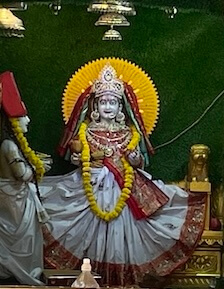
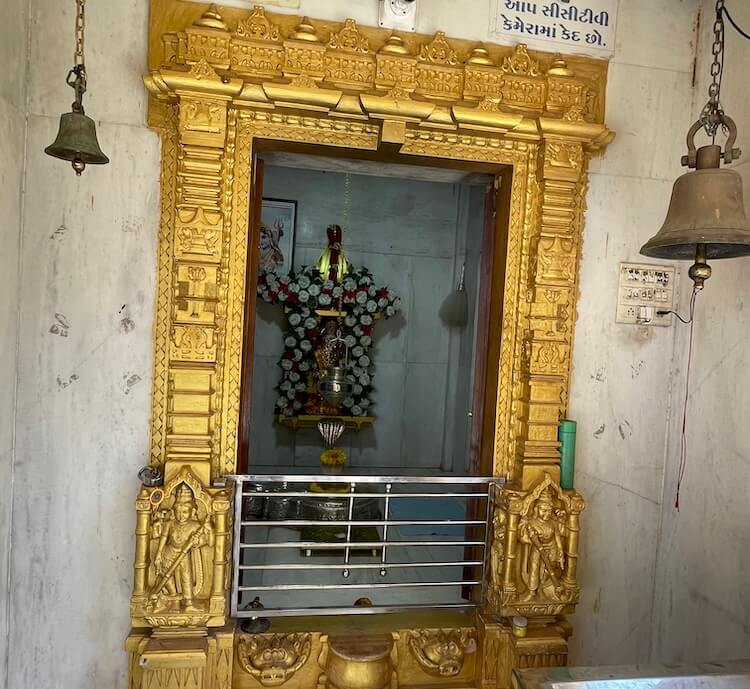
 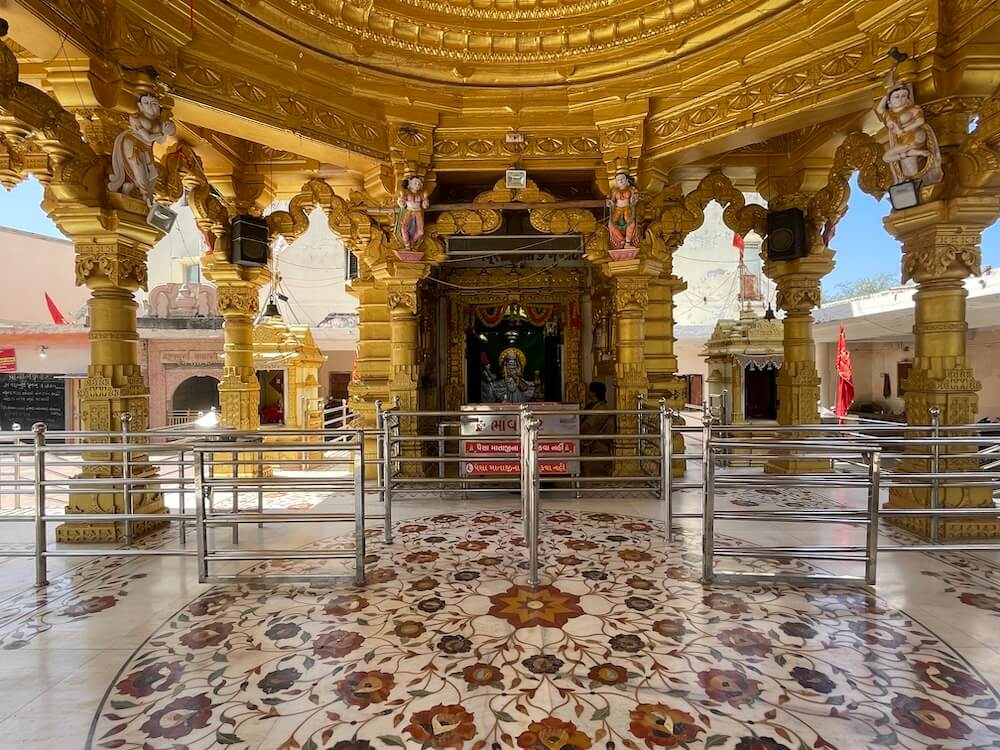 Within the ‘Antarala’, the ‘Devakoshtakas’ (niches) house Ganpati on the left and Batuk Bhairav on the right. Inside the ‘Garbhagriha’, the marble idol of Mother Annapurna resides within a distinctive gold-plated ‘Makhar’ (ornate frame). The enthroned Goddess bears a crescent moon on her brow; adorned with a diamond-studded crown and fine vestments, she is depicted in the act of offering alms to Lord Shiva, who stands to her left. An ancient idol of the Goddess is preserved in a smaller shrine facing the main temple. The golden-hued sanctum is topped by a towering ‘Urushringa’ style ‘Shikhara’ (spire), crowned with a two-tiered ‘Amalaka’ and a golden ‘Kalash’ (pinnacle). The assembly hall’s spire is surrounded by numerous miniature replicas, while the ‘Mukhamandapa’ and ‘Ardhamandapa’ feature spires made of receding square stones.
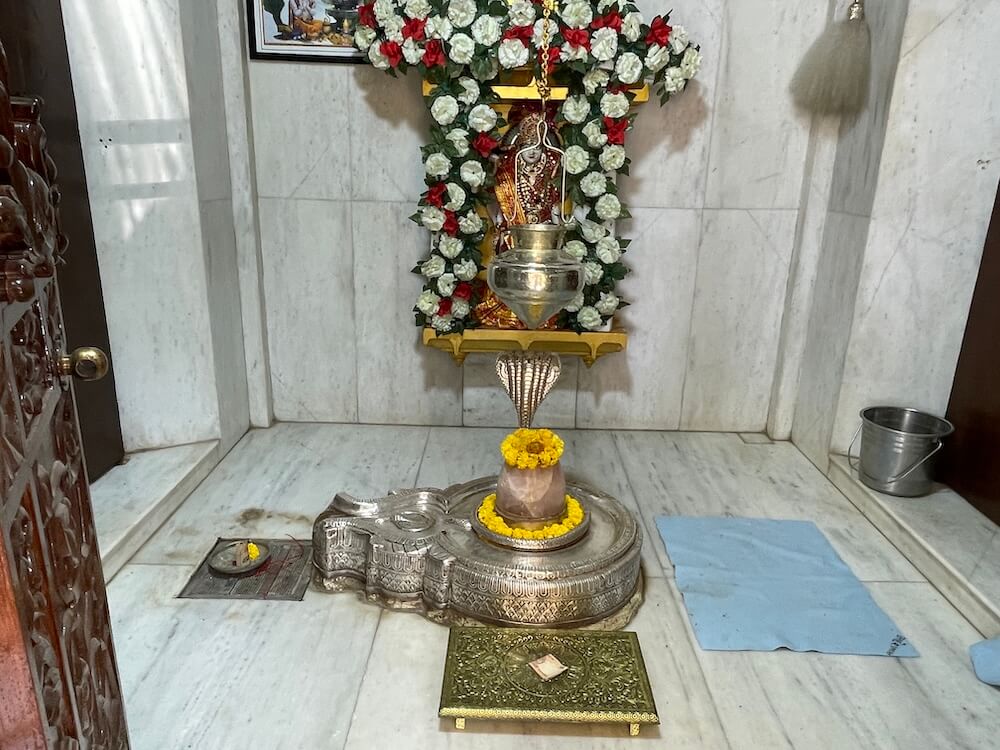
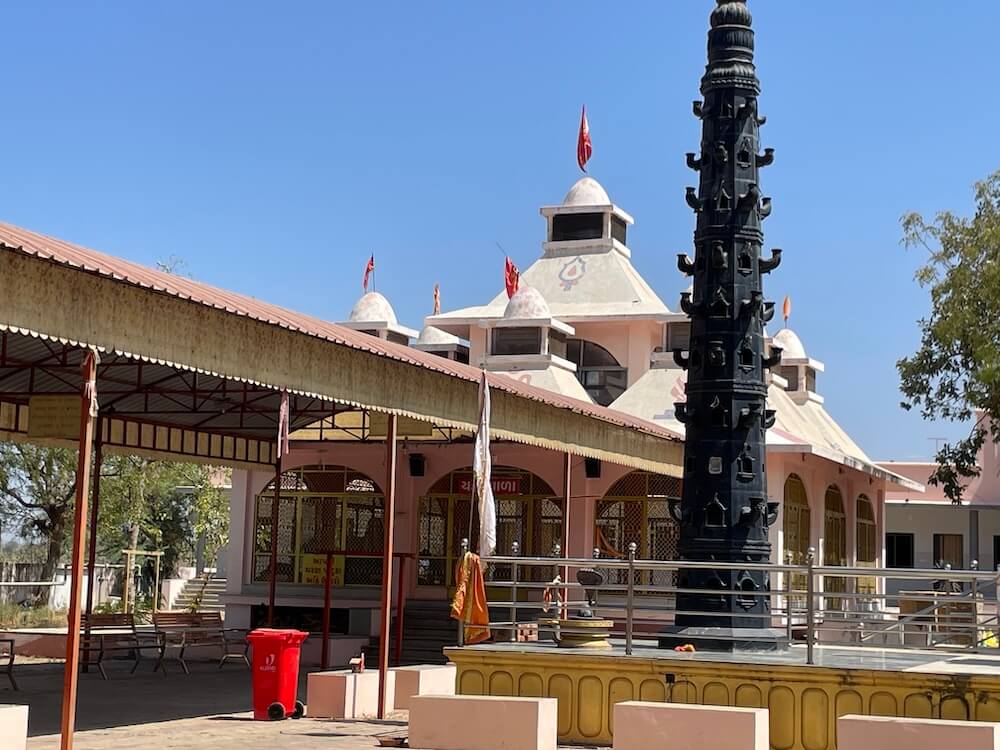
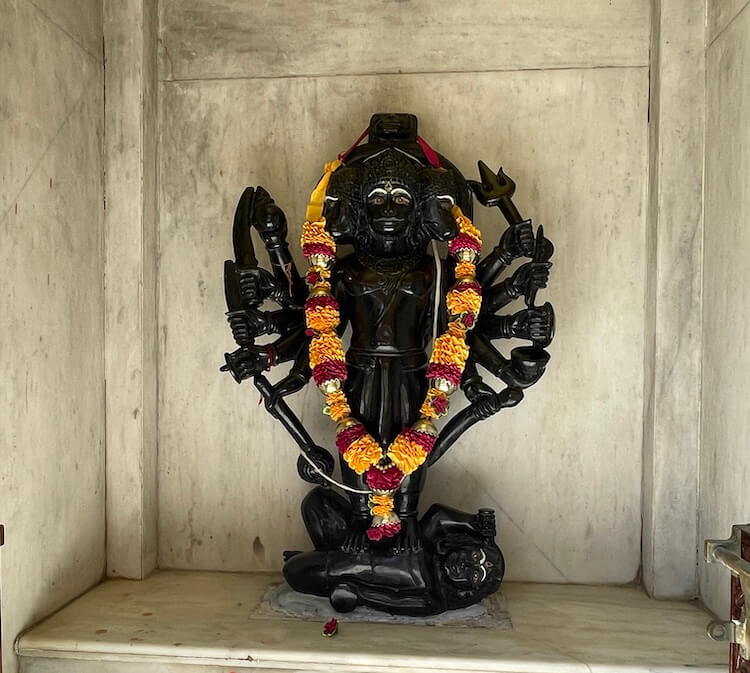
Directly opposite this temple stands the ‘Shivalaya’ of Kashi Vishwanath Mahadev. 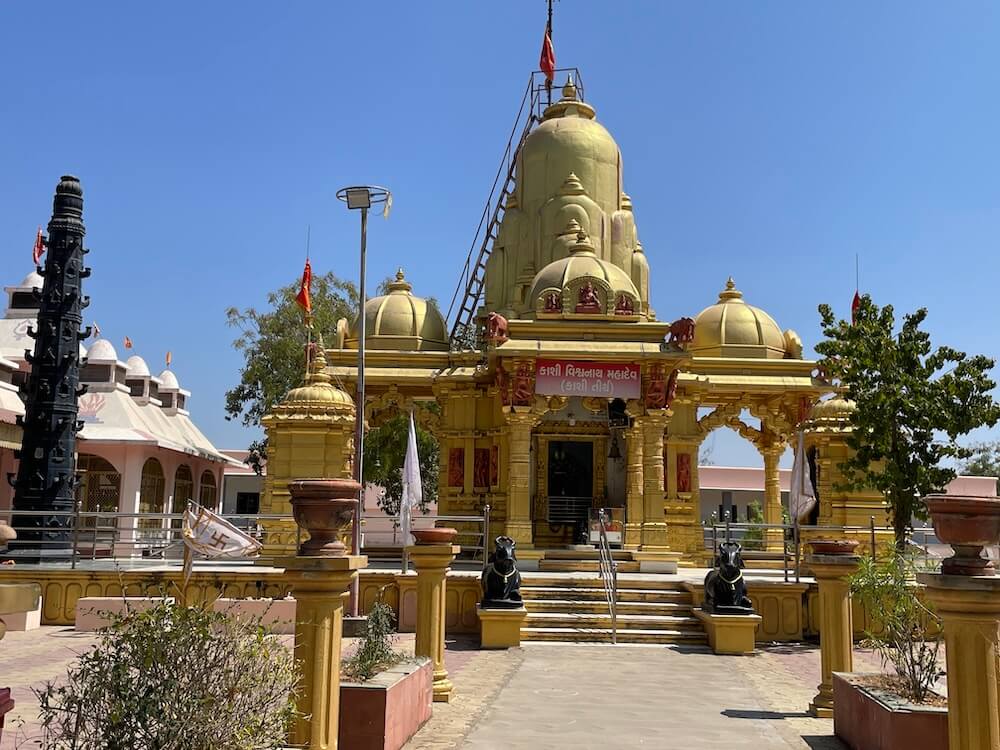 Its foundation was laid in 2014 and the structure, built from Bansi Pahadpur stone, was completed in a mere eight months. In January 2015, a ‘Shivalinga’ fashioned from pink crystal was consecrated within its sanctum, alongside an idol of Shani Dev within the complex. This temple follows a similar architectural plan with a ‘Mukhamandapa’, ‘Ardhamandapa’, ‘Sabhamandapa’ and ‘Garbhagriha’. The spire over the sanctum is uniquely shaped like a ‘Shivalinga’, while the halls feature domed roofs. Exquisite Nandi idols carved from black marble flank the entrance steps. To the left of the temple is a shrine for Ganesha and to the right is an independent temple for the ten-armed ‘Kalamani Ranjit Hanuman’. The ‘Garbhagriha’ houses the ‘Shivalinga’ within a grand silver-plated ‘Shalunka’ (pedestal), with Mother Parvati residing in a niche behind it.
  A tall ‘Deepmala’ (tower of lamps) stands before the temple, lit during festivals.
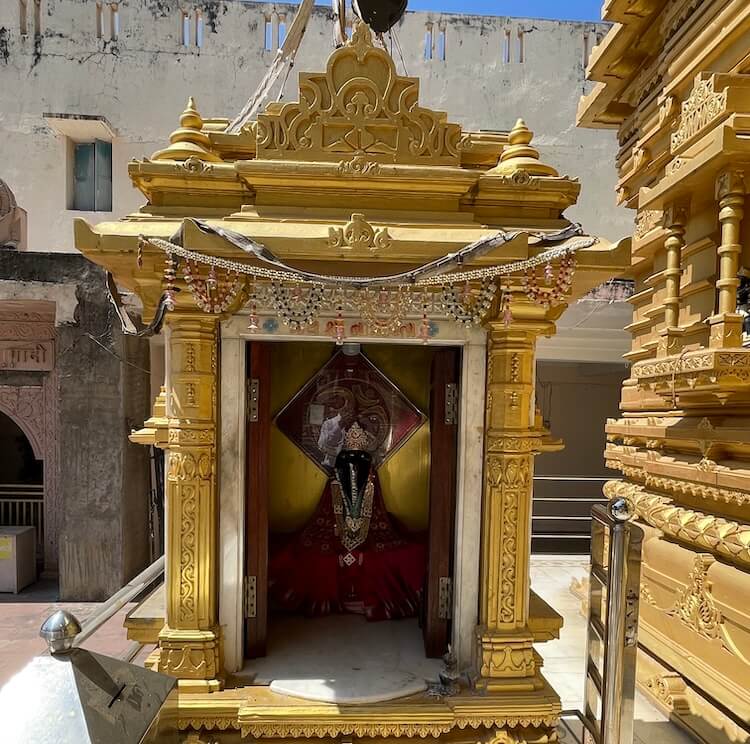
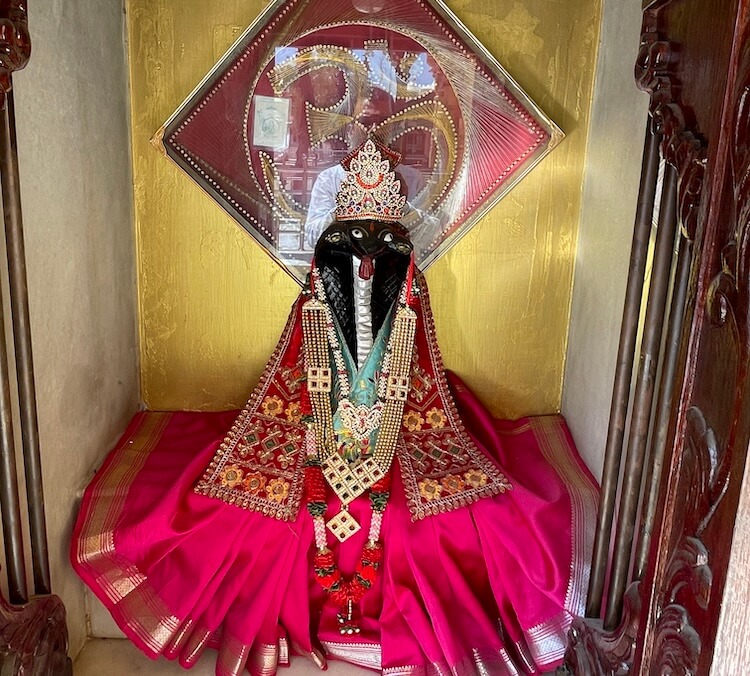
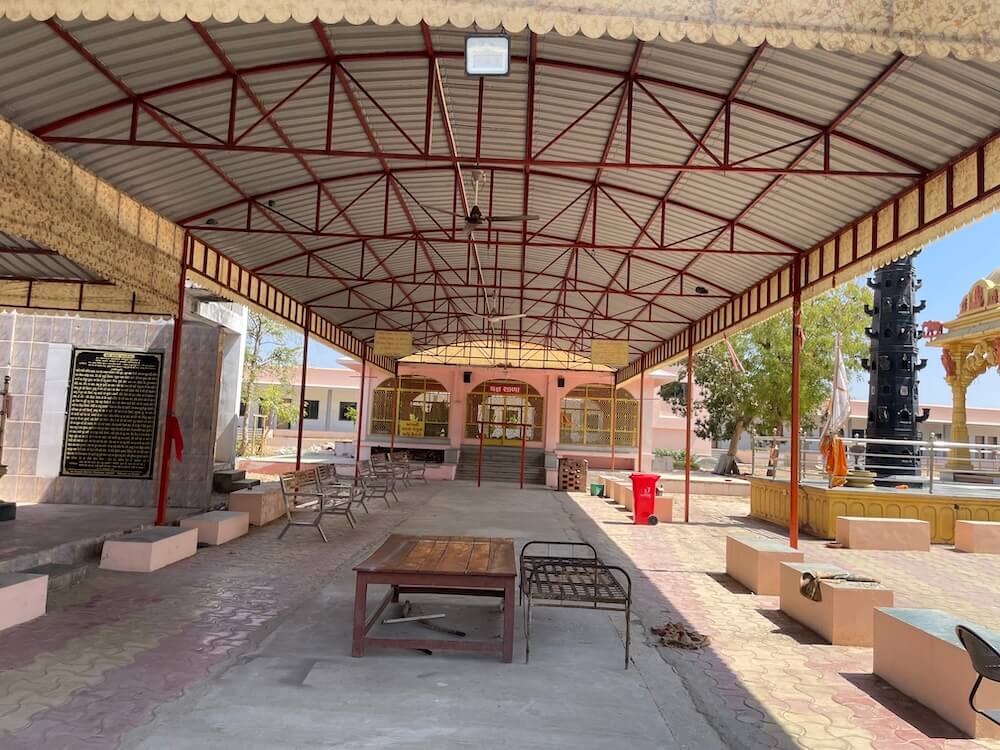
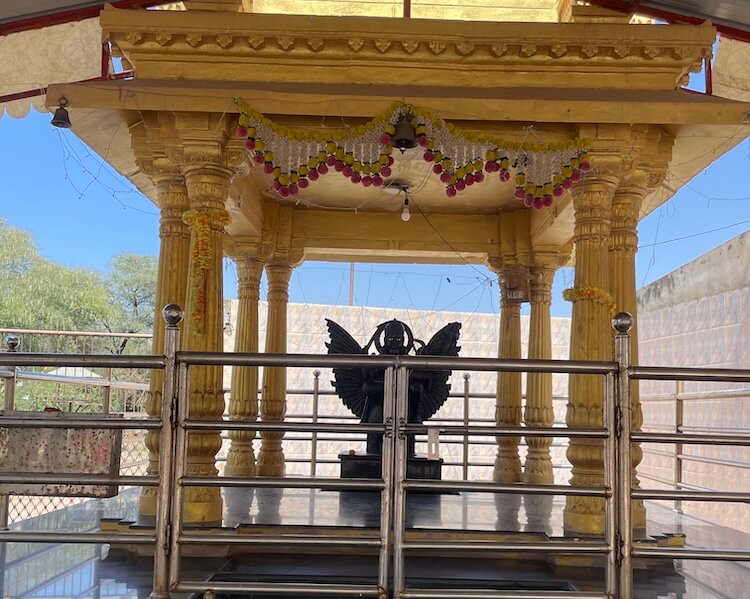
Within the vast precincts of the Annapurna Temple, idols of Shani, Parshuram, Bharadwaj Rishi and the Naga (serpent) deity are also consecrated. The grounds host an ancient ‘Paras Pippala’ (sacred fig) tree and a ‘Yagyashala’ (hall for fire rituals) where various ‘Havan’ ceremonies are performed. Nine separate sacrificial pits are available for ‘Navagraha Shanti’ (rituals to appease the nine planets). The temple’s ‘Annakshetra’ (community kitchen) provides free daily meals to all devotees. For those travelling from afar, a guest house offers rooms at modest rates.
The temple is open for ‘Darshan’ (holy viewing) daily from 6.30 am to 1.00 pm and from 3.00 pm to 8.30 pm. 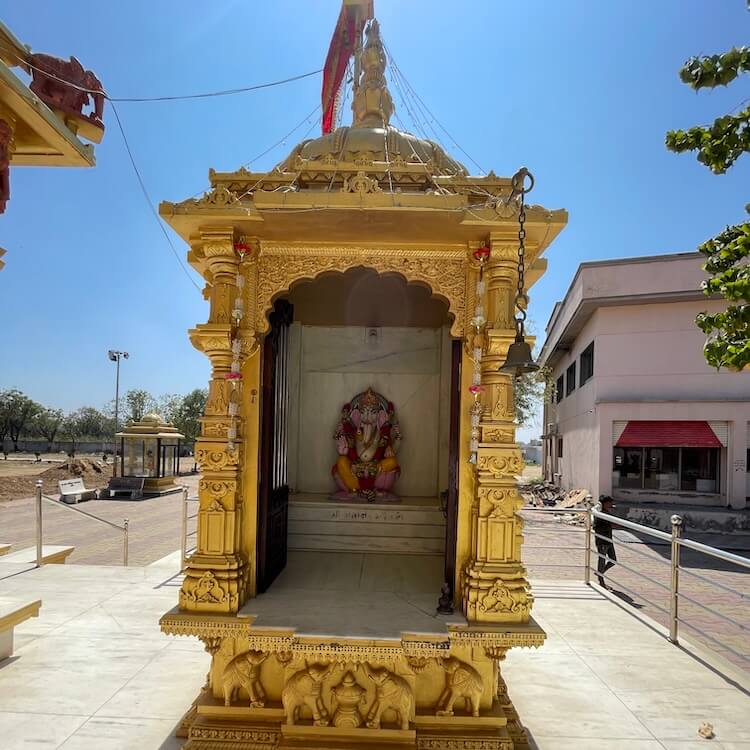 At 4.30 am, the rituals of ‘Abhishek’ (ritual bath), ‘Shringar’ (ornamental dressing) and formal ‘Puja’ (worship) are performed. The first ‘Mangal Aarti’ takes place at 6.30 am. Many devotees make ‘Manata’ (vows) to the Goddess for progeny, relief from physical ailments and the prosperity of their families. From the sixth day of the bright half of ‘Margashirsha’ to the eleventh day of the dark half—a period of 21 days—the Annapurna Vrat Festival is celebrated, accompanied by a large fair. This period is considered exceptionally sacred for the adoration of Annapurna. Hindu scriptures recognise the full moon of ‘Margashirsha’ as the birth anniversary of the Goddess. Consequently, thousands of devotees from across the nation converge upon Modipur during these twenty-one days. On the twenty-second day, a ‘Navchandi Yagya’ is organised. As Goddess Annapurna is the deity of food, the act of ‘Annadaan’ (donating food) is given supreme priority. In this spirit, the Modipur complex has operated its ‘Annakshetra’ uninterrupted for the past forty years, serving free lunch and dinner to every visiting pilgrim. The temple’s anniversary is celebrated with great enthusiasm on ‘Vaishakh Sud Teras’.
Useful Information
- Located at 22 km from Mehsana.
- GSRTC (State Transport) bus services are available to Mehsana from numerous cities in the state.
- GSRTC and private vehicle options are available from Mehsana.
- Private vehicles can reach the temple’s parking area.
- Accommodation and breakfast facilities are available within the premises.
- Contact – Temple Office, Telephone: 02762-284350.
अन्नपूर्णा शक्तिपीठ (काशी तीर्थ)
मोदीपुर (अंबासन), ताल. मेहसाणा, जिला. मेहसाणा
मंदिरे
Temples
मंदिर
-
वैजनाथ महादेव मंदिर महादेवपुरा (गावडा), ता. विजापूर, जि. मेहसाणा
अधिक माहितीVaijnath Mahadev Temple Mahadevpura (Gavada), Tal. Vijapur, Dist. Mehsana
View Detailsवैजनाथ महादेव मंदिर महादेवपुरा (गावड़ा), ताल. विजापुर, जिला. मेहसाणा
विवरण देखें -
वैजनाथ महादेव मंदिर सोखडा, तालुका विजापूर, जिल्हा मेहसाणा
अधिक माहितीVaijanath Mahadev Temple Sokhada, Taluka Vijapur, District Mehsana
View Detailsवैजनाथ महादेव मंदिर सोखाडा, तालुका विजापुर, जिला मेहसाणा
विवरण देखें -
काशी विश्वनाथ महादेव मंदिर मेहसाणा, जि. मेहसाणा
अधिक माहितीKashi Vishwanath Mahadev Temple Mehsana, Dist. Mehsana
View Detailsकाशी विश्वनाथ महादेव मंदिर मेहसाणा, जिला. मेहसाणा
विवरण देखें