 In the sixteenth century, the saint Tulsidas composed the revered hymn Hanuman Chalisa, in which Hanuman is described as the ‘ocean of wisdom and virtue’, ‘the great warrior’ and ‘the radiant one full of power’. He also proclaimed Hanuman as the divine force, who liberates devotees from all perils and at whose very name ghosts and evil spirits flee. Worship of this mighty deity has been an integral part of Indian spiritual tradition since ancient times. In Indore, Hanuman is revered at the Ranjit Hanuman Temple as the victorious hero of battle. Devotees firmly believe in the miraculous powers of the deity enshrined here and every year millions of pilgrims come for darshan.
The history of this temple traces back about 134 years. 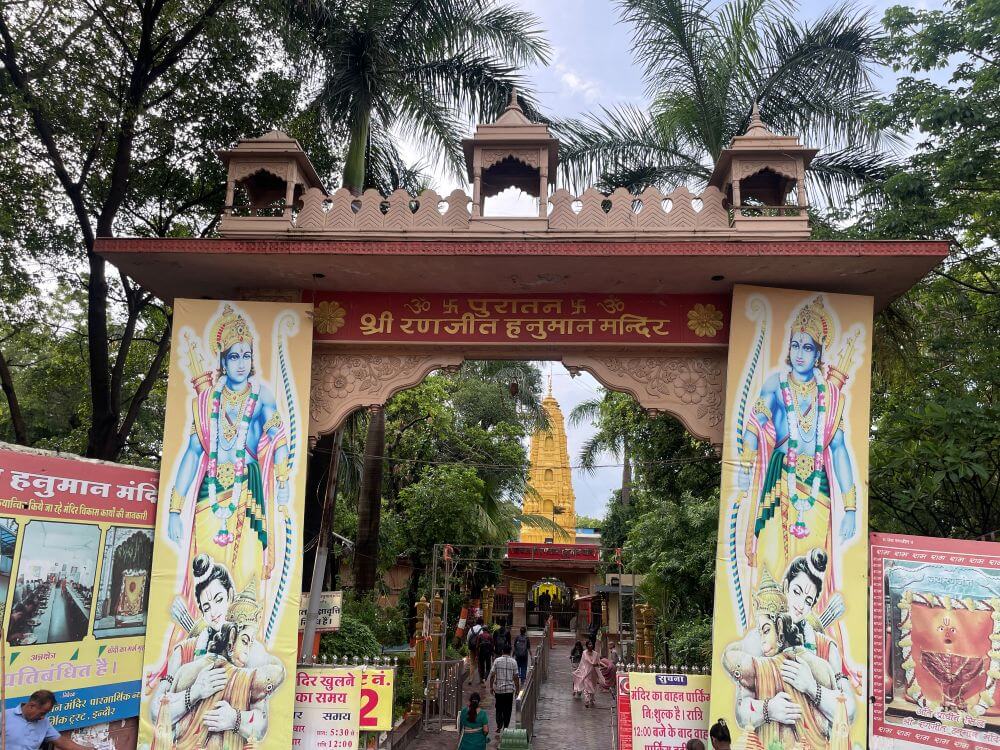 Around 1891, when Maharaja Shivajirao Holkar was on the throne of the Indore state, the temple was established. Bholaram Vyas is remembered as the temple’s founder and first priest. It is believed that the idol of Hanuman here is self-manifested. In the beginning, Bholaram enshrined the idol in a humble shed made of tin sheets. Over time, the temple was gradually renovated. After 1992, a large hall was added and in 2005, when the district administration took over management, the temple began to take on its present grand form.
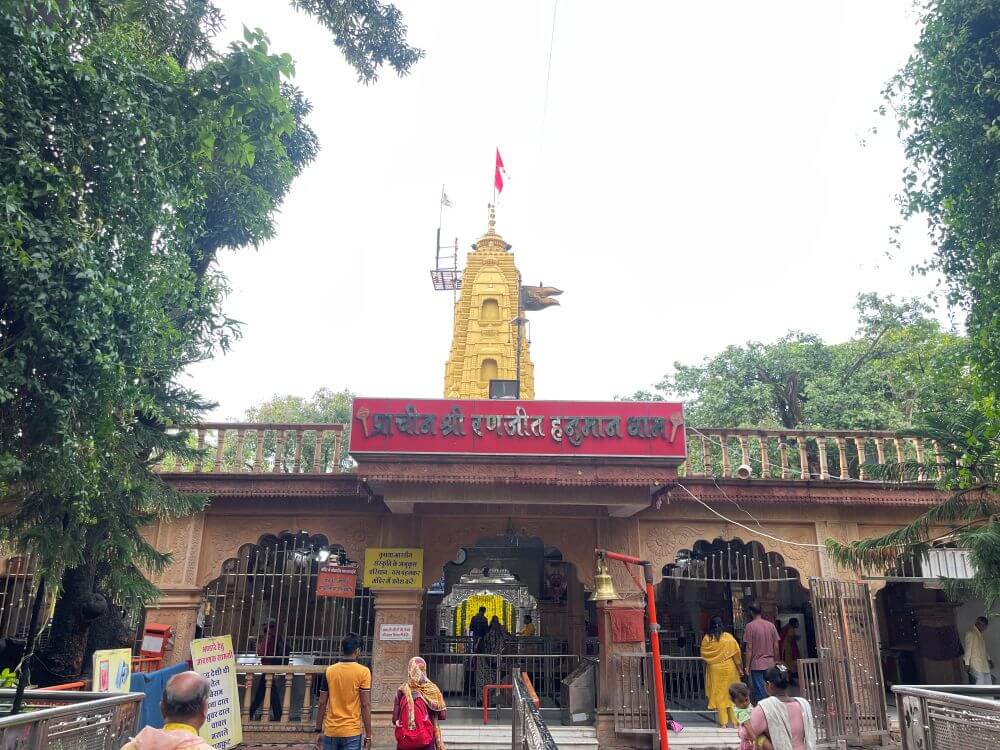
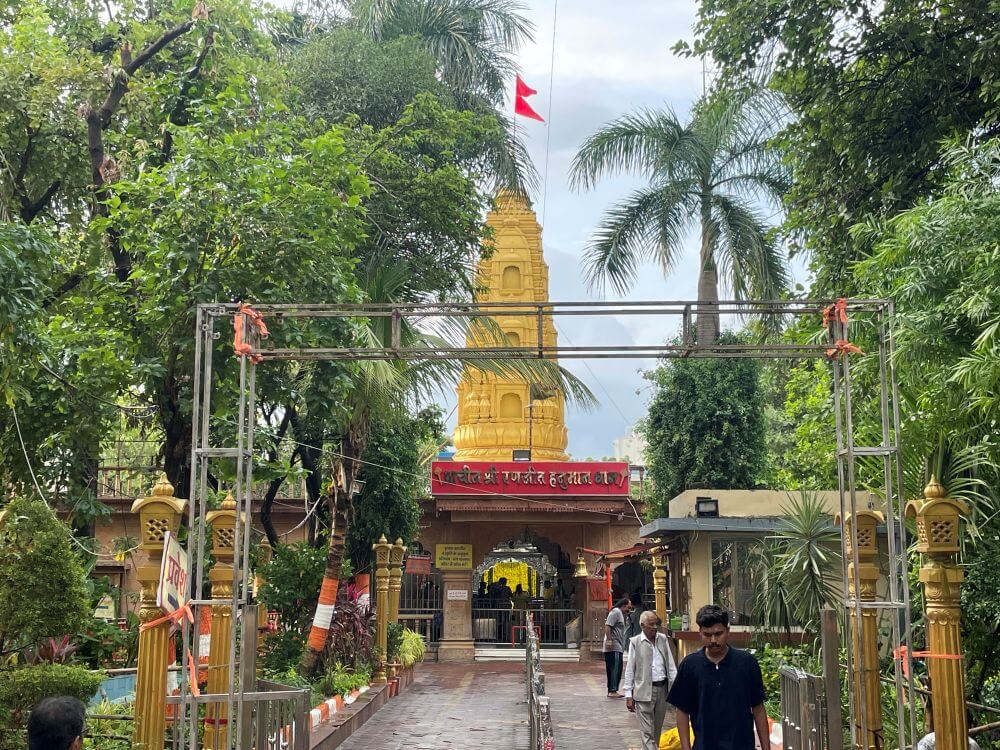
The temple is spread over nearly four acres in the western part of the city. A tall, arched gateway greets visitors, beyond which the majestic spire of the temple captures the eye. Built in the Nagara style of architecture, the spire is of the urushringa type. Rising from a lotus form, it is adorned at its lower tiers with several smaller carved spires. 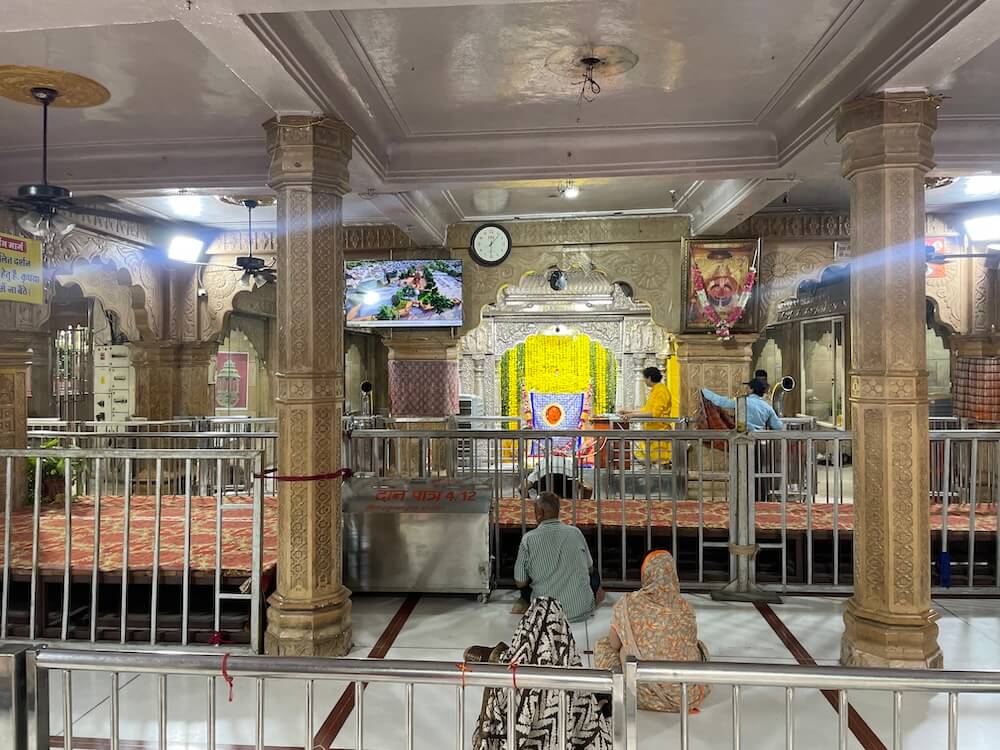 Delicate niches with divine motifs are sculpted all around. At the top sits the sacred amalaka and above it, a soaring kalasha, crowned with a saffron flag fluttering proudly.
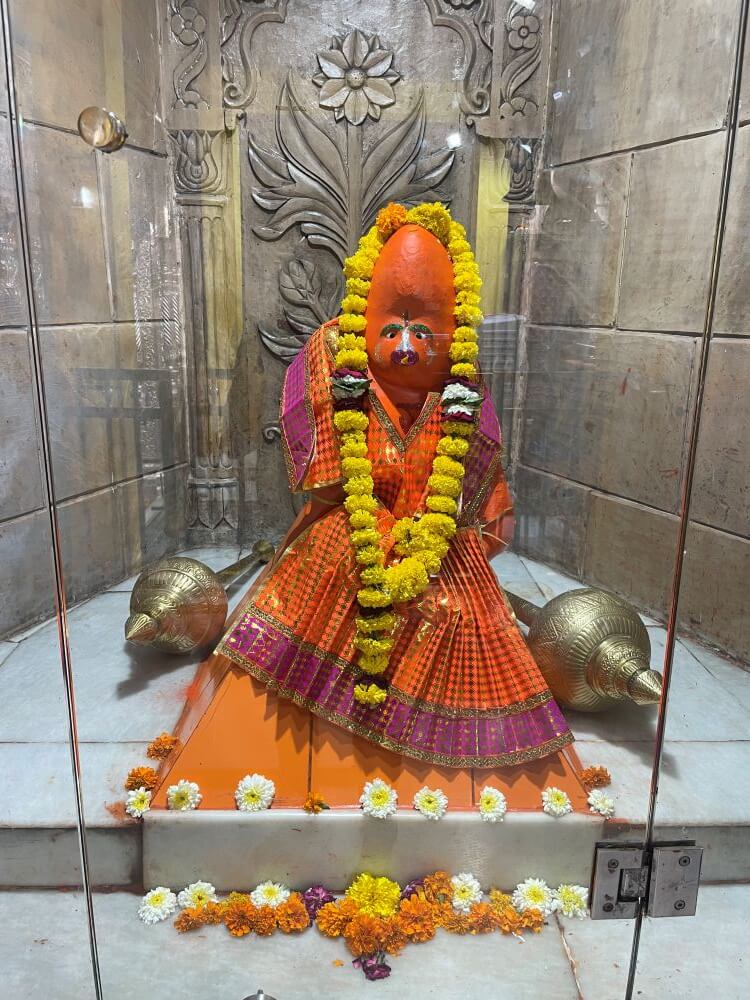
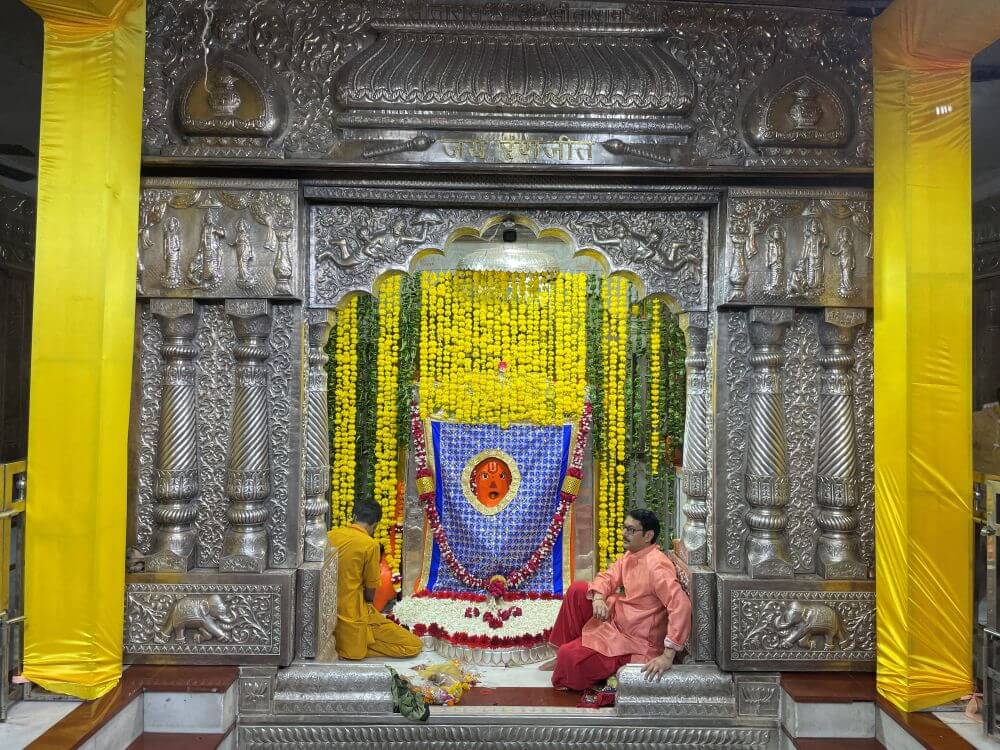
The temple consists of a spacious assembly hall leading to the sanctum with its circumambulatory path. The hall is supported by numerous ornate, arched pillars, with a central open space fenced off with steel railings. This is where devotees gather during aarti and other celebrations. The sanctum is richly decorated. Its walls and pillars gleam with embossed silver sheets. At the base of the doorway pillars are sculpted elephants, while the upper lintel displays intricate reliefs of Shri Ram, Lakshman, Sita and Hanuman. On either side of the doorway arch, Hanuman is depicted flying with the Dronagiri mountain. I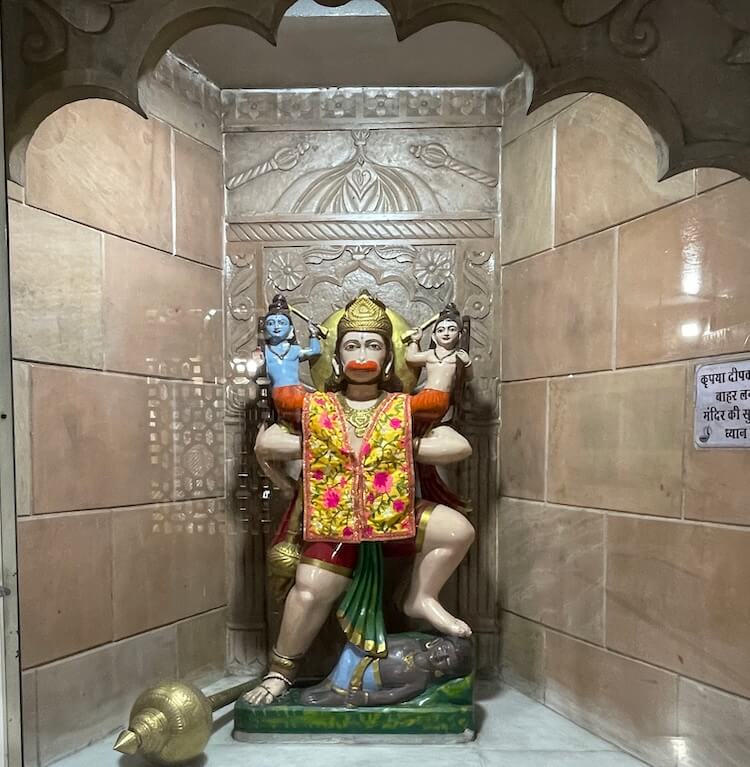 nside, garlanded with fresh flowers, the self-manifested idol of Hanuman sits majestically upon a tall vajrapeeth. Draped in resplendent cloth, the idol faces southeast and only the face is visible to worshippers. Originally around three and a half feet tall, the idol has grown taller over the decades as layers of vermilion have been applied year after year.
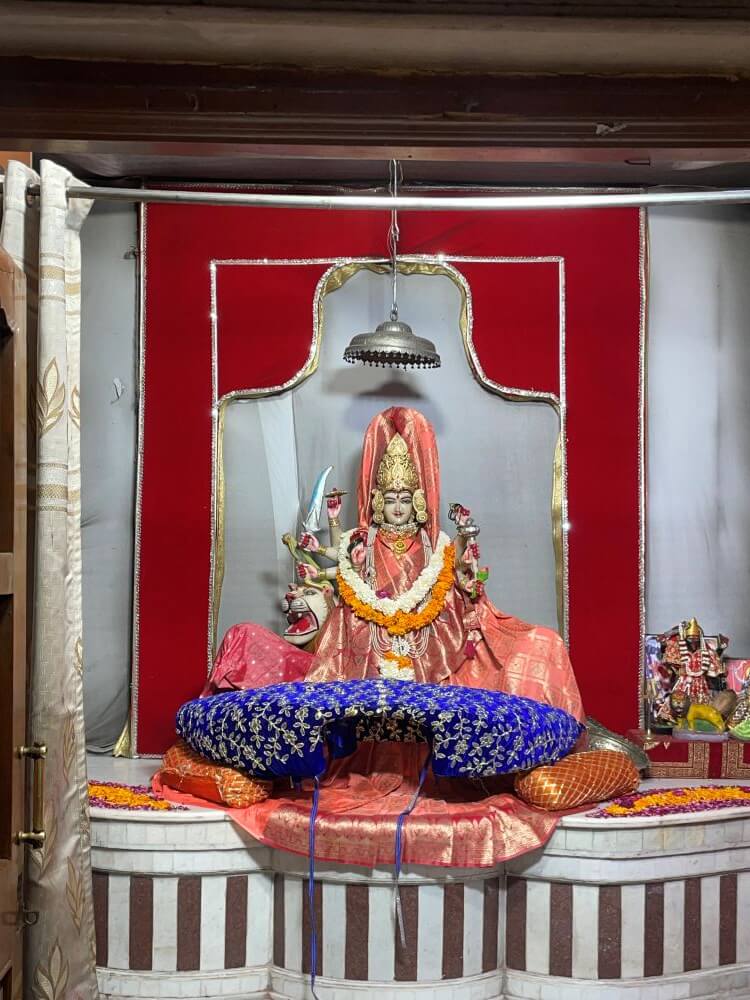
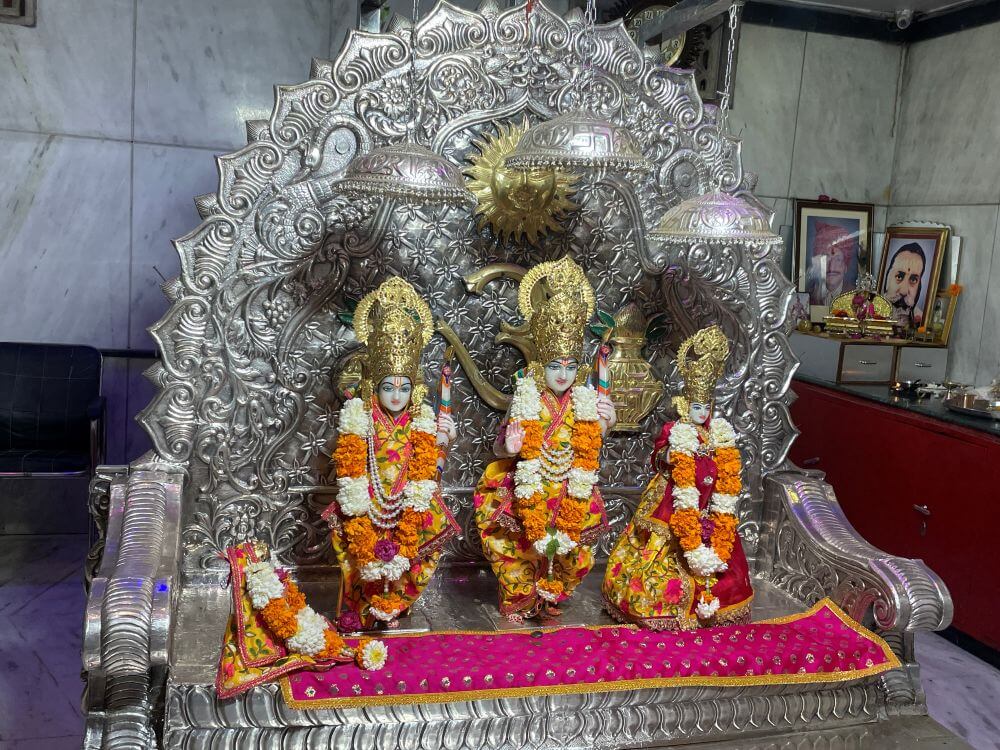
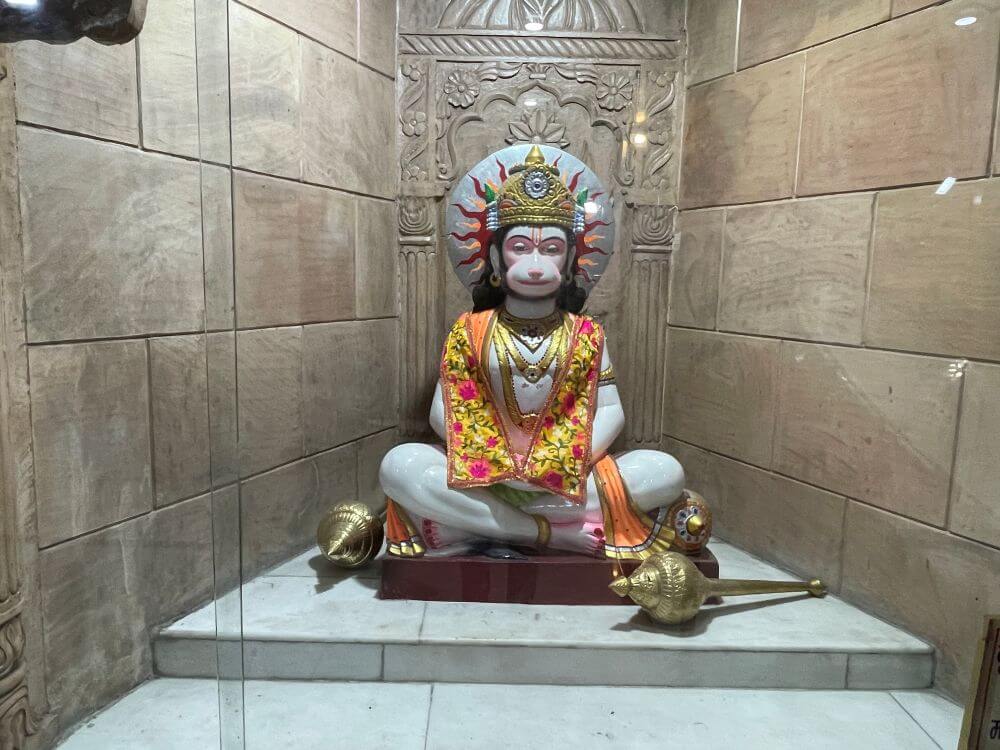
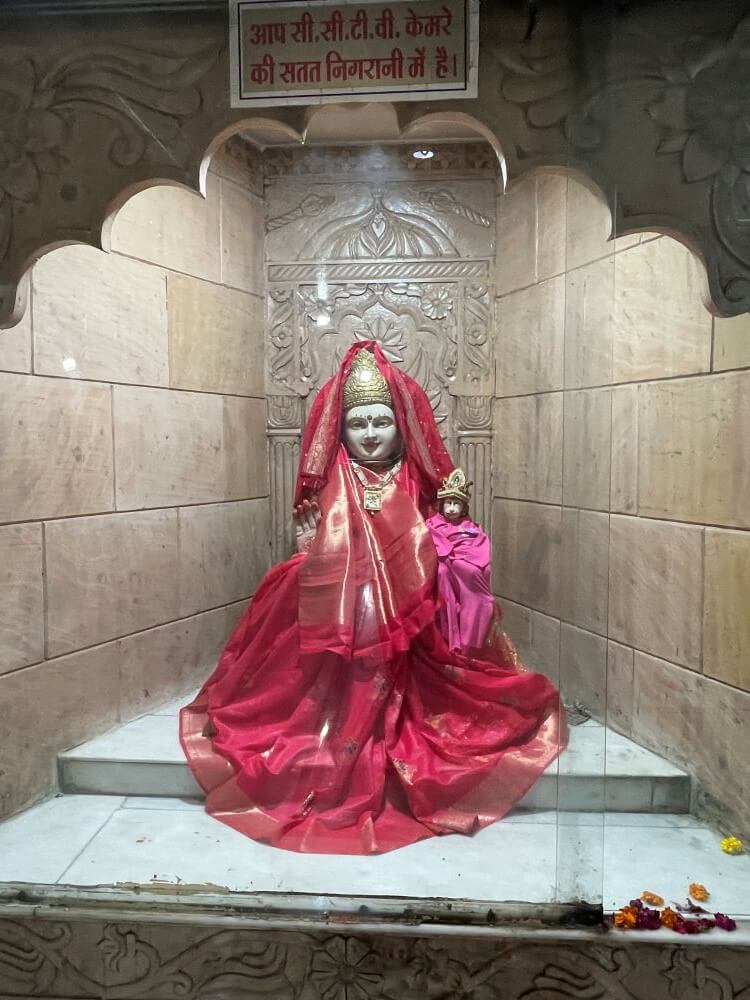
Along the circumambulatory path, shrines of other deities enrich the temple’s spiritual aura. Various forms of Hanuman are also enshrined : the mighty warrior crushing a demon underfoot while carrying Shri Ram and Lakshman on his shoulders, the humble devotee in prayer, the five-faced and ten-armed Hanuman and the meditative ascetic form. A separate shrine holds a large wooden mace, believed to be self-manifested. Within the complex are also temples dedicated to Dattatreya, Bhairav, Sheetala Mata and Shani. In Shani’s shrine, the deity sits on a marble pedestal at the center, surrounded by idols of the Navagrahas.
Tuesdays and Saturdays draw immense crowds for the aarti and the recitation of Sundarkand. 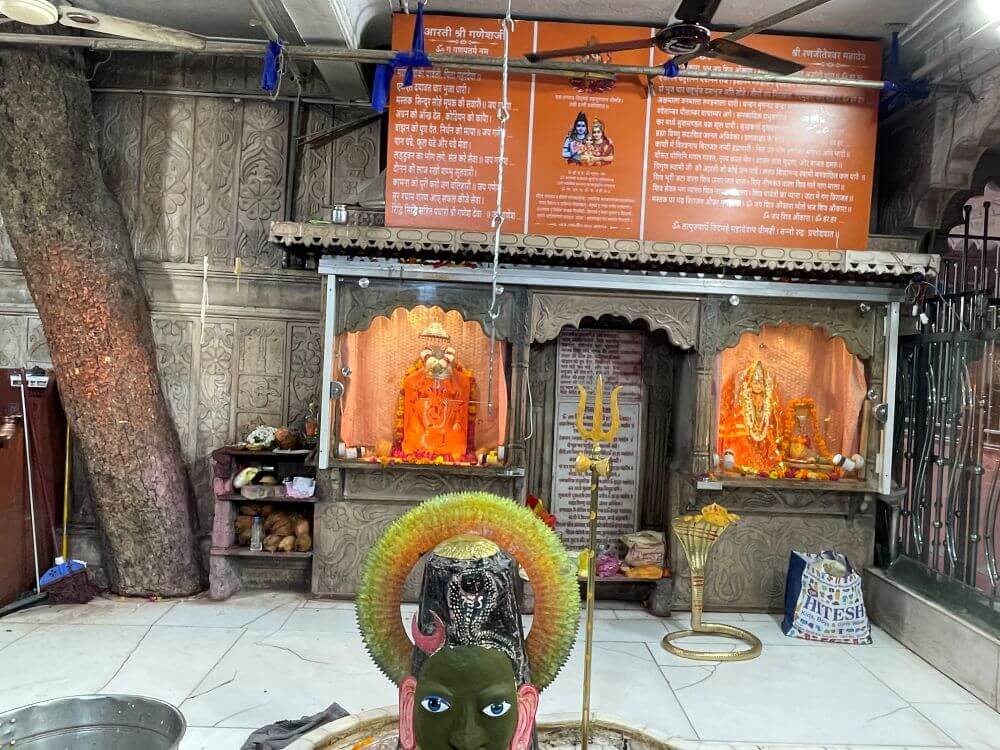 On these days, devotees can have darshan from as early as 5:30 in the morning until midnight. On other days, the temple is open until 11 p.m. Hanuman Jayanti and Vijayadashami are celebrated with grandeur, but perhaps the most unique festival here is the annual Prabhat Pheri held on Paush Krishna Ashtami. What began decades ago as a modest procession with just a few devotees carrying a small image of Hanuman has, since 1985, transformed into a spectacular event. That year, the idol was placed on a vehicle; by 2008 it was carried on a decorated buggy and from 2015, on a magnificent chariot.
Since 2016, the number of participants has grown manyfold, with devotees not only from Indore but also from surrounding towns joining in. The procession is enriched with tableaux, devotional music groups, buggies and decorated chariots. On the third day of the Ashtami festival, the idol is ceremonially bathed in the Mahabhishek. On this occasion, sanctified protective threads (raksha-dhaga) are distributed to devotees free of cost. The temple’s management is overseen by the district administration and a large dining hall within the complex serves food to around 400 devotees daily. After Hanuman Jayanti and again after Diwali, grand bhandaras are organized, drawing thousands of devotees.