
अंबाजी माता मंदिर
भरूच, ता./जि. भरुच
Ambaji Mata Temple
Bharuch, Tal./Dist. Bharuch
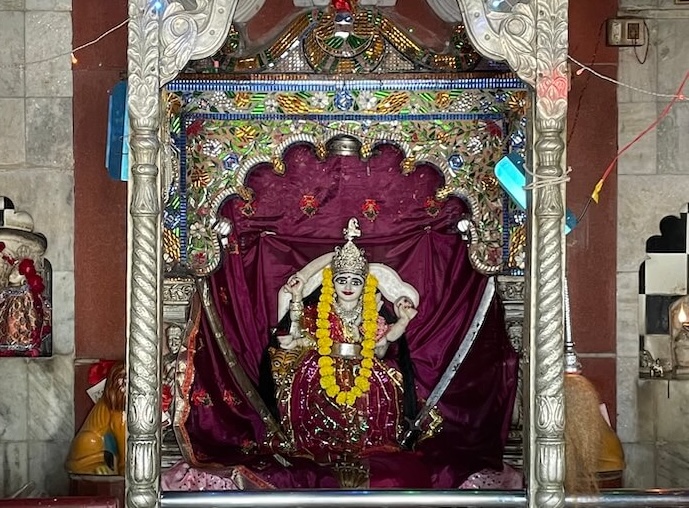 Steeped in a legacy dating back to the 4th century BC, the city of Bharuch is said to have been founded by the sage Bhrigu. In antiquity, this urban centre was known as Bhrigupur or Bhrigukachchha. The shrine of Ambaji Mata in this city is believed to be nearly as ancient as the settlement itself. According to the sacred lore of the site, the idol of Ambaji Mata enshrined here is two thousand years old. Alongside Ambaji Mata, the temple complex also houses the shrines of Santoshi Mata and Matangi Modheshwari Mata. Furthermore, this sacred precinct preserves an ancient Shri Bijayantra.
According to mythological texts, Amba Mata is a manifestation of Goddess Parvati.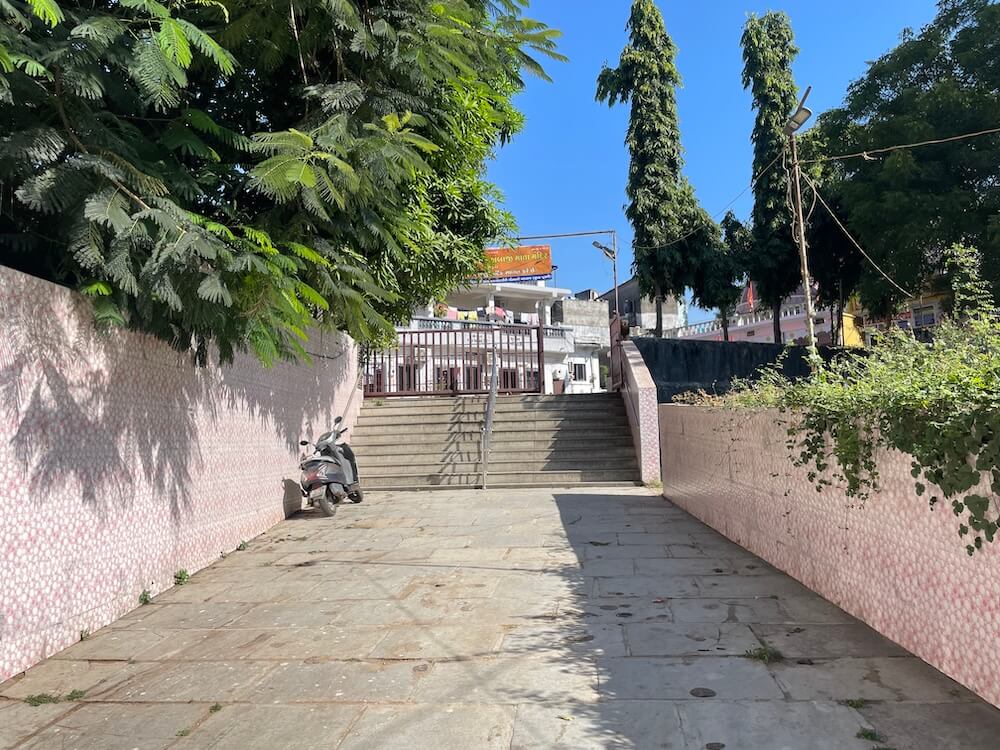 According to the 7th chapter of the ‘Devi Mahatmya’ within the ‘Markandeya Purana’, when the demons Shumbha and Nishumbha conquered the kingdom of heaven from Lord Indra, the devas sought refuge in the primordial power, Bhagwati. While they were offering prayers to Bhagwati, Goddess Parvati arrived. From her physical form emerged Goddess Amba. Shumbha and Nishumbha sent his servents named Chanda and Munda to capture Amba. It was then that Kali, manifesting from the body of Goddess Amba, slew Chanda and Munda. Because Goddess Kali destroyed these demons, Goddess Bhagwati bestowed upon her the name Chamunda. This deity is worshipped in various forms such as Ambika and Chamunda. She is immensely popular in Gujarat and Rajasthan by the name Ambaji.
I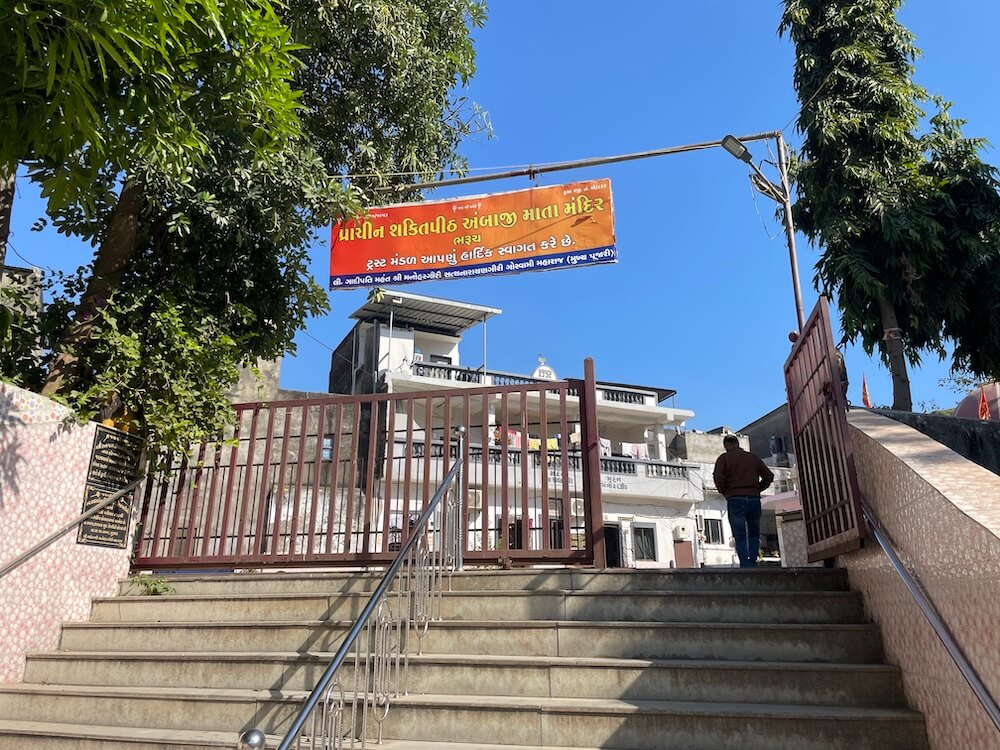 n Gujarat, the primary seat of Ambaji Mata is located on the Gabbar Hill in the Banaskantha district, which is regarded as one of the fifty-one ‘Shaktipeeths’ (seats of power) of the Goddess. Mentioned in the text ‘Tantra Chudamani’, the deity here is also known as Arasuri Ambaji Mata. While the original abode of the Goddess is atop Gabbar Hill, a magnificent temple is situated five kilometres away. Here, instead of an idol, the ‘Shri Bija Yantra’ is worshipped. The shrine in Bharuch, dedicated to this deity, who is the tutelary goddess for countless devotees in Gujarat and Rajasthan, is said to date back to the 1st century BC.
In the 1st century AD, Bharuch was a renowned international port. The ‘Periplus of the Erythraean Sea’, a travelogue penned by an anonymous navigator in the latter half of the 1st century AD (circa 60 AD), mentions Bharuch as ‘Barygaza’. 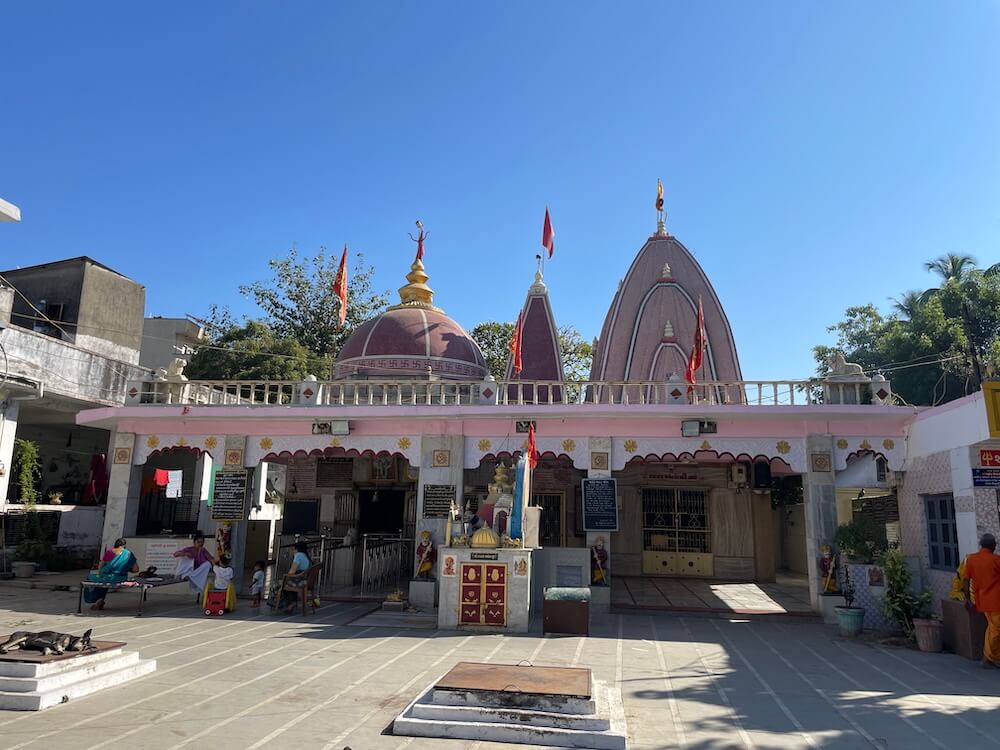 It describes the location as a major port of entry into India. The Chinese traveller Yuan Chwang, who visited India in the 7th century AD, also recorded his observations of Bharuch, noting that the city then possessed ten temples and ten monasteries housing 300 monks. Near the Zadeshwar Gate in Bharuch lies the Somnath temple, where, according to Puranic legend, King Bali performed the ‘Dashashwamedh Yajna’ (ten-horse sacrifice). This sacrifice made Bali so formidable that the gods feared he would seize the kingdom of heaven. Consequently, Lord Vishnu assumed the ‘Vamanavatara’ (dwarf incarnation) and asked Bali for three paces of land as alms. Upon Bali granting the request, Vamana covered the entire earth with one step and the sky with the second. With no space left for the third step, Bali offered his own head.
  Vamana placed his foot upon Bali’s head and sent him to the netherworld. This event is said to have occurred in Bharuch. This story is also mentioned in the ‘Gazetteer of Surat and Bharuch’. The site of this sacrifice is famous as the Dashashwamedh Ghat and the Ambaji Mata temple is nestled on the road leading to that very ghat.
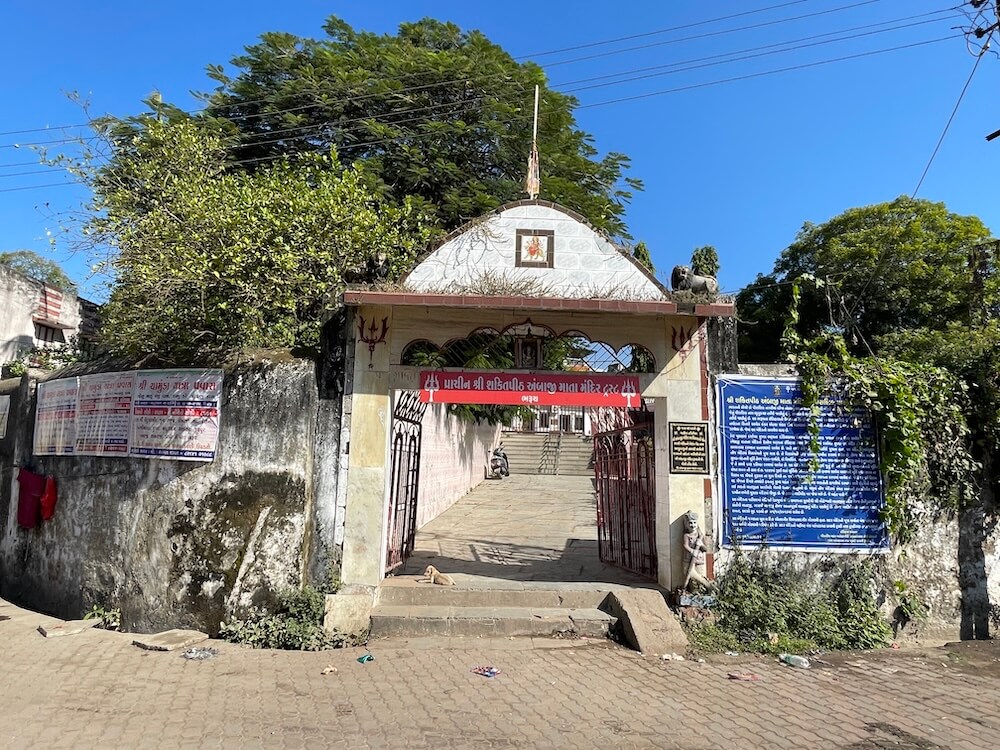
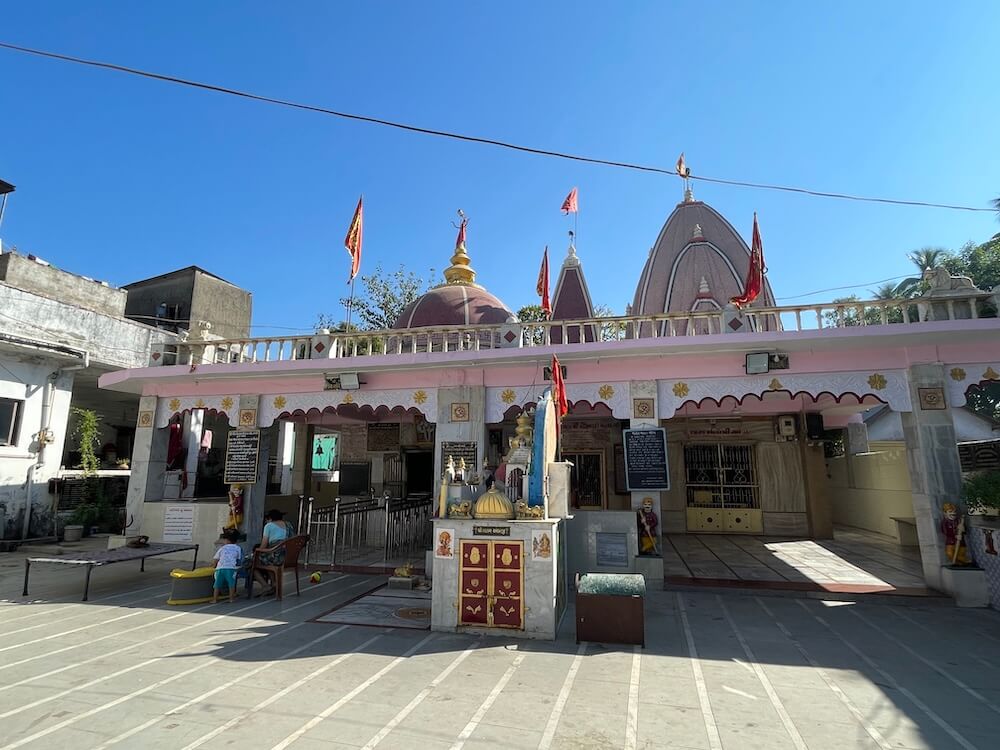
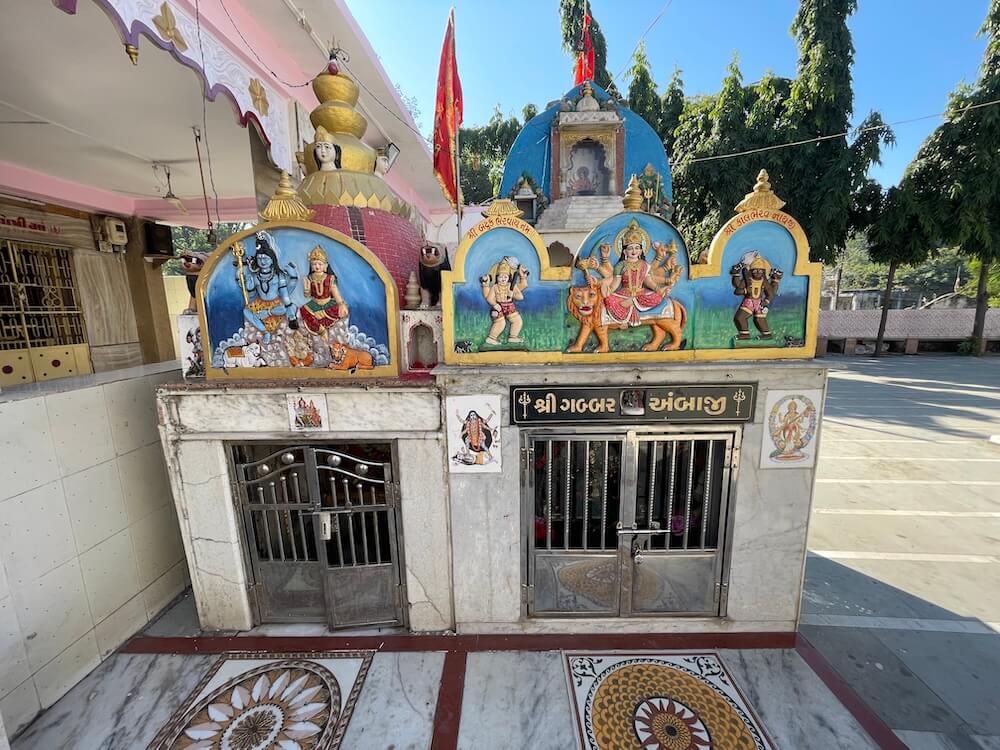
The temple is situated on an elevated site above the road. After passing through the entrance arch and proceeding a short distance, one ascends ten steps to enter the temple courtyard. To the left stands the modern temple structure, designed with a ‘Sabhamandap’ (assembly hall) and three ‘Garbhagrihas’ (sanctum sanctorums). On the exterior of this assembly hall are two niches topped with small spires, featuring carved idols of Shankar-Parvati, Batuk Bhairav, Amba Mata and Kalbhairav. These niches house an idol of Gabbar Ambaji and a ‘Shivpindi’ (emblem of Lord Shiva).
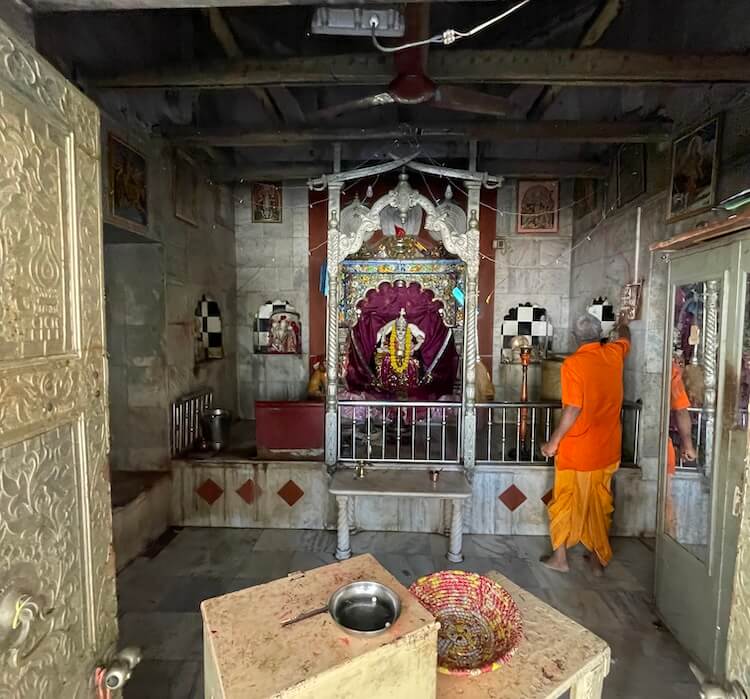
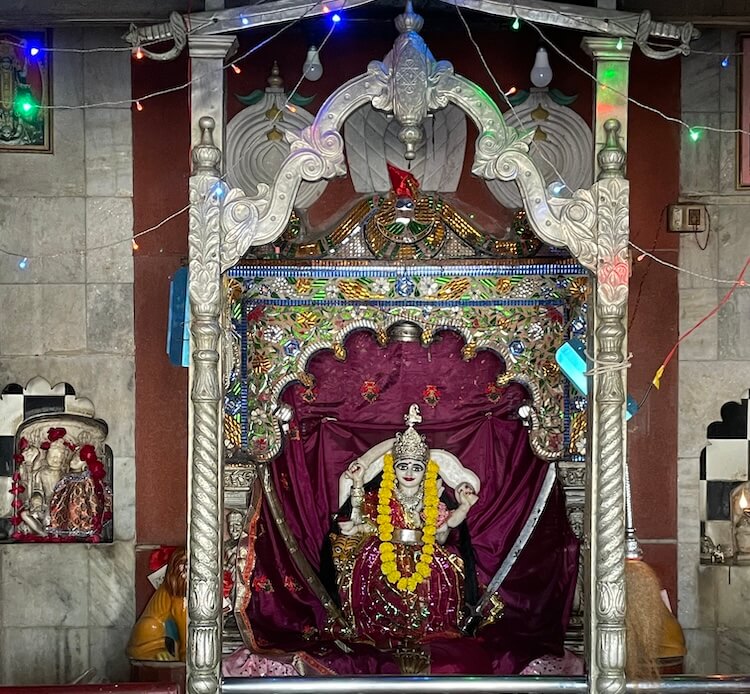
The central pillars of the main temple’s open assembly hall are adorned with sculptures of ‘Dwarpals’ (celestial gatekeepers). A lion sculpture stands before the sanctum on the left. Inside this sanctum, upon a marble pedestal within a silver canopy, resides the marble idol of Ambaji Mata. According to Mahant Manohar Giri Goswami, the hereditary custodian, the current marble idol was consecrated on 11 May 1944 (Samvat 2000, Vaishakh Vadya Tritiya) after the ancient idol was damaged. Here, Ambaji Mata is adorned with opulent silken garments, a silver crown and floral garlands. A large sword is placed beside the Goddess and two swords adorn the upper portion of the canopy. 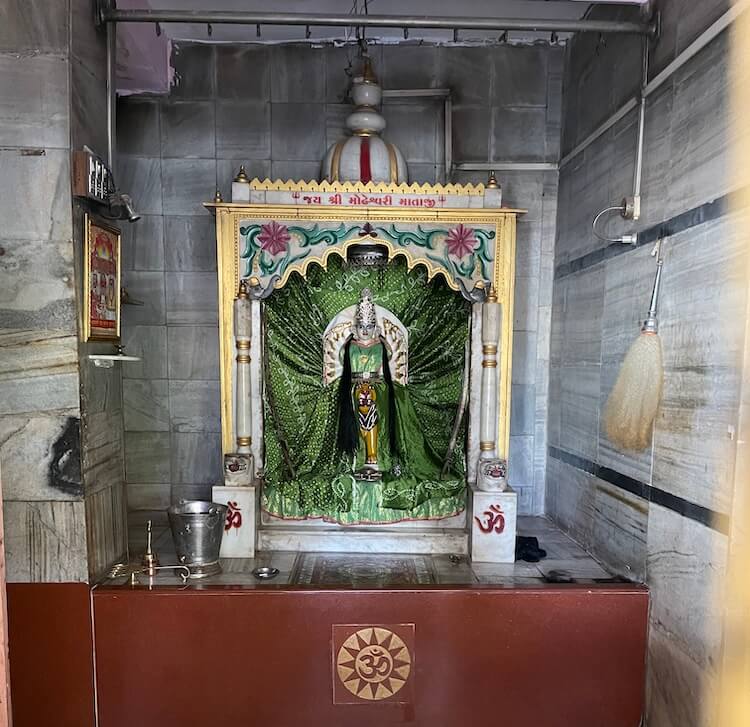 Lion sculptures flank the canopy and a niche to the left houses an idol of Shankar-Parvati.
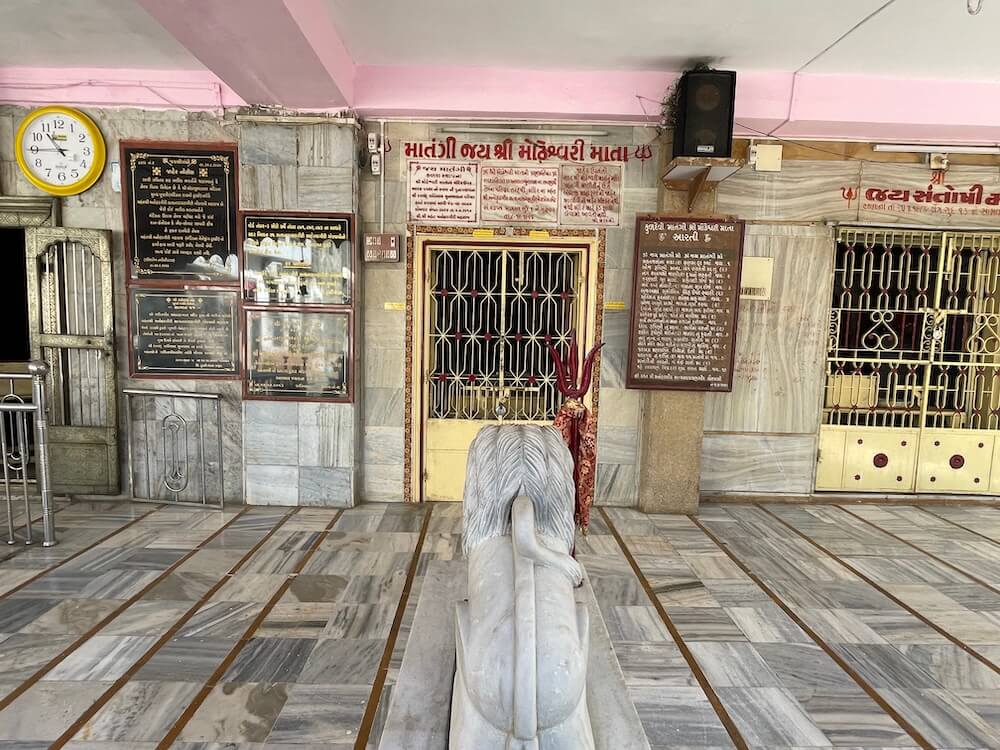
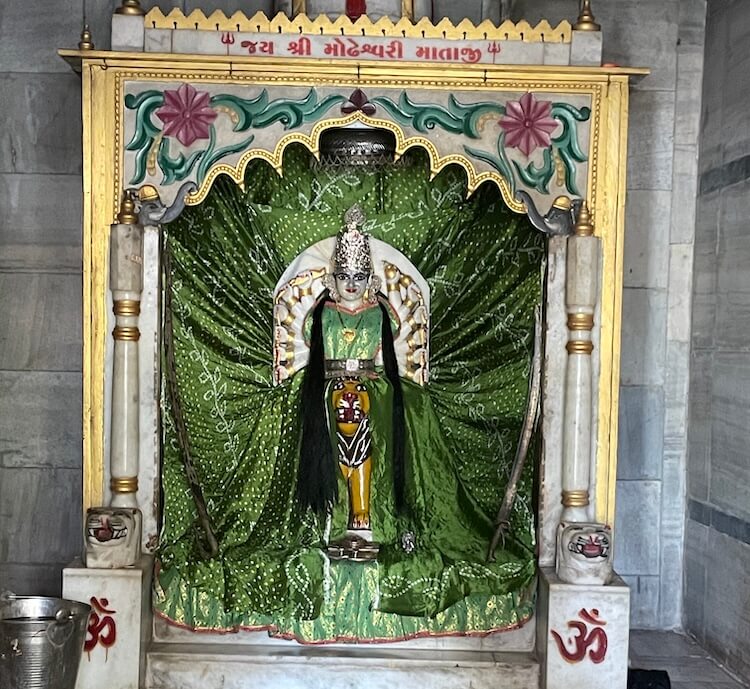
The middle sanctum is the abode of Matangi Modheshwari Mata. The original seat of Goddess Modheshwari is at Modhera in the Mehsana district. Modhera is considered the ancestral homeland of the Modh community of Gujarat. Modheshwari is an ancestral folk deity and serves as the ‘Kuldevi’ (clan Goddess) for the Modh community, including the Modh Modi – to which Prime Minister Narendra Modi belongs – as well as the Modh Vanik, Modh Brahmin and Modh Patel communities. Modheshwari is considered a manifestation of Goddess Matangi and is also known as Matangi Modheshwari. A large marble lion sculpture is seated before her sanctum and a large trident is placed near the entrance. Inside, upon a Vajrapith (pedestal) within a marble canopy, the twelve-armed Goddess is seated upon a lion. Consecrated on 8 December 1994, the idol is elegantly dressed and holds various weapons, a Mahakumbh (sacred pot) and an Akshamala (rosary).
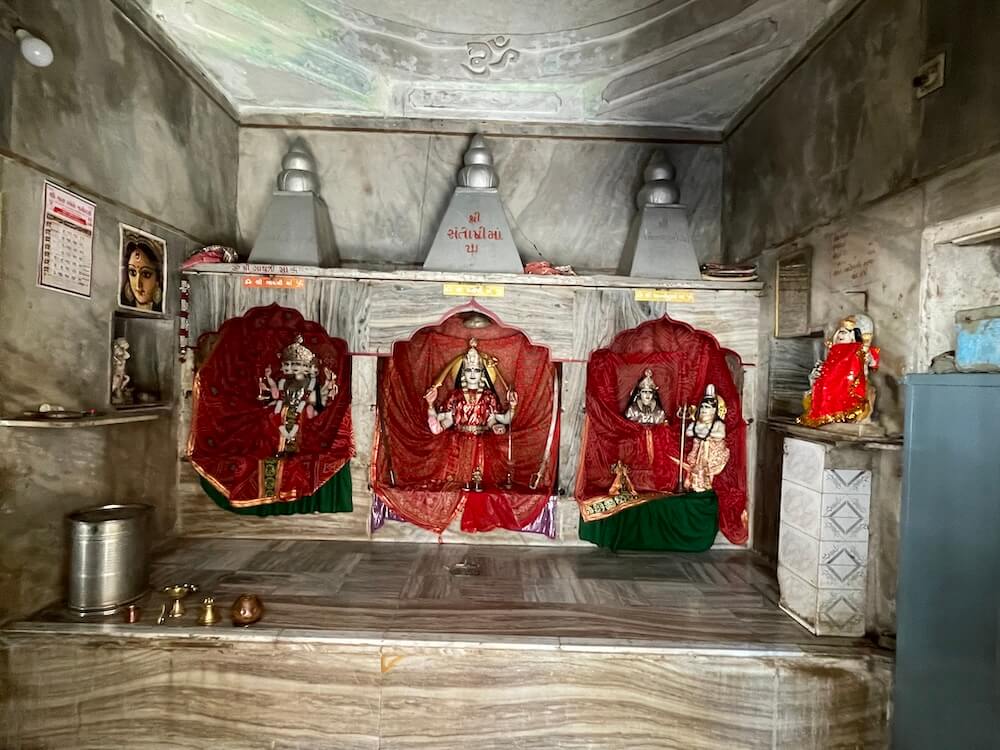
The sanctum on the far right belongs to Santoshi Mata. Here, three marble shrines are situated on a marble platform. The central shrine houses the four-armed marble idol of Santoshi Mata, holding a sword, a trident and an Akshaypatra (inexhaustible vessel), while one hand is held in the ‘Abhaya Mudra’. The shrine to the left houses a five-faced and ten-armed idol of Mother Gayatri, while the one to the right houses Mata Annapurna and Lord Shankar. These idols are beautifully adorned with garments and jewellery. Niches in the walls of this sanctum house Ganpati and Hanuman and a small idol of Amba Mata resides on a high pedestal. This sanctum was established on 25 April 1983. Architecturally, the sanctum of Ambaji Mata is topped by a dome, that of Modheshwari Mata by a triangular spire and the shrine of Santoshi Mata features a conical spire somewhat reminiscent of the ‘Urushringa’ style.
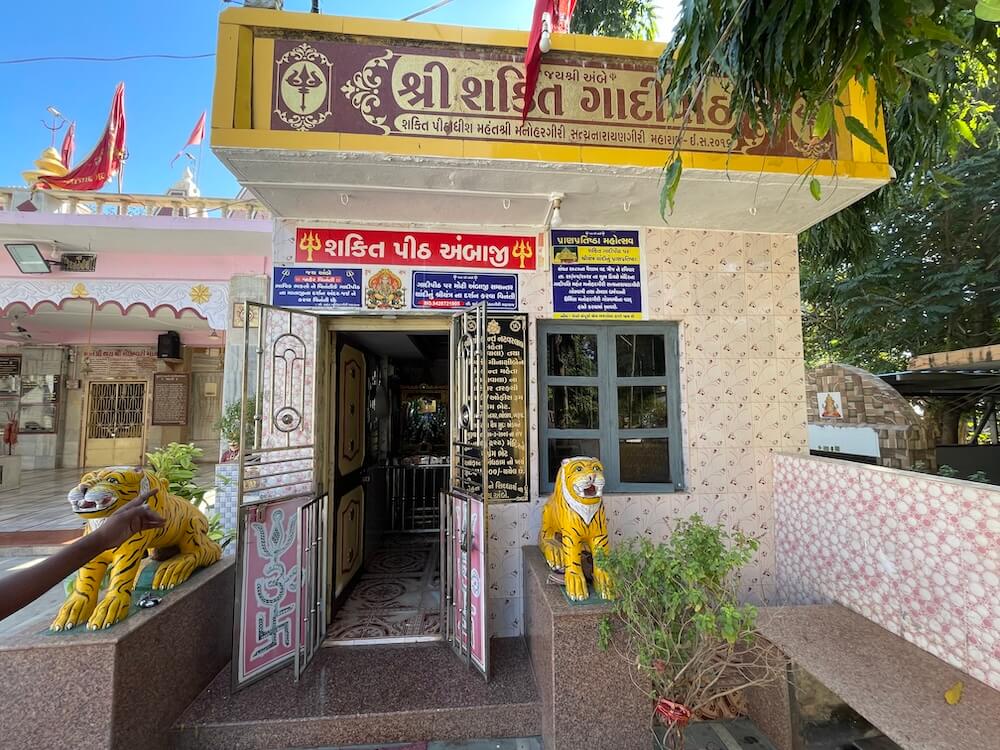
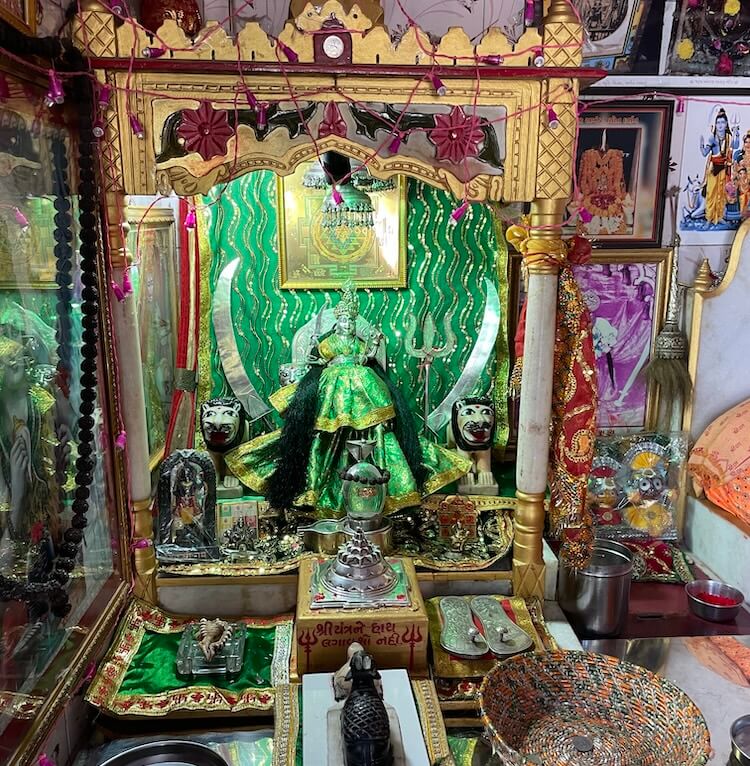 To the left of the temple courtyard is the ‘Shakti Gadipith’. Constructed on 30 March 2005, this small structure houses a silver idol of Ambaji Mata seated on a lion within a marble shrine on a high pedestal.
Large swords and lion sculptures flank the idol. Before the deity lie a silver Shivling, Padukas (sacred footwear), a conch and a Nandi sculpture. A silver ‘Shri Yantra’ is also present here. It was consecrated on 26 May 2024. Furthermore, this ‘Shakti Gadipith’ preserves an ancient manuscript copy of the Bhagavad Gita, which is said to date back to the 1st century AD.
The festivals of Chaitra Navratri and Ashwin Navratri are celebrated with great fervour at this temple, drawing large numbers of devotees from the city. Similarly, every year on Vaishakh Vadya Tritiya, the anniversary of the Ambaji idol’s consecration is marked with religious programmes.
On this occasion, a ‘Navchandi Hawan’ (sacred fire ritual) is performed in the presence of the Chief Mahant, the trustees and the faithful.
Useful Information
- 2 km away from Bharuch Bus Stand
- ST (State Transport) bus facility available from Bharuch
- Private vehicles can reach up to the temple parking
- Accommodation and breakfast facilities are available in the vicinity
- Contact : Temple Office, Mo. 9428721805
अम्बाजी माता मंदिर
भरूच, ताल./जिला. भरूच
मंदिरे
Temples
मंदिर
-
कोटेश्वर महादेव मंदिर कदोद, ता. भरुच, जि. भरुच
अधिक माहितीKoteshwar Mahadev Temple Kadod, Tal. Bharuch, Dist. Bharuch
View Detailsकोटेश्वर महादेव मंदिर कडोद, ताल. भरूच, जिला. भरूच
विवरण देखें -
धर्मेश्वर महादेव मंदिर धर्मशाळा-झानोर, ता. भरुच, जि. भरुच
अधिक माहितीDharmeshwar Mahadev Temple Dharmashala-Jhanor, Tal. Bharuch, Dist. Bharuch
View Detailsधर्मेश्वर महादेव मंदिर धर्मशाला-झानोर, ताल. भरूच, जिला. भरूच
विवरण देखें -
साईबाबा मंदिर रामवाटिका सोसायटी, झाडेश्वर, ता./जि. भरुच
अधिक माहितीSai Baba Temple Ramvatika Society, Zadeshwar, Tal./Dist. Bharuch
View Detailsसाईं बाबा मंदिर रामवाटिका सोसायटी, जादेश्वर, ताल./जिला. भरूच
विवरण देखें