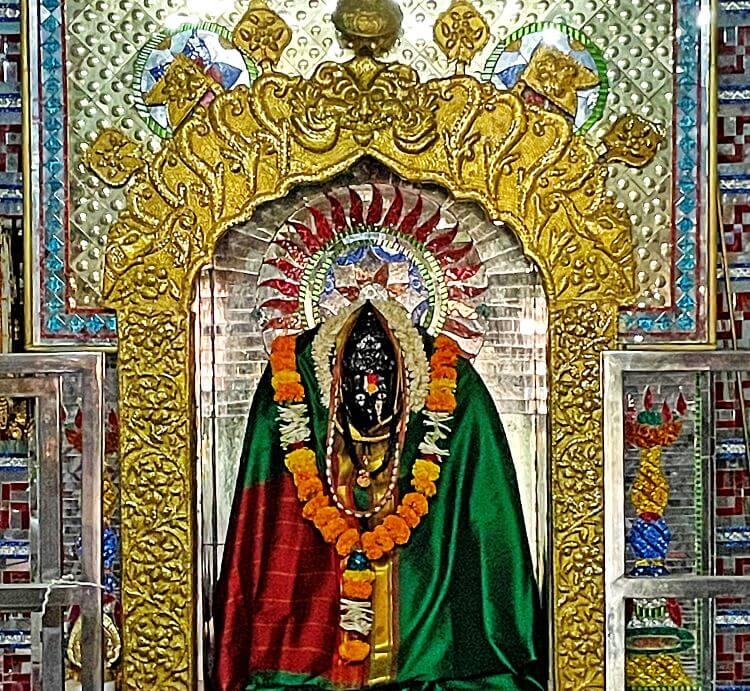
Nestled at the foothills of Vairatgad Fort and on the banks of the Krishna River in Wai Taluka of Satara District, the ancient temple of Goddess Bhavani at Shri Kshetra Asle, set amidst a naturally abundant environment, is a revered shrine for thousands of devotees across Maharashtra. This awakened abode (Jagrut Sthan) of Goddess Bhavani, considered a manifestation of Tulja Bhavani of Tuljapur, is especially renowned among devotees. Known as the Goddess who fulfills vows (Navasala Pavnari Devi), this deity attracts large crowds of devotees for Darshan every Tuesday, Friday, and on every full moon (Purnima).
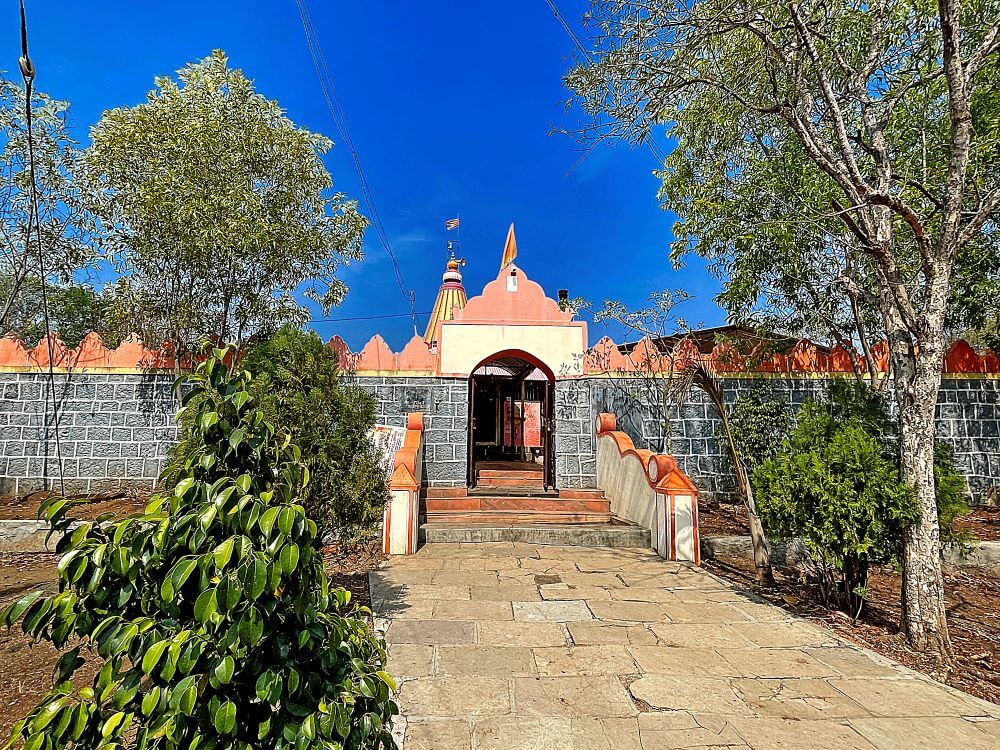
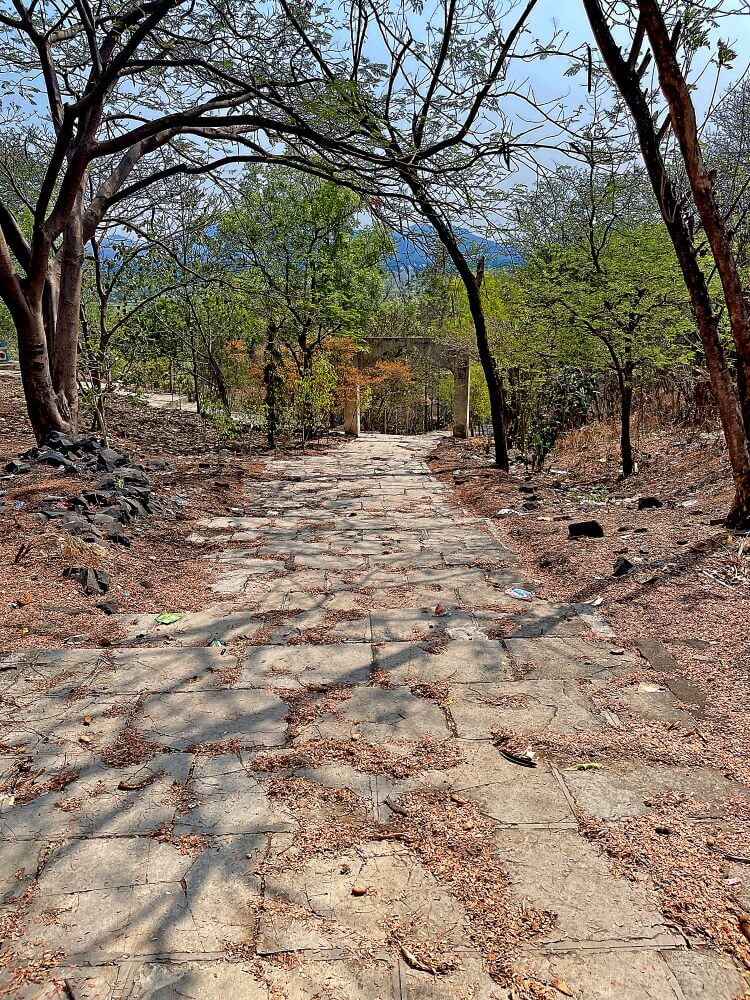
The village of Asle is situated a short distance from Pachwad on the Pachwad-Wai road. Behind this village lies the temple of Goddess Bhavani, famously known as ‘Aslechi Bhavani’. A newly constructed road from the village leads directly to the temple’s parking area, allowing vehicles to reach it easily. The older staircase path also exists, from where one can ascend approximately 80 steps to reach the temple. Devotees visiting this place hold the belief that, in order of significance, Tuljapur’s Bhavani ranks first, Asle’s Bhavani second, and the Bhavani temple on Pratapgad third. Records indicate that this temple dates back to the pre-Shivaji era. However, there is no mention of precisely when or by whom it was built before that period. According to locals, it is 700 to 800 years old.
The legend of the Asle temple recounts that when Afzal Khan’s expedition reached Maharashtra, he destroyed many famous temples, including Pandharpur, to spread terror. He proceeded, demolishing numerous temples along his path. He was accompanied by a large army. When he approached the Bhavani temple at Asle, his soldiers could see the temple; however, Afzal Khan alone perceived a mosque in place of the temple. He made all his accompanying soldiers offer Namaz in front of this temple, and thereafter, Afzal Khan proceeded to Wai. On the night preceding the day Afzal Khan and Chhatrapati Shivaji Maharaj were to meet at the foothills of Pratapgad, Goddess Bhavani appeared to Maharaj in a divine dream (Swapnadrishtant) and assured him of success in his endeavor. This greatly encouraged Chhatrapati Shivaji Maharaj. The following day, Afzal Khan and Chhatrapati Shivaji Maharaj met at the foothills of Pratapgad, and Maharaj successfully vanquished the Khan.
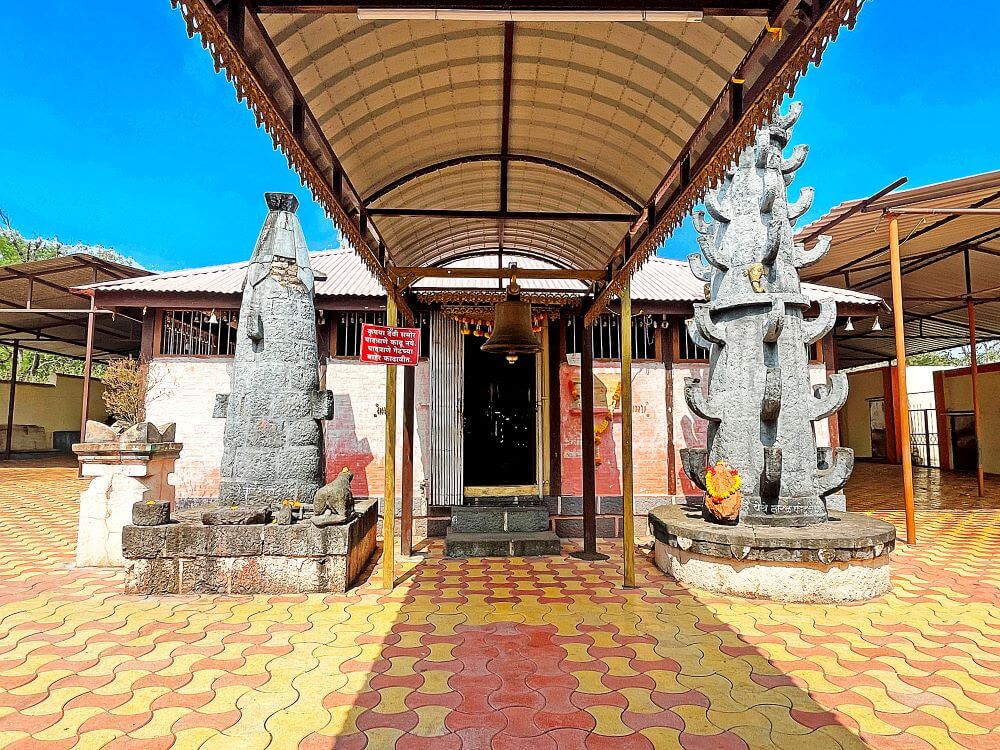
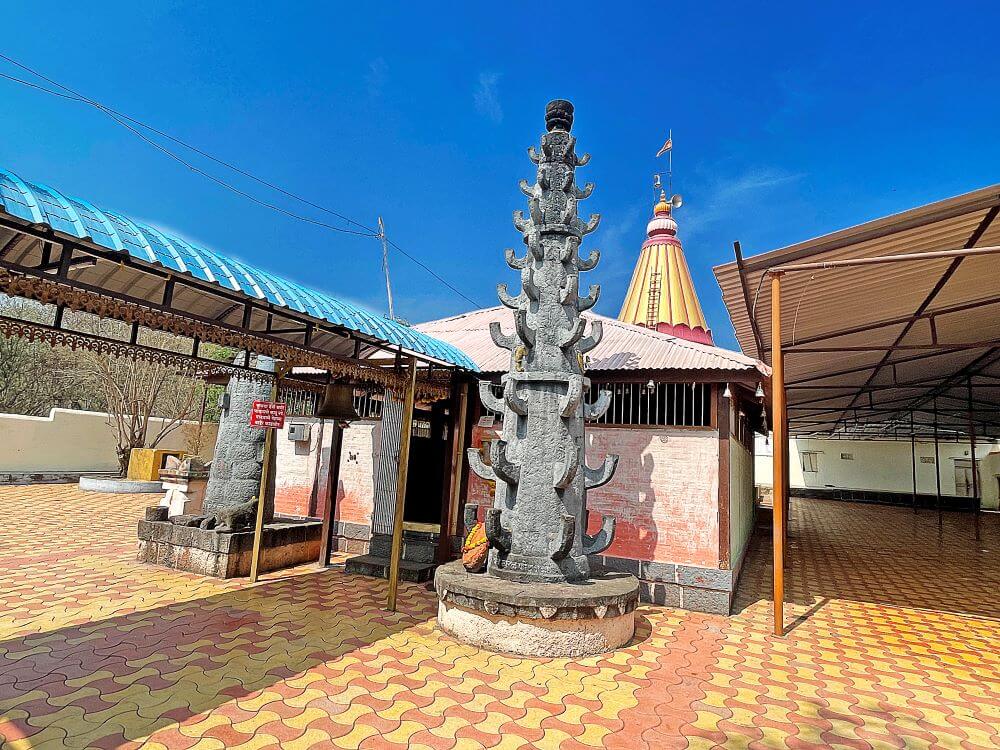
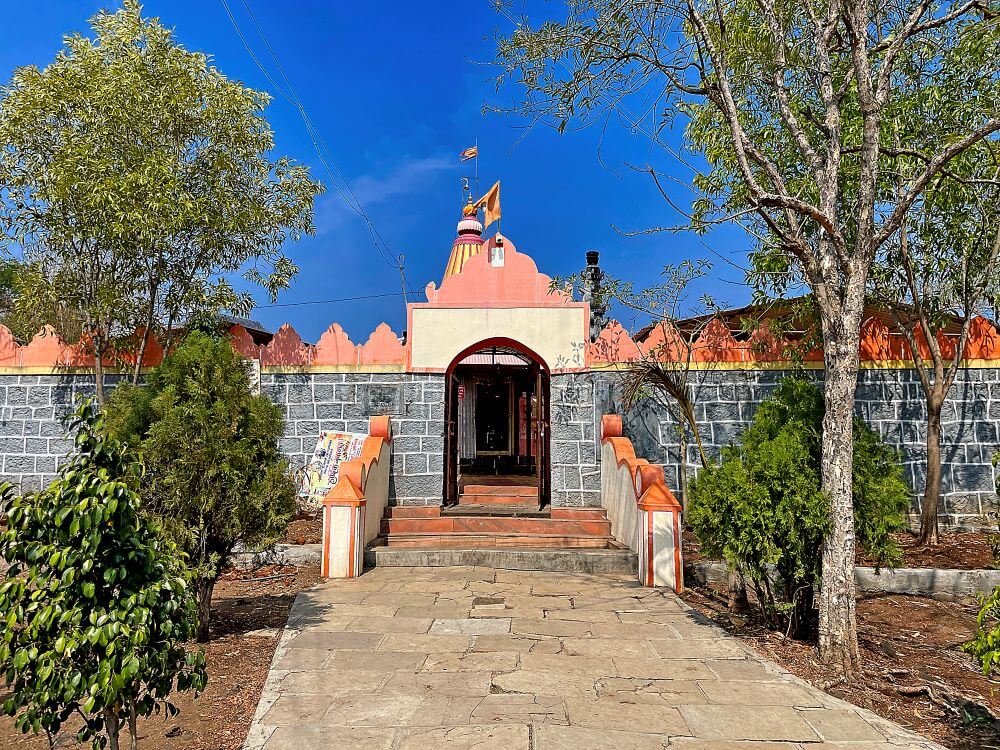
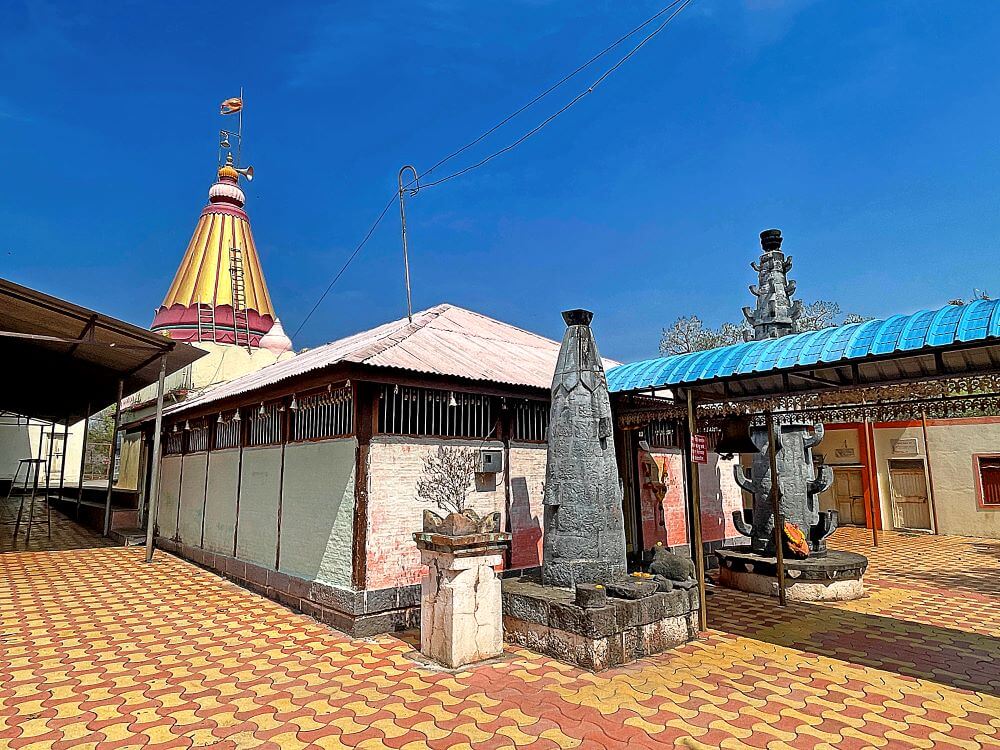
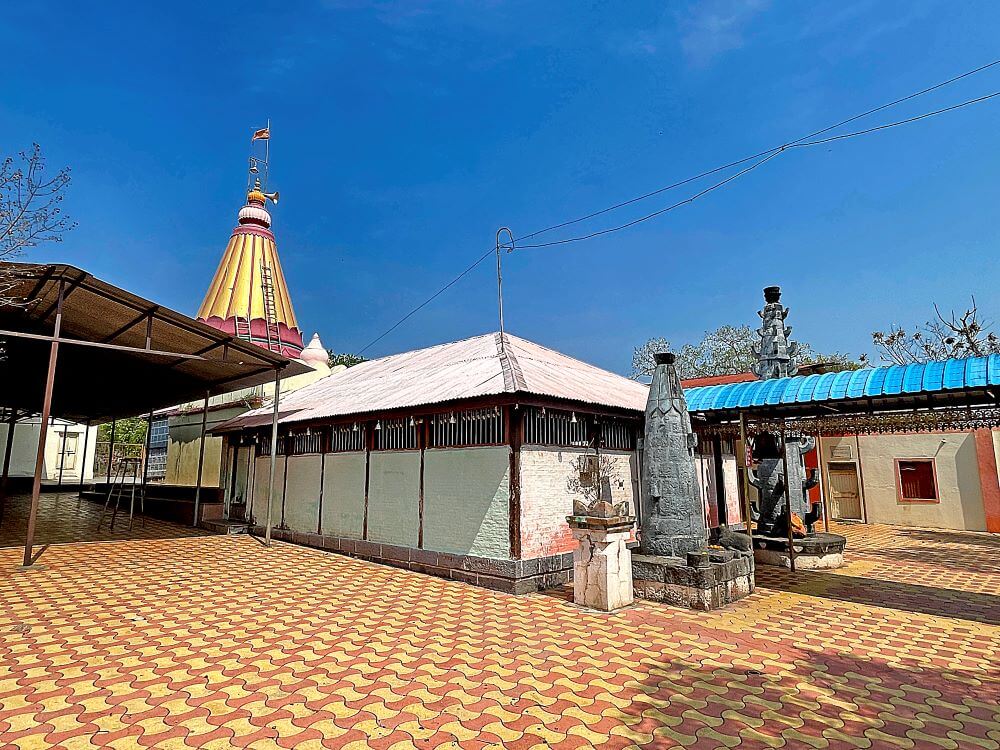
This temple, situated outside the village on the riverbank, is surrounded by fortifications (tatbandi) with bastions at all four corners. There is a parking area behind the temple. Although there is another entrance to the temple here, it is opened only during festivals. At other times, one must circumvent the fortifications and enter the temple premises through the entrance located near the old staircase path. The temple acquired its current form after renovations (Jirnoddhar) carried out in 1964. During these renovations, the fortifications were also repaired, beautified, and further strengthened. From the entrance within the fortifications to the temple, a corrugated sheet shed has been erected to protect devotees from sun and rain. The installation of paver blocks in the temple premises makes the area appear clean and beautiful. In front of the main temple, there is a Deepmala (lamp tower) and a Tulsi Vrindavan (sacred basil plant enclosure). On the right Deepmala stands an ancient Nandi, while near the left Deepmala is an ancient idol of Ganesha, adorned with vermilion (Shendur).
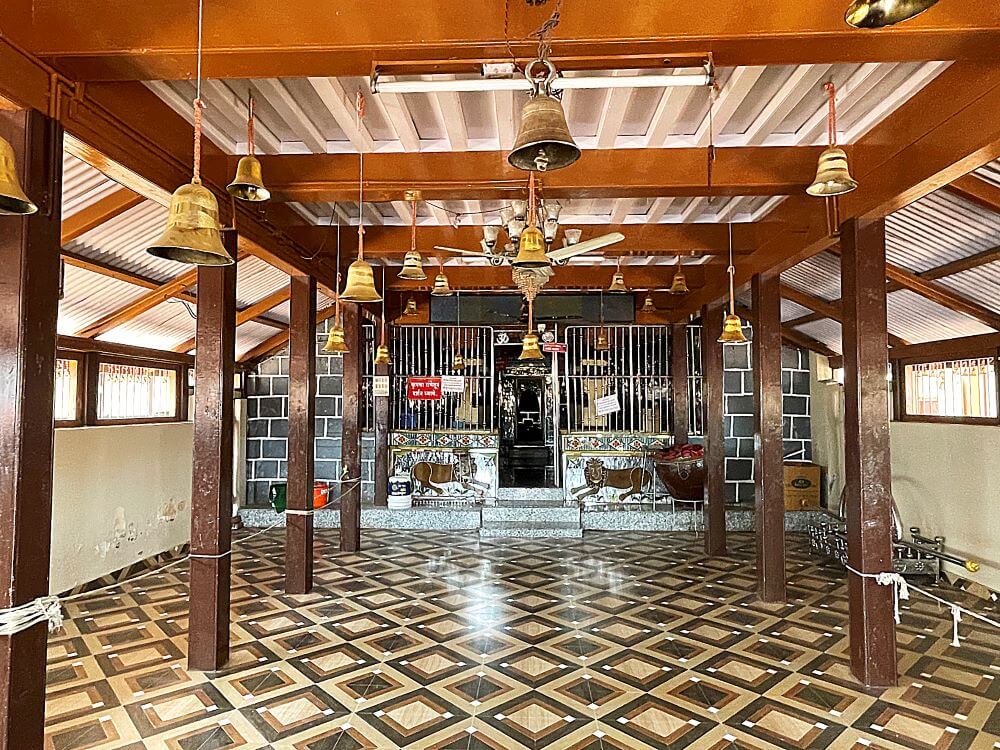
The temple’s structure comprises a Sabhamandap (assembly hall), an Antaral (vestibule), and a Garbhagriha (sanctum sanctorum). Originally, the temple consisted only of the Antaral and Garbhagriha. During the renovations, a new Sabhamandap was constructed, attached to the main temple. This Sabhamandap is spacious and extensively uses wooden pillars. Furthermore, brass bells and chandeliers are hung at various points on the wooden pillars above, making the Sabhamandap appear splendid . On both sides of the Antaral’s entrance, which is the entrance to the original temple, tiger effigies are carved, and a large Nagara (ceremonial drum) is placed there. This Nagara is played during festivals and Aarti.
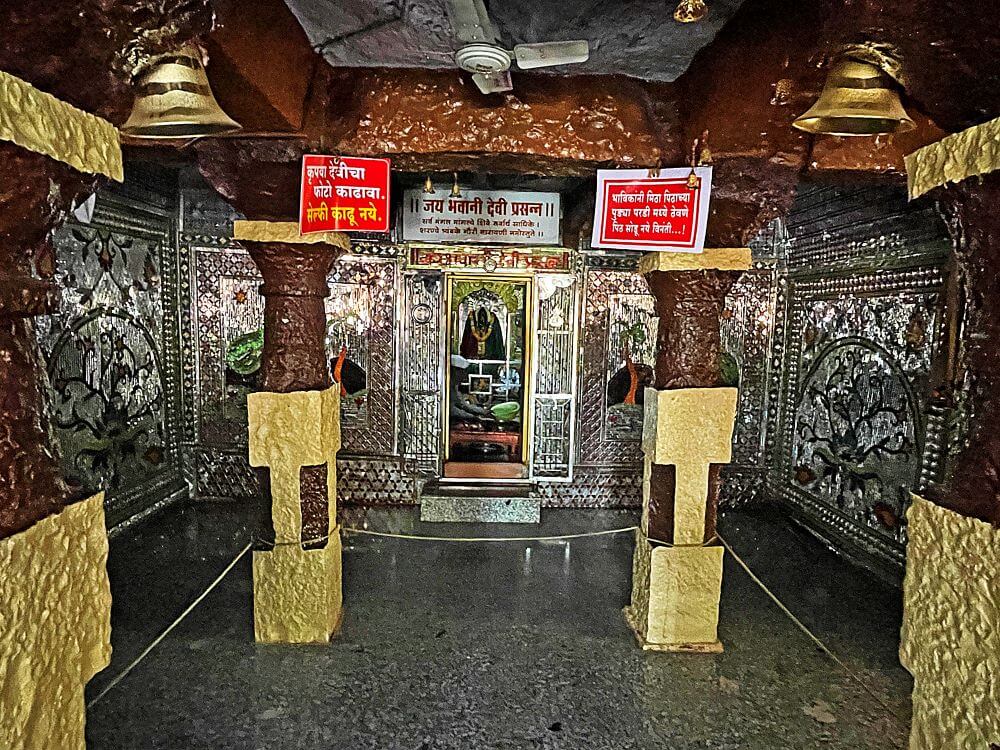
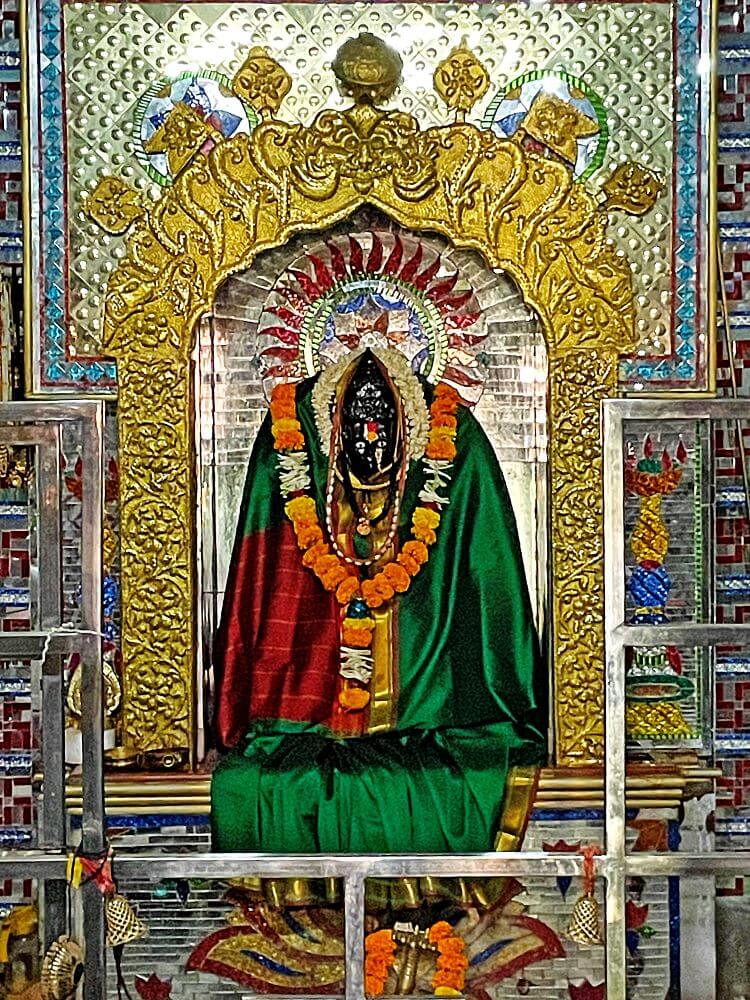
The original temple is of Hemadpanti architectural style. The Antaral features stone pillars, and its walls appear adorned with intricate artistry on silver sheets. Within the Garbhagriha, on a raised platform (Chauthara), a beautiful and exquisite black stone idol of the Goddess in her Mahishasuramardini form is enshrined within a distinctive Makhar (altar). This idol stands three feet tall. This idol bears some resemblance to the idol of Goddess Bhavani on Pratapgad. Below the idol of Goddess Bhavani is a Shivling; however, there is no Nandi in front of this Shivling, but rather near the Deepmala within the temple premises. Near this Shivling is an ancient Samai (traditional oil lamp stand) approximately five feet tall. Such a Samai is rarely seen elsewhere.
During Navratrotsav, a grand festival is celebrated here for nine days. At this time, thousands of devotees come for Darshan of the Goddess. A large Yatra (pilgrimage fair) for this Goddess is held here on Chaitra Purnima. Within the temple premises, the temple committee has constructed some rooms for the accommodation of devotees and for performing ritual ceremonies during festivals.
Besides this temple, Vairatgad Fort, located on the hill behind Asle village, is also famous. This fort can be accessed from Vyazwadi, situated on the Pachwad-Wai road, and from Mhasve village, located on the Pachwad-Medha road. If one takes the Vyazwadi road, vehicles can reach the foothills of the fort; however, the path from Mhasve village is somewhat difficult. It generally takes about one and a half to two hours to ascend to the fort from its base. The summit of Vairatgad Fort is located on a rock formation approximately 16 to 17 meters high.
On the fort, there is a Maruti temple, and beside the temple, there is another idol of Maruti. Additionally, there are three lakes and four water tanks here. The water from these tanks is still used for drinking purposes today. At some distance from the lakes, there is an ancient Mahadev temple. Apart from these two temples, remnants of dilapidated buildings can be found at many places on the fort. The legend regarding the name of this fort states that after completing their 12 years of exile (Vanvas), the Pandavas had to spend one year in incognito (Adnyatvas). During that time, the Pandavas resided with King Virat, who was here, disguised. At that time, King Virat’s capital was on this fort, and the entire area at the foothills of the fort was known as ‘Virat Nagari’. From King Virat, the fort derived its name, Vairatgad. According to historical records, the fortifications on the fort and some of its structures were built by Bhojraj II of Kolhapur, belonging to the Shilahar dynasty, around 1178 to 1193 AD.
Useful Information:
6 km from Pachwad, and 10 km from Wai
ST (State Transport bus) facility available from Wai
Private vehicles can reach the temple’s parking area
No accommodation or breakfast facilities available in the vicinity.
आसले की भवानी
श्री क्षेत्र आसले, तह. वाई, जि. सातारा
सतारा जिले की वाई तहसील में, वैराटगढ़ किले की तलहटी में और कृष्णा नदी के तट पर स्थित, श्री क्षेत्र आसले में भवानी माता का प्राचीन मंदिर महाराष्ट्र के हजारों श्रद्धालुओं के लिए आस्था का केंद्र है। यह मंदिर तुलजा भवानी (तुलजापूर) की प्रतिकृति माना जाता है। यहाँ की देवी मनोकामना पूर्ण करने वाली मानी जाती हैं। इसलिए प्रत्येक मंगलवार, शुक्रवार और पूर्णिमा के दिन यहाँ श्रद्धालुओं की भारी भीड़ होती है।
पांचवड़-वाई मार्ग पर पांचवड़ से थोड़ी दूरी पर आसले गाँव स्थित है। गाँव के पीछे भवानी माता का मंदिर है। इसे ‘आसले की भवानी’ के नाम से जाना जाता है। मंदिर तक पहुँचने के लिए गाँव से नया सड़क मार्ग बनाया गया है। इससे वाहन सीधे मंदिर के पार्किंग क्षेत्र तक जा सकते हैं। पुराने सीढ़ी मार्ग से भी मंदिर तक पहुँचा जा सकता है। इसमें लगभग ८० सीढ़ियाँ चढ़नी पड़ती हैं। श्रद्धालु परंपरानुसार मंदिर दर्शन में तुलजा भवानी को प्रथम, आसले की भवानी को द्वितीय और प्रतापगढ़ स्थित भवानी माता को तृतीय स्थान पर मानते हैं। स्थानीय मान्यता के अनुसार यह मंदिर लगभग ७००–८०० साल पुराना है।
मंदिर की कथा के अनुसार, जब अफजल खान का सैन्य दल महाराष्ट्र में आया और उसने कई प्रसिद्ध मंदिरों को नष्ट किया, तब वह आसले के भवानी मंदिर के पास पहुँचा। सैनिकों को मंदिर दिखाई दिया, पर अफजल खान को मंदिर के स्थान पर एक मस्जिद दिखाई दे रही थी। वह चकित हो गया। उसने सैनिकों को नमाज पढ़ाई और फिर वाई की ओर चला गया। प्रतापगढ़ की तलहटी में शिवाजीउसने सैनिकों को नमाज पढ़ाई और फिर वाई की ओर चला गया। प्रतापगढ़ की तलहटी में शिवाजी महाराज से उसकी भेंट होने से एक रात पूर्व, भवानी माता ने महाराज को स्वप्न में दर्शन दिए। माता ने उन्हें कार्य में सफलता का आशीर्वाद दिया। अगले दिन शिवाजी महाराज ने अफजल खान का वध किया।
मंदिर के चारों ओर बुर्ज हैं। मंदिर के पीछे वाहन पार्किंग क्षेत्र है। यहाँ एक प्रवेश द्वार है, जो केवल त्योहारों में खुलता है। अन्य समय में श्रद्धालुओं को पुराने सीढ़ी मार्ग से प्रवेश करना पड़ता है। १९६४ में जीर्णोद्धार के दौरान मंदिर और इसके बुर्जों की मरम्मत की गई। इसे सुदृढ़ और मनोहर बनाया गया। प्रवेश द्वार से मंदिर तक एक धातु की छत बनाई गई है। इससे श्रद्धालु धूप और वर्षा से सुरक्षित रहते हैं। मंदिर का प्रांगण पत्थर की पक्की सतह होने के कारण स्वच्छ और आकर्षक दिखता है। मुख्य मंदिर के सम्मुख दीपमाला और तुलसी वृंदावन हैं। दाईं ओर की दीपमाला पर प्राचीन नंदी है। बाईं ओर की दीपमाला के पास सिंदूर-लेपित गणेश पाषाण मूर्ति स्थित है।
मंदिर की संरचना सभामंडप, अंतराल और गर्भगृह (मुख्य मंदिर) में विभाजित है। मूल रूप से यहाँ केवल अंतराल और गर्भगृह ही थे। जीर्णोद्धार के समय इसमें सभामंडप जोड़ा गया। सभामंडप में लकड़ी के कई स्तंभ हैं। इन पर काँसे की घंटियाँ और झूमर लगे हैं। मुख्य मंदिर के प्रवेश द्वार पर व्याघ्रों की पाषाण मूर्तियाँ हैं। पास में नगाड़ा है, जिसे उत्सव और आरती में बजाया जाता है।
मुख्य मंदिर हेमाडपंती शैली में निर्मित है। गर्भगृह में चबूतरे पर तीन पद ऊँची काले पाषाण की देवी की मनोहर मूर्ति है। यह महिषासुरमर्दिनी के रूप में है। यह मूर्ति प्रतापगढ़ स्थित भवानी माता की मूर्ति से मिलती-जुलती है। मूर्ति के नीचे शिवलिंग स्थापित है। नंदी मंदिर के प्रांगण में दीपमाला के पास स्थित है। शिवलिंग के पास लगभग पाँच पद ऊँचा प्राचीन दीपक है, जो अद्वितीय है।
नवरात्रि में यहाँ नौ दिन का बड़ा उत्सव मनाया जाता है। चैत्र पूर्णिमा को विशाल मेला आयोजित होता है। मंदिर समिति ने श्रद्धालुओं के ठहरने और उत्सव की विधियाँ संपन्न करने के लिए परिसर में कुछ कमरे बनवाए हैं, जिन्हें भक्तनिवास कहा जाता है।
इसके अतिरिक्त, आसले गाँव के पीछे पहाड़ी क्षेत्र में वैराटगढ़ किला प्रसिद्ध है। किले तक पहुँचने के लिए पंचवड़-वाई मार्ग पर व्याजवाड़ी से अथवा पांचवड़-मेढा मार्ग पर म्हसवे गाँव से मार्ग है। व्याजवाड़ी मार्ग से वाहन किले की तलहटी तक जा सकते हैं। म्हसवे मार्ग थोड़ा कठिन है।
तलहटी से किले तक पहुँचने में लगभग १.५–२ घंटे लगते हैं। किले की चोटी पर हनुमान मंदिर और एक अन्य हनुमान पाषाण मूर्ति है। यहाँ तीन तालाब और चार जलाशय भी हैं।
इनका जल आज भी पेयजल के रूप में उपयोग होता है। कुछ दूरी पर महादेव का प्राचीन मंदिर है। किले में अन्य भवनों के अवशेष भी बिखरे हुए हैं।
किले का नाम पांडवों की कथा से जुड़ा है। बारह वर्ष के वनवास के बाद उन्हें एक वर्ष का अज्ञातवास करना था। तब वे विराट राजा के पास आए थे। इस किले के क्षेत्र को ‘विराट नगरी’ कहा गया। इतिहास में उल्लेख है कि किले का कुछ निर्माण कार्य कोल्हापुर के शिलाहार वंश के द्वितीय भोजराजा (११७८–११९३) ने करवाया था।
मुख्य विशेषताएं
पांचवड़ से ६ किमी, वाई से १० किमी।
वाई से एसटी बस सुविधा उपलब्ध है।
निजी वाहन मंदिर के वाहनतल तक जा सकते हैं।
परिसर में भक्तनिवास उपलब्ध है, परंतु भोजन की सुविधा नहीं है।