
मनारकौड श्रीभगवती मंदिर
मनारकौड, जि. कोट्टायम
Manarcaud Sree Bhagavathi Temple
Manarcaud, Dist. Kottayam
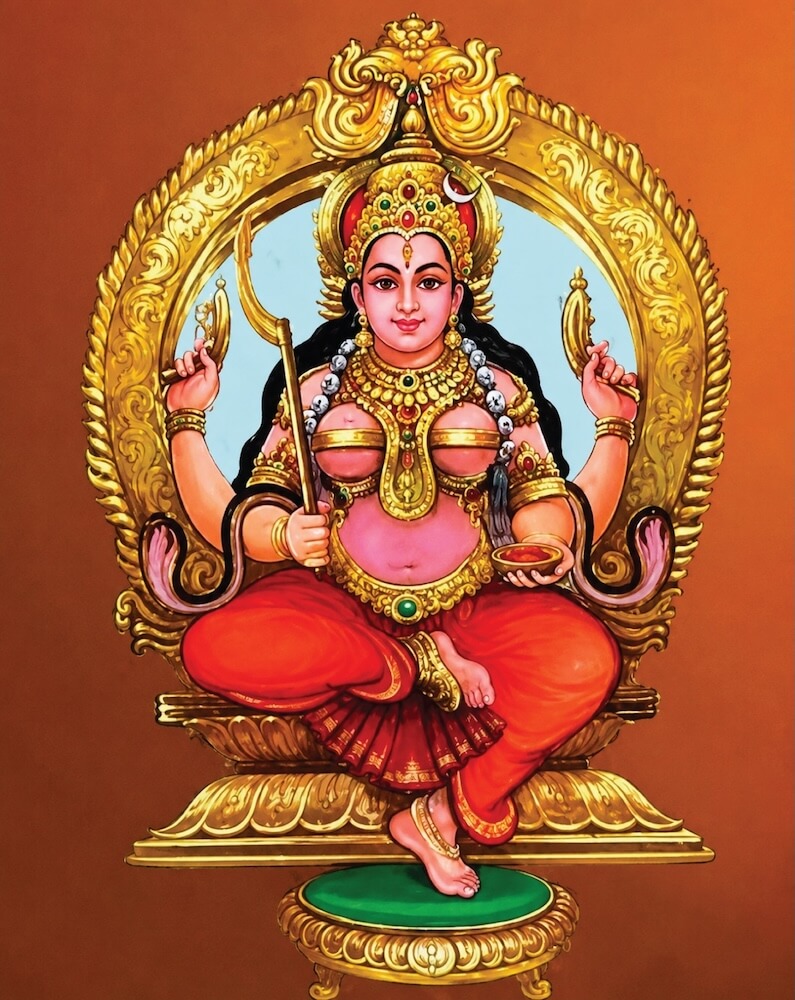 The Manarcaud Sree Bhagavathi Temple, popularly known as the Manarcaud Devi Temple, is an ancient temple dedicated to Goddess Bhadrakali, located at Manarcaud in Kottayam district. The temple is an important centre of Shakta worship and is well known for its long-standing religious traditions and its enduring role in the spiritual and cultural life of the region.
Temple records state that the earliest shrine was built before the 14th century during the reign of the Ilamura Thampuran of the Vembally Nadu Kingdom. Under his direction, the temple was established through the joint efforts of the local people and the leaders of the Twenty-Eight and a Half Karas. Later, when Kottayam and the surrounding regions came under the rule of the Thekkumkur Kingdom, the temple received royal patronage and support for its maintenance and renovation. In 1749, after Maharaja Marthanda Varma annexed the Thekkumkur Kingdom to Travancore, the administration of the temple was entrusted to the local assemblies and Kara leaders. Today, the temple is managed by the Manarcaud Bhagavathi Devaswom Administrative Committee, which is elected by the devotees. A major milestone in the temple’s recent history was the extensive reconstruction of the Nalambalam, completed in October–November 2022.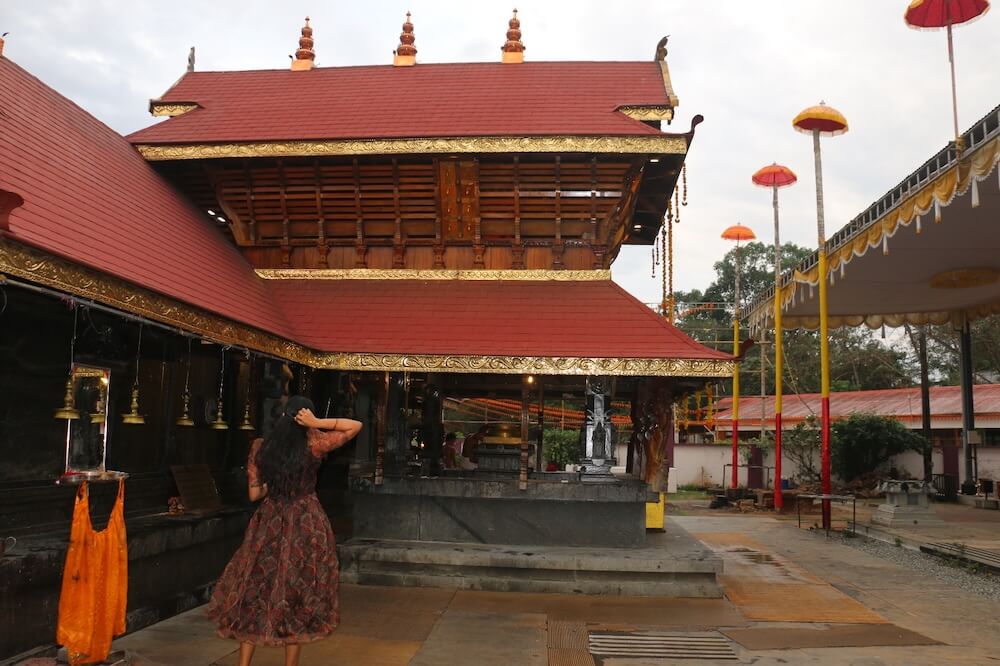
According to temple legend, a deeply devoted Brahmin who lived at Ilampanakkad (Thanniyil Illam) used to visit the Kodungalloor Bhagavathy Temple every month. Kodungalloor Bhagavathy Temple is dedicated to Goddess Bhadrakali and is widely regarded as the foremost of Kerala’s 64 Bhadrakali worship centres. As the Brahmin grew old and could no longer make the journey, he prayed to the Goddess with great sorrow. That night, the Goddess appeared in his dream and told him that she would be present in the palm-leaf umbrella he would find beside him when he awoke. The next morning, he took the umbrella and returned to his village. When he reached the place where the temple now stands, he placed it on the ground to rest.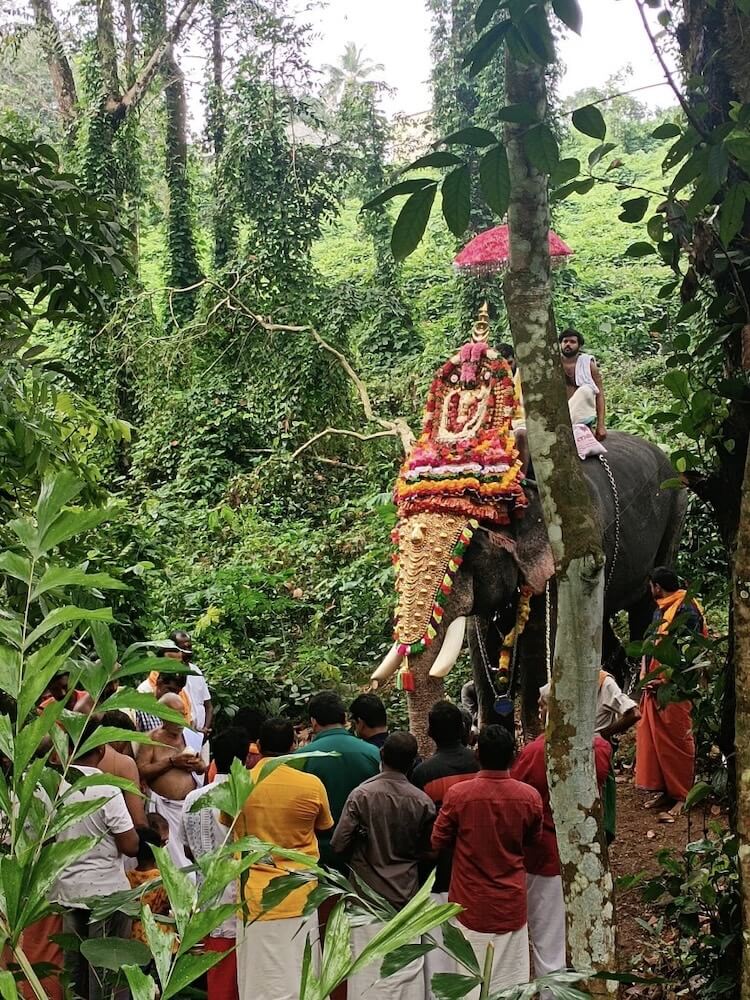 Later, he found that it could not be lifted. A traditional Deva Prashna (astrological enquiry) was then conducted and it revealed that the divine presence of Kodungalloor Bhagavathy had become established there. The bamboo grove, believed to be the abode of Nagaraja, was then cleared and the first shrine for the Goddess was built on that spot. Another temple legend says that a fierce Yakshi named Ilambi troubled the local people during the early days of the temple. The Goddess destroyed Ilambi and her companions in battle. During the battle, the Goddess threw away the Yakshi’s bell (Mani) towards the south. The place came to be known as Maniyerkkadu, which later became Manarcaud.
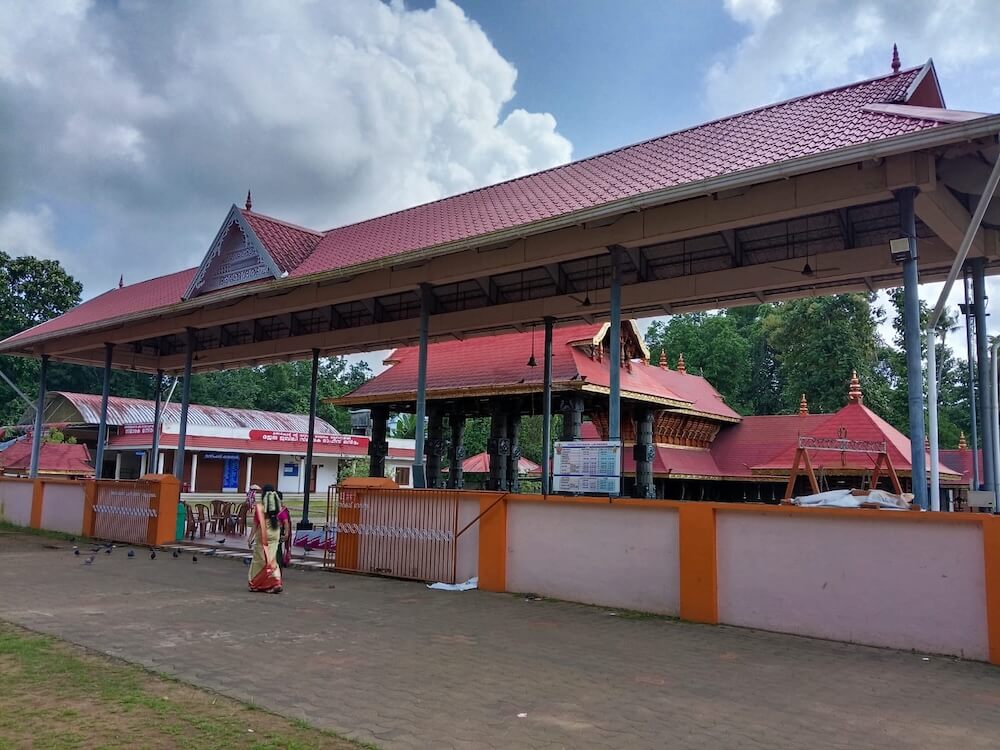
The temple is built entirely in the traditional Kerala style of temple architecture. Its structure combines granite and timber, with beautifully carved wooden details adding to its charm. On entering the temple, visitors first see the spacious elephant shelter and the tall copper-clad flagstaff beside it. In front of the entrance to the Nalambalam stands the large Bali stone, where offerings are made to the Upadevathas (sub-deities) and the Ashtadikpalakas (Guardians of the Directions). The square-shaped Nalambalam is lined with rows of oil lamps that are lit during festivals. Inside the Nalambalam, at the south-west corner of the main Sreekovil, is the east-facing shrine of Lord Ganesha. Inside the Sreekovil (Sanctum Sanctorum), there is no anthropomorphic idol.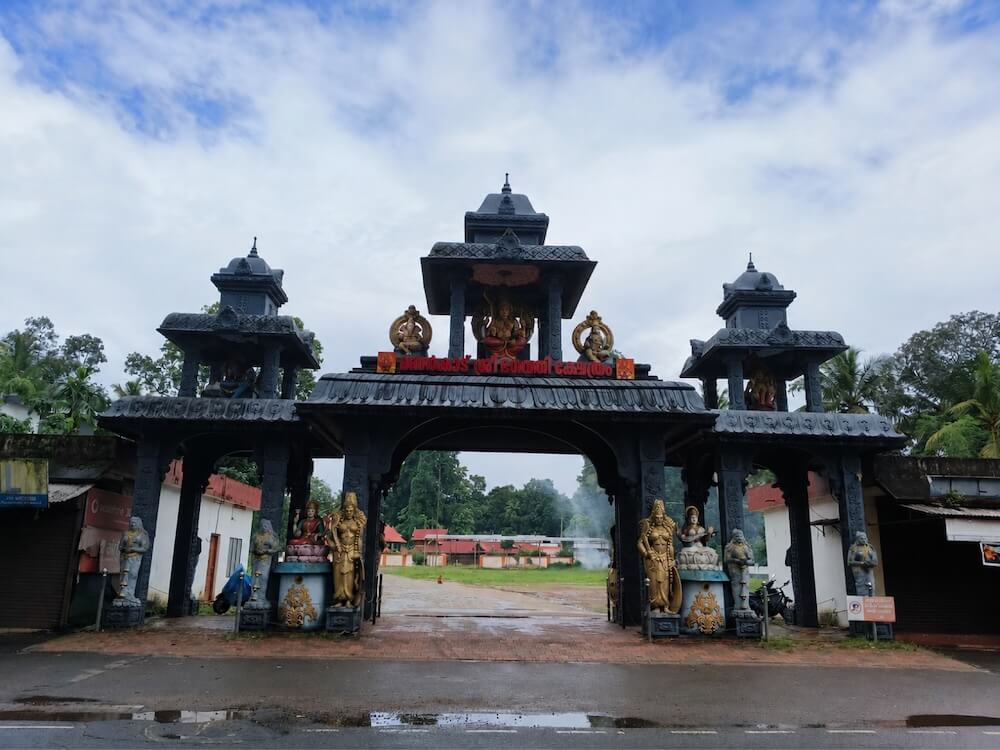 Instead, Goddess Bhadrakali, worshipped as Adi Parashakti and Jagadeeswari and lovingly referred to by devotees as Manarcaud Amma, is represented by a consecrated Kannadi Bimbam—a sacred mirror beautifully carved from stone. The original wooden idol is preserved in great sanctity behind the Kannadi Bimbam. It is adorned with sacred ornaments and a golden sphere. The Goddess faces north in all Her majesty. According to the Tantric tradition, the Goddess faces north as a symbol of peace, prosperity and well-being. During worship, she is envisioned in a four-armed form holding the weapons associated with the slaying of Darikasura, together with a noose and the Varada Mudra (gesture of blessing). Outside the Nalambalam, on the south-west side, is a separate west-facing shrine dedicated to Lord Dharma Shasta (Lord Ayyappa). A separate east-facing shrine for Lord Subrahmanya stands on the north-west side of the temple, while the shrine of Kshetrapalan, the guardian deity of the temple, is located in the north-east corner. The sacred Naga grove (Naga Kavu) in the north-west corner houses Nagaraja and Nagayakshi. Outside the temple wall, beneath a large banyan tree on the south-west side, is the shrine of Yakshi Amma. A shrine dedicated to Karinkali stands near the main temple and the Pancha Moorthy shrines are located elsewhere within the temple complex.
The major festivals celebrated at the temple include Kumbha Bharani, Pathamudayam, Koodicheral Mahotsavam, Meena Bharani, Thrikketta in the month of Mithunam, the Mandala season, Navaratri and Thrikkarthika. During Pathamudayam, 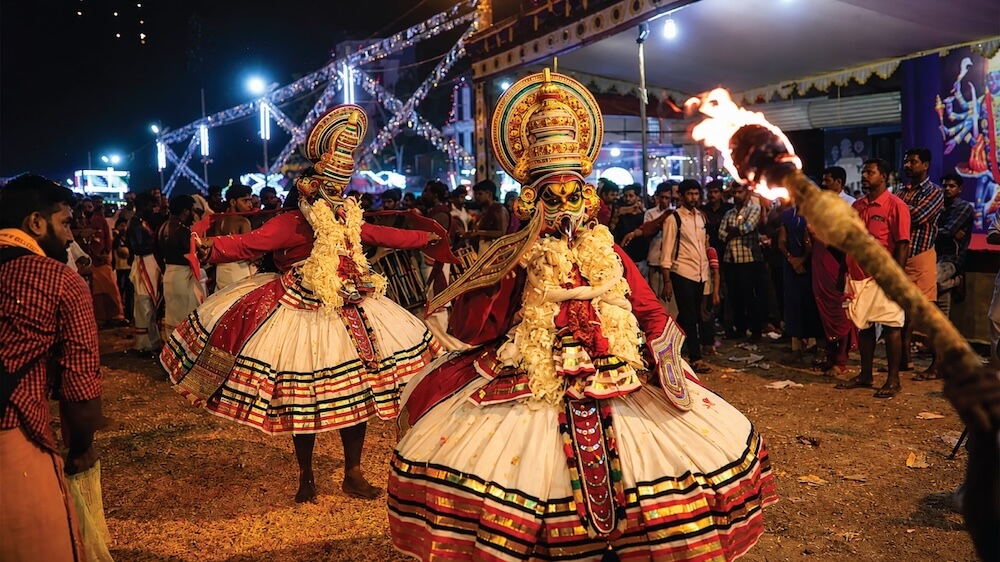 celebrated in the month of Medam, special rituals such as Ennakudam Abhishekam, Kumbhakudam processions from the Twenty-Eight and a Half Karas, Garudan Thookkam, Thookkam and Kalam Karikkal are held.
The most important offering at Manarcaud Sree Bhagavathi Temple is the famous Garudan Thookkam, which is performed during the Pathamudayam festival. Other important offerings include Kalam Karikkal, performed by women and Guruthi, including Karinkuruthi and Dasa Guruthi, offered to the Goddess. 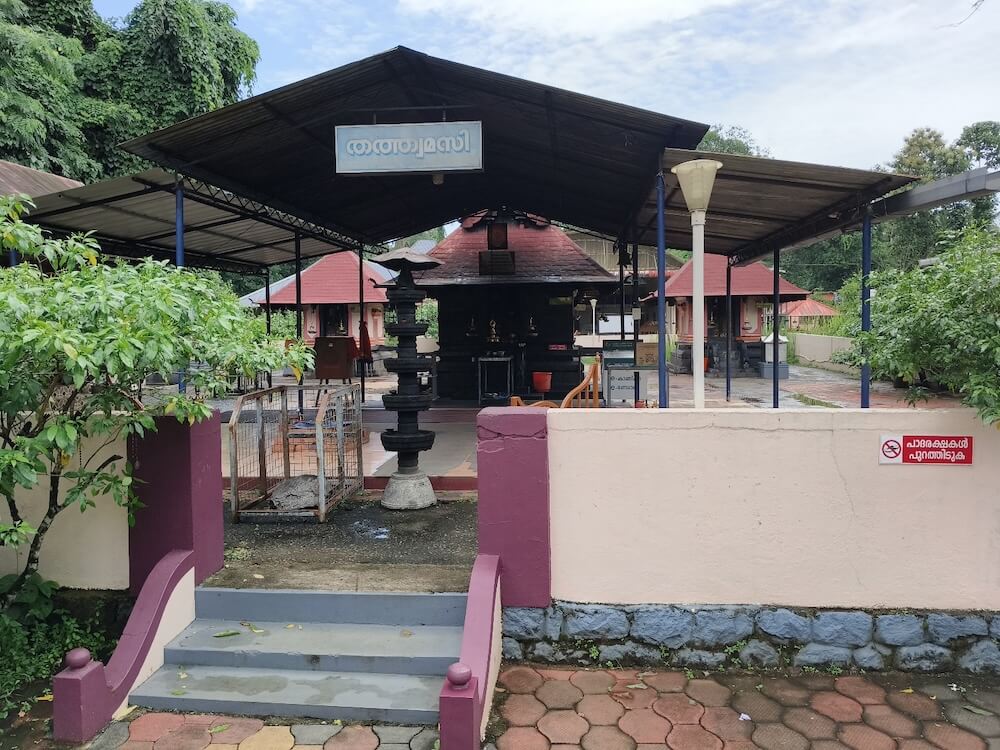 Adimayiruthal (the sacred consecration of an individual to the deity) is another unique ritual of the temple. Once every 22 years, the highly ritualistic Pallippana is conducted for the well-being of the temple, its devotees and the 18 Karas under the Goddess’s divine protection. According to tradition, when Lord Mahavishnu suffered from evil afflictions (Pini Dosham) during the churning of the cosmic ocean (Palazhi Madhanam), the concerned deities sought the guidance of Lord Mahadeva. To remove the sorcery, Lord Mahadeva and Goddess Parvati manifested on Earth as Velan and Velathi, marking the mythological origin of the Velan community. Through the ritual performance of Oth and Moroth, sacred chants based on the Mabharatham, a traditional version of the Mahabharata, they removed the black magic affecting Lord Mahavishnu, restored His divine radiance and established the community’s traditional right to perform these sacred rituals.
The temple opens at 4:30 am and closes at 11:30 am. Nirmalya Darshan begins at 4:30 am, followed by the morning rituals. Usha Pooja is performed at 5:30 am, Pantheeradi Pooja is held at 8:00 am and Ucha Pooja takes place at 11:00 am. The temple reopens at 5:00 pm. Deeparadhana is held at 6:30 pm and Athazha Pooja is performed at 7:30 pm. The temple closes at 8:00 pm.
Key Highlights
- Located 10 km from Kottayam.
- About 10 km from Kottayam Railway Station.
- KSRTC and local bus services are available.
- Dedicated parking is available for private vehicles.
- Accommodation and dining facilities are available nearby.
- Phone: 8547915418
मनारकौड श्री भगवती मंदिर
मनारकौड, जिला. कोट्टायम
मंदिरे
Temples
मंदिर
મંદિરો
கோவில்கள்
దేవాలయాలు
ക്ഷേത്രങ്ങൾ
ದೇವಾಲಯಗಳು
মন্দিরসমূহ
ਮੰਦਿਰ
-
वेल्लूर श्री सुब्रह्मण्य स्वामी मंदिर पामपाडी, जि. कोट्टायम
अधिक माहितीVelloor Sree Subrahmanya Swamy Temple Pampady, Dist. Kottayam
View Detailsवेल्लोर श्री सुब्रह्मण्य स्वामी मंदिर पंपडी, जिला. कोट्टायम
विवरण देखेंVelloor Sree Subrahmanya Swamy Temple Pampady, Dist. Kottayam
વિગત જુઓVelloor Sree Subrahmanya Swamy Temple Pampady, Dist. Kottayam
விவரங்களைக் காண்கVelloor Sree Subrahmanya Swamy Temple Pampady, Dist. Kottayam
వివరాలను చూడండిVelloor Sree Subrahmanya Swamy Temple Pampady, Dist. Kottayam
വിശദാംശങ്ങൾ കാണുകVelloor Sree Subrahmanya Swamy Temple Pampady, Dist. Kottayam
ವಿವರಗಳನ್ನು ವೀಕ್ಷಿಸಿVelloor Sree Subrahmanya Swamy Temple Pampady, Dist. Kottayam
বিস্তারিত দেখুনVelloor Sree Subrahmanya Swamy Temple Pampady, Dist. Kottayam
ਵੇਰਵੇ ਦੇਖੋ -
पुलियान्नूर शिव मंदिर पाला, जि. कोट्टायम
अधिक माहितीPuliyannur Siva Temple Pala, Dist. Kottayam
View Detailsपुलियान्नुर शिव मंदिर पाला, जिला. कोट्टायम
विवरण देखेंPuliyannur Siva Temple Pala, Dist. Kottayam
વિગત જુઓPuliyannur Siva Temple Pala, Dist. Kottayam
விவரங்களைக் காண்கPuliyannur Siva Temple Pala, Dist. Kottayam
వివరాలను చూడండిPuliyannur Siva Temple Pala, Dist. Kottayam
വിശദാംശങ്ങൾ കാണുകPuliyannur Siva Temple Pala, Dist. Kottayam
ವಿವರಗಳನ್ನು ವೀಕ್ಷಿಸಿPuliyannur Siva Temple Pala, Dist. Kottayam
বিস্তারিত দেখুনPuliyannur Siva Temple Pala, Dist. Kottayam
ਵੇਰਵੇ ਦੇਖੋ -
परिपू महादेवाचे मंदिर आयमनम, जि. कोट्टायम
अधिक माहितीParippu Mahadeva Temple Aymanam, Dist. Kottayam
View Detailsपरिप्पु महादेव मंदिर अयमानम, जिला. कोट्टायम
विवरण देखेंParippu Mahadeva Temple Aymanam, Dist. Kottayam
વિગત જુઓParippu Mahadeva Temple Aymanam, Dist. Kottayam
விவரங்களைக் காண்கParippu Mahadeva Temple Aymanam, Dist. Kottayam
వివరాలను చూడండిParippu Mahadeva Temple Aymanam, Dist. Kottayam
വിശദാംശങ്ങൾ കാണുകParippu Mahadeva Temple Aymanam, Dist. Kottayam
ವಿವರಗಳನ್ನು ವೀಕ್ಷಿಸಿParippu Mahadeva Temple Aymanam, Dist. Kottayam
বিস্তারিত দেখুনParippu Mahadeva Temple Aymanam, Dist. Kottayam
ਵੇਰਵੇ ਦੇਖੋ