
संन्यास (सिद्धनाथ) महादेव मंदिर
कठालाल, ता. कठालाल, जि. खेडा
Sannyas (Siddhanath) Mahadev Temple
Kathlal, Tal. Kathlal, Dist. Kheda
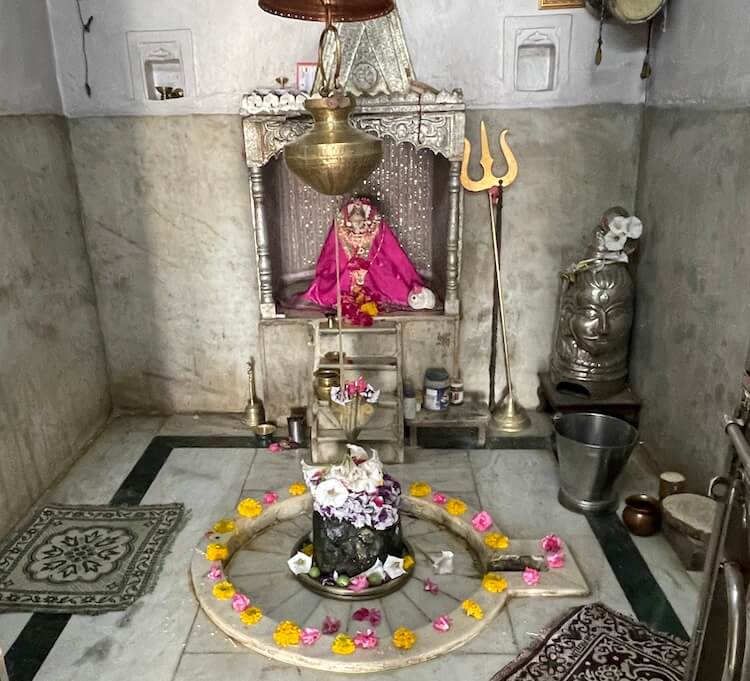 The long-standing presence of yogis, seers ascetics bestows a unique energy, sanctity spiritual potency upon the land. In such hallowed grounds of penance, the human ego and pride dissolve, leading to a state of pure humility. For this reason, such locales are revered by society as ‘holy pilgrimages’. Devotees firmly believe that the Sannyas Mahadev or Siddhanath Mahadev Temple in Kathlal is a ‘Jagrut’ shrine—a place of living divine presence. The temple is reputed to be approximately 400 to 500 years old.
According to the ‘Gazetteer of the Bombay Presidency, Volume III – Kaira and Panch Mahals (1879)’, the town of Kheda was recognised as Chakravati Nagari during the epoch of the Mahabharata. It was the seat of power for King Mordhwaj, who was ultimately vanquished by the Pandavas. The region of Kathlal fell under the dominion of this monarch of Chakravati. 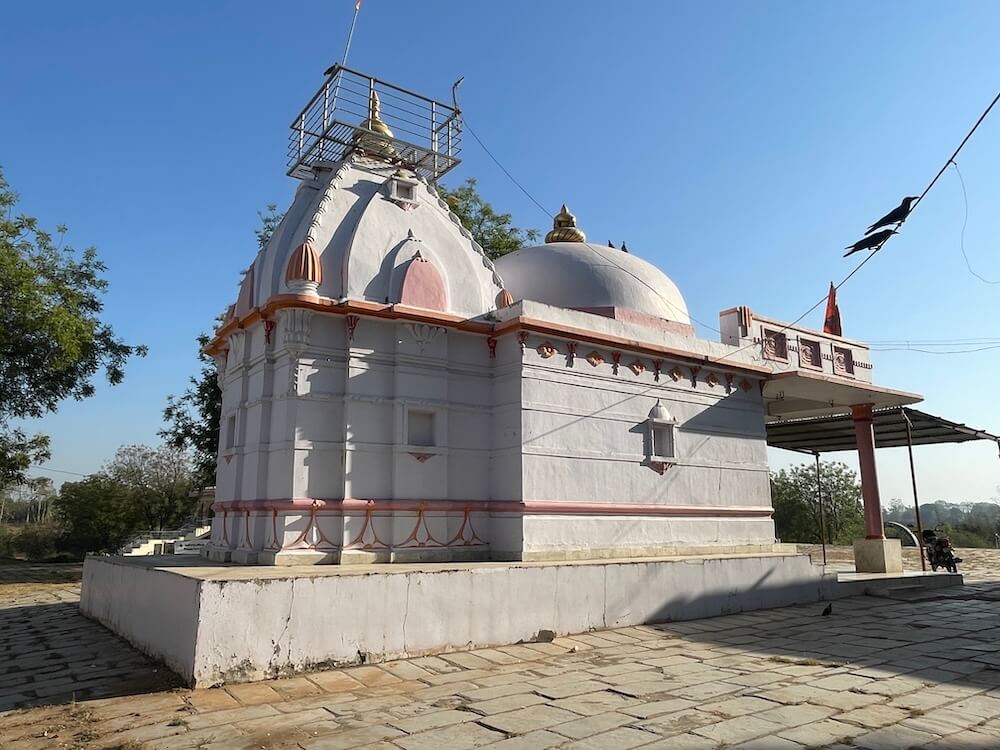 Popular local belief maintains that the Pandavas resided here during their period of exile in incognito. Regarding the Mahadev temple itself, the legend suggests that in the 16th century, this territory was cloaked in dense, impenetrable forest. In this tranquil and picturesque setting, far removed from the clamour of the town, a renunciant monk sought refuge and commenced a life of rigorous penance. For the worship of his Chosen Deity, he established a Shivlinga at this site. Through the strength of his spiritual practice, this ascetic attained numerous ‘Siddhis’ or supernatural powers. Upon reaching the moment of his liberation, he offered all his spiritual radiance and acquired powers unto this very Shivlinga. Consequently, as the temple was established by a wandering monk, it is known as ‘Sanyas Mahadev’; furthermore, because the ‘Siddhis’ are believed to reside within the Shivlinga, this manifestation of Lord Shiva is also revered as ‘Siddhnath Mahadev’.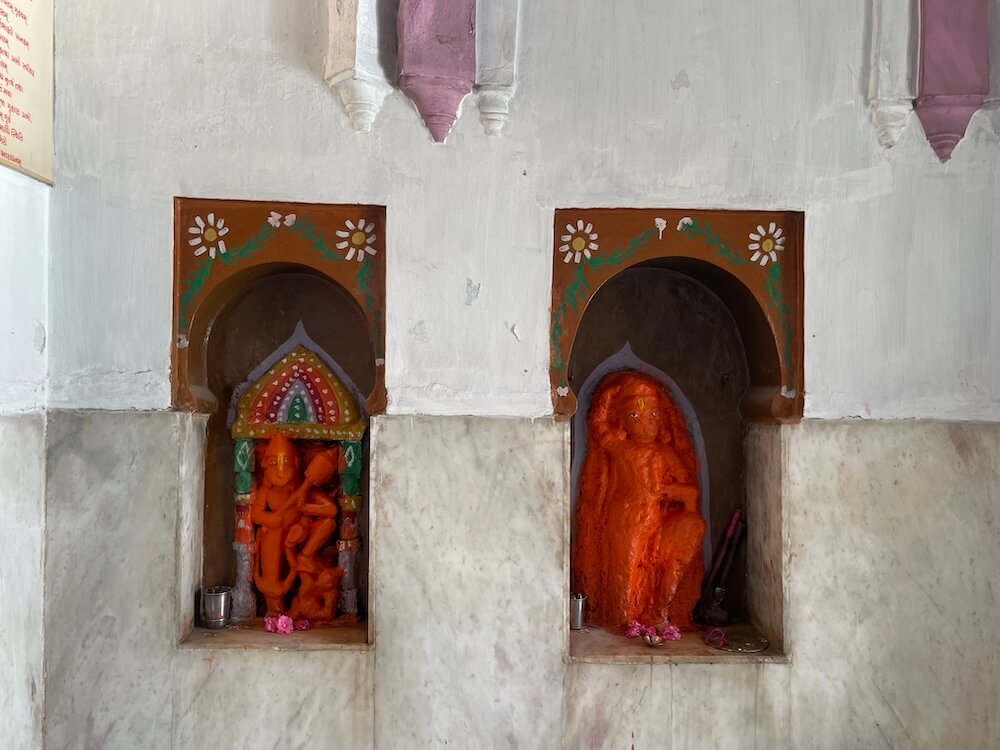
The temple is nestled in a secluded, serene setting, somewhat removed from the village’s bustle. The shrine is protected by a sturdy fortification wall the entire courtyard is embellished with decorative tiling. Adjacent to this courtyard is a beautiful botanical garden and a children’s play area. Within the precincts stands a Shani Temple, where Lord Shani is seated upon his ‘vahan’ (vehicle), the crow. Beside the Shani Temple is a stone idol of Lord Hanuman, smeared with vermillion. The deity bears a mace upon one shoulder, while the other hand upholds the Dronagiri mountain. The temple complex also provides a spacious hall for cultural programmes, a well-equipped kitchen an ‘Annakshetra’ (community kitchen) facility for the pilgrims.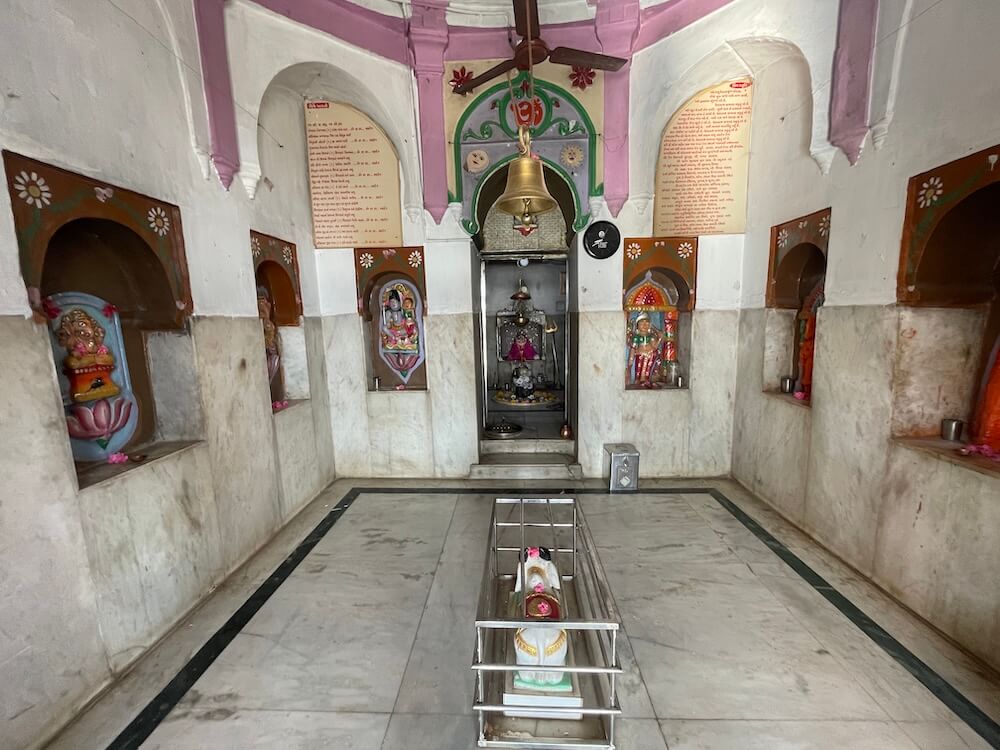
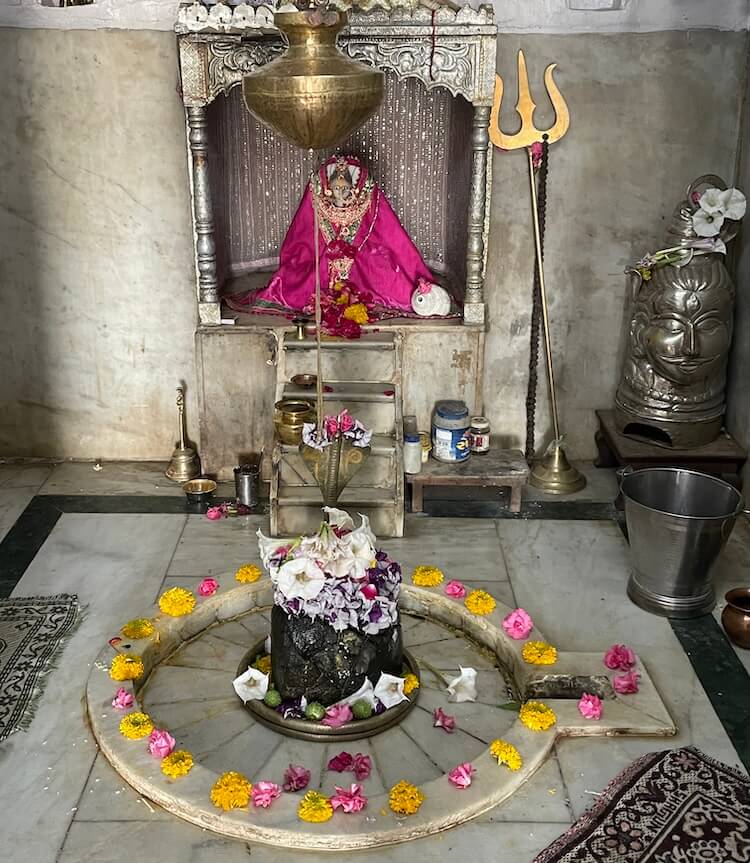
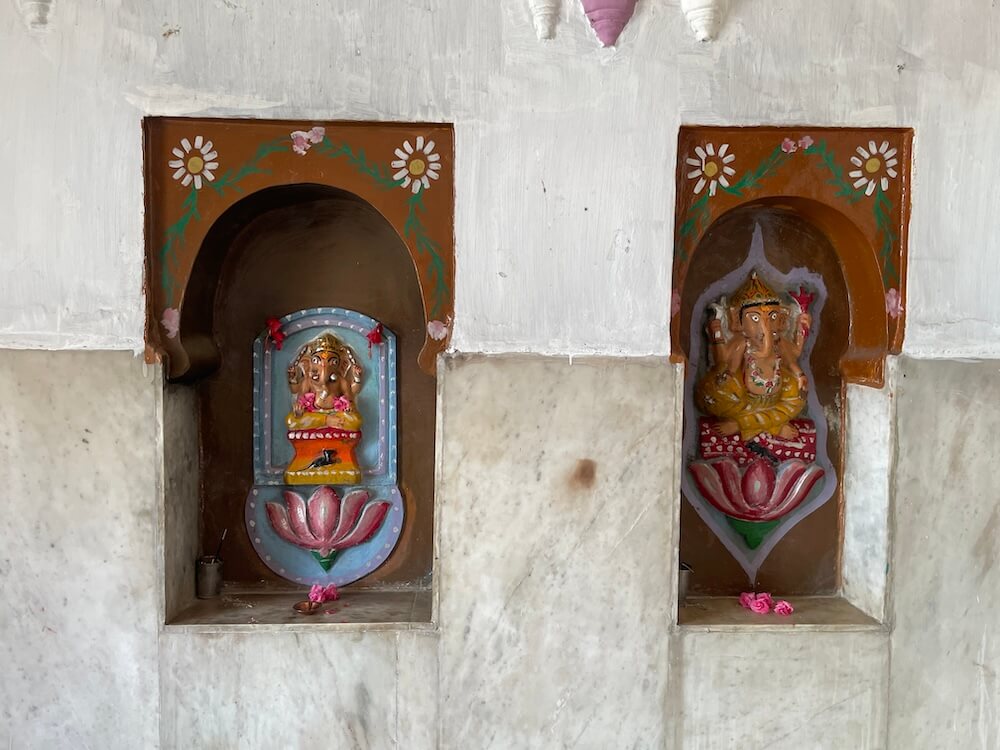
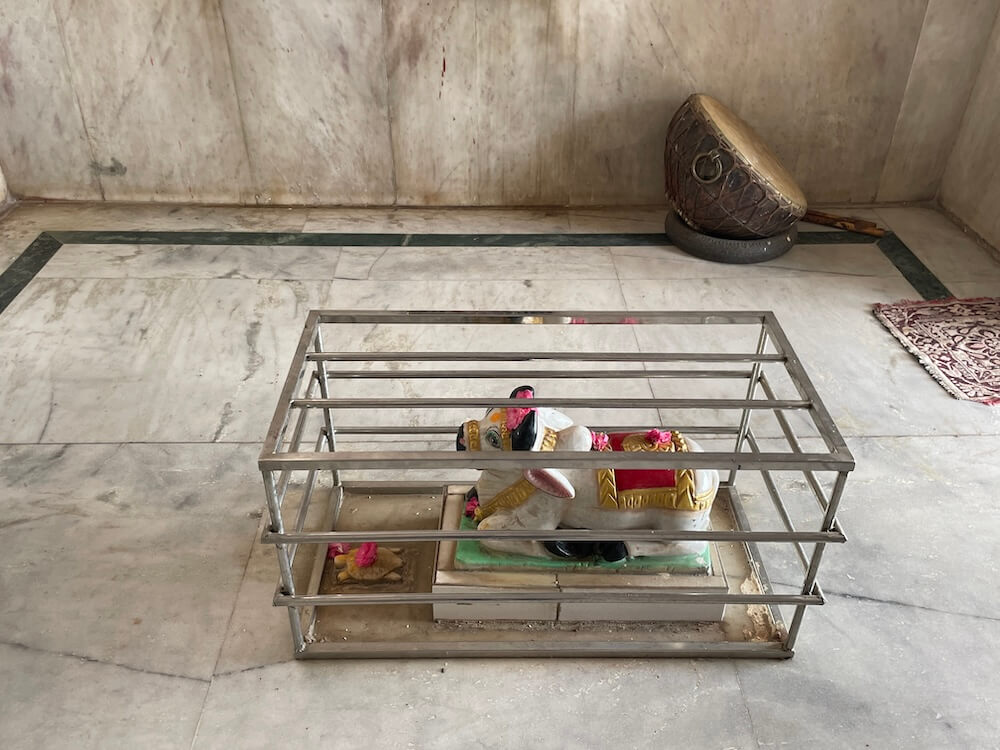
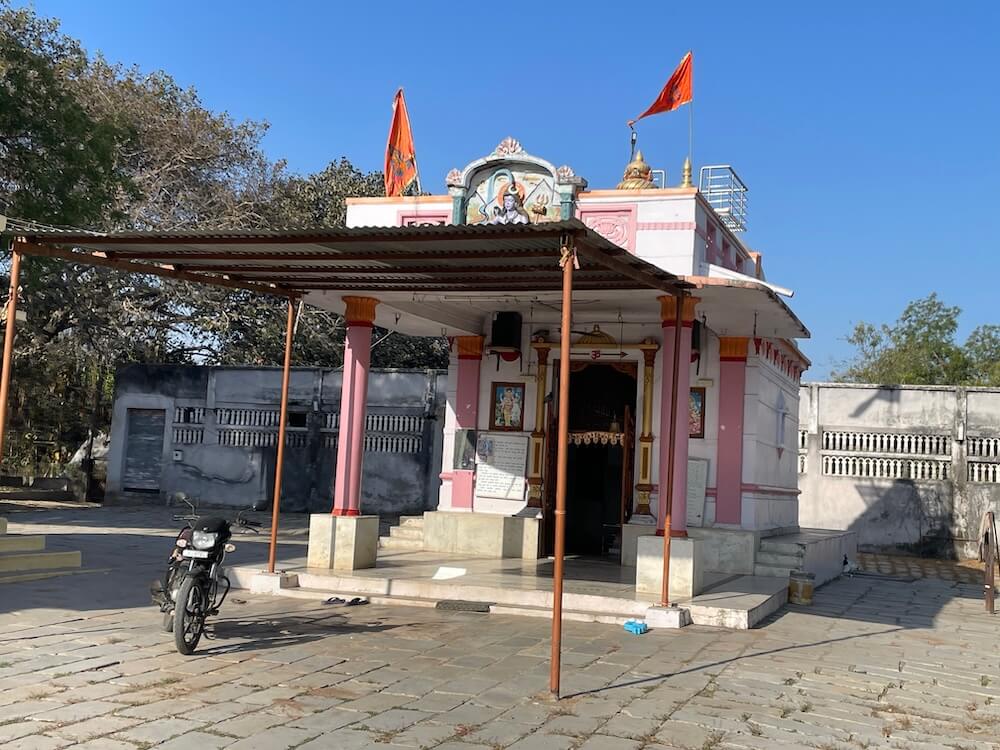
Facing the primary shrine is a ‘Rangmandap’ (pavilion) featuring a corrugated metal roof supported by iron pillars, which houses a ‘Yagyakunda’ (sacrificial fire pit). The architectural layout of the temple comprises a ‘Mukhmandap’ (portico), a ‘Sabhamandap’ (assembly hall) a ‘Garbhagriha’ (sanctum sanctorum). The portico, a contemporary addition joined to the main structure, rests upon two circular pillars. The entrance to the assembly hall is adorned with intricately carved pillars and fitted with iron lattice gates. A grand brass bell is suspended from the ceiling of the assembly hall, while the walls feature various niches housing sacred idols of Lord Ganesha, Lord Hanuman, Gauri-Shankar Goddess Parvati.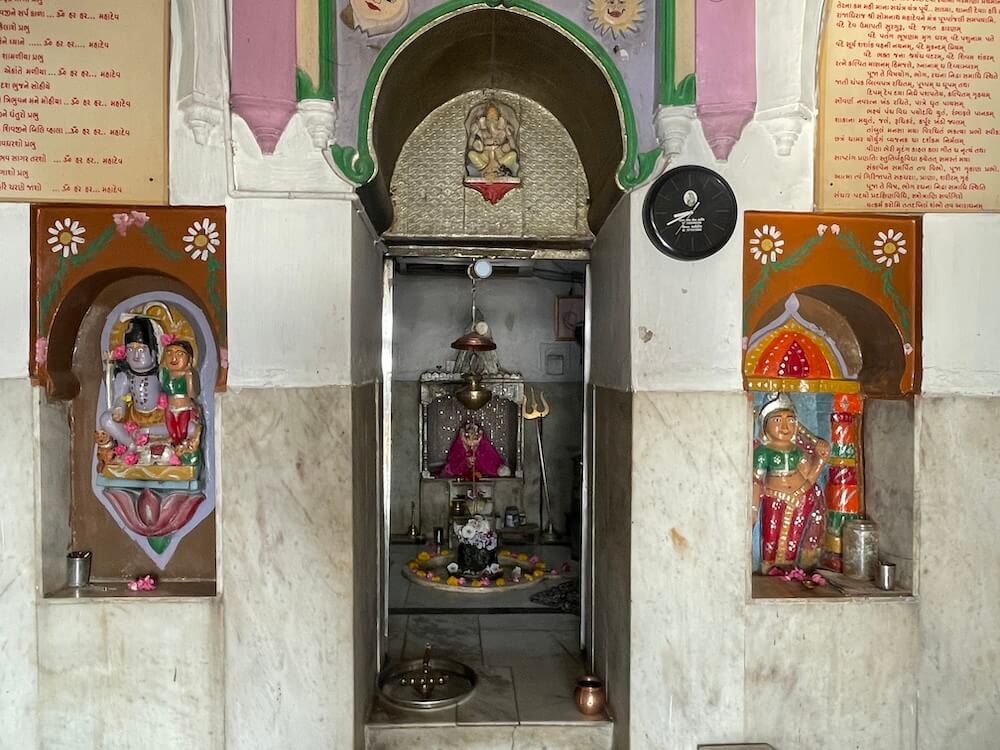 The entrance to the sanctum is slightly elevated from the hall floor, accessed by two steps features a carving of Lord Ganesha on the lintel. At the heart of the sanctum floor lies the principal Shivapinda, sheltered by a silver serpent canopy. An ‘Abhishekpatra’ (consecration vessel) is suspended from the ceiling a niche in the rear wall enshrines an idol of Parvati and a brass Shiva mask. A circumambulatory path (‘Pradakshinamarga’) surrounds the exterior of the temple, with further niches set into the outer walls. The domed spire of the assembly hall is topped with a two-tiered ‘Amalaka’ and a ‘Kalasha’ (finial). The sanctum is crowned by a square spire that tapers upwards, flanked on all four sides by smaller sub-spires and niches. At the summit of this spire rest the ‘Amalaka’, ‘Kalasha’ the sacred religious flag.
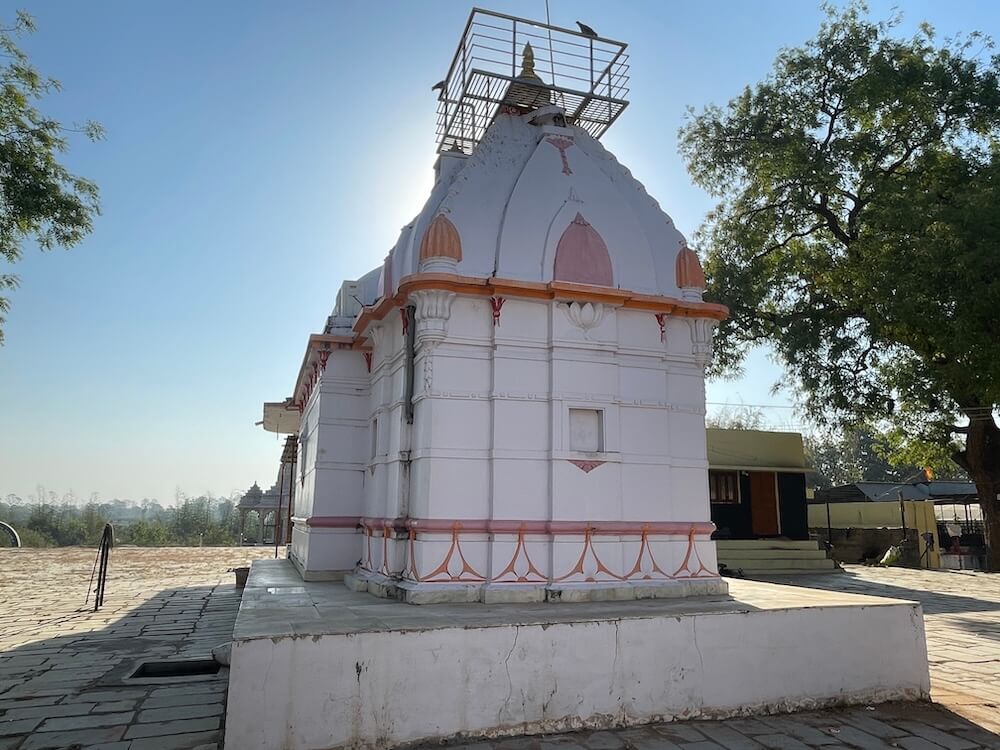 Various religious ceremonies are celebrated here throughout the year with great zeal. Mahashivratri is the pre-eminent annual festival. Thousands of devotees throng the site for a glimpse of the deity during this time. Every Monday of the holy month of Shravan, special prayers, consecrations (‘Abhishek’) festivities are organised. The Navratra festival in the month of Ashwin and the Uttarayan (Makar Sankranti) festival on the 14th of January are also celebrated with enthusiasm. Special rituals are performed on Nag Panchami, Krishna Janmashtami, Shani Jayanti Hanuman Jayanti. On auspicious occasions and festival days, the temple organises ‘Laghurudra’ rites, ‘Maha-Abhishek’, the chanting of the Mahamrityunjay mantra, devotional songs (‘Bhajans’), scriptural readings the distribution of ‘Mahaprasad’. On Mondays, Tuesdays Saturdays, as well as on full moon and new moon days, a vast number of devotees from Kathlal and the surrounding regions visit the shrine. They seek blessings and partake in the community meal. Devotees may visit the temple daily from 4:00 am until 11:00 pm.
Useful Information
- Located at 2 km from Kathlal Bus Station and 42 km from Kheda city.
- GSRTC bus facilities are available from several towns in the Kheda district.
- Private vehicles can reach the temple’s dedicated parking area.
- Accommodation and breakfast facilities are available in the surrounding area.
संन्यास (सिद्धनाथ) महादेव मंदिर
कठलाल, ताल. कठलाल, जिला. खेड़ा
मंदिरे
Temples
मंदिर
-
भूमपुरा हनुमान मंदिर भूमापुरा, मोडज, ता. महेमदावाद, जि. खेडा
अधिक माहितीBhumapura Hanuman Temple Bhumapura, Modaj, Tal. Mahemdavad, Dist. Kheda
View Detailsभूमापुरा हनुमान मंदिर भूमापुरा, मोडाज, ताल. महेमदावाद, जिला. खेड़ा
विवरण देखें -
भाथीजी महाराज मंदिर फागवेल, ता. कापडवंज, जि. खेडा
अधिक माहितीBhathiji Maharaj Temple Phagvel, Tal. Kapadvanj, Dist. Kheda
View Detailsभथीजी महाराज मंदिर फागवेल, ताल. कपडवंज, जिला. खेड़ा
विवरण देखें -
केदारेश्वर महादेव मंदिर महादेवपुरा, ता. कठालाल, जि. खेडा
अधिक माहितीKedareswar Mahadev Temple Mahadevpura, Tal. Kathlal, Dist. Kheda
View Detailsकेदारेश्वर महादेव मंदिर महादेवपुरा, ताल. कठलाल, जिला. खेड़ा
विवरण देखें