
काशी विश्वनाथ महादेव मंदिर
मेहसाणा, जि. मेहसाणा
Kashi Vishwanath Mahadev Temple
Mehsana, Dist. Mehsana
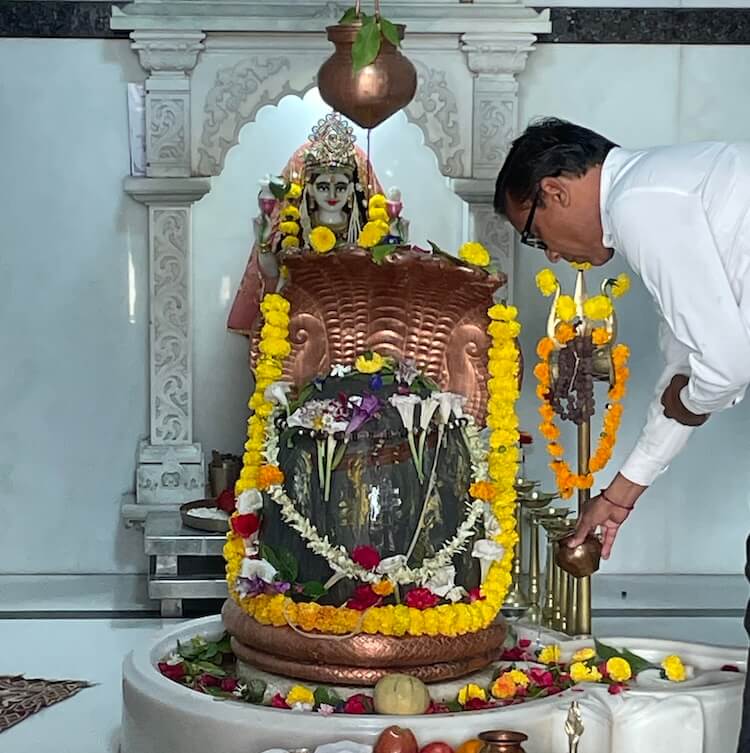 According to Hindu belief, Kashi is the city of redemption that has existed since time immemorial. This pre-eminent Shaivite seat, housing one of the twelve Jyotirlingas, is believed to be perched upon Lord Shiva’s trident. A mythological belief holds that even during the ‘Pralaya’ or cosmic dissolution, this sacred realm shall remain inviolate. Lord Vishweshwar, also known as Vishwanath, reigns as the sovereign of this celestial city. It is often said that one must undertake a pilgrimage to Kashi at least once in a lifetime to seek the benediction of Vishwanath. However, for devotees who find a journey to Kashi unattainable due to various constraints, a magnificent Kashi Vishwanath Temple has been established in Mehsana. It is the firm belief of the faithful that a visitation to the Vishwanath enshrined here bestows the same spiritual merit as the traditional Kashi pilgrimage.
Varanasi, the alternative name for Kashi, represents a sublime confluence of antiquity and sanctity.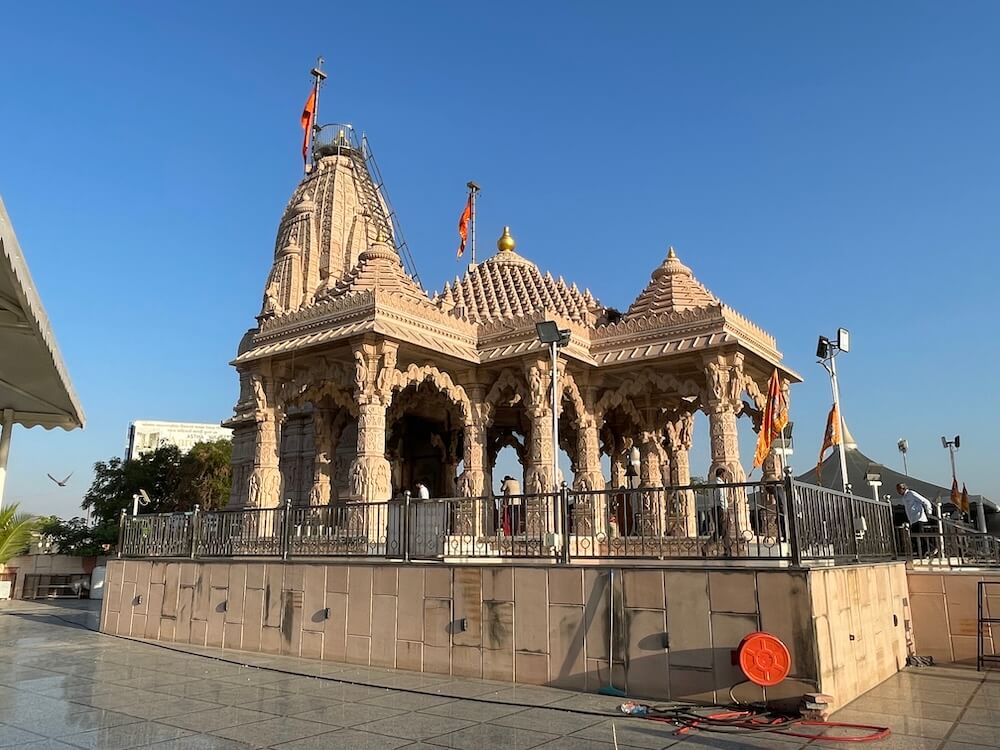 Nestled upon the northern banks of the holy River Ganges, this city served as the fountainhead from which Vedic and Buddhist philosophies permeated the entire Indian subcontinent. It is the hallowed birthplace of Suparshvanath and Parshvanath, the seventh and twenty-third Tirthankaras of Jainism, respectively. Etymologically, the name Kashi is derived from the Sanskrit root ‘Kash’, meaning ‘to shine’ or ‘to be luminous’, thus designating it as the City of Light. According to the Pippalada recension of the Atharvaveda, the region was originally inhabited and settled by a people known as the Kashi or Kashya. The Mahabharata recounts that Divodasa, the grandson of Haryashva, founded the city at the behest of Lord Indra. The Vayu Purana narrates a tale in which this city, created by Divodasa, was dismantled by the Shiva-gana Nikumbha under Lord Shiva’s instructions, only to be resettled by Divodasa’s descendants.
  Conversely, the Brahma Purana suggests that Varanasi was once consumed by fire when Lord Krishna unleashed the Sudarshan Chakra.
Kashi is as much a ‘Shaktipeeth’ as it is a ‘Shivapeeth’. While Vishwanath is regarded as the Emperor of Kashi, the temple precincts are populated by numerous Shivalingas, each personifying a celestial official : Hareshwar serves as the Minister, Brahmeshwar as the Narrator, Bhairava as the Kotwal (Chief of Police), Tarakeshwar as the Treasurer, Dandapani as the Mace-bearer, Veereshwar as the Paymaster and Dhundhiraj as the Administrative Officer. Devotees believe that performing ablutions in the Ganges, followed by the ‘Darshan’ of Kashi Vishwanath, leads to ‘Moksha’ or ultimate liberation. Consequently, millions undertake the pilgrimage annually. 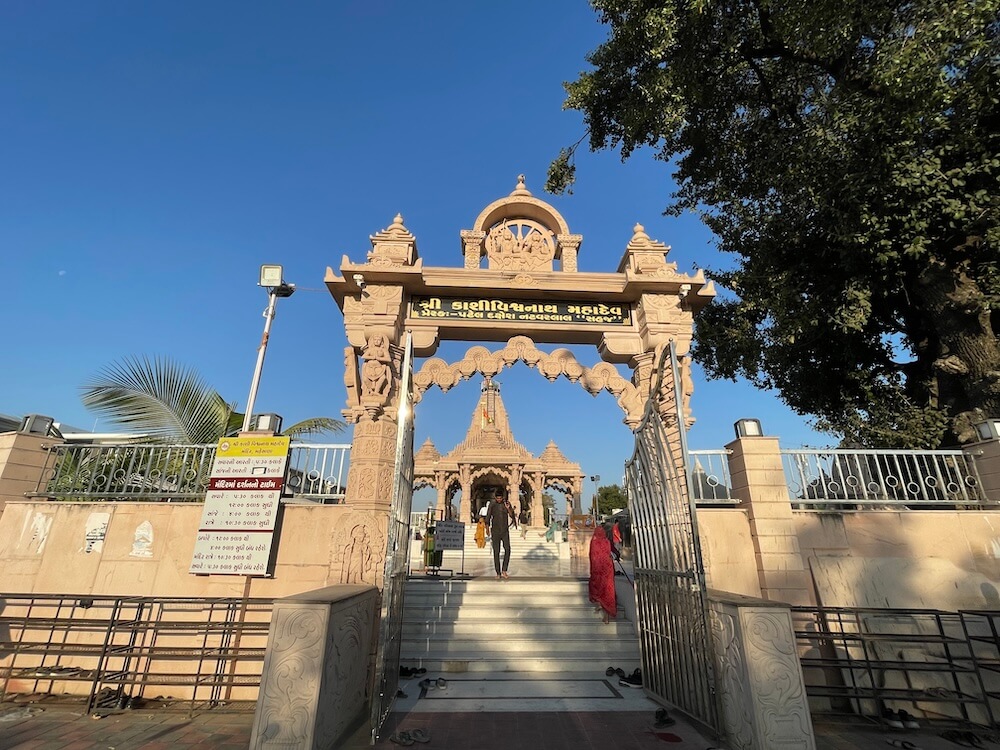 Recognising that many find it difficult to acquire this spiritual merit through travel, the Kashi Vishwanath Temple was established in Mehsana. The ‘Pran-Pratishtha’ (consecration) ceremony was a grand three-day affair held on the 25th, 26th and 27th of November 2022, attended by a multitude of Shiva devotees amidst an atmosphere of immense religious fervour and jubilation.
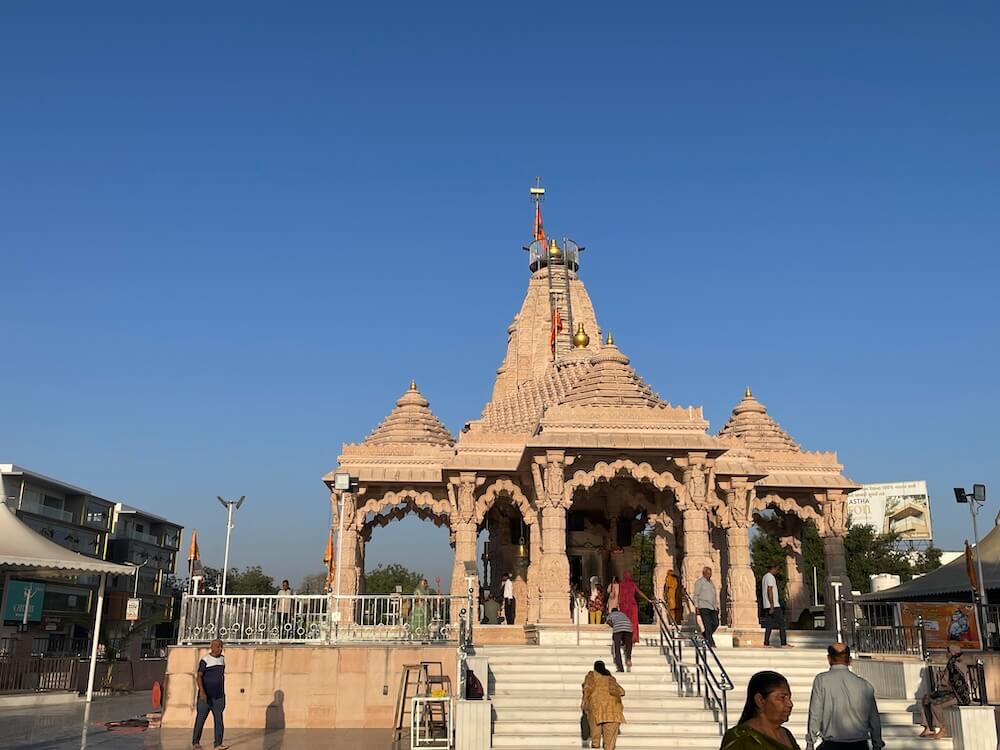
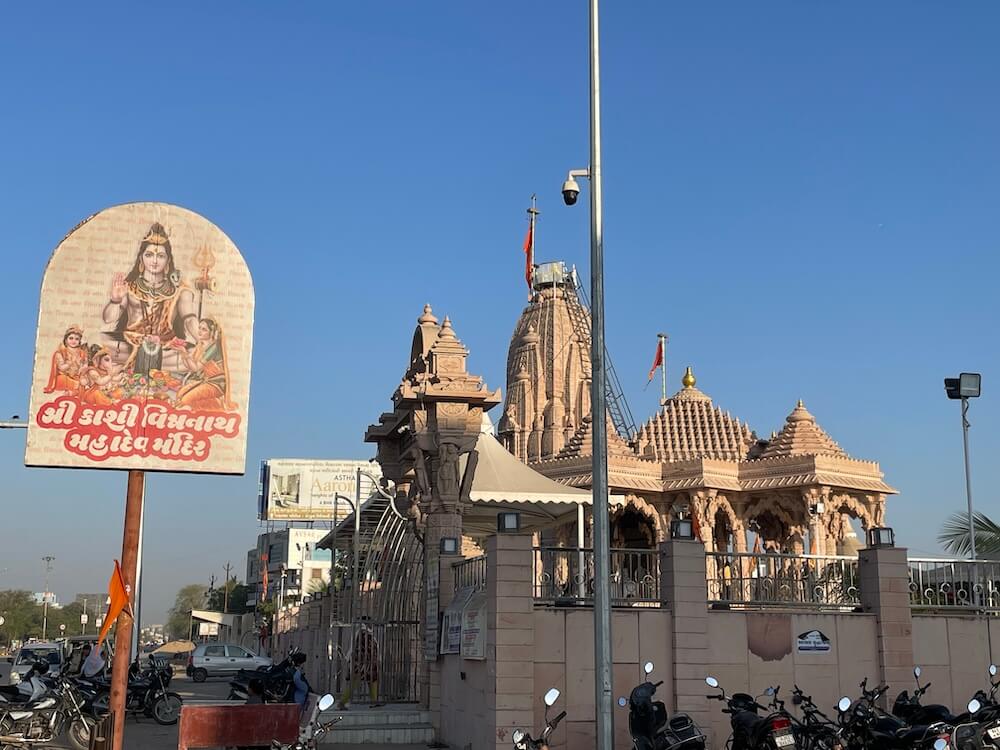
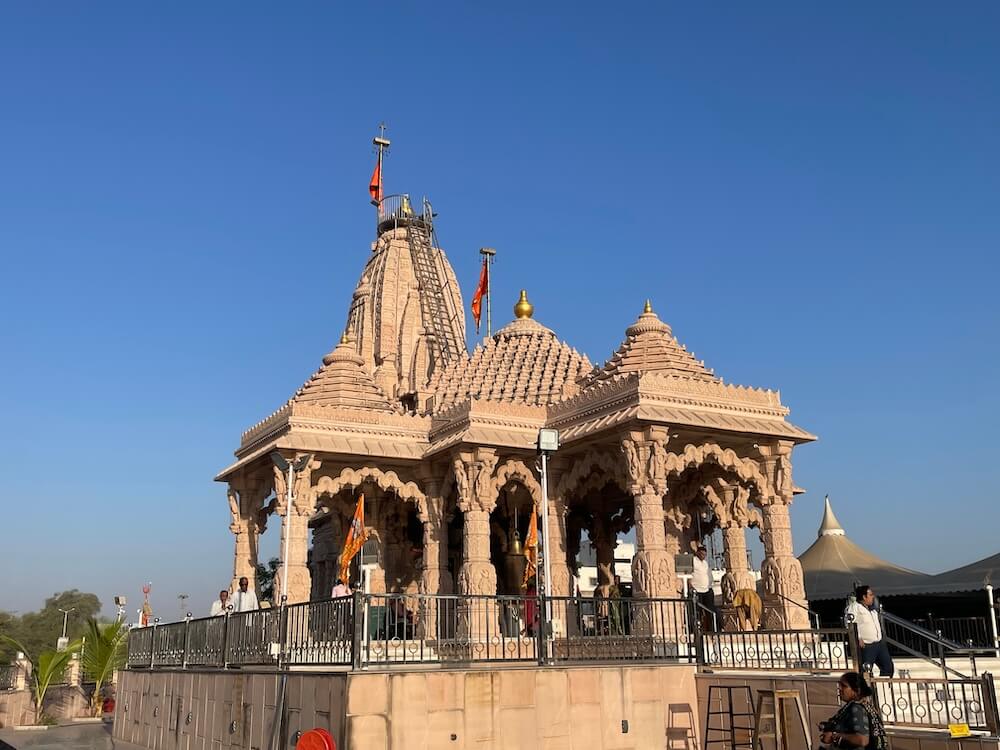
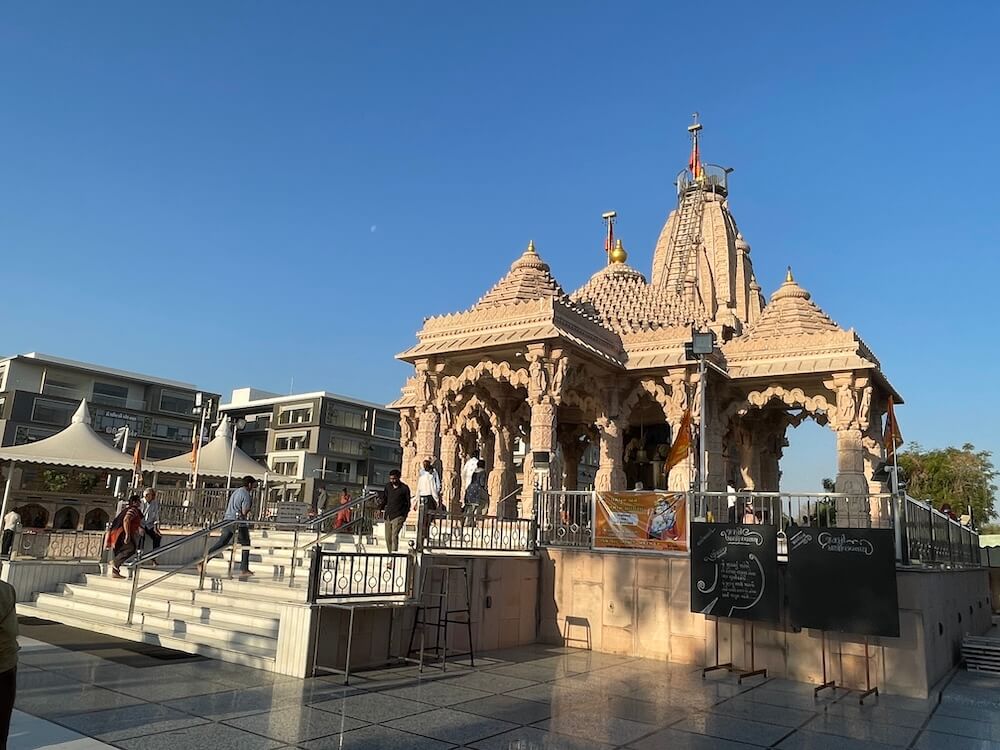
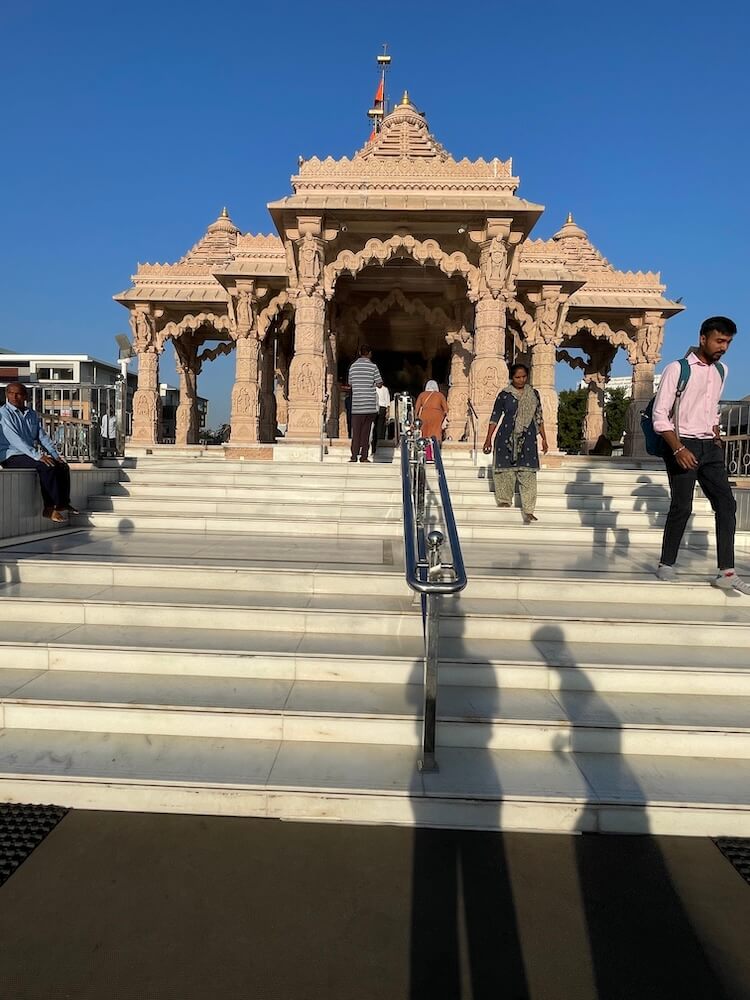
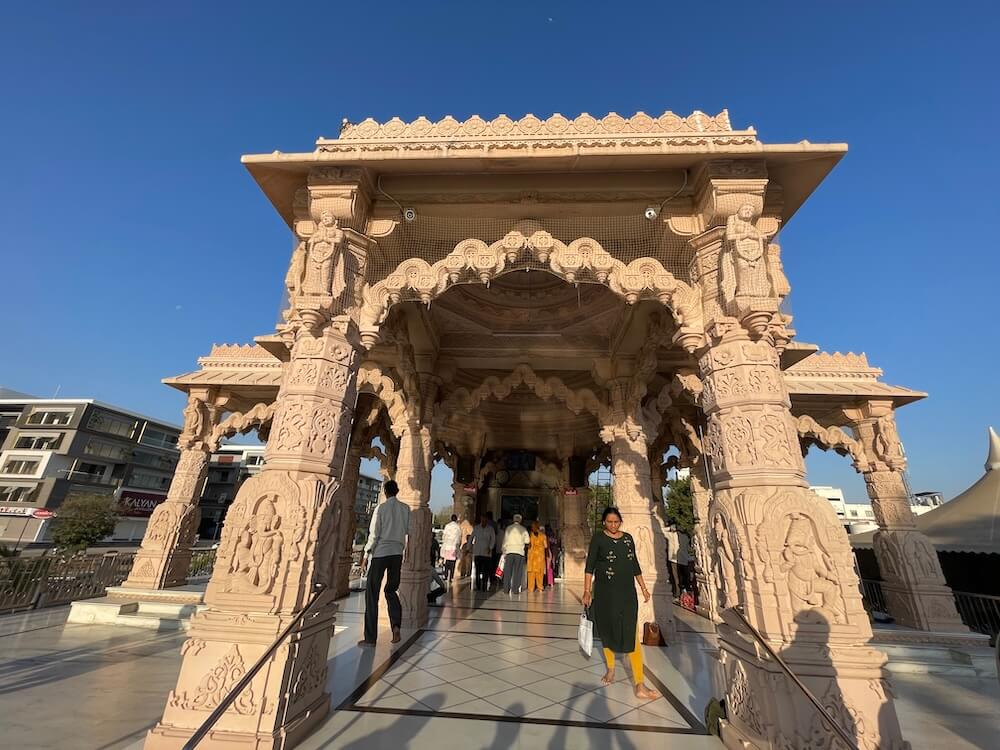
The temple is accessed through an ornamental gateway set within the surrounding perimeter wall. The twin pillars of this archway are adorned with sculptures of welcoming maidens, while the upper portion features exquisite carvings of Lord Shiva and Parvati. Ascending six steps through this portal, one enters a vast, paved courtyard provided with ample seating for the comfort of pilgrims. 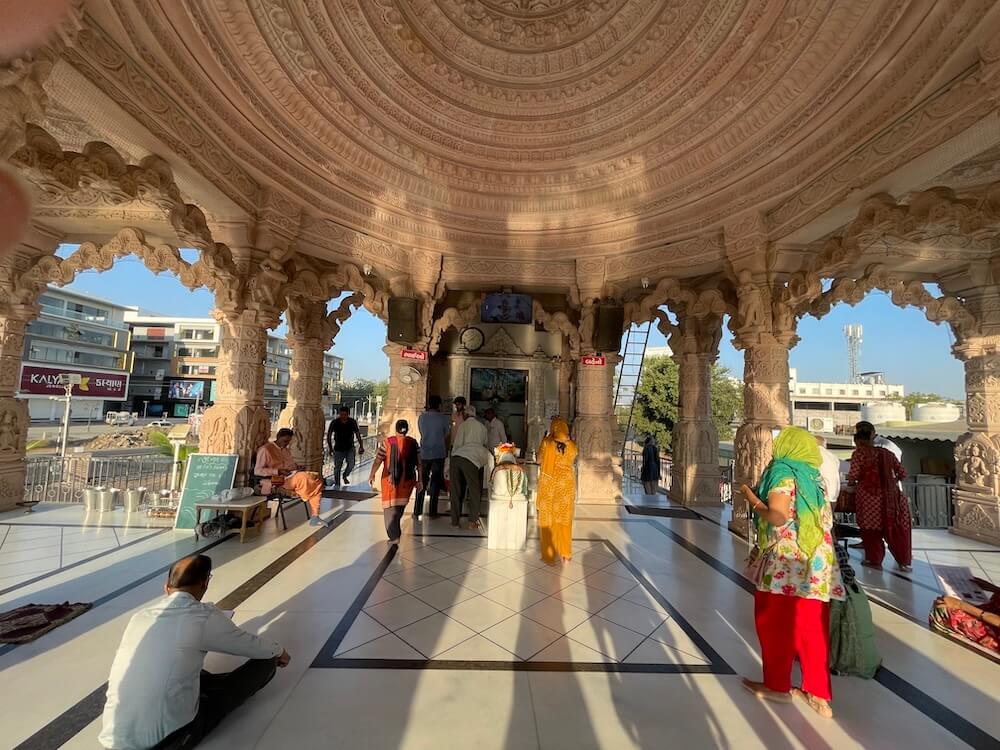 A further ten steps lead to the elevated ‘Jagati’ or plinth of the temple. The architectural layout consists of three entrance porches (‘Darshanmandap’), an assembly hall (‘Sabhamandap’), a vestibule (‘Antarala’) and the sanctum sanctorum (‘Garbhagriha’). The entrance and assembly halls are designed in a semi-open style, featuring intricately carved pillars connected by decorative, scalloped arches. The upper sections of the pillars in the assembly hall are graced with sculptures of ‘Surasundaris’ engaged in singing and playing musical instruments, while the ceiling displays delicate craftsmanship. At the centre of the assembly hall, an idol of Nandi rests upon a marble pedestal. The doorway to the sanctum is beautifully etched with patterns, featuring a striking image of Mahadev upon the lintel.
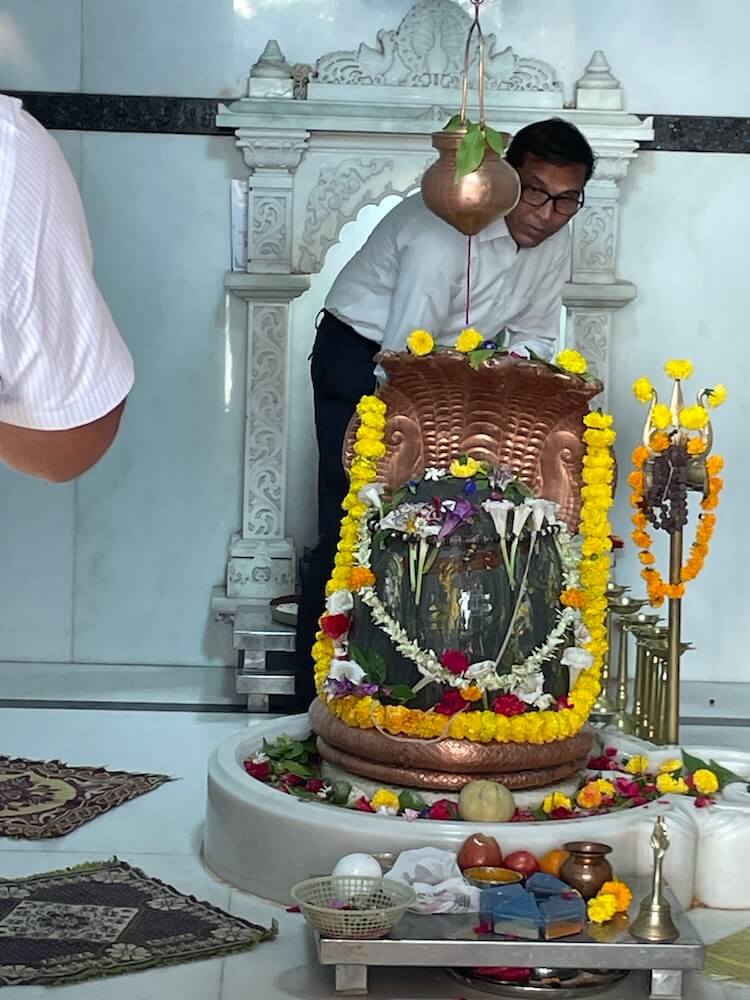
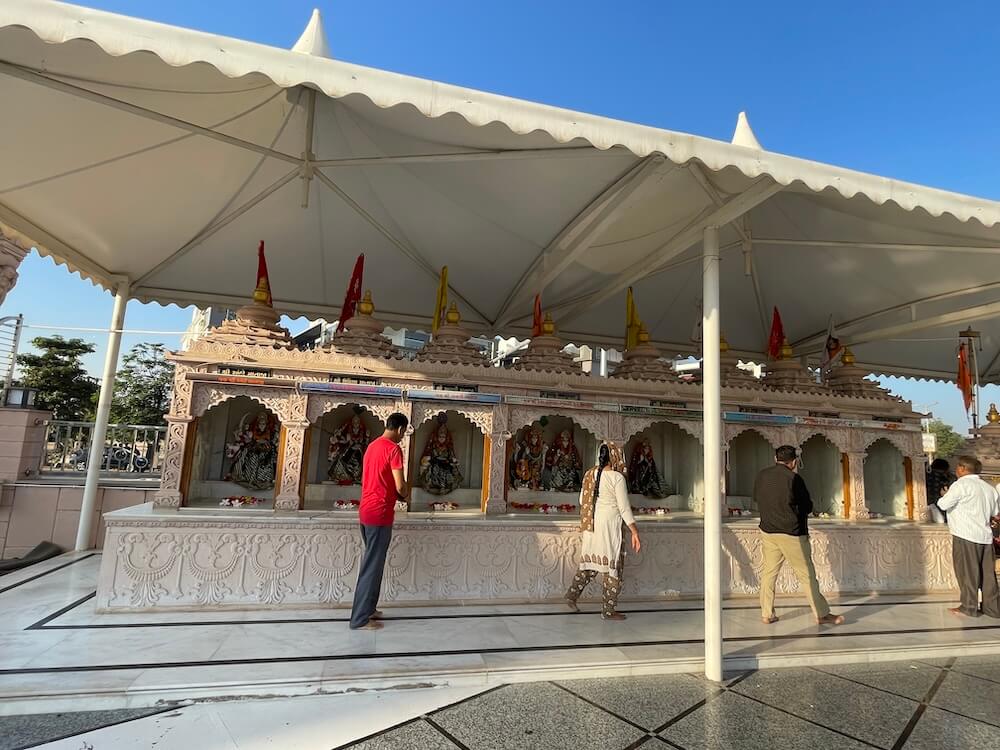
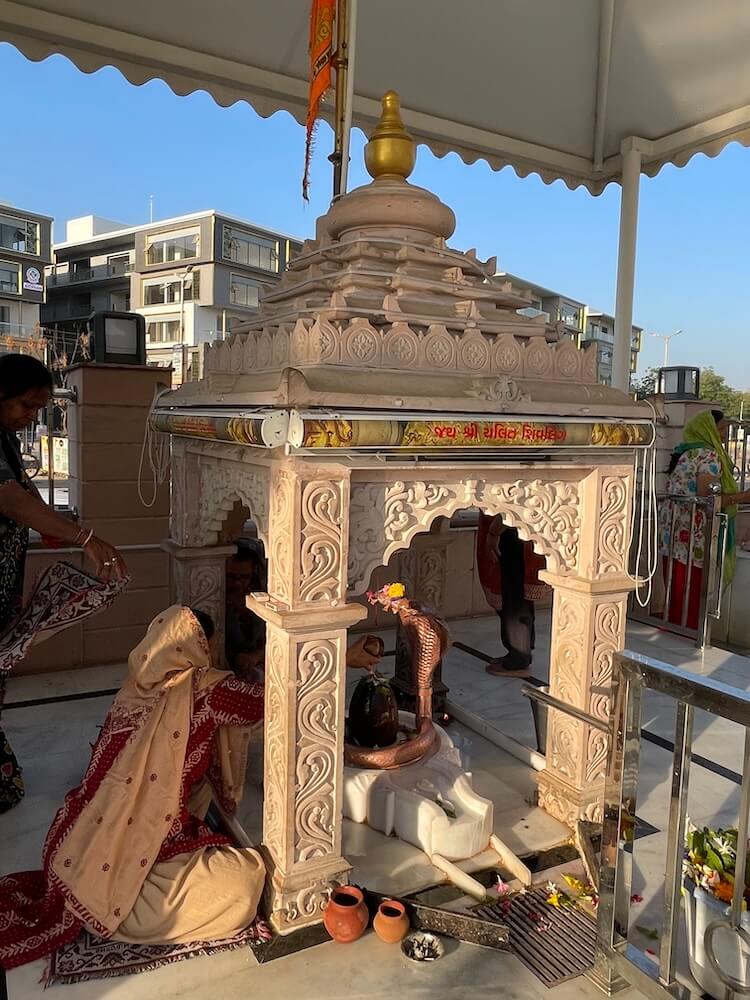
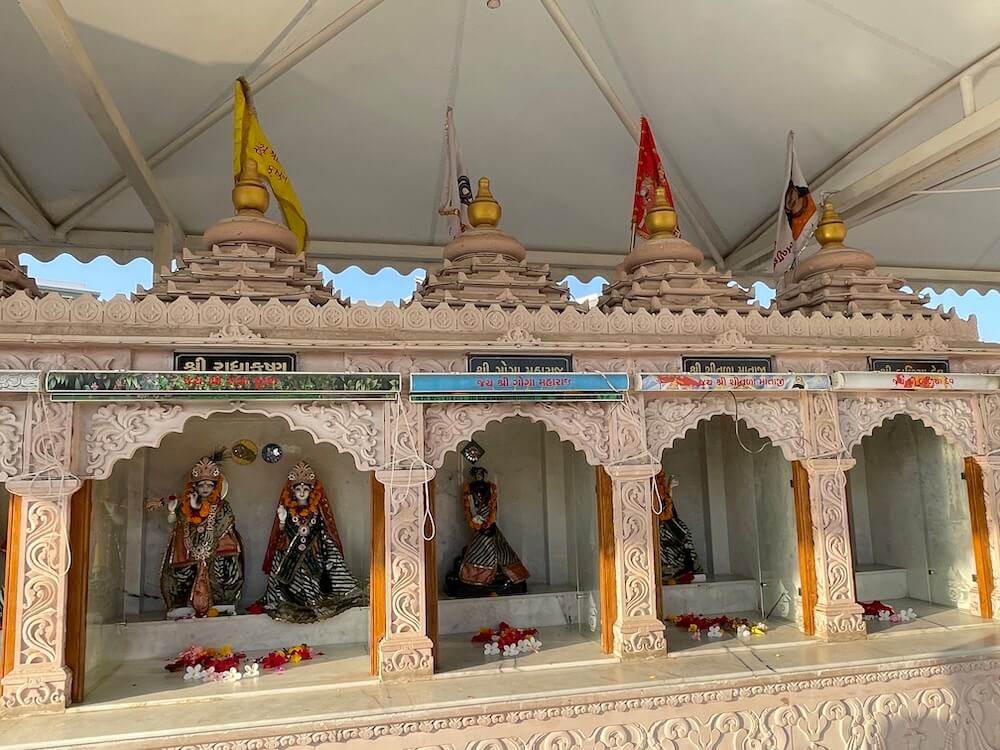
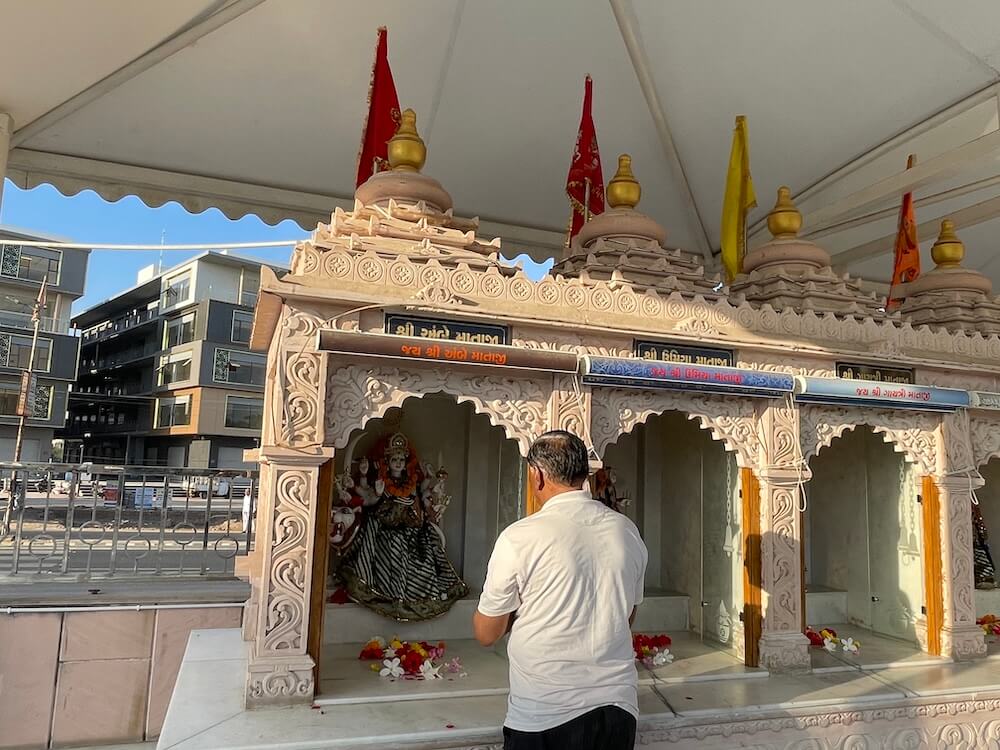
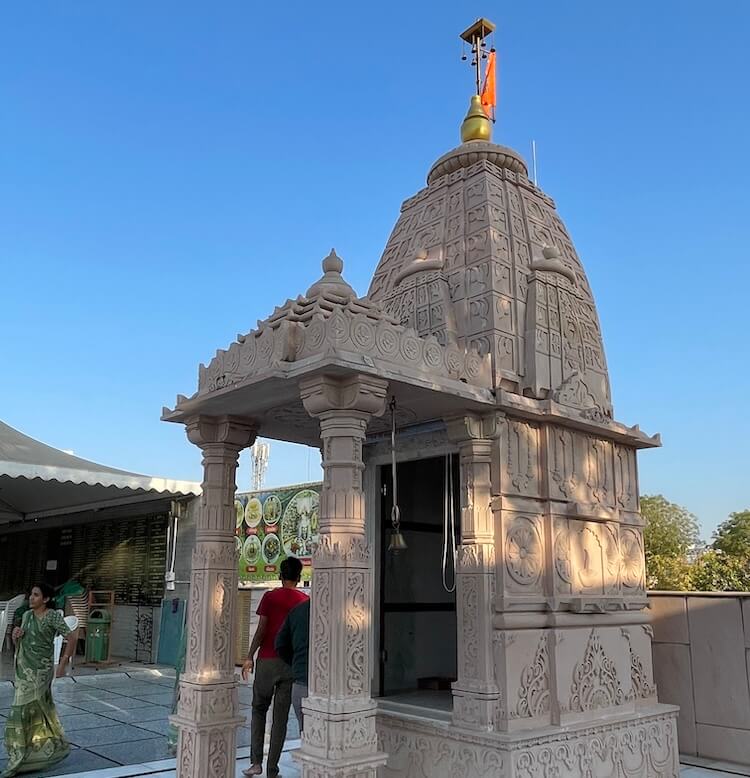
 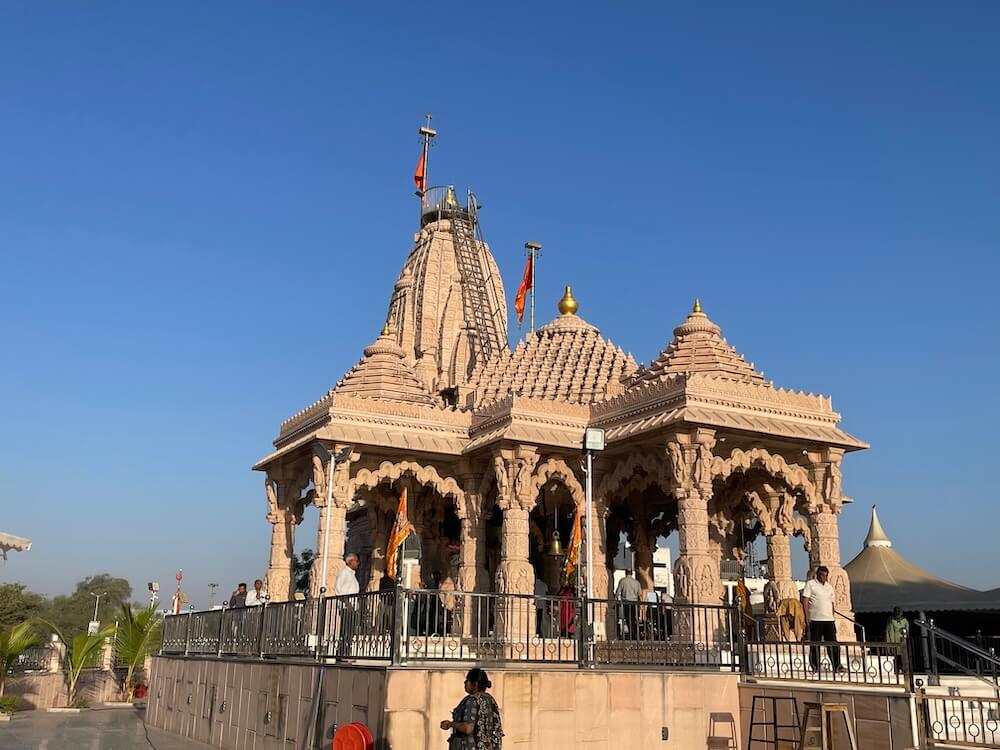 Within the sanctum, a large black stone ‘Pinda’ is enshrined in a marble ‘Shalunka’ (base) at the centre of the floor, shielded by the hood of a brass serpent. A niche in the wall facing the ‘Pinda’ houses a graceful marble idol of Mother Parvati. The temple’s entrance porches are crowned with hexagonal, tapering spires, while the assembly hall features a domed roof embellished with hundreds of miniature finial replicas. The primary spire over the sanctum is of the ‘Urushringa’ style, composed of several smaller sub-spires, topped with an ‘Amalaka’ and a golden ‘Kalasha’. The courtyard also hosts smaller shrines dedicated to Ambe Mata, Umiya Mata, Gayatri Mata, Ram-Lakshman-Janaki with Hanuman, Radha-Krishna, Goga Maharaj, Shitala Mata and Baliyadev. Furthermore, a ‘Lalit Shivalinga’ is established within a separate small shrine.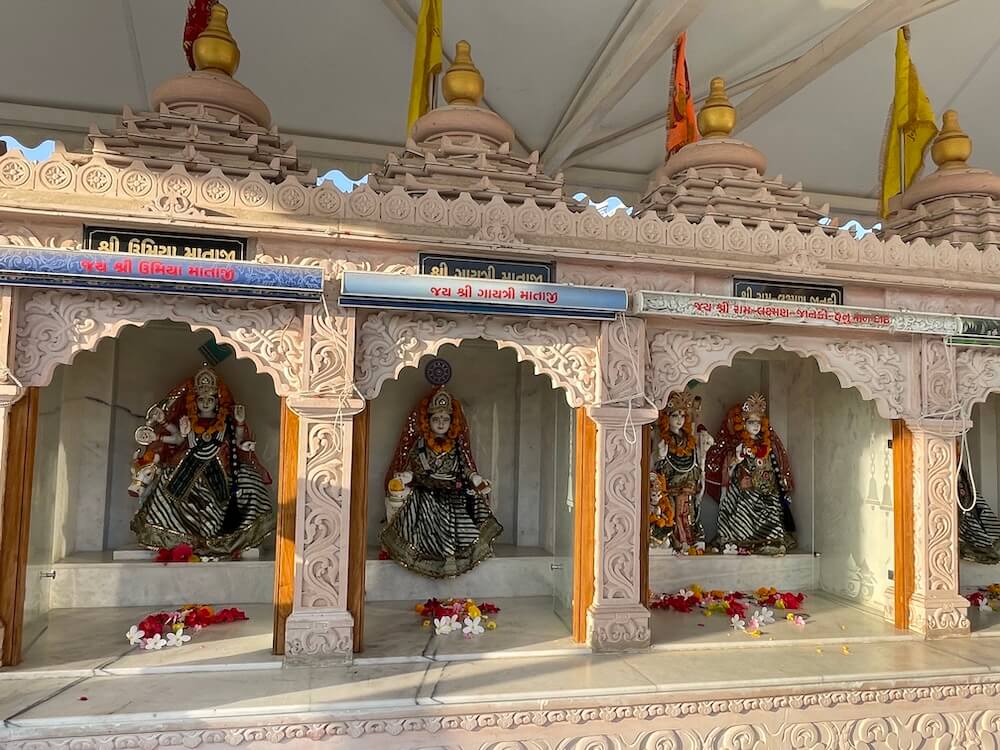
The spiritual rhythm of the temple begins daily at 5.30 am with a melodious ‘Aarti’ dedicated to Kashi Vishwanath. Every Saturday at 9.00 pm, the air resonates with the chanting of ‘Ramdhun’ and the ‘Hanuman Chalisa’. As a premier Shaivite shrine, Mahashivratri remains its most significant festival, during which the entire complex is illuminated with electric lights and draped in floral garlands. Countless devotees participate in the ‘Hom-Havan’ (sacrificial fire), ritual worship and the grand ‘Aarti’ on this day. Mondays, particularly during the holy month of Shravan, witness a significant surge in the number of worshippers. Devotees may avail themselves of the ‘Darshan’ daily from 5.30 am to 12.00 noon and from 4.00 pm to 10.30 pm.
Useful Information
- Situated at 4 km from Mehsana Bus Station
- GSRTC bus services available from various cities across the state to Mehsana
- Private vehicles can access the temple premises directly
- Numerous options for accommodation and breakfast available in the vicinity
काशी विश्वनाथ महादेव मंदिर
मेहसाणा, जिला. मेहसाणा
मंदिरे
Temples
मंदिर
-
वैजनाथ महादेव मंदिर महादेवपुरा (गावडा), ता. विजापूर, जि. मेहसाणा
अधिक माहितीVaijnath Mahadev Temple Mahadevpura (Gavada), Tal. Vijapur, Dist. Mehsana
View Detailsवैजनाथ महादेव मंदिर महादेवपुरा (गावड़ा), ताल. विजापुर, जिला. मेहसाणा
विवरण देखें -
वैजनाथ महादेव मंदिर सोखडा, तालुका विजापूर, जिल्हा मेहसाणा
अधिक माहितीVaijanath Mahadev Temple Sokhada, Taluka Vijapur, District Mehsana
View Detailsवैजनाथ महादेव मंदिर सोखाडा, तालुका विजापुर, जिला मेहसाणा
विवरण देखें -
मोटा अंबाजी मंदिर वसई, ता. विजापूर, जि. मेहसाणा
अधिक माहितीMota Ambaji Temple Vasai, Tal. Vijapur, Dist. Mehsana
View Detailsमोटा अम्बाजी मंदिर वसई, ताल. विजापुर, जिला. मेहसाणा
विवरण देखें