
मोटा अंबाजी मंदिर
वसई, ता. विजापूर, जि. मेहसाणा
Mota Ambaji Temple
Vasai, Tal. Vijapur, Dist. Mehsana
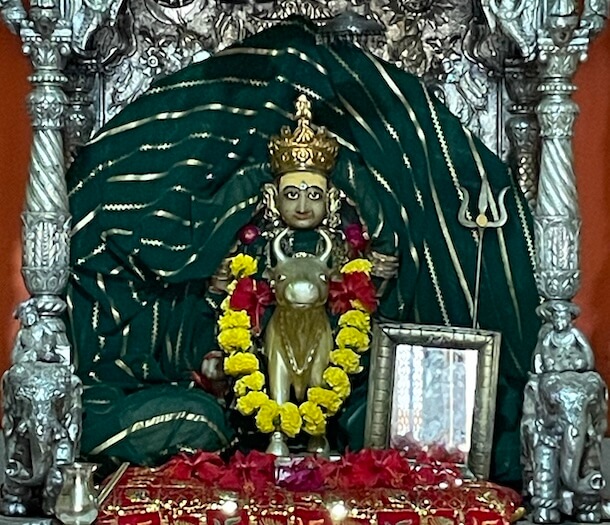 According to mythological scriptures, Amba Mata is a manifestation of Goddess Parvati. The primordial seat of Ambaji Mata sits on Gabbar Hill in Banaskantha district. It is regarded as one of the fifty-one ‘Shakti Peethas’. This deity is mentioned in the treatise ‘Tantra Chudamani’ and is also known here as ‘Arasuri Ambaji’ Mata. Temples dedicated to this Goddess, the tutelary deity of countless devotees across Gujarat and Rajasthan, are found throughout the state. The Mota Ambaji Temple at Vasai in Vijapur Taluka is one such prominent shrine. Devotees unable to visit the main temple of Arasuri Ambaji come here to bow in devotion before the Goddess.
According to the seventh chapter of the ‘Devi Mahatmya’ in the ‘Markandeya Purana’, demons Shumbha and Nishumbha conquered the three worlds from Indra, 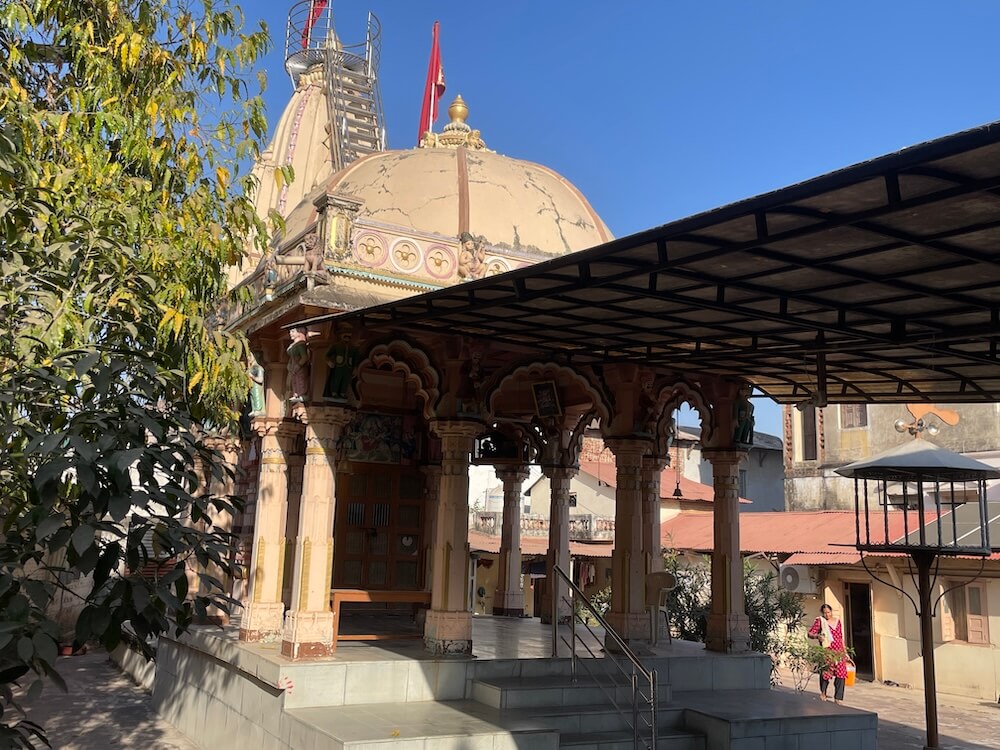 prompting the gods to turn to Bhagwati for help. While the gods prayed, Parvati appeared and, from her physical sheath (‘Kosha’), Amba emerged. Chanda and Munda, servants of Shumbha and Nishumbha, tried to capture Ambika. Kali then manifested from Amba and slew Chanda and Munda. In recognition, Bhagwati named Kali ‘Chamunda’. Thus, the Goddess is venerated as Ambika and Chamunda. In Gujarat and Rajasthan, she is known as Ambaji. Spiritually, Goddess Amba or Adishakti is central in Hinduism as the devotees’ protector and the remover of calamities.
The original abode of Goddess Ambaji is atop the Gabbar Hill. According to the ‘Kalika Purana’, Sati’s left breast fell at this location, while other traditions suggest that Sati’s heart descended here.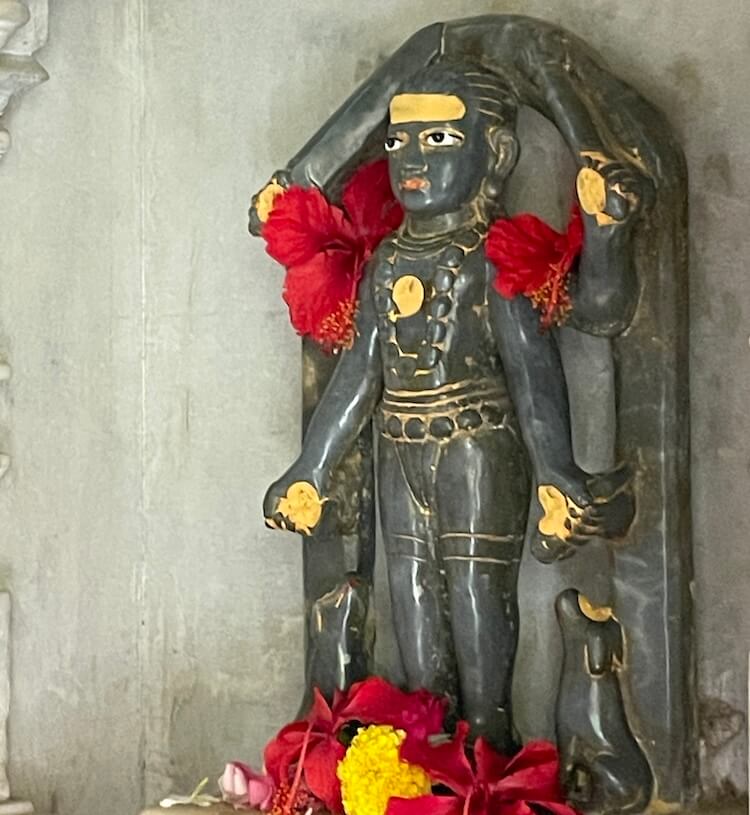 Consequently, this region is counted amongst the ‘Shakti Peethas’. Five kilometres from this hill, a grand temple of the Goddess is situated in Ambaji village. Here, instead of an idol, the ‘Vishayantra’ (Viso Yantra) or the ‘Shree Yantra’ is worshipped. Devotees hold a firm belief that Arasuri Ambaji Mata returns to the Gabbar fort every night for rest. The royal family of Danta serves as the traditional trustees of this temple. It is said that the valiant King of Mewar, Maharana Pratap Singh, was a devout worshipper of this Goddess. He believed that it was only through Her divine grace that he was able to break the siege laid by Emperor Akbar. The legend recounts that when Pratap Singh became the ‘Maharana’, Chittor, the capital of Mewar, had fallen into enemy hands. While many Rajput rulers accepted the suzerainty of the Mughal Emperor Akbar, Rana Pratap refused to bow. He commenced his struggle to liberate Chittor. During this period, Akbar’s generals, Man Singh and Asaf Khan, were in pursuit of the Maharana. Amongst Rana Pratap’s eleven queens was the Princess of Idar. Once, the Emperor’s generals received intelligence that he was coming to meet her and laid a trap to capture him.
  However, Pratap Singh managed to evade them. During the escape, the leg of his loyal horse, Chetak, became entangled in the thickets of the overflowing Sabarmati River, rendering him unable to proceed. Maharana Pratap then prayed to his family deity, Amba, vowing that if he survived this peril, he would offer his sword to Her. By the Goddess’s grace, the danger was averted, and he subsequently offered his sword to the Mother. Thus, devotees believe that this Goddess always hastens to the aid of Her followers in times of distress.
Mother Amba is regarded particularly as the presiding deity of the farming community. Faithful devotees believe that a ‘Darshan’ of the Mother brings stability to the mind and bestows domestic bliss. A form of this very Goddess is enshrined at the Mota Ambaji Temple in Vasai villag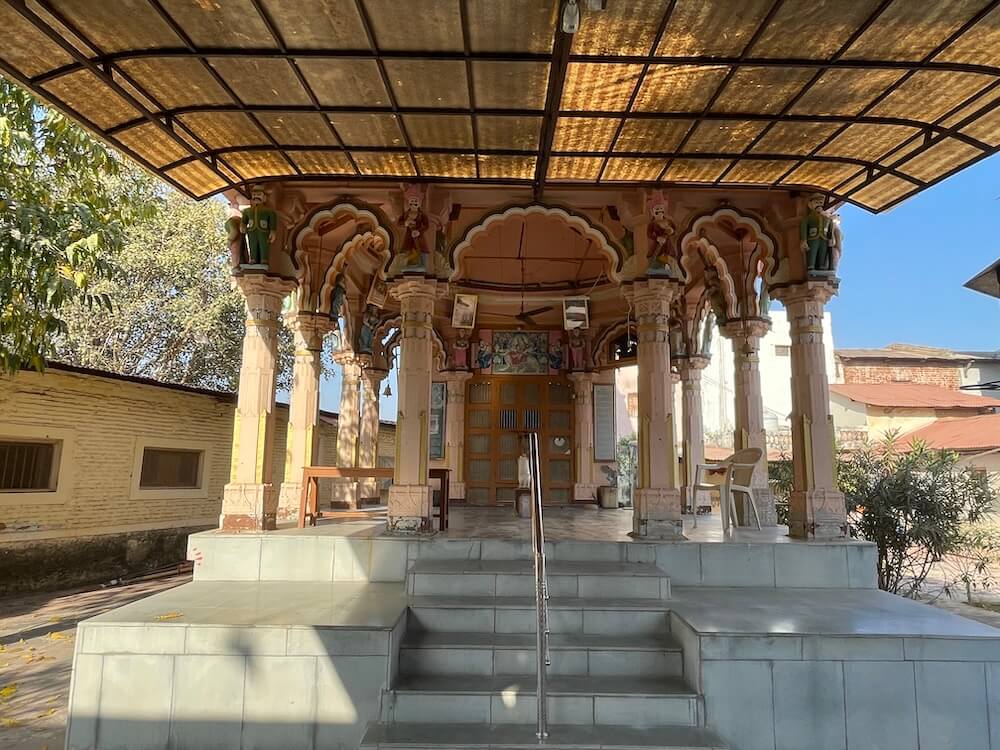 e, established by the Suryavanshi Rajput King Kanaksen Chavda.
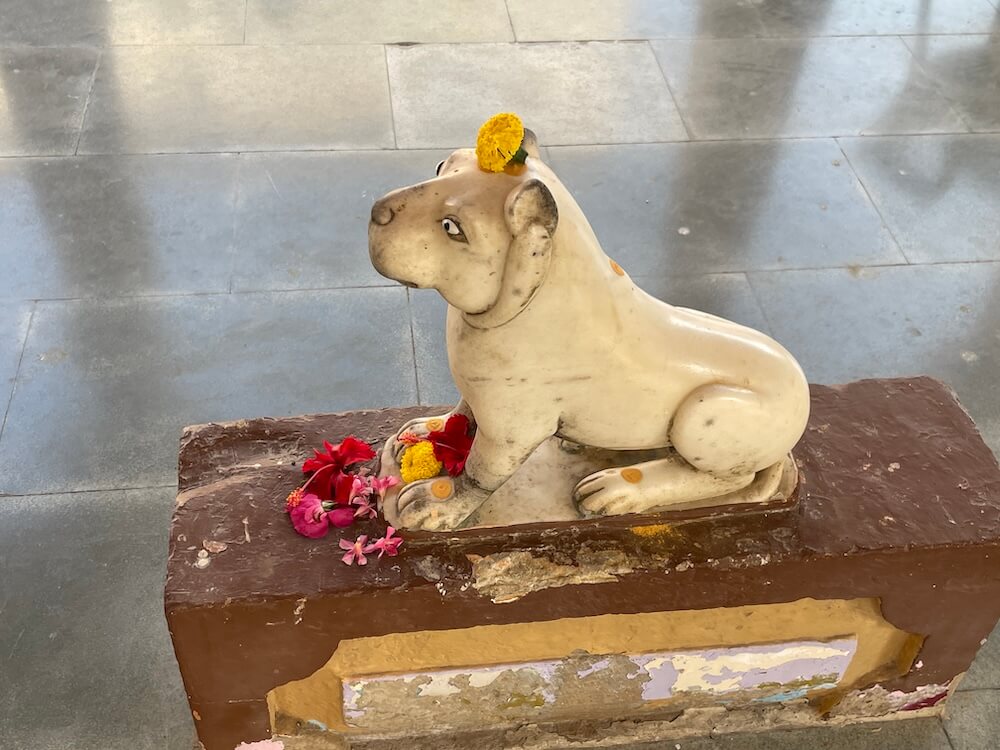
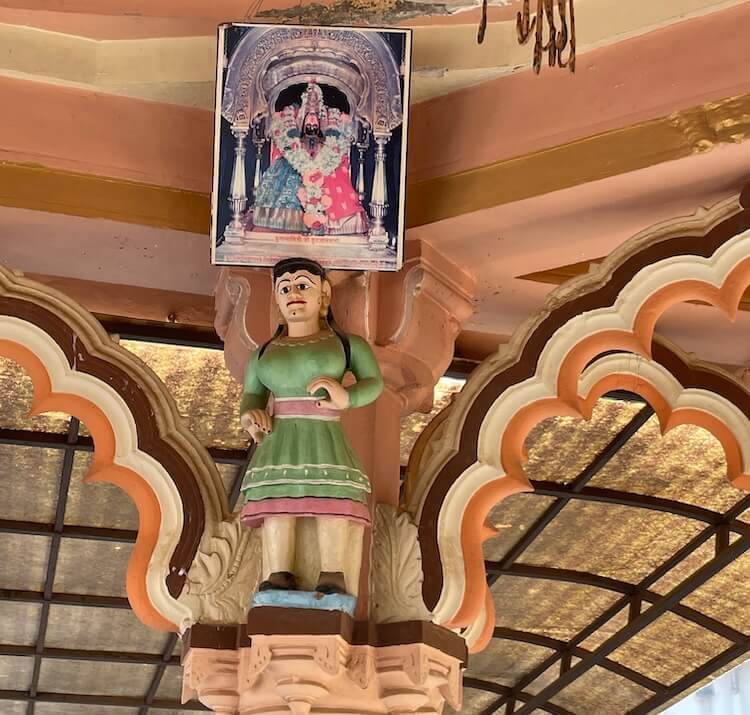
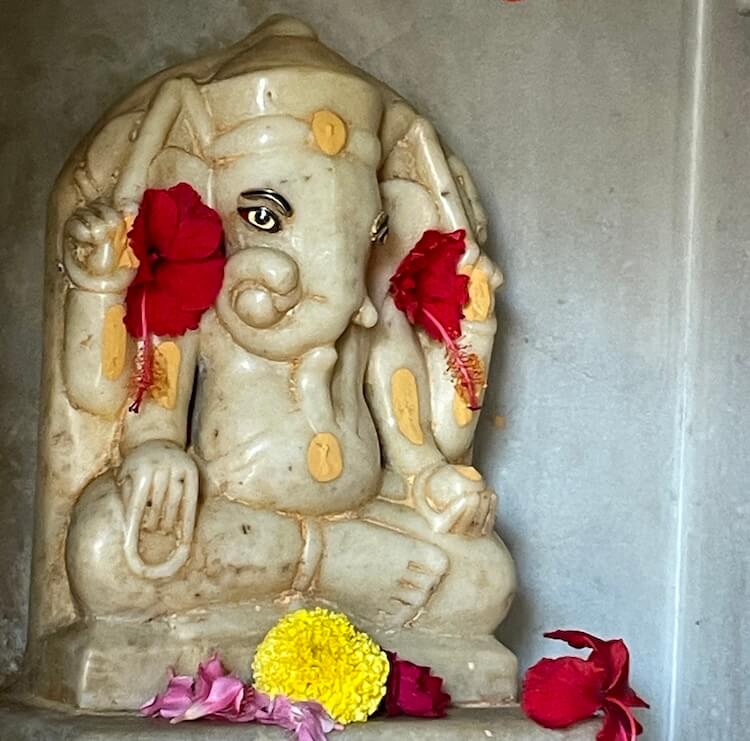
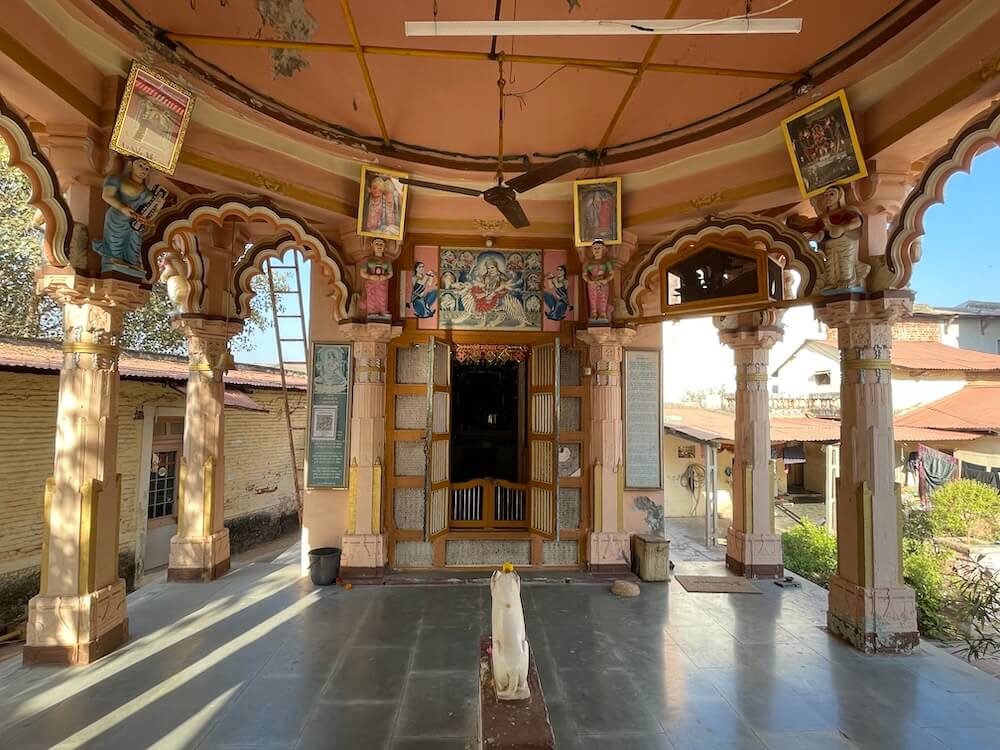
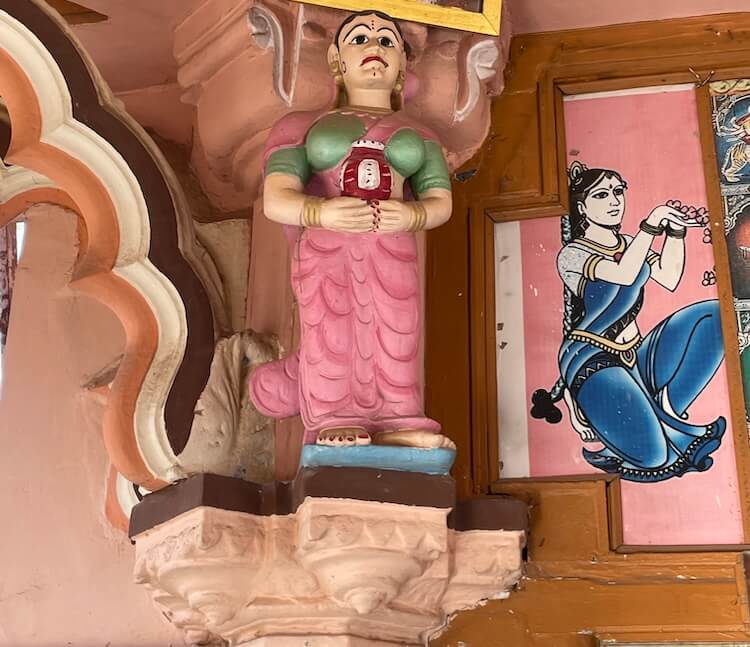
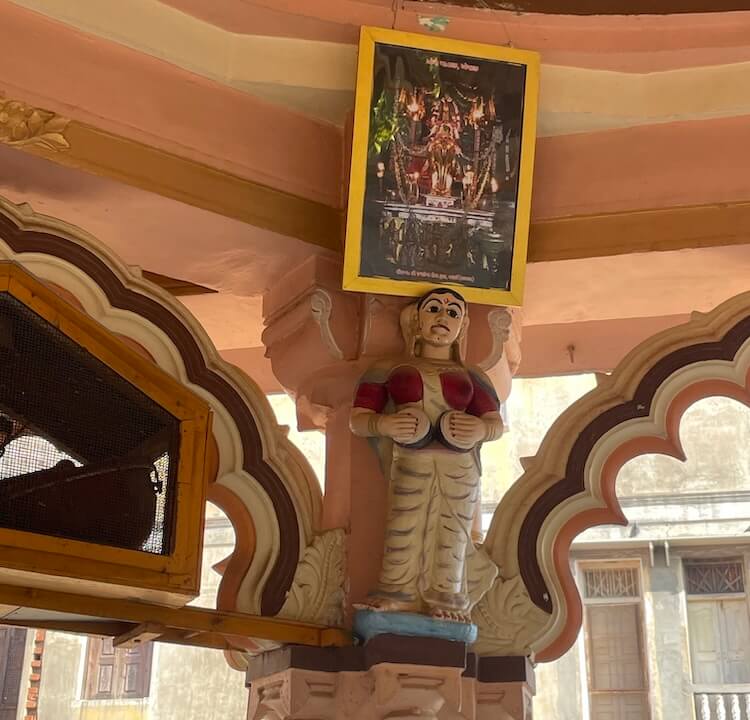
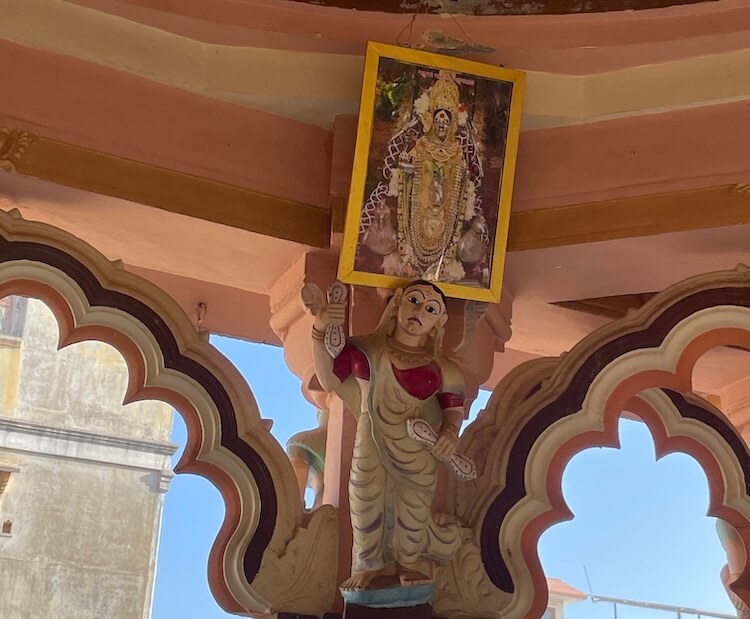
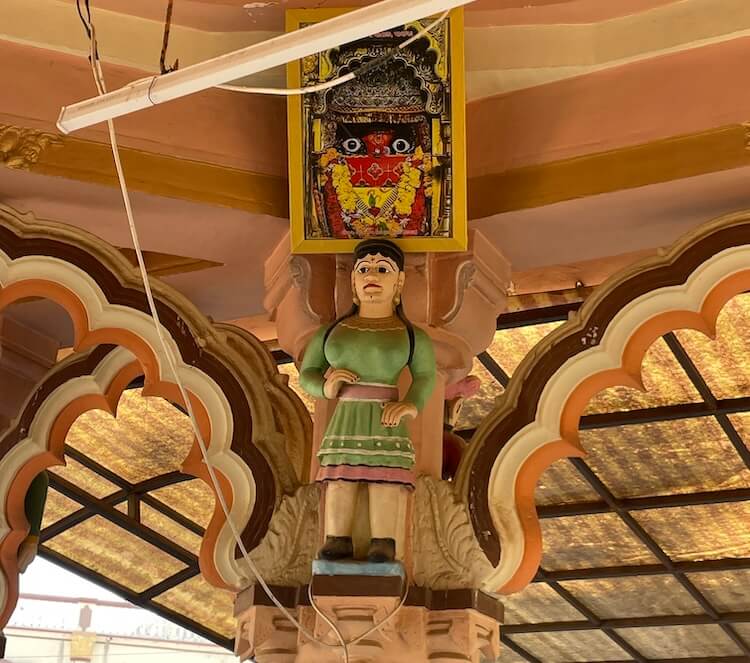
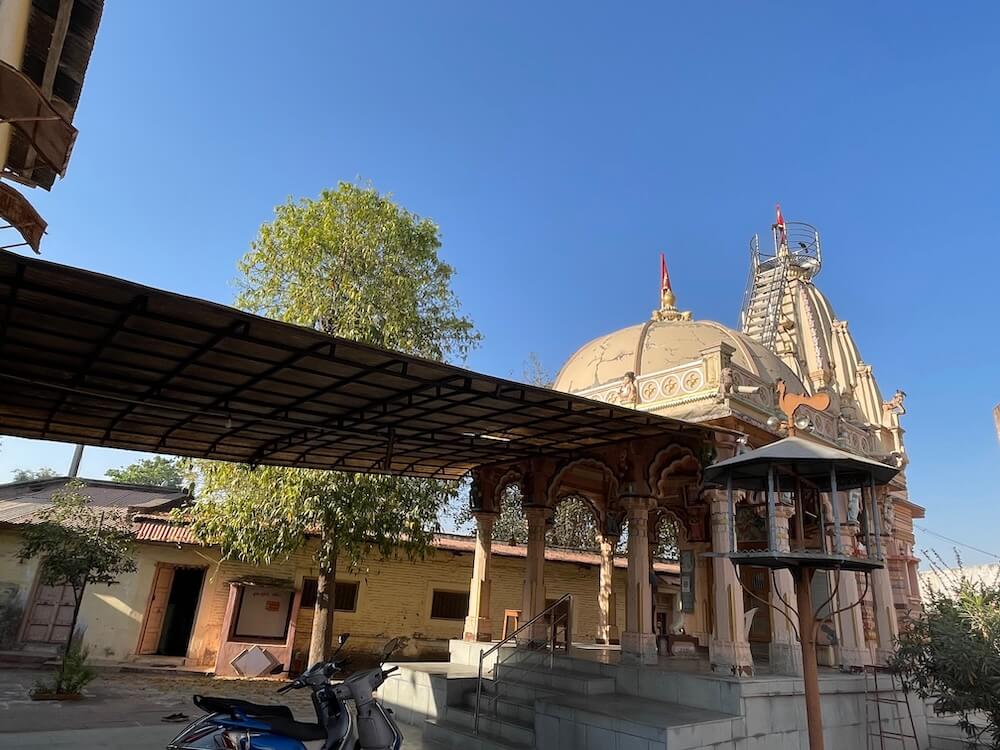
Located at the heart of Vasai village, the temple is entered through a mansion-like gateway that leads into a compact courtyard. A pavilion has been erected in front of the temple for devotees, covered by a corrugated metal roof in the shape of an elephant’s back (‘Gajaprishthakar’). Five steps lead from the courtyard to the assembly hall (‘Sabhamandap’), which sits upon a high plinth. The temple structure consists of an assembly hall, a vestibule (‘Antarala’) and the sanctum sanctorum (‘Garbhagriha’). The ‘Sabhamandap’ is semi-open in design, with all pillars connected by decorative scalloped arches.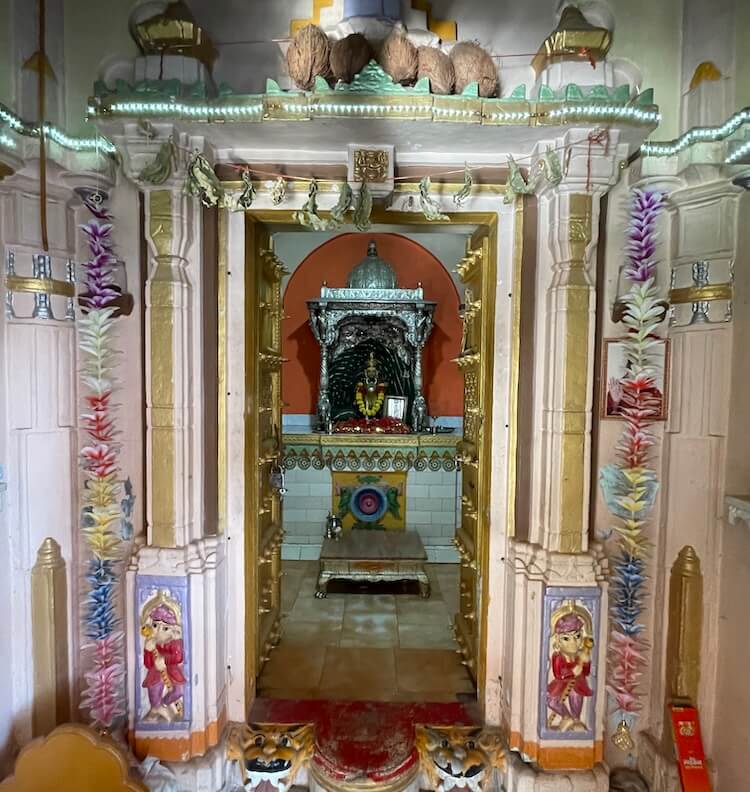 The upper portions of these pillars are adorned with sculptures of ‘Surasundaris’ (celestial maidens) engaged in singing and playing musical instruments. Near the entrance to the vestibule in the assembly hall, a sculpture of a lion—the mount of the Goddess—rests upon a pedestal. Within the niches of the vestibule walls, idols of Ganesha and Kalbhairav are enshrined. The doorframes of the sanctum sanctorum feature ‘Dwarpalas’ (gatekeepers) at the base, an image of Ganesha on the lintel, and a ‘Shree Yantra’ on the upper frieze. Inside the sanctum, the idol of the Goddess is established within a carved pavilion (‘Makhar’) on a ‘Vajrapitha’, flanked by figures of elephants (‘Gajaraj’).
Every morning and evening, the ‘Aarti’ is performed in the temple, accompanied by the chanting of Vedic mantras. On each full moon day, a large concourse of devotees gathers. Special prayers and ‘Mahaprasad’ (sacred feast) are organised every Sunday. Various religious festivals are celebrated at the Mota Ambaji Temple with fervour. The Sharadiya Navratra in Ashwin is the most significant festival. During these nine nights, the ‘Ghat’ (sacred jar) is established. Both Chaitra and Ashwin Navratra are major events, celebrated with ‘Maha Aarti’, ‘Hom-Havan’ (sacrificial fire), and Garba dances. Devotees from surrounding regions participate in large numbers. The Bhadarvi Purnima festival is also celebrated on a grand scale. Many pilgrims arrive on foot for ‘Darshan’. During Diwali, the temple is illuminated. On New Year’s Day, an ‘Annakut’ programme is organised, offering a variety of delicacies to the Goddess. The temple is open for devotees from 6 am to 8.30 pm.
Useful Information
- Located at 23 km from Vijapur and 20 km from Mehsana
- GSRTC bus services available from Vijapur and Mehsana
- Private vehicles can reach the temple directly
- Accommodation and breakfast facilities are available in the vicinity
मोटा अम्बाजी मंदिर
वसई, ताल. विजापुर, जिला. मेहसाणा
मंदिरे
Temples
मंदिर
-
वैजनाथ महादेव मंदिर महादेवपुरा (गावडा), ता. विजापूर, जि. मेहसाणा
अधिक माहितीVaijnath Mahadev Temple Mahadevpura (Gavada), Tal. Vijapur, Dist. Mehsana
View Detailsवैजनाथ महादेव मंदिर महादेवपुरा (गावड़ा), ताल. विजापुर, जिला. मेहसाणा
विवरण देखें -
वैजनाथ महादेव मंदिर सोखडा, तालुका विजापूर, जिल्हा मेहसाणा
अधिक माहितीVaijanath Mahadev Temple Sokhada, Taluka Vijapur, District Mehsana
View Detailsवैजनाथ महादेव मंदिर सोखाडा, तालुका विजापुर, जिला मेहसाणा
विवरण देखें -
काशी विश्वनाथ महादेव मंदिर मेहसाणा, जि. मेहसाणा
अधिक माहितीKashi Vishwanath Mahadev Temple Mehsana, Dist. Mehsana
View Detailsकाशी विश्वनाथ महादेव मंदिर मेहसाणा, जिला. मेहसाणा
विवरण देखें