
बिलेश्वर महादेव मंदिर
लिंच, ता. मेहसाणा, जि. मेहसाणा
Bileshwar Mahadev Temple
Linch, Tal. Mehsana, Dist. Mehsana
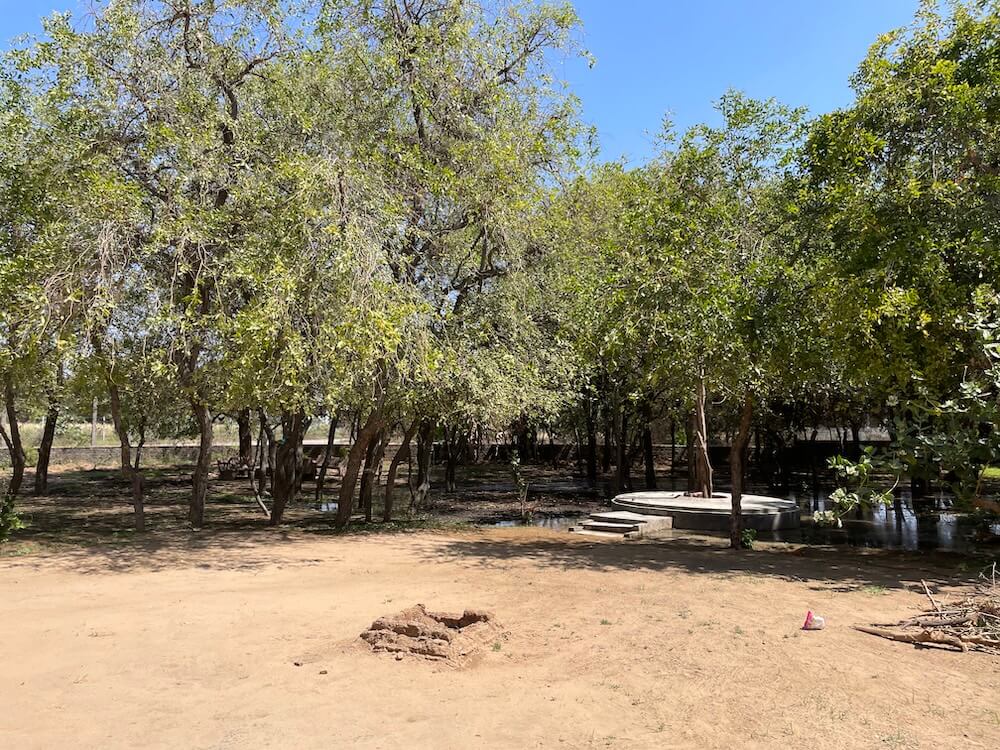
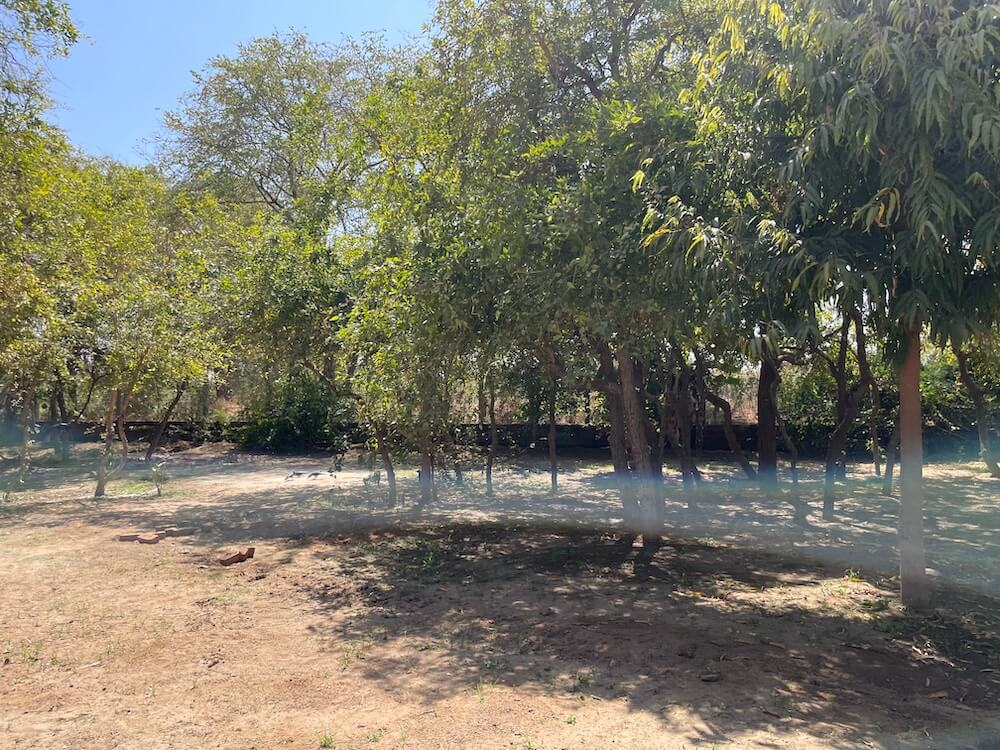
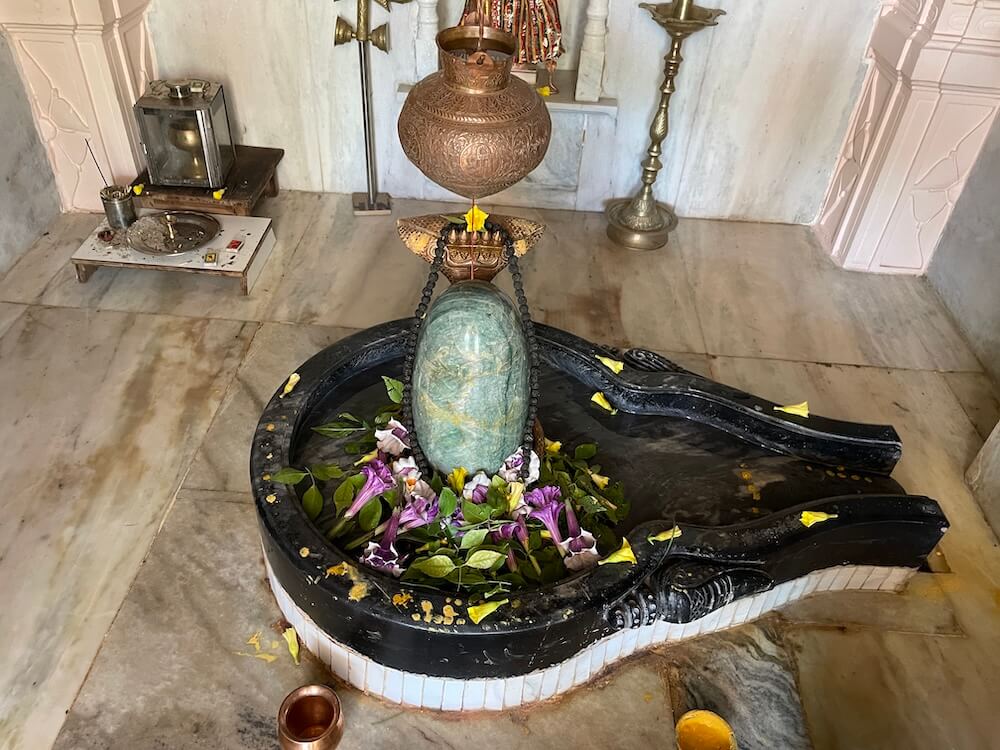 Nestled on the lush outskirts of Linch village in the Mehsana district, the Bileshwar Mahadev Temple serves as a revered sanctuary of faith. Its rich history spans over five centuries. The crowning glory of this sacred precinct is the presence of more than four hundred natural ‘Bili’ trees (Aegle marmelos). In the typically arid climate of North Gujarat, the spontaneous and prolific growth of these trees is regarded as nothing short of a divine marvel. It is this dense sylvan canopy that bestows the temple with its appropriate name, ‘Bileshwar’. Renowned as a ‘Shivalinga’ (symbolic icon of Shiva) that swiftly responds to the earnest supplications of its devotees, the shrine draws countless pilgrims from across the district.
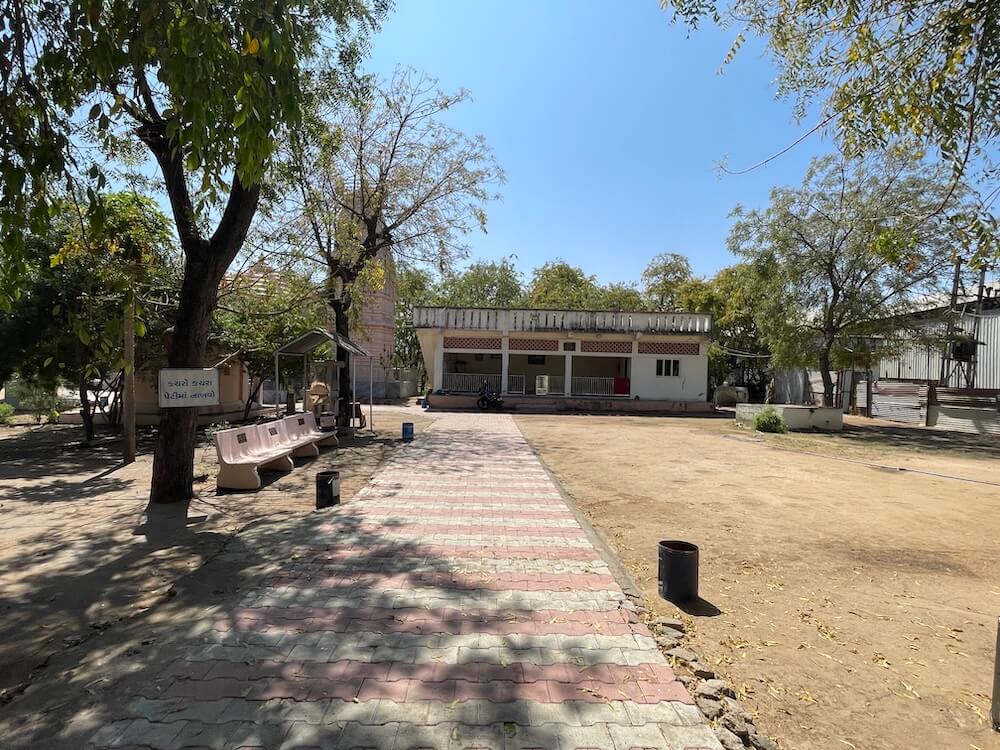
 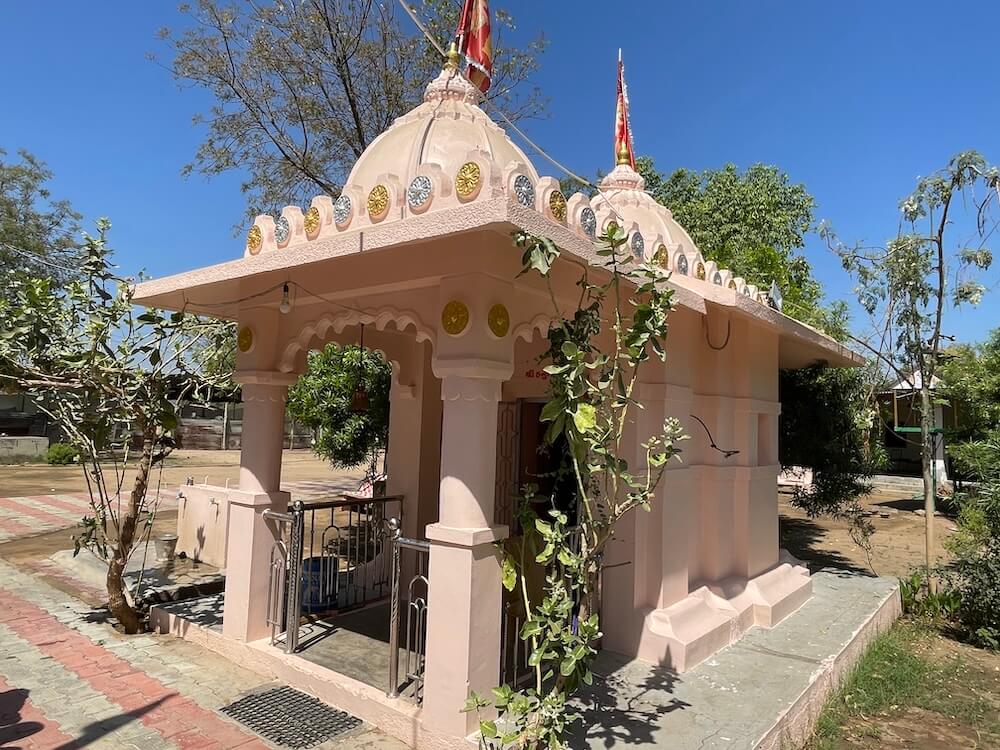 The profound tranquillity and picturesque environs invite the faithful to find solace beneath the shade of the ‘Bili’ trees, where many partake in ‘Vanbhojan’ (forest picnics or communal meals).
According to the scholarly research work ‘The Structural Temples of Gujarat’ by Kantilal Sompura, a seminal text concerning Indian archaeology and historical edifices, ancient remains of a Jakhraj temple were discovered in Linch village. It states, “Here (in Linch) there is an interesting shrine called Jakharaja Mata Shrine. This shrine would remind one of the Yaksa worship that prevailed in ancient India.” These vestiges further illuminate the historical significance of the Linch region.
Local lore about the Bileshwar Temple tells of ‘Maldharis’ (herdsmen) who, five centuries ago, brought their cattle to graze at the village outskirts. 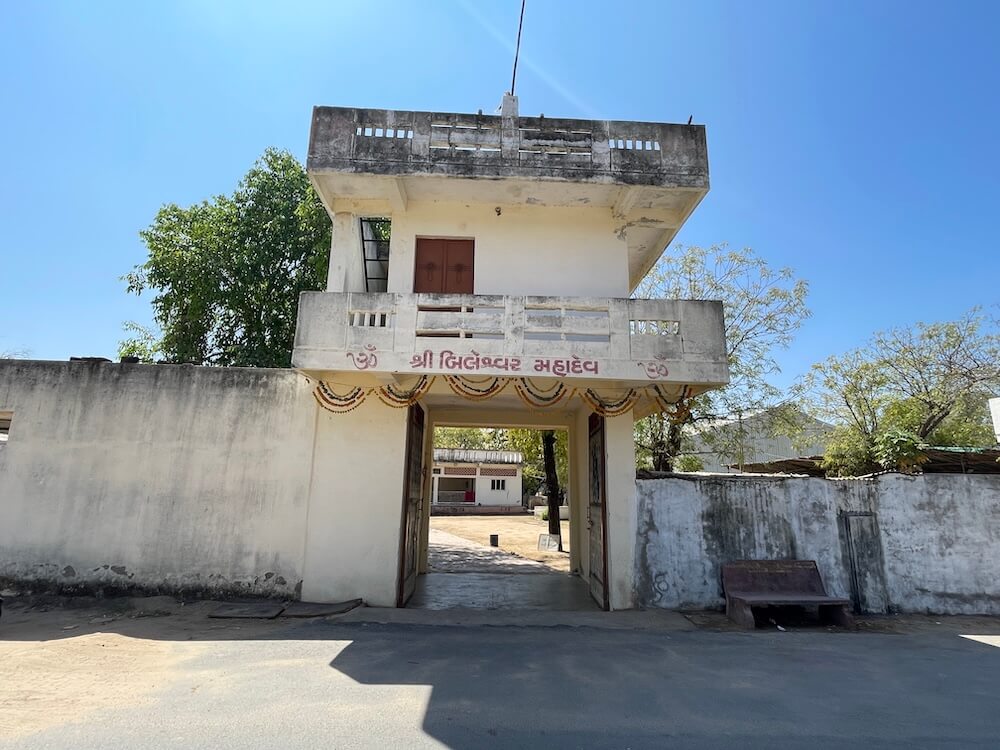 Among the herd, a particular cow would daily and ritualistically release her milk upon a specific spot. Driven by curiosity about this phenomenon, the villagers excavated the site. They discovered a ‘Swayambhu’ (self-manifested) Shivalinga. From that moment, formal worship of the Linga commenced. As word spread of this ‘Jagrut’ (spiritually awakened) Shivalinga, devotees from the ‘Panchkroshi’ (neighbouring five-mile radius) flocked for ‘Darshan’ (holy viewing). In the past, many ‘Sannyasis’ (ascetics) practised rigorous ‘Tapa’ (penance) within these grounds. The ‘Samadhis’ (memorial shrines) of three such holy men still stand here. While the temple was originally modest in scale, a comprehensive restoration undertaken five years ago gave the edifice its current magnificent form.
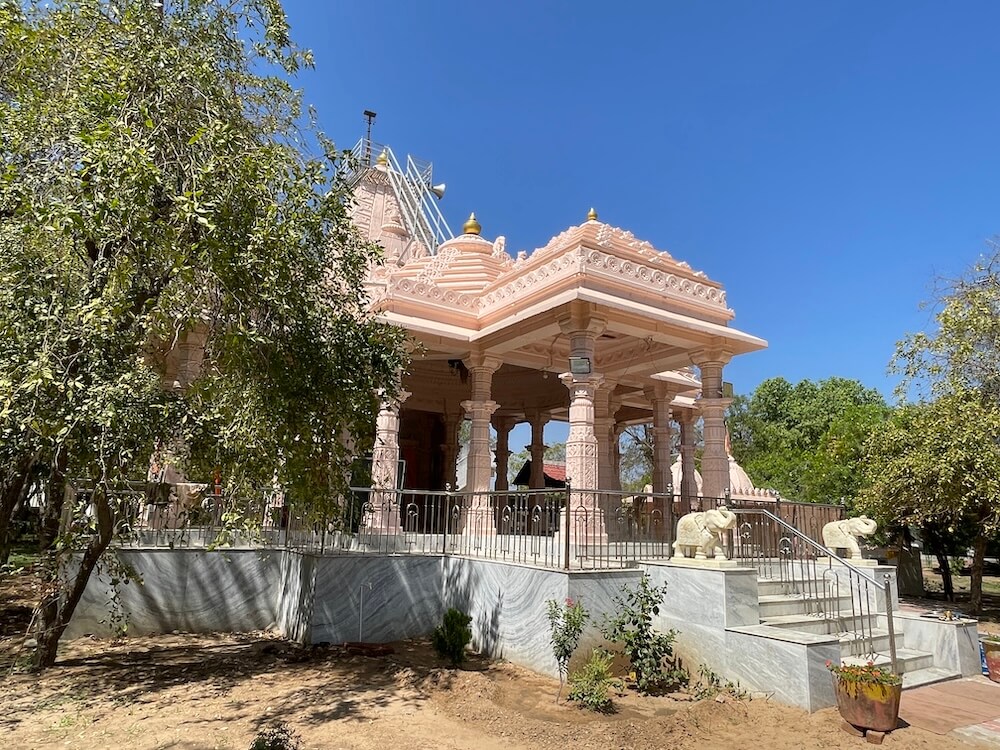
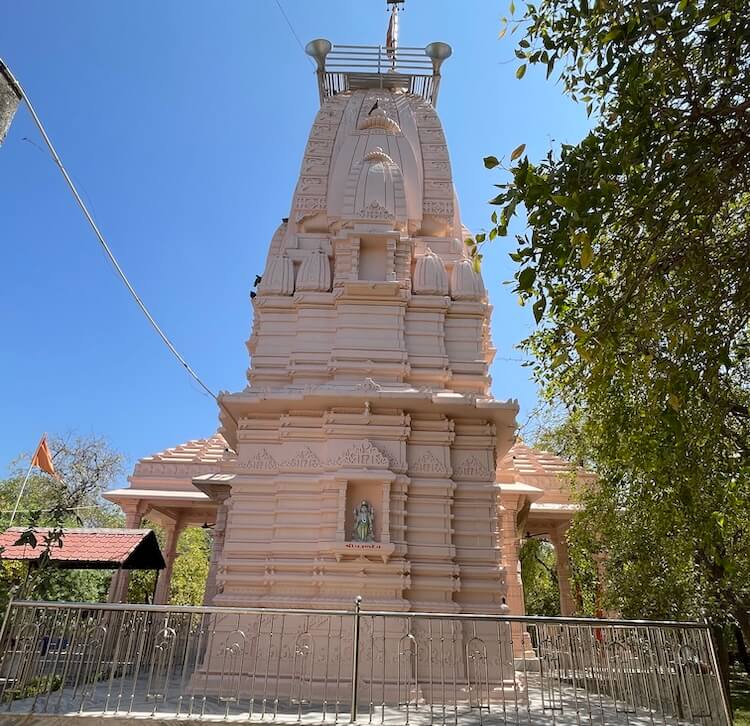
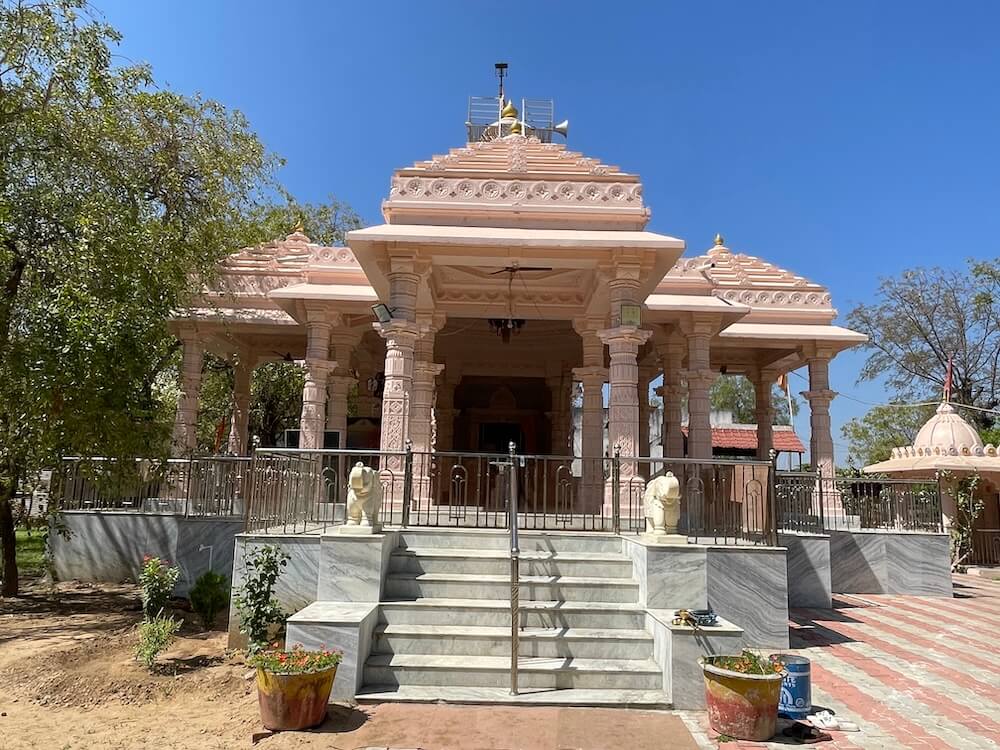 The temple, constructed from ‘Retiyo Patthar’ (sandstone) in the Maru-Gurjara style, sits upon a lofty ‘Jagati’ (plinth). It presents a striking silhouette that commands immediate attention.
The temple complex is enclosed by a wall. Entry is through a stately double-storeyed gateway. Inside, over four hundred ‘Bili’ trees present a unique sight. This is said to be the only temple in Gujarat surrounded by such a vast cluster of these sacred trees. After ascending seven steps, one reaches the ‘Jagati’ and enters the ‘Mukhamandapa’ (entrance porch). Statues of ‘Gajarajas’ (elephants) flank the stairs and welcome pilgrims. The temple, following the Maru-Gurjara aesthetic, comprises three ‘Mukhamandapas’, a ‘Sabhamandapa’ (assembly hall), an ‘Antarala’ (antechamber) and the ‘Garbhagriha’ (sanctum sanctorum).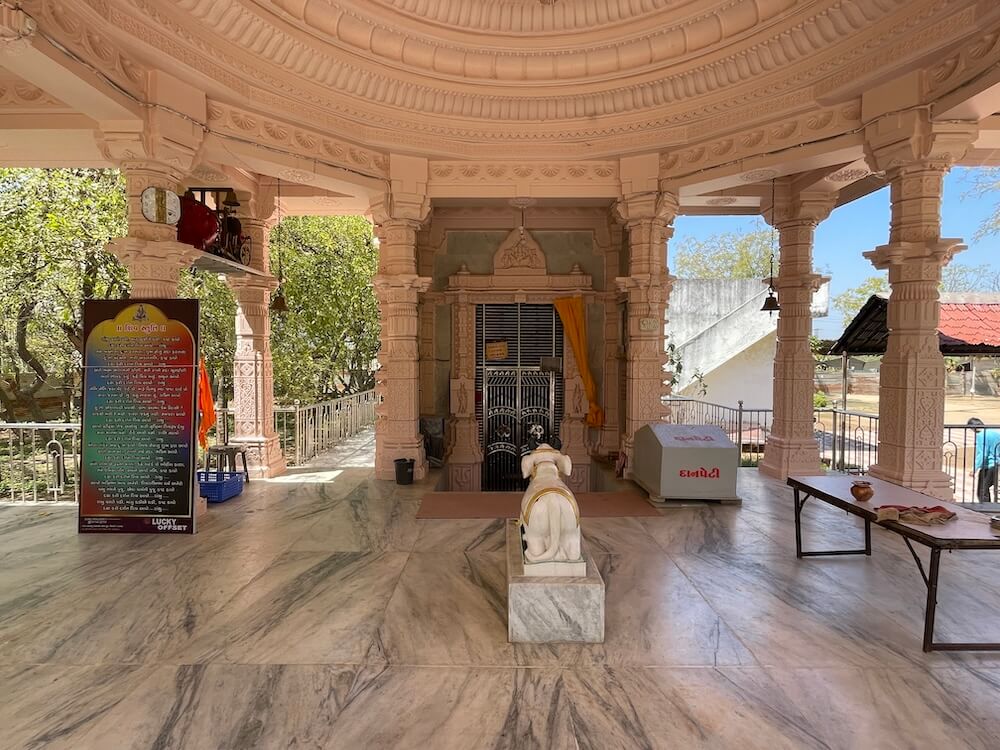 Pillars in the ‘Sabhamandapa’ display exquisite craftsmanship. The ‘Vitan’ (ceiling) features intricate ornamental carvings. ‘Rathas’ (projections) on the exterior walls give the temple unique depth and dimension.
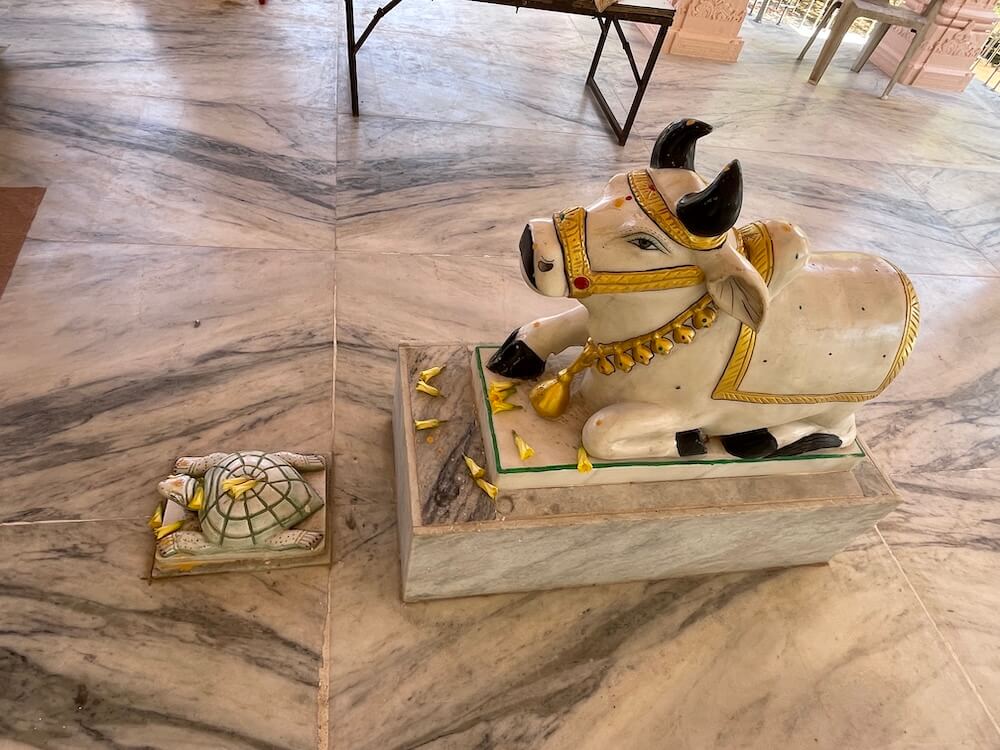
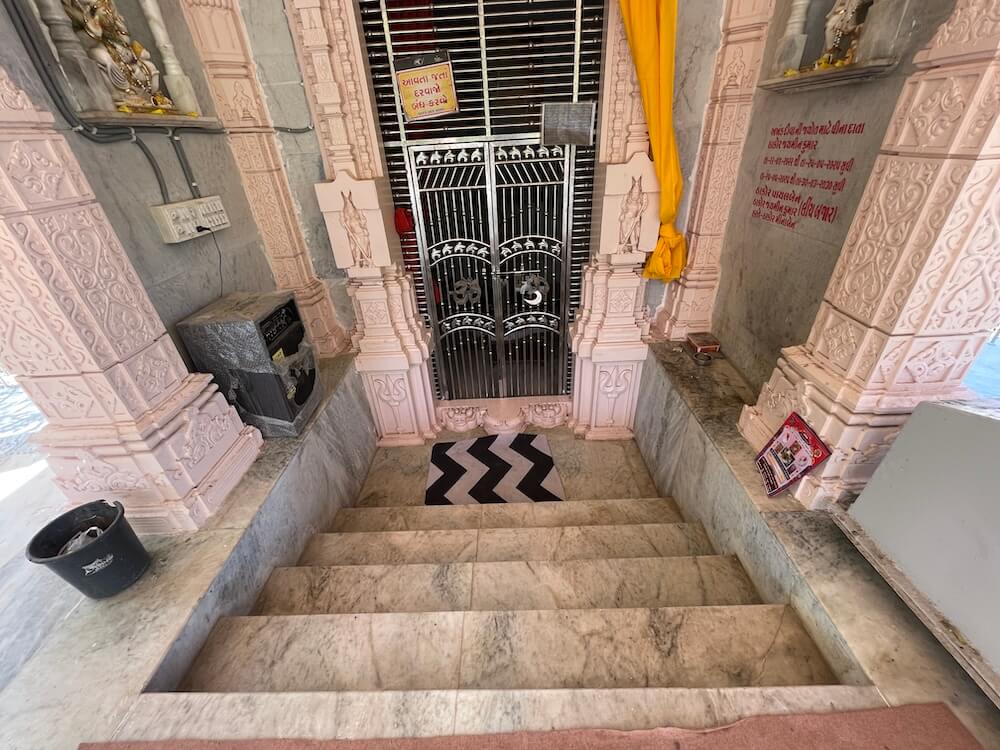
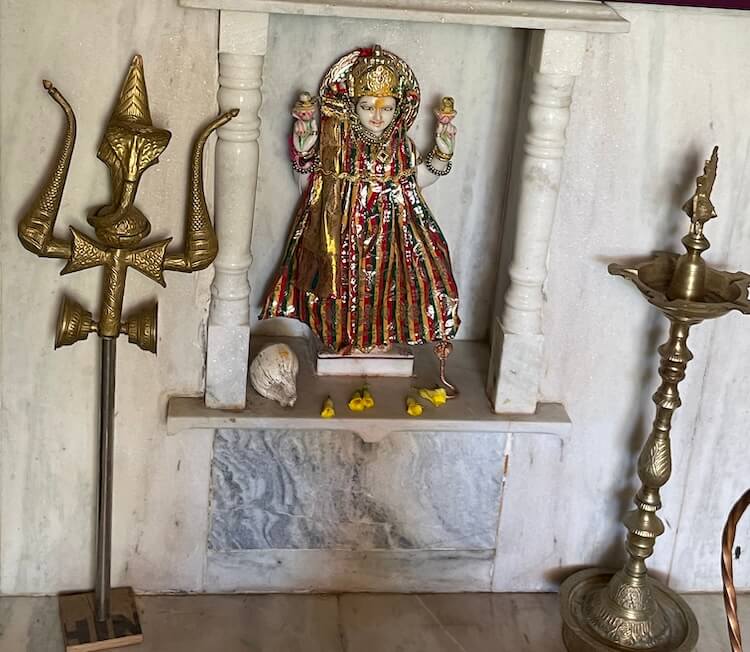
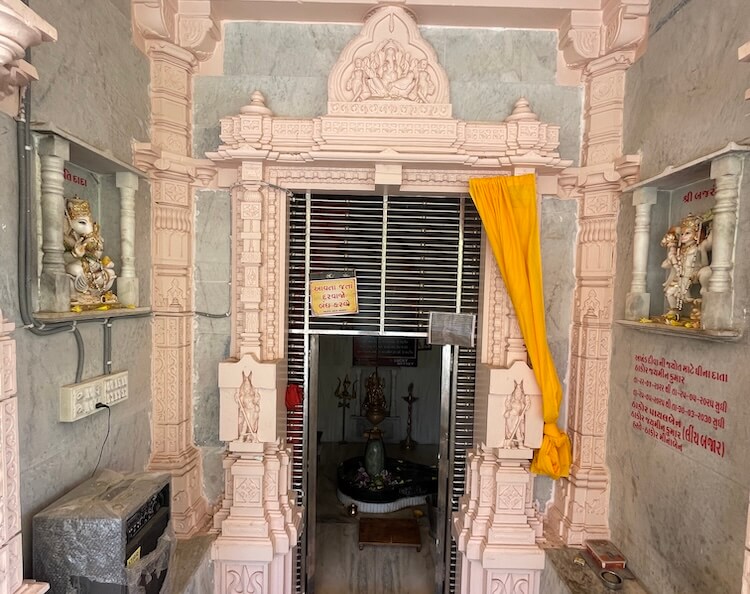
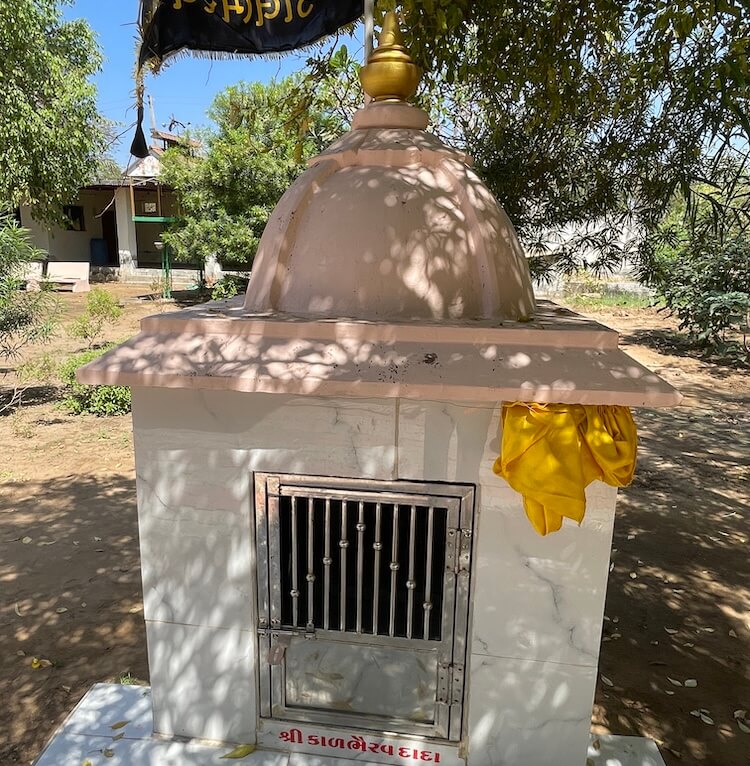
At the centre of the ‘Sabhamandapa’, a marble Nandi sits enthroned upon a ‘Vajrapitha’ (base). The walls of the ‘Antarala’ contain ‘Devakoshtakas’ (niches for deities) on either side. As the ‘Garbhagriha’ is situated at a lower level, one must descend six steps from the antechamber to enter the inner sanctum. Guardians of the door or ‘Dwarpalas’ are carved on either side of the entrance. The base of the doorway features the ‘Trishula’ (Lord Shiva’s trident) and ‘Kirtimukhas’ (glorious lion-like faces). The ‘Uttarange’ (lintel) above the door is graced by an image of Lord Ganesha.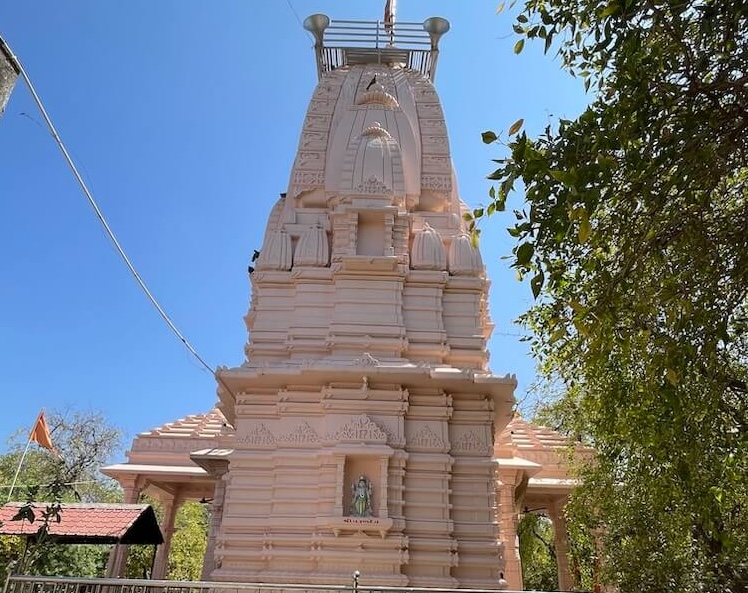 Within the sanctum, a large, elliptical Shivalinga resides within a grand ‘Shalunka’. During the restoration, a new Shivalinga was consecrated directly above the original one. In a niche on the rear wall of the sanctum, Mother Parvati is enshrined. The main ‘Shikhara’ (spire) over the sanctum is composed of several smaller ‘Upshikharas’ (subsidiary spires), topped by an ‘Amalaka’ and a ‘Kalasha’ (pinnacle). The porches and halls are likewise crowned with tapering spires. Facing the main temple is a small shrine dedicated to ‘Vichitra Veer’ Hanuman, housing an idol coated in ‘Sindur’ (vermilion).
Adjacent to the temple is a spacious hall used for various religious functions. For the convenience of visiting devotees, a large ‘Bhojanshala’ (dining hall) has been established. 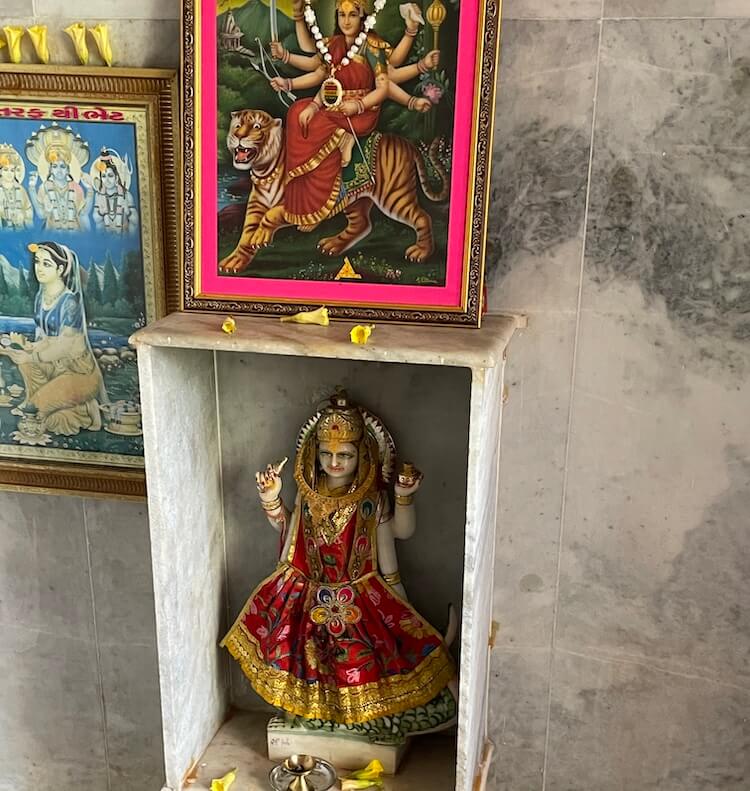 Ritual ‘Aarti’ (offering of lamps) is performed daily at half-past six in the morning and seven in the evening. Each morning, the ‘Swayambhu’ Pinda is ritually worshipped with offerings of ‘Bhasma’ (sacred ash), sandalwood, ‘Bili’ leaves and flowers. The temple remains open for devotees from half-past five in the morning until half-past nine at night. A special celebration is held on the full moon of the month of ‘Shravan’, coinciding with Raksha Bandhan. Thousands participate. During this period, many villagers travel on foot from distant hamlets to perform ‘Jalabhishek’ (water oblation) upon the Shivalinga.
Throughout the holy month of Shravan, the temple administration undertakes a ‘Sankalp’ (solemn vow) to offer 125,000 ‘Bilipatras’ to the deity. Every Monday of Shravan sees a surge of pilgrims, culminating in a grand ‘Mela’ (fair) on the final Monday of the month. On this day, thousands of devotees, chanting ‘Har Har Mahadev’, arrive to offer ‘Bili’ leaves and perform ‘Abhishek’. This fair is considered one of the most significant in the Taluka. Furthermore, a massive gathering takes place on ‘Mahashivratra’, with devotees forming queues at dawn. During these festive periods, the entire temple and its surrounding grounds are bathed in special decorative illuminations.
Useful Information
- Located at 20 km from Mehsana.
- GSRTC (State Transport) bus services run from several cities across the state to Mehsana.
- GSRTC and private vehicle options are available from Mehsana.
- Private vehicles have access to the temple’s parking lot.
- Accommodation and breakfast facilities are available within the precinct.
बिलेश्वर महादेव मंदिर
लिंच, ताल. मेहसाणा, जिला. मेहसाणा
मंदिरे
Temples
मंदिर
-
वैजनाथ महादेव मंदिर महादेवपुरा (गावडा), ता. विजापूर, जि. मेहसाणा
अधिक माहितीVaijnath Mahadev Temple Mahadevpura (Gavada), Tal. Vijapur, Dist. Mehsana
View Detailsवैजनाथ महादेव मंदिर महादेवपुरा (गावड़ा), ताल. विजापुर, जिला. मेहसाणा
विवरण देखें -
वैजनाथ महादेव मंदिर सोखडा, तालुका विजापूर, जिल्हा मेहसाणा
अधिक माहितीVaijanath Mahadev Temple Sokhada, Taluka Vijapur, District Mehsana
View Detailsवैजनाथ महादेव मंदिर सोखाडा, तालुका विजापुर, जिला मेहसाणा
विवरण देखें -
काशी विश्वनाथ महादेव मंदिर मेहसाणा, जि. मेहसाणा
अधिक माहितीKashi Vishwanath Mahadev Temple Mehsana, Dist. Mehsana
View Detailsकाशी विश्वनाथ महादेव मंदिर मेहसाणा, जिला. मेहसाणा
विवरण देखें