
उमिया माता मंदिर
कांस, ता. विसनगर, जि. मेहसाणा
Umiya Mata Temple
Kansa, Tal. Visnagar, Dist. Mehsana
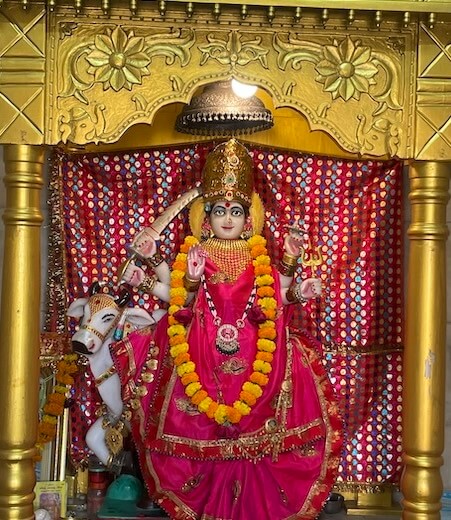
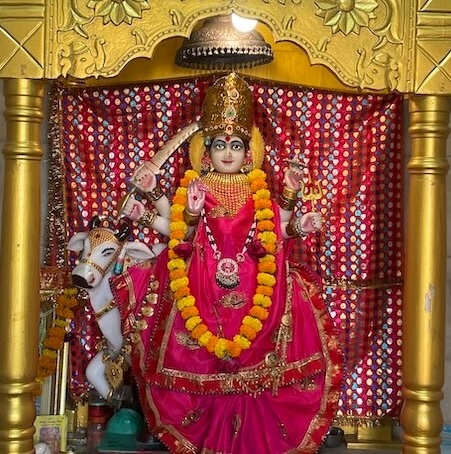 Umiya Mata is a manifestation of Uma, the primordial energy and an incarnation of the Goddess Parvati. A symbol of divine power, She is the revered patron deity (‘Kuldevi’) of the prosperous Kadva Patidar community spread across the globe. Her principal seat in Gujarat is situated at Unjha, a mere 20 km from this location. Wherever the Kadva Patidar community has settled worldwide, they have raised shrines to their ancestral deity and the temple at Kansa stands as a significant testament to this devotion. Within this architecturally striking temple complex, a shrine dedicated to Umeshwar Mahadev also resides.
The mythological lore of the Goddess recounts that before Sati immolated herself in the sacrificial fire, she harboured a deep longing to have Lord Shiva as her consort in her subsequent incarnation. Consequently, she was reborn as Uma in King Himavan’s household. Following a period of rigorous penance, she was united in marriage with Lord Shiva, thereafter attaining the name ‘Mata Umiya’.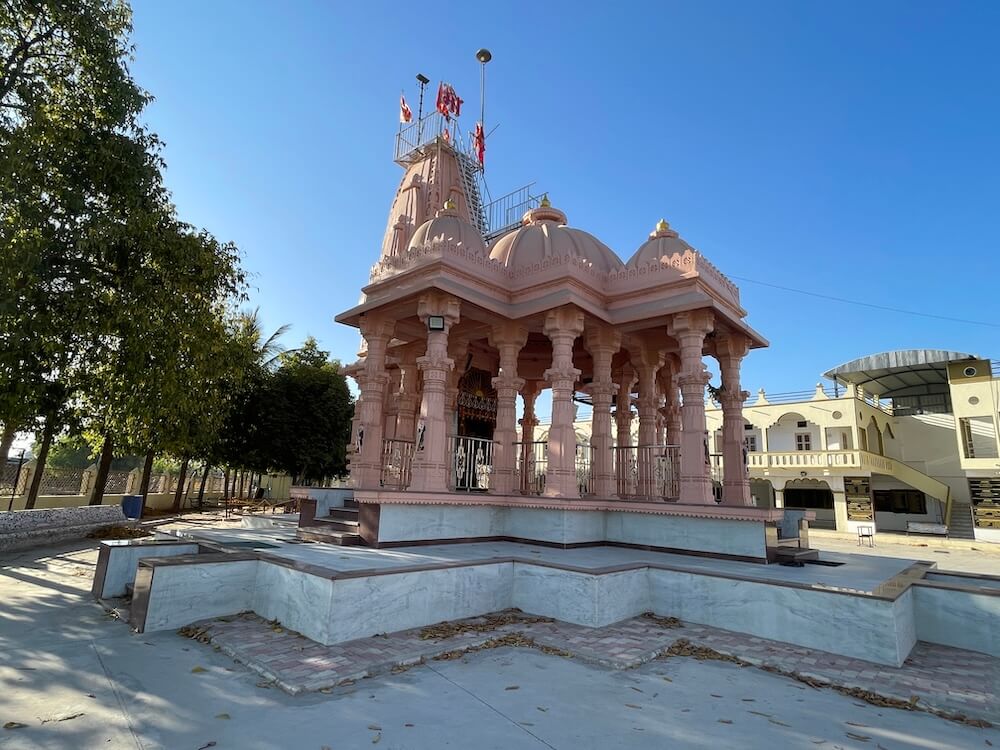 She is also identified as an incarnation of Mata Annapurna. It is said that Mata Sita herself offered daily prayers to Umiya Mata. A temple dedicated to the Goddess existed within the gardens of King Janaka’s palace. Before Sita Mata departed from the earthly realm, she entrusted her sons, Luv and Kush, to the protective grace of Umiya Mata. From that moment, Luv and Kush became devoted worshippers of the Goddess. The Patidar community considers itself the direct descendants of these sons of Shri Ram and Mata Sita. Following in the footsteps of Luv and Kush, their progeny have continued this tradition of daily veneration through the ages.
The history of the Kadva Patidar community is said to find its roots in the Indus Valley Civilisation. Originally belonging to the Kshatriya varna, the community eventually branched into three sub-categories. 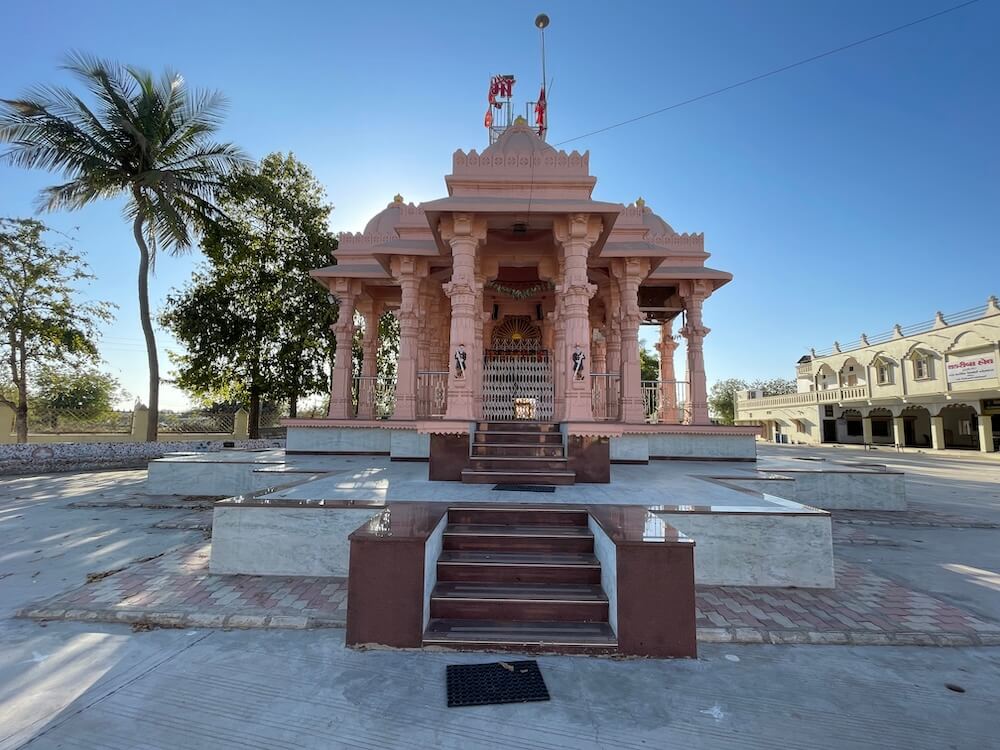 Amongst these, the ‘Kurmi Kshatriyas’—the tillers of the land—are the ancestors of the modern Patidar society. Following the surge of foreign invasions after 1000 AD, several Kurmi groups migrated from Punjab to the Unjha region of North Gujarat. Those groups who arrived from the ‘Karad’ region of Gujranwala in Punjab came to be known as ‘Kadva Kurmis’, while those from the ‘Leu’ region were identified as ‘Leu Kurmis’. Over time, the term ‘Karad’ evolved into ‘Kadva’ and ‘Kurmi’ into ‘Kanbi’. During the seventeenth century, as the community began obtaining land titles (‘Pattas’) from rulers, they gradually came to be recognised as ‘Patidars’. In the Unjha region, where the community first settled in Gujarat, stands the ancient original temple of Umiya Mata. At the close of the twentieth century, the villagers of Kansa united to erect this magnificent temple for the Goddess.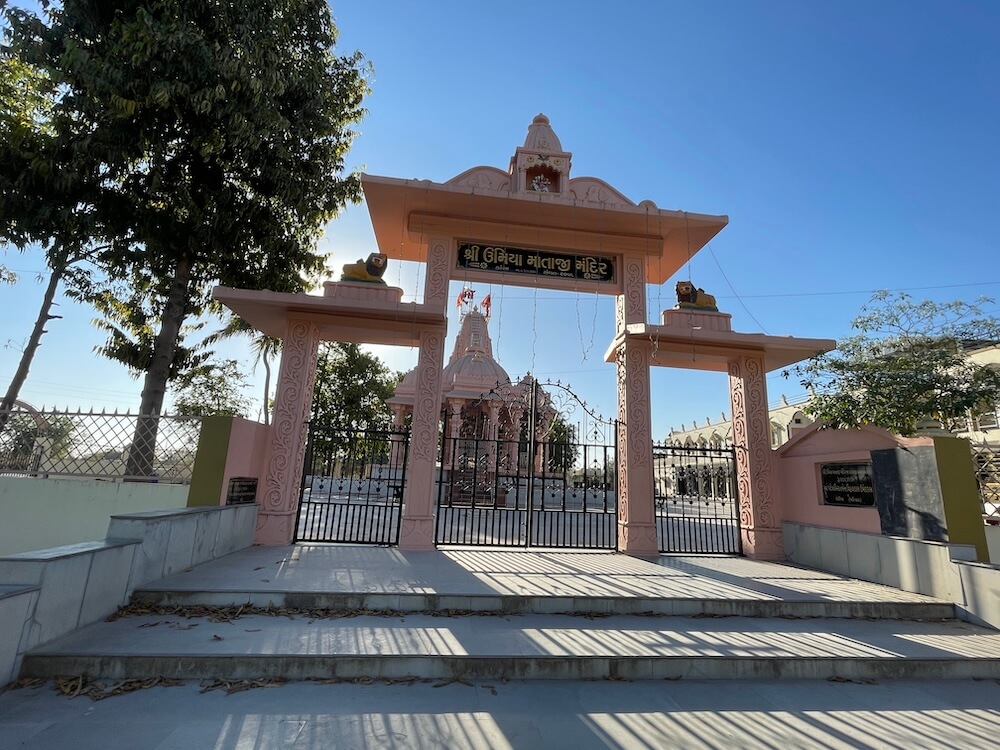
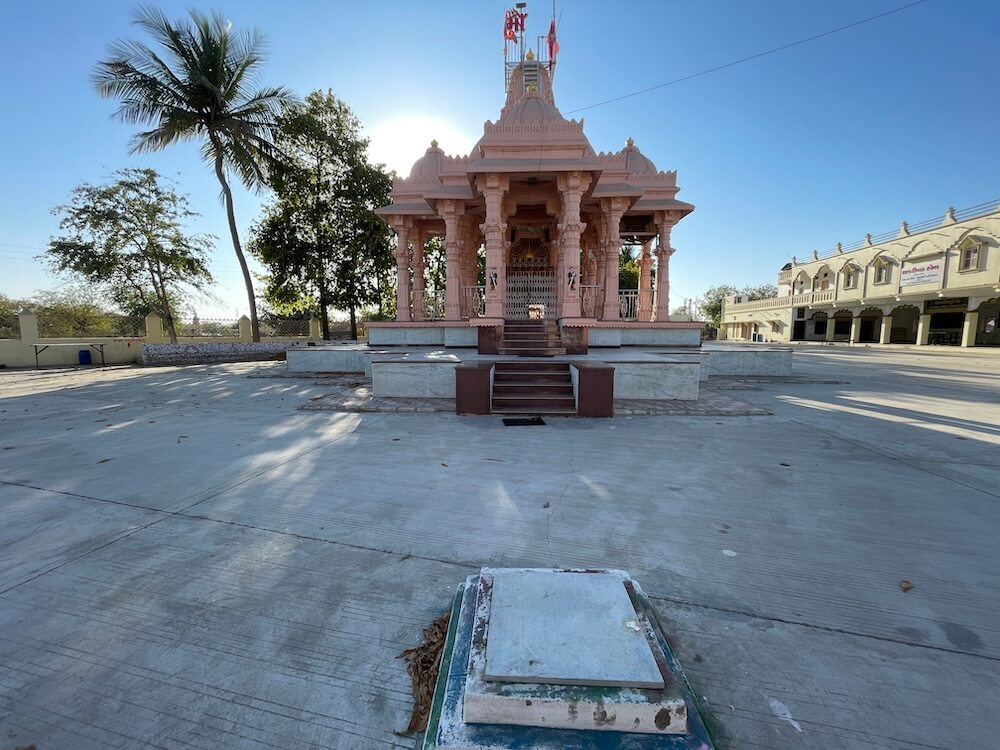
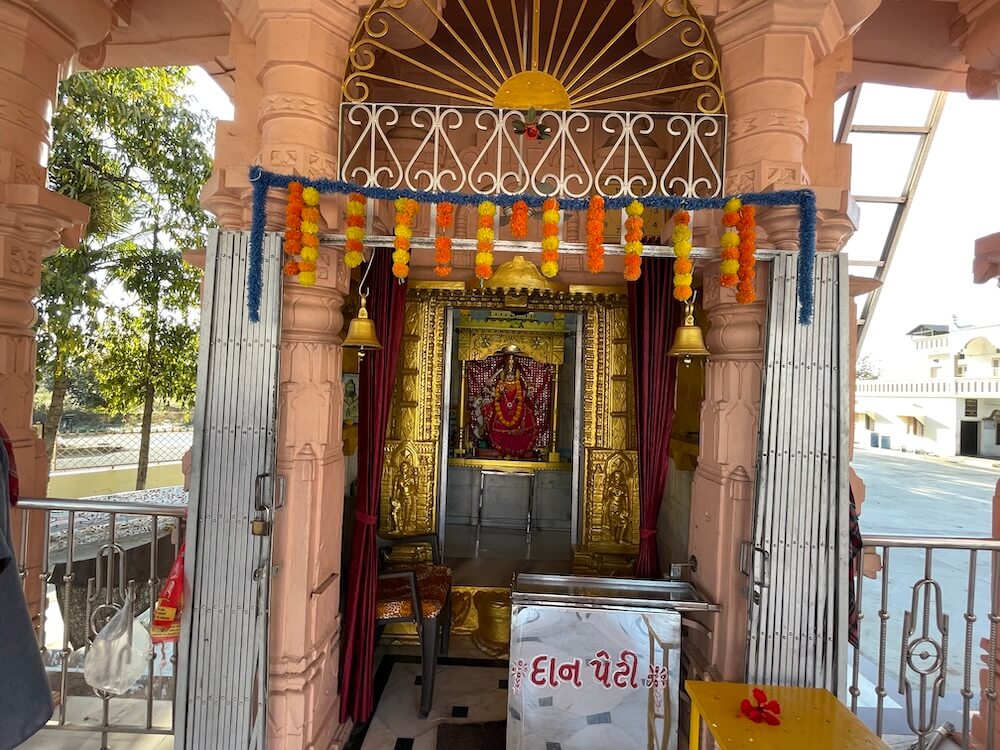
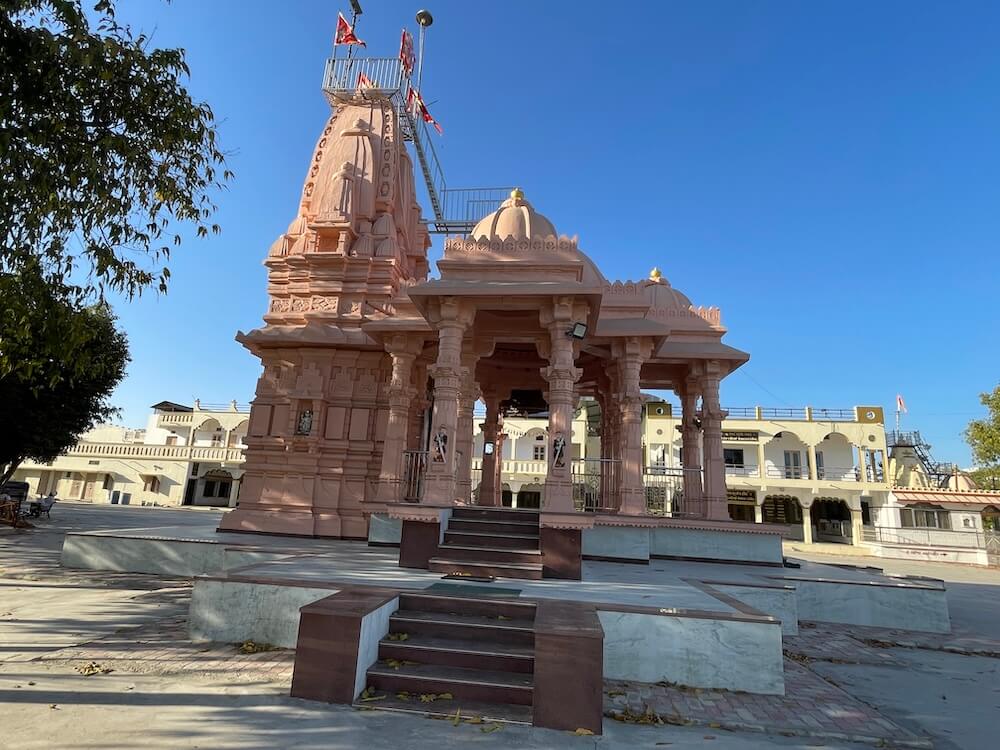
Situated on the outskirts of Visnagar, the temple in Kansa greets visitors with a vast courtyard accessed through a gate in the surrounding perimeter wall. A ‘Havankunda’ for sacred fire rituals sits prominently in the courtyard. Ascending five steps leads one to the elevated ‘Jagati’ (platform) of the temple. The main structure is designed with a circumambulatory path (‘Pradakshina’) encircling the sanctum. A further five steps lead to the ‘Darshan Mandap’. The architectural plan comprises three entrance porches, an assembly hall (‘Sabhamandap’), a vestibule (‘Antarala’) and the ‘Garbhagriha’ (sanctum sanctorum). Both the entrance porches and the assembly hall are open. 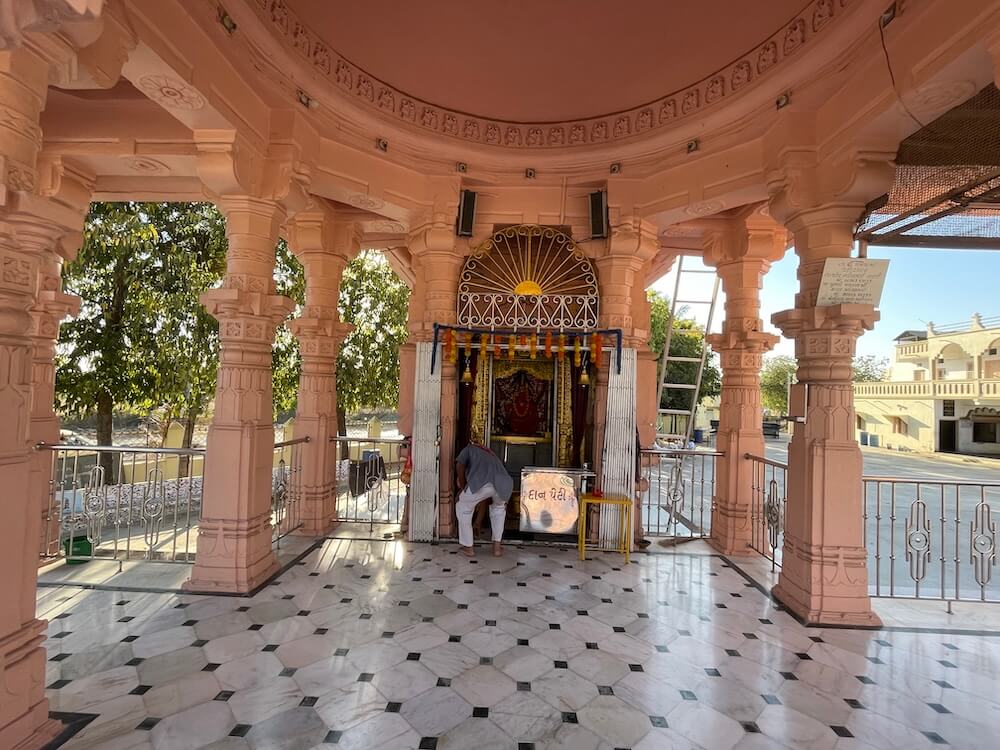 The frontal pillars of the entrance porches are adorned with sculptures of ‘Dwarpalas’ (gatekeepers). Within the vestibule’s niches reside the idols of Lord Ganesha and Bhairava. The intricately carved doorframe of the sanctum also features gatekeeper figures at its base. Inside the sanctum, enshrined within a golden pavilion (‘Makhar’), is a marble idol of the Goddess mounted upon a bull. Adorned in fine silken vestments and exquisite jewellery, the Goddess wears a golden crown upon Her brow. The three entrance porches and the assembly hall are topped with traditional domes, while the main spire over the sanctum is of the elegant ‘Urushringa’ style.
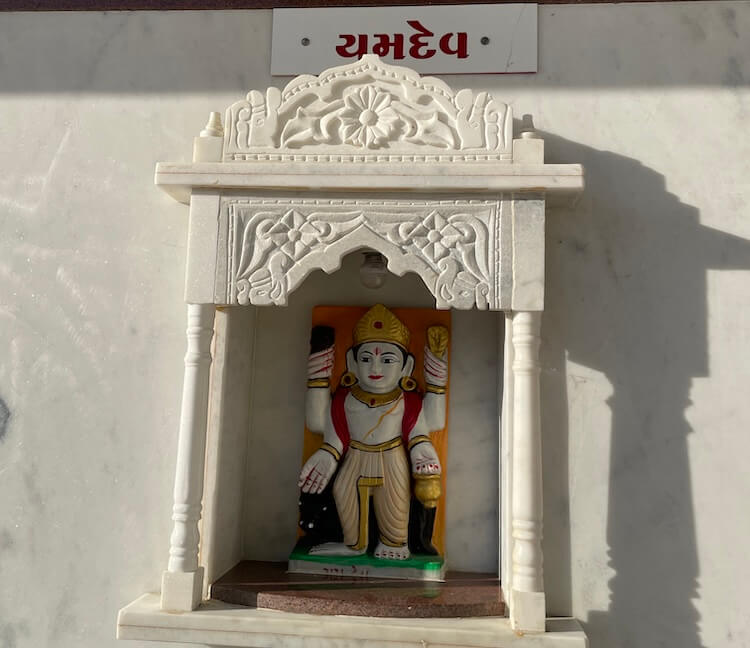
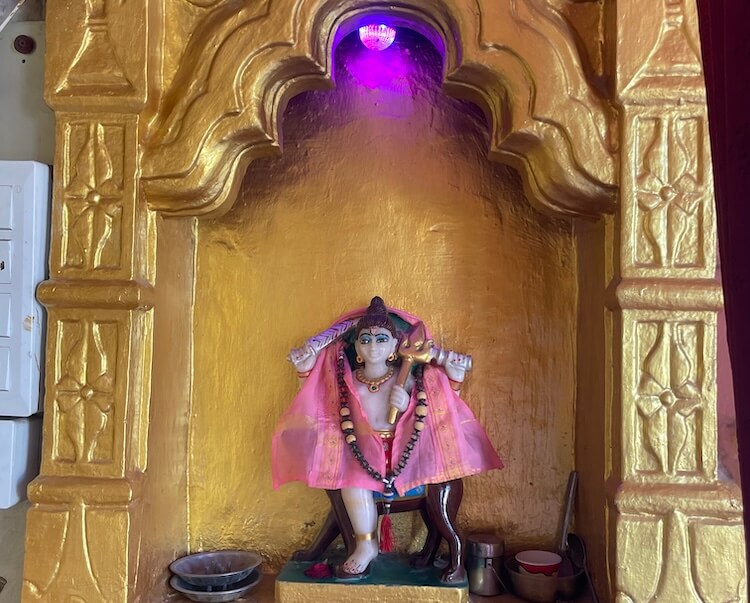
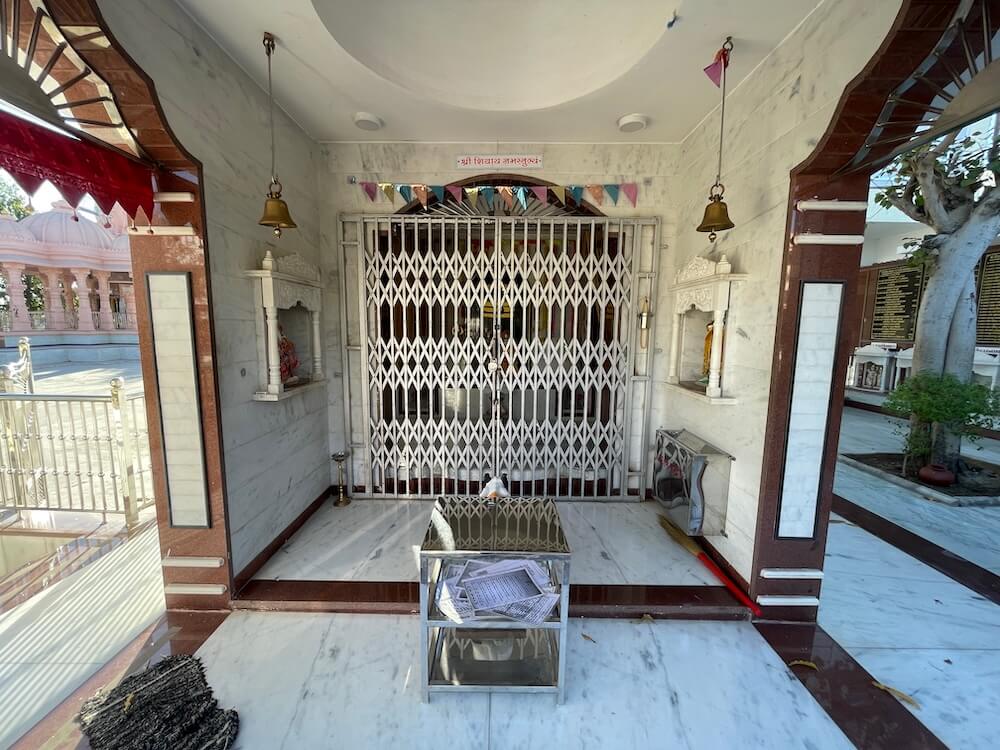
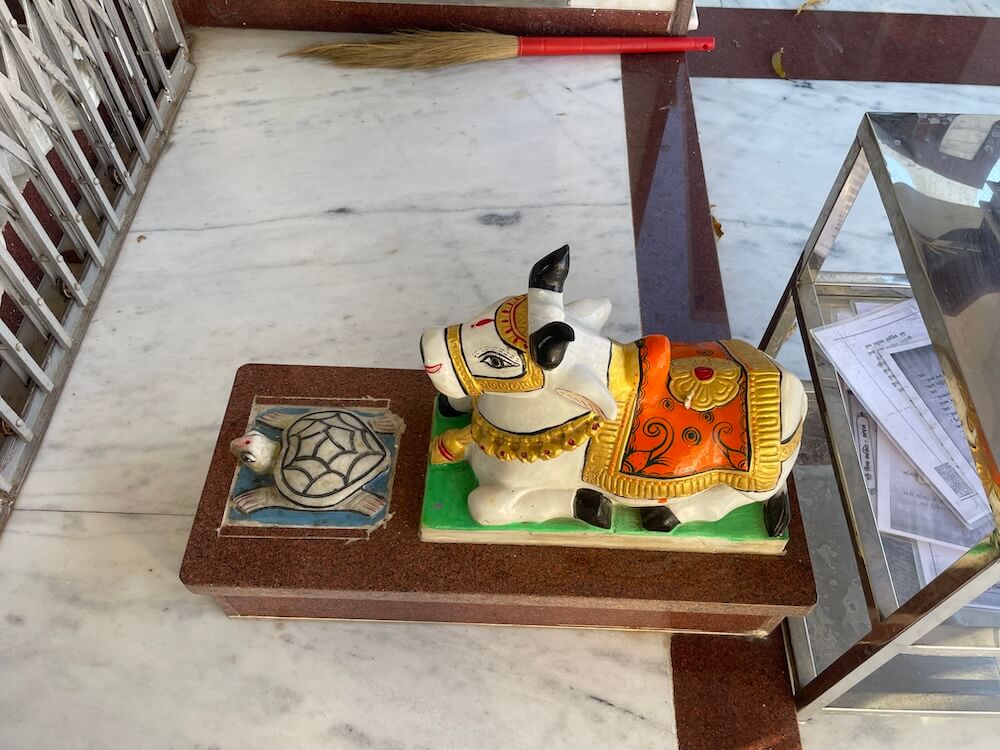
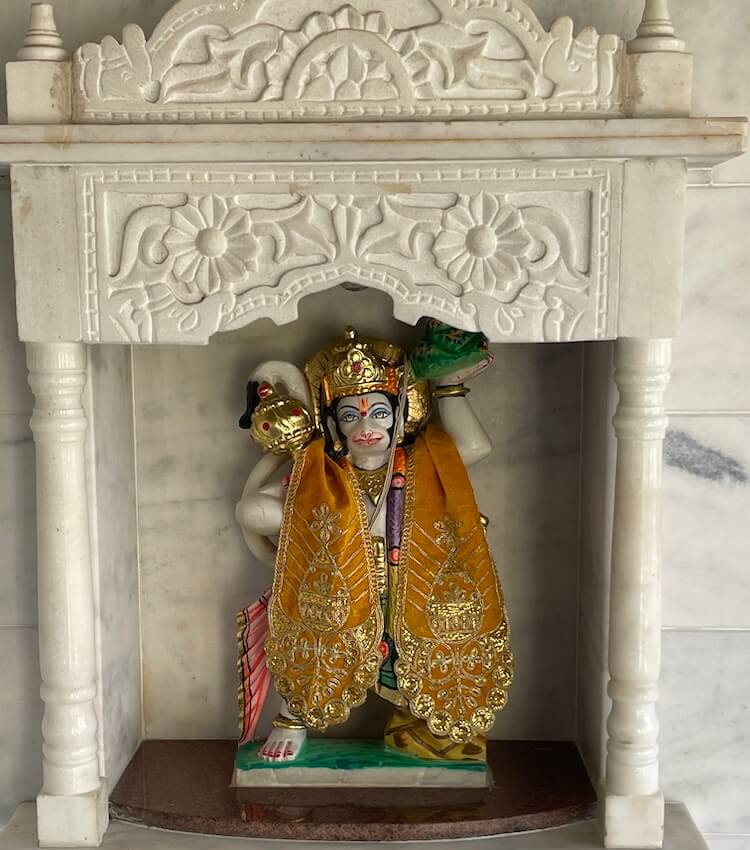
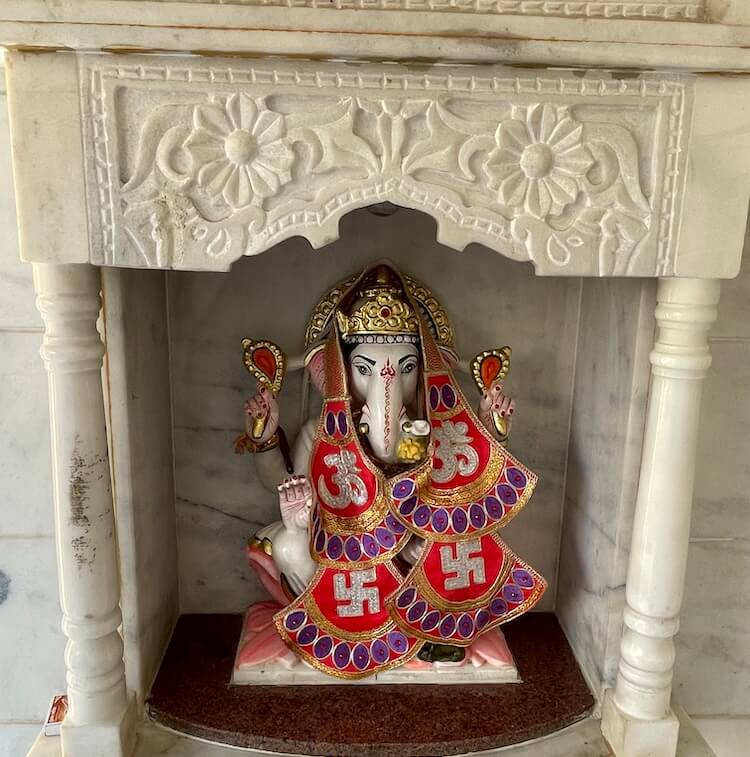
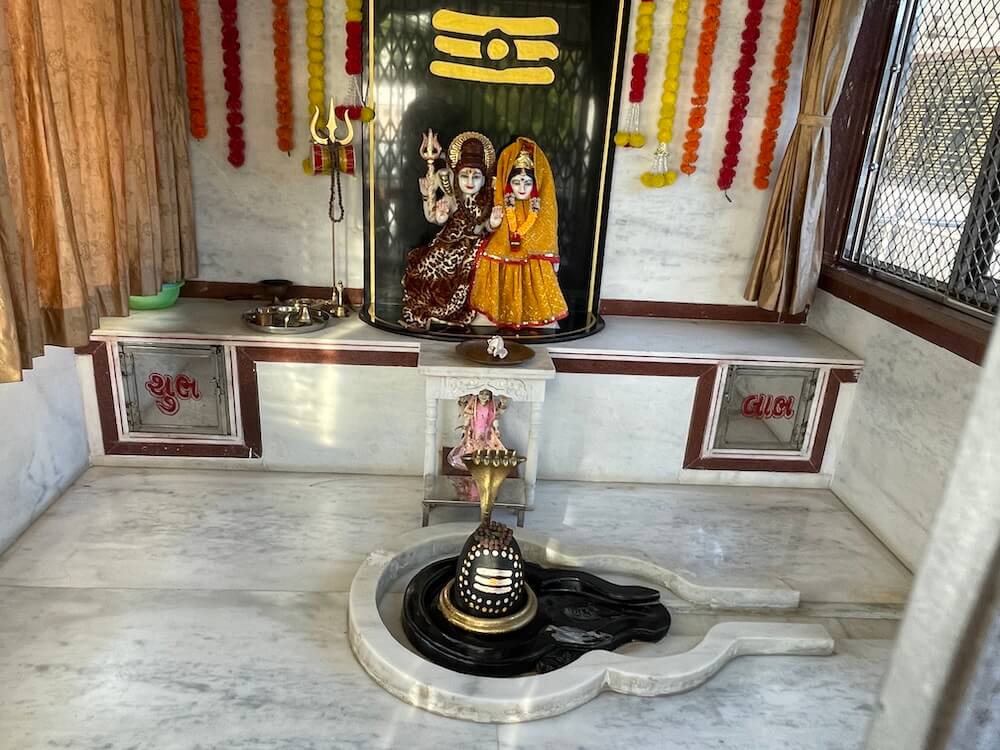
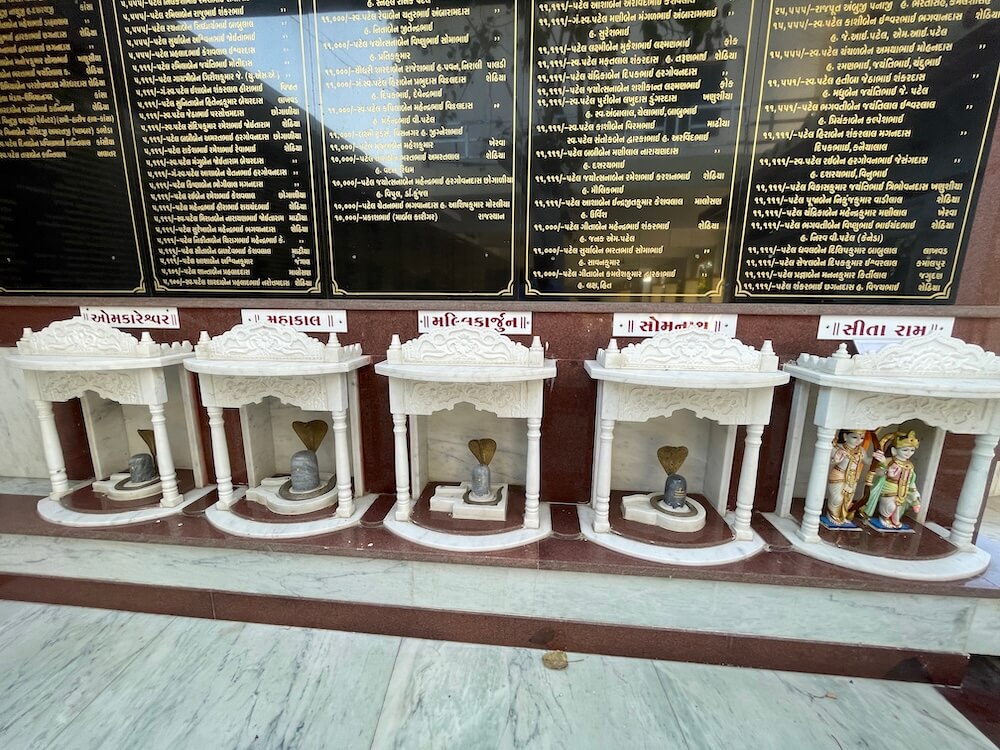
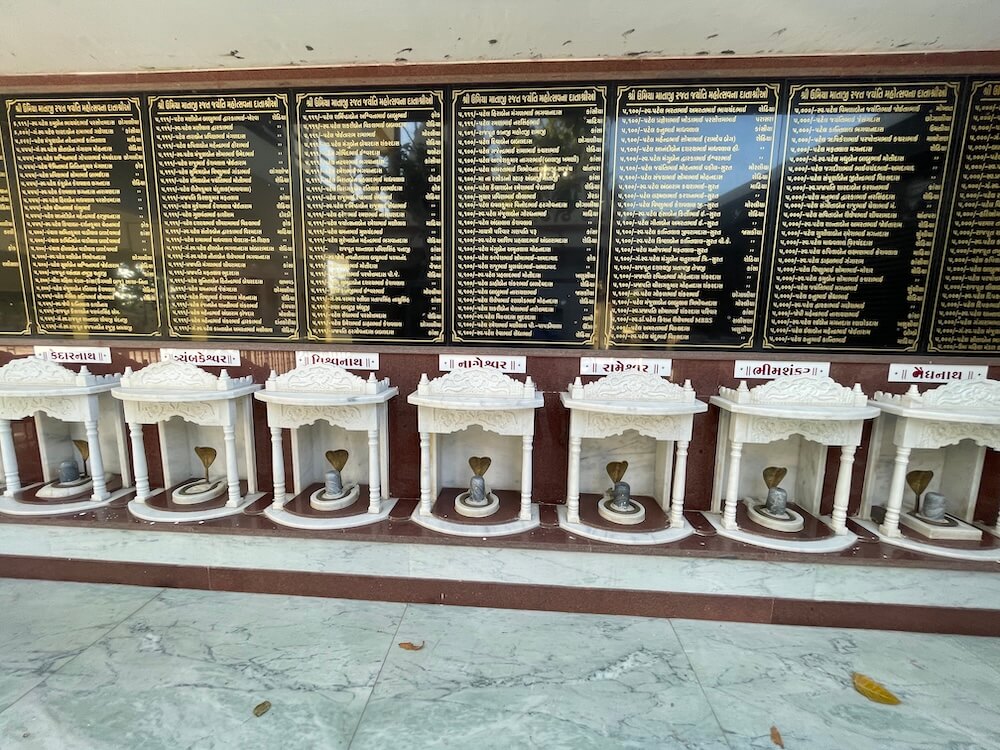
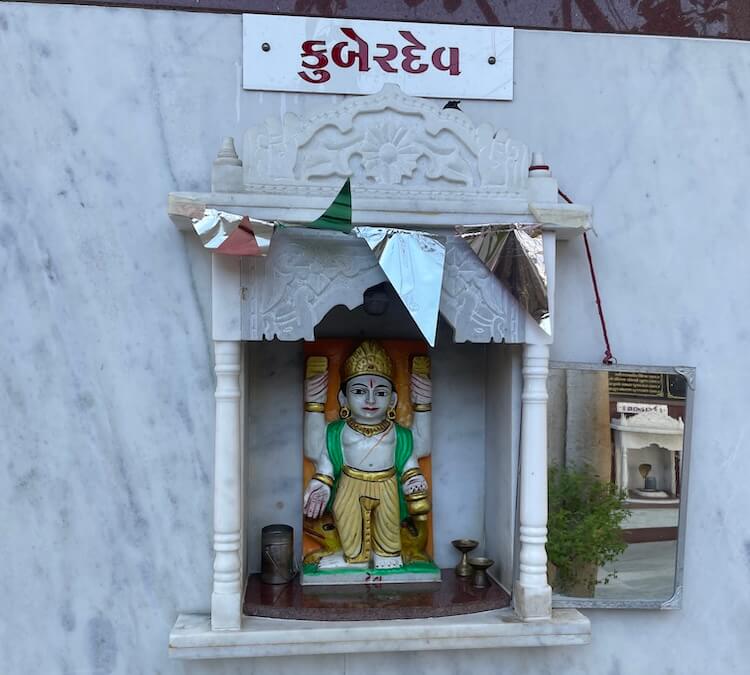
A few paces away, within the precincts, stands the Umeshwar Mahadev Temple.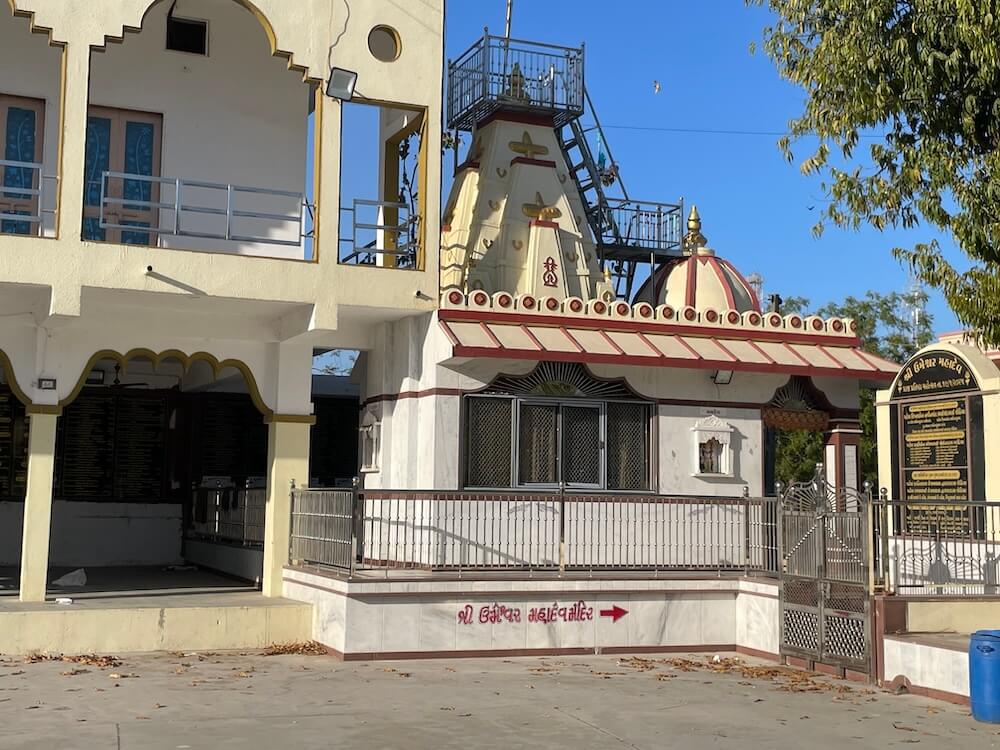 This shrine consists of a semi-open assembly hall, a vestibule and a sanctum. A statue of Nandi and a tortoise sculpture rest upon a pedestal in the assembly hall. The vestibule niches house idols of Ganesha and Hanuman, while a Shiva Linga sits at the heart of the sanctum. Behind the Linga, a beautiful sculpture of Shiva and Parvati is placed upon a ‘Vajrapitha’. The exterior walls of the temple feature niches containing deities such as Kuberdev and Yamadev. An adjacent open pavilion houses symbols representing the twelve ‘Jyotirlingas’.
Spiritual life at the temple begins daily at half-past six in the morning with the ‘Mangala Aarti’, followed by the ‘Sandhya Aarti’ at sunset. The temple celebrates numerous festivals, including the ‘Prakatya Din’ (Manifestation Day) of the Goddess, Chaitra and Sharadiya Navratra, Vasant Panchami and Annakut. Amongst these, the Sharadiya Navratra is celebrated with immense fervour. During this period, ritualistic worship and prayers are performed according to the scriptures. Throughout the nine nights, women in traditional attire perform the Garba dance in the temple grounds, carrying ‘Garbo’ pots upon their heads and lamps in their hands. On the day of Ashtami, the temple premises overflow with devotees for the ‘Havan’ (sacrificial fire ceremony). The temple is open for devotees from 6 Aamto 1 pm and from 3.30 pm to 9 pm..
Useful Information
- Located at 4 km from Visnagar and 24 km from Mehsana
- GSRTC bus facilities available from Visnagar and Mehsana
- Private vehicles can reach the temple directly
- Accommodation and breakfast facilities are available in the vicinity
- Contact – Patel Navinbhai Tailani, Administrator (Mob.- 9879317913); Pravinbhai Raval, Priest (Mob.- 7069622344)
उमिया माता मंदिर
कंस, ताल. विसनगर, जिला. मेहसाणा
मंदिरे
Temples
मंदिर
-
वैजनाथ महादेव मंदिर महादेवपुरा (गावडा), ता. विजापूर, जि. मेहसाणा
अधिक माहितीVaijnath Mahadev Temple Mahadevpura (Gavada), Tal. Vijapur, Dist. Mehsana
View Detailsवैजनाथ महादेव मंदिर महादेवपुरा (गावड़ा), ताल. विजापुर, जिला. मेहसाणा
विवरण देखें -
वैजनाथ महादेव मंदिर सोखडा, तालुका विजापूर, जिल्हा मेहसाणा
अधिक माहितीVaijanath Mahadev Temple Sokhada, Taluka Vijapur, District Mehsana
View Detailsवैजनाथ महादेव मंदिर सोखाडा, तालुका विजापुर, जिला मेहसाणा
विवरण देखें -
काशी विश्वनाथ महादेव मंदिर मेहसाणा, जि. मेहसाणा
अधिक माहितीKashi Vishwanath Mahadev Temple Mehsana, Dist. Mehsana
View Detailsकाशी विश्वनाथ महादेव मंदिर मेहसाणा, जिला. मेहसाणा
विवरण देखें