
बहुस्मरण माताजी मंदिर
कानोदा, ता. बेचराजी, जि. मेहसाणा
Bahusmarana Mataji Temple
Kanoda, Tal. Becharaji, Dist. Mehsana
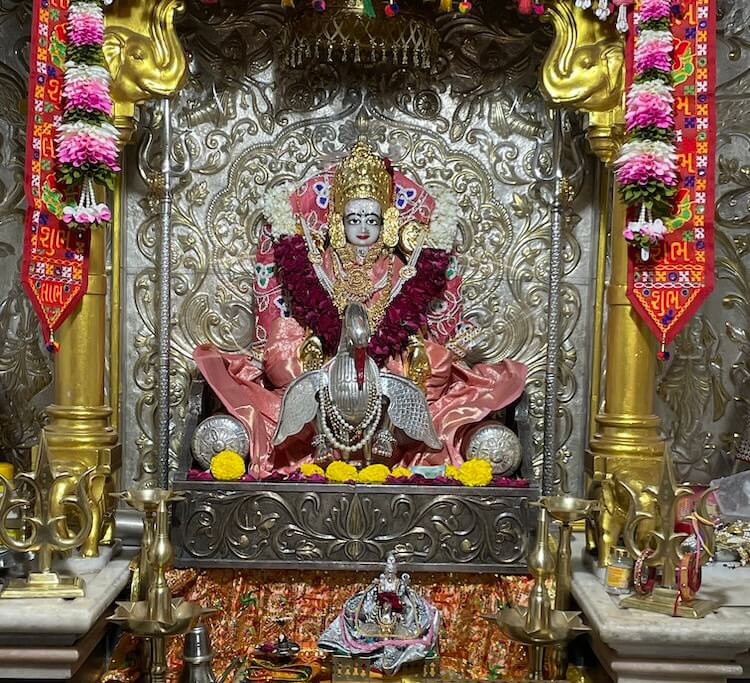 Nestled within the valley of the Rupen River, which descends from a height of 180 metres in the Taranga Hills to flow westwards towards the Rann of Kutch, lies the sacred abode of Bahusmarana Mataji in Kanoda, a hallowed sanctuary for thousands of devotees in Gujarat. Bahusmarana Mata is revered as an exceedingly ‘Jagrut’ (spiritually awakened) deity, believed to respond to the earnest supplications of her followers and hasten to their aid. It is the profound faith of the devotees that she grants salvation to the soul, liberating it from the arduous cycle of eighty-four lakh births. Those who perpetually engage in ‘Namasmarana’ (devotional chanting) of the name ‘Bahusmarana’ are said to attain mental peace, prosperity and unwavering devotion.
Bahusmarana Mata is identified as the ‘Gotraja’ (clan deity) of the Kanodia Jani families belonging to the Audichya Brahmin community, 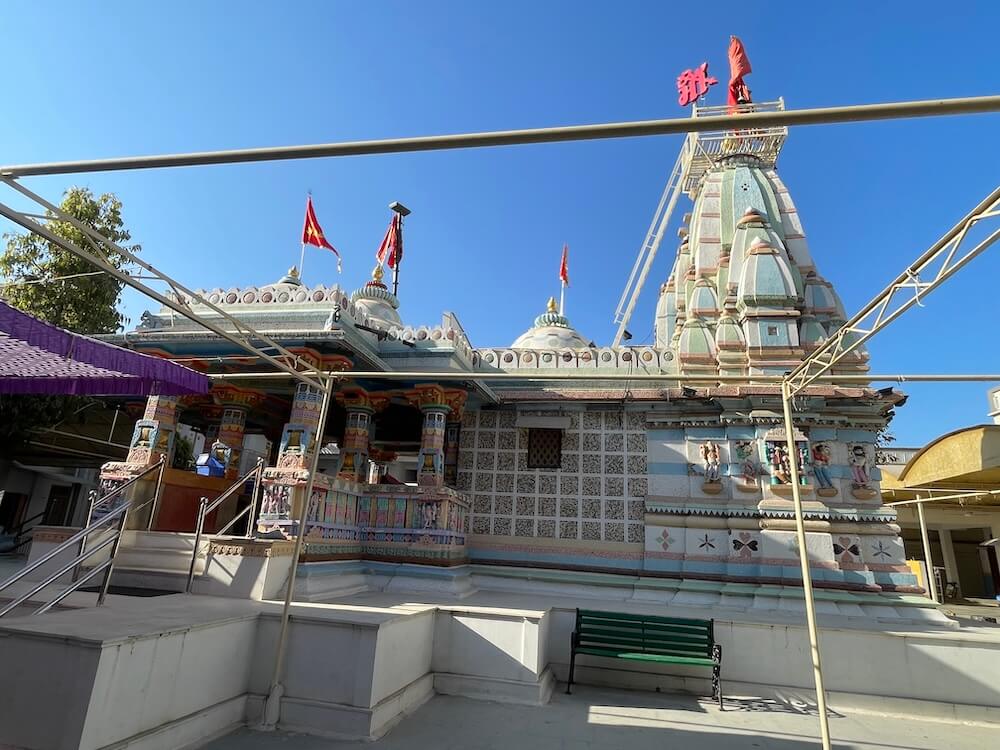 who trace their lineage to Sage Vashistha. Sage Vashistha, regarded as one of the seven sons of Lord Brahma, is renowned as the composer of numerous hymns in the first to fourth ‘Mandalas’ of the Rigveda. Over the course of history, these ‘Yagnik’ (priestly) families, traditionally engaged in officiating sacrificial rites, adopted surnames such as Jani, Bhatt and Vyas. A documentary titled ‘Smaranu Tane Shat Baar’, directed by Sanjeev Jani, provides a detailed account of the Goddess’s manifestation on Earth and the history of the Kanodia Jani families. Families who migrated from Bhatunda, Pali and surrounding regions also revere Bahusmarana Mata as their ‘Gotraja’. A special spiritual bond exists between the Goddess and the Brahmin families of the Upamanyu and Kashyap ‘Gotras’ within the Sahastra branch of the ‘Audichya Brahmin’ community.
Steeped in a centuries-old tradition, the court of Bahusmarana Mataji sees a vast influx of pilgrims arriving for ‘Jhankhi’ (holy viewing). In a 2012 report published by the ‘Indian National Trust for Art and Cultural Heritage’ (INTACH), the Bahusmarana Mata Temple at Kanoda was officially recognised as the 12th entry in the list of protected monuments in the Mehsana district. Dr Kantilal F. Sompura, in his 1968 work ‘The Structural Temples of Gujarat’ published by Gujarat University, provides a clear reference to the establishment of this shrine during the Chaulukya (Solanki) reign in the 10th century.
 Prior to the thirteenth century, the entire expanse between Kanoda, Modhera and Dhinoj formed part of a grand urban settlement. The ruins of numerous Hindu and Jain temples scattered across the vicinity serve as robust evidence of this erstwhile township. In the volume ‘Architectural Antiquities of Northern Gujarat’, published in 1903 by Bernard Quaritch, Kegan Paul, Trench, Trubner & Co. of London, James Burgess and Henry Cousens provided a comprehensive mention of the remains in Kanoda village. These British and Indian archaeologists rediscovered the shrine in the nineteenth century, with Cousens publishing the first historical photographs of the ruins in 1885. Furthermore, a 2020 research paper by Abhishek Roy and Sushmita Sen in the ‘Heritage: Journal of Multidisciplinary Studies in Archaeology’ analysed religious structures in the middle Rupen valley.
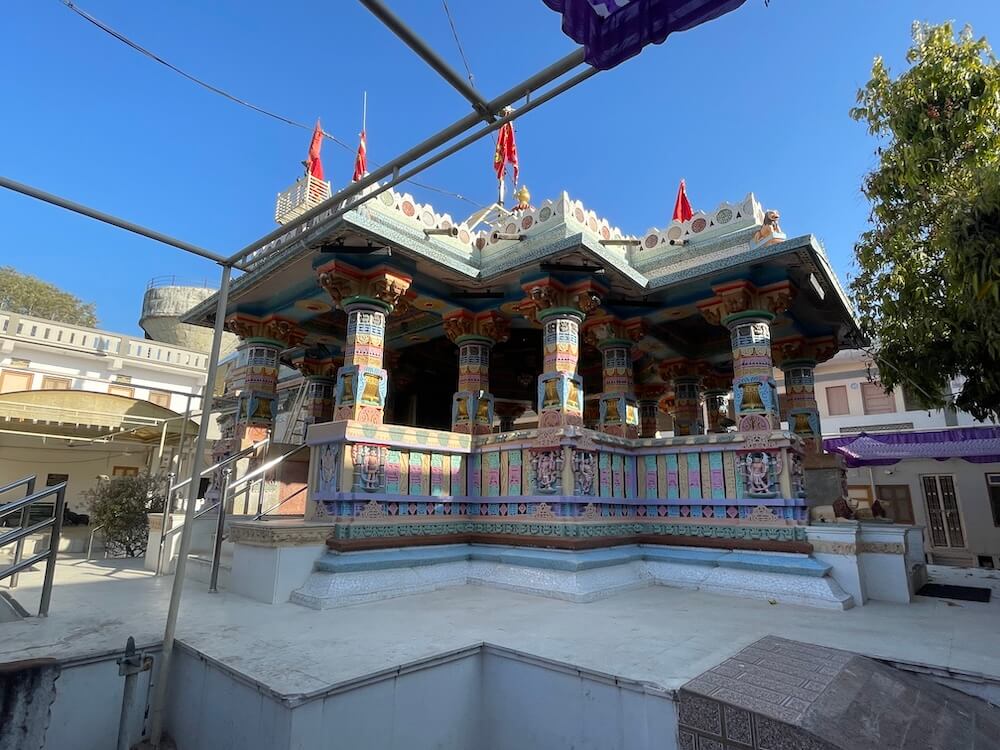 At the time of its archaeological discovery, a significant portion of the original structure lay in ruins. Initially, the specific deity to whom the temple was dedicated remained obscure. Based on the craftsmanship of the excavated remains, it was conjectured to be a site for Someshwar (Shiva) or a ‘Shakti’ shrine. Subsequently, during the classification of the fragments, a portion of a Mataji idol was discovered. Existing evidence confirms that ‘Madi’ (Mataji) was consecrated as the presiding deity under the name ‘Bahusmarana’ or ‘Bormarana’ in the local Gujarati dialect. Mythological references consider Bahusmarana Mata an avatar of the primordial power, Gayatri. The ‘Bahuchar Bavani’ illustrates the Goddess’s extraordinary powers and miracles.
 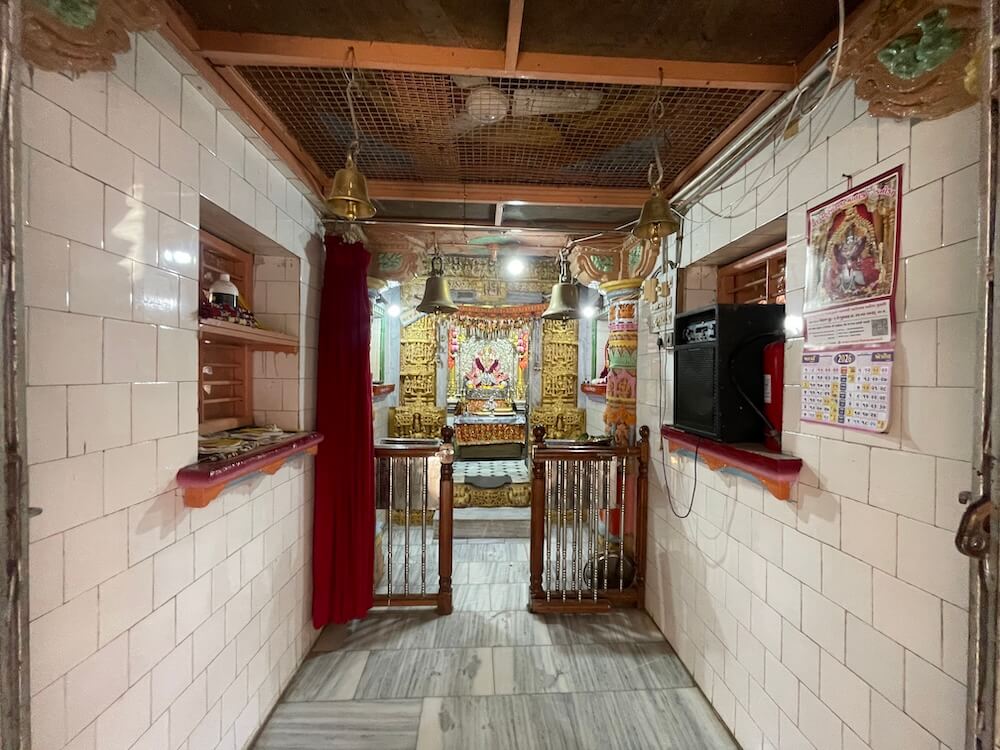 According to one legend, ‘Maraghas’ (Cocks which were killed and already consumed) were restored to life and began to crow through Madi’s grace – an event regarded as a significant ‘Parcha’ (divine miracle) of the Goddess.
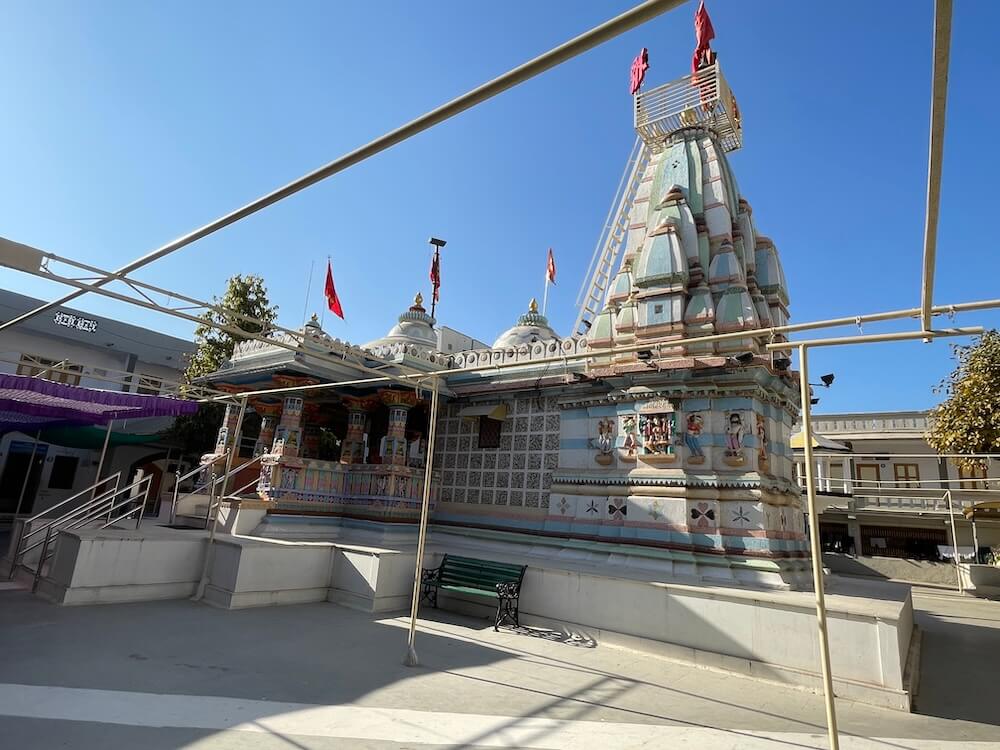
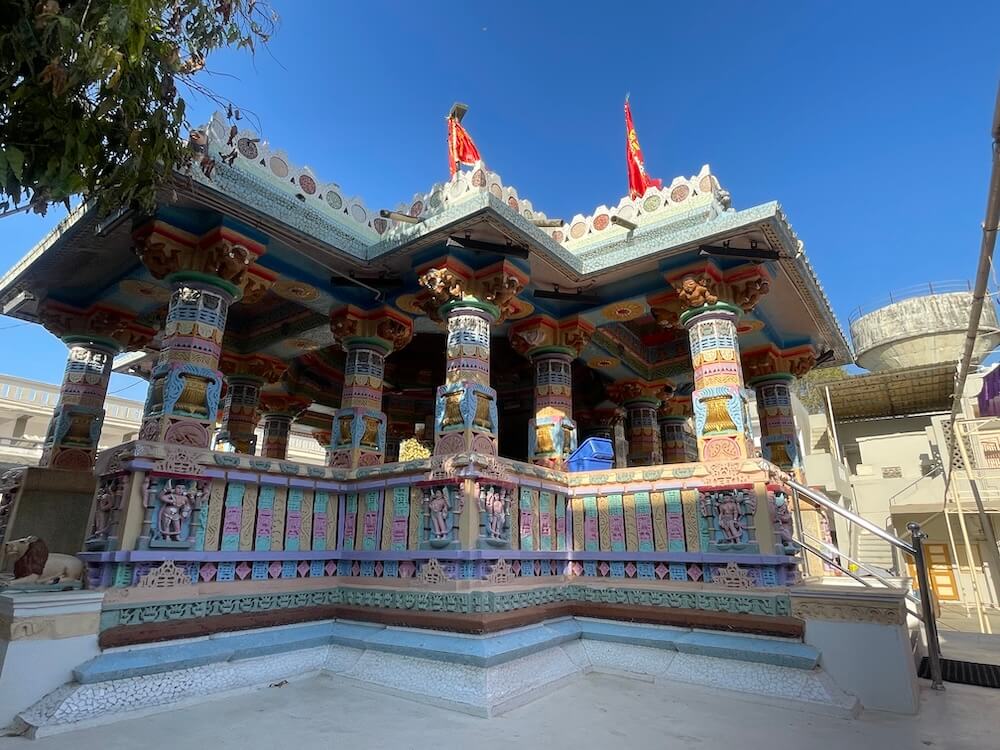
Built in the Maru-Gurjara architectural style, this temple is considered an exquisite specimen of ancient masonry. In this style, no part of the structure, whether interior or exterior, is left without intricate carvings. The original shrine design draws inspiration from ancient Sanskrit texts that describe the principles of the square and the circle. It resembles the Neelkanth Mahadev Temple at Sunak. Due to its modest scale, the height of the ‘Pitha’ (base) was intentionally kept low, achieved by omitting the friezes of elephants and human figures from the upper two layers.
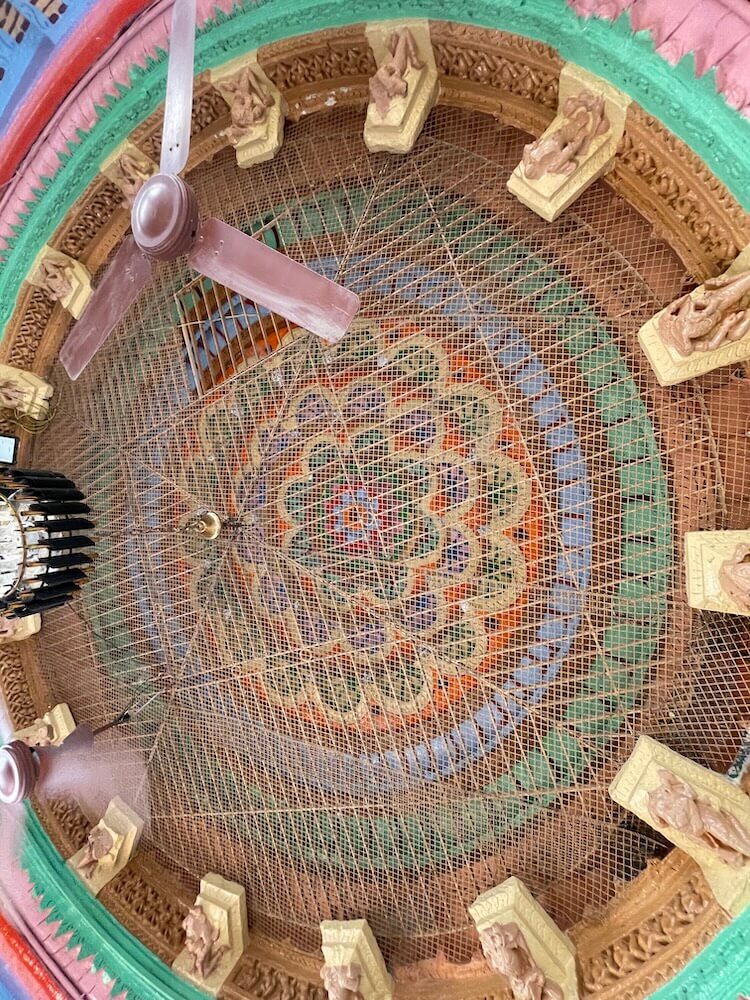
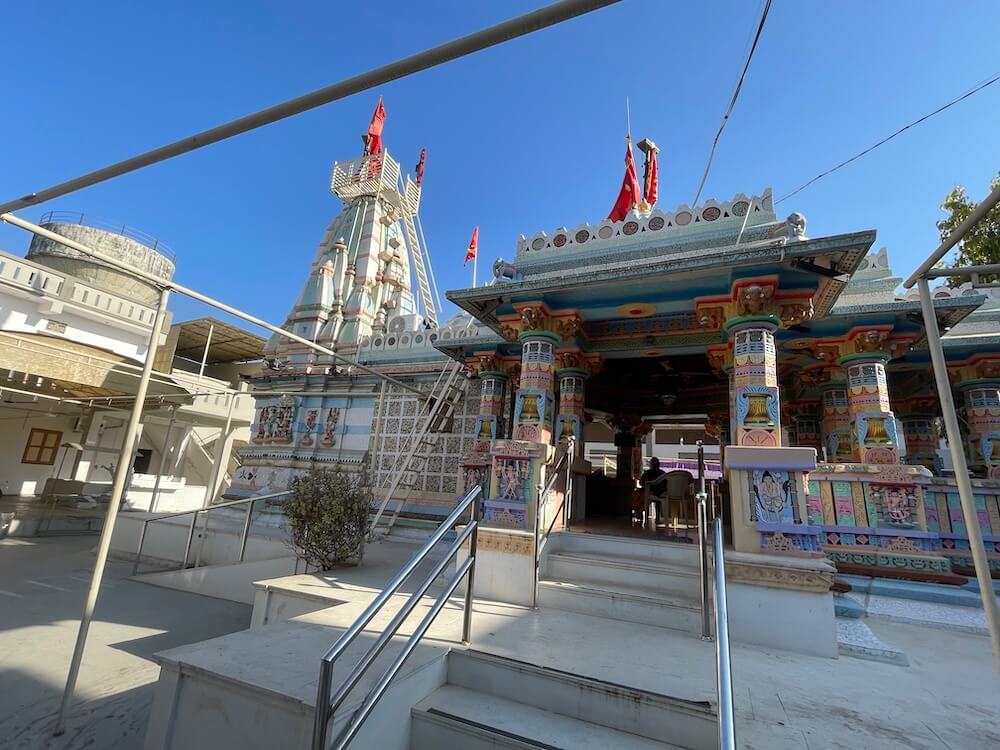
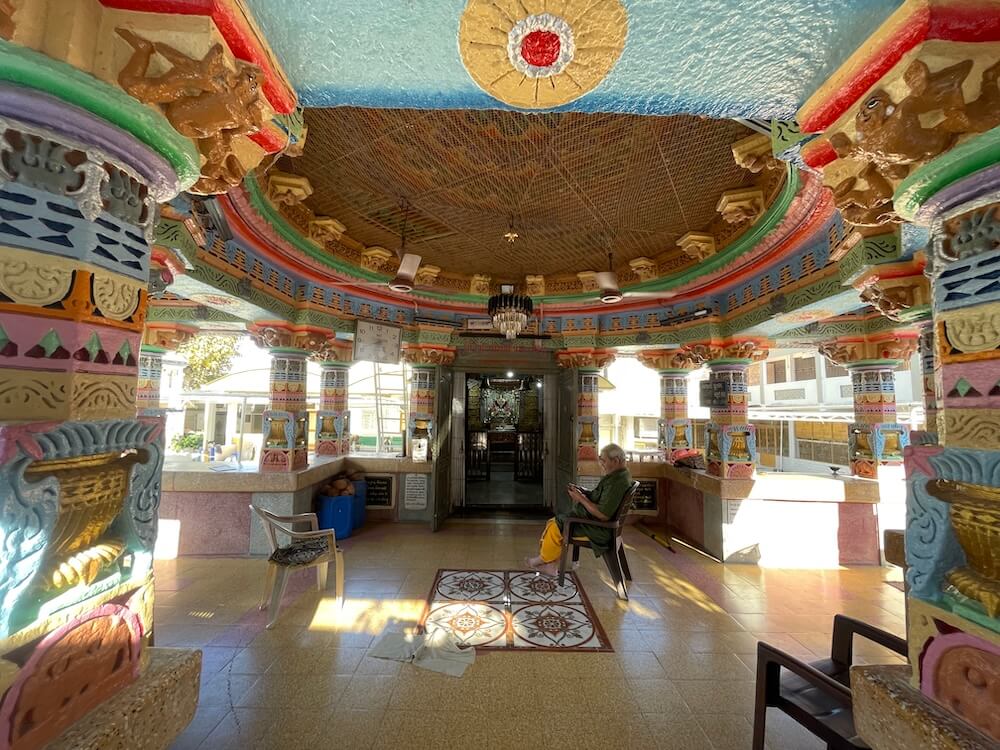 Situated upon a high ‘Jagati’ (plinth), the temple structure consists of three ‘Mukhamandapas’ (entrance porches), a ‘Sabhamandapa’ (assembly hall), an ‘Antarala’ (antechamber) and the ‘Garbhagriha’ (sanctum sanctorum). All pillars and walls, including the three porches and the assembly hall, are adorned with meticulous carvings. The base of the walls features carvings in the ‘Chaitya-gavaksha’ (arch-window) pattern. The assembly hall is crowned by a domed ceiling supported by sixteen pillars, each carved with figures of musicians and dancers. A hallmark of the era’s construction in the Maru-Gurjara style is the decorative ‘flying arch’ design between the columns. The exterior walls feature recesses and niches to create a play of light and shadow. In modern times,
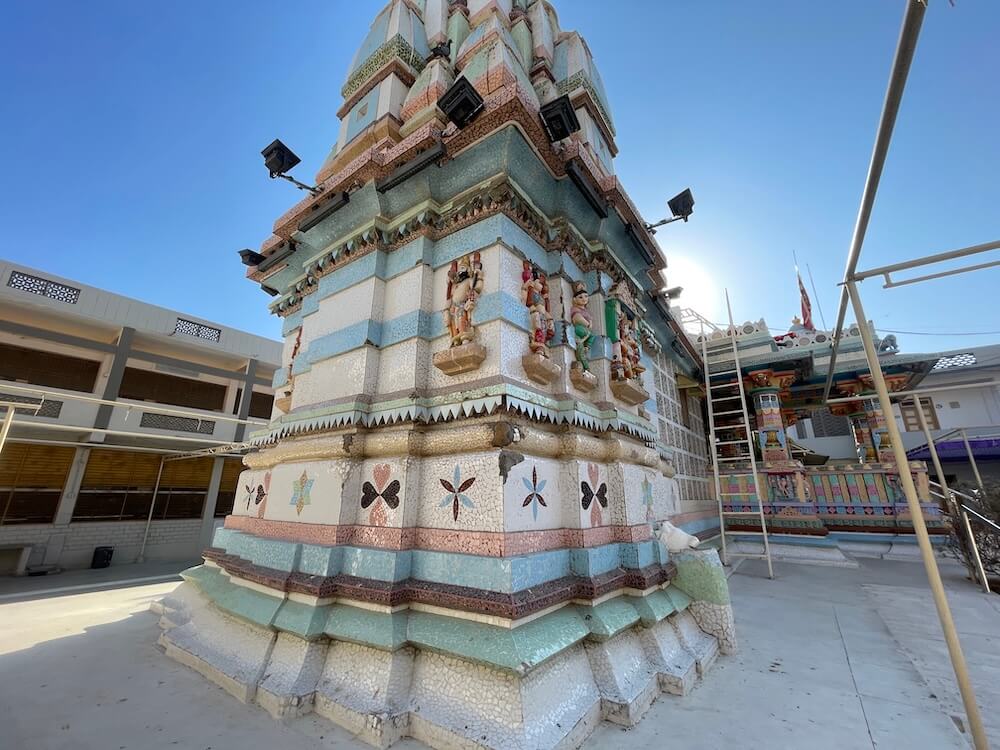
 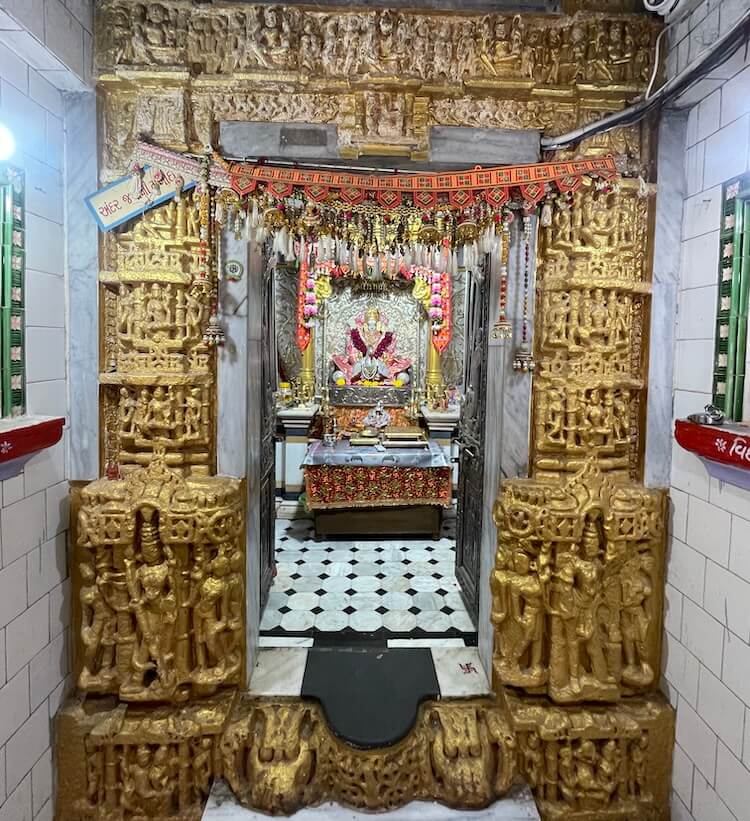 the temple trust has completed the reconstruction of the shrine according to the original plan, reusing as many ancient fragments as possible. Using antique stones and bricks, the work was carried out without compromising the integrity of the original design. The current sanctum and ‘Shikhara’ (spire) have been newly erected by assembling old remains and the trust has further painted the entire edifice.
Enshrined in the sanctum is the eight-armed idol of Mataji. Mythological lore suggests that the Goddess assumes different forms on different lunar dates : sometimes as ‘Balarupa Bahuchari Ambe’ (the child form), at others as ‘Chatura Mahalakshmi’ or ‘Chandi Chamunda’. In the ‘Nagani Chhanda’, she is addressed as ‘Navkhand Narayani Amba Ishwari Bholi’. The eight-armed idol holds a golden staff and a silver ‘Mashal’ (torch).
The temple celebrates various religious festivals throughout the year, the ‘Patotsav’ (anniversary of consecration) being the most significant. This grand event is organised annually on ‘Vaishakh Shuddha Shashthi’. Additionally, a ‘Patotsav’ is celebrated with great fervour on ‘Paush Vadya Ekam’. 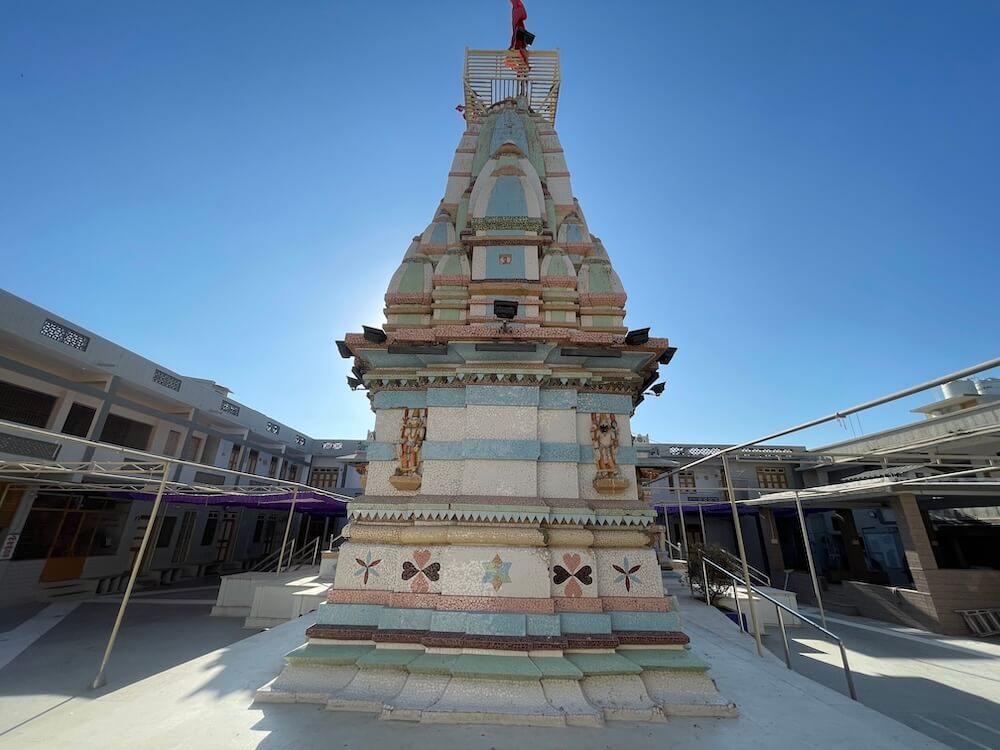 On these auspicious days, devotees from the surrounding areas and members of the Kanodia Jani families gather in large numbers. The idol undergoes a special ‘Abhishek’ (ritual bath), accompanied by Vedic chants, the ‘Navchandi Yagya’ (fire ritual) and a grand ‘Annakuta’ (offering of a mountain of food). Traditional worship is performed amid the resonant sounds of conchs, bells and drums. During ‘Norta’ (Navratra), special ‘Garba’ dances are organised. The documentary ‘Smaranu Tane Shat Baar’ records the performance of the ‘Aare Avasariye Amba’ Garba at the shrine, composed by Pankaj Bhatt and voiced by Purnima Jani and Mala Bhatt. In the adoration of Bahusmarana Madi, the ‘Bahusmarana Chalisa’ and hymns hold paramount importance. Devotees affectionately offer a ‘Bhojanacha Thal’ (meal platter) to the Goddess, featuring delicacies such as ‘Laddoo’, ‘Puri’, ‘Dudhpak’, ‘Shira’ and pickles, earnestly entreating, ‘Madi, come to our temple to dine with the tinkling of your anklets.’ Devotees can seek ‘Jhankhi’ (holy viewing) daily from 6 am to 9 pm.
Useful Information
- Located at 19 km from Mehsana and 30 km from Becharaji.
- GSRTC (State Transport) bus services are available from both Becharaji and Mehsana.
- Private vehicles can reach the temple directly.
- Accommodation and breakfast facilities are available in the vicinity.
- Contact – Temple Office, Mob. 9426424044.
बहुस्मरण माताजी मंदिर
कानोदा, ताल. बेचराजी, जिला. मेहसाणा
मंदिरे
Temples
मंदिर
-
वैजनाथ महादेव मंदिर महादेवपुरा (गावडा), ता. विजापूर, जि. मेहसाणा
अधिक माहितीVaijnath Mahadev Temple Mahadevpura (Gavada), Tal. Vijapur, Dist. Mehsana
View Detailsवैजनाथ महादेव मंदिर महादेवपुरा (गावड़ा), ताल. विजापुर, जिला. मेहसाणा
विवरण देखें -
वैजनाथ महादेव मंदिर सोखडा, तालुका विजापूर, जिल्हा मेहसाणा
अधिक माहितीVaijanath Mahadev Temple Sokhada, Taluka Vijapur, District Mehsana
View Detailsवैजनाथ महादेव मंदिर सोखाडा, तालुका विजापुर, जिला मेहसाणा
विवरण देखें -
काशी विश्वनाथ महादेव मंदिर मेहसाणा, जि. मेहसाणा
अधिक माहितीKashi Vishwanath Mahadev Temple Mehsana, Dist. Mehsana
View Detailsकाशी विश्वनाथ महादेव मंदिर मेहसाणा, जिला. मेहसाणा
विवरण देखें