
हरसिद्धी माता मंदिर
लाडोळ, ता. विजापूर, जि. मेहसाणा
Harsiddhi Mata Temple
Ladol, Tal. Vijapur, Dist. Mehsana
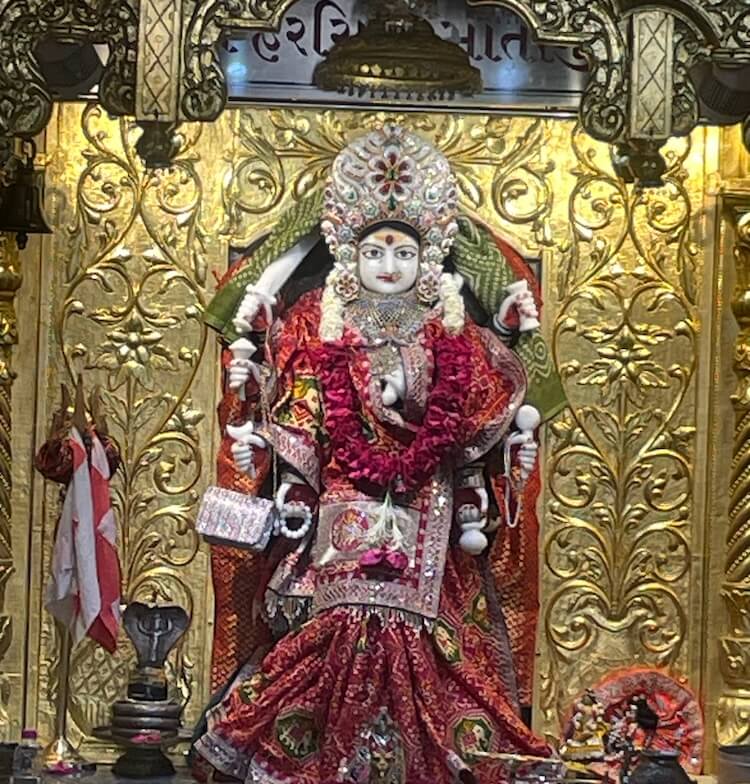 Among the four pre-eminent Shakti Peethas of Mother Harsiddhi, a vital seat is situated at Ladol in the Mehsana district. In historical epigraphs, this village is identified by the nomenclature ‘Latapalli’ or ‘Ladapalli’. Legend attributes the consecration of the deity here to the valiant King Siddharaj Jayasinha (r. 1094 to 1143 CE) of the Solanki-Chulukya dynasty. Regarded as a ‘Jagrut Siddhapeeth’ (a spiritually awakened seat of power) the shrine is believed to fulfil the deepest aspirations of its devotees. Many childless couples make solemn vows here for progeny. Upon the fulfilment of these prayers, during the culmination of the Sharadiya Navratri festival on the day of Dussehra, devotees offer a ‘Garbo’ fashioned from gold, silver, brass or clay, according to their faith and means.
The Puranas abound with celebrated narratives concerning Goddess Harsiddhi. She is revered by numerous names, including Harshad Amba, Harshal, Harshat, Shikotar, Vahanvati Mata and Sindhoi Mata. According to the ‘Avantika khanda’ of the Skanda Purana, Lord Shiva bestowed upon Chandi – the vanquisher of the demons ‘Chand’ and ‘Prachand’ – the blessing of being ‘Harsiddhi’, 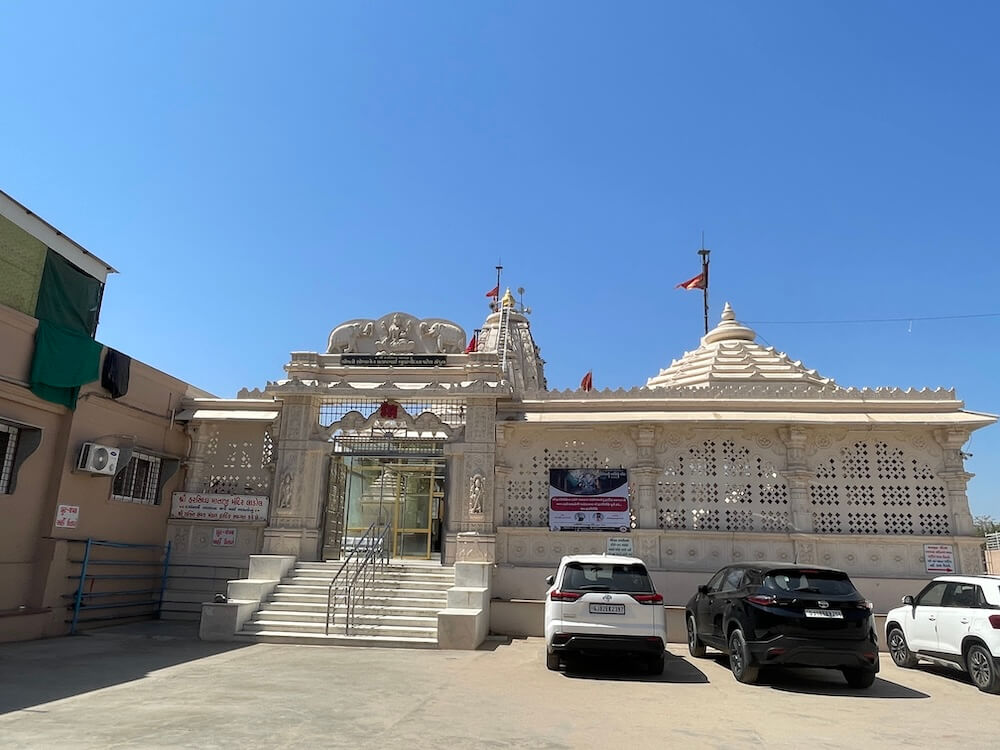 signifying one who grants ‘Siddhi’ (success) and triumph in all endeavours. Another narrative recounts that, following Lord Shiva’s insult by King Daksha, Sati immolated herself in the sacrificial fire. To pacify the wrath of Mahadev, who wandered the universe with Sati’s body, Lord Vishnu severed the remains with the Sudarshan Chakra. The 13th part, the ‘elbow’ (koni), is said to have fallen at Ujjain in Madhya Pradesh, establishing her primary seat.
This goddess is revered by Lord Krishna and the Yadav dynasty. According to the Sabha Parva of the Mahabharata, At Lord Krishna’s instruction, Bhima killed Jarasandha by tearing him into two pieces. 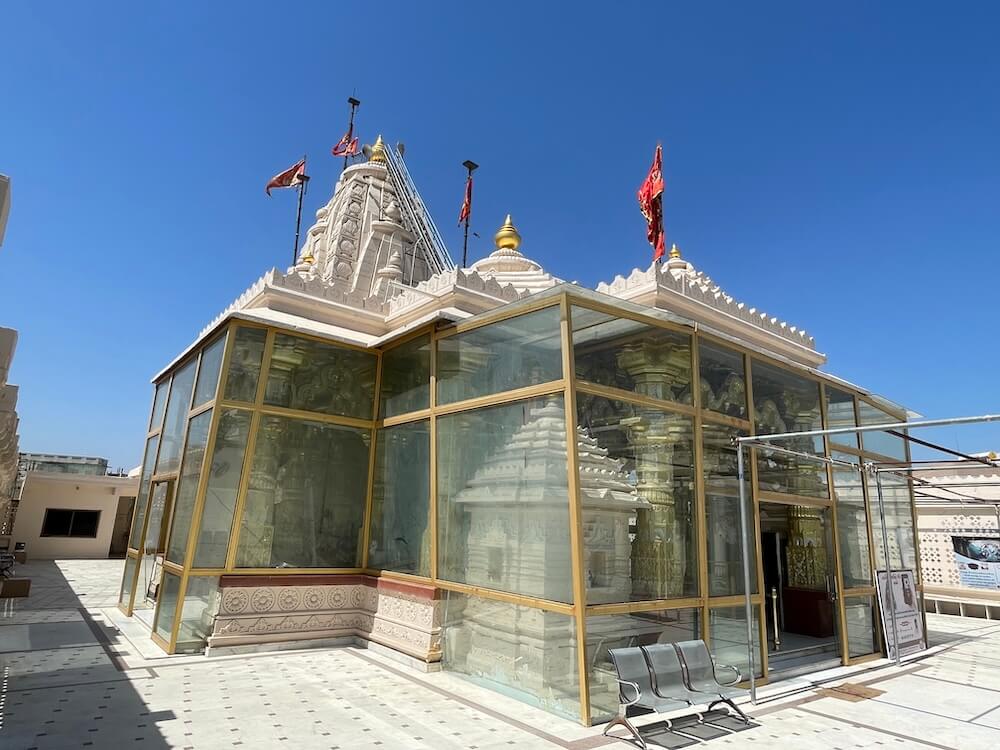 According to the Puranic legend, with the blessings of this goddess, believed to be a form of Mangalmoorti Devi, Shri Krishna was able to successfully bring about the slaying of Jarasandha. Therefore, the Yadavas named this goddess ‘Harsiddhi’. As this victory brought ‘Harsha’ (joy) to all, she is also known as Harshada.
In antiquity, known as Mangal Chandi, the Goddess was the family deity of the Emperor Vikramaditya of Ujjain. A supreme devotee, Vikramaditya, is said to have offered his severed head to the Goddess eleven times, only for it to be miraculously restored each time by her grace. It is chronicled that on the twelfth occasion, the head was not rejoined, marking the monarch’s death. Originating from Ujjain, the deity is worshipped as a composite form of Shiva and Shakti. 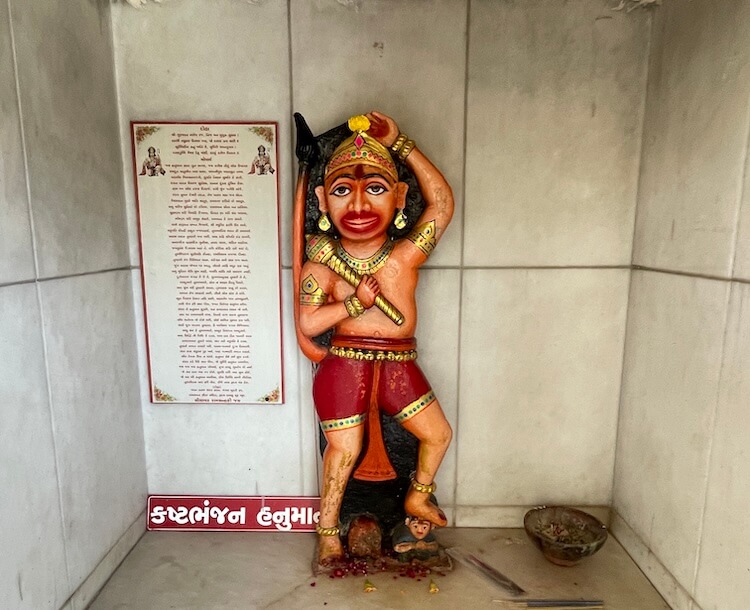 Scriptures affirm that her adoration yields the fruits of worshipping both deities simultaneously. In Gujarat, she is also venerated as Vahanvati Mata, the protectress of maritime voyages.
A captivating legend explains the Goddess’s arrival at Ladol. King Karna I (r. 1064-1092 CE) of the Solanki-Chulukya dynasty ruled from Patan during an era when occult practices held great sway in Gujarat. Tantriks made numerous attempts to subjugate the King, but to no avail. Ultimately, they devised a conspiracy while Queen Mayanalla Devi (Minal Devi) was pregnant. Through their occult powers, they confined a frog within an earthen pot and buried it, thereby binding the Queen’s womb. When nine months passed without childbirth, the King grew distressed. As the Queen’s health waned, the King consulted many physicians and astrologers, yet no remedy was found. 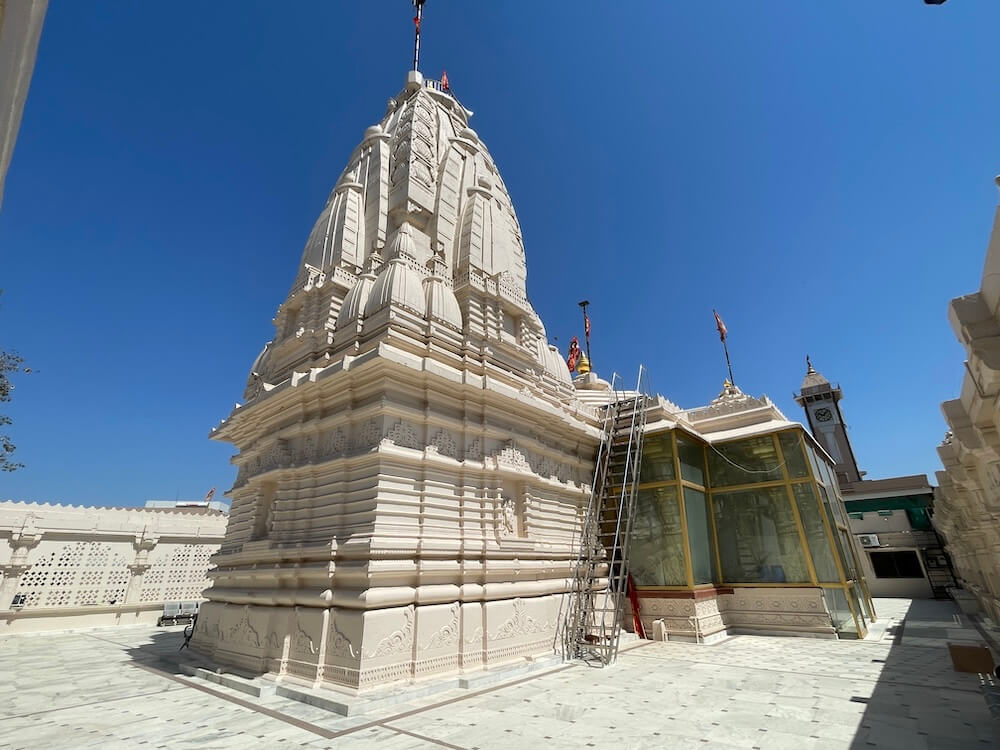 Eventually, the King learned of a ‘Siddhapurusha’ (perfected sage) living in a ruined temple within the Rathmalli forest. Upon meeting the sage and following his counsel, the King returned to the capital and spread a rumour that the Queen had given birth to a son. Hearing this, the Tantriks, seeking to confirm the result, unearthed the pot and removed its cloth. At that very instant, the frog leapt out, the occult spell was broken and the Queen’s womb was liberated. The child thus born by the sage’s grace was named Siddharaj. When the royal couple later visited the sage with their son, the King vowed to build a temple for the Goddess. However, preoccupied with statecraft, the King forgot his vow and eventually passed away. His successor, Siddharaj Jayasimha (r. 1094-1143 CE), was reminded of the promise by his mother, Mayanalla Devi, yet the temple remained unbuilt.
  One night, while returning from battle, the King halted in the Rathvalli forest. Noticing a light emanating from a temple and hearing an ethereal voice, the King beseeched the Goddess to manifest. Through a divine oracle, the Goddess reminded him of King Karna’s unfulfilled vow. Consequently, Siddharaj Jayasimha erected this magnificent shrine.
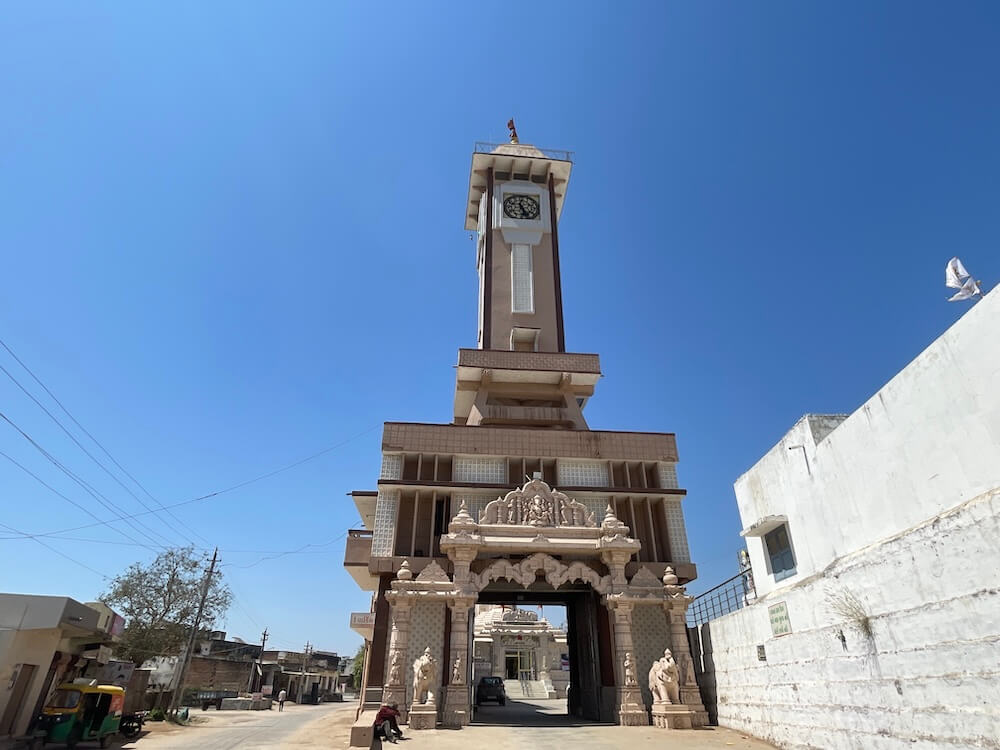
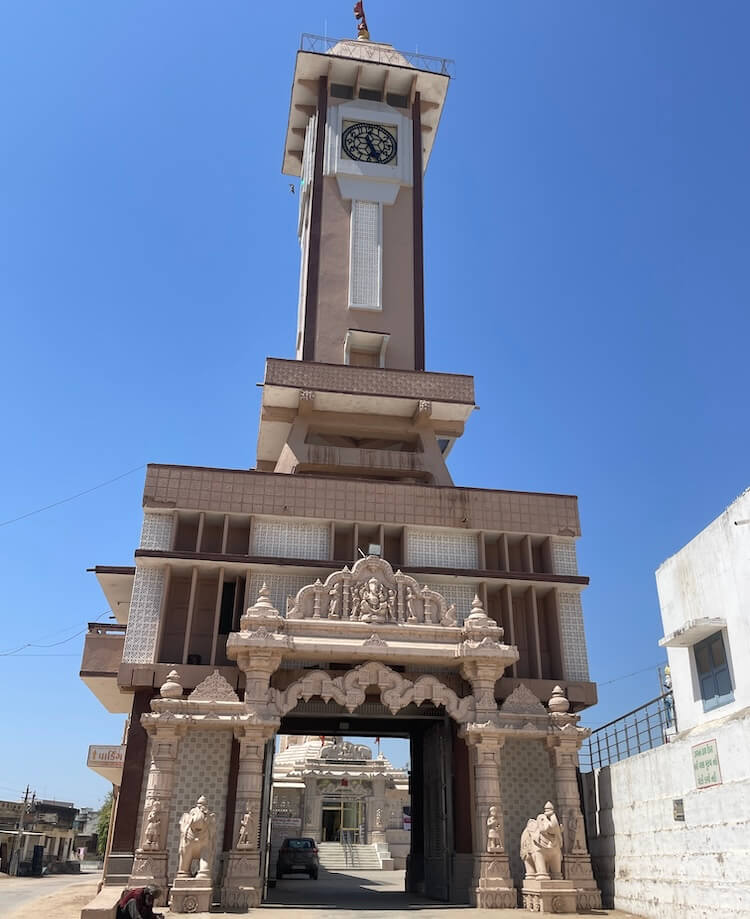
The temple is situated a short distance from the main archway of Ladol. The grand entrance, adorned with exquisite artistry, is flanked by sculptures of elephants. The style of the carvings here bears a striking resemblance to the Dilwara temples of Mount Abu. Medieval sculpted remains from this vicinity are preserved in the ‘Chhatrapati Shivaji Maharaj Vastu Sangrahalaya’ in Mumbai and the ‘Lalbhai Dalpatbhai Museum’ in Ahmedabad. 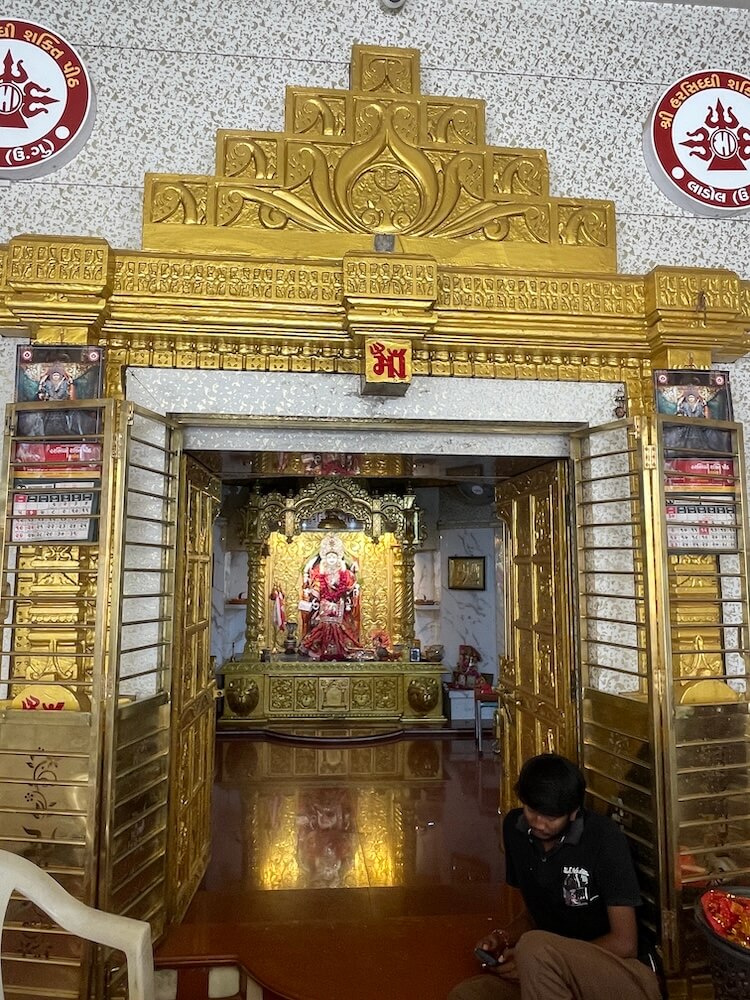 A clock tower surmounts this gateway.
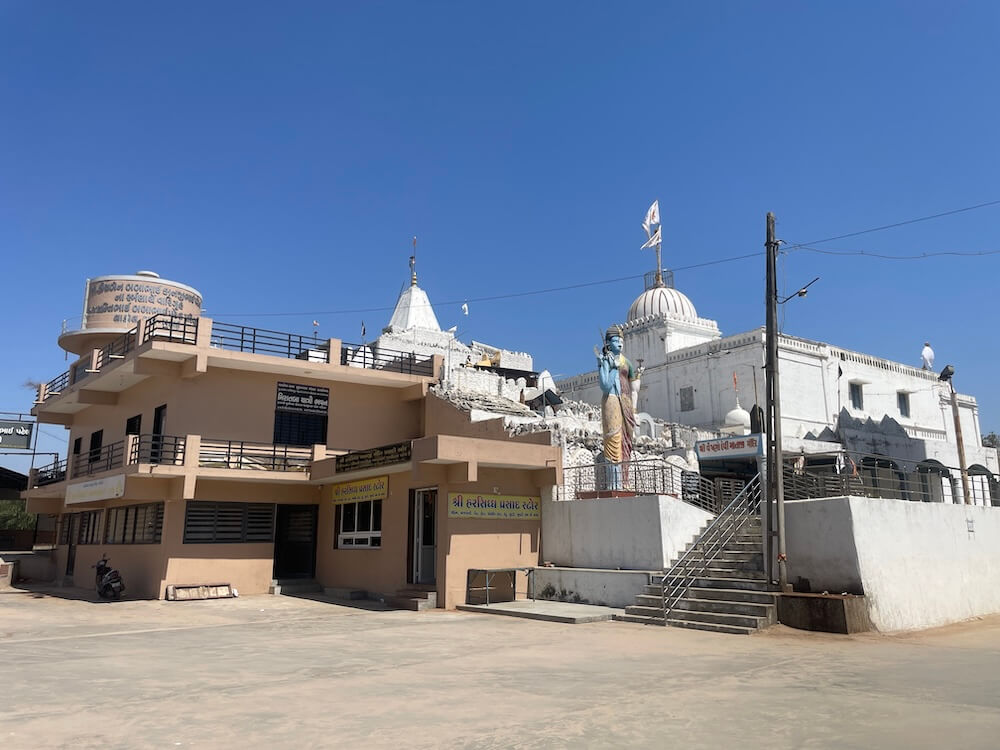
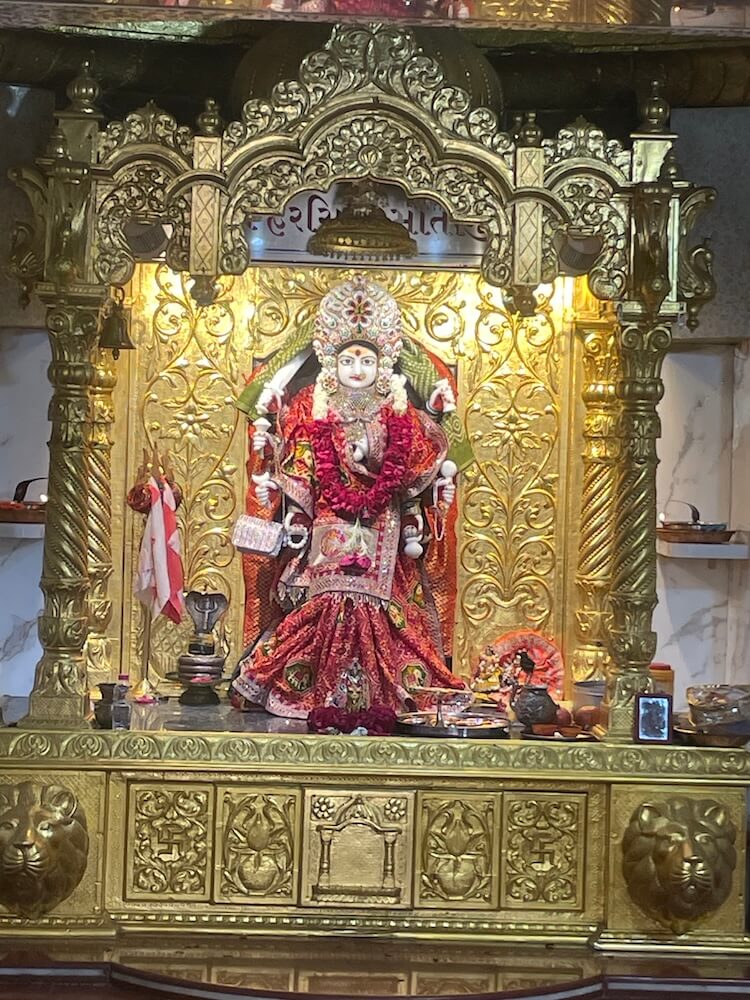
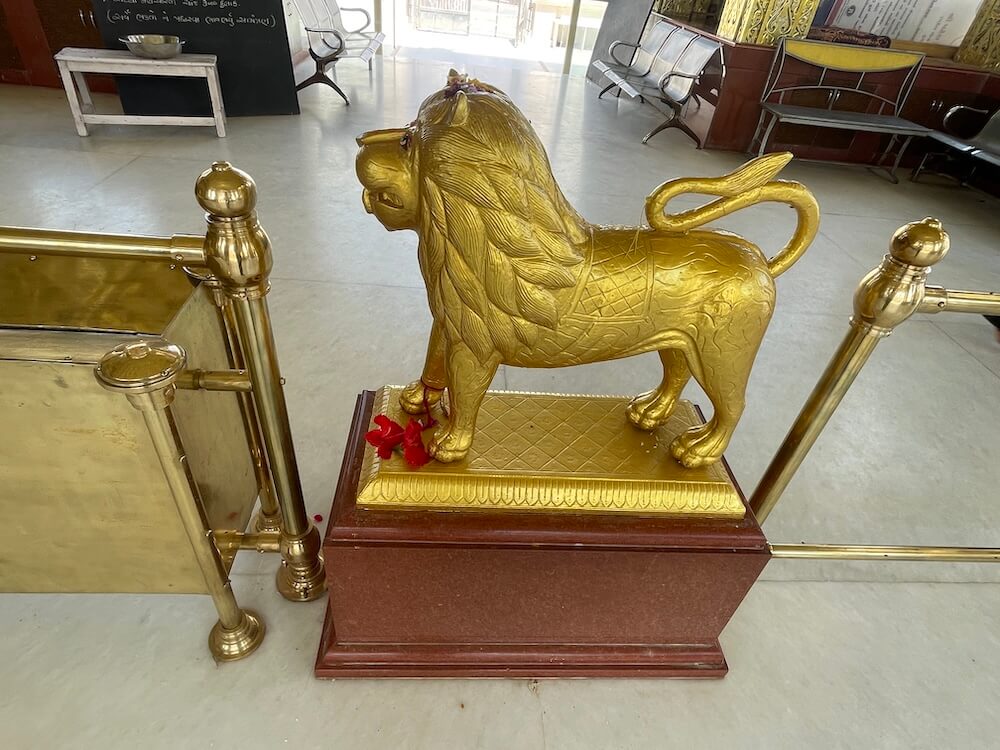
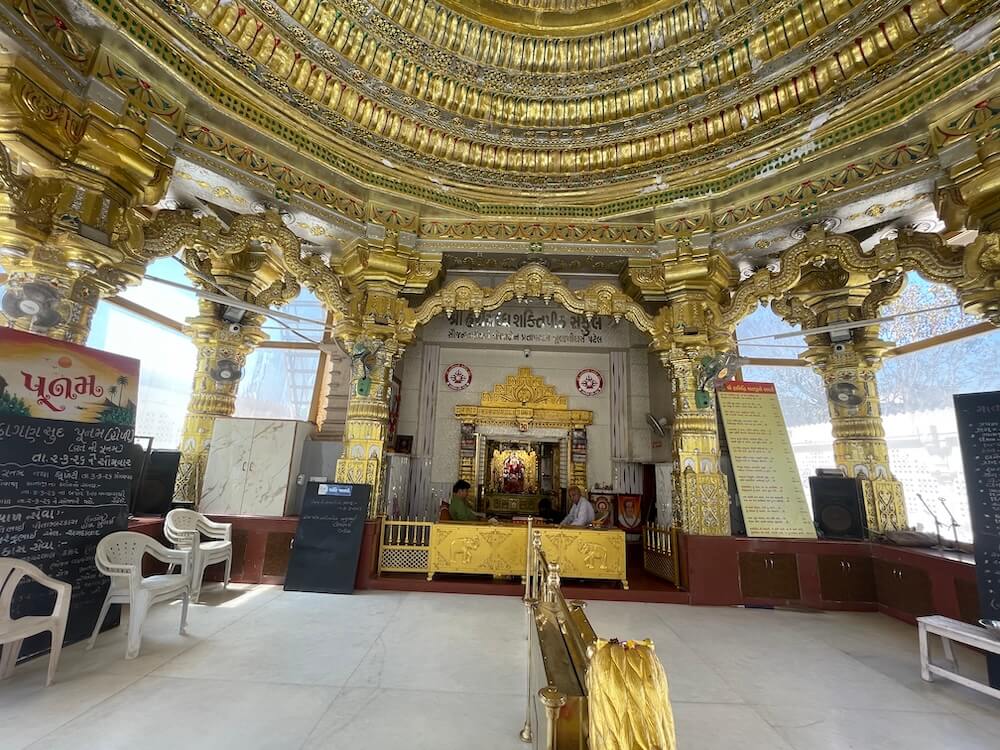
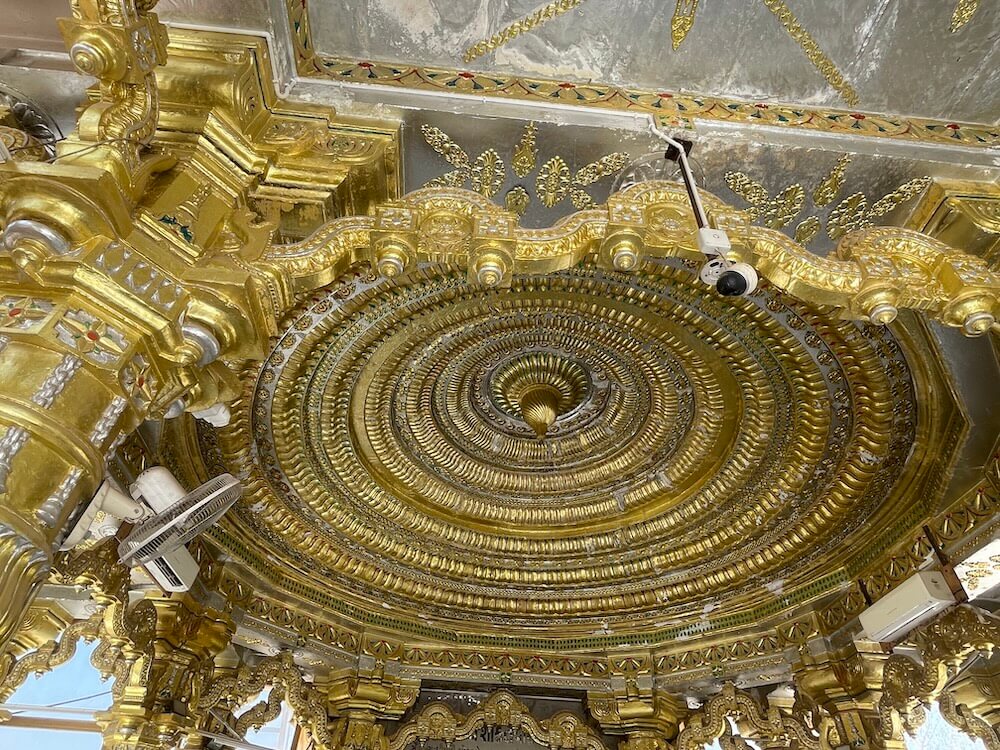
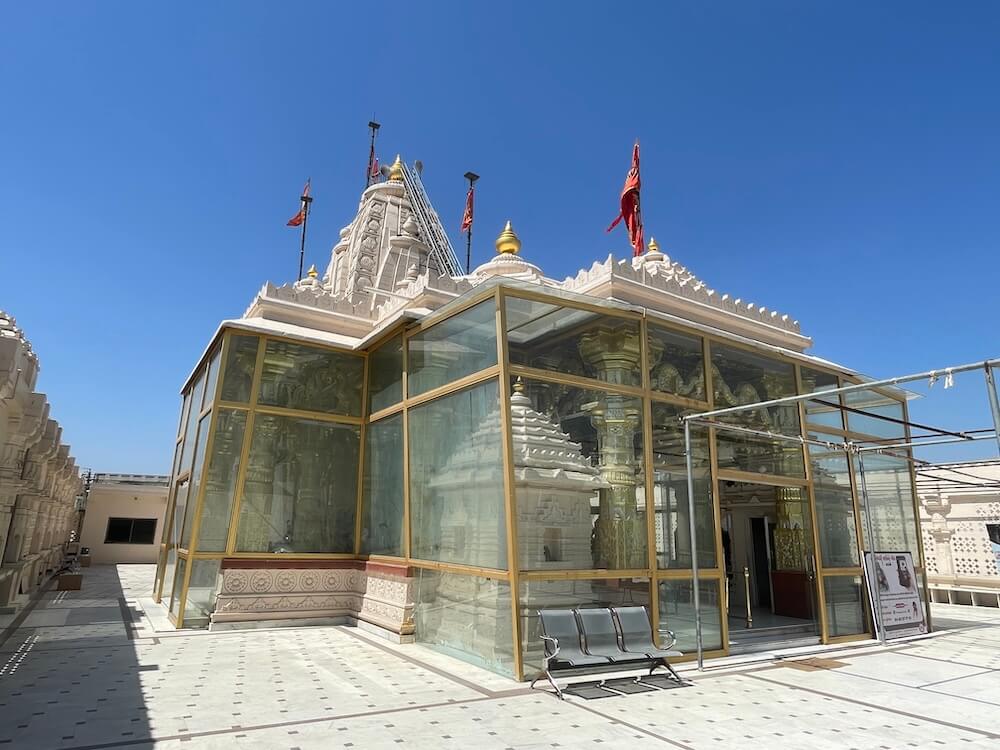
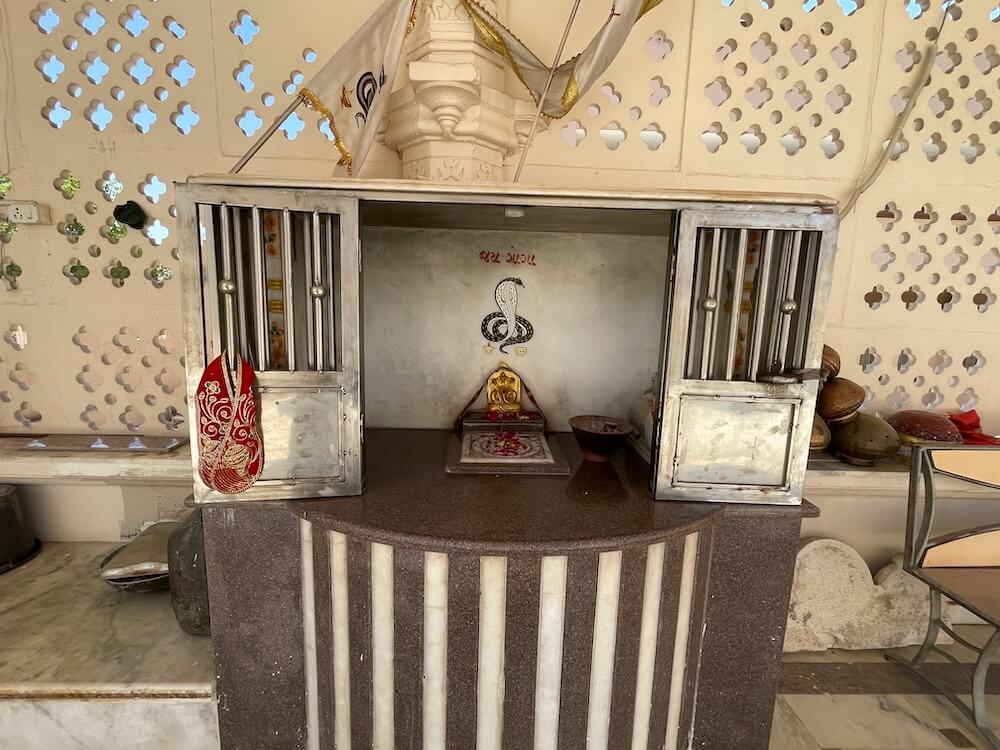
Upon entering the courtyard, a sculpture of Ardhanari-Nateshwara stands to the right. A flight of steps leads to the main temple, a grand structure comprising a spacious assembly hall (‘Sabhamandapa’) and a sanctum sanctorum (‘Garbhagriha’). The pillars of the hall exhibit sublime craftsmanship, with both columns and the ceiling (‘Vitan’) embellished with golden gilding. A statue of a lion, the Goddess’s mount, faces the sanctum. The doorway to the sanctum is intricately carved, housing the serene idol of the Goddess within a grand ‘Makhar’ (ornate frame). The eight-armed deity holds the ‘Akshamala’ (rosary), trident, sword, shield, ‘Damru’ (drum), ‘Kamandalu’ (water pot), ‘Ankush’ (goad) and lotus. Though scriptures define her nature as fierce, the idol here, mounted upon a lion, exudes a gentle (‘Saumya’) grace. She wears a jewel-encrusted crown, an offering from a devotee. The exterior walls feature various deities within niches. According to Archaeological records, inscriptions dating from 1256 to 1280 CE and pedestals of Jain Tirthankaras were discovered at this site.
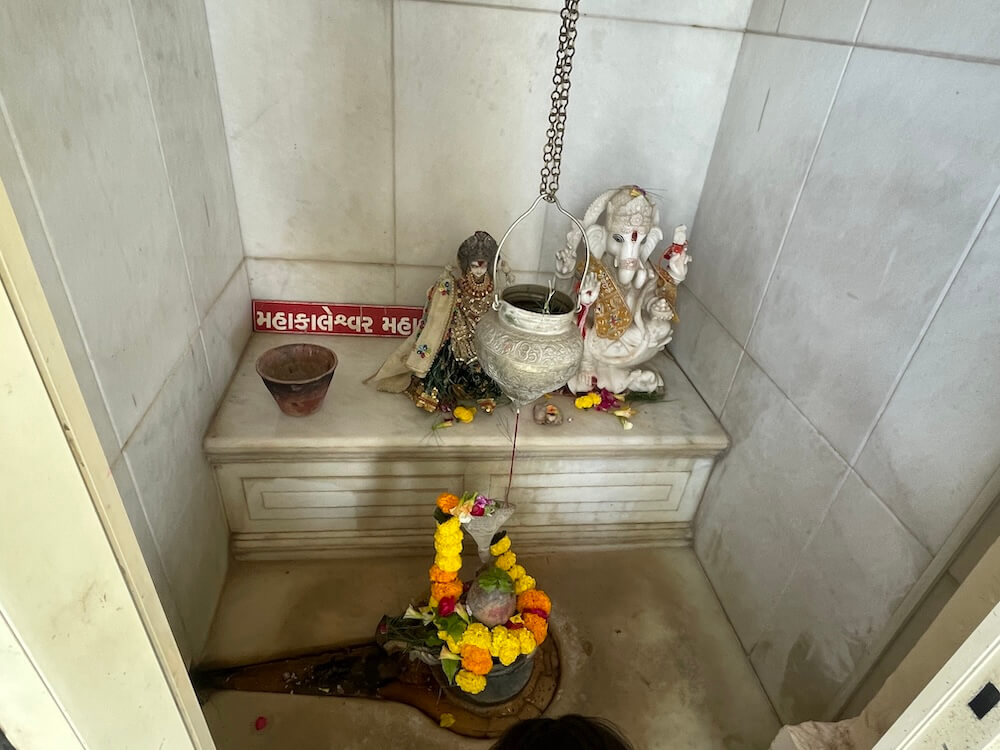
Behind the principal shrine lies a small temple dedicated to Goga Maharaj. The complex features various deities and a replica of the Vaishno Devi shrine. A passage through an artificial cave shaped like a tiger’s mouth features sculptures of sages and deities, bringing mythological scenes to life. 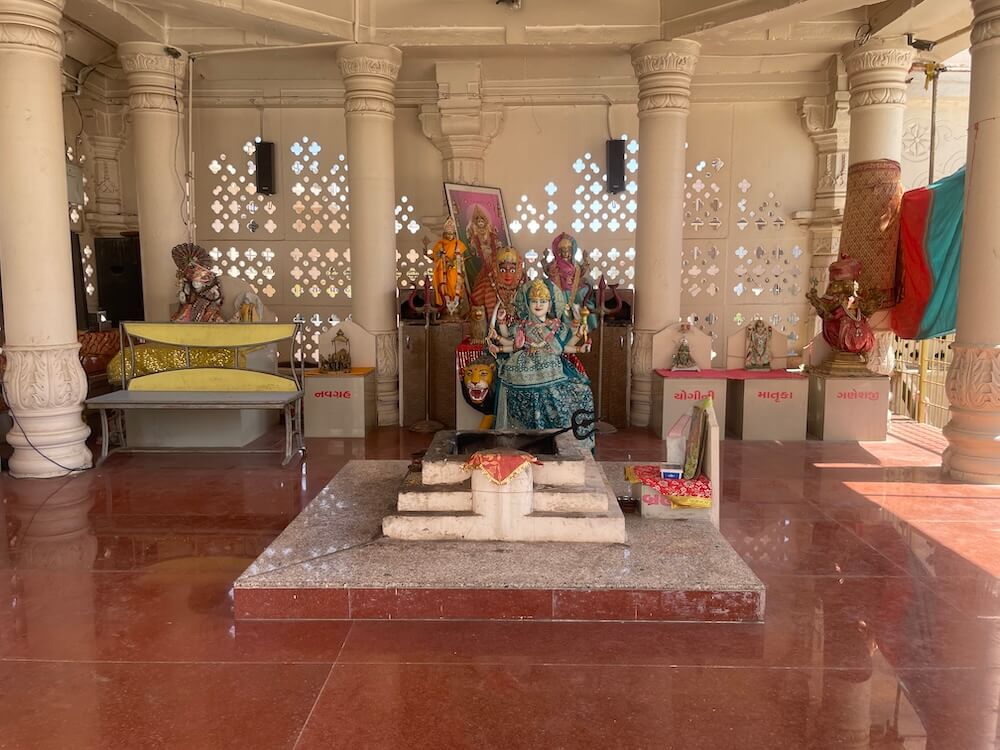 The inner sanctum of this section houses Mahasaraswati, Mahalakshmi and Mahakali, with a lion statue in front of them. The precinct also contains several Shivalingas and a replica of the Kailash Mansarovar temple featuring Lord Shiva and Nandi. A temple dedicated to Ranchhodrai is also part of the complex.
The temple remains a vibrant hub of devotion, particularly on Sundays and full moon days. A grand fair is held during the Chaitra Navratra, featuring an ‘Aarti’ with 108 lamps. The temple’s ‘Patotsav’ (anniversary) is celebrated on the 13th day of the dark half of Phalguna. The Sharadiya Navratri is the grandest festival, during which the traditional ‘Talwar Aarti’ (Sword Aarti) serves as a unique attraction. For the first eight days, the Goddess is offered a ‘Naivedya’ of yams, curd and halwa, while on the ninth day, a ‘Rajbhog’ is presented. A new golden tradition has commenced, in which the ‘Rajbhog’ is served on a gold platter crafted at a cost of approximately 1.25 to 1.5 crore rupees. An auspicious ‘11th Sahasra Chandi Yagna’ was held here from 15 to 18 April 2013, marking the largest gathering in the temple’s history with nearly five lakh devotees. The shrine remains open for devotees daily from 6:30 am to 8:30 pm.
Useful Information
- Located at 7 km from Vijapur city and 50 km from Mehsana.
- GSRTC bus services are available from Vijapur.
- Private vehicles can reach the temple directly.
- Residential and breakfast facilities are available nearby.
- Contact – Temple Office, Mob.- 0987933659
हरसिद्धि माता मंदिर
लाडोल, ताल. बीजापुर, जिला. मेहसाणा
मंदिरे
Temples
मंदिर
-
वैजनाथ महादेव मंदिर महादेवपुरा (गावडा), ता. विजापूर, जि. मेहसाणा
अधिक माहितीVaijnath Mahadev Temple Mahadevpura (Gavada), Tal. Vijapur, Dist. Mehsana
View Detailsवैजनाथ महादेव मंदिर महादेवपुरा (गावड़ा), ताल. विजापुर, जिला. मेहसाणा
विवरण देखें -
वैजनाथ महादेव मंदिर सोखडा, तालुका विजापूर, जिल्हा मेहसाणा
अधिक माहितीVaijanath Mahadev Temple Sokhada, Taluka Vijapur, District Mehsana
View Detailsवैजनाथ महादेव मंदिर सोखाडा, तालुका विजापुर, जिला मेहसाणा
विवरण देखें -
काशी विश्वनाथ महादेव मंदिर मेहसाणा, जि. मेहसाणा
अधिक माहितीKashi Vishwanath Mahadev Temple Mehsana, Dist. Mehsana
View Detailsकाशी विश्वनाथ महादेव मंदिर मेहसाणा, जिला. मेहसाणा
विवरण देखें