
मेलडी माता मंदिर
मालताज, ता. सोजित्रा, जि. आनंद
Meldi Mata Temple
Malataj, Tal. Sojitra, Dist. Anand
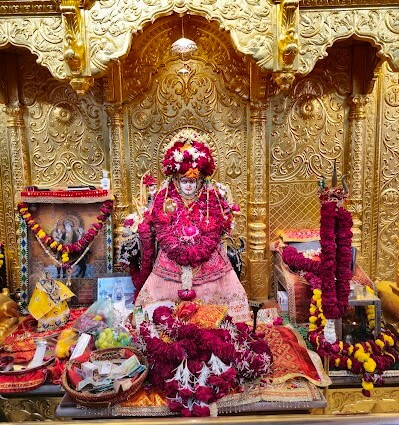 In the tapestry of village culture, the Gramdevata (village deity) who guards the settlement holds an unshakeable position. The inhabitants harbour immense faith in such a deity and amongst these vigilant and potent divinities, the name of Meldi Mata is invoked with great prominence. An influential manifestation of the Yogini (a female master of yoga or a semi-divine goddess), her glory has spread across Rajasthan, Gujarat and parts of Maharashtra. The ancient temple of the Mother resides in the village of Malataj. Standing as a shield in times of adversity, this Goddess fulfils all the desires of her devotees, leading her to be reverently addressed as ‘Sankatmochak Mata’ (the Mother who liberates one from distress).
Numerous legends abound regarding the manifestation of Meldi Mata. According to one celebrated chronicle, in the distant past, a demon named Amruva began to torment the gods and the Rishi-Munis (saints and sages) in Saurashtra. To teach him a lesson, Goddess Parvati (Uma) manifested there. 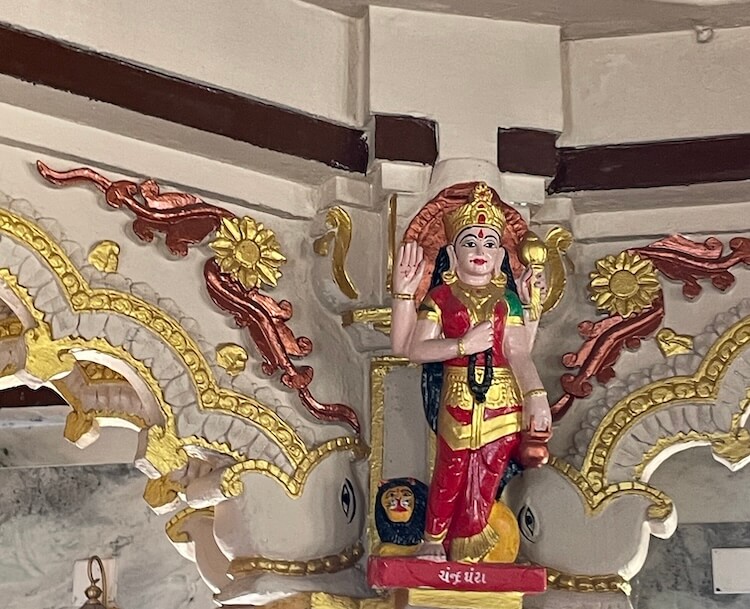 However, upon beholding the Goddess, the demon was struck with terror and hid inside the carcass of a dead cow to save his life. As the hide was considered apavitra (impure), the Goddess did not touch him directly. Instead, in her divine wrath, she rubbed her hands together. From the mal (impurities or dirt) that emerged from her palms, a radiant maiden was born. Having been birthed from ‘mal’, she was named Meldi. This maiden entered the hide and effortlessly slew the demon Amruva. Because she achieved victory within the remains of a dead body or in impure places like the smashana (cremation ground), she also came to be known as ‘Masani’ Meldi.
According to another mythological narrative, Goddess Chamunda sent Meldi Mata to the Kamrup region to test her prowess. There, the Mother defeated numerous malevolent and tantric (occult) forces. 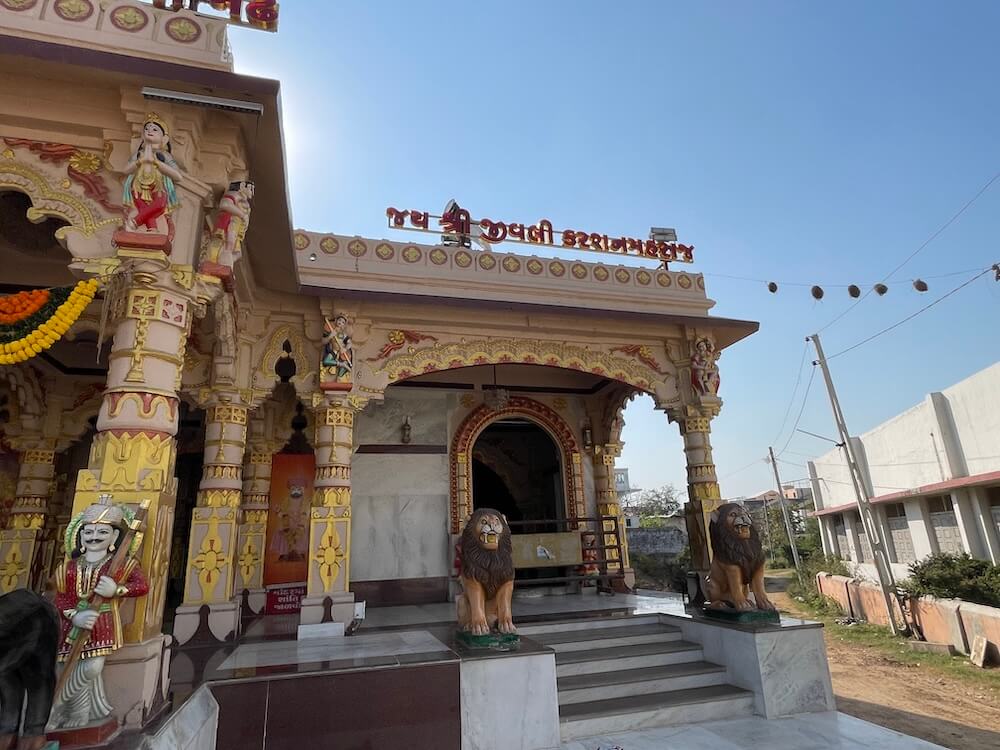 She transformed all these negative energies into a black goat, which she then adopted as her vahana (divine vehicle). Meldi Mata is depicted with eight arms, wielding a trishula (trident), a sword, a chakra (discus), a gada (mace), a lotus, a dagger and a bow and arrow. A unique bottle can also be observed in one of her hands. It is believed that the Mother has eternally imprisoned all the evil powers of Kamrup within this vessel. In contemporary times, her fame has spread far and wide as the Goddess who grants the necessary visas for foreign travel. Devotees firmly believe that seeking the Mother’s blessings before a visa interview ensures success.
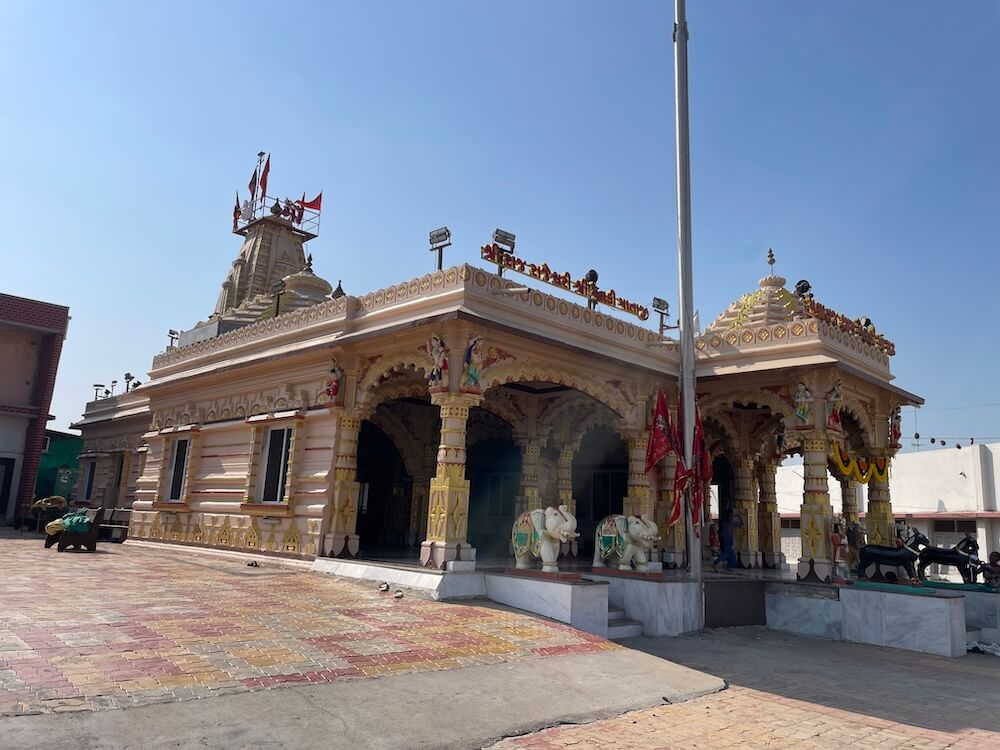
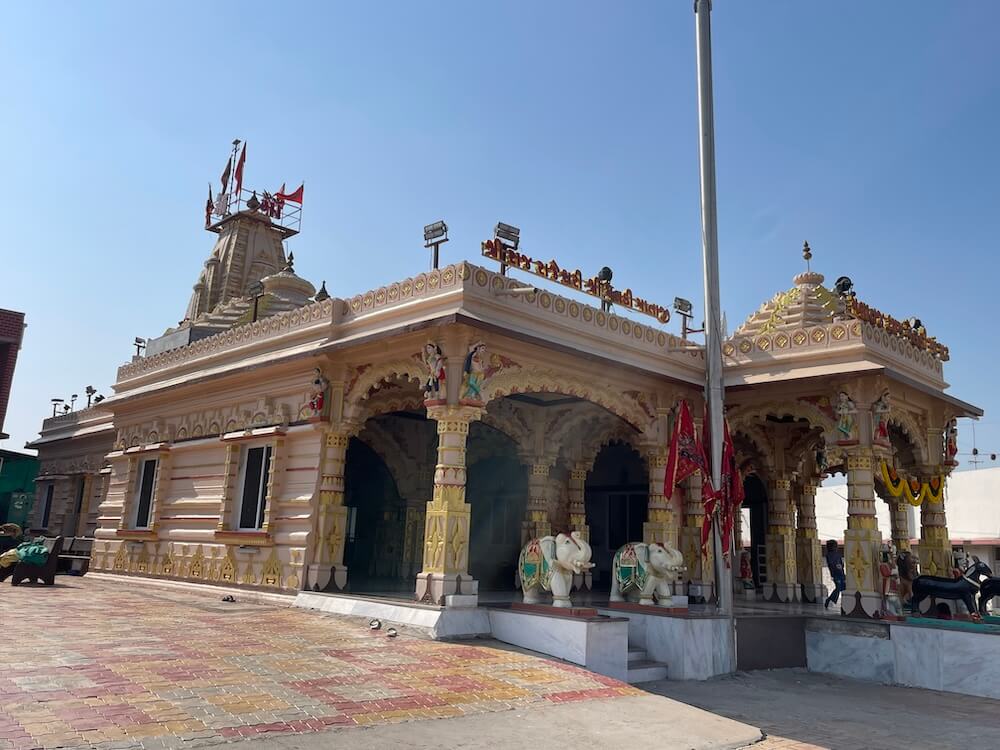
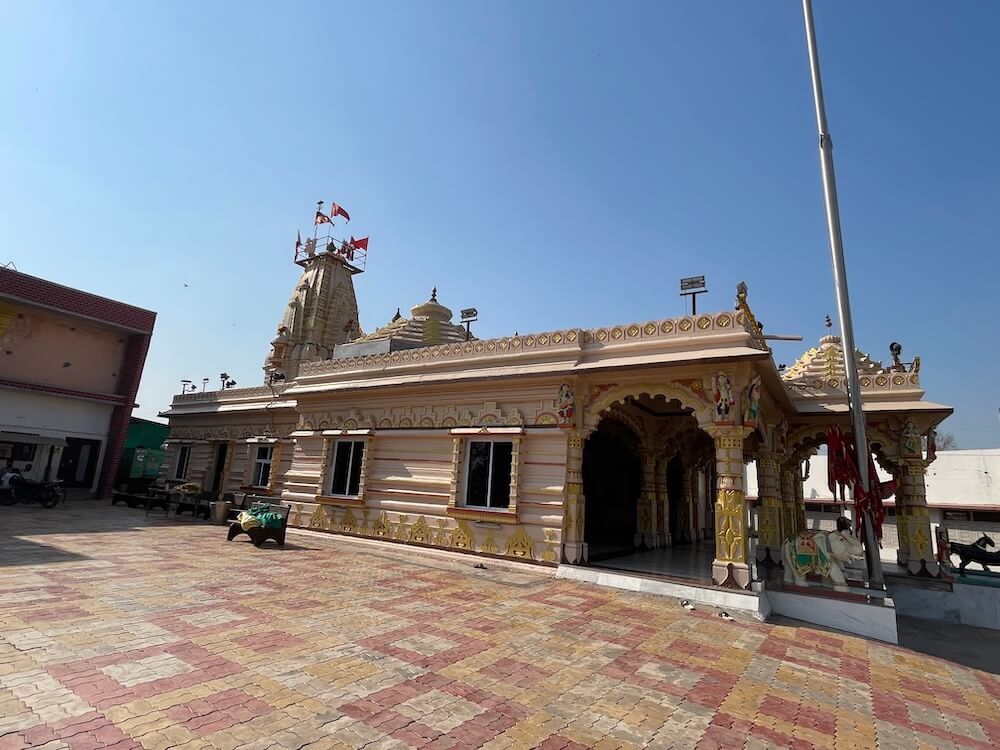
This temple of Meldi Mata is nestled in the fertile Charotar region. The fortifications built around the temple and its welcoming archway capture the attention of pilgrims from afar. 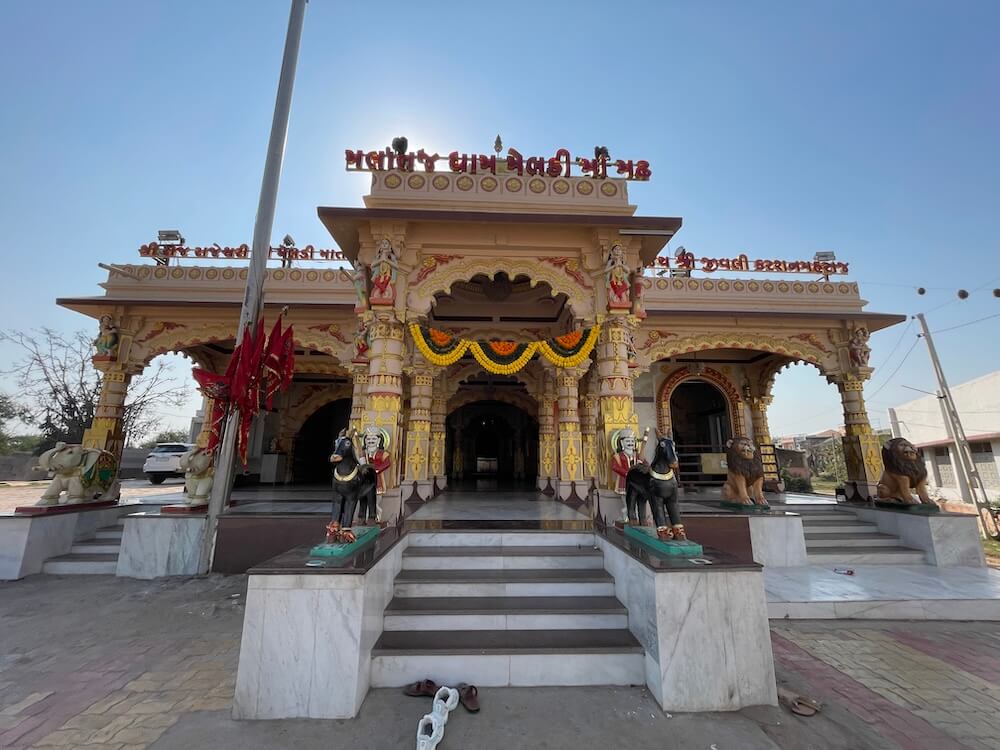 In front of the main entrance lies a spacious parking area for the convenience of visitors. The courtyard houses the residences of the pujaris (priests) and sevakaris (volunteers), as well as a cultural hall. Furthermore, there is a large annakshetra (charitable kitchen) providing free mahaprasad (sanctified food), which benefits thousands of devotees. Within the precincts, before the temple, lie the samadhis (memorial shrines) of Lakshman Das Bhuvaji and Jivli Karshan Maharaj. Pilgrims visiting the site make it a point to bow their heads here in reverence before proceeding to the main darshan (sacred viewing).
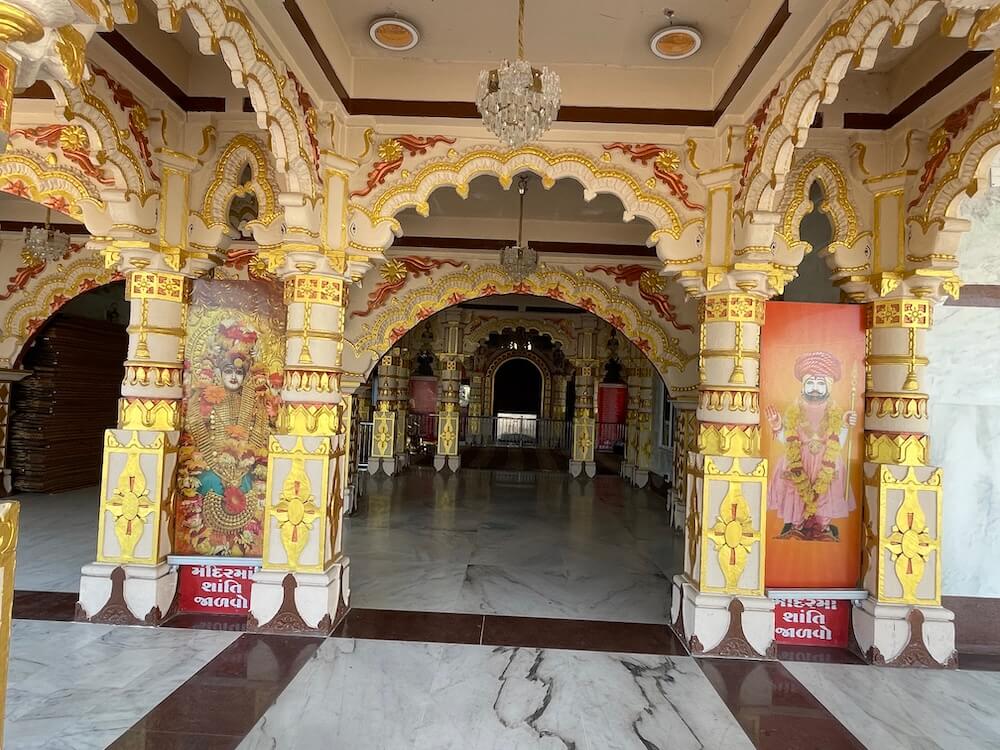
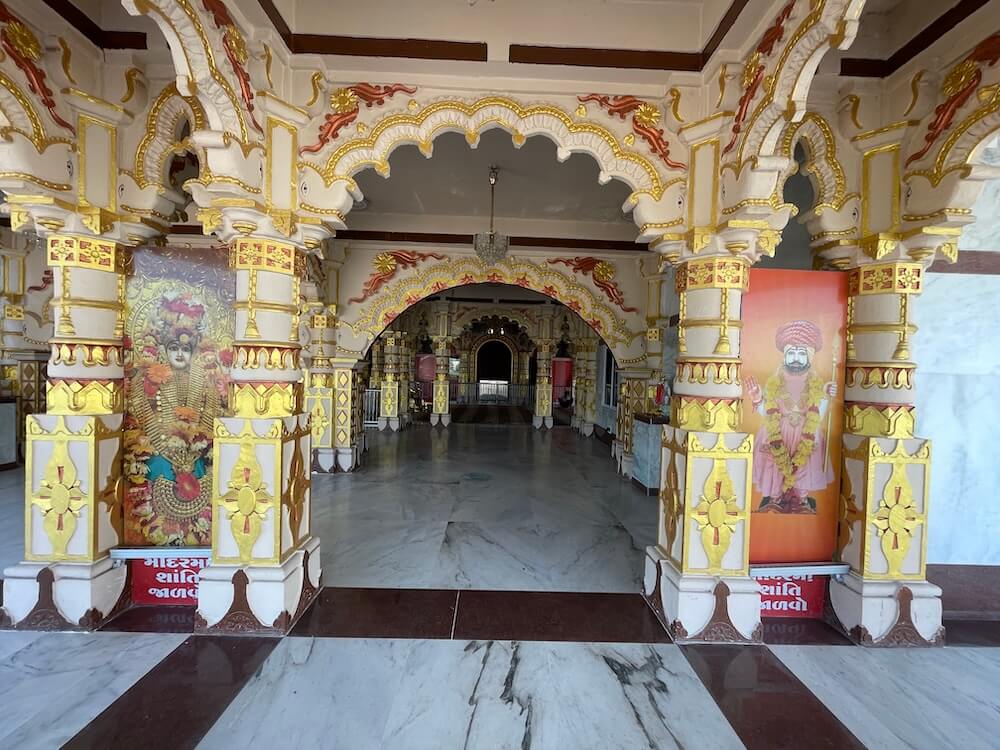
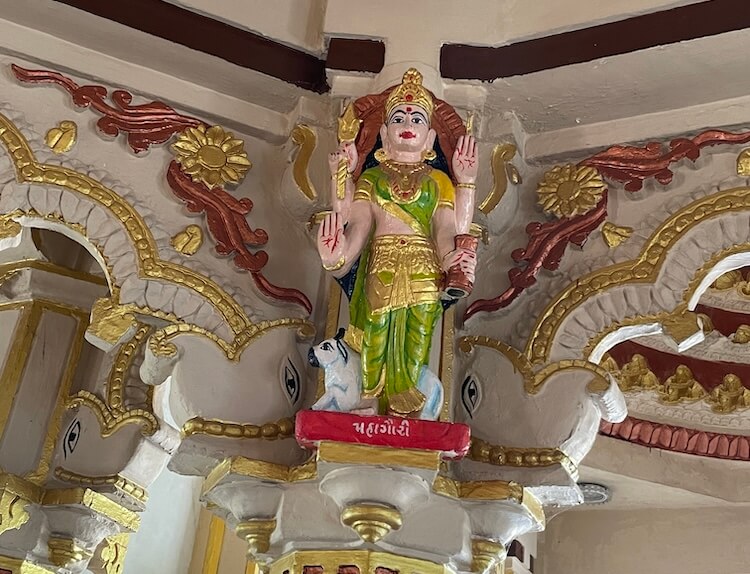
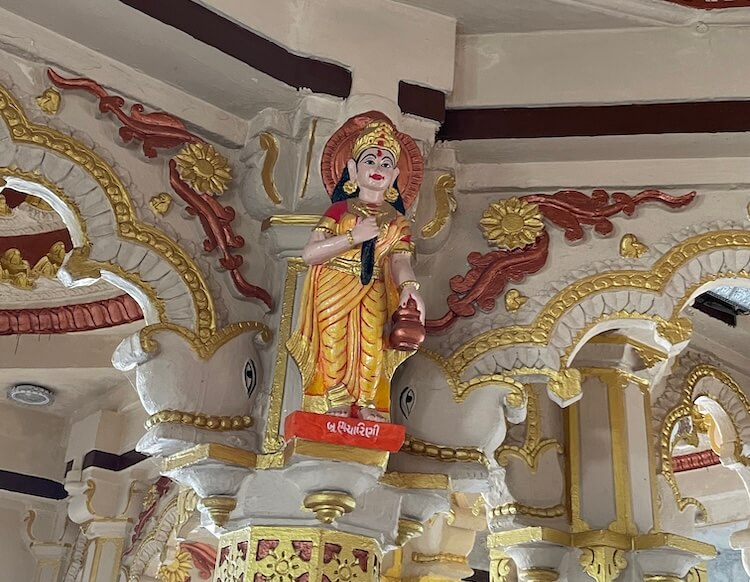
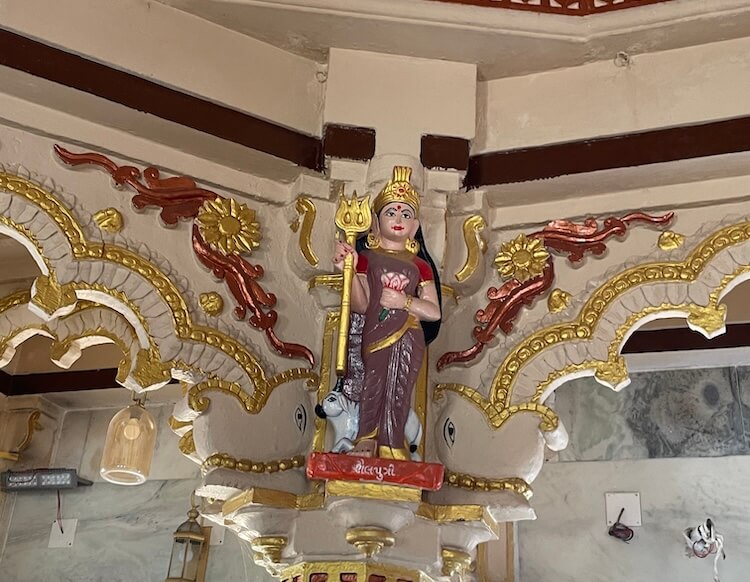
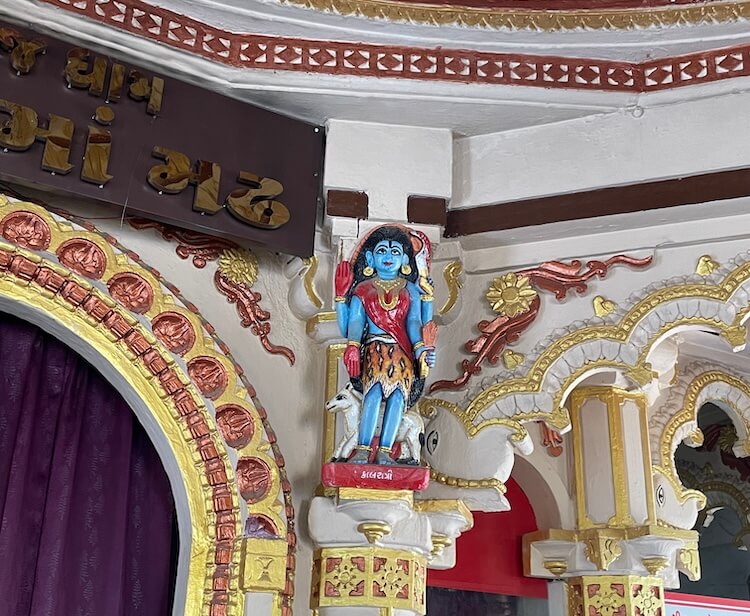
The temple is established upon a plinth approximately three feet in height. The structure is architecturally composed of a Mukhamandap (entrance porch), Ardhamandap (half-hall), Sabhamandap (assembly hall), Mukhya Sabhamandap (main assembly hall) and the Garbhagriha (sanctum sanctorum). 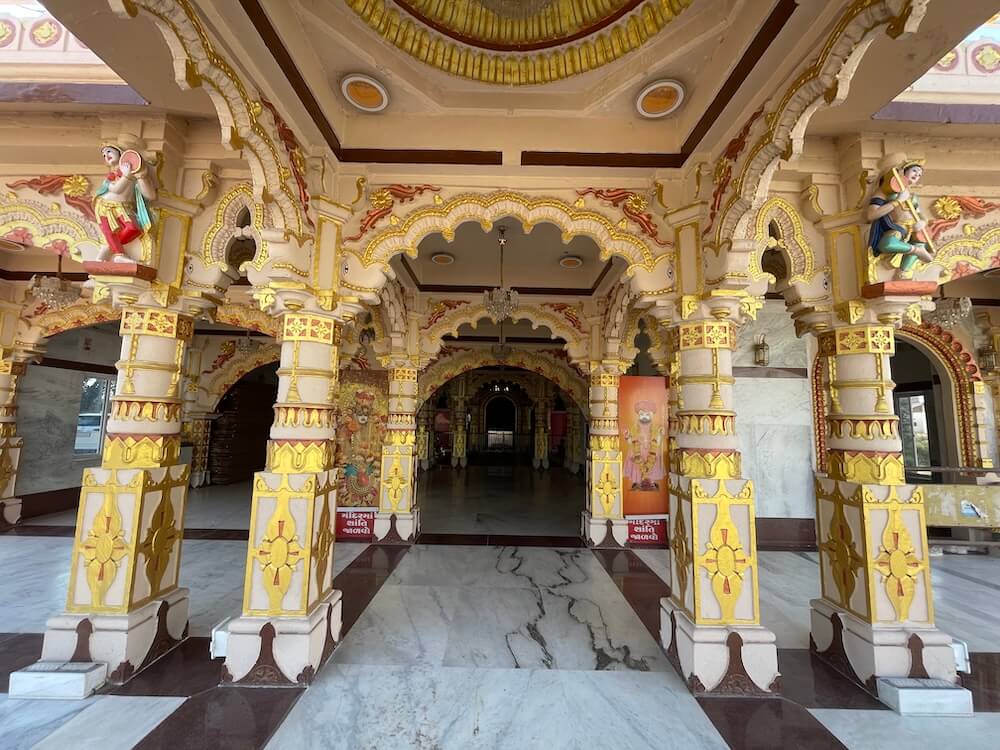 One enters the entrance porch after ascending a few steps from the courtyard. On the pedestals flanking the steps are sculptures of the ‘Aja’ (goat), the divine vehicle of the Goddess. Images of dwarapalas (door guardians) adorn the frontal pillars of the porch. To enter the ardhamandap, there are three entrances in total – at the front, the left and the right of the porch. Flanking the four steps before the left entrance are pedestals featuring exquisite Gajaraj (elephant) sculptures. In front of the right entrance, images of lions have been installed. The mukhamandap and ardhamandap together comprise eighteen ornate pillars, intricately carved with sursundari (celestial beauty) sculptures. These pillars are interconnected by decorative arches.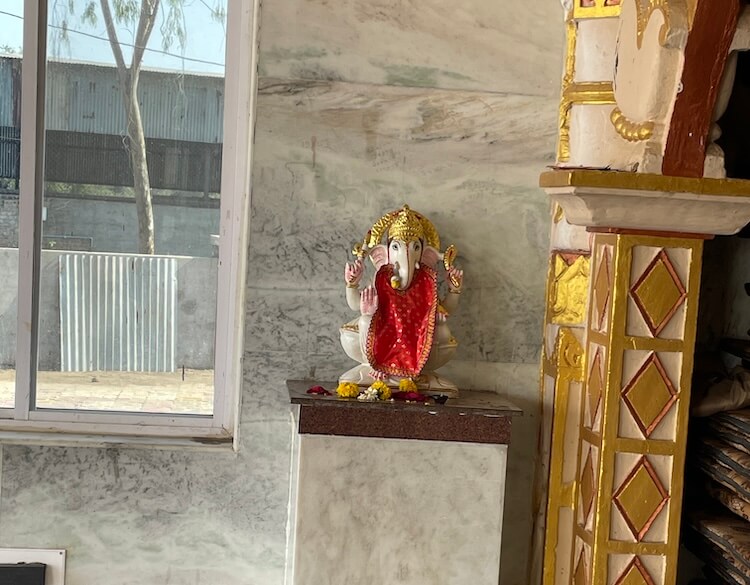
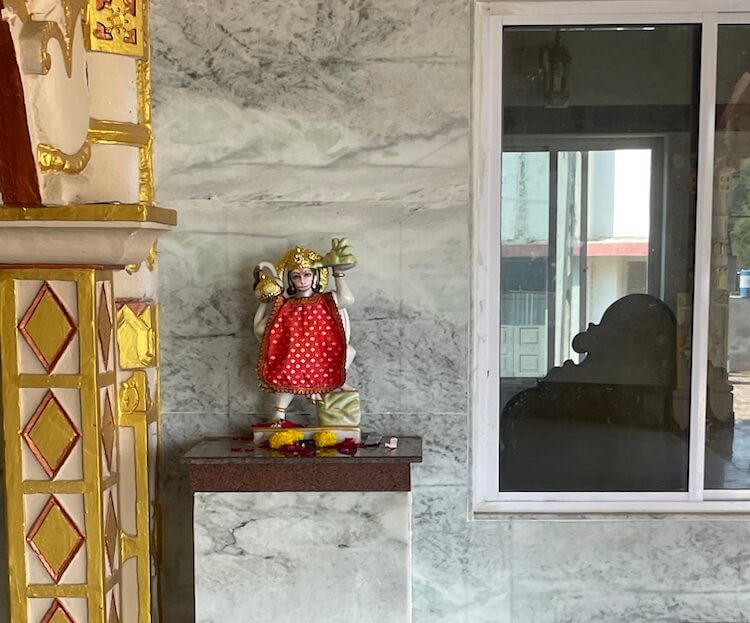
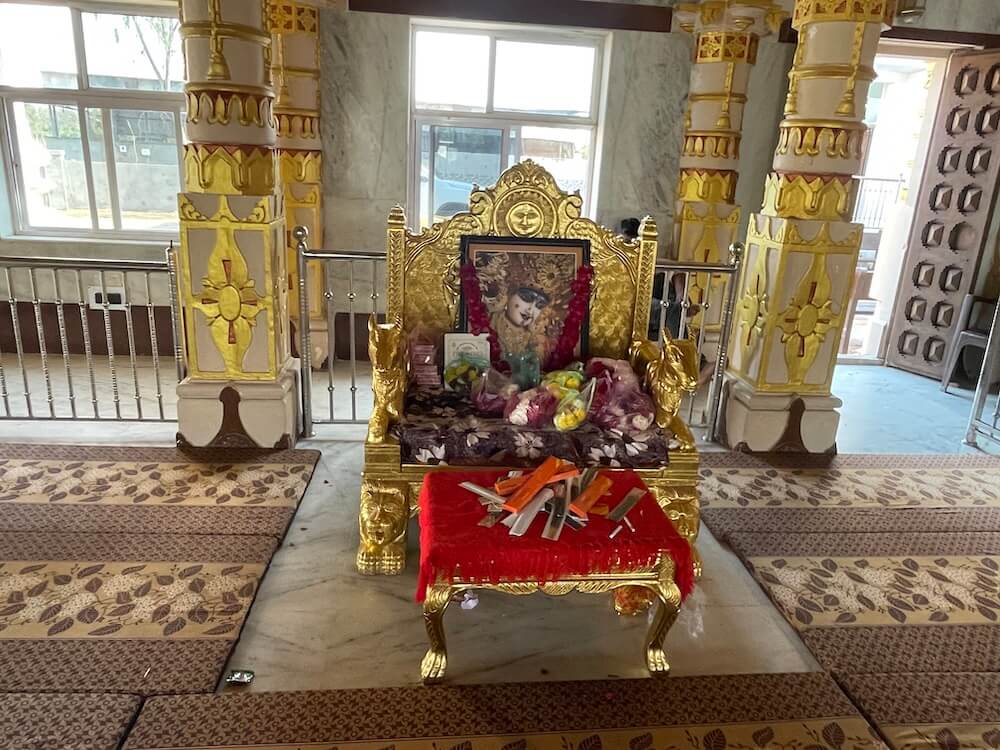
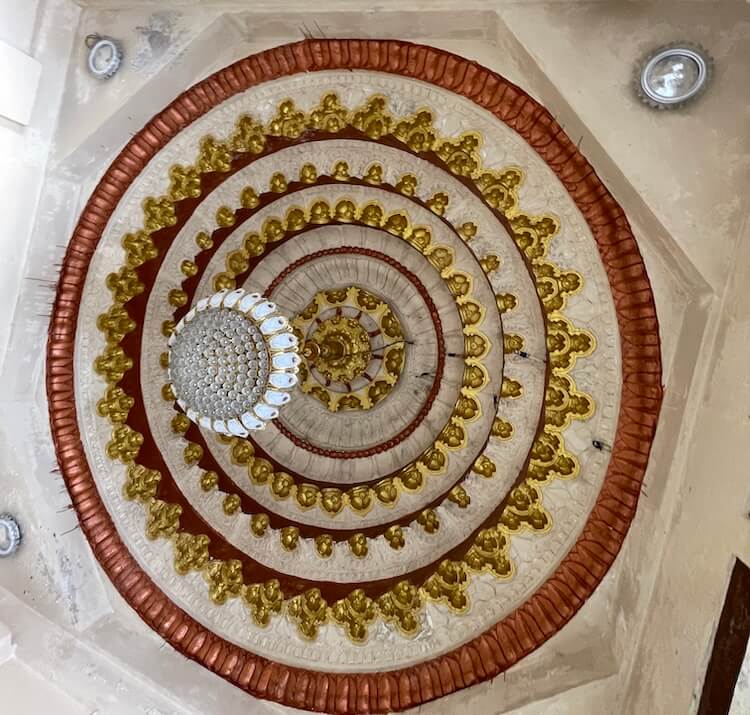
The sabhamandap and the main assembly hall feature an array of carved pillars, the upper portions of which are adorned with further celestial sculptures. Near the right and left walls of the assembly hall are idols of Lord Ganesha and Lord Hanuman. The ceilings of both halls are designed as circular domes. Two doors each are situated on the left and right sides of the assembly halls. Beyond these lies the entrance to the sanctum sanctorum, featuring decorative dwarashakhas (doorframes). Upon a vajrapitha (stone pedestal) within the sanctum, the idol of Meldi Mata, seated upon a goat, is enshrined within a golden makhara (ornate niche). The Goddess holds various weapons in her hands, wears a golden crown upon her head and a ceremonial chhatra (canopy) hangs above.
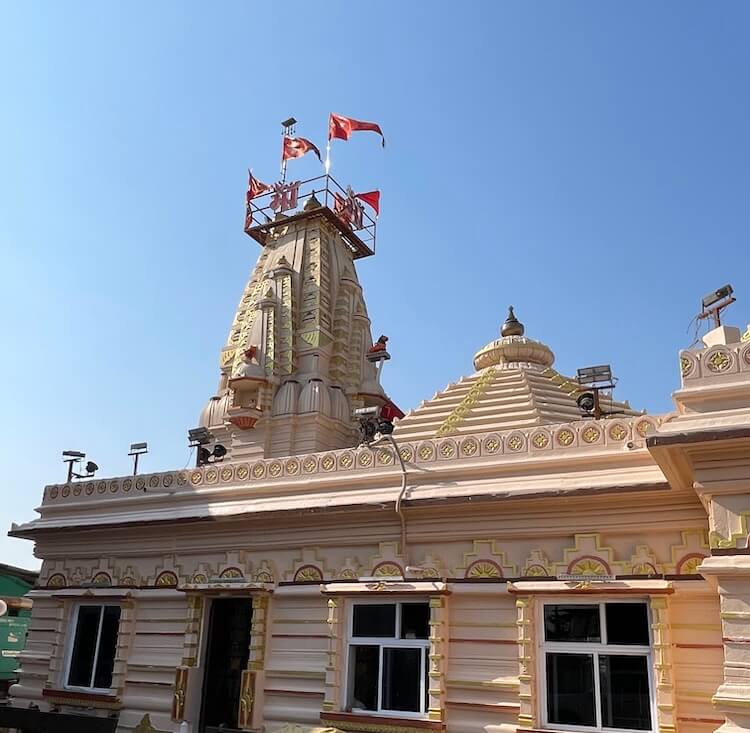 Adjacent to the assembly hall on the right is a second sanctum. The entrance to this chamber is flanked by sculptures of guardians. On the pedestal here stands a marble idol of Jivli Karsan Maharaj, a supreme devotee of Meldi Mata. The roof of the temple features four dome-shaped shikharas (spires). One is situated over the entrance porch, two over the assembly hall and one spire is built over the sanctum of Jivli Karsan Maharaj. Above the main sanctum of the Goddess rises a tall, tapering square spire. All these spires are topped with an amalaka (ribbed stone disk) and a kalasha (sacred finial).
Every year, the festivals of Chaitra and Sharadiya Navratri are celebrated with great grandeur at the temple. During these times, thousands of devotees travel to Malataj village to catch a glimpse of the Mother. The traditional ‘Dakla’ programme held every Tuesday night is considered a primary attraction, featuring devotional songs sung in praise of the Goddess. Every Sunday, under the ‘Free Silver Service’ initiative, mahaprasad is served to all visiting devotees. As a matter of social responsibility, the temple trust organizes mass wedding ceremonies for brides and grooms from underprivileged families every year, through which hundreds of couples are wed. During the days of Navratra, rituals such as the Navchandi Yajna (fire ritual), the recitation of the Saptashati Path (hymns to the Goddess) and the Lalita Sahasranama (thousand names of the Goddess) are performed. The aarti (lamp ritual) of the Goddess takes place daily at 6 am and 7 pm. Devotees may take darshan of Meldi Mata from 6 am until 9 pm.
Useful Information
- Located at 9 km from Sojitra and 23 km from Anand.
- State Transport (GSRTC) bus facilities are available from Sojitra.
- Private vehicles can reach the temple parking lot.
- Accommodation and breakfast facilities are available in the vicinity.
- Contact – Temple Office, Mobile: 70417 09042.
मेलडी माता मंदिर
मालताज, ताल. सोजित्रा, जिला. आनंद
मंदिरे
Temples
मंदिर
-
भीमनाथ महादेव मंदिर लिंबळी, ता. सोजित्रा, जि. आनंद
अधिक माहितीBhimnath Mahadev Temple Limbali, Tal. Sojitra, Dist. Anand
View Detailsभीमनाथ महादेव मंदिर लिम्बाली, ताल. सोजित्रा, जिला. आनंद
विवरण देखें -
चंद्रमौलेश्वर महादेव मंदिर उमरेठ, ता. उमरेठ, जि. आनंद
अधिक माहितीChandramouleshwar Mahadev Temple Umreth, Tal. Umreth, Dist. Anand
View Detailsचंद्रमौलेश्वर महादेव मंदिर उमरेठ, तहसील उमरेठ, जिला आनंद
विवरण देखें -
नीलकंठेश्वर महादेव मंदिर बार बामणोली, ता. पेटलाद, जि. आनंद
अधिक माहितीNeelkantheshwar Mahadev Temple Bar Bamnoli, Tal. Petlad, Dist. Anand
View Detailsनीलकंठेश्वर महादेव मंदिर बार बामनोली, ताल. पेटलाड, जिला. आनंद
विवरण देखें