
चंद्रमौलेश्वर महादेव मंदिर
उमरेठ, ता. उमरेठ, जि. आनंद
Chandramouleshwar Mahadev Temple
Umreth, Tal. Umreth, Dist. Anand
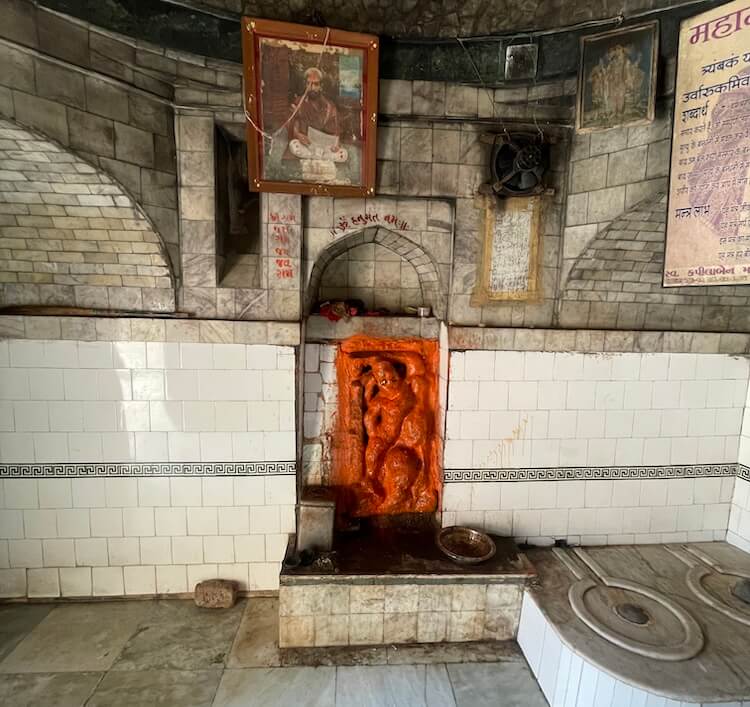
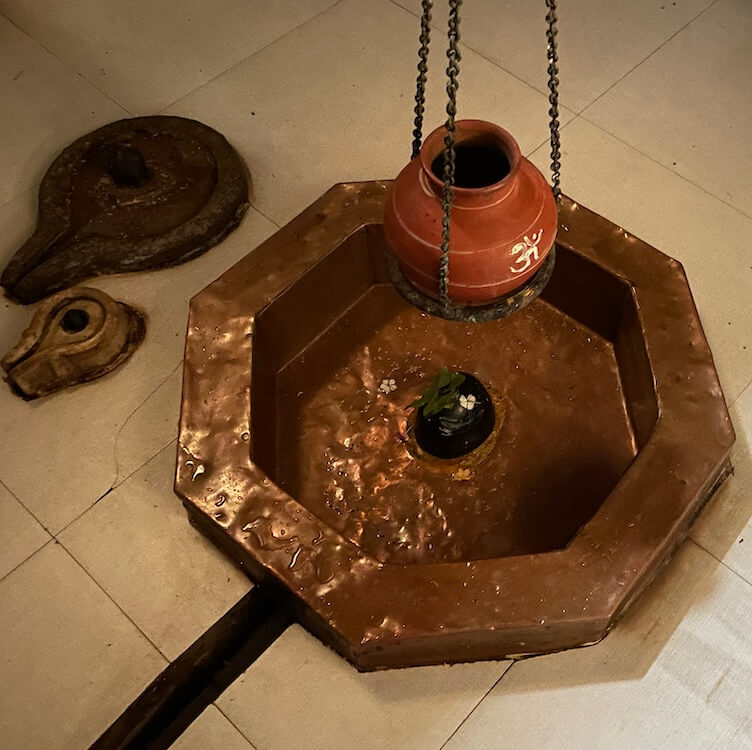 The village of Umreth is distinguished as the ‘Kashi of Gujarat’. Nestled within this religiously significant town is the Shri Chandramauleshwar Mahadev Temple, a sacred sanctuary of profound faith for countless devotees. Historically known as the celestial city of Amravati, this town is celebrated for its venerable heritage and profound spiritual resonance. This ancient Shivalaya (abode of Lord Shiva) is revered as Swayambhu (self-manifested) and Sankalpasiddha (one that fulfils divine resolves). The temple derives its evocative name, ‘Chandramouli’, from a unique architectural and celestial phenomenon wherein the silvery beams of the full moon filter through the roof to fall directly upon the Shivpinda (the iconic symbol of Lord Shiva).
This hallowed precinct has been graced by the presence of exalted saints such as Saint Eknath and Meerabai, as well as illustrious national figures including Mahatma Gandhi and Subhash Chandra Bose. The temple is distinguished by its grand celebrations of Mahashivratri and the agrarian ‘Ashadhi’ tradition, a unique ritual used to divine the prospects of the forthcoming monsoon.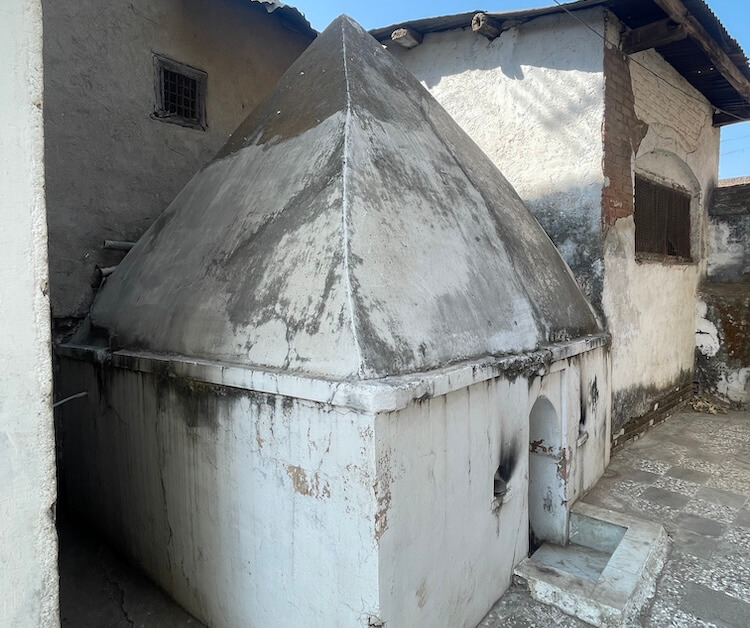
According to Local chronicles and the ‘Umreth Mahatmya’, the township of Amravati – modern-day Umreth – was established in the year 499 AD (Vikram Samvat 555) by Jada Patel and Amarsinh Rajput. The original shrine was later reconstructed by Rajmata Mayanalladevi, the mother of the legendary King Siddharaj Jaysinh (1094–1143 AD). Siddharaj Jaysinh was a Chalukya emperor, the son of King Karansinh of Anhilwad Patan, who had founded the city of Karnavati (present-day Ahmedabad). An inscription carved upon the left wall of the temple stands as a testament to this history and the architectural prowess of that era. According to the epigraph, the current structure was completed in the year 1647 of the Shaka era (1725 AD).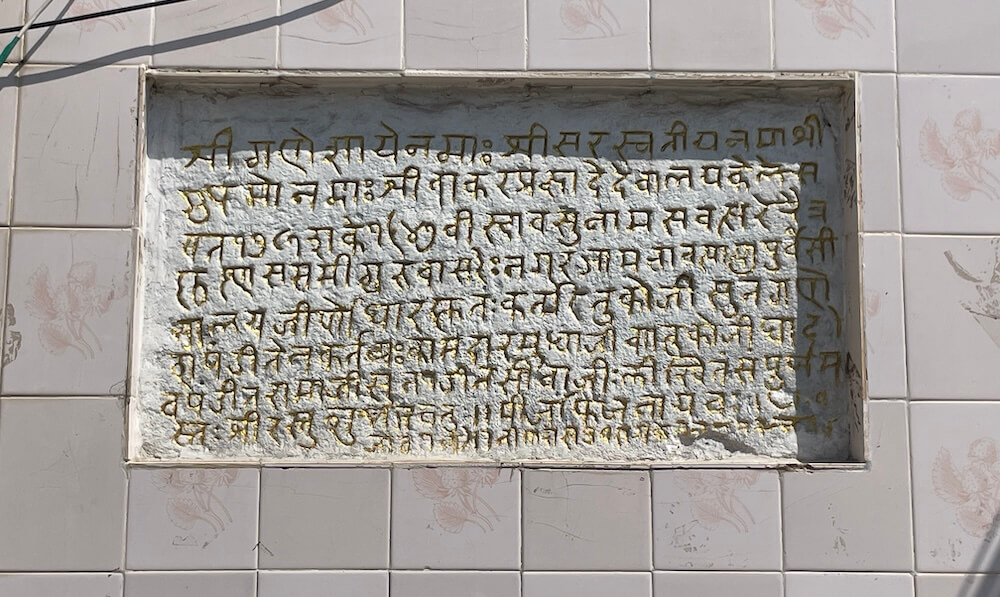
This temple has hosted many of history’s most eminent personalities and great saints. Historical records mention that the famous ancient Chinese traveller, Xuanzang (Hieu-en-sang) visited this region. Furthermore, this entire soil has been sanctified by the footsteps of great saints such as Sant Eknath, a revered saint of the Varkari sect in Maharashtra; Chaitanya Mahaprabhu, the great Vaishnava saint from Bengal; the renowned devotee Bodana; and Sant Meerabai of Rajasthan. Alongside these spiritual luminaries, several political stalwarts of modern Indian history have sought Darshan (sacred viewing) at this shrine. 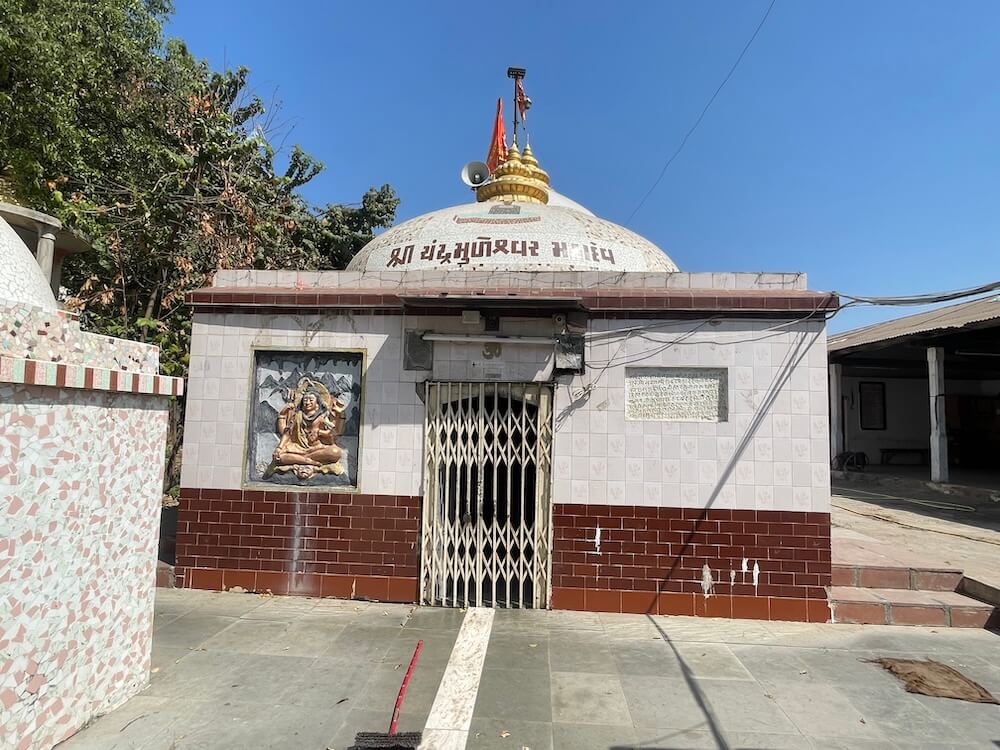 Leading figures of the Indian freedom struggle, including ‘Father of the Nation’ Mahatma Gandhi, Netaji Subhash Chandra Bose, the great thinker Pandit Madan Mohan Malaviya and Vithalbhai Patel, have all visited this temple. A plaque detailing the dates and days of their respective visits is displayed within the premises.
The term ‘Chandramouli’ signifies Mahadev, who wears a beautiful crescent moon like a crown amidst his matted locks. A second, more physical and architectural meaning of the term refers to a structure or temple through whose roof the radiant beams of the moon enter directly. A legend regarding this site recounts that in ancient times, when this region was covered by dense forests, local cowherds would bring their cattle here daily for grazing. It is said that a milch cow in the herd suddenly ceased giving milk. Every day, 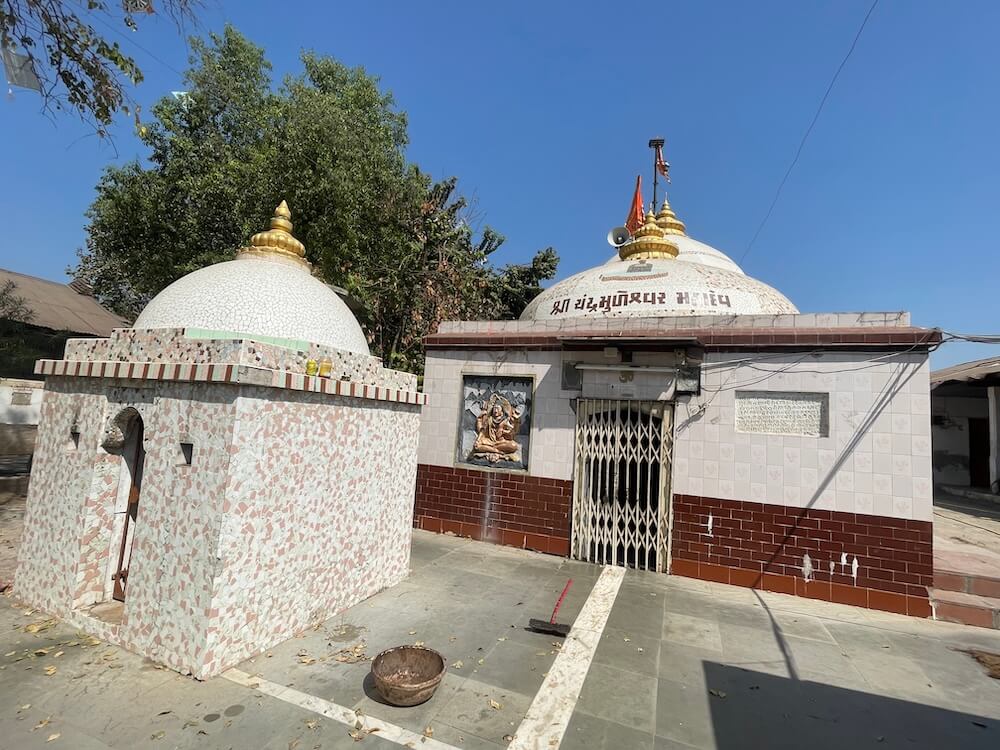 upon reaching the forest, she would visit a specific spot and spontaneously release her milk upon the ground. Upon observing this, the cowherds excavated the earth at that precise location, only to discover a radiant Shivpinda manifesting before them. The villagers were struck with wonder and collectively erected a small shrine. The roof of the original temple was fashioned in a particular manner that allowed the light of the full moon to fall directly upon the self-manifested Shivpinda in the sanctum. This unique astronomical alignment bestowed the name Chandramouli or Chandramouleshwar Mahadev Temple upon the site.
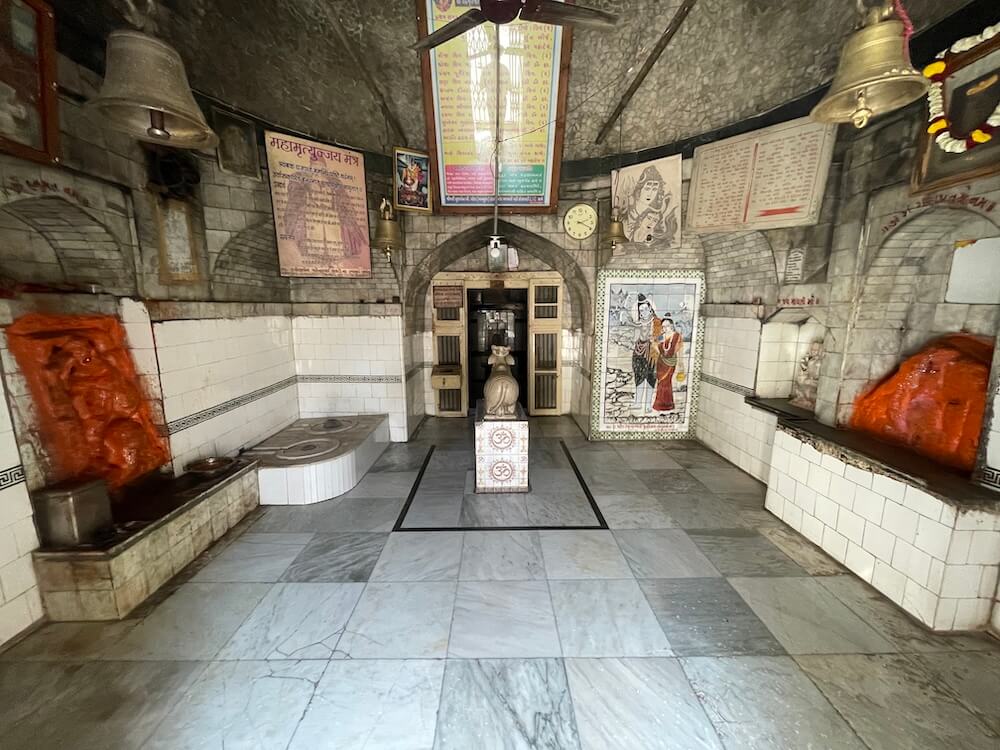
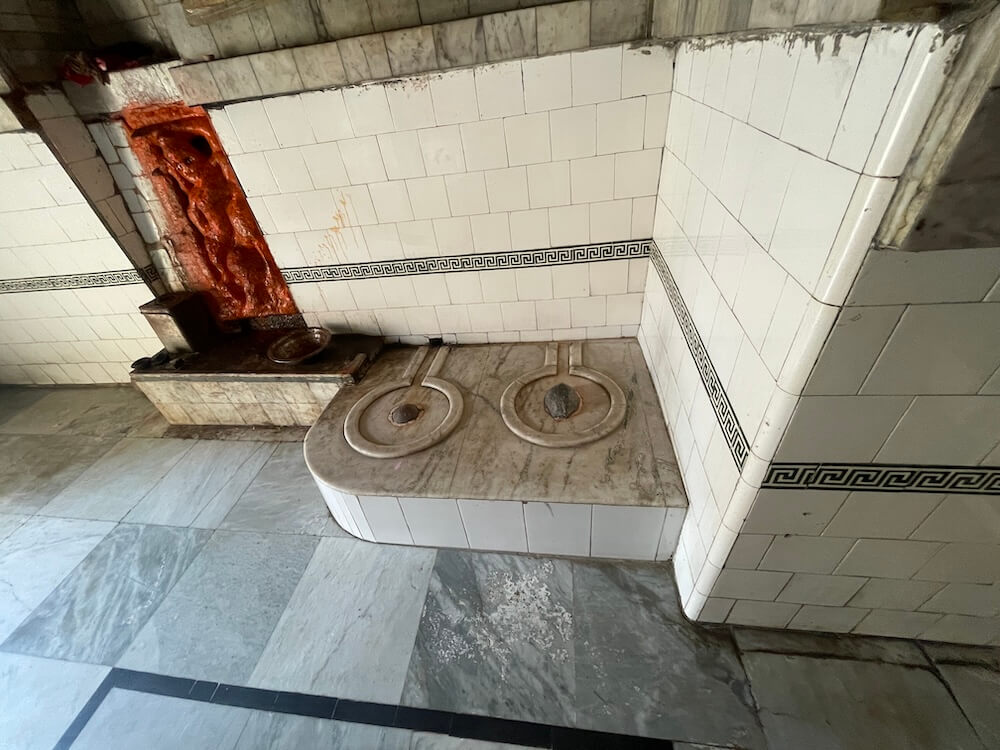
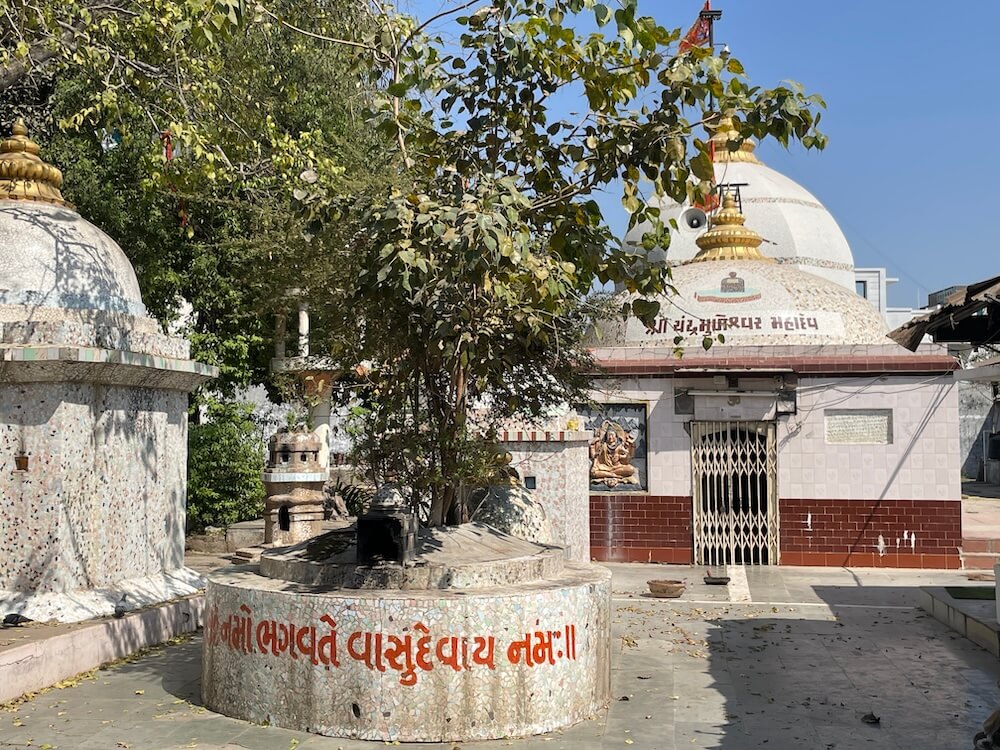
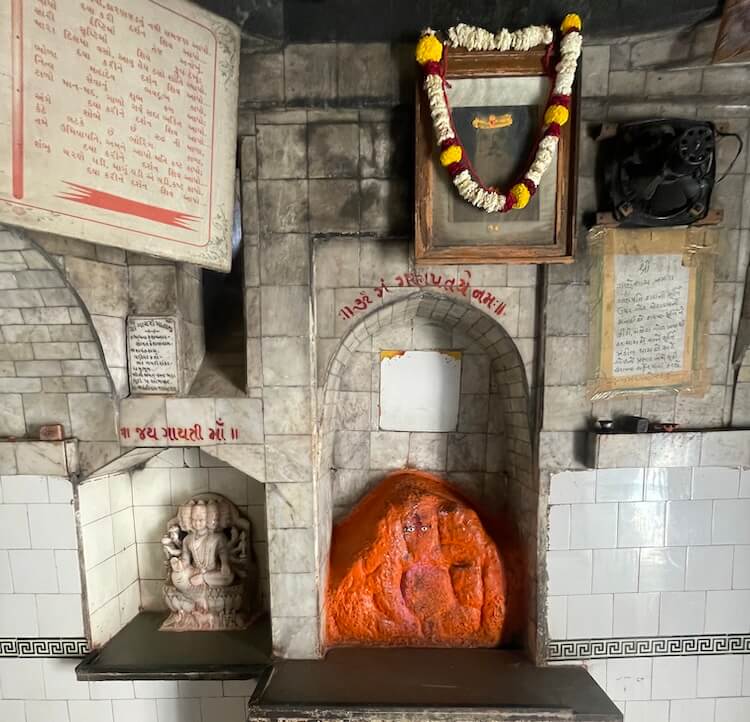
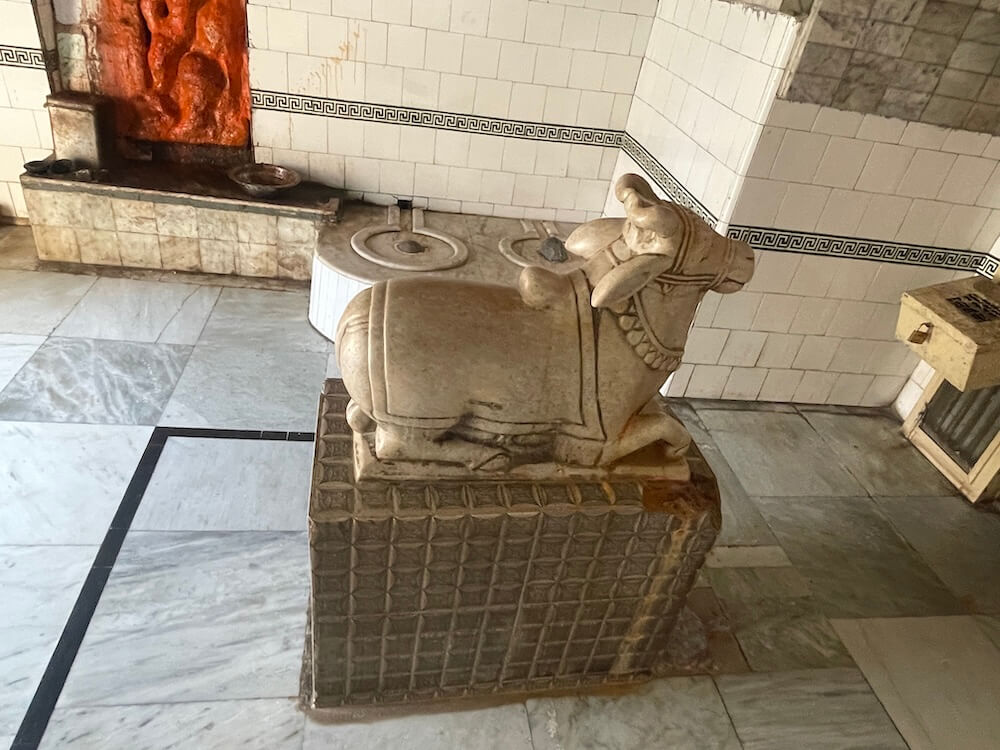
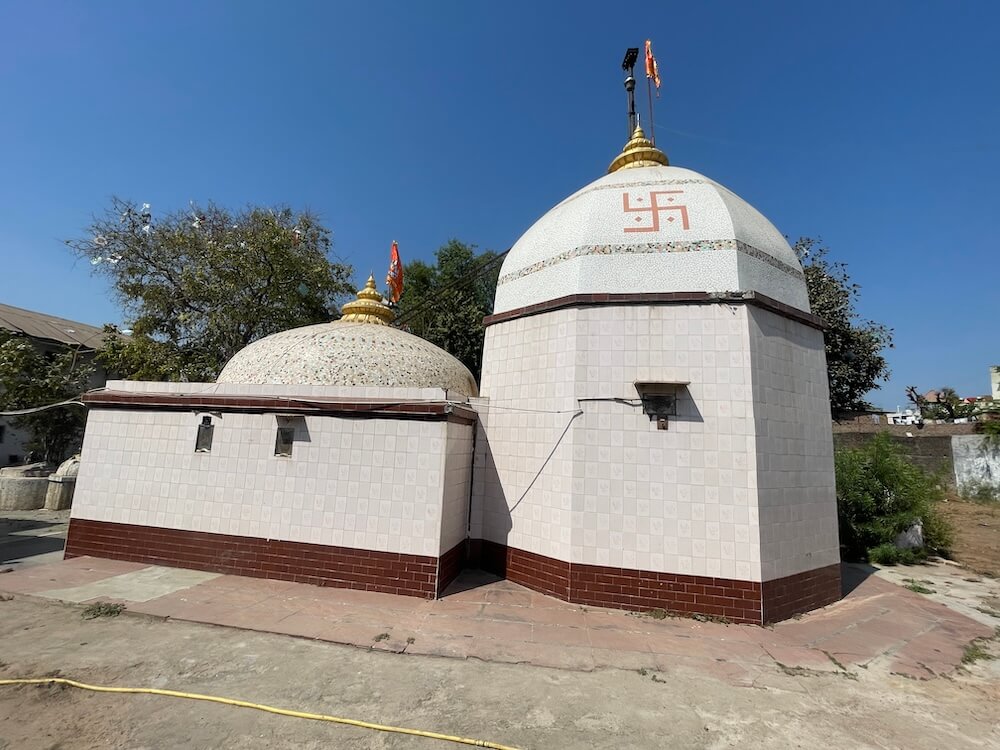
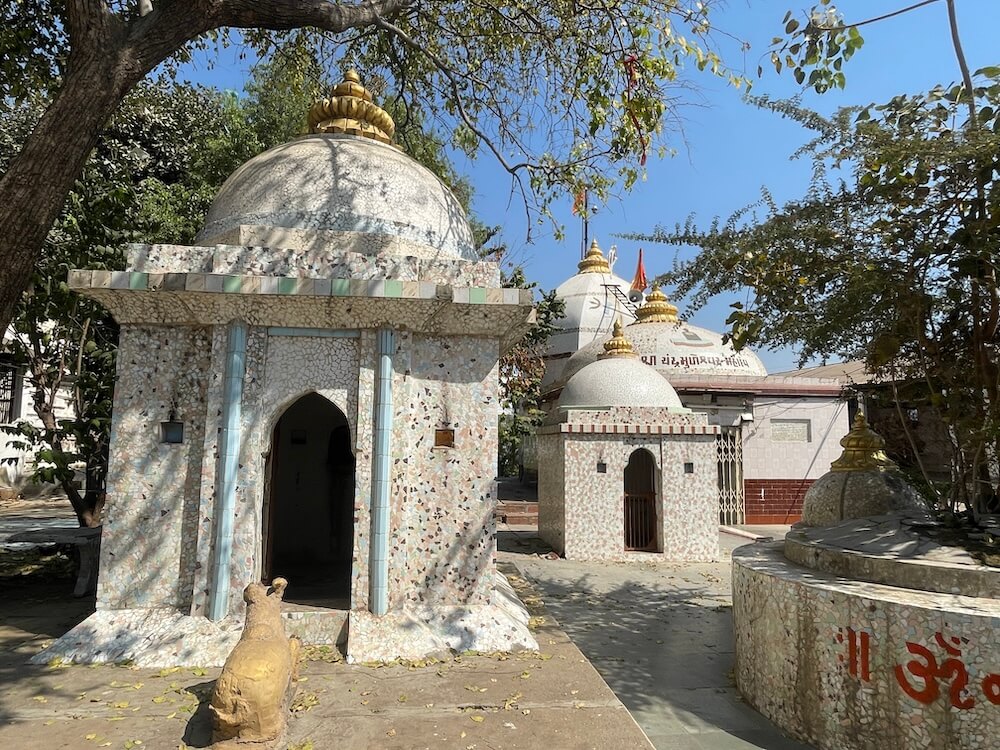
The temple is located adjacent to the main road in the city of Umreth. It is enclosed by a robust stone rampart and one enters the courtyard through a gateway within these walls. 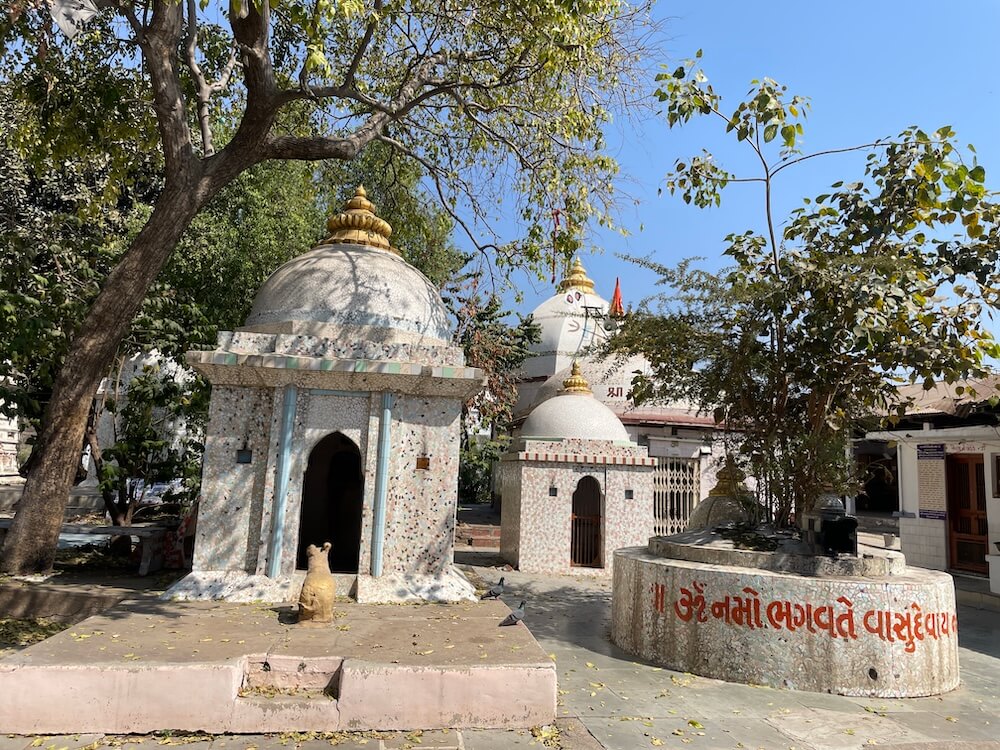 Above the gateway, on the second floor, resides a Nagarkhana (drum house) with a tiled roof. To the right of the courtyard are shrines dedicated to Baliya Dev and Shitala Mata. Additionally, the courtyard contains several Samadhi temples (memorial shrines) of departed Mahants (high priests). A Tulsi Vrindavan stands before the main temple. The architectural structure comprises a Sabhamandap (assembly hall), an Antarala (vestibule) and the Garbhagriha (sanctum sanctorum). The enclosed assembly hall features windows within its walls and houses a black stone Nandi upon a pedestal facing the sanctum entrance, preceded by a sculpture of a tortoise. Niches within the assembly hall walls house idols of Ganesha, Gayatri Mata and Maruti (Hanuman). The entrance to the sanctum is located beyond the vestibule, with an image of Lord Ganesha upon the Lalatabimba (the central point of the lintel).
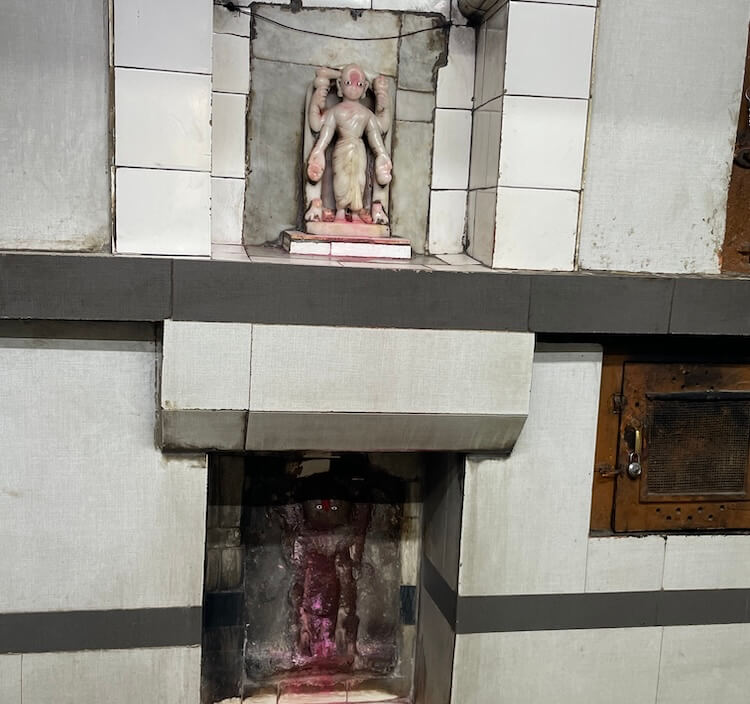
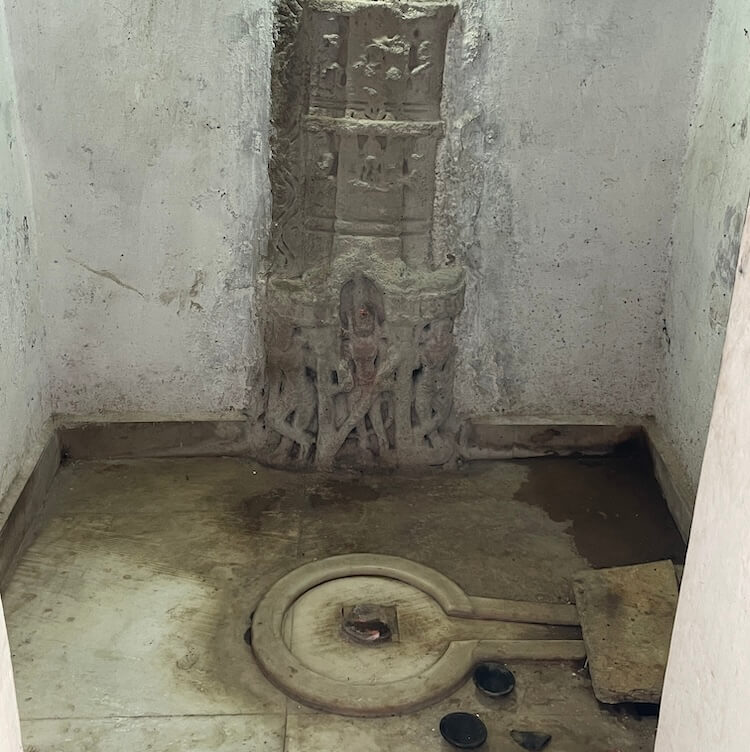
  The sanctum is situated at a level lower than the vestibule, requiring one to descend four steps. Enshrined at the centre is the ancient Shivpinda, accompanied by another smaller Shivpinda beside it. The rear wall of the sanctum contains two niches. The lower one houses Bhairavnath, while the upper niche enshrines an idol of Parvati. Both the assembly hall and the sanctum are topped by domed and tall Shikharas (spires). The spire over the sanctum is taller than that of the hall.
Mahashivratri and Guru Purnima are the two primary festivals celebrated here with great enthusiasm. On Mahashivratri, the temple hosts various programmes such as Laghurudra, Mahabhishek and the chanting of Shiva hymns.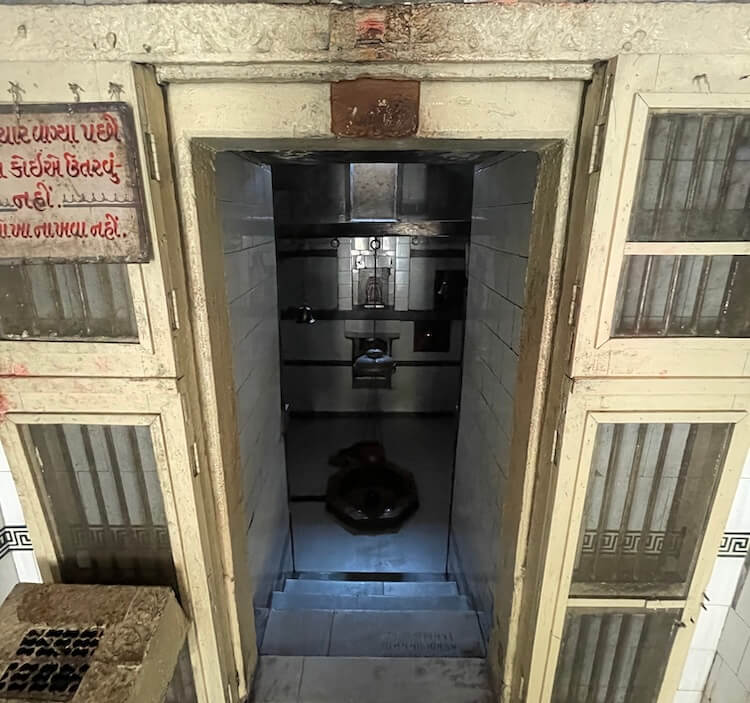 During this special night, the four Praharas (hours of the night) are marked by meticulous ritual worship. On this occasion, a palanquin procession of Mahadev traverses the entire village amidst music and fanfare. Thousands of devotees participate in this celebration, sprinkling Gulal (auspicious red powder) to the accompaniment of traditional drums. Mahaprasad(sanctified food) is distributed to pilgrims on this day. On the final Monday of the month of Shravan, a ‘Nagar Yatra’ (town procession) is held, intended to bring a glimpse of the deity to elderly devotees who, due to age or infirmity, cannot visit the temple personally.
A unique tradition known as ‘Ashadhi’ is observed on the day of Guru Purnima. In this town of Umreth, which possesses an ancient agrarian history, this festival is crucial for predicting the prospects of crops and rainfall. In this agriculture-based ritual, various grains such as moong, rice, jowar, wheat, sesame, urad, cotton, gram and bajra are carefully weighed and tied into separate cloth bundles, 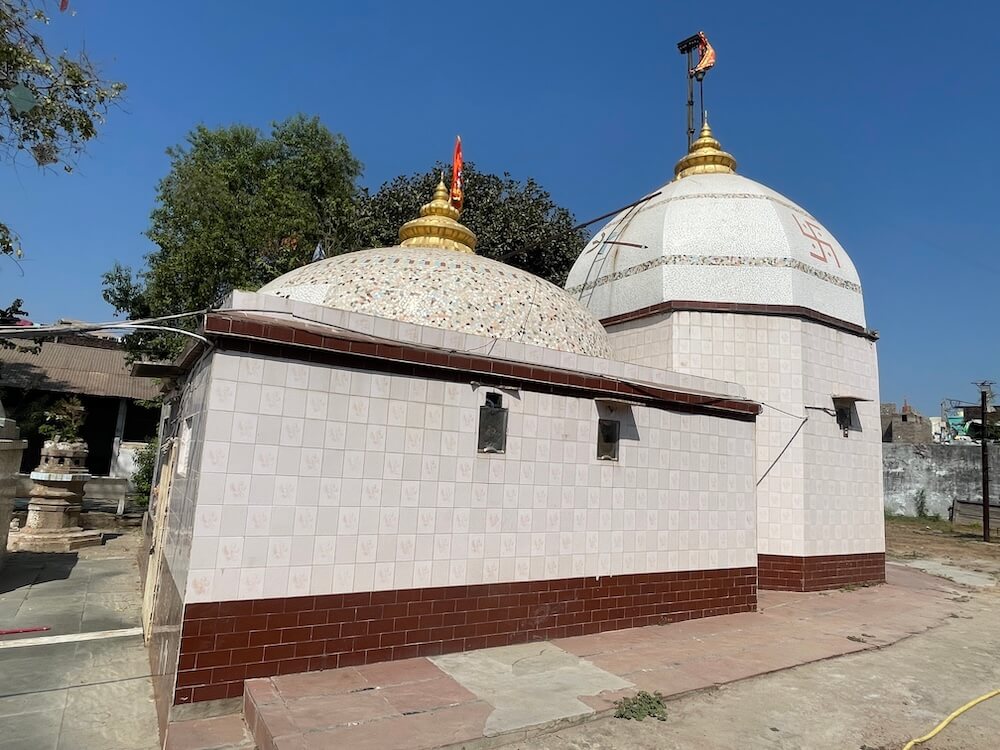 which are then placed in a dry earthen pot. The following day, the minute changes in the weight of these grains are used to accurately divine the conditions of the upcoming harvest and monsoon. Farmers proceed with their work with renewed vigour based on which grain shows an increase in weight.
This unique festival, which provides farmers with a sense of optimism regarding their harvest, is called Ashadhi and it draws hundreds of farmers from across the district. Additionally, the temple celebrates Dussehra, Diwali, Kartik Purnima and Vaikunth Chaturdashi.
The shrine experiences large gatherings of the faithful on Mondays, Thursdays and on full moon and new moon days. The temple is generally open for devotees from 6 am to 12 pm and from 4 pm to 8:30 pm.
Useful Information
- Located at 1 km from Umreth Bus Station and 36 km from Anand.
- State Transport (GSRTC) bus facilities available to Umreth from various cities in the district.
- Private vehicles can reach the temple directly.
- Accommodation and breakfast facilities are available in the vicinity.
- Contact -Temple Office, Mob. 9824395071.
चंद्रमौलेश्वर महादेव मंदिर
उमरेठ, तहसील उमरेठ, जिला आनंद
मंदिरे
Temples
मंदिर
-
भीमनाथ महादेव मंदिर लिंबळी, ता. सोजित्रा, जि. आनंद
अधिक माहितीBhimnath Mahadev Temple Limbali, Tal. Sojitra, Dist. Anand
View Detailsभीमनाथ महादेव मंदिर लिम्बाली, ताल. सोजित्रा, जिला. आनंद
विवरण देखें -
मेलडी माता मंदिर मालताज, ता. सोजित्रा, जि. आनंद
अधिक माहितीMeldi Mata Temple Malataj, Tal. Sojitra, Dist. Anand
View Detailsमेलडी माता मंदिर मालताज, ताल. सोजित्रा, जिला. आनंद
विवरण देखें -
नीलकंठेश्वर महादेव मंदिर बार बामणोली, ता. पेटलाद, जि. आनंद
अधिक माहितीNeelkantheshwar Mahadev Temple Bar Bamnoli, Tal. Petlad, Dist. Anand
View Detailsनीलकंठेश्वर महादेव मंदिर बार बामनोली, ताल. पेटलाड, जिला. आनंद
विवरण देखें